
The Invisible Departure
You fold the paper twice before putting it in your bag — the address of the agency, the name of a contact, the promise of a cleaning job in a hotel in Lyon or a restaurant in Amsterdam, somewhere with a currency that doesn’t evaporate the day after payday. The woman who gave it to you was a neighbor, or a cousin of a neighbor, someone whose face carries the particular credibility of shared geography, shared dialect, shared memory of the same crumbling market square. You have checked the name of the company online and found a website with photographs of smiling staff. You have done everything a reasonable person does before trusting. The coach leaves at six in the morning.

There is a quality of light at bus stations before dawn that belongs entirely to the poor — the fluorescent hum above plastic seats, the smell of instant coffee from a machine that does not take coins smaller than a certain denomination, the particular way strangers do not look at each other because looking costs something none of them can afford. You are not afraid. Fear belongs to people who have a reason to mistrust the world, and the world has given you just enough reasons to keep hoping. You have a bag with three changes of clothes, a phone with a cracked screen, and a document that looks official because you have only ever seen official documents in circumstances that made you too nervous to study them closely. The man who takes your ticket at the border checkpoint glances at it for exactly as long as it takes to confirm that you exist.
What the sociology of deception reveals — and Zygmunt Bauman spent much of his 2004 work Wasted Lives excavating precisely this — is that the machinery of exploitation does not require villains who behave like villains. It requires ordinary transactions that look like other ordinary transactions. The trafficking of women across European borders does not announce itself as trafficking. It announces itself as opportunity, and opportunity in conditions of economic precarity does not invite suspicion. It invites gratitude. The European Union’s own Eurostat data from 2022 identified 10,093 registered victims of human trafficking across member states in a single year, with women and girls constituting roughly 72 percent of that figure, the vast majority lured under the pretense of work. Registered victims. The bureaucratic weight of that qualifier contains an entire shadow population that never surfaces in any database because they were never officially anywhere to begin with.
The border is the hinge. On one side of it, you are a person with a history — a mother who will notice you are gone, a landlord who will wonder about the rent, a church or a school or a neighborhood that holds the faint shape of your presence. On the other side, in a country whose language you do not speak fluently and whose institutions you do not know how to navigate, that history does not travel with you at the same speed you do. This lag — the gap between the person who left and the paper trail that might one day follow — is not an accident of geography. It is a structural feature of how modern borders function for people without economic leverage. Étienne Balibar argued in We, the People of Europe?, published in 2004, that European borders are not fixed lines but mobile filters, selectively permeable depending on what you carry in your pocket and what a state decides you are worth. For a woman crossing from Moldova or Bulgaria or Albania on a document that promises legitimate employment, the border is not a wall. It is a valve.
The coach pulls into a station you do not recognize. The contact who was supposed to meet you is not the person described.
Europe as a Geography of Permission
You cross a border you never see. No checkpoint, no stamp, no officer asking where you are going or why. The road simply continues, and the country changes the way a room changes when someone turns off a light — same air, different feeling. For millions of people, this is the quiet miracle of modern Europe, the practical dream of 1985 made permanent in 1995 when the Schengen Agreement moved from ink to infrastructure. For a woman sitting in the back of a van with no documents and no name for what is happening to her, the road also simply continues.
The architects of Schengen were solving a real problem. Internal borders in postwar Europe were not merely inconvenient — they were ideologically loaded checkpoints, remnants of the nation-state logic that had twice turned the continent into a killing field. Eliminating them was a philosophical act as much as a logistical one, a wager that shared space would produce shared identity. What the agreement could not anticipate — or perhaps could not afford to admit — was that permeability does not discriminate between the movements it enables. A corridor is a corridor. It serves whoever walks it.
Europol’s 2022 report on trafficking networks across member states documented what field workers had been observing for years: the most active trafficking routes in Europe map almost perfectly onto the most legally frictionless zones of movement. The Western Balkans corridor, feeding into Hungary, Austria, and Germany; the Romanian-Italian axis, so well-worn it has become almost bureaucratic in its efficiency; the Spanish coastal entry points that funnel into French networks within hours. These are not shadows operating in defiance of the system. They are movements the system was structurally designed to accommodate, because the system was designed to accommodate movement itself, without asking movement what it carries.
Between 2017 and 2021, Europol identified over 10,000 suspected traffickers operating within EU borders, with criminal networks exploiting the absence of internal checks to transport victims across three, four, sometimes six countries before any authority registered an anomaly. The average victim, according to the same data, crossed at least two international borders before reaching the location where exploitation began. Each crossing was legal, or at least undetectable, because the infrastructure designed to guarantee freedom had no mechanism to distinguish the free from the coerced. The border was gone. So was the question it used to ask.
There is a concept in systems theory sometimes called “requisite variety” — the idea, developed by the cybernetician W. Ross Ashby in his 1956 work “An Introduction to Cybernetics,” that a control system must be at least as complex as the system it seeks to regulate. European border policy, in abolishing internal complexity, reduced its own capacity to detect complexity in what moved through it. Traffickers understood this before policymakers acknowledged it. They adapted to openness faster than law enforcement could adapt to the absence of the tools openness had made obsolete.
What makes this more than a policy failure is the silence around it. Schengen is treated in public discourse as an almost sacred achievement, the spatial embodiment of European values. To examine its contradictions is to risk sounding like the wrong kind of person, the kind who wants walls back, who confuses freedom with danger. This rhetorical trap — where any critique of an emancipatory structure is read as an attack on emancipation itself — is precisely what has kept the conversation stunted. The women moving invisibly through these corridors are not an argument against open borders. They are evidence that freedom, when designed without attending to the asymmetries of power that determine who actually experiences it as freedom, can be quietly inherited by those with the most to gain from its blind spots.

The Economy of Desire and Its Accounting
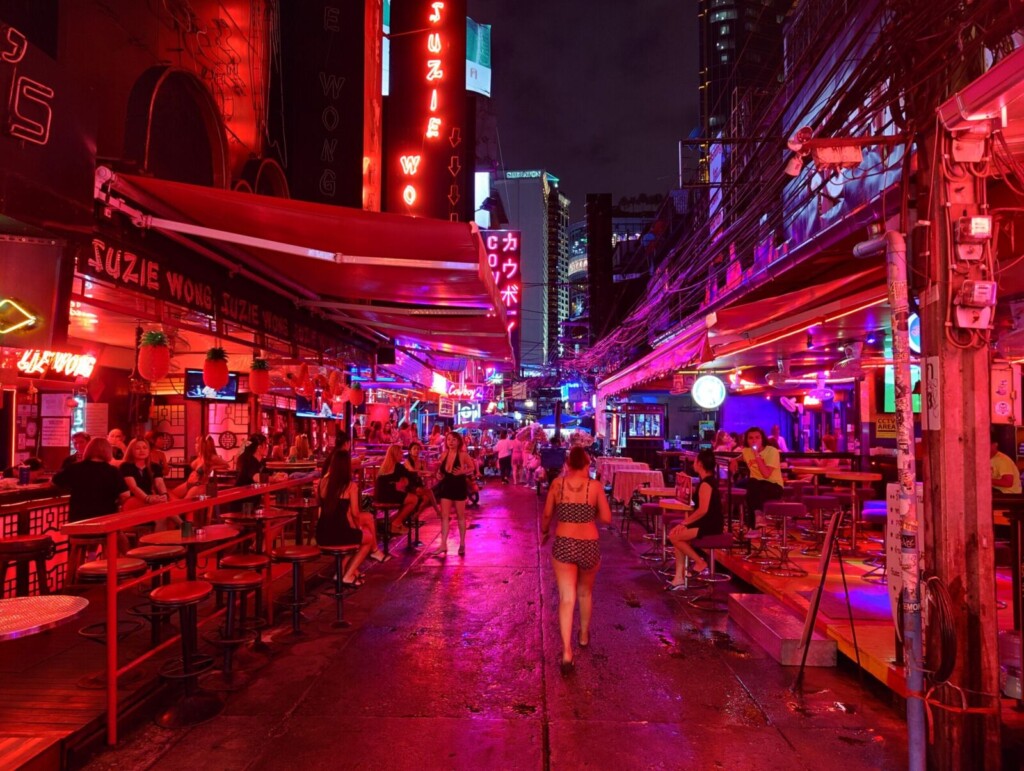
You have been told, at some point in your life, that evil is irrational — that men who exploit other human beings have something broken inside them, some wiring that separates them from you, from the ordinary calculus of want and restraint. This is the most convenient lie that organized civilization tells itself, and it is worth sitting with the discomfort of what the actual numbers say.
Siddharth Kara spent years moving through the operational architecture of sex trafficking across Asia, Eastern Europe, and the Americas before publishing his findings in 2009. What he produced was not a moral treatise but an economic ledger. In “Sex Trafficking: Inside the Business of Modern Slavery,” he calculated that a single trafficked woman generates an average of $250,000 annually for her exploiter. Not over a lifetime — annually. He further estimated that the global sex trafficking industry produces returns on investment that outpace almost every other criminal enterprise, including narcotics, because the commodity is reusable. A kilogram of cocaine can be sold once. A human being can be sold across a single night, then again the following morning, then three hundred and sixty-five mornings in a row.
This is the structure that demand creates. The language of supply — where do the women come from, why are they vulnerable, what failures of state allowed their recruitment — is psychologically easier to occupy because it places the origin of the problem in poverty, in corruption, in somewhere else. But supply responds to demand the way a market always responds: efficiently, and without sentiment. The factories exist because the consumers exist, and in contemporary Europe the consumers are not phantoms. A 2012 study published by the London School of Economics examined the relationship between legal prostitution regimes and trafficking inflows across Europe and found a statistically significant positive correlation: countries that had legalized prostitution reported measurably higher rates of human trafficking. The demand pool expands legally, and the market fills it through whatever means are available, legal or otherwise.
There is a particular kind of man who believes himself to be a customer. He negotiates, he pays, he leaves. He participates in an economic exchange that he has mentally categorized as private, consensual, transactional — hermetically sealed from any larger consequence. The architecture of the industry is deliberately designed to sustain this self-perception. Trafficking networks rarely present their product as coerced. The debt bondage is invisible to the buyer. The confiscated passport is invisible. The woman has been rehearsed in what to say and how to behave in ways that confirm the narrative the buyer requires in order to return the following week.
What Kara’s accounting forces into view is that this is not a system held together by monsters. It is held together by the aggregate behavior of ordinary men making individually small economic decisions that, in aggregate, capitalize an industry worth tens of billions of dollars annually. The International Labour Organization estimated in 2014 that forced sexual exploitation generates $99 billion per year globally, with Europe accounting for a disproportionate share relative to its population. These figures do not describe an underworld. They describe a parallel economy operating inside the same cities where parliaments debate the dignity of labor and courts adjudicate the rights of workers.
Georg Simmel, writing in “The Philosophy of Money” in 1900, argued that money transforms qualitative human relationships into quantitative ones — that the capacity to price something is also the capacity to render it interchangeable, fungible, stripped of its singular humanity. He was describing the logic of modernity in the abstract. He could not have imagined the precision with which that logic would be applied, more than a century later, to the body of a woman moving across a border she did not choose to cross, generating revenue she will never see, for a return on investment that any hedge fund manager would recognize as exceptional.
What Consent Was Built to Ignore
You sign the paper. That is the sentence that ends the investigation, closes the file, releases the state from obligation. You signed, therefore you chose, therefore whatever came after was yours to carry.
Carole Pateman spent the better part of the 1980s dismantling the fiction at the center of liberal political thought: that the social contract — the foundational myth of free individuals agreeing to terms — was built on a prior, unspoken arrangement about whose body was available for use and under what conditions. In “The Sexual Contract,” published in 1988, she demonstrated that classical contract theory did not extend freedom to women so much as it formalized the terms of their subordination under a language that made that subordination look like agency. The genius of the arrangement was precisely its grammar. Rights-bearing individuals enter agreements voluntarily. Women, newly admitted into the category of rights-bearing individuals, now had the privilege of consenting to conditions they had no realistic power to refuse.
What this produced, historically and structurally, is a system where the burden of coercion must be proved by the person experiencing it, while the burden of consent requires only a signature, a nod, a phone call not made to the police. Trafficking prosecutions across the European Union collapse on exactly this mechanism. Europol’s 2016 report on trafficking in human beings noted that conviction rates remained staggeringly low not because investigators doubted the exploitation had occurred, but because defense attorneys could point to moments of apparent acquiescence — a woman who did not run when she had the chance, a woman who sent money home during the first weeks before the debt was imposed, a woman who said yes to the journey before understanding where the journey led. Consent, in legal architecture, is treated as a switch rather than a spectrum, a moment rather than a condition embedded in time, power, and desperation.
The structural coercion that Pateman identified has a precise contemporary face: it operates through economic asymmetry so total that the word “choice” becomes a category error. A woman from a village in southeastern Romania, where youth unemployment has hovered above thirty percent for a decade and a half, is not making the same calculation as a woman with savings, credentials, and a passport that opens doors rather than raising flags. When she agrees to travel to work in domestic service or hospitality in Western Europe, she is agreeing from inside a narrowing corridor of options, not from an open field of possibilities. The legal system is not built to see the corridor. It is built to register the moment of agreement and call it freedom.
This has a particular effect on those who watch and do nothing. Consent does enormous social labor for bystanders — neighbors, border officers, hotel staff, clients. The word performs exoneration in real time. She agreed, so this is not my problem to see. The man who pays for sexual services from a woman visibly controlled by another man does not need to articulate this logic consciously; the cultural infrastructure of consent has already done it for him, preemptively, before he entered the room. Research from the London School of Economics published in the European Journal of Law and Economics in 2012 found a statistically significant positive correlation between legal prostitution and increased human trafficking inflows across a sample of 150 countries — meaning that legalization, intended to regularize and protect, in practice expanded the market in ways that made distinguishing coerced from consensual participation structurally harder, not easier. The concept of consent, expanded and formalized, created more shadow, not less.
What no legal framework has yet managed to encode is what coercion looks like when it has had years to work on a person — when it has reorganized someone’s understanding of what is normal, possible, deserved.
The Nation That Buys and the Nation That Sells
You are standing at a border crossing somewhere between Moldova and Romania, and the woman ahead of you in the queue has memorized a cover story so thoroughly that she no longer remembers which parts of it are true. She has a bag. She has a name. She has a destination that is not her destination. The border guard does not look at her the way you might expect. He looks at her the way border guards look at everyone: like a problem to be processed, not a person to be seen.
The International Organization for Migration documented, in its 2022 Global Report on Trafficking in Persons, that the overwhelmingly dominant pattern across Europe runs eastward to westward — from Romania, Moldova, Ukraine, Bulgaria, and Albania into Germany, Italy, the Netherlands, Spain, and France. Romania alone accounts for an estimated 30 percent of all identified trafficking victims within the European Union. These are not random distributions. They are the precise map of a political economic arrangement that was constructed deliberately, in stages, by institutions that knew exactly what they were doing.
When the IMF imposed structural adjustment programs on post-communist Eastern European states throughout the 1990s, it did so under the theoretical framework that Milton Friedman‘s disciples called shock therapy — the rapid dismantling of state industries, price liberalization, and withdrawal of public subsidy, all at once, before any alternative infrastructure existed to absorb the damage. Jeffrey Sachs, who advised the Polish and Russian transitions, later admitted that the social costs had been catastrophically underestimated. But underestimation is a generous word for what happened in Moldova, which by 1999 had a GDP per capita of roughly 355 US dollars, lower than it had been in 1990. The poverty was not a side effect. It was the precondition for a cheaper labor market that Western European capital would eventually require.
Poverty does not distribute itself neutrally across a population. It concentrates on women with particular efficiency, because what it destroys first are the public institutions — healthcare, childcare, education subsidies — that allowed women any degree of economic independence in the Soviet system. Whatever one says about Soviet gender politics, the USSR maintained female labor force participation rates above 70 percent through structural necessity, and it maintained them partly by socializing the costs of reproduction. When those structures collapsed, the costs of reproduction were re-privatized, and women absorbed them. A single mother in Chisinau in 2003, with no state childcare, no stable employment, and a rent that consumed more than her monthly income, was not vulnerable to traffickers because of bad luck. She was vulnerable because an entire geopolitical architecture had been organized to produce exactly her situation.
Western Europe receives these women not as an accident but as a function of demand that its own legal and economic structures sustain. The Dutch government’s decision to legalize prostitution in 2000 was sold to the public as a harm-reduction measure — a way to bring sex work above ground, regulate it, and protect workers. Within five years, the majority of women working in Amsterdam’s licensed brothels were foreign nationals, the majority of those from Eastern Europe, and Dutch police themselves estimated that between 50 and 90 percent showed signs of coercion. The market had been legitimized. The supply chain had simply been outsourced to jurisdictions with less capacity to interrupt it.
Germany’s Prostitution Act of 2001 produced a structurally identical outcome at larger scale. By 2013, Germany had become the single largest destination country for trafficked women in Europe, with the Federal Criminal Police Office, the BKA, recording consistent increases in identified victims every year following liberalization. The law had not created demand. But it had clarified to the industry that the state would not obstruct the infrastructure through which demand was satisfied — and infrastructure, once it exists, finds its inputs wherever they are cheapest and least protected.
The geography of trafficking is not a mystery requiring explanation. It is a ledger, and someone has always been keeping it.
A vision curated by a filmmaker, not an algorithm
In this video I explain our vision
The Second Scene: Recognition Without Rescue

She sits across from you in a beige office in Rotterdam, a woman in her late twenties with painted nails and a phone she keeps checking. The social worker — a woman trained in trauma-informed care, fluent in four languages, genuinely compassionate — has been trying for forty minutes to establish what the protocol calls “disclosure.” The woman being interviewed answers every question with something that is technically an answer. She is not in danger. She chose this work. She sends money home to her mother in Chisinau. She does not need help.
The social worker leaves the meeting and marks the case file with a phrase that will determine everything that follows: “does not self-identify as victim.” That notation, bureaucratically neutral, is in practice a closing door. What happens next is not rescue. What happens next is nothing.
The legal category of “victim of trafficking” was formalized in European law through the 2011 EU Directive on Human Trafficking, which replaced the earlier 2002 Framework Decision and introduced for the first time a formal reflection and recovery period, theoretically guaranteeing trafficked persons thirty days of protected status before any decision on deportation or prosecution. The architects of that directive believed they were building a shelter. What they built was a gate with a very specific lock. To access the shelter, you must first accept the label. And the label requires a self-understanding — of coercion, of exploitation, of lost agency — that many women in active trafficking situations have been deliberately conditioned not to possess, or have rationally decided is more dangerous to claim than to deny.
Sociologist Wendy Brown argued in States of Injury, published in 1995, that identity categories built around victimhood have a structural tendency to freeze the subject inside the wound that created the category. The legal remedy becomes inseparable from the legal confirmation of damage. What she was describing in the context of American liberal rights discourse applies with cold precision to the European anti-trafficking framework: the bureaucratic apparatus cannot protect a woman who refuses to be injured on its terms. The protection and the harm it addresses are, in this architecture, the same gesture.
There is something else operating beneath the administrative surface. Psychologist Judith Herman documented extensively in Trauma and Recovery in 1992 that traumatic bonding — the attachment formed between a captive and a captor under conditions of total dependence — does not feel like captivity from the inside. The woman in the Rotterdam office is not lying when she says she is not a victim. She may be describing her psychological reality with complete accuracy. The coercion has been internalized so thoroughly that it no longer presents as coercion. It presents as preference, as loyalty, as pragmatic choice. The social worker is not detecting deception. She is detecting a successful system of control.
Across Europe, the identification rates tell their own story. The Global Slavery Index estimated in 2018 that the European Union contains approximately 1.4 million people in conditions of modern slavery. In that same year, EU member states formally identified roughly 14,000 victims of trafficking. The gap is not primarily explained by insufficient law enforcement. It is explained by a system that can only see what presents itself in the correct posture of suffering. The woman who is controlled but not visibly broken, who is exploited but economically rational about it, who is terrified but strategic in her performance of composure — she does not register.
What makes this particular machinery so durable is that it convinces itself it is humane. The protocol exists. The reflection period exists. The trained social workers exist. The EU directive runs to forty-three articles and a preamble that uses the word “dignity” eleven times.
The Rescue Industry and Its Beneficiaries
You have probably never questioned what happens to a trafficked woman after she is rescued. The word itself carries such moral weight — rescue — that the aftermath seems almost irrelevant, swallowed by the brightness of the intervention. A door opens, officers enter, a woman is extracted from a room or a club or a locked apartment, and somewhere in the public imagination the story ends there, satisfied with itself. What actually follows is a bureaucratic sequence that Laura Agustín, in her 2007 work Sex at the Margins, describes with a precision that most humanitarian organizations would prefer remained obscure: detention centers, deportation hearings, removal orders, and a flight back to the same economic conditions that made migration feel necessary in the first place.
Agustín spent years embedded in the world she wrote about — not as a savior but as a researcher willing to sit with the discomfort of what she found. Her central provocation is that the rescue industry, far from being a neutral moral response to exploitation, constitutes its own form of control, one that requires the figure of the victim to remain perpetually helpless in order to justify its own institutional existence. Without women who need saving, there are no grant cycles, no government contracts, no international conferences in Geneva or Brussels where career NGO professionals present statistics about beds provided and women “restored to dignity.” The humanitarian apparatus around trafficking is not a failure of good intentions — it is a system that functions exactly as designed, producing outcomes that serve its administrators before they serve its supposed beneficiaries.
The numbers make this architectural. Between 2010 and 2020, European Union member states collectively deported tens of thousands of women identified as victims of trafficking, many of them within weeks of initial contact with authorities. A 2018 report from the Global Alliance Against Traffic in Women documented that in multiple Eastern and Southern European countries, the formal identification of a woman as a trafficking victim triggered automatic immigration proceedings rather than protection protocols. The organizations that locate these women frequently operate in direct coordination with border enforcement agencies, meaning the first call made after a rescue is sometimes not to a social worker but to an immigration officer. Charity and surveillance share the same phone line.
This architecture has a history that predates contemporary NGO culture by more than a century. Josephine Butler‘s late-nineteenth-century campaigns against the white slave trade in Britain, though driven by genuine outrage at the exploitation of working-class girls, simultaneously produced the legislative machinery that criminalized migration and sex work in ways that made vulnerable women far more precarious. The moral panic became the policy, and the policy outlasted the panic by generations. When the Palermo Protocol was adopted in 2000, enshrining a definition of trafficking that conflates all cross-border sex work with coercion, it did not emerge from a vacuum — it inherited this Victorian moral grammar and dressed it in the language of human rights.
What Agustín identified is something sociologists call the social work subject: the person who must be categorized, processed, and managed in order for an institution to legitimate its own budget. A migrant woman who insists she chose to cross a border, who refuses the identity of victim, who wants assistance finding work rather than a ticket home, breaks the machine. She cannot be counted in the right column. Several documented testimonies from women held in Italian and Spanish trafficking shelters describe being told explicitly that access to legal assistance, housing support, or residency proceedings depended on their willingness to identify as victims and cooperate with prosecutions — prosecutions that, statistically, result in conviction in fewer than one percent of trafficking cases across the EU, according to Eurostat’s 2022 data on criminal justice outcomes.
The man being prosecuted is almost never found. The woman whose testimony was required to find him is already on a plane.
What the Mirror Does Not Show

You are sitting in a bar in Amsterdam, Hamburg, or Lyon — a city that calls itself civilized, that funds museums and public libraries and bicycle infrastructure — and somewhere within walking distance of where you are sitting, a woman is waiting in a room for a man she has never met and will never see again.
The man who walks through that door is not, statistically speaking, a monster. He is a middle-aged professional in roughly a third of documented cases across Northern Europe, according to surveys conducted in Sweden and the Netherlands in the early 2000s that remain among the most detailed on the subject. He pays taxes. He may vote for progressive parties. He tells himself, if he tells himself anything at all, that the transaction is consensual, that the market has simply aligned supply with demand, that this is what adults do with money and time. The philosophical distance between what he believes and what is actually happening in that room is not ignorance — it is a cultivated incuriosity, a trained refusal to follow the chain of causation back to its origin.
There is a word for this in moral philosophy: akrasia, acting against one’s better knowledge. But akrasia assumes the knowledge was ever allowed to surface. What the European sex-buying culture has perfected is something closer to what Hannah Arendt, in her 1963 account of the Eichmann trial, called the suspension of thinking — not evil in the form of fangs and ideology, but evil as the simple, devastating absence of the habit of reflection. The man does not think about where she came from. He has constructed a world in which that question is not part of the transaction.
Legal frameworks have tried to intervene in this constructed world with uneven results. Sweden’s 1999 Sex Purchase Act, which criminalized buyers while decriminalizing sellers, was built on a specific moral premise: that the act of purchase is never neutral, that money does not convert a power asymmetry into an agreement between equals. Norway and Iceland followed. France adopted a version in 2016. In each case, the immediate cultural resistance was remarkable — not from criminal networks, but from ordinary men who insisted that the law was attacking their freedom, their desire, their identity. The nature of that resistance reveals more than the law itself: the purchase of a woman’s body had been so thoroughly normalized that its prohibition felt like persecution.
What a society chooses to commodify tells you what it has decided certain people are for. The philosopher Martha Nussbaum, in her 1999 work Sex and Social Justice, distinguished between forms of objectification that are context-dependent and those that are structurally degrading — a distinction that sounds academically careful until you place it alongside the actual demography of European trafficking victims, who are overwhelmingly poor, young, Eastern European or West African, and coerced by a combination of debt, threat, and the confiscation of documents. The context, in other words, is not incidental. The context is the entire architecture.
What the mirror does not show the man leaving that room is the infrastructure behind the door he just passed through — the recruiter in a Romanian village who offered a job in hospitality, the van, the phone confiscated at a border crossing, the debt that doubled without explanation, the other women already in the apartment when she arrived. He does not see it because the transaction is designed so that he cannot, because the invisibility of that infrastructure is its most essential feature, because a system that depends on the willingness of ordinary men to participate cannot afford to let those men see clearly what they are participating in, and so it offers them instead the clean surface of a price, a door, and the private certainty that what happens in rooms like this one is simply a matter between consenting adults in a continent that has learned to pride itself on minding its own business.
🕸️ Invisible Chains: Power, Control, and Hidden Violence
Human trafficking in Europe is not an isolated phenomenon but the darkest expression of systemic structures of exploitation, manipulation, and erasure. The articles below trace the cultural, psychological, and political roots of coercion and invisible violence — from the philosophy of power to the commodification of human lives.
Wollstonecraft’s A Vindication of the Rights of Woman
Mary Wollstonecraft‘s foundational text on women’s rights reminds us that the subjugation of women has deep historical and institutional roots. Her argument against the reduction of women to objects of exchange speaks directly to the mechanisms that still fuel trafficking today. Understanding her legacy is essential to understanding why gender-based exploitation persists across centuries.
GO TO THE SELECTION: Wollstonecraft’s A Vindication of the Rights of Woman
Affective Manipulation in Psychology
Affective manipulation is one of the primary tools used by traffickers to gain control over their victims, often before any physical coercion begins. This article examines how psychological domination works, dismantling the myth that only force creates dependency. The strategies described here illuminate the grooming processes that trap women in invisible cages.
GO TO THE SELECTION: Affective Manipulation in Psychology
Marriage of Convenience: When Love Is Sold to the Highest Bidder
The commodification of human beings finds one of its most disturbing cultural mirrors in the institution of arranged or coerced marriage, where women are traded as assets between families and networks. This article explores how economic logic infiltrates intimate life, stripping agency from those with no alternatives. It offers a crucial lens through which to understand the social normalization of exploitation.
GO TO THE SELECTION: Marriage of Convenience: When Love Is Sold to the Highest Bidder
Edward Snowden and Mass Surveillance
Edward Snowden’s revelations about mass surveillance raised urgent questions about who watches whom — and who remains unseen. In the context of human trafficking, the invisibility of victims is not accidental but structural, embedded in legal, technological, and social systems that protect perpetrators. This article helps map the architecture of institutional blindness that allows exploitation to thrive.
GO TO THE SELECTION: Edward Snowden and Mass Surveillance
Witness What Mainstream Cinema Won't Show You
If these themes move you, Indiecinema is your space — a streaming platform dedicated to independent and auteur cinema that dares to look where others turn away. Discover documentaries and films that confront trafficking, gender violence, and systemic oppression with unflinching honesty. Join the community of viewers who choose depth over distraction.
👉 EXPLORE THE CATALOG: Watch Indie Films in Streaming
A vision curated by a filmmaker, not an algorithm
In this video I explain our vision

