
The Morning You Stopped Talking
You paused. Not for long — maybe two seconds, maybe three — but you paused before sending that message, and in that pause you rewrote something. Not because it was false. Not because it was dangerous. Because it sounded, in some way you couldn’t quite name, like something that needed softening. You changed a word. You removed a sentence. You read it again and decided that this version, the blander version, the version with the edges filed down, was better. Safer. And then you pressed send and forgot about it almost immediately, the way you forget about breathing.

This is not a dramatic moment. That is precisely the point. There was no knock at the door, no warning, no visible threat. There was only the faint, wordless knowledge that the space you were writing in was not entirely private — and your body, which is smarter than your ideology and faster than your principles, adjusted accordingly. Before you’d finished the thought, the thought had already been edited. The compliance came first. The reasoning, if it ever came at all, came after.
Michel Foucault spent years trying to describe this mechanism without making it sound like a conspiracy, because it isn’t one. In Discipline and Punish, published in 1975, he traced the architecture of the Panopticon — Jeremy Bentham‘s late eighteenth-century prison design in which a single watchtower at the center could theoretically observe every cell, though no guard needed to be present for the system to function. The genius of it, Foucault argued, was not surveillance itself but the internalization of surveillance: the prisoner who behaves as though watched, whether or not anyone is watching. The power becomes productive. It doesn’t need to threaten you. It needs only to make you uncertain. Uncertainty does the rest. You do the rest.
What Foucault described as an architectural metaphor had, by the early years of this century, become something closer to literal infrastructure. The pipes were real. The servers were real. The interception was real. But the most consequential transformation wasn’t technical — it was exactly what he predicted: the moment the uncertainty moved inside you and started making decisions on your behalf.
Psychologists call one version of this effect the chilling effect, though the clinical neutrality of the phrase tends to flatten what it actually describes. A 2016 study published in the Journal of Communication, examining user behavior after the first Snowden revelations in 2013, found measurable declines in searches for terms the researchers classified as sensitive — terms related to civil liberties, health conditions, political dissent. People didn’t stop having those thoughts. They stopped typing them. The distinction matters enormously, and it matters in a direction that is easy to miss: the surveillance didn’t need to punish anyone. It didn’t need to read a single message. The mere knowledge of its existence was enough to rearrange behavior. The architecture worked exactly as designed.
But here is what the data can’t show, and what no study has yet managed to quantify: the version of yourself that you did not express. The sentence you deleted. The question you didn’t search. The opinion you kept slightly vague in the email to a colleague you trusted completely, because trusting someone completely and trusting the medium are not the same thing, and somewhere along the way you learned the difference without anyone teaching it to you. You absorbed it the way you absorb a language — not through grammar lessons but through immersion, through pattern, through the slow accumulation of moments in which the environment made certain things feel unwise.
The morning you stopped talking freely is not a morning you remember. It didn’t announce itself. It arrived the way most profound changes arrive: disguised as caution, dressed in reasonableness, carrying the entirely convincing argument that you had nothing to hide anyway.
The Architecture of Watching: How Surveillance Became Infrastructure
There is a room somewhere — there has always been a room somewhere — where someone is reading your mail. Not metaphorically. Literally opening it, steaming the envelope, photographing the contents, resealing the flap with practiced patience. The FBI did exactly this to James Baldwin, to Langston Hughes, to Martin Luther King Jr., accumulating files measured not in pages but in feet of shelf space. COINTELPRO, launched formally in 1956 and running in various forms until 1971, was not an aberration. It was the institutional articulation of something the American security state had been practicing since at least the Palmer Raids of 1919 and 1920, when Attorney General Mitchell Palmer authorized the arrest of thousands of suspected radicals based on surveillance networks that had been quietly expanding for years. The room existed before the program that legitimized it. The watching preceded the law that named the watching.
This is the detail that tends to get lost when the conversation turns to digital surveillance: the infrastructure was never born from technology. It was built from human decisions, bureaucratic habits, political fears, and the remarkably durable belief that the state’s vision should be total and its subjects should not know they are seen. What technology changed was the cost. By the time ECHELON emerged into partial public acknowledgment in the 1990s — a signals intelligence network operated jointly by the United States, the United Kingdom, Canada, Australia, and New Zealand under agreements tracing back to 1946 — the architecture had already been standing for decades. ECHELON did not invent mass interception. It industrialized it, running automated keyword recognition across satellite communications, telephone calls, fax transmissions, at a scale that made the FBI’s file cabinets look quaint. A 2001 European Parliament report estimated the system was capable of intercepting virtually all non-fiber-optic communications globally. The room had become a continent.
Then came September 11, and the continent became a planet. The Authorization for Use of Military Force, passed by Congress on September 18, 2001, with a single dissenting vote, was written in language so elastic that it would stretch across two decades of legal reasoning like taffy pulled to transparency. The PATRIOT Act followed six weeks later, moving through Congress so rapidly that most legislators admitted they had not read it. Section 215, buried inside that legislation, allowed the government to compel production of “any tangible things” relevant to a terrorism investigation — a phrase that FBI and NSA lawyers would eventually interpret to include the telephone metadata of every American citizen, regardless of any individual suspicion. Michel Foucault, writing about disciplinary power in Discipline and Punish in 1975, described a system that functions most efficiently when the watched cannot be certain whether they are being watched at any particular moment. Section 215 went further: it made the watched legally prohibited from knowing the watching existed at all, through gag orders attached to the National Security Letters used to compel compliance.
The FISA Amendments Act of 2008 added another geological stratum. It retroactively immunized the telecommunications companies that had cooperated with warrantless surveillance since at least 2001, effectively closing the legal door on accountability for what had already happened while opening a structural authorization for what would come next. Section 702 of that act allowed the targeting of foreign nationals for surveillance, with the data of American citizens collected as what the legal language called “incidental” — a word doing the heaviest lifting in the history of constitutional interpretation. Hannah Arendt wrote in The Origins of Totalitarianism that the most dangerous moments are not when power acts openly but when it successfully normalizes the conditions of its own expansion. Each layer of legislation was presented as a temporary measure, an emergency response, a reluctant necessity. None of them expired. They pressed down on the layer before, compressing it into something harder, denser, and increasingly indistinguishable from the permanent shape of the state.

A Man Carries a Laptop Through an Airport

There is a particular kind of man who moves through airports without drawing attention. He carries a laptop bag. He wears unremarkable clothes. He has the slightly exhausted look of someone whose work involves servers and access protocols rather than anything the security screeners would recognize as dangerous. He is, by every visible measure, invisible. And inside the bag, or inside his head, or distributed across encrypted drives in quantities that no single person could fully comprehend, is something that will alter the architecture of how a civilization understands itself.
You have seen this man without seeing him. He sat two rows ahead of you on a morning flight. He waited at the same gate. He is the person whose ordinariness functions as a kind of camouflage so perfect it was never designed — it simply grew, the way bureaucratic systems grow, through the accumulation of unremarkable decisions made by unremarkable people in service of structures too large for any individual conscience to fully register.
There is a scene that lives in the cinema of the mind before it lives anywhere else: a man in a corridor, fluorescent light, the hum of institutional machinery, and the knowledge — the specific, vertiginous knowledge — that what he carries in his hands is not a file or a report but a detonator. The corridor is endless. The exits are monitored. He has not yet decided whether he will walk through or turn back, and the unbearable thing is that both choices have already been made by the logic of who he is.
This is not metaphor. This is how it actually felt, according to every account he later gave, to be Edward Snowden moving through the physical and bureaucratic space of the National Security Agency’s operations in Hawaii in the spring of 2013. He was twenty-nine years old. He worked as a systems administrator for Booz Allen Hamilton, one of the sprawling defense contractor firms that by 2013 employed roughly half of the NSA’s total workforce — a privatization of intelligence infrastructure so complete that the boundary between government secret and corporate asset had become genuinely theoretical. His annual salary was around 200,000 dollars. His clearance level gave him access to systems with names that sound, in retrospect, like the vocabulary of a dystopia someone failed to prevent: XKeyscore, which allowed analysts to search through vast databases of internet activity including emails, browsing history, and online chats; PRISM, the program through which the NSA collected data directly from the servers of Microsoft, Google, Facebook, Apple, and others; and Boundless Informant, a tool that generated real-time statistics on global data collection, producing heat maps of surveillance intensity across entire nations.
He had begun documenting what he found in late 2012. Not impulsively, not in a single moment of moral crisis, but methodically, over months, with the patience of someone who understood that the weight of evidence had to be undeniable before it could function as testimony rather than accusation. Hannah Arendt, writing about the trial of Adolf Eichmann in 1963, coined the phrase “the banality of evil” to describe how ordinary administrative behavior, executed without individual malice, could serve as the mechanism of catastrophe. Snowden’s situation inverted the formula in a way Arendt might have recognized: here was someone embedded in the banality not of evil but of normalized transgression, the kind that has been institutionalized long enough to feel like infrastructure.
He flew to Hong Kong on May 20, 2013. The laptop bag was unremarkable. The flight was unremarkable. And he carried inside the weight that comes from knowing something no single individual was supposed to know — not because the knowledge was hidden, exactly, but because the system had been designed so that everyone could participate in it without anyone ever having to understand the whole.
What Panopticon Actually Means When You Live Inside It
There is a particular moment that happens to almost everyone and almost no one admits to: you are about to search for something — a news story, a concept, a name you half-remember from a conversation — and something in you hesitates. Not a conscious decision. Barely even a thought. Just a brief internal friction, a slight rerouting, and suddenly you are searching for something else, something safer, something that could not possibly be misread. You did not censor yourself. You simply adjusted. The distinction feels important to you. It should not.
Michel Foucault, writing in 1975 in Discipline and Punish, borrowed Jeremy Bentham‘s architectural fantasy of the Panopticon — a circular prison where a single guard tower at the center could observe every cell, but where prisoners could never know if they were being watched at any given moment — and turned it into a diagnosis of modern power. The genius of the design was not surveillance itself but the internalization of surveillance. You do not need to be watched constantly. You need only to believe you might be watched at any moment. The guard tower can be empty. The compliance is already inside you.
Foucault’s insight was structural and historical. What happened after June 2013 was empirical confirmation of it at scale. A 2016 study published in the Journal of Information Technology and Politics documented something precise and verifiable: Wikipedia traffic to articles on terrorism-related topics dropped measurably and persistently in the months following the Snowden revelations. Not articles about violence, not content that could plausibly be illegal — articles about concepts, organizations, historical events. People were retreating from knowledge itself, from the act of reading about things that might appear suspicious in a log file somewhere. The library is the oldest tool of the free mind. These people were walking away from it without anyone telling them to.
This is what living inside the Panopticon actually means. Not that your thoughts are read. Not that you are arrested for curiosity. Simply that the awareness of a possible observer is sufficient to reshape what you reach for, what you say, how you frame a sentence in an email, whether you attend a meeting or join a group or ask a question publicly. The power does not announce itself. It works precisely through its silence, its potential omnipresence, its ambiguity. Foucault called this disciplinary power, and he argued it was categorically different from sovereign power — a king commanding your obedience. Disciplinary power produces subjects who regulate themselves.
But Shoshana Zuboff, in The Age of Surveillance Capitalism published in 2019, identified something that Foucault’s framework, rooted in the architecture of confinement, could not fully anticipate. The logic she describes is not primarily about controlling bodies or producing docile subjects. It is about something more radical: predicting and modifying behavior before the body even moves. The behavioral data extracted from your searches, your pauses, your routes, your purchase hesitations, your midnight readings — this data is not stored to catch you. It is processed to know what you will do before you decide to do it, and then to subtly reshape the environment so that your decision flows in a direction someone else has already chosen. This is not the Panopticon. This is something that does not yet have a name that fits inside ordinary language. The guard tower is not watching. The architecture itself has become adaptive.
The distinction matters because it changes what resistance could possibly mean. Against the Panopticon, you can close the blinds, use a pseudonym, learn to perform normalcy. Against behavioral prediction at the infrastructural level, the blinds are already inside the algorithm’s model of you. Your attempt to behave differently has already been anticipated, logged, and incorporated into the next version of the prediction. You are not a prisoner being watched. You are a pattern being completed.
The Revelation and Its Swallowing
On the morning of June 5, 2013, something happened that should have been impossible to absorb without consequence. A newspaper published a secret court order compelling a major telecommunications company to hand over, in bulk and without individual suspicion, the telephone records of millions of Americans. The next day, more. Within weeks, the architecture of a global surveillance apparatus emerged document by document: PRISM, the program harvesting data directly from the servers of Google, Facebook, Apple, Microsoft. The bulk collection of Verizon metadata. The tapping of Angela Merkel‘s personal mobile phone. The infiltration of fiber-optic cables linking the data centers of companies whose privacy policies millions of people had clicked to accept without reading. The world learned, with specificity and documented precision, that it was being watched wholesale. And then, largely, it continued.
This is the part that should disturb you more than the surveillance itself.
There is a scene that captures something true about this moment. A man discovers, not metaphorically but with physical evidence in his hands, that everything he believed about his life, his safety, the benevolence of the structures around him, was a managed fiction. He sits with this knowledge. He does not run. He does not immediately act. He folds the paper, sets it down, and goes to make coffee. The rupture is total and internal. The surface of things remains intact.
Stanley Cohen spent years trying to understand this exact mechanism. In his 2001 study of how societies respond to atrocity and uncomfortable knowledge, he drew a distinction that cuts more precisely than anything else written on this subject: the difference between not knowing and knowing-but-not-knowing. The latter is not ignorance. It is a socially performed, collectively maintained state of acknowledged non-acknowledgment. You have the information. You have processed it neurologically. You have perhaps even discussed it briefly, at dinner, with a kind of practiced weariness. And yet nothing in your behavior reflects the magnitude of what you now know. Cohen called this implicatory denial, the most sophisticated form, where the facts themselves are not disputed but their moral and practical implications are systematically neutralized.
The weeks after the Snowden revelations were a masterclass in implicatory denial operating at civilizational scale. Polling in the United States showed that a majority of Americans had heard of PRISM within days of its exposure. Heard of it, could identify it, could describe its basic function. And the same polls showed that a majority considered the surveillance programs acceptable, or at minimum not worth significant personal concern. The information had been received. The implications had been declined.
Part of this was architecture, and not only the digital kind. The revelations came pre-interpreted by the same institutional voices that had built the apparatus. Officials did not deny surveillance. They reframed it as protection. The grammar shifted in real time: this is not watching you, it is watching for you, and the preposition carried enormous weight. To dispute it required a cognitive effort that daily life is not structured to support. You had a commute. You had a deadline. The thing that had happened was very large and very abstract and the coffee was already made.
But Cohen’s insight goes deeper than busyness as alibi. He understood that denial at this scale is not individual weakness but social contract. To fully acknowledge what the documents revealed would have implicated not just a government program but an entire architecture of trust, complicity, and convenience that millions of people had built their lives inside. The smartphones. The search histories. The emails composed in the assumption of privacy. Acknowledgment of that scale of violation is not just uncomfortable. It is, in a precise psychological sense, destabilizing in ways that social life actively works to prevent.
And so the revelation was swallowed. Not digested. Swallowed whole, alive, and still moving somewhere beneath the surface of everything that came after.
A vision curated by a filmmaker, not an algorithm
In this video I explain our vision
The Traitor, the Whistleblower, and the Story a State Tells About Itself

The indictment arrives before the evidence is examined. That is the first move, and it is never accidental. By the time the word appears — traitor — the conversation has already been redirected. You are no longer asking what was revealed. You are asking about the character of the person who revealed it. The machinery has worked exactly as intended.
Edward Snowden was charged under the Espionage Act of 1917, a statute written in the shadow of the First World War to prosecute individuals passing secrets to foreign governments. The law makes no distinction between a spy selling classified material to an adversary state and a citizen disclosing government illegality to journalists and the public. It contains no provision for public interest defense. It does not permit the accused to argue in court that what they revealed was itself a crime. The asymmetry is not an oversight. It is the architecture.
Daniel Ellsberg understood this before Snowden was born. When Ellsberg leaked the Pentagon Papers in 1971 — the seven-thousand-page classified history of American decision-making in Vietnam that demonstrated the government had systematically lied to the public and to Congress about the war’s conduct and prospects — he was charged under the same statute. The Nixon administration pursued him with the full weight of federal prosecution. The charges were eventually dismissed not because the court found his disclosure justified, but because the government’s conduct in pursuing him — break-ins, wiretapping, witness tampering — had become so egregious that the case collapsed under its own contamination. The underlying question was never resolved. The law was never tested on its merits. Ellsberg walked free from a procedural wreckage, not a vindication.
Hannah Arendt watched that moment with the particular attention of someone who had spent decades thinking about what states do with truth. Her 1971 essay Lying in Politics, written in direct response to the Pentagon Papers, argued something that still discomforts most readers: that organized political lying is not a pathology of corrupt governments but a structural feature of modern statecraft. The capacity to lie, she wrote, is built into the very nature of action — because action deals in contingency, and those who act are always tempted to deny the contingency, to present chosen policy as inevitable necessity, to replace factual truth with a more convenient narrative. The Pentagon Papers did not reveal that some officials had lied. They revealed that the lying had been institutional, deliberate, and continuous across administrations of different parties, different ideologies, different personalities. The system lied. That was its nature.
What the word traitor accomplishes in this context is a kind of epistemological foreclosure. It transforms a question about institutional behavior — what did the state do, in whose name, under what legal authority, with what effect on the people it claimed to protect — into a question about individual moral status. The revealer becomes the subject. The revealed disappears. You spend the next decade debating whether Snowden is a hero or a villain, whether he should be pardoned or prosecuted, whether his motives were pure or compromised, whether his asylum in Moscow proves some deeper allegiance. And in the space of that debate, the surveillance architecture he documented continues to operate, continues to expand, continues to process the communications of hundreds of millions of people who never consented to be subjects of it.
Ellsberg, who lived long enough to see Snowden charged under the same law that nearly destroyed him, said plainly that he considered Snowden’s disclosures the most important in American history. He said this not as flattery but as calibration. He understood the statute, the strategy, and what the deployment of the word traitor was designed to prevent you from thinking about long enough to form a considered judgment.
The law did not change between 1971 and 2013. The question it refuses to answer did not change either.
Bodies That Learned to Disappear
There is a moment when you realize you have already edited yourself before the thought was finished. Not a dramatic act of suppression, no conscious decision to stay silent — just a small internal correction, a rerouting, so natural it barely registers. You typed three words of a search query and then deleted them and typed something safer. You did not notice doing it. That is the point.
The PEN America survey conducted in the months after Snowden’s documents became public found that twenty-eight percent of American writers — people whose entire professional existence is built on the exercise of language without self-restriction — reported changing or abandoning work because of surveillance fears. Sixteen percent had avoided writing or speaking about a particular topic entirely. These were not paranoid individuals. They were people who had understood something correctly. The lawyers who quietly stopped taking calls from certain clients, the journalists who began insisting on physical meetings in locations without phones, the researchers who started wondering whether their university email archive might someday be read by someone with a different understanding of their intentions than the one they held at the time of writing — these were not acts of cowardice. They were acts of cognition. The watcher had been installed, and it was running constantly, in the background, consuming resources.
A man sits in a room he has occupied for years, doing the work he was assigned, listening to the lives of others through thin walls and microphones. And then something shifts — not in his instructions, not in his circumstances, but inside him. He begins to hear differently. What he was trained to treat as data starts arriving as human. The surveillance apparatus has not changed. He has. And the horror is not that the state was watching. The horror is that he had been watching on its behalf without once questioning whether the watched had a self worth preserving. His crisis is not political. It is ontological.
Byung-Chul Han, writing in 2012, argued something that at the time seemed counterintuitive and now seems simply accurate: the contemporary subject does not resist transparency, does not chafe against exposure, but actively desires it, performs it, curates it, offers it up. The Transparency Society is not a dystopia imposed from outside. It is a disposition cultivated from within, in which visibility becomes the proof of existence and concealment becomes guilt. Han was not describing surveillance in the traditional sense — the state watching the citizen — but something more corrosive: the citizen who has internalized the logic of surveillance so completely that they begin to apply it to themselves, who experiences privacy not as a right but as a suspicious preference, who mistakes the performance of openness for the condition of freedom.
The cage whose door is open because the prisoner has forgotten what standing outside felt like.
There is a woman who, after years of living under observation in a system that monitored every conversation, every association, every small deviation from expected behavior, is finally free. She walks through a city where no one is watching her in any official sense. And she cannot stop watching herself. The internal auditor did not leave with the regime. It stayed. It had become structural, part of the architecture of her thinking. Freedom arrived and found the old tenant still at the desk.
What Snowden revealed was not simply that governments were collecting data. It was that the collection had already done most of its work before anyone knew it was happening — not in the servers or the intercepts, but in the bodies of the people being watched. In the slight hesitation before the email send. In the search term quietly revised. In the thought that arrived almost complete and was redirected before it could finish forming. The infrastructure of observation had found its most efficient expression not in technology but in the people technology had already taught to watch themselves.
The Question That Has No Comfortable Address
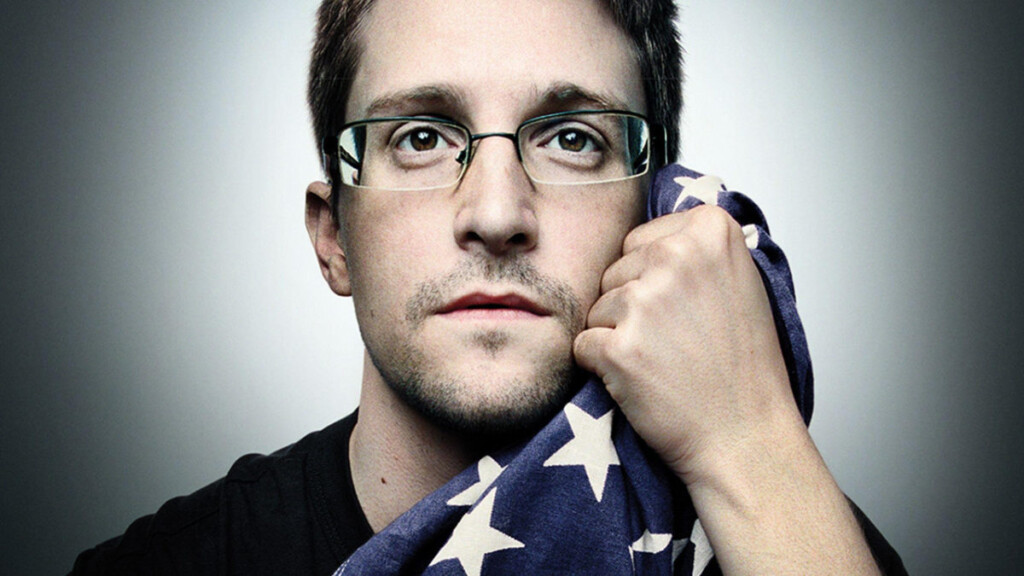
There is a question buried beneath every architecture of control, and it is never the question the architects announce. They speak of security, of threats, of the necessary calculus between liberty and order — as though these were stable quantities that could be weighed on a scale someone neutral had calibrated. But the real question, the one that never appears in the congressional briefings or the classified memos or the press releases issued after each new exposure, is simpler and more unsettling: who decided that knowing everything about everyone was an answer to anything at all?
The asymmetry is not incidental. It is the structure itself. The state accumulates knowledge about you — your movements, your associations, the words you type at two in the morning when you cannot sleep, the names you search for, the fears you do not speak aloud but encode in queries — while you are permitted to know almost nothing about what the state does with that knowledge, or in your name, or against people who resemble you only in the broadest demographic sense. Michel Foucault, writing in Discipline and Punish in 1975, understood that visibility is not neutral. It is a form of power. The one who sees without being seen does not merely observe — they produce the behavior of the observed. You begin to perform for a gaze you cannot locate, cannot confront, cannot appeal to. The performance eventually becomes indistinguishable from the self.
Consider what it means, concretely and physically, to learn that a single signals intelligence program was collecting more than two hundred million text messages every single day from people across the globe — not suspects, not persons of interest, not individuals who had triggered any threshold of concern, but everyone, indiscriminately, as a matter of industrial routine. Two hundred million small acts of human communication, most of them trivial, many of them tender, some of them desperate, all of them written under the implicit assumption that they were addressed to one person and no one else. The program did not read like a security measure. It read like an appetite. And appetites of that scale do not emerge from specific threats — they emerge from the belief, never quite stated, that knowing is itself a form of ownership, that to have read something is to have acquired a kind of dominion over the person who wrote it.
Hannah Arendt, in The Origins of Totalitarianism, made the observation that the destruction of the private sphere is not merely an inconvenience — it is the precondition for a particular kind of political subject: one who has no interior life that the state has not already entered. She was writing about regimes that announced their intrusions openly, even proudly. The more insidious version is the one that insists it is protecting you while it dismantles the wall between what you think and what can be known. The protection and the violation arrive in the same vehicle, and you are asked to be grateful for the ride.
What you become inside that machine is not simply a surveilled version of who you were before. The philosopher Charles Taylor, in his work on the politics of recognition, argued that identity is not formed in isolation but in relation to who is watching and how they see you. A self that has always been watched by an unseen, unaccountable gaze is not the same self that once moved through the world with the rough, ordinary confidence of the unobserved. Something in the texture of interiority changes — not dramatically, not all at once, but incrementally, the way a door that is never fully closed eventually stops feeling like a door at all. And the question that remains, the one that does not resolve itself into any comfortable political program or technological remedy, is whether you can find your way back to the person you were before the wall came down, or whether that person was already, in some sense, a preparation for the one you have since become.
🔍 Power, Control, and the Watched Society
Edward Snowden’s revelations about mass surveillance did not emerge from a vacuum — they were the culmination of decades of expanding state power, theoretical warnings, and literary prophecies. These related articles trace the intellectual and historical roots of the surveillance society, from Orwell’s dystopian visions to Foucault’s analysis of power and discipline.
The Surveillance Society: History and Theory
The surveillance society is not a modern invention but the product of a long historical and theoretical evolution spanning centuries of political thought. This article reconstructs how surveillance became a structural feature of modern governance, drawing on thinkers from Bentham to Foucault to explain how visibility itself became an instrument of control. Understanding this history is essential to grasping what Snowden ultimately exposed to the world.
GO TO THE SELECTION: The Surveillance Society: History and Theory
Orwell’s 1984: Big Brother and Total Surveillance
George Orwell‘s 1984 remains the most prescient literary blueprint for understanding mass surveillance and the logic of total state control. Big Brother’s omnipresent gaze, the Thought Police, and the manipulation of information all find uncomfortable echoes in the NSA programs Snowden documented. Reading Orwell today feels less like fiction and more like a technical manual that governments studied too carefully.
GO TO THE SELECTION: Orwell’s 1984: Big Brother and Total Surveillance
The Psychology of Power: History and Theory
The psychology of power explains why those who accumulate control so rarely choose to relinquish it voluntarily. This article examines how authority corrupts perception, breeds secrecy, and creates institutional cultures in which surveillance programs can grow unchecked for years without democratic oversight. Snowden’s story is, at its core, a case study in what happens when one individual refuses to be absorbed by that psychology.
GO TO THE SELECTION: The Psychology of Power: History and Theory
Banal Evil and Radical Evil: Kant and Arendt
Hannah Arendt‘s distinction between banal and radical evil offers a crucial philosophical lens for examining the bureaucrats and officials who built and maintained global surveillance infrastructures. Arendt showed that the greatest dangers often come not from monsters but from ordinary people executing orders within systems that normalize the abnormal. The agents who authorized mass data collection were, in this sense, textbook examples of the banality Arendt described.
GO TO THE SELECTION: Banal Evil and Radical Evil: Kant and Arendt
Discover Cinema That Questions Power on Indiecinema
If these themes of surveillance, power, and individual resistance resonate with you, Indiecinema’s streaming platform offers a curated selection of independent films that dare to ask the questions mainstream cinema avoids. From political thrillers to documentary investigations, our catalog is built for those who believe cinema should illuminate the world rather than distract from it. Join Indiecinema and watch the films that matter.
👉 EXPLORE THE CATALOG: Watch Indie Films in Streaming
A vision curated by a filmmaker, not an algorithm
In this video I explain our vision

