
The City After Midnight
You are walking alone at two in the morning through a street in Lyon or Brussels or some unnamed quarter of Prague where the cobblestones are still wet from rain that stopped an hour ago, and something in the geometry of the place is working against you. Not against your safety — against your legibility. The lamplight falls at an angle that was never designed to illuminate but to suggest, carving the underside of a stranger’s jaw into something that belongs to a different century, flattening the façade of a nineteenth-century building into a surface that reads less like architecture and more like a held breath. You are not afraid exactly. You are something more interesting than afraid. You are unsure whether what you are seeing is the city or a version of the city that the city produces only at this hour, for this specific quality of solitude.

That uncertainty is not incidental to noir. It is noir. The critical error that decades of film scholarship and photography theory have perpetuated is treating noir as a visual vocabulary applied to urban space — a set of compositional choices, a chiaroscuro toolkit, an aesthetic decision made by a cinematographer or a photographer who arrives at a location and deploys shadow like a contractor laying pipe. László Moholy-Nagy wrote in 1925 in Malerei Fotografie Film that the photograph was not a record of light but a manipulation of it, a writing with light that revealed what the eye, habituated to daytime consensus, refused to process. He was describing a technical fact that is also a philosophical one: the camera does not document a city; it catches the city in a confession.
European cities are architecturally structured around the production of penumbra. This is not metaphor. Haussmann’s renovation of Paris between 1853 and 1870 was explicitly an exercise in controlling sight lines — demolishing the medieval warren of alleys not only to prevent barricades but to replace the illegible with the monumental. What survived, in the arrondissements that Haussmann could not reach or did not bother to reach, were precisely the conditions that make a person feel watched without being able to locate the watcher. The courtyard that opens onto nothing. The passage couverte where the glass ceiling makes noon feel like dusk. The stairwell lit by a single bulb on a timer that was always going to expire before you reached your floor. These are not decorative remnants. They are the city’s residue of an older logic, one that predates the Enlightenment fantasy of transparency.
Walter Benjamin spent the 1930s inside the Arcades Project, that vast uncompleted ruin of a book, tracing how the nineteenth-century Parisian arcade was simultaneously a commercial space and a dream space — a place where the logic of capitalism was overlaid with something irrational, phantasmagorical, resistant to full waking. He was describing the origin condition of noir: not darkness as absence of light, but darkness as a form of surplus meaning, an excess that the city generates because its surfaces have been inscribed by too many incompatible histories to resolve into a single coherent daytime narrative.
What the photographer who goes out at midnight in Vienna or Antwerp or the Eixample district of Barcelona is doing, then, is not imposing a mood onto neutral space. She is finding the frequency at which the city transmits what it cannot say during business hours. The long exposure that turns a tram’s passing into a smear of gold on wet asphalt is not an artistic effect. It is an accurate record of what time does to motion in a place where the stone is older than any individual claim on it. The shadow thrown by a Baroque cornice across a doorway at two in the morning is a shadow that has been thrown ten thousand times before you arrived to photograph it, and it will be thrown ten thousand times after your negative dissolves.
Light as Instrument of Control
You are walking home at two in the morning through a street that has been lit for you, and the fact that you have never once questioned this — the angle of the lamp, the radius of its cone, the specific darkness it leaves at the edges — is itself the subject of this essay.
Georges-Eugène Haussmann did not redesign Paris in the 1850s and 1860s because Napoleon III was aesthetically offended by medieval alleyways. The boulevards were wide enough for artillery. The gas lamps placed along them at calibrated intervals were not gifts to the bourgeois evening stroller; they were a condition of visibility that made mass movement legible to authority. The narrow streets where the insurrections of 1848 had been fought — streets where a man could vanish into a doorway, where a crowd could dissolve before the gendarmerie turned a corner — those streets were the real targets of Haussmann’s demolitions. Light, in this project, was not separate from policing. It was policing rendered architectural.
The passage from gas to electric light accelerated this logic rather than softening it. When Berlin began systematically electrifying its public spaces in the 1880s, and London extended its arc-lamp networks through the following decade, the technology carried a moral rhetoric that was entirely explicit in the documents of the period. Edwin Chadwick’s earlier sanitary reports had already established the conceptual equation: darkness equals disease equals crime equals the poor. Electrification did not merely illuminate; it diagnosed. A neighborhood that remained poorly lit by the early twentieth century was not suffering from municipal neglect in the neutral administrative sense — it was being classified, held at a diagnostic distance by the city that had chosen, with full bureaucratic intentionality, where to place the infrastructure and where to let shadow persist.
What the sociologist Mike Davis would later describe in another context as the “spatial apartheid” of the modern city had one of its earliest and most legible expressions in this differential distribution of lumens. The well-lit street was the street safe for commerce, for respectable femininity, for the kind of pedestrian whose movements the state wished to encourage. The poorly lit street was the street where the body moved outside the social contract — the sex worker, the undocumented laborer, the political agitator, the drunk, all of them existing in the city’s deliberately manufactured penumbra, visible enough to be surveilled when necessary, dark enough to be denied when convenient.
Noir photography did not discover this structure. It inherited it, and then did something formally devastating with the inheritance. Photographers working in interwar Berlin, in the bombed and restructured London of the late 1940s, in the peripheral arrondissements that Haussmann’s successors had never finished redeeming — they found in the uneven light of the metropolis not atmosphere but evidence. The hard shadow cast by a single suspended bulb across a wet cobblestone is not an artistic choice in isolation; it is the documentation of a decision made by someone with a budget and a political mandate who chose not to install a second bulb. The chiaroscuro that critics would later aestheticize as a signature of the noir image was, at its material origin, the photograph of an inequality.
This is what separates the great practitioners of urban night photography from their imitators: not technique, not a preference for gelatin silver over color, but a capacity to make the shadow legible as the product of a specific historical will. When Brassaï moved through Paris between 1930 and 1932 producing the images that would appear in Paris de Nuit, he was photographing a city whose darkness had been curated. The zones he entered were dark because the Third Republic had calculated the cost of illuminating them and decided the population living there did not justify the expense.

The Geometry of Exclusion
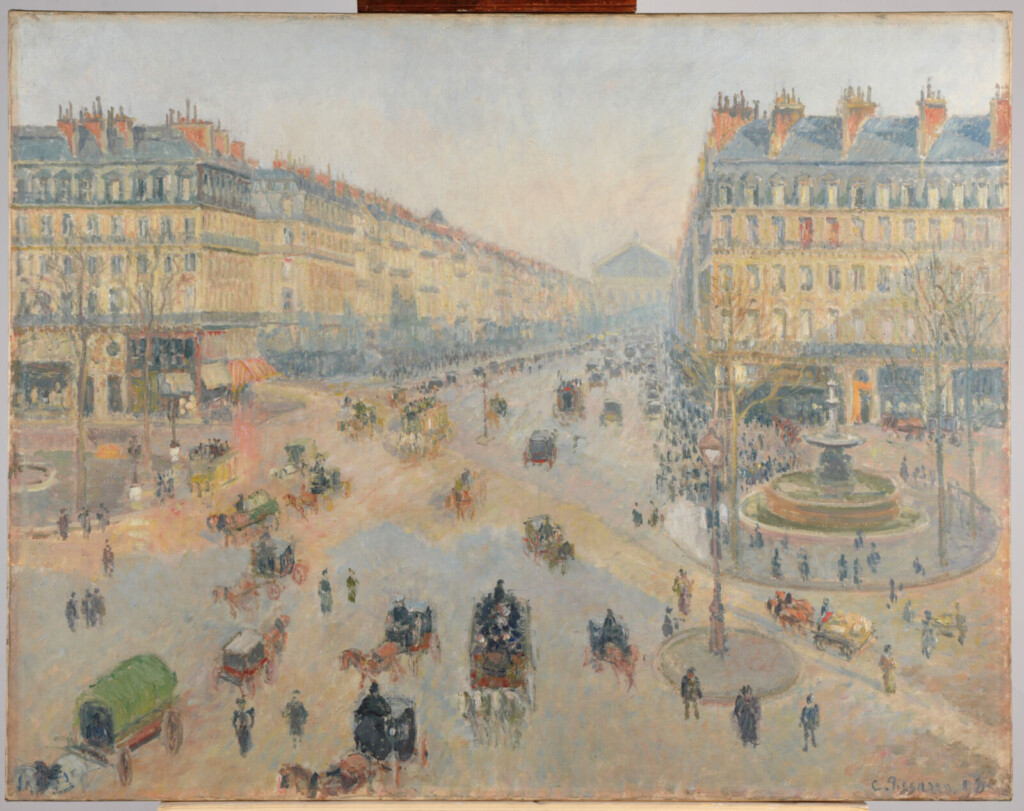
You have stood at the bottom of a stairwell in a building that was never meant for you — not in the sense of trespassing, but in the older, structural sense: the ceiling too low, the corridor too narrow, the single bulb throwing shadows that erase your face before you reach the door. The architecture does not threaten you. It simply does not acknowledge you. That omission is its own precision.
What noir cinematography captured in its most formally rigorous moments was not distortion but measurement. The steep angle that makes a figure look swallowed by the street below, the frame compressed until the walls appear to lean inward with intent, the light source positioned to transform a human face into a diagram of anxiety — these are not the fantasies of expressionist excess imported from Weimar trauma. They are observational instruments calibrated to a specific social reality. Henri Lefebvre argued in The Production of Space, published in 1974, that space is never neutral, never simply the container in which social life occurs. Space is produced by relations of power, and it reproduces those relations with every threshold, every angle of incidence, every shadow that falls where a shadow was always going to fall. The distorted geometries of noir are therefore not artistic license. They are the phenomenological truth of what it means to inhabit space that was produced against you.
Lefebvre distinguished between conceived space — the space of planners, architects, and administrators — and lived space, the space of those who occupy it without having designed its logic. In the European metropolises of the mid-twentieth century, this gap was not metaphorical. Paris after Haussmann’s 1853 to 1870 reconstruction had been physically reorganized to channel the working class toward peripheries, to create boulevards wide enough for military formation, to make insurrection geometrically inefficient. The bodies that moved through the remaining narrow streets of Belleville or the compressed tenements of Wedding in Berlin were moving through space that had been calculated to diminish them. A wide-angle lens tilted at fifteen degrees does not fabricate this experience. It transcribes it.
What makes this more unsettling is that the residents of these spaces internalize the geometry. The sociologist Pierre Bourdieu documented in The Weight of the World, assembled from interviews conducted in the late 1980s and published in 1993, how inhabitants of degraded urban environments carry the spatial logic of their housing in their bodies, in their posture, in the radius of their expectations. The person who sleeps in a room where two walls are always visible simultaneously does not dream of open horizons. The compressed perspective of noir is not imposed on passive bodies from outside by a calculating director. It emerges from inside the somatic knowledge of people for whom space has never been generous.
European noir in particular — in the work produced across Paris, Brussels, and the postwar German cities — returned obsessively to staircases, to corridors, to windows that open onto other windows. These are not set pieces of atmosphere. They are the architectural vocabulary of a class. The staircase that winds without arriving, the hallway that narrows as you descend, the window that frames only another wall — these spaces do not appear distorted because the camera has been tilted. They appear as they are. The camera has simply agreed to be honest about the angle from which a life is being conducted.
Oblique framing has been read as psychological externalisation, as the visible form of moral ambiguity, as the director’s editorial hand pressing down on a scene to signal danger. All of these readings are true and all of them are also evasions of something more specific: that a frame tilted at the same angle as a fire escape seen from below is not a metaphor for anything. It is a report. The building was built that way.
The Face the City Makes You Wear
You are standing on a Berlin street corner in 1927, and the man across from you is not looking at you. He is not looking at anyone. His eyes are open, his coat is buttoned to the throat, his jaw is set at an angle that suggests neither hostility nor welcome — it suggests nothing, which is precisely the point. You have seen this face before, because this face is everywhere, because this city manufactures it in the same way it manufactures trams and newspapers and noise.
Georg Simmel published “The Metropolis and Mental Life” in 1903, and what he described there was not a pathology but a survival mechanism. The modern city, he argued, subjects its inhabitants to a volume and velocity of nervous stimulation that the psyche cannot absorb without first learning to refuse it. The blasé attitude — his term, precise and clinical — is not indifference in the ordinary sense. It is the result of the nerves having responded to every stimulus so many times that they have exhausted their capacity for differentiation. The urban dweller who appears unmoved is not someone who feels nothing; they are someone whose feeling apparatus has been systematically worn down by an environment that never stops demanding a response. Simmel was writing about Vienna and Berlin and London, but he was also, without knowing it, writing the aesthetic manual for every noir photographer who would pick up a camera in the decades that followed.
What the Weimar-era photographers understood — August Sander most rigorously, with his systematic “People of the Twentieth Century” project begun in 1910 and extending through the 1930s — is that the face lying beneath the social mask is not more authentic than the mask itself. The mask has become the face. Sander’s portraits of clerks, servants, unemployed workers, and street vendors in Cologne and Berlin do not catch their subjects in moments of private vulnerability. They catch them performing the very composure the city has trained into them, and in that performance, in the slight tension around the mouth, in the eyes that have learned to receive without reacting, the photograph does something a painting cannot: it freezes the adaptation in progress. You see not a person but a process — the ongoing labor of maintaining an expression that costs something.
This is where noir aesthetics diverge sharply from humanist photography, which always seeks the punctum of individual interiority, the detail that breaks the surface and reminds you someone is home. Noir portraiture in the European metropolis between the wars is interested in the opposite phenomenon: the closed surface as information, the impenetrable face as social document. When Umbo, the Bauhaus-trained photographer born Otto Umbehr in 1902, turned his camera on Berlin street life in the late 1920s, he used extreme contrasts and steep angles not to dramatize his subjects but to exteriorize the pressure acting upon them. Shadow becomes the visual equivalent of urban overstimulation — it is not atmosphere, it is force.
The philosophical weight behind this approach had already been articulated, obliquely, by Walter Benjamin in his reading of Baudelaire, where the crowd is not a background to the individual but a medium that rewrites the body moving through it. The flâneur is always also the man who has learned to walk in a way that gives nothing away, because the city punishes legibility. Every readable emotion is a surface that the crowd can press against, exploit, ignore, or mirror back distorted. The face that gives nothing away is not a face that has surrendered — it is a face that has negotiated a very specific peace with an environment that would otherwise consume it entirely.
And yet the camera refuses to honor that peace. It looks at the sealed expression and reads it as evidence of everything that had to be sealed inside it, which means that what noir portraiture ultimately photographs is not the face the city makes you wear, but the cost of wearing it.
Women in the Underexposed Frame
You are walking behind a woman on a wet street at two in the morning, and something in you registers her silhouette before you register her humanity — the coat, the angle of the hip, the way the lamplight catches one shoulder and abandons the rest of her to shadow. You do not think of yourself as making a judgment. You think of yourself as seeing.
That sensation of pure, uncontaminated looking is precisely what Laura Mulvey dismantled in her 1975 essay “Visual Pleasure and Narrative Cinema,” where she demonstrated that the gaze is never neutral, never merely optical — it carries with it a structure of power that organizes the seen figure into an object of spectacle, held in place for evaluation. What Mulvey identified in the editing rooms of Hollywood was already operating decades earlier in the photographic studios and street darkrooms of Paris, Berlin, and Vienna, where photographers framing women in nocturnal urban space were not recording a social reality but manufacturing one. The woman half-submerged in shadow, leaning against a doorway or caught mid-step under a flickering arc lamp, was not discovered by the camera. She was produced by it.
The legal architecture of early twentieth-century European cities had already done the preliminary work. France’s 1903 regulation governing “racolage” — street solicitation — and Germany’s municipal ordinances from the same decade created a juridical distinction between women who belonged to nighttime public space and women who were merely passing through it. The criteria were never biological; they were sartorial, positional, gestural. A woman standing still on a corner after eleven o’clock occupied a different legal category than a woman in motion. A woman unaccompanied occupied a different category than a woman with a male escort. These were not descriptions of behavior; they were grids imposed on presence, and photography absorbed them entirely.
When Brassaï began systematically photographing Paris after dark in the late 1920s and early 1930s, producing the images that would become his 1933 publication “Paris de Nuit,” he was working inside a city that had already pre-categorized the women he pointed his lens at. The prostitutes of Montparnasse, the hostesses outside the brasseries on Boulevard Raspail, the figures in the doorways near Pigalle — they arrived in his frame already labeled by a municipal logic he did not invent and did not question. What the photograph did was aestheticize that label, make it beautiful, give it the permanence of silver halide, and thereby transform a contingent juridical category into something that felt like a natural fact about women and darkness.
What gets erased in this process is the subjectivity of the woman inside the frame — not her psychology in any sentimental sense, but her agency as a person navigating a city that had been structurally hostile to her unaccompanied presence since the Haussmann redesigns of mid-nineteenth-century Paris deliberately eliminated the mixed-use spaces where working-class women had previously moved freely. The wide boulevards and lit shop fronts that replaced the old labyrinthine streets were designed partly as instruments of social surveillance, a point historian Kristin Ross develops in her work on the spatial politics of Second Empire Paris. The woman caught in underexposed shadow is therefore not hiding from light by temperament or by moral nature; she is occupying the zones the city left to her after the zones of respectability had been architecturally and legally sealed.
The camera’s complicity lies in its pretense of passivity. A photograph appears to record what was there. It does not announce its framing choices, its exposure decisions, its moment of selection from the continuous flow of the street. It presents its composition as fate. And when the composition consistently places women in ambiguity — in the threshold between visible and invisible, between the readable and the suspect — that consistency begins to look like truth about women rather than a decision made by a man behind a lens in a city whose laws had already told him what he was looking at.
A vision curated by a filmmaker, not an algorithm
In this video I explain our vision
The Second Scene: A Woman Counting Coins at a Bar

She counts them twice, each coin placed flat on the zinc with a small precise click, as if the sound itself might add to the total. It is 1947, or 1951, or any year in that long corridor of European reconstruction when a woman alone at a bar counter was already a proposition before she had spoken a word. The barman watches without watching. The man across the room, seated at a corner table with a glass he has not touched in twenty minutes, watches openly, the way you watch something that might still become a threat or might still become an opportunity, and he has not yet decided which category she belongs to.
What the noir frame does in this moment is not documentary. It is a conversion. The coins on the zinc are evidence of economic fact — rationing had formally ended in France only in 1949, in Britain not until 1954, and across West Germany the currency reform of June 1948 had left millions holding paper that was worth less than the labor of counting it — but the aesthetic grammar of the scene refuses to receive this as data. The low angle of available light, the woman’s downward gaze, the man’s stillness: these do not say poverty. They say concealment. They say calculation. The visual language whispers that she is counting something other than what she is counting.
This is the mechanism that Siegfried Kracauer had already identified in a different register in his 1927 essay “The Mass Ornament,” where he argued that capitalist surface arrangements do not merely decorate social reality but actively reorganize its meaning, making the structural appear personal and the systemic appear chosen. The woman at the zinc bar has not chosen her coins. She has been chosen by them. But the noir composition insists on reading her fingers as fingers that know exactly what they are doing — deliberate, controlled, dangerous in their composure. Precarity is aestheticized into agency, and that aestheticized agency is immediately coded as threat.
The man across the room is not a villain in this scene. That is what makes it precise. He is the spectator function made visible, the one through whose eyes the frame is organized. His gaze is the camera before the camera arrives, and the logic of his looking has been trained by every image of feminine solitude that European urban culture had spent decades constructing: the kept woman, the widow with debts, the refugee who speaks too many languages. By the time he decides she is suspicious, he has not thought a single original thought. He has simply submitted to the preloaded grammar of the frame.
What the zinc bar and the coins and the late hour produce together is a moral reading of an economic situation, and this is the conversion that noir aesthetics performs on the European metropolis at its most vulnerable historical moment. Cities were full of women counting coins in 1947. Cities were full of solitary men in corner seats. The encounter between them was, statistically and sociologically, an encounter between two people sharing the same postwar diminishment. But the image refuses that symmetry. It distributes suspicion asymmetrically, places it entirely on the side of the one who is already marginal, already legible through a body and a gender that the culture had decided were inherently readable as performance rather than condition.
Simone de Beauvoir, writing in 1949 in “The Second Sex,” noted that femininity is not lived from the inside the way it is read from the outside — that the woman is always, for the external gaze, a figure, a sign, a text to be decoded rather than a subject engaged in the ordinary labor of surviving. The man at the corner table does not know he is confirming this. He believes he is simply being cautious, simply reading the room, the way any reasonable person reads a room that history has made genuinely dangerous.
Photography as False Witness
You have probably stood in front of a photograph of a stranger’s face and felt, without being able to explain it, that you were seeing something true. Not constructed, not chosen, not aimed — simply caught. That sensation is among the most persistent lies the twentieth century taught you to feel as instinct.
Walter Benjamin, writing in 1931, proposed that the camera grants access to what he called the optical unconscious — the visual residue that exceeds human perception, the gestures too fast for the eye, the textures too fine for attention, the fractional second of a body in motion that consciousness skips over. He meant it as liberation: the lens as a democratic instrument that returns the world to itself, free of hierarchy and intention. What he could not fully see, partly because the German cultural landscape he inhabited was still three years from its most catastrophic administrative rupture, was that the camera never floats. It is held. It has a wrist behind it, a rent paid somewhere, an editor waiting, a public already formed in its expectations before the shutter opens.
Brassaï spent the years between 1930 and 1932 moving through Paris after midnight, and the photographs he published in Paris de Nuit in 1933 became canonical almost immediately — the definitive image of the nocturnal city, reproduced across a century of photobooks, museum retrospectives, and art history syllabi. But look at the frame rather than the subject. The prostitutes are always slightly blurred, always caught mid-gesture, always positioned at angles that blur individual identity into archetype. The working-class drinkers are composed like figures in genre painting. The lesbian couples in La Monocle are shot with a theatrical symmetry that transforms intimacy into spectacle. Brassaï’s darkness is exquisitely organized. The optical unconscious, in his hands, became a deeply conscious taxonomy of who occupies the margins and how the margins should look to someone passing through them with a camera and a bourgeois publisher’s contract already signed.
August Sander took an entirely different formal approach and arrived at an entirely similar ideological destination. His project Menschen des 20. Jahrhunderts, begun in the 1920s and never completed, proposed a systematic typological portrait of German society — not individuals, but social roles rendered visible through the face. Sander’s photographs have been read as democratic and as proto-fascist, sometimes by the same scholars in the same paragraph, and that ambivalence is not a failure of interpretation. It is the photograph doing exactly what photographs do: encoding a classification system inside the grammar of neutrality. When Sander photographs a pastry chef and a bricklayer and an unemployed laborer and a notary, the visual logic implies that the camera has simply found each type where it naturally resides, as if social position were biological, as if the city were a stable ecosystem of roles rather than a contested field of power. The typology does not describe society. It performs the ideology that society has a legible order which the camera can document without disturbing.
The documentary ambition of noir photography — the claim to have captured the city as it actually exists after dark, without permission or pretense — is structurally identical to this move. The darkness in these images functions as a metaphor for access, as if the removal of daylight were the removal of ideology, as if night were a condition of truth rather than simply a condition of different exclusions. In reality, the night city of European noir photography is a carefully bounded territory: certain bodies appear as inhabitants, charged with melancholy and authenticity; others appear as transients, functionally invisible or reduced to atmosphere. The camera does not decide this alone. It inherits the decision from a longer history of urban governance — vagrancy laws, zoning ordinances, curfew practices — that had already determined, decades before any photographer arrived, which bodies in which spaces would be legible as human stories and which would register only as evidence of something else.
The Darkness That Remains After the Flash
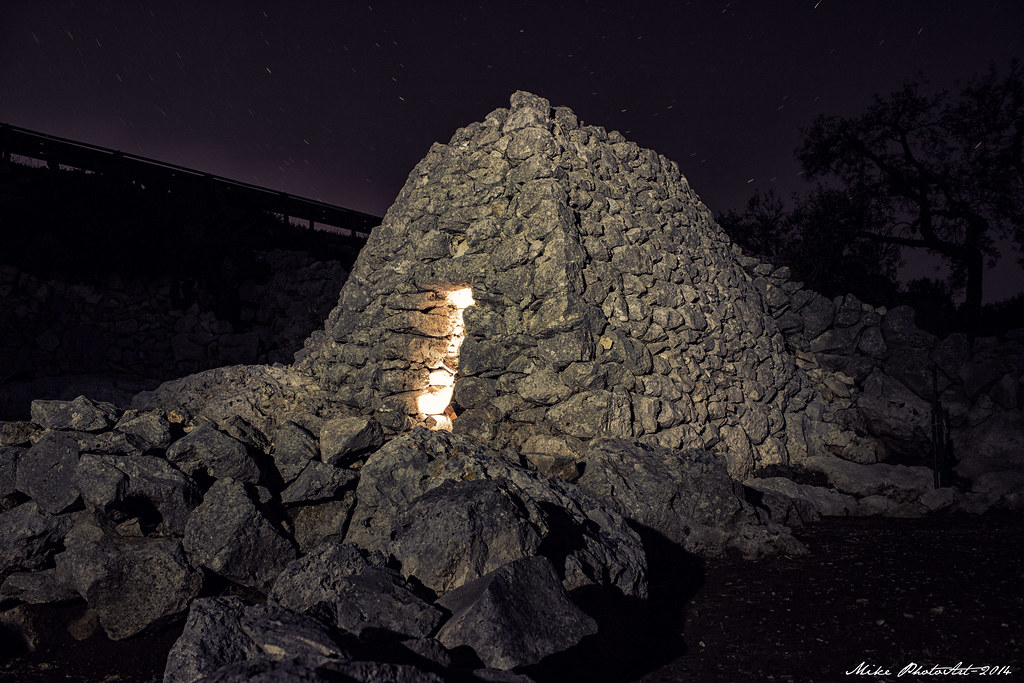
You have stood in front of a noir photograph and felt the city speak directly to you — the wet cobblestone, the single lamp cutting a cone of light into fog, the figure in the coat whose face you cannot read but whose solitude you immediately recognize as your own. That recognition is the aesthetic contract, and it works every time, which should itself be suspicious.
The contract was written with exclusions already embedded in its grammar. When Brassaï prowled the streets of Paris between 1930 and 1932 to produce the images collected in Paris de Nuit, he was constructing a mythology of urban loneliness that was simultaneously a mythology of a particular urban subject — recognizably European, recognizably male, carrying the correct quantity of existential weight. The Algerian workers who swept those same streets at four in the morning before the elegant compositions could be set up were not incidental omissions. They were the condition of possibility for the frame.
Walter Benjamin understood something structural about this when he described how the flâneur — that sovereign pedestrian of metropolitan modernity — required a city that would absorb his gaze without resisting it. The flâneur owns the street precisely because the street offers itself as spectacle to him. But that ownership was always a property arrangement, not a universal human condition, and the bodies that cleaned, repaired, and serviced the spectacle were bodies that the flâneur’s eye had already processed as background, as infrastructure, as the invisible labor that made aesthetic wandering possible.
Noir formalized this processing. The dramatic silhouette requires a figure whose interior life the genre has already decided is legible, is grievable, is worth the chiaroscuro. The form borrowed heavily from German Expressionism, which had itself arrived in European cinema and photography carrying a specific theory of who suffers meaningfully — the intellectual undone by fate, the beautiful woman destroyed by forces she barely understands, the detective corroded by moral complexity. When Fritz Lang built his visual vocabulary for M in 1931, the shadows falling across Peter Lorre‘s face were doing philosophical work: they were arguing that this particular anguish deserved geometry.
That geometry could not accommodate other geometries. Stuart Hall, writing in the 1990s about the politics of representation, argued that marginalized groups are not simply underrepresented but are misrepresented through forms that were built without them in mind — and that inserting them into those forms without transforming the forms themselves produces only a more sophisticated erasure. A noir photograph that places a Senegalese dockworker in the same compositional role as the trench-coated detective does not include him: it auditions him for a role written for someone else, judges him against criteria he was never meant to meet, and finds him, inevitably, slightly wrong.
The European metropolis of the noir imagination is a city without a colonial unconscious, which is to say it is a city that has surgically removed approximately half of its actual history. London in 1950, Paris in 1955, Amsterdam in 1960 — these were cities whose material prosperity, whose very capacity to generate the leisured alienation that noir photographed so beautifully, was inseparable from extraction happening elsewhere, from labor hierarchies operating in plain sight. The genre looked at the rain on the pavement and saw existential desolation. It could not look at the same rain and see the Jamaican bus conductor standing in it, because that figure’s presence would collapse the aesthetic by introducing a grievance more specific than atmosphere, a suffering with an address rather than a mood.
What remains after the flash is not darkness in the romantic sense the genre intended. It is the darkness of the unlit margin, the part of the frame the camera turned away from because including it would have required a different camera, built on different assumptions, asking different questions about which lives generate images worth making and which lives simply generate the city that the images require.
🌑 Shadows, Lenses & the Urban Uncanny
Noir aesthetics in the European metropolis are inseparable from a broader cultural obsession with darkness, the gaze, and the city as a site of hidden meaning. To photograph noir is to enter a labyrinth of shadow and light, where philosophy, literature, and visual art converge. The articles below illuminate the intellectual and artistic currents that flow beneath the surface of noir imagery.
Black and White Photography: Masters of Shadow and Light
Black and white photography is the native language of noir, stripping the visible world down to contrasts that mirror the moral ambiguities of the metropolis. Masters of this medium understood that shadow is not the absence of light but its most eloquent statement. This article traces the history of photographers who turned the city into a theatre of darkness and revelation.
GO TO THE SELECTION: Black and White Photography: Masters of Shadow and Light
Barthes’s Camera Lucida: When a Photo Pierces the Soul
Roland Barthes‘s Camera Lucida offers one of the most piercing philosophical meditations on what photography truly captures — not just an image, but a wound in time. His concept of the punctum resonates deeply with noir aesthetics, where a single detail can shatter the composure of an entire scene. This piece explores how Barthes transformed our understanding of the photographic gaze.
GO TO THE SELECTION: Barthes’s Camera Lucida: When a Photo Pierces the Soul
Georg Simmel and the Metropolis: The Metropolis and Mental Life
Georg Simmel’s landmark essay on the metropolis and mental life provides the sociological foundation for understanding why the modern city breeds alienation, anonymity, and the noir sensibility. The urban crowd becomes a space of paradoxical isolation, where individuals are simultaneously overwhelmed and unseen. Simmel’s thought is indispensable for any serious reading of European noir photography.
GO TO THE SELECTION: Georg Simmel and the Metropolis: The Metropolis and Mental Life
Existentialist Noir: History and Meaning
Existentialist noir is the philosophical current that gives European noir cinema and photography much of their brooding intellectual weight, blending Sartrean despair with the visual grammar of shadow and moral ambiguity. This article charts the history and meaning of a genre where darkness is never merely aesthetic but always existential. Understanding existentialist noir deepens every encounter with the nocturnal European cityscape.
GO TO THE SELECTION: Existentialist Noir: History and Meaning
Discover More on Indiecinema
If these shadows and ideas have stirred something in you, Indiecinema is the streaming platform where noir aesthetics, urban cinema, and independent filmmaking come together. Explore our curated selection of European films that refuse the comfort of daylight and dare to look into the dark.
👉 EXPLORE THE CATALOG: Watch Indie Films in Streaming
A vision curated by a filmmaker, not an algorithm
In this video I explain our vision

