
The Photograph You Cannot Put Down
You are holding it again. Not because you meant to, not because you went looking for it — you were searching for something else entirely, a receipt maybe, an old address, and then your hand found it before your eyes did, and now you cannot put it down. The photograph. Not a digital image on a screen you can scroll past, not a file thumbnail you can close with a click, but an actual physical object, slightly worn at one corner where someone — maybe you, maybe them — used to hold it. You are standing in the middle of a room you know perfectly well, surrounded by your ordinary life, and yet you have gone somewhere else entirely. You do not know how long you have been standing there.

What arrests you is not the image of the person. You have other images of this person — better ones, technically speaking, sharper focus, better light, a moment you actually remember being present for. You have photographs where they are smiling directly at the camera with the full weight of intention behind it, photographs where they look the way you always wanted to remember them. And yet it is this one. This particular rectangle of light and shadow, this specific angle of a shoulder, this unremarkable Tuesday afternoon frozen into chemical permanence. Something in it catches you like a hook set in soft tissue, and every attempt to name what it is only makes it recede further. You tell yourself it is the eyes. Then you look again and realize it is not the eyes. You tell yourself it is something about the light. But the light is ordinary. Whatever it is exists somewhere between the surface of the image and the thing behind the image, in a space that has no proper name in any language you speak.
The people who study grief will tell you that photographs play a documented role in what they call the continuing bonds theory — the idea, developed seriously in bereavement research through the 1990s and after, that healthy mourning does not require severing attachment to the dead but rather renegotiating the relationship across the threshold of absence. They mean this in a clinical and relatively hopeful way. They do not mean the specific, almost violent quality of what you are experiencing right now, which is not grief in any generalized sense but rather the sensation that this image is doing something to your body. Your chest has changed in some way that is not metaphorical. The photograph is not reminding you of a feeling. It is producing one, directly, without mediation, the way cold water produces cold.
There is a word for the unbearable, intimate specificity of an image that wounds a particular viewer and no other — a detail or a quality that was never intended by whoever pressed the shutter, that cannot be explained to someone else without immediately losing the quality that makes it devastating, that exists only in the encounter between this image and this set of eyes at this moment of a life. The word exists, someone found it, and it is precise enough to feel like a diagnosis. But before that word does its work, it is worth sitting inside the experience itself for a moment longer, because theory applied too quickly to a wound has a way of closing it prematurely, of converting something that is still bleeding into something that is already understood.
What the photograph holds is not the person. You know this. The person is gone or lost or simply elsewhere in a way that cannot be reversed, and the chemical surface in your hand is not them, does not contain them, has never been them in any literal sense. And yet your nervous system does not agree. Your nervous system is behaving as though something real is present. That disagreement, between what you know and what your body insists upon feeling, is not a failure of cognition. It is the site of everything.
Simon Marsden’s Haunted Life In Pictures
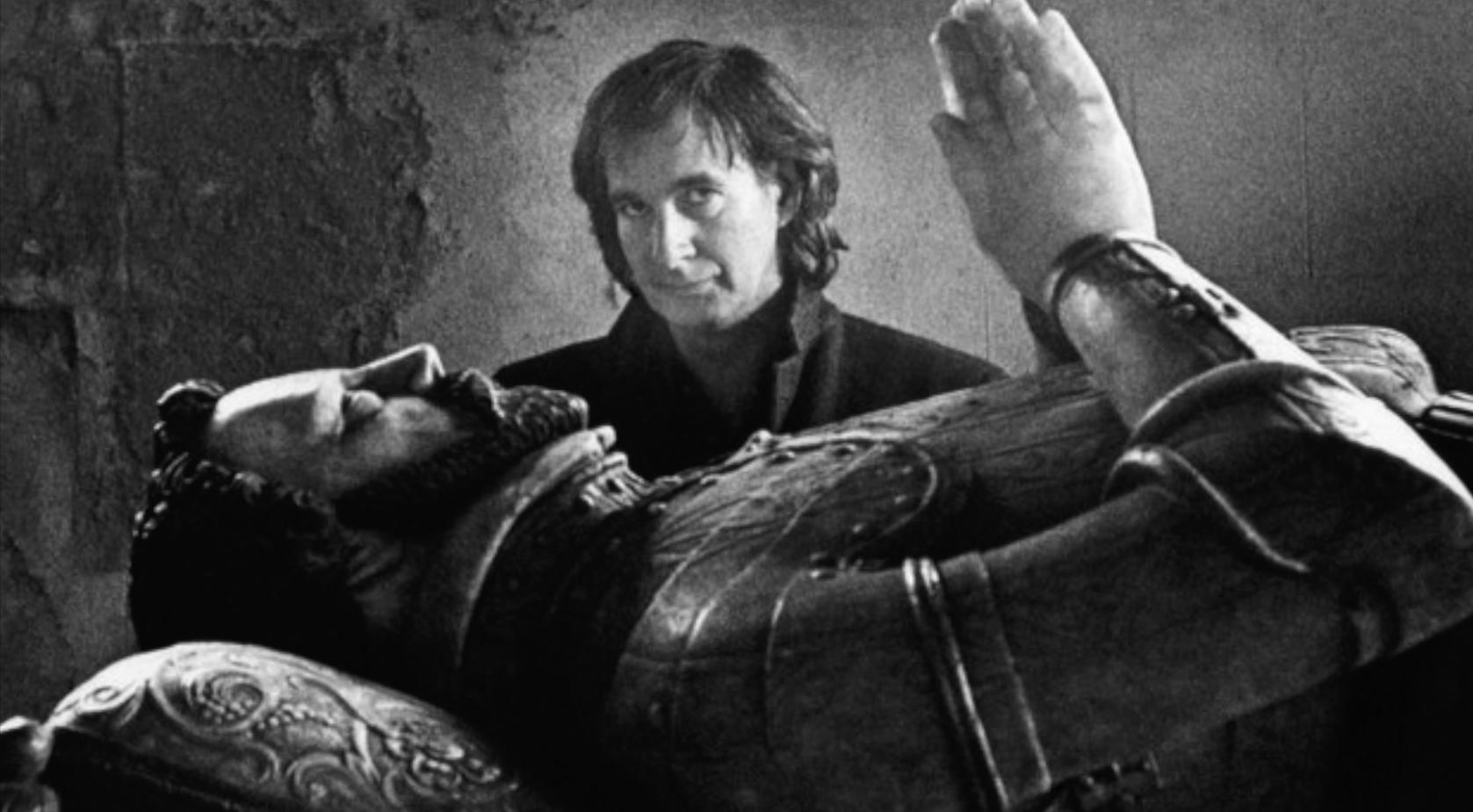
Documentary, by Jason Figgis, United States, 2019.
This documentary retraces the life and work of Simon Marsden, widely regarded as one of the foremost photographers of the supernatural. Premiered at the British Film Institute in London, the film offers a fascinating journey into his creative universe, appealing not only to photography enthusiasts but also to scholars, teachers, students, and anyone intrigued by the mysteries of the unseen. Through evocative imagery and first-hand accounts, it explores the artistic path of a photographer whose work has appeared in books, on U2 album covers, and in museum exhibitions around the world.
Although convinced of the existence of ghosts, Marsden never claimed to capture them directly with his camera. Instead, he used black-and-white infrared film to record the atmosphere and the invisible traces that, in his view, spirits left imprinted upon places. From the landscapes of Ireland to the vast expanses of Russia, passing through Venice and the American Southwest, he transformed historic buildings, ruins, and haunting locations into deeply evocative images capable of suggesting dark and unsettling stories. His photographs continue to captivate the imagination, demonstrating how the most powerful works of art can leave a lasting impression on those who behold them.
LANGUAGE: English
SUBTITLES: Spanish, French, German, Portuguese
Studium and the Lie of Cultural Pleasure
You are standing in a gallery, tilted slightly forward at the waist, arms crossed or hands folded, your face arranged into the expression of someone who is genuinely receiving something. You move from frame to frame at the correct speed — not so fast as to seem indifferent, not so slow as to seem affected. You nod. You feel, or you perform feeling, and the terrible secret is that you cannot always tell which one is happening.
Roland Barthes published Camera Lucida in 1980, the last book he completed before a laundry van struck him on a Paris street and he died six weeks later at sixty-four. The book is many things — a theory of photography, a meditation on death, a private elegy — but its first and most quietly devastating contribution is the concept of the studium: the layer of interest, engagement, and even pleasure that we bring to images because we have been trained to bring it. Studium is not fake exactly, but it is not yours either. It belongs to the cultural contract. When you look at a documentary photograph of famine or war and feel something that you would describe as concern, or gravity, or compassion, Barthes would ask you to examine whether that feeling is a genuine rupture in your consciousness or a competent execution of the emotional role that a person of your education and sensibility is expected to perform before such an image. The answer, for most images and most viewers most of the time, is the second.
This is more corrosive than it first appears. Aesthetic culture has built entire institutions — museums, criticism, film festivals, literary prizes — around the assumption that trained attention produces genuine experience. What Barthes noticed is that training produces something more like fluency. You become fluent in images the way you become fluent in a language, which means you process them without resistance, without surprise, without the friction that actual encounter requires. The sociologist Pierre Bourdieu had already mapped this territory in Distinction, published in 1979, where he demonstrated through empirical survey data across French social classes that aesthetic taste functions primarily as a marker of class position rather than as evidence of inner life. What Bourdieu measured statistically, Barthes felt phenomenologically — the gap between the image and the response to it, the space where a real reaction should have lived but where a rehearsed one arrived instead.
What makes studium so difficult to dismantle is that it is not experienced as performance. It arrives with the texture of sincerity. You look at a photograph of a flooded village and something moves in your chest, and that movement is real — it is just not yours in the way you believe it is. It was installed in you by years of exposure to the visual grammar of suffering, by captions, by documentary traditions, by the cultural agreement that certain kinds of images demand certain kinds of feeling. Susan Sontag argued in Regarding the Pain of Others, published in 2003, that compassion is an unstable emotion, that it needs to be translated into action or it will wither — but Barthes’s problem arrives even earlier than Sontag’s. Before the question of whether compassion converts into action, there is the question of whether what you experienced was compassion at all or simply the correct performance of a spectator who knows how this scene is supposed to be watched.
Photography made this problem acute in a way that painting never quite did, because a photograph carries the automatic authority of the real. You cannot accuse yourself of aestheticizing a brushstroke, but you can look at a photograph of a dying child and feel the satisfying gravity of your own seriousness, and nothing in the image will stop you from doing so. The studium provides the occasion for moral self-regard dressed as witnessing, and most people — including people who have read Barthes — walk away from photographs feeling confirmed rather than disturbed.

The Punctum as Rupture, Not Beauty
You are standing in a gallery, surrounded by photographs that everyone around you seems to find devastating. They lean in, they murmur, they press hands to chests. You feel nothing except the mild embarrassment of feeling nothing. The images are technically extraordinary. The composition is flawless. The suffering depicted is undeniable. And yet the whole room passes through you like wind through a screen door, leaving no mark at all.
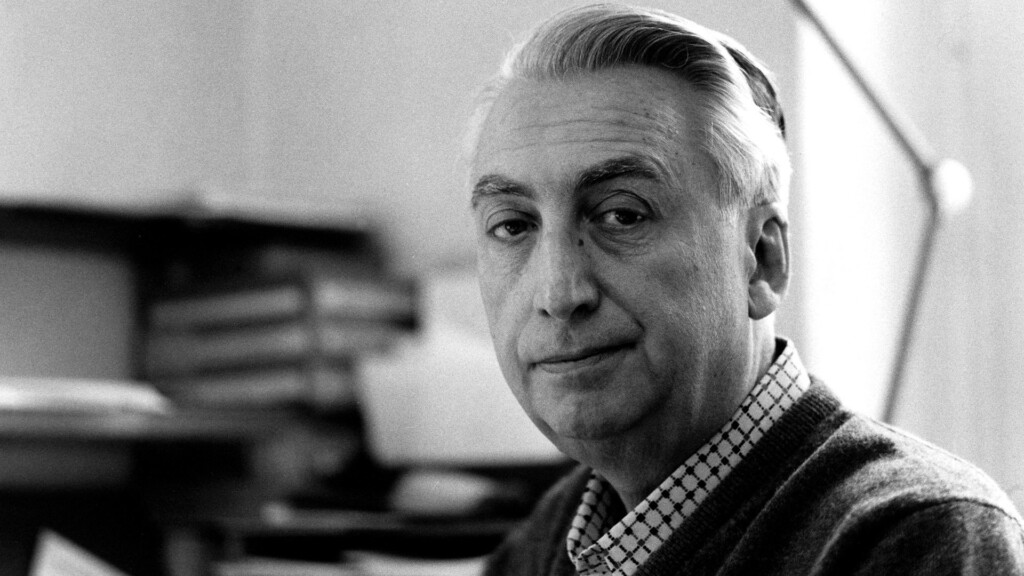
Roland Barthes spent the final years of his life trying to articulate why this happens, and what he arrived at in Camera Lucida, published in 1980 just months before his death, was not a theory of photography so much as a theory of irreducible singularity. The punctum — that small wound, that prick, that cut — is not something the photographer places inside the image. It is not craft. It is not intention. It is not even visible to most eyes. It erupts in the encounter between one specific image and one specific body at one specific moment in time, and then it is over. The same photograph, viewed a week later by the same person in a different mood, might be inert. Barthes himself admitted this. The wound is not in the picture. It happens to you, and it happens once.
This is a direct assault on one of the most comfortable myths Western culture has constructed around art and experience: the belief that genuine meaning can be transmitted cleanly from one consciousness to another, that if something is truly profound, everyone capable of sensitivity will feel it equally. The entire infrastructure of criticism, of education, of cultural prestige rests on this assumption. Syllabi are built around it. Museum placards depend on it. The art world monetizes it. If the punctum existed, it would not be teachable, and an untouchable experience threatens every institution built around the transmission of aesthetic value.
Erving Goffman, in his 1959 work The Presentation of Self in Everyday Life, mapped the elaborate performances people enact in social situations to signal the right feelings at the right moments. What he called front-stage behavior is precisely the performance of being moved correctly, of registering the appropriate emotional responses to culturally sanctioned stimuli. The person in that gallery pressing a hand to their chest may be performing devastation as fluently as they perform any other social competence. This is not cynicism about human feeling — it is an observation about how thoroughly the social world colonizes the interior one, until the two become genuinely indistinguishable even to the person doing the feeling.
What Barthes described as the punctum has no social form. It cannot be performed because it has no script. It arrives without warning in the most ordinary details — a particular angle of a collar, the way light falls across an unimportant hand, something that has nothing to do with the image’s official subject — and it bypasses every learned framework of response. Susan Sontag, writing in On Photography in 1977, three years before Barthes, had argued that the camera teaches people how to see, that photographic culture shapes perception so thoroughly that viewers come to photographs already knowing what they are supposed to find significant. The punctum is the catastrophic exception to that argument. It is the moment when something in the image escapes the camera’s own pedagogy and lands in you without permission.
The disturbing implication is that most meaningful experience may be structurally incommunicable — not because language is insufficient, though it often is, but because the event itself is indexed to a body, a history, a nervous system that cannot be shared. Two people can stand before the same image for the same duration and one of them is simply elsewhere, unhurt, unmoved, and entirely correct to be so, because the wound was never theirs to receive.
The Winter Garden Photo and the Ethics of Withholding
You are sitting with a photograph that no one else will ever see. Not because it has been lost, or locked in a vault, or destroyed by time — but because the man who found it decided, with full deliberation, that showing it to you would be a kind of murder. Roland Barthes spent weeks after his mother’s death in 1977 moving through her photographs the way a person moves through a house after someone has left it forever, touching objects without knowing why, looking for a presence that kept refusing to arrive. He found it, finally, in a photograph taken in 1898 — his mother at five years old, standing in a winter garden with her brother, her face holding something he recognized as her essential nature, the quality he had spent her whole life knowing and had never once been able to name.
What he refused to do with that image is philosophically more significant than anything he did with the dozens of others he does reproduce and analyze throughout Camera Lucida. The ethics of withholding are rarely treated as ethics at all — we tend to read absence as modesty, as grief, as the understandable reticence of a son who cannot bear exposure. But Barthes was too precise a thinker for mere reticence. He states explicitly that to publish the photograph would be to surrender it to the indifference of the world, to submit it to the leveling gaze of strangers who would see a child in a garden and feel nothing, or worse, feel something generic and transferable, the mild pathos anyone can summon for any dead child in any old photograph. The image that pierces him would not pierce you. Not because you lack sensitivity, but because the punctum — that involuntary wound the photograph opens — is not a property of the image. It is a property of the encounter between a specific image and a specific nervous system carrying a specific history.
Georges Didi-Huberman, writing in 1992 in Ce que nous voyons, ce qui nous regarde, would later argue that images make demands on us — that looking is never passive, never innocent of consequence. But Barthes had already pushed this further by inverting it: the most demanding image is sometimes the one that demands not to be looked at by everyone. To publish the Winter Garden photograph would be to convert a singularity into a document. Documents can be consulted, filed, compared, forgotten. The photograph of his mother as a child was not a document. It was, for Barthes, the only surviving evidence of something that existed entirely outside language and outside any social category — the being of a specific woman before she became a mother, before she became anything to anyone, in the brief clearing of childhood.
There is a particular violence embedded in democratic visibility — the assumption that what matters most should be most shared, that withholding is a form of selfishness or even deception. Susan Sontag had argued in On Photography, published in 1977, that photographs democratize experience, flattening hierarchies of access. Barthes, writing three years later in direct and unspoken tension with that argument, performs the counter-gesture: he insists that some experiences resist democratization not out of elitism but out of loyalty to what makes them real. To show you a photograph that means everything to him and nothing to you would not be an act of sharing — it would be an act of translation, and all translation involves loss. He chooses the loss of communicability over the loss of truth.
What survives in the text instead is a description so precise that many readers report feeling they have seen the image. A girl. A winter garden. A quality of goodness in the face. And this verbal ghost of a withheld photograph does something a reproduced image could not: it forces you to fill the frame with something drawn from your own archive of irreplaceable faces, which means the Winter Garden photograph becomes, through its very absence, a structure into which every reader installs their own.
Photography as Thanatography
You are holding a photograph of someone you love, and you already know — without needing to be told — that the image is not them. It is the light that bounced off them on a specific afternoon that no longer exists, captured by a chemical process that froze what physics was already in the process of dissolving. You know this. You keep the photograph anyway. You keep it precisely because you know this.
Roland Barthes pressed this discomfort into a philosophical formula that has never quite been neutralized by the decades of commentary that followed. The photograph does not say “this is.” It says “this has been.” The Latin he reached for was ça a été — a phrase that carries in French a weight of irreversibility that its English translation struggles to hold. What the camera certifies is not presence but anterior presence, not existence but the trace left behind by something that passed through the frame of the world and kept moving toward its own disappearance. Every photograph is structurally a death notice, written before the death has officially occurred.
This is not metaphor. Barthes was working at the level of ontology, not rhetoric. In Camera Lucida, published in 1980, he drew a distinction that most image theory had been carefully avoiding: the photograph is not a representation of the real but an emanation of it. Light actually touched the surface. The connection between image and referent is not symbolic but physical, almost bodily — and it is precisely this physical intimacy that makes every photograph a relic rather than a picture. Relics belong to the dead. Museums understand this. Families understand it less consciously but with equal certainty, which is why the photograph of a deceased parent occupies a different moral category than the photograph of a landscape, even if both are technically inert rectangles of paper.
What Western consumer culture has done with this unbearable fact is not suppress it but invert it. The compulsive production of images — accelerating from the Kodak Brownie’s democratization of personal photography in 1900 to the three trillion photographs estimated to be taken annually by the 2020s — looks like a celebration of life. It functions as its opposite. Every image taken is a wager against forgetting, which is itself a wager against mortality, which means every image taken is an admission that mortality is the default condition being fought. The medium does not comfort; it testifies to the terror it pretends to soothe. André Bazin saw this earlier, in 1945, when he described cinema and photography through what he called the “mummy complex” — the ancient Egyptian impulse to preserve the body against time by substituting a more durable material double. Bazin understood that this substitution was not a victory over death but its most elaborate acknowledgment.
The embalming comparison is not incidental. Embalming does not return the dead to life; it arrests decomposition long enough for the living to sustain the illusion of presence for a socially tolerable duration. The photograph performs the same operation indefinitely. A face frozen at thirty-two years old becomes, after the subject has aged past recognition, not a record of who they were but a monument to the divergence between the living person and their preserved image — two beings who share a name and an origin and almost nothing else. The photograph does not capture identity; it captures a single configuration of matter that identity temporarily inhabited.
Barthes lost his mother in 1977, three years before Camera Lucida was published, and the book’s theoretical architecture is inseparable from that grief. He searched through her photographs looking for her, and found instead a series of strangers who resembled her at ages he had never known. The one image that finally returned her to him — the Winter Garden photograph, which he describes but refuses to reproduce in the book — did so not by showing him who she had become but by showing him who she had been before he existed to know her.
A vision curated by a filmmaker, not an algorithm
In this video I explain our vision
The Second Scene: The Archive That Erases

You are standing in front of a screen at 2 in the afternoon, a government archivist in a municipal building somewhere in the industrial Midwest, and you have been assigned to process 14,000 digitized photographs from a county welfare office spanning 1902 to 1941. Your task is metadata: names where available, dates, case numbers, sometimes occupations. You have been doing this for six weeks. The faces come at you in sequence — a woman in a cotton dress, a man with a collapsed expression, children standing in configurations that suggest they have been told not to move — and somewhere around face four hundred, something in you stopped registering them as individual humans and began processing them as units of a classificatory system. You notice this. You do not stop.
What has happened to you is not callousness. It is something far more structurally precise. Walter Benjamin, writing in 1936 in “The Work of Art in the Age of Mechanical Reproduction,” identified a quality he called aura — the singular presence of a thing in time and space, its rootedness in a here and a now that cannot be replicated. He was writing about art, but the mechanism he described applies with savage accuracy to the photographic face: the aura of a portrait depends on its singularity, on the fact that encountering it is an event rather than an item in a sequence. When you process face 401 immediately after face 400 and before face 402, the encounter is no longer an event. It is throughput. The aura does not survive industrial processing.
The archive does not fail these people through indifference. It fails them through abundance. This is the paradox that contemporary image culture cannot afford to examine honestly: more photographs do not produce more seeing. The visual economy operates on a curve of radical diminishing returns, where at sufficient volume, each new image actively subtracts from the legibility of all the others. By 2023, approximately 1.72 trillion photographs were taken globally in a single year — a figure that renders the word “photograph” almost categorically obsolete, because the noun no longer refers to anything discrete enough to be examined. What exists instead is a continuous atmospheric pressure of images, indistinguishable in its totality from visual noise.
The theoretical apparatus here belongs to Susan Sontag, who in “On Photography” in 1977 argued that the proliferation of images produces not heightened awareness but a kind of aesthetic anesthesia — what she called, with characteristic precision, “a chronic voyeuristic relation to the world.” She was writing before the smartphone, before the cloud storage archive, before the algorithmic feed that delivers faces at a rate no human nervous system evolved to process. Her diagnosis was correct but conservative. The anesthesia she described has since become a structural condition of visual experience itself, not an occasional symptom but the baseline state.
What the archivist loses access to is not empathy in any simple moral sense. It is something more phenomenological: the capacity for the image to create an asymmetry between the viewer and the viewed, that condition in which one face becomes more real than your own comfort. The sheer volume of the archive equalizes all faces into equivalence, and equivalence is the enemy of witness. A photograph that sits inside a set of 14,000 cannot be witnessed — it can only be counted. The distinction matters enormously, because counting is a relation between a viewer and a quantity, while witnessing is a relation between two singularities. You cannot witness at scale. The archive, by its very logic of completeness, forecloses the encounter it was designed to preserve.
What remains when the capacity for punctum has been institutionally exhausted is something closer to a sociological datum than a human face — a point in a distribution, a proof of presence, an administrative confirmation that a particular body occupied a particular space in a particular year, which is precisely the opposite of what it means to be seen.
Walter Benjamin‘s Aura and What Barthes Refuses to Mourn
You are standing in a room full of photographs of someone you loved, and not one of them is the person. Each image confirms the loss more precisely than the last, and the accumulation does not add up to presence — it adds up to a more refined catalog of absence. This is not a failure of photography. It is photography doing exactly what it does, and Barthes knew this with the particular cruelty of someone who had spent his professional life treating signs as objects of analysis and then found himself unable to analyze his way out of grief.
Walter Benjamin, writing in 1936 in his essay “The Work of Art in the Age of Mechanical Reproduction,” argued that the photograph destroys aura — that irreducible quality of an original work’s presence in time and space, its embeddedness in tradition, its singular “here and now.” The camera, for Benjamin, is a democratic but desacralizing instrument: it liberates images from ritual, from cult value, from the authority of the unique object. This was, in his framework, not purely lamentation but a political opening. Mass reproduction could strip the mystique from fascist aesthetics, could democratize beauty, could dissolve the dangerous enchantment surrounding original objects and exceptional men. Benjamin’s analysis is brilliant and his stakes are historical, collective, and finally emancipatory in intention.
Barthes is doing something Benjamin never prepared a framework for. The punctum — that detail in a photograph that wounds rather than informs, that arrests the viewer not because it was intended to arrest but because it catches something the viewer alone carries — is not aura in the Benjaminian sense and is not its absence either. It belongs to a different register entirely, one that critical theory finds structurally difficult to accommodate: the register of irreducible private grief. When Barthes looks at the Winter Garden photograph of his mother as a child and finds in it the truth of who she was, he is not recovering aura, not mourning the death of the original, not making a political claim about reproduction. He is insisting that something happened between him and that image that cannot be socialized, cannot be generalized, cannot be converted into a theoretical proposition without vanishing in the conversion.
This is the provocation that most readers of Camera Lucida, published in 1980, absorb without fully confronting. Barthes had been one of the architects of structuralist and post-structuralist thought — a man who argued in 1967 that the author is dead, that meaning is produced by the reader in a field of codes, that the subject is an effect of language rather than its origin. And then he wrote a book in which a single photograph of a woman who died in October 1977 organizes all of photographic theory around the question of what she meant to him specifically, as her son, as this irreplaceable and non-transferable relation. He is not recanting. He is identifying the place where the system cannot follow.
Collective grief has rituals, archives, monuments, and eventually historiography. It gets processed through institutions that transform private devastation into shared meaning, which is not nothing — it is, in fact, how civilizations survive loss at scale. But there is a form of grief that these frameworks do not reach, not because the frameworks are inadequate but because the grief is constitutively singular. It does not generalize. Barthes refuses to let the death of his mother become a case study, a sociological data point, an occasion for applying Freud’s 1917 distinction between mourning and melancholia, in which mourning successfully detaches libidinal investment from the lost object while melancholia fails to do so and collapses into the ego. He is not interested in whether his grief is healthy or pathological by that measure. He is interested in whether the photograph holds something real, and by real he means something that resists the dissolution that theoretical adequacy always performs on its objects.
What critical theory offers is coherence. What Barthes is protecting is the wound itself — its specific shape, its refusal to be smoothed into argument, the way it stays sharp precisely because it cannot be shared without being falsified.
When the Image Knows More Than You Do
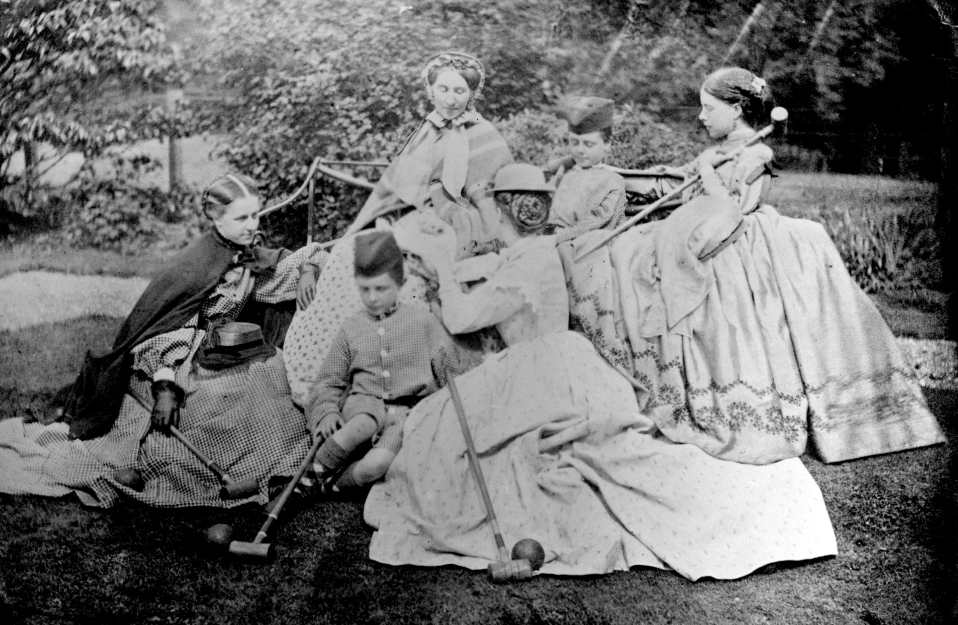
You are standing in front of a photograph you have seen dozens of times — a family picture, unremarkable, taken at some ordinary gathering — and then one afternoon it catches you differently, and you realize that what has changed is not the image but the fact that you are now old enough to see what was always there: the particular way two people are not looking at each other, the tension held in a shoulder, the smile that is performing rather than feeling. The photograph did not change. You finally became legible to what it already knew.
Roland Barthes published Camera Lucida in 1980, months before his death, and the book carries the strange quality of a man writing toward something he cannot quite name — not grief exactly, though grief is everywhere in it, but a reckoning with the photograph as an object that escapes the intentions of everyone who touched it. The punctum, that small wound or prick that leaps from the image without being directed by any photographer’s deliberate composition, is not merely an aesthetic experience. It is an epistemological event. It tells you that you contain a sensitivity you did not declare, a wound that was already there waiting to be activated by the right configuration of light and shadow and human gesture frozen at a thousandth of a second.
What makes this genuinely unsettling is that the punctum cannot be faked or willed. Barthes was emphatic that it cannot be taught or transferred — he could describe his own punctum in a photograph but knew the reader would likely feel nothing in the same place. The experience belongs entirely to the viewer, which means that when an image pierces you, the information it delivers is not about the world but about the architecture of your own interior. The photograph functions less like a mirror and more like a diagnostic instrument that you did not consent to use on yourself.
Susan Sontag had already argued in On Photography, published in 1977, that images train us to see — that the accumulation of photographs restructures desire, memory, and expectation. But Barthes goes somewhere more disturbing than Sontag’s cultural critique, because he is not talking about the images that educate us collectively. He is talking about the image that ambushes you personally, that finds the exact frequency of your private vulnerability and broadcasts on it without warning. The social dimension of photography that Sontag mapped so carefully is the surface; beneath it runs a vein of purely private confrontation that no sociological framework can fully contain.
The psychoanalytic tradition would locate this dynamic in the return of the repressed, and there is something accurate in that framing — the photograph mobilizes something that consciousness had been successfully managing to keep at a useful distance. But repression implies that you knew and then buried it. The more disturbing possibility is that the punctum confronts you with something you never consciously held at all, a knowledge about yourself that never went through the stage of acknowledgment before being hidden. You did not suppress it. You simply never arrived at the room where it lived, and the photograph opens the door from the outside.
This raises a question that photography criticism has largely declined to pursue: if an image can deliver self-knowledge the conscious mind has not yet processed, then what exactly is the relationship between looking and knowing? The assumption embedded in most theories of visual culture is that the viewer brings meaning to the image, that interpretation flows outward from a subject who is already constituted, already in possession of their own interiority. But the punctum reverses that current. It suggests that the image sometimes knows the viewer better than the viewer knows themselves, that the photograph — mute, chemical, indifferent — can arrive at a truth about your inner life before you have managed to articulate it, or perhaps before you were willing to.
📷 The Wound of the Image: Memory, Loss & the Gaze
Roland Barthes‘s Camera Lucida is one of the most intimate philosophical meditations on photography, grief, and time ever written. Its central concepts — the studium and the punctum — open onto a vast territory of thought about how images pierce us, how memory holds the dead, and how language reaches its limits before the silent wound of a photograph. The articles below trace the invisible threads that connect Barthes’s vision to wider questions of loss, the body, and the act of looking.
Roland Barthes: Life and Works
Roland Barthes stands as one of the most versatile and penetrating intellectual figures of the twentieth century, moving fluidly between literary criticism, semiology, and autobiographical philosophy. Understanding his life and intellectual trajectory is essential to grasp how Camera Lucida emerged not as an academic exercise but as a deeply personal confrontation with the death of his mother. This article offers a thorough portrait of the thinker whose entire career was, in many ways, a preparation for that final, luminous wound.
GO TO THE SELECTION: Roland Barthes: Life and Works
Roland Barthes and Listening: The Grain of the Voice
In his essay on the grain of the voice, Barthes explores how sound — like photography — carries something irreducible to meaning, a bodily residue that escapes interpretation and strikes directly at the listener’s interiority. This concept of the ‘grain’ mirrors the punctum of Camera Lucida: both describe a sensory detail that bypasses the intellect and pierces the subject in an almost physical way. Reading this article alongside Camera Lucida reveals Barthes’s consistent search for the untranslatable kernel of presence hidden within every medium.
GO TO THE SELECTION: Roland Barthes and Listening: The Grain of the Voice
Joan Didion and Loss: The Year of Magical Thinking
Joan Didion‘s The Year of Magical Thinking is, like Camera Lucida, a text born from the unbearable proximity of grief, written in the immediate aftermath of losing the person who anchored the author’s world. Didion’s rigorous, almost clinical prose becomes a form of mourning that parallels Barthes’s photographic meditation: both writers attempt to hold the lost beloved still through language, only to discover that images and words slip away from the real. This article illuminates the literary tradition of grief-writing to which Barthes’s final book profoundly belongs.
GO TO THE SELECTION: Joan Didion and Loss: The Year of Magical Thinking
Bergson’s Matter and Memory: Time and Consciousness
Bergson’s Matter and Memory offers one of the most radical philosophical accounts of how the past is not simply stored but actively re-lived through the body and perception, making every image a crossing point between matter and spirit. This temporal dimension resonates deeply with Barthes’s meditation on the photograph as an emanation of the past — a ‘that-has-been’ frozen in light — that suddenly returns to wound the present. Reading Bergson alongside Barthes reveals the deeper philosophical stakes of Camera Lucida: not merely a theory of photography, but a phenomenology of time, absence, and the survival of the dead within the living.
GO TO THE SELECTION: Bergson’s Matter and Memory: Time and Consciousness
Discover Cinema That Looks Back With the Eyes of the Soul
If Barthes’s Camera Lucida has moved you to explore how images carry grief, memory, and the weight of the real, Indiecinema is the streaming platform where cinema becomes philosophy. Discover independent and auteur films that pierce the soul with the same quiet intensity that Barthes found in a single photograph — films that dare to look, to wound, and to remember.
👉 EXPLORE THE CATALOG: Watch Indie Films in Streaming
A vision curated by a filmmaker, not an algorithm
In this video I explain our vision

