
The Architecture of Fear Before Radcliffe
You are standing in a corridor you cannot see the end of, and the stone walls are pressing inward, and the sound behind you is not wind. This is not metaphor. This is the structural promise that Horace Walpole made to the English reading public in 1764, when he published The Castle of Otranto under a false Italian name and a false medieval date, pretending the whole thing had been discovered in a library in Naples. The deception was deliberate and revealing: the Gothic imagination, from its very first institutional moment, arrived wearing a disguise, claiming to be older and more southern and more Catholic than it actually was.

Walpole was a Member of Parliament, the son of a Prime Minister, and the owner of Strawberry Hill, a mock-medieval villa he spent decades constructing in Twickenham as a kind of architectural fantasy. He was not a man haunted by poverty or displacement. He was a man haunted by inheritance, by the sheer weight of dynastic continuity, by what it meant to hold property across generations and what it meant when that continuity broke. The plot of Otranto runs entirely on this anxiety: a usurped title, a murdered bloodline, a villain who cannot produce a legitimate male heir and destroys everything in the attempt. The supernatural machinery — the giant helmet that crushes a young man in the courtyard, the portrait that steps from its frame, the ancestral ghost that grows until it shatters the castle walls — is not decoration. It is the symptom made visible, the pressure of historical guilt made physically enormous.
What Walpole codified was a grammar of spaces: the underground passage, the locked chamber, the crumbling parapet, the secret staircase that leads somewhere no one was meant to go. These spaces did not simply suggest danger. They encoded a specific relationship between knowledge and architecture, between what a building contains and what its inhabitants are permitted to know. The castle in Otranto is not a home. It is a machine for producing ignorance, and every door that opens in the wrong direction produces another layer of concealment. Clara Reeve, who published The Old English Baron in 1778 as a deliberate correction of Walpole’s excesses, understood this well enough to restrain the supernatural but not well enough to question the underlying logic: her haunted chamber still exists to prove a rightful inheritance, to restore a title to its correct male line, to resolve the anxiety of property by confirming it.
The critical point that literary historians have often softened is that this early Gothic was not simply conservative in its politics — it was structurally masculine in its terror. The figures who suffer most catastrophically in Otranto are female, but they suffer as objects of plot rather than as subjects of experience. Matilda dies. Isabella flees. Their fear is functional: it generates motion, it creates urgency, it proves the villain’s villainy. What they feel internally, the texture of their dread, the specific quality of their entrapment, is not what the novel is about. The novel is about Manfred’s guilt and Theodore’s legitimacy. The women’s bodies are the terrain on which a dispute between men is conducted.
Matthew Lewis, whose novel The Monk appeared in 1796 and caused immediate scandal for its explicit violence and sexuality, pushed this masculine architecture toward something more openly sadistic. The spaces in Lewis are not ambiguous — they are prisons, crypts, inquisition chambers — and the female figures inside them are subjected to a scrutiny that is simultaneously moral and voyeuristic. The male Gothic gaze required female suffering to be legible, to be witnessed, to justify its own existence as a literature of dread rather than a literature of cruelty.
It was into this specific inheritance that Ann Radcliffe entered, and she did not enter quietly.
Ann Radcliffe's Reinvention of Terror
You are alone in a corridor you cannot see the end of. There is no monster. There is no blood. There is only the sound of your own breathing and a door that is slightly, inexplicably ajar. That is where Ann Radcliffe lived as a writer, and it is where she built an entire architecture of dread out of almost nothing visible.
When Radcliffe published The Mysteries of Udolpho in 1794, the critical establishment registered something genuinely new, though it struggled to name it. The novel sold with a velocity unusual for its moment, running through four editions within three years, and readers described an experience that was less narrative than physiological — a sustained tightening, a held breath extended across hundreds of pages. What Radcliffe had understood, with a precision that her contemporaries were still fumbling toward, was the structural difference between showing and withholding, and the fact that imagination, properly provoked, is a more efficient engine of fear than any image a writer could actually furnish.
Edmund Burke had laid the theoretical groundwork in A Philosophical Enquiry into the Origin of Our Ideas of the Sublime and Beautiful in 1757, arguing that obscurity is essential to terror — that the mind recoils most violently from what it cannot fully apprehend. His example was Milton’s Death, a figure without a fixed form, and Burke’s point was that the moment you give a monster a face, you have already diminished it. Radcliffe read this not as aesthetic philosophy but as operational instruction. She constructed her fiction so that the terrifying object — the figure glimpsed behind a curtain, the sound beneath the floor, the mysterious manuscript half-destroyed — never quite resolves into something the reader can hold at arm’s length and assess.
This is the distinction she drew explicitly in her posthumously published essay On the Supernatural in Poetry, where she separated terror, which expands consciousness and holds it suspended in an almost pleasurable agitation, from horror, which contracts it and produces disgust. Horror, for Radcliffe, was the domain of writers like Matthew Lewis, whose The Monk appeared in 1796 and whose explicit violence she considered a kind of artistic failure — proof that the writer had given up on the reader’s imagination and resorted to assault. Radcliffe’s terror was instead a collaboration, a contract with the reader’s own capacity for self-frightening.
The Italian, published in 1797 and often considered more disciplined than its predecessor, demonstrates how fully she had internalized this poetics. The Inquisition scenes are almost aggressively restrained. The machinery of institutional persecution remains largely offstage; what the reader experiences is not torture but the anticipation of torture, the corridors leading to it, the silence of those who know what happens there. Radcliffe understood that bureaucratic horror — the horror of systems, of forms filled out and doors locked by ordinary men following procedure — operates through exactly the same mechanism as sublime obscurity: you cannot see the whole of it, and that invisibility is what makes it intolerable.
What she had done, across these two novels, was to relocate the seat of Gothic experience from the external world to the nervous system. The haunted castle was never really about the castle. It was a map of interiority, an externalized model of the mind’s own capacity to generate menace from texture and suggestion. The heroine who walks through Udolpho’s corridors is, in this sense, walking through her own psychology, and the reader who follows her is doing the same. Radcliffe had discovered that readers will willingly inhabit a space of controlled fear if the fear is sophisticated enough to feel like self-knowledge — if the terror reflects something back at them that they already suspected about the particular darkness their own minds are capable of producing without any outside assistance.

The Explained Supernatural as Ideological Instrument
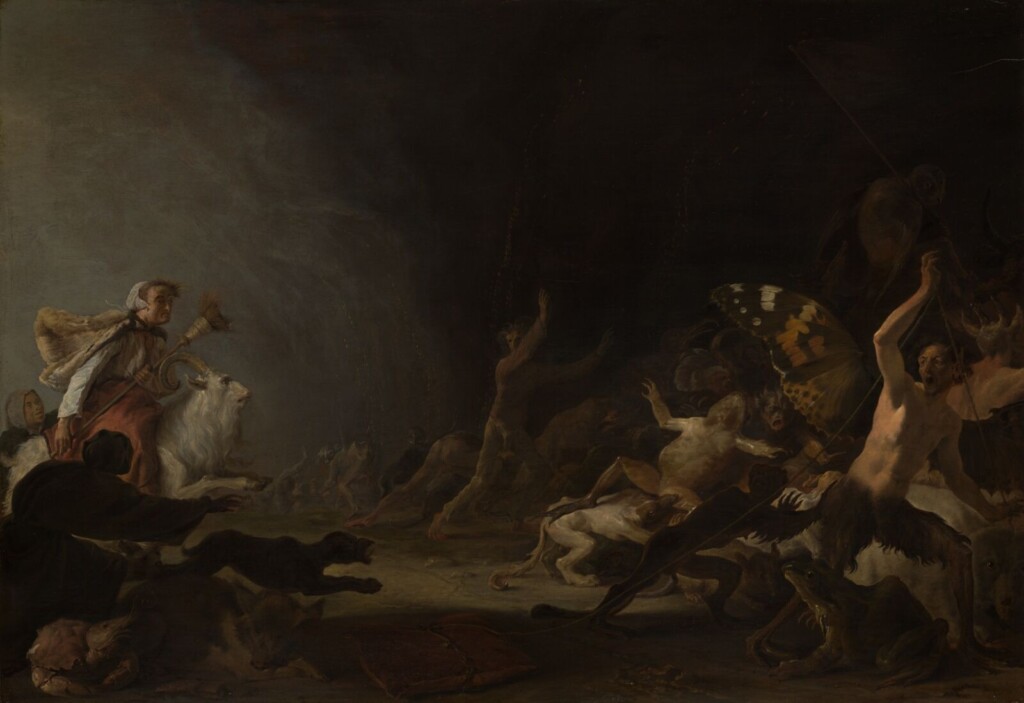
You are in a corridor you cannot name, in a castle whose geometry refuses to resolve itself into anything mappable. There is a sound behind the tapestry. There is a draft from a wall that should be solid. And then, at the end of the novel, someone arrives to explain it all: the sound was the wind, the draft was a concealed passage built by a previous owner for entirely mundane reasons, and the figure you saw in the moonlight was a servant acting on ordinary instructions. Ann Radcliffe performs this operation with such surgical consistency across her major works — The Mysteries of Udolpho in 1794, The Italian in 1797 — that critics have long read it as either cowardice or ideological compliance, a gothic novelist too frightened of her own darkness to let it stand. This reading is not wrong so much as it stops too early.
The rationalist resolution Radcliffe insists upon does not dispel the terror retroactively. What it does, with considerable violence, is install reason as the authority that determines what a woman was actually experiencing. Emily St. Aubert spends four hundred pages in a state of verifiable dread, and the novel then hands her tormentor’s castle over to a rational committee that explains each fear away. The explanation does not undo the months of imprisonment, the manipulation, the coercion. It simply reclassifies the mode of the threat. The supernatural is replaced not with safety but with a different kind of danger — the danger of being told that what you perceived was not what was happening. Michel Foucault’s analysis of disciplinary power in Discipline and Punish, published in 1975, identifies the crucial move: it is not violence that most efficiently controls a subject, but the subject’s internalization of the authority that defines reality. Radcliffe’s heroines are not haunted by ghosts. They are haunted by the knowledge that the men around them will always have a more credible account of events than they do.
This is where the explained supernatural becomes something far more disquieting than a narrative tic. Sandra Gilbert and Susan Gubar, writing in The Madwoman in the Attic in 1979, identified the gothic heroine’s entrapment in spaces — rooms, corridors, estates — as a literalization of the social architecture that contained real women in the eighteenth century. But what Radcliffe adds to that containment is epistemological: the heroine cannot trust her own senses, not because she is irrational, but because the novel itself keeps withdrawing its confirmation of her perception. Every fear is real while she experiences it. Every fear is reclassified as misapprehension the moment male authority enters the room with a lantern and a sensible explanation. The reader has lived inside Emily’s terror for hundreds of pages. The reader knows it was not nothing. And then the text asks the reader, very quietly, to agree that it was nothing.
What Radcliffe understood — perhaps more instinctively than analytically, though instinct in a woman of her precision is rarely separable from analysis — is that the Enlightenment’s gift of reason was not distributed equally. The century that produced Locke’s epistemology and Voltaire’s rationalist polemics also produced conduct literature insisting that women’s reasoning faculties were constitutionally subordinate to their emotional ones. Reason was a public instrument, and its public was gendered. When Radcliffe resolves the supernatural through rational explanation, she does not therefore celebrate reason’s triumph. She demonstrates reason’s ownership — who holds it, who deploys it, whose account of reality it authorizes. The explained supernatural is not Radcliffe flinching from the dark. It is Radcliffe showing you exactly what happens when the lights come on and the person holding the lamp decides, with perfect authority and perfect calm, what you were actually afraid of.
Female Consciousness Under Gothic Enclosure
You are twenty-three years old, you have just inherited nothing, and the house you stand in belongs to a man you did not choose. The corridors stretch in directions that were never explained to you. Every door you try is either locked or opens onto another room that belongs to someone else. This is not a Gothic novel. This was the legal condition of approximately half the population of England in 1794, the year Ann Radcliffe published The Mysteries of Udolpho, and the architecture of that novel is inseparable from the architecture of that fact.
Emily St. Aubert does not simply wander through Udolpho because the plot requires mystery. She wanders because wandering is the only form of agency available to her. She cannot own the castle. She cannot leave it without permission. She cannot refuse the authority of Montoni, who has acquired her through the mechanism of her aunt’s marriage as efficiently as he has acquired the furniture. What Radcliffe understood, with a precision that her contemporaries dressed in the language of sentiment rather than power, is that the Gothic castle is not a metaphor for female confinement — it is a diagram of it, rendered in stone.
Mary Wollstonecraft, writing in 1792 in A Vindication of the Rights of Woman, identified the same structure through a different vocabulary. She argued that the education of women had been deliberately engineered to produce creatures of feeling rather than reason, trained in ornamental sensibility precisely so they would remain governable, pleasing, and dependent. What she called the “barren blooming” of feminine accomplishment was a mechanism of containment dressed as cultivation. Radcliffe’s heroines embody this contradiction with uncomfortable exactness: Emily is sensitive, perceptive, artistically gifted, and morally acute, and every one of those qualities makes her more vulnerable, not less, because the social world around her has no institutional channel through which those qualities can become power.
The discourse on female sensibility in the 1790s was genuinely double-edged in ways that have been flattened by later readings. Sensibility was celebrated as a mark of refinement and moral superiority, but it was also the quality that justified paternalism — the argument ran that women felt too deeply to be trusted with property, contracts, or public life, and that their very capacity for emotional response required management by steadier, more rational male hands. Radcliffe exploits this paradox without resolving it. Her heroines feel everything, and their feeling is presented as evidence of their worth, but it is simultaneously the mechanism by which they are controlled, isolated, and rendered legible to the men who surveil them.
Surveillance is the word that matters here, and it predates Foucault’s 1975 formalization in Discipline and Punish by nearly two centuries of literary practice. Radcliffe’s castles are full of watching. Montoni observes Emily. Schedoni, in The Italian published in 1797, follows Ellena across entire landscapes, his gaze converting space itself into a kind of prison. The watched woman cannot move without that movement being interpreted, judged, and potentially punished. This is not paranoia on Radcliffe’s part or on her heroines’ — it is an accurate description of the social epistemology governing female behavior in a world where reputation was the only currency a woman could not afford to lose and could lose in a single unwitnessed moment reframed by a hostile witness.
What makes Radcliffe’s treatment of this condition genuinely strange, and genuinely unsettling even now, is that she never offers her heroines a structural exit. The resolution of each novel is a restoration, not a liberation — the correct man arrives, the correct inheritance is confirmed, the heroine is returned to a domesticity that differs from her imprisonment mainly in its stated benevolence. The cage becomes a garden, and the reader is expected to experience this as rescue.
Landscape as Psychological Pressure
You are standing at the edge of something that has no name yet, and the drop below you is not measured in feet but in the precise distance between what you feel and what you are permitted to say. The cliff does not terrify you because it is steep. It terrifies you because it is accurate.
Ann Radcliffe understood this long before anyone gave it a theoretical framework. When her heroines — Emily St. Aubert in “The Mysteries of Udolpho,” published in 1794, Ellena Rosalba in “The Italian” three years later — stand before the Apennines or the Alpine passes, they are not being given picturesque scenery as a literary reward. They are being handed the only vocabulary available to them. The landscape speaks what the woman cannot. The chasm articulates the vertigo she is not allowed to name as her own.
Edmund Burke had already done the conceptual groundwork in his 1757 “A Philosophical Enquiry into the Origin of Our Ideas of the Sublime and Beautiful,” locating the sublime in experiences of vastness, obscurity, and terror that paradoxically produce pleasure through the safe apprehension of danger. But Burke’s sublime was a theory of spectacle applied to minds presumed to be free, rational, and architecturally intact. Radcliffe borrowed his vocabulary and bent it toward something he never intended: an interior that is not free, not architecturally intact, and not permitted to declare itself as such. Her mountains are not sublime in Burke’s civic sense. They are sublime in the way that suppressed rage is sublime — enormous, formless, constantly threatening to exceed its own containment.
Gaston Bachelard, writing in “The Poetics of Space” in 1958, argued that inhabited space is never neutral, that the corners of rooms, the depths of cellars, and the expanses of open sky are not mere settings but cognitive structures — that the human imagination does not think about space so much as it thinks through space. What he described as the phenomenology of intimate immensity maps with unsettling precision onto what Radcliffe had been doing two centuries earlier by instinct or necessity. Her ruined abbeys are not ruins of stone. They are ruins of enclosure, structures that once promised containment and now offer only the horror of their own collapse. The gothic architecture in her novels is always a failed promise of interior safety, and the wilderness pressing against its broken walls is not nature but the return of everything the structure was built to exclude.
The specific geography Radcliffe chose matters in ways that literary criticism has sometimes treated as incidental. The Alps and the Apennines were not yet domesticated by mass tourism in the 1790s; they remained genuinely alien to an English readership raised on managed parkland and the aesthetic theories of Capability Brown. The foreign landscape gave Radcliffe a permission slip. She could make the terrain monstrous and overwhelming without it being read as a failure of taste, because it was simply being reported as foreign. The sublimity was licensed by geography, but its psychological labor was entirely domestic: it was doing the work of expressing states that English domestic space, English domestic femininity, English domestic narrative convention, refused to accommodate.
What makes this technique genuinely radical is not its emotional intensity but its structural displacement. A woman in a Radcliffe novel does not feel imprisoned — she walks through a prison that calls itself a landscape. She does not feel overwhelmed by desire or dread — she is overwhelmed by weather. The pathetic fallacy, in lesser hands a decorative convenience, becomes in Radcliffe’s novels an epistemological survival strategy: if the feeling cannot exist inside the self without violating the terms of one’s social legibility, it migrates outward and takes up residence in the storm, the gorge, the crumbling tower whose window opens onto nothing but more darkness.
The question this raises, quietly and without resolution, is whether the landscape ever actually contained those states, or whether it simply gave them a more elaborate room in which to remain invisible.
A vision curated by a filmmaker, not an algorithm
In this video I explain our vision
The Villain as Social Diagnosis

You have met him before, though perhaps not on the page. He sits at the head of a table no one invited you to, controls access to rooms you did not know existed, and explains, with perfect courtesy, why your fear is a misunderstanding of the situation. Montoni, in “The Mysteries of Udolpho” published in 1794, does not need to raise his voice. His power is architectural before it is personal — it lives in corridors, in locked wings, in the gap between what Emily St. Aubert is told and what she is permitted to know. Radcliffe understood something that would take sociology nearly two centuries to formalize: that the most durable authority is the kind that does not announce itself as authority at all.
What makes Montoni genuinely disturbing is not cruelty in the theatrical sense but his total occupation of the institutional role without any institution to answer to. He is a nobleman operating in a space where the secular law has retreated and the ecclesiastical law has been bought. His control over Emily is not illegal under the codes available to her — it is simply the natural expression of guardianship, of marriage negotiations, of property management. The horror Radcliffe constructs is not the horror of exception. It is the horror of the ordinary operating at full intensity, with no circuit breaker in sight.
Michel Foucault, writing in “Discipline and Punish” in 1975, argued that modern power functions not through spectacular violence but through the organization of visibility — who can be seen, who does the seeing, and who designs the architecture of that relationship. The Panopticon was his master image: a structure in which the watched internalize the watcher until surveillance becomes self-surveillance. Radcliffe had drawn exactly this dynamic in fiction eighty years earlier. The castle of Udolpho does not need guards at every door because Emily has already absorbed its logic. She polices her own movement, her own speech, her own desire. The building thinks for her.
Schedoni, who appears in “The Italian” published in 1797, represents a further refinement of this portrait. Where Montoni operates through secular property, Schedoni operates through spiritual authority — confessor, manipulator, instrument of the Inquisition. He is the power that wears the face of care, that enters through intimacy rather than force. His relationship to the Marchesa di Vivaldi is the relationship of the advisor who makes the decision while pretending to receive one. Radcliffe was mapping something sociologists would later call the informal exercise of institutional power — the way influence moves through roles that carry no explicit mandate for control but exercise it absolutely.
What neither of these figures lacks is social legitimacy. That is the precise point. The Gothic villain in Radcliffe’s hands is never a bandit or an outlaw. He is always someone the world has already decided to trust. His violence, when it comes, arrives credentialed. And the female protagonist’s terror is compounded by the fact that she cannot explain it to anyone without sounding hysterical, because the structures that produce her captivity are the same structures her culture uses to define normalcy. Her suffering is invisible not because it is hidden but because it is housed inside recognizable social forms.
Radcliffe published during a decade when Edmund Burke’s “Reflections on the Revolution in France,” issued in 1790, was defending hereditary authority as the natural guarantor of social order. Her villains are the living argument against Burke — men who hold hereditary power and use it with the precision of predators. She did not write polemics. She did something more corrosive: she showed you what legitimized authority looks like from inside the room it has locked.
Radcliffe's Influence and Its Suppression
You find a first edition of “The Mysteries of Udolpho” in a secondhand bookshop, and the price sticker reads almost nothing. It was published in 1794 and it made Ann Radcliffe five hundred pounds — an extraordinary sum for any novelist of the period, let alone a woman working in a form still struggling for literary respectability. The bookseller who paid it understood something the subsequent two centuries of canon-formation worked methodically to forget: that this writer had invented a market.
The commercial architecture of Radcliffe’s success was not incidental. She commanded fees that placed her above virtually every prose writer of her generation, and “The Italian” in 1797 brought her eight hundred pounds from the publisher Cadell and Davies — a figure that contemporary male novelists could not approach. Her readership was enormous, cross-class, and genuinely transnational; French and German translations circulated within years of the English originals, and her atmospheric technique of suspense without explicit horror became the structural template that dozens of imitators adopted without acknowledgment. When Jane Austen satirized Gothic conventions in “Northanger Abbey,” written around 1798 though published posthumously in 1817, she was working inside a cultural landscape that Radcliffe had essentially built — the joke depended entirely on an audience that already knew the furniture of Radcliffean terror so intimately that it could be gently mocked. That kind of satire is only possible when the target has already won.
What happened next is one of the more instructive silences in literary history. Matthew Lewis published “The Monk” in 1796, two years after “Udolpho,” and the critical apparatus that formed around his work performed a quiet act of displacement. Lewis’s novel was explicit where Radcliffe was atmospheric, visceral where she was psychological, and these qualities were coded — almost immediately — as greater literary seriousness. The supernatural in Lewis materialized rather than dissolved into rational explanation, and this apparently minor formal difference was invested with enormous critical weight. Radcliffe’s technique of the explained supernatural, which she had theorized through her own distinction between terror and horror — terror that expands the mind through uncertainty, horror that contracts it through disgust — was reframed not as a deliberate aesthetic philosophy but as timidity, as the squeamishness of a woman unwilling to follow her imagination to its necessary conclusions.
The deeper mechanism here is one that Pierre Bourdieu analyzed across the sociology of cultural fields: the conversion of commercial success into evidence of aesthetic insufficiency. In “The Rules of Art,” published in 1992, Bourdieu traced how the autonomous literary field systematically devalued work that succeeded in the marketplace, treating popularity as a contamination of pure aesthetic value. Radcliffe’s crime, structurally speaking, was that she had sold too well to be taken seriously. Lewis, who also sold well but never quite as universally, was absorbed into a masculine lineage of transgression that gave his sales a different symbolic valence — his popularity felt dangerous, hers felt merely domestic.
Horace Walpole, whose “The Castle of Otranto” predated Radcliffe by three decades and was in many ways a thinner achievement, was retrospectively elevated as the origin point of the Gothic tradition in a move that placed a gentleman amateur at the head of a form a professional woman had actually perfected. The critical genealogy that runs from Walpole through Lewis to Mary Shelley and beyond performs a structural erasure: Radcliffe appears in it as a transitional figure, a bridge, someone whose work mattered mainly insofar as it enabled greater artists. That word — bridge — is where literary canon-formation does some of its most efficient work. It acknowledges presence while denying arrival. It places a writer permanently in motion, never at a destination, always merely on the way to someone else’s achievement, which means the bridge is always the thing you cross without ever choosing to stand on.
What Gothic Surfaces When Safety Becomes Illusion
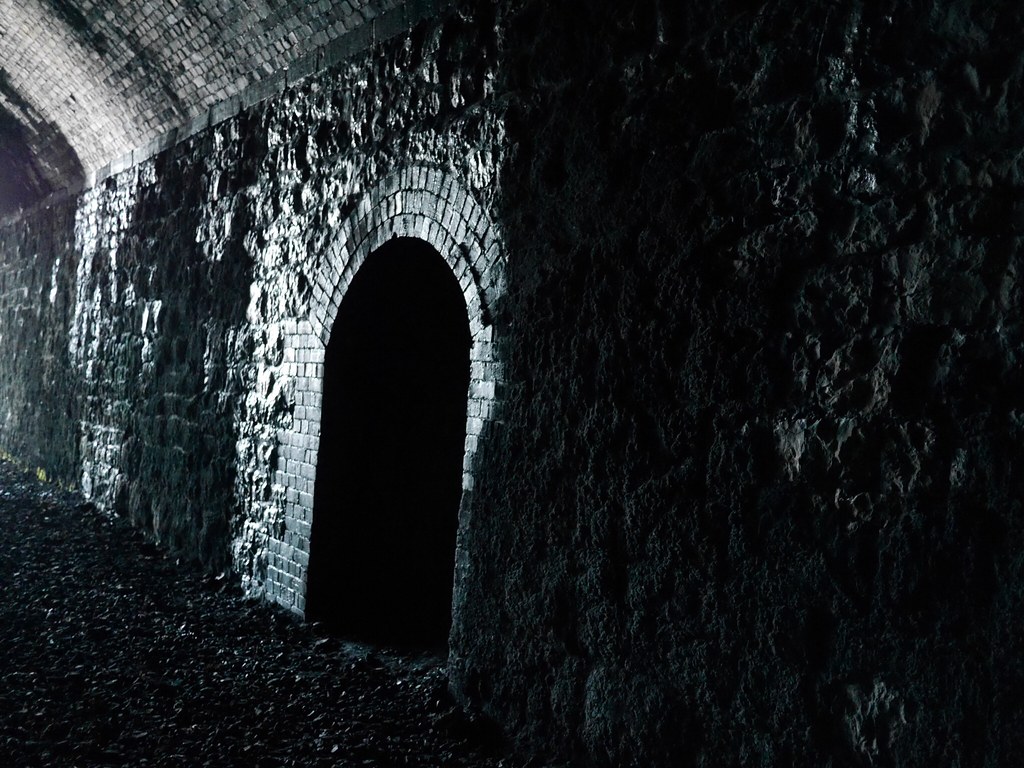
You pick up the novel because it frightens you pleasantly, because the castle is distant, the century is past, the villain has a name that ends in a vowel and belongs to somewhere else. The fear is decorative. That is precisely the point, and precisely the problem.
There is something structurally peculiar about a genre born from the specific, material terror of women who could not name their captors without forfeiting the legal protection those same captors provided, becoming the dominant leisure reading of the drawing rooms those arrangements produced. By 1794, when Radcliffe published The Mysteries of Udolpho, her advances from the Robinsons were unprecedented for a living author — five hundred pounds for that single volume — and the readership purchasing it was composed overwhelmingly of women whose own circumstances differed from Emily St. Aubert’s not in kind but in degree. The dungeon was carpeted. The guardian was a husband rather than a Montoni. The threat was financial ruin or social erasure rather than the oubliette, but the structure of dependency, the architecture of permissioned movement, the necessity of pleasing the man who held the deed — these were not metaphors. They were Tuesdays.
What the Gothic offered, and what made it so voraciously consumable, was a displacement mechanism of extraordinary elegance: it permitted the reader to experience the emotional truth of her position — the helplessness, the surveillance, the flight through corridors that all led back to the same central authority — while framing that truth as belonging to somewhere foreign, something historical, something safely concluded. Eve Kosofsky Sedgwick, in The Coherence of Gothic Conventions published in 1980, identified the Gothic’s defining gesture as the veil — not the literal shrouded portrait, but the structural habit of making visible through concealment, of revealing by insisting on cover. The reader weeps for Emily because Emily cannot speak. The reader does not ask why she recognizes that silence so immediately.
This is not false consciousness in the crude Marxist sense, the simple duping of a passive subject. It is more interesting and more troubling than that. The consumption of Gothic fiction functioned as a regulated release — what the psychoanalytic tradition would later call a transitional object, a space where genuine anxiety could be processed without ever being named in a way that demanded response. The society producing Radcliffe’s readership needed those women to feel their confinement as adventure rather than injustice, to locate their vertigo in Apennine castles rather than English parlors, to close the book, set it on the nightstand, and return, emotionally satisfied, to arrangements that had not shifted a millimeter.
What is more unsettling is that the mechanism has not aged. The Gothic did not disappear when women acquired property rights, professional access, or formal legal equality. It mutated, colonized new media, and continued to find audiences among people who live inside structures of enclosure they are not quite permitted to name — because naming would require acknowledging complicity, dependency, the degree to which the enclosure is also the shelter. The contemporary enthusiasm for narratives of haunted houses, gaslighting villains, and women running through dark corridors in contemporary clothes is not nostalgia. It is recognition wearing the mask of genre.
Radcliffe herself understood this at some level she may never have articulated, because she kept her explained supernatural — kept reassuring the reader that the ghost had a rational cause, that the terror was ultimately groundless, that the castle could be exited. It was a mercy and a lie simultaneously, and it may be the most honest thing the Gothic ever did: offer the structure of the trap while insisting the door is open, and leave the reader to decide, in the silence after the last page, whether she believes it.
🕯️ Shadows, Secrets, and the Architecture of Terror
Ann Radcliffe shaped Gothic literature by weaving together ancient castles, persecuted heroines, and sublime landscapes into a machinery of atmospheric dread. Her novels opened a labyrinth that later writers, philosophers, and artists would never stop exploring. These articles trace the hidden corridors that connect her world to the deeper traditions of Gothic imagination, aesthetic theory, and dark literary fiction.
Edgar Allan Poe and the Cursed House: Architecture of Terror
Edgar Allan Poe inherited from the Gothic tradition the idea that architecture itself could harbor evil, and in his cursed houses the walls breathe with psychological menace. Like Radcliffe, Poe understood that the decaying mansion is not merely a setting but a projection of the fragmented mind within. This article explores how the Gothic house became one of literature’s most enduring and disturbing symbols.
GO TO THE SELECTION: Edgar Allan Poe and the Cursed House: Architecture of Terror
The Aesthetics of the Sublime: When Beauty Is Frightening
Ann Radcliffe’s novels are inseparable from the aesthetics of the sublime, that terrifying pleasure in the face of overwhelming natural or architectural grandeur. The sublime gave Radcliffe her emotional vocabulary, allowing her to describe mountain storms and ruined abbeys as forces that simultaneously threaten and elevate the soul. This article traces the philosophical foundations of that experience from Burke and Kant to their lasting influence on Gothic sensibility.
GO TO THE SELECTION: The Aesthetics of the Sublime: When Beauty Is Frightening
Contemporary Gothic: When Horror Becomes Psychology
Contemporary Gothic literature and film have returned to the psychological territory that Radcliffe first charted, replacing supernatural monsters with inner demons and social anxieties. The modern Gothic no longer needs ghosts to generate dread; it finds horror in repression, trauma, and the uncanny surfaces of everyday life. This article examines how the genre evolved from its eighteenth-century origins into a sophisticated mode of psychological inquiry.
GO TO THE SELECTION: Contemporary Gothic: When Horror Becomes Psychology
Edmund Burke and the Sublime: Terror as Aesthetic Experience
Edmund Burke’s treatise on the sublime and the beautiful provided Ann Radcliffe and her contemporaries with a rigorous aesthetic framework for the emotions of terror and wonder. Burke argued that obscurity, vastness, and danger produce a pleasurable terror when experienced from a position of safety, a formula that Radcliffe applied masterfully in her fiction. This article introduces Burke’s foundational ideas and their profound impact on Gothic and Romantic culture.
GO TO THE SELECTION: Edmund Burke and the Sublime: Terror as Aesthetic Experience
Discover Gothic Cinema and Beyond on Indiecinema
If Ann Radcliffe’s shadowy corridors and sublime landscapes have stirred something in you, Indiecinema is the streaming platform where that feeling finds its visual counterpart. Explore a curated selection of independent and arthouse films that carry on the Gothic tradition of psychological depth, atmospheric storytelling, and the art of beautiful terror. Join us and let the labyrinth lead you further.
👉 EXPLORE THE CATALOG: Watch Indie Films in Streaming
A vision curated by a filmmaker, not an algorithm
In this video I explain our vision

