
The Cliff Edge You Cannot Stop Staring At
You are standing at the edge of a cliff, and your legs have stopped working the way legs are supposed to work. Not because of weakness, not because of fear in the ordinary sense — the path behind you is clear, the ground beneath your feet is solid, no immediate danger presents itself to rational audit. And yet your body has made a unilateral decision. Your pulse has accelerated without your permission. Your palms have gone slick. Your eyes, perversely, refuse to look away from the drop. Every reasonable faculty you possess is telling you to step back, and something far older than reason is holding you exactly where you are, drinking the void.

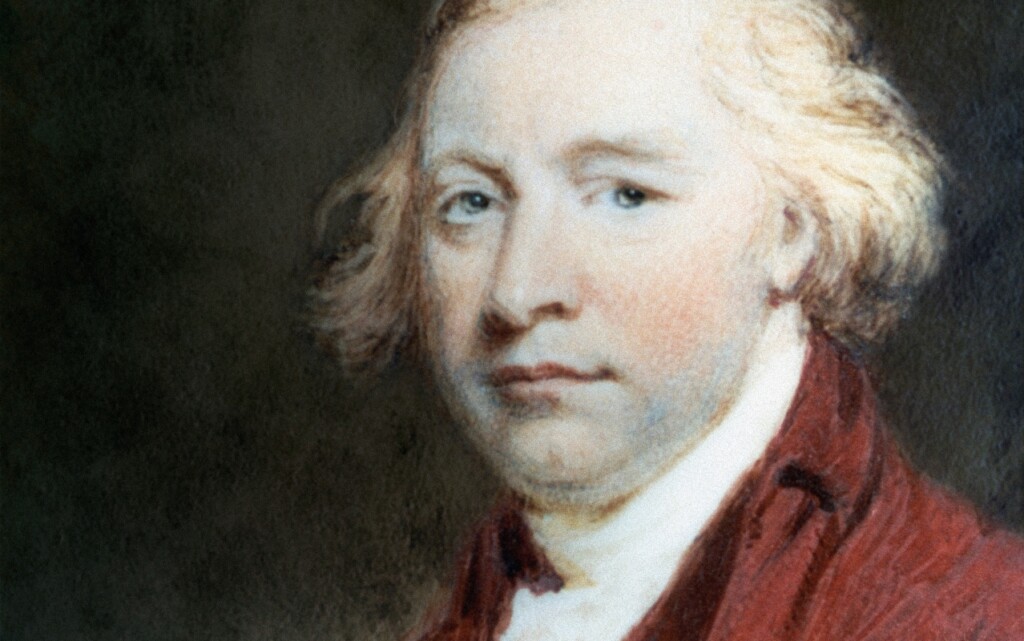
This is not a malfunction. This is, in fact, one of the most precisely structured experiences available to a human nervous system — a state so specific in its physiology, so consistent across bodies and centuries, that it demanded a theory. The theory arrived in 1757, in London, in the hands of a twenty-eight-year-old Irish writer who had the unusual intellectual honesty to admit that beauty and terror were not opposites, that the most powerful aesthetic experiences available to human beings were not the pleasant ones. Edmund Burke published A Philosophical Enquiry into the Origin of Our Ideas of the Sublime and Beautiful before he was famous for anything — before the political speeches, before the Reflections on the Revolution in France, before he became the patron saint of conservative thought. The Enquiry is the work of a young man who has stared over an edge and decided to think about it rather than retreat.
What Burke identified was not a metaphor. He was working empirically, in the blunt materialist tradition that the eighteenth century was only beginning to trust, and he located the sublime first in the body, not in the landscape. The cliff does not produce terror. The cliff produces a specific cascade of physiological events — elevated heart rate, dilated pupils, muscle tension, a narrowing of attention so severe that peripheral vision functionally disappears — and those events, Burke argued, are the aesthetic experience. Not a response to it. Not a symbol of it. The sensation itself is the content.
The philosophical weight of that claim is still underappreciated. For centuries before Burke, aesthetics had been organized around pleasure — around the Aristotelian idea that art and beauty existed to produce delight, to harmonize the faculties, to confirm the human being’s place in a legible and ordered world. The beautiful was good because it was agreeable. Ugliness, violence, and enormity were excluded from serious aesthetic consideration not because they lacked power but because their power was inconvenient. Burke looked at that exclusion and recognized it as a lie told by people who preferred comfort to accuracy.
He divided his Enquiry into five parts, building from sensation upward — from the raw nerve signals of pain and pleasure toward a comprehensive theory of how the mind processes scale, darkness, obscurity, and power. His taxonomy was clinical in a way that still disturbs readers expecting philosophical abstraction: he catalogued the aesthetic effects of loud sounds, of bitter tastes, of physical darkness. He argued that the experience of the sublime depended on what he called astonishment, a state in which the mind is so entirely filled with its object that it cannot entertain any other. Astonishment is not admiration. It is closer to paralysis. It is the condition you are in when you cannot step back from the cliff, when the abyss has commandeered your attention so completely that the self briefly dissolves at its edges.
That dissolution is the thing Burke’s predecessors could not accommodate, and that his successors could not stop arguing about — because it implies something uncomfortable: that the most alive you will ever feel is not in safety, not in harmony, but in the precise moment when the world presents itself as something that could, without particular effort, destroy you.
Simon Marsden’s Haunted Life In Pictures
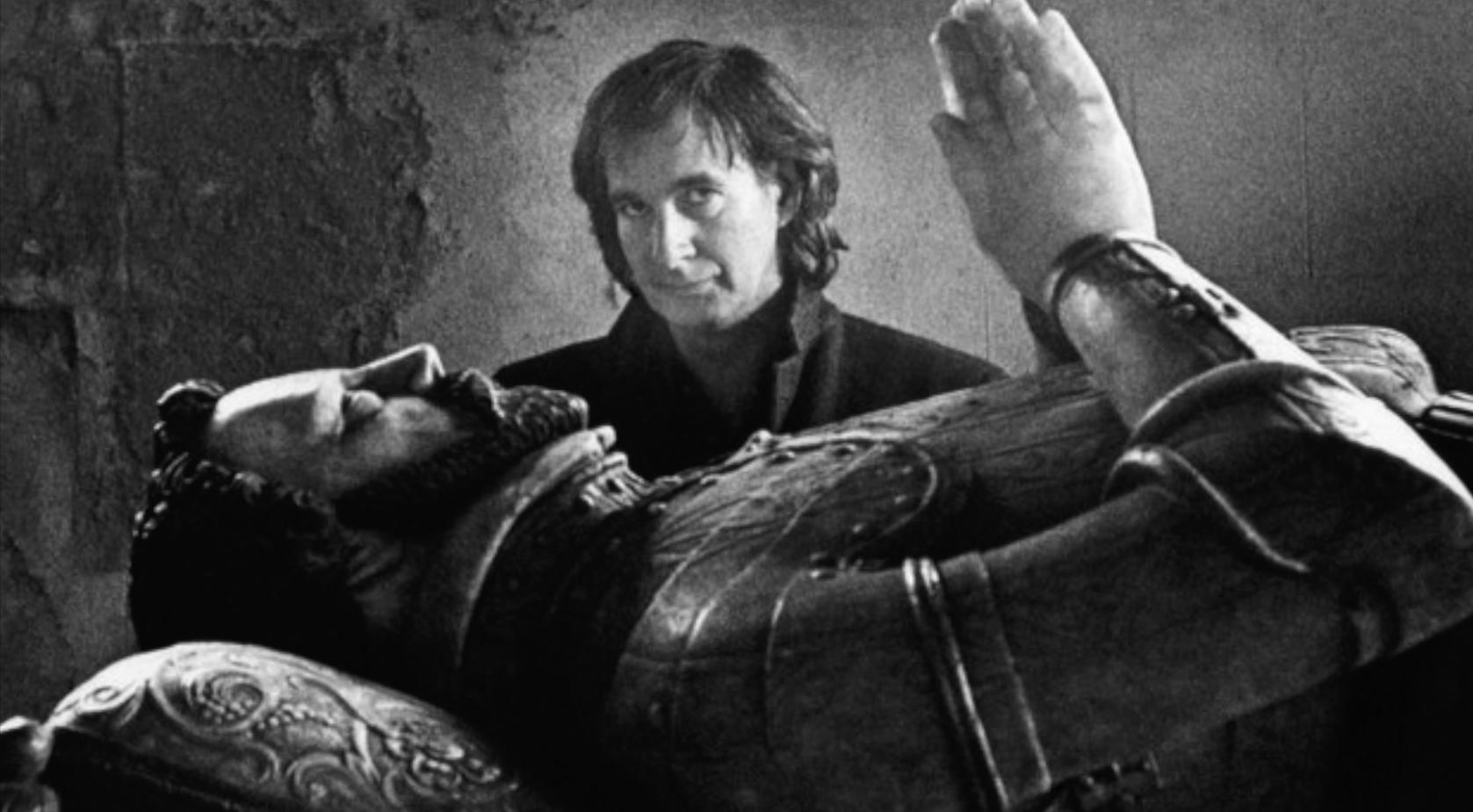
Documentary, by Jason Figgis, United States, 2019.
This documentary retraces the life and work of Simon Marsden, widely regarded as one of the foremost photographers of the supernatural. Premiered at the British Film Institute in London, the film offers a fascinating journey into his creative universe, appealing not only to photography enthusiasts but also to scholars, teachers, students, and anyone intrigued by the mysteries of the unseen. Through evocative imagery and first-hand accounts, it explores the artistic path of a photographer whose work has appeared in books, on U2 album covers, and in museum exhibitions around the world.
Although convinced of the existence of ghosts, Marsden never claimed to capture them directly with his camera. Instead, he used black-and-white infrared film to record the atmosphere and the invisible traces that, in his view, spirits left imprinted upon places. From the landscapes of Ireland to the vast expanses of Russia, passing through Venice and the American Southwest, he transformed historic buildings, ruins, and haunting locations into deeply evocative images capable of suggesting dark and unsettling stories. His photographs continue to captivate the imagination, demonstrating how the most powerful works of art can leave a lasting impression on those who behold them.
LANGUAGE: English
SUBTITLES: Spanish, French, German, Portuguese
Burke’s Anatomical Gamble
You are reading a treatise on aesthetics and you realize, somewhere around the third page, that the author is not interested in beauty at all. He is interested in the body under duress. The pulse quickening. The muscles locking. The eyes refusing to close even when what they see is annihilating. Edmund Burke published A Philosophical Enquiry into the Origin of Our Ideas of the Sublime and Beautiful in 1757, and he was twenty-seven years old, which is old enough to theorize but young enough to still find terror exhilarating rather than merely exhausting.
The audacity of the book was not its subject but its method. Aesthetic philosophy in the mid-eighteenth century operated largely on the terrain of judgment — what a cultivated mind perceives, weighs, and approves. Shaftesbury had moralized beauty into virtue. Hutcheson had given it an internal sense, something almost like a sixth faculty of refined perception. The assumption threading through all of it was that the experience of art or nature was fundamentally a cognitive event, an act of the mind conferring value. Burke walked into this tradition and made a physiological wager. He argued that the sublime was not something the mind decided about the world but something the world did to the body, and the mind simply had to survive it.
His central mechanism was what he called astonishment — not wonder, not awe in the diluted sense the word now carries, but a state in which the mind is so completely seized by a single overwhelming impression that all other mental operations are temporarily extinguished. He described it as the mind’s total occupation, every faculty arrested, reason not merely paused but crowded out entirely. This was not elevation. This was closer to a brief and survivable catastrophe. In the Enquiry, Burke wrote that astonishment is the effect of the sublime in its highest degree, and that in this state the mind is so entirely filled with its object that it cannot entertain any other, nor by consequence reason on that object which employs it. The sentence performs what it describes: it crowds out qualification.
What made this a gamble rather than simply a provocation was the materialist foundation Burke was willing to build beneath it. He proposed that the sublime operates through specific physiological pathways — through the tension of the nerves, the dilation of the pupils, the contraction of the body’s surface in response to cold or darkness or vastness. He catalogued the physical properties that reliably produced sublimity: obscurity, privation, vastness, infinity, difficulty, magnificence. These were not symbolic categories. They were stimulus conditions. Burke was writing something closer to a psychology of stress responses than a philosophy of taste, and he was doing it a century before the vocabulary of neurophysiology existed to confirm or challenge him.
The scandal buried inside this framework was its democratizing implication. If the sublime is a biological event, it does not require education, refinement, or cultural initiation to be experienced. A shepherd on a mountain and a Eton-trained gentleman at the edge of a cliff are running the same autonomic program. The nervous system does not check credentials. This leveling possibility was never quite made explicit in the Enquiry — Burke was too careful a social thinker to announce it baldly — but it sat inside the argument like a charge that the text itself could not fully contain.
Kant would spend a significant portion of the Critique of Judgment published in 1790 working to correct exactly this problem, reasserting the cognitive dignity of the sublime by relocating it from the body’s fright to reason’s discovery of its own supersensible vocation. The correction was philosophically elegant and humanly implausible, because it required you to believe that what happens when you stand at the rim of something enormous is primarily a lesson in your own rational grandeur.

Pain That Does Not Destroy
You are standing at the edge of something that could kill you, and you are not moving. Not because you are frozen — because some part of you is choosing this, is drinking it in, and you will not admit that to anyone later when you describe the view.
Burke made the terminological cut in 1757, in A Philosophical Enquiry into the Origin of Our Ideas of the Sublime and Beautiful, and it is one of those intellectual distinctions that feels minor until you realize it restructures everything. Delight, for Burke, is not pleasure. Pleasure is what you feel when something good is present. Delight is what you feel when something terrible is absent — more precisely, when something terrible is near enough to register but not near enough to land. The body responds to the proximity of annihilation, the nervous system fires, and then the threat retreats just enough, and what floods in is not relief exactly — it is something richer, more addictive, a sensation that pleasure, with its soft satisfactions, cannot produce. Burke called this the strongest emotion the mind is capable of feeling.
The physiological architecture he was describing in 1757 predates by two centuries the neuroscience that would partially confirm it. When threat is perceived, the body mobilizes — cortisol, adrenaline, heightened sensory acuity, dilated pupils reading the world with animal urgency. What Burke observed, without the vocabulary of the amygdala or the sympathetic nervous system, was that this mobilization does not simply switch off when danger passes. It converts. The charge remains, but its valence shifts, and what was preparation for destruction becomes the felt texture of being intensely alive. The sublime, in this reading, is not a category of art or landscape. It is a controlled near-miss with death.
What makes this more unsettling than it first appears is the word controlled. The entire mechanism depends on distance, on a membrane between the body and actual harm — thin enough to feel permeable, thick enough to hold. Remove it, and there is no delight, only trauma. Burke understood this with uncomfortable clarity: the sublime requires that you be safe enough to feel unsafe. Which means it is, at its structural core, a privilege. The sailor drowning in the storm Burke invokes as an occasion for the sublime is not experiencing the sublime — he is experiencing drowning. It is the person on the shore, or the person reading the account in a warm room in London in 1757, who receives the aesthetic charge. The suffering of the actual body at actual risk becomes aesthetic currency only once it has been laundered through sufficient distance.
This is not a peripheral problem in Burke’s system. It is the engine. And the cultural inheritance from that engine runs directly through every disaster film watched from a reclining seat, every war memoir consumed in peacetime, every documentary about famine that ends with a donation link. The distance is not incidental to the experience — it is what produces the experience. Close it, and the aesthetic evaporates. Which raises a question that Burke did not ask, perhaps could not ask from his position in Georgian London: who gets to maintain the distance, who is structurally assigned to the side of actual danger, and whether the entire edifice of sublime aesthetics depends on that asymmetry remaining stable.
The body in delight is a body that has learned to metabolize someone else’s extremity. Not cynically — the emotion is real, the physiological charge is genuine, the person watching the storm from the shore is not pretending to feel what they feel. But genuine feeling and ethical innocence are not the same category, and confusing them is precisely the kind of confusion that aesthetic experience, with its flattening intensity, makes almost irresistible to commit.
The Politics Hidden Inside the Trembling
You are standing in the gallery of the House of Commons in 1790, watching a man tremble with something that is not quite fear and not quite awe — watching him use that trembling as an argument. Edmund Burke has spent thirty years in Parliament by the time he rises to defend monarchy, tradition, and the inherited weight of English institutions against the revolutionary enthusiasm spreading from Paris. What strikes observers is not the logic of his defense but its emotional texture: he is not reasoning toward reverence, he is performing it, and the performance is the reason.
The connection between his 1757 Philosophical Enquiry into the Origin of Our Ideas of the Sublime and Beautiful and his Reflections on the Revolution in France is not incidental or biographical. It is structural. In the Enquiry, Burke had argued that the sublime operates through a specific psychological mechanism: astonishment so total it temporarily suspends rational agency, producing a state he called “the strongest emotion which the mind is capable of feeling.” That suspension was not a failure of the mind — it was, for Burke, the mind finally encountering something proportionate to its actual smallness. Power that can be fully comprehended is power that can be fully criticized, and power that can be fully criticized has already lost half its authority. The aesthetic argument was always preparing the ground for a political one.
By 1790, the political stakes were explicit. Burke’s attack on the French Revolution is not primarily a defense of property or hereditary privilege in the narrow sense — it is a defense of incomprehensibility as a political virtue. The revolutionaries’ fatal error, in his view, was not their violence but their legibility: they believed institutions could be dismantled and reconstructed according to rational principles, as though centuries of accumulated social tissue were merely bad arithmetic waiting to be corrected. Against this, Burke posited what he called the “partnership” between the dead, the living, and the unborn — a temporal structure so vast that no single generation could claim the authority to redesign it. The individual stands before this inheritance exactly as the solitary walker stands before the cliff face: overmatched, instructed by that overmatching, made wiser by the recognition of his own inadequacy.
George Rudé, in The Crowd in the French Revolution published in 1959, documented the material conditions driving Parisian crowds into the streets — grain prices, wage collapse, the specific hunger of specific bodies. Burke’s aesthetic framework performs a precise inversion of this material history: it converts hunger into presumption, converts legitimate grievance into spiritual immaturity, converts the man demanding bread into a figure who has failed to appreciate the sublime complexity of the system denying him bread. The overwhelming power that Burke asks his reader to revere is not a natural phenomenon. It is a social arrangement dressed in the emotional vocabulary of natural wonder.
This is the mechanism that gives the Reflections its strange, seductive power even for readers who recognize its ideological function. Burke writes about English institutions the way Longinus wrote about Homer in the first-century treatise On the Sublime — as forces that exceed the reader’s grasp and elevate precisely through that excess. When Burke describes the English constitution as an “entailed inheritance derived to us from our forefathers,” the legal language is soaked in the affective charge of the aesthetic category he had spent decades theorizing. You are not meant to analyze this inheritance. You are meant to feel its weight pressing down on you the way granite presses, the way oceanic depth presses, and to confuse that pressure with legitimacy.
What Burke understood — and what makes him genuinely dangerous as a thinker rather than merely a conservative apologist — is that the experience of being overwhelmed does not automatically distinguish between what is overwhelming because it is vast and what is overwhelming because it has spent centuries ensuring that you remain small enough to be overwhelmed by it.
What the Slave Ship Saw
You are below deck. The wood is alive with sound — creaking, water pressure against the hull, the breathing of bodies stacked so close that the rhythm of another person’s lungs becomes indistinguishable from your own. There is no horizon. There is no distance. There is only force, immediate and total, and it does not care whether you survive it.
Burke’s entire architecture of the sublime depends on a single structural condition he never names explicitly: the observer must be free to leave. When he writes in the 1757 Philosophical Enquiry that terror is the ruling principle of the sublime, he qualifies this with a crucial margin — the danger must be at a certain distance, the pain must stop short of its full execution. The body that shudders in a London theater watching a storm depicted on stage is a body that bought a ticket. The transaction itself is the guarantee of safety, the invisible membrane between sensation and annihilation. Burke theorizes the aesthetics of almost-harm because he writes from inside a world where almost is available to him as a category.
The Middle Passage was not a passage for those who made it. It was a mechanism. Between 1500 and 1900, roughly twelve and a half million human beings were loaded onto ships by force, and an estimated two million died before reaching land. These are the numbers provided by the Trans-Atlantic Slave Trade Database, and what they cannot capture is the temporal texture of that experience — months of darkness, of physical immobility, of a violence so sustained it stopped being an event and became an atmosphere. There is no aesthetic framework that accommodates this because aesthetics requires the position of the one who perceives, and that position was precisely what the slave trade systematically destroyed. To be aestheticized against is to be rendered into object, spectacle, evidence of power — without any reciprocal capacity to convert the overwhelming into the beautiful.
Immanuel Kant, writing in the Critique of Judgment in 1790, understood the sublime as the moment when nature’s immensity humiliates the body but elevates the mind — the rational faculty discovers its own superiority over mere physical scale. This recovery, this reassertion of human dignity against the crushing force, is where the sublime earns its moral weight for Kant. But that recovery assumes a subject whose inner life is recognized as mattering, whose reason the system acknowledges as sovereign. When the overwhelming force is not a mountain or a storm but a legal and economic institution designed specifically to deny the humanity of those it crushes, the Kantian recovery becomes a category error. There is no elevation. The framework breaks open and reveals what it was always quietly protecting.
What makes this more than historical critique is the way the architecture persists structurally into what we still call aesthetic culture. The capacity to aestheticize violence — to hold it at the exact distance where it thrills rather than destroys — has always been distributed unequally, and that distribution follows the same lines drawn by colonial economy. The person for whom catastrophe is a spectacle and the person for whom catastrophe is a condition are not experiencing different intensities of the same thing. They are inhabiting different ontological positions dressed in the same vocabulary. When Burke writes that the sublime produces astonishment that paralyzes the mind, he is describing a temporary suspension of rational agency experienced as pleasure. He is not describing what it means to have that suspension imposed permanently, without the pleasure, without the recovery, without the possibility of returning to the gallery and discussing what you witnessed over wine.
The slave ship does not produce the sublime. It exposes what the sublime had been hiding inside its own definition — that the aesthetic remove Burke calls delight is not a psychological state but a social privilege, and that the terror which elevates some bodies is the same force that dismantles others entirely.
A vision curated by a filmmaker, not an algorithm
In this video I explain our vision
Kant’s Rescue Operation and Its Residue

You are standing at the window during a storm that has knocked out every grid for forty miles, and for one suspended second before the rational mind reasserts itself, you feel something closer to dissolution than fear — not that you might die, but that the category of “you” is temporarily insufficient to the scale of what is happening outside the glass.
Kant noticed this moment and decided it was proof of human greatness. His argument in the Critique of Judgment, published in 1790, roughly three decades after Burke’s Philosophical Enquiry had already done the harder and stranger work, is essentially a rescue operation. Where Burke had left the body shuddering and overwhelmed, genuinely subordinated to the power of natural magnitude, Kant stepped in with a corrective: yes, nature dwarfs us physically, but the very capacity to recognize that we are dwarfed — to measure the infinite, to feel the disproportion — belongs to reason alone, and reason is not in nature. It is above it. The sublime moment, for Kant, becomes evidence of rational autonomy asserting itself precisely through its apparent defeat.
This is philosophically elegant and psychologically convenient. The dynamic sublime, as Kant defines it in sections 28 and 29 of the third Critique, involves the spectacle of natural violence — storms, volcanoes, crashing seas — experienced from a position of physical safety. That condition of safety is not incidental; it is load-bearing. Without the guarantee that the body will survive, the mind cannot perform its transcendent pirouette. What Kant describes as an elevation of the spirit above nature is only available to someone who has already been insulated from nature’s actual consequences. The peasant who depends on the harvest does not find the thunderstorm sublime. He finds it catastrophic. The Kantian subject who achieves moral elevation through aesthetic terror is someone for whom the terror was always, in a decisive sense, optional.
Paul Gilroy, in The Black Atlantic published in 1993, pressed on exactly this pressure point — not in the same words, but through the insistent observation that Enlightenment humanism constructed its universal subject through a series of exclusions that were never acknowledged as exclusions. The faculty of reason that Kant elevates above nature was, in historical practice, distributed unevenly across bodies sorted by race, gender, and geography. When Kant himself wrote in Observations on the Feeling of the Beautiful and Sublime in 1764 — a text that predates the third Critique but whose assumptions infect it — he assigned different peoples different capacities for aesthetic experience, placing Africans, indigenous Americans, and Asians at progressively greater distances from the refined sensibility capable of genuine sublimity. The hierarchy of taste was a hierarchy of humanity wearing aesthetic clothes.
This is what makes the Kantian maneuver something more than an intellectual correction to Burke. By relocating the sublime from the nervous system to the rational faculty, Kant simultaneously universalized the experience in theory and restricted it in practice to those already recognized as fully rational subjects. The sublime became a credential. To be capable of standing before the abyss and feeling one’s reason tower over it was to belong to a civilizational category — and that category had borders enforced not by argument but by the violence that made Enlightenment Europe’s expansion possible in the first place.
The residue of this operation is not merely historical. Contemporary aesthetic education still tends to present the experience of natural grandeur as self-evidently elevating, as if the capacity to be transported by a mountain vista or a Wagner overture were a neutral feature of cultivated humanity rather than a practice shaped by class, leisure, access, and the long memory of who was permitted to be the spectator and who was designated part of the spectacle.
The Industry of Manufactured Vastness
You pay twelve dollars to sit in the dark and feel your chest tighten, your palms dampen, your spine register something the rational mind is already dismissing as fiction. The transaction is so normalized that its strangeness has become invisible — a civilization voluntarily purchasing the physiological signature of its own destruction, scheduling terror between dinner and sleep, then driving home unharmed.
Turner understood something about this long before the ticket booth existed. His seascapes from the 1830s and 1840s, the churning vortices of Snow Storm and The Slave Ship, do not depict weather so much as dissolve the viewer inside it. The horizon line disappears. The vessel, when there is one, is already losing. Critics trained on neoclassical clarity called it chaos, and they were right in the most precise sense — Turner was painting the annihilation of the organizing eye, forcing the viewer to occupy the position Burke had described in the Philosophical Enquiry of 1757: the body confronting magnitude it cannot metabolize. But the paintings hung in galleries. People walked in from the street, stood before them, felt the vertigo, and then went to lunch. The safety mechanism was spatial, architectural, bourgeois — the gilt frame announcing that this particular infinity had been tamed into property.
The Gothic Revival performed a structurally identical operation at the scale of urban space. Augustus Pugin’s architectural ambitions in the 1840s, the spires of the Houses of Parliament clawing upward against a London sky, were not merely nostalgic. The vertical thrust of neo-Gothic stone reactivated a medieval grammar of smallness — the human figure dwarfed by buttress and nave, reminded through sheer proportion of its own fragility. But the fragility was administered by a state. The terror was civic. What Burke had located in nature — the mountain, the cataract, the ocean — was now quarried, shaped, and installed at the center of democratic power, as if governments had intuited that citizens who felt cosmically small might govern themselves more quietly.
By 2019, the global horror film market had surpassed two and a half billion dollars annually, a figure that does not include the adjacent revenues of haunted attractions, immersive theater, extreme tourism, and the entire architecture of the theme park designed to simulate catastrophe without delivering it. The economics are not incidental. They reveal that manufactured dread has become one of the more reliable consumer categories in late capitalism, more stable than many luxury sectors, more democratic in its reach. People across wildly different income brackets and cultural contexts converge on the experience of paying to be afraid. What varies is the packaging, not the appetite.
Kant had argued in the Critique of Judgment in 1790 that the sublime ultimately flatters the observer — the mind’s capacity to conceive of what threatens to overwhelm it becomes evidence of reason’s superiority over brute nature. The disaster film executes a commercial version of this logic with extraordinary efficiency. The city is leveled, the tidal wave arrives, the species nearly ends, and then the credits roll and you remain seated, proved again, reassured by your own survival of the simulation. The industry does not sell fear. It sells the aftermath of fear — the specifically pleasurable recognition that you were present for annihilation and it did not take you.
What this economy quietly suppresses is the question of what happens when the frame breaks — when the event is no longer framed. The populations Burke described as sublimely terrorized by Alpine passes in the mid-eighteenth century were not purchasing the experience. They were caught in it. The distance that converts terror into aesthetic pleasure is not psychological. It is material, economic, structural. And when that distance closes — not in a cinema but in an actual coastal city watching actual water rise — the Burkean sublime does not produce elevation.
When the Overwhelming Is Ordinary
You scroll past the news at 7 a.m. and the figure is there again: a number so large it has ceased to function as information. One million species facing extinction within decades, according to the 2019 IPBES Global Assessment Report — the most comprehensive audit of planetary biodiversity ever compiled. Your coffee is still warm. You close the tab.
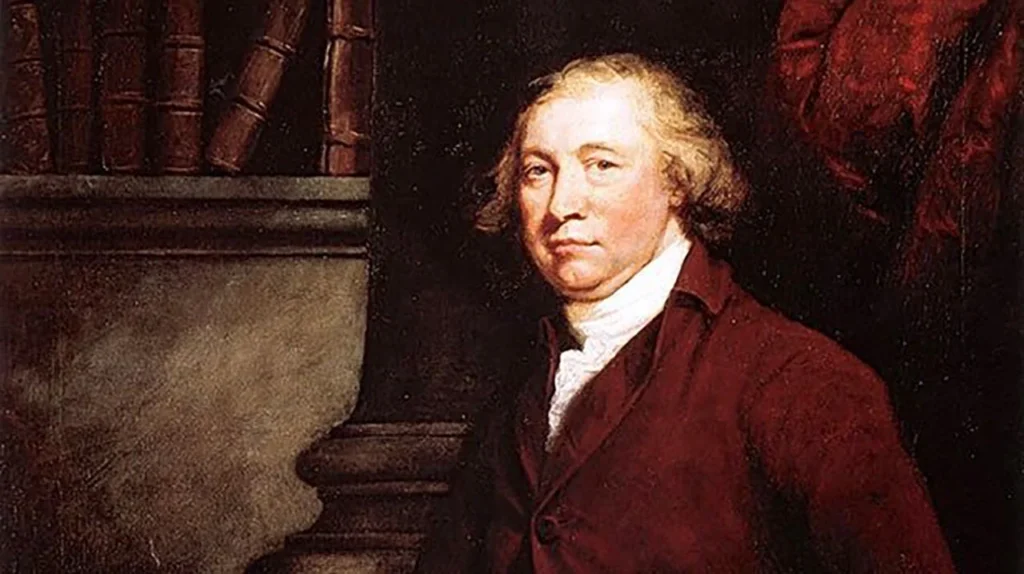
Burke’s entire architecture of the sublime depended on a specific neurological condition: the sudden arrest of ordinary cognition, the moment when the mind, confronted with something that exceeds its categories, is forced into a different mode of attention altogether. He called it astonishment — not admiration, not appreciation, but a state in which the soul is entirely filled with its object and cannot entertain any other. That filling was never meant to be permanent. It was the threshold, the brief suspension before meaning could re-enter. But it required, as its precondition, a contrast between the overwhelming and the ordinary. The cliff face had to be genuinely different from the field below it. The storm had to arrive from somewhere that had been calm.
What the twenty-first century has engineered, without designing it, is the abolition of that contrast. The neuroscientist and stress researcher Robert Sapolsky has documented in detail how chronic low-grade arousal — the physiological condition of sustained threat — systematically degrades the brain’s capacity to register acute fear as meaningful rather than simply exhausting. In his 2017 work on the biology of human behavior, he traced how glucocorticoid overexposure reshapes the hippocampus, narrowing the range of stimuli the organism can encode as genuinely significant. The system does not become braver. It becomes blunter.
This is not a metaphor for cultural desensitization. It is a description of what happens to attention when the catastrophic becomes ambient. The news cycle does not present disasters as events with edges — beginnings and ends that allow the nervous system to discharge, recover, and return to a baseline capable of fresh astonishment. It presents them as weather: constant, atmospheric, already there when you wake up and still there when you sleep. Under these conditions, the Burkean mechanism cannot fire, not because the stimuli are insufficient, but because the machinery of arrest requires a before that no longer exists.
There is something almost archaeological about the experience of reading accounts from the eighteenth century of educated Europeans encountering the Alps for the first time. Horace Walpole and Thomas Gray traveled through the Mont Cenis pass in 1739 and described a sensory shock that reads, across the distance of almost three centuries, as almost pharmacological in its intensity. That shock was available to them partly because they had no prior images, no satellite photographs, no accumulated scroll of catastrophe to inoculate them against the force of the real. Their capacity for astonishment was, in a sense, a form of wealth — a resource accumulated through deprivation.
What disappears when that capacity is exhausted is not merely an aesthetic pleasure. Burke understood, in ways he could not have fully theorized given the science unavailable to him, that the sublime performed a cognitive function: it recalibrated the self in relation to scale, forcing a brief encounter with one’s own smallness that paradoxically restored a sense of one’s own aliveness. The terror was not destructive. It was orienting. A creature that can no longer be arrested by enormity has not become stronger. It has lost one of the mechanisms by which it once understood what it was facing.
The question that remains — and it will not resolve itself into an answer here — is whether the capacity for that kind of arrested attention is merely suppressed by the contemporary condition or permanently restructured by it, and whether the difference between suppression and restructuring is one that the organism itself can detect from the inside.
🌑 When Beauty and Terror Become One
Edmund Burke’s theory of the sublime reveals that the most powerful aesthetic experiences are rooted not in harmony but in fear, vastness, and obscurity. These articles trace the philosophical and cultural lineage of that unsettling insight, exploring how terror becomes a form of meaning across literature, art, and thought.
Schopenhauer’s The World as Will and Representation
Schopenhauer’s vision of aesthetic contemplation shares deep affinities with Burke’s sublime, both recognizing that art can suspend the will and plunge the subject into a state beyond ordinary experience. Where Burke locates terror at the threshold of beauty, Schopenhauer finds salvation in the momentary dissolution of the self before overwhelming forces. This article explores the philosophy that made aesthetic suffering a path to transcendence.
GO TO THE SELECTION: Schopenhauer’s The World as Will and Representation
Arthur Machen: Life and The Great God Pan
Arthur Machen‘s fiction is a literary embodiment of the Burkean sublime, where the encounter with an ancient, incomprehensible force produces dread that overwhelms rational understanding. His masterwork ‘The Great God Pan‘ stages the sublime as a visceral collapse of the boundary between the human and the inhuman. Reading Machen through Burke illuminates how Victorian horror literature aestheticized terror as a mode of revelation.
GO TO THE SELECTION: Arthur Machen: Life and The Great God Pan
H.P. Lovecraft: Life and Works
H.P. Lovecraft built an entire cosmology around the principle that the sublime is ultimately monstrous, that the universe’s true scale and indifference produce not wonder but existential horror. His concept of ‘cosmic horror’ can be read as a dark radicalization of Burke’s aesthetic of terror, stripped of any reassuring distance. This article traces Lovecraft’s life and works as a philosophical system of the overwhelming and the unknowable.
GO TO THE SELECTION: H.P. Lovecraft: Life and Works
Herbert Marcuse and Art: The Aesthetic Dimension
Herbert Marcuse‘s reflection on art and its emancipatory potential engages directly with the question of what aesthetic experience can do to consciousness, a question Burke inaugurated with his analysis of the sublime. Marcuse argues that authentic art preserves a tension and negativity that refuse reconciliation with the existing order, much as Burke’s sublime refuses the comfort of the beautiful. This article examines how critical theory inherited and transformed the aesthetics of overwhelming experience.
GO TO THE SELECTION: Herbert Marcuse and Art: The Aesthetic Dimension
Discover the Cinema of the Overwhelming on Indiecinema
If Burke taught us that terror is the engine of the most powerful aesthetic experiences, independent cinema has long known how to translate that principle into images. On Indiecinema you will find films that embrace darkness, vastness, and the uncanny as genuine forms of beauty — works that make you feel, as Burke intended, that you are standing at the edge of something infinite.
👉 EXPLORE THE CATALOG: Watch Indie Films in Streaming
A vision curated by a filmmaker, not an algorithm
In this video I explain our vision

