
The Demotion of the Hand in Western Thought
You are handed a diploma and told, without irony, that you have finally done something with your life. The ceremony is brief, the language is familiar, and somewhere in the parking lot a plumber who fixed the venue’s burst pipe that morning earns more per hour than the adjunct professor delivering the commencement address — but this arithmetic is not part of the speech, and no one in the audience is meant to notice.

The contempt for manual work in Western civilization is not an accident of economic history. It was philosophically engineered. Plato’s term for the artisan class, banausos, carried a specific moral weight: those who worked with their hands were not merely lower in social rank but were understood to be constitutively incapable of virtue, because their attention was consumed by the particular, the material, the contingent. The Republic constructs its ideal city on the premise that proximity to matter degrades the soul. The craftsman’s very competence — his intimate knowledge of wood, stone, clay — disqualified him from the higher life of contemplation. Expertise in the concrete was evidence of spiritual limitation, not capacity.
This is not a footnote in the history of ideas. It became the skeleton of an entire civilization’s self-understanding. Aristotle softened the position but did not abandon the architecture: in the Politics he acknowledged that artisans produced necessary things while maintaining that their labor left no room for the development of civic excellence. The hand that worked was the hand that could not fully govern itself or others. By the time medieval scholasticism absorbed classical categories through Aquinas and the Dominican tradition, the hierarchy had been baptized: intellectual labor participated in the divine logos; manual labor was penance, the consequence of the Fall, the body’s submission to necessity.
What the Enlightenment did was not dismantle this structure but re-describe it. The elevation of abstract reason in Descartes — the cogito’s famous indifference to embodiment, the radical suspicion of the senses as sources of error — relocated human dignity entirely within the immaterial. The body became an instrument, and a fallible one. When Kant, in the Critique of Pure Reason published in 1781, established the categories of understanding as constitutive of experience rather than derived from it, he was doing something profound and also something deeply symptomatic: the knowing subject was pure form, untouched by labor, by fatigue, by the grain of wood or the resistance of metal. Enlightenment rationalism produced its own version of the banausos — anyone whose knowledge was embedded in practice rather than expressible in universal propositions was epistemologically second-class.
The Industrial Revolution did not simply mechanize production. It took this pre-existing philosophical demotion and gave it institutional teeth. Frederick Winslow Taylor’s Principles of Scientific Management, published in 1911, completed the circle: by separating the conception of a task from its execution, Taylor made the worker’s embodied judgment not just socially inferior but operationally irrelevant. The mind that designed the process lived in the office; the hands that performed it were interchangeable. What Plato had argued metaphysically, industrial capitalism arranged structurally — and then called it efficiency.
By the mid-twentieth century, this arrangement had crystallized into educational policy across the industrialized world. Grammar schools and universities became the legitimate path; technical and vocational training was what you settled for. The German Hauptschule, the British secondary modern, the American tracking system — each encoded the same assumption into bureaucratic form. Howard Gardner’s work in the 1980s on multiple intelligences would later challenge the cognitive monopoly of linguistic and logical-mathematical reasoning, but by then the infrastructure of credentialism had already been built, and it had been built on Plato’s blueprint, translated through centuries of contempt into concrete and institutional stone.
Studio 2091

Documentary, by Naù Germoglio, Italy, 2020
In a former warehouse on the ground floor of the civic number "2091", in the district of “Santa Croce” in Venice, two sculptors, a craftswoman and an alchemist-photographer work together. It is a 65 square meters space with two windows overlooking a small canal. It is called "STUDIO2091" and it is a unique example of creative co-working space where there is no wifi connection, the cellphones work very bad, there are no tables for meetings, nor computers.
His "tenants" carry out only manual activities related to art and crafts. Each of them has a different reason to live in Venice, a beautiful and unique city, yet expensive, problematic, overrun by mass tourism and high tide. The photographer-alchemist Andrea Buffolo, who was born in Switzerland,is the only one who has spent almost all his life in the historical center of Venice. Japanese sculptor Masaru Kashiwagi chose to live in Venice 35 years ago, because he considers it the only city in the world perfect for an artist; the craftswoman Camilla Morelli was born and raised in Valtellina ( a valley in the Lombardy region of northern Italy), and although she grew up in the mountains, she chose to live in Venice to enjoy the proximity to the sea; the Dutch painter and sculptor Alexandra Van der Leeuw lives on the island half of the year carrying on a family tradition. The four protagonists of the documentary film chose to live in Venice because here,and only here, they succeed in being themselves, realizing themselves and feeling free.
SUBTITLES: English, Spanish, French, German, Portuguese
Sennett's Craftsman as Political Provocation

You are standing at a workbench in a Leipzig instrument workshop sometime in the 1730s, and the man beside you is not thinking about the wood — he is thinking through it, fingers reading grain and resistance the way a scholar reads argument and counterargument. The distinction between the craftsman and the intellectual does not yet exist in any meaningful social sense. It will be invented later, strategically, and sold to you as nature.
Richard Sennett published The Craftsman in 2008, and the book arrived as a provocation dressed in academic clothing. His central claim was deceptively simple: the hand thinks. Not metaphorically, not in some romantic residue of folk wisdom, but materially and cognitively — the repetitive motion of skilled making generates knowledge that abstract reasoning cannot replicate or replace. Sennett drew on neurological research showing that manual skill, practiced over the famous ten-thousand-hour threshold, restructures neural architecture in ways that alter perception itself. The carpenter who has planed ten thousand boards does not merely perform a task more efficiently. He perceives the world differently. His hands have become instruments of cognition, and cognition cannot be fully recovered by removing them from the equation.
This is where the book becomes politically dangerous rather than merely interesting. The entire architecture of meritocratic ideology rests on a hierarchy of abstraction — the belief that thinking about things is inherently superior to making them, that the person who designs the chair occupies a higher rung than the person who builds it. This hierarchy is not a natural gradient of human capacity. It is a historical artifact that received its most aggressive philosophical scaffolding from Descartes in the Meditations of 1641, where the separation of mind from body was encoded as ontological bedrock. What Sennett recognized is that this separation was never neutral: it arrived precisely when European economies needed to justify concentrating educational resources and social prestige in the hands of a literate administrative class, while manual workers could be paid less because their labor was, by philosophical decree, less thoughtful.
The modern knowledge economy inherited this decree without examining it. Silicon Valley, management consulting firms, and the entire apparatus of credentialed professional life are built on the assumption that conceptual work is the genuine article and physical production is a lower form of activity best outsourced, automated, or made invisible. What this produces is not just economic inequality but a specific kind of epistemic impoverishment — a class of decision-makers who have never made anything with their hands and therefore cannot accurately model the material consequences of their abstractions. Robert McNamara’s quantitative certainty about Vietnam body counts is one version of this failure. The 2008 financial instruments designed by mathematicians who had never worked in a branch bank or spoken to a mortgage holder constitute another.
Sennett also exposed something more intimate and less comfortable: the modern professional’s relationship to his own work is defined largely by what he does not touch. The executive who has never typed his own letters, the architect who has never laid a foundation, the software entrepreneur who has never soldered a circuit board — their authority is performed through distance from material process. Dignity, in the knowledge economy, is calibrated by the degree to which you are insulated from friction, mess, and physical resistance. This is not incidental. Hannah Arendt, in The Human Condition published in 1958, had already drawn a distinction between labor, work, and action that Sennett implicitly contested: where Arendt elevated political speech as the highest form of human activity, Sennett located a form of democratic knowing in the workshop, in the problem-solving that happens when material pushes back and the maker must negotiate rather than dictate.
The craftsman, by this logic, is not a nostalgic figure. He is a structural critic of every system that mistakes fluency in abstraction for genuine understanding of the world.

The 10,000 Hours Trap and the Ideology of Mastery
You have probably heard the number. Ten thousand hours. It circulates now like a kind of secular commandment, stripped of the laboratory conditions and pedagogical scaffolding from which Anders Ericsson actually derived it — his 1993 study of violin students at the Berlin Academy, published in Psychological Review, was never about raw accumulation but about the quality of structured feedback, the presence of a teacher who could name your errors before you could feel them yourself. Malcolm Gladwell took that research in Outliers and performed on it a very specific act of violence: he removed the relational architecture and left only the number, which is to say he removed everything that made the finding meaningful and kept only what could be turned into a motivational poster. What remained was not a theory of learning but an ideology of individual persistence, one that could be sold to people who already had the time and resources to accumulate ten thousand hours of anything, while implying to everyone else that failure was simply a matter of insufficient effort.
This is not an accident of popularization. The transformation follows a logic. Once craft is redefined as a private journey toward personal excellence rather than a social relationship between a practitioner and a community of standards, it becomes available for extraction. The wellness industry understood this before most critics did. By the early 2010s, artisanal had become a modifier that could be attached to almost any commodity — bread, coffee, software, financial advice — and in each case the word was doing the same work: transferring the moral prestige of slow, careful, embodied labor onto a product while the actual conditions of that labor remained invisible. The baker whose hands shaped the loaf before dawn, earning wages below the median, disappeared inside the aesthetic of the crust.
Richard Sennett, writing in The Craftsman in 2008, located the ethical core of manual skill in what he called the cardinal virtue of the workshop: the willingness to do something again because you have done it badly, not because you have been shamed but because you have developed standards interior enough to generate their own demand. This is a fundamentally different account of repetition than the one Gladwell popularized. Sennett’s craftsman returns to the bench because the object has not yet told him what it can become; the ten-thousand-hour mythology returns because the self has not yet become what it should. One is a conversation with matter; the other is a self-improvement regime wearing craft’s clothing.
The political evacuation this produces is precise and consequential. Sociologists like Mike Rose, in The Mind at Work published in 2004, documented what electricians, plumbers, and waitresses actually do when they work — the constant micro-decisions, the embodied geometry, the social reading of situations — and found that the cognitive richness of manual labor was systematically denied by educational systems and labor markets organized around a clean hierarchy between thinking and doing. When the aestheticization of craft lifts the romantic image of the artisan upward into premium branding while leaving intact every structural devaluation of the people who actually work with their hands for wages, it performs a kind of cultural laundering. The form of devotion to manual work is absorbed; the demand that it be recognized, compensated, and protected is quietly dropped at the door.
There is a particular cruelty in the timing. The decade that produced the artisanal turn in consumer culture was also the decade in which manufacturing employment in the United States fell below nine percent of the workforce for the first time in recorded economic history, a collapse compressed into the years between 2000 and 2010 that eliminated approximately five and a half million jobs. The sourdough aesthetic arrived precisely as the conditions that once made bread-baking a dignified livelihood for working people were being dismantled at scale, and no one found this timing worth remarking upon.
What Industrial Modernity Destroyed and Called Progress

You are handed a single bolt. Your task, for the next eight hours, is to tighten it — the same bolt, the same quarter-turn, on the same chassis moving past you at the same interval, six hundred times before lunch. Nobody has told you what the bolt holds together. Nobody will.
This was not an accident of scale. When Frederick Winslow Taylor published The Principles of Scientific Management in 1911, he was explicit in a way that his industrial descendants preferred to forget: the goal was to transfer all knowledge of how work should be done from the worker’s mind into the hands of management. Taylor called this the “dissociation of the labor process from the skills of the workers.” He was not describing an outcome. He was prescribing a method. His time-motion studies, conducted with a stopwatch and a clipboard in the steel mills of Pennsylvania, broke each task into its smallest measurable components precisely so that no single worker would ever again possess the whole picture. Understanding, in Taylor’s system, was a security risk.
What this produced was not efficiency in any neutral sense but a new architecture of cognitive dependence. Harry Braverman, writing in 1974 in Labor and Monopoly Capital, traced what happened across the following decades with a precision that should have been scandalous but was instead quietly absorbed and shelved. Between 1900 and 1950, the proportion of workers classified as unskilled or semi-skilled in American manufacturing rose from roughly a third to nearly two-thirds of the labor force. This was not workers choosing simpler work. It was skill being systematically extracted from the body of the worker and relocated — into the machine, into the blueprint, into the managerial protocol. Braverman called this deskilling, and he understood it as a form of dispossession as material as the enclosure of common land. The worker did not lose wages first. The worker lost knowledge first, and the wages followed the knowledge down.
The cultural story told over this same period was one of liberation. Machines, the argument ran, freed human beings from brutish, repetitive physical labor and elevated them into something cleaner, lighter, more dignified. This narrative required a peculiar sleight of hand: it confused the elimination of effort with the elimination of meaning. The blacksmith’s arm was tired at the end of the day, yes — but the blacksmith knew metallurgy, knew fire, knew the specific resistance of different irons under the hammer. That knowledge was not a burden carried in the muscles. It was identity carried in the mind, transmitted across generations through apprenticeship systems that predated the university by centuries. The guild structures that Taylor-era industrialization dismantled between 1850 and 1920 across Britain, Germany, and the United States were not merely economic arrangements. They were epistemological ones — organized systems for preserving and transmitting embodied knowing that had no other container.
What replaced them was the manual, the procedure, the standardized instruction that could be handed to anyone and followed by anyone, which meant it belonged to no one. The philosopher Michael Polanyi had identified by 1958, in Personal Knowledge, that a vast category of human competence is “tacit” — it cannot be fully written down because it lives in the practiced hand, the calibrated eye, the learned hesitation before a decision. Industrial modernity did not simply fail to capture this knowledge. It actively created conditions in which tacit knowledge became economically worthless, because worthless knowledge is easier to underpay. The worker who knows only one motion has no leverage. The worker who knows the whole process is dangerous.
What is striking, looking at this from the inside of a century that congratulates itself on having moved beyond all that into clean digital work, is how faithfully the same logic has been reproduced in the architecture of software platforms, gig contracts, and algorithmic management systems — where the task is again visible and the purpose is again withheld.
The Body That Knows What the Mind Refuses to Admit
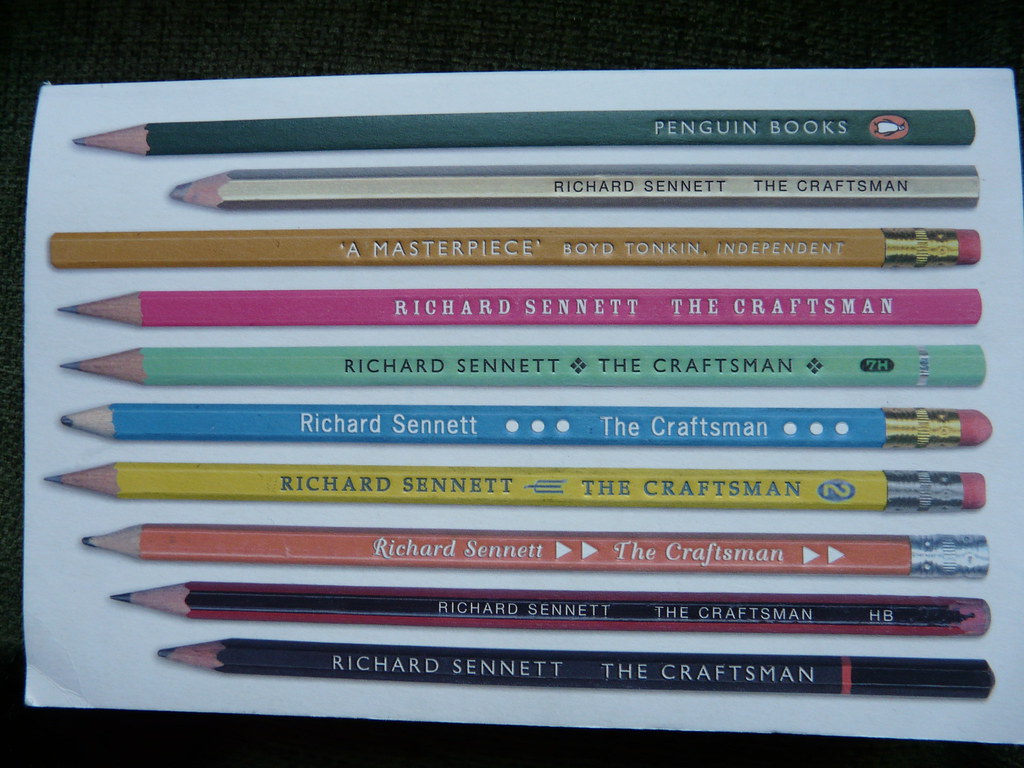
You already know how to do something your résumé cannot name. You learned it in a kitchen, a garage, a workshop, or on a construction site, and the knowledge lives not in any retrievable proposition but in the pressure your fingers apply before you consciously decide to apply it. Michael Polanyi called this tacit knowledge, and his 1966 work The Tacit Dimension offers a formulation that remains philosophically devastating in its simplicity: we know more than we can tell. The mechanic who listens to an engine already running a diagnosis before language has caught up is not being intuitive in some mystical sense — he is deploying a form of cognition so integrated, so refined through repetition and consequence, that it has outpaced the slower machinery of verbal reasoning entirely.
What makes Polanyi’s insight genuinely uncomfortable is not its content but its implication. If knowledge can exist in a form that cannot be articulated, then the systems we have built to certify, rank, and distribute knowledge — the transcript, the credential, the peer-reviewed publication — are not measuring intelligence so much as measuring a particular style of intelligence, one that happens to be legible to institutions. The carpenter who can read the grain of wood before cutting it, who adjusts the angle of a plane based on micro-resistances felt through the wrist, possesses a form of knowing that a university examination cannot capture and therefore, institutionally, does not recognize. This is not an accident of bureaucratic oversight. It is structural.
Matthew Crawford went further in 2009 with Shop Class as Soulcraft, bringing Polanyi’s abstraction into the visceral reality of motorcycle repair. Crawford had a PhD in political philosophy and ran a think tank before abandoning it to open a repair shop in Richmond, Virginia, and what he found in the diagnostic work of fixing engines was not a retreat from thinking but an intensification of it. The resistance of the physical world — the stripped bolt, the corroded fitting, the part that should fit and does not — demands a quality of attention that abstract work rarely requires, because abstraction permits evasion. You can write around a problem. You cannot wire around a short circuit.
What Crawford exposed, and what the cultural response to his book revealed as much as the book itself, is the class anxiety encrypted inside the contempt for manual work. The demotion of shop class from American high school curricula across the 1980s and 1990s was not driven by evidence that it harmed students — it was driven by the middle-class terror of being associated with it. Manual competence became a signal of failure, of the track you ended up on when you lacked the intelligence for abstraction. This inversion is historically recent and geographically specific, and it required sustained institutional effort to normalize. Medieval guild systems carried tacit knowledge as a form of protected inheritance, passed through apprenticeship with deliberate ceremony. The Enlightenment’s ranking of theoretical over practical reason, codified differently by Descartes and Kant, handed later centuries a permission structure for exactly this contempt.
The body that knows how to do something without being able to explain it is not evidence of a lesser mind. It is evidence of a mind that has been somewhere, that has negotiated with reality at a level of specificity that pure theory never reaches. And what is most quietly radical about insisting on this — what makes credentialed culture uneasy — is that it relocates authority away from the institution and back into the encounter between a person and the resistant, indifferent, non-negotiable materiality of the world, where what you actually know is tested not by a committee but by whether the thing works.
A vision curated by a filmmaker, not an algorithm
In this video I explain our vision
🔨 The Dignity of Making: Work, Craft, and Human Thought
Richard Sennett’s meditation on the craftsman opens a vast conversation about what it means to work with one’s hands, to think through materials, and to find meaning in the slow discipline of making. These related articles explore the philosophical, sociological, and cultural dimensions of manual labor, skill, and the human relationship with tools and time.
Michael Polanyi: Life and Works
Michael Polanyi developed the concept of ‘tacit knowledge,’ the idea that we know more than we can tell — a notion that sits at the very heart of craft and manual expertise. His philosophy illuminates how skilled workers carry embodied intelligence in their hands that cannot be fully reduced to explicit rules or instructions. Sennett’s craftsman is unthinkable without Polanyi’s epistemology of practice.
GO TO THE SELECTION: Michael Polanyi: Life and Works
Illich’s Tools for Conviviality: Analysis
Ivan Illich‘s ‘Tools for Conviviality’ is a radical critique of industrial tools that disempower the user and sever the bond between maker and made object. Illich argues for tools that enhance human agency and creativity rather than reducing workers to servants of machines, a vision deeply resonant with Sennett’s praise of the craftsman’s autonomy. Together, Illich and Sennett form a powerful philosophical defense of meaningful, human-scale work.
GO TO THE SELECTION: Illich’s Tools for Conviviality: Analysis
Karl Marx and Alienation: Economic and Philosophical Manuscripts
Marx’s concept of alienation, developed in his early Economic and Philosophical Manuscripts, describes the estrangement of workers from the products of their labor, from the act of production itself, and from their own human potential. This analysis provides the dark backdrop against which Sennett’s celebration of craftsmanship shines most brightly, as the craftsman represents precisely the unalienated worker who finds identity and satisfaction in the work itself. Understanding Marx’s alienation is essential to grasping why Sennett’s argument carries such urgent contemporary relevance.
GO TO THE SELECTION: Karl Marx and Alienation: Economic and Philosophical Manuscripts
Weber’s The Protestant Ethic: Analysis
Max Weber‘s ‘The Protestant Ethic and the Spirit of Capitalism’ traces how a particular moral attitude toward work — disciplined, methodical, and vocationally devoted — became the cultural engine of modern economic life. Weber’s craftsman-predecessor, the artisan imbued with a calling, resonates powerfully with Sennett’s portrait of the dedicated maker who pursues quality as an end in itself. Reading Weber alongside Sennett reveals how the ethics of craft have been both celebrated and systematically dismantled by industrial capitalism.
GO TO THE SELECTION: Weber’s The Protestant Ethic: Analysis
Cinema That Celebrates the Human and the Handmade
If these reflections on craft, labor, and the dignity of skilled work have stirred something in you, Indiecinema’s streaming catalog offers independent films that explore precisely these themes — stories of makers, workers, artists, and thinkers who resist the anonymous machinery of modern life. Discover cinema that, like the craftsman’s finest work, is made with care, patience, and an uncompromising commitment to the real.
👉 EXPLORE THE CATALOG: Watch Indie Films in Streaming
A vision curated by a filmmaker, not an algorithm
In this video I explain our vision

