
The Chemist Who Refused to Stay in His Lane
Imagine the moment when someone you respect — a department head, a senior colleague, a funding committee — looks at you across a table and says, with the particular politeness that only institutions have perfected, that your work is very interesting but perhaps you should focus. Focus. The word lands like a door being closed. What they mean is: stay inside the room you were assigned. What they mean is: the questions you are asking belong to someone else’s discipline, someone else’s budget line, someone else’s career. You have been allocated a specific patch of the knowable world, and the expectation is that you will tend it, publish from it, and resist the temptation of the view from the window.

This is not a hypothetical. This is the lived pressure that has shaped, deformed, and occasionally destroyed the most genuinely curious minds in the history of organized knowledge. And it is precisely the pressure that Michael Polanyi spent the better part of his life refusing.
He was born in Budapest in 1891, into a Jewish intellectual family that had already navigated the particular anxieties of assimilation in the Austro-Hungarian Empire. The Budapest of his childhood was not a provincial backwater but a city in ferocious intellectual bloom, producing, within a single generation and a few square kilometers, a concentration of scientific and artistic talent that remains statistically improbable: von Neumann, Teller, Wigner, Kármán, Lukács. Something in that environment — the pressure of belonging and not quite belonging, the simultaneous embrace and suspicion of a culture toward its most brilliant minorities — seemed to generate people constitutionally incapable of accepting the borders drawn around thought.
Polanyi trained first as a physician, completing his medical degree in Budapest in 1913, then pivoted almost immediately toward chemistry, earning his doctorate in physical chemistry from the University of Budapest in 1917. The pivot was not a detour. It was the first declaration of a mind that organized itself around problems rather than disciplines. He moved to Berlin, joined the Kaiser Wilhelm Institute, and in the 1920s produced work in chemical kinetics and X-ray crystallography that was, by any serious measure, first-rate. His research on the adsorption of gases, developed against considerable institutional skepticism — Einstein himself was reportedly dismissive of his adsorption theory before later evidence confirmed its validity — placed him among the genuinely productive scientists of his generation. He was not dabbling. He was not a dilettante who found laboratory work too difficult and retreated into abstraction. He was doing real science, solving real problems, publishing in the journals that mattered.
And yet. The and yet is the hinge on which his entire life turns. Because somewhere in the practice of doing science — in the daily experience of knowing something before you can fully say why you know it, in the gap between what the experimental method formally prescribed and what scientists actually did when they were working well — Polanyi began to notice a problem that chemistry could not solve. The problem was epistemological. It was the question of how knowledge actually works, as distinct from how knowledge is supposed to work according to its own official mythology.
This is not an unusual question for a scientist to brush against. What is unusual is the refusal to brush past it. Most researchers encounter the tacit dimensions of their own practice and file them under intuition, experience, or the ineffable quality of a good experimentalist, then return to the bench. Polanyi stopped. He turned toward the problem the way you turn toward a sound you cannot identify, not because the turning is professionally sanctioned, but because the alternative — pretending you did not hear it — is a form of intellectual dishonesty that compounds daily.
The institutions around him did not celebrate this turning. They accommodated it, eventually, with the mixed grace of organizations that cannot quite contain what they cannot quite dismiss.
Trench
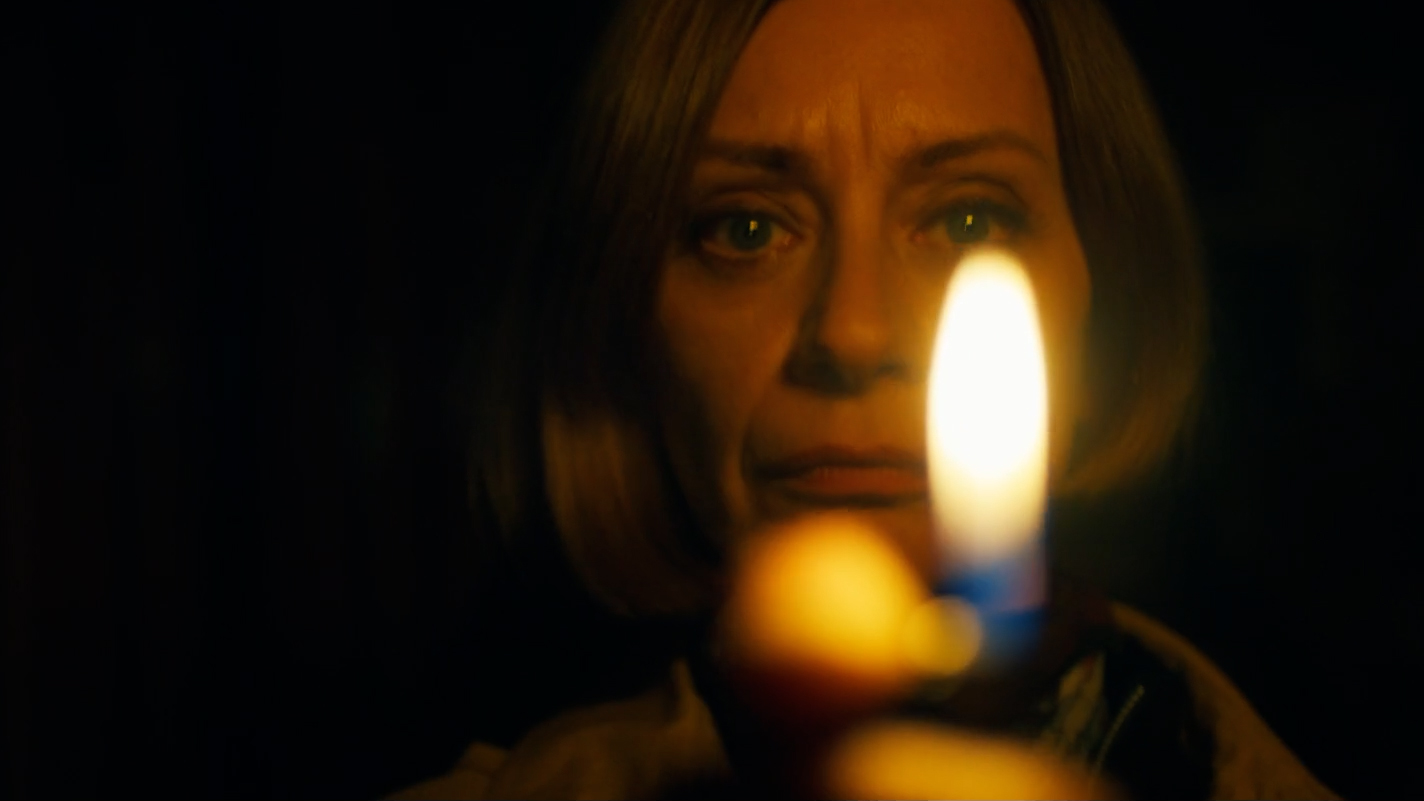
Thriller, Mystery, by Serge Turgeon, Italy, 2023.
In Venice, an art historian realizes that her brilliant mind will not be enough to solve the mystery surrounding the disappearance of an unknown woman. In addition to regaining trust in her intuition and her heart, she will need the help of a series of colorful characters from her community.
The idea behind Trench is to tell, through a detective story, the journey of an intellectual woman who suffered while growing up in a working-class district of Venice, where she never felt truly valued. In order to solve a mystery, she must face danger and rely on the help of the “non-intellectual” members of her community, rediscovering along the way her resourcefulness, her Venetian identity, and her true self.
LANGUAGE: Italian
SUBTITLES: English, Spanish, French, German, Portuguese
Budapest, Berlin, Manchester: The Geography of a Mind in Exile
There is a particular kind of mind that forms only under pressure — not the pressure of difficulty, but the pressure of belonging to too many worlds at once and being fully claimed by none of them. Michael Polanyi was born in Budapest in 1891 into a Jewish family that had already performed the central act of cultural self-reinvention that fin-de-siècle Central Europe demanded: assimilation, linguistic fluency, professional ambition dressed in the clothes of universal citizenship. His father, Mihály Pollacsek, a railway entrepreneur ruined and then killed by financial collapse, left behind a household held together by his mother Cecília, a woman of ferocious intellectual appetite who ran a salon that made their apartment a meeting point for artists, scientists, and public intellectuals. You grow up in that kind of space and you learn, before you learn anything else, that ideas are not decorations. They are the actual furniture.
Budapest at the turn of the twentieth century was producing minds at a rate that still defies statistical explanation. The same streets, the same gymnasia, the same compressed social anxieties were generating, within a single generation, figures like Georg Lukács, John von Neumann, Arthur Koestler, Edward Teller, Leo Szilárd. The historian William O. McCagg, writing about Hungarian Jewish intellectual culture in the late Habsburg period, identified the paradox precisely: a community excluded from full belonging was simultaneously driven to master every available field of belonging. Excellence became a survival strategy dressed as vocation. What looks from the outside like an extraordinary cluster of genius was also, from the inside, a response to a world that kept moving the threshold of acceptance just beyond reach.
Polanyi trained as a physician and then moved toward physical chemistry, earning his doctorate in Budapest before the First World War interrupted everything it touched. After the war, after the brief and catastrophic Hungarian Soviet Republic of 1919 that sent Lukács in one direction and Polanyi in another, he arrived in Berlin and joined the Kaiser Wilhelm Institute for Physical Chemistry and Electrochemistry. For over a decade he worked there on problems of adsorption, reaction kinetics, and the structure of cellulose fibers. His scientific work was serious, recognized, productive. But Berlin in the 1920s was also a city in controlled detonation, and a mind trained in Budapest’s atmosphere of perpetual intellectual emergency does not simply run experiments and go home.
Then 1933 arrived the way catastrophes arrive when you have been watching them approach for years: suddenly, officially, with paperwork. The new regime made his position untenable, and Manchester offered him a chair in physical chemistry. He took it. The move sounds administrative. It was not. To leave the language in which you think, the institutional world in which your credentials mean something self-evident, the culture whose references live in your body rather than your memory — this is not relocation. It is a kind of epistemological surgery performed without anesthesia.
What exile does, when it is real exile rather than romantic displacement, is force you to see the scaffolding. When you know a culture from within, its assumptions are invisible the way water is invisible to whatever lives inside it. When you arrive from outside, carrying a different set of assumptions in your hands like luggage that won’t fit the local overhead compartments, you suddenly see that every way of knowing is also a way of standing somewhere. That every claim to universal knowledge is made from a particular location by a particular person with a particular history pressing against the back of their thinking.
This is not a metaphor Polanyi would later apply to his own experience. It is something more unsettling: his experience was the argument. The displacement did not illustrate his eventual philosophy of personal knowledge. It generated it.

Tacit Knowing: What You Know Before You Know You Know It
There is a moment, somewhere between the twentieth and twenty-first attempt, when the bicycle stops being a problem. Not because you solved it. Because you stopped trying to. The calculations your mind was running — lean left to go right, weight forward, pedals timed to momentum — all of it dissolves, and suddenly you are simply riding. You did not acquire new information in that instant. You acquired nothing you could write down or hand to someone else. And yet something happened that changed you permanently, something that will still be present in your body thirty years later the first time you climb onto a bicycle after decades away from one. The knowledge did not go anywhere. It went deeper.
Michael Polanyi spent the better part of two decades trying to find language adequate to this fact, a fact so obvious that philosophy had largely ignored it. The result, compressed most sharply in The Tacit Dimension published in 1966 and laid out with greater philosophical architecture in Personal Knowledge eight years earlier, was a single sentence that cuts: we can know more than we can tell.
Gilbert Ryle had already drawn a useful line in 1949, in The Concept of Mind, between knowing-how and knowing-that — between the competence of the skilled swimmer and the propositional knowledge that water has a density of approximately 997 kilograms per cubic meter at room temperature. Ryle wanted to resist the intellectualist prejudice that all knowledge is ultimately knowledge of propositions, that the expert’s performance is secretly the execution of a mental rulebook. So far, Polanyi agreed. But Polanyi pressed further, into territory Ryle did not fully explore, and what he found there was not simply a category of practical skill sitting alongside theoretical knowledge. What he found was a structural relationship: all knowing, including the most explicitly theoretical, rests on a foundation of tacit knowing that cannot be fully articulated without generating an infinite regress of further tacit foundations.
Think of how you recognize a face. You are doing something extraordinarily complex — integrating hundreds of micro-features across varying light conditions, angles, ages — and you are doing it in roughly 170 milliseconds, which neuroscientists now know from ERP studies to be approximately the time at which face-specific neural responses peak in the fusiform gyrus. But you cannot tell someone how you do it. You cannot break it down into steps another person could follow to recognize your mother’s face in a crowd. The knowledge is real. It is reliable. It is yours. And it is irreducibly tacit.
Polanyi called this the from-to structure of attention. When you ride the bicycle, you are attending from the thousand small adjustments your body is making to the road ahead, to the act of cycling as a whole. The subsidiary particulars — the micro-corrections, the weight shifts, the timing — are not in the focus of your attention but in what Polanyi called its fringe. The moment you force them into focus, the skill collapses. The centipede asked which leg it moves after which famously forgot how to walk. Consciousness, dragged into the mechanics of its own operation, destroys them.
This is not mysticism. Polanyi was a scientist — a physical chemist who had published serious work on X-ray diffraction and adsorption theory before he turned to philosophy — and he was describing something he had lived from inside the laboratory. The scientist who has genuine expertise in a field knows things they cannot justify to a committee. They recognize a promising experimental direction before they can say why it is promising. Michael Polanyi called this tacit foreknowledge, and he considered it not a defect in scientific reasoning but its actual engine. The explicit hypothesis arrives downstream of a knowing that was already there, already orienting the inquiry, already pointing at something real before the words had formed to name it.
The Lie of Pure Objectivity
You are watching a documentary. The narrator’s voice is calm, measured, deliberately emptied of inflection. Charts appear. Experts speak in the passive voice. No one seems to be there — no hand that selected these images, no mind that chose this sequence, no set of values that decided what counted as evidence and what did not. You feel, almost despite yourself, reassured. This, you think, is knowledge. This is what it looks like when someone finally tells you the truth.
Polanyi spent the better part of his intellectual life dismantling exactly that feeling.
Personal Knowledge, published in 1958 after more than a decade of sustained philosophical labor, opens with a provocation so quiet it is easy to miss: that the ideal of a strictly detached, value-free, purely objective science is not merely unattainable but incoherent. Not a noble aspiration imperfectly realized. Incoherent. The book runs to nearly four hundred pages and ranges across physics, biology, mathematics, perception, and the sociology of scientific communities, but its central claim can be stated with uncomfortable simplicity: you cannot know anything without being someone. The knower is always already inside the act of knowing. There is no view from nowhere, and the pretense that there is one does not produce better science — it produces dishonest science, science that conceals its own commitments while claiming to have none.
This was not a popular argument in 1958. The logical positivists had spent thirty years constructing the architecture of value-free verification, and their influence had moved well beyond philosophy into the self-understanding of working scientists, science journalists, science-funding bodies, and eventually into the documentary narrators with their carefully flattened voices. To suggest that this architecture rested on a philosophical illusion was to make enemies in two directions simultaneously — the scientists who felt their authority undermined and the philosophers who felt their program attacked. Polanyi made both sets of enemies, and he made them willingly.
What he argued, with meticulous precision, was that every act of scientific knowing involves what he called tacit knowledge — a vast, mostly inarticulate background of skills, judgments, trained perceptions, and personal commitments that cannot be fully formalized or made explicit, and without which no explicit proposition could be evaluated at all. A scientist reading an experimental result is not a neutral recording instrument. She brings to that reading years of embodied practice, a sense of what good data looks like, an intuition about when an anomaly is significant and when it is noise, a commitment to certain standards of elegance and coherence that she could not entirely justify if pressed. The proposition “this result confirms the hypothesis” is never arrived at by logic alone. It is arrived at by a person, using a body, trained in a tradition, guided by judgment that exceeds its own articulation.
Thomas Kuhn arrived at adjacent territory four years later, in 1962, with The Structure of Scientific Revolutions, and the intellectual relationship between the two men is one of the more instructive near-misses in twentieth-century thought. Kuhn’s paradigm shifts, his account of how scientific communities operate through shared assumptions that cannot themselves be scientifically validated, clearly resonated with Polanyi’s earlier work on tacit knowledge and on the fiduciary — the faith-like commitment — that underlies all scientific practice. Kuhn acknowledged the resonance. But where Polanyi remained insistently concerned with the personal, with the individual scientist’s irreducible act of commitment, Kuhn shifted the weight toward the sociological, toward communities and their collectively held structures. The divergence matters. Polanyi was not describing sociology. He was describing something closer to an ontology of the knowing subject — the claim that personhood is not an obstacle to knowledge but its very condition.
You read a newspaper and feel informed. The byline tells you facts were checked. The passive constructions tell you no one is speaking.
The Republic of Science: Freedom, Authority, and the Invisible Hand of Truth
Picture a room full of intelligent people trying to decide, collectively, what the next important scientific discovery should be. They have budgets, timelines, expertise distributed around the table, and the best of intentions. They produce a document. The document is thorough, cross-referenced, politically defensible. And it is, in the deepest sense, useless — not because the people were incompetent, but because the thing they were trying to plan is precisely the thing that cannot survive planning. Creativity scheduled is creativity embalmed.
This is the situation Polanyi diagnosed in 1962 with a precision that has only sharpened with time. The essay he published that year argued that science, properly understood, operates as a spontaneous order — a system in which coordination emerges not from central direction but from the mutual adjustment of independent agents, each responding to the work of the others, each guided by standards they did not invent and cannot fully articulate. The parallel with Hayek is explicit, and Polanyi acknowledged it. Both men had watched the catastrophe of centrally planned economies and recognized in that catastrophe a deeper epistemological error: the assumption that knowledge can be gathered, totalized, and administered from above. But Polanyi’s argument cuts in a direction Hayek’s does not, and this is where the real discomfort begins.
For Hayek, the market’s spontaneous order is legitimate because it is impersonal, because no authority stands at its center. For Polanyi, the republic of science depends on authority — real, traditional, tacit authority — and this authority is legitimate not despite being undemocratic but partly because of it. Scientific judgment is not a vote. The community of scientists does not decide by consensus what is true. It is governed by a hierarchy of credibility that is invisible, unwritten, distributed across networks of reputation and apprenticeship that stretch back generations. When a young chemist submits a paper, they are not appealing to a democratic assembly. They are submitting to a tradition that will evaluate their work by standards the tradition itself embodies, standards that no committee ever ratified and no charter ever formalized.
This is where both the left and the right should feel the ground shift beneath them. The left, which tends to distrust unelected authority and demand transparency and representation, finds in Polanyi an argument that the most reliably truth-producing institution humanity has ever built operates precisely by resisting democratization. Michael Oakeshott, whose 1962 work Rationalism in Politics ran parallel to Polanyi’s concerns, described practical knowledge as the kind that cannot be written into a manual — and Polanyi’s scientific authority is exactly this, a competence transmitted through practice, not through policy. The right, which celebrates Polanyi’s anti-planning arguments and his debt to Hayek, must swallow the harder implication: that this spontaneous order requires genuine submission to communal judgment, that the maverick who refuses all authority is not a hero of the republic of science but its pathogen.
There is a scene of absolute clarity here, the kind that lodges in memory as if it were personal. A man sits with his doctoral supervisor, a scientist of formidable reputation, and presents what he believes is a radical new interpretation of existing data. The supervisor listens. Then, with neither cruelty nor condescension, he explains precisely why the interpretation fails — not because it violates a written rule, but because it misreads something in the texture of the field that only years of immersion teach you to feel. The student cannot quite argue back. Not because he is intimidated, but because he recognizes, however reluctantly, that the correction is coming from somewhere real. That is Polanyi’s republic in operation. The authority is legitimate. It is also completely invisible to anyone standing outside the room.
What makes this unsettling is that Polanyi offers no mechanism for reforming the tradition when it is wrong — only the slow, grinding pressure of anomaly accumulating until the community can no longer absorb it.
A vision curated by a filmmaker, not an algorithm
In this video I explain our vision
The Fiduciary Programme: Belief, Commitment, and the Ground Beneath Reason

There is a moment, if you have ever had it, when someone asks you — seriously, not rhetorically — why you trust your own memory. Not whether a specific memory is accurate, but why you trust the faculty itself, the mechanism by which you believe anything happened at all. You open your mouth and realize that the only evidence you have for the reliability of memory is itself a memory. The ground shifts. You are standing on what you were trying to examine, and there is nowhere else to stand.
This is precisely where Michael Polanyi spent the better part of his philosophical life, not in panic, not in the comfortable arms of skepticism, but in careful, almost geological attention to what that vertigo reveals. What it reveals, he argued, is not a flaw in human rationality but its actual structure. Every act of knowing begins with commitments that precede justification. You do not first verify that the external world exists and then decide to engage with it. You engage, and the engagement itself is the only foundation there is.
The word Polanyi reached for was fiduciary, from the Latin for trust, for faith placed in something prior to proof. All rational inquiry, he insisted, rests on fiduciary commitments that cannot themselves be rationally grounded without circularity. This was not a concession to irrationalism. It was a description of what rational inquiry actually is when you look at it without the mythology of foundations. In Personal Knowledge, published in 1958, he wrote that we must inevitably accept responsibility for holding beliefs that we cannot fully justify, and that to pretend otherwise is not intellectual honesty but intellectual evasion.
Augustine had seen something structurally similar when he insisted that we believe in order to understand, credo ut intelligam, that faith is not the enemy of reason but its precondition. Polanyi was not making a theological argument, or not only one, but he recognized that Augustine had located something real in the architecture of mind that Enlightenment rationalism had simply decided to ignore because it was inconvenient. You cannot step outside your own cognitive commitments to verify them. That is not a problem to be solved. It is the condition of being a knower at all.
Wittgenstein arrived at something nearly identical from the opposite direction in On Certainty, his last unfinished work composed in the months before his death in 1951 and published posthumously in 1969. The propositions that form the bedrock of our knowledge are not themselves known in the ordinary sense, Wittgenstein wrote. They are not justified, they are not doubted, they are simply acted on. They belong to what he called the hinge on which inquiry swings. Polanyi and Wittgenstein never directly engaged each other’s work in any sustained way, which is itself a kind of intellectual tragedy, because they were mapping the same territory from opposite banks of the same river.
What made Polanyi’s version distinctive, and difficult to categorize, was his insistence that this structure did not collapse into relativism. The fact that commitment precedes justification does not mean that all commitments are equal or that rationality is merely disguised preference. The scientist who commits to the existence of a hidden structure in data, who trusts their trained intuition that something is there before they can say what it is, is not acting arbitrarily. They are exercising a discipline shaped by a tradition, accountable to a community, and oriented toward a reality they did not invent. The commitment is real. So is the discipline. So is the accountability.
This is why he was neither a fideist, who abandons reason for faith, nor a relativist, who abandons the idea of truth for power, but something genuinely harder to name. And things that are hard to name are very easy to set aside.
Society, Tradition, and the Costs of Radical Freedom
There is a moment — you may have lived it yourself — when an institution you believed in tears itself apart in the name of its own founding ideals. The committee that was supposed to protect dissent becomes the instrument of its suppression. The therapy group convened to dissolve the ego produces, after eighteen months, ten people more elaborately defended than before, each one now fluent in the vocabulary of their own woundedness, each one less capable of genuine encounter. The revolution devours its children not through betrayal but through logical consistency: once you have decided that all inherited forms are chains, you must keep breaking, because stopping would mean admitting that some form, some structure, some tradition is worth keeping. And that admission is the one thing the revolutionary logic cannot survive.
Polanyi watched this happen to real people. He watched colleagues — men of genuine intelligence and moral seriousness — follow the Marxist promise of scientific certainty into political terror, convincing themselves that the historical calculus justified the individual cost. What disturbed him most was not the cruelty but the epistemological structure beneath it: the belief that a society could be redesigned from first principles, that tradition was merely accumulated error waiting to be corrected by reason. In The Logic of Liberty, published in 1951, he named this belief “moral inversion” — the process by which a genuine moral impulse, translated into an absolutist system, turns against the very human reality it set out to serve. The passion for justice becomes the justification for the Gulag. The liberation of consciousness becomes the manufacture of a new, more rigorous unfreedom.
Edmund Burke had seen the mechanism two centuries earlier, watching the French Revolution consume its moderates. Traditions, Burke argued, are not arbitrary constraints but the sedimented practical wisdom of generations — tested, refined, and carried forward in ways that no single act of reasoning could replicate or replace. Polanyi took this intuition and gave it epistemological precision: tradition is the medium through which tacit knowledge is transmitted. You cannot write down everything a society knows about how to live together. The knowledge lives in practices, in habits of deference and argument, in the texture of institutions that have learned, through long friction, what human beings actually need. Strip that away in the name of rational reconstruction, and you do not liberate human potential — you destroy the substrate in which it grows.
Hannah Arendt, working from a different angle, reached a neighboring conclusion. Totalitarianism, she argued in 1951 — the same year Polanyi’s book appeared — was not simply tyranny intensified. It was something structurally new: the attempt to make human beings superfluous, to dissolve the individual into the movement of historical forces. What made this possible was precisely the destruction of the intermediate structures — the communities, the institutions, the inherited loyalties — that give a person a specific place to stand. Without that ground, the individual is not free. The individual is available.
Polanyi’s point is harder to dismiss than it might first appear, because he is not defending conservatism as a political program. He is making a structural claim about the conditions of any meaningful freedom. A tradition is not a prison if it is the kind of tradition that contains within itself the resources for its own criticism. What he called a “free society” was one in which the tradition of rational inquiry, of open argument, of mutual accountability, was itself the inherited form being passed forward. The freedom was real precisely because it was embedded — because it had roots.
What the radical rupture actually produces, again and again, is not the open field it promises. It produces the person in the therapy group, eighteen months in, perfectly articulate about their damage, unable to be changed by anyone, because the very language of liberation has become the last and most impenetrable wall.
The Afterlife of a Difficult Thinker
There is something quietly ironic about a body of thought dedicated to the irreducibility of personal knowledge becoming, after its author’s death, a set of transferable propositions extracted, repackaged, and distributed across management seminars in Tokyo, California, and Frankfurt. Ikujiro Nonaka and Hirotaka Takeuchi published their landmark study of organizational learning in 1995, and in doing so introduced Polanyi’s concept of tacit knowledge to a readership that had never heard of him and would never read him directly. The borrowing was not dishonest. But it was, in a sense, the perfect demonstration of everything Polanyi had spent forty years trying to say about the gap between explicit articulation and living understanding — except that the gap was now being exploited rather than honored.
Polanyi died in February 1976, in Northampton, at the age of eighty-four. He had outlived two careers, two languages, two continents. He left behind Personal Knowledge, The Tacit Dimension, Knowing and Being, and the long philosophical argument of The Study of Man — a body of work that resists the kind of summary that institutions require before they will absorb something. The resistance was not incidental. It was structural. A philosophy that insists on the inarticulate, on the subsidiary, on the bodily and the committed, cannot be cleanly extracted into bullet points without becoming its own negation.
And yet that extraction happened, repeatedly, with apparently good intentions. Cognitive scientists found in tacit knowledge a useful framework for understanding procedural learning and implicit memory. There is genuine contact there, real intellectual kinship with what Michael Polanyi was describing when he wrote about the way a surgeon knows through her hands before she knows through her words. But cognitive science tends toward mechanism, toward the kind of third-person description that Polanyi’s entire epistemology was designed to resist. To translate his thought into computational models of implicit processing is to perform, in miniature, exactly the objectivist reduction he diagnosed as the central delusion of modern science.
The conservative appropriation is perhaps stranger still. Roger Scruton and others in the traditionalist camp found in Polanyi’s critique of moral inversion and his defense of intellectual commitment a validation of inherited forms and established communities. There is something in this that Polanyi himself might have recognized, given his admiration for the self-governing republic of science as a model of tradition-sustained freedom. But he was not a defender of deference, not an apologist for authority as such. The community he trusted was one held together by a shared commitment to reality, not by hierarchy or custom alone.
The postmodern epistemologists who occasionally claim him as a precursor make an equally selective reading. Yes, Polanyi demolished the myth of pure objectivity. Yes, he insisted that all knowledge is perspectival, situated, shaped by the knower’s position and commitment. But he drew from this not the conclusion that truth is constructed or that all frameworks are equally valid, but the opposite one — that the acknowledgment of personal participation makes the commitment to truth more urgent, not less. To use him against realism is to misread him at the deepest level.
What survives, then, beneath these successive appropriations, is something harder to name and therefore harder to misuse. It is the insistence that knowing is an act, not a state, and that the act always implicates the person performing it. It is the image of a man standing at the boundary of what he can say, reaching toward what he can only show. Every community that has absorbed Polanyi’s vocabulary while losing his fundamental orientation has enacted, without knowing it, the very predicament he described: holding a tool whose principle of operation remains tacit, felt in the hand but not yet spoken, perhaps unspeakable, perhaps still waiting for someone willing to dwell inside the difficulty long enough to begin to understand it.
🧠 Knowledge, Science, and the Life of the Mind
Michael Polanyi’s thought sits at the crossroads of science, philosophy, and culture, challenging the myth of purely objective knowledge. These related articles explore thinkers who, like Polanyi, questioned the boundaries between knowing, being, and creating.
William James and Consciousness: The Stream of Thought
William James‘s concept of the stream of consciousness prefigures many of Polanyi’s concerns about the nature of lived, embodied knowledge. James argued that thought is not a chain of discrete units but a flowing, continuous process inseparable from experience. This perspective resonates deeply with Polanyi’s notion of tacit knowing, in which personal and pre-reflective dimensions underpin all explicit knowledge.
GO TO THE SELECTION: William James and Consciousness: The Stream of Thought
Henri Bergson: Life and Works
Henri Bergson‘s philosophy of duration and intuition offers a striking parallel to Polanyi’s epistemology, as both thinkers resisted the reductionism of purely analytical science. Bergson insisted that life and consciousness could not be fully grasped through mechanistic frameworks, demanding instead a form of intuitive engagement with reality. This critique of scientific objectivism places Bergson in close dialogue with Polanyi’s defense of the personal dimension of knowledge.
GO TO THE SELECTION: Henri Bergson: Life and Works
Martin Heidegger: Life and Philosophical Thought
Martin Heidegger‘s investigation into being and existence shares with Polanyi a profound suspicion of the Cartesian legacy that divorces the knowing subject from the world. Heidegger’s notion of ‘being-in-the-world’ emphasizes that human understanding is always already situated, practical, and embodied — a vision congruent with Polanyi’s tacit dimension. Reading both thinkers together illuminates the philosophical movement away from detached objectivity toward participatory knowledge.
GO TO THE SELECTION: Martin Heidegger: Life and Philosophical Thought
Discover Independent Cinema on Indiecinema
If these explorations of knowledge, philosophy, and the creative mind have stirred your curiosity, Indiecinema streaming is your next destination. Our curated selection of independent films dives deep into the same questions — consciousness, science, meaning, and the human condition — through the unique lens of world cinema. Join us and let independent filmmakers guide you further along the path of discovery.
👉 EXPLORE THE CATALOG: Watch Indie Films in Streaming
A vision curated by a filmmaker, not an algorithm
In this video I explain our vision

