
The Architecture of Hidden Knowledge
You have been told, at some point in your life, that the world is not quite what it appears — and you dismissed it as poetry. That dismissal is itself worth examining, because the history of human thought contains a stubborn, recurring claim that ordinary perception is structurally defective, not merely limited but actively misleading, and that a specific mode of knowing exists which cuts beneath appearance to something the unaided intellect cannot reach by argument alone.

The Greeks had a word for this mode: gnosis. It designated direct experiential knowledge rather than propositional belief or logical inference. Pistis, faith, required assent to something held on authority. Episteme, the knowledge Aristotle systematized in the Posterior Analytics around 350 BCE, required demonstration through causes. Gnosis required neither. It was participatory, transformative, and — crucially — available only to those who had undergone something. This tripartite distinction was not a minor philosophical footnote. It carved out conceptual space for an entire anthropology: the idea that human beings carry within them a faculty of perception so deep that it registers dimensions of reality invisible to both the believer and the logician.
Long before Christian theology inherited and then prosecuted this vocabulary, the claim was alive in the mystery religions of the ancient Mediterranean. At Eleusis, outside Athens, initiates underwent rites beginning in 600 BCE and continuing for nearly a thousand years. The philosopher Pindar, writing in the fifth century BCE, described the state of the initiate as one who has “seen the end of life and its god-given beginning” — language deliberately opaque to outsiders, yet clearly pointing toward a cognitive event rather than a ritual performance. The secrecy surrounding Eleusis was not merely ceremonial. It reflected the conviction that gnosis is incommunicable to those unprepared to receive it, that transmitting it to the uninitiated would be like handing a musical score to someone who has never heard sound.
What makes this epistemological proposition genuinely unsettling — not as mystical color but as philosophical pressure — is its implied critique of consensus reality. If ordinary perception is a veil, then the shared world that grounds scientific method, legal institutions, democratic deliberation, and everyday social trust becomes suspect at the root. The Platonic tradition gestured toward this with the allegory of the cave in the Republic, written around 380 BCE, but Plato ultimately preserved reason as the instrument of ascent. Gnostic epistemology is far more radical: it holds that discursive reason is itself part of the problem, another layer of the veil, a faculty shaped and constrained by the very conditions it would need to transcend. This is not anti-intellectualism. It is something structurally more provocative — the claim that the highest form of knowing requires a prior rupture in the ordinary knowing self.
Modern culture has no comfortable category for this rupture. The post-Enlightenment settlement distributed legitimate knowledge between empirical science and subjective experience, leaving a managed space for religion provided it did not make factual claims. Gnosis violates this arrangement at every point. It insists on objectivity — the gnostic does not merely feel enlightened, they claim to have perceived something real — while simultaneously insisting that its object cannot be reached through the methods that modern institutions recognize as generating reliable knowledge. This puts it outside science without putting it inside religion, a position that contemporary epistemology has no bureaucratic drawer for.
The persistence of gnostic structures across radically different historical environments — Mesopotamian cosmologies predating the Greek synthesis, Neoplatonic schools of the second and third centuries CE, Manichaean networks stretching from North Africa to Tang Dynasty China — suggests that this is not a local cultural preference but a recurring response to something in the structure of human consciousness itself, a pressure that institutional knowledge systems repeatedly suppress and that repeatedly resurfaces, wearing new names each time, trailing the same stubborn insistence that the obvious is the last thing you should trust.
The Choice to Stay

Documentary, by Mattia Mura, Italy, 2020.
Damanhur is a community of spiritual seekers located in Valchiusella, Piedmont. The people of Damanhur, who live in the largest ecovillage in Italy, consider themselves to belong to a micronation, although it is not recognized by the Italian state. The community, active since the mid-seventies, secretly built an underground temple recognized today by the Guinness Book of Records as the largest underground religious structure in the world. Through the eyes of Celastrina, a Swedish girl who arrived in the community to shoot a documentary and who instead chose to stay and live inside, the film tells the story of lights and shadows of the spiritual community, amidst the accusation of being a sect and the creation of a possible alternative society.
Damanhur constantly appears to the director in a series of coincidences, as if there were a calling, a mission. So Mattia Mura proposed the project to Fabrica who rejected it because it was "not in line with his editorial choice". But Mattia believes in his intuition and manages to carry out the project on his own, independently. It was a long journey, but the documentary was finally made.
LANGUAGE: Italian, English
SUBTITLES: English, Spanish, French, German, Portuguese
Demiurge as Social Fact
You have signed a contract you never read. Not metaphorically — literally: the terms of service for every platform you use daily, the employment agreement you skimmed in twenty seconds, the mortgage instrument that runs to forty pages of subordinate clauses. Someone wrote those documents. Someone designed the architecture of consent within them. And that someone was not God, was not nature, was not the neutral unfolding of historical necessity. It was a specific kind of intelligence: competent, procedural, entirely indifferent to your flourishing, and convinced of its own legitimacy.
The Valentinian Christians of the second century had a name for this intelligence. They called it the Demiurge — from the Greek demiurgos, the craftsman, the one who makes things work. What made the Valentinian cosmological argument so structurally disturbing was not its mysticism but its sociological precision. In texts like the Gospel of Truth, composed around 140 CE, and elaborated across the Nag Hammadi corpus discovered in Upper Egypt in 1945, the Demiurge is not evil in the way a villain is evil. He is not malicious. He is functionally incompetent at the level of ultimate reality while being extraordinarily effective at the level of administration. He builds. He legislates. He enforces. He simply does not know that he is not the highest authority. His ignorance is not a flaw in his character — it is the condition of his power.
This is the move that most modern readers miss when they encounter Gnostic cosmology as mere mythology. The Sethian texts, particularly the Apocryphon of John, present the Demiurge as a being who rules through declaration: he announces himself as the only god, and the announcement creates the social reality of monotheism before monotheism has any theological content. Power, in this framework, is not derived from truth but from the ability to establish the frame within which truth gets evaluated. Max Weber would recognize this instantly — it is precisely what he meant in Economy and Society when he described legitimate domination as the belief in legitimacy, not legitimacy itself. The Gnostics arrived at that conclusion seventeen centuries earlier, embedded it in a creation myth, and were subsequently destroyed for it.
What the Demiurge administers is not simply the physical world but the epistemic world — the boundaries of what counts as real, what counts as knowledge, what counts as a valid claim about experience. Pierre Bourdieu spent his career mapping this function without naming it theologically: the field, the habitus, the doxa — the unspoken agreement about what can be spoken. The Demiurge in Valentinian theology is doxa with a face. He is the institutionalization of a partial perspective that has forgotten it is partial, that now reproduces itself through schools, courts, temples, hierarchies of interpretation, and the simple exhaustion of anyone who tries to argue otherwise.
The political edge of this becomes undeniable when you read Elaine Pagels’s 1979 study The Gnostic Gospels alongside the historical record of which communities were using these texts. They were not marginal eccentrics. They were urban, educated, often economically integrated people in Alexandria, Rome, and Antioch who looked at the institutional church consolidating episcopal authority in the late second century and recognized, in that consolidation, exactly the cosmological structure their theology described. The bishop who claims to speak for God without access to direct gnosis is structurally the Demiurge — not because he is corrupt, but because his legitimacy rests entirely on the architecture of mediation he himself controls.
What the second-century orthodox response to Gnosticism reveals — and Irenaeus of Lyon’s Against Heresies, written around 180 CE, is the clearest document of this — is that the Demiurge myth was not condemned for being false but for being too accurate a description of how ecclesiastical authority actually functioned, and what it required its subjects to forget in order to function.

The Nag Hammadi Rupture
You are standing in a field outside Nag Hammadi in December 1945, and a man named Muhammad Ali al-Samman is digging near a boulder when his mattock strikes something hard — a sealed red earthenware jar roughly sixty centimeters tall. Local accounts suggest he hesitated before breaking it open, half-believing it might contain a djinn. What it contained was far more dangerous than any spirit: thirteen leather-bound codices, buried sometime in the late fourth century, holding fifty-two texts that the Roman Church had spent roughly sixteen hundred years successfully erasing from public memory.
The timing of that burial matters enormously. In 367 CE, Athanasius of Alexandria issued his famous Festal Letter, the first document in Christian history to list precisely the twenty-seven books now recognized as the New Testament, and he was explicit that anything outside that list should be “not read.” Monasteries scrambling to comply appear to have hidden rather than destroyed certain texts — an act of preservation so cautious it looked like obedience from the outside. What Muhammad Ali broke open was not merely old paper; it was the physical residue of a decision made by institutional power about which versions of the sacred would be permitted to survive.
The Gospel of Thomas contains no crucifixion, no resurrection narrative, no apocalyptic drama. It is one hundred fourteen sayings attributed to Jesus, many of them structurally identical to passages in the canonical gospels, yet the theological atmosphere is unrecognizable. Salvation in Thomas is not achieved through faith in a sacrificial death but through self-knowledge — “Whoever has come to know himself has simultaneously come to know the depth of all things.” This is not a heterodox footnote. It is a complete alternative architecture for what the Jesus movement could have become, and the fact that it circulated widely enough to require suppression means it once had communities, readers, and believers whose descendants we have no record of because their tradition was successfully dismantled.
Elaine Pagels spent decades unpacking exactly what that dismantling cost, and her 1979 work The Gnostic Gospels drove the scholarly argument into the open: orthodoxy was not the original Christianity that gradually overcame heresy. It was one faction among several that won a political contest and then retroactively rewrote the loss of its rivals as their marginalization. The canonical texts were not simply the ones God chose — they were the ones that structurally supported episcopal authority, sacramental hierarchy, and centralized doctrinal control. Texts that located divine encounter inside individual consciousness, that rendered priests unnecessary, that gave women roles as teachers and visionaries, had to disappear precisely because they were coherent. A confused rival is tolerable; a coherent one is existential.
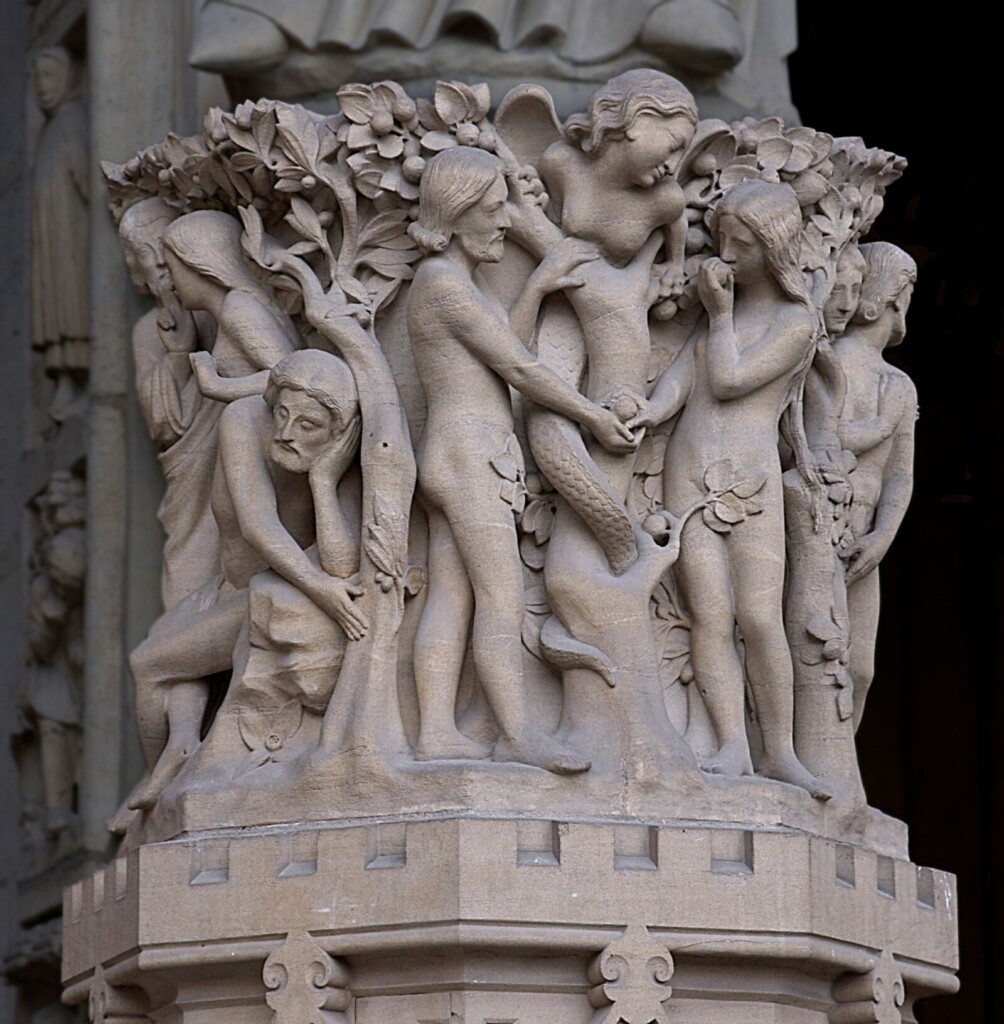
The Apocryphon of John complicates the picture even further because it does not just propose a different soteriology — it proposes a different cosmology in which the God of Genesis is not the supreme divine but a subordinate, ignorant creator who mistakes himself for absolute. The text calls him Yaldabaoth, and the audacity of that reframing is almost impossible to overstate. The entire moral architecture of the Hebrew Bible is inverted: the serpent in Eden becomes a liberator, Eve becomes a vehicle of true knowledge, and the creation of the material world is re-narrated as an act of cosmic blunder rather than deliberate love. What the Roman Church spent centuries calling the heresy of Gnosticism was, in this light, a sophisticated theological response to the problem of suffering — one that refused to make peace with a God who could be held responsible for the world as it actually is.
What the Nag Hammadi texts ultimately revealed is that the uniformity of early Christianity was an achievement, not a starting condition — something manufactured under pressure, with losers, with documents that had to be hidden in jars because the people who loved them knew what was coming.
Carl Jung and the Psychological Annexation of Gnosis
You are sitting across from your analyst, and something shifts — not in the room, but somewhere behind your sternum, a loosening, as though a knot you had forgotten about finally gave way. You leave the session believing you have touched something ancient, something real. What you do not know is that the ancient thing has been carefully defused before it reached you.
In 1916, Carl Jung produced a text he claimed was dictated to him by the dead — Septem Sermones ad Mortuos, written under the fictional persona of Basilides of Alexandria, a second-century Gnostic teacher whose actual doctrines survive only in fragments preserved by hostile heresiologists. Jung circulated the Sermones privately among friends, treating it as a kind of overflow document, an eruption from what he would later theorize as the collective unconscious. The choice of Basilides was not decorative. Basilides had taught that the world was created through a catastrophic emanation from an unknowing God, that matter itself was a mistake, and that salvation meant escape from the archons — the planetary intelligences who administered a prison cosmos. Jung found in this cosmology a perfect mirror for his psychological architecture, but he rotated the mirror forty-five degrees, which changes everything you see in it.
What Basilides meant by archons — rulers who actively trap pneumatic souls in cycles of material existence — Jung translated into autonomous complexes, sub-personalities residing within the psyche. The Gnostic pleroma, the divine fullness that lies beyond the Demiurge’s jurisdiction, became for Jung simply the totality of the self, a psychological rather than ontological category. This is not an innocent translation. When you move the enemy from outside the soul to inside it, you also move the battlefield, and with it, the stakes. The original Gnostic understood herself to be trapped in a cosmos designed against her; Jung’s patient understood himself to be in conflict with parts of himself that needed integration. Therapy replaces escape. Wholeness replaces liberation.
By the time Jung published Aion in 1951, he had worked this reframing into a system dense enough to obscure its own violence. Aion traces the symbolism of the self through two millennia of Western history, reading Christ and Antichrist as representations of the ego’s encounter with its shadow, and drawing heavily on Gnostic Christologies to do so. The book is genuinely erudite — Jung had read the Nag Hammadi texts, he engaged seriously with Valentinian speculation, he understood that Gnosticism was not mere superstition but a sophisticated metaphysical revolt. Yet the revolt is precisely what Aion dismantles. The Valentinian distinction between pneumatics, psychics, and hylics — people constitutionally capable of gnosis, people who could achieve it through faith, and people for whom salvation was simply unavailable — disappears entirely in Jung’s schema, replaced by the democratic promise that individuation is available to everyone willing to do the interior work. The Gnostic hierarchy of being, offensive and elitist as it was, encoded something the therapeutic model cannot afford to admit: that the encounter with reality might genuinely exceed some people’s tolerance, that knowledge of the real might not be a healing but a rupture.
Harold Bloom, writing in 1992 in The American Religion, argued that Gnosticism had become the unofficial theology of the United States precisely because it had been filtered through Jung — that Americans intuited themselves as pneumatic selves temporarily inconvenienced by matter, which is the Gnostic structure with the anti-cosmic radicalism surgically removed. What remains after that surgery is not Gnosticism but its ghost: the feeling of depth without the vertigo, the vocabulary of the sacred without the demand that the sacred require you to find the visible world fundamentally uninhabitable.
The pneuma, in its original register, was not a resource to be developed.
Twentieth-Century Esotericism and the Market for Inner Light
You are handed a pamphlet outside a wellness center in a mid-sized American city, sometime in the late 1990s. It promises contact with your Higher Self, alignment with cosmic intelligence, and the release of karmic debris accumulated across multiple lifetimes. The language feels ancient. The pricing structure does not.
Helena Blavatsky founded the Theosophical Society in New York in 1875, and the intellectual architecture she constructed borrowed heavily from Neoplatonic emanationism, Hindu cosmology, and precisely the kind of Gnostic dualism that posited a corrupted material world beneath layers of ascending spiritual planes. Her 1888 magnum opus The Secret Doctrine treated the physical universe as a degraded emanation of higher divine realities, and the human soul as a spark of light temporarily imprisoned in dense matter — a formulation that any Valentinian from second-century Alexandria would have recognized immediately. But Blavatsky removed the dread. Ancient gnosis had been saturated with cosmic terror: the Demiurge was not a misguided craftsman but a malevolent deceiver, and the universe he built was a trap of almost incomprehensible cruelty. Theosophy repackaged this cosmology as an optimistic evolutionary journey, with humanity spiraling upward through root races and spiritual epochs toward inevitable perfection.
Rudolf Steiner‘s departure from the Theosophical Society in 1912 to found Anthroposophy did not correct this softening — it deepened it. Steiner retained the Gnostic scaffolding of spiritual hierarchies, cosmic aeons, and the soul’s entrapment in material existence, but embedded it within a vision of Christ as the pivotal evolutionary event in earth’s spiritual history, a cosmic turning point that transformed the meaning of matter itself. His lectures collected in Occult Science: An Outline presented the physical world not as a prison to be escaped but as a training ground to be graduated from with increasing sophistication. The darkness was pedagogical. This is precisely the move that Hans Jonas identified as the defining characteristic separating modern esoteric revivals from their ancient sources.
Jonas published The Gnostic Religion in 1958, and the book remains philosophically devastating for reasons its admirers in spiritual communities rarely acknowledge. Jonas argued that ancient Gnosticism was structurally nihilistic — that its alien God, its hatred of the cosmos, its radical rejection of nature, history, and civic life constituted a coherent metaphysical rebellion against existence itself. The Gnostic was not on a journey toward self-improvement. He was a stranger in a universe built by a lesser deity to keep him blind, and the knowledge he sought was not empowering so much as it was annihilating — it dissolved the self’s attachment to everything the world had told it to want. Jonas drew an explicit parallel with twentieth-century existentialism, seeing in Heidegger’s thrownness and Sartre’s nausea the same structure of radical alienation, the same sense that the world offers no ground beneath the feet.
What the New Age movement performed, beginning in the 1970s and accelerating through the 1980s and 1990s with figures like Shirley MacLaine and organizations like est and later the proliferation of channeling communities, was a precise inversion of Jonas’s diagnosis. The alienation was retained as a spiritual marketing premise — you feel lost because you are more than this world — but the nihilistic conclusion was surgically excised and replaced with a therapeutic arc toward wholeness. The Process Church of the Final Judgment, operating from the mid-1960s onward and incorporating explicit Gnostic and Luciferian theology into its communal practice, was unusual precisely because it refused this excision and embraced the darker cosmological implications, which is likely why it attracted both genuine intellectual horror and sustained FBI surveillance.
The market, it turns out, has an extraordinarily refined instinct for which aspects of a dangerous idea can be monetized and which must be discarded before the product reaches the shelf.
A vision curated by a filmmaker, not an algorithm
In this video I explain our vision
Identity, Elect Status, and the Sociology of Spiritual Hierarchy

You have been told, at some point in your adult life, that you are “not everyone” — that you perceive things others cannot, that your suffering has a depth ordinary people lack, that your dissatisfaction with the world is itself a sign of something rare in you. The person who told you this may have called it spirituality. They may have called it awakening. What they were actually handing you was a credential, and like all credentials, its value depended entirely on the existence of people who could not possess it.
The tripartite division of humanity formalized in second-century Valentinian Gnosticism — pneumatics, psychics, and hylics — was never merely a theological taxonomy. Valentinus, writing in Rome around 140 CE, structured soteriology around irreducible ontological difference: the pneumatic carries a divine spark by nature and is destined for reunion with the Pleroma regardless of moral conduct; the psychic may ascend through disciplined effort but remains constitutionally below; the hylic is matter animated without transcendent potential, excluded from salvation not by sin but by essence. The theological claim is almost secondary to the sociological infrastructure it constructs. A community organized around this map does not need a visible hierarchy of titles or ranks. The hierarchy is internal, invisible, deniable, and therefore permanent.
Pierre Bourdieu’s analysis of symbolic capital in “Distinction” (1979) identified precisely this mechanism in secular culture: the conversion of arbitrary social position into the appearance of natural capacity. What Bourdieu tracked through taste, accent, and cultural fluency, the ancient Gnostics achieved through the language of spiritual constitution. The genius of the pneumatic category is that it cannot be earned and cannot be disproven — which means it cannot be contested. You either have the spark or you do not, and the person adjudicating that question is always already inside the circle.
Contemporary movements reproducing this architecture rarely announce it. In communities organized around channeled teachings, initiatory lineages, or accelerated ascension frameworks — many of which flourished in the 1990s and expanded rapidly through digital platforms after 2010 — the language shifts but the logic does not. “Old souls” and “starseeds” function as pneumatics. The sincere seeker, effortful and partially awakened, occupies the psychic slot. And the mass of distracted, materialistic, spiritually uninterested humanity fills the hylic position, rebranded as “the asleep,” “the unconscious,” or simply “the 3D.” Robert Lifton’s 1961 study “Thought Reform and the Psychology of Totalism” identified what he called the “sacred science” — an unquestionable framework that simultaneously explains the world and justifies the community’s separation from it. The hylic is essential to that framework: not as someone to be saved, but as someone whose existence confirms the pneumatic’s distinction.
What makes this durable is that it flatters the middle category most aggressively. The psychic — the person striving, attending, paying, practicing — is kept in productive anxiety. They are close enough to inclusion to keep reaching, far enough from the pneumatic elite to keep paying tuition. Sociologist Eileen Barker, in her 1984 work “The Making of a Moonie,” documented how new religious movements sustain membership not through coercion alone but through the controlled administration of belonging — enough warmth to stay, enough distance to strive. The pneumatic position is dangled rather than granted. This is not a malfunction of Gnostic-derived communities. It is their operating principle.
The deeper disturbance is that the schema does not require a formal community to activate. A person can internalize the pneumatic self-concept entirely alone, constructing an invisible hierarchy in private — measuring acquaintances, colleagues, and family members against a secret standard of depth, sensitivity, and perception that only they can assess, and only they can fail to meet.
Digital Gnosis and the Simulation Hypothesis
You are handed a universe that runs on rules you did not write, administered by an intelligence indifferent to your suffering, and somewhere beneath the visible surface there is a layer of reality more real than the one you inhabit. This is not a description of Valentinian cosmology from the second century. This is the pitch deck of a certain strain of Silicon Valley eschatology that has been circulating with increasing seriousness since Nick Bostrom published his simulation argument in 2003, and which Elon Musk later ventriloquized for mass consumption when he declared, with the confidence of a man who controls orbital launch vehicles, that the odds of our living in base reality are one in billions.
The structural homology between Gnostic cosmology and the simulation hypothesis is not a coincidence that requires apologizing for. It is a diagnostic fact. Both systems begin with the same intuition: the experienced world is ontologically inferior to another world that stands behind it, and the rulers of the experienced world are not beneficent. The Demiurge of the Nag Hammadi texts, particularly the Apocryphon of John discovered at Nag Hammadi in 1945, is precisely a secondary creator who mistakes his own construction for ultimate reality and enforces that mistake. The programmer-god of simulation theory makes no claims to divinity but performs the identical structural function, which is to administer a totality without consenting to be questioned by it.
What the transposition from theological to technological language accomplishes is not clarification but a very specific kind of forgetting. Ancient Gnostic systems — Sethian, Valentinian, Mandaean — were animated by the question of what the human being owes its suffering to, and the answer involved a cosmology of fall, exile, and the entrapment of divine light within matter. The pneuma, the spark of higher origin, was the thing that could not be fully domesticated by the Demiurge’s architecture. Simulation theory, by contrast, has no pneuma. It has no irreducible interiority that escapes the system, because in the programmer-god model, consciousness itself is part of the code. The Gnostic move was to locate something in the human being that the cosmos could not account for. The simulation hypothesis locates nothing of the kind — it merely redistributes the same determinism into a more contemporary grammar.
Hans Jonas, whose 1958 work The Gnostic Religion remains the most philosophically rigorous mapping of ancient Gnostic existential structure, argued that what made Gnosticism historically potent was its radicalization of alienation into a metaphysical category. The world was not merely difficult or unjust; it was alien at the level of its architecture. That specific radicalization is what simulation theory borrows without acknowledgment, and what it then immediately domesticates by suggesting that liberation might come through perception alone — that seeing the code is sufficient. But the ancient Gnostic traditions never stopped at perception. The Valentinians developed elaborate sacramental systems, the Mandaeans a practice of repeated ritual baptism in living water, because they understood that knowing the structure of imprisonment did not automatically dissolve the bars.
A man stares at a screen late at night, reading a Reddit thread in which strangers discuss whether the rendering resolution of the universe constitutes evidence of simulation. He feels, reading it, something he would describe as a frisson of significance, the sensation that the veil is thin. This feeling is real. What it is attached to is a cosmological structure that is approximately two thousand years old, traveling through him in secular disguise, stripped of the communal practice, the initiatory transmission, and the ethical weight that once gave it a direction beyond the thrill of suspicion. The simulation hypothesis offers the Gnostic shudder without the Gnostic discipline, the diagnosis of a false world without any account of what the self that perceives the falseness actually consists of, or what it might be asked to do with that knowledge.
The Persistence of the Alien Self
You have lived your entire life with the faint, persistent sense that something in the arrangement of ordinary things does not quite include you — not as a wound, not as a crisis, but as a low-frequency signal, constant and sourceless, like a broadcast no one else seems to be receiving.
This is not alienation in the Marxist sense, which is a social and economic condition produced by the severing of labor from its product, diagnosed by structures and remediable in principle by restructuring them. What the Gnostic tradition names is something ontologically prior: not that the world has been organized against the self, but that the self was never native to the world to begin with. Hans Jonas, writing in 1958 in “The Gnostic Religion,” identified this as the central experiential datum of ancient Gnosis — the pneumatic individual discovering themselves as a stranger in a cosmos that is not hostile so much as simply foreign, built by another intelligence for purposes that exclude the soul caught inside it. Jonas called this the “acosmic” dimension of Gnostic consciousness, and he recognized it not as theological doctrine but as a phenomenological report, a description of how existence feels from the inside when belonging refuses to arrive.
What Sartre described as the nausea of contingency in 1938 — the sudden, vertiginous recognition that nothing in the world explains or justifies one’s presence in it — shares this phenomenological structure without sharing the metaphysics. Sartre’s nausea has no Demiurge, no cosmic prison architecture, no divine spark waiting to be reclaimed. But the felt quality of the experience, the moment when the solidity of ordinary life becomes transparent and one stands exposed inside it like a body inside a glass box everyone else has agreed to pretend is a room, is recognizably the same event dressed in secular clothing.
R.D. Laing, writing in “The Divided Self” in 1960, gave this experience a clinical address without reducing it to pathology. His ontologically insecure patient is not simply anxious or depressed; they suffer from the inability to take their own existence for granted the way most people do, absorbing selfhood from the social world the way lungs absorb oxygen, without noticing. For Laing, the person who cannot perform this absorption is not broken but hyperaware — sensitized to a layer of existential precariousness that culture works extremely hard to paper over. The socialization process, he argued, is largely a mechanism for producing ontological confidence, for making the individual feel so at home in the shared world that the question of whether they truly belong there never becomes thinkable.
This is precisely the question that Gnostic consciousness refuses to stop thinking. Sociologists studying contemporary esoteric and Gnostic movements — among them Wouter Hanegraaff, whose “New Age Religion and Western Culture” appeared in 1996, and later Christopher Partridge’s work on occulture — have consistently found that individuals drawn to these communities share a recognizable psychological signature: high sensitivity to the constructed nature of social reality, a history of feeling misread or invisible within conventional institutions, and an acute discomfort with belonging that functions, paradoxically, as a form of intelligence rather than a deficiency. These are not people who failed to integrate. They are people for whom integration required a falsification of inner experience they were unwilling or unable to perform.
The Gnostic narrative offers them something no therapeutic model quite manages: not a diagnosis, not a treatment plan, but a cosmological frame in which their estrangement is not a malfunction but a mark, a sign that what is most real in them originates elsewhere, and that the pressure they feel to belong to a world that does not fit is not a problem to be solved but a recognition to be endured with the particular dignity of those who have always known, without being able to say how, that they were built for a different sky.
Infinite Maze: Further Explorations
Spirituelle Alchemie: Innere Transformation und Symbolik
GO TO THE SELECTION: Spirituelle Alchemie: Innere Transformation und Symbolik
Jungianische Alchemie: Jung und alchemistische Psychologie
GO TO THE SELECTION: Jungianische Alchemie: Jung und alchemistische Psychologie
Magnus Opus: Nigredo Albedo Rubedo
GO TO THE SELECTION: Magnus Opus: Nigredo Albedo Rubedo
John Dee: Alchemie, Engelmagie und enochische Sprache
GO TO THE SELECTION: John Dee: Alchemie, Engelmagie und enochische Sprache
Stream Independent Cinema
👉 EXPLORE THE CATALOG: Watch Indie Films in Streaming
A vision curated by a filmmaker, not an algorithm
In this video I explain our vision

