
The Architecture of the Ordinary
You walk into the room already performing. Not nervously, not consciously — you have done this so many times that the performance has become indistinguishable from your actual body. You sit down across from the interviewer, you smile at the exact calibrated degree that reads as confident but not aggressive, you modulate your diction three notches above your natural register, and you watch — because you have learned to watch — the precise millisecond when their eyes travel from your résumé to your face and something shifts. Not hostility. Nothing so legible as hostility. A recalibration. A nearly imperceptible tightening around the mouth, as though the person they built from your qualifications on paper and the person now sitting in the chair have failed to match in some way they will never be able to articulate in a tribunal. The interview continues. It goes well, technically. You do not get the job.

What happened in that room has no name in any legal framework currently operative in the democratic West, which is precisely the point. The architecture of racial discrimination in the twenty-first century was not built for visibility. It was engineered for the opposite — for a plausible deniability so structural that it precedes any individual intention, making the question of whether any given actor is “racist” not only unanswerable but functionally irrelevant. Eduardo Bonilla-Silva, in his 2003 work Racism Without Racists, documented what he called “color-blind racism” — the operating system beneath the surface of a society that has officially abolished prejudice while preserving its material outcomes with extraordinary precision. He found that white Americans could articulate the language of equality fluently while simultaneously maintaining networks, preferences, and neighborhood geographies that reproduced racial stratification almost perfectly. The ideology did not require belief. It required only participation in ordinary life.
Ordinary life is the mechanism. This is what makes the contemporary architecture of discrimination so difficult to name without sounding paranoid or hyperbolic to those who do not navigate it daily. It does not announce itself. It lives in the choreography of who gets waved through and who gets asked for a second form of identification. It lives in the statistic the United States Department of Justice published in its 2020 report showing that Black drivers were stopped by police at a rate 20 percent higher than white drivers, a disparity that persisted even after controlling for neighborhood, time of day, and traffic violation rates. It lives in the résumé study conducted by economists Marianne Bertrand and Sendhil Mullainathan in 2004, in which identical CVs with stereotypically white names received 50 percent more callbacks than those with stereotypically Black names — a gap that widened, not narrowed, when the qualifications on the résumé were stronger. Excellence, in other words, did not function as a neutralizer. It functioned as an amplifier of the scrutiny already in place.
Erving Goffman spent years mapping the microgeography of social interaction — the precise rituals of eye contact, spatial negotiation, and what he termed “face-work” that govern how human beings move through shared space. What Goffman could not fully account for in his 1967 Interaction Ritual was the way those rituals are not neutral protocols but historically loaded scripts, written by centuries of hierarchy and internalized so deeply that they feel like instinct. When a body moves through a department store and is followed, or through a taxi line and is passed, or through a neighborhood and is watched from behind curtains, the event does not register as discrimination in the consciousness of the person doing the following, the passing, the watching. It registers as intuition. As comfort. As a routine calibration of risk that feels entirely natural because the entire culture has spent generations naturalizing it.
The violence of the ordinary is not that it hurts less than the extraordinary. It is that it never stops.
Ancestral

Documentary, by Lumar Brothers, Italy, 2023.
“Ancestral: Life and Art of Massinissa Askeur” is a documentary that explores the life and art of Algerian painter Massinissa Askeur. The film follows Askeur on his creative journey, showing his artistic process and his commitment to the preservation of Berber culture and tradition. Through interviews with Askeur, his family, friends and testimonies from people who knew him on a personal, professional and artistic level, the documentary tells the story of his past and his deep connection to his Berber roots. Askeur displays his art, from canvases to sculptures, which are inspired by the shapes and symbols of Berber culture, representing his search for a connection between the past and the present.
The documentary also explores the challenges Askeur faced throughout his life, including racial discrimination, poverty and the difficulty of making his art known outside of Algeria. However, despite these difficulties, Askeur continues to create and promote his art as a form of cultural resistance and celebration of his ancestral heritage. A vision far from art as a commercial product and very close, instead, to the exploration of the depths of one's own soul and the soul of the world. Massinissa's mission is to leave a testimony of his time to future generations.
LANGUAGE: Italian
SUBTITLES: English, Spanish, French, German, Portuguese
Whiteness as Default Setting
You walk into a room where every painting on the wall, every face in the advertisement above the water cooler, every author listed on the bookshelf behind the reception desk shares a complexion that nobody in that room has been asked to notice. Not because it is invisible — but because it has been granted the privilege of requiring no comment. That is not neutrality. That is a political architecture so well constructed that it hides its own blueprints.
Richard Dyer spent years examining exactly this mechanism before publishing White in 1997, and what he found was not a conspiracy but something far more durable: a structuring absence. Whiteness, he argued, functions as the unmarked category — the norm against which all other racial identities are measured, named, and made to explain themselves. A film with an all-Black cast becomes a “Black film.” A festival celebrating Latino culture becomes an “ethnic festival.” The default, meanwhile, asks for no adjective because it has already colonized the noun itself. Dyer’s central discomfort — shared, he admitted, by himself as a white scholar writing about whiteness — was that to name it at all felt transgressive, as though merely pointing at the wallpaper were somehow an act of aggression against the room.
Ruth Frankenberg’s fieldwork, conducted through extensive interviews with white American women and published in 1993 as White Women, Race Matters, revealed something the theoretical literature had been circling without landing on directly: most white people do not experience themselves as having a race. They experience themselves as people, full stop, and then encounter race as something that happens to others. This is not innocent confusion. It is the experiential residue of a social arrangement that required whiteness to disappear into universality in order to sustain its authority. Frankenberg called this “race cognizance” — the slow, often painful work of recognizing that the unmarked position is still a position, that standing outside the frame is itself a way of being inside it.
The silence that surrounds whiteness is not the silence of absence but of assumption. When a medical textbook published before 2010 illustrates skin conditions almost exclusively on light skin, it is not making a statement about white supremacy — it is making no statement at all, which is precisely the problem. The dermatological literature has since documented what generations of Black patients already knew experientially: that conditions like melanoma and eczema present differently across skin tones, and that diagnostic training built around a default body produces real, measurable harm. The Centers for Disease Control and Prevention noted in 2020 that disparities in late-stage cancer diagnosis correlate strongly with race, a pattern that cannot be explained by genetics alone and that traces, in part, to the quiet assumption that one kind of body is the body everyone is talking about.
What makes this particularly resistant to correction is that naming it triggers a defensive reflex that Frankenberg herself observed repeatedly in her interviews: the moment whiteness is identified as a specific cultural and racial position rather than a neutral human baseline, many white respondents experienced the naming itself as an accusation. The political work of the invisible norm is that it transforms its own exposure into an attack. You are not simply pointing at a structure — you are suddenly, in the logic of the conversation, assaulting the people who live inside it. This is not a psychological accident. It is the mechanism by which the norm protects itself, rerouting critique into grievance and making the analyst the problem rather than the arrangement being analyzed.
Every generation produces its own version of the same institutional vanishing act — the hiring committee that believes it is choosing on merit alone, the curriculum that calls itself universal while drawing from a remarkably narrow geography of human thought, the language of objectivity deployed most loudly by those who have never been asked to justify their presence in the room.

The Statistical Body
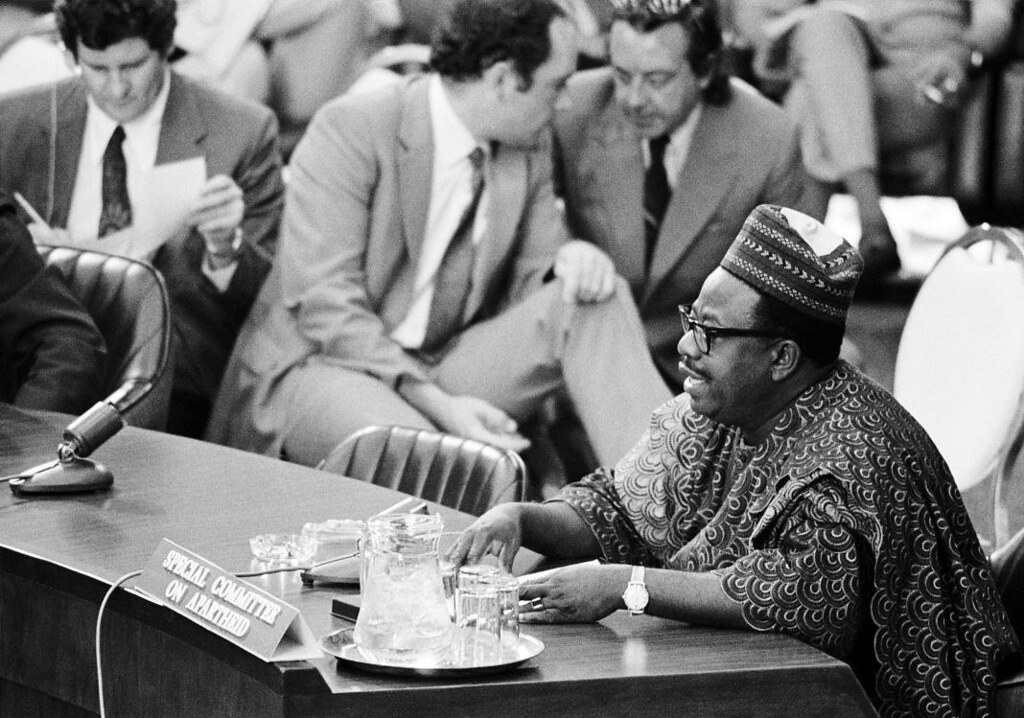
You fill out the form correctly. You list your qualifications honestly. You submit the application through the proper channel, on time, with everything they asked for. And then nothing. Not a rejection — just silence, which is a different kind of answer, the kind that leaves no paper trail and requires no justification.
The Equal Employment Opportunity Commission received 81,055 discrimination charge filings in fiscal year 2023. That number is not a scandal. It is a floor — the statistical minimum of what racism costs people in bureaucratic courage, in the willingness to name something that will make you difficult, that will follow you into the next interview room. Every person who did not file because they needed the reference, because they couldn’t afford the time, because they had already learned that institutions protect themselves before they protect you — those absences are invisible to the count but structurally present in the outcome. A number like 81,055 does not measure the problem. It measures the people who believed, still, that measurement was possible.
The wage gap between Black and white workers in the United States sits at roughly 30 percent by median — not at the bottom of the labor market, where everyone agrees discrimination exists, but across the full distribution, including sectors with formal credentials, union contracts, and published salary bands. This is not the gap that remains after controlling for education, experience, and hours worked. This is the gap before the controls, which means it is the gap that actually exists in the world people are living in, not the gap that exists in a regression model designed to isolate individual variables from the social system that produces them. When economists “control for” education, they are, in practice, removing from the analysis the documented fact that equivalent credentials do not produce equivalent access. The control does not neutralize the variable. It amputates it.
Raj Chetty’s 2020 research on intergenerational mobility, produced through Opportunity Insights at Harvard, found something that disrupted even progressive assumptions: Black boys raised in wealthy households, by two parents, in high-income zip codes, fall further down the income distribution as adults than white boys raised under identical measurable conditions. The same neighborhood, the same schools, the same starting income bracket — and the outcomes diverge sharply and consistently along racial lines. What Chetty’s data reveals is that advantage does not transfer neutrally. The infrastructure of opportunity — who vouches for you, whose name opens a door, whose discomfort closes one — runs through social networks that were built under segregation and have never been formally dismantled, only politely unmentioned.
What is remarkable about this moment in history is not that racism persists but that it has learned to speak fluently in the language its critics use against it. Systems do not need to be overtly hostile to produce racially stratified outcomes; they need only to be consistent. A hiring algorithm trained on historical promotion data will encode the promotions that were denied. A credit scoring model built on generational wealth accumulation will penalize the generations from whom wealth was extracted. The machine is not prejudiced in any way it would recognize. It simply optimizes for patterns that racism already made.
In 1944, Gunnar Myrdal published “An American Dilemma,” arguing that the tension between democratic ideals and racial practice was a moral contradiction the country could not indefinitely sustain. He believed exposure would produce correction. What he underestimated was the system’s capacity to absorb exposure — to translate it into data, to make data into policy, and to make policy into a new surface beneath which the same pressures continue to operate. The numbers are now public. The studies are peer-reviewed. The gap is documented in decimal points. And the person who filled out the form correctly is still waiting.
The Cognitive Shortcuts That Replaced the Law
You sit across from someone in a hiring interview, and within the first ninety seconds something has already been decided. Not consciously. Not maliciously. That is precisely the problem.
In 1998, Anthony Greenwald and Mahzarin Banaji published the foundational study behind the Implicit Association Test, demonstrating through reaction-time measurements that the human mind holds associative pairings — Black faces linked to danger, white faces linked to competence — that operate entirely below the threshold of declared intention. The research was elegant, the data uncomfortable, and the institutional response was almost immediate: workshops, trainings, corporate sensitivity modules, entire consulting industries built around the premise that if you could name the bias, you could neutralize it. By 2017, more than seventeen million people had taken the IAT online. The test became a ritual of liberal self-examination, a mirror held up to the unconscious, and the mirror was comfortable precisely because it looked like accountability without demanding any.
The structure of that comfort deserves scrutiny. When a bias is declared unconscious, the moral architecture of the situation shifts entirely. Unconscious means unintentional. Unintentional means, in the grammar of modern ethics, not fully culpable. The person who holds the bias becomes simultaneously its subject and its victim — a well-meaning individual ambushed by evolutionary cognitive shortcuts, by mere statistical heuristics, by the accumulated sediment of cultural exposure they never personally chose. This is not an unreasonable description of how minds work. It is also a remarkably convenient one.
Pierre Bourdieu spent decades arguing that the deepest forms of social power are those that naturalize themselves — that transform historical arrangements into felt inevitabilities, into things that simply appear to be the way the world is. What neuroscience has given racial stratification in the twenty-first century is precisely this kind of naturalization, dressed in the language of empirical neutrality. The implicit bias framework does not deny that disparity exists. It locates its origin in neural architecture, in the associative machinery shared by everyone, and in doing so it quietly evacuates the question of who built the environment that feeds those associations. A brain that learns from its surroundings is not exonerated by the admission that it learned.
The downstream effects of this exculpatory logic are measurable in ways that resist abstraction. Studies published in the American Economic Review, notably the 2004 correspondence audit by Marianne Bertrand and Sendhil Mullainathan, sent identical resumes to job listings across Chicago and Boston — resumes identical in every detail except the names at the top. Names coded as stereotypically Black received fifty percent fewer callbacks than those coded as white. The employers who ignored those resumes were not, in all probability, members of hate groups. They were people who had perhaps taken sensitivity trainings, who understood intellectually that discrimination was wrong, who would have been genuinely offended to be called racist. The gap between their self-image and their behavior was not hypocrisy in the theatrical sense. It was something more structurally durable: a system that continues functioning precisely because its operators believe themselves to have already addressed it.
There is a version of cognitive science that opens toward responsibility — that says, if you know the mechanism, you can interrupt it, redesign the architecture around it, remove the features of a hiring process that activate the shortcut. The version that spread through institutions did something closer to the opposite: it transformed awareness of bias into a substitute for changing the conditions that make bias consequential. A company that runs an implicit bias seminar and then continues interviewing candidates in unstructured thirty-minute conversations has not reformed its process. It has inoculated itself against the accusation of having done nothing.
What the law once at least nominally promised — accountability located in an act, in a decision, in something that could be traced and contested — the unconscious has quietly dissolved into a fog of distributed non-agency, where everyone is slightly responsible and therefore no one is.
Internalized Cartography
You are standing in a room that belongs to you — your name on the lease, your furniture arranged by your own hands — and yet something in the architecture of the space feels borrowed, conditional, subject to revocation. Not because anyone has said so. Because you have learned, across a thousand small calibrations, to occupy it as if permission might be withdrawn. That posture is not paranoia. It is knowledge, accumulated at the skin.
Frantz Fanon understood this not as metaphor but as clinical fact. Writing in 1952, he described what happens when a racialized subject enters a world organized by whiteness as the invisible norm: the self does not simply encounter hostility from outside, it begins to reorganize itself from within, restructuring desire, language, and spatial confidence around an alien center of gravity. This is the core argument of Black Skin, White Masks — not that racism wounds the psyche, which would be obvious enough, but that it rewires the map by which a person orients toward the world. The wound is architectonic. It rebuilds the room from the inside.
W.E.B. Du Bois had reached toward the same territory from a different angle, naming in 1903 a condition he called double consciousness — the sense of always looking at oneself through the eyes of others, of measuring one’s soul by the tape of a world that looks on in amused contempt or pity. What makes this instrument precise is that it describes not a temporary disruption but a permanent cognitive structure: two competing self-perceptions running simultaneously, one native, one borrowed, neither fully dominant. The psychological cost is not occasional. It is metabolic. It runs continuously in the background of perception, the way an operating system runs beneath the visible applications.
What both thinkers identified, from different disciplines and different historical locations, is that discrimination does not confine itself to the social surface. It penetrates into aspiration — specifically, into the architecture of what a person allows themselves to want. Sociologists studying occupational ambition in the early twenty-first century have found consistent patterns of what researchers sometimes call anticipatory disqualification: the moment when a racialized subject edits their own professional aspirations before any external rejection has occurred, cutting their ambitions to fit a perceived social ceiling. The discrimination precedes the discriminator. The cartography has already been drawn.
This is what makes racial discrimination categorically different from other forms of social disadvantage — its capacity to colonize futurity. Poverty constrains resources. Class limits access. But a racialized identity, when freighted by systems of persistent devaluation, reaches into the imagination itself, into the moment before action, before application, before the first word of the first sentence of the letter that was never sent. Pierre Bourdieu’s concept of habitus touches this terrain when he describes the ways social position sediments into the body as second nature — but even his framework struggles to account for the specific violence of being seen as a category before being seen as a person, of having one’s interiority pre-empted by one’s legibility.
Spatial belonging is perhaps where this reorientation becomes most viscerally readable. Research in urban sociology, particularly work examining the movement patterns of Black men in American and European cities since the 1980s, shows consistent micro-adjustments to physical presence in public space: route-planning that avoids certain neighborhoods, posture recalibrations in proximity to authority, the practiced legibility of non-threat. These are not neurotic responses. They are adaptive ones, and their adaptiveness is precisely what makes them so costly — because what the body learns to perform as survival eventually loses its status as performance and becomes simply how one moves through a world that has never been neutral.
The internalized map is never merely about where one can go.
A vision curated by a filmmaker, not an algorithm
In this video I explain our vision
The Solidarity Trap

You are sitting in a conference room on the fourteenth floor, somewhere between the free coffee and the laminated name badges, watching a facilitator draw a privilege spectrum on a whiteboard. The exercise asks you to step forward or backward based on yes-or-no questions about your childhood. Did you grow up with books in the home? Step forward. Did you ever fear the police? Step back. By the end, the room has physically rearranged itself into a visible map of inequality, and something in the air feels like revelation — a kind of moral geometry made flesh. Then everyone sits back down, the badges go into the recycling bin, and the quarterly earnings targets resume their quiet authority over every decision that will actually be made in that building.
Barbara Fields, writing with her sister Karen Fields in Racecraft: The Soul of Inequality in American Life published in 2012, introduced a concept that cuts through this choreography with surgical precision. Racecraft, for the Fields sisters, is not racism in the simple sense of prejudice held in individual minds. It is a set of cognitive and social rituals that transform social outcomes — produced by specific historical acts of exploitation and dispossession — into apparently natural properties of human bodies. It works like magic in the anthropological sense: it makes a consequence look like a cause. The workshop performs exactly this inversion. By centering the conversation on identity positions already distributed across the bodies in the room, it accepts as its starting grammar the very taxonomy that economic and political violence spent centuries constructing. It does not interrogate how those positions were manufactured. It asks participants to feel them more precisely.
What makes this mechanism so durable is that it generates an authentic emotional experience. The person who steps backward during the exercise is not pretending. The discomfort is real, the self-recognition is real, the momentary solidarity is real. Corporate institutions learned, particularly after the visible eruptions of public grief and rage in the summer of 2020, that emotional authenticity could be harvested and contained simultaneously. McKinsey & Company published research in 2020 estimating that companies with above-average diversity in leadership outperformed their peers financially by thirty-six percent. The statistic moved through boardrooms not as an argument for justice but as an argument for market efficiency. Inclusion became an asset class. The workshop is partly the ritual expression of that reclassification.
The philosopher Charles Mills, in The Racial Contract published in 1997, argued that the social contract theorized by Enlightenment thinkers always contained a hidden racial clause — an unwritten agreement among white signatories to maintain the terms of their collective advantage while producing a vocabulary of universalism that obscured it. What the contemporary diversity industry has accomplished is something like a third-order elaboration of that original maneuver: it uses the language of dismantling racial hierarchy to perform the very maintenance of the structures that hierarchy protects. A company can now demonstrate its commitment to equity through training budgets, representation metrics, and chief diversity officers — all of which require zero alteration to wage structures, supply chain labor conditions, shareholder primacy statutes, or the actual distribution of decision-making power across the organization.
This is not cynicism about the people inside the room. Most of them want something real to happen. That desire is precisely what the form captures and redirects. Sociologist Wendy Leo Moore, in Reproducing Racism: White Space, Elite Law Schools, and Racial Inequality published in 2008, documented how institutions that explicitly committed to diversity simultaneously reproduced the cultural norms, evaluation criteria, and interpersonal habits that disadvantaged the very people their stated missions aimed to include. The commitment and the exclusion ran on parallel tracks, powered by the same institutional engine, creating a productive confusion that made structural critique nearly impossible to articulate — because the institution could always point to its sincerity as evidence that the problem must lie elsewhere.
Historical Compression and the Myth of Linear Progress
You have been taught that history moves forward. Not metaphorically forward — forward in the sense that the arc bends, that things get better, that each generation inherits a slightly less brutal version of what came before. You were handed this story early enough that you stopped noticing it was a story at all.
The abolition of slavery in 1865 was real. The dismantling of formal apartheid in the American South through the Civil Rights Act of 1964 was real. The diversity initiatives, the hiring quotas, the sensitivity trainings, the corporate statements of solidarity — all of it happened, is happening, will continue to happen. And yet the evidence that these thresholds represent progress rather than translation accumulates with a patience that is almost geological. What shifts is not the architecture of exclusion but its vocabulary. The walls do not come down; they are repainted and given new names, and the people inside them are told the walls are their own fault.
Michelle Alexander’s work, published in 2010, performs an act of accountancy that most progressive frameworks are structurally incapable of performing. By tracking the explosion of the American carceral system — from roughly 300,000 incarcerated people in 1972 to more than 2.3 million by the early 2000s, disproportionately Black men caught in the machinery of a drug war whose federal architects later admitted was designed to target Black communities and antiwar liberals — Alexander demonstrates that legal emancipation and systemic racialized control are not mutually exclusive. They are, in fact, compatible enough to coexist for over a century and a half. The Thirteenth Amendment, ratified in 1865 as the formal instrument of abolition, carries within its own text an exception clause: slavery remains constitutional as punishment for crime. The carceral boom did not violate the post-Civil War constitutional order. It used it.
What this means for any teleological account of racial justice is uncomfortable in a very specific way. It means that the passage of each major legal threshold does not represent the closing of a wound but the opening of a new channel through which the same underlying logic can flow. Discrimination does not disappear when it loses its legal name. It migrates. It finds adjacent structures — housing policy, credit scoring, school district zoning, prosecutorial discretion, bail systems — that can produce racially stratified outcomes without ever invoking race in their written rules. This is what sociologists call structural racism, and the reason it is so persistently difficult to prosecute politically is that it requires no perpetrator with a conscious intent. The system does not need a villain in the room. It only needs the room to remain unchanged.
There is something philosophically destabilizing about this, because the liberal tradition from which most contemporary racial progress rhetoric descends is organized around the individual: the individual who discriminates, the individual who is harmed, the individual whose rights can be restored. When harm is structural and diffuse, when it operates through aggregate statistics and institutional inertia rather than through any single identifiable act, the liberal toolkit begins to lose its grip. You can prosecute a man who burns a cross on a lawn. You cannot prosecute a lending algorithm that approves mortgages at rates that correlate with neighborhood racial composition in ways that reproduce decades-old redlining maps almost exactly — which is precisely what investigative analyses of major American lenders found in the 2010s, long after the Fair Housing Act of 1968 had supposedly ended housing discrimination.
The narrative of linear progress is not simply wrong. It is actively useful to those whose interests are served by the current arrangement, because it takes the pressure of the present and converts it into evidence of arrival. If we have come so far, the logic runs, then what remains is not a structure to dismantle but a distance to close — gradually, patiently, through the same institutions that have presided over every previous displacement.
The Reproduction of Silence
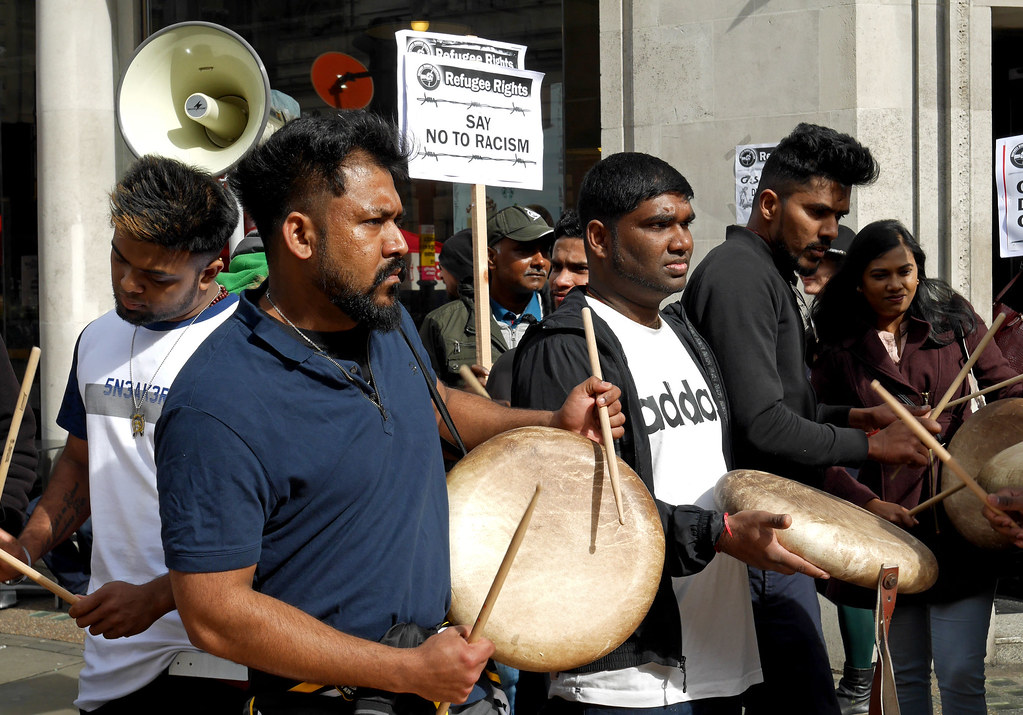
You are sitting in a meeting where someone describes a neighborhood as “still developing” and everyone in the room nods, including the one person present who grew up there, who knows exactly what that phrase means, who has heard it applied to every place where people who look like him were concentrated by policy and then abandoned by capital — and who nods anyway, because the room expects the nod, and the room’s expectation is a form of gravity.
Pierre Bourdieu spent decades mapping the architecture of that gravity. In his 1977 work with Jean-Claude Passeron, “Reproduction in Education, Society and Culture,” he demonstrated that the most durable systems of domination are not those enforced by threat but those internalized by the dominated as legitimate, even natural. He called this symbolic violence: not the violence of a blow but the violence of a category, a label, a silence that the person silenced helps maintain. The mechanism does not require malice. It requires only the accumulated weight of normalized perception, the slow geological pressure of institutional framing repeated until it becomes the shape of the world itself.
What makes this particularly difficult to name is that the dominant language of contemporary institutions was specifically redesigned, after the civil rights movements of the 1960s, to appear racially neutral. The word “meritocracy,” coined by Michael Young in 1958 as a satirical warning in “The Rise of the Meritocracy,” was adopted without irony by the very systems Young was critiquing. Once meritocracy became the official grammar of opportunity, structural disadvantage became personal failure. The child who attended an underfunded school, lived in a neighborhood redlined by federal policy until 1968, and breathed air measurably more polluted than her wealthier counterparts — as documented in research published by the American Lung Association and the EPA across multiple decades — is simply described as having not worked hard enough. The institution does not have to say anything discriminatory. The neutral language does the work.
Media representation compounds this through a different but equally precise mechanism. Sociologist Stuart Hall, in his 1997 edited volume “Representation: Cultural Representations and Signifying Practices,” showed that the power to define is the power to determine what counts as deviant, dangerous, or unremarkable. When a media ecosystem consistently frames Black men in association with criminality, it does not need explicit racist language to shape the perceptions of jurors, hiring managers, loan officers, or police officers who have consumed that ecosystem for thirty years. The frame is absorbed below the threshold of argument. It becomes the water in which judgment swims.
The institutional response to this problem has frequently been to demand more representation — more faces, more visibility — without touching the grammar of the institution itself. A Black anchor reading a script that frames the same stories the same way changes the optics without disturbing the structure. This is not a cynical observation; it is a precise one. Kimberlé Crenshaw’s concept of intersectionality, introduced in her 1989 paper in the University of Chicago Legal Forum, was not an argument for better optics. It was a demand to examine the structural logic that produces specific, compounded forms of disadvantage — and that examination requires a willingness to see the institution itself as the problem, not merely its visible representatives.
What the dominated often cannot afford, materially or socially, is the cost of refusing the nod. Refusal risks the room, the salary, the relationship, the access. Bourdieu understood this not as cowardice but as rational adaptation to real conditions of scarcity. The reproduction of silence is therefore not primarily a moral failure of individuals but a structural achievement of systems that have made the price of dissent precisely high enough to ensure that most people, most of the time, will find a way to agree that the neighborhood is still developing.
🔥 When Discrimination Shapes Society and Identity
Racial discrimination does not exist in isolation — it intersects with power, culture, gender, and social memory to reshape entire communities. These articles trace the deeper currents beneath contemporary social dynamics, from systemic oppression to the psychology of resilience and resistance.
Cancel Culture: History and Cultural Debate
Cancel Culture has emerged as one of the most contested arenas where questions of racial justice, accountability, and free speech collide in the digital age. This article explores how the phenomenon reflects deeper social tensions around who holds the power to silence, and who has historically been silenced. Understanding its roots helps illuminate the ongoing struggle for equity in public discourse.
GO TO THE SELECTION: Cancel Culture: History and Cultural Debate
Gender Equality: History and Current State in the World
Gender equality and racial equality share a long, intertwined history of institutional resistance and grassroots mobilization around the world. This article traces the slow, uneven progress toward equal rights across cultures, revealing how discrimination operates through overlapping systems of exclusion. The parallels with racial justice movements offer essential context for anyone seeking to understand contemporary social dynamics.
GO TO THE SELECTION: Gender Equality: History and Current State in the World
Psychological Resilience: How to Turn Hardship into Strength
Psychological resilience is a concept that takes on profound meaning when examined in the context of communities that have faced systemic racial discrimination across generations. This article investigates how individuals and groups transform hardship, trauma, and injustice into sources of inner strength and collective action. The science and philosophy of resilience shed light on survival strategies born from structural inequality.
GO TO THE SELECTION: Psychological Resilience: How to Turn Hardship into Strength
Mass Social Homologation Today
Mass social homologation — the pressure to conform to dominant cultural norms — is one of the subtler mechanisms through which racial and cultural differences are erased or devalued. This article examines how contemporary society produces conformity, often at the expense of minority identities and lived experiences. Recognizing these dynamics is a crucial step toward building genuinely pluralistic communities.
GO TO THE SELECTION: Mass Social Homologation Today
Cinema That Confronts Injustice Head-On
If these themes resonate with you, independent cinema offers some of the most honest and courageous explorations of racial discrimination, identity, and social justice available today. On Indiecinema streaming, you will find a carefully curated selection of films that refuse easy answers and dare to look society in the eye — discover them now and let cinema challenge the way you see the world.
👉 EXPLORE THE CATALOG: Watch Indie Films in Streaming
A vision curated by a filmmaker, not an algorithm
In this video I explain our vision

