
The Architecture of Subordination
You are born into a grammar that was written before you arrived. The language assigns you a gender, the law assigns you a status, the street assigns you a role — and by the time you are old enough to question any of it, the architecture has already closed around you like a completed sentence. This is not metaphor. It is the oldest and most successful engineering project in human history, and it was built not from hatred but from administration.

The Code of Hammurabi, inscribed in Babylonian cuneiform around 1754 BCE, is often celebrated as one of civilization’s first attempts at legal equality — the same law for all subjects under the king. What this celebration quietly omits is that the code simultaneously codified a woman’s legal existence as contingent on her relationship to a man. A wife who “set her face to go out” — meaning who attempted autonomous movement or commerce — could be thrown into the water. The law did not punish the husband who drowned her. It punished her for the act of wanting. What Hammurabi’s administrators understood, with a bureaucratic precision that most modern states still haven’t abandoned, is that controlling movement is controlling personhood.
Rome refined this into something almost philosophical. The doctrine of patria potestas — the absolute legal authority of the father over his household — was not understood by Roman jurists as oppression. It was understood as the precondition of social order. Under this system, a woman passed from the legal dominion of her father to the legal dominion of her husband without ever occupying a moment of juridical selfhood. The Roman legal theorist Gaius, writing his Institutes around 161 CE, described women as being “in the power of others” due to what he called their “levitas animi,” their lightness of mind — a phrase so perfectly constructed that it served simultaneously as diagnosis, justification, and sentence. The woman was not imprisoned. She was merely determined to require guidance by her nature, and the law was simply nature made explicit.
What makes these systems historically remarkable is not their cruelty but their elegance. They did not require physical violence as a primary mechanism — violence was always available as enforcement, but the more durable technology was classification. Once a category exists in law, it migrates into habit, and once it becomes habit, it loses the smell of the law entirely and begins to smell like reality. The anthropologist David Graeber spent years documenting in “Debt: The First 5,000 Years” how the earliest written records of human civilization are not poems or prayers but accounting ledgers — and within those ledgers, women appear most frequently as units of exchange, their value quantified alongside livestock and grain. This is not evidence that ancient societies were uniquely monstrous. It is evidence that the abstraction of human beings into transferable economic categories is the founding act of organized social life, and women were the first population on whom this technology was systematically tested.
The Greek city-states, which Western civilization has cultivated into a myth of democratic origin, offer a particularly instructive case. Athenian democracy, in its classical form between roughly 508 and 322 BCE, granted political participation to approximately forty thousand male citizens while excluding women, slaves, and foreign residents from any formal civic life. Aristotle, in his Politics, did not argue that this exclusion was unfortunate but necessary — he argued that it was natural, that women possessed deliberative faculty “without authority,” and that their exclusion was therefore not a restriction of freedom but a reflection of a rational cosmic order. The genius of this move was its circularity: women were excluded from the institutions that produced knowledge about who deserved inclusion, and then the knowledge produced by those institutions confirmed that their exclusion was correct.
What the architects of these systems built was not a cage. It was a mirror that showed women an image of themselves as people who had always lived this way.
Self Defence

Documentary, by Olaf de Fleur, Iceland, 2025.
Self-Defence follows the story of Imma Helga, a self-defence instructor in Iceland who turned her teenage struggles with prejudice, homophobia, and depression into a mission of empowerment. Together with her brother Jón Viðar, she teaches a practical, real-world approach to self-defence, helping women feel more aware, capable, and confident. Through classes, testimonies, and their social media presence with over a million followers, the film shows how self-defence is not a heroic act but a basic, accessible skill: a way to protect oneself, reclaim space, and affirm presence. By weaving together teaching moments and Imma’s personal journey, Self-Defence explores the connection between inner growth and physical protection, revealing how learning to stand your ground also means regaining strength, self-respect, and freedom.
LANGUAGE: Icelandic
SUBTITLES: English, Spanish, French, German, Portuguese
Enlightenment’s Selective Universalism
You are sitting in a classroom that calls itself the birthplace of freedom, and the teacher at the front is explaining that all men are created equal. You do not yet know that the word “men” is not a loose synonym for humanity. You will learn this the hard way, the way most foundational lies are learned — gradually, through the accumulated friction of being excluded from something that was always described as universal.
The eighteenth century produced what is perhaps the most spectacular intellectual contradiction in Western history. In the same decades when Enlightenment philosophes were dismantling the divine right of kings, insisting that reason belonged to every human creature and that no authority could claim legitimacy without the consent of the governed, they were simultaneously constructing an elaborate philosophical architecture designed to ensure that half the population would never be invited to govern anything. This was not hypocrisy born of oversight. It was hypocrisy built into the system with precision and care, like a load-bearing wall disguised as decoration.
Jean-Jacques Rousseau, in his 1762 educational treatise Emile, or On Education, spent four books developing a vision of the ideal male citizen — autonomous, reasoning, capable of moral self-determination. Then, in the fifth book, he introduced Sophie, Emile’s intended wife, and the entire philosophical apparatus inverted itself without apology. Sophie was to be educated, yes, but educated toward pleasing. She was to develop her faculties, but only insofar as those faculties made her a more harmonious instrument for domestic life. Rousseau wrote that a woman’s education must be planned in relation to man — to be useful to him, to be loved and honored by him, to educate him when young, to care for him when grown, to counsel and console him. This was not a marginal footnote. It was the explicit conclusion of the most widely read pedagogical text of the century, written by the man whose political philosophy would directly inspire the French Revolution. The revolutionaries who stormed the Bastille in 1789 carrying borrowed versions of his social contract left Sophie behind.
What makes Rousseau’s construction so philosophically insidious is that it did not deny women reason. It redirected reason. It argued that the rational woman would recognize her own subordination as natural, embrace it as her genuine flourishing, find in domesticity not a cage but a fulfillment. This move was far more dangerous than simple exclusion, because it made resistance appear irrational — made the woman who refused Sophie’s role seem to be working against her own nature rather than against a deliberate political project.
Mary Wollstonecraft saw the mechanism clearly. Her 1792 A Vindication of the Rights of Woman was not, at its core, a demand for political rights, though those are present. It was a philosophical dissection of the way women had been educated into weakness and then blamed for being weak. She argued that women exhibited the faults of those who are never allowed to exercise their reason — vanity, cunning, emotional excess — not because these were female characteristics but because they were the predictable products of an upbringing designed to produce ornaments rather than moral agents. Wollstonecraft’s target was the entire sentimental economy of femininity that Rousseau had sanctified: the idea that a woman’s goodness lived in her softness, her yielding, her beauty. She identified this as a corruption, not a virtue.
The truly devastating implication Wollstonecraft drew was structural: a society that systematically prevents a group from developing reason cannot then cite that group’s apparent lack of reason as justification for their continued exclusion. The circle was not natural. It was manufactured, and it had authors. What the Enlightenment offered women was the language of liberation wrapped around a philosophy of permanent tutelage, a promissory note issued in the name of humanity and made out to everyone except the people who needed it most.

Suffrage as Symptom, Not Solution
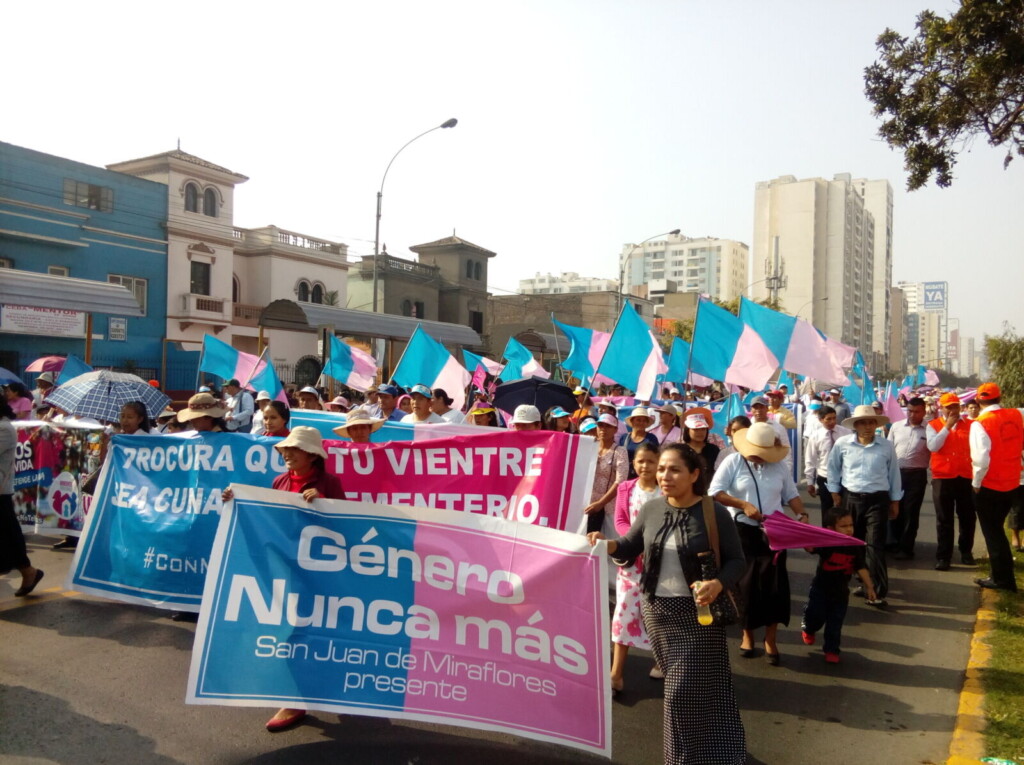
You mark the date in your mind like a victory — 1920, the Nineteenth Amendment, women voting for the first time in American streets — and the image arrives with a kind of warmth, as if the story closed there, as if the decade itself exhaled.
The suffragist movements of the nineteenth and early twentieth centuries produced something genuinely seismic: a restructuring of legal personhood so radical that its architects were jailed, force-fed in prison cells, and systematically ridiculed as hysterics by the medical establishment. Kate Sheppard’s petition campaign in New Zealand, which finally forced the Electoral Act of 1893, collected signatures from nearly one in four adult women in the country — an organizational feat executed without telephone, without digital infrastructure, without any formal political standing whatsoever. It worked. New Zealand became the first self-governing nation on earth to grant women the right to vote. And yet, in the same year, a New Zealand woman who married a man with debts legally became responsible for those debts while retaining no independent right to enter a contract in her own name to repay them. The vote arrived, and the economic architecture stayed precisely where it had been built.
What suffrage exposed, rather than resolved, was the distinction between civic visibility and structural power — a distinction that liberal political theory has consistently preferred to obscure. John Stuart Mill argued in “The Subjection of Women” in 1869 that the legal subordination of women was a relic of primitive society incompatible with modern principles of individual liberty. He was correct, and he was also describing only the surface of the mechanism. Legal subordination is the written record of a much older arrangement, not the arrangement itself. When the United Kingdom extended partial suffrage to women over thirty in 1918 under the Representation of the People Act, it did so partly because the argument had become philosophically untenable — but also because the war economy had just spent four years demonstrating that women could manufacture shells, drive ambulances, and manage farms without civilization collapsing. The franchise followed function. It did not precede transformation.
Simone de Beauvoir identified this trap with unusual precision in “The Second Sex” in 1949, nearly three decades after American women had formally obtained the vote: formal rights granted within a system designed by and for men do not dismantle that system, they permit women to participate in it on terms they did not negotiate. The Married Women’s Property Act in England had passed in 1882 — thirty-eight years before the Nineteenth Amendment — giving married women the right to own property separately from their husbands. Yet in 1920, the year American women voted for the first time, a woman who sought a bank loan in the United States still routinely needed a male co-signer. The ballot and the bank were operating in entirely different centuries simultaneously.
The body presents the starkest case. Across the countries that had granted women the vote by 1920, access to contraception was not merely culturally stigmatized but criminally prosecuted. In the United States, the Comstock Act of 1873 classified contraceptive information as obscene material and made its distribution through the postal service a federal offense. Margaret Sanger was arrested in 1916 for opening a birth control clinic in Brooklyn. The vote did not touch this. A woman could walk into a polling station and select a senator and walk home to a domestic life over which she exercised almost no reproductive sovereignty whatsoever. These were not oversights in the suffragist project — they were the horizon of what the political imagination of the era could accommodate, which is itself the more disturbing fact: that liberation was already being quietly defined as the portion of freedom that left property relations and bodily governance undisturbed.
What gets called progress in retrospect is often the minimum concession that a system could make without reorganizing itself at its foundations.
Labor, Capital, and the Domesticated Body
You are handed a vacuum cleaner in 1953 and told it is freedom. The advertisement shows a woman in a pastel dress, smiling at a gleaming kitchen floor, and something in the image insists that this is the face of a life well-lived. The smile is not ironic. The vacuum cleaner is not a symbol. It is a labor-saving device that saves labor so that more labor can be performed, invisibly, without wages, without recognition, without the category of “work” even being applied to it.
Silvia Federici spent years excavating what mainstream economic history had buried: that the transition from feudal to capitalist economies in Europe between the fifteenth and seventeenth centuries required not only the enclosure of common lands but the enclosure of women’s bodies and women’s time. In Caliban and the Witch, published in 2004, she traced how reproductive labor — childbearing, cooking, cleaning, the physical maintenance of the workforce — was systematically stripped of its economic value precisely as capitalism needed it most. The peasant woman who had bartered, farmed, and held economic agency in common-land communities was redefined as a domestic creature whose contribution to production was natural, biological, and therefore unpaid. This was not an accident of culture. It was architectural.
The twentieth century industrialized this architecture at enormous scale. When men flooded into factories and offices after World War Two, the economy that paid them depended entirely on an economy that paid no one — the domestic sphere where meals appeared, children were raised, shirts were ironed, and the male worker was reproduced daily for the following morning’s shift. Economists in 1950 did not count this in GDP. They still largely do not. A 2020 study by the McKinsey Global Institute estimated that unpaid care and domestic work, performed disproportionately by women across the world, represents between ten and thirty-nine percent of GDP in most countries, depending on the methodology — a shadow economy so large it would dwarf most sectors if measured honestly, and so consistently ignored that its invisibility reads as a choice rather than an oversight.
What the postwar prosperity narrative accomplished with particular elegance was to reframe this extraction as aspiration. Betty Friedan documented it in 1963 in The Feminine Mystique, noting that the suburban domestic ideal was not a timeless feminine instinct but an aggressively manufactured cultural product, pushed by advertising, endorsed by psychology, and confirmed by a media apparatus that had financial reasons to keep women consuming rather than earning. The woman who desired a career was told she was denying her nature. The woman who found the kitchen stifling was told she was neurotic. The clinical literature of the era cooperated: Freudian psychoanalysis had spent decades pathologizing female ambition as penis envy, transforming a structural grievance into a personal defect.
When women did enter the paid workforce in significant numbers — a process that accelerated through the 1960s and 1970s in Western economies — the dual system did not dismantle itself. It doubled. Women acquired jobs and retained the domestic responsibilities that had always been theirs, a phenomenon sociologist Arlie Hochschild named the “second shift” in her 1989 study of the same name, finding that working mothers in the United States performed roughly fifteen more hours of household labor per week than their male partners. The market had expanded to include women’s paid time without ever releasing its claim on their unpaid time.
This is the structural trap that tends to disappear inside conversations about individual ambition and personal choice. The language of “having it all” that emerged in the 1980s was not a description of liberation but of an intensification of obligation — the point at which capital had successfully convinced women that exhaustion was empowerment, that performing two roles simultaneously was a form of victory rather than a refinement of the original extraction into something even more total.
Second-Wave Fractures and the Limits of Liberation
You were told, in a thousand different ways, that the problem had a name. Betty Friedan gave it one in 1963, calling it “the problem that has no name” — the slow suffocation of educated women confined to suburban domesticity, their minds narrowing to fit the dimensions of a kitchen. The Feminine Mystique sold three million copies in three years and detonated something real. But what it detonated, and for whom, is a question the decade’s triumphalism preferred not to answer.
Friedan was writing about a specific woman: white, college-educated, married to a professional, living in a house with a lawn. This was not an oversight or an editorial choice made for simplicity. It was a structural erasure. The domestic confinement she described as a trap was, for Black women in the same decade, not even available as an aspiration — they had been working outside the home for generations, not by choice but by economic necessity enforced through racial exclusion from the very middle-class stability Friedan’s subject was trying to escape. Ida B. Wells had organized against racial terror since the 1890s. Claudia Jones had been deported from the United States in 1955 for her communist and feminist organizing. Pauli Murray had been drafting legal arguments about sex discrimination since the early 1960s, arguments that would later quietly shape Title VII of the Civil Rights Act of 1964, her name largely absent from the mythology of second-wave origins.
The movement that built itself in the years following Friedan’s book carried this foundational asymmetry forward like a weight it refused to acknowledge. NOW, the National Organization for Women, founded in 1966, focused on professional and legal equality — equal pay, access to careers, reproductive rights framed primarily around individual bodily autonomy. These were not trivial demands. But they were demands calibrated to a subject who already had proximity to institutional power and needed the doors opened slightly wider. For women working in domestic service, in agricultural labor, in the garment factories that had been burning since the Triangle Shirtwaist fire of 1911 killed 146 workers — mostly immigrant women, mostly Jewish and Italian — the framework of professional liberation offered almost nothing structural.
The fracture this produced was not a disagreement about tone. It was a divergence in the very definition of what oppression meant and where its machinery was located. Audre Lorde would write in 1984, in Sister Outsider, that the master’s tools will never dismantle the master’s house — a sentence that was not metaphorical but diagnostic, aimed precisely at a feminism that borrowed its logic of individual rights from the liberal tradition that had always excluded Black women from its protections. The question she was forcing into the open was whether a liberation movement could share its epistemological foundations with the system it claimed to oppose.
This is where the genealogies split in ways that still refuse to converge. What gets called “intersectionality” — a term Kimberlé Crenshaw coined in a 1989 law review article to describe how Black women fell through the gaps of both race discrimination law and sex discrimination law simultaneously — was not a philosophical addition to feminism. It was a legal and empirical observation that the category “woman” was being used in courts and in social movements as though it had a stable referent, when in fact it consistently meant a specific kind of woman, and that specificity was doing political work that went unexamined. By the time Crenshaw published “Demarginalizing the Intersection of Race and Sex,” the fracture Friedan’s book had papered over in 1963 had been widening for twenty-six years.
Coalition politics in feminist organizing today still bleeds from this wound. Every major mobilization — the Women’s March of January 2017 drew an estimated four million people across the United States alone — immediately produces a secondary argument about whose issues anchored the platform, whose bodies the signs were designed for, which grievances were treated as universal and which were made to wait.
A vision curated by a filmmaker, not an algorithm
In this video I explain our vision
Data as Distortion: Measuring Inequality Without Seeing It

You have seen the chart. Someone held it up at a conference, or it appeared in a news article framed as cautious optimism, and it showed a line moving upward — slowly, unevenly, but upward — measuring how much closer women are to men in health, education, economic participation, and political representation. The World Economic Forum has published its Global Gender Gap Report annually since 2006, and that rising line has become one of the most reproduced images in the policy vocabulary of progress. What the chart cannot show is the woman who leaves her paid employment at 3 p.m. not because she chose flexibility but because the school calls her, not her husband, when a child runs a fever.
Measurement systems are not neutral instruments lowered into reality to take its temperature. They are arguments about what counts. When the Global Gender Gap Index calculates economic participation, it weights wage equality for similar work and female labor force participation rates — both genuinely meaningful signals — but the entire architecture of unpaid labor simply falls outside the frame. The International Labour Organization estimated in 2018 that women perform 76.2 percent of the world’s total unpaid care work, a figure representing roughly 16.4 billion hours daily. That labor produces no GDP, triggers no index movement, and registers in the composite score only as absence: a woman not in the formal workforce appears as a data point dragging the participation metric downward, with no notation of what she is actually doing with her hours.
This is not an accidental oversight. Marilyn Waring identified the structural logic behind it with precision in her 1988 book “If Women Counted,” demonstrating that the United Nations System of National Accounts, built on the framework economists had inherited from the post-war era, was explicitly designed to exclude subsistence and domestic production from economic measurement. A sheep counted in a farmer’s flock contributed to national income; the woman who raised that farmer’s children did not. Waring’s argument was that this was a political choice dressed as technical consensus, and what followed from it — decades of development indices, gender gap reports, and human development measures — inherited that choice without questioning its foundation.
The UN Development Programme’s Gender-related Development Index and Gender Inequality Index attempt to correct for some of this by incorporating reproductive health data and unpaid work proxies, but they encounter a different distortion: they aggregate. A country achieves a favorable composite score by performing well enough across enough indicators that localized catastrophes become statistically absorbed. India’s national Gender Inequality Index score improved measurably between 2000 and 2020, a period during which documented rates of sexual violence, female infanticide in specific states, and the marriage of girls under eighteen remained among the highest recorded anywhere. The index does not lie exactly — it averages, which is a subtler operation.
Intersectionality, the analytical framework Kimberlé Crenshaw articulated in her 1989 paper in the University of Chicago Legal Forum, named what aggregate scores structurally erase: that race, class, caste, disability, and sexuality interact with gender to produce experiences of inequality that no single-axis measure can map. A gender gap index compares women to men as categories, which means it can show the gap narrowing nationally while the distance between a white professional woman and a Black domestic worker, or between an upper-caste Indian woman and a Dalit woman, grows wider. Progress at the aggregate level can coexist with deepening stratification within the category being measured — and the methodology is not built to detect that coexistence.
What gets funded, prioritized, and legislated follows what gets measured. When the metric registers improvement, the political pressure to continue reforms eases, because the story the data tells is one of a problem being solved. Structural violence — the slow, undramatic deprivation that operates through housing, healthcare access, legal systems weighted against the poor, and the compounding of disadvantage across generations — produces no single data event to capture.
The Geography of Persistence
You check the numbers and they feel like geography — like elevation maps of a terrain that doesn’t care whether you believe in it or not. The World Economic Forum’s Global Gender Gap Report 2023 ranked 146 countries, and the distance between the top and the bottom is not a spectrum. It is a chasm with different civilizations living on either side of it, using the same calendar year.
Afghanistan sits at the absolute floor of that chasm. When the Taliban retook Kabul in August 2021, what followed was not a regression — regression implies a return to an earlier state of the same system. What happened was the legislative erasure of an entire category of human beings from public existence. By 2022, girls were banned from secondary education. By late 2022, women were expelled from universities. By 2023, female NGO workers were prohibited from operating, a move that effectively dismantled healthcare access in regions where male medical staff could not treat women without female intermediaries. The UN Special Rapporteur on the situation of human rights in Afghanistan, Richard Bennett, used the term “gender apartheid” in formal testimony — a legal concept that had never been formally applied to a state since South Africa’s racial architecture was dismantled in 1994. The parallel is not rhetorical flourish. It is a structural diagnosis.
Move the map westward and the brutality changes shape without diminishing. In Latin America, the word “femicide” entered legal codes only recently — Argentina criminalized it in 2012, Mexico in 2007 as well, Brazil in 2015 — yet the rates have continued climbing in several countries despite the legislation. According to the UN Economic Commission for Latin America and the Caribbean, at least 4,050 women were killed due to their gender across the region in 2021 alone. In some countries, like Honduras, the femicide rate per 100,000 women ranks among the highest on earth. The law names the crime; the infrastructure to prevent it does not yet exist with equivalent force. A word in a penal code is not a shelter, not a trained prosecutor, not a judge who treats the testimony of a woman as sufficient evidence.
Shift the lens to the OECD nations — wealthy, democratic, legally egalitarian on paper — and the violence becomes economic, quieter, easier to normalize. The average gender pay gap across OECD countries hovers around 12 to 16 percent, depending on the methodology applied, whether one measures raw median earnings or controls for sector and hours. Economists like Claudia Goldin, whose 2023 Nobel Prize in Economics was awarded precisely for her decades of work on the female labor market, demonstrated that the gap is not primarily explained by discrimination at the point of hiring. It is structural. It lives inside the architecture of caregiving, of flexible versus inflexible jobs, of who absorbs the career penalty when a child gets sick on a Tuesday. The wage gap is not a crack in an otherwise fair system. It is the system expressing its actual priorities.
Then there is the Nordic paradox, which should destabilize anyone who treats high equality indices as a destination rather than a direction. Denmark, Sweden, Finland, and Norway consistently rank in the top five on gender equality measures globally. They also report some of the highest rates of sexual violence against women in Europe, according to the European Union Agency for Fundamental Rights survey of 2014, which remains one of the most comprehensive datasets on the subject. The explanation that researchers like Liz Kelly have offered is not that Nordic societies are more violent — it is that higher equality produces higher reporting. Women in societies where they are treated as credible citizens are more likely to name what happened to them as a crime. The statistic that looks like a failure is also a measure of a society’s willingness to listen, which means that the countries with the cleanest numbers elsewhere on the map may simply be the ones where silence has not yet broken.
Normativity as the Last Frontier

You are sitting across from someone who loves you, and they say something small — a joke about how you drive, a comment about how you handled the money, a gentle suggestion about your tone — and you do not get angry. You adjust. You have been adjusting so long that the adjustment feels like personality.
This is not cowardice and it is not weakness. It is something more structurally precise than either of those words can hold. Pierre Bourdieu, in his 1998 work Masculine Domination, described a form of power that operates not by force but by being internalized so completely that it appears as nature. He called it symbolic violence — a domination that the dominated exercise upon themselves, using the very categories of perception installed by those who benefit from the order. It leaves no bruises. It produces, instead, a habitus: a durable set of dispositions that orient the body, the voice, the ambition, the desire, before any conscious deliberation takes place. The woman who apologizes before speaking in a meeting is not remembering a rule. She is enacting a grammar so old she cannot locate its origin.
What makes this mechanism so resistant to political intervention is precisely that law cannot reach it. The European Union achieved formal legal parity across its member states by the early 2000s, yet studies conducted by the European Institute for Gender Equality as recently as 2023 show that women in fully egalitarian legal environments still overwhelmingly report self-censoring professional ambitions, calibrating requests downward, and attributing their own success to luck rather than competence. No statute passed by any parliament has yet managed to legislate the interior life. The legal frontier was crossed; the normative frontier held.
Judith Butler’s intervention, introduced in Gender Trouble in 1990, pushed the analysis further inward and, paradoxically, further outward at the same moment. For Butler, gender is not a property a person has but an act a person does — compulsively, repeatedly, under social pressure so constant it reads as instinct. Femininity is not expressed through behavior; it is produced by it, citation by citation, each repetition consolidating what it appears merely to reflect. This means that the woman who polishes her performance of competence while simultaneously softening it to remain likable is not compromising her true self — she is producing a self through a negotiation between two competing normative scripts, both of which were written before she arrived. The tragedy is not false consciousness. It is that the consciousness is entirely real and entirely shaped by a structure it did not choose and cannot fully see.
The subtlety here is what makes gender inequality’s final layer so extraordinarily difficult to erode. Economic inequality can be measured in salary gaps — in the United States, as of 2023, women earn approximately 84 cents for every dollar earned by men, with the gap widening significantly for women of color. Political underrepresentation can be counted in parliamentary seats. But the normative layer registers in micro-gestures: the adolescent girl who stops raising her hand in class around age eleven, a phenomenon documented by researchers at the American Association of University Women as early as 1992 and confirmed in subsequent decades across multiple educational systems. She does not stop knowing the answers. Something else stops her hand, something that has already colonized the space between knowing and speaking.
What is most destabilizing to confront is that this mechanism does not require a villain. It does not require conscious intent, deliberate suppression, or even indifference. It requires only participation — the daily, ordinary, well-meaning participation of people who have absorbed a world and then go on reproducing it, believing themselves to be simply living, when in fact they are building, brick by invisible brick, the architecture inside which the next generation will also mistake their constraints for their character.
⚖️ Voices of Resistance: Gender, Power and Liberation
The struggle for gender equality is inseparable from the broader history of human rights, philosophical emancipation, and social transformation. These articles trace the intellectual and cultural roots of feminist thought, exploring how women have challenged oppressive structures across centuries and continents.
Wollstonecraft’s A Vindication of the Rights of Woman
Mary Wollstonecraft‘s foundational 1792 text stands as one of the earliest and most radical defenses of women’s rights in Western history, arguing that women are rational beings deserving equal education and civic participation. This article examines the revolutionary force of her argument within the context of Enlightenment thought, showing how her ideas anticipated modern feminist theory by more than a century.
GO TO THE SELECTION: Wollstonecraft’s A Vindication of the Rights of Woman
Woolf’s A Room of One’s Own: Feminism and Writing
Virginia Woolf‘s landmark essay A Room of One's Own dissects the material and symbolic conditions that have historically prevented women from producing literature and art, linking financial independence to creative freedom. This piece explores how Woolf transformed personal experience into a sweeping indictment of patriarchal institutions, making her one of the most essential voices in the feminist canon.
GO TO THE SELECTION: Woolf’s A Room of One’s Own: Feminism and Writing
Simone de Beauvoir: Life and Philosophical Thought
Simone de Beauvoir‘s philosophical thought redefined the very concept of femininity, famously arguing that ‘one is not born, but rather becomes, a woman’ — a declaration that shattered centuries of biological determinism. This article traces her existentialist framework and its profound influence on second-wave feminism and contemporary gender theory worldwide.
GO TO THE SELECTION: Simone de Beauvoir: Life and Philosophical Thought
Women in Colonial India: Between Oppression and Awakening
The experience of women under British colonial rule in India reveals a deeply layered intersection of patriarchal oppression and imperial domination, where gender and race became intertwined instruments of control. This article examines how Indian women navigated and resisted these dual structures, and how their stories shaped the emergence of feminist consciousness within the broader nationalist movement.
GO TO THE SELECTION: Women in Colonial India: Between Oppression and Awakening
Discover Films That Speak Truth to Power on Indiecinema
If these histories of struggle and emancipation have stirred something in you, Indiecinema is the streaming platform where independent cinema gives voice to the stories mainstream culture too often ignores. Explore documentaries, auteur films, and bold narratives that put gender, justice, and human dignity at the center of the screen.
👉 EXPLORE THE CATALOG: Watch Indie Films in Streaming
A vision curated by a filmmaker, not an algorithm
In this video I explain our vision

