
The Comfort of Sameness and What It Costs
You are standing in a market you do not belong to. Not hostile, not welcoming — simply indifferent in a way that makes you aware of every muscle in your face, every syllable you attempt, every gesture that lands slightly wrong. The vegetables are unfamiliar. The transactions follow a rhythm you cannot predict. Nobody is cruel to you. But the air itself seems organized around assumptions you were never given, and the sensation is not curiosity — it is the low, persistent hum of being structurally excluded from meaning.

That feeling is data. Not about the market, and not about the people in it, but about you — specifically about what your nervous system was trained to recognize as safe. Henri Tajfel spent the better part of the 1970s demonstrating, through a series of now-canonical experiments published in his 1974 work in the European Journal of Social Psychology, that human beings do not need history, grievance, or genuine difference to begin discriminating in favor of their own group. They need almost nothing. Assign people arbitrarily to groups — by coin flip, by aesthetic preference, by a number drawn at random — and within minutes they will allocate resources preferentially to those who share their meaningless label. The mechanism does not require hatred. It requires only the category. What feels like natural tribal loyalty is, at its base, a cognitive shortcut that the brain runs automatically to reduce the metabolic cost of constant social evaluation.
The problem is not the shortcut itself but what cultures do with it at scale. When a psychological tendency becomes institutional architecture — when it gets embedded in zoning laws, in school curricula, in hiring pipelines, in the invisible grammar of which accents get taken seriously in a boardroom — it stops being a reflex and becomes a structure. And structures have a particular property that reflexes do not: they outlive the conditions that produced them. The racial segregation policies that shaped American cities through the Federal Housing Administration’s explicitly discriminatory redlining practices of the 1930s and 1940s continued to determine property values, school funding, and generational wealth accumulation well into the twenty-first century, long after the legal apparatus had been formally dismantled. The instinct became concrete, became geography, became inheritance.
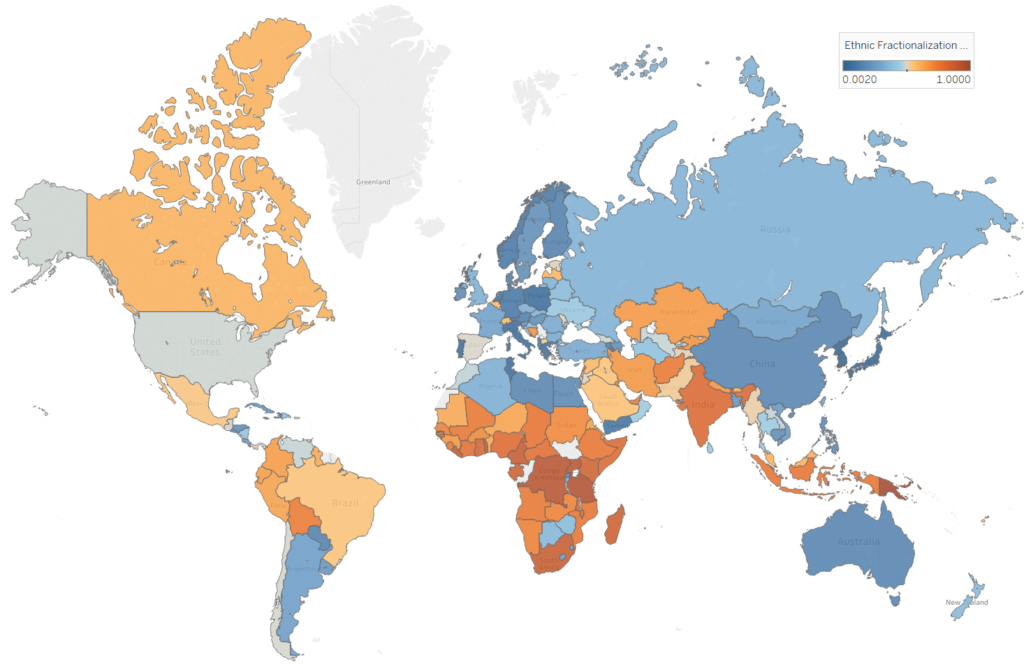
What makes this especially difficult to see clearly is that homogeneity feels like peace. Communities that share language, ritual, aesthetic vocabulary, and behavioral expectation generate enormous amounts of what the sociologist Robert Putnam, in his 2000 work Bowling Alone, called bonding social capital — the dense, efficient trust networks that allow people to cooperate quickly and with low friction. This is real and it matters. But Putnam’s own later research, including his controversial 2007 study on diversity and social trust across American communities, revealed something his critics tried to use against him and his supporters tried to explain away: in the short term, higher diversity correlates with lower trust across all groups, not just between them. People in more diverse neighborhoods reported trusting their neighbors less, withdrawing from civic participation more, watching more television. He called it “hunkering down.” The finding was weaponized by people who wanted it to mean that diversity is inherently corrosive, which is precisely the wrong reading — because it actually maps the cost of having built a society with no infrastructure for difference, no practiced grammar of encounter, no institutional support for the transformation that genuine pluralism demands.
The comfort of sameness is not free. It has always been purchased at a price paid by someone else — usually by whoever was most efficiently excluded from the category of sameness in the first place. And the transaction has been so consistent across so many distinct historical contexts that it begins to look less like a universal human preference and more like a remarkably stable technology of control, one that gets reinvented in each generation with new vocabulary but the same essential function.
Ancestral
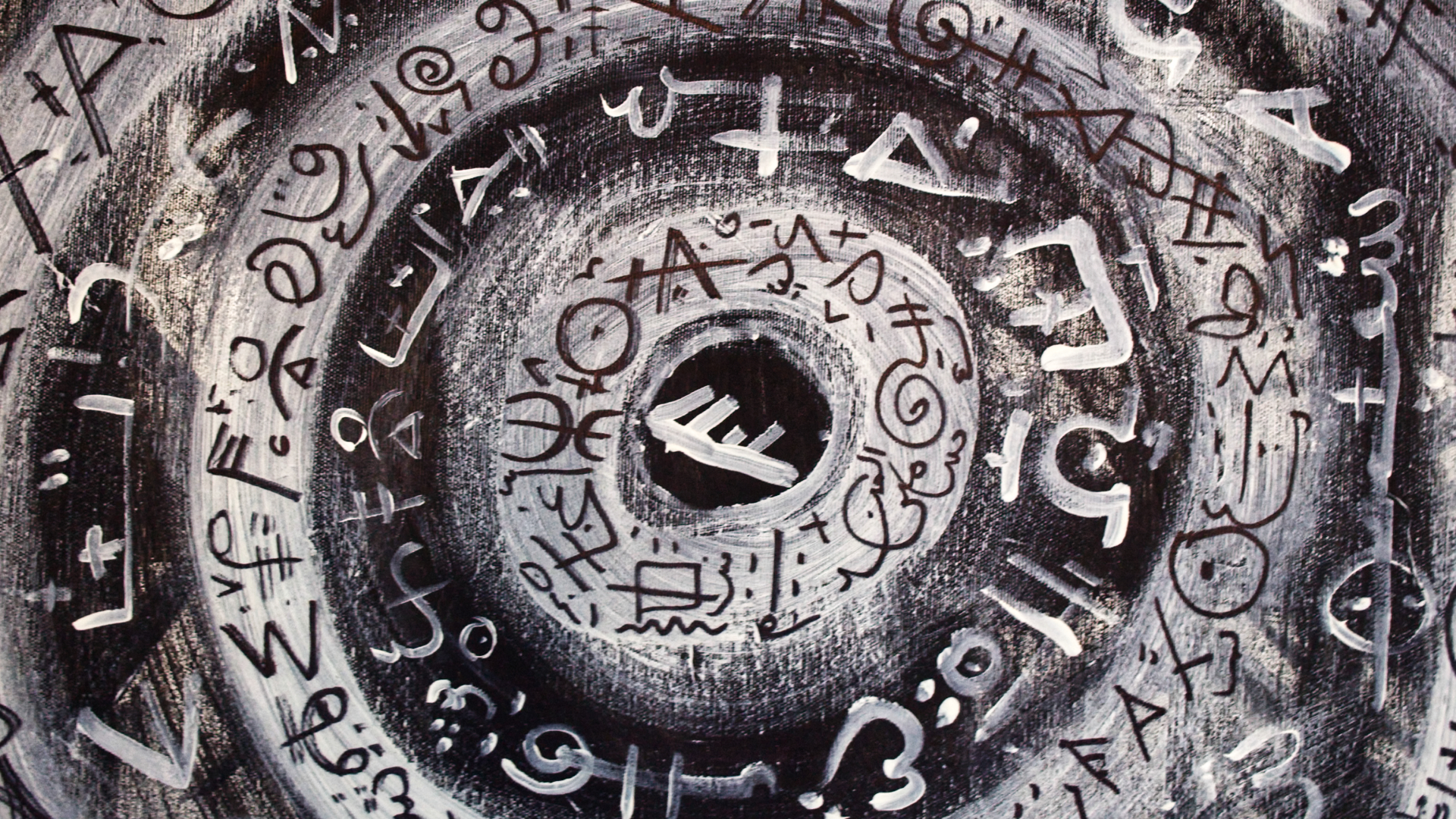
Documentary, by Lumar Brothers, Italy, 2023.
“Ancestral: Life and Art of Massinissa Askeur” is a documentary that explores the life and art of Algerian painter Massinissa Askeur. The film follows Askeur on his creative journey, showing his artistic process and his commitment to the preservation of Berber culture and tradition. Through interviews with Askeur, his family, friends and testimonies from people who knew him on a personal, professional and artistic level, the documentary tells the story of his past and his deep connection to his Berber roots. Askeur displays his art, from canvases to sculptures, which are inspired by the shapes and symbols of Berber culture, representing his search for a connection between the past and the present.
The documentary also explores the challenges Askeur faced throughout his life, including racial discrimination, poverty and the difficulty of making his art known outside of Algeria. However, despite these difficulties, Askeur continues to create and promote his art as a form of cultural resistance and celebration of his ancestral heritage. A vision far from art as a commercial product and very close, instead, to the exploration of the depths of one's own soul and the soul of the world. Massinissa's mission is to leave a testimony of his time to future generations.
LANGUAGE: Italian
SUBTITLES: English, Spanish, French, German, Portuguese
Diversity as Epistemic Infrastructure
You have never had a word for a feeling, and so you never quite felt it — not fully, not with the clean edges that would have let you act on it or even name it to another person. You carried it as a blur, a weather system without a forecast, and you moved through it the way you move through a room in the dark: hands out, uncertain, hoping not to break anything.
This is not metaphor. In 1931, Benjamin Lee Whorf, working partly from the earlier structural linguistics of Edward Sapir, proposed what became one of the most contested and productively unsettling ideas in cognitive science: that the language you speak does not merely label your experience, it partially constitutes it. The strong version of the hypothesis — that language determines thought entirely — has been largely dismissed. But the weaker, more durable version has survived decades of neuroscience and accumulated extraordinary empirical weight. Lera Boroditsky’s research, particularly her cross-cultural studies published in the early 2000s, demonstrated that speakers of languages with different spatial reference systems — absolute directions like north and south versus egocentric ones like left and right — also differ measurably in how they orient themselves in space, how they remember sequences of events, and how they construct mental maps of the world. The Kuuk Thaayorre people of northern Australia, who use cardinal directions for everything including the position of objects on a table, maintain a constant internal compass that speakers of European languages simply do not develop. The cognitive tool does not exist because the linguistic infrastructure was never built.
This means that when a language dies — and one dies roughly every two weeks by current estimates, a pace that has accelerated since the colonial consolidations of the nineteenth century — what disappears is not merely a communication system. What disappears is a specific architecture of attention. A way of parsing causality, organizing time, distributing agency across sentences. Research on bilingualism deepens this further: Ellen Bialystok’s longitudinal studies at York University showed that lifelong bilinguals develop measurably stronger executive function and demonstrate delayed onset of dementia symptoms by an average of four to five years. The second language does not just add vocabulary — it forces the brain to continuously manage competing cognitive frameworks, and that friction, that constant arbitration between two systems, builds structural resilience. Two cultures inside one skull make that skull more durable.
What follows from this is uncomfortable for any tradition that frames cultural preservation as a sentimental project, a matter of heritage museums and folk costumes and the gentle archiving of the nearly extinct. The cognitive science does not support sentimentality. It supports something closer to alarm. When anthropologist Wade Davis described what he called the ethnosphere — the sum total of all human thought, dream, myth, and intuition — he was not speaking poetically. He was pointing at an epistemic commons, a distributed network of problem-solving architectures refined across millennia of particular geographies, particular ecological pressures, particular social arrangements. The ethnobotanical knowledge embedded in Amazonian indigenous traditions has already contributed to pharmaceutical compounds that Western laboratory science, working from a different set of categorical assumptions about nature and property, would not have isolated independently and did not.
Monoculture in agriculture collapses when a single pathogen finds the uniform genome. The Irish Potato Famine of the 1840s, in which roughly one million people died because an entire nation’s food security had been consolidated into a single potato variety, is not a parable about farming. It is a precise structural description of what happens to any system — biological, cognitive, cultural — when diversity is traded for efficiency, when the redundant is eliminated because it appears to add no immediate value, before anyone has thought carefully about what redundancy is actually for.

The Colonial Arithmetic of Cultural Loss
You are standing in a room where someone is speaking, and you cannot understand a single word, but you can feel the grammar — the way the sentence bends at its end into something that is not quite a question and not quite a statement, a syntactic mood your own language has no name for. That feeling is not confusion. It is the sensation of encountering a mind organized differently from yours, a consciousness that has been cutting reality at different joints for ten thousand years. Every two weeks, according to UNESCO’s 2003 Language Vitality and Endangerment report, a language capable of producing that feeling disappears permanently. Not dormant. Not archived. Gone, in the way that a species of beetle goes when its last member dies in a jar — catalogued, mourned briefly, then filed.
The arithmetic is precise enough to be obscene. Of the approximately 6,700 languages spoken at the start of the twenty-first century, nearly half were already classified as endangered at the time of that report. Linguists like David Crystal, in his 2000 work Language Death, estimated that the acceleration was not slowing but compounding — each vanishing language removing not just vocabulary but entire systems of ecological knowledge, medical taxonomy, and relational ethics encoded in grammatical structures that no translation can preserve. The Hopi verb system, for instance, encodes temporal relationships that do not distinguish between past and future as fixed categories but as degrees of manifestation — a conception of time that certain physicists have independently arrived at through quantum mechanics, and that English forces into a corner where it becomes a metaphor rather than a description.
The violence behind this did not announce itself as violence. It arrived dressed in the clothing of liberation. The Enlightenment project, particularly as it crystallized in the revolutionary universalism of the late eighteenth century, insisted that reason was one, that its laws were universal, and that cultures which had not yet organized themselves around its principles were not different but deficient — not other, but earlier. This was not a peripheral footnote to Enlightenment thought; it was central to it. Condorcet’s Sketch for a Historical Picture of the Progress of the Human Mind, published posthumously in 1795, explicitly stages world civilizations on a single developmental ladder, with European rationalism at the apex and indigenous knowledge systems consigned to rungs below. The emancipatory promise was real — but it was structurally attached to an epistemic imperialism that made cultural difference a problem to be solved rather than a resource to be inhabited.
Colonial administrators understood this with bureaucratic clarity. The Macaulay Minute on Indian Education, written in 1835, did not argue for suppressing Indian civilization out of contempt alone — it argued that producing a class of people Indian in blood but English in taste and intellect was the most efficient mechanism of governance ever devised. Cultural standardization was not a side effect of empire; it was its central operating technology. And what makes contemporary globalization structurally continuous with this is not malice but mechanism — the IMF’s structural adjustment programs of the 1980s and 1990s, which conditioned debt relief on the dismantling of local economic systems, produced the same linguistic and cultural displacement that the mission school once produced with a cane and a catechism. The instrument changed. The arithmetic did not.
What is harder to see is that the loss is not only the loss of the cultures that were erased. It is the impoverishment of the cultures that did the erasing — the narrowing of the human cognitive repertoire to the point where certain questions can no longer be formulated, because the grammatical structures capable of holding them have been classified as primitive and left to die in a room where no one was listening.
When Institutions Perform Diversity Without Practicing It

You have probably sat in a corporate auditorium while someone onstage explained, with genuine warmth, that diversity is a strength. The slide behind them showed faces arranged in a careful spectrum. The language was fluent, the intentions probably sincere, and nothing in the room changed at all.
This is not hypocrisy in the ordinary sense. Slavoj Žižek argued in The Fragile Absolute that liberal tolerance operates as a structural mechanism, not a personal failing — that the celebration of otherness functions precisely to contain it, to hold difference at the aesthetic distance where it cannot disturb the underlying logic of the system. The institution does not pretend to value diversity while secretly rejecting it. It genuinely values the version of diversity it has already processed: the food, the festival, the flag pinned to a lanyard. What it cannot absorb is the version that carries actual friction — different epistemologies, different conceptions of time or authority or collective obligation that do not translate neatly into productivity metrics or organizational charts.
Homi Bhabha spent much of the 1990s, culminating in the landmark essays collected in The Location of Culture, developing the concept of hybridity not as a comfortable blending of traditions but as a fundamentally destabilizing third space — a site where cultures in contact produce something that belongs to neither origin and that neither origin can fully authorize. The institution, by contrast, requires authorization. It needs provenance, a brochure, a representative who can explain the tradition in forty-five minutes before lunch. Hybridity in Bhabha’s sense cannot be scheduled or branded because it emerges precisely from the uncontrolled encounter, the friction that nobody planned and nobody owns.
What gets produced instead is what might be called the museum logic of living cultures. A practice torn from its functional context — its specific web of obligations, seasonal rhythms, contested meanings, and internal disagreements — and displayed as a coherent, accessible object. The display is often beautiful. It is also a kind of extinction. The anthropologist James Clifford documented in The Predicament of Culture, published in 1988, how Western institutions developed a systematic tendency to treat indigenous and non-Western cultural forms as artifacts requiring preservation precisely at the moment when the living communities producing them were demanding political and economic recognition. The museum saved the pottery while the land claim was denied.
This structure has migrated into corporate diversity programs, university equity offices, and government multicultural commissions without changing its essential geometry. The 2016 report from McKinsey Global Institute demonstrating correlations between ethnic diversity and corporate profitability became one of the most cited documents in organizational management of that decade — not because it was wrong, but because it provided the perfect institutional frame. Diversity became an asset class. Something to be managed for yield. The question of what the organization owed to the human beings carrying those cultures, what structural concessions might be required, what power might need to be redistributed — these did not appear in the methodology.
The cruelest part of this mechanism is that it requires the participation of the people it contains. Someone from the community must stand up and translate, must render their inheritance legible, must accept the implicit bargain: visibility in exchange for palatability. Those who refuse the translation — who insist on untranslatability, who present a cultural system that does not flatter the receiving institution or offer itself as enrichment — find that the celebration of diversity does not extend to them, because what they are offering is not diversity as the institution defines it but difference, which is a different and far more demanding thing.
The Unresolved Tension Between Belonging and Transformation
You are at a wedding that is not quite yours. The music belongs to a country you left at seven years old, the food carries a grief you cannot name, and the relatives who embrace you speak in a register of intimacy that your adult self has never fully inhabited. You smile with the precision of someone who has rehearsed belonging, and in the gap between the smile and the feeling, you discover that you are neither the person this room expects nor entirely the person you became without it.
That gap is not a wound to be healed. Paul Ricoeur spent the better part of his career — most rigorously in Oneself as Another, published in 1990 — arguing that identity is never a possession but a narrative task, something constructed through the tension between what he called idem and ipse: the self as sameness over time, and the self as a promise-keeper who must answer for who they are becoming. What the diasporic individual experiences at that wedding is not a failure of integration but a live enactment of this structure, compressed and made unbearable by geography and love simultaneously.
The political discourse around cultural diversity has consistently misread this tension by flattening it into a question of rights and recognition. Reasonable as those frameworks are, they treat culture as a container — something to be protected, displayed, occasionally celebrated — rather than as a force that operates on people whether they consent or not. The UNESCO Convention on the Protection and Promotion of the Diversity of Cultural Expressions, adopted in 2005 and ratified by nearly 150 states, proceeds almost entirely from the logic of preservation, as though the value of a cultural form could be separated from the disorientation it produces in those who carry it across hostile or indifferent terrain.
What genuinely diverse encounter actually produces is harder to commodify. When two people meet across a real cultural distance — not the decorative distance of a food festival, but the kind that touches assumptions about time, obligation, shame, or the proper relationship between the living and the dead — something in each of them becomes temporarily unanchored. The philosopher Adriana Cavarero, extending Ricoeur’s work into questions of narrative exposure, argued in Relating Narratives (2000) that we cannot tell our own story without being told by another, that identity is fundamentally a hostage situation in which the most intimate version of ourselves can only be returned to us by someone positioned differently from where we stand.
This is the value that no policy framework has yet found a language for, because it cannot be guaranteed in advance or distributed equitably. It is not the value of learning about others — that model still assumes a stable subject doing the learning — but the value of being temporarily undone by them, of having the coordinates of your self-evidence shift just enough that you are forced to construct rather than merely inhabit who you are. Societies that suppress this by sorting populations into parallel cultural tracks, each internally coherent and mutually polite, are not protecting diversity; they are neutralizing it.
The deepest argument for cultural diversity is therefore not humanitarian. It is anthropological in the oldest sense: it concerns what human beings require in order to remain capable of growth rather than mere continuity. A culture that encounters no genuine friction from outside itself does not become more purely itself — it calcifies, mistaking the repetition of its own forms for the vitality those forms once expressed. And the individual who is never destabilized by a genuinely foreign claim on their assumptions does not deepen; they only harden into a more confident version of what they already were, which is among the most dangerous conditions a person, or a civilization, can inhabit.
A vision curated by a filmmaker, not an algorithm
In this video I explain our vision
🌍 Voices of the World: Culture, Identity, and Belonging
Cultural diversity is not merely a sociological fact but a living force that shapes identities, communities, and the stories we tell about ourselves. The following articles explore the many dimensions of this richness — from the sociology of collective life to the literary and artistic expressions of peoples who have long resisted erasure. Together, they trace the invisible threads connecting individual experience to the broader tapestry of human civilization.
Alternative Communities: History, Sociology and the Ecovillage Model
Alternative communities have long served as laboratories for cultural experimentation, where different traditions, values, and ways of living are tested against one another. From ecovillages to intentional communes, these spaces reveal how cultural diversity can be a source of strength rather than conflict. This article traces the sociological history of such communities and examines the models they offer for a more pluralistic world.
GO TO THE SELECTION: Alternative Communities: History, Sociology and the Ecovillage Model
Tönnies’s Community and Society: Analysis
Ferdinand Tönnies‘s foundational distinction between Gemeinschaft and Gesellschaft illuminates how modern societies have shifted from rooted, culturally homogeneous communities to more fluid, abstract social structures. This tension remains central to understanding why cultural diversity can feel both enriching and disorienting in contemporary global life. Exploring Tönnies’s thought offers essential tools for reflecting on what is gained and lost as cultures meet and merge.
GO TO THE SELECTION: Tönnies’s Community and Society: Analysis
Satyajit Ray: The Gaze That Changed World Cinema
Satyajit Ray‘s cinema stands as one of the most eloquent testimonies to the intrinsic value of non-Western cultural perspectives in world art. His films brought Bengali life, its rhythms, contradictions, and spiritual depth, to a global audience without ever sacrificing local authenticity for international appeal. Ray’s work remains a powerful argument for the irreplaceable value of cultural specificity within the global imagination.
GO TO THE SELECTION: Satyajit Ray: The Gaze That Changed World Cinema
Mass Social Homologation Today
Mass social homologation represents one of the greatest threats to cultural diversity in our time, as globalized media and consumer culture increasingly flatten the differences between peoples and traditions. This article examines the mechanisms by which dominant cultures absorb and neutralize minority voices, reducing the rich plurality of human expression to a uniform spectacle. Understanding homologation is the first step toward resisting it and defending the diversity that makes civilizations truly alive.
GO TO THE SELECTION: Mass Social Homologation Today
Discover the World's Many Cultures Through Independent Cinema
Independent cinema has always been one of the most powerful spaces where cultural diversity finds its truest voice — unfiltered, uncompromised, and urgently human. On Indiecinema streaming you can explore films from every corner of the world that celebrate the multiplicity of traditions, identities, and stories that make our shared humanity so extraordinary. Join the community and let the world’s many cultures speak to you.
👉 EXPLORE THE CATALOG: Watch Indie Films in Streaming
A vision curated by a filmmaker, not an algorithm
In this video I explain our vision

