
The Village That No Longer Recognizes You
You go back. After years — maybe five, maybe twelve, it does not matter — you go back to the place where you were formed, where the streets had your name memorized before you did. The bar on the corner still smells the same. The church tower still presides over the square with the same provincial authority. Someone’s grandmother recognizes you from twenty meters away and calls out your name with a warmth so genuine it almost hurts. And yet, standing there in the middle of a place that should feel like an extension of your own body, you feel something no one warned you about: you are a stranger. Not unwelcome, not disliked — simply no longer legible to this place, and it to you.

That feeling, that particular vertigo of returning somewhere that remembers your face but not your interior life, is not nostalgia. It is something more structural, more cold. The people who greet you know your surname, your parents, the story of the time you fell off your bicycle at age seven. They do not know the person who survived the years between then and now. And what is more disorienting — you realize you do not know them either, not in the way that matters. You can recite their histories but you cannot feel your way through their lives. The connection is real, it has roots, and yet it transmits nothing. You are touching a wire that carries no current.
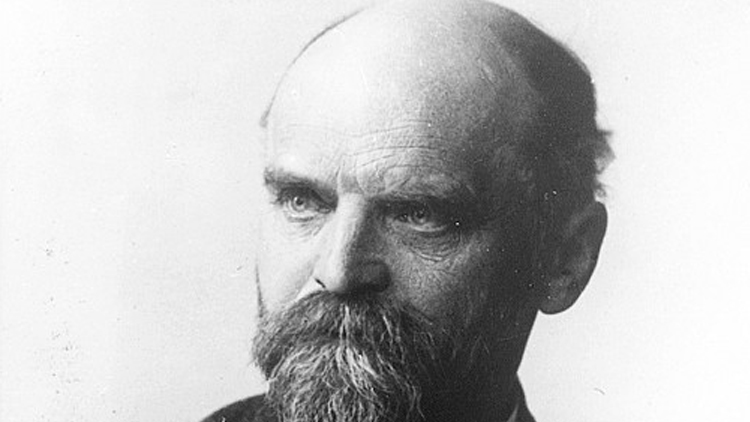
Ferdinand Tönnies spent his life trying to name this precise experience, and in 1887 he published the framework that would define the sociology of belonging for more than a century. Gemeinschaft und Gesellschaft — Community and Society — arrived in a Germany that was convulsing under industrialization, and it articulated something that millions of people were living without the vocabulary to describe. Tönnies, born in 1855 in rural Schleswig, had watched the world reorganize itself around exchange, contracts, and calculated interest, and he understood that what was being lost was not merely a lifestyle but an entire mode of human cohesion. His book sold modestly at first. It was reissued in 1912 and became foundational.
The distinction Tönnies drew was not between rural and urban, or between past and present, though it maps onto those differences with uncomfortable ease. Gemeinschaft — community — is the form of social life organized around will that is organic, instinctive, rooted in blood, place, and shared habit. It is the life where you are known before you have done anything to deserve being known. Gesellschaft — society — is the form organized around rational, calculated will: the contract, the transaction, the association formed for a specific purpose and dissolved when that purpose is served. In Gemeinschaft, your identity is given to you by the group. In Gesellschaft, you construct it yourself, which sounds like freedom and feels, on certain evenings, like a particular kind of abandonment.
What you experience returning to that village is neither one nor the other in a pure form. You are caught in the seam between them. The Gemeinschaft is still there in the grandmother’s recognition, in the unchanged smell of the bar, in the way people speak about the dead as though they have merely stepped out. But you have been remade by Gesellschaft — by cities, contracts, professional identities, relationships chosen rather than inherited. You have become someone who belongs to a type of social world that this place does not recognize as fully human. And when you stand in the square, smiling at people who love you in the way that only continuity can produce, you are holding two incompatible versions of what it means to be among others.
Trench

Thriller, Mystery, by Serge Turgeon, Italy, 2023.
In Venice, an art historian realizes that her brilliant mind will not be enough to solve the mystery surrounding the disappearance of an unknown woman. In addition to regaining trust in her intuition and her heart, she will need the help of a series of colorful characters from her community.
The idea behind Trench is to tell, through a detective story, the journey of an intellectual woman who suffered while growing up in a working-class district of Venice, where she never felt truly valued. In order to solve a mystery, she must face danger and rely on the help of the “non-intellectual” members of her community, rediscovering along the way her resourcefulness, her Venetian identity, and her true self.
LANGUAGE: Italian
SUBTITLES: English, Spanish, French, German, Portuguese
Tönnies and the Wound of 1887
There is a particular kind of intellectual work that gets written not from curiosity but from wound. Ferdinand Tönnies was thirty-two years old when he published Gemeinschaft und Gesellschaft in 1887, and the Germany he was writing about was not an abstraction. It was a country transforming itself at a speed that left human beings behind, a country where the Ruhr valley was filling with smoke and strangers, where villages emptied as cities swelled, where the old webs of obligation and recognition were dissolving into something faster, colder, and more indifferent to the person standing in front of you.
Bismarck’s Reich was barely sixteen years old. The unification of 1871 had not been a birth so much as a merger, a forced consolidation of territories with different histories, loyalties, and rhythms of life. Industrial output was doubling within decades. The population of Berlin had grown from roughly 400,000 in 1850 to over a million by the time Tönnies sat down to write. That number is not a statistic. It is a city learning, violently and without preparation, what it means to house people who share nothing except proximity. The sociologist Georg Simmel, writing just a few years later, would describe the blasé attitude of the metropolitan type not as rudeness but as a neurological defense mechanism, a psychic shield against the overwhelming volume of stimuli that modern urban life produced. Tönnies felt the same pressure but located it earlier, deeper, more structurally.
He had grown up in Schleswig-Holstein, a rural province with a landscape that remembered its own shape. He knew what it meant to live inside a community where your name carried a history, where the blacksmith who shod your horse had known your grandfather, where obligation moved in circles you could see. And he had watched that world become historical, which is the polite way of saying he had watched it die. What he wrote in 1887 was not nostalgia dressed as scholarship. It was a diagnosis written in the language of someone who has taken a pulse and found it weakening.
Gemeinschaft und Gesellschaft — Community and Society — proposed a distinction that seems obvious only because it has entered the bloodstream of Western social thought so completely. Gemeinschaft, community, names the forms of human togetherness organized around will, habit, shared memory, and organic belonging: the family, the village, the guild, the religious congregation. Gesellschaft, society, names the forms organized around contract, exchange, calculation, and rational self-interest: the corporation, the city, the market, the state. The move Tönnies made that was neither obvious nor comfortable was to say that these were not just two different types of organization but two different types of human will. He called them Wesenwille, essential will, the deep, embodied, pre-reflective impulse that binds people without them choosing it — and Kürwille, rational will, the deliberate, calculating faculty that assembles relationships instrumentally, as means to ends. What you feel for your mother is Wesenwille. What you feel for your insurance broker is Kürwille. The tragedy he was charting was a civilization systematically liquidating the first in order to maximize the second.
This was not a conservative lament. Tönnies was not asking anyone to return to the village. He was too rigorous for that kind of sentimentality. But he was insisting, against the triumphalist narrative of progress that surrounded him, that something real was being destroyed in the exchange. Max Weber would later develop a parallel argument through his concept of rationalization and the disenchantment of the world. Émile Durkheim, in the same decade, would reach for the concept of anomie to name the social vertigo that follows when collective norms dissolve faster than new ones can be built. These were not coincidental preoccupations. They were three minds responding to the same rupture from different angles, each trying to give a name to a wound that modernity preferred to call advancement.

What Community Actually Costs
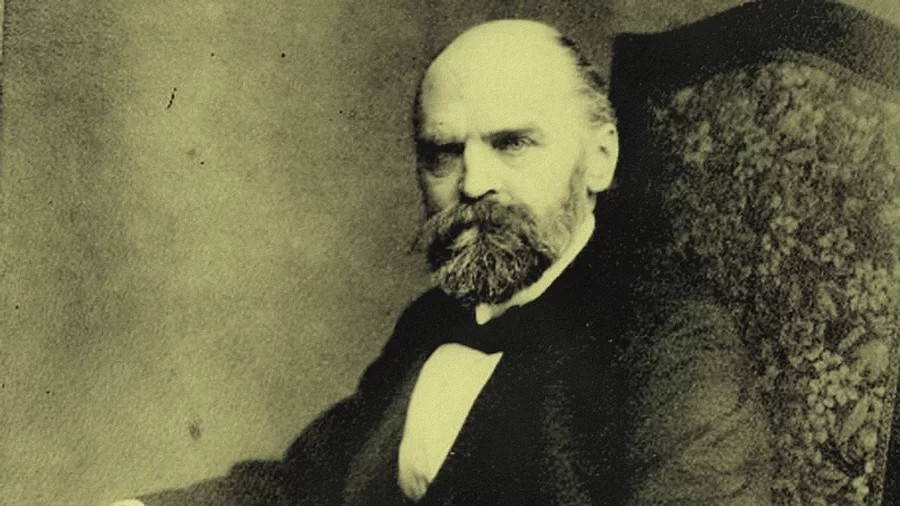
There is a man who knows every face in the room before he enters it. He knows who buried whom, who lent money to whom and never asked for it back, who carried a particular silence for thirty years because of something said at a wedding in 1987. He does not need to introduce himself anywhere within a radius of forty kilometers. His name precedes him like a weather system. This is not metaphor. This is the actual texture of his days.
Ferdinand Tönnies, writing in 1887, called this Gemeinschaft — community — and he was careful, more careful than his later admirers, to describe it without sentimentality. He knew that what binds also holds. The Wesenwille, the essential will that underlies communal life, is not a choice made on a Tuesday morning. It is the accumulated gravity of shared blood, shared land, shared habit, operating below the threshold of conscious decision. You do not join a Gemeinschaft. You are already inside it before you can formulate the question of whether you wish to be.
Émile Durkheim, working in the same intellectual current, named this mechanical solidarity — the cohesion of resemblance, of parts so similar to one another that the whole holds by the sheer weight of repetition. In The Division of Labour in Society, published in 1893, he mapped how pre-industrial communities maintained themselves through collective conscience, a shared moral universe so dense and total that deviation was not merely punished but experienced as a kind of ontological rupture. To transgress was not to break a rule. It was to become briefly unintelligible to everyone around you, including yourself.
The man who cannot leave his village understands this at a cellular level, though he would never use Durkheim’s vocabulary. He tried, once. He moved to a city four hours away, took a job that used his mind in ways the village never required, built something resembling an independent life. But the calls came with a frequency that felt less like love and more like calibration. Are you eating. When are you coming home. Your uncle is ill. The roof needs work. Your grandfather, before he died, always said. Each sentence was a filament, invisible and nearly weightless on its own, but collectively constituting something with the tensile strength of rope. He came back.
This is what the nostalgia industry systematically misrepresents when it sells you the image of the village, the tight-knit neighborhood, the family that always sits down to dinner together. The warmth is real. So is the surveillance. They are not opposites; they are the same phenomenon experienced from different angles. The community that holds you in illness holds you in ambition too, and it cannot always tell the difference between the two. Your deviance and your growth wear the same face from the outside.
Tönnies was not naive about this. He described Gemeinschaft as organizing itself through three primary forms: kinship, which governs the household; neighborhood, which governs the land; and friendship, which governs the spirit. Each form carries its own economy of obligation, its own silent ledger of debt and reciprocity. To leave one is manageable. To leave all three simultaneously is to perform a kind of social self-erasure that leaves marks no new city can entirely fill.
The psychoanalytic tradition would eventually circle back to this same territory. Erik Erikson, tracing the crises of identity through the life cycle, understood that the self formed inside a dense community carries the community’s contours inside it long after the physical departure. You do not leave your name. You carry it into every room where no one recognizes it, and you spend years learning to inhabit it differently, knowing that the original version of it belongs to people you can never fully become a stranger to.
The cost of belonging is paid whether you stay or whether you go.
The Contract That Replaced the Blood
There is a moment, familiar to anyone who has rented an apartment in a city, when you stand across from a stranger in an empty room and shake hands. The walls are bare. The light comes through unwashed windows. You have exchanged documents, bank statements, references written by people neither of you will ever meet. You know his monthly income and he knows yours. You know nothing else about each other, and this is precisely the point. The transaction is complete. You will live separated by a floor or a wall for years, and the sum total of your relationship will be a direct debit and a clause about notice periods. There is no hostility in this. There is no warmth either. There is only the contract, smooth and adequate and utterly indifferent to the fact that you are both alive.
This is what Ferdinand Tönnies called Gesellschaft — society as a constructed architecture, not a grown organism. Where Gemeinschaft was rooted in will that preceded thought, in the body’s recognition of belonging, Gesellschaft is the product of deliberate calculation. The Latin societas already carried this meaning: an association of equals formed for mutual advantage, dissolvable the moment advantage ceases. Tönnies, writing in 1887, identified this as the organizing logic of modernity itself, not a feature of it.
Max Weber watched the same transformation and gave it a different name. He called it rationalization — the progressive disenchantment of the world, the replacement of tradition and charisma and sacred habit with calculable procedures and bureaucratic efficiency. By the time Weber was writing, in the first decades of the twentieth century, the process had moved well beyond economics into every institution that shaped a human life: law, medicine, education, the state. What had once been governed by inherited authority or spiritual conviction was now governed by the ledger and the rulebook. Weber did not celebrate this. He described it as an iron cage — an image so precise it has refused to age. You do not feel the bars until you try to move in a direction the system has not provided for.
Marx had identified the mechanism earlier, and more viscerally. In Capital, published in 1867, he described how the social relationships between people become disguised as relationships between things. The coat does not simply keep you warm; it carries inside it the invisible labor of the person who made it, but that labor has been converted into price, and price erases the human entirely. You buy the coat from no one. You buy it from a market. The person who made it is nowhere in the transaction. This is commodity fetishism — not a metaphor, but a description of a structural inversion in which the thing stands where the person used to stand. When you sign that rental contract in the empty apartment, you are not in relation with the man opposite you. You are in relation with his credit score.
What Tönnies understood, and what neither Weber nor Marx quite articulated in the same register, is that this transition is not merely economic or institutional. It is a transformation in the quality of human will itself. Gesellschaft produces what he called Kürwille — rational will, deliberate will, the will that calculates ends and selects means. It is not a lesser form of will. It is extraordinarily powerful. It built cities and legal systems and global markets. But it cannot produce the thing it replaced. You cannot calculate your way into belonging. You cannot optimize grief. You cannot negotiate the kind of trust that does not require a clause.
The man in the empty apartment is not your enemy. He is not your neighbor in any sense that Tönnies would recognize. He is your counterpart in a transaction that will sustain you both and bind you to nothing.
The Lie of the In-Between
You know exactly how it started. A good impulse, genuine and uncomplicated — someone posts a message in a building chat, suggests a shared garden in the courtyard, maybe a rotating system for tools, a small table where neighbors can leave books they no longer need. Within forty-eight hours there are thirty-two people in the group. Within a week, someone has already designed a logo.
The energy at the beginning is almost intoxicating, and you mistake that energy for proof that you were right, that it was possible, that the cold separateness of modern urban life was just a habit and not a structure. You plant things together on a Saturday morning. Someone brings coffee. A child draws a sign for the herb section. You photograph it, naturally, because the photograph is already part of the ritual — not documentation of the thing but the thing itself, the real product of the encounter. And then, gradually, the messages in the group shift. Someone complains that the basil was taken without asking. Someone else responds passive-aggressively. A third person leaves the group without explanation. The garden begins to look like a metaphor you did not ask for.
What happened is not a failure of goodwill. What happened is that you tried to build Gemeinschaft with the tools and the people and the psychological substrate of Gesellschaft, and Tönnies understood more than a century ago that this is not a transitional problem but a categorical one. The warmth you felt on that Saturday morning was real, but it was borrowed warmth — the kind that flares precisely because it is surrounded by cold, not because it has replaced it. You cannot extract community from its historical and structural conditions and transplant it into a courtyard in a city where every participant has a separate lease, a separate career, a separate future.
Robert Putnam spent much of the 1990s measuring what he called social capital — the networks of trust, reciprocity and civic engagement that make collective life functional rather than merely legal. When Bowling Alone appeared in 2000, its central data were already almost unbearable in their precision. Between 1974 and 1994, the number of Americans who reported attending a public meeting on town or school affairs had fallen by more than a third. Club membership, informal socializing, having friends over for dinner — all declining across the same decades, cutting across class and geography and political identity. Putnam found that by the late 1990s, Americans were significantly more likely to bowl than at any previous point in history, and far less likely to bowl in organized leagues. The image is exact and quietly devastating: the activity survives, the community around it dissolves.
What Putnam could not fully resolve — and what Tönnies had already structured philosophically — is that no intervention at the level of habit can repair a rupture at the level of will. Kürwille, rational contractual will, does not become Wesenwille, organic relational will, because you add a garden to a building or a community board to a neighborhood. The WhatsApp group is not a village square. It resembles one functionally, superficially, for about three weeks. Then it becomes what it always was: a contract between individuals who have chosen, temporarily, to coordinate. And when coordination becomes inconvenient, the contract dissolves, because that is precisely what contracts are designed to do — to be dissolvable.
The modern fantasy is that we can have both. Individual autonomy and communal belonging. The freedom to leave and the warmth of staying. It is not hypocrisy that generates this fantasy but something more fundamental — a genuine inability to see that the two things are not in tension but in structural opposition. Every mechanism that protects your individual freedom is a mechanism that prevents the kind of unconditional embeddedness that community, in Tönnies’s sense, actually requires. You cannot opt into belonging the way you opt into a subscription.
A vision curated by a filmmaker, not an algorithm
In this video I explain our vision
When the Screen Became the Square

You have four thousand, two hundred and seventeen people who liked your last photograph. The notification sits at the top of your screen like a small proof of existence. You scroll through the comments — warmth, affirmation, little hearts rendered in red — and somewhere in the middle of reading them you stop, not because something disturbs you, but because a question arrives that you did not invite: if you called someone right now, at half past midnight, not to talk but because something had broken open inside you and you needed a body in the room, who would you call? You sit with the question. The list that forms is not four thousand names long. It may not reach five.
This is not a personal failure. It is the architecture working exactly as designed.
Ferdinand Tönnies understood, writing in 1887, that Gemeinschaft — true community — was constituted by mutual obligation, by the kind of belonging that precedes choice and survives inconvenience. It was the neighbor who came without being asked, the bond that did not require performance to remain valid. Gesellschaft, by contrast, was the social form of calculation: you engage when there is value to extract, you disengage when the exchange no longer serves you. Tönnies never imagined a technology that could simulate the emotional texture of the first while running entirely on the logic of the second.
Shoshana Zuboff spent decades documenting precisely this simulation. In her 2019 analysis of surveillance capitalism, she identified what she called the behavioral futures market — the systematic harvesting of human experience, translated into data, sold to entities who wish to modify that behavior toward profitable ends. The warmth you feel on a platform is not incidental to its function. It is the bait. The sense of being seen, recognized, responded to — these are the precise emotional registers of Gemeinschaft, reproduced with enough fidelity to trigger the same neurological responses, while serving an entirely different economic purpose. You are not a member of a community. You are a source of behavioral surplus.
Byung-Chul Han writes in his 2013 diagnosis of digital culture that the swarm is not a crowd in any classical sense. A crowd has a body, a location, a shared breath. The swarm has only direction and momentum — it assembles instantly around a signal and disperses with equal speed, leaving nothing behind. There is no loyalty in the swarm, no memory, no face. What looks like solidarity is actually synchronization, and synchronization requires no relationship at all. Two clocks on the same wall are synchronized. They do not know each other.
A man sits in front of a screen and watches numbers climb. His post is being shared, reshared, pulled into arguments he did not start and conversations he cannot follow. Somewhere in a city he has never visited, people are using his words to mean things he did not intend. He feels, briefly, powerful. Then he feels something else — a kind of vertigo that resembles loneliness but is not quite loneliness because it has no object. He is not missing a specific person. He is missing the condition of being known, which is something that scale actively destroys rather than creates.
The algorithm did not invent this problem. It perfected it. What the algorithm understood — what was engineered into it from the beginning — is that the simulation of Gemeinschaft is far more scalable than Gemeinschaft itself. Real community is inefficient. It requires time, friction, the willingness to remain present when presence is costly. The platform offers all of the emotional signals of belonging with none of its obligations, and in doing so it does not satisfy the need for community. It exhausts the vocabulary we use to articulate that need, so that when the real thing might be possible, we no longer have the words, or the patience, for what it actually demands.
The Fascist Temptation of Return
There is a moment, recognizable to anyone who has lived through a period of collective anxiety, when the longing for belonging stops being a private ache and becomes a political program. You have felt it yourself, perhaps, in the rhetoric of a speech that promised to restore something — a greatness, a unity, an organic wholeness that supposedly once existed and was stolen. The emotional architecture of that promise is always the same: there was a community, there was warmth, there was rootedness, and then something alien arrived and dissolved it. The diagnosis borrows directly from Tönnies’s conceptual vocabulary even when it has never read a single page of him. Gemeinschaft as paradise lost. Gesellschaft as the name of the enemy.
This is not a theoretical risk. It is a civilizational reflex that has repeated itself with murderous consistency. Hannah Arendt, writing in 1951 in The Origins of Totalitarianism, traced precisely this mechanism: the way in which the atomization produced by modern society — the loneliness, the uprootedness, the dissolution of traditional bonds that Tönnies had described with sociological precision — created a psychological vacuum that totalitarian movements rushed to fill. Arendt understood that totalitarianism did not appeal to the worst in people so much as to their most human need: the need to belong to something larger than themselves, to be part of a story that gave their existence coherence and weight. The terror came later. The seduction came first, and it wore the face of community.
Think of the man who returns home from the Eastern Front, sits at a kitchen table in a city that no longer feels like his city, and finds in a party meeting the first warmth he has felt in years. The handshakes, the shared meals, the sense of being recognized, of mattering to someone. That warmth was real. The belonging was real. What was manufactured was the explanation attached to it — the story that said this warmth existed because of racial purity, because of blood and soil, because of a mythological Volk that had always been under threat from those who did not share its essence. Tönnies himself, who died in 1936 and had been dismissed from his honorary professorship by the Nazi regime for publicly criticizing Hitler, would have found this appropriation grotesque. He had described Gemeinschaft as a sociological category, not a racial one. But ideas do not choose their heirs, and the emotional longing his framework named was precisely the fuel the blood-and-soil mythology needed.
The slide from nostalgia to violence follows a grammar that Arendt identified with terrifying clarity. First, the community is defined by what it is not — by the outsider, the stranger, the one who does not belong. Then the outsider is identified as the cause of the dissolution rather than a fellow victim of it. Then exclusion becomes purification. The categories shift from the sociological to the biological, from the historical to the eternal, but the underlying structure is always Tönnies inverted: not a description of what was lost but a weapon aimed at whoever is designated as having stolen it.
What makes this pattern so persistent is that the emotional need it exploits never disappears. Modernity does not solve the problem of belonging; it deepens it. Each new wave of technological acceleration, each new phase of economic dislocation, each new form of anonymity produces a fresh cohort of people who feel, in Arendt’s precise phrasing, superfluous — unmoored from any community that would recognize them as irreplaceable. Into that void, the rhetoric of restoration steps with extraordinary reliability. It does not matter whether the lost community it invokes ever actually existed. The grief is real. And real grief, when it finds no honest political address, becomes available to the most dishonest ones.
The Body That Remembers What the Mind Has Sold
You are walking across a bridge in a city of eight million people, and you stop. Not because something has happened. Not because you are late or tired or lost. You stop because something has happened that has no name, and the grief that rises through your chest is not yours — or not only yours — and you cannot explain it to anyone, least of all to yourself. The water below moves with indifference. The crowd parts around you like a river around a stone. And for a moment, suspended between two banks, you feel the full weight of a belonging you no longer have and cannot quite remember having had.
Maurice Merleau-Ponty argued, in his Phenomenology of Perception published in 1945, that the body knows before the mind speaks. The flesh carries its own intelligence, a pre-reflective understanding that precedes language and survives its collapse. When you stop on that bridge, your body is not confused. Your body is remembering something your mind agreed to forget when it signed the implicit contracts of modern life — the contract of mobility, of self-sufficiency, of productive individuality. The grief is not sentimental. It is epistemological. Your body is registering a loss that your culture has spent two centuries insisting was a gain.
Ferdinand Tönnies built the architecture of this loss with extraordinary precision in 1887, but what is less often acknowledged is that he lived long enough to watch his own framework become a weapon. By the time the twentieth century had sharpened Gemeinschaft into a nationalist blade — the warm community of blood and soil mobilized for catastrophe — Tönnies, writing into his eighties, carried the ambivalence of a man who had named something true and watched it be used for everything he had not intended. He died in 1936, in a Germany that had turned the longing for community into the architecture of elimination. The concept had been stolen and refurnished. The grief on the bridge, the one you cannot name, belongs to that history too.
Because what Gesellschaft truly sold was not just warmth or proximity or ritual. It sold the body’s certainty. The knowledge that lives in shared gesture, in the unspoken grammar of a table set the same way for forty years, in the physical memory of being known without having to explain yourself. Merleau-Ponty would call it intercorporeality — the way bodies form a field of mutual recognition that is more primary than any social contract, more durable than any institutional arrangement. When that field dissolves, what remains is not freedom. What remains is a person standing on a bridge, unable to identify the source of an ache that feels geological.
The city below the bridge is not indifferent by accident. It was engineered for transaction, for circulation, for the efficient movement of capital and labor through anonymous space. Georg Simmel, in his 1903 essay on metropolitan life, identified the blasé attitude not as a personality defect but as a necessary adaptation — a protective numbness that allows the nervous system to survive the overstimulation of modern urban existence. But numbness is also amnesia. And what you have forgotten, standing there, is not a specific place or a specific person. It is a specific quality of time — time that moved at the pace of recognition rather than extraction.
Tönnies never resolved this. He mapped the distance between two worlds without ever arriving at either. He documented the transition with sociological rigor and personal mourning in equal measure, and the honesty of that double register is perhaps the most modern thing about him — more modern than the theorists who came after and chose one side. You stop on the bridge not because you are weak or romantic or confused. You stop because your body, which has not forgotten what your mind has sold, is simply taking stock of the full price of the transaction.
🏘️ Community, Society and the Modern Divide
Ferdinand Tönnies‘s distinction between Gemeinschaft and Gesellschaft opened one of the most enduring debates in social thought. The following articles explore thinkers and works that wrestle with the same fundamental tension between organic community and abstract society, tracing its echoes across culture, urbanism, and critical theory.
Georg Simmel: Life and Sociological Thought
Georg Simmel stands as one of the most important sociological interlocutors of Tönnies, sharing his concern with the transformations wrought by modernity on human relationships. His microsociological attention to forms of interaction and the ‘tragedy of culture’ directly complements the Gemeinschaft/Gesellschaft framework. Reading Simmel alongside Tönnies illuminates the experiential texture of the transition from community to society.
GO TO THE SELECTION: Georg Simmel: Life and Sociological Thought
Georg Simmel and the Metropolis: The Metropolis and Mental Life
Simmel’s essay on the metropolis is perhaps the most vivid phenomenological account of what Tönnies called Gesellschaft made flesh in urban space. The blasé attitude and the overwhelming stimulation of city life represent the psychological cost of the shift from warm communal bonds to cold contractual ones. This essay remains indispensable for understanding how Tönnies’s abstract typology plays out in the lived reality of modern cities.
GO TO THE SELECTION: Georg Simmel and the Metropolis: The Metropolis and Mental Life
Karl Marx and Alienation: Economic and Philosophical Manuscripts
Karl Marx’s concept of alienation addresses the same historical rupture that Tönnies diagnosed through his community-society opposition, tracing how capitalist social relations dissolve the organic ties between individuals and their labor, their communities, and one another. The Economic and Philosophical Manuscripts reveal how the emergence of Gesellschaft is inseparable from the rise of commodity exchange and abstract labor. Together, Marx and Tönnies offer complementary diagnoses of modernity’s discontents.
GO TO THE SELECTION: Karl Marx and Alienation: Economic and Philosophical Manuscripts
Williams’s Culture and Society: Analysis
Raymond Williams‘s Culture and Society traces the literary and intellectual reactions to industrialization and the loss of community in Britain, engaging directly with the tradition of thought to which Tönnies belongs. Williams examines how writers and thinkers responded to the dissolution of older social bonds, offering a cultural-historical perspective that enriches Tönnies’s more structural sociology. This genealogy of ideas makes Williams an essential companion for anyone seeking to understand the broader significance of Community and Society.
GO TO THE SELECTION: Williams’s Culture and Society: Analysis
Discover Cinema That Thinks About Community and Belonging
If these ideas about community, belonging, and the alienation of modern society resonate with you, Indiecinema offers a curated streaming selection of independent and art-house films that explore exactly these themes with depth and originality. Step beyond the algorithm and find cinema that asks the questions that matter.
👉 EXPLORE THE CATALOG: Watch Indie Films in Streaming
A vision curated by a filmmaker, not an algorithm
In this video I explain our vision

