
The Village That No Longer Knows Your Name
You go back. Maybe it is after years, maybe only after months, but you go back to the street where you learned to ride a bicycle, where the smell of bread from the corner shop was so precise it could locate you in time like a compass. And the bread shop is gone. In its place there is a franchise with a logo you have seen in forty other cities, and the young man behind the counter does not look up when you walk in. Not because he is rude. Because you are a customer, which is to say you are nobody in particular, which is to say the transaction between you requires nothing beyond your money and his efficiency. You buy something you did not want and leave, and the street outside feels like a stage set for a life that used to be yours.

This is not nostalgia. Nostalgia is soft, a little self-indulgent, something you can shake off with effort. What you feel standing on that pavement is harder and more structural than nostalgia. It is the recognition that a certain kind of knowing — the kind that happens between people who share a geography over time, who remember your grandmother’s maiden name, who would notice if you stopped appearing — has been replaced by something that functions perfectly well without it. The replacement is seamless. That is what disturbs you most. Nothing is missing in any measurable sense. And yet.
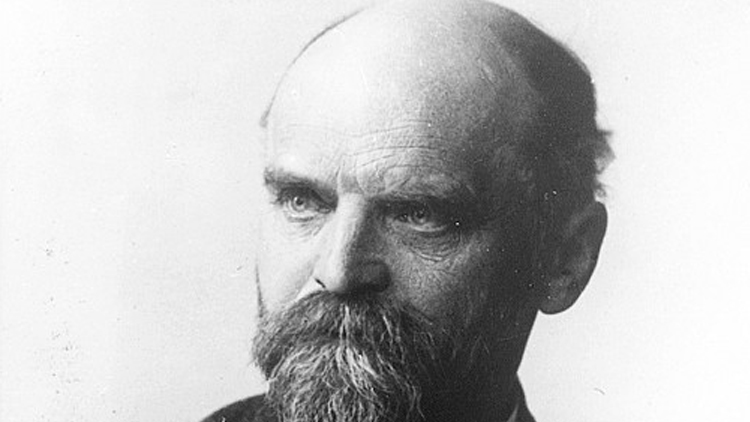
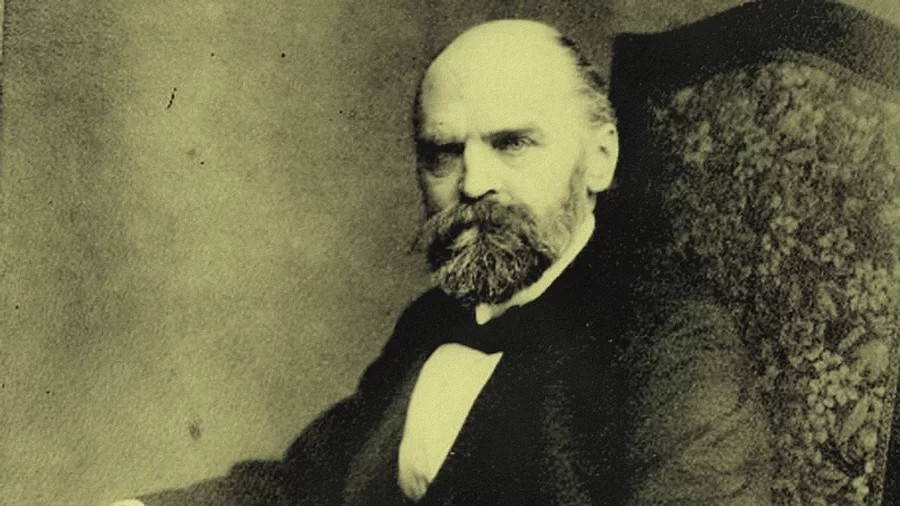
Ferdinand Tönnies was born in 1855 in the duchy of Schleswig, in a farmhouse close enough to the North Sea that the landscape must have taught him something about exposure and rootedness simultaneously. He died in 1936, long enough to watch the world he had theorized about dismantle itself with extraordinary thoroughness. In between, he produced a body of work that remains one of the most quietly devastating diagnoses of modernity ever written, and the core of that work arrived in 1887 in a single book, Gemeinschaft und Gesellschaft, translated variously as Community and Society or Community and Association, a title so plain it nearly conceals the radicalism of what it contains.
The distinction Tönnies drew was not between rural and urban, not between past and present in any simple nostalgic register. It was between two fundamentally different modes of human will and the social forms they generate. Gemeinschaft, community, arises from what he called Wesenwille, essential will, the organic, pre-reflective bonds of kinship, place, and shared memory that hold people together the way roots hold a tree, without anyone deciding to make it so. Gesellschaft, society or association, arises from Kürwille, rational will, the deliberate, calculating construction of relationships for mutual benefit, relationships that last precisely as long as they are useful and not a moment longer. The baker who knew your mother belonged to the first world. The franchise employee who processes your transaction belongs to the second. Neither is morally superior in Tönnies’s framing, but they are not equivalent, and pretending they are costs something real.
What makes Tönnies remarkable, and what makes him still uncomfortable to read, is that he refused to frame this as a simple loss to be mourned. He was a scientist of social forms, trained in philosophy and classics at multiple German universities, deeply influenced by Hobbes, Spinoza, and Schopenhauer, and he understood that Gesellschaft was not an accident or a corruption but an historical inevitability, the necessary form of a world organized around commerce, contract, and the state. He described it with precision rather than grief. But precision, in his hands, is its own form of mourning.
Because the body already knows. Long before the theory arrives, before anyone hands you the vocabulary, you felt it on that pavement. The street that no longer knows your name is not merely a changed street. It is evidence of a transformation so total it has restructured what it means to be recognized by another human being.
Trench
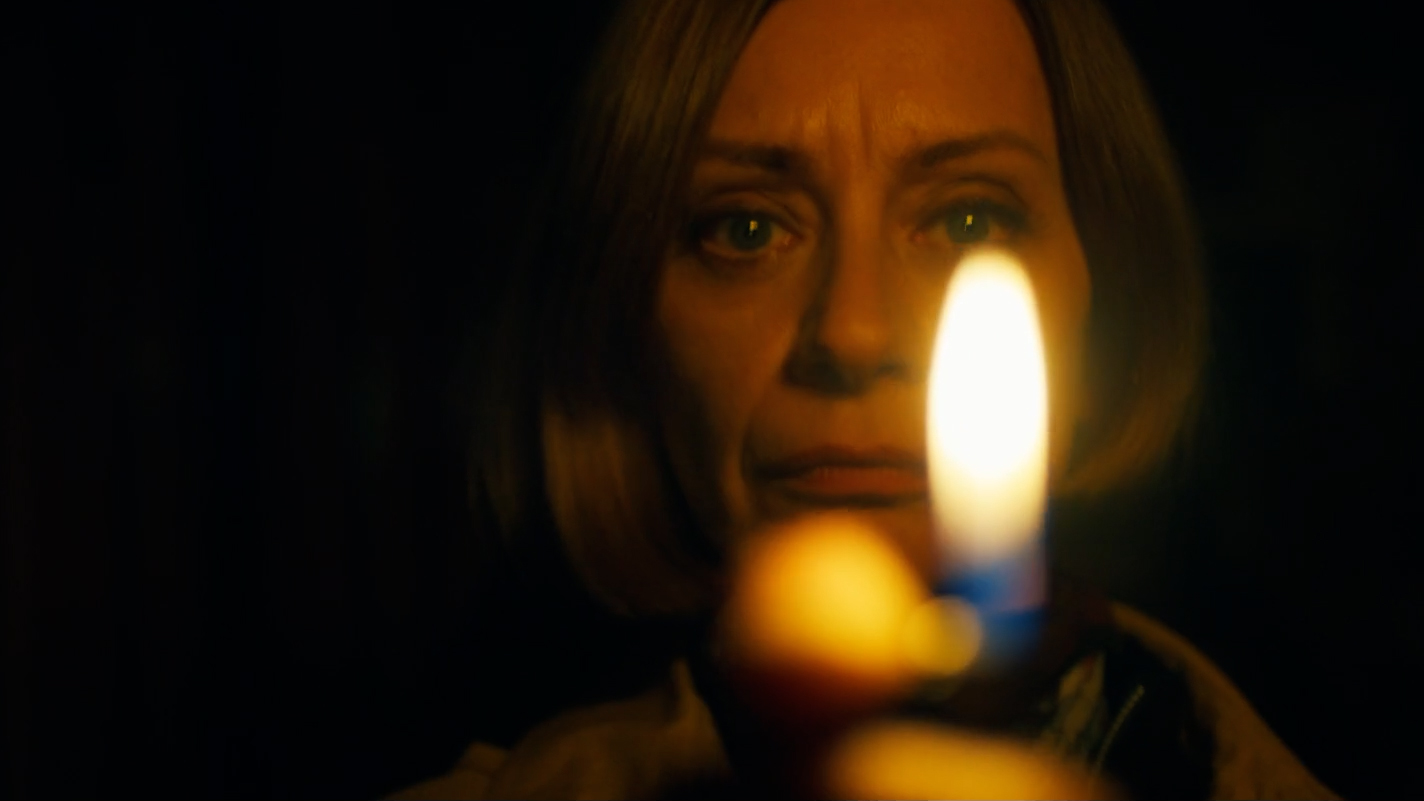
Thriller, Mystery, by Serge Turgeon, Italy, 2023.
In Venice, an art historian realizes that her brilliant mind will not be enough to solve the mystery surrounding the disappearance of an unknown woman. In addition to regaining trust in her intuition and her heart, she will need the help of a series of colorful characters from her community.
The idea behind Trench is to tell, through a detective story, the journey of an intellectual woman who suffered while growing up in a working-class district of Venice, where she never felt truly valued. In order to solve a mystery, she must face danger and rely on the help of the “non-intellectual” members of her community, rediscovering along the way her resourcefulness, her Venetian identity, and her true self.
LANGUAGE: Italian
SUBTITLES: English, Spanish, French, German, Portuguese
A Man Born Between Two Worlds
There is a particular kind of knowledge that can only be acquired by standing in two places at once. Not the knowledge of books, not the knowledge of laboratories, but the knowledge of the body that has belonged to one world and watched it dissolve into another. Ferdinand Tönnies was born in 1855 in the parish of Oldenswort, in the flat marshlands of Schleswig-Holstein, into a prosperous farming family whose roots went deep into the soil of that half-Danish, half-German borderland. He grew up among people who still organized their lives around the rhythms of harvest and kinship, around the obligations owed to neighbors whose names had been known for generations. That world was not yet gone. But it was leaving.
Schleswig-Holstein in the 1850s occupied a peculiar historical position. The region had only recently been the object of two wars — the First Schleswig War of 1848 and the Second in 1864 — fought precisely over what it was and who it belonged to. It was a place whose identity was genuinely uncertain, caught between Danish and Prussian claims, between old feudal arrangements and the new centralized state that Bismarck was hammering into existence with the confidence of a man who believed history was his to forge. Into this contested, transitional soil Tönnies was born, and the instability was not merely political. The railways were arriving. The cities were pulling. The agricultural economy that had sustained families like his for centuries was beginning to feel, for the first time, genuinely fragile.
His father was a farmer and merchant who had accumulated enough wealth to send his son to gymnasium, then to university. Tönnies studied at Jena, Bonn, Leipzig, Berlin, and Tübingen, an education that was itself a kind of migration, a progressive uprooting that took him further and further from the marshlands of his childhood and deeper into the world of abstraction and theory. He read Hobbes obsessively — the 1651 Leviathan, with its cold-blooded account of individuals calculating their interests in a state of nature — and felt, reportedly, both fascinated and disturbed. Here was a philosopher who had taken the new atomized individual as his starting point, who had built an entire political philosophy on the assumption that human beings are, at bottom, competitors. Tönnies recognized something in that picture. He also recognized what it omitted.
Max Weber, who would become perhaps the central figure in German sociology, once wrote about the scholar who achieves his greatest insight not despite his personal predicament but because of it. Tönnies is almost a textbook illustration of this principle. The fracture he would spend decades naming in his work — the movement from Gemeinschaft to Gesellschaft, from community to society, from organic belonging to contractual relation — was not a hypothesis he arrived at through detached observation. It was something he had lived in his bones. He had sat at tables where people ate together out of genuine mutual need. He had also walked the lecture halls of Berlin, where strangers moved past one another with the brisk indifference of people who owed each other nothing.
He completed his doctorate in 1877, and the reading that consumed him through those years — Spinoza, Hobbes, Marx, the English political economists — gave him the vocabulary to articulate something he had already experienced before he had the words for it. That experience was the sensation of watching a form of life become, without anyone having decided it, historical. The community of Oldenswort was not destroyed by an enemy or an ideology. It was outpaced, made gradually unnecessary, dissolved by forces so large and so impersonal that no single person could be held responsible. This is, as the sociologist Zygmunt Bauman would argue a century later in his work on liquid modernity, perhaps the most disorienting form of loss: the kind that leaves no one to blame.

The Word That Finally Names the Wound
There is a particular kind of relief that has nothing to do with solutions. You have been carrying something for years — a pressure behind the sternum, a low-grade disorientation that visits you on Sunday afternoons or in the middle of otherwise pleasant dinners — and then you read a sentence, or hear a word, and the thing you have been carrying finally has a name. The relief is not that the weight disappears. It is that you are no longer alone with something nameless.
Tönnies published Gemeinschaft und Gesellschaft in 1887, and almost no one noticed. The book sold poorly, attracted sparse reviews, and spent the better part of two decades in something close to oblivion. He was thirty-two years old, already carrying the intellectual freight of years spent between Hobbes and Spinoza, between the Holstein countryside of his childhood and the seminar rooms of Kiel and Berlin, between a world he remembered and a world he could not stop analyzing. The book was, by any external measure, a failure. And yet it was also, in the deepest sense, a private reckoning — the moment when a man finds the exact vocabulary for a loss he had been circling wordlessly for his entire intellectual life.
The two terms he chose are deceptively simple. Gemeinschaft: community, the form of association rooted in blood, place, custom, the kind of belonging that precedes conscious choice. Gesellschaft: society, the form of association built on contract, calculation, rational self-interest, the kind of belonging that is really a transaction wearing the costume of solidarity. What made the distinction devastating was not its novelty — traces of it appear in Maine’s Ancient Law of 1861, in Marx’s early manuscripts, in the whole Romantic tradition’s anxious backward glance — but its precision. Tönnies gave the wound a clinical name without making it clinical. He described not just a sociological transition but an existential condition: the experience of living in a world where the warmth of organic belonging has been replaced by the cool efficiency of instrumental relations, and where you cannot go back because the Gemeinschaft you mourn was never entirely the paradise you remember.
This is the philosophical trap that Georg Simmel, writing in 1903 in his essay on the metropolis and mental life, would map with equal lucidity: the individual who arrives in the city does not simply lose community. He gains freedom and loses the capacity to feel what freedom is for. The Berlin that Simmel walked was the same historical formation that Tönnies had been theorizing — a society of strangers performing connection, where the handshake has replaced the embrace and both parties know it.
The book’s resurrection, when it finally came in the early twentieth century, was not the result of a literary rediscovery. It was the result of a wound reopening. Max Weber read Tönnies and built an entire sociology of rationalization on the same fault line. The Weimar Republic’s crisis of legitimacy was, among other things, a Gemeinschaft crisis — a population that had been told the nation was a community of blood and spirit, and that discovered, in the wreckage of 1918, that it was a Gesellschaft that had lost its war. By the time Tönnies published a revised and expanded edition in 1912, the vocabulary he had coined had migrated into political discourse, into pedagogy, into the language of cultural despair that would fuel some of the darkest experiments of the following century.
He had named something real. The problem with naming something real is that it does not stay in the book. It gets out. And once it is out, it belongs to everyone who recognizes themselves in it, including those who will use the recognition to burn things down rather than mourn them.
Community as Body, Society as Contract
There is a meal that needs no invitation because the invitation is already built into the relationship itself. You arrive, the table extends, the soup is ladled without ceremony, and nothing is owed afterward because nothing was transacted in the first place. The debt and the gift are the same thing, indistinguishable, absorbed into a fabric of mutual belonging that precedes any individual act of generosity. This is not nostalgia. This is a structural condition that Tönnies spent his intellectual life trying to name with enough precision that it could be distinguished from its opposite without being romanticized into something it never fully was.
He called it Gemeinschaft, and the word resists clean translation not because it is vague but because English has largely lost the experience it describes. Community captures some of it, but community in contemporary usage has been hollowed into a marketing term, a demographic category, a checkbox on a grant application. What Tönnies meant was something closer to organic will made social — what he termed Wesenwille, the will that grows from nature, from blood, from shared place and shared history, from the body’s own rhythms rather than from calculation. The meal without invitation is Wesenwille in its simplest form. You do not decide to belong. You already do.
Against this he placed Gesellschaft, society in the cold architectural sense, and its animating principle Kürwille, the rational will of deliberate choice and calculated advantage. When two neighbors who once borrowed tools and traded labor without keeping score find themselves before a mediator arguing over a property line, something has shifted at the level of structure, not merely manners. The relationship has migrated from one ontological category to another. They have not become worse people. They have become parties to a contract, which is an entirely different kind of human being, one that Henry Sumner Maine had already begun to anatomize in 1861 in Ancient Law, where he described the movement of progressive societies as running from status to contract. Tönnies read Maine carefully and heard in that formulation not a celebration of progress but a diagnosis of loss, or at minimum a description of a transformation so total that it changed what human relations were made of at their core.
The factory whistle is the sonological symbol of this transformation. Where the church bell organized time around shared ritual, collective memory, the rhythm of a community that understood itself as a body, the factory whistle organized time around production schedules and wage cycles. It demanded punctuality not as a virtue but as a contractual obligation. Tönnies was writing Gemeinschaft und Gesellschaft, first published in 1887, at the precise historical moment when this acoustic shift was completing itself across industrial Germany, and he was acutely aware that what was being lost was not merely comfort or warmth but a specific architecture of the will.
Here Hobbes becomes essential, because Tönnies did not oppose him so much as locate him accurately. Hobbes described the social contract as an escape from nature, a rational construction built against the war of all against all. For Tönnies, Hobbes had correctly described Gesellschaft — its logic, its necessity, its coldness — but had mistaken it for the only possible form of human association. He had universalized a historical condition. Marx had made a related observation about the commodity, noting in Capital how exchange value abstracts the human labor embedded in objects, replacing concrete social relationships with relationships between things. Commodity fetishism and the Gesellschaft principle are cousins in Tönnies’s architecture: both describe a world in which the human bond has been mediated into something impersonal, measurable, tradeable.
What Tönnies insisted upon, against both the Hobbesian inevitability and the Marxist teleology, was that Gemeinschaft had not been an illusion. It had been real before it became impossible to sustain under the pressures of capital, mobility, and the anonymous city.
The Will Behind the World
You walk into a place you have known for years — a bakery, a hardware store, a neighborhood pharmacy — and something has shifted. The person behind the counter is efficient, not unkind, but the exchange completes itself before you have finished arriving. You leave with what you came for and a faint sense of having been processed. Nothing was wrong. Everything was missing.
Tönnies would have recognized this feeling immediately, not as nostalgia or sentimentality, but as a precise symptom of something structural. His distinction between Wesenwille and Kürwille, developed most fully in Gemeinschaft und Gesellschaft in 1887 and elaborated across subsequent decades, is one of the most underread conceptual instruments in the history of social thought. It does not describe two types of society. It describes two modes of willing, two ways the self encounters the world before any conscious decision is made.
Wesenwille — natural will, organic will — is not a choice. It is the shape desire takes when it has not yet separated itself from the body, the memory, the web of belonging in which a person is embedded. You do not decide to love your language. You do not calculate your attachment to a landscape. These things act through you before you act through them. Wesenwille is what remains when you strip away the deliberation, the optimization, the cost-benefit arithmetic that modern life has made into a second nature. It is, in Tönnies’s framework, the will of the Gemeinschaft, the community, not as ideology but as lived tissue.
Kürwille is something else entirely. It is the will of the contract, the will that precedes itself by imagining its own ends, that treats every relationship as a negotiable arrangement, every loyalty as a provisional investment. Georg Simmel, writing his Philosophy of Money in 1900 — just over a decade after Tönnies had laid the conceptual groundwork — arrived at the same territory from a different angle, tracing how the money economy does not merely change what people value but rewires the apparatus of valuation itself. For Simmel, the deepest consequence of modernity is not poverty or inequality but the proliferation of a purely instrumental relationship to existence, a world in which everything can in principle be priced, and therefore nothing retains an intrinsic weight.
What Tönnies called Kürwille, Simmel called the calculating intellect of the metropolis, and what both were naming, though neither used the term, was a kind of structural dissociation — a splitting of the person from their own deeper motivations. Contemporary psychology has arrived at something strikingly similar without acknowledging the genealogy. The distinction Edward Deci and Richard Ryan drew in their self-determination theory between intrinsic and extrinsic motivation, formalized across decades of empirical research from the 1970s onward, maps almost exactly onto Tönnies’s original division. When Ryan writes about the corrosive effect of contingent self-worth, of a self that can only feel adequate by performing against external metrics, he is describing Kürwille as a psychological condition, the rational will turned inward and weaponized against its own bearer.
There is something almost eerie about this convergence. A nineteenth-century German sociologist working from Schopenhauer and Spinoza, a fin-de-siècle Jewish philosopher obsessed with coins and bridges, and a pair of American empirical psychologists running motivation experiments in university laboratories — all of them touching the same wound from different directions. The wound is the gap between what a person is and what a person does when they have been trained to treat themselves as an instrument.
The man standing in that pharmacy after a transaction that felt like a subtraction is not being oversensitive. He is registering, in his body, a philosophical distinction that took a century and a half to fully articulate. The feeling came first. The words came much later.
A vision curated by a filmmaker, not an algorithm
In this video I explain our vision
Cinema as Witness: Lives Caught in the Transition

There is a man standing in his father’s kitchen, removing copper pots from hooks that have held them for forty years. He is not grieving, or rather he is grieving in the way that people grieve when they cannot name what they have lost. The land has been sold. The paperwork is signed. His cousins understood. Everyone understood. And yet something in the weight of each pot, something in the particular darkness of that room at that hour, refuses to be processed by the categories available to him. He is a reasonable man. He knows that farmland commands prices that no single family can afford to refuse. He knows that his children live in cities and will never return to work this soil. He carries the last pot to the van and does not look back, because looking back would require him to acknowledge that what he is dismantling is not a property but a Gemeinschaft — Tönnies’s word for the organic web of belonging that precedes and exceeds any contract, any rational calculation of interest.
Tönnies, writing in Gemeinschaft und Gesellschaft in 1887, was not describing a pastoral fantasy. He was describing a structural condition of human life, one he had observed dissolving in real time across the German countryside and industrial cities of the late nineteenth century. Gemeinschaft — community — is not sentiment. It is the form of social life in which will is rooted in shared being: the family, the village, the guild. Gesellschaft — society — is the form in which will becomes purposive, contractual, anonymous. The transition between them is not a moral fall. It is a historical movement. But what the man in that kitchen knows, without the vocabulary to say it, is that the transition costs something that no balance sheet can measure.
In a dying industrial town somewhere in the north, a woman carries a pot of soup across a courtyard she has crossed a thousand times, to a neighbor she has never once formally introduced herself to. They have never shaken hands. They have never exchanged surnames. The relationship exists in a register that modernity does not have a form for. It is not friendship as the contemporary world understands friendship — chosen, declared, curated. It is something older and more involuntary: the tacit acknowledgment of shared fate. She knows his light goes on at six. She knows when it does not. She brings the soup not out of charity, which would require her to position herself above him, but out of something closer to what Tönnies called Wesenwille, essential will — the will that flows from what one is rather than from what one calculates. The sociology of Gesellschaft has no column for this transaction.
And then there is the bureaucrat, sitting in a municipal office with a form in front of him that requires him to certify his mother’s death in triplicate. He is competent. He has filled out forms his entire professional life. But something in this particular act of documentation — reducing a woman who fed him, held him, named him, to a set of administrative fields — produces in him a sensation he will later describe to his wife as nausea, though it is not quite that. It is the feeling of a system revealing its own nature too nakedly. Gesellschaft, Tönnies understood, is not evil. It is efficient, neutral, scalable. It simply cannot hold what a person actually is. The form does not betray his mother. It reveals that the world in which he now lives was never built to hold her.
These are not exceptional moments. They are the ordinary texture of a civilization that has been reorganizing itself along Gesellschaft principles for over a century, and has only recently begun to notice what that reorganization leaves behind — not in museums or archives, but in kitchens, courtyards, and the small, wordless ceremonies of grief.
The Sociologist Who Refused to Be Comfortable
There is a particular kind of courage that does not announce itself. It does not arrive in a moment of crisis with trumpets and adrenaline. It accumulates quietly over decades, in the habit of saying what you think when the room would prefer your silence, in the refusal to soften an argument simply because the political climate has turned hostile to its conclusions. Ferdinand Tönnies spent the better part of eight decades practicing exactly this kind of courage, and the world rewarded him for it, in 1933, by removing him from his professorship at the University of Kiel at the age of seventy-seven.
The expulsion was not a surprise to anyone who had been paying attention. Tönnies had been publicly anti-fascist long before anti-fascism became a survival strategy or a moral fashion. He had spoken against the rising nationalist movements in Germany with the same analytical clarity he brought to everything else, identifying in them not a aberration but a logical intensification of the very social pathologies he had diagnosed in Gemeinschaft und Gesellschaft half a century earlier. The cult of organic national community, the fetishization of blood and soil, the fantasy of a Gemeinschaft that could be manufactured by political violence — Tönnies recognized all of it as counterfeit. He understood that you cannot recover genuine communal life by decree, and that the attempt to do so by force produces not community but its most dangerous simulation.
His friendship with Max Weber was a relationship between two men who shared an almost painful intellectual honesty, even when their conclusions diverged. Weber, writing in the years before his death in 1920, was preoccupied with the iron cage of rationalization, the disenchantment of modernity, the way bureaucratic structures colonized human experience from the inside. Tönnies shared the diagnosis but located the wound at a different depth. Where Weber saw the problem as structural and perhaps irreversible, Tönnies maintained something closer to a sociological melancholy — not optimism, but an insistence on naming what had been lost without pretending the naming could restore it. Werner Sombart, another figure in that constellation of early German sociology, moved in a different direction entirely, eventually making accommodations with nationalist ideology that Tönnies found intellectually indefensible and said so.
His critique of capitalism never softened with age. He remained committed to a reading of modern economic life that saw in it the systematic dissolution of those bonds of trust, obligation, and shared meaning that he called Gemeinschaft. This was not nostalgia masquerading as theory. It was a structural argument about what market rationality does to the texture of human relationships over time, an argument that has not aged poorly.
What has received less attention than it deserves is the work Tönnies produced in the final decades of his life on the subject of public opinion. His book Kritik der öffentlichen Meinung, published in 1922, developed a theory of public opinion as a social force with its own quasi-institutional weight, capable of manufacturing consensus, suppressing dissent, and producing what he called a kind of secular religion of shared belief. He distinguished between the opinion of the public as a diffuse social phenomenon and the organized, weaponized version of it that modern media and political movements had learned to manufacture and deploy. This distinction anticipates by fifty years the arguments Walter Lippmann was beginning to sketch in the same decade and that thinkers like Jürgen Habermas would not fully theorize until the 1960s. Tönnies saw the machinery of modern opinion formation with a clarity that was, in retrospect, almost uncomfortably prophetic, watching the newspapers and the political platforms of Weimar Germany and understanding precisely how they worked to dissolve genuine public deliberation into managed spectacle.
The Nazis understood that this kind of thinking was dangerous. Not because it called for revolution, but because it named the mechanism.
What We Keep Mistaking for Progress
You open an app and within seconds you are greeted by name, shown the faces of people who share your interests, nudged toward conversations that feel warm and particular and alive. The interface has been designed, at extraordinary expense and through decades of behavioral research, to feel like a village. It wants you to feel known. And yet every interaction you have on it is governed by contractual logic, by terms of service you accepted without reading, by algorithms optimizing for engagement metrics that have nothing to do with your flourishing and everything to do with attention as a commodity. You are, in Tönnies’s terms, swimming in the deepest Gesellschaft while being fed the sensory experience of Gemeinschaft. The simulation is so precise that most people never notice the difference, and those who do feel a vague, sourceless grief they cannot name.
Tönnies published Gemeinschaft und Gesellschaft in 1887, revised it substantially in 1912, and watched with increasing unease as the twentieth century vindicated his framework in ways he could not have entirely anticipated. He had described a historical trajectory, a movement from organic community bound by will, memory, and mutual recognition toward a society of contracts, rational calculation, and strangers coordinating through price signals and legal instruments. He never claimed the movement was clean or total. He understood that human beings carry their communal instincts into the most impersonal structures, that workers form genuine bonds inside factories, that people fall in love in bureaucracies. But he also saw that the structural logic of modern society systematically erodes the conditions under which genuine Gemeinschaft can survive.
What he could not have fully seen is the industry that would emerge to sell the feeling of what was lost. Nostalgia, which the Swiss physician Johannes Hofer identified in 1688 as a medical condition afflicting soldiers separated from their homelands, has become in our era less a pathology than a product category. Political movements across the world have learned to weaponize the ache for Gemeinschaft, promising the restoration of communities that were, in many cases, never as cohesive as memory insists. The sociologist Zygmunt Bauman, writing in Liquid Modernity in 2000, observed that community in contemporary discourse has become what he called a peg on which people hang their anxieties and fears, a word that has retained its warmth while losing its referent. You do not yearn for community in the abstract. You yearn for the specific weight of being known by people who cannot easily leave, and that is precisely what modern society makes structurally difficult to sustain.
The political weaponization of this yearning is not accidental. It follows a logic that Tönnies himself identified when, in his later work, he grew alarmed by the uses to which communal rhetoric was being put by nationalist movements in Germany. He understood that Gemeinschaft feeling, when severed from its actual social conditions and attached instead to an imagined ethnic or national body, becomes something qualitatively different and far more dangerous, a simulacrum of belonging deployed to consolidate power rather than to actually bind people to one another in their concrete, irreducible particularity.
And yet the question he left open remains genuinely open. Whether the movement from community to society is reversible, whether something in human nature keeps reasserting itself beneath the contractual surface, whether every Gesellschaft secretly produces, in its margins and its breakdowns, the stubborn seeds of something older — this he could not resolve, and neither can we. What he gave us is not a verdict but a pair of lenses, ground with extraordinary precision over a long and underappreciated life, through which the present becomes, for a moment, legible in its actual contradictions rather than its preferred myths about itself.
🏘️ Community, Society, and the Bonds That Hold Us
Ferdinand Tönnies built his enduring legacy on the distinction between Gemeinschaft and Gesellschaft — organic community versus rational society. The thinkers and ideas gathered here echo that same tension, exploring how individuals relate to collectives, cities, and cultural memory across history.
Georg Simmel: Life and Sociological Thought
Georg Simmel was one of the first sociologists to analyze the profound transformation of human bonds in modern urban life, a concern that places him in direct dialogue with Tönnies. Where Tönnies mourned the loss of Gemeinschaft, Simmel dissected the psychological and social consequences of living within a Gesellschaft structured around money and rational exchange. His work on sociability, distance, and the stranger remains an essential counterpart to Tönnies’s foundational distinctions.
GO TO THE SELECTION: Georg Simmel: Life and Sociological Thought
Georg Simmel and the Metropolis: The Metropolis and Mental Life
In his celebrated essay ‘The Metropolis and Mental Life,’ Georg Simmel examined how the modern city — the supreme expression of Gesellschaft — reshapes inner experience and human relationships. The anonymity and overstimulation of urban existence produce what Simmel called the blasé attitude, a psychological armor against the relentless demands of modern life. Reading this essay alongside Tönnies reveals how thoroughly the shift from community to society reshaped not only social structures but human consciousness itself.
GO TO THE SELECTION: Georg Simmel and the Metropolis: The Metropolis and Mental Life
Zygmunt Bauman and Surveillance: Liquid Surveillance
Zygmunt Bauman brought the Tönnies problematic into the twenty-first century through his concept of liquid modernity, where stable social bonds dissolve into fluid, contingent connections. His work on surveillance extends this insight by showing how control in liquid society operates not through tight community norms but through dispersed, invisible monitoring. Bauman’s liquid world is in many ways the final destination of the Gesellschaft Tönnies had prophetically diagnosed more than a century earlier.
GO TO THE SELECTION: Zygmunt Bauman and Surveillance: Liquid Surveillance
Mass Social Homologation Today
Mass social homologation — the leveling of individual and communal difference under the pressures of consumer society — represents one of the most visible symptoms of the world Tönnies warned against. When Gesellschaft fully displaces Gemeinschaft, authentic cultural particularity gives way to standardized identities shaped by markets and media. This article explores how homologation operates in contemporary society and why recovering a sense of genuine community remains one of the urgent tasks of our time.
GO TO THE SELECTION: Mass Social Homologation Today
Discover Independent Cinema on Indiecinema
The great questions raised by Tönnies — about belonging, rootedness, and the price of modernity — find powerful expression not only in sociology but in cinema. On Indiecinema streaming you will find a curated selection of independent and documentary films that explore community, identity, and the human costs of social transformation. Let independent cinema be your companion in understanding the world Tönnies described.
👉 EXPLORE THE CATALOG: Watch Indie Films in Streaming
A vision curated by a filmmaker, not an algorithm
In this video I explain our vision

