
The Moral Grammar of Revenge
You are sitting across from someone who has just told you, with complete calm, that they hope a terrible thing happens to the person who destroyed their family. They are not trembling. They are not wild-eyed. They speak the way someone speaks when they are describing a geometrically obvious fact — the way you describe that two parallel lines never meet. And the most disturbing part is that you understand them perfectly. Not as an observer. As someone who has felt the same logic click into place inside your own chest at some point, clean and inevitable as a key entering a lock.

What is operating in that moment is not emotion poorly dressed as reason. It is something older and more architecturally sophisticated than that. The anthropologist Christopher Boehm, in his 2012 work Moral Origins, documented across hundreds of forager societies a consistent pattern: the punishment of those who violate group norms is not merely tolerated but expected, and the failure to punish is itself experienced as a moral transgression. This is not a cultural accident accumulated by specific civilizations. It appears to be a baseline feature of human social cognition, wired into the species long before any legal system existed to absorb or redirect it. Which means the hunger for revenge does not arrive as a deviation from justice — it arrives wearing justice’s face, speaking justice’s language, and carrying justice’s credentials.
This conflation has a neurological backbone. The work of neuroscientist Dominique de Quervain, published in Science in 2004, showed through PET imaging that when subjects chose to punish someone who had treated them unfairly, the caudate nucleus — a region associated with reward processing — activated with striking intensity. The brain, in other words, does not experience punishing a wrongdoer as a painful duty reluctantly performed. It experiences it as a reward. The satisfaction is not metaphorical. It is biochemical. Justice, when it takes the form of punishment, lights up the same circuitry as eating sugar or receiving unexpected money. This is why revenge does not feel like an alternative to justice. From the inside, revenge and justice are phenomenologically indistinguishable — they produce the same warmth, the same resolution, the same sense of a broken symmetry restored.
Language itself has been complicit in this merger for millennia. The Latin vindicta carried simultaneously the meanings of revenge and of legal vindication. The English word “satisfaction” used in the context of justice derives from medieval frameworks of honor restoration, where harm to a person’s standing required an equivalent counterweight — not repair but equivalence, not healing but balance. The philosopher P.F. Strawson, in his landmark 1962 essay Freedom and Resentment, identified what he called reactive attitudes — resentment, indignation, gratitude — as the emotional foundation upon which all moral accountability is built. His argument was not that these feelings are reliable guides, but that they are structurally prior to moral reasoning: we do not reason our way into resentment, we resent first and reason afterward. Justice systems, in this reading, did not replace revenge — they formalized it, gave it robes and procedures, and called the transformation civilization.
What makes this particular confusion so resistant to examination is precisely that it does not feel like confusion. It feels like clarity. Harm produces a deficit in the world. Punishment produces an equivalent — a subtraction that mirrors the original subtraction and thereby cancels it. The mathematics seem irrefutable. The person who burned something down should themselves experience burning. The symmetry is so aesthetically satisfying that to question it feels almost perverse, like insisting that two plus two might not equal four.
But the symmetry is a hallucination produced by the structure of pain itself.
The Retributive State and Its Borrowed Legitimacy

You already know what a courtroom smells like even if you have never been inside one — the particular stillness of a room where someone’s fate is being decided by people who arrived at nine and will leave at five, where the ceremony of procedure creates the impression that what is happening is categorically different from what happened in the alley, the living room, the car park where the original wound was inflicted.
That impression is the most successful piece of political theater in Western history. Friedrich Nietzsche noticed something in 1887 that legal philosophers have spent a century and a half trying to refute: punishment precedes its own justification. In the second essay of “On the Genealogy of Morality,” he dismantles the assumption that humans invented punishment because they believed in accountability or moral desert. The practice came first, brutal and creditor-driven, rooted in the satisfaction a creditor felt when allowed to harm a debtor who could not repay. The concept of justice arrived later, as a narrative draped over an existing appetite. What we call the justice system is not the civilization that replaced barbarism — it is barbarism that learned to dress itself in language.
Michel Foucault’s “Discipline and Punish,” published in 1975, opens with a scene of public torture so methodical and prolonged that most readers flinch past it before the argument has even begun, which is precisely what Foucault intended. The transition from that spectacle to the modern prison was not, he demonstrates, a humanitarian evolution. It was a shift in the site and technology of pain — from the body displayed in the public square to the soul managed in the controlled cell. Suffering did not diminish; it was privatized, bureaucratized, and rendered invisible enough that the society inflicting it could maintain its self-image as rational and humane. The prison did not replace the scaffold. It replaced the crowd’s view of it.
What neither liberal legal theory nor conservative law-and-order politics can comfortably absorb is the degree to which the state’s claim to monopolize legitimate violence is built on a genealogical theft. Vendetta cultures — the Corsican faida, the Balkan gjakmarrja, the clan-based blood feud systems documented across Eurasia — were not pre-legal chaos. They were sophisticated normative systems with their own proportionality principles, their own procedural constraints, their own concept of satisfaction. When centralized states systematically dismantled them between the twelfth and eighteenth centuries, they did not abolish the logic. They absorbed it, renamed it, and declared private enactment of that same logic to be the crime they were now qualified to punish. The king’s justice and the kinsman’s revenge share the same grammar; only the authorized speaker changed.
This is why the language of criminal sentencing has never been able to fully purge the vocabulary of personal injury. Victims speak at sentencing hearings not to provide information relevant to rehabilitation or public safety, but to communicate suffering to the person who caused it, in a room where the law sanctions that communication as meaningful to the outcome. The perpetrator is made to hear it. The term “closure” circulates in these spaces as though punishment were a wound that heals, not a wound that answers a wound. When a judge in 2023 tells a defendant that the sentence reflects “the gravity of what you have done to this family,” the genealogical thread stretches back unbroken through every magistrate and every blood-price table ever written, because what is being said — beneath the procedural neutrality — is that someone must pay, that payment matters, that the scales exist and tipped the moment the harm occurred.
The uncomfortable question is not whether this impulse is primitive. The question is whether calling it institutional makes it something else.

Neuroscience of the Score: Why the Brain Demands Symmetry
You are standing in a queue when someone cuts in front of you. You did not lose money. You will not be late. The slight is trivial by every rational measure, and yet something fires in the architecture of your chest — something that wants, with a specificity that surprises you, to see that person suffer a proportionate inconvenience. Not more, not less. Exactly equal. The precision of the impulse is its most unsettling feature.
What Ernst Fehr and Simon Gächter demonstrated in their 2002 paper published in Science was that human beings will pay a personal cost to punish a stranger who has violated a fairness norm, even when they will never interact with that stranger again and even when the punishment generates zero material benefit for themselves. They called this altruistic punishment, though the word altruistic is doing strange work here — the act is costly, yes, but it is not selfless. Brain imaging studies conducted in the years following that paper consistently showed activation in the dorsal striatum during the act of punishment, the same region implicated in reward processing, in the anticipation of pleasure, in the satisfaction of hunger. The brain does not file revenge under justice. It files it under eating.
This is not metaphor. The dorsal striatum calculates expected reward and updates predictions when outcomes deviate from them. What the neuroscience reveals is that symmetry itself — the restoration of a perceived imbalance — triggers the same circuitry as receiving a gift or winning a game. The satisfaction is not downstream from the punishment; it is the punishment. Which means that when a person pursues retribution, they are not simply trying to correct an external wrong. They are trying to reach a neurochemical state that the wrong has made inaccessible. The injury created a deficit. The punishment is the attempt to fill it.
The problem is architectural. A deficit created by loss cannot be filled by inflicting loss elsewhere. What Fehr’s experimental subjects were purchasing, at real monetary cost to themselves, was not repair — it was the sensation of repair. And the brain, which is not a moralist, cannot distinguish between the two. Molly Crockett’s work at Oxford on the neural basis of moral outrage showed that the strength of the punitive impulse correlates with activity in the anterior insula, a region associated with disgust and visceral aversion. The body has already rendered a verdict before consciousness has formulated the charge. By the time you have decided that what happened to you was unjust, your nervous system has already sentenced the offender. Deliberation is retrospective.
This compression of cause and verdict into a single physiological event has enormous consequences for what vengeance actually produces. Because the brain rewards the anticipation of punishment and the act of punishment, it tends to treat the loop as closed once the act is complete. But the harm that was done — the relational rupture, the stolen trust, the real-world consequence — exists on a timeline the striatum does not track. Adrian Raine’s longitudinal research on violence found that individuals who enacted retaliatory aggression reported feeling worse at the twelve-month mark than those who had not, despite reporting greater immediate satisfaction. The score had been settled in the brain’s accounting system while remaining wide open in lived experience. The ledger the nervous system keeps is written in a different currency than the one that actual life runs on.
There is something almost compassionate in recognizing this — not toward the act of vengeance, but toward the person enacting it, who genuinely cannot feel, in the moment, that what seems like completion is only the beginning of a second wound that will arrive later, from the inside, wearing the face of the first.
The Killer as Cultural Product

You have probably never pulled a trigger, never planned anything beyond ordinary frustration, and yet something in you recognized the logic of the man who did. Not endorsed it. Recognized it. That quiet, shameful recognition is not a moral failure on your part — it is the precise mechanism the culture installed.
René Girard spent decades, most decisively in “La Violence et le Sacré” published in 1972, demonstrating that communities do not simply witness sacrificial violence — they generate it, require it, and then ritually disown the agent who carried it out. The scapegoat is never chosen at random. It is chosen because it resembles the group closely enough to absorb its tensions and differs just enough to be expendable afterward. The lone killer who shoots up a courthouse, a corporation, a man who wronged him in a way the law refused to address, functions within exactly this economy. The community that produced his grievance, tolerated the injustice that ignited it, and fed him fifteen years of revenge narratives through every available screen — that community steps back the moment the body count is confirmed and calls the act incomprehensible.
Incomprehensibility is a social technology. Stanley Cohen, writing in “Folk Devils and Moral Panics” in 1972, traced how societies manufacture monsters in order to consolidate their own sense of normalcy. The monster must be extreme enough to be disowned but legible enough to generate fear, and that fear must always point away from structural causes and toward individual pathology. What gets lost in that operation is the archive — the long sequence of failed petitions, ignored reports, unanswered letters, bureaucratic walls — that precedes every act of spectacular private violence. The killer arrives at the end of a story the community stopped reading somewhere around chapter three.
What myth understood, and what modern media industrialized, is that the avenger cannot be a stranger. Achilles is not terrifying because he kills Trojans — he is terrifying because the Greeks made him, used him, dishonored him, and then needed him again. The entire arc of the Iliad is a society trying to manage a weapon it created and cannot fully control. The weapon’s rage is never purely personal; it is the accumulated interest on a debt the collective refused to acknowledge. Every culture that has told this story — and every culture has told this story — knows that the avenger is a mirror held up at an angle that makes the reflection unrecognizable but undeniable.
Hollywood did not invent this mechanism, but between roughly 1974 and 1985 it refined it into a repeatable industrial formula: the ordinary man, the unbearable loss, the inadequate institution, the moment of transformation. Researchers tracking homicide rates in the United States after major theatrical releases of revenge-cycle films found detectable short-term spikes in certain categories of targeted violence — not mass casualties, but precise, interpersonal, grievance-driven killings that mirrored the narrative logic on screen. The culture had not caused those deaths in any simple sense. It had provided grammar, timing, and a kind of permission that operates below the threshold of conscious decision.
The grammar matters more than the gun. A man who has no language for what was done to him can still experience the injury. A man who has been handed a complete narrative — wronged protagonist, corrupt system, cathartic reckoning — now has a script. He has an identity. He has, most dangerously, an audience he can imagine, a posthumous verdict he can anticipate. The culture that supplies this script and then performs horror at the performance is not lying, exactly. It is doing something more precise: it is enacting the final scene of the same story, the one where the community reassembles its innocence over the body of the man it quietly commissioned.
When Justice Cannot Be Distinguished from Its Opposite
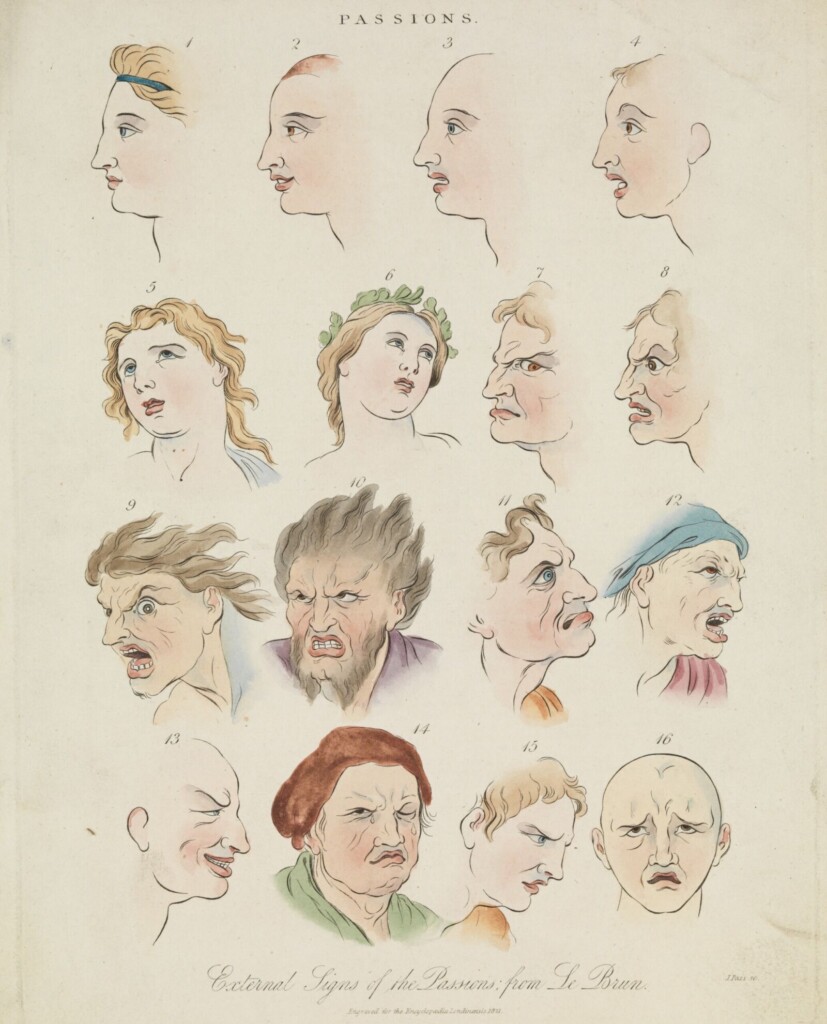
You are standing in a courtroom in Nuremberg in 1946, watching a man in a gray suit hear his death sentence read aloud, and something in you — something you have never named and will never confess at dinner — feels not the cold satisfaction of law fulfilled but the hot pulse of something older, something that tastes like relief precisely because it tastes like revenge.
The terrifying philosophical problem is not that vengeance masquerades as justice. It is that under certain conditions, the actor performing the act cannot distinguish between them from the inside, and neither, it turns out, can the witness. Hannah Arendt spent years after the Eichmann trial in Jerusalem in 1961, working through exactly this fracture. Her 1963 account is famous for the banality of evil, but what it less visibly contains is is a crisis of judgment: when the crime is large enough, when the rupture in the moral fabric of civilization is total enough, the ordinary frameworks by which we evaluate punishment simply stop functioning. The proportionality calculus breaks. There is no sentence commensurate with the industrialized murder of six million people, which means every sentence is simultaneously too small and, in a darker register, potentially distorted by something the court would never admit into evidence — the desire for the suffering of the condemned.
Arendt’s deeper anxiety, articulated in “The Life of the Mind,” published posthumously in 1978, concerns the faculty of judgment itself: its dependence on a sensus communis, a shared world of reference, that atrocity specifically destroys. After genocide, after totalitarian erasure, survivors and perpetrators do not inhabit the same conceptual universe. Which means that when a survivor demands punishment, they are issuing a judgment from inside a world the perpetrator helped annihilate — and the judgment, however legitimate, is also necessarily issued from a position of rupture, of loss so absolute it reshapes what justice can mean. The verdict is real. The wound that produces it is also real. Both are present simultaneously, and no procedural formality can separate them.
What Rwanda demonstrated between 1994 and the years of gacaca community tribunals that followed is that this philosophical problem is not hypothetical. When a society attempts to process 800,000 murders through a legal structure, the line between restorative mechanism and organized collective vengeance does not blur — it dissolves into something for which no clean vocabulary exists. Perpetrators sat across from survivors in village assemblies. Confessions were traded for reduced sentences. And observers from outside, operating with intact conceptual frameworks, called it transitional justice, while those inside it sometimes described it as something that felt like watching a wound be reopened in public, repeatedly, until the community either healed or learned to live inside the opening. The phenomenological experience of the actor — delivering testimony, receiving it, issuing judgment — was indistinguishable from retribution performed collectively, laundered through procedure.
The most destabilizing possibility is not that individuals sometimes confuse revenge with justice, but that the distinction itself is a product of institutional distance — that it requires courts, robes, delays, Latin phrases, the theatrical apparatus of impartiality — not because these things reveal the difference, but because they manufacture it. Strip the ceremony and what remains is a human being deciding that another human being deserves to suffer for what they did, and believing that this decision is correct, and being unable, from inside that belief, to locate the place where righteousness ends and hunger begins. The law does not resolve this. It performs the resolution, which is not the same thing, and the performance has been running long enough that most people have forgotten it is one.
A vision curated by a filmmaker, not an algorithm
In this video I explain our vision
⚖️ When Justice Becomes a Blade: Violence, Evil & Moral Collapse
Vengeance disguised as justice is one of the darkest corridors in the human psyche. To understand what drives a killer to frame destruction as righteousness, we must explore the psychology of evil, the anatomy of power, and the philosophical weight of moral choice. These related articles illuminate the shadows that surround the Infinite Maze.
The Psychology of Evil: Why People Commit Violent Acts
The psychology of evil asks a question that civilization prefers to avoid: what internal architecture allows a human being to commit violent acts while believing in their own righteousness? This article dissects the mechanisms by which ordinary minds construct justifications for extraordinary cruelty, mapping the cognitive distortions that transform grievance into lethal purpose. Understanding this process is essential to grasping how vengeance becomes indistinguishable from justice in the killer’s own moral framework.
GO TO THE SELECTION: The Psychology of Evil: Why People Commit Violent Acts
Psychopathy: History and Diagnosis in Contemporary Psychology
Psychopathy is not simply a clinical label but a lens through which we can examine the cold calculus behind premeditated violence and self-serving moral codes. This article traces the history of psychopathy as a diagnostic category, exploring how traits like lack of empathy and manipulative rationality create individuals who construct elaborate personal codes of justice immune to social conscience. The figure of the psychopathic avenger finds its psychological roots precisely here, where the absence of remorse masquerades as moral clarity.
GO TO THE SELECTION: Psychopathy: History and Diagnosis in Contemporary Psychology
Søren Kierkegaard and the agony of moral choices
Søren Kierkegaard understood that the most paralyzing form of human suffering arises not from ignorance but from the agonizing clarity of moral decision. This article explores his existential philosophy, where every ethical choice carries the weight of infinite responsibility and the possibility of irreversible error. For a figure consumed by vengeance, Kierkegaard’s framework reveals how a distorted sense of duty can calcify into a self-justifying absolute, closing off all paths to redemption.
GO TO THE SELECTION: Søren Kierkegaard and the agony of moral choices
Banal Evil and Radical Evil: Kant and Arendt
Hannah Arendt’s meditation on banal evil and Kant’s conception of radical evil together form one of the most powerful theoretical tools for understanding how systemic and personal violence become moralized. This article examines how evil operates not only in monstrous ideologies but in the quiet erosion of moral judgment by those who reduce ethics to the execution of a private law. The killer who enacts vengeance as justice is precisely the figure these two thinkers, in their different registers, warn us about most urgently.
GO TO THE SELECTION: Banal Evil and Radical Evil: Kant and Arendt
Discover the Cinema That Dares to Ask These Questions
If these themes have opened a door in your thinking, independent cinema is where they are explored with the most uncompromising honesty. On Indiecinema you will find films that refuse easy answers, that place moral ambiguity at the center of the frame and trust the audience to sit with discomfort. Step into a streaming world built for those who believe cinema is not escape but encounter.
👉 EXPLORE THE CATALOG: Watch Indie Films in Streaming
A vision curated by a filmmaker, not an algorithm
In this video I explain our vision

