
The Mask of Sanity and the Origins of a Label
You are sitting across from someone who says all the right things. They maintain eye contact at precisely the correct intervals, express remorse when remorse is expected, and describe their own childhood with just enough vulnerability to make you lean forward in your chair. Nothing is wrong. That is exactly what is wrong.

The clinical history of psychopathy begins not with a brain scan or a controlled trial but with a French physician watching people who could not be explained by the existing vocabulary of madness. Philippe Pinel, working in the revolutionary ferment of late eighteenth-century Paris, encountered patients at Bicêtre and the Salpêtrière who committed impulsive, sometimes violent acts while retaining full command of their reasoning faculties. He called it manie sans délire — madness without delirium — and the phrase itself is a confession of conceptual failure. The medicine of the period required that insanity announce itself through hallucination, through cognitive disintegration, through a visible fracture in the machinery of thought. These individuals offered none of that. They were, by every measurable standard, entirely lucid. Pinel’s category was not a discovery so much as a bureaucratic placeholder, a way of saying: something is wrong here that we do not yet have words for, and we need those words quickly because society requires them.
What society required, specifically, was a mechanism for sequestering people whose behavior was intolerable but whose minds were intact enough to resist the standard justifications for confinement. The law had always depended on the distinction between the rational and the irrational, the responsible and the excused. Pinel’s manie sans délire created a third corridor — a zone where culpability could be suspended without the person being declared fully incompetent. James Cowles Prichard extended this logic in 1835, coining “moral insanity” in his Treatise on Insanity, and the adjective is telling. Moral insanity did not mean an insanity caused by immoral living; it meant an insanity located in the moral faculties specifically, leaving intellect untouched. The implied anatomy here is worth pausing over: the Victorian medical imagination was prepared to believe that conscience occupied a discrete region of the mind that could malfunction independently of everything else, the way a carburetor fails while the engine still runs. This was not neuroscience. It was theology in a laboratory coat.
By the time Hervey Cleckley published The Mask of Sanity in 1941, the clinical portrait had accumulated nearly a century and a half of accretion, and Cleckley’s contribution was to render it with a literary precision that previous diagnosticians had avoided. His sixteen criteria — superficial charm, absence of nervousness, untruthfulness, lack of remorse, failure to follow a life plan — read less like a checklist derived from empirical data than like a character study written by someone who found his subjects genuinely fascinating and genuinely monstrous in equal measure. The title itself is a rhetorical move: the mask implies an authentic face beneath, hidden and terrible. But Cleckley’s own case studies repeatedly undermined this. His patients were not concealing something; they were, in some sense he could not fully articulate, entirely present. The performance and the performer were the same entity. This collapse of the inside-outside distinction was philosophically destabilizing, and Cleckley resolved it by doubling down on the medical metaphor — calling the condition a “genuine psychiatric illness” — even while acknowledging he had no pathological mechanism to point to.
What was actually being quarantined inside the new diagnostic vocabulary was a particular relationship to social obligation, to the reciprocal architecture of guilt and empathy that holds communities together. The label of psychopathy emerged not because medicine had identified a disease but because a certain kind of person had become newly visible as a threat in societies increasingly organized around contractual trust.
Stem Cell
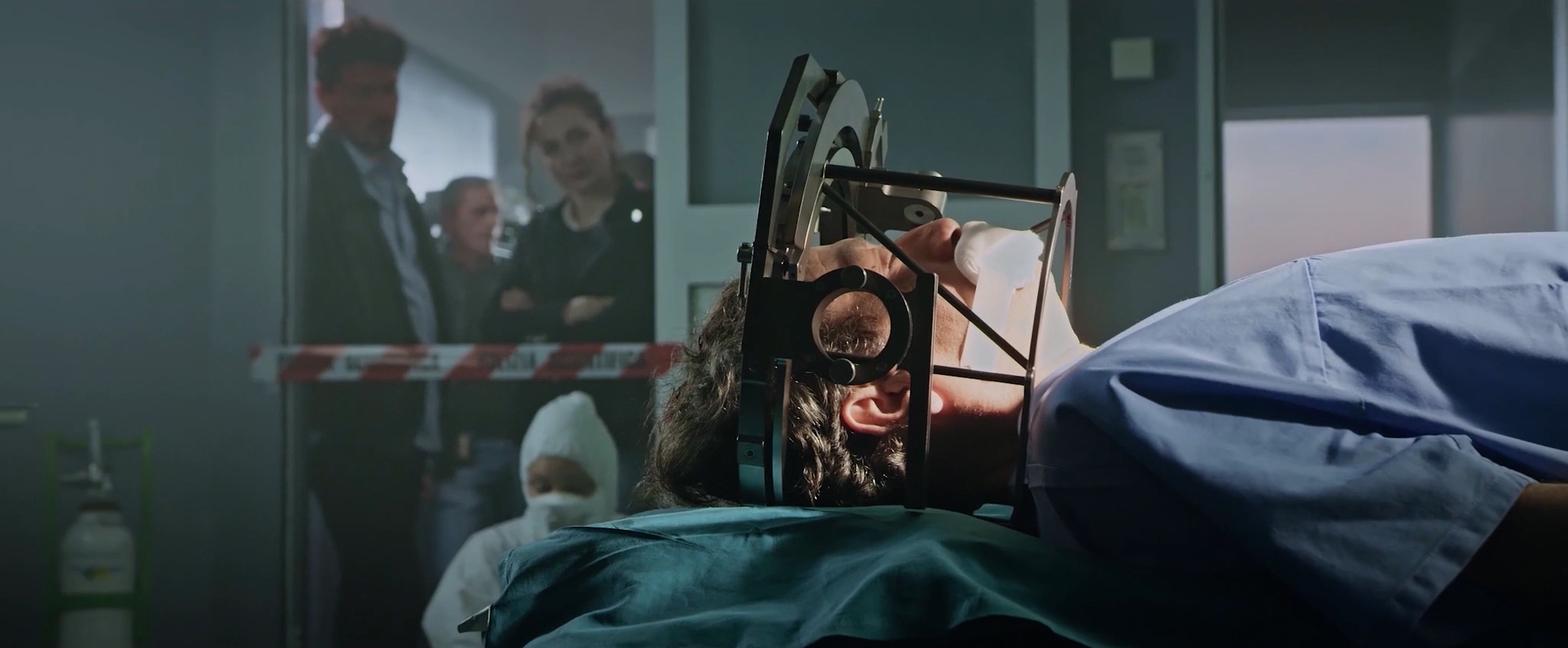
Stem Cell, directed by Giuseppe Di Giorgio, Italy, 2020.
A brilliant neurosurgeon is found murdered in his own operating room. The scene is gruesome. His killer used the very tools of his trade. Who is the murderer? A psychopath? Someone from within the institute? Commissioner Lorenzo Aliprandi and his team find themselves in a race against time to stop a killer who continues to murder using the same heinous methods, targeting other prominent doctors, leaving no trace behind except a trail of blood. New knowledge, intense experiences, and the race against time will test the strong character of Commissioner Aliprandi, who determined to uncover the murderers, will face every challenge head-on.
Based on the novel of the same name by Paolo Gaetani, a neurosurgeon by profession, Stem Cell addresses the major issues facing healthcare and its institutions, with a more poignant relevance than ever. Cinema thus complements the narrative and becomes a powerful tool for in-depth analysis and dissemination, exploring questions and proposing answers. It does so through the powerful tools of a fast-paced thriller rhythm and meticulous, bold cinematography. Alongside the main theme, the crimes unfold along with the intrigues, betrayals, economic interests, stories, and psychologies of all the characters.
Language: Italian
SUBTITLES: English, Spanish, French, German, Portuguese
Hare's Checklist and the Bureaucratization of Evil
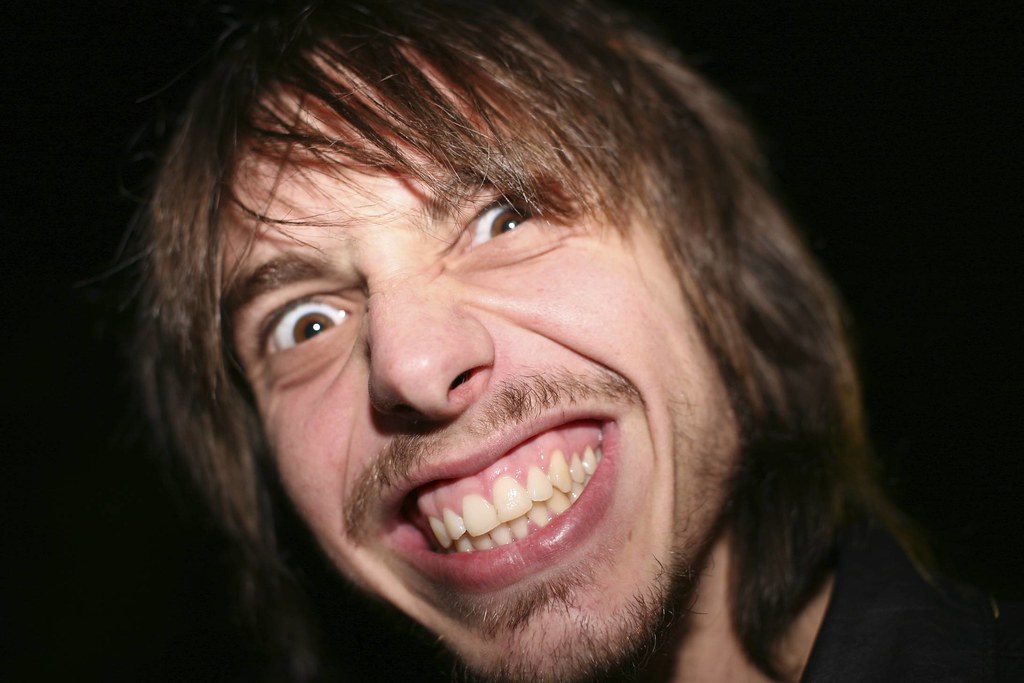
You are handed a clipboard and told to score a human being out of forty points. Each item on the list — glibness, grandiosity, lack of remorse, parasitic lifestyle — feels self-evident the moment you read it, which is precisely the problem. Robert Hare spent years refining what became the Psychopathy Checklist-Revised in 1991, building on his earlier 1980 scale, and what he produced was not merely a diagnostic instrument but an epistemological event: the moment a centuries-old moral category acquired the authority of measurement.
Before Hare, psychopathy existed in clinical literature as a kind of permanent argument. Hervey Cleckley’s 1941 “The Mask of Sanity” had sketched a portrait recognizable enough to haunt psychiatry for decades — the charming, shallow, consequence-immune individual who mimicked emotional life without inhabiting it — but it remained a portrait, not a protocol. Cleckley’s criteria were narrative and impressionistic, dependent on clinical judgment, which meant they were also dependent on the clinician. Hare’s checklist changed the grammar of that judgment by converting it into a procedure. Two trained raters, a structured interview, a file review, and a number between zero and forty emerges. At thirty or above, the designation applies. The person becomes, in the administrative sense, a psychopath.
What institutions do with a number is never innocent. By the mid-1990s, the PCL-R had migrated from research settings into courtrooms across North America, and what followed was something criminologist David Skarbek and legal scholars like John Edens spent considerable effort documenting: the checklist’s score became a primary instrument in parole decisions, in civil commitment hearings, in the determination of who was treatable and who was simply dangerous. A 2006 meta-analysis published in “Psychological Assessment” found that PCL-R scores predicted violent recidivism at only a modest level — a correlation around 0.27 — yet courts were routinely treating them as near-certainties. The gap between what the instrument actually measured and what legal actors believed it measured was not incidental. It was structural.
There is a particular kind of institutional hunger that precision satisfies regardless of whether the precision is real. Courts and parole boards do not want probability distributions or confidence intervals. They want a threshold, a line they can stand behind when challenged. The PCL-R supplied that line, and the line had Hare’s decades of credentialed research behind it, which meant that questioning the score in a courtroom required a level of psychometric sophistication that neither judges nor juries typically possessed. The instrument became self-sealing: skepticism toward it could itself be framed as evidence of the naivety of those who did not understand how psychopathy worked.
The demography of who received the highest scores was never randomly distributed. Research published in journals including “Law and Human Behavior” consistently showed that Black defendants in American criminal proceedings were scored higher on specific PCL-R items — particularly those related to perceived affect and interpersonal style — by predominantly white evaluators. The checklist did not create this disparity. It laundered it. It gave a differential rooted in cultural misreading and racial suspicion the appearance of an objective finding, a number produced by a validated instrument, which meant it arrived in sentencing documents with the clean conscience of science.
Hare himself grew increasingly alarmed by how his instrument was being used, co-authoring warnings against its application outside the conditions under which it was validated. But the checklist had already escaped its author the way diagnostic categories always do — absorbed into a bureaucratic metabolism that needed it not as a research tool but as a verdict already written, waiting for a score to confirm it.

The Neuroscience Trap: When Brain Scans Became Verdicts
You are handed a brain scan and told it belongs to a killer. The image glows in false color — blue and orange, the palette of authority — and a small region near the center registers conspicuously dark, underactive, quiet where it should be loud. A researcher points to the amygdala and explains, with the measured calm of someone who has explained this many times before, that the person who produced this scan cannot feel what you feel. The word “cannot” does the heavy lifting. Not “does not.” Cannot. The grammar of neuroscience has already decided the verdict before the sentence ends.
The empirical foundation for this moment was built across roughly two decades of imaging studies, accelerating after Kent Kiehl’s mobile MRI work in American prisons beginning in the early 2000s. Kiehl scanned hundreds of incarcerated individuals diagnosed with psychopathy and documented reduced gray matter volume in the paralimbic system — the amygdala, the orbital frontal cortex, the anterior cingulate — regions associated with emotional processing, impulse regulation, and the capacity to register the suffering of others as personally meaningful. These findings were real, replicable in several subsequent studies, and published in journals with rigorous peer review. None of that is the problem. The problem is what the findings were then asked to carry.
Adrian Raine, whose work in 1994 had already demonstrated prefrontal dysfunction in murderers through PET scanning, spent the following decades building an architecture of biosocial criminology that located the roots of antisocial behavior in measurable neural deficits compounded by environmental adversity. By the time his 2013 book “The Anatomy of Violence” appeared, the argument had crystallized: predatory violence is not chosen so much as it is produced, biologically, in specific brain configurations that science can now see. Raine was careful, almost scrupulous, about acknowledging environmental interaction. But popular absorption of the work stripped that nuance away with remarkable efficiency, leaving only the scan and its implication of innate difference.
What returned through this door, wearing the white coat of neuroimaging, was a profoundly old idea. Francis Galton had organized the same intuition in 1869 in “Hereditary Genius” without a single MRI, relying instead on pedigree tables and the self-evident logic of breeding. The twentieth century’s catastrophic applications of that logic forced its temporary retirement. But biological determinism is not an ideology that announces its own resurrection; it re-enters through the specificity of data points, through the authority of the scanner, through the peer-reviewed paper that no one outside the field will read but whose conclusions everyone will cite. The language transforms — from “degenerate stock” to “reduced gray matter in the ventromedial prefrontal cortex” — while the underlying architecture of the claim remains structurally identical: some humans are wired differently, fundamentally, at the level of substrate.
The diagnostic consequences are severe in ways the research literature rarely pauses to examine. Once a brain scan can be introduced as evidence of psychopathic incapacity, it migrates almost immediately into legal proceedings, sentencing recommendations, and civil commitment hearings. Analyses of American capital trials after 2005 — the year Roper v. Simmons established that brain development is legally relevant to culpability — showed a sharp increase in neuroimaging evidence presented by defense attorneys and, crucially, by prosecutors as well. The same data point argues simultaneously for mitigation and for permanent incapacitation, depending on who deploys it. A brain that cannot feel becomes, in one courtroom, a reason for mercy, and in the next, a reason for indefinite containment.
What no scan has ever resolved is whether the observed hypoactivity in the amygdala is a cause, a consequence, a correlation, or simply a description of a difference whose moral weight we have already decided before the image is read.
Power, Charisma, and the Boardroom Paradox

You have probably sat across a table from one and walked away thinking they were exceptional. Not dangerous. Not hollow. Exceptional — the kind of person who holds eye contact a beat too long, who makes you feel, briefly, like the only person in the room, and who, three days later, you realize you cannot quite remember having disagreed with, even though you are fairly certain you had wanted to.
The figures here are not metaphorical. Robert Hare, whose Psychopathy Checklist-Revised became the diagnostic standard after its 1991 publication, collaborated with Paul Babiak on a long-term study of corporate professionals that produced a number that refuses to stay quiet: approximately four percent of senior corporate leadership demonstrated psychopathic trait profiles, compared to roughly one percent in the general population. That is not marginal statistical noise. That is a structural pattern. The same profile that, in a different zip code or a different tax bracket, ends in a forensic ward or a sentencing hearing, here ends in a corner office with a view.
What makes this genuinely disorienting is not the number itself but what the surrounding culture does with it. Babiak and Hare published their findings in the 2006 book Snakes in Suits, a title calibrated for airport bookshops, but buried inside its accessible language is a serious epistemological problem: the instruments designed to identify psychopathy were built almost entirely on incarcerated populations. The checklist was normed on prisoners. This means that for decades the clinical definition of the condition was invisibly shaped by who got caught, who lacked resources to hide behavior behind institutional legitimacy, and who had no lawyers skilled enough to reframe predatory action as aggressive-but-visionary leadership. The science was not neutral. It was class-patterned from the beginning.
Cleckley had already noticed something adjacent to this in The Mask of Sanity, first published in 1941, where he included cases of high-functioning individuals who never encountered the criminal justice system at all — physicians, businessmen, scientists — whose relational devastation remained entirely private, absorbed by families and subordinates rather than recorded by courts. He did not have the vocabulary to say what this implied about institutions, but the implication was there: certain environments do not just tolerate the trait cluster, they actively select for it. The organization itself becomes the mask.
Kevin Dutton’s 2012 synthesis The Wisdom of Psychopaths went further, arguing that specific psychopathic features — reduced fear response, emotional detachment under pressure, willingness to make decisions with high collateral cost — are not simply tolerated in surgery, special forces, and financial trading but are functionally required. His framing was deliberately provocative, and critics noted he risked glamorizing a condition that destroys the people adjacent to those who carry it. Both things can be true simultaneously. A trait can be instrumentally useful to an institution and catastrophic to every individual who has to absorb its consequences at close range.
The deeper problem is that the very language of charisma is structurally incapable of accounting for this. Charisma, as Weber theorized it in Economy and Society, is defined by its effect on followers — it is the quality that produces devotion, that suspends rational evaluation, that makes people feel they are in the presence of something worth following. Weber did not intend this as a compliment. He was describing a mechanism of domination dressed in the vocabulary of inspiration. The convergence with what Hare measured as superficial charm and grandiose sense of self-worth is not coincidental — it is definitional. The culture that celebrates one has always been the same culture that, when the consequences become impossible to deny, suddenly claims it could not have seen the other coming.
Diagnosis as Social Mirror: Who Gets Named and Who Does Not
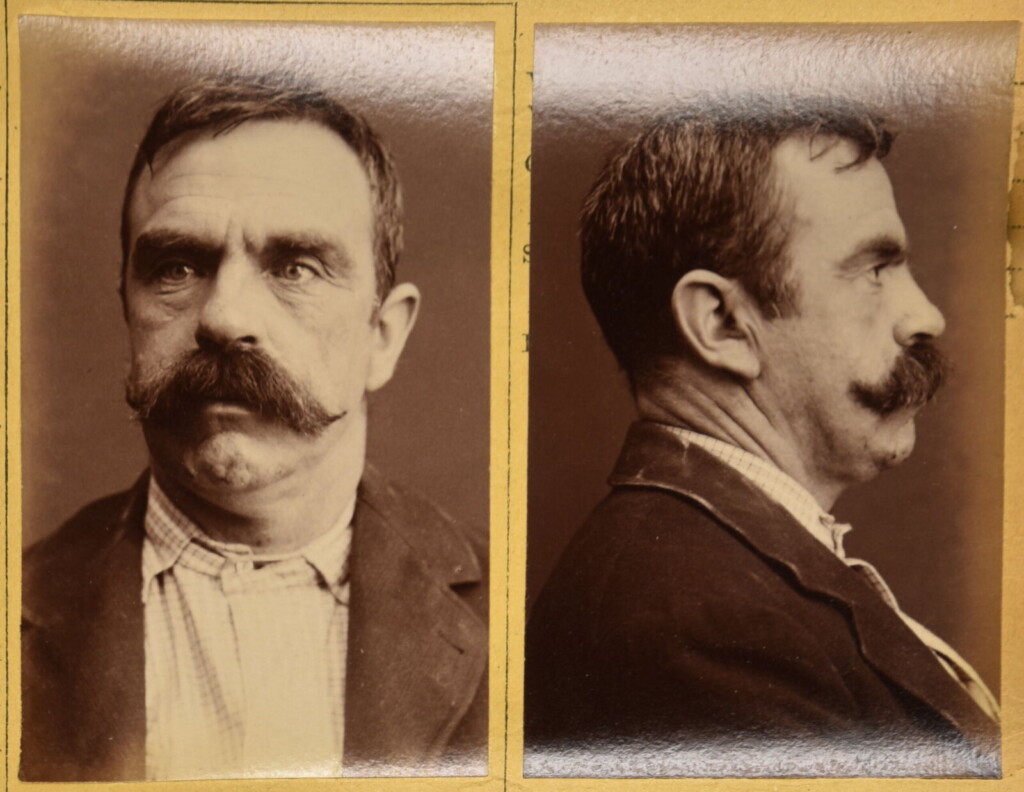
You are sitting across from a clinician you have never met. The room is neutral, the questions are neutral, and the clipboard never changes expression. What you do not know — what the room does not advertise — is that the decision being made about you began before you walked in, shaped by zip code, skin color, prior contact with the criminal justice system, and whether the person holding the clipboard reads your stillness as composure or as the absence of remorse.
Thomas Szasz argued in 1961, in The Myth of Mental Illness, that psychiatric categories are not discovered the way a virus is discovered — they are negotiated, socially ratified, and then projected backward onto behavior as though the label had always been waiting there. He was not denying that people suffer. He was exposing the institutional machinery that converts certain kinds of suffering, or certain kinds of difference, into clinical verdicts while leaving others entirely unnamed. The psychopathy construct is one of the most revealing stress-tests of that machinery, because it is applied almost exclusively downward — to those who already lack the social capital to contest the diagnosis or escape its administrative consequences.
David Rosenhan‘s 1973 study, published in Science under the title “On Being Sane in Insane Places,” demonstrated with uncomfortable precision that psychiatric environments do not neutrally detect conditions — they confirm the frameworks their inhabitants already carry. Eight pseudopatients gained admission to psychiatric hospitals by reporting a single symptom; once inside, their entirely normal behavior was systematically reinterpreted through the diagnostic lens already attached to them. Rosenhan was not arguing that all diagnosis is fraud. He was showing that the clinical gaze is never context-free, and that once an institution has decided what you are, everything you do becomes evidence of it.
This dynamic metastasizes in the application of psychopathy diagnoses across racial and class lines in ways that decades of criminological research have made undeniable. A 2002 study by Jennifer Skeem and Stephen Lidz, examining risk assessment instruments used in forensic contexts, found that Black defendants were significantly more likely to receive elevated psychopathy scores than white defendants with statistically comparable behavioral histories — and that those elevated scores produced harsher sentencing recommendations with near-mechanical regularity. The instrument was not overtly biased. The bias was structural, embedded in which behaviors the scoring rubric weighted and whose social context it systematically failed to account for.
Meanwhile, the financial executive who engineers a predatory lending scheme that strips fifty thousand families of their homes — behavior that maps cleanly onto grandiosity, callousness, shallow affect, and parasitic orientation toward others — is processed through civil litigation, if processed at all. The vocabulary of psychopathy does not reach him. It does not reach the pharmaceutical executive who suppresses clinical trial data, or the politician who lies with documented indifference to the human cost. Robert Hare himself noted, with evident frustration in Snakes in Suits, that corporate environments not only accommodate psychopathic trait profiles but actively reward them, yet forensic application of the PCL-R has remained almost entirely anchored to custodial and criminal populations — meaning those whose transgressions are already legible to the state.
What the history of this diagnosis ultimately reveals is not a map of inner deviance but a record of social tolerance. Societies draw the boundary of the pathological not at the point of maximal harm but at the point of minimal institutional protection for the person causing it. The label lands on those the system has already decided it cannot absorb, and it lands with the authority of science, which makes it far more durable and far harder to appeal than a prejudice that announces itself honestly.
A vision curated by a filmmaker, not an algorithm
In this video I explain our vision
🧠 The Darkest Corners of the Human Mind
Psychopathy does not exist in isolation: it emerges from a web of psychological, social, and moral forces that have fascinated thinkers for centuries. These related articles explore the deeper terrain of evil, manipulation, emotional disorder, and the disturbing complexity of human behavior.
The Psychology of Evil: Why People Commit Violent Acts
Understanding why people commit violent acts is central to any serious discussion of psychopathy and its diagnosis. This article examines the psychological roots of evil, drawing on clinical research, philosophy, and case studies that illuminate the darkest impulses of the human mind. It offers an essential framework for contextualizing how psychopathy fits within the broader landscape of harmful behavior.
GO TO THE SELECTION: The Psychology of Evil: Why People Commit Violent Acts
Affective Manipulation in Psychology
Affective manipulation is one of the most recognizable behavioral signatures associated with psychopathic traits in everyday life. This article explores how psychological manipulation operates within relationships, tracing its mechanisms from clinical theory to lived experience. Understanding these dynamics is crucial for identifying psychopathic patterns beyond the clinical setting.
GO TO THE SELECTION: Affective Manipulation in Psychology
Gaslighting: Psychology and Culture
Gaslighting represents one of the most insidious forms of psychological control, often linked to narcissistic and psychopathic personality structures. This article investigates the cultural and psychological dimensions of gaslighting, showing how it distorts reality and erodes the victim’s sense of self. Its connection to broader patterns of emotional exploitation makes it deeply relevant to the study of psychopathy.
GO TO THE SELECTION: Gaslighting: Psychology and Culture
Psychological Manipulation: History and Theory
Psychological manipulation has a long and troubling history that intersects directly with clinical understandings of psychopathy and antisocial personality. This article traces the theoretical foundations of manipulation as a psychological phenomenon, from early behavioral studies to contemporary clinical frameworks. It provides indispensable context for anyone seeking to understand how psychopathic individuals exercise control over others.
GO TO THE SELECTION: Psychological Manipulation: History and Theory
Explore the Human Depths on Indiecinema
If these themes have drawn you into the labyrinth of the human psyche, Indiecinema streaming is your next destination. Discover a curated selection of independent films that dare to portray the darkest and most complex facets of human nature — stories that no mainstream platform would tell.
👉 EXPLORE THE CATALOG: Watch Indie Films in Streaming
A vision curated by a filmmaker, not an algorithm
In this video I explain our vision

