
The Architecture of the Either/Or
You are standing in a doorway, and both rooms are lit, and someone is waiting in each one, and the longer you stand there the more you tell yourself this is a decision you are still making — but the hallway is also a choice, and it is the one you keep choosing, and everyone who loves you knows it except you.

Søren Kierkegaard published Either/Or in 1843 under a pseudonym, Victor Eremita, a detail that matters more than most readers allow. The fictional editor claims to have discovered the manuscript inside a secret compartment of a secondhand writing desk — which means Kierkegaard opened his most devastating diagnosis of human evasion with an act of evasion. The book begins hiding. It arrives disguised. It performs, in its very architecture, the thing it is trying to expose: the human genius for approaching a rupture while maintaining the comfortable fiction of distance.
The book’s internal structure is the argument. Volume one belongs to a figure identified only as A, who inhabits the aesthetic stage of existence — seduction, irony, the cultivation of sensation and boredom in carefully managed alternation. Volume two belongs to Judge Wilhelm, who writes letters defending the ethical life, marriage, civic duty, the self made coherent through commitment. Most readers, encountering this, experience it as a debate, a dialogue, a philosophical menu from which they might sample perspectives. That experience is precisely what Kierkegaard is diagnosing. The moment you hold the two volumes and feel yourself weighing them against each other, comparing their merits, deciding which one makes more valid points — you have already enacted the aesthetic stance. You have turned an existential confrontation into an intellectual exercise. You have found a third position from which to observe, and that position costs you nothing, which means it also gives you nothing.
What Kierkegaard identified in 1843, nearly two decades before Dostoyevsky would tear open similar territory in fiction, was that genuine moral choice is not a selection between options of comparable weight. It is a transformation that cannot be undone. When Judge Wilhelm writes to A about choosing oneself — the phrase he uses obsessively, at points numbingly — he does not mean selecting one’s values from available inventory. He means that a certain kind of choosing constitutes the self rather than expresses it. Before the choice, there is a person who prefers things. After it, there is a person who is something. These are not the same creature, and no amount of careful deliberation in the hallway between them closes the gap. The gap can only be crossed by the fall.
The philosophical tradition that preceded Kierkegaard had largely treated moral decisions as problems of knowledge. Kant’s categorical imperative, formulated in 1785 in the Groundwork of the Metaphysics of Morals, assumes a rational agent capable of identifying universal principles and acting from them — the difficulty is cognitive and structural, not existential. Hegel, whose shadow Kierkegaard spent his entire career fighting, dissolved individual choice into the forward movement of historical spirit, making personal decision a local expression of something much larger and therefore much less terrifying. Both systems offer relief. Both provide a framework within which the anguish of standing in the doorway can be managed, systematized, rendered philosophically tractable. Kierkegaard found this relief obscene.
What he saw instead was that the systematic approach to ethics is itself a symptom of the aesthetic stage — it aestheticizes the moral by turning it into something one can contemplate, analyze, and admire from a safe remove. The person who spends months reading about commitment while remaining uncommitted is not preparing for a choice. They are substituting the preparation for the thing itself, and the substitution feels virtuous because it involves so much serious thought, so many underlined passages, so much evidence of care.
The Aesthetic Stage as a Comfortable Trap
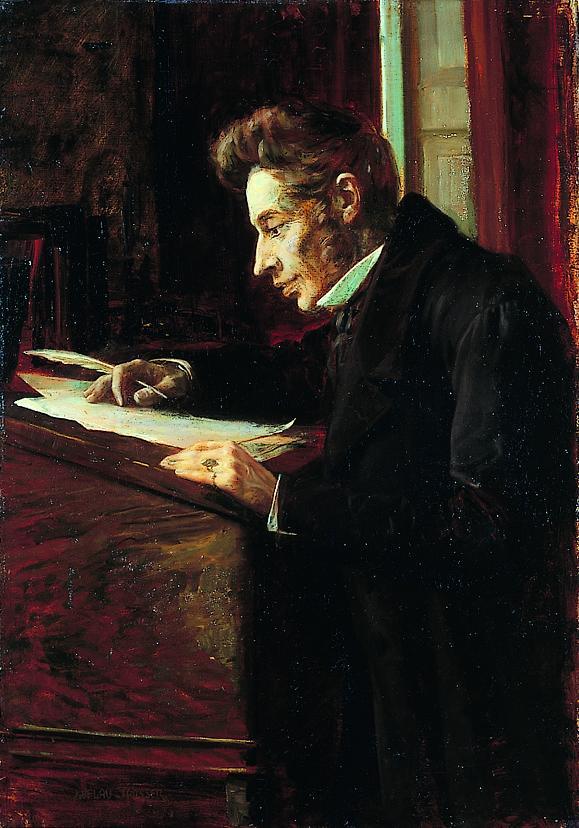
You scroll past the same face three times before deciding you are not interested, and somewhere in that flicker of judgment — that half-second of aesthetic verdict delivered without consequence — a whole philosophy of living has been normalized without anyone naming it.
Kierkegaard mapped this territory with uncomfortable precision in Either/Or, published in 1843 under a pseudonym designed to perform the very condition being diagnosed. The first volume, attributed to a figure called simply “A,” is a monument to the aesthetic mode: a collection of essays, diary entries, and seductions in which the author arranges every experience to maximize intensity and minimize obligation. The famous “Rotation Method,” buried in that first volume, proposes that boredom is the root of all evil and that the only defense is perpetual variation — not of places or people, but of one’s angle of attention. What looks like curiosity is actually a survival strategy for someone terrified that full presence might reveal there is nothing underneath the performance.
The trap is precisely that it does not feel like a trap. It feels like freedom. The aesthetic stage offers an identity organized entirely around reception: the consumption of beauty, the curation of pleasure, the careful maintenance of ironic distance from anything that might demand transformation rather than appreciation. The aesthete does not commit because commitment would freeze the very fluidity that makes the self feel alive. Every relationship, every career, every belief system is held lightly, and the lightness is mistaken for sophistication. What Kierkegaard understood, and what is almost impossible to say aloud in a culture that has monetized this posture, is that lightness of this kind is not freedom from weight — it is the avoidance of being weighted by anything real.
Contemporary consumer identity has not merely tolerated this stage; it has engineered environments that make leaving it structurally difficult. The average American adult encountered roughly 5,000 advertising messages per day by the early 2000s, a figure that researchers at the market analytics firm Yankelovich tracked and which has only accelerated since. Each message operates on the same logic as the Rotation Method: novelty as the antidote to dissatisfaction, the next acquisition as the resolution of the previous one’s disappointment. What Kierkegaard described as a psychological pathology in a single fictional character has become the operational grammar of an entire economy. The aesthete in Either/Or is exceptional because he is self-aware enough to theorize his condition; the contemporary version is more dangerous because the infrastructure does the theorizing for him, and calls it a lifestyle.
What goes unexamined is the particular kind of suffering this produces — not dramatic suffering, not the kind that announces itself and demands response, but the low-frequency despair that Kierkegaard named with the untranslatable Danish word Fortvivlelse, usually rendered as despair but meaning something closer to a loss of relation to oneself. In The Sickness Unto Death, written in 1849, he described the most common form of this despair as not knowing one is in despair — as living at such a surface level that the question of whether one has a self worth developing simply never gets asked. The person trapped in the aesthetic stage is not suffering visibly. They are entertaining themselves, optimizing their experiences, building a profile of tastes and preferences that feels like an identity but functions as a substitute for one.
There is a particular kind of person who reads a description like this and feels a flash of recognition followed immediately by the urge to file it away as an interesting idea — to aestheticize the diagnosis itself, to make even the exposure of the trap into another beautiful object to hold at arm’s length.

The Ethical Demand and Its Hidden Violence
You receive the letter on a Tuesday, and it is addressed not to you but to whoever you are supposed to be — spouse, citizen, professional, adult. The handwriting is careful. The argument is airtight. And somewhere in the third paragraph you feel yourself being smoothed out, the irregular edges of your particular existence filed down to fit a shape that was cut before you arrived.
Judge Wilhelm, the authorial mask Kierkegaard constructed for the second volume of Either/Or in 1843, writes exactly this kind of letter. He is eloquent, warm even, genuinely convinced that the ethical life — choosing oneself within the structures of duty, marriage, vocation, civic belonging — constitutes the highest form of human seriousness. His letters to the young aesthete are not cold prescriptions. They are seductions. He wants the young man to grow up, and by grow up he means: accept the universal. Take on a role. Marry. Commit. Let the infinite restlessness of pure subjective desire be disciplined into something that society can recognize and reward. Wilhelm believes, with complete sincerity, that this transformation is liberation.
What Kierkegaard embedded inside this sincerity, almost invisibly, is a kind of philosophical detonator. Wilhelm’s ethical framework derives its coherence from Hegel’s account of Sittlichkeit — the ethical life understood as the individual’s reconciliation with the rational structures of family, civil society, and state, elaborated across the Philosophy of Right in 1820. For Hegel, the universal is not an external imposition on the individual; it is what the individual becomes when fully realized. Freedom, in this architecture, is not escape from roles but inhabitation of them. Wilhelm is Hegelianism with a human face, a man who loves his wife and believes that loving his wife is also an act of philosophical maturity.
The violence is not in the cruelty of this position. It is in its completeness. A system that accounts for everything leaves no remainder, and the human being is mostly remainder. Every person carries something that resists translation into function — a grief that does not resolve, a desire that serves no social purpose, a terror of death that no professional identity can metabolize. Wilhelm’s ethics, for all its warmth, cannot hold this material. It can only ask that it be set aside, deferred, or redescribed as immaturity. The singular self — not the universal self, not the civic self, not the relational self, but the one who wakes at three in the morning knowing with absolute certainty that no role covers what it feels to be this particular mortal — is precisely what the ethical stage requires you to suppress in order to participate.
Sociologist Erving Goffman, working more than a century later in The Presentation of Self in Everyday Life (1959), documented with empirical precision the degree to which social interaction demands ongoing performance of legible identity. His insight was descriptive rather than normative, but the portrait it produced was close to what Kierkegaard had diagnosed philosophically: the self that society can work with is always a construction, and the labor of maintaining that construction is continuous and largely invisible to those doing it. The exhaustion people feel inside apparently functional lives is not a symptom of ingratitude. It is the metabolic cost of the erasure.
Kierkegaard did not think the ethical stage was worthless. He thought it was insufficient — which is a more devastating judgment. Something that is simply wrong can be discarded. Something that is almost enough becomes a trap, because its partial adequacy is precisely what prevents you from searching further.
Abraham's Silence and the Suspension of the Moral Order

You are standing in a field at dawn, a child’s hand in yours, and you have been told by something beyond argument or appeal that you must do the unthinkable. No one else has heard the voice. No one else can verify it. And if you try to explain yourself, the words will not come — not because you lack intelligence, but because the act you are about to perform belongs to a register of experience that language was never built to carry.
This is not a metaphor Kierkegaard is playing with when he returns, obsessively, to the figure of Abraham in Fear and Trembling, published in 1843 under the pseudonym Johannes de Silentio — a name that announces its own thesis. The silence is not rhetorical. Abraham cannot speak because there is nothing to say that would constitute a justification. He cannot tell Sarah. He cannot tell Isaac. He cannot even, in any coherent sense, tell God back, because what is being asked of him does not belong to the domain of negotiable claims. The three days’ walk to Mount Moriah is not dramatic tension waiting for resolution. It is the duration of a man living entirely outside the grid of ethical legibility.
What Kierkegaard names the teleological suspension of the ethical is one of the most destabilizing ideas in the history of moral philosophy, and it is destabilizing precisely because it is not nihilism. It does not say ethics is false or arbitrary. It says something far more unsettling: that there exists a category of obligation which stands above the universal moral law, not by violating it but by rendering it temporarily irrelevant. Kant had constructed an entire architecture of duty around the universalizability of maxims — act only according to that principle which you could will to become a universal law. Abraham’s act cannot be universalized. If every father who heard a voice killed his son, we would not have a moral order; we would have catastrophe. And yet Kierkegaard insists, with his characteristic refusal to soften the blow, that Abraham is not a murderer. He is the father of faith.
The distinction Kierkegaard draws between the tragic hero and the knight of faith cuts through the comfortable assumption that moral greatness is always publicly intelligible. Agamemnon sacrifices Iphigenia and the Greek world can mourn with him, can place his suffering inside a shared story of necessity and duty to the collective. His grief is real, but it is also communicable. Abraham has no such recourse. He cannot grieve publicly because he cannot explain publicly. The movement he makes is entirely inward, a private absolute relation to the absolute — and this is precisely why it produces what Kierkegaard calls anxiety rather than tragedy. Tragedy is painful but coherent. Anxiety is the trembling of a self that has stepped outside every framework that might tell it whether it is right.
What makes this philosophically unbearable is that Kierkegaard refuses to give the reader a way to distinguish Abraham from a man who is simply deluded. The genuine knight of faith and the fanatic who mistakes his own obsession for divine command look identical from the outside. There is no external test. The only thing that separates them is the quality of the inward movement itself — whether it passes through infinite resignation and arrives at faith, or whether it is simply a passion mistaken for transcendence. And you cannot audit that from outside. You cannot even, with full certainty, audit it from inside.
This is where the structure of the choice becomes genuinely vertiginous: not merely that it cannot be explained to others, but that the very act of seeking external confirmation would itself be a sign that the movement had not been made.
Despair as Diagnostic Tool
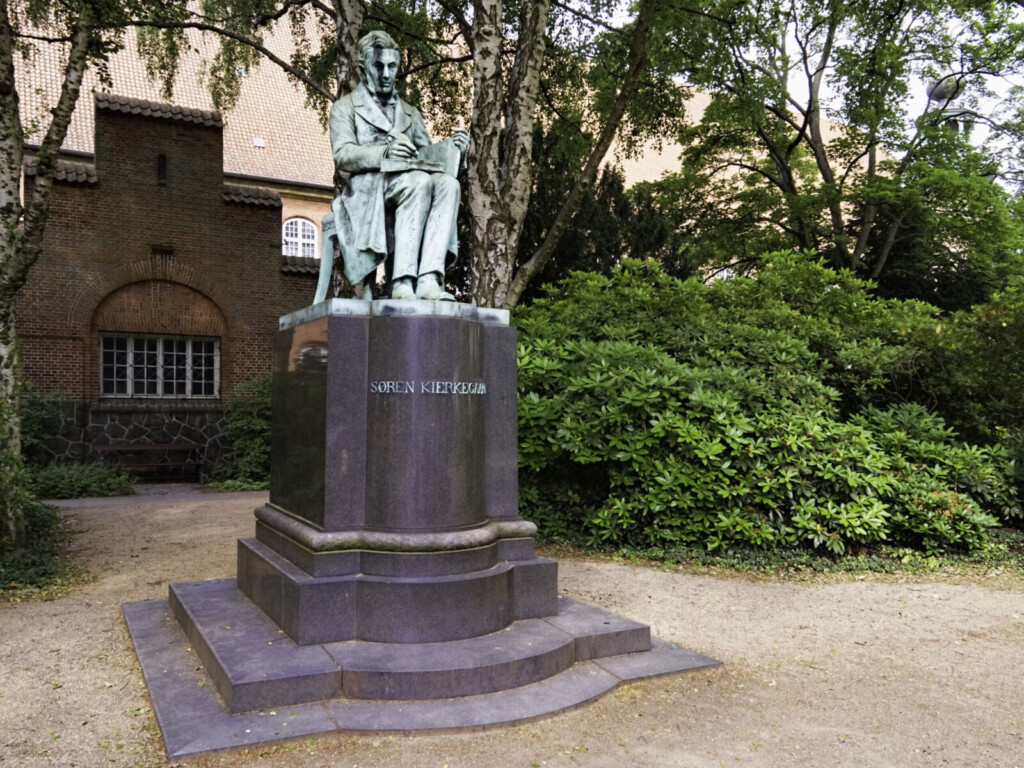
You wake up one morning and everything is fine. The job is stable, the relationship functional, the calendar full enough to prevent any prolonged silence. Nothing is wrong. That is precisely the problem.
In 1849, writing under the pseudonym Anti-Climacus, Kierkegaard published what may be the most unsettling diagnostic text in Western thought. The Sickness Unto Death does not describe people who are obviously falling apart. It describes people who are managing perfectly well. Its central claim is that despair is not primarily an emotion but a condition of the self, and that its most dangerous form is the kind that goes entirely unfelt — the despair of not knowing one is in despair. Anti-Climacus calls this the most common form of all. The person who feels despair acutely is already, in some sense, closer to truth than the person who has organized a life so thoroughly around distraction that the underlying fracture never vibrates loudly enough to register.
The self, for Kierkegaard, is not a thing you possess but a task you are given — a relation that must relate itself consciously to its own ground. When a self refuses this task, when it collapses into what others expect or expands into fantasy versions of what it might become, something in the architecture fails without any visible crack appearing on the surface. Sociologist Hartmut Rosa, writing more than a century and a half later in his 2010 work Alienation and Acceleration, would document how the acceleration of modern life produces precisely this structure: individuals moving so fast through roles, obligations, and identities that genuine self-relation becomes structurally impossible. Kierkegaard would not have been surprised. He saw the prototype in the Copenhagen bourgeoisie of his own time, performing respectability with such thoroughness that the performance had replaced whatever it was originally meant to represent.
What makes this philosophically brutal rather than merely melancholic is the question of agency buried inside it. Kierkegaard insists that despair, even unconscious despair, is a form of will. The self that refuses to become itself is not simply confused or distracted — it is, at some level, choosing the refusal. This is the move that separates him from every therapeutic framework that came after, because therapy tends to treat the fractured self as a victim of circumstance, trauma, or neurochemistry. Kierkegaard treats it as a subject, which means as something responsible. Not guilty in a punitive sense, but implicated. You are not simply suffering your life. You are, in some register, authoring the avoidance.
The three forms Anti-Climacus outlines move with increasing intensity: the despair of not knowing one has a self, the despair of not willing to be oneself, and the despair of willfully refusing to be oneself — what he calls defiance. That final form, where a person constructs an identity in explicit opposition to what they sense they are called to become, carries a tragic grandeur. It requires enormous energy to sustain. The person in defiant despair is often the most visibly forceful, the most certain in their positions, the most contemptuous of vulnerability in others, because softening even slightly would risk the collapse of the entire counterstructure they have built.
What Kierkegaard offers is not a cure and not a consolation. He offers precision. He gives a name to the specific weight that settles over a life when it is being lived at one remove from itself, when every decision is made in reference to some external tribunal — social approval, professional identity, ideological belonging — rather than from the interior ground he calls the self before God, by which he means not religion in any institutional sense but the confrontation with one’s own irreducible singularity. The agony of moral choice, for Kierkegaard, is not that it is difficult to know the right thing to do. It is that becoming the kind of self capable of genuine choosing requires a transformation most people spend their entire lives successfully, quietly, and very skillfully avoiding.
A vision curated by a filmmaker, not an algorithm
In this video I explain our vision
🧭 The Labyrinth of Moral Choice and Existential Anguish
Søren Kierkegaard placed the agonizing weight of moral decision at the very center of human existence, arguing that authentic selfhood could only emerge through the terror of genuine choice. His thought echoes across centuries of philosophy, psychology, and literature, connecting to timeless questions about freedom, guilt, and the search for meaning. The articles below trace the deepest contours of that labyrinth.
Existential Emptiness: When Life Loses Meaning
Existential emptiness is perhaps the most intimate companion of Kierkegaard’s ‘either/or’: when the individual fails to commit to a genuine choice, life collapses into a hollow repetition devoid of meaning. This article explores how the absence of authentic engagement produces a peculiar modern despair, one that Kierkegaard diagnosed long before it became a sociological category. Understanding existential emptiness is thus a necessary counterpart to understanding the agony of moral responsibility.
GO TO THE SELECTION: Existential Emptiness: When Life Loses Meaning
Albert Camus: Life and Philosophical Thought
Albert Camus inherited Kierkegaard’s obsession with the absurd but refused his leap of faith, choosing instead to confront meaninglessness with lucid revolt. This article examines Camus’s philosophical biography, tracing how his Mediterranean sensibility shaped a vision of ethics built on solidarity and rebellion rather than divine command. Reading Camus alongside Kierkegaard illuminates the full spectrum of existentialist responses to the burden of moral choice.
GO TO THE SELECTION: Albert Camus: Life and Philosophical Thought
Beckett’s Waiting for Godot: Analysis
Beckett’s Waiting for Godot stages the paralysis that Kierkegaard feared most: two human beings suspended in infinite deferral, unable to act, to choose, or to leave. This analysis unpacks how Beckett transforms philosophical impasse into theatrical form, making the audience feel the weight of an existence without decision. The play becomes a haunting dramatic commentary on what happens when the moment of genuine moral choice never arrives.
GO TO THE SELECTION: Beckett’s Waiting for Godot: Analysis
Blaise Pascal: Life and Works
Blaise Pascal grappled with the terror of human freedom and the silence of infinite spaces long before Kierkegaard formalized the concept of existential dread, and the two thinkers share a profound spiritual kinship. This article explores Pascal's Pensées as a map of the soul caught between reason and faith, certainty and abyss — the same territory Kierkegaard would later call the ‘stages on life’s way.’ Together, Pascal and Kierkegaard form the twin pillars of a Christian existentialism rooted in the irreducible singularity of the moral subject.
GO TO THE SELECTION: Blaise Pascal: Life and Works
Discover the Cinema of Conscience on Indiecinema
If these philosophical labyrinths have stirred something in you, independent cinema offers some of the most powerful visual explorations of moral anguish, existential choice, and the search for authentic selfhood. On Indiecinema you will find a curated selection of films that dare to ask the hardest questions — the ones Kierkegaard never stopped asking. Stream them now and let cinema take you deeper into the maze.
👉 EXPLORE THE CATALOG: Watch Indie Films in Streaming
A vision curated by a filmmaker, not an algorithm
In this video I explain our vision

