
The Face That Refuses Innocence
You are watching a man cross a room, and something is wrong. Not with the room, not with the light, not with anything the camera has chosen to frame. The wrongness is in the man himself, or rather in the fact that you cannot stop watching him even though you suspect, with a growing and sourceless certainty, that watching him is precisely what he wants. The eyes are too large, too still, too patient. They do not scan the room for threats the way an ordinary face would. They already know what is there. They have already decided something about you.

Peter Lorre arrived in American cinema carrying a specific kind of damage that had nothing to do with the roles he played. Born László Löwenstein in Rózsahegy, Austria-Hungary, in 1904, he had already made himself unforgettable in Fritz Lang’s M in 1931, playing Hans Beckert, a child murderer who, in one of the most disorienting moments in sound film history, pleads for his own life before a kangaroo court of criminals with an argument that lands somewhere between pathetic and philosophically irrefutable. He tells them he cannot help what he is. The audience, which came to despise him, finds itself briefly and terrifyingly unable to disagree. That is the Lorre problem, and it never went away.
What distinguished Lorre from every other villain of Hollywood’s golden era was not the darkness he carried but the familiarity. Boris Karloff was a monster, a figure from outside the human contract, something to be repelled at a safe categorical distance. Bela Lugosi represented transgression wrapped in aristocratic remove, desire coded as the supernatural so the audience could engage with it without confession. Lorre offered no such cover. His screen presence did not ask you to fear something alien. It asked you to recognize something proximate. The unease he generated was diagnostic, not theatrical.
Physiognomy has a long and discredited history as a science — Johann Kaspar Lavater’s Physiognomische Fragmente, published between 1775 and 1778, proposed that the face was a legible moral document, that character could be read in the architecture of bone and flesh. The twentieth century rightly demolished this as pseudoscience weaponized for racism and eugenics. But Lorre’s face performed a strange inversion of the Lavater fantasy: rather than confirming that evil looks a certain way, he demonstrated that evil looks familiar, that the face you distrust is the face that seems to understand you better than it should. His eyes did not broadcast threat. They broadcast comprehension, and comprehension in the wrong hands is the more dangerous of the two.
There is a reason the camera loved him and audiences squirmed. The camera is indifferent to moral categories; it only measures light and depth and the geometry of attention. What Lorre gave the camera was an extraordinary economy of stillness that communicated internal pressure, the quality of a man who has resolved questions most people never finish asking. When other actors performed villainy, they performed difference from the audience. Lorre performed proximity. His characters did not seem to come from a darker world. They seemed to come from the same world but to have read the fine print.
The actor Richard Widmark, who built his own career on compressed menace, once observed that fear is most effective when the audience cannot locate its source. Lorre’s instrument was exactly this sourcelessness. He did not signal danger through posture or aggression or the conventional grammar of threat. He signaled it through attention, through the quality of being seen by someone who will not pretend they haven’t seen. The audience watching Lorre onscreen was never quite the observer it believed itself to be. It was also, always, the observed.
Ugliness as a Moral Technology
You have been trained, since before you could name it, to read a face the way you read a sentence — left to right, cause to effect, surface to interior truth. This is not instinct. It is curriculum.
Johann Kaspar Lavater published his Essays on Physiognomy in 1778 and handed Western culture a permission slip it had been waiting centuries to sign. The Swiss pastor’s argument was deceptively simple: the moral character of a human being was inscribed on the architecture of their face, legible to any sufficiently attentive eye. Lavater catalogued jawlines and brow angles with the same taxonomic confidence a naturalist brought to beetle specimens, and he was taken seriously — read by Goethe, illustrated by William Blake, translated into English, French, and German editions that collectively sold in the hundreds of thousands. By the time the nineteenth century was underway, physiognomy had migrated from theology into criminology, and Cesare Lombroso was measuring the skulls of convicts in Turin to prove that deviance announced itself in bone structure. The science was fraudulent from the beginning, but the grammar it installed in the popular imagination proved far more durable than any empirical refutation.
What that grammar produced was a specific kind of perceptual readiness — an audience primed to let a face do the moral work of a character before a single line of dialogue was spoken. Hollywood’s casting directors in the 1930s understood this readiness the way a locksmith understands a pin tumbler: not by theorizing it, but by operating it. Faces were sorted into moral registers as systematically as contract players were sorted into salary brackets. The heavy-lidded, the asymmetrical, the foreign-featured — these were assigned villainy not because they frightened individual viewers personally, but because Lavater’s legacy had made such assignments feel natural, almost inevitable, like a law of visual physics.
Peter Lorre arrived in that system carrying a face the system believed it already understood. The protruding eyes, the soft and slightly collapsed quality of his features, the voice that seemed to originate from somewhere other than the chest — every element fit the physiognomic vocabulary of threat and moral corruption. Warner Bros. recognized the utility immediately. And for approximately the first forty minutes of any film in which Lorre was cast as the danger, the system worked exactly as designed: audiences read him the way Lavater said they should, and the screen confirmed what their trained perception had already concluded.
The subversion was never announced. It arrived quietly, through accumulation. Lorre’s characters did not simply enact menace — they registered it inwardly, turned it back on themselves, exposed the suffering at its root. In M, Fritz Lang’s 1931 film in which Lorre plays a child murderer pursued through Berlin’s criminal underworld, there is a moment of tribunal where the character is forced to explain himself before a kangaroo court of thieves and murderers. He does not plead innocence. He describes the compulsion that drives him as an external force, something that haunts him as relentlessly as the police haunt the city’s margins. The physiognomic contract says: here is the monster, legible and confirmed. Lorre’s performance says: here is a man being consumed from the inside by something neither he nor you can fully name. The face the audience brought their readiness to condemn suddenly requires a different kind of looking.
This is where the pseudo-science becomes philosophically interesting in its failure. Lavater’s system presumed that the face was a fixed index — a stable text. What Lorre demonstrated, film by film, is that a face in motion, inhabited by genuine psychological interiority, refuses indexicality. The audience’s trained reflex to decode surface as depth was not destroyed. It was turned inside out, so that the very confidence of their initial reading became the measure of how much they had not yet seen.

The Emigrant Body and the Portable Threat
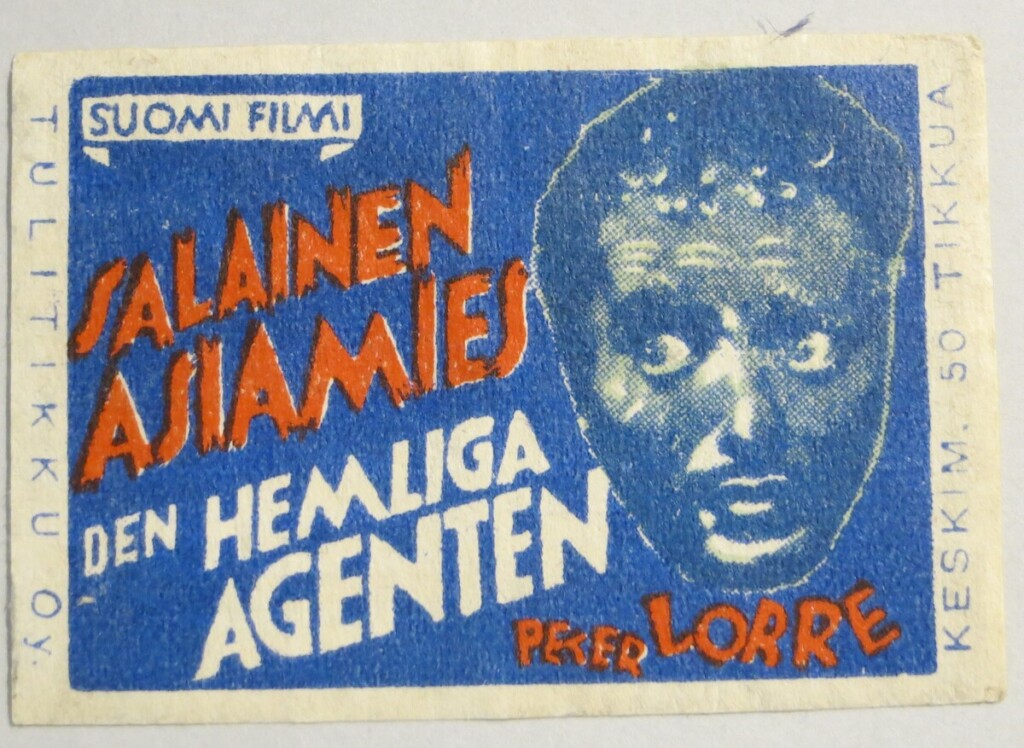
You are watching a man arrive at a border checkpoint with nothing but his face, and his face is already the problem. The officer does not need to open his luggage. The paperwork is almost beside the point. Something in the arrangement of features — the protrusion of the eyes, the softness around the mouth that never quite resolves into a smile — has already filed its own report.
László Löwenstein was born in 1904 in Rózsahegy, a small town in what was then the Kingdom of Hungary, now part of Slovakia, a biographical footnote that itself performs the instability of European identity in the early twentieth century. He trained in Vienna, worked in Berlin theater under the influence of Brechtian methods that treated the actor’s body as a political instrument, and by 1931 had delivered in Fritz Lang’s M a performance so technically precise and emotionally harrowing that it left audiences uncertain whether they had witnessed acting at all. The film was a sensation. The Nazis were not charmed. When they consolidated power in 1933, Lorre fled — first to Paris, then London, then the United States — carrying with him the particular luggage of the Jewish intellectual exile: fluency in several languages, total alienation from all of them, and a body that European fascism had already designated as legible evidence of something threatening.
Hollywood, to be clear, did not rescue him from that designation. It monetized it. The studio system of the 1930s and 1940s operated on a logic of ethnic typecasting so entrenched it was invisible to itself, a mechanism that Eric Lott, writing about racial performance in Love and Theft, and later scholars of immigrant cinema like Saverio Giovacchini in Hollywood Modernism have documented with uncomfortable specificity: the foreign body was welcome precisely insofar as it could be converted into a stable sign of danger or exoticism. Lorre arrived speaking English with an accent that encoded, for American ears, the entire anxious geography of Central Europe — a place imagined as ancient, unstable, morally complex in ways the New World had supposedly transcended. Producers did not hear an actor. They heard a frequency.
What followed was a systematic narrowing. The man who had played a child murderer in Berlin not as a monster but as a compelled, terrified human being was repackaged in films like Mad Love in 1935 and later the Mr. Moto series as something far simpler: threat made portable, danger made watchable. The Mr. Moto casting is particularly brutal in retrospect — a Jewish European actor in yellowface playing a Japanese detective, layers of displacement and misrepresentation stacked so casually that the industry never paused to name what it was doing. His own cultural erasure was used as raw material for someone else’s caricature.
There is a specific violence in being told that your foreignness is your most valuable professional asset. It means your survival depends on remaining foreign, on never shedding the accent, never relaxing the features into something that reads as ordinary. Lorre was trapped inside a marketable version of his own displacement. Every role that cast him as the sinister Other reinforced the audience’s comfort with that category — and confirmed that he belonged inside it. The more successfully he performed threat, the more thoroughly he became synonymous with it, and the less room remained for any other interpretation of what his body and voice might mean.
Hannah Arendt, writing in The Origins of Totalitarianism in 1951 about the stateless person under modern political conditions, described the loss of legal personhood as the prelude to a deeper loss — the loss of a place in the world from which one’s opinions and actions matter. Lorre never lost his legal standing, but the industry performed something structurally adjacent: it stripped the emigrant of interpretive standing, leaving him visible only through the lens it had already prepared.
Sympathy as a Structural Trap
You are watching a man cry, and you feel sorry for him. That is the trap. Before your mind has assembled the full picture — before you have catalogued what he has done, what he is capable of, what he will do again — your nervous system has already voted. It voted for him. It recognized something in the trembling lip, the wide eyes searching for permission to exist, the voice that arrives too soft for a man who should be hard. Peter Lorre’s performances operated in precisely this sequence: sympathy first, horror second, and by the time the horror arrived, you were already implicated.
This is not a failure of the audience’s moral judgment. It is, in fact, a precise demonstration of how moral judgment actually functions under ordinary conditions. In 1961 and 1962, Stanley Milgram ran a series of experiments at Yale University that would become one of the most disturbing data sets in the history of social psychology, eventually published in his 1974 book Obedience to Authority. His subjects, ordinary volunteers with no particular ideology or pathology, administered what they believed were severe electrical shocks to strangers because a calm, authoritative voice in a lab coat told them to continue. Sixty-five percent went all the way to the maximum voltage. What Milgram discovered was not a reservoir of sadism waiting to be unleashed. He discovered that most human beings regulate their behavior not through private moral conviction but through social situational cues — through what the room tells them is normal. Lorre’s performances constructed exactly such a room. The room said: this man is suffering. The room said: attend to the suffering. And the audience, like Milgram’s subjects, followed the immediate social instruction before the larger ethical picture could assemble itself.
Hannah Arendt, sitting in a Jerusalem courtroom in 1961 watching Adolf Eichmann through a glass partition, was disturbed by something no one else seemed prepared to articulate: the man was not a monster in any useful sense. He was bureaucratically precise, ideologically hollow, and genuinely unable to think from a position other than the one the institution had handed him. Her 1963 report, Eichmann in Jerusalem, introduced what she called the “banality of evil” — not a claim that evil is trivial, but a claim that its most catastrophic expressions are frequently generated by people who have suspended the faculty of independent moral thought entirely. The scandal the book caused was proportional to how badly people needed evil to be recognizable, to wear a face that announced itself. Lorre’s M, released in 1931, had already filmed the same scandal. Hans Beckert does not look like what he is. He looks like a man who cannot stop himself, which is something different, and far more unsettling, because it forces the viewer to locate the boundary between compulsion and culpability — a boundary most people prefer to believe is obvious.
What Lorre accomplished technically in these performances was a kind of emotional front-loading. He delivered the affect of vulnerability before the narrative delivered the content of guilt, which meant the viewer’s empathic response was always slightly ahead of their understanding. Cognitive dissonance is not comfortable, and most people resolve it not by withdrawing the sympathy already given, but by constructing a justification for why the sympathy was reasonable. You tell yourself he couldn’t help it. You tell yourself the world made him this way. These are not lies exactly — they are the stories sympathy tells to protect itself from revision. And this is the mechanism that makes Lorre’s villains genuinely dangerous as cultural objects, more dangerous than any straightforwardly evil screen performance: they teach the audience to practice the very cognitive habit that allows real harm to persist unexamined in ordinary life, dressed in ordinary clothes, asking ordinary people to simply continue.
Hollywood's Villain Economy and the Immigrant Premium
You are handed a face the moment you walk into the theater, and the transaction is already complete before the film begins. The casting director has done the work of fear in advance, selected the accent, the bone structure, the biographical weight of a man who crossed an ocean under pressure, and packaged it for an audience that never had to flee anything.
Hollywood in the 1930s and 1940s did not simply employ European exiles — it extracted value from their displacement with the precision of an industry that understood, perhaps better than any other American institution, that terror requires authenticity. The foreign-born actor brought something the native-born character actor could not convincingly manufacture: the actual residue of a world that had cracked open. Bela Lugosi had performed in Hungarian theater and survived the collapse of the Austro-Hungarian Empire. Conrad Veidt had navigated the Weimar Republic’s cultural fever and fled National Socialism after 1933. Peter Lorre had been interrogated, displaced, and reconstituted across four languages and three countries before he ever stood on a studio backlot in Burbank. The studios did not ignore this history. They invoiced it.
The economic logic was brutally elegant. Between 1930 and 1945, the major studios — MGM, Warner Bros., Universal — maintained what amounted to a villain economy, a parallel casting infrastructure in which foreign-born performers were systematically routed toward roles requiring menace, opacity, or moral corruption. This was not incidental prejudice operating beneath the surface of commerce; it was the commerce. Universal’s horror cycle, which generated millions of dollars in ticket revenue across the Depression years, depended structurally on bodies that American audiences could read as categorically other. The accent was not a liability to be managed. It was the product.
What made Lorre particularly valuable in this economy — and particularly damaged by it — was the specificity of what he carried. His face encoded something that Lugosi’s theatrical grandeur or Veidt’s aristocratic severity did not quite reach: the suggestion of a man who had already looked inward and found something that frightened even himself. This was not performance in any simple sense. Hannah Arendt, writing in The Origins of Totalitarianism in 1951, described the stateless person as someone whom the world had rendered superfluous, stripped of the political rights that give a human being legible existence. Lorre had been precisely that: a man without a country, without legal protection, moving through Europe in the early 1930s with the particular alertness of someone who knew that visibility could become danger at any moment. Hollywood did not rehabilitate that condition. It repackaged it as menace and sold it at the box office.
The studios also understood that this arrangement was self-sealing. The foreign actor who played enough villains became, in the public imagination, a villain by nature rather than by casting decision. The role migrated back onto the person. By the mid-1940s, Lorre had been so thoroughly identified with sinister supporting parts that producers could not imagine him elsewhere — not because his range was limited, which his work in the early German sound period actively disproves, but because the economic category had calcified around him. He became, in industry terms, a type, which is a polite way of saying that his market value was contingent on the audience’s willingness to believe the worst about him before he opened his mouth.
Veidt died in 1943, before the postwar renegotiation of European identity in American culture could complicate his trajectory. Lugosi descended into a different kind of institutional trap, one more gothic and more public in its unraveling. But Lorre lived long enough to watch the exile premium depreciate, to find that the very displacement which had made him marketable as threat had left him without the cultural capital to become anything else, stranded in a category that the industry had built around him with no door facing outward.
A vision curated by a filmmaker, not an algorithm
In this video I explain our vision
The Uncanny as Philosophical Category

You are watching someone you almost know. The face is soft, the eyes are large and wet, and there is something in the way the mouth moves — half-apology, half-hunger — that you have seen somewhere before, though you cannot locate where. The discomfort this produces is not fear exactly. It is closer to the sensation of catching your own reflection in a window at night, slightly out of angle, and not immediately recognizing it as you.
Sigmund Freud published Das Unheimliche in 1919, and the essay’s central provocation has never quite been absorbed by the culture that cites it most. The uncanny, he argued, is not produced by strangeness. It is produced by familiarity that has undergone a subtle corruption — the German word heimlich, meaning homely or intimate, contains within itself its own opposite, unheimlich, the hidden, the concealed, the thing that was once domestic and has been repressed out of sight. What returns to haunt is never entirely foreign. It is precisely what the familiar has been working to suppress. The dread is not of the other. It is of the self, observed from an angle no mirror was supposed to provide.
Lorre operated at exactly this frequency. Audiences in the 1930s and 1940s did not scream at him as they screamed at monsters with bolted necks or creatures emerging from swamps. They went quiet. They leaned in. Something in his performances created a dissonance that the body registered before the mind could intervene — an unease that was not located in what he did but in what he made visible about the person watching. He was not alien enough to be safely categorized as other. He was just recognizable enough to be unbearable.
What specifically was being recognized requires some precision. Psychoanalytic theory in the postwar decades spent considerable energy on what Ernest Schachtel, writing in 1959 in Metamorphosis, described as the systematic cultural suppression of genuine affect — the way modern socialization demands that individuals convert their actual emotional experience into forms acceptable to public life. Desire becomes politeness. Grief becomes composure. Fury becomes productivity. The emotional infrastructure that Lorre performed onscreen — the rawness, the transparent longing, the visible conflict between impulse and restraint — was not aberrant. It was simply unfiltered. And unfiltered experience, in a society that runs on filtration, reads as disturbing, even threatening.
The Production Code that governed Hollywood from 1934 onward codified this suppression into industrial practice. Criminals had to be punished, deviance had to be contained, and the moral architecture of the narrative had to restore order by the final frame. Lorre’s characters almost always died, were captured, or were otherwise neutralized. But the Code could not legislate what the body felt during the film, only how the story ended. The discomfort he produced could not be tidied by a final scene. It lingered because it was not a response to what he had done but to what he had momentarily made permissible to feel.
There is a specific category of response that sociologist Erving Goffman analyzed in The Presentation of Self in Everyday Life, published in 1959 — the moment when the performance of social identity falters and the managed impression collapses. What Goffman called a discrepant role, the figure who knows the backstage truth of the social theater, produces shame and anxiety not because they are lying but because they are not lying enough. Lorre played discrepant roles in a deeper sense than Goffman intended: his presence destabilized the audience’s own performance of who they were in public, because what he displayed was what public performance was built to exclude.
The question this opens, and which cultural criticism has never quite answered directly, is whether an audience that feels recognized by a villain is implicated in that villain’s desires, or whether it is simply being returned to an experience of itself that civilization had agreed to call monstrous.
Villainy Without Ideology
You have been trained, longer than you know, to need your villains legible. Not merely dangerous — legible. The screen offers you a contract: here is the evil, here is its source, here is the moment it will be punished, here is your permission to exhale. The moralized villain is a civic technology as much as a dramatic one, a mechanism for processing social anxiety by giving it a face, a motive transparent enough to condemn, and a trajectory that ends in containment. What Peter Lorre did, across film after film in the 1940s, was refuse that contract without ever announcing the refusal.
The classical Hollywood villain was ideologically furnished. He wanted power, or money, or revenge — drives the audience could name and therefore master. Even cruelty, in the hands of a stock antagonist, was made comprehensible through backstory: the wound that soured him, the class resentment that curdled, the vanity that metastasized. Comprehension is a form of control, and the moralized villain existed precisely to be comprehended and then discarded, his defeat restoring the moral geometry the film had temporarily disturbed. Genre cinema in the studio era was, in this sense, a machine for producing reassurance — and the villain was its most essential moving part.
Lorre’s characters broke the machine. Joel Cairo in the 1941 adaptation of Dashiell Hammett’s novel arrives on screen already assembled from contradictions no single ideology could explain: fastidious yet ruthless, deferential yet treacherous, apparently cowardly yet capable of cold menace. The film’s narrative demands that he function as a villain, and he does — but his interiority spills past the edges of the role. There is something happening behind his eyes that the plot has no jurisdiction over, some interior weather the screenplay neither accounts for nor resolves. The audience is left holding a response they were never given instructions to complete.
What made this structurally unprecedented was that 1940s narrative cinema had not yet developed a grammar for psychological complexity in antagonists. The tools existed for heroes — interiority, ambivalence, the wound that explains the quest — but villains were, by professional and moral consensus, surfaces. They were to be read, not inhabited. Lorre’s physicality, that face which registered fear and threat as nearly identical emotional states, kept collapsing the distance the camera required to keep him safely external. Audiences felt something for characters they had been positioned to despise, and that feeling had no approved channel.
This is where the historical specificity matters. The early 1940s were a period of intense ideological pressure on American popular culture — a moment when the industry was actively collaborating with wartime consensus-building, when moral clarity was not merely a dramatic preference but something close to a patriotic obligation. Into that climate, Lorre kept delivering characters who resisted the sorting. His villains were not redeemable — he never softened them into sympathy — but they were irreducible to their function. They existed in excess of the stories that tried to use them.
Giorgio Agamben, writing decades later in Homo Sacer, described figures who fall outside the categories a political order uses to organize life — beings who cannot be cleanly classified as citizen or enemy, sacred or profane, inside or outside. He was not writing about cinema. But the concept maps onto Lorre’s screen presence with uncomfortable precision: characters who occupied the narrative’s moral architecture without being fully contained by it, who generated a form of unease the story’s resolution could not neutralize. The villain was supposed to be expelled at the end so the world could be re-sealed. Lorre’s characters left a seam.
What the audience carried out of the theater was not the satisfaction of a closed moral circuit but something more like a residue — an after-image of a face that had looked back at them from the wrong side of the categorical divide and somehow, in doing so, had made the divide itself feel provisional.
What the Audience Needed Him to Be
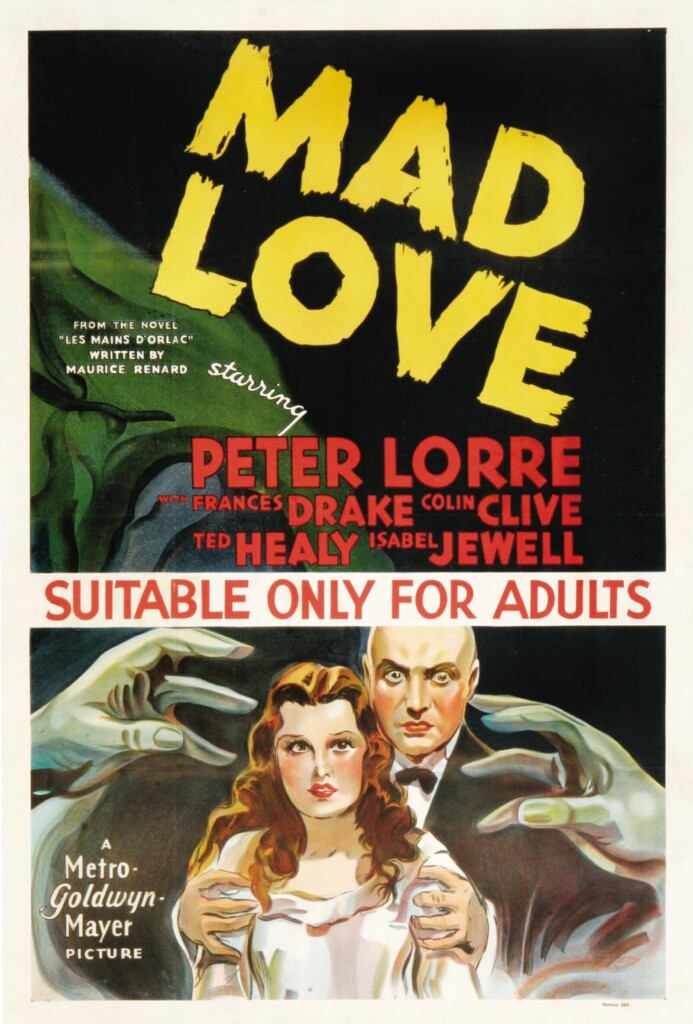
You are sitting in a darkened theater in 1951, watching a man with bulging eyes and a voice like wet gravel confess to crimes that make the audience around you shift in their seats, and you feel — alongside the revulsion — something that takes a moment to name: relief.
That relief is the dirty secret of what Peter Lorre actually provided to the audiences who made him a star, and it has nothing to do with art. It has to do with the profound human need to locate evil in a body that looks the part. When Lorre appeared on screen with his particular architecture of wrongness — those eyes, that accent, that softness wrapped around something reptilian — he was performing a service that had less to do with dramatic truth than with cultural hygiene. He gave monstrousness a face, and by giving it a face he made it something that could be recognized, catalogued, and safely seated in a velvet chair across the room from the ordinary person watching him.
Christopher Browning’s 1992 study of Reserve Police Battalion 101 did something to the architecture of that comfortable arrangement that has never been repaired. Browning documented how a unit of middle-aged German men — not ideological zealots, not sadists selected for their capacity for violence, not, crucially, men who looked like anything other than bakers and accountants and fathers — murdered approximately 38,000 Jewish civilians in occupied Poland and participated in the deportation of another 45,000 to the Treblinka extermination camp. These were men who had been given a choice by their commanding officer. Some declined. Most did not. Browning’s argument, built with archival patience, was that conformity, careerism, peer pressure, and the bureaucratic diffusion of responsibility were sufficient to produce industrial atrocity without requiring a single monstrous face in the room.
What this means for the Lorre villain is uncomfortable in the specific way that true things tend to be. Every time an audience watched Lorre and felt the particular satisfaction of evil being legible, being written into a physiognomy they could read and reject, they were rehearsing a mistake. The mistake was not aesthetic. Lorre was genuinely extraordinary, and his performances carry layers of irony and self-awareness that serious critics have rightly honored. The mistake was epistemological: the audience was learning, or rather confirming, that cruelty announces itself, that the dangerous person is the strange one, the foreigner, the man who seems not quite assembled correctly. Browning’s policemen gave the lie to exactly this. They went home to their families. Their faces announced nothing.
There is a particular dishonesty in the comfort that a Lorre performance provided, and it is not Lorre’s dishonesty — it belongs to the cultural transaction happening in the seats. Theodor Adorno and Max Horkheimer, writing in Dialectic of Enlightenment in 1944, identified the way that the culture industry does not merely entertain but organizes perception, teaches the audience which shapes to fear and which to trust, codes danger into aesthetics so that the social order remains legible and therefore apparently safe. Lorre, for all his subversive self-awareness, was also a product of that organizing function. The studios understood that his face sold a certain kind of story, and the story the audience needed was one in which they could tell the monster by looking.
The problem is that history kept producing evidence that they could not. The century that made Peter Lorre famous was also the century that demonstrated, with a thoroughness that should have been permanently destabilizing, that ordinary faces were fully capable of extraordinary harm. What the audience needed him to be — the unmistakable, unambiguous sign of inner corruption — was precisely what absolved them of the more difficult work of looking at the undisguised faces around them, and at the face in the mirror, with any honest suspicion at all.
🎭 The Anatomy of Cinematic Dread
Peter Lorre’s singular genius lay in his ability to make audiences feel simultaneously repelled and fascinated, a tension that runs through the darkest corridors of film history. To understand his art is to explore the deeper psychology of evil, the aesthetics of shadow, and the uncanny power of the human face as a mask. These articles illuminate the cultural and psychological landscape from which Lorre’s unsettling villains emerged.
Psychopathy: History and Diagnosis in Contemporary Psychology
Psychopathy as a clinical construct provides one of the most illuminating lenses through which to examine characters like those Peter Lorre inhabited on screen. The cold detachment, the calculated charm, and the hidden menace that defined Lorre’s performances mirror the psychological profile that modern diagnostics would later formalize. Understanding this history deepens our appreciation of how cinema intuited what science would only later name.
GO TO THE SELECTION: Psychopathy: History and Diagnosis in Contemporary Psychology
The Uncanny in Freud: The Unheimliche
Freud’s concept of the Unheimliche — the uncanny — describes precisely the sensation Peter Lorre provoked in audiences: something familiar made terrifying, a human face that conceals an inhuman interior. The uncanny is not merely a literary curiosity but the psychological engine behind the horror of the unsettling villain, the figure who belongs to our world yet feels profoundly alien within it. Lorre’s eyes, voice, and physicality were instruments perfectly tuned to trigger this deeply Freudian discomfort.
GO TO THE SELECTION: The Uncanny in Freud: The Unheimliche
Psychoanalysis and cinema: when the couch becomes the screen
The relationship between psychoanalysis and cinema is nowhere more vivid than in the tradition of the psychological villain, a figure shaped as much by Freudian theory as by dramatic craft. Peter Lorre’s most iconic roles were born in an era when cinema was consciously absorbing the language of the unconscious, projection, repression, and the return of the repressed. This article traces how the analytic couch and the film screen became mirrors of each other.
GO TO THE SELECTION: Psychoanalysis and cinema: when the couch becomes the screen
Light and Shadow in Cinema: From Chiaroscuro to Expressionism
The expressionist use of light and shadow in cinema created the visual grammar that made villains like those played by Peter Lorre so viscerally disturbing. Chiaroscuro was not mere decoration but a moral language, casting the inner darkness of a character onto the physical world around them. Lorre’s performances were inseparable from this aesthetic tradition, his face a landscape of shadow and illumination that directors like Fritz Lang wielded with extraordinary precision.
GO TO THE SELECTION: Light and Shadow in Cinema: From Chiaroscuro to Expressionism
Discover the Cinema That Dares to Look Into the Dark
If Peter Lorre’s art of unease has stirred something in you, Indiecinema is the streaming destination where that feeling finds its true home. Our catalog is built for those who believe cinema should disturb, provoke, and illuminate the shadows of the human condition. Explore independent films that carry on the legacy of psychological depth and visual daring — stream them now on Indiecinema.
👉 EXPLORE THE CATALOG: Watch Indie Films in Streaming
A vision curated by a filmmaker, not an algorithm
In this video I explain our vision

