
Power, Lycanthropy, and the Political Body
There is a moment in the long history of Western political thought when the mask slips and the animal appears. Hobbes saw it clearly enough: beneath the social contract, beneath the wigs and the seals of office and the elaborate theater of sovereignty, there crouches something older and less negotiable — the war of all against all, the pre-political creature that civilization has not so much tamed as dressed. The Leviathan itself, that great sea-monster Hobbes borrowed from the Book of Job to name his theory of the state, is not a reassuring image. It is a confession. The sovereign is monstrous by necessity. Power, to function, must contain within itself the capacity for absolute violence, and that capacity is not metaphorical. It is constitutional.

Milton Moses Ginsberg understood this in 1973, and he made a film about it, and almost nobody took him seriously, because the film was funny. The Werewolf of Washington arrived in American cinemas wearing the costume of a B-movie horror comedy — low budget, broad performances, cheap effects — and was received accordingly: as a curiosity, a jape, a piece of counter-cultural disposable entertainment aimed at audiences already nauseated by Watergate. What the film actually was, and what four decades of cult rediscovery have slowly made visible, is something considerably more unsettling than satire. It is a meditation, conducted in the grammar of genre cinema, on the thesis that political power is not corrupted by monstrousness but constituted by it.
The story, which Ginsberg wrote and directed, concerns Jack Whittier, a White House press aide who, while posted to Hungary, is bitten by a werewolf and returns to Washington carrying the infection in his blood. The film does not linger over this origin with the solemnity of Universal horror. It moves quickly, almost impatiently, past the supernatural machinery toward the thing that interests Ginsberg far more: what happens when the beast takes up residence inside the apparatus of American government. Whittier does not flee the capital. He returns to it. He continues to work. He attends briefings, drafts statements, accompanies the President — played with magnificent, oblivious pomposity by Biff McGuire in a performance calibrated to evoke without quite imitating — and transforms, periodically and catastrophically, in corridors of power lit by the cold fluorescence of official Washington.
Ginsberg’s visual choices are not decorative. The Washington monuments that appear throughout the film — the Mall, the columns, the eternal neoclassical geometry of American institutional architecture — are framed not as backdrops but as presences. They loom. They repeat. They function, in the anthropological sense that René Girard might have recognized, as sacred architecture: the built environment of a sacrificial order. Girard’s argument, developed across Violence and the Sacred and Things Hidden Since the Foundation of the World, is that human community coheres around the managed discharge of violence — that the scapegoat is not an aberration within social life but its generative mechanism. The werewolf, in Ginsberg’s film, is not an intruder into the political order. He is its most honest participant. He does openly, in blood and claw, what the institution does through legislation, through secrecy, through the management of information.
Elias Canetti, writing in Crowds and Power, identified what he called the survivor — the figure of power who endures by presiding over the death of others, who accumulates authority through the arithmetic of outlasting. The ruler, for Canetti, is always already a kind of predator, and the crowd that gathers around power is always already a pack. Ginsberg had almost certainly not read Canetti when he made this film, but the convergence is not coincidental. Both are drawing on the same deep structure: the recognition that the forms of political life — the ceremony, the hierarchy, the controlled spectacle of governance — are not civilizational achievements placed over the animal, but sophisticated elaborations of it.
The full moon over the Oval Office is not a joke. It is a diagram of what was always there.
Paranoia, Complicity, and the Comedy of Concealment
There is a particular texture to American public life in 1973 that no subsequent decade has quite managed to reproduce — a queasy simultaneity of revelation and denial, of truth arriving in televised increments while official Washington continued, with extraordinary composure, to insist that nothing fundamental was wrong. The Senate Watergate Committee hearings had become a kind of national soap opera, broadcast into living rooms where citizens watched men in suits describe crimes with the bored precision of accountants. The Vietnam War continued its grinding, purposeless attrition. And somewhere in the middle of this atmosphere of institutional rot, Milton Moses Ginsberg released The Werewolf of Washington into theaters, where it found an audience already primed, at a cellular level, for exactly this kind of story: a monster loose in the corridors of power, and everyone in power determined to pretend otherwise.
The film’s central joke — and it is a joke that cuts — is not that the President’s press aide becomes a werewolf, but that the transformation changes almost nothing about how Washington operates. The machinery of concealment rolls forward with precisely the same momentum whether it is suppressing evidence of political crimes or suppressing evidence of supernatural ones. Hannah Arendt‘s formulation of the banality of evil resonates here with uncomfortable precision. Arendt identified in the bureaucratic personality not malice but something more disturbing: a systematic refusal to think, a professional dedication to process over conscience that makes atrocity not the exception but the administrative norm. Ginsberg’s Washington is populated entirely by such figures — men whose first instinct, upon encountering the monstrous, is to draft a press release.
This is where the film’s tonal register becomes genuinely interesting as a mode of political analysis. Susan Sontag, in her Notes on Camp, described camp as a sensibility that converts the serious into the frivolous precisely in order to make the frivolous reveal its hidden seriousness. Camp, for Sontag, was not evasion but a kind of oblique confrontation, a way of approaching subjects too charged or too painful for direct engagement. The Werewolf of Washington operates in this register without quite committing to it entirely, which is perhaps its most honest quality. The film is never fully comfortable as satire, never fully comfortable as horror, and this discomfort is itself a form of mimicry — it reproduces the psychological texture of living through Watergate, which was itself never quite real enough to be tragedy and never quite absurd enough to be comedy.
The tradition Ginsberg is working within is long and specifically American. Mark Twain understood that the republic had always contained within it a vein of self-delusion so deep that only laughter could mine it safely. Stanley Kubrick‘s Dr. Strangelove, made a decade earlier, had demonstrated that nuclear annihilation could be rendered as farce without losing any of its horror — indeed, the horror was intensified by the laughter, because the laughter implicated the audience in the very absurdity it was mocking. Ginsberg attempts something similar. When White House officials respond to werewolf attacks with the reflexive instinct of damage control rather than alarm, the film is arguing something specific: that the Nixon administration had so thoroughly colonized the American political imagination with its culture of concealment that even a literal monster could be absorbed into the normal protocols of spin and denial.
What makes this more than mere topical comedy is the film’s insistence on complicity. The werewolf is not an outsider, not an alien corruption introduced into a healthy system. He is the system’s own creature, produced by its anxieties, its repressions, its foreign entanglements — the werewolf curse arrives from abroad, from a context the administration would prefer not to examine too closely. The monster and the cover-up are not opposed forces; they are expressions of the same institutional logic. In this sense, Ginsberg’s film arrives at something close to what Arendt was describing: not evil as rupture, but evil as continuity, evil as the ordinary business of men who have simply stopped asking what they are doing and why.

What the Cult Film Carries Forward
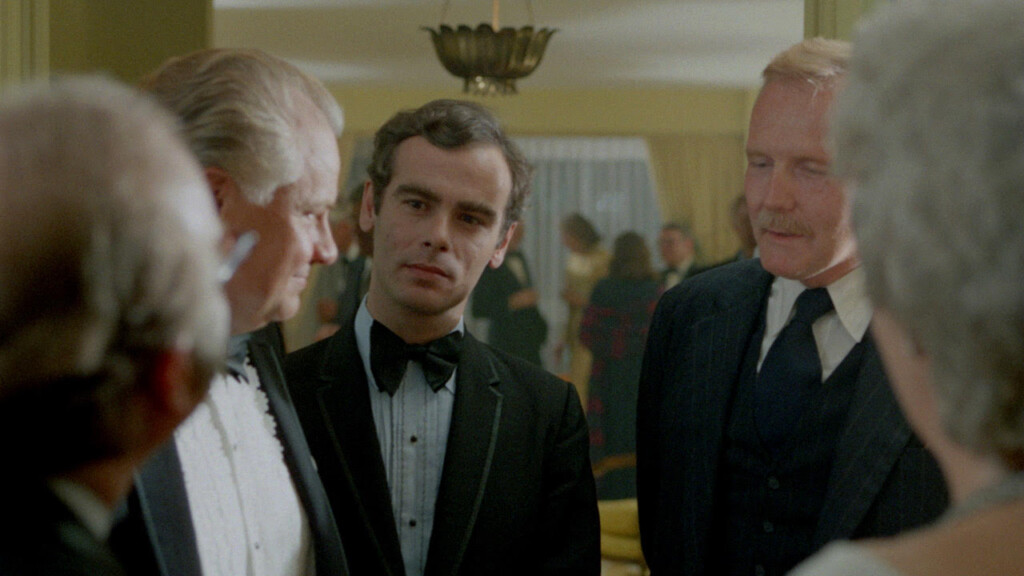
There is a peculiar justice in the fact that The Werewolf of Washington was largely ignored upon its release in 1973. Critics found it too broad, too obvious, too willing to sacrifice coherence for the sake of a punchline. What they failed to recognize — or perhaps recognized too clearly to acknowledge — was that the film’s incoherence was the point. Satire that arrives precisely on time tends to be absorbed and neutralized by the culture it attacks; the powerful have always been more adept at co-opting mockery than at answering it. A film that mocks Nixon while Nixon still commands the apparatus of the state is not a weapon but a mirror held up in a burning room. The room has no interest in mirrors. And so the film disappeared into the margins, into late-night television slots and drive-in theaters, where it kept company with the genuinely disreputable rather than the artfully transgressive.
But cult status is not mere commercial failure wearing a romantic disguise. It is, at its most meaningful, a form of delayed reception — a recognition that the culture was not yet ready to receive what the work was actually saying. Walter Benjamin wrote of the dialectical image, the fragment from the past that suddenly, in a moment of historical crisis, illuminates the present with the force of lightning. The image does not belong to its own moment; it belongs to the moment of its legibility. The Werewolf of Washington, rewatched in the decades after Nixon, or in the years of subsequent administrations that rehearsed his sins with varying degrees of subtlety, does not feel like a period piece. It feels like a diagnosis that kept being filed away because no one wanted to schedule the surgery.
What the film leaves in the body of the viewer is not laughter but something closer to the discomfort that follows laughter — the moment when the joke has ended and the thing the joke was about is still standing in the room. Milton Moses Ginsberg’s camera, restless and slightly unstable in the handheld tradition of the New American Cinema, refuses the audience the comfort of aesthetic distance. The unease is formal as well as thematic. And crucially, the film refuses catharsis. The monster is not defeated in any way that cleanses or resolves; power absorbs the horror of power and continues. This refusal is, in retrospect, the film’s most radical gesture — its insistence that the werewolf mythology, unlike the classical monster narrative, offers no silver bullet that is also a restoration of order. The order was always already the disorder.
This is where the film’s relationship to satire becomes genuinely complex. Satire has traditionally been understood as corrective — as the laughter that shames the powerful back toward virtue, the Swiftian fantasy that exposure is a form of accountability. But The Werewolf of Washington is haunted by a darker possibility: that satire is not exorcism but confession. When we laugh at the werewolf, we are not banishing him. We are acknowledging that we knew, that we always knew, and that the knowing did not save us. The laughter becomes a way of metabolizing powerlessness rather than transcending it. This is perhaps why the film resurfaces with particular intensity during moments when democratic institutions are visibly strained — not because it offers solutions, but because it names something that official discourse cannot bring itself to articulate.
To watch The Werewolf of Washington now is to understand why certain films must wait for their audience. The work was not ahead of its time so much as beside it, occupying a parallel register that the time itself could not quite tune into. What it carries forward is less a message than a wound — the wound of recognition, the particular pain of having seen clearly and having been ignored for seeing. Benjamin’s dialectical image does not comfort; it accuses. And the question it leaves open, trembling between comedy and despair, is whether the act of naming the monster has ever, in the long history of power’s appetite for itself, made the monster smaller.
🐺 When Horror Bites Back at Power
The Werewolf of Washington is no ordinary monster movie — it is a razor-sharp political allegory that uses lycanthropy as a metaphor for corruption, duplicity, and the moral rot at the heart of American governance. To fully appreciate its subversive bite, these thematically related articles explore the cinematic worlds of horror-comedy, political satire, cult monsters, and counterculture filmmaking that share its rebellious DNA.
25 Werewolf Films to Watch
Werewolf cinema has a rich and fascinating history that stretches from silent folklore adaptations to modern psychological horror. This essential guide traces the evolution of the lycanthrope on screen, examining how each era reimagines the beast as a mirror of its own social anxieties — making The Werewolf of Washington a natural and politically charged entry in this tradition.
GO TO THE SELECTION: 25 Werewolf Films to Watch
Masterpieces of Rebellion and Counterculture Cinema
The Werewolf of Washington belongs to a proud lineage of films that weaponized genre conventions to challenge authority and mainstream ideology. This article charts the masterpieces of rebellion and counterculture cinema that dared to speak truth to power, often disguising their most radical ideas beneath the surface of entertainment — just as Milton Moses Ginsberg did with his Nixon-era monster.
GO TO THE SELECTION: Masterpieces of Rebellion and Counterculture Cinema
Films About Corruption: The Definitive Guide to Cinema That Laid Power Bare
Few subjects have inspired as much creative fury in cinema as political corruption, and The Werewolf of Washington channels that fury into a darkly comic horror spectacle. This definitive guide explores the films that laid bare the mechanisms of power and institutional rot, offering essential context for understanding why Ginsberg’s film remains so resonant decades after Watergate.
GO TO THE SELECTION: Films About Corruption: The Definitive Guide to Cinema That Laid Power Bare
Horror Cult Movies to Watch Absolutely
Cult horror is a genre defined by its willingness to go where mainstream cinema refuses, and The Werewolf of Washington is a textbook example of the form. This guide to essential horror cult movies celebrates the outsider films that built devoted audiences through sheer audacity, black humor, and a refusal to separate the monstrous from the political.
GO TO THE SELECTION: Horror Cult Movies to Watch Absolutely
Discover the Wild Side of Independent Cinema
If films like The Werewolf of Washington remind you that cinema can be both terrifying and liberating, Indiecinema is your gateway to hundreds of bold, unconventional, and hard-to-find independent films. Explore our streaming platform and dive deeper into the movies that refuse to be tamed.
👉 EXPLORE THE CATALOG: Watch Indie Films in Streaming
A vision curated by a filmmaker, not an algorithm
In this video I explain our vision

