
The Invented Periphery: How Sannio Became a Margin
You stand at the ruins of Saepinum, where a Roman road cuts through what was once a thriving Samnite town, and the silence tells you nothing about how that silence was made. Grass grows between paving stones laid by men who called this place a threshold, not an edge. The sheep still cross here every year, following transhumance routes older than the road itself, and for a moment you understand that the emptiness you feel is not geological. It was arranged.

No mountain range decided that Sannio would be peripheral. No river drew a line and declared one bank destiny and the other delay. The idea that inland central-southern Italy constitutes a backward hinterland, orbiting distant coastal capitals, is not a fact of topography but an inheritance of conquest narrative, repeated so often across two millennia that it calcified into common sense. The Samnite Wars, fought between 343 and 290 BCE, were not a footnote to Roman expansion; they were the near-undoing of it. Three protracted conflicts, the humiliation at the Caudine Forks in 321 BCE where an entire Roman army was forced under the yoke, testify to a confederation of tribes, Pentri, Caudini, Hirpini, Caraceni, that held the peninsula’s most powerful military machine at bay for over half a century. Livy, writing centuries later from the vantage of an empire that had absorbed and needed to justify absorbing its rivals, could not resist framing Samnite resistance as stubbornness, as a kind of primitive tenacity rather than strategic sophistication. The victors write the terrain as much as the history.
Adolf Schulten, the German historian who in the early twentieth century turned serious philological attention to the Samnites, noted something the Roman sources preferred to obscure: the sophistication of Samnite federalism, a system of allied communities coordinating military and political action across mountainous terrain without the centralized bureaucracy Rome would later impose as the only legitimate form of order. Schulten’s readings, drawing on epigraphic evidence and the scattered testimony of writers like Strabo, suggested a society whose organization simply did not resemble the urban, coastal, Hellenized models that later historiography would treat as civilization’s only address. Difference became deficiency. Decentralization became disorder. And disorder, once named, becomes the thing a territory is condemned to explain itself against for two thousand years.
The Risorgimento did not invent this logic; it industrialized it. When the Kingdom of Italy unified in 1861, the new state needed statistics, and statistics need categories, and categories need a hierarchy to mean anything at all. The inchiesta agraria of the 1880s, along with earlier surveys commissioned to assess the resources of the former Bourbon territories, measured Sannio and similar interior zones against an implicit standard set by Naples, by Turin, by the ports and plains where capital already concentrated. Illiteracy rates, road density, agricultural yield per hectare, these were not neutral instruments; they were built to detect distance from an assumed center, and distance, once quantified, reads as failure rather than as a different relationship to land and time.
Travel writers completed the work statisticians began. Accounts from northern visitors moving through the Apennine interior in the decades after unification describe the region in a vocabulary of absence, no industry, no roads worth the name, no visible ambition, as though the terraced hillsides and transhumant flocks were evidence of a people waiting to be brought into history rather than a people already living inside a history of their own making. This is the moment meridionalismo crystallized as a discourse, with thinkers like Giustino Fortunato, himself from the Basilicata-Sannio borderlands, attempting to diagnose southern backwardness through geography and climate even as he sensed, without quite saying it, that the diagnosis had been written before the patient was examined.
The Grammar of Stone: Architecture as Suppressed Memory
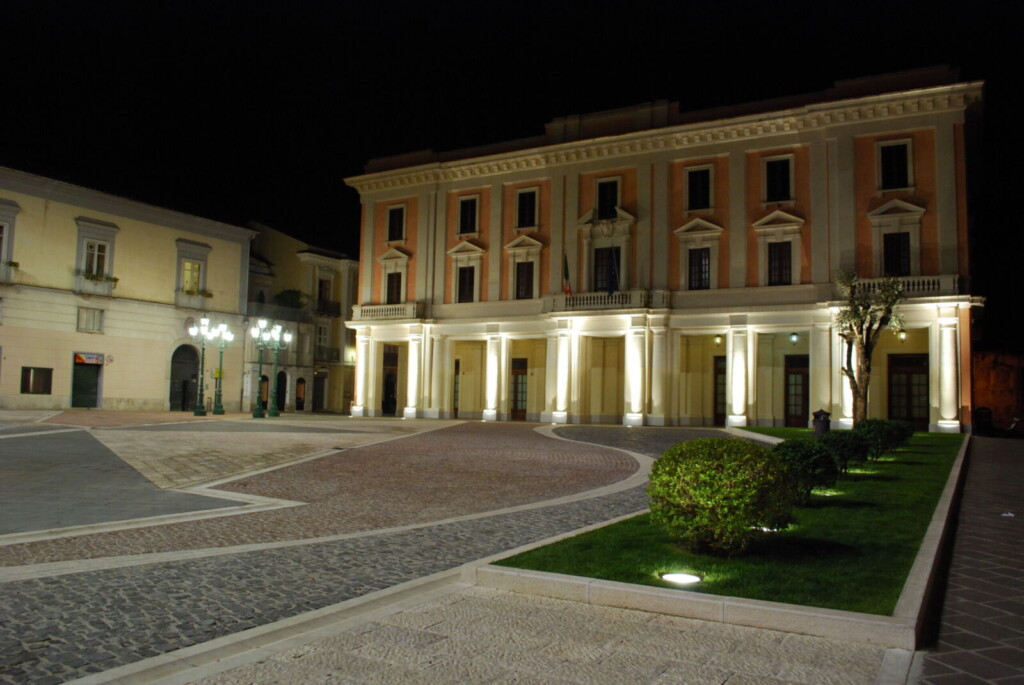
You walk through Benevento on a Tuesday afternoon and within four hundred meters you cross two thousand years without a single sign announcing the transition. The Arch of Trajan stands there, absurdly intact, completed in 114 AD, its reliefs still narrating grain distributions and military campaigns to nobody in particular, and then the street bends and you are suddenly among Lombard walls, thick and irregular, stones stacked by hands that had never heard of Rome as anything but a memory of conquerors already gone. Nobody has smoothed this transition into a coherent story. The city does not explain itself. It simply accumulates, layer against layer, the way a wound accumulates scar tissue without ever quite becoming skin again.
Aldo Rossi, in L’architettura della città, published in 1966, proposed something that Italian urban planning has never fully absorbed: that a city is not a functional machine to be redesigned according to need, but a repository of collective memory, a text written by generations who often contradict each other without any editor reconciling their voices. For Rossi the persistence of certain urban forms, what he called permanences, monuments and street patterns that survive the specific societies that built them, constitutes the actual identity of a place. Benevento is almost a laboratory demonstration of this thesis, except that what Rossi discussed with a certain northern serenity becomes, in the Sannio, something closer to an open contradiction that nobody has bothered to resolve into a national story.
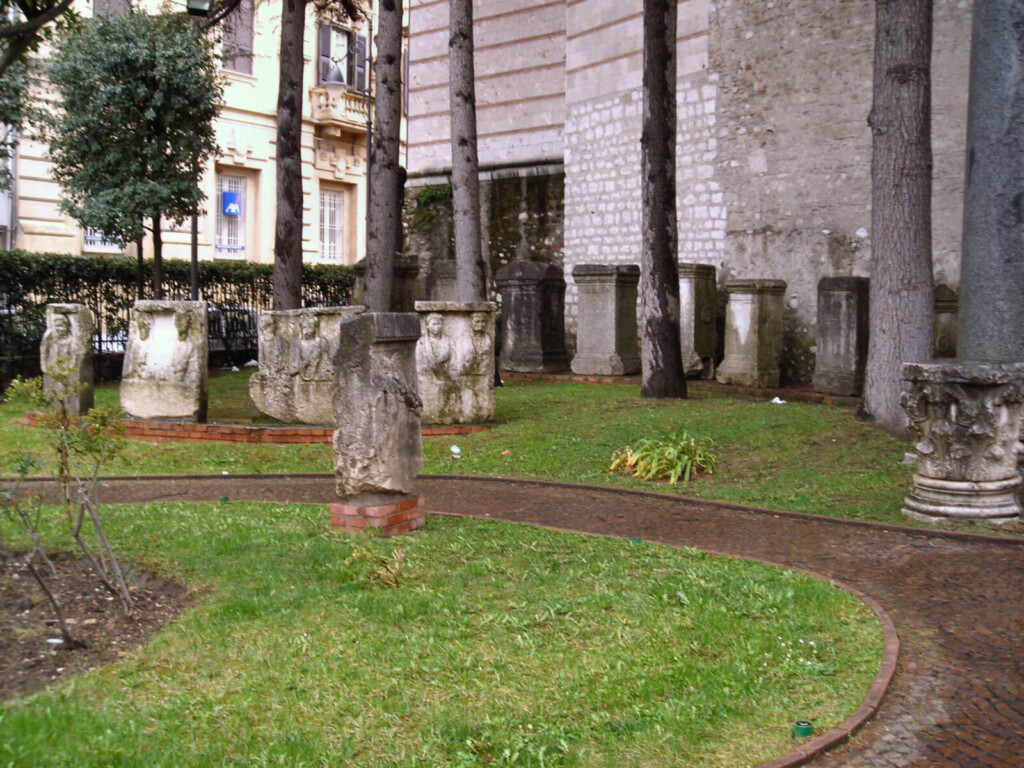
Because that is precisely the problem. Italy as a unified state, declared in 1861, needed a coherent narrative of italianità, a straight line from Rome through the Renaissance to the Risorgimento, and the Sannio simply refuses to fit that line without amputation. Trajan’s arch fits the imperial glory story perfectly. But the Lombard duchy remnants, the Duchy of Benevento that survived independently until 1077, longer than most other Lombard territories, tell a different story, one of a Germanic warrior aristocracy that adapted Roman administrative forms while remaining stubbornly, structurally other. And beneath both of these, scattered through the countryside around Pietrabbondante and Saepinum, the megalithic walls of Samnite fortifications, built by the very people Rome spent decades and three brutal wars, from 343 to 290 BC, trying to subdue. This is not a palimpsest that resolves. It is one that keeps every erasure visible underneath the next inscription.
The state has never known quite what to do with a memory this insubordinate. National narratives require selection, and selection is a form of violence performed on the past. What survives in official memory is what serves the present arrangement of power, and the rest gets relegated to folklore, to regional curiosity, to the sort of thing you mention in a tourist pamphlet without integrating into the serious history taught in Roman or Florentine classrooms.
Then came the earthquake of November 1980, magnitude 6.9, which killed around 2,900 people and devastated much of Irpinia and the Sannio hinterland. The reconstruction that followed was not simply engineering. It was, whether anyone admitted it or not, another act of narrative imposition. Reinforced concrete replaced the local stone masonry that had characterized these hill towns for centuries, not because concrete was inherently superior but because it was faster, standardized, legible to a national bureaucracy that needed to process thousands of applications without engaging with the specific grammar of each village. The traditional stone construction, load-bearing walls of local limestone fitted with techniques passed down without blueprints, was treated as an obstacle to efficient rebuilding rather than as the very substance of what made these towns intelligible to themselves. Entire village centers acquired a flat, interchangeable quality, the same anonymous residential blocks you could find anywhere from Lombardy to Sicily. The state did not erase the Arch of Trajan or the Lombard walls, those had already become useful antiquities, safely fossilized. But it erased something quieter and more recent: the specific way a Sannio village had always built itself against the same hillside, using the same stone, following a logic that had nothing to do with Rome and everything to do with the mountain itself.

Ritual Without Belief: The Persistence of Pagan Structures in Catholic Skin
An old woman in Benevento ties a red thread around the leg of her newborn grandson, murmurs something too fast to catch, and when asked why, shrugs. She does not believe the janare, the night witches who once gathered under the walnut tree of legend to anoint themselves with oil and fly through keyholes, have any purchase on the real world. She does it anyway. Her daughter, who has a university degree and a smartphone, watched her do it and did not intervene, did not roll her eyes, did not photograph it for irony’s sake. This is not superstition in the sense the Enlightenment gave the word, a residue awaiting erasure by sufficient light. It is something closer to scar tissue that keeps forming whether or not anyone remembers the wound.
Ernesto de Martino spent the years after the war walking through Lucania and the deep south with notebooks, recording tarantismo, the possession-dances of women bitten, or believed bitten, by spiders, and he arrived at a thesis that unsettled the anthropology of his time: magic was not a failure of reason but a technology of crisis management, a way of imposing symbolic form on a world that had systematically deprived peasants of any other kind of agency. Sud e magia, published in 1959, does not treat ritual as decorative folklore hanging off the real structure of southern life. It treats ritual as load-bearing. When the earth fails, when the landlord takes the harvest, when illness arrives with no explanation and no doctor, the tarantata dances not because she is deluded but because dancing is the only intervention available to a body that has been given no other lever to pull.
The Sannio’s own witches are not separate from this logic; they are its Beneventan dialect. The story goes back at least to the Lombard duchy of the eighth century, when Christian chroniclers accused the local population of continuing to worship a serpent and a walnut tree in nocturnal rites, a story historians now read less as ethnography and more as a smear campaign against a population that would not fully abandon its pre-Christian cults even after baptism. Paul the Deacon mentions it. The Church spent centuries trying to cut down that walnut tree, literally, and it kept growing back, which is either arboreal stubbornness or the most honest metaphor Italian religious history has ever produced.
Carnival in the Sannio towns, the mock battles with oranges and grain and sometimes stones wrapped in cloth, descend from the same agrarian logic that produces the more famous citrus warfare of Ivrea, and both are cousins of a much older category of ritual violence anthropologists call the expulsion of winter, a symbolic combat in which a community stages its own crisis in miniature so it does not have to live the real one unmediated. The food thrown is never random. It is surplus, or its symbolic substitute, destroyed publicly at the exact hinge of the agricultural year, a controlled burn of abundance performed by people whose ancestors knew scarcity intimately enough that wasting food on purpose became, paradoxically, the only way to prove they had survived it.
None of this requires the participants to believe in the serpent, the tree, or the returning winter king. Belief was never really the operative currency. What persists is the structure, the choreography of a population that learned, over centuries of dispossession, absentee landlords, malaria, earthquakes, and a Church that arrived late and layered itself thinly over older cults without ever fully replacing them, that survival sometimes means performing control over forces you cannot actually control. The ritual is the trauma’s exoskeleton, built by bodies that no longer remember the soft tissue it once protected but keep secreting the same hard shell anyway, generation after generation, because stopping feels more dangerous than continuing, even when no one can say exactly why.
Dialect as Class Wound: Language and the Shame Economy

An old man in Benevento stops mid-sentence at the pharmacy counter, catches himself, and starts again in a stiffer voice, translating himself in real time from what he actually thinks into what he has decided, at seventy-eight, is presentable. The pharmacist, thirty years younger, waits with the practiced patience of someone who has watched this exact recalibration happen a thousand times, because she does it too, in reverse, when she calls her mother.
Nobody in Sannio ever agreed to believe that the way their grandparents spoke was inferior. It was decided for them, elsewhere, in ministries and classrooms, and the decision arrived disguised as an opportunity. Tullio De Mauro documented the mechanics of this with brutal clarity in his 1963 study Storia linguistica dell’Italia unita, showing that at the moment of national unification in 1861, something like the vast majority of the peninsula’s population, well above ninety percent by his estimate, had no functional command of what would be called standard Italian at all. Italian was not the mother tongue of Italy. It was an administrative import, a Florentine literary artifact stretched over the whole boot by fiat, and in places like Sannio, tucked into the Apennine folds of inland Campania, what people actually spoke, what they dreamed in, insulted each other in, mourned in, was something the new state had no name for except dialetto, a word already engineered to demote.
Pierre Bourdieu gave the demotion its theoretical skeleton. In Ce que parler veut dire, published in 1982, he argued that language is never a neutral medium of communication but a market, and that what circulates in that market is linguistic capital, unevenly distributed, convertible into social position the way money converts into goods. The school, for Bourdieu, does not simply teach a language; it imposes a legitimate language, anoints one variety as the only one worth anything, and in doing so it performs an act of symbolic violence so complete that the dominated class comes to recognize the domination as legitimate. This is the crucial hinge: it is not enough that the dialect speaker is corrected. The dialect speaker must come to agree that the correction was deserved.
That agreement is what settled into the bones of Sannio’s postwar generations. A child sent to elementary school in the 1950s or 1960s in a village near Telese or Cerreto Sannita arrived already fluent, already capable of complex, funny, precise thought, and was told, implicitly and sometimes explicitly, that the instrument of that thought was an embarrassment to be corrected out of the body. The dialect did not disappear. It went underground, into the kitchen, into arguments with siblings, into prayers, while standard Italian became the uniform worn for school, for church officials, for anyone with a title. Two registers, two selves, and a widening silence between them that nobody had budgeted for.
The grandchildren inherited the silence without inheriting the reason for it. They grew up hearing dialect as something their grandparents used but did not teach them, a private frequency the older generation seemed almost ashamed to broadcast on purpose, so the language skipped a step, and what should have passed hand to hand like a tool instead sat in the house like an heirloom nobody could operate. Ask a twenty-five-year-old in Sannio today to speak the dialect their nonna speaks fluently and watch the hesitation, the reaching, the apologetic laugh that covers the gap. That laugh is not about vocabulary. It is the sound of a class judgment absorbed two generations back, still running on its own momentum, long after anyone can say exactly who issued the verdict or why it should still apply.
Emigration and the Myth of Return
The suitcase in the photograph is always the same suitcase, cardboard-colored, tied with a rope because the latches never held, and someone in the family still has it in an attic in Benevento or Cerreto Sannita, empty now, kept the way you keep a shed skin. Between 1951 and 1971 entire municipalities of the Sannio lost a third of their residents, and the number is not an abstraction if you walk through Pietrelcina’s surrounding hamlets or the villages of the Fortore and count the houses with their shutters closed year-round, waiting for August, waiting for a death that will finally force a decision about the roof. The men went first, to the mines of Belgium, to the assembly lines of Turin and Stuttgart and Düsseldorf, and the women followed later with children who would grow up correcting their parents’ dialect-inflected Italian in kitchens in Frankfurt. The 1980 earthquake, the Irpinia-Basilicata quake that also tore through Sannio’s edges, did not create this current so much as open a second sluice gate: villages already hollowed by decades of departure watched their remaining structural confidence crumble along with actual masonry, and post-earthquake reconstruction funds, distributed through decades of clientelism documented by historians of the Italian South, often financed emigration as efficiently as they financed rebuilding, because a check for damages was also a plane ticket.
Remittances built the second homes that now stand shuttered eleven months a year, their satellite dishes pointed at a sky that broadcasts nothing to anybody. An economy grew around absence itself: construction firms that worked only for the summer influx, bars that broke even in July and August and shut the rest of the year, a whole seasonal choreography where the paese fills up like a lung taking one breath annually and empties out again. The demographic data from Italy’s national statistics institute charts Sannio’s interior comuni losing population every single census since 1961, some by more than fifty percent, and the towns that appear to be growing are almost always growing only in the sprawl nearest Benevento itself, which cannibalizes its own hinterland even as the hinterland cannibalizes itself further out.
Vito Teti, the anthropologist from Calabria whose book Il senso dei luoghi reframed abandonment not as simple loss but as a haunting, gives language to something anyone from these towns already feels without naming it: the paese becomes a phantom limb, aching in weather the emigrant’s body can no longer locate, present in its absence with a specificity that mere memory doesn’t explain. Teti’s insight is that the returning emigrant does not return to a place but to a wound that has scarred over in his absence, and the scar tissue is not the same as the original skin no matter how convincingly it’s arranged to look that way for the month of August. The grandmother’s kitchen preserved as a shrine, the dialect spoken with exaggerated care by grandchildren who learned it as a party trick rather than a mother tongue, the sagra reconstructed each summer with a fidelity that borders on taxidermy — all of this asks whether nostalgia sustains a place or merely embalms it, dresses the corpse well enough that visitors mistake stillness for life. A festival funded by emigrant donations, staged for one week to justify the year’s absence, is not the continuation of a culture so much as its museum diorama, lit convincingly, populated by actors who are also mourners, who are also, not fully knowing it, the last generation who will bother to perform the grief at all. What happens after the diorama’s last visitor stops coming back, after the grandchildren stop learning even the performance, is a question nobody in the piazza wants asked while the band is still playing.
A vision curated by a filmmaker, not an algorithm
In this video I explain our vision
🏔️ Roots, Rituals and Regional Identity
Sannio’s layered heritage of ancient rites, folklore and rural memory finds echoes in stories from other places where tradition shapes identity. These related pieces explore how local culture, myth and collective belonging persist against the pressures of modernity.
The value of cultural traditions in the era of digital transition
This article examines how cultural traditions retain their value even as digital transformation reshapes everyday life, a tension deeply relevant to a region like Sannio where ancestral customs coexist with modern change. It offers a broader framework for understanding why communities cling to ritual and memory in times of rapid transformation. The piece invites reflection on preserving identity without freezing it in nostalgia.
GO TO THE SELECTION: The value of cultural traditions in the era of digital transition
Cultural resilience as a defense against the extinction of minorities
Focusing on cultural resilience as a defense against the disappearance of minority traditions, this article resonates strongly with Sannio’s efforts to safeguard its unique customs and dialects. It highlights strategies communities use to keep heritage alive across generations despite economic and demographic pressures. A valuable companion piece for understanding the stakes behind cultural preservation in southern Italy.
GO TO THE SELECTION: Cultural resilience as a defense against the extinction of minorities
Sardinian Culture: History Traditions and Identity
This exploration of Sardinian culture, its traditions and identity offers a compelling parallel case study to Sannio, another Italian region defined by strong local character and ancient customs. Both territories reveal how isolation and pride have preserved distinctive ways of life resistant to homogenization. Readers interested in regional Italian identity will find rich points of comparison here.
GO TO THE SELECTION: Sardinian Culture: History Traditions and Identity
The concept of generational legacy and the duty of bearing witness
Centered on generational legacy and the duty of bearing witness, this article speaks directly to how communities like Sannio transmit history, dialect and ritual from elders to youth. It considers the responsibility carried by each generation to preserve collective memory rather than let it fade. A thoughtful reflection on why local traditions matter beyond mere nostalgia.
GO TO THE SELECTION: The concept of generational legacy and the duty of bearing witness
🎬 Discover More on Indiecinema
If these themes of memory, identity and tradition intrigue you, dive deeper into the world of independent cinema on Indiecinema, where stories of forgotten places and hidden cultures come vividly to life.
👉 EXPLORE THE CATALOG: Watch Indie Films in Streaming
A vision curated by a filmmaker, not an algorithm
In this video I explain our vision

