
The Price of Admission
You sit across from a desk that belongs to someone you will never meet again, and you sign your name on a document whose full implications you are not equipped to understand. You are eighteen years old. You have never held a mortgage, never negotiated a lease, never read a contract that ran longer than two pages. The number printed in the upper right corner of the form is larger than your parents’ annual income, and the financial aid officer across from you — not unkind, not cruel, simply efficient — slides the next page forward before you have finished processing the last one. You sign again. Outside the window, the campus looks exactly like the brochure. You tell yourself this is what opportunity feels like, because no one in your family has ever told you what debt feels like from the inside.

That signature joins roughly 43 million others currently outstanding in the United States, together comprising a student loan portfolio that crossed $1.7 trillion in 2023 — a figure that exceeds total American credit card debt and represents the second-largest category of consumer debt in the country after mortgages. These numbers are cited often enough that they have started to lose their texture, to become statistical wallpaper. But they encode something more precise than a crisis: they encode a deliberate architectural choice made decades ago, the consequences of which were entirely predictable to anyone paying attention.
The architecture was laid quietly in 1972, when amendments to the Higher Education Act restructured federal support for college students in a way that shifted the dominant funding mechanism from grants to loans. Before this pivot, the federal government’s primary instrument was the Basic Educational Opportunity Grant — later renamed the Pell Grant — which gave money that did not have to be returned. The 1972 amendments did not eliminate grants, but they decisively expanded the loan infrastructure alongside them, and over the following two decades, institutional incentives, state disinvestment in public universities, and rising tuition together ensured that loans would grow while grant purchasing power eroded. By 1980, the maximum Pell Grant covered approximately 77 percent of the cost of attending a four-year public university. By 2023, it covered less than 28 percent of the same cost. The grant did not disappear. It simply became increasingly ornamental as the actual cost of attendance outpaced it by a margin that only debt could bridge.
What changed in 1972 was not just policy mechanics. What changed was the philosophical grammar of American higher education. A grant encodes a social wager: the public collectively bets that educating this individual will return value to the commons, and accepts the risk. A loan encodes something entirely different: it transfers the risk entirely onto the individual, denominates the value of education in future earning potential, and inserts a financial institution — initially banks, later the federal government itself acting as lender under the 2010 Health Care and Education Reconciliation Act — into the relationship between a student and knowledge. Education stops being a public good distributed to individuals and becomes a private investment made by individuals who borrow public money to fund it. The distinction sounds bureaucratic. It is actually civilizational.
Milton Friedman had argued in his 1962 work “Capitalism and Freedom” that human capital investment should operate through income-contingent loans rather than public subsidy, on the grounds that private returns to education accrued primarily to the individual rather than to society. His framework was not the direct cause of the 1972 amendments, but it occupied the same intellectual atmosphere, and the policy logic that followed over subsequent decades was entirely consistent with it. What Friedman’s model did not account for — or perhaps did not need to account for, depending on your assessment of his intentions — was the eighteen-year-old sitting across from a desk they do not yet have the vocabulary to interrogate, signing their name into a structure that will organize the financial grammar of the next two decades of their life.
The Meritocracy Myth and Its Architects
You score a 1480 on the SAT at seventeen and something shifts in the way adults look at you — not at your hands, not at your history, but at that number, as if it had always been there, embedded in your skull, waiting to be discovered rather than manufactured.
Michael Young published his satirical novel in 1958 as a warning. The title became a term of praise. Young invented the word “meritocracy” to describe a dystopia, a society so convinced of its own fairness that it had found new and more efficient ways to humiliate those at the bottom, because now their position could no longer be explained by birth or luck but only by their own insufficient worth. He watched in genuine horror as British and American policy circles lifted the word from its ironic context and pinned it to their manifestos like a medal. He wrote an essay in 2001, months before his death, begging people to understand what he had actually meant. Nobody particularly wanted to hear it.
The SAT did not emerge from a neutral desire to measure human potential. Carl Brigham, a Princeton psychologist, developed the precursor to the test in the early 1920s as part of a project whose explicit purpose was to rank human beings by racial and hereditary fitness. His 1923 book “A Study of American Intelligence” argued, with statistical confidence, that Nordic immigrants were intellectually superior to Southern Europeans, and that Black Americans represented a permanent cognitive underclass. Brigham later recanted those conclusions. The test, however, was absorbed into the institutional machinery of American higher education and laundered through decades of administrative neutrality until its origins became invisible, replaced by the clean language of aptitude and potential.
What aptitude measures, when stripped of its mythology, is proximity to the culture that designed the measurement. Pierre Bourdieu spent much of his career between the 1960s and his death in 2002 documenting exactly this mechanism — the way cultural capital, the inherited familiarity with dominant codes, vocabulary, and ways of reasoning, converts itself into academic distinction so seamlessly that the conversion appears natural. His work with Jean-Claude Passeron in “Reproduction in Education, Society and Culture,” published in 1970, demonstrated that educational institutions do not interrupt class inheritance; they ratify it with a certificate. The student who scores higher has often simply spent more time inside the specific cultural atmosphere that the test was built to reward.
By the 1980s, American universities had developed a remarkable piece of rhetoric: the idea that their admissions process identified talent wherever it existed, regardless of background, and that the resulting student body therefore represented something like a natural aristocracy of ability. This was not merely self-congratulation. It was a structural claim with real consequences, because it meant that those who did not gain admission had been measured and found genuinely wanting. The rejection letter arrived not as an institutional decision but as a verdict on the person. Families in zip codes with median incomes below forty thousand dollars annually were not simply kept outside an expensive building; they were told, in the polished grammar of the envelope, that the distance between themselves and the building was a reflection of something interior.
The SAT prep industry, which by the early 2000s had grown into a market worth over five hundred million dollars annually, made the machinery briefly visible to anyone who cared to look. If the score measured innate aptitude, coaching could not substantially move it. Coaching moved it. Companies like Kaplan and the Princeton Review sold the gap between coached and uncoached performance as a product, and enough families bought it that the industry sustained itself for decades. The test did not measure what you were. It measured what you had been given access to — and then it called that you.

Prestige as Social Technology
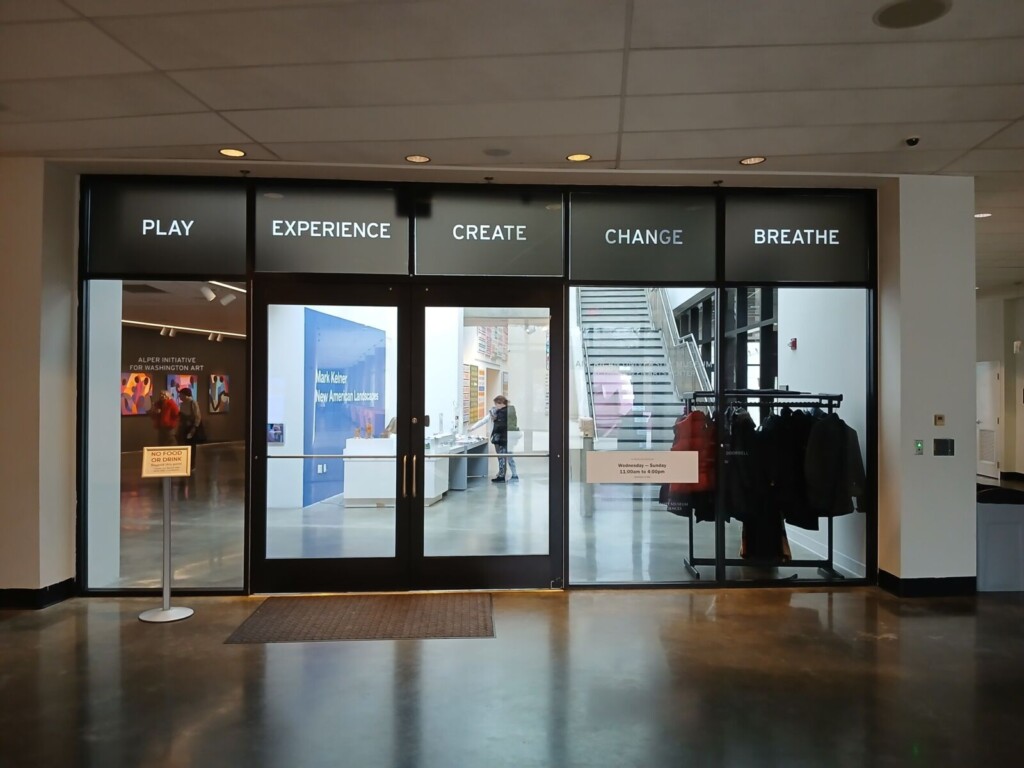
You walk into a room full of strangers and someone asks where you went to school. Notice what happens in your chest before your mouth opens — that fraction of a second where you calculate, adjust, brace, or prepare to receive something. The name of an institution does work in that silence that no grade point average ever could.
The U.S. News & World Report rankings, first published in 1983, did not arrive as a neutral measurement tool. They arrived as a product. The magazine was losing relevance in a crowded media landscape and needed a recurring franchise — an annual event that would generate readership through anxiety. What the rankings actually measured was a composite of metrics including peer assessment scores, alumni giving rates, and student selectivity, none of which mapped cleanly onto what happens inside a classroom. Selectivity, in particular, created a feedback loop of almost perfect circularity: the fewer students an institution admitted, the more desirable it appeared, which made more students apply, which allowed it to admit even fewer, which drove the ranking higher. Quality was not being tracked. Scarcity was being manufactured, and then sold back to the public as evidence of excellence.
Pierre Bourdieu spent a significant portion of his intellectual life trying to name what was actually being exchanged in places like this. In “Reproduction in Education, Society and Culture,” written with Jean-Claude Passeron and published in 1970, he argued that educational systems do not primarily transmit knowledge — they transmit the social conditions that make certain kinds of knowledge feel natural, legitimate, and worth having. The concept he developed was cultural capital: the accumulated dispositions, credentials, tastes, and institutional affiliations that function in social space the way money functions in economic space. It can be converted. It earns returns. It depreciates in the wrong contexts and appreciates in the right ones. And critically, it is inherited far more reliably than it is acquired through individual merit.
What this means in practice is that an Ivy League degree held by someone whose grandparents also held Ivy League degrees carries a different density than the same credential in the hands of a first-generation student. The parchment is identical. The accumulated institutional memory behind it is not. The alumni networks activated by that name, the social ease in certain rooms, the unspoken fluency with how power presents itself in professional settings — these are not taught in any syllabus. They are absorbed across decades of proximity to particular institutions, and they compound. Bourdieu was not describing individual unfairness. He was describing a structural inheritance mechanism dressed in the language of meritocracy.
By the early 2000s, the rankings had migrated from a publishing gimmick into a governing instrument. University presidents began restructuring admissions strategies, financial aid allocation, and even faculty hiring around metric optimization rather than educational mission. Institutions started offering merit aid to high-scoring applicants who did not need financial assistance, specifically because those students would improve the entering class profile and push selectivity numbers upward. The students who most needed financial support were, in many cases, deprioritized to serve the ranking. This was not a corruption of the system — it was the system working exactly as the incentive structure demanded.
The deeper violence of prestige economies is that they make participation feel voluntary. No one forces a seventeen-year-old to collapse their self-worth into an admissions decision from a school whose selectivity rate has been deliberately engineered toward single digits. The coercion is ambient, distributed across college counselors, parental dinner conversations, the architecture of college-prep industries that generated over two billion dollars annually by the mid-2010s, and a cultural consensus so thoroughly internalized that questioning it requires a kind of defection most families are not positioned to risk. Prestige does not advertise itself as a trap. It advertises itself as a door — and the cruelty of a well-designed trap is that it is often indistinguishable from an opening.
The Adjunctification of Knowledge
You grade the last paper in the front seat of your car, engine off, the heater broken, a coffee going cold in the cupholder. In forty minutes you have to be across town for a composition class at a community college that doesn’t share a parking lot, a faculty lounge, or an institutional identity with the research university where you taught two hours ago. You have four courses this semester, spread across three campuses, none of which considers you a permanent employee. You have no office. You have no health insurance through any of them. You earn somewhere between three and four thousand dollars per course before taxes, which means your gross annual income from teaching — an activity requiring a terminal degree, years of specialized training, and continuous intellectual labor — sits comfortably below the federal poverty line for a family of three.
This is not an aberration. It is an architecture. By 2022, contingent faculty — adjuncts, visiting instructors, non-tenure-track lecturers on renewable contracts that may or may not be renewed — were delivering more than seventy percent of all undergraduate instruction at American colleges and universities. The figure didn’t appear overnight. It was assembled slowly, across decades, as institutions discovered that the same credential which once entitled a scholar to a stable livelihood could be decoupled from that stability without generating sufficient public outrage to reverse course. The National Center for Education Statistics documented the trend with bureaucratic patience: in 1970, roughly three quarters of faculty positions were tenure-track. By 2019, that ratio had nearly inverted. What changed was not the demand for teaching. What changed was the institutional willingness to pay for it.
John Kenneth Galbraith, writing in The Affluent Society in 1958, described how modern organizations produce private wealth while systematically starving the public and semi-public services that sustain the conditions for that wealth. The American research university performed a version of this maneuver on itself: it poured money into administrative expansion, campus construction, athletic infrastructure, and executive compensation — university president salaries frequently exceeding five hundred thousand dollars annually by the 2010s — while reclassifying the core intellectual work of the institution as a cost to be minimized. Teaching became the expenditure that administrators competed to drive down, and a surplus labor pool of overqualified, indebted PhD graduates made the math brutally simple.
What goes unexamined in most public conversations about higher education is the epistemological consequence of this arrangement. When the people transmitting knowledge are themselves structurally precarious, what gets transmitted carries the watermark of that precarity. An adjunct teaching five courses a year, racing between campuses, surviving without research time or institutional support, cannot mentor students the way a professor with an office and a three-course load can. The intellectual relationship that universities sell in their brochures — the transformative encounter between a developing mind and a dedicated scholar — becomes a fiction maintained for marketing purposes while the actual transaction is handled by an exhausted contingent worker in a parking lot between shifts.
Barbara Ehrenreich spent months in 2000 and 2001 doing low-wage service work to write Nickel and Dimed, exposing how poverty functions not as a temporary condition but as a trap with its own internal logic: the less you have, the more everything costs you in time, energy, and dignity. Contingent academic labor follows the same topology. Without job security, an adjunct cannot afford to challenge a student’s family, push back against administrative pressure, or take intellectual risks that might jeopardize next semester’s contract. The precarity doesn’t only impoverish the teacher. It disciplines the teacher into a particular kind of docility, and that docility, invisible to the student sitting in the third row, quietly shapes what is sayable in the room.
Mental Health as Systemic Symptom
You are sitting in the campus counseling center waiting room for the third time this semester, staring at a motivational poster that tells you to “be the change,” and you realize that the irony is not accidental — it is structural. The institution that is breaking you is also the one handing you the brochure about resilience.
When Jonathan Haidt and Greg Lukianoff published their 2018 study of undergraduate psychological fragility, much of the commentary that followed reached immediately for the culture-war lever, reading the book as a rebuke of soft young people raised on helicopter parenting and trigger warnings. That reading was lazy and self-serving. The data they were actually tracking was grimmer and more impersonal than any generational critique could contain: between 2010 and 2020, rates of anxiety and clinical depression among American college students roughly doubled. Suicide became the second leading cause of death for people aged fifteen to thirty-four. These are not numbers that belong to a conversation about character. They belong to a conversation about conditions.
The university, as it is currently constructed in the United States, operates on a profound contractual deception. It recruits students with the language of transformation — find your passion, discover your purpose, become who you are meant to be — while delivering something structurally closer to a high-stakes audition with no guaranteed outcome. The student is asked to perform enthusiasm for intellectual life at the precise moment when intellectual life has been financialized to the point of near-incoherence. She borrows forty thousand dollars a year to study something she was told to love, in a job market that will evaluate her on metrics the university never honestly named, inside an institution that grades her curiosity as though it were a commodity to be ranked and sorted.
Sociologist Randall Collins, writing about interaction ritual chains, argued that emotional energy is not a fixed reservoir but a product of sustained, mutually reinforcing social encounters. What the contemporary campus disrupts, systematically, is exactly that kind of reciprocity. The student is placed in competitive rather than collaborative relation to her peers from the first day of orientation, when the unspoken subtext of every social introduction is already a form of positioning. GPA, internship, club leadership, research opportunity — every affiliation becomes a line on a document that will outlast the actual experience of acquiring it. The psychic cost of this is not weakness. It is the entirely rational response of a nervous system that has been asked to sustain genuine emotional investment inside a framework that is structurally indifferent to genuine emotion.
What makes this particularly hard to diagnose from inside the institution is that the university genuinely believes its own promotional language. Faculty who entered academia in the 1980s and 1990s, when tenure-track positions were difficult but not phantasmal, when tuition was high but not predatory, built their sense of the institution’s meaning around experiences that no longer correspond to what undergraduates are actually inhabiting. The gap between the story told by those who survived the system and the material reality faced by those currently inside it produces a specific kind of gaslighting — not malicious, but structural, and therefore harder to name and resist than cruelty would be.
The American Psychological Association’s 2022 survey of college students found that 44 percent screened positive for at least one diagnosable mental health condition. Universities responded with expanded counseling services, mental health days, and app-based therapy platforms — all of which treat the symptom at the level of the individual while leaving the producing conditions entirely intact. This is, in a precise sense, the pharmaceutical logic applied to an architectural problem: you are not medicating a broken person, you are medicating someone whose perception of a broken environment is entirely accurate, and the medication’s purpose is to make that accuracy more bearable rather than more visible.
The institution does not want you well. It wants you functional.
A vision curated by a filmmaker, not an algorithm
In this video I explain our vision
The Research Economy and Its Distortions

You write a grant proposal the way you once wrote a dissertation — with obsessive attention to what the reviewers want to hear, calibrating every sentence to the preferences of a committee you will never meet, in a room where the question is not what is true but what is fundable. The research itself comes later, if it comes at all. What arrives first is the performance of research: the projected outcomes, the measurable deliverables, the carefully formatted significance statement that translates genuine curiosity into bureaucratic legibility.
Federal R&D funding flowing into American universities now exceeds fifty billion dollars annually. The National Institutes of Health and the National Science Foundation together constitute a kind of shadow government of knowledge, determining not through overt censorship but through the quiet pressure of resource allocation which questions get asked, which fields expand, and which forms of inquiry are left to starve on adjunct salaries and departmental goodwill. A biologist who cannot secure external grants is not merely underfunded — she is, by the logic now operative inside most research universities, failing at her job. The grant becomes the primary unit of professional evaluation, displacing the book, the discovery, the student transformed by an encounter with a difficult idea.
Sheila Slaughter and Larry Leslie named this transformation with surgical precision in their 1997 work “Academic Capitalism: Politics, Policies, and the Entrepreneurial University.” Their argument was not that universities had become corrupt but that they had become competitive in a specific market sense — that faculty, departments, and institutions now behaved like firms, allocating effort toward activities that generated external revenue rather than activities that generated knowledge. The market logic did not arrive as an invasion. It seeped in through funding structures, administrative priorities, and the slow normalization of metrics that treated citations and contracts as proxies for intellectual value.
What this produces at the level of individual careers is a particular kind of cognitive distortion. A researcher in a field with robust NIH funding learns, over years of graduate training and postdoctoral apprenticeship, to frame every question in terms legible to a study section. The questions that do not fit — that are too speculative, too interdisciplinary, too slow to yield publishable results within a three-year grant cycle — are not forbidden. They are simply impractical. Intellectual self-censorship of this kind leaves no paper trail because it operates before language, in the moment when a scientist decides what to pursue before the pursuit has even begun.
The distortion compounds at the institutional level. Universities that succeed in attracting large federal contracts begin building infrastructure around that success — sponsored research offices, technology transfer divisions, compliance bureaucracies — which then require continued funding to sustain themselves. The overhead recovery rates universities charge on federal grants, typically between forty and sixty percent of direct costs, become a significant revenue stream that administrations grow dependent on. This means that when a department’s grant productivity declines, the institution loses not just research capacity but operating revenue, which transforms faculty hiring, promotion, and retention decisions into financial calculations made at the provost level, far from any conversation about intellectual merit.
There is a historical irony embedded here that tends to go unacknowledged. The postwar expansion of federal research funding — formalized through Vannevar Bush’s 1945 report “Science: The Endless Frontier,” which argued that basic research required public investment precisely because its benefits were too diffuse for private markets to capture — was premised on the idea that knowledge freed from commercial pressure would generate unexpected discoveries. The policy created the infrastructure. The infrastructure created dependencies. The dependencies created the pressure to perform fundability rather than freedom, until the original justification for public investment in basic research became the most difficult thing to defend inside the system that investment built.
None of this is experienced by those inside it as a scandal. It is experienced as professionalism, as rigor, as the normal texture of a serious academic career — which is perhaps the most precise measure of how completely the transformation has succeeded.
International Students and the Revenue Architecture
You arrive on a campus that has been waiting for you — not for what you know, not for what you might become, but for what you carry in your bank account. The admissions office language will describe your presence as “enriching the academic community,” and perhaps it does, but that framing does not survive contact with the financial architecture underneath it. You are, in the coldest institutional sense, a revenue event.
The numbers make this impossible to misread. International students at American universities pay full tuition without access to federal financial aid, and those rates have settled into a range between $35,000 and $60,000 annually at major research universities, before housing, fees, and health insurance are factored in. At the University of Michigan, the gap between in-state and out-of-state tuition — the same gap that captures most international students — exceeded $35,000 per year by the early 2020s. Multiply that differential across a cohort of several thousand international enrollees and you are no longer looking at diversity programming. You are looking at a budget line that keeps other things alive.
What those things are reveals the true structure of the arrangement. A significant portion of the surplus generated by full-pay international enrollment is redistributed internally as institutional financial aid — grants, scholarships, and merit awards — that allow universities to recruit high-achieving domestic students who could not otherwise afford attendance. The international student, in other words, subsidizes the domestic student’s discount. This cross-subsidization is rarely named directly in any admissions brochure, but it has been documented with enough consistency across institutional research that it functions less as a hidden practice than as an open secret that no one is incentivized to publicize.
The structural dependency deepened after 2008 with a speed that left many public universities permanently altered. When the financial crisis collapsed state tax revenues, legislatures across the country responded by cutting higher education appropriations with particular savagery. California reduced funding to the University of California system by roughly 20 percent in a single fiscal year. Similar cuts moved through Michigan, Virginia, Wisconsin, and Florida. The universities that had relied on public subsidy as a stabilizing floor suddenly found that floor had dropped. They did not respond by shrinking. They responded by recruiting internationally at a scale and intensity that had no precedent in American academic history.
What accelerated between 2009 and 2015 was not a philosophical shift toward global education — it was a sales operation. Offices were opened in Beijing, Shanghai, Seoul, Mumbai, and Lagos. Partnerships were formed with foreign recruiting agents who received commissions per enrolled student, a practice that in any other industry would be called brokerage. The Institute of International Education’s Open Doors report, tracking these trends annually, recorded international student enrollment at American universities climbing from approximately 624,000 in 2008 to over one million by 2016. The growth curve followed state defunding curves with uncomfortable fidelity.
What the universities did not prepare for was the volatility of depending on a politically exposed revenue stream. When relations between the United States and China deteriorated across the late 2010s and early 2020s, and when pandemic-era visa restrictions cut enrollment from certain countries by double digits in a single year, the institutions that had replaced state funding with international tuition discovered they had not solved a structural problem — they had swapped one form of dependency for another. The sociologist Christopher Newfield, writing about the defunding of public research universities in his 2016 work “The Great Mistake,” argued that the retreat of public investment forced universities into market behaviors that progressively eroded their capacity to function as public goods. The international tuition architecture is precisely that erosion in action — a private market solution grafted onto institutions whose legitimacy still depends on a public mission they can no longer fully afford to perform.
The student who arrives from Chengdu or Hyderabad to study engineering is not responsible for any of this. But they are positioned inside it in ways that shape their experience before they have attended a single lecture.
The Credential and What It Cannot Name
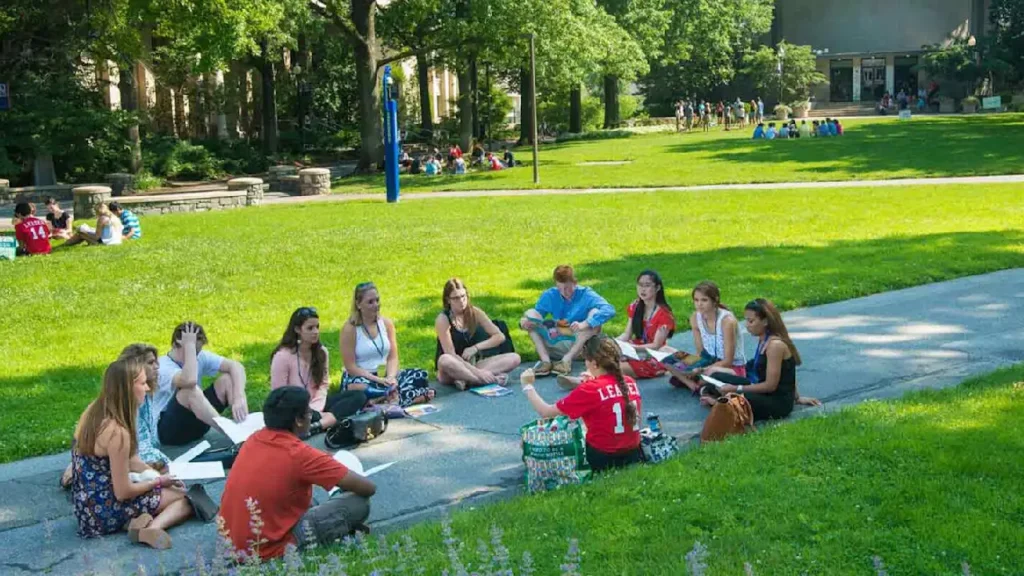
You hand the diploma to your parents after the ceremony and watch them hold it the way people hold things they don’t quite know how to read — carefully, reverently, as though the paper itself contains the answer to a question they’ve been carrying for twenty years. What the document actually says, in the language beneath its Latin flourishes and institutional seals, is simpler and more brutal than anyone in that gymnasium will admit: this person showed up, did not break the rules in any disqualifying way, and converted enough of their time into acceptable performances to satisfy the minimum threshold we set for ourselves. That is the full content of the credential. Everything else is projection.
Ivan Illich saw this arriving with uncomfortable clarity in 1971, when Deschooling Society argued that modern schooling had decoupled itself from learning so completely that the diploma had become a self-referential object — proof of having obtained proof, a document that certifies the process of certification without touching the actual competencies that process was supposed to produce. Illich was writing at a moment when a bachelor’s degree still carried genuine scarcity value, when fewer than twelve percent of American adults held one. His alarm was therefore not retrospective; it was structural. He identified the mechanism before the inflation that would make the mechanism undeniable: once enough people hold the credential, the credential can no longer distinguish, and so institutions simply add another layer — the master’s, the specialization, the certification program, the bootcamp badge — each new tier encoding not more knowledge but more demonstrated willingness to remain inside the system.
What endurance inside institutional time actually trains is something sociologists have documented with more precision than comfort. Randall Collins, in The Credential Society published in 1979, traced how hiring decisions migrated from skill assessment toward credential screening not because employers believed degrees conferred competence but because degrees served as a cheap proxy for cultural fit — for the capacity to absorb bureaucratic norms, defer to authority across sustained periods, and perform conscientiousness in ways that middle-class evaluators recognize as legitimate. The degree, on this reading, is less a cognitive achievement than a behavioral one. It signals that you can be managed.
The cruelty of this arrangement lands hardest on the students who believed the explicit promise most completely. First-generation college graduates, who in 2023 represented roughly a third of all bachelor’s degree recipients in the United States according to the National Center for Education Statistics, enter the credential market carrying an additional weight that their more institutionally fluent peers never have to acknowledge: they learned the content but often missed the parallel curriculum, the one running silently alongside the official syllabus, teaching internship networks, alumni leverage, the grammar of professional self-presentation, the particular confidence that comes not from knowledge but from having grown up in rooms where credentialed people spoke casually about their credentials. This parallel curriculum is never assessed, never formally taught, and almost never acknowledged, which means it cannot be democratized.
Meanwhile the skills that research consistently correlates with actual economic mobility — capital allocation judgment, negotiation, the ability to read organizational power without a map, comfort with ambiguity under financial pressure — appear in no accreditation standard and in no learning outcome rubric, because they resist the very measurement infrastructure that institutions require to justify their existence. This isn’t accidental. Measuring those capacities would require admitting that the university is not the primary site of their transmission, that they move instead through inheritance, mentorship, and proximity to risk in ways that tuition payments cannot purchase.
The system does not hide this. It simply ensures that the people most damaged by the gap between what the credential promises and what it delivers are also the people with the least institutional vocabulary to name what was taken from them.
🎓 Dreams, Debts & the Price of Knowledge
The American university system sits at the crossroads of opportunity and crisis, where the promise of social mobility collides with crushing financial pressures and psychological strain. Understanding this landscape means exploring the wider forces that shape ambition, identity, and the cost of belonging to a system that does not always deliver on its promises.
The American dream: history, meaning and decline of a myth
The American Dream has long served as the ideological backbone of the university experience, promising that education is the surest ladder to success and self-reinvention. Yet as tuition costs soar and student debt becomes a defining feature of young adulthood, the myth shows its fractures. This article traces the history, meaning, and slow erosion of a foundational national narrative.
GO TO THE SELECTION: The American dream: history, meaning and decline of a myth
Precarious work and dreams on hold: a generation in waiting
For many university graduates, the diploma opens not onto a career but onto a prolonged and disorienting period of waiting — temporary contracts, unpaid internships, and deferred life milestones. The precariat generation discovers that credentials alone do not guarantee stability in a labor market that has fundamentally changed. This piece examines the emotional and economic reality of a generation caught between expectation and precarity.
GO TO THE SELECTION: Precarious work and dreams on hold: a generation in waiting
The impostor syndrome: when success always seems out of reach
High-achieving students are paradoxically among the most vulnerable to impostor syndrome, a psychological condition in which success feels undeserved and exposure feels imminent. The competitive pressure of elite academic environments amplifies self-doubt, turning the pursuit of excellence into a source of chronic anxiety. This article unpacks the mechanisms behind this widespread phenomenon and the cultures that breed it.
GO TO THE SELECTION: The impostor syndrome: when success always seems out of reach
Social inequality: history and causes
Social inequality shapes who enters university, who completes a degree, and who benefits from the credential afterward — making higher education both a remedy for and a reflection of deeper structural divides. Access, cost, and outcomes are never neutral: they mirror the class, racial, and geographic hierarchies already present in society. This article offers a rigorous historical and analytical account of how inequality reproduces itself through institutions that promise otherwise.
GO TO THE SELECTION: Social inequality: history and causes
Explore the World Through Independent Cinema
If these themes resonate with you, Indiecinema offers a curated streaming library of independent and documentary films that go where mainstream cinema rarely dares — exploring education, inequality, identity, and the hidden costs of ambition. Discover stories that challenge, provoke, and illuminate on Indiecinema.
👉 EXPLORE THE CATALOG: Watch Indie Films in Streaming
A vision curated by a filmmaker, not an algorithm
In this video I explain our vision

