
The Inheritance of Position
You hand over your résumé at the front desk, and the woman scanning it pauses for half a second longer than she did with the person ahead of you. It isn’t the degree. It isn’t the experience, which is thin, unremarkable, identical in substance to a dozen others submitted that week. It’s the address printed in the corner, a postal code that means something to her before it means anything to you. She doesn’t know she’s reacting to it. She would deny it if asked. And yet something has already been decided, quietly, in the half-second between reading and speaking, and no interview, no test of competence, will fully undo it. You walk in already carrying a verdict you never argued for.

This is not a story about a rigged system in the sense of conspiracy, of men in back rooms dividing spoils. It is something both more ordinary and more difficult to dislodge: the accumulated weight of markers that precede the self. A surname that once belonged to a landowner, a street that was zoned a certain way in 1962, a vowel sound picked up in a nursery in one neighborhood rather than another. Pierre Bourdieu spent much of his career, particularly in Distinction, published in 1979, trying to name this weight. He called part of it cultural capital, the accumulated fluencies, tastes, and reference points that function like currency in rooms where actual money hasn’t yet been discussed. A child raised around certain books, certain museum visits, certain ways of holding a fork, doesn’t experience these as advantages. They experience them as simply how the world is. That is the trick of inherited position: it doesn’t feel like inheritance from the inside. It feels like competence.
The invisibility is the mechanism, not a flaw in it. If the woman at the front desk knew, consciously, that she was favoring one postal code over another, she would likely feel shame, and shame produces correction. But the process she’s engaged in doesn’t rise to the level of conscious thought. It operates through what Bourdieu called habitus, a set of dispositions so deeply absorbed into the body and the instincts that they no longer register as learned behavior at all. You don’t decide to feel comfortable in a boardroom. You either do or you don’t, and that comfort or its absence was assembled years before you ever walked into one, out of dinner table conversations, out of the confidence modeled by parents who themselves never doubted their right to occupy such rooms.
Consider that the surname itself carries measurable freight. Studies of hiring practices, including the well-documented 2003 field experiment by economists Marianne Bertrand and Sendhil Mullainathan, sent out nearly identical résumés differing only in the name at the top, and found that applications bearing names associated with white applicants received about fifty percent more callbacks than those with names associated with Black applicants. Nothing about skill had changed. Only the name. Only the sound of it in a stranger’s mind, conjuring, unbidden, an entire narrative of who this person probably is, what neighborhood produced them, what schools they likely attended, before a single qualification had been weighed.
What makes this durable across generations is precisely that those who receive the benefit rarely have to notice the mechanism delivering it. The woman at the desk believes, sincerely, that she hired the more qualified candidate. The boardroom occupant believes, sincerely, that his ease was earned through effort. The transmission of advantage doesn’t require malice to reproduce itself; it requires only that the beneficiaries mistake the machinery for the natural order of things, that they look at their own comfort and see merit staring back, when what they are actually seeing is a long chain of prior positions, quietly compounding, arriving at their doorstep already disguised as personal achievement.
Agricultural Surplus and the Birth of Hierarchy
You are standing in a grain storage pit somewhere near the Euphrates around 6000 BCE, though you do not know this word for the river, and you do not know that what is beneath your feet will eventually be called a surplus. You only know that this season’s harvest exceeded what your household can eat before it rots, and someone, for the first time in the history of your lineage, has to decide who keeps the extra. That decision, repeated across ten thousand identical pits in ten thousand identical villages, is the hinge on which the entire human species swung from one condition into another.
For the overwhelming majority of the roughly three hundred thousand years Homo sapiens has existed, this problem did not arise. Hunter-gatherer bands, as Marshall Sahlins argued in his 1972 essay collection Stone Age Economics, were not scraping by in misery but living what he provocatively called the original affluent society, working perhaps fifteen to twenty hours a week because their wants were few and their mobility made accumulation pointless. You cannot hoard a mammoth. You cannot inherit a hundred acres of tundra. Egalitarianism in these societies was not a virtue but a mathematical consequence of the fact that surplus, when it appeared, spoiled, migrated, or had to be carried on someone’s back. The anthropologist Christopher Boehm, studying both contemporary foraging bands and primate behavior, described this as a reverse dominance hierarchy, a system in which the group actively and often violently suppressed any individual who tried to accumulate more prestige or resources than his neighbors.
Then came wheat, barley, and the domestication of storable grain, and the mathematics changed completely. The Australian archaeologist Vere Gordon Childe, writing in the 1930s and formalizing his ideas in his 1950 paper The Urban Revolution, identified this as one of two great punctuation marks in human history, the first being the Neolithic Revolution itself, the shift to farming around 10,000 BCE, and the second being the emergence of cities some five thousand years later. Childe understood something that still unsettles people who want to believe civilization is simply progress: the surplus that made cities, writing, and monumental architecture possible was extracted, not shared, and it required a class of people who did not farm to manage, measure, and defend it.
The site of Çatalhöyük in Anatolia, excavated first by James Mellaart in the 1960s and later reexamined by Ian Hodder starting in 1993, offers an eerie intermediate snapshot of this transition. Here, around 7400 BCE, thousands of people lived in densely packed mudbrick houses entered through the roof, and for centuries the archaeological record shows almost no evidence of hierarchy: no palaces, no elite burials glittering with imported goods, houses of remarkably similar size. Çatalhöyük suggests that agriculture alone does not automatically produce kings. Something else had to happen, and that something appears more clearly a couple of millennia later and several hundred miles southeast, in the alluvial floodplains of Mesopotamia.
By the time you reach sites like Uruk, which by 3200 BCE had swollen to a population estimated between forty and eighty thousand people, the evidence of stratification is no longer ambiguous. Excavations reveal massive temple complexes, the Eanna and Anu precincts, built through organized labor that someone had to command. Cuneiform tablets, the earliest writing humans ever produced, turn out on decipherment to be overwhelmingly administrative: ledgers of grain, beer rations, and labor obligations. Writing itself, that supposed pinnacle of civilization, was invented not to record poetry but to track who owed what to whom. The archaeologist Robert McC. Adams, surveying settlement patterns in southern Iraq during the 1960s and 1970s, documented how population concentrated around temple and palace institutions that controlled irrigation, and irrigation, unlike rainfall, could be gated, taxed, and rationed by whoever controlled the canal’s headworks. Grain that can be stored can be stolen, taxed, loaned at interest, or withheld, and a person sitting on three years of reserves while his neighbor has none is no longer his neighbor’s equal in any meaningful sense, no matter what either of them believes about their own dignity.

Property, Contract, and the Naturalization of Ownership

A man drives a stake into a patch of ground, tells his neighbors this piece is his, and finds people simple enough to believe him. That single scene, staged by Jean-Jacques Rousseau in the second part of his 1755 Discourse on the Origin and Foundations of Inequality Among Men, is not offered as history in the documentary sense. Rousseau knew he was not describing an actual afternoon in some prehistoric clearing. He was doing something more unsettling: showing that the entire edifice of property, law, and civil society rests on an act of pure audacity that succeeded only because no one contested it in time. The founder of civil society, he writes, was the first man who enclosed a piece of ground and found people credulous enough to believe him. What strikes you, reading this sentence again, is the verb Rousseau chooses. Not discovered, not earned, not cultivated into ownership through labor. Believed. Property begins as a successful bluff, and the tragedy, for Rousseau, is that humanity had not yet developed the conceptual tools to call the bluff.
Compare this to John Locke, writing some seventy years earlier in the Second Treatise of Government of 1689, and the contrast becomes almost violent. Locke wants to solve exactly the problem Rousseau refuses to let disappear. His argument is elegant in its simplicity: every man owns his own body, therefore he owns the labor of his body, and when he mixes that labor with something held in common, like an acorn picked up from beneath an oak or a piece of turf cut and enclosed, he removes it from the common state and makes it his own. The famous proviso, that this taking is legitimate only when there remains enough and as good left for others, functions in Locke’s text as a kind of safety valve, a promise that appropriation does not injure anyone else. What Locke accomplishes, whether or not he intended the full weight of it, is a transformation of ownership from a social fact requiring the recognition of others into a natural fact requiring only the laborer and the object. Property stops being a relation between people and becomes a relation between a person and a thing, sealed before society ever arrives to complicate it with law or convention.
This is the maneuver that later thinkers would spend centuries trying to expose and just as many centuries reinforcing without noticing they were doing so. C. B. Macpherson, in his 1962 study The Political Theory of Possessive Individualism, argued that Locke’s proviso quietly collapses once money enters the picture, since money allows a man to accumulate far beyond what he could use before it spoils, and thus breaks the very limit that made the original appropriation innocent. Locke needed the invention of durable currency to justify unlimited accumulation, and once he had it, the enough and as good clause became a decorative gesture rather than a binding constraint. The genius of the construction, though, lies precisely in how invisible this collapse remains to anyone who has not gone looking for it. A theory built to explain how property could be legitimate ends up functioning as a theory that property simply is legitimate, full stop, prior to any political arrangement, immune to redistribution because redistribution would mean violating a right older than the state itself.
Rousseau’s stake in the ground and Locke’s mingled labor are not merely two competing philosophical positions debated in seminar rooms. They are two different stories a civilization tells itself about why some people own vast tracts of land, factories, patents, entire rivers of capital, while others own the shirt on their back and perhaps a rented room. One story exposes the ownership as a historical accident stabilized by force and gullibility. The other story dresses the same ownership in the language of nature, labor, and desert, so that by the time a child in any classroom today hears the words private property, the concept arrives pre-varnished, requiring no more justification than gravity. The distance between a stake driven into soil and a deed registered in a county office turns out to be much shorter than anyone wants to admit, and considerably better lawyered.
Weber, Marx, and the Architectures of Stratification
A man inherits his father’s small factory in Manchester in 1867 and never once has to ask himself what his workers do with their hunger. He pays them enough to return the next morning and not a coin more. He does not hate them. He has simply arranged his life so that their exhaustion becomes his surplus, and the arrangement requires no malice, only the ordinary discipline of bookkeeping. This is the scene Marx wanted his reader to sit inside, not as an accusation against a particular villain but as a diagram of a mechanism that runs whether or not anyone at the controls feels cruel.
The mechanism has a name and a set of moving parts that Marx spent the first volume of Capital, published in 1867, trying to make visible under the skin of the commodity. Labor power, he argued, is the one commodity capable of producing more value than it costs to sustain. A worker might need six hours of labor to produce the value of his own subsistence, but the working day runs to ten or twelve, and the difference, what Marx calls surplus value, does not evaporate. It accumulates in the pockets of whoever owns the machines, the land, the capital, extracted not through theft in the legal sense but through a wage contract that looks, on paper, like a fair exchange between equals. This is the trick Marx wanted exposed: the market appears neutral, the handshake appears voluntary, and yet the structure guarantees that one party walks away enriched by the labor of the other every single time, systematically, not by accident. Class, in this architecture, is not a matter of taste or education or manners. It is a position relative to the means of production, and everything else, the church you attend, the newspaper you read, the political party you vote for, is scaffolding built on top of that one determining fact.
Max Weber read his Marx carefully and found the diagram too clean for the world he actually observed. In Economy and Society, assembled from manuscripts left unfinished at his death in 1920, Weber kept the economic dimension but refused to let it swallow everything else. He split stratification into three separate axes that could move independently of one another. Class remained tied to market position, to the chances a person has of acquiring goods and controlling their own economic fate. But status, what Weber called Stand, operates on an entirely different currency: honor, prestige, the social esteem attached to a lifestyle, a lineage, a manner of speaking, a set of consumption habits that mark a person as belonging or not belonging. A professor and a small business owner might occupy similar rungs economically while living in entirely different worlds of respect. And then there is party, Weber’s third axis, the organized pursuit of power itself, through unions, associations, political machines, groups that exist specifically to convert numbers into influence regardless of what their members earn or how they are regarded at dinner parties.
What Weber saw, and what Marx’s architecture struggled to accommodate, is the aristocrat who has lost his fortune but keeps his table manners and his invitations, the union boss who commands genuine political power while remaining, in the eyes of polite society, permanently declassé, the immigrant doctor who holds credentials and income far above his neighbors yet finds himself locked out of the status networks that would translate that income into belonging. These are not exceptions to be explained away. They are evidence that inequality runs on more than one track simultaneously, and that a person can be rich in one currency, capital, and destitute in another, honor, at the very same moment, in the very same city block.
The two frameworks do not cancel each other so much as interlock, each one catching what the other lets slip through. Marx explains why the factory owner and the factory worker will never simply negotiate their way to equality, because the structure itself manufactures the gap. Weber explains why two people standing at identical points on that economic ladder can nonetheless experience utterly different degrees of dignity, mobility, and access, because money alone has never been sufficient to purchase a seat at every table.
The Second Scene: Meritocracy as Modern Mythology
A young man sits across a mahogany table from three interviewers who have already decided, without knowing they have decided, that he is one of them. He uses the word “ostensibly” without pausing to consider it. He references a summer spent in a city they all recognize from their own youths, though he calls it an internship and they call it, later, in the hallway, potential. Nobody asks him how he learned to sit like that, weight settled, hands loose, voice pitched exactly at the register that reads as confidence rather than aggression. Nobody asks because the sitting, the pitch, the word “ostensibly,” do not register as things that were taught. They register as who he is. The interview lasts forty minutes and produces a number, a score, ranked against other candidates who spent those same forty minutes translating themselves out of the only vocabularies they had ever owned.
This is the scene that repeats itself across every mechanism modern societies have built to sort people by supposed merit: the entrance exam, the promotion committee, the scholarship panel, the algorithm trained on the resumes of people who already succeeded. Each device presents itself as a neutral filter, indifferent to birth, measuring only capacity and effort. Each device is, in practice, a machine for converting inherited advantage into the appearance of individual achievement, and then certifying that appearance as fact.
The word for this — meritocracy — was invented in 1958 by the British sociologist Michael Young, in a book called The Rise of the Meritocracy, and Young did not intend it as praise. He wrote it as satire, a dystopian projection forward to the year 2034, imagining a Britain that had fully replaced hereditary class with a supposedly fair sorting by IQ and effort, and showing how this new order would be, if anything, more brutally stratified than the old one, because it would come with moral justification attached. The old aristocracy at least knew its privilege was arbitrary, a matter of birth and luck; Young’s imagined meritocrats would believe, with the full weight of scientific and institutional authority behind them, that they deserved everything and the losers deserved their loss. He watched, decades later, as the word he coined as a warning was adopted by politicians, including those in his own Labour Party, as an aspiration, a positive good to be pursued. He wrote an anguished piece in the Guardian in 2001, near the end of his life, practically begging people to notice the irony had been inverted, that his nightmare had been rebranded as a dream.
Pierre Bourdieu, working in France through the 1960s and 70s, gave the mechanism of that inversion its most precise anatomy. In La Distinction, published in 1979, and in earlier essays on education co-written with Jean-Claude Passeron, Bourdieu described what he called cultural capital: the accumulated knowledge, tastes, linguistic habits, and unconscious bodily comportments — what he termed hexis — that children absorb from families who already possess them, and that schools then reward as if they were natural aptitude or individual merit rather than inheritance in a different currency. A child who has grown up around certain books, certain dinner-table debates, certain assumptions about which museums matter and which authors are worth quoting, arrives at the examination already fluent in the language the examination is conducted in. The exam does not measure intelligence stripped of context. It measures fluency in a dialect that was distributed, at birth, unevenly.
Bourdieu’s studies of French university students in the 1960s showed working-class students consistently underperforming relative to their formally measured intelligence, not because the material defeated them but because the entire apparatus — the vocabulary, the expected argumentative style, the unspoken codes of what constitutes a sophisticated answer — had been built around the dispositions of the bourgeoisie and then presented as universal, as simply what “good” work looked like. He called this misrecognition: the process by which a social advantage gets seen, by everyone including its beneficiaries, as a personal, natural quality. The interview candidate does not think of his ease as capital. He thinks of it as himself.
A vision curated by a filmmaker, not an algorithm
In this video I explain our vision
Bourdieu, Habitus, and the Reproduction of Distinction

You walk into a room and before anyone speaks you have already been classified. The tilt of a jaw, the pause before choosing which fork to lift, the specific weight given to certain words and not others, the ease or unease of a body sitting in a leather chair. Nobody has read your bank statements. Nobody needs to. Pierre Bourdieu spent decades documenting the fact that class writes itself onto the body before it ever appears on a form, and that this inscription feels, to the person carrying it, like nothing more than personal preference, like simply who they are.
In 1979, Bourdieu published La Distinction, a study built from surveys of thousands of French citizens about their tastes in food, music, painting, furniture. The findings were not that rich people liked expensive things and poor people liked cheap things, which would have been banal. The finding was that entire aesthetic sensibilities, entire ways of perceiving and judging beauty, correlated with class position with brutal precision, and that these sensibilities were experienced by everyone involved as natural, spontaneous, uncoerced. A preference for abstract art over sentimental genre painting was not a preference. It was a class position wearing the mask of individual sensibility. The bourgeois eye had learned, through years of exposure invisible to itself, to value form over function, distance over immediacy, the difficult over the immediately pleasurable. The working-class eye, formed by different conditions, gravitated toward what Bourdieu called the aesthetic of necessity, an appreciation for things that work, that satisfy, that do not require a theory to be enjoyed.
This is where habitus enters, and it is worth sitting with how strange the concept actually is once you stop treating it as jargon. Habitus is not upbringing in the sense of explicit lessons. Nobody sits a child down and teaches her which vowels to lengthen, which posture communicates ease in a boardroom, which hesitations signal that a joke has landed. Habitus is a set of dispositions absorbed so early and so thoroughly that they become instinct, they become body, they generate judgments and gestures and preferences that feel entirely one’s own precisely because their origin has been forgotten. Bourdieu describes it as history turned into nature, structure transformed into spontaneity. A person raised among books does not decide to feel comfortable in a library. She simply is comfortable, the way a fish does not decide to swim. A person raised without them does not decide to feel out of place. He simply does, and reads that feeling as a personal deficiency rather than as a structural inheritance.
The cruelty of the mechanism is that it launders inequality into merit. In Les Héritiers, published in 1964 with Jean-Claude Passeron, Bourdieu had already shown how French universities functioned as machines for converting inherited cultural capital into apparently earned academic success. Students from educated families arrived already fluent in the register the institution rewarded, already possessed of the references, the vocabulary, the unstated rules of intellectual performance that professors mistook for raw aptitude. The children of workers and farmers, arriving without this fluency, were not less intelligent. They were speaking a different dialect of thought and being graded as if the exam were neutral ground.
By 1970, in La Reproduction, Bourdieu and Passeron had systematized this into a full theory of symbolic violence, the process by which a dominant culture imposes its own arbitrary standards as if they were universal, and gets the dominated to accept those standards as legitimate, even to blame themselves for failing to meet them. The school does not need to coerce anyone. It only needs to reward what already resembles itself and call the result talent.
What makes this more than a period diagnosis of postwar France is the durability of the pattern once you strip away its French particulars, the specific accents, the specific institutions, the specific artworks used as markers. The underlying architecture, taste as inheritance mistaken for instinct, disposition as class mistaken for personality, travels intact across borders and decades, waiting to be recognized in rooms far from the ones Bourdieu ever studied.
Piketty and the Return of Patrimonial Capitalism
You are told, somewhere between school and adulthood, that the twentieth century broke something old and ugly, that the decades after 1945 proved capitalism could distribute as well as produce, and that whatever inequality remains today is a temporary glitch on a graph that bends, eventually, toward fairness. Sit with a pension statement or a rent notice long enough and the story stops holding. What you feel, without the vocabulary for it, is that ownership has quietly become destiny again, that the money made from having has outpaced the money made from doing, and that this was not supposed to be the ending anyone promised you.
Thomas Piketty spent over a decade with his collaborators reconstructing tax records across France, Britain, the United States, and beyond, some running back to the eighteenth century, and in 2013 published Capital in the Twenty-First Century with a finding stated almost too simply for how much it destroys: when the rate of return on capital, r, exceeds the rate of growth of the economy, g, wealth concentrates automatically, mechanically, without villains required. Land, stocks, real estate, inherited fortunes: these have historically returned four to five percent a year, while economic growth, the thing wages depend on, has rarely sustained more than one or two percent except in freak intervals. The arithmetic is not a moral failing distributed among the greedy. It is closer to compound interest working exactly as compound interest works, indifferent to who benefits.
The uncomfortable center of the book is the claim that the mid-twentieth century, the very period held up as proof of capitalism’s capacity for equality, was not a rule but an accident, a rupture produced by two world wars, the physical destruction of capital stock, punitive taxation to fund reconstruction, and inflation that quietly liquidated the fortunes of rentiers across Europe. Piketty’s data show the share of national income held by capital falling sharply between 1914 and 1945 and staying suppressed through the Trente Glorieuses, the thirty years of postwar growth the French remember as an anomaly of shared prosperity. Growth was unusually high, capital was unusually damaged, and the ratio briefly, historically, tilted toward labor. That window is closing. In France and Britain, private wealth has climbed back to roughly five to six times national income, levels not seen since before the First World War, approaching what Piketty calls patrimonial capitalism, a structure where inheritance rather than merit or labor determines position, structurally resembling the Belle Époque more than it resembles 1965.
This is where the arc bends back on itself rather than forward. The nineteenth-century world of Austen and Balzac, where a young person’s entire future depended on marrying into or inheriting the right fortune, where earned income from a profession could rarely compete with rents from land, is not a relic being slowly replaced by meritocracy. It is a structure meritocracy interrupted for two or three generations before losing its grip. Piketty’s own data on top income shares in the United States show the share held by the top decile falling to around 35 percent by the 1950s, only to climb back above 45 percent by the 2010s, converging again with European patrimonial patterns rather than diverging from them. The postwar middle class was not the destination. It may have been the detour.
What makes this return difficult to see from inside it is that wealth today wears different clothes than it wore under the Ancien Régime. There is no legally fixed nobility, no formal decree separating those who own from those who labor. Yet Piketty’s inheritance flow calculations, the proportion of total private wealth in France derived from inheritance rather than from savings out of labor income, show it rising from around 45 percent in the 1970s toward 60 to 70 percent by the 2010s, approaching nineteenth-century levels. A degree, a resume, a decade of disciplined work: these compete against something that was decided before the person doing the competing was born, and the return on that something continues to outrun the return on almost anything one does with a working life.
Psychological Internalization of Hierarchical Order
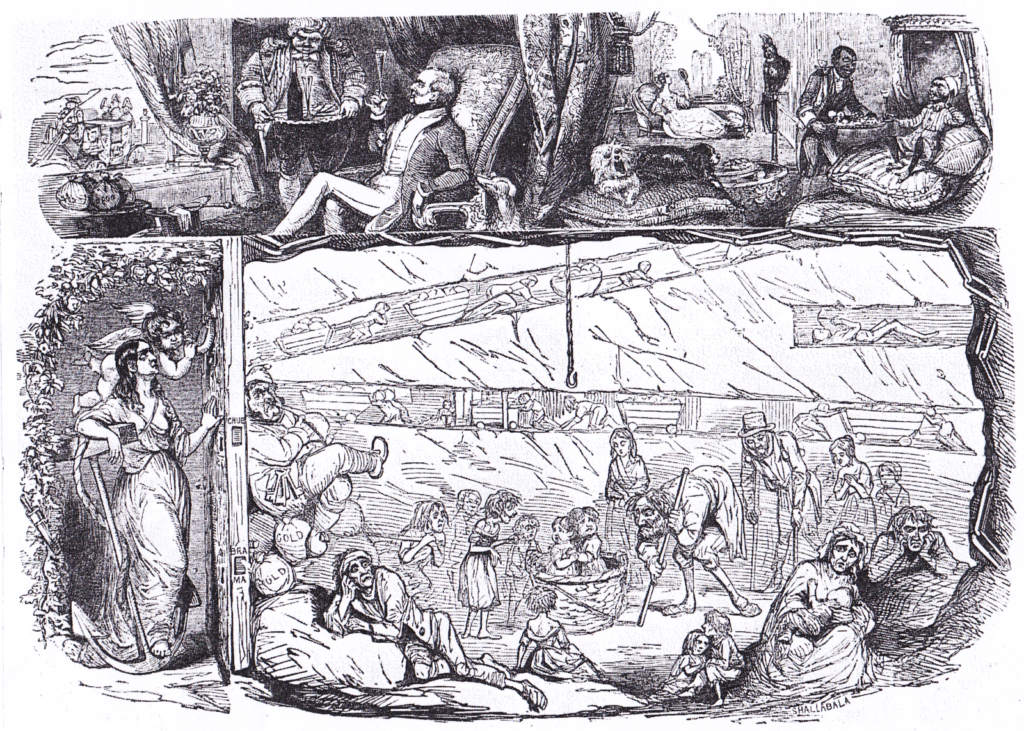
You wait in line at a public office, three hours on a plastic chair, watching a clerk process the file of someone who arrived after you but knows the right name to drop, and when it is finally your turn you find yourself explaining to the stranger beside you that this is simply how things work, that the system has its reasons, that you probably filled out some form incorrectly. Nobody forced that sentence out of you. You built it yourself, on the spot, out of nothing, and handed it to a person who had just watched you get treated worse than you deserved.
John Jost spent much of his career trying to explain why that sentence gets built so easily. System justification theory, formalized with Mahzarin Banaji in a 1994 paper in the British Journal of Social Psychology, proposes something that unsettles the entire architecture of how we assume oppression works: people are not merely resigned to unequal systems, they are psychologically motivated to defend them, and this motivation grows stronger, not weaker, among those the system disadvantages most. The theory names this the palliative function of ideology. Believing that the arrangement you live inside is fair, natural, or at least inevitable reduces the intolerable dissonance of believing you are trapped inside something arbitrary and unjust with no way out. It is cheaper, psychologically, to believe the hierarchy is earned than to sit with the alternative.
This inverts a comfortable assumption. We tend to imagine the poor as natural revolutionaries and the wealthy as the ones who need elaborate justifications for their fortune. The data runs the other direction with disturbing consistency. Jost’s research, including work published with Orsolya Hunyady in 2005, found that individuals with the least income, the least education, the least institutional power frequently express the strongest endorsement of meritocratic belief, the strongest faith that the economic system rewards effort and talent roughly as it should. The dispossessed becoming the system’s most fluent defenders is not an anomaly the theory struggles to explain. It is the theory’s central prediction.
Social comparison research supplies the mechanism underneath the ideology. Leon Festinger’s 1954 theory of social comparison processes established that people evaluate their standing not against some absolute measure but against those nearby, and this generates a strange mathematical trick of the mind. A person can look sideways, at a neighbor slightly worse off, and generate a small hit of relative satisfaction that does nothing to address the actual distance separating them from those above. Comparison gets rationed locally. You do not compare your wage to the hedge fund manager’s; you compare it to your brother-in-law’s, and this keeps the felt experience of inequality far smaller than its actual magnitude, which keeps the appetite for structural change correspondingly small.
There is a further layer, one Melvin Lerner identified in 1980 as the just-world hypothesis: the need to believe that the world is fundamentally a place where people get what they deserve. This belief is not imposed from outside by propaganda or schooling alone, though both help. It is generated from within, because the alternative, a world of arbitrary and unearned suffering distributed without moral logic, is close to unbearable to hold in mind for long. So the mind manufactures the deserving poor and the deserving rich, retroactively, to keep the universe coherent. Lerner’s early experiments showed subjects derogating a victim of random suffering they had just watched, not despite her innocence but because of it, since blaming her restored the sense that suffering follows some rule.
Pierre Bourdieu’s concept of habitus, laid out across Distinction in 1979, adds the final piece: these justifications are not chosen consciously at all. They are absorbed early, bodily, as taste, as manner, as an inarticulate sense of what people like us do and do not aspire to, so that the ceiling feels self-imposed long before anyone official ever announces it as a limit. The clerk’s chair, the form filled out wrong, the quiet sentence offered to a stranger in defense of a system that just failed you both, none of it required belief so much as it required the absence of any other available way to make sense of the wait.
⚖️ Unequal Worlds: Roots of Social Division
Social inequality is not a natural given but the product of history, power structures, and economic systems that have evolved over centuries. These related articles explore the ideological, political, and cultural roots of disparity, from class struggle to the welfare state.
Class struggle: from Marx to the revolutions of the twentieth century
This article traces the concept of class struggle from Marx’s foundational writings through the revolutionary upheavals of the twentieth century. It offers essential context for understanding how economic inequality has historically been theorized and contested by mass movements. A crucial reference point for grasping the ideological battles that shaped modern social policy.
GO TO THE SELECTION: Class struggle: from Marx to the revolutions of the twentieth century
Welfare and the social state: history and European models compared
Examining the rise of welfare systems across Europe, this piece compares different national models designed to mitigate social inequality. It highlights how state intervention has attempted, with varying success, to redistribute resources and guarantee basic protections. A valuable lens for understanding contemporary debates on the role of government in reducing disparity.
GO TO THE SELECTION: Welfare and the social state: history and European models compared
Extreme poverty: causes, dynamics and counter-policies
This article dissects the causes and mechanisms that trap individuals and communities in extreme poverty, alongside the policies designed to counter it. It situates poverty not as an isolated failure but as a systemic outcome tied to broader inequality structures. An important companion piece for understanding the human cost of social division.
GO TO THE SELECTION: Extreme poverty: causes, dynamics and counter-policies
Utopian socialism: history and key figures
Utopian socialism emerges here as an early attempt to imagine a more equitable society before Marxist theory took hold. The article profiles key figures who envisioned alternatives to industrial-era exploitation and inequality. It provides valuable historical grounding for understanding the intellectual origins of modern social justice movements.
GO TO THE SELECTION: Utopian socialism: history and key figures
🎬 Keep Exploring Beyond the Mainstream
If these reflections on inequality and social history resonate with you, Indiecinema offers a curated selection of independent films that dare to confront these very themes with honesty and depth. Dive into stories that mainstream cinema often overlooks, streaming now.
👉 EXPLORE THE CATALOG: Watch Indie Films in Streaming
A vision curated by a filmmaker, not an algorithm
In this video I explain our vision

