
The Sacred Economy of Transgression
You are standing at the edge of something you cannot name, and the pull you feel is not desire exactly — it is the recognition that crossing would cost you the version of yourself that is standing here. That cost is not incidental. It is the entire point.

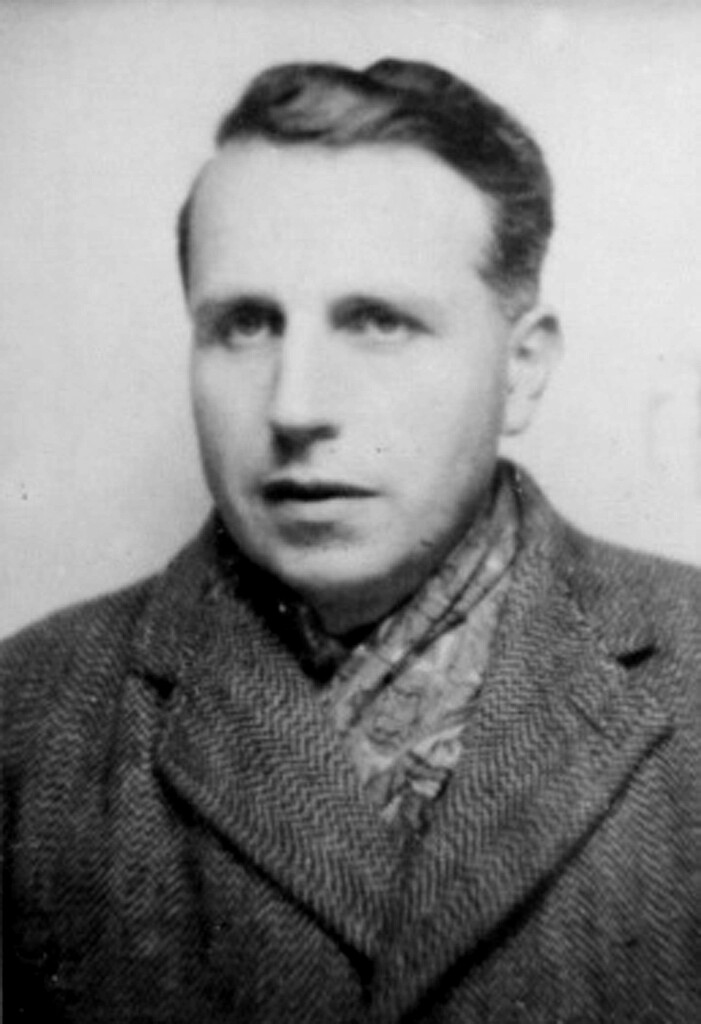
Georges Bataille spent most of his intellectual life arguing that what civilization calls excess — sexual violence, sacrifice, the orgiastic rituals of pre-Columbian civilizations, the medieval flagellant processions moving through plague-emptied towns — was not a deviation from the human but its most honest grammar. His 1957 book Erotism: Death and Sensuality opens with a claim that reads like a theorem and wounds like a confession: erotism is the affirmation of life even unto death. He did not mean this metaphorically. He meant that the erotic act and the act of dying share the same structural logic — both are moments in which the bounded, discrete self is violently dissolved into something larger and nameless, something that existed before individuation and will persist after it. The organism that seeks pleasure and the organism that bleeds out are, in his framework, doing the same thing at different velocities.
To understand why a man would build an entire philosophy around this equation, you have to stand inside the childhood that produced him. His father, Joseph-Aristide Bataille, was a tax collector who contracted syphilis before Georges was born and spent his son’s formative years going blind, then paralyzed, then mad — dying in 1915 while German forces occupied the family’s town of Reims, unable to be evacuated, left behind in a house that may or may not have been shelled. His mother suffered what contemporary accounts describe as episodes of acute psychosis, at least once attempting suicide. Bataille grew up in a household where the body was already a site of catastrophic betrayal, where the flesh announced its own ruin loudly and without apology. The domestic was already sacred in the precise sense he would later theorize: marked off, dangerous, approached only with trembling.
His training at the École des Chartes in the early 1920s, where he studied medieval manuscripts and archival paleography, required him to handle documents produced in proximity to death on a scale that modern people rarely encounter as texture — plague records, inquisition transcripts, illuminated manuscripts commissioned as preparations for dying. He also encountered, during this period, photographs of the Chinese torture practice known as lingchi, the execution by slow dismemberment, images that he described in his later work as producing in him a state indistinguishable from religious ecstasy. He kept one of those photographs for the rest of his life.
What he built from these materials was not a psychology but an economics. La Part maudite, published in 1949, eight years before Erotism, laid the metabolic foundation: Bataille argued that living systems always produce more energy than they need for survival, and that this surplus cannot be accumulated indefinitely — it must be lost, spent, destroyed. He called this general economy, and he contrasted it with the restricted economy of capitalism, which pretends that all expenditure is investment, that nothing is truly wasted, that every outflow returns. The sun, he pointed out, gives without receiving. It burns at a loss that is also its entire meaning. Societies that cannot find a way to squander their surplus — through festival, sacrifice, war, or erotic excess — will find that the surplus destroys them from within, expressing itself in forms they did not choose and cannot control.
Erotism, in this light, is not about pleasure. Pleasure is a bourgeois category — contained, returnable, something you recover from. What Bataille is describing is the moment the organism consents to its own partial annihilation because something in it recognizes that the boundary it is about to cross was never a protection.
Blood as Syntax: Violence Inside the Erotic Imagination
You are standing in a crowd that has gathered not despite knowing what will happen, but precisely because of it. The body at the center of the ceremony is alive. Everyone present understands, with a clarity that modern secular life makes nearly impossible to recover, that it will not remain so for long. And the anticipation is not horror — or not only horror. It hums with something unmistakably close to arousal.
Georges Bataille spent years trying to name that hum. In La Part maudite, published in 1949, he turned to the Aztec ritual economy not as an anthropological curiosity but as a structural key. The Aztec state sacrificed human beings on a scale that appalled even its contemporaries — thousands of captives consecrated at Tenochtitlan during the dedication of the Great Temple in 1487, their blood literally feeding the architecture of a civilization. Bataille’s point was not to rehabilitate this or to condemn it but to read it as a theorem about energy. Societies accumulate surplus — material, biological, erotic — and that surplus must be destroyed, spent, annihilated, or it will tear the social fabric apart from within. Sacrifice is not cruelty dressed in ritual. It is the only honest acknowledgment that excess exists and that existence itself demands its periodic incineration.
Durkheim had already sensed this structural truth, though he drew back from its most vertiginous implications. In Les Formes élémentaires de la vie religieuse, published in 1912, he argued that the sacred was not simply the good, the pure, the elevated — it was the charged, the dangerous, the separated. The sacred is whatever has been quarantined from ordinary contact because contact with it transforms, possibly destroys. What Durkheim could not quite bring himself to say, and what Bataille said without blinking, is that this quarantine is itself the engine of fascination. Prohibition does not protect us from desire. Prohibition manufactures it, compresses it, loads it into the object or the act until the pressure becomes unbearable. The taboo and the transgression are not a wall and the act of breaking it — they are a single mechanism. One does not exist without the other. The violence of the interdiction is inseparable from the violence of what the interdiction covers.
Walter Burkert, working from a different disciplinary tradition but arriving at an adjacent territory, argued in Homo Necans in 1972 that the nexus of hunting, sacrifice, and sexuality in archaic human societies was not metaphorical but functional. The biological and cultural evolution of Homo sapiens was shaped for hundreds of thousands of years by the experience of killing animals for survival, and that killing — the rupture of skin, the spilling of blood, the irreversibility of the wound — became embedded in the deepest layers of the erotic imagination. Burkert traced the Greek sacrificial festival with precision: the communal act of slaughter, the shared guilt, the blood that sanctified the altar and the feast that followed, the release of aggression that immediately preceded sexual license. He was not describing pathology. He was describing the grammar of a symbolic order in which blood, eros, and the sacred were not three registers but one continuous syntax written across the body of the victim.
What this means for the ordinary person moving through a contemporary city, with no altars and no sanctioned violence, is that the images do not disappear — they migrate. They surface in fantasy, in the consumption of violent media, in the precise moment during erotic experience when the imagination reaches instinctively for the image of rupture, of crossing, of something that cannot be taken back.

Continuity, Discontinuity, and the Body That Breaks Open
You are alone inside your body in a way that no language has ever fully named. Not lonely — something more structural than that, more like a fact of physics. The membrane of skin that holds you together also holds everything else out, and this is not a metaphor but a literal condition of being a differentiated organism. Bataille called this discontinuity, and he meant it with the precision of someone who understood that the horror at the center of erotic life is not about desire at all — it is about the terrifying prospect of what happens if desire succeeds.
For Bataille, writing in Erotism in 1957, every human being is sealed inside itself like a parenthesis that opened at birth and will close at death. What we call the erotic impulse is the organism’s violent, half-conscious drive to breach that seal — not to communicate with another person in the sentimental sense, but to dissolve the boundary between self and other entirely. This is why sex has never been merely pleasurable in any culture that left records. It arrives wrapped in ritual, prohibition, shame, sacred architecture. The pleasure is real, but it is not the point. The point is that in the moment of genuine erotic intensity, the individual self flickers, and what flickers is the only thing any of us has ever actually been.
Freud arrived at something structurally adjacent in 1920, though he came from a different direction and refused to follow the path all the way to its terminus. In Beyond the Pleasure Principle, he identified a compulsion in the organism that could not be explained by the pursuit of satisfaction — a repetition that returned not to pleasure but to a state prior to stimulation, prior to tension, prior to the whole exhausting project of being a self. He named this the death drive, and the name was unfortunate because it made clinicians hear pathology where Freud was actually describing something cosmological. The organism, he argued, pulls toward the inorganic — not toward destruction in the dramatic sense but toward undifferentiation, toward the flat and tensionless state that preceded individuation. The erotic body in its extreme states is not running toward life. It is running toward the condition that life interrupted.
What makes Bataille’s contribution philosophically irreducible is that he refused to treat this pull as a dysfunction requiring correction. In L’Expérience intérieure, published in 1943 under German occupation — a detail that is not incidental — he documented with methodical calm the phenomenological identity between orgasm and mystical ecstasy. Both involve the progressive dismantling of the ego’s organizing function. Both produce what he called sovereignty: a state in which the self is no longer managing, accumulating, or projecting forward into utility. The Christian mystic in the fourteenth century and the body at the moment of sexual dissolution are undergoing the same structural event. Every major religious tradition has institutionalized this experience into controlled ritual precisely because an uncontrolled dissolution of ego-boundaries is socially catastrophic — and privately irresistible.
The taboo is not there to prevent the experience. The taboo is there because the experience keeps happening anyway, and something has to absorb the shock of its existence within a social order built entirely on the premise that selves are stable, bounded, and continuous. Transgression, in Bataille’s architecture, is never simply the breaking of a rule. It is the moment when the rule reveals what it was actually protecting — not morality, not the social fabric, but the fiction of the discontinuous self as the fundamental unit of human reality. The body that breaks open in erotic extremity is not violating a law. It is demonstrating that the law was always a negotiation with an experience that could not be permanently contained.
The Institutional Domestication of Eros

You sign a form before the appointment. There are boxes for contraindications, a field for your preferred pronouns, a disclaimer about confidentiality. The therapist across from you has a framed certificate and a plant that needs watering. You are here, allegedly, to speak freely about desire — and the architecture of the room, the clipboard, the fifty-minute hour, ensures that what you say will be received, categorized, and filed. This is not an accident. It is the point.
Michel Foucault argued in 1976, in the first volume of his Histoire de la sexualité, that the great proliferation of sexual discourse in the modern West was never a liberation. The nineteenth century did not silence sexuality — it produced an enormous apparatus for making it speak: the confessional, the medical examination, the psychiatric case history, the hygiene manual, the pedagogical surveillance of the schoolchild’s body. The explosion of language around sex was precisely the mechanism by which power took hold of it. Every act of naming was an act of capture. The more thoroughly sexuality was articulated, the more completely it was administered.
What this apparatus required, structurally, was the elimination of the sacred dimension of eros — that quality Georges Bataille identified as its genuine content. The sacred is, by definition, unmanageable. It does not submit to clinical taxonomy. It does not respond to treatment plans. Post-Enlightenment modernity needed sexuality to be a biological function, a hygienic matter, eventually a contractual exchange between consenting adults — because these were categories that could be regulated, optimized, and absorbed into the smooth machinery of productive life. The dangerous continuity that opens between two bodies, the dissolution of individual boundaries, the proximity to death — none of this is legible inside a regime organized around health, utility, and self-management.
The paradox is precise and merciless: the more extensively a culture speaks about sex, the less it can actually tolerate the thing itself. By the late twentieth century, the therapeutic and legal frameworks around sexuality had expanded so aggressively that desire had been almost entirely colonized by procedure. Consent became the master concept — not because consent is unimportant, but because when consent becomes the sole vocabulary for eros, what disappears is everything that makes desire illegible to the self, everything that arrives before the will has time to organize its response. The demand that desire be transparent, negotiable, and continuously ratified in real time is a demand that it be something other than desire.
And here the underground opens. When a culture systematically denies symbolic elaboration to the transgressive dimensions of eros — when it has no ritual containers, no carnivalesque inversions, no sacred spaces where the forbidden can be approached under controlled conditions — those dimensions do not vanish. They migrate. They go where language and institutions cannot follow, and they arrive there without the cultural scaffolding that might otherwise give them form and limit. The historian Ioan Couliano, in his Eros and Magic in the Renaissance, traced how the suppression of erotic magic in the early modern period did not destroy the psychic energies it had organized — it scattered them into pathology. The same mechanism operates at civilizational scale: deny the symbolic outlet, and what returns is not a cleaner desire but a wilder one, stripped of the very meaning-structures that once made it survivable.
What the institutional domestication of eros produced was not the elimination of violence from sexuality but its dissociation from any framework capable of metabolizing it. Transgression without ritual is not liberation — it is simply damage without inheritance, rupture without the thread that might lead anyone back.
Taboo as Infrastructure: What Prohibition Actually Builds
You are standing in a courtroom, not as defendant or witness, but as a spectator in the gallery, watching a man be destroyed with perfect procedural calm — every form observed, every right nominally respected, the verdict already written before the first word of testimony.
The violence in that room is not incidental to the law. It is what the law was constructed to deliver, cleanly, with legitimacy attached.
René Girard, writing in La Violence et le sacré in 1972, identified something that most political philosophy has preferred not to see directly: that the prohibition is not the opposite of violence but its most sophisticated instrument of concentration. Societies do not use taboos to eliminate aggression — they use them to organize it, to aim it, to give it a recipient that the community can destroy together without destroying itself. The scapegoat mechanism is not a failure of civilization. It is one of civilization’s founding achievements, the technique by which diffuse internal hostility is crystallized into a single sacrificial act that then passes as sacred, as necessary, as just. The victim is never chosen arbitrarily, but the criteria of selection are always hidden inside the language of the prohibited.
This is where the distance between Girard and Bataille becomes a genuine fault line rather than a philosophical disagreement. Bataille read transgression as expenditure — as the moment when the body overflows the productive economy of the self, dissolves the boundary between subject and other, releases what accumulation had suppressed. In his 1957 L’Érotisme, the crossing of a limit is always also a brush with death, with continuity, with the undifferentiated ground that individuation requires us to forget. The erotic, for him, is the place where that forgetting briefly fails. But Girard’s counter-pressure is devastating in its simplicity: what if that dissolution, that sacred violence, that ecstatic crossing of the limit, is exactly what the social order requires to refresh itself? What if transgression is not the outside of the system but one of its internal pressure valves, installed precisely so that the structure does not rupture under its own contradictions?
The flagellant brotherhoods of fourteenth-century Europe — groups of men who publicly whipped themselves to blood in the years after the Black Death had killed between thirty and fifty percent of the continent’s population — were not rebelling against the Church. They were performing a version of its logic at maximum intensity, redirecting onto their own bodies the unintelligible violence that had come from outside. The Church eventually banned them, in 1349, not because they were transgressive enough to threaten doctrine, but because their transgression was too legible, too raw, too unmediated by institutional form. The prohibition arrived to protect the monopoly on sacred violence, not to abolish the violence itself.
What this means for the body that believes it is transgressing is uncomfortable to hold in focus. The person who crosses the erotic limit, who touches the place where the self becomes porous and the rules dissolve, may be doing something genuinely disruptive to their own psychology, their own architecture of containment. Bataille was not wrong about the phenomenology. The experience is real. The dissolution is real. But Girard forces the question of whether that reality is also, simultaneously, functional — whether the individual act of overflowing serves a social metabolism that depends on periodic releases of accumulated pressure, and whether the sacred aura around transgression is itself the mechanism by which the community sanctions the act while appearing to forbid it.
The tension between these two positions cannot be dissolved by choosing one, because both describe something true about the same moment: the body at the limit, trembling between freedom and sacrifice, unable to determine from the inside whether it is escaping the structure or completing it.
A vision curated by a filmmaker, not an algorithm
In this video I explain our vision
🩸 Where the Sacred Meets the Forbidden
Bataille’s philosophy of erotism pushes thought to its absolute limits, dissolving the boundaries between desire, death, and transgression. To fully grasp the vertigo of his vision, one must venture into adjacent territories — violence as ritual, the body as battlefield, and the philosophical archaeology of taboo. These four explorations map the intellectual landscape surrounding Bataille’s most radical and irreducible ideas.
Vengeance as distorted justice: anatomy of a killer
Vengeance and murder occupy the same sacrificial space that Bataille identified at the heart of erotism: the moment when the individual self is annihilated in an act of absolute expenditure. The anatomy of a killer, examined through the lens of distorted justice, reveals how violence carries its own transgressive liturgy. Blood spilled in rage echoes the sacred violence Bataille saw encoded in human desire itself.
GO TO THE SELECTION: Vengeance as distorted justice: anatomy of a killer
Genesis 4: the myth of Cain and the first blood crime
The myth of Cain introduces humanity to its founding transgression — the first blood crime, the irreversible crossing of a line that cannot be uncrossed. Bataille understood such mythological moments as the origin of the taboo-and-transgression dialectic that structures all erotism and sacred experience. Genesis 4 is not merely a biblical episode but an archetype of the forbidden act that simultaneously destroys and consecrates.
GO TO THE SELECTION: Genesis 4: the myth of Cain and the first blood crime
The Psychology of Evil: Why People Commit Violent Acts
Bataille never separated the erotic from the question of evil: for him, transgression requires a full confrontation with the darkest potentials of the human psyche. The psychology of evil explores why human beings commit violent acts, tracing the inner architectures that dissolve ordinary moral inhibition. This inquiry runs parallel to Bataille’s own investigation of how erotism breaches the sovereign self through ecstatic violence.
GO TO THE SELECTION: The Psychology of Evil: Why People Commit Violent Acts
Antonin Artaud’s Theater of Cruelty
Artaud’s Theater of Cruelty shares with Bataille a common obsession: the need to shatter the spectator’s rational armor through an experience of overwhelming physical and psychic intensity. Both thinkers conceived of art as a space of sacred transgression, where the audience is not entertained but annihilated and reborn. Cruelty, for Artaud as for Bataille, is not sadism but the raw force that strips life down to its irreducible, bleeding core.
GO TO THE SELECTION: Antonin Artaud’s Theater of Cruelty
Discover the Cinema That Dares to Cross the Line
If Bataille’s universe of transgression, desire, and sacred violence resonates with you, then the films waiting for you on Indiecinema were made for exactly this kind of restless, uncompromising gaze. Independent cinema has always been the space where the forbidden is faced without filters, where erotism, death, and ecstasy are explored with the courage that mainstream screens refuse. Come and discover a streaming platform built for those who demand cinema at the point of no return.
👉 EXPLORE THE CATALOG: Watch Indie Films in Streaming
A vision curated by a filmmaker, not an algorithm
In this video I explain our vision

