
The Body Before the Word
You are sitting in a seat that has been engineered for mild discomfort — not enough to make you leave, just enough to keep you from falling asleep. The lights go down. Somewhere in the darkness a performer opens their mouth and begins to deliver lines that were written to be delivered, rehearsed to feel spontaneous, staged to appear necessary. You watch. You applaud at the correct moments. You file out into the cold with the faint warmth of having consumed something called culture, and by morning you cannot remember a single thing that cracked you open, because nothing did. Nothing was designed to. The transaction was completed successfully: you paid, they performed, everyone went home intact.

This is the quiet catastrophe that Antonin Artaud spent his entire life raging against, and the rage cost him everything. Not metaphorically. He lost his freedom, his sanity as the world defines it, his teeth to electroconvulsive therapy administered ninety-one times at the asylum of Rodez between 1943 and 1945. He lost decades to institutions that called his visions symptoms. He died alone in a clinic in Ivry-sur-Seine in March 1948, found sitting at the foot of his bed, holding a shoe. He was fifty-one years old. What he never lost — what could not be extracted from him even by the most determined psychiatric apparatus of mid-century France — was the absolute conviction that theater had betrayed the human body, and that this betrayal was not aesthetic but existential, not a question of taste but of survival.
Artaud believed, with the kind of belief that precedes argument and survives its demolition, that theater had once been something closer to what we would now call a controlled catastrophe. He reached back past the proscenium arch, past the Renaissance separation of audience from event, past the text-obsessed tradition that he called the tyranny of the written word, all the way to something older and more dangerous: the Balinese ritual performance he witnessed at the Colonial Exhibition in Paris in 1931, the ancient Greek ceremonies in honor of Dionysus, the medieval mystery plays where spectators stood not before a stage but inside an event that surrounded them on all sides and made no distinction between witness and participant. He was looking for theater as it existed before it became a room where people sit in rows facing the same direction, before it became, in his words, a digestive activity.
The philosopher Antonin Artaud — and he was a philosopher, whatever the institutions decided about his mental state — articulated this in The Theater and Its Double, published in 1938, a book that reads less like a theatrical manifesto and more like a document recovered from someone who had seen something and could not stop describing it. The central metaphor he reaches for is plague. Not as provocation, not as rhetorical flourish, but as precise diagnosis. The plague, Artaud argues, does not operate through cause and effect in any ordinary medical sense. It spreads without direct contact. It produces in the body a kind of ultimate crisis, a convulsion that strips away all social performance, all the roles people maintain to remain legible to one another, and forces the body back to its bare, irreducible, terrified reality. This, he insists, is what theater was and must again become. Not a representation of crisis. Crisis itself.
What you feel sitting in that engineered seat, watching that engineered spontaneity, is the precise opposite of what Artaud meant by theater. You feel the distance. The glass. The comfortable, profitable, perfectly maintained distance between your nervous system and everything unfolding in front of you. Artaud wanted to shatter that glass. He wanted the performance to reach across the dark and take you by the throat, not because he was a sadist, but because he believed that anything less was simply lying.
Children Of A Darker Dawn
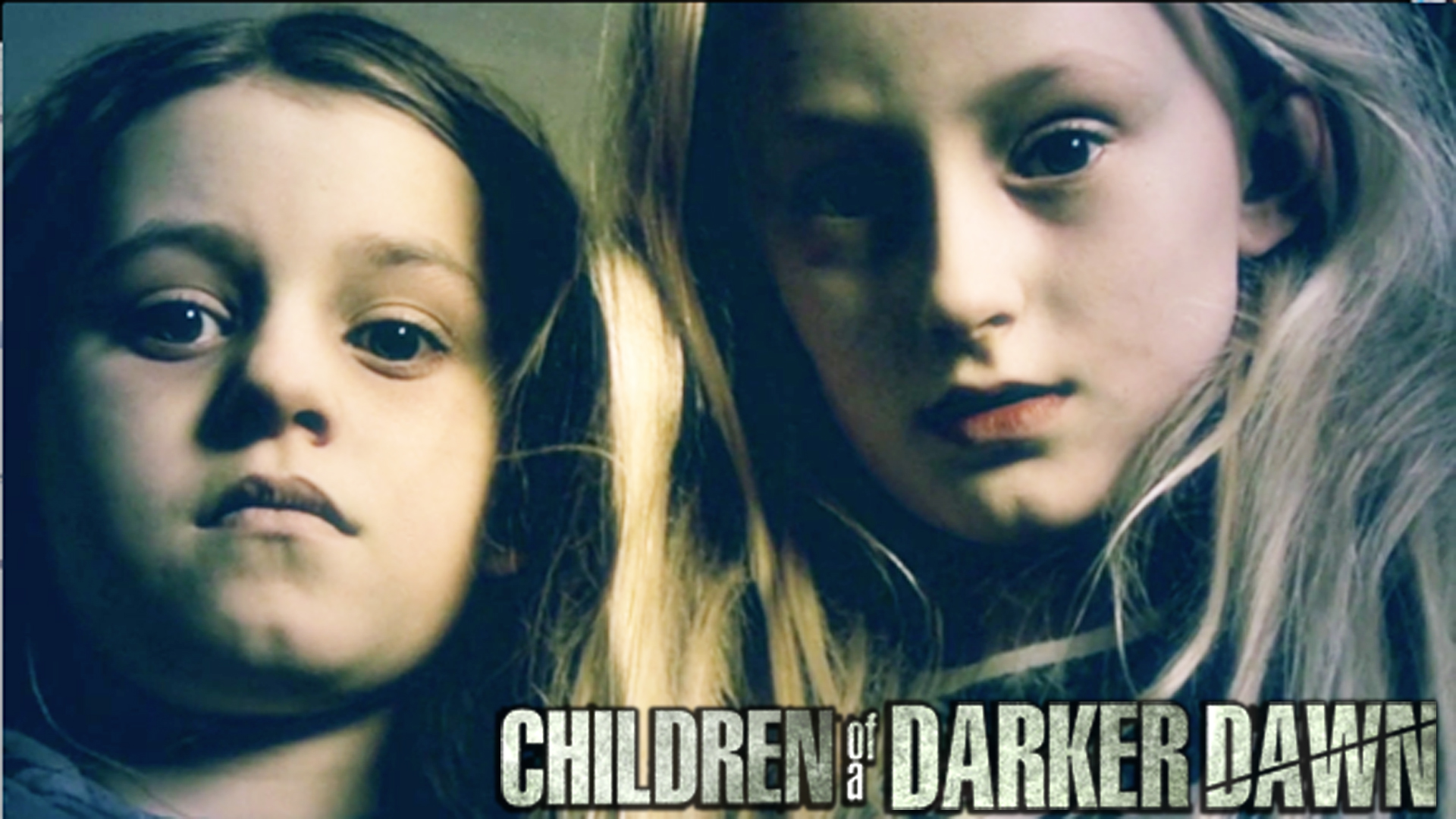
Drama, horror, sci-fi, by Jason Figgis, United States, 2012.
In a post-apocalyptic Ireland, a pandemic has wiped out the adult population, struck down by a mutant strain of flu that turns them paranoid and violent before killing them. Nine months later, the surviving children wander through abandoned buildings in search of food and shelter. Among them are Evie and her younger sister Fran, trying to survive while avoiding potentially dangerous groups of kids. Their only comfort is The Railway Children, the book their mother used to read to them. The arrival of Alice, a girl who has escaped from a gang led by her sister Kate, changes their path. After being betrayed by the gang, Evie decides to confront them, triggering a series of events that will lead to tensions and conflicts within the group.
The film, directed by Jason Figgis with limited resources but great sensitivity, is a post-apocalyptic drama that goes beyond horror, focusing on grief and the emotional fragility of its characters. The tone is somber, marked by melancholy, disturbing flashbacks, and unstable relationships. Though it recalls films like 28 Days Later, The Road, or Lord of the Flies, Children of a Darker Dawn finds its own voice through strong character development and powerful performances from its young cast.
LANGUAGE: English
SUBTITLES: Spanish, French, German, Portuguese
Artaud’s Wound as Method
You know the feeling of reaching for a word and finding only the outline of where it was. Not forgetting, exactly — something more violent than that. The word was there, fully formed, and then it was not, and what remains is the precise shape of its absence, a hole with edges. Most people shrug this off. Artaud could not. For him, this was not an occasional irritation but the fundamental condition of his existence, the thing that organized every waking hour before it organized everything else.
His correspondence with Jacques Rivière, editor of the Nouvelle Revue Française, began in 1923 when Artaud submitted poems that Rivière found unpublishable. What followed was something stranger than a rejection: an exchange in which Artaud insisted Rivière understand that the poems’ inadequacy was not a craft failure but a symptom of a deeper fracture, that his thoughts dissolved at the very moment of their formation, that language arrived already hollowed. Rivière, to his credit, recognized he was reading something extraordinary, not poetry but testimony. By 1924 they published the correspondence itself, the failure becoming the document. The wound becoming the only available text.
This is not metaphor. Artaud had suffered what he described as a kind of interior erosion since adolescence — periods of psychic collapse, an inability to feel himself continuous, a sensation of being evacuated from his own mental activity. He was treated with laudanum, with rest cures, eventually institutionalized. The asylums came later in catastrophic force — nine years of confinement beginning in 1937, culminating in the asylum at Rodez under Dr. Gaston Ferdière, where he underwent fifty-one sessions of electroshock treatment. Those who visited him at Rodez described a man who had been partially destroyed, then partially reconstructed into someone who no longer fully inhabited the body that bore his name.
What matters here is not the suffering in itself — suffering is not automatically wisdom — but what Artaud made of it philosophically. He arrived, through his own disintegration, at a diagnosis of Western culture that no one who had not been broken in precisely this way could have formulated with such exactness. The culture had severed the body from meaning. Not partially, not occasionally, but structurally and systematically. Meaning had been captured by text, by logical syntax, by a representational system that treated the body as a vehicle for concepts already formed elsewhere. When Artaud could not seize his thoughts before they vanished, he was experiencing in acute personal form what Western rationalism had institutionalized as civilization.
His 1925 text The Nerve Meter is the first extended attempt to write from inside this condition rather than about it. The prose does not describe fragmentation — it enacts it. The syntax lurches and collapses and reforms. He writes of his marrow, his nerves, his organs as sites of cognitive activity, not as metaphors for thought but as the actual location where thinking either coheres or fails. Foucault would later argue in Madness and Civilization that Western modernity had produced reason by excluding unreason, by silencing those who spoke from the wrong side of the boundary. Artaud did not wait for Foucault. He was already writing from inside that exclusion, already mapping the territory reason refused to enter.
The Surrealists offered temporary shelter. André Breton’s movement needed its extremists, its genuinely disrupted voices, and Artaud joined the Bureau of Surrealist Research in 1924, edited their journal, wrote their pamphlets. But the shelter was always false. Surrealism aestheticized the irrational; Artaud was living inside it. Breton expelled him in 1926, partly for political reasons, partly because Artaud’s commitment was of a different order entirely — not a formal experiment in automatic writing but a man for whom the dissolution of rational control was not a liberating technique but an inescapable condition he was trying, desperately, to survive.

The Plague That Heals by Killing
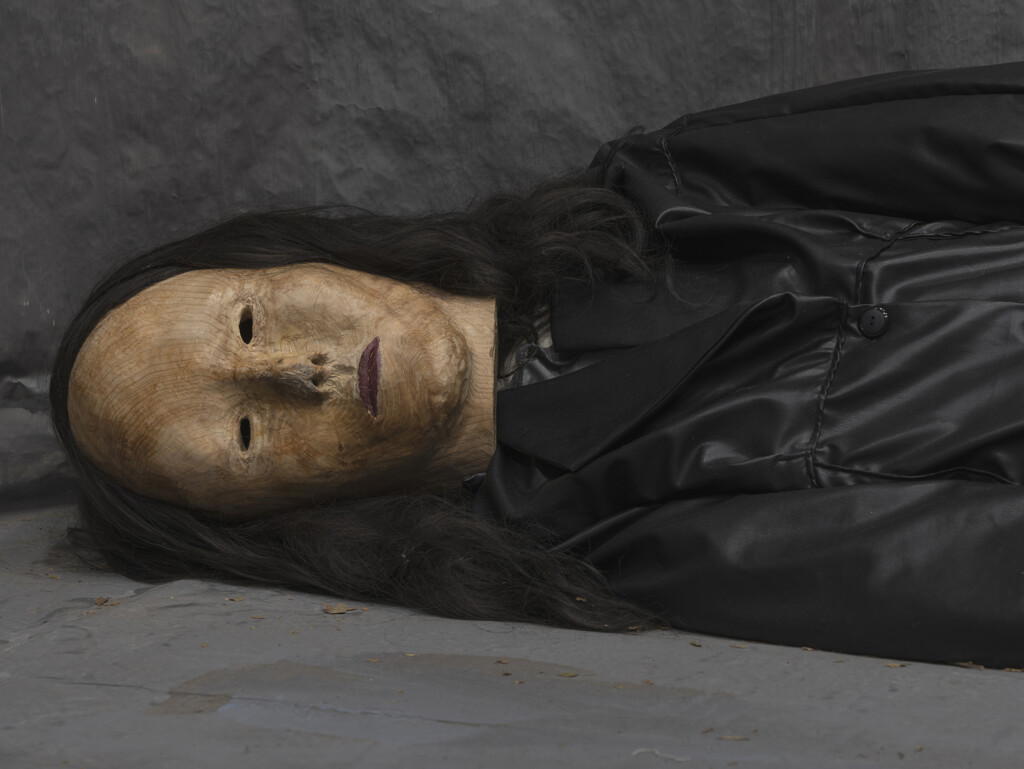
You have watched it happen without understanding what you were watching. A crowd gathered outside a government building — this was real, this was a Tuesday afternoon — and the air changed before anything physical occurred. Something passed through those bodies like a current, like a shared recognition that the usual architecture of restraint had momentarily suspended itself. People who had been strangers became, briefly, something older than strangers or friends. They moved with a coherence no one had organized. And what struck you, if you were there, was not the violence or the noise but the faces — the particular expression of people who have, for the first time in years, stopped performing.
This is what Artaud meant by the plague. Not metaphor deployed for rhetorical elegance, but a precise clinical observation dressed in apocalyptic language. In “The Theater and Its Double,” written in 1938 after years of institutional confinement and creative exile had stripped him of every comfortable illusion, Artaud described the bubonic plague that struck Marseille in 1720 — killing fifty thousand people in eighteen months — not primarily as catastrophe but as revelation. The plague, he wrote, did not create new behaviors. It uncovered existing ones. It dissolved the thin social membrane through which civilization filters human impulse, and what emerged from underneath was not the chaos that moralists predicted but something far more unsettling: the truth of what people already were.
Survivors looted. Priests fled their dying congregations. Judges abandoned courts. But also — and this is the part that haunts the argument — some people walked into infected houses to care for strangers. Some gave away everything. The plague did not make anyone better or worse. It made everyone undeniable.
Elias Canetti spent decades mapping this territory from a different angle. “Crowds and Power,” published in 1960 after nearly thirty years of research, identifies what Canetti calls the “discharge” — the moment when a crowd loses its internal hierarchy, when the individual temporarily ceases to feel the boundary of their own skin and merges with collective motion. Canetti was not romantic about this. He knew crowds could murder. But he also identified, with the precision of a diagnostician, that the terror crowds inspire in the solitary, civilized individual is inseparable from a hidden recognition: that the merged state is not foreign to the self. It is the self before the self was trained to be manageable.
What Artaud proposed for theater was exactly this mechanism, engineered deliberately. The theater space as plague zone. Not infection but the conditions that make infection possible — the suspension of the usual distance between people, between audience and stage, between watching and being watched. He imagined theater that worked on the nervous system before it worked on the intellect, that bypassed the educated, defended mind and arrived directly at the organism.
There is a moment — perhaps you have felt it in a concert, in a crowd, in a room where someone said something true that no one had permission to say — when your social self briefly fails to load. The trained responses, the appropriate reactions, the correct emotional performances all stall for a second, and what fills that gap is something you do not have a polished name for. It recognizes itself. It does not need introduction.
Artaud called this the theater’s essential task: not to show you something but to make this happen to you. The plague heals by killing because what it kills is the performance you have confused with your actual life. What it reveals may not be pleasant. It is almost certainly not safe. But Artaud, writing from inside a civilization that within a year would demonstrate what performed normalcy could be made to accommodate, was not interested in safety.
He was interested in what remains when safety is no longer an option.
The Mirror and the Rascal
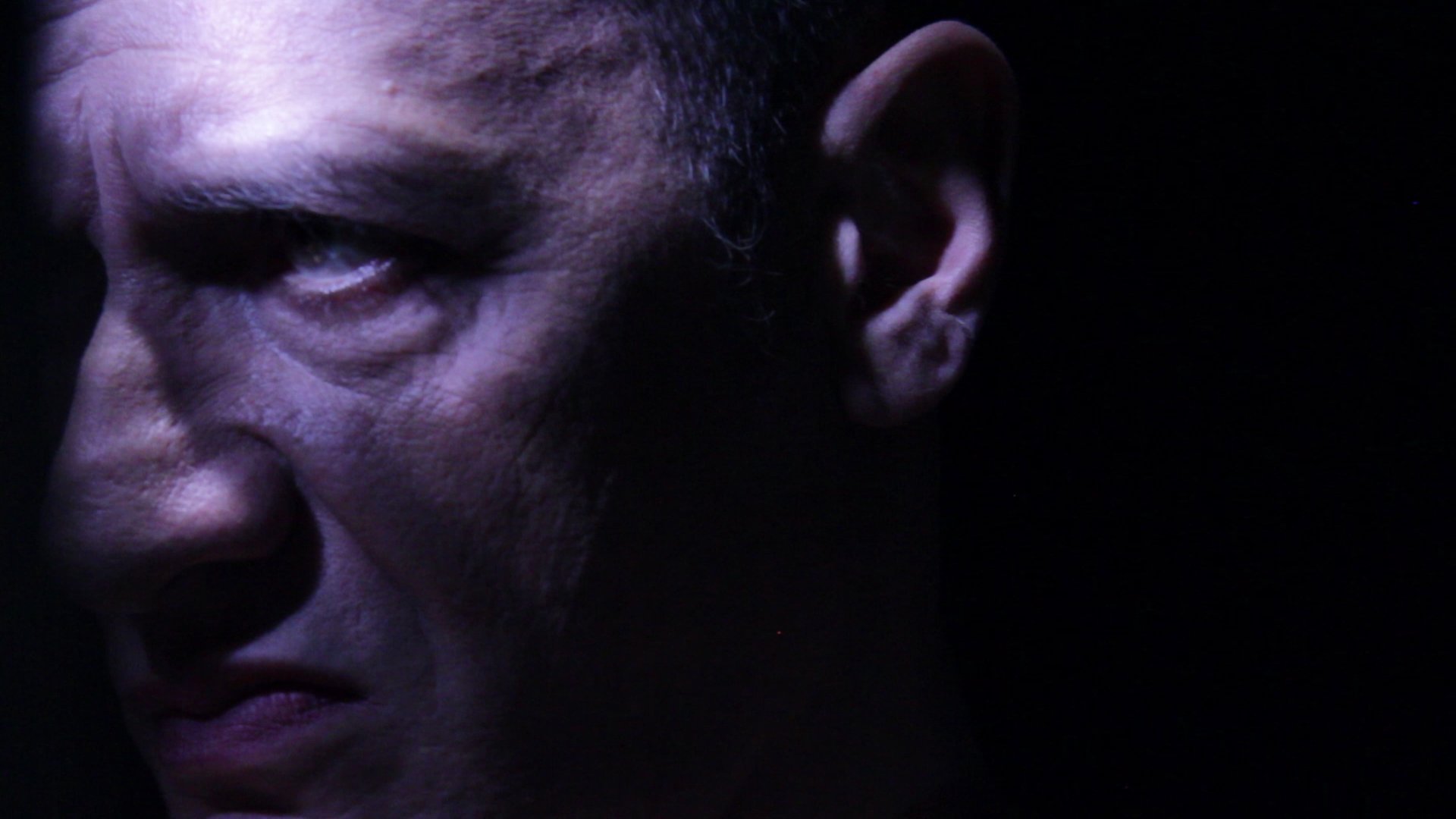
Drama film, by Valerio De Filippis, Italy, 2019.
The mirror and the rascal is an experimental film based on the tragedy "Richard III" by William Shakespeare. It tells the delirium of contemporary power in an author's reinterpretation of cinema, video art and music. The protagonist, Richard Duke of Gloucester, brother of King Edward IV, through a long series of crimes eliminates all the obstacles that stand between him and the throne of England.
Valerio de Filippis, a well-known painter who has been following his research path for a long time, investigating the relationship between light, corporeality and the psyche. The mirror and the rogue and the cinematographic equivalent of Valerio De Filippis' painting, his figurative style is in fact very recognizable looking at his paintings. But cinema is a new way where the artist can also be involved as an actor and performer, with an original mix between acting and singing. Staging the dark side of the human soul, the film is a surreal and disturbing interpretation of a great classic. The director says: "The first suggestion was musical: I was interested in transforming the text of Shakespeare's tragedy Richard III into notes. I love cinema and at a certain point I felt that the time had come to combine research on the image of painting to my love for cinema and music. When the film is finished I realize that I have remained faithful to painting: every frame of the film appears to me like a painting: the same light, the same colors, the same atmosphere ". The mirror and the rascal is a kind of psychoanalytic session that the painter does while hiding behind the mask of Richard III. Behind this ferocious and unscrupulous character we find a path of self-analysis by De Filippis, who is mainly interested in the more violent and turbid aspects. An experimental film in which, with great courage, the author gets involved completely, fragmenting the images in an unconventional montage, which is at the same time a flow of consciousness and spectacle.
LANGUAGE: English
SUBTITLES: Italian
Cruelty Is Not Violence
There is a moment when you realize the screen is not going to cut away. You have been trained, by thousands of hours of cinema and television, to expect the mercy of editing — the quick transition, the dissolve, the cutaway to something else that tells you: you do not have to witness the full weight of this. But the camera stays. It holds on a face that is disintegrating in real time, not from physical violence but from the simple, devastating pressure of being seen. The room around you does not disappear. The air does not move. And something in you that had been comfortably numb begins, against your will, to wake up.
This is not cruelty as the entertainment industry understands it. The industry has its own version: blood as punctuation, shock as commodity, the severed limb that earns a gasp and a ticket sale. That cruelty is designed to discharge tension, not accumulate it. It gives you an exit — the scream, the recoil, the safe catharsis of disgust. It is, in the deepest sense, a form of comfort. It tells you that extremity lives elsewhere, in monsters and disasters and exceptional darkness, nowhere near the ordinary coordinates of your life.
Artaud’s cruelty is structurally different, and the difference is everything. In the First Manifesto of the Theater of Cruelty, written in 1932, he is precise about this in a way that most of his readers have chosen not to hear. Cruelty, he writes, is not synonymous with bloodshed, martyred flesh, or crucified enemies. It is rigor. It is the inexorable necessity of a force that cannot be appeased, that does not yield to sentiment or convenience, that moves through its necessity the way a surgeon moves through tissue — not from hatred, but from the absolute demand of what must be done. Life itself, Artaud insists, is this kind of cruel: not because it tortures you arbitrarily, but because it does not stop. It does not offer resolution. It continues pressing even when you are not ready, even when you have not digested the last thing it asked of you.
The camera that refuses to cut away is practicing this kind of cruelty. It is not punishing the viewer. It is refusing to perform the editorial mercy that lets interpretation settle into comfort. When a face is held on screen long enough, past the point where meaning has been assigned and categorized, something else begins to happen. The certainty you brought into the room starts to loosen. You thought you understood what you were watching. The held image tells you that you were watching your own act of watching, and that this too deserves examination.
Simone Weil, in La Pesanteur et la Grâce published posthumously in 1947, arrives at something adjacent to this from a completely different direction. Her concept of affliction — malheur — is not simply suffering. It is suffering that does not edify. It is the weight that does not resolve into meaning, that does not produce the consoling arc of the wound that teaches and transforms into wisdom. Affliction destroys. It destroys the previous configuration of the self, the previous map of certainty, without immediately replacing it with anything. Weil understood this as a spiritual condition, but the phenomenological description is exact: it is the experience of being held in a place that offers no interpretive exit.
This is what Artaud wanted the theater to do. Not to injure the audience. Not to leave them bleeding or traumatized in the clinical sense. But to hold them in the room past the point where their habitual tools of interpretation could function. To make the experience inexorable — which is, etymologically, what cruelty actually means: that which cannot be softened by prayer.
Space as Language, Silence as Scream
There is a moment you have probably lived without naming it: you walk into a room where something has just happened. Not a crime scene, not a disaster — something subtler. A conversation that ended badly, a decision made before you arrived. The chairs are arranged strangely. Nobody is speaking. And yet the room is absolutely full of meaning, pressing against you from every wall. You understood something before a single word was exchanged, and you understood it through your skin.
Artaud spent his entire theoretical life trying to weaponize that experience. His proposition was not about what theater should say but about what it should do to a body, and the body he was most interested in was yours, seated, enclosed, unable to look away. The conventional theater — that box with a lit rectangle at one end and rows of passive observers at the other — was for him not merely a conservative form but an actively repressive one. It trained the audience in a particular relationship to reality: you sit here, life happens there, and between the two there is a safe and unbridgeable distance. What Artaud wanted was to destroy that distance as a political and almost metaphysical act.
The space, in his conception, was not the container of the drama. It was the drama. He imagined sound not as accompaniment but as physical force, frequencies designed to vibrate the chest cavity, to alter breathing, to produce in the spectator something closer to panic than appreciation. Light was not illumination but substance — a living material that could crush or release, that could make the air itself feel dangerous. The audience would not face the stage. They would be surrounded by it, caught inside an event rather than observing one from safety. In his writings he described this with the precision of a tactician and the fever of a prophet, which is perhaps why so few producers trusted him with a budget.
The 1935 production of The Cenci was where the theory met the brutality of the real. Adapted from Shelley and from a historical case of incest and patricide in sixteenth-century Rome, the production was performed in the Folies-Wagram, a hall Artaud had chosen partly for its dimensions and partly because it was not a theater — it did not carry the habituated passivity of a theater audience. He used recorded sound in ways that had no precedent, surrounding the space with loudspeakers positioned at multiple points to create a directional sonic assault. He designed movement that was not naturalistic but incantatory, closer to ritual than to drama. The production ran seventeen performances and was judged a failure by nearly every critic who attended. Artaud’s response was characteristically furious and characteristically right: they had not failed to understand the play, they had failed to survive the experience, and survival had never been the point.
Walter Benjamin, writing in the same year, was anatomizing a different but related crisis. His argument about the work of art in the age of mechanical reproduction identified what he called the aura — that quality of singularity, of presence, of the here-and-now that belongs to an original and cannot be copied. Mechanical reproduction, he observed, dismantles aura by separating the artwork from its moment of creation, distributing it across time and geography until the original and the copy become indistinguishable in effect if not in fact. The cinema was his central example: an art form born already detached from presence, already reproducible, already auratic only as illusion.
But Artaud was moving in the exact opposite direction, and this is what the obituaries of his failure always miss. Where Benjamin’s analysis tracked the inevitable recession of aura into distance and memory, Artaud was attempting its violent restoration through proximity, through danger, through the irreproducible fact of shared breath in an enclosed space. The aura he wanted to reconstruct was not the gentle shimmer of the museum painting. It was the aura of the wound, of the ritual, of the moment you cannot replay because it happened inside your body and left a mark you cannot name.
A vision curated by a filmmaker, not an algorithm
In this video I explain our vision
What Western Theater Chose to Forget
The seat was comfortable. That was the whole point. Velvet-cushioned, tilted at precisely the right angle, separated from the stage by an invisible but absolute line — the agreement was architectural before it was aesthetic. You sit here. They perform there. And in that spatial arrangement, something was decided about the nature of reality long before any play began.
The proscenium arch, that gilded frame which dominated European theater from the seventeenth century onward, was never merely a structural choice. It was a philosophical declaration about the separation of consciousness from experience, of the observer from the observed. The bourgeois theater that Artaud inherited had perfected this separation into an art form of its own. The audience arrived, checked their discomfort at the door along with their coats, and consumed drama at a safe remove. Catharsis — Aristotle’s original promise — had been domesticated into something far more manageable: a controlled emotional expenditure, carefully bounded, leaving the spectator fundamentally unchanged.
This is what Artaud recognized as the theater’s deepest crime. Not bad writing. Not poor acting. But the spatial and psychological contract that made transformation structurally impossible before a single word was spoken.
Consider what happens when that contract breaks. A man is watching a trial — or what he believes is a trial — from the gallery. The proceedings below him have a formal clarity: roles, positions, a script of procedural language. But gradually, by increments he cannot pinpoint, the gallery itself becomes part of the proceeding. Witnesses turn to look at him. Questions seem addressed upward. He is no longer watching justice being performed; he is caught inside a mechanism he cannot exit. The moment he realizes this, he also realizes he cannot identify precisely when the shift occurred. That threshold — that imperceptible crossing from witness to participant — is exactly what the proscenium was designed to prevent, and what Artaud wanted to make inevitable.
Richard Schechner, building his environmental theater theory across the 1960s and 70s, understood this architecturally. His insistence on transforming found spaces, on shattering the fixed relationship between performer and witness, was a direct inheriting of the Artaudian wound. And Peter Brook, in 1968, wrote with devastating clarity about the deadly theater — theater that fills its designated space without ever disturbing it, that moves through its own rituals of presentation without leaving any mark on the living tissue of its audience. Brook acknowledged the inheritance while also fearing it. Artaud’s demand was total. Brook wanted the fire but also the building to remain standing afterward.
This is where Guy Debord enters with a precision that retroactively illuminates everything. In 1967, Debord described a society in which lived experience had been replaced by its representation — where the spectacle was not a collection of images but a social relationship between people mediated by images. The logic of the proscenium theater, extracted from its building and expanded to encompass all of modern life. You consume the image of political participation rather than exercising it. You consume the image of community rather than inhabiting it. You sit in your comfortable seat and watch the world perform itself at you.
Artaud never read Debord — he died in 1948, nearly two decades before The Society of the Spectacle appeared. But his Theater of Cruelty was already the antidote Debord’s diagnosis demanded and never named. Where Debord could only describe the disease with surgical precision, Artaud was already attempting something more dangerous: not analysis but interruption. Not the naming of the spectacle but its rupture from within, from the body, from the scream that precedes language, from the gesture that doesn’t represent experience but is experience, undeniably, happening to you now, in the room, with no distance remaining to hide behind.
The Double That Cannot Be Staged
There is a moment when you watch footage of yourself from years ago — not a posed photograph, not something you remember being taken, but candid footage someone else held — and the person moving across that screen is both you and not you in a way that produces something close to nausea. You recognize the gestures before you recognize the face. The way the shoulders carry themselves. The particular angle of the head when listening. And yet the interior life that generated those gestures is entirely absent from what you see. What you are watching is the corpse of a moment. It breathes. It smiles. It reaches for a glass. But the thing that made it alive has evaporated completely, leaving only its silhouette.
This is the double. Not the copy. Not the imitation. The shadow that a living moment casts when it moves through time and becomes visible to itself.
Artaud understood this with the clarity of someone who had spent his life failing to coincide with himself. The Theater and Its Double is not a manifesto for a new theatrical form, despite how relentlessly it has been read as one. It is a meditation on an impossible relationship — the relationship between life and the thing that attempts to represent it, which always, structurally, necessarily, kills it in the act of showing it. The double of the title is not the theater’s double of life. It is life’s double of theater. The original is the plague, the breath, the hieroglyph, the gesture before language colonizes it. The theater is what comes after, trailing behind, holding up a mirror to something that has already fled the room.
Jacques Derrida, writing in 1967 in Writing and Difference, saw this with an almost surgical precision that Artaud himself never quite articulated directly. For Derrida, Artaud’s project was nothing less than the destruction of representation itself — not the reform of theatrical representation, not its improvement or its radicalization, but its annihilation. Because representation, by its very structure, is the deferral of presence. It substitutes. It stands in for. It points toward something it cannot contain. And Artaud wanted theater that contained everything, that wasted nothing through the mediation of a sign, that did not point toward life but was indistinguishable from it. Which means, Derrida argues, that Artaud wanted a theater that could not exist as theater. The desire Artaud named destroyed the conditions of its own possibility the moment it was articulated.
You cannot stage the unstageable without immediately making it stageable. You cannot create presence through a form that is constitutively defined by representation. The cruelty Artaud spoke of — that cruelty of life itself, irreversible, unrepeatable — cannot survive rehearsal. The moment a gesture is rehearsed, it becomes a sign of itself. The moment an actor knows what they will do next, the act is already dead before it is performed. Every performance is already a funeral for the experience it claims to animate.
And yet Artaud kept writing. Kept designing. Kept imagining productions with a specificity that bordered on obsession — the spatial arrangements, the sound, the lighting, the breathing of performers distributed around the audience so that the spectator would find no refuge in the safety of the fourth wall, no comfortable distance from which to watch life happen to someone else. He designed a theater that by his own logic could not exist, with the precision of someone who believed absolutely that it could.
This is not contradiction. Or rather, it is exactly contradiction, but lived from the inside, where it does not feel like logical error but like the condition of being human — the irreducible distance between what you are and what you can make of what you are, between the footage and the person who generated it, between the gesture and the life that once, briefly, moved through it.
After Artaud, Nothing Was the Same and Everything Remained
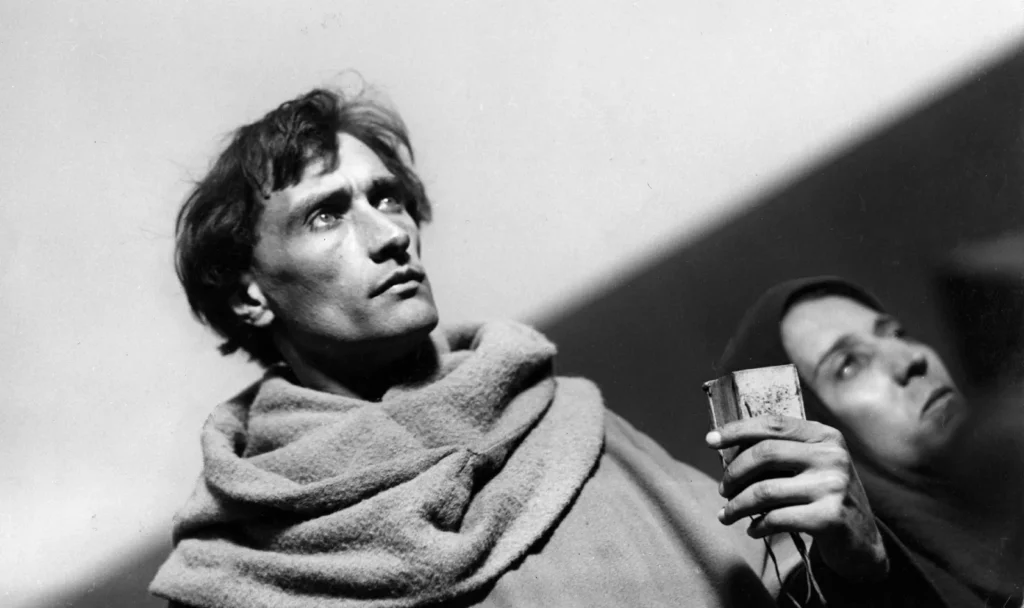
There is a man sitting in a darkened room after having witnessed something he did not choose to witness. Not a crime, not a catastrophe in the newspaper sense. Something subtler and more devastating: a moment in which another human being was fully present, fully exposed, fully without defense, and the world continued around it as though nothing had happened. He carries that image now the way you carry a splinter too deep to extract. It does not hurt constantly. It hurts when he presses against it, and he cannot stop pressing.
This is what Artaud left behind. Not a method. Not a school. A splinter.
Jerzy Grotowski read Artaud and built what he called Poor Theater, stripping performance to the bare encounter between actor and witness, removing every cushion of spectacle until what remained was the actor’s body as the sole instrument of transmission. His 1968 manifesto Towards a Poor Theatre is in many ways a love letter to Artaud’s impossibility, an attempt to operationalize the sacred in a culture that had abolished the conditions for it. The Living Theatre took Artaud into the streets, into prisons, into confrontation with audiences who had not consented to be confronted. Performance art in the 1970s pushed further: bodies cut, burned, exhausted, exposed to conditions of genuine physical extremity, because the artists understood, the way Artaud understood, that simulation had become the dominant cultural grammar and that only the irreversible could still puncture it. Marina Abramović spent decades building durational works premised on the same wager — that time, endurance, and the undeniable fact of a suffering body might reach something in the witness that language and image had learned to slide past.
And yet. The culture Artaud diagnosed in the 1930s has not retreated. It has matured into something far more sophisticated in its capacity for absorption. Susan Sontag, writing in 1973 in her essay collected in A Susan Sontag Reader, identified the central problem with devastating precision: Artaud’s project required the sacred, and secular modernity had not merely abandoned the sacred but had replaced it with a simulation of transgression so efficient that genuine rupture had become nearly impossible to distinguish from its commodity form. Sontag understood that Artaud was not simply a theatrical revolutionary but a diagnostician of a spiritual emergency, and that the emergency had only deepened in the decades since his death in 1948. Every gesture that might wound the comfortable membrane of spectator passivity was available for purchase, for reproduction, for consumption as aesthetic experience safely bounded by the white walls of a gallery or the predictable duration of a performance slot.
The woman who has seen something she cannot unsee sits in the lobby afterward. People are discussing the work. They use words like powerful and challenging and important. She does not speak. What happened to her in that room is not discussable in these terms, and she knows it, and she also knows she will return to her life and that her life will not register what happened to her, because her life is not structured to receive it. This is the precise condition Artaud spent his entire existence trying to break open, and it is the condition that remains.
The question is not whether Artaud succeeded or failed. The question is what it means that everything he touched has been canonized, studied, curated, and theorized, while the numbing he identified has only become more total, more seamless, more pleasurable to inhabit. Grotowski is on syllabi. Abramović is in MoMA. The Theater of Cruelty is a historical concept with footnotes.
And your body, right now, in the chair where you are reading this — your body knows something your mind has long since agreed, for reasons of survival and social belonging, to forget.
The question is whether anything left in this culture still has the force to make you remember it.
🎭 Theater, Body, and the Radical Transformation of the Self
Antonin Artaud‘s Theater of Cruelty did not emerge in a vacuum: it arose from a broader cultural and philosophical ferment obsessed with the body, the unconscious, and the destruction of conventional form. These four articles explore the territories most intimately connected to Artaud’s visionary and transgressive thought.
Wilhelm Reich: Life and Psychology of the Body
Wilhelm Reich‘s work on body armor and the somatic dimensions of repression resonates deeply with Artaud’s conviction that the theater must act upon the nervous system like a physical force. Both thinkers believed that social and psychological conditioning was inscribed in the flesh itself, and that liberation required a violent, visceral undoing of those patterns. Reich’s biopolitics of the body provides an essential scientific counterpart to Artaud’s poetic and ritualistic program of liberation.
GO TO THE SELECTION: Wilhelm Reich: Life and Psychology of the Body
Alexander Lowen’s Bioenergetic Analysis
Alexander Lowen‘s bioenergetic analysis extended Reich’s legacy into therapeutic practice, developing techniques aimed at releasing chronic muscular tension and restoring the flow of vital energy through the body. This attention to breathing, trembling, and physical surrender mirrors Artaud’s demand that the actor become an ‘athlete of the heart,’ surrendering rational control to primal, expressive force. Lowen’s work helps illuminate the somatic philosophy that underpins Artaud’s theatrical revolution.
GO TO THE SELECTION: Alexander Lowen’s Bioenergetic Analysis
Jacques Lacan and the Mirror Stage
Jacques Lacan‘s theory of the Mirror Stage illuminates the fragmented, decentered subject that Artaud dramatized so relentlessly across his writings and performances. For both Artaud and Lacan, the unified ‘self’ is a fiction — a misrecognition that language and culture conspire to maintain. Artaud’s theater can be read as a systematic assault on that mirror, an attempt to shatter the specular ego and confront the raw, unmediated real.
GO TO THE SELECTION: Jacques Lacan and the Mirror Stage
The Avant-Garde Cinema: Movies to Watch
The avant-garde cinema that flourished in the twentieth century owes an enormous and often unacknowledged debt to Artaud’s theatrical philosophy, particularly in its rejection of narrative logic and its aspiration to produce direct sensory and psychological shock. Filmmakers from Luis Buñuel to Maya Deren drew on the same well of surrealist disruption and bodily intensity that Artaud theorized for the stage. Exploring this cinematic lineage reveals how Artaud’s ‘cruelty’ migrated from the theater into the darkened space of the film screening room.
GO TO THE SELECTION: The Avant-Garde Cinema: Movies to Watch
Discover the Films That Break Every Boundary
If Artaud’s Theater of Cruelty has sparked something restless and searching in you, Indiecinema is the streaming platform where that fire finds its images. From avant-garde masterpieces to rare independent visions, Indiecinema hosts the films that refuse to comfort and dare to transform. Step inside and let cinema do to you what Artaud always dreamed theater could.
👉 EXPLORE THE CATALOG: Watch Indie Films in Streaming
A vision curated by a filmmaker, not an algorithm
In this video I explain our vision

