
The Factory Floor as Political Ontology
You clock in before the sun has finished rising, and for the next eight hours your hands belong to someone else. Not metaphorically — legally, contractually, in the most banal and binding sense of the word. The product you will touch, shape, assemble, or package will leave at the end of the day without you, carrying none of your name and none of your fatigue, destined for a shelf where a stranger will read a price tag that has no relationship whatsoever to the time you spent alive producing it. You will not own what you made. You will not decide what it becomes. You will receive, in exchange for the irreversible hours of your existence, a sum calculated not by what you gave but by what the market can get away with paying. And the remarkable thing — the thing that should disturb every waking moment but somehow does not — is that you will return tomorrow and do it again.

Karl Marx, writing in Paris in 1844 at the age of twenty-six, was not describing an injustice that could be corrected with better wages or shorter shifts. The Economic and Philosophic Manuscripts of 1844, unpublished during his lifetime and only fully circulated after 1932 when the Marx-Engels Institute released them in Moscow, contain a diagnosis so structural that reform cannot reach it. What Marx identified as Entfremdung — alienation — was not a feeling of dissatisfaction, not a psychological malaise that therapy or solidarity could dissolve. It was a condition built into the very architecture of wage labor as a mode of production. The worker becomes estranged from the object of their labor precisely because that object is produced for another, because the act of making something is simultaneously the act of surrendering it. The more the worker produces, the more powerful the world of objects becomes, and the more impoverished the worker’s own world. This is not a paradox Marx invented — it is a ratio that any factory ledger from Manchester in the 1840s could have illustrated in columns of numbers.
What makes this more than an economic observation is the ontological claim buried inside it. Marx was arguing that human beings are constituted through their productive activity — that what you make and how you make it shapes what you are, not what you feel. The Latin philosophical tradition had long distinguished between the laborer and the thinker, between the mechanical arts and the liberal ones, as if the person who works with their hands operates in a different register of humanity than the person who reasons from a chair. Marx collapsed that distinction not by elevating manual labor into philosophy but by insisting that production itself is where human identity is formed and where it can be deformed. He borrowed the term Gattungswesen — species-being — from Ludwig Feuerbach’s 1841 The Essence of Christianity, but stripped it of its theological scaffold. For Feuerbach, species-being was humanity’s capacity to project its own essence outward onto a divine image. For Marx, that same capacity was redirected toward labor: humans are the animals who transform the world consciously, who work not only to survive but to externalize themselves, to see their own intelligence and creativity reflected in what they produce. Alienated labor inverts this. Under the wage relation, the externalization of self becomes the theft of self. What should be a mirror becomes a wall.
The violence in this is not spectacular. There are no visible wounds. The body clocks out intact, the mind arrives home still capable of forming opinions and making dinner. The dispossession Marx was mapping operates below the threshold of what most people are trained to recognize as harm, which is precisely why it could be dressed, for nearly two centuries, in the language of opportunity.
Class as Relation, Not Category
You already know which box they put you in. Someone, at some point — a census form, a bank application, a school administrator’s clipboard — asked you to place yourself somewhere on a scale, and you chose, or were assigned, the slot that felt least wrong. Middle income. Skilled worker. Lower professional. The taxonomy was clean, the categories were mutually exclusive, and the entire exercise left you with the faint sense that something true about your life had just been converted into something manageable for someone else.
This is precisely the operation Marx spent the better part of his working life trying to prevent. What The German Ideology, written with Engels between 1845 and 1846 and unpublished until nearly a century later, insists upon is that class is not a shelf on which people sit — it is a force field in which they are perpetually pulled against one another. The bourgeois and the proletarian do not merely occupy different rungs of a ladder; they exist in a relationship of structural antagonism that produces each other. Capital requires labor to valorize itself; labor requires capital to exist within this particular mode of production. Neither term is intelligible without the other, and neither is stable, because the tension between them is the engine that drives the whole arrangement forward and, eventually, into crisis.
The Grundrisse, those extraordinary notebooks Marx drafted in furious secrecy between 1857 and 1858, pushes this further into territory that still unsettles. There, he develops the concept of real subsumption — the process by which capital does not merely hire workers but gradually restructures their very activity, their time, their bodies, their cognitive habits, until the distinction between working and living begins to dissolve. A person who checks work messages at midnight has not been placed in an income bracket; they have been subsumed. Their nervous system has been reorganized around the requirements of valorization. No occupational category captures this, because the transformation is not a position but a process, one that is ongoing, asymmetrical, and contested at every moment.
Weber saw the danger of flattening this into strata, even if his response was to multiply the dimensions rather than preserve the antagonism. His tripartite schema of class, status, and party, elaborated in Economy and Society, became the methodological backbone of twentieth-century American sociology, particularly as it passed through Talcott Parsons and then into the instruments of survey research. By the time sociologists were measuring class through income quintiles and occupational prestige scores in the 1950s and 1960s, the concept had been fully converted from a description of conflict into a description of distribution. The question shifted from who fights whom over the surplus to who earns how much compared to whom. This is not a refinement of Marx’s concept; it is its annihilation disguised as its continuation.
The practical consequences of this methodological disappearance are not abstract. When class becomes a category rather than a relation, exploitation becomes inequality, and inequality is a problem one solves through redistribution, education, or mobility — all measures that leave the structure of antagonism entirely intact. Erik Olin Wright spent decades, particularly in Classes published in 1985, trying to rescue the relational core by mapping the contradictory class locations of managers, supervisors, and credentialed workers who simultaneously exploit and are exploited, occupy multiple positions in multiple relations at once. His models were controversial precisely because they refused the comfort of clean categorization and insisted on holding the tension.
What disappears when class is reduced to a socioeconomic bracket is not merely theoretical precision — it is political imagination. If your position in the social order is a coordinate on a grid rather than a side in a conflict, then the grid itself becomes the natural landscape, the background condition against which individuals move up or down according to merit, luck, or misfortune.

The Commune as Laboratory
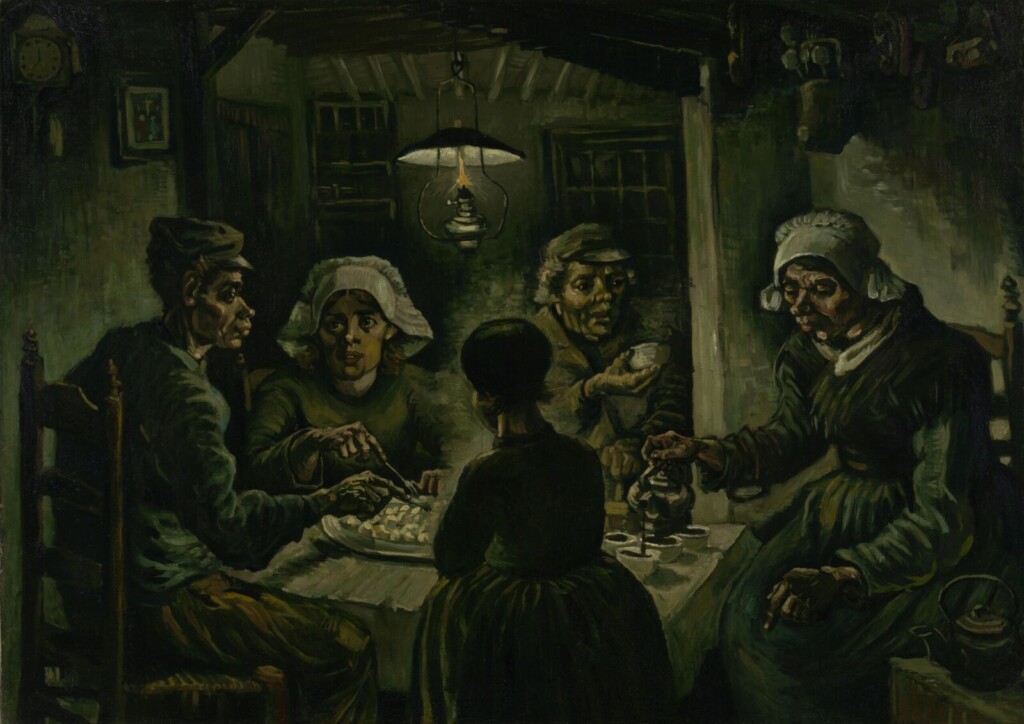
You are standing in the rubble of a city that has just tried to govern itself, and the smoke rising from the Tuileries is not the smell of defeat — it is the smell of an experiment that worked long enough to terrify everyone watching.
For seventy-two days in the spring of 1871, the working population of Paris did something that no theoretical framework had yet predicted in operational terms: they built a functioning administrative apparatus out of the materials of their own daily life, and the apparatus held. The Commune abolished night work in bakeries on April 20th — a measure so specific, so rooted in the exhausted bodies of men who had been feeding a city while the city slept, that it almost defies the vocabulary of political philosophy. This was not a declaration of rights. It was a decision about when bread gets made, and who breaks their spine making it. Workshops abandoned by owners who had fled to Versailles were handed over to worker cooperatives, not as a symbolic gesture, but because the alternative was that the workshops stopped producing anything at all. The Commune governed because it had to, and in governing it revealed something that the bourgeois order had carefully obscured: that the organizational capacity required to run a city already existed in the people who actually ran the city every day, invisibly, for wages that kept them just solvent enough to return the next morning.
Marx wrote The Civil War in France within weeks of the Commune’s suppression, and the urgency of that timing matters. He was not analyzing a historical episode from a safe distance — he was processing a wound and a proof simultaneously. What he found in the Commune’s institutional structure was not a perfect socialism but something stranger and more useful: a form of political organization that abolished the separation between legislative and executive function, that replaced the standing army with the armed people, that made every elected delegate immediately recallable. The Commune was, in his reading, not a government in the traditional sense but the dissolution of the conditions that make traditional government necessary. The state, in other words, was not to be seized but to be replaced by something that did not require professional politicians to operate it, because professional politicians are, structurally, a class interest in themselves.
Adolphe Thiers understood this with a clarity that Marx’s admirers sometimes underestimate. When the Versailles government ordered the assault that began on May 21st and lasted through what historians would name Bloody Week, the killing — somewhere between ten thousand and thirty thousand Communards shot, many without trial — was not punitive excess. It was structural necessity. You do not execute ten thousand bakers and machinists because you are angry at them. You execute them because you have correctly identified that what they were doing, if allowed to stabilize, would make the category of employer permanently precarious. Georges Clemenceau, then a young mayor of Montmartre, watched the repression and spent the rest of his political life trying to reconcile his republican conscience with what republican order required when pushed. He never managed it.
The Commune left behind a problem that subsequent generations kept misreading as a question of tactics. It was actually a question of time. Seventy-two days is long enough to enact measures and short enough to prevent those measures from becoming routine, from developing the bureaucratic sediment that eventually separates any governing structure from the needs it was built to serve. Rosa Luxemburg, writing in 1906 in The Mass Strike, would identify this temporal dimension as the constitutive tension of all revolutionary action — the moment of rupture is also the moment of maximum institutional clarity, before the clarity hardens into procedure.
What the Commune produced, then, was not a model to be copied but a counter-proof of something the dominant order had always insisted was simply natural: that some people administer and others are administered, and that this division is the precondition of civilization rather than one of its most durable inventions.
Engels, Revision, and the Softening of the Weapon
You are handed a weapon and told, very quietly, that it is no longer loaded. That is approximately what Friedrich Engels did to European socialist thought in the final years of his life, and he did it with such scholarly tenderness that most people holding the weapon never noticed the change.
When Marx died in March 1883, he left behind an enormous mass of unpublished manuscripts, drafts, and notes that Engels immediately took upon himself to organize, edit, and present to a movement hungry for canonical texts. The labor was genuine, the devotion beyond question. But editing is never neutral. Every choice about what to foreground, what to contextualize, what to frame as provisional or eternal, reshapes the doctrine being transmitted. Engels was not falsifying Marx. He was interpreting him, which is a far more dangerous operation.
The 1895 introduction to The Class Struggles in France is where this interpretive pressure becomes impossible to ignore. Engels wrote it as an aging man, a political realist watching the German Social Democratic Party grow into a mass electoral force, and he crafted the introduction to argue that the era of street barricades was effectively over. Universal suffrage, he suggested, had become a new instrument of working-class struggle, a legitimate terrain on which socialist gains could be consolidated without the catastrophic losses of armed insurrection. He pointed to the 1848 defeats, the 1871 massacre of the Commune, as evidence that frontal military assault against a modern state had become strategically obsolete. The argument was not absurd on its face. The numbers inside Germany were genuinely impressive: by 1890, the SPD had received nearly one and a half million votes, and by 1912 it would be the largest party in the Reichstag with over four million. Electoral growth felt like revolutionary momentum.
What got quietly buried in that framing was the theory of the state itself, the understanding Marx had developed most sharply in the immediate aftermath of the Commune: that the working class cannot simply lay hold of the ready-made state machinery and wield it for its own purposes. The state is not a neutral instrument available to whoever wins the most votes. It is a condensation of social relations, a structure built historically to secure specific forms of domination. Routing that structure through the ballot box produces representation, not transformation. The distinction matters with an almost violent precision.
Eduard Bernstein, who had lived in Engels’s household and absorbed his later thinking with biographical intimacy, drew the logical conclusions in Evolutionary Socialism published in 1899, four years after Engels’s death. Bernstein stated plainly what Engels had implied carefully: the movement is everything, the final goal nothing. He argued that capitalism was not collapsing under its own contradictions but stabilizing and reforming, that credit, joint-stock companies, and trade unions were diffusing the explosive tensions Marx had identified, that socialism would arrive not through rupture but through accretion. Rosa Luxemburg responded in 1900 with Reform or Revolution, a text of extraordinary analytic ferocity in which she argued that Bernstein had confused the tools capitalism uses to manage its crises with evidence that those crises were being resolved. But the fracture was already structural, already embedded in the institutional DNA of the Second International, which by then was an organization containing both people who wanted to use parliaments tactically and people who wanted to inhabit them permanently.
The split did not become fully visible until August 1914, when the SPD voted to approve war credits and the International effectively ceased to exist as a coherent political subject. What collapsed in that vote was not merely a political organization but a specific theory of historical agency, the idea that a class could develop a unified consciousness capable of acting against the interests of the nation-state in which it was embedded.
Lenin's Rupture with Spontaneism
You are standing at a factory gate in Saint Petersburg, winter of 1900, pamphlet in your coat pocket, and you have just realized something that will cost you everything to admit: the workers around you are not ignorant because they lack education. They are structurally prevented from seeing the whole system while they are inside the part of it that is slowly consuming them.
This is not a moral judgment. It is an architectural one. The worker who spends fourteen hours at a loom does not lack intelligence — he lacks the position from which the full diagram becomes visible. Vladimir Lenin understood this with a clarity that made him almost universally hated by everyone who preferred a more comfortable version of revolutionary politics. What Is to Be Done?, published in 1902, is not a tract about leadership. It is a diagnosis of a specific kind of blindness that economic conditions produce in the very people those conditions are designed to exploit.
The prevailing assumption among Russian social democrats at the time — the current Lenin attacked under the label of Economism — was that class consciousness would ripen naturally as exploitation intensified. Suffer enough, organize around wages, and political understanding will follow. This was not merely naive. It was, Lenin argued, a theory that handed the bourgeoisie a permanent structural advantage: if the only ideas workers generate spontaneously are trade-union ideas, then spontaneous struggle never exceeds the framework of the system it contests. It negotiates the terms of its own subordination. Eduard Bernstein had already demonstrated in 1899, in Evolutionary Socialism, that this logic led directly to reformism — to making exploitation slightly more bearable rather than dismantling the conditions that made it possible. Lenin saw Bernstein not as a traitor but as the honest conclusion of a flawed premise taken to its end.
What the vanguard meant to Lenin had nothing to do with contempt for workers or faith in revolutionary aristocracy. It was a response to a problem of cognitive position. Bourgeois intellectuals who defected to revolutionary politics carried something workers could not generate from inside the wage relation: a synthetic view of the whole, built from study of political economy, legal structures, colonial extraction, and the historical sediment of class formation across Europe. This knowledge was not superior. It was differently located. The vanguard was the attempt to move that knowledge from where it sat, useless, into the space where it could become operative.
Karl Kautsky, whom Lenin cited directly in What Is to Be Done?, had already articulated this in stark terms: socialist consciousness is something introduced into the proletarian class struggle from without, not something that emerges from within it. Lenin took this seriously as a structural claim rather than a strategic preference. The question was never whether workers were capable of revolutionary thought. The question was whether the conditions of their exploitation gave them the time, the distance, and the conceptual tools to theorize those conditions systematically.
What broke after 1902 was not simply a tactical disagreement but the collapse of a certain sentimental faith — the idea that history, moving through suffering, would generate its own corrective automatically. Rosa Luxemburg disagreed ferociously, insisting in The Mass Strike of 1906 that spontaneous working-class action contained within it a depth of revolutionary instinct that no external organization could manufacture. The debate between these two positions — between the vanguard as necessary scaffold and the spontaneous strike as the real site of political education — would run like a fault line through every revolution of the twentieth century, surfacing in Petrograd in 1917, in Barcelona in 1936, and in Budapest in 1956, each time with different bodies paying the price of whichever position had been chosen, or imposed, or simply inherited without examination.
A vision curated by a filmmaker, not an algorithm
In this video I explain our vision
The Revolution That Happened in the Wrong Place

You already know the revolution was supposed to happen somewhere else. Not in a country where eighty percent of the population had never seen a factory floor, where the railway network was so sparse that whole provinces operated in near-medieval isolation, where the word “proletariat” described a class that barely existed outside Saint Petersburg and a few industrial corridors. The script called for Germany, or England — the places where capital had matured into its most grotesque and fully realized form, where the working class had been forged through generations of surplus extraction into something historically conscious and organizationally dense. Instead it happened in Russia, in October 1917, and the entire theoretical architecture that was supposed to explain why it happened had to be quietly reconstructed after the fact.
Marx had built his predictions on a logic of ripeness. The contradictions of capitalism would intensify until the system collapsed under its own weight, and that collapse would come first where capitalism was oldest and most developed. This was not metaphor — it was presented as something approaching scientific law, derived from the study of England’s industrial trajectory in “Das Kapital,” published in 1867, when Manchester’s cotton mills were still the most concentrated site of human misery and productive power simultaneously. The sequence was supposed to be irreversible: industrialization, immiseration, class consciousness, revolution. Russia had industrialization in patches, misery in abundance, and a revolutionary party that had decided not to wait for consciousness to develop organically.
What Rosa Luxemburg saw from her prison cell in Breslau in 1918, while writing what would be published posthumously as “The Russian Revolution,” was not simply that the Bolsheviks had acted prematurely — she understood why they had acted, and she respected the audacity of it. What disturbed her was something more precise and more dangerous: Lenin’s party had substituted itself for the class it claimed to represent. In dissolving the Constituent Assembly in January 1918, in suppressing rival socialist parties, in concentrating decision-making inside a disciplined vanguard, the Bolsheviks had not merely adapted Marxist theory to Russian conditions — they had quietly severed the link between historical materialism and political democracy that Luxemburg believed was non-negotiable. She wrote with surgical coldness that freedom only for the supporters of the government, only for the members of one party, was no freedom at all. She meant it as a structural warning, not a moral complaint.
The irony that history does not forgive is this: the revolution succeeded precisely because it abandoned the conditions Marx said were necessary for it. Russia’s backwardness was not an obstacle that the Bolsheviks overcame — it was, in a perverse sense, the enabling condition. A mature industrial working class with established trade unions, parliamentary representation, and reformist expectations might have chosen a different path, as the German Social Democrats demonstrated when they refused to push the 1918 Weimar revolution toward rupture. Lenin’s party operated in a vacuum where existing institutions were too weak to absorb or co-opt radical energy, and where the catastrophe of the First World War had produced a legitimacy crisis so total that power, as Lenin himself reportedly said, was simply lying in the street.
But a revolution that succeeds in the wrong place, by the wrong class, through the wrong mechanisms, leaves a conceptual debt that compounds with interest. Every subsequent communist movement had to decide whether Russia was a model or an anomaly — whether the lesson was that disciplined will could substitute for historical conditions, or that substituting will for conditions inevitably produced a particular kind of state: one that, having bypassed the social forces that were supposed to make it legitimate, would need to manufacture that legitimacy through other means, increasingly coercive, increasingly elaborate in its fictions about what the people actually wanted.
Gramsci's Inversion: Culture as the Real Battlefield
You already believe most of what keeps you in place. Not because someone forced the belief into you, but because it arrived disguised as common sense, as the obvious, as what any reasonable person would conclude on their own. The cell has no bars you can see. This is the architecture Antonio Gramsci began mapping from a fascist prison in Turin in 1929, writing in fragments and deliberate obscurity to evade censorship, producing what would eventually be gathered into the Prison Notebooks — thirty-three notebooks, nearly three thousand pages, composed by a man whose health was disintegrating and who would die in 1937 never having been released.
Gramsci’s central provocation was that the orthodox Marxist account of power was radically incomplete. The tradition had fixated on the base — the economic structure, the ownership of production, the material conditions — as the engine that drove everything else, with culture, law, religion, and education trailing behind as mere superstructure, reflections of economic interest with no independent force. What Gramsci noticed, watching fascism rise and socialist revolution fail to materialize in the industrialized West despite Marx’s predictions, was that something was preventing the working class from acting in its own interest, and that something was not primarily a gun. It was a worldview. It was the set of assumptions so thoroughly absorbed that they no longer felt like assumptions at all.
He called the mechanism hegemony — a ruling class’s capacity to make its particular vision of reality appear universal, natural, and inevitable to the very people it exploits. The bourgeoisie does not merely own the factories; it owns the definition of what a good life looks like, what intelligence means, what deserves to be called history, which griefs are legitimate and which are merely sentimental. By 1930, this ownership was exercised not through the Church alone, as it had been for centuries, but through the expanding apparatus of mass schooling, the popular press, the emergent entertainment industries, and increasingly through the political party as a cultural organ rather than merely an electoral machine. Consent was manufactured not in moments of crisis but continuously, invisibly, in the unremarkable texture of daily life.
What made this insight so uncomfortable — and why it was largely ignored in Western academic circles until the 1960s and then productively misread in the 1970s — is that it assigns complicity to the dominated. The worker who defends the system, who votes against redistribution, who feels pride in a nation whose prosperity he did not share in building, is not simply deceived in a passive sense. He has actively internalized a framework that required effort to install and requires effort to maintain. Every schoolroom that taught the poor to revere the rich as self-made while calling poverty a failure of character was doing ideological labor, not neutral education. Every newspaper that described a strike as disruption and a lockout as a business decision was shaping the moral vocabulary through which class conflict would be perceived and judged.
The most devastating implication is institutional. Gramsci understood that the family, the church, the school, the trade union, and the political party were not simply reflections of economic power but were themselves terrains of struggle — places where hegemony could be contested or consolidated, where a counter-narrative could take root or be strangled before it formed. This is why he spoke of the “war of position” as distinct from the frontal assault: in complex modern societies, power was distributed through civil institutions, not concentrated in a palace that could be stormed. To change the structure, you first had to change what people considered thinkable. The revolution, if it came, would have to have already happened inside the language before it could happen in the street — and that interior revolution had no guaranteed timetable, no dialectical necessity forcing it forward, no historical law that promised it would arrive at all.
The Twentieth Century's Unresolved Remainder
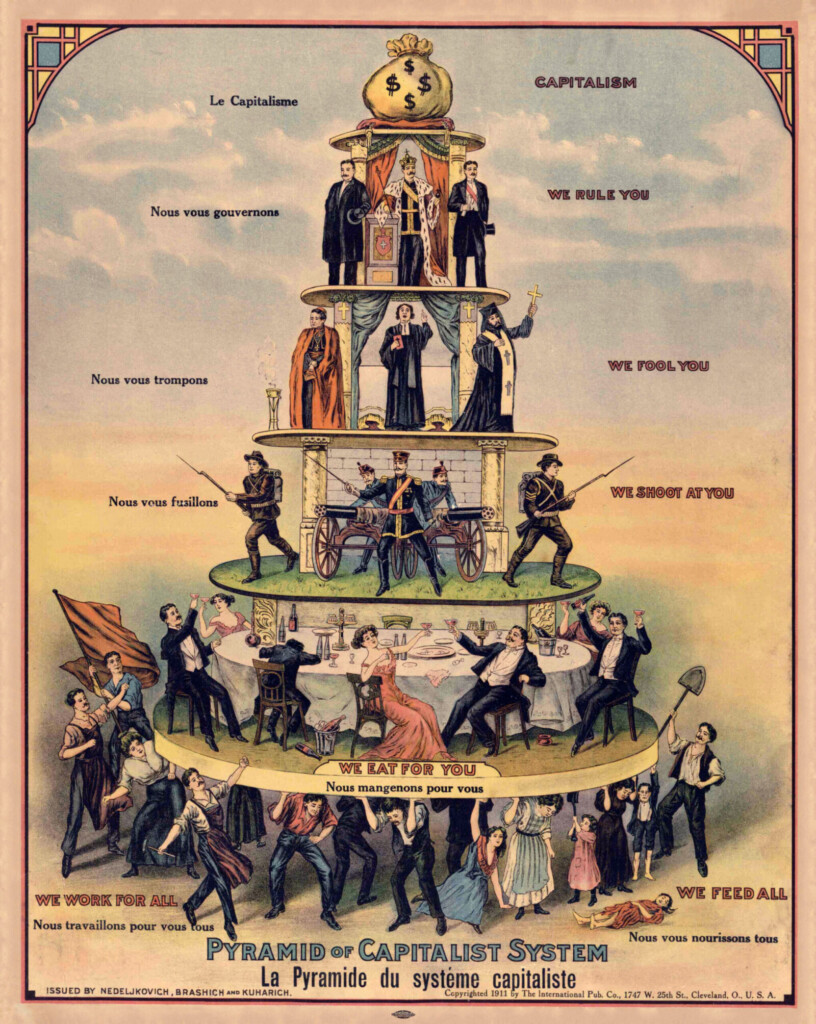
You are standing in a government office in Beijing, sometime in 1952, and the man behind the desk who decides whether your land claim is valid is wearing a uniform you do not recognize, speaking a language of bureaucratic procedure you were never taught, and his authority descends not from the landlord class that was liquidated three years earlier but from a party apparatus that has simply inherited the geometry of power while changing its personnel.
The Chinese Revolution of 1949 accomplished something genuinely seismic: it ended a century of imperial humiliation, redistributed land to roughly three hundred million peasants, and dismantled a comprador bourgeoisie that had functioned as a transmission belt for foreign capital. What it did not accomplish, and what Mao Zedong’s own 1957 speech “On the Correct Handling of Contradictions Among the People” inadvertently confessed, was the dissolution of the state form itself. The dictatorship of the proletariat, as Marx had imagined it in his 1875 “Critique of the Gotha Programme,” was always meant to be a transitional instrument that would wither the moment class antagonisms lost their structural basis. Instead, in China as in every preceding case, the instrument became the destination. The party that had mobilized peasant fury against hierarchy installed itself as the new axis around which all social relations would orbit.
Leon Trotsky had diagnosed this mutation as early as 1936 in “The Revolution Betrayed,” arguing that the Soviet bureaucracy had become a self-perpetuating stratum with material interests distinct from and hostile to the working class it claimed to represent. What Trotsky could not fully theorize was that this outcome was not a betrayal of the revolutionary process but a structural feature of it — that any organization capable of seizing state power must already embody, in its internal hierarchy, the logic of domination it sets out to destroy.
Cuba after 1959 compressed this contradiction into a smaller and more visible frame. Fidel Castro’s guerrilla movement defeated Batista’s army and genuinely redistributed literacy, healthcare, and land in ways that measurably transformed life expectancy and infant mortality rates within a decade. By 1961 the revolution had also produced a one-party state, press censorship, and the imprisonment of poets whose verse deviated from official aesthetics. Herbert Marcuse, writing in “One-Dimensional Man” in 1964, observed that advanced industrial societies had developed a remarkable capacity to absorb and neutralize opposition by satisfying material needs while foreclosing the imaginative space in which genuine alternatives could be conceived. Cuba inverted the formula without escaping its logic: it created material redistribution while foreclosing the political space in which the beneficiaries of that redistribution could contest the terms of their own liberation.
By 1991, when the Soviet bloc collapsed not under military pressure but under the accumulated weight of its own internal contradictions — economic stagnation, nationalist resentments, a population that had learned to perform loyalty without experiencing it — the question was no longer whether actually existing socialism had failed, but what exactly had failed. What ended in 1991 was not Marx’s analysis of capital, which remains forensically accurate in its account of surplus value, commodification, and the tendency of profit rates to fall. What ended was the specific political theory of how you move from a class society to a classless one without the transitional state becoming a permanent ruling apparatus.
Antonio Gramsci, writing in his prison notebooks between 1929 and 1935, had argued that durable power is never merely coercive — it is hegemonic, meaning it recruits the consent of the governed by shaping what they understand to be natural, inevitable, and just. The deepest irony of every twentieth-century revolution is that each one succeeded in changing the personnel of hegemony without dismantling the architecture through which hegemony is exercised, which means the fundamental question Marx posed in 1848 — not who owns the means of production, but who owns the means of deciding what ownership means — remains, at the structural level, entirely open.
⚡ Revolution, Labor & the Struggle for Justice
Class struggle did not emerge in a vacuum: it grew from centuries of exploitation, ideological ferment, and collective resistance. The articles below trace the intellectual and historical threads that connect Marxist theory to the social upheavals of the twentieth century, illuminating the forces that shaped workers’ movements, revolutionary thought, and the fight for human dignity worldwide.
Strikes and workers’ struggle: History of the Italian labor movement
The Italian labor movement offers one of the most vivid case studies of how class consciousness translates into organized resistance. From the early factory councils of Turin to the Hot Autumn of 1969, Italian workers forged a tradition of struggle that echoed Marxist theory in practice. This article traces the historical arc of strikes and labor conflict in Italy, revealing the social tensions that made revolution both a dream and a danger.
GO TO THE SELECTION: Strikes and workers’ struggle: History of the Italian labor movement
Karl Marx and Alienation: Economic and Philosophical Manuscripts
Marx’s concept of alienation, developed in the Economic and Philosophical Manuscripts of 1844, remains one of the most penetrating critiques of capitalist labor relations ever written. By arguing that workers are systematically estranged from their labor, its products, and their own human potential, Marx laid the philosophical groundwork for all subsequent revolutionary politics. This article explores how alienation became the hidden engine driving twentieth-century class struggle and socialist thought.
GO TO THE SELECTION: Karl Marx and Alienation: Economic and Philosophical Manuscripts
Balestrini’s We Want Everything: Analysis
Nanni Balestrini’s novel We Want Everything gives literary voice to the militant worker who refuses the terms of capitalist production entirely, embodying the radical spirit of Italy’s factory rebellions. Written in the heat of 1969, it captures the raw energy of a generation that saw class conflict not as a historical abstraction but as a lived daily reality. Reading Balestrini alongside Marx illuminates how revolutionary feeling finds expression in both theory and art.
GO TO THE SELECTION: Balestrini’s We Want Everything: Analysis
Guy Standing’s The Precariat: Analysis
Guy Standing’s concept of the precariat — a new class defined by insecure employment, eroded rights, and chronic uncertainty — updates Marxist class analysis for the twenty-first century. The precariat inherits the structural vulnerability that earlier labor movements fought to overcome, yet faces it in a fragmented, atomized social landscape that makes collective organization far more difficult. This article examines how Standing’s framework connects contemporary economic conditions to the longer history of class struggle initiated by Marx.
GO TO THE SELECTION: Guy Standing’s The Precariat: Analysis
Discover the Cinema of Social Struggle on Indiecinema
The history of class struggle has always found its most powerful echo in independent cinema, where filmmakers dare to tell the stories that mainstream culture prefers to silence. On Indiecinema you can explore a curated selection of films that bring workers’ struggles, revolutionary movements, and social justice to the screen with uncompromising honesty — stream them now and let cinema deepen your understanding of history.
👉 EXPLORE THE CATALOG: Watch Indie Films in Streaming
A vision curated by a filmmaker, not an algorithm
In this video I explain our vision

