
The Morning You Fixed Someone Else’s Problem and Got Nothing
You stayed late. Everyone else had already filed out, coats on, conversations trailing into the hallway, and you stayed because the system was broken and you understood why. It took you three hours. Maybe four. At some point the office emptied completely and you were alone with the hum of the servers and the particular quality of silence that only exists in buildings that were built for hundreds of people but currently contain one. You found the problem. You fixed it. You wrote it up clearly, sent it to your manager at eleven forty-seven at night, and went home.

The next morning in the all-hands meeting, your manager stood at the front of the room and explained the solution. The words were almost yours. The logic was entirely yours. Your name did not appear. There was applause. Someone asked a clarifying question and your manager answered it fluently, because he had read your email carefully enough to absorb it. You sat in the third row and felt something you could not immediately name — not quite anger, not quite humiliation, something older and more structural than either of those. A recognition that the work and the credit for the work are two entirely separate economies, and you had just been reminded, again, which one you actually operate in.
This is not a modern phenomenon. It is not a corporate pathology or a symptom of late capitalism or a failure of individual managers. It is something that runs so deep through the organization of human productive life that most people experience it dozens of times before they develop a word for it, and even then the word they find — unfair, overlooked, exploited — is never quite precise enough to hold the full weight of what happened. The French sociologist Pierre Bourdieu spent much of his career trying to give that weight a name, arguing in his 1986 essay on the forms of capital that symbolic capital — recognition, prestige, the public attribution of competence — functions as a currency just as real as money, and that its distribution follows the same logic of accumulation that governs wealth. Those who already have it tend to receive more. Those who produce the value that generates it tend to see it flow upward, toward the figures positioned to claim it. The work and the reward for the work do not travel together. They never reliably have.
Nikola Tesla understood this not as a philosophical position but as the recurring texture of his existence. He arrived in New York in 1884 with four cents in his pocket, a letter of introduction, and a mind that was already generating solutions to problems that most engineers had not yet learned to see clearly. He went to work for Thomas Edison. Within months he had identified fundamental inefficiencies in Edison’s direct current systems and proposed a systematic redesign. Edison, by multiple historical accounts, promised him fifty thousand dollars if he succeeded. Tesla succeeded. Edison told him he did not understand American humor. The fifty thousand dollars did not materialize. Tesla returned to his workbench.
What is remarkable about this moment is not its cruelty — cruelty of this kind is banal, historically speaking — but its structural completeness. Every element was present. The subordinate with the genuine insight. The superior with the institutional position. The solution that worked. The credit that traveled in only one direction. The man in the third row, applauding for something that had come from him, not quite knowing what to do with his hands.
Tesla left Edison’s employ in 1885 and spent the following year digging ditches. A man who would go on to hold over three hundred patents, who would design the alternating current system that still powers the world you are sitting in right now, dug ditches because there was no other available work. The gap between what someone produces and what the world decides they are worth had already opened beneath him, and it would never fully close.
A Man Who Arrived With Lightning in His Hands
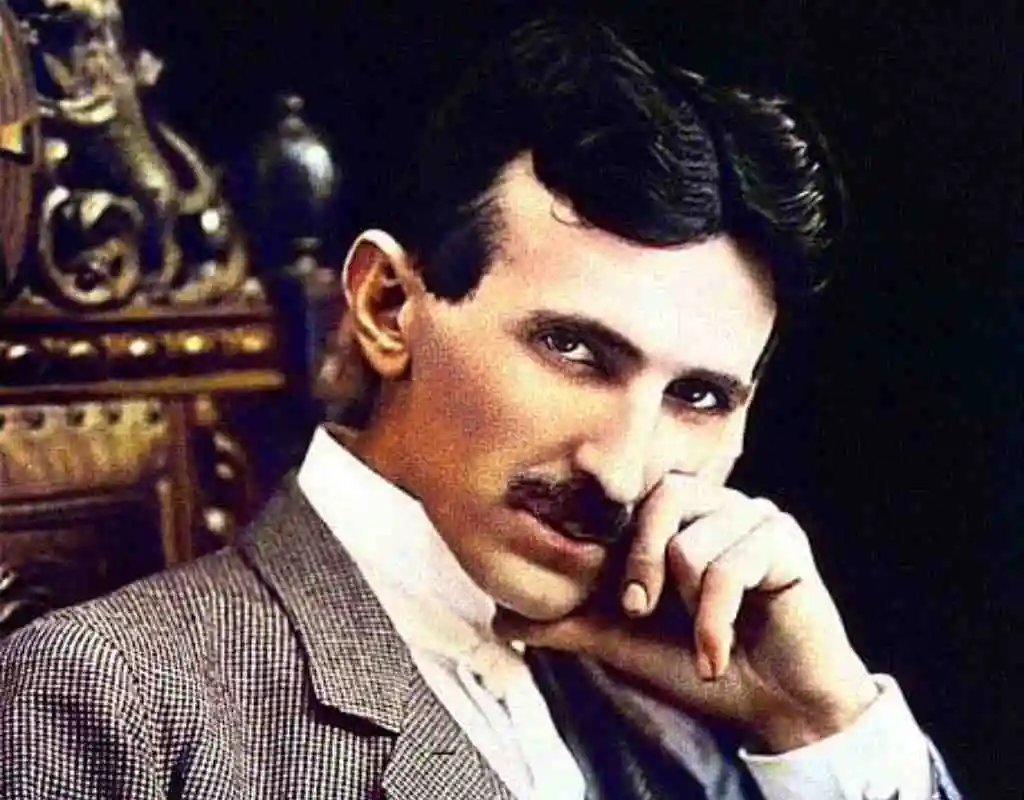
He arrived in New York in the summer of 1884 with four cents in his pocket, a letter of recommendation, and the kind of certainty that only the very young or the very brilliant can sustain without evidence. He had crossed the Atlantic on a ship from which he almost did not disembark — his luggage had been stolen, his ticket nearly lost — and he stepped onto American soil with the electromagnetic equations of alternating current already mapped inside his mind like a second nervous system. The city did not notice. Cities rarely do.
The letter was addressed to Thomas Edison, and Edison read it, and what happened next has been romanticized into a creation myth that serves everyone except the man it claims to honor. The truth is more clinical, and therefore more devastating. Edison needed engineers. Tesla was exceptional. The arrangement was efficient and, for a time, it functioned. Tesla was set to work redesigning Edison’s direct current dynamos, improving their efficiency, solving the mechanical failures that Edison’s own team had been unable to resolve. He worked eighteen-hour days. This is not a figure of speech. Men who worked alongside him in that period described a person who seemed genuinely indifferent to sleep, who ate almost nothing, who moved through the laboratory as though driven by something that had no name in the vocabulary of ordinary ambition.
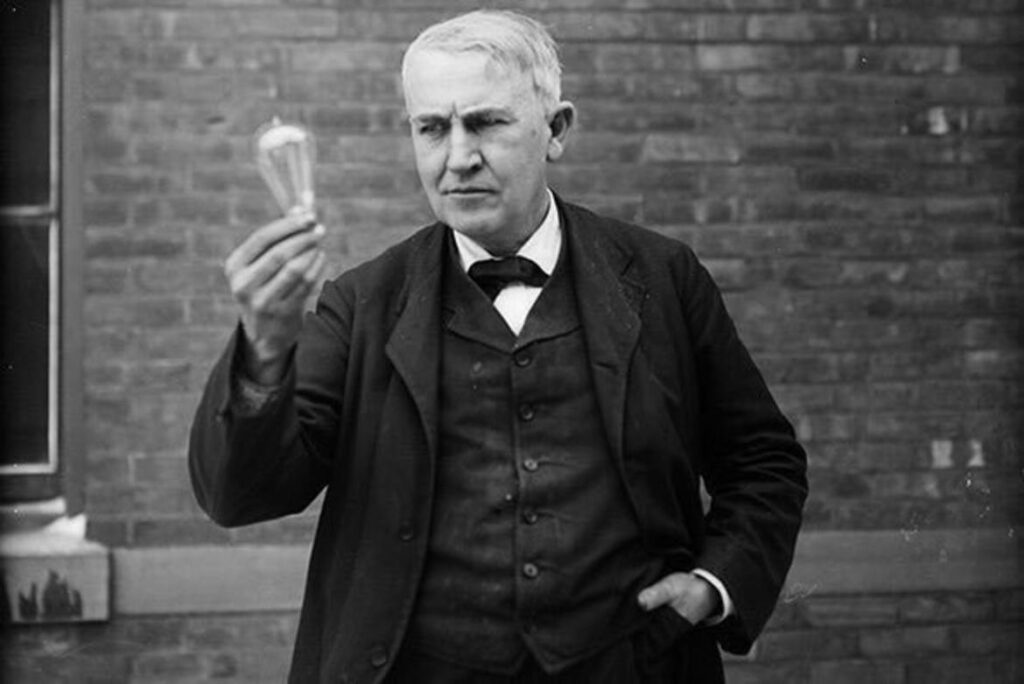
Edison told him, at some point during those months of relentless work, that there would be fifty thousand dollars waiting for him when the job was done. The dynamos were rebuilt. The efficiency improved dramatically. Tesla went to collect what he had been promised and Edison laughed. It was a joke, Edison said. An American joke. Tesla had not understood American humor. The fifty thousand dollars did not exist and had never existed. Tesla resigned the following day.
What is instructive here is not the betrayal — betrayals between men of unequal power are as old as power itself — but the structural logic that made it inevitable. Edison was not simply a cruel man, though cruelty was available to him when useful. He was the architect of a particular industrial system, one in which invention had already been absorbed into capital and made its servant. His laboratory at Menlo Park, established in 1876, was perhaps the first institution in history to industrialize the act of invention itself, to turn creative discovery into a managed production process. Edison understood, with the clarity of a man who has made himself rich, that the value of an idea lies not in its truth but in who controls its implementation. He held over a thousand patents not because he was more fertile than anyone else but because he had built a machine for capturing fertility and converting it into property.
Tesla had arrived inside that machine still believing the old Enlightenment story — that knowledge is its own reward, that the man who solves the problem deserves the recognition, that truth eventually corrects injustice. He had been formed by a European intellectual tradition that still carried, however faintly, the ghost of the natural philosopher — the man who investigates the world for the sake of understanding it. He had read Goethe. He had studied in Graz and Prague. He carried inside him a model of intellectual life that American industrial capitalism was not merely indifferent to but actively hostile toward, because that model threatened the fundamental equation on which the whole structure rested: that ideas belong to whoever can monetize them fastest.
Max Weber, writing in 1905 in The Protestant Ethic and the Spirit of Capitalism, argued that the rationalization of economic life required the systematic subordination of personal virtue to productive function. Tesla was, in this sense, not merely an employee Edison could afford to dismiss. He was a category error. A man whose relationship to his own work could not be translated into the language of the system that employed him.

The Current That Was Too Democratic to Survive
There is a particular kind of war that never looks like a war. No uniforms, no declared hostilities, no single moment of rupture you can point to afterward and say: that was when it began. Instead there is a slow erosion — a contract not renewed, a patent challenged on procedural grounds, a newspaper story planted in just the right place at just the right time. The War of Currents looked, from the outside, like a scientific dispute. Two systems of electrical transmission, two philosophies of engineering, two men with different visions of how power should move through the world. But the word that matters in that sentence is not scientific. It is distribution.
Tesla’s alternating current could carry electricity hundreds of miles from a single generating source. Edison’s direct current required a new generator planted in the ground approximately every mile. This was not a minor engineering footnote. It was the entire argument, dressed in technical language to disguise what it actually was: a question of who would own the infrastructure. A system that can travel three miles needs three times as many generators, three times as many investors, three times as many contracts, three times as many points of control. A system that can travel three hundred miles collapses all of that into one. The mathematics of AC was not just efficient. It was, in the deepest sense, decentralizing. And decentralization, when power is already concentrated, is not progress. It is threat.
Thorstein Veblen understood this with a precision that most economists of his era refused to touch. In The Engineers and the Price System, published in 1921, he drew a distinction that should have reorganized entire fields of thought but was instead quietly sidelined: the distinction between those who make things work and those who make things profitable. Engineers, for Veblen, were oriented toward what he called the instinct of workmanship — a drive toward function, efficiency, the elegant solution. Business interests, the vested interests as he named them, were oriented toward something else entirely: the management of scarcity, the control of access, the monetization of the gap between what technology could do and what it was permitted to do. The most dangerous thing an engineer could produce, in Veblen’s framework, was not a failed invention. It was a successful one that threatened to eliminate the profitable bottleneck.
Tesla’s AC system eliminated the bottleneck. It made centralized control of electrical distribution economically irrational. And so it had to be discredited — not technically, because technically it could not be beaten, but emotionally, reputationally, viscerally. Animals were electrocuted in public demonstrations to prove that alternating current was lethal. A Westinghouse-supplied AC generator was used in the first electric chair execution at Auburn Prison in New York in August 1890, a detail engineered with deliberate symbolic cruelty to fuse the technology of illumination with the technology of death in the public imagination. The campaign was meticulous and merciless, and it failed anyway. AC won on the engineering facts. But the war continued in other forms, because wars over distribution never really end — they only change terrain.
A man sits in a room that was almost never built. The building’s electrical system hums behind the walls — alternating current, at a frequency standardized precisely because Tesla’s patents made it possible. He does not think about this. Why would he. The infrastructure of daily life is invisible by design, and its invisibility is partly natural and partly manufactured, because systems whose origins are understood are systems that can be questioned. What Veblen called the vested interests had, if nothing else, a genius for making their arrangements appear as permanent as gravity.
Tesla understood what had been done to him. Whether that understanding helped him is a different question entirely.
What Westinghouse Understood That History Forgot
There is a particular kind of grief that has no name in most languages. It arrives not when something is destroyed, but when something you built is still standing, still running, still celebrated — and you no longer recognize it. The shape is right. The function continues. But the soul of the thing, the original intention, the reason you endured the cold nights and the failed prototypes and the humiliation of begging for funding — that has been quietly extracted, like marrow from a bone, and replaced with something more profitable.
George Westinghouse understood something rare in 1888 when he paid Tesla one million dollars in cash and stock, plus a royalty of two dollars and fifty cents per horsepower generated, to license the alternating current system. He understood that he was not buying a product. He was buying a different idea of what electricity could be — distributed, democratic in reach, capable of traveling hundreds of miles without collapsing into itself. Edison’s direct current required a generating station every mile. Tesla’s system laughed at geography. Westinghouse saw the implications before almost anyone else did, and for a brief, luminous moment, the two men moved in the same direction.
The 1893 World’s Columbian Exposition in Chicago was that moment made visible. Two hundred thousand incandescent bulbs powered by Tesla’s alternating current system lit the fairgrounds — a number so staggering that contemporaries struggled to absorb it. Twelve million people attended. Many had never seen electric light before. The exposition was called the White City, and the name was not accidental: it was a civilization performing its own future, staging the arrival of a world that had not yet been built. Tesla demonstrated his system publicly, ran current through his own body to light lamps held in his hands, and for a few weeks in the autumn of that year, the future seemed to belong to the idea rather than to capital.
But capital is patient in ways that visionaries are not. The royalty agreement that Westinghouse had signed began to threaten the financial stability of the Westinghouse Electric Company as the war of currents escalated and legal battles multiplied. Westinghouse went to Tesla personally and explained the situation — not as a businessman renegotiating a contract, but almost as a confession. Tesla, who had been homeless years earlier and who had rebuilt himself from nothing more than once, tore up the royalty agreement on the spot. He surrendered what would eventually have amounted to twelve million dollars. He did it because he believed in the work, and because he believed that Westinghouse was the only man who had ever believed in him without first demanding that he become something smaller.
That act of destruction — voluntary, unrewarded, structurally insane by any measure of rational self-interest — is what Erik Erikson might have called a crisis of generativity, the point at which a person chooses the survival of something they created over their own material continuance. But Erikson was describing a psychological stage, not an economic trap. Tesla was not choosing between self and legacy. He was being consumed by a system that had already decided he was more useful as a source than as a partner.
There is a scene that stays with you, not from any film in particular but from a life you recognize somewhere in yourself: a man returns to something he built and watches a demonstration of it being explained to a crowd by people who have never experienced what it cost to conceive it. They are enthusiastic. The presentation is polished. Every word they say is technically accurate. And he stands at the back of the room, and something in his face goes very still, because he realizes that the gap between what the thing was and what it has become is now too wide to cross, and no one in the room would understand why it matters.
That stillness is where Tesla began to live permanently after 1893.
Wardenclyffe and the Architecture of a Dream That Was Strangled
There is a particular kind of silence that descends on a place after the machinery stops. Not the silence of rest, but the silence of cancellation — the specific acoustic quality of a space that was meant to hum and never will. Anyone who has walked through an unfinished building, scaffolding still standing, concrete poured but purpose revoked, knows this silence in their bones. It is not emptiness. It is the negative space of something that almost existed.
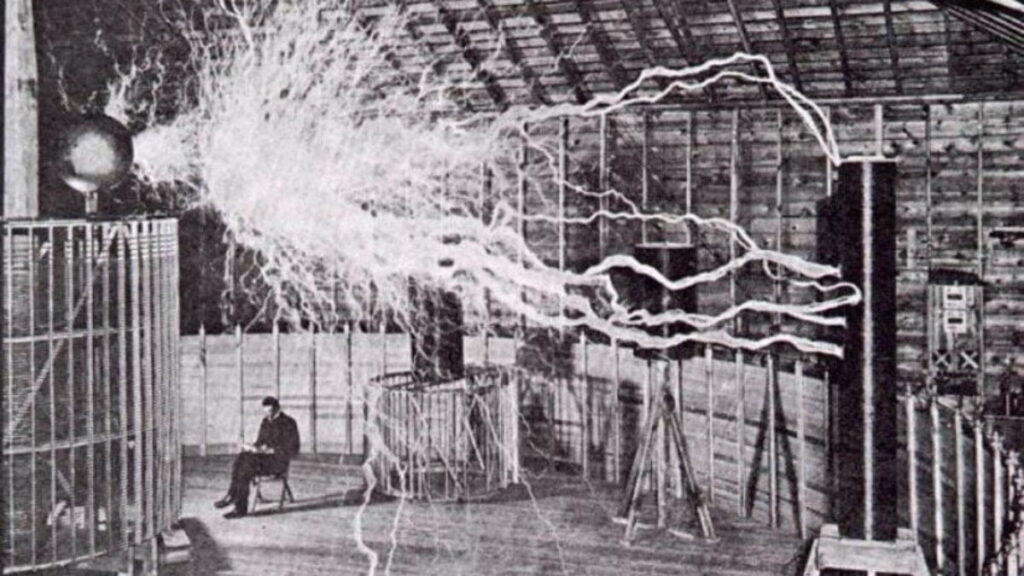
The tower at Shoreham, Long Island, rose to nearly sixty meters before the money stopped. It was not a modest experiment. It was a statement of intent about the fundamental relationship between human beings and the energy that animates their world. Tesla had been working toward this for years, the idea crystallizing slowly and then all at once: that the earth itself was a conductor, that the ionosphere and the ground could together form a resonant cavity, that electrical energy could be transmitted without wires across the entire surface of the planet to anyone who needed it, anywhere, at negligible cost. The tower was meant to be the first node of a global system. Ships at sea would navigate by it. Messages would cross continents without cables. And electricity — the thing that was already restructuring urban life, that was already becoming as necessary as water — would be accessible to every human being regardless of their geography or their income.
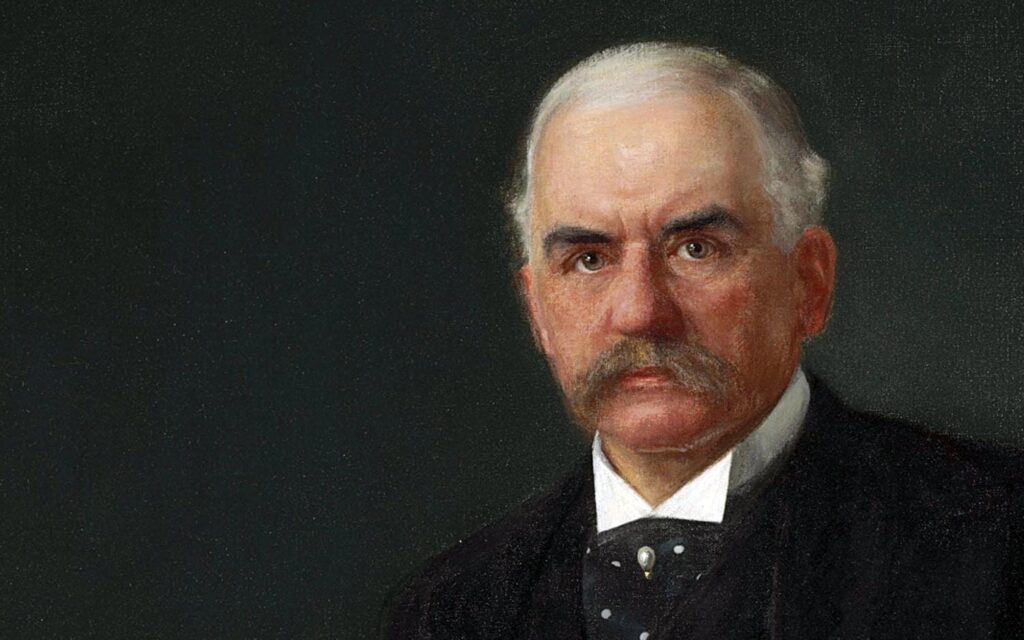
What happened next is not a mystery, though it is often treated as one. J.P. Morgan had invested one hundred and fifty thousand dollars in the project in 1901. When he began to understand the full architecture of what Tesla was proposing — not a delivery system for electricity but a liberation of it from delivery systems entirely — he withdrew. The logic was simple and total. As Max Weber argued in his analysis of capitalist rationalization, the genius of modern economic organization lies precisely in its capacity to transform every human need into a measurable, extractable unit. Energy becomes valuable not because it illuminates or warms or moves, but because it can be metered, billed, and withheld. A system that transmits power freely through the earth itself destroys the metering relationship at its root. Morgan reportedly asked the question that ended the project: if anyone with a receiver can access this energy, where do I put the meter? There was no answer, because Tesla had not designed one. He had, perhaps naively, not considered that the absence of a meter was a problem.
There is a scene that lives in the memory like something witnessed rather than watched: an old man working alone in the ruins of what he built, removing it piece by piece with his own hands. Not weeping. Not explaining himself to anyone. Moving with the deliberate economy of someone who has passed through grief and arrived somewhere harder and more clear. Each thing he dismantles he handles with the same care he used when he assembled it. The destruction is not careless. That is what makes it unbearable to observe. He is not surrendering. He is refusing to let the ruin be someone else’s act.
Tesla did not demolish Wardenclyffe himself, but he lived through its slow strangulation as something close to that. The tower stood unused for over a decade, its mortgage unpaid, its purpose unrealized, before it was brought down in 1917. The United States government, by then, wanted it gone — wartime anxieties about enemy communication, they said. The scrap metal was sold. The debt remained. Tesla had already lost the tower long before it fell; what collapsed in 1917 was only the physical remnant of a withdrawal that had happened fourteen years earlier in a financier’s office where the conversation was brief and the consequences were geological.
Weber understood that capitalism does not merely prefer profit. It requires that every transaction be legible, traceable, and controllable. A technology that escapes that legibility is not simply unprofitable. It is a structural threat.
A vision curated by a filmmaker, not an algorithm
In this video I explain our vision
The Loneliness That Genius Manufactures

There is a particular kind of silence that falls at a dinner table when someone says something true but untimely. Not the silence of offense, not the silence of boredom, but the silence of a room collectively deciding, without a single word exchanged, that what was just said does not fit. The speaker watches the faces around him — polite, even kind, nodding slightly — and understands in that moment that the problem is not hostility. Hostility would be easier. Hostility means you have been heard. What descends instead is something far more corrosive: the gentle, well-mannered incomprehension of people who have simply decided, without malice and without cruelty, that they cannot follow you there. The man at the table keeps speaking. He adjusts his tone, searches for simpler language, tries another angle. The faces remain patient and distant. He reaches for his wine glass and says nothing more for the rest of the evening.
After 1910, Tesla’s life began to resemble that dinner table permanently. The laboratory on South Fifth Avenue had already burned. The Wardenclyffe tower, that impossible monument to transmission without wires, had been foreclosed upon by 1915, its steel skeleton eventually demolished for scrap metal in 1917 — not by enemies, but by creditors exercising perfectly legal rights. He filed patents compulsively, 367 across his lifetime, each one a small proof of continued relevance in a world that had already reorganized itself around his earlier work while quietly rerouting the royalties elsewhere. He kept notes in a handwriting that grew more cramped and angular with each passing year. He slept, by his own account, no more than two hours a night during periods of intense work. He would walk the same city blocks in the same sequence, calculating the cubic displacement of buildings in his mind as he moved, not from obsession but from the inability to stop the engine once it had started turning.
Émile Durkheim, writing in 1897 in his landmark study on suicide, introduced a concept that has since been domesticated into social theory but was originally something closer to a diagnosis of pain. He called it anomie: the condition that arises not from individual weakness but from the rupture between a person’s capacities and the structures society provides to accommodate them. Anomie is not depression, though it can produce it. It is the specific torment of someone whose internal speed exceeds the speed at which their world can receive them. Durkheim understood it as a structural problem, not a moral one. The individual is not broken. The frame is insufficient. But because the frame is invisible and the individual is present and named and visible, it is always the individual who appears to dissolve.
Tesla did not dissolve cleanly. He dissolved in the way that brilliant people dissolve when they have no social scaffolding left to hold them: through the slow accumulation of behaviors that the world reclassifies as eccentricity. The refusal to shake hands. The precise number of napkins required at dinner. The pigeons on the windowsill of the Hotel New Yorker, which became, in his final years, more reliable companions than most of the humans who periodically arrived to interview him for articles that called him a dreamer. Eccentricity is how society manages the embarrassment of a genius it cannot use. It transforms what is actually a coherent and tragic response to structural abandonment into a personality defect, something charming at a safe distance, something that explains away the larger failure without implicating anyone specific.
What he had was not madness. What he had was the particular lucidity of a man who had understood, somewhere in those long Manhattan nights, that the world had taken everything it needed from him and had then, with no particular cruelty, simply stopped listening.
Edison Got the Nobel Nomination. Tesla Got the Hotel Bill.
In January 1943, a maid knocked on the door of Room 3327 at the New Yorker Hotel and received no answer. She entered to find an old man dead in his bed, alone, surrounded by the debris of a life that had once electrified the world in the most literal sense imaginable. The bill he owed the hotel was approximately two thousand dollars. Within hours, agents from the Office of Alien Property arrived and seized everything — notebooks, correspondence, technical drawings, the accumulated physical residue of a mind that had spent sixty years trying to give civilization tools it was not sure it deserved. The seizure was swift, organized, and thorough in a way that suggested preparation rather than improvisation.
Twenty-eight years earlier, in the autumn of 1915, the New York Times had run a story reporting that the Nobel Prize in Physics would be awarded jointly to Thomas Edison and Nikola Tesla. The announcement never materialized. The prize that year went to William Henry Bragg and William Lawrence Bragg, for their work on X-ray crystallography. No official explanation was offered for the discrepancy between what had been reported and what actually occurred. The theories multiplied quietly over the following decades — that Tesla had refused to share the prize with Edison, or that Edison had refused to accept it alongside Tesla, or that the committee had simply retreated from a controversy it had not anticipated. What is certain is that Edison died in 1931 with a state funeral attended by dignitaries, his name attached to laboratories and foundations and the mythology of American invention. What is equally certain is what happened in Room 3327.
Pierre Bourdieu spent much of his intellectual life trying to name this machinery precisely. In Distinction, published in 1979, he argued that symbolic capital — the accumulated prestige, recognition, and legitimacy that a person holds in a given field — does not follow merit the way a river follows gravity. It follows position. It circulates among those who already possess it, reinforces the structures that produced it, and withholds itself from those who exist outside the recognized networks of consecration. The Nobel committee is not immune to this logic. No institution is. What Bourdieu understood is that the question is never simply who deserves recognition, but who controls the mechanisms by which deserving is defined.
Edison was embedded in those mechanisms. He had capital in the literal sense and the symbolic sense simultaneously, and each form amplified the other. He understood the language of patents, of corporate structures, of political alliance. He was, in Bourdieu’s terms, a man who had accumulated the right kinds of credentials in the right kinds of fields recognized by the right kinds of institutions. Tesla had genius, which is not the same thing. Genius without institutional anchoring is merely eccentricity waiting to be diagnosed.
There is a particular cruelty in watching a man who helped design the modern world die owing rent. It is not accidental cruelty — not the random misfortune of a universe indifferent to human achievement. It is structural. The same system that ran on alternating current, that used the frequencies Tesla had mapped and patented and fought for in court, could not find a mechanism to keep him housed in his final years. The system absorbed what it needed and discarded the remainder, which is not a metaphor but a description of how symbolic and economic capital actually move through societies that have learned to celebrate innovation while systematically punishing innovators who refuse to become instruments of accumulation.
The government agents who entered Room 3327 and packed his papers into boxes knew something, even if they did not articulate it. They recognized that what lay in that room still had value. The question of who that value belonged to, and who had the power to decide, had already been answered long before the maid knocked on the door.
The Frequency the World Was Not Tuned To
There is a man who walks out of a building he spent years helping to design. Not metaphorically — he passes through the lobby, his shoes on the same marble floor his labor made possible, his hands that once held the blueprints now empty at his sides. The receptionist does not look up. The security guard does not nod. The other men in suits move around him like water around a stone, their trajectories uninterrupted, their conversations unbroken. He does not exist in this space in any way that the space acknowledges. And yet, without him, the lights above all their heads would not be on.
This is not a tragedy of ingratitude. Ingratitude implies forgetfulness, and forgetfulness implies that something was once known. What happened to Tesla was more precise than that. It was a systematic legibility problem — the world did not forget him so much as it was structurally incapable of reading what he was writing. Not because the world was stupid, but because the systems through which it recognized value were calibrated to read something else entirely.
Max Weber, writing in the early twentieth century about the rationalization of modern society, described a process by which institutions develop their own internal logic — a logic that eventually operates independently of any human intention or moral consideration. The institution does not become cruel. It becomes efficient. And efficiency, by definition, means that anything which does not serve the current operational framework is filtered out. Tesla was not destroyed by malice. He was filtered out by efficiency. His alternating current system was eventually adopted precisely because it was efficient — and then the man who created it was discarded by the same logic, because maintaining him was not.
This is the distinction that matters, and it is the one that tends to collapse under the weight of the simpler narrative. The simpler narrative says genius is punished. It reaches for Edison as the villain, for Morgan as the executioner, for a world too small to contain a mind too large. But this narrative, however emotionally satisfying, locates the problem in individual actors rather than in the architecture those actors inhabit. Erving Goffman spent a career documenting how institutions produce social invisibility not through conscious exclusion but through the ordinary operation of their own internal codes. The lobby does not decide to ignore the man walking through it. The lobby simply has no category for what he is.
Tesla died in January 1943 in room 3327 of the New Yorker Hotel, alone, owed royalties that had been signed away decades earlier, his name attached to a unit of magnetic flux density in the International System of Units since 1960 — a posthumous precision that carries its own particular irony, because the system that named the unit after him is the same kind of system that made his life impossible while he was living it. Recognition arrived in the form of a measurement. Not a building. Not a funded laboratory. Not a sustained conversation between a civilization and one of its most generative minds.
The question that remains — and it does not resolve, it does not soften at the edges with distance — is not whether the system failed Tesla. Systems do not fail when they produce their intended outcomes. The question is what the intended outcome actually was, and whether the occasional brilliant exception that slips through, gets used, and is then released back into poverty and obscurity is a malfunction in the machinery or proof that the machinery is working exactly as it was built to work, rewarding replication and punishing origination, extracting the frequency and discarding the instrument that first learned how to produce it.
⚡ Visionaries Who Dared to Reshape the World
Nikola Tesla was not merely an inventor — he was a prophet of energy, a solitary genius whose ideas clashed with the powers of his time. The articles below explore other extraordinary minds who, like Tesla, ventured into territories that institutional thought refused to map. From esoteric revolutionaries to philosophical rebels, these are the stories of those who paid a price for seeing further than their age allowed.
Aleister Crowley: the Great Beast and the Religion of Will
Aleister Crowley, like Tesla, built an entire system of thought that the establishment found too radical to absorb. Where Tesla sought to liberate humanity through free energy, Crowley sought liberation through the total assertion of individual will. Both figures were marginalized, mythologized, and ultimately misunderstood by the very world they tried to transform.
GO TO THE SELECTION: Aleister Crowley: the Great Beast and the Religion of Will
Helena Blavatsky and Theosophy: the Woman Who Revolutionized Esoteric Thought
Helena Blavatsky shook the foundations of Western spiritual thought just as Tesla shook the foundations of electrical science — both drew from sources that official culture refused to recognize. Her synthesis of Eastern mysticism and Western occultism created a new map of reality, much as Tesla’s theories pointed toward an invisible architecture of universal energy. Like Tesla, she died having given the world far more than the world was prepared to receive.
GO TO THE SELECTION: Helena Blavatsky and Theosophy: the Woman Who Revolutionized Esoteric Thought
Jiddu Krishnamurti: the Man Who Refused to Be God
Jiddu Krishnamurti was declared a world teacher and then, in a stunning act of intellectual courage, renounced that very role to think freely. His relentless questioning of authority and organized belief mirrors Tesla’s own lonely refusal to compromise his vision for financial survival. Both men chose truth over comfort, and both paid for that choice with profound isolation.
GO TO THE SELECTION: Jiddu Krishnamurti: the Man Who Refused to Be God
Hannah Arendt: the Philosopher Who Unmasked the Banality of Evil
Hannah Arendt devoted her life to understanding how power corrupts and how the brilliant individual is crushed beneath the machinery of collective force — a theme that runs like a live wire through Tesla’s own biography. Her analysis of evil as something disturbingly ordinary illuminates the boardroom decisions that stripped Tesla of his patents and his legacy. Reading Arendt alongside Tesla’s story transforms a tale of invention into a tragedy of political economy.
GO TO THE SELECTION: Hannah Arendt: the Philosopher Who Unmasked the Banality of Evil
Discover More Visionary Stories on Indiecinema
If these stories of misunderstood genius and intellectual courage have moved you, Indiecinema is the streaming platform where cinema continues that same daring tradition. Explore our curated catalog of independent films that celebrate the rebels, the visionaries, and the dreamers who refused to fit the mold. Join Indiecinema and let the screen become your window into the worlds that mainstream culture left behind.
👉 EXPLORE THE CATALOG: Watch Indie Films in Streaming
A vision curated by a filmmaker, not an algorithm
In this video I explain our vision

