
Psychological cinema doesn’t just tell stories; it takes us inside the mind. The collective imagination is marked by masterpieces that defined the genre, monumental works like Psycho or The Shining that transformed suspense into an inquiry into the human abyss. But beyond these pillars, a wild and uncomfortable territory exists, populated by works that use the cinematic language not to entertain, but to dissect, interrogate, and even wound. These films transform the psyche into a visceral landscape, a labyrinth of trauma, obsession, and fragmented identities.

Free from the commercial pressures that demand linear narratives, directors can embrace the ambiguity, moral complexity, and chaos that define our inner lives. The need for radical psychological honesty drove auteurs like John Cassavetes to fight for their vision, rejected by distributors.
This journey will not be an easy one. We will cross surreal nightmares, bodies that become battlegrounds for inner trauma, and puzzle-box narratives that replicate the confusion of a shattered mind. This guide is a path that unites the most famous films with the most radical auteur cinema. It is a probe launched into the depths of human experience, a work that offers no easy answers but asks essential questions about the nature of reality, memory, and the self.
Repulsion

Carol Ledoux is a young and shy Belgian manicurist living in London with her sister. When her sister leaves for a vacation, Carol sinks into an isolation that brings her deepest fears to the surface, particularly a profound repulsion for sex and men. Her apartment progressively transforms into a surreal prison, a physical extension of her psychological breakdown, where the walls crack and spectral hands emerge to grab her.
With Repulsion, Roman Polanski delivers a seminal work of psychological thriller, turning a domestic space into a theater of mental horror. The apartment is not merely a set but a direct projection of Carol’s fragmented psyche. Her androphobia and sexual anxiety (genophobia) are not explained but shown through a powerful and disturbing visual language. The film is a masterful analysis of alienation and psychosis, where unspoken trauma manifests physically, making the environment itself a hostile entity. It is a crucial forerunner of body horror, in which psychological decay finds a direct correspondence in the material world.
Don Barry: A Quixotic Exploration

Docufiction, Experimental, by Paul Smart, Mexico, 2026.
Don Barry: A Quixotic Exploration is a debut feature that places the biography of an eighty-year-old experimental filmmaker and artist, Barry Gerson, within the metanarrative of Miguel de Cervantes’ Don Quixote. Don Barry was filmed in the city of Guanajuato during the 51st edition of the Cervantino Festival, as well as during the vibrant Day of the Dead celebrations held in the city’s UNESCO-listed tunnels. The film honors the director’s long friendship with artist Barry Gerson, drawing inspiration from Cervantes’ Don Quixote. Paul Smart’s directorial choices create something new that celebrates life and goes beyond conventional storytelling. A search for magic in our real lives. A moving film about the meaning of life, art, and death. Not to be missed.
Paul Smart is a proud outsider filmmaker with a long history of film screenings. In the 1980s, he emerged in New York’s vibrant youth art scene, working in theater production and later filmmaking, before retreating to rural upstate New York, in the Catskill Mountains, where he made a living writing and screening independent films in old parish halls for rural audiences, many of whom had never seen a film.
LANGUAGE: English
SUBTITLES: Spanish, French, German, Portuguese
Persona
![Persona (1966) ORIGINAL TRAILER [FHD]](https://blog.indiecinema.co/wp-content/plugins/wp-youtube-lyte/lyteCache.php?origThumbUrl=https%3A%2F%2Fi.ytimg.com%2Fvi%2FYEfJopPIbQg%2F0.jpg)
Elisabet, a successful actress, suddenly withdraws into a catatonic silence. She is placed in the care of Alma, a young nurse, at a remote seaside cottage. In isolation, Alma begins to confess her most intimate secrets to the mute Elisabet, until the identities of the two women start to merge in a disturbing and inextricable way. The boundary between who speaks and who listens, between actress and nurse, dissolves into a single, enigmatic entity.
A masterpiece by Ingmar Bergman, Persona is one of the most profound and radical cinematic explorations of the nature of identity. The film does not simply tell a story; it deconstructs the very concept of the “self.” Through bold visual techniques, such as the famous superimposition of Bibi Andersson‘s and Liv Ullmann‘s faces, Bergman stages the Jungian theory of the “persona,” the social mask we wear. It is a work that questions the fragility of the psyche, the violence of silence, and the possibility that our identity is nothing more than a precarious construct, ready to shatter upon contact with another.

A Woman Under the Influence

Mabel Longhetti is a loving mother and wife, but her behavior is increasingly eccentric and unstable. Her husband Nick, a construction worker, loves her deeply but doesn’t know how to handle her mood swings and crises. The pressure from family and society leads him to believe Mabel is “crazy” and to have her committed. The film follows, with an almost documentary-like realism, their desperate love and the pain of a family that doesn’t know how to deal with mental illness.
John Cassavetes, the father of American independent cinema, creates a portrait of disarming and painful sincerity about mental illness. Rejecting any form of melodrama, the film relies on a quasi-improvisational style and acting performances of a rare intensity, particularly that of Gena Rowlands. The work offers no diagnoses or easy explanations; it shows mental illness not as an abstract concept, but as a lived, chaotic, and incomprehensible experience. It is the perfect example of how only a cinema free from commercial constraints can achieve such a level of psychological truth.
Katabasis
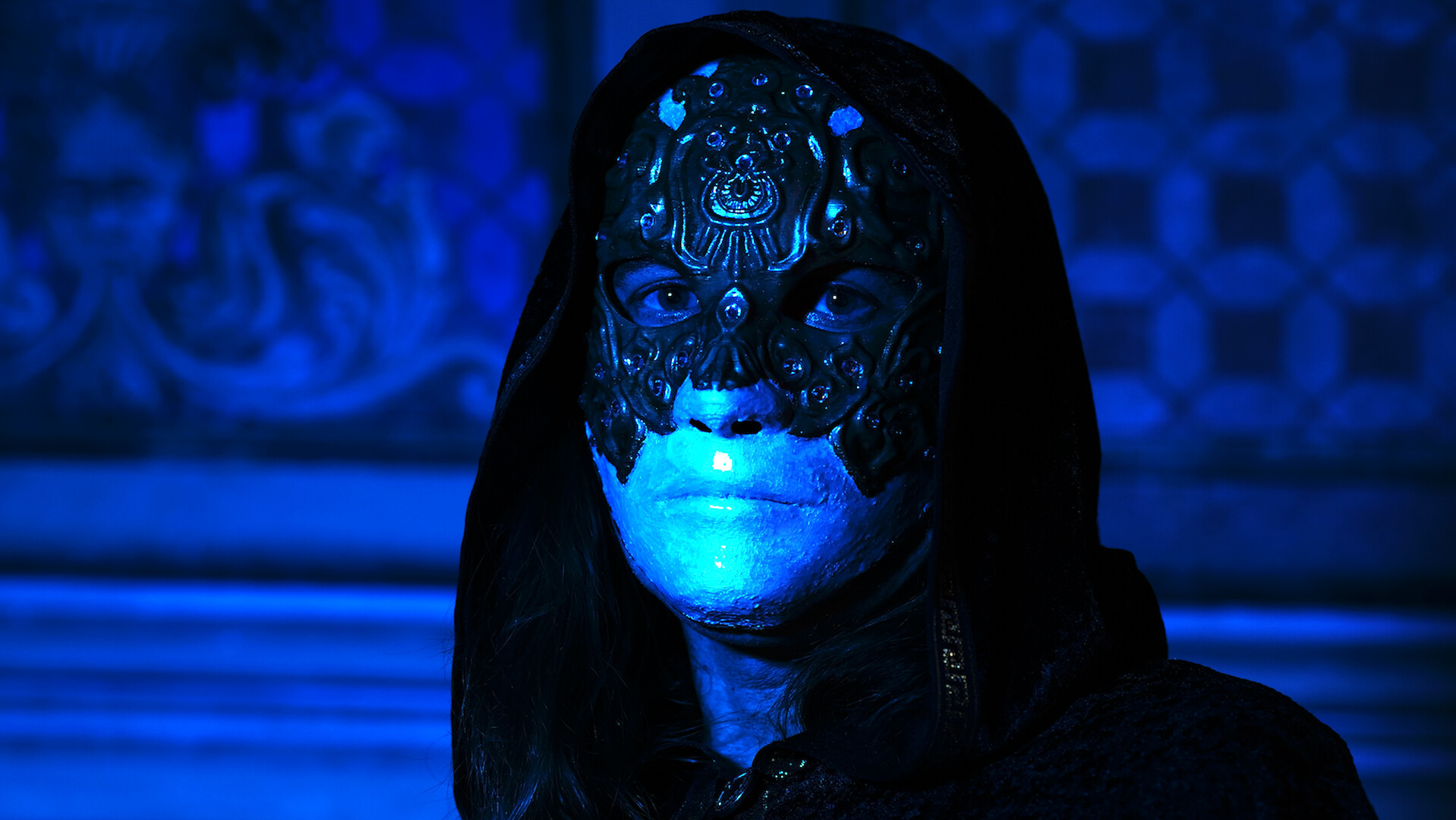
Drama, Mystery, by Samantha Casella, Italy, 2025.
“Katabasis” is a journey into the underworld. Nora experienced that dark realm as a child, when she suffered abuse. This marked her, shaping her into an ambiguous and manipulative woman, dangerous in her inscrutability, constantly seeking disturbing situations to relive the only condition she has profoundly internalized: pain. And the love story between Nora and Aron is tormented, strictly secret. Aron is a young orphan oppressed by the star system which, orchestrated by Jacob, a cynical manager, made him a star and imposes another façade of life on him. In fact, only the people who revolve around the house-prison where the couple lives are aware of Nora's existence. That majestic villa is the stage for secrets, lies, deceit, as well as unsettling episodes, since Nora is able to communicate with the souls from the beyond.
Director Biography – Samantha Casella
Samantha Casella studied various aspects of cinema, including screenwriting, directing, cinematography, and acting, across Turin, Florence, Rome, and Los Angeles. Her directing thesis, the short film "Juliette," won 19 awards, including the "European Massimo Troisi Award." She continued her path directing surreal short films including "Silenzio Interrotto," "Memoria all'Isola dei Morti," and "Agape." In 2019, she directed "I Am Banksy." At the charismatic TCL Chinese Theater in Los Angeles, at the Golden State Film Festival, she won the award for Best International Short Film. In 2020, she directed the short film "A un Dio Sconosciuto." "Santa Guerra" is her feature film debut.
LANGUAGE: Italian
SUBTITLES: English, Spanish, French, German, Portuguese
Eraserhead

Henry Spencer lives in a desolate industrial landscape, a black-and-white nightmare of metallic noises and oppressive shadows. His life descends further into chaos when his girlfriend, Mary X, gives birth to a deformed, crying creature. Trapped in his squalid apartment, Henry must confront the anxieties of fatherhood, sexual repression, and an existence that feels like a fever dream from which it is impossible to awaken.
David Lynch‘s debut feature is a total immersion into the subconscious. More than a narrative film, Eraserhead is a sensory experience, a “dreamscape” that translates the most primordial fears into images and sounds: the anguish of fatherhood, the terror of the body and disease, the alienation of industrial society. Every element, from the mutant baby to the worms, is a powerful symbol of a deep psychological distress. Here, Lynch perfects the use of surrealism and body horror not as an end in itself, but as a vehicle to represent otherwise inexpressible mental states.
Possession

Mark returns home to West Berlin, a city divided by the Wall, to find that his wife Anna wants to leave him. Her request unleashes a spiral of violence, hysteria, and paranoia. As Mark tries to understand Anna’s reasons, he discovers she has a lover, but the truth is far more terrifying and unimaginable. The marital crisis transforms into a metaphysical nightmare involving doppelgängers, murders, and a monstrous, tentacled creature.
Andrzej Żuławski directs an unclassifiable film, a harrowing allegory of the psychological trauma of divorce. Set in a spectral Berlin, a symbol of an irreparable division, the film uses body horror and the supernatural to give physical form to emotional pain. Isabelle Adjani‘s famous possession scene in the subway is one of the most powerful cinematic representations of a psychological breakdown, an explosion of anguish that transcends the body. Possession is an extreme work, possible only outside of any commercial logic, that shows how the collapse of a relationship can be a monstrous and apocalyptic experience.
Mystery of an Employee

Drama, thriller, by Fabio Del Greco, Italy, 2019.
Someone wants to control the life of the employee Giuseppe Russo: the products he buys, his political and religious faith, his private life, even his dreams. But he will do anything to escape control and find his true self. Giuseppe is a man of around 45, married, with a stable job and a home of his own. His life flows seemingly peacefully when he meets a mysterious tramp who gives him some old VHS video cassettes. Giuseppe begins to see video tapes in which he is filmed in some moments of his life since he was a child, then as a teenager and as a young man. Who shot those videos that he remembers nothing about? Giuseppe has the strange sensation of being constantly observed and begins to investigate what is happening. Through his investigation of him, he begins to rediscover his true identity and become aware of who he truly is.
Employee's Mystery is a film that highlights the danger of social control and shows a society where everyone is constantly monitored and conditioned in their deepest selves. The film is also an analysis of human nature and identity. Fabio Del Greco, who plays Giuseppe, gives an engaging performance. Equally good is Chiara Pavoni, in the role of Giada Rubin and Roberto Pensa in the role of the tramp. Employee's Mystery is a film that addresses important themes in an original way, a psychological thriller that keeps the viewer glued to the screen until the end: a metaphor for contemporary society, in which people are increasingly monitored and conditioned by the media and technologies . It is a courageous and provocative work, which addresses important themes in an original way.
LANGUAGE: Italian
SUBTITLES: English, Spanish, French, German, Portuguese
A vision curated by a filmmaker, not an algorithm
In this video I explain our vision
Dead Ringers

Beverly and Elliot Mantle are identical twin gynecologists of great success. They share everything: the clinic, the apartment, and even the women. Elliot, the more extroverted and cynical one, seduces patients and then “passes” them on to the shy and sensitive Beverly. This symbiotic and narcissistic balance shatters when Beverly falls in love with one of them, the actress Claire Niveau. Their pathological interdependence will drag them into a self-destructive descent into madness, drug addiction, and death.
David Cronenberg explores his favorite themes—the fragility of the body, identity, and the fusion of psyche and flesh—through the lens of the double. The film is a chilling analysis of codependency and the loss of self. The twins’ psychological disintegration manifests physically, first through their drug addiction and then with the creation of grotesque gynecological instruments for “mutant women.” Jeremy Irons‘ performance, playing both roles, is masterful in making two identical bodies distinguishable through subtle psychological nuances.
Spider
![Spider (2002) ORIGINAL TRAILER [HD]](https://blog.indiecinema.co/wp-content/plugins/wp-youtube-lyte/lyteCache.php?origThumbUrl=https%3A%2F%2Fi.ytimg.com%2Fvi%2FJJwNpld762E%2F0.jpg)
Dennis “Spider” Cleg, a schizophrenic man, is released from a psychiatric institution and sent to a halfway house in London, in the neighborhood where he grew up. As he wanders the grim streets of his childhood, traumatic memories resurface, particularly the murder of his mother by his father, who allegedly replaced her with a prostitute. But Spider’s mind is an unreliable labyrinth, and the reality he reconstructs may be just a fragile defense against an even more terrible truth.
David Cronenberg again, but this time body horror gives way to a purely mental exploration. Spider is a film about the subjectivity of memory and the unreliable nature of perception. The viewer is trapped in the protagonist’s mind, forced to see the world through his distorted eyes. The non-linear narrative and desaturated cinematography create an oppressive atmosphere that perfectly reflects Spider’s state of confusion and paranoia. It is a work that forces us to question everything, demonstrating how trauma can rewrite the past and poison the present.
Antichrist

Following the tragic death of their only child, a couple retreats to an isolated cabin in the woods called “Eden.” He, a therapist, tries to cure his wife of her paralyzing grief through rational therapy. She, however, descends into a primordial madness, convinced that nature is “Satan’s church” and that women are inherently evil. Their mourning transforms into a brutal psychological and physical war, an explosion of violence, sex, and self-mutilation.
Lars von Trier directs his most controversial and shocking film, a work that uses the horror genre to explore the depths of grief, guilt, and misogyny. Antichrist is a radical descent into the irrational, where grief is not a healing process but a destructive force that shatters civilization and reason. The wild nature becomes a reflection of the protagonist’s tormented psyche, a place where chaos reigns supreme. It is a ruthless analysis of depression and anxiety that refuses any consolation and forces the viewer to confront the pure horror of pain.
Audition

Shigeharu Aoyama, a middle-aged widower, is convinced by a producer friend to stage a fake film audition to find a new wife. Among the candidates, he is fascinated by the young and shy Asami Yamazaki. He begins to date her, ignoring the disturbing signs that emerge from her past. What seems like a delicate love story slowly transforms into a nightmare of obsession, torture, and unimaginable violence.
Takashi Miike directs a film that has become an icon of J-horror and a chilling analysis of misogyny and repressed trauma. The first part of the film lulls the viewer into a romantic comedy atmosphere, only to plunge them into a finale of almost unbearable brutality. Audition explores the male projection of a submissive female ideal and the violent eruption of the truth hidden behind that facade. It is a work that uses extreme horror to stage the devastating consequences of unprocessed psychological trauma and the superficiality with which we judge others.
Pi

Max Cohen is a solitary and paranoid mathematical genius who lives as a recluse in his apartment-lab in New York. He is convinced that everything in nature can be understood through numbers and is searching for a hidden mathematical pattern in the stock market. His research leads him to discover a mysterious 216-digit number that seems to be the key not only to finance but to the universe itself. He soon finds himself hunted by a powerful Wall Street firm and a group of Kabbalistic Jews, as his brilliant mind slides toward madness.
Darren Aronofsky‘s debut is a low-budget psychological thriller, shot in a grainy black and white that perfectly reflects the mental state of its protagonist. The film is a feverish immersion into obsession and paranoia. The frantic editing style, the pounding soundtrack, and the claustrophobic cinematography drag us into Max’s mind, making us experience his migraines, his hallucinations, and his desperate search for order in chaos. Pi is a powerful allegory of the conflict between reason and faith, order and chaos, and the price that absolute knowledge can demand from the human psyche.
Donnie Darko

Donnie Darko is a troubled teenager who suffers from sleepwalking and hallucinations. One night, he is awakened by a voice that lures him out of his house, saving him from a jet engine that crashes into his bedroom. The voice belongs to Frank, a man in a demonic rabbit costume, who tells him the world will end in 28 days. Guided by Frank, Donnie commits a series of acts of vandalism that disrupt his sleepy suburban town, as he tries to unravel the mysteries of time and the universe.
A generational cult classic, Donnie Darko is an enigmatic work that blends teen drama, science fiction, and psychological thriller. The film can be interpreted as a story about parallel universes or, more powerfully, as an allegory of paranoid schizophrenia and adolescent alienation. The dreamlike narrative and its melancholic atmosphere perfectly capture the sense of bewilderment and existential angst of adolescence. The film’s reality is constantly in flux, leaving the viewer to wonder whether Donnie is a hero destined to save the world or a sick boy losing touch with reality.
Mulholland Drive

A dark-haired woman survives a car crash on Mulholland Drive but loses her memory. She takes refuge in an apartment where she meets Betty, a naive, blonde aspiring actress newly arrived in Hollywood. Together, the two women try to uncover the mysterious brunette’s identity, venturing into a world of dreams, secrets, and dangers. But their investigation will lead them to a dark place where reality shatters and nothing is as it seems.
Born from the ashes of a rejected TV pilot and resurrected thanks to French funding, Mulholland Drive is David Lynch‘s dreamlike masterpiece. The film is structured like a dream, or rather, like the dream of a broken soul. The first part is a Hollywood fantasy, while the second is the brutal awakening to the reality of failure, jealousy, and guilt. It is a psychoanalytic exploration of desire and disappointment, where narrative logic gives way to an emotional logic. The viewer is not meant to “solve” the film, but to experience it, getting lost in its labyrinth of swapped identities and multiple realities.
Oldboy
![Oldboy - Trailer [HD]](https://blog.indiecinema.co/wp-content/plugins/wp-youtube-lyte/lyteCache.php?origThumbUrl=https%3A%2F%2Fi.ytimg.com%2Fvi%2F2HkjrJ6IK5E%2F0.jpg)
Oh Dae-su, an ordinary man, is kidnapped and imprisoned in a hotel room for fifteen years without any explanation. During his captivity, he discovers he has been framed for his wife’s murder. Suddenly released, he receives a phone call from his captor, who gives him five days to discover the reason for his imprisonment. His quest for revenge will drag him into a spiral of violence and a truth so shocking it surpasses all imagination.
Park Chan-wook directs a seminal work of South Korean cinema, a psychological thriller that is also a modern Greek tragedy. Oldboy is a brutal exploration of trauma, memory, and the corrosive nature of revenge. The stylized violence and breathtaking action sequences serve a narrative that delves into the darkest depths of the human psyche. The film asks terrible questions about guilt, forgiveness, and how a single act from the past can generate a wave of destruction that engulfs entire lives.
Primer

Two young engineers, Aaron and Abe, accidentally build a time machine in their garage. Initially, they use it to make money on the stock market, but soon their ambition leads them to experiment with their own timeline, creating paradoxes and doubles of themselves. Their friendship crumbles under the weight of a power they cannot control, turning into a game of paranoia, distrust, and betrayal.
Made on a shoestring budget, Primer is one of the most complex and intelligent science fiction films ever made. Its psychological value lies in how the narrative itself reflects the protagonists’ obsession. The dialogue is dense with technical jargon, almost incomprehensible, and the plot is a tangle of overlapping timelines. The viewer is not guided but thrown into chaos, forced to experience the same confusion and paranoia as the characters. It is a film that analyzes the psychological impact of absolute power on the human mind and how knowledge can become a prison.
Triangle

Jess, a single mother of an autistic child, joins a group of friends for a boat trip. When a sudden storm capsizes their vessel, they find refuge on a seemingly deserted ocean liner, the Aeolus. On board, Jess has a strange feeling of déjà vu. They soon discover they are not alone and are trapped in a deadly time loop, forced to relive the same terrifying events over and over again.
Triangle is a psychological thriller that uses the time loop structure as a powerful metaphor for trauma and guilt. The film is an ingenious narrative puzzle, but its true heart is Jess’s psychological journey. Each repetition of the cycle is not just a plot device but an exploration of her desperate attempt to escape unbearable pain. Inspired by the myth of Sisyphus, the film suggests that hell is not a place but a state of mind: the condemnation to repeat one’s mistakes endlessly, trapped in a cycle of denial and punishment.
Upstream Color

A woman named Kris is kidnapped and drugged with a parasite that makes her susceptible to any suggestion. After being robbed of everything, she awakens with no memory of what happened. She meets Jeff, a man who seems to have had a similar experience. The two form a deep bond as they discover they are part of a larger, mysterious biological cycle involving the parasites, a pig farmer, and orchids.
Shane Carruth‘s second film, after Primer, is an even more abstract and poetic work. Upstream Color is a lyrical exploration of trauma, identity, and human connection. The narrative is not linear but sensory, based on images, sounds, and emotional associations. The film represents trauma not as an event, but as an infection that alters the perception of self and the world. It is a complex metaphor about the loss of control and the search for meaning and connection in a seemingly meaningless world.
Coherence

During a dinner party among friends, the passing of a comet causes a strange blackout. The only lit house in the neighborhood appears to be an exact copy of theirs. Soon, the group realizes that the comet has fractured reality, creating an infinity of intersecting parallel universes. Relationships crack and paranoia spreads as the characters begin to encounter alternate versions of themselves, each having made slightly different choices.
Shot in a single location and almost entirely improvised, Coherence is a brilliant example of how independent cinema can turn a science fiction idea into an intense psychological drama. The concept of quantum decoherence becomes a metaphor for the fragility of identity and human relationships. The film explores how our lives are defined by a series of choices and how, under pressure, friendships and loves can collapse, revealing hidden fears, secrets, and resentments. It is a chilling analysis of how the “self” is an unstable construct.
Cure

A series of bizarre murders shocks Tokyo: the victims are killed with an “X” carved into their necks, but each killer is a different person with no memory of the crime. Detective Takabe investigates these seemingly unrelated crimes until his search leads him to an enigmatic young man named Mamiya, who suffers from amnesia. Mamiya appears to be the catalyst for this violence, a psychic “virus” that spreads through hypnosis and suggestion.
A masterpiece by Kiyoshi Kurosawa, Cure is a psychological thriller that delves into the foundations of society and individual identity. The film is not a simple crime story but a philosophical investigation into the nature of evil and the fragility of the human mind. Mamiya does not force people to kill; he frees them, bringing out the repressed violence hidden beneath the surface of normality. It is a work that questions the concept of free will and suggests that our social identity is nothing more than a thin veneer, ready to peel away.
Dogtooth (Kynodontas)

A father and mother keep their three teenage children completely isolated from the outside world, confined to their villa with a garden. The children have never left the property, and their knowledge of reality has been shaped by a distorted language and absurd rules imposed by their parents. This precarious balance is threatened when the father brings in an outsider to satisfy his son’s sexual needs, triggering a chain reaction of curiosity and rebellion.
Yorgos Lanthimos, a leading figure of the “Greek Weird Wave,” directs a chilling and surreal allegory about authoritarian control. Dogtooth is a psychological analysis of how language and information can be used to construct a reality and manipulate the mind. The dysfunctional family becomes a metaphor for a totalitarian state or any system of power that limits individual freedom to maintain control. The film explores the devastating psychological consequences of isolation and repression, showing the violence that can erupt when a closed system is challenged.
The Lobster

In a dystopian future, being single is illegal. Uncoupled people are arrested and transferred to a hotel, where they have 45 days to find a partner. If they fail, they are transformed into an animal of their choice and released into the woods. David, a man recently left by his wife, is sent to the hotel and, to survive, must navigate a world of absurd rules and forced relationships.
Yorgos Lanthimos again, with a surreal and darkly comedic satire on the social pressures related to romantic relationships. The Lobster uses an absurd setting to analyze the psychology of loneliness, conformity, and the desperate search for a partner. The film criticizes both the tyranny of the couple at all costs and the opposite extremism of the “Loners” who forbid any form of love. It is a psychological exploration of how social norms can shape and deform our most intimate desires, forcing us to play a part to be accepted.
Goodnight Mommy (Ich seh, Ich seh)

Nine-year-old twins, Elias and Lukas, await their mother’s return to their isolated country home. When the woman arrives, her face is completely covered in bandages from cosmetic surgery. Her behavior is cold, distant, and severe, very different from what they remembered. The twins begin to suspect that this woman is not their real mother but an impostor, and they decide to uncover the truth by any means, even the cruelest.
The Austrian duo Veronika Franz and Severin Fiala direct a psychological horror that explores the theme of identity and the horror of the familiar becoming strange (the Freudian concept of the “uncanny”). The film plays with the viewer’s perception, forcing them to doubt everything and everyone. It is a chilling analysis of grief, trauma, and psychological denial. The ensuing violence is not an end in itself but the tragic consequence of a child’s mind unable to accept an unbearable reality.
Hard Candy

Hayley, a seemingly naive 14-year-old, meets Jeff, a 32-year-old photographer, in a coffee shop after connecting in an online chatroom. Despite the age difference, she follows him to his apartment. What seems like the beginning of an encounter with a sexual predator quickly turns into a nightmare for Jeff. Hayley is not a victim but a hunter, determined to extract a confession and inflict a terrible punishment on her supposed tormentor.
Hard Candy is a claustrophobic and tense psychological thriller that subverts viewer expectations. The film, set almost entirely in a single location, is a verbal and psychological duel that explores themes like revenge, vigilante justice, and the perception of victimhood. The power dynamic constantly shifts, forcing us to question the morality of Hayley’s actions. It is a provocative work that analyzes the psychology of the predator and the prey, blurring the lines between the two roles in a disturbing way.
Requiem for a Dream

The lives of four people in Coney Island are destroyed by their addiction. Sara Goldfarb, a lonely widow, becomes addicted to amphetamines in an attempt to lose weight to appear on her favorite TV show. Her son Harry, his girlfriend Marion, and his friend Tyrone are trapped in heroin addiction, and their dreams of a better life turn into a nightmare of desperation, prostitution, and physical decay.
Darren Aronofsky adapts Hubert Selby Jr.’s novel with a hyperkinetic and devastating visual style. Requiem for a Dream is one of the most powerful and heartbreaking representations of the psychology of addiction. The frantic editing, the use of split-screen, and the disturbing sound effects drag us into the characters’ minds, making us experience their euphoria, their despair, and their inexorable decline. The film shows how addiction is not just a physical issue, but a psychological prison fueled by loneliness and the search for an escape from reality.
Cinema as Shock Therapy
This journey through the wastelands of the human psyche, guided by cinema, leaves us shaken, questioned, but also enriched. We have seen how the absence of commercial constraints allows directors to create works of brutal honesty, capable of transforming pain, trauma, and madness into powerful and unforgettable cinematic experiences.
From Lynch’s surrealism to Cronenberg’s body horror to the narrative puzzles of Carruth, these films demonstrate that cinema can be much more than mere entertainment. It can be a tool for psychological investigation, a mirror that reflects our deepest fears and our most uncomfortable truths. They do not offer the consolation of a clear diagnosis or a definitive cure, but immerse us in the unresolved complexity of the mind.
This may seem like “shock therapy,” an exposure to images and ideas we would rather avoid. Yet, it is precisely in this confrontation with the dark, the unspoken, and the disturbing that the value of this cinema lies. It reminds us that the most significant explorations never follow beaten paths, but venture bravely into the unknown, illuminating, if only for a moment, the labyrinth that each of us carries within.
A vision curated by a filmmaker, not an algorithm
In this video I explain our vision

