

The landscape of dramatic cinema is vast. To help you navigate it, we have analyzed the vital currents of the genre, guiding you toward the specific type of emotional experience you are seeking.
🆕 Best Recent Dramas
Monster (Kaibutsu) (2023)

When young Minato starts behaving strangely, his mother senses something is wrong at school and accuses his teacher, Hori, of mistreating him. The story seems clear: a case of school abuse. But the film rewinds the tape and tells the same events from three different points of view: the mother’s, the teacher’s, and finally the child’s. Each shift in perspective completely flips the truth, revealing a secret story of friendship, misunderstanding, and prejudice.

Evil Does Not Exist (2024)

Takumi and his daughter live a modest life in harmony with nature’s cycles in a village near Tokyo. Their peace is threatened when a Tokyo talent agency decides to build a luxury “Glamping” site right in their woods, ignoring the devastating impact it will have on the water supply and the community. What starts as an ecological drama transforms, with inexorable slowness, into something much darker and more mysterious.
Japanese master Ryusuke Hamaguchi (Drive My Car) creates a hypnotic film made of silences, trees, and gazes. It is not a banal environmentalist movie, but a philosophical meditation on the violence intrinsic to nature and humanity. The enigmatic and shocking ending is one of the most discussed moments of pure cinema of the year. For those who love slow cinema that gets under your skin.
Vermiglio (2024)

In a remote mountain village in Italy, in 1944, the war seems distant yet omnipresent. The life of the large family of the village schoolmaster is disrupted by the arrival of Pietro, a Sicilian deserter soldier hiding in their home. The eldest daughter, Lucia, falls in love with him, triggering a series of events that will forever change the balance of the community.
Winner of the Silver Lion at Venice, this is Italian cinema at its best: rigorous, dialectal, visually painterly (reminiscent of Olmi’s The Tree of Wooden Clogs). Maura Delpero tells a rural drama without nostalgia, showing the harshness of mountain life, suffocating family dynamics, and the weight of history on women’s shoulders. A film of austere and moving beauty.
The Seed of the Sacred Fig (2024)

Iman is an investigating judge in contemporary Tehran, grappling with political protests inflaming the country. As the regime’s pressure to condemn protesters mounts, his service weapon mysteriously disappears from his home. Iman’s suspicion immediately falls on his wife and two daughters, turning the house into a prison of paranoia, interrogations, and mutual distrust that mirrors the dictatorship outside.
Director Mohammad Rasoulof shot this film in secret before fleeing Iran to avoid prison. It is a political drama disguised as a domestic thriller. The tension is unbearable: the family becomes a metaphor for an entire nation crumbling under the weight of lies and repression. An urgent, brave, and devastating film.
A vision curated by a filmmaker, not an algorithm
In this video I explain our vision
All We Imagine as Light (2024)

Prabha and Anu are two nurses living together in Mumbai. Prabha is stuck in the memory of an arranged marriage to a man who left her for Germany; Anu is living a secret, forbidden romance with a Muslim boy. Their lives, made of night shifts and neon lights in the rain, change when they decide to take a trip to a coastal town, where a mystical forest allows their repressed desires to manifest.
Winner of the Grand Prix at Cannes (the first Indian film in competition in 30 years), it is a work of rare visual poetry. Payal Kapadia paints a delicate and sensual female portrait, far from Bollywood clichés. It is a film about female friendship, light, and water, with a dreamlike atmosphere reminiscent of Wong Kar-wai’s cinema. For those seeking an enveloping and luminous emotional experience.
A Better Life
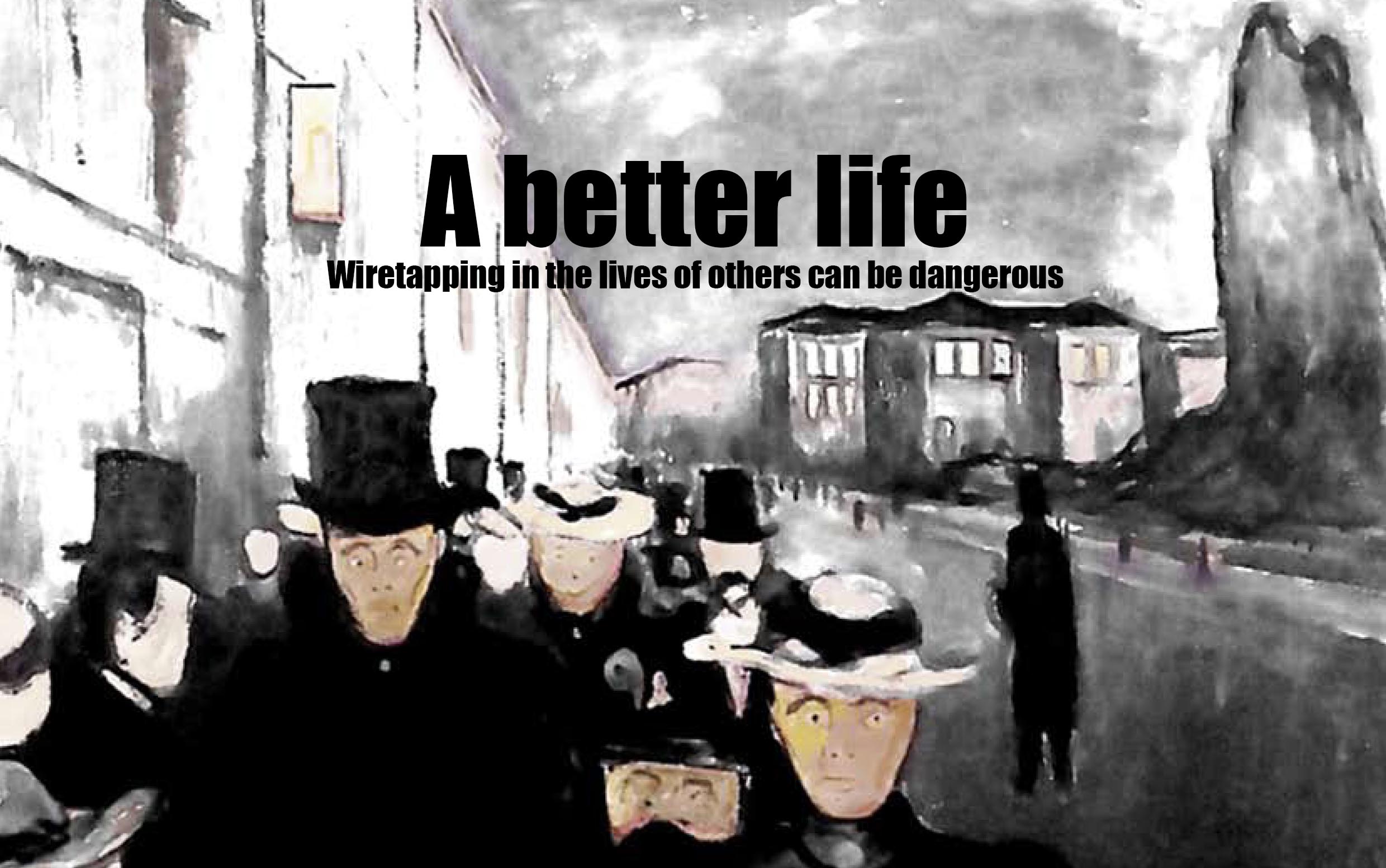
Drama, thriller, by Fabio Del Greco, Italy, 2007.
Rome: Andrea Casadei is a young investigator specializing in audio wiretapping who conducts investigations commissioned by husbands betrayed by their wives, or by parents worried about what their children are doing outside the home. But what interests him most is understanding the human soul, listening to casual conversations in the streets, knowing what people think. He often meets in Piazza Navona with his friend Gigi, a frustrated street artist obsessed with success at all costs, with whom he shares a passion for wiretapping. Shocked by the mystery of the disappearance of Ciccio Simpatia, another street artist common friend, Andrea decides to abandon the commissioned works to seek a better life and reflect on his own and others' existence. He will meet the actress Marina and with a bug he will slowly enter her life until he discovers her most unthinkable secrets. The film deals with an important theme of contemporary Western society: the lack of love. The mysterious and tormented figure of Marina is reflected in a gloomy and soulless Rome.
Director Fabio Del Greco declared about his film: "Perhaps this film is a reflection on the art of observing, of listening, in short, of what one does when one leaves the real world to tell about it. Perhaps he wants to talk about the subtle relationship between the mirages of success touted by today's society, power and the most authentic human relationships.A 'dark cloud' hangs over the city: it is engulfing everyone in a sort of indistinct, uniform mass, where everyone thinks the same things, where everyone they are more alone. Where is the truest part that makes us unique? Maybe you can try to intercept it only secretly."
LANGUAGE: Italian
SUBTITLES: English, Spanish, French, German, Portuguese, Dutch.
Perfect Days (2023)

Hirayama is a man of few words who works cleaning public toilets in Tokyo. His life is marked by a perfect and seemingly monotonous routine: he wakes up, works with meticulous dedication, eats a sandwich in the park looking at the trees, reads used books, and listens to old rock cassettes in his van. Behind this monastic simplicity, however, lies a complex past and a conscious choice to live in the “here and now,” finding beauty in the small things the modern world ignores.
Wim Wenders returns to his purest cinema with a Zen work that acts as a balm for the soul. There is no traditional plot, but a sequence of days that become a meditation on the dignity of labor and inner peace. Kōji Yakusho delivers a monumental performance made of glances and faint smiles (awarded at Cannes), transforming a film about loneliness into a hymn to the joy of existing. A masterpiece of subtraction.
All of Us Strangers (2023)

Adam (Andrew Scott), a lonely screenwriter living in a near-empty high-rise in London, begins a relationship with his mysterious neighbor Harry (Paul Mescal). Simultaneously, he decides to visit his childhood home in the suburbs, where he finds his parents (Claire Foy and Jamie Bell) exactly as they were thirty years prior, on the day they died in a car crash. Adam starts visiting them regularly, talking to the ghosts of his parents to come out and say all the things he never could, as reality and dreams begin to blur.
Andrew Haigh directs a metaphysical ghost story that is actually a powerful psychological drama about grief, gay loneliness, and the need for love. It isn’t scary, but it breaks your heart. It is a dreamlike and melancholic journey exploring the impossible desire to return to being a child to be comforted and understood. The performances are extraordinary, and the film leaves a sense of intimacy and vulnerability rare in contemporary cinema.
Fallen Leaves (2023)

Two lonely souls in modern-day Helsinki—Ansa, a supermarket cashier unjustly fired, and Holappa, a metalworker struggling with alcoholism—cross paths by chance at a karaoke bar. They try to build a relationship despite the adversities of fate: lost phone numbers, misunderstandings, depression, and the shadow of the war in Ukraine constantly echoing from the radios.
Finnish master Aki Kaurismäki returns with a minimalist tragicomedy that is a small miracle of humanity. With his unmistakable style (saturated colors, deadpan acting, laconic humor), he tells a proletarian love story between two people whom life has trampled but who do not give up. It is an essential, brief, and poetic film that celebrates solidarity and the dignity of the “underdogs” with unexpected warmth and hope.
Indie & Arthouse Drama
Far from the clichés and forced resolutions of Hollywood, independent drama is where cinema returns to being a faithful mirror of reality. Here you will find stories that are not afraid of silence, imperfection, and human complexity. These are free films, often made with low budgets but enormous heart, capable of recounting relationships, crises, and rebirths with a disarming sincerity that hits straight to the gut.
👉 BROWSE THE CATALOG: Stream Indie Dramas Now
A Geisha

Drama, by by Kenji Mizoguchi, Japan, 1953.
The story takes place in Kyoto and follows Eiko, a young woman who wants to become a geisha and asks the older Miyoharu to teach her the trade. One of her first clients tries to rape her but Eiko violently defends herself and sends him to the hospital. After Miyoharu also refuses a customer, the two women are banished from the Gion neighborhood; however Miyoharu agrees to sacrifice himself to preserve the future of her young friend.
Remake of one of Mizoguchi's first successful films of 1936. One of Mizoguchi's last films and one of the most successful on the condition of geishas, often victims of dramatic lives. It is also a story of great female solidarity: while the young Eiko rebels, the older Miyoharu has now resigned herself to her condition. It is a dramatic story, punctuated by extended times and long sequence shots and with a camera that remains distant and detached from the characters: the result is moving, rigorous from an aesthetic point of view, performed in an extraordinary way. Probably one of the best ever made on the theme of female friendship.
LANGUAGE: Japanese
SUBTITLES: English, Spanish, French, German, Portuguese
The Great Classics of Drama
Before special effects and modern frenetic pacing, cinema relied on one thing alone: the power of writing and performance. In this section, we celebrate the pillars of the seventh art, those timeless works that defined what “drama” means on the big screen. From the black and white of Hollywood’s Golden Age to Neorealism, these are the films every enthusiast should watch at least once to understand the roots of cinematic language.
👉 GO TO THE LIST: Classic Dramatic Movies
Biopics: Extraordinary Lives
There is no screenwriter more creative than life itself. The Biopic is not merely a chronicle or an imitation of famous figures; it is the art of distilling the essence of an existence into two hours. From great leaders to cursed artists, these works allow us to walk in someone else’s shoes, exploring the lights and shadows of those who have left an indelible mark on history. Here, we do not judge; we understand the human behind the myth.
👉 GO TO THE LIST: Best Biopics
The Historical Drama
The past is a mirror in which to read the present. The Historical Drama uses period costumes and grand events to recount universal passions that never age. Whether it involves court intrigues, social revolutions, or ancient epics, this genre combines visual grandeur with emotional intimacy. It is the cinema that reminds us where we come from and how the great upheavals of History always have a beating human heart at their center.
👉 GO TO THE LIST: Historical Dramas
The Cinema of Memory (The Holocaust)
There are events that cinema has a moral duty to recount, not to entertain, but to bear witness. Films about the Holocaust represent one of the highest and most painful peaks of the dramatic genre. These are necessary works, often difficult to watch, which transform the unspeakable horror of History into a warning for the future. Here, drama becomes documentation, memory, and resistance against oblivion.
👉 GO TO THE LIST: Holocaust Movies
Along For The Ride
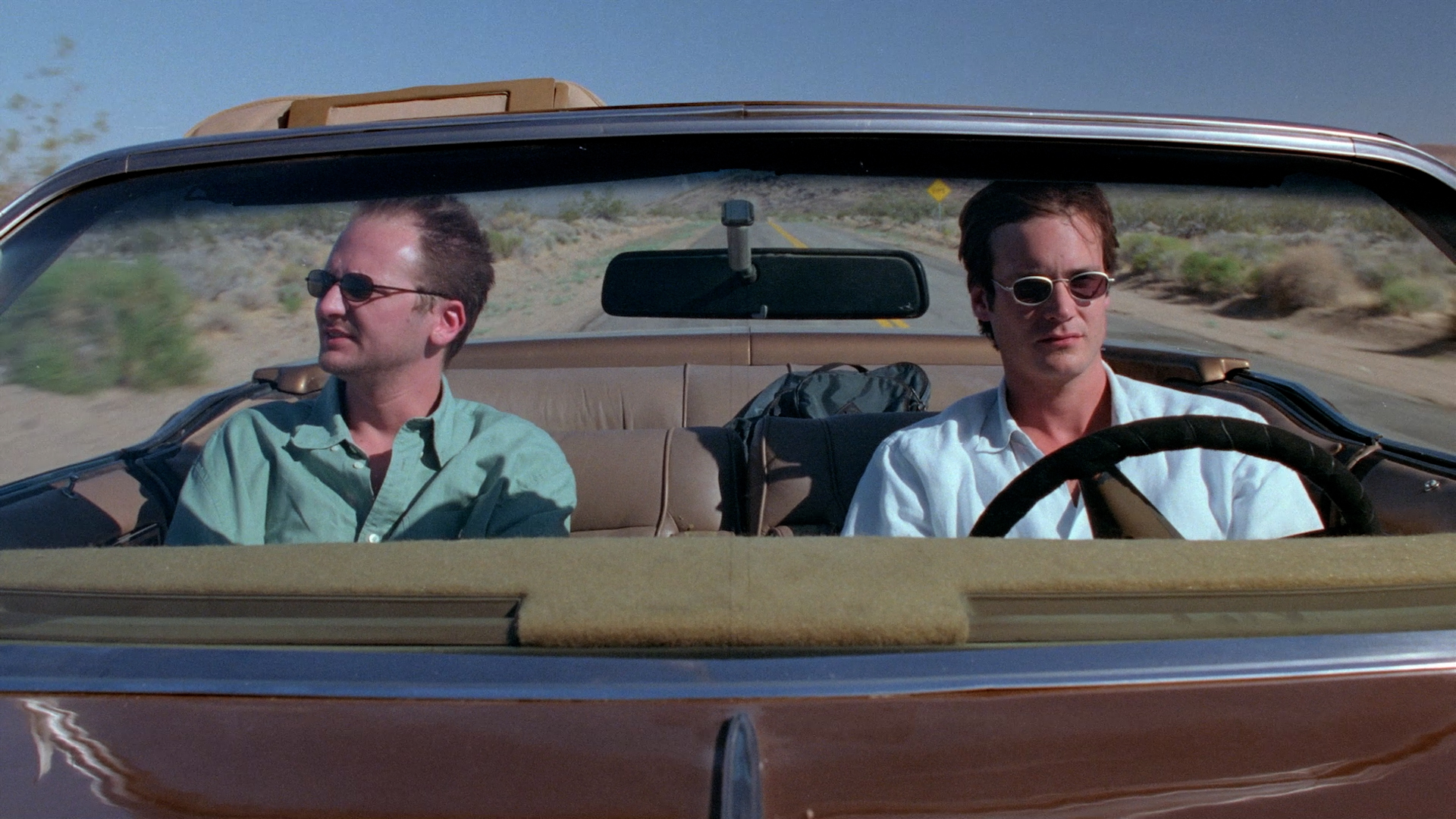
Drama, Comedy, by Bryan Simon, USA, 2001.
Two brothers, Terry (Randy Batinkoff) and Vance (Dylan Haggerty), embark on a journey into the desert with the body of their recently deceased father. Their goal is to find a burial site for him, but along the way unresolved family conflicts resurface. Terry, a successful former baseball player, has always exerted a dominant influence on the younger Vance, a humble mailman. Both carry within themselves the burden of a complicated relationship with their father, Jake (J.E. Freeman), a former professional player obsessed with sports. Even after his death, Jake appears to his children in dream sequences, but instead of offering wise advice, he continues to be distant and authoritarian. The journey thus becomes not only a physical but an emotional journey, in which the two brothers confront their mutual grudges and the emotional legacy of their father.
The film, directed by Bryan Simon with a budget of 150,000 dollars, was shot in extreme weather conditions, with a screenplay adapted by Jim Moores from a work by Randall Wheatley. The film also explores the role of sport as a vehicle for communication between father and son. For many men, expressing feelings is difficult, while talking about sport is a natural and shared language. "Along for the Ride" addresses these issues with sensitivity and realism, resulting in a touching work for those who have experienced similar family dynamics. An indie not to be missed for lovers of quality independent cinema.
LANGUAGE: English
SUBTITLES: Spanish, French, German, Portuguese
Social Drama and Addiction
A journey to the end of the night. Films about drugs and addiction explore human fragility without filters, showing us the descent into hell and, sometimes, the climb back out. It is a raw cinema, often independent and stylistically bold, which does not seek to moralize but to show the reality of the human condition when stripped of every defense. Stories of self-destruction, but also of a desperate search for life.
👉 GO TO THE LIST: Movies about Addiction
Cinema of Awareness: Violence Against Women
Drama becomes a tool for awareness. This section collects works that have had the courage to break the silence on urgent and painful themes. These are not films that seek the viewer’s pity, but their indignation and empathy. Stories of survival, struggle, and dignity that use the power of cinematic language to give a voice to those who, too often, go unheard.
👉 GO TO THE LIST: Movies about Violence Against Women
The Sports Drama
It is never just a question of the score. The sports film uses athletic competition as the perfect metaphor for life: the fall, the sacrifice, the training, and the redemption. Whether it is boxing, running, or chess, these stories touch the deepest chords of human resilience. It is the cinema of the “underdog,” the disadvantaged who fight against their own limits even before fighting the opponent.
👉 GO TO THE LIST: Sports Movies
Drama Movies from the 1930s and 1940s
Dramatic films of the 1930s and 1940s reflect two decades marked by profound social, economic, and political upheavals. From the hardships of the Great Depression to the traumas of World War II, drama became more realistic, intense, and psychologically rich, telling stories of resilience, loss, and hope through complex characters.
Altin in the City
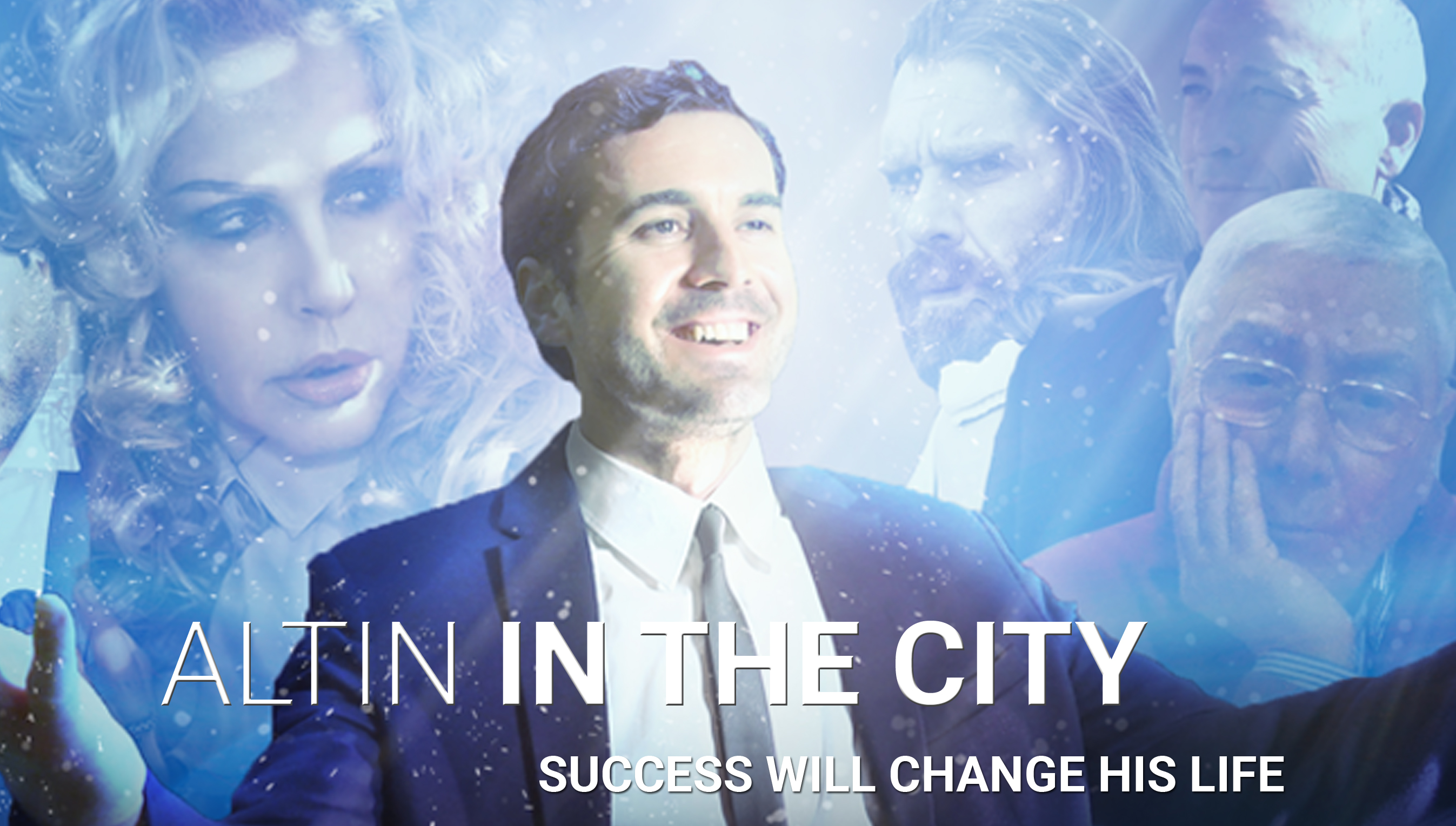
Drama, thriller, by Fabio Del Greco, Italy 2017.
Altin, aspiring Albanian writer arrived in Italy aboard a large ferry in the 90‘s, works in a butcher shop when he’s selected to audition for a reality of writers and finally sees a chance to be successful with his book “the journey of Ismail.” Unfortunately, this is the begin of the adventures which will lead him to learn about revenge, loneliness and extreme poverty, to the dark side of wealth and success.
The theme of Altin in the City should not lead to the assumption that it is merely the story of a young immigrant trying to integrate. In reality, it is a tale where greed, thirst for power and success, cynicism, and ambition intertwine, creating a sort of modern-day Faust and a new "pact with the devil" belonging to the 22nd century, which we could summarize as: show business. The reality show becomes the Mecca, the keystone, and the springboard for those who wish to achieve success without effort. Del Greco presents this world with subtle irony, characterized by kitsch nuances and parodic tones. However, success without effort comes at a price: Altin has sold his soul to the devil and, from being an easy prey of television showbiz, will soon become a victim of himself.
LANGUAGE: Italian
SUBTITLES: English, French, Spanish, German.
M (1931)

Fritz Lang’s first sound masterpiece is not merely a procedural thriller but a sociological treatise on paranoia and summary justice that anticipates the collapse of the Weimar Republic with chilling precision. Lang uses sound not as a decorative ornament but as a primary dramaturgical element, exploiting silence and off-screen space to create unbearable tension. The whistling of Edvard Grieg’s “In the Hall of the Mountain King” is not just a musical leitmotif; it is the auditory manifestation of the homicidal drive Hans Beckert cannot control, a sonic brand that condemns him before physical evidence does. The film dismantles the classic structure of the heroic protagonist; the true protagonist is the city of Berlin, a sick, labyrinthine, and suffocating living organism where moral distinctions between the police and organized crime blur until they disappear completely.
Peter Lorre’s greatness in the role of Beckert lies in his ability to transform a monster into a figure of pathetic helplessness. In the final monologue, facing the “court” of organized criminals who captured him because his presence disturbed their business, Lang forces the viewer into an uncomfortable and untenable position: acknowledging the desperate humanity of a child killer. Beckert screams “I can’t help it!”, contrasting his pathological madness with the deliberate choice of evil made by the criminals judging him. Visually, the film is a bridge between 1920s German Expressionism and the future American Film Noir, using elongated shadows, high-angle shots, and claustrophobic geometric compositions to suggest that evil is not an external anomaly but an intrinsic component of the social structure. The manhunt becomes a metaphor for total surveillance and mass mobilization against the “other,” a theme that would resonate tragically in the following years with the rise of Nazism.
Limite (1931)

The only feature film by Brazilian Mário Peixoto, this work remained a mysterious, almost mythological object of world cinema for decades. Venerated by figures like Orson Welles and Walter Salles but rarely seen by the general public due to the difficulty of finding copies in good condition until recent restorations, Limite is a visual poem on existential imprisonment and the futility of human action. The plot, deliberately ethereal and non-linear, follows two women and a man adrift in a boat, whose past stories emerge through fragmented flashbacks that do not explain but evoke sensations of loss and despair. There is no Aristotelian narrative, but a visual stream of consciousness that anticipates European experimentations of later decades.
Peixoto works obsessively on the concept of the visual and physical “limit,” inspired by an André Kertész photograph seen in Paris depicting handcuffed hands around a woman’s neck. The camera lingers on hands that fail to grasp, fences, unreachable horizons, and circular movements that lead nowhere. The influence of Soviet avant-gardes (in editing) and French Impressionism (in cinematography) is evident, yet the tone is uniquely Brazilian in its tropical melancholy, a visual saudade that permeates every frame. The film is a sensory experience where water and time corrode the characters’ will; the soundtrack, which includes Erik Satie’s Gymnopédies, accentuates the sense of stasis and temporal suspension. Its recent restoration has allowed for the reaffirmation of its position as a cornerstone of Latin American experimental cinema, a work that rejects the logic of bourgeois dramaturgy to embrace absolute cinematic purity, where the image precedes and surpasses the word.
L’Atalante (1934)

Jean Vigo, who died tragically young of tuberculosis shortly after this film’s release, left us with L’Atalante a testament of anarchic vitality and feverish romanticism. On the surface, the story is simple, almost banal: the marriage between Jean, a barge captain, and Juliette, a village girl, and their life along the French canals towards Paris. However, Vigo transforms this narrative premise into a dreamlike exploration of love, desire, and marital boredom. The barge becomes a floating microcosm, suspended between the gray reality of economic depression and the surreal magic evoked by the eccentric Père Jules. Played by a Michel Simon in a state of grace, Jules is a hoarder of trinkets and memories, a grotesque and tender character representing the anarchic and disordered soul of the world, in contrast to the rigidity of life on land.
The underwater sequence, in which Jean dives into the river and sees his beloved’s face floating in the water like a ghostly apparition, is one of the highest moments of French Poetic Realism and demonstrates Vigo’s ability to merge social documentary with surrealist avant-garde. Vigo suggests that true love is a form of shared hallucination, capable of transfiguring the bleakest reality. There is no sentimentality, but an erotics of the everyday; the dirt, the fog, the stray cats, and the cramped spaces of the barge are treated with the same reverence as the protagonists’ feelings. L’Atalante is a film that breathes, pulsating with a formal freedom that ignores rules of classical continuity to prioritize the emotional intensity of the instant, profoundly influencing future directors like François Truffaut and the Nouvelle Vague movement.
Make Way for Tomorrow (1937)

Often cited by Orson Welles as the film “that would make a stone cry,” Leo McCarey’s masterpiece is a devastating examination of family disintegration caused by the economic pressures of the Great Depression. While Hollywood sold dreams of redemption and sophisticated comedies (a genre in which McCarey himself excelled), here the director looked straight into the face of old age, obsolescence, and economic dependence. The story of Bark and Lucy Cooper, an elderly couple forced to separate because none of their five children can or will house them both after the bank forecloses on their home, is treated without the slightest recourse to manipulative melodrama. The cruelty of the children does not stem from cartoonish villainy but from pragmatic and modern selfishness; they represent a generation that views the elderly as a logistical problem to be solved rather than a moral resource.
McCarey’s direction is invisible and therefore powerful, leaving room for the heartbreaking performances of Victor Moore and Beulah Bondi. The influence of this film on Yasujirō Ozu and his Tokyo Story is clear and documented, but the American version possesses a specific desperation linked to Western individualism and the collapse of the American Dream. The final scenes, where the couple spends a few final hours together in New York before a separation they know to be definitive, are a tribute to human dignity persisting even in the face of social indifference. It is an indictment of a capitalist society that, in the race for progress and efficiency, has forgotten the value of memory and gratitude, treating people as depreciable assets.
Anhedonia

Drama, Science Fiction, by Fabrizio Pesaro, Italy, 2024.
A couple is forced to stay at home because the air outside became toxic after an undetermined disaster. The forced cohabitation takes their relationship to a point of no return.
Director Biography - Fabrizio Pesaro
Fabrizio Pesaro was born in Ancona. He attended Liceo Artistico and in 2015 he moved to Rome to study cinema. He works as freelance videomaker and data manager. As an indipendent director he made three short films (Samsara, Ecce Homo, Lonely Fans) and a medium length film (Anedonia). He’s also always been into writing and poetry. He published poems and short stories on various magazines.
LANGUAGE: Italian
SUBTITLES: English, Spanish, French, German, Portuguese
Grand Illusion (1937)

Jean Renoir creates, on the eve of World War II, the greatest anti-war film ever produced, paradoxically without almost ever showing the battlefield. Grand Illusion (La Grande Illusione) is a film about borders: the visible ones of nations and the invisible, yet far more rigid ones, of social classes. The relationship between the aristocratic French Captain de Boieldieu (Pierre Fresnay) and the German officer von Rauffenstein (an unforgettable Erich von Stroheim with his orthopedic brace and monocle) demonstrates that affinity of class and culture supersedes national enmity. Both know they are endangered dinosaurs, representatives of an old European order about to be swept away, replaced by a new bourgeois and proletarian Europe represented by the characters of Maréchal (Jean Gabin) and Rosenthal (Marcel Dalio).
The title itself is polysemic: the illusion that war can resolve conflicts, the illusion that social barriers can withstand history, or perhaps the illusion, widespread at the time, that the war of 1914-18 would be the last. Renoir uses deep focus and long takes to emphasize the spatial connection between characters and their environment, rejecting frantic editing that fragments action and separates individuals. It is a profoundly humanist film that does not demonize the enemy but observes with melancholy the end of an era and the uncertainty of the next. The final escape toward Switzerland, across a snowy expanse where borders are invisible until drawn by man, remains one of the most powerful visual metaphors for the arbitrary nature of political divisions.
The Rules of the Game (1939)

If Grand Illusion looked to the past with melancholy, The Rules of the Game looks at the present with satirical ferocity. Made just as Europe was plunging into the abyss of World War II, the film was initially a colossal fiasco, hated by the public and critics to the point of being banned by the French government for being “demoralizing.” Renoir orchestrates a comedy of manners at a country estate, La Colinière, which transforms into a macabre dance. Aristocrats, hero aviators, and servants are trapped in a game of roles, lies, and betrayals where the only unforgivable sin is sincerity or a breach of etiquette.
The famous line by the character Octave (played by Renoir himself), “The awful thing about life is this: everyone has their reasons,” is the ethical keystone of the film. Renoir does not judge his characters; he watches them struggle in their frivolity while the world burns. The hunting sequence, where innocent animals are massacred for sport in a frenzy of gunfire anticipating the imminent war, is one of the most powerful metaphors for the brutality inherent in European civilization of the time. Technically, the use of deep focus here reaches unequaled heights, allowing different actions and narrative registers (farce, tragedy, romance) to coexist in the same frame, reflecting the controlled chaos of a society on the brink of the abyss, unable to distinguish between theater and real life.
Gone with the Wind (1939)

A sweeping romantic epic set against the backdrop of the American Civil War and the subsequent Reconstruction. The film follows the spoiled but indomitable daughter of a Georgia plantation owner, Scarlett O’Hara. Through the destruction of Atlanta, starvation, and the loss of her home, Tara, Scarlett fights for survival. Her obsession with the phlegmatic Ashley Wilkes blinds her to her tumultuous and passionate relationship with the cynical Rhett Butler.
Beneath the glittering surface of melodrama and Technicolor, Gone with the Wind is a ruthless drama about survival. The film’s narrative engine is not love, but land. The cathartic moment is not a kiss, but Scarlett’s oath in the ravaged fields of Tara: “As God is my witness, I’ll never be hungry again.” Scarlett O’Hara is one of cinema’s greatest anti-heroines. She is selfish, manipulative, unaffectionate, and extraordinarily modern. Her personal drama is the clash between her ruthless pragmatism and the code of honor of a world (the Old South) that is dying before her eyes.
The true dramatic conflict is not between the North and the South, but between Ashley Wilkes, a symbol of the idealized and weak past, and Rhett Butler, the embodiment of the realistic and capitalist future. Scarlett’s tragedy is that she, despite being a modern woman herself, clings to the romantic fantasy of Ashley, recognizing her true partner, Rhett, only when it is too late and he has stopped loving her.
Citizen Kane (1941)

Upon his death in the vast, isolated estate of Xanadu, publishing magnate Charles Foster Kane utters a single, enigmatic word: “Rosebud.” A journalist is assigned to uncover the meaning of this term, investigating the magnate’s life. Through interviews with his old associates and his ex-wife, the film pieces together, via fragmented and contradictory flashbacks, the puzzle of an existence marked by wealth, power, and profound loneliness.
Citizen Kane is not just a dramatic film; it is the film that taught cinematic drama a new language. Orson Welles, in his debut, shattered every narrative and technical rule. The innovative use of deep-focus cinematography is not mere virtuosity but an essential dramatic tool: it serves to show Kane’s isolation, the emotional distance between characters trapped in the same frame but separated by psychological chasms. The central drama is a failed investigation into human identity. The film is a meditation on loss. Kane gains the world but loses his soul at the exact moment he is torn from his childhood and that sled. His power and wealth are merely desperate attempts to compensate for that original loss, to force the world to love him.
The fragmented narrative structure is the film’s true theme. It demonstrates that it is impossible to truly know a person; our life is only the sum of the narratives, often contradictory, that others tell about us. “Rosebud” is not the key to understanding Kane; it is the symbol of all that was lost and cannot be recovered. The final “NO TRESPASSING” sign is the film’s thesis: the human soul is, ultimately, inaccessible.
Children of Hiroshima
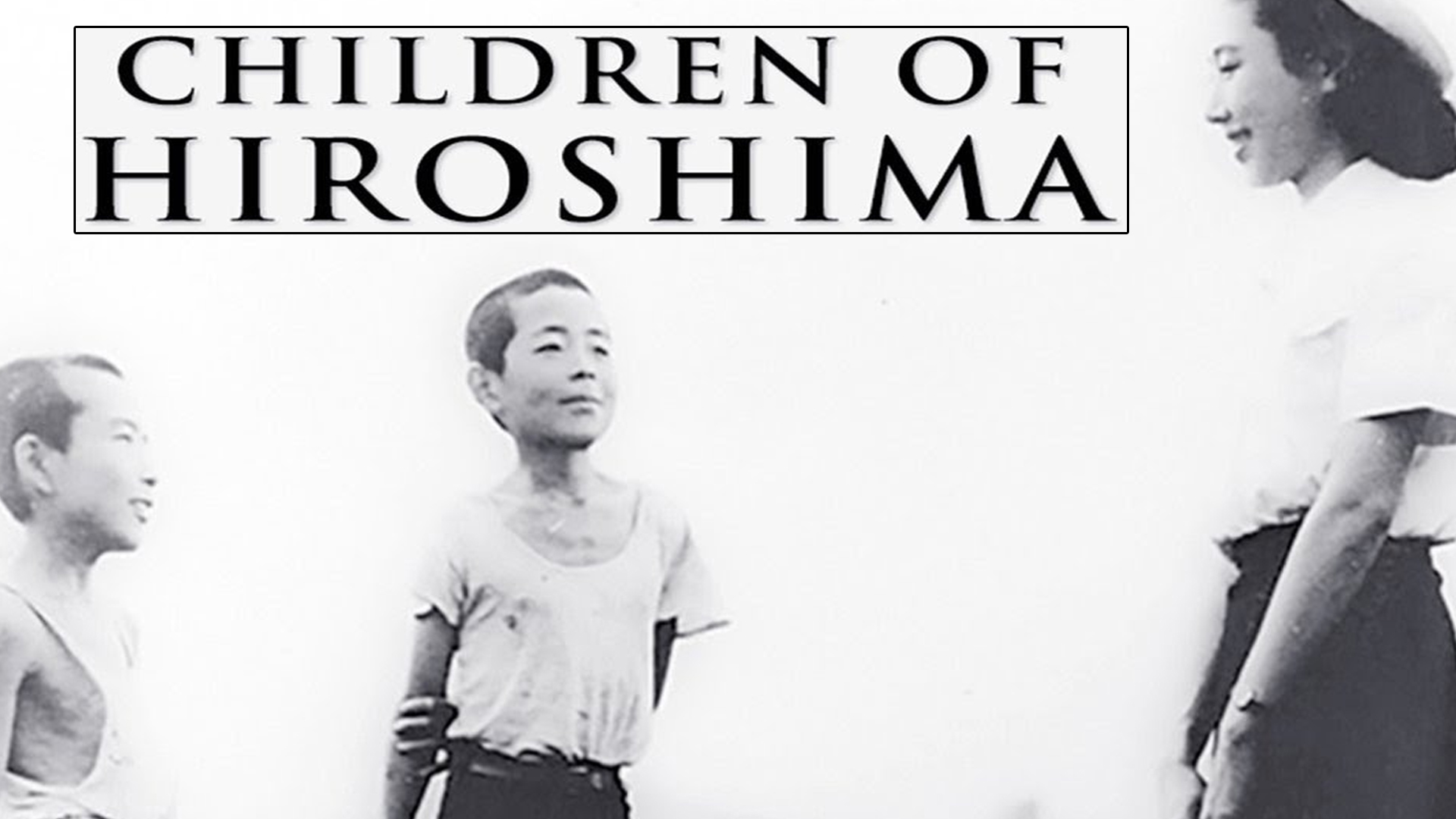
Drama, by Kaneto Shindō, Japan, 1952.
Takako Ishikawa is a teacher off the coast of Hiroshima and has not returned to his atomic bombed city in 4 years. His trip to Hiroshima becomes a journey to his destroyed homeland, in search of surviving old friends. The city has almost been rebuilt, but the tragedy is still very present: the disfigured faces, the shrunken limbs, the sterile women and the handicapped children without joy. In an old blind man accompanied by his nephew Taro Takako he recognizes the servant of his own family, destroyed with the house.
Film shot with sobriety, it shows the tragedy of the bomb only in a short flashback from the protagonist in a few seconds of hallucinating images. The short scene, however, always remains present in her mind as in the mind of the spectator. The tone of Kaneto Shindo is not that of a historical account but that of an intense and restrained lyrical emotion, which seeks its essence in the details. In the sky, finally, a plane passes: the eyes of the teacher are filled with anguish, those of the child are only pure and curious. In competition at the 1953 Cannes Film Festival, shot after the war when the pain was still fresh, full of dark and realistic atmospheres. Shindo, who died at 100 in 2012, less known in the West than Mizoguchi, Kurosawa, realizes his masterpiece with this film.
LANGUAGE: japanese
SUBTITLES: english
Casablanca (1942)

In Vichy-controlled Casablanca during World War II, American expatriate Rick Blaine runs the city’s most popular nightclub, maintaining a cynical detachment from politics and conflict. His world is turned upside down when his former lover, Ilsa Lund, reappears with her husband, Resistance hero Victor Laszlo. Hunted by the Nazis, they desperately need the visas in Rick’s possession to escape to America.
Casablanca is the very definition of romantic drama, a film with a perfect screenplay that masterfully balances cynicism and idealism. It is a film about moral rebirth. The central drama is not just the love triangle, but the choice between personal happiness and the greater good. Rick Blaine is an allegory for pre-war America: isolationist, wounded, and determined not to get involved (“I stick my neck out for nobody”). Ilsa’s arrival forces him to reckon with the past and, above all, to choose a side in the present. The conflict is not just between Rick and the Nazis, but between the Rick he was and the Rick he must become.
Produced and distributed in the midst of the war, the film is a universal parable about sacrifice. It is not a realistic work; it is mythological. Rick “inventing a narrative” to convince Ilsa to get on that plane with Laszlo (“Maybe not today, maybe not tomorrow, but soon and for the rest of your life”) is the film itself inventing a narrative to convince an entire nation that, in the face of absolute evil, personal sacrifice is not only right, but necessary.
Meshes of the Afternoon (1943)

In sharp contrast to industrial Hollywood productions, Maya Deren and her husband Alexander Hammid created with Meshes of the Afternoon the seminal work of American avant-garde cinema and psychodrama, shot on a shoestring budget in their Los Angeles home. Filmed silently (Teiji Ito’s music was added later in 1959) and in 16mm, the film explores the female unconscious through a circular and repetitive structure that defies all Aristotelian spatial and temporal logic. Everyday elements—a key, a bread knife, a flower, a phone off the hook—become totems charged with sexual and violent menace, Freudian symbols of domestic alienation.
Deren does not act a part in the traditional sense but performs a mental state, moving through space with dreamlike choreography. The use of editing to connect impossible spaces (a step on sand becoming a step on grass, then on carpet) anticipates the discontinuities of cinematic modernity and breaks conventional film geography. The hooded figure with a mirror in place of a face is one of the century’s most disturbing and powerful images, a symbol of death reflecting the self or a fragmented identity that cannot be grasped. The film is a visceral investigation into the unstable nature of subjective perception and repressed female desire, laying the groundwork for all experimental, feminist, and independent cinema to come, demonstrating that cinema could be a tool for deep interior investigation and not just external storytelling.
Double Indemnity (1944)

Billy Wilder, collaborating with hard-boiled novelist Raymond Chandler on the screenplay, brings noir to its stylistic and thematic perfection with Double Indemnity. Here there are no private detectives or professional gangsters, but ordinary people—an insurance salesman and a housewife—corrupted by lust and greed in the sunny and banal squalor of Los Angeles. Fred MacMurray, an actor known for light roles, and Barbara Stanwyck, with her deliberately artificial blonde wig (“sleazy”), create a toxic chemistry based not on love but on criminal complicity. Wilder openly challenges the Hays Code, managing to suggest intense and morbid eroticism without showing anything explicit.
The film is revolutionary in how it forces the audience to identify with the murderers, hoping they get away with it as the net tightens around them, manipulated by investigator Barton Keyes (Edward G. Robinson). The flashback narrative, dictated into a Dictaphone by a dying man, permeates every scene with a sense of inescapable fatality; we know from the start that Walter Neff is doomed. Visually, cinematographer John Seitz uses “venetian blind lighting” to cage the characters in their destiny, transforming California bourgeois homes into moral prisons striated with light and shadow. Wilder exposes the rot beneath the respectable surface of America, suggesting that crime is not an aberration but a business transaction gone wrong.
Rome, Open City (1945)

Filmed while German troops were still leaving Italy and using expired film stock of different formats recovered on the black market, Roberto Rossellini’s film is the birth certificate of Neorealism and a historical document of unheard-of power. Rossellini takes the camera out of the studios, into the wounded streets of Rome, mixing professional actors (Anna Magnani, Aldo Fabrizi) with ordinary people. The result is a work that nullifies the distance between art and life, between fiction and chronicle, capturing the atmosphere of fear, hunger, and hope at the end of the war.
The sequence of Pina’s (Magnani) run and death, gunned down by German machine guns as she chases the truck taking away her man, is a moment that ripped innocence away from world cinema; there is no slow motion, no emphatic music, only the dry and sudden brutality of real violence. The film unites the communist resistance and the Catholic one in a common humanist front against Nazi-fascist oppression, symbolized by the alliance between the engineer Manfredi and Don Pietro. Despite the rawness of the torture scenes, there is a deep hope residing in solidarity and sacrifice for future generations. Rome, Open City taught the world that cinema could be made with nothing, provided there was a moral urgency to communicate, influencing generations of directors from Brazil to India to France.
Crazed Fruit

Drama, by Ko Nakahira, Japan, 1959.
The sweet life of the rich young Japanese of the Sun Tribe subculture which was inspired by the western lifestyle in the late 1950s, between lust and violence, water skiing and speedboats. A story of love, passion and betrayal. Two brothers fall in love with the same girl, but she hides her real life. The morbid passion for the girl becomes unmanageable and the conflict between the two brothers more and more dramatic. Almost unknown masterpiece in the West, it caused a scandal at the time of its release. It is the film that paves the way and inspires the Japanese New Wave. Director Ko Nakahira couldn't stand Nikkatsu's industrial production model and began abusing alcohol. Eventually, he had to expatriate China and use a pseudonym to make his later films.
Food for thought
Whenever you feel sexual attraction towards someone, jealousy can arise because you are not in love. If you are truly in love, jealousy never appears. You are afraid because sex is not actually a real relationship, you are afraid that the other person may go to someone else. This fear becomes jealousy. If there is a genuine relationship it is impossible to find that wealth somewhere else.
LANGUAGE: Japanese
SUBTITLES: English, Spanish, French, German, Portuguese
The Best Years of Our Lives (1946)

While Europe dealt with physical rubble, America had to face the psychological rubble of returning veterans. William Wyler directs an intimate epic of nearly three hours about the homecoming of three veterans: a middle-aged captain (Fredric March), an Air Force officer tormented by nightmares (Dana Andrews), and a sailor who lost both hands (Harold Russell). This latter role, played by real veteran and non-actor Harold Russell, gives the film a heartbreaking documentary authenticity that no special effect could replicate. Wyler rejects patriotic triumphalism to show the difficulty of reintegrating into a society that wants to forget the war and return to the normalcy of consumerism as soon as possible.
Gregg Toland’s use of deep focus (the same cinematographer as Citizen Kane) allows Wyler to build complex scenes where the reactions of characters in the background are as important as the action in the foreground. A masterful example is the scene in the bar where Homer (Russell) plays the piano with his hooks, while in the background Al (March) and Fred (Andrews) have a crucial conversation; the viewer is free to choose where to look, increasing the realism of the scene. The film addresses themes such as post-traumatic stress disorder (then undiagnosed), alcoholism, and the crisis of male identity in a changed world. It is a melancholic and mature portrait of a country that won the war but lost its innocence.
Bicycle Thieves (1948)

Vittorio De Sica and screenwriter Cesare Zavattini take Neorealism to its purest essence: a minimal story (the theft of a bicycle) that becomes a universal tragedy. In post-war Italy, devastated by unemployment, a bicycle is not a leisure item but the only means of livelihood for bill poster Antonio Ricci and his family. The search for the bicycle through an indifferent Rome becomes an urban odyssey revealing the inadequacy of institutions, the church, unions, and the crowd toward the drama of the individual. Lamberto Maggiorani, a non-professional worker, lends his face to Antonio, embodying the desperation of an entire class.
The presence of little Bruno, the son who watches his father throughout the search, is the true moral heart of the film. Through his eyes, we see the collapse of the father figure, from daily heroism to final humiliation. The scene where Antonio, driven by desperation, attempts to steal a bicycle himself and is caught in the act and nearly lynched by the crowd, is devastating because it shows how extreme poverty can corrode anyone’s moral integrity. The ending, with the child’s hand gripping the father’s amidst the crowd while both weep, offers no economic or political solutions but reaffirms the necessity of human connection and pity as the only refuge against a hostile world.
The Third Man (1949)

Carol Reed, in collaboration with Orson Welles (who acts here but whose presence heavily influences the style) and writer Graham Greene, creates a British noir set in a ghostly Vienna, divided into four occupation zones and reduced to rubble by bombings. The city is a labyrinth of expressionist shadows, Dutch angles (tilted shots), and wet streets, reflecting the total moral disorientation of the post-war period and the beginning of the Cold War. Anton Karas’s famous zither score, cheerful and neurotic at the same time, creates an ironic and alienating contrast with the grimness of the plot and the horrific crimes unveiled.
The character of Harry Lime (Welles) is the incarnation of the charismatic evil of the 20th century: a man who justifies the sale of diluted penicillin (which kills or maims children) with a nihilistic logic reducing people to insignificant “dots” viewed from the top of a Ferris wheel. The famous monologue improvised by Welles about the Swiss cuckoo clock and the Italian Renaissance is a cynical apology for creative selfishness and chaos as the engine of history. The finale in the Vienna sewers is a descent into literal and metaphorical hell, and Anna’s (Alida Valli) long final walk, ignoring the protagonist Holly Martins, is one of the most elegant and definitive rejections in film history, sealing the film in a romantic pessimism without redemption.
Late Spring (1949)

With Late Spring, Yasujirō Ozu inaugurates his series of post-war masterpieces focused on the dissolution of the traditional Japanese family under the pressure of Westernization and modernity. The first of the so-called “Noriko Trilogy” (with Early Summer and Tokyo Story), the film tells a spare story: a devoted daughter (Setsuko Hara, Ozu’s muse) does not want to marry so as not to leave her widowed father (Chishū Ryū) alone, who must pretend to want to remarry to push her to create a life of her own. Ozu uses his fully formed transcendental style here: the “tatami shot” (low camera, at the height of a seated person), breaking the 180-degree rule in shot-reverse-shot, and “pillow shots” (shots of landscapes or static objects like a vase) to create a contemplative rhythm that invites the viewer to reflect on the transience of things (mono no aware).
The drama here consists not of shouting or open conflicts, but of smiles hiding pain and silences charged with meaning. Ozu documents with heartbreaking delicacy Japan’s transition from a collectivist ethic to a more individualistic one. The scene where the father peels an apple at the end of the film, after his daughter has left for her honeymoon, and his head drops forward for a moment from exhaustion and loneliness, is a summit of minimalist pathos. His solitude is accepted as a natural and inevitable part of the life cycle, not as a tragedy to be fought, but as a destiny to be welcomed.
Early Summer
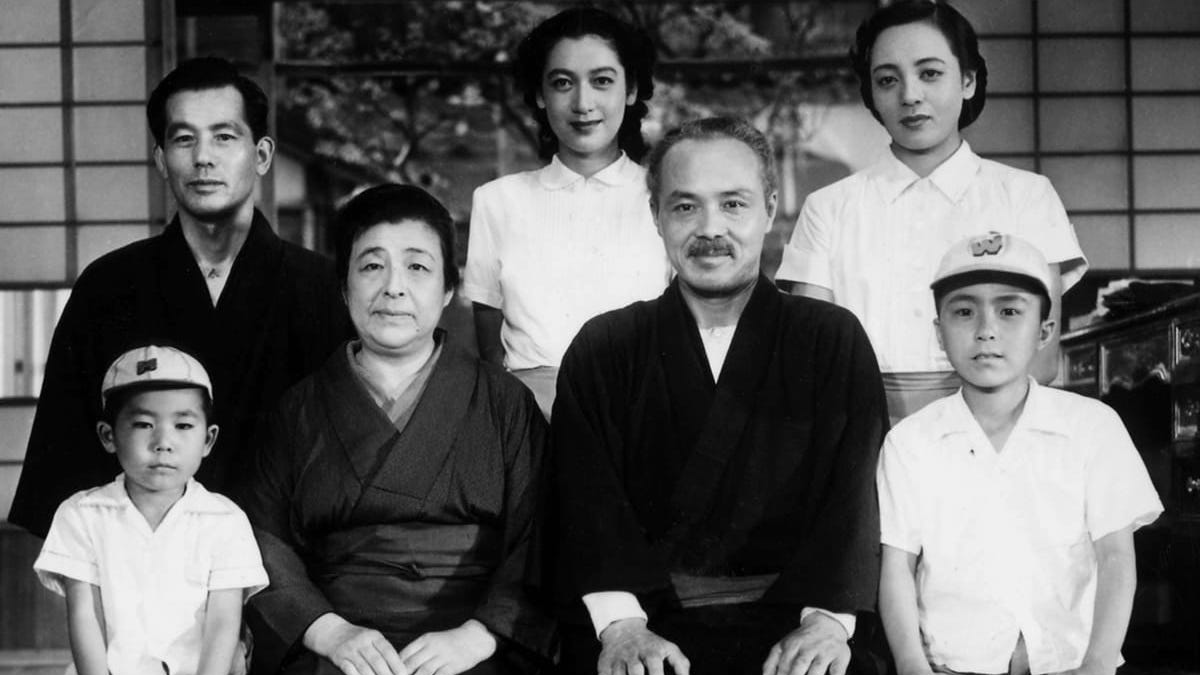
Drama, by Yasujirō Ozu, Japan, 1951.
Noriko, a secretary from Tokyo, resides in Kamakura with her family along with her parents Shūkichi and Shige, her elder brother Kōichi, a doctor, her wife Fumiko and their 2 boys Minoru and Isamu. Noriko's friends are divided into 2 groups, married and single, who constantly tease each other, with Aya Tamura being her close ally in the single group. Noriko's family pressures Noriko into accepting Satake's proposed marriage, agreeing that it's time for her to get married and thinking that marriage is perfect for someone her age. When Yabe's mother Tami impulsively asks Noriko to marry Yabe and follow them on their move north, Noriko accepts her proposal. The family accepts Noriko's decision with resignation and, before she leaves, they take a picture together. Gorgeous drama about family unity that is part of Ozu's thematic trilogy called The Noriko Trilogy: Late Spring, Time of the Wheat Harvest and Journey to Tokyo, all starring Setsuko Hara as a character named Noriko, on the theme of the family on the verge of a great change.
Food for thought
Love never suspects, it is never jealous. Love never interferes in the freedom of the other. Love never imposes anything on the other. Love gives freedom, and freedom can only exist if there is space. Love should be a gift given and taken in freedom, but there should be no claim. If you can have freedom and love at the same time, you won't need anything else. You will have obtained everything, everything you live for will have been given to you.
LANGUAGE: Japanese
SUBTITLES: English, Spanish, French, German, Portuguese
50s Drama Movies
Dramatic movies of the 1950s capture a decade shaped by post-war uncertainty, shifting social values, and evolving emotional depth. During this era, the drama genre grew more mature and introspective, often centered on troubled characters and stories that explore human vulnerability.
Sunset Boulevard (1950)

The film is narrated by Joe Gillis, a down-on-his-luck screenwriter whom we find dead, face down in a swimming pool, at the beginning of the film. Gillis recounts in flashback how, fleeing creditors, he ended up by chance at the dilapidated mansion of Norma Desmond, a forgotten diva of the silent film era. She hires him to write the screenplay for her big “return,” dragging him into a toxic relationship built on illusion, madness, and tragedy.
Sunset Boulevard is the greatest and most ruthless meta-cinematic drama ever made. It is Hollywood pointing the camera at itself and recounting its own cruelty, the way it creates myths and then devours them.
It is a gothic drama. Norma’s mansion is a tomb; she is a ghost from cinema’s past trying to vampirize the present (embodied by Joe, the screenwriter). Billy Wilder’s brilliant use of real silent film icons (Gloria Swanson, Erich von Stroheim, Buster Keaton playing himself) makes the drama even more powerful and truthful.
The film is a fatalistic noir. The narration by a dead man tells us from the beginning that there is no hope. The drama is not “what will happen?” but “how did we get to this inevitable point?”. Norma’s descent into madness culminates in her final line, as she descends the staircase towards the police and the news cameras: “I’m ready for my close-up.” It is the moment when the illusion of cinema becomes, tragically, her only reality.
Sunset Boulevard (1950)

Billy Wilder opens the decade with a gothic autopsy of Hollywood itself. Narrated by a corpse floating in a pool, Sunset Boulevard is a descent into the madness of Norma Desmond (Gloria Swanson), a forgotten silent film diva living reclusively in her decaying mansion on Sunset Boulevard, a mausoleum of her own past images. Wilder mixes reality and fiction in a dizzying and cruel way: Gloria Swanson was truly a great silent star whose career had ended, Erich von Stroheim (the butler Max) was a great director who had directed her, and figures like Buster Keaton and H.B. Warner appear as “waxworks” at the bridge table.
The film is a fierce critique of the entertainment industry that devours its idols and discards them without mercy when they become obsolete. The visual style fuses noir with expressionist horror, transforming Norma’s villa into a modern Dracula’s castle, full of shadows, metaphorical cobwebs, and private screenings. The famous line “I am big. It’s the pictures that got small” is not just a delusion of omnipotence, but contains a bitter truth about the loss of the mythical grandeur of silent cinema in favor of the verbose and commercial realism of sound. The finale, with Norma descending the stairs towards madness and the camera believing she is on the set of Salome, is the definitive image of the destructive narcissism of the star system, where the only reality is what is filmed.
Tokyo Story (1953)

Yasujirō Ozu revisits the themes of Make Way for Tomorrow and sublimates them into a work of crystalline purity, often voted by directors as the best film of all time. An elderly couple travels from the provinces to visit their children in Tokyo, only to discover they have become a nuisance in their frantic and modern lives. The children send them to a cheap spa to get rid of them; only the widowed daughter-in-law, Noriko (Setsuko Hara), shows them kindness and true devotion. Ozu does not demonize the children; he simply shows how time, work, and social distance inevitably erode emotional bonds. Disappointment is the default human condition in Ozu’s cinema.
The style is rigorous, almost mathematical, but the emotional effect is devastating. Ozu forces us to watch the passage of time through apparently banal details and static shots. The theme of trains and travel underscores the physical and emotional distance separating generations in post-war Japan. The mother’s death is not shown as a melodramatic event but as a fact that leaves a silent void. The film is a meditation on impermanence and the acceptance of final loneliness. Its greatness lies in the refusal to judge the characters: everyone has their reasons, and life continues inexorably, leaving behind those who cannot keep pace with modernity.
Gate of hell
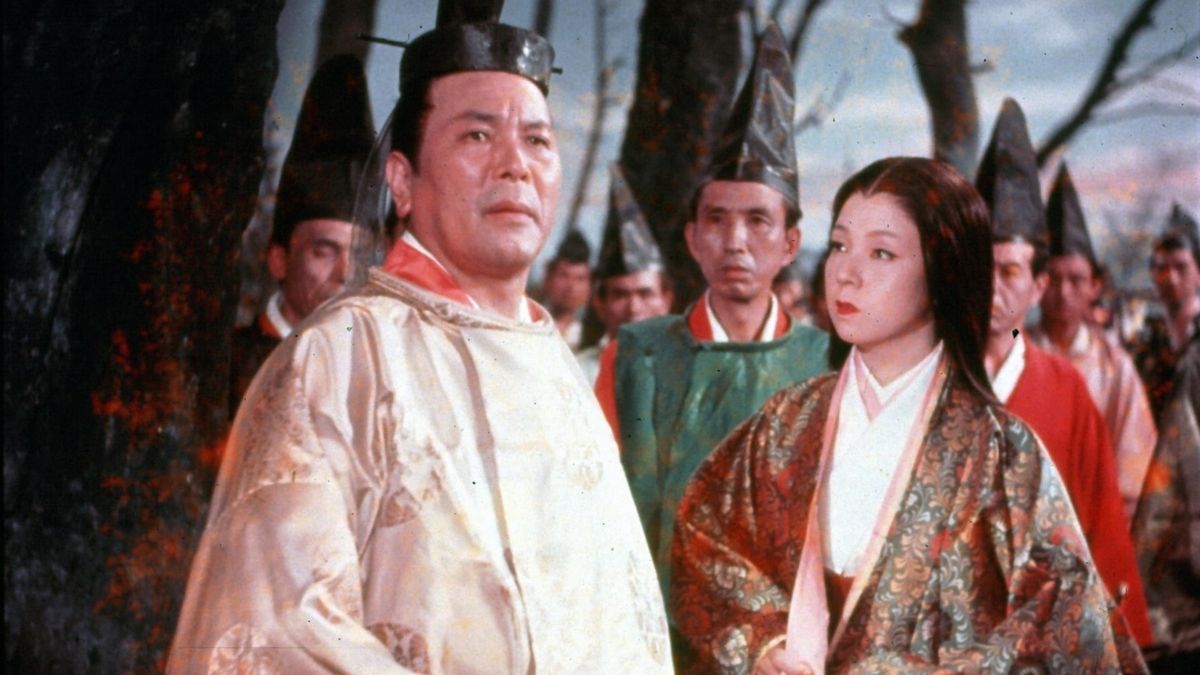
Drama, historical, by Teinosuke Kinugasa, Japan, 1953.
During the Heiji rebellion in Japan in 1159, Lord Kiyomori leaves his castle to go to fight. While he is absent, some local lords attempt a coup to take over Sanjo Castle. The samurai Endō Morito escorts the lady-in-waiting Kesa as she walks away from the palace disguised as the daimyō's sister, giving her father and royal sister time to escape without being seen. Based on a play by Kan Kikuchi set in 12th century feudal Japan, the film tells the story of a samurai whose bravery in defending his ruler must be rewarded with whatever he desires. He longs for the beautiful and aristocratic Lady Kesa, who is already married to another samurai, Wataru. Morito tries to persuade Kesa to leave her husband, but her devotion is unshakable. Winner of the Academy Award for Best Foreign Film and Best Costume Design, Grand Prix at Cannes, which later became a lost film for 50 years, The Gates of Hell is a figuratively impressive film, perhaps the most dazzling example of color photography Japanese from the 1950s.
LANGUAGE: Japanese
SUBTITLES: Italian
Salt of the Earth (1954)

This film occupies a unique and controversial place in American film history: it is the only US film officially blacklisted during the McCarthy era. Made by a team of artists banned from Hollywood for suspected communism—director Herbert J. Biberman (one of the “Hollywood Ten”), screenwriter Michael Wilson, and producer Paul Jarrico—the film recounts the real strike of Mexican-American zinc miners of the Empire Zinc Company in New Mexico. Production was obstructed in every way: vigilantes fired on the set, lead actress Rosaura Revueltas was deported before filming ended, and laboratories refused to develop the film.
What makes Salt of the Earth revolutionary, beyond its bold union and anti-racist politics, is its radical feminism. When a court injunction (the Taft-Hartley Act) prohibits men from picketing, the wives take their place on the front line, facing police and sheriffs. This forces the husbands to stay home to care for children and domestic chores, leading to a painful but necessary male realization of the double oppression (class and gender) suffered by women. Using real miners as actors alongside a few professionals, the work is a powerful example of American neorealism, a monument to worker dignity and intersectional solidarity that anticipated civil rights struggles by decades.
Seven Samurai (1954)

Akira Kurosawa invents the modern action film not as simple kinetic spectacle, but as deep humanist drama and sociological study. The plot is archetypal and would become the basis for countless remakes (including The Magnificent Seven): a village of poor farmers, threatened by bandits stealing their harvest, hires seven masterless samurai (ronin) to defend them. Kurosawa uses this premise to explore class dynamics (the distrust between warriors and farmers), sacrifice, and the nature of heroism in an era of social chaos (the Sengoku period). Each samurai is characterized with precision, representing different facets of the warrior ethos, from the wise leader Kambei to the young disciple, to the farmer pretending to be a samurai, Kikuchiyo (Toshiro Mifune), who serves as a bridge between the two classes.
Visually, Kurosawa revolutionizes cinema with the use of telephoto lenses that flatten perspective bringing the viewer into the action, the use of multiple simultaneous cameras to not lose spontaneity, and frantic editing that immerses one in the chaos of battle. The rain and mud are not just atmospheric elements but physical, tactile obstacles that make the clash brutal and realistic. The ending is bitter and anti-rhetorical: the samurai win the battle but lose the social war. “Again we are defeated,” says Kambei, “The winners are the farmers, not us.” Warriors are destined to disappear, useful only in times of crisis, while the cyclical life of the earth continues.
On the Waterfront (1954)

Terry Malloy is a washed-up ex-boxer working as a longshoreman, an existence controlled by the corrupt union boss Johnny Friendly. When Terry unwittingly contributes to the murder of a colleague who wanted to testify against Friendly, his conscience begins to awaken. The influence of the victim’s sister, Edie, and a fighting priest, Father Barry, pushes him toward an impossible choice: remain silent or testify against the union.
On the Waterfront is the film that brought Method acting into the mainstream, changing American cinema forever. The drama is sculpted in Marlon Brando’s naturalistic and tormented performance. It is the story of a moral redemption.
The iconic scene in the taxi between Terry and his brother Charley (“I coulda been a contender. I coulda been somebody, instead of a bum, which is what I am”) is the heart of the drama. It is not a lament for a fixed boxing match; it is the existential lament for a stolen life, for a lost identity.
Set against the controversial backdrop of McCarthyism and director Elia Kazan’s testimony against his colleagues, the film is a powerful moral thesis. It transforms what would be seen as an act of “betrayal” (informing) into an act of martyrdom. Terry’s final “long walk,” beaten to a pulp but rising on his own to lead the men to work, is his Calvary. It is a public act that redeems not only his soul but the very act of testifying, turning the code of silence into guilt and truth into the only, painful path to freedom.
12 Angry Men (1957)

On a sweltering summer day, twelve jurors retire to a locked room to deliberate the case of a young boy from a poor neighborhood, accused of killing his father. The verdict seems obvious and the death sentence certain. Eleven men vote “guilty.” Only one, Juror 8, votes “not guilty,” asking simply “to talk,” triggering a tense drama that dismantles the evidence and, above all, reveals the personal prejudices of each man.
Sidney Lumet’s masterpiece is a unique legal drama, which unfolds not in a courtroom but entirely in one room. The film’s protagonist is not a lawyer, but reasonable doubt.
The antagonist is not a single man, but prejudice itself. The film is a dramatic unmasking of the social, economic, and racial biases that drive men’s decisions. Lumet’s direction is masterful: the room shrinks and the heat becomes suffocating as the tension rises, turning the environment into a pressure cooker that brings out the jurors’ true motivations.
This film is not a drama about who is “right,” but about the importance of the rational process. It is a defense of the Enlightenment. The film does not prove the boy is innocent; it only proves that the prosecution did not overcome reasonable doubt. It is the victory of the Socratic method (Juror 8 asking questions) over emotional impulse, an optimistic drama that still believes reason, if used correctly, can save a life.
Miss Oyu
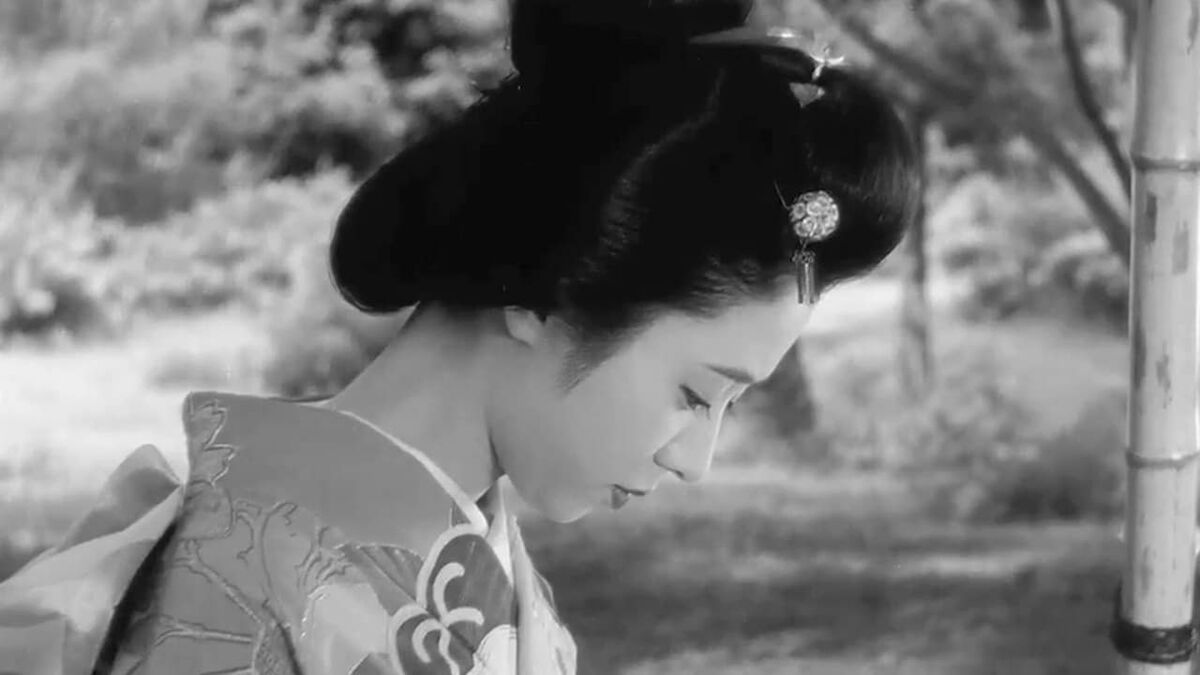
Drama, by Kenji Mizoguchi, Japan, 1951.
Bachelor Shinnosuke falls in love with Miss Oyu, the companion of his younger sister Shizu who visits him as a future bride. The family taboo prevents Shinnosuke from marrying Oyu. He marries Shizu without consummating their marriage so that Shinnosuke can remain faithful to the unconscious Oyu. However, the couple's commitment to appearances has a cost. The lack of sexuality and the malicious rumors about the ménage-a-trois lead to recrimination, separation and further pain. Miss Oyu is a radical reworking by Mizoguchi and his screenwriter Yoshikata Yoda of Junichiro Tanizaki's novel The Reed Cutter (1932). Miss Oyu moves in the aura of high art and good taste: opening credits beyond paintings of clouds, compositions of Chinese and Japanese art masterpieces, interiors decorated with refined furnishings and art objects, Japanese classical music recitals and songs derived from Japanese poetry, references to Heian costume, history and literature, historical and natural beauties; Japanese rituals such as ikebana, bonsai and tea ceremonies. A grand depiction of exotic and picturesque Japanese culture, Ms. Oyu was the first of the 1950s costume dramas that would make Mizoguchi famous outside of Japan.
LANGUAGE: Japanese language
SUBTITLES: English, Spanish, French, German, Portuguese
Pather Panchali (1955)

Satyajit Ray’s debut puts India on the map of world auteur cinema, radically departing from Bollywood musicals and melodramas to embrace a lyrical realism inspired by De Sica and Renoir. The first chapter of the “Apu Trilogy,” the film recounts the childhood of little Apu in a poor village in Bengal. Poverty is omnipresent and tangible, but Ray does not sensationalize it nor use it for pity; he shows it as the very fabric of daily life, inextricably interwoven with the wonder of natural discovery, children’s games, and small joys.
Ravi Shankar’s soundtrack (sitar) and Subrata Mitra’s black and white cinematography create a hypnotic and contemplative atmosphere. The famous scene where Apu and his sister Durga run through a field of kash (tall white grass) to see a distant passing train is one of cinema’s most powerful metaphors: the train represents modernity, distance, a promised and unreachable world cutting through rural stasis, leaving behind only smoke. The death of sister Durga in the monsoon rain is treated with heartbreaking rawness that avoids melodrama to focus on the family’s mute grief. Pather Panchali is a sensory film: one can almost smell the wet earth and hear the hum of insects, celebrating the resilience of the human spirit through the aesthetic beauty of pain.
The Seventh Seal (1957)
![The Seventh Seal (1957) ORIGINAL TRAILER [HD 1080p]](https://blog.indiecinema.co/wp-content/plugins/wp-youtube-lyte/lyteCache.php?origThumbUrl=https%3A%2F%2Fi.ytimg.com%2Fvi%2FvZucwtdSvJ8%2F0.jpg)
Ingmar Bergman crystallizes the anxieties of the atomic age in a visually stunning medieval allegory. A knight, Antonius Block (Max von Sydow), returns from the Crusades to a plague-ravaged Sweden and, meeting Death on the beach, challenges him to a game of chess to gain time and find meaning in existence or proof of God before dying. The film is a philosophical investigation into the “silence of God”: why does God not answer in the face of human suffering and horror? The plague is a clear parallel to the threat of the nuclear bomb looming over the 1950s, an invisible, arbitrary, and inevitable destructive force.
Despite the gravity of theological and existential themes, the film is rich with macabre humor and warm humanity, represented above all by the family of traveling actors (Jof and Mia) who manage to survive, symbolizing art, innocence, and simple love as the only forces capable of escaping, at least temporarily, the end. The film’s iconography—Death with a white face and black cloak, the chess game, the final dance of death on the hill in silhouette—has entered the global collective imagination, parodied and cited endless times. Bergman uses cinema to ask questions that have no rational answer, transforming metaphysical anguish into images of austere and unforgettable beauty.
Vertigo (1958)

Alfred Hitchcock’s Vertigo is, beneath the glossy surface of a Technicolor thriller, a perverse, tragic, and deeply personal exploration of male obsession and the illusory nature of cinema itself. James Stewart plays Scottie Ferguson, a former detective suffering from acrophobia, hired to tail the mysterious Madeleine (Kim Novak). When she dies (apparently), Scottie meets Judy, a woman who resembles her, and begins obsessively transforming her into the image of the dead woman, changing her clothes, hair, and makeup. It is a necrophilic film, where love is possible only with a ghost or a mental projection, never with a real woman.
Hitchcock invents the “zolly” (simultaneous zoom in and dolly out) here to visualize vertigo, which in the film is both a physical and psychological condition: the vertigo of falling into the abyss of irrational desire and loss of self. The use of color is fundamental: the ghostly green of the neon illuminating Judy transforms her into a spectral figure, while red signals danger and passion. Bernard Herrmann’s Wagnerian score, circular and unresolved, creates a dreamlike and suspended atmosphere. The film, initially misunderstood and considered a misstep, is now considered one of the absolute peaks of cinematic art (often ranking first in critical polls) for how it deconstructs the mechanism of vision, male control, and identity construction: Scottie is the director who wants to mold reality but ends up destroyed by his own creation.
Shadows (1959)

John Cassavetes violently breaks with all narrative, technical, and production conventions of Hollywood with Shadows, a film that marks the official birth of modern American independent cinema. Shot on a non-existent budget, in 16mm, on the streets of a jazz and nocturnal New York, the film explores the lives of three African American siblings (two of whom, Ben and Lelia, are light-skinned enough to pass for white) in the Beat Generation. Although the film ends with the title card “The film you have just seen was an improvisation,” the reality is more complex: the result of years of acting workshops, it is writing that simulates improvisation to capture raw emotional truth that commercial cinema had lost.
Cassavetes rejects the structured plot with beginning, middle, and end to focus on moments of uncertainty, embarrassment, boredom, and missed connection. The handheld camera is nervous, always close to the actors’ faces, capturing the energy and confusion of youth without filters. The racial theme is treated with unheard-of subtlety for the time: there are no grand speeches on civil rights, but painful micro-aggressions and identity crises (like the heartbreaking scene where Lelia’s white boyfriend discovers she is Black upon meeting her dark-skinned brother). Charles Mingus’s soundtrack underscores the syncopated rhythm of a film trying to grasp life as it happens, imperfect and vibrant, paving the way for directors like Scorsese and Jarmusch.
Nika
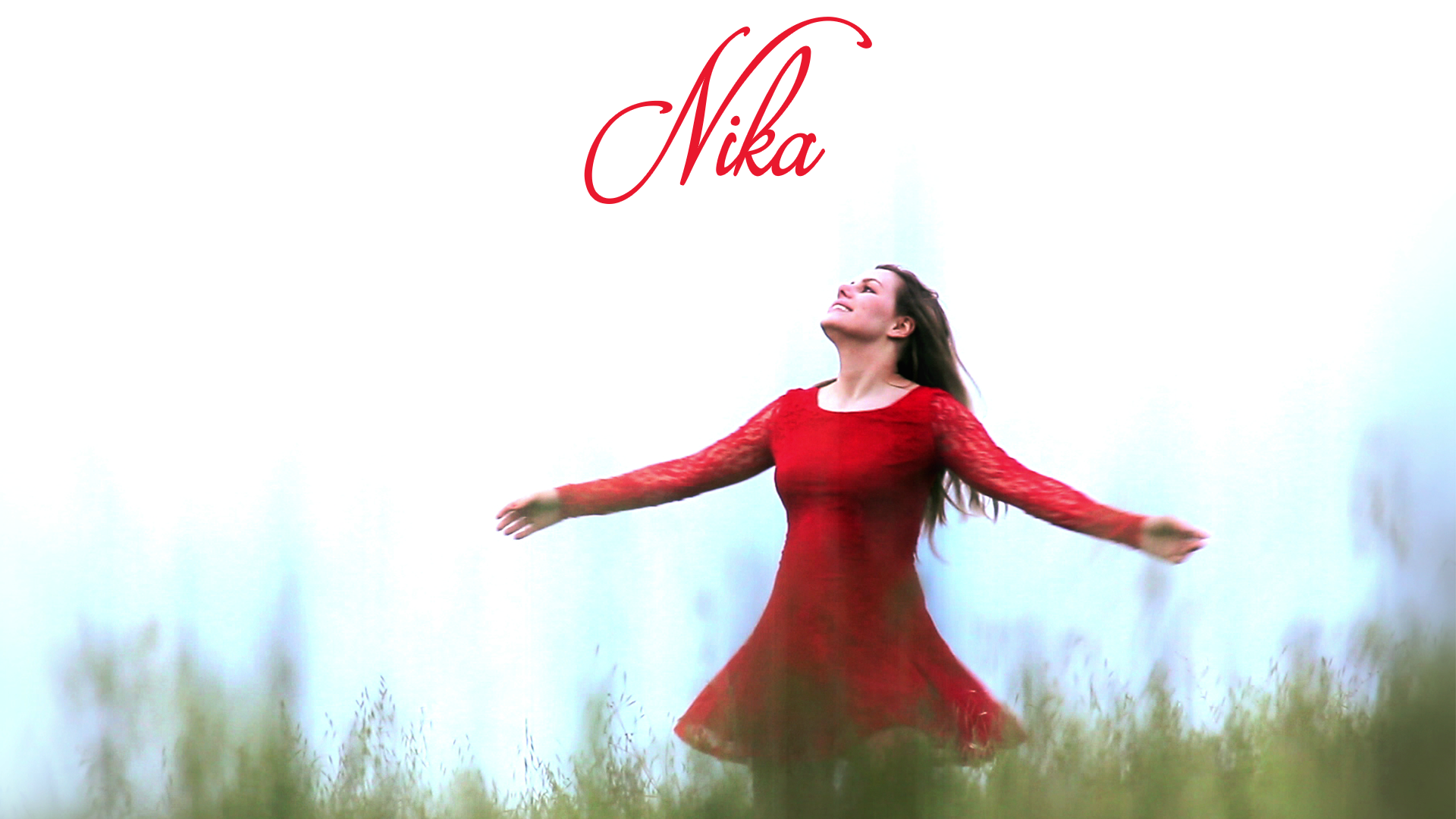
Drama, romantic, by Leilani Amour Arenzana, United States, 2020.
Nika, a young woman from Los Angeles who lost both her parents in a car accident, has started her modeling career for some time but she feels the emptiness that surrounds her existence and the weight of time passes. She is no longer so young and she looks back on her life that she looks like a long collection of failures: she has failed to achieve success in any of the artistic fields that she had studied for. But her friend who has become a popular star doesn't seem happy either. In the throes of a severe financial crisis and in desperation Nika faces a life choice that could either redeem or ruin her: becoming an escort.
Nika shows us a plastic world, of extreme fragility and of unaware characters who seek meaning in a society that appears hostile from all points of view. The director Leilani Amour Arenzana, perhaps not always intentionally, shows us characters caught in a trap that perhaps they don't even know exists. A "Western" trap in which vices, psychological frailties, materialism seem to inexorably take over. With surrealist and dreamlike sparks, nightmares, sweet dreams and concrete problems of everyday reality, Nika is a film that tells a period of transformation and redemption of a woman, between drama and romance.
LANGUAGE: English
SUBTITLES: Spanish, French, German, Portuguese
The 400 Blows (1959)

If Shadows paves the way for American indie, François Truffaut’s The 400 Blows explodes the French Nouvelle Vague, changing the language of European cinema forever. Truffaut, a former ferocious critic for “Cahiers du Cinéma,” moves behind the camera to recount his own difficult childhood through the alter ego Antoine Doinel (a very young Jean-Pierre Léaud). The film is an act of rebellion against the “cinéma de papa,” the French quality cinema, stiff, literary, and shot in studios. Truffaut brings the camera to child height, without sentimentality, showing the systematic misunderstanding and hypocrisy of the adult world (parents, teachers, law) toward adolescence.
The vitality of the film lies in its absolute stylistic freedom: location shooting in Paris (the city is a co-protagonist), natural dialogue, narrative ellipses, and a sense of continuous movement. The famous scene of the interview with the psychologist, improvised by Léaud, offers rare documentary truth. Antoine’s final run toward the sea, a long take culminating in one of history’s first and most famous freeze-frames, breaks the fourth wall: Antoine’s gaze into the camera addresses the viewer directly, leaving his future suspended and questioning our responsibility. It is not just the story of a troubled boy; it is the declaration of independence of a new way of making cinema, personal, urgent, and free from academic rules.
60s Drama Movies
Dramatic movies of the 1960s reflect a decade marked by cultural revolutions, artistic experimentation, and newfound creative freedom. During these years, drama became bolder and more psychological, unafraid to confront taboos and break narrative conventions. Visionary directors delivered intense and often challenging stories that mirrored a rapidly changing world.
Lawrence of Arabia (1962)

The biographical epic of the enigmatic British officer T.E. Lawrence. During World War I, Lawrence is sent to the Arabian desert where, against his superiors’ orders, he unites the Bedouin tribes in a guerrilla war against the Turks. His feat transforms him into a legendary hero, but his triumph is marked by the conflict between his British identity and his adoption of Arab culture, and by his own dangerous megalomania.
David Lean directed the greatest psychological drama ever disguised as an epic film. The vastness of the desert is not a backdrop; it is a character, an empty and absolute psychological mirror that forces Lawrence to confront the question, “Who are you?”
The heart of the drama is Lawrence’s attempt to “write” his own destiny, as he tells his Arab ally: “Nothing is written.” It is a film about self-creation, about the construction of one’s own myth, and the tragedy of becoming a prisoner of that myth.
It is a drama about corrupted idealism. Lawrence sincerely believes he is “giving freedom” to the Arabs, but in the end, he is just an unwitting pawn in an imperialist game. The famous match-cut—the match Lawrence blows out with his fingers transforming into the blinding desert sun—is the film’s dramatic thesis. It is one man’s ambition to turn his small will (the match) into an absolute destiny (the sun). He will end up burned and consumed by the desert and the war he himself unleashed.
70s Drama Movies
Dramatic movies of the 1970s mark one of the most innovative and transformative eras in cinema history. It was a decade defined by gritty realism, bold creative freedom, and filmmakers unafraid to challenge social and artistic conventions. Drama became darker, more political, and more introspective.
Osaka Elegy
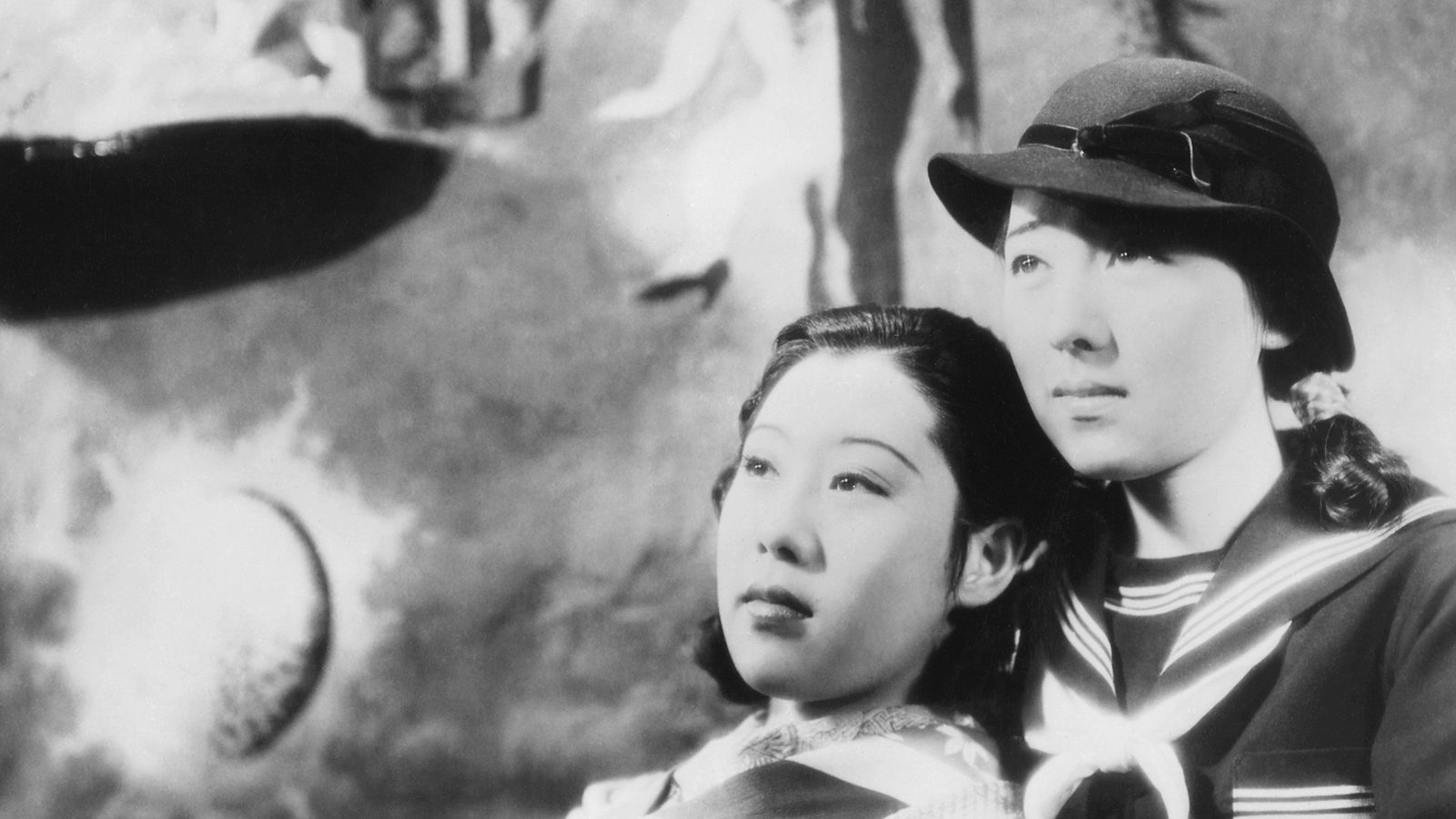
Drama, by Kenji Mizoguchi, Japan, 1936.
Ayako Murai is a telephone operator for the pharmaceutical company Asai, in the city of Osaka in 1930. To pay the debts of her father, unemployed and threatened with arrest for not repaying a loan, she agrees to become her employer's mistress. work. After paying the debts of her father, her relationship with Mr. Asai is interrupted due to the jealousy of the latter's wife, Sonosuke, who categorically forbids her husband to see her again with her lover. However Ayako, in an attempt to help pay her brother Hiroshi's college tuition, continues to make her the lover she maintained at the expense of another firm admirer, Mr. Fujino.
Film about the condition of women, as a large part of Mizoguchi's filmography. The protagonist is a victim of a patriarchal and male chauvinist society where money is the dominant value. Masterful film for the realistic description of the city of Osaka, lyrical and lucidity in its social criticism. Mizoguchi referring to this film, said: "Only when I was forty did I find my way". The simplicity of the story and of the style is exemplary in Osaka Elegy. The film was banned after 1940 by the militarists, it is an unparalleled masterpiece of cinematic realism.
LANGUAGE: Japanese
SUBTITLES: English, Spanish, French, German, Portuguese
Wanda (1970)

Barbara Loden’s Wanda stands as a unique monument to female marginality and existential passivity. Shot on 16mm with a style influenced by cinéma vérité, the film follows Wanda, a working-class Pennsylvania housewife who leaves her family out of deep inadequacy and drifts aimlessly, eventually bonding with a petty criminal. Loden, who wrote, directed, and starred, refuses to offer a feminist hero or narrative redemption, presenting instead the bleak, unglamorous reality of life on the margins. Her understated line, “I’m just no good,” encapsulates the profound alienation of the era. The choice of raw, almost documentary realism was an aesthetic counterpoint to Hollywood’s polished narratives, pioneering a path for decades of American independent cinema.
The Conformist (1970)

Bernardo Bertolucci’s adaptation of Alberto Moravia’s novel is a cornerstone of 1970s aesthetics, heavily influencing the New Hollywood generation. The film tells the story of Marcello Clerici, a weak-willed Italian man who joins the Fascist party in the 1930s in a desperate attempt to purge his past and attain “normality,” ultimately agreeing to assassinate his former anti-Fascist professor in Paris. The film’s mastery lies in Vittorio Storaro’s cinematography, which uses sharp light and shadow to create “visual cages” around Clerici, mirroring his psychological entrapment. The exquisite, symbolic use of color—such as red representing imprisonment and blue for Paris—transforms the political thriller into a study of pathology, arguing that fascism is a spiritual disease born from the fear of freedom.
Aguirre, the Wrath of God (1972)

Werner Herzog’s feverish historical-philosophical drama, shot under notoriously difficult conditions in the Peruvian jungle, documents the descent into madness of Don Lope de Aguirre (Klaus Kinski), a 16th-century Spanish conquistador obsessively searching for the mythical city of El Dorado along the Amazon River. The film is not concerned with historical accuracy but with the elemental, terrifying nature of human hubris and colonial ambition. The almost documentary filming style and tangible sense of jungle entropy reflect the chaos and physical toil of the journey. The final, iconic image of Aguirre alone on a raft, surrounded by monkeys, encapsulates the sublime futility of human ambition against the vast indifference of nature.
The Godfather (1972)

In post-war America, Vito Corleone, patriarch of a powerful Italian-American crime family, oversees his empire with a code of honor. When an attempt on his life takes him out of commission, his youngest son, Michael, a war hero who wanted a legitimate life, is inexorably drawn into the family business. His tragic transformation into a ruthless boss seals the dynasty’s fate.
Far more than a gangster film, Francis Ford Coppola’s work is a Shakespearean tragedy about the corruption of the American Dream. The central drama is not the violence, but the descent of Michael Corleone. His initial attempt to distance himself (“That’s my family, Kay. It’s not me”) collides with the inevitability of fate.
The entire film is built on the tension between two irreconcilable concepts that the characters desperately try to separate: family and business. Michael’s key phrase, “It’s not personal, it’s strictly business,” is the film’s greatest lie and the self-deception mechanism that allows him to lose his soul.
The mafia is not presented as an antithesis to America, but as its darkest capitalist metaphor. The real tragedy is not that Michael becomes a criminal, but that in an attempt to save his family with the ruthless logic of business, he ends up destroying it emotionally and morally. The iconic final shot, with the door closing and separating Michael from Kay, is the physical closing of a deal with the devil that has been consummated.
Sebastiane
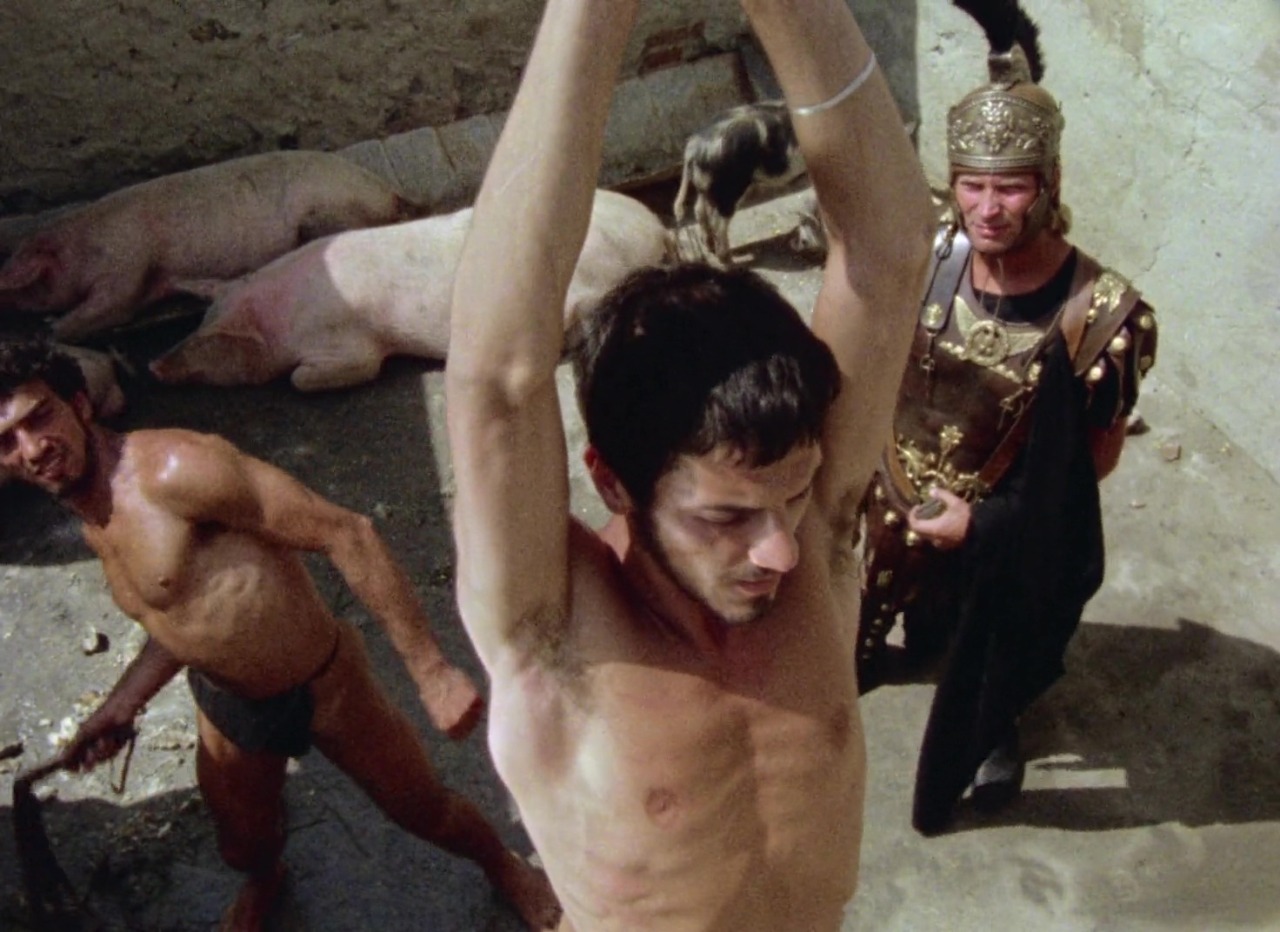
Drama, history, by Derek Jarman, United Kingdom, 1976.
In the third century A.D. Sebastiano is a member of the personal guard of the Emperor Diocletian. When he tries to intervene to prevent one of the Emperor's catamites from being strangled by one of his bodyguards, Sebastian is exiled to a remote coastal garrison and downgraded. Although thought to be an early Christian, Sebastian is a worshiper of the Roman sun god Phoebus Apollo and sublimates his desire for his male companions in the worship of his divinity and pacifism. Independent historical film based on an apocryphal version of the life of Saint Sebastian widespread in the gay community, shot with the dialogues in Latin. Derek Jarman recounts the events of St. Sebastian's life, including his martyrdom with arrows. Controversial film for the homoeroticism portrayed among the soldiers and for the dialogues entirely in Latin. images of physical intimacy between men, shown in total nudity (which was still rare and very transgressive at the time) and even while flirting, in deliberately romantic and lyrical scenes, but also very sensual. Scandal film, cut and forbidden to minors under the age of 18 on its release in cinemas in 1977 due to nudity and the presence of homosexual relations between Roman soldiers. This is the full version.
There are two types of people. The majority follow traditions, society, the state. Orthodox people, conventional people, conformists - they follow the crowd, they are not free. And then there are some rebellious spirits. Outcasts, artists, painters, musicians, poets; They think they live in freedom, but this is not the case. Only by rebelling against traditions do you not become free. Freedom is only possible with awareness. If you don't turn unawareness into awareness, there is no freedom.
LANGUAGE: latin
SUBTITLES: English, Spanish, French, German, Portuguese
The Godfather Part II (1974)

Cries and Whispers (1972)

Ingmar Bergman’s stark chamber drama is set in a late 19th-century Swedish manor, focusing on the final agonizing days of Agnes (Harriet Andersson), who is dying of cancer, and the emotional desolation of her two sisters, Karin and Maria, contrasted by the servant Anna’s earthy compassion. The film is famous for its radical use of the color red, which dominates the walls, carpets, and scene transitions. For Bergman, this red symbolized “the interior of the soul,” a visceral representation of pain, life, and the organic membrane of existence. Cinematographer Sven Nykvist’s ruthless close-ups capture every tremor of suffering. The film is a sensory and emotional opera on mortality, loneliness, and the human incapacity for genuine communication in the face of death.
Badlands (1973)

Terrence Malick’s directorial debut is a lyrical, subdued masterpiece inspired by the true-life murder spree of Charles Starkweather. The film follows the criminal flight of Kit (Martin Sheen), a disaffected garbage collector, and his passive teenage girlfriend, Holly (Sissy Spacek), across the plains of the American Midwest. Malick creates a startling juxtaposition: acts of shocking violence are staged with a chilling, almost dreamlike detachment, contrasted sharply with Holly’s innocent voice-over and the serene beauty of the natural world. This aesthetic choice removes the emotional weight from the carnage, forcing the audience to confront the way that violence can become a “shadowy abstraction” in the American psyche. Malick framed the story as a “fairy tale, outside time,” a crucial commentary on alienation and the romanticization of youthful rebellion.
The Spirit of the Beehive (1973)

Víctor Erice’s haunting Spanish masterpiece is set in a small Castilian village in 1940, shortly after the Spanish Civil War and under the shadow of Franco’s dictatorship. The story centers on young Ana, who becomes obsessed with the figure of Frankenstein’s monster after a traveling cinema screening. The film is an essential work of political allegory. The beehive motif symbolizes the rigid order and monotonous life of the fascist society, while Ana’s search for the “spirit” of the monster—a symbol of otherness and freedom—becomes a quiet act of resistance against the trauma and imposed silence of the adult world. Erice’s use of honey-colored light and minimal dialogue lends the film a hypnotic power, elevating it beyond a simple drama to a profound visual poem on childhood and political repression.
Slow life
Drama, comedy, thriller, by Fabio Del Greco, Italy, 2021.
Lino Stella takes a period of vacation from his alienating job to devote himself to relaxation and his passion: drawing comics. But he did not foresee certain disturbing elements: the intrusive administrator of the building where he lives, the postman who delivers crazy fines and tax bills, an overbearing security guard, a very enterprising real estate agent, the old lady downstairs who raises the feline colony of the condominium. These characters will make his vacation hell.
Food for thought
The larger a social group is, the more rules and bureaucracy are needed, which often do not respect the individual. You have to learn to live with annoying people, but sometimes the social pressure and arrogance can become intolerable. The only laws that always come to our aid are the laws of Nature.
LANGUAGE: Italian
SUBTITLES: English, Spanish, French, German, Portuguese
The Conversation (1974)

Directed by Francis Ford Coppola in the wake of the Watergate scandal, this psychological thriller captures the pervasive anxiety and paranoia of the era. Harry Caul (Gene Hackman) is a reclusive surveillance expert whose guilt over a past case leads him to obsessively analyze a single recorded phrase he fears will lead to murder. The film is a triumph of sound design, pioneered by Walter Murch. Sound is the central thematic and structural element, using vococentrism and acoustic manipulation to externalize Caul’s internal panic and suspicion. Coppola uses the recording equipment itself as the agent of Caul’s psychological unraveling, transforming the procedural thriller into a searing drama about guilt, technology, and the impossibility of finding objective truth in a fragmented world.
Chinatown (1974)
![Chinatown (1974) Original Trailer [FHD]](https://blog.indiecinema.co/wp-content/plugins/wp-youtube-lyte/lyteCache.php?origThumbUrl=https%3A%2F%2Fi.ytimg.com%2Fvi%2FRKdXf-fiBcw%2F0.jpg)
In 1930s Los Angeles, private detective J.J. “Jake” Gittes, who specializes in adultery cases, is hired by a mysterious woman to spy on her husband, the chief engineer of the city’s water department. What seems like a routine case turns into a deadly investigation that uncovers a web of public corruption, capitalist greed, and a dark, incestuous family secret.
Chinatown is the quintessential neo-noir, a film that takes the elements of classic noir and immerses them in the cynical pessimism of the 1970s. The drama is not just about a murder, but about systemic corruption. Water, not money, is the object of desire, the control of the “future.”
The hero, Jake Gittes, fails. Unlike a classic noir hero, his intervention solves nothing; it makes things worse. His attempt to save the femme fatale, Evelyn Mulwray, leads directly to her death.
“Chinatown” is not a physical place; it is a state of mind. It is the symbol of Gittes’s unsolvable past trauma and the limit of intervention. The film’s final line, whispered to Gittes after the tragedy—”Forget it, Jake. It’s Chinatown”—is the admission of the individual’s total impotence in the face of a systemic and primordial evil. It is one of the bleakest and most powerful endings in cinema history.
A Woman Under the Influence (1974)
![A Woman Under the Influence (1974) Original Trailer [HD]](https://blog.indiecinema.co/wp-content/plugins/wp-youtube-lyte/lyteCache.php?origThumbUrl=https%3A%2F%2Fi.ytimg.com%2Fvi%2FYRP47Bj2KOc%2F0.jpg)
John Cassavetes, the godfather of American independent cinema, delivers a relentlessly raw psychological drama exploring the strained marriage of Mabel (Gena Rowlands) and Nick Longhetti (Peter Falk), a working-class couple whose relationship buckles under the weight of Mabel’s mental instability and the rigid societal expectations placed on her. Cassavetes rejects cinematic artifice for an extreme emotional realism. Scenes are long and often improvised, shot in real domestic settings with the camera uncomfortably close, capturing every painful flicker of emotion, embarrassment, and love. Rowlands’ monumental performance portrays Mabel’s breakdown not as a simple illness, but as a consequence of the violence inherent in the pressure to conform to social roles. The film is a raw, intense tragedy about the limits of love and the suffocating nature of “normality.”
Ali: Fear Eats the Soul (1974)
![Ali: Fear Eats the Soul | Trailer [HD]](https://blog.indiecinema.co/wp-content/plugins/wp-youtube-lyte/lyteCache.php?origThumbUrl=https%3A%2F%2Fi.ytimg.com%2Fvi%2FLsLlXnmxWtM%2F0.jpg)
Rainer Werner Fassbinder, the German New Wave genius, pays homage to Douglas Sirk’s Hollywood melodramas while delivering a searing social critique. The film tells the improbable love story between Emmi, a lonely German widow in her sixties, and Ali, a Moroccan immigrant mechanic two decades her junior. Fassbinder uses this romantic premise to expose the rampant xenophobia and hypocrisy of post-war German society. The drama is driven entirely by the external pressures and cruel judgments of their families, neighbors, and colleagues. The film is shot with a deliberate, static style, often framing characters as physically trapped by domestic architecture, underscoring their societal isolation. The title itself reflects the universal truth that social fear is the most destructive force against the human spirit.
Sunrise: A Song of Two Humans
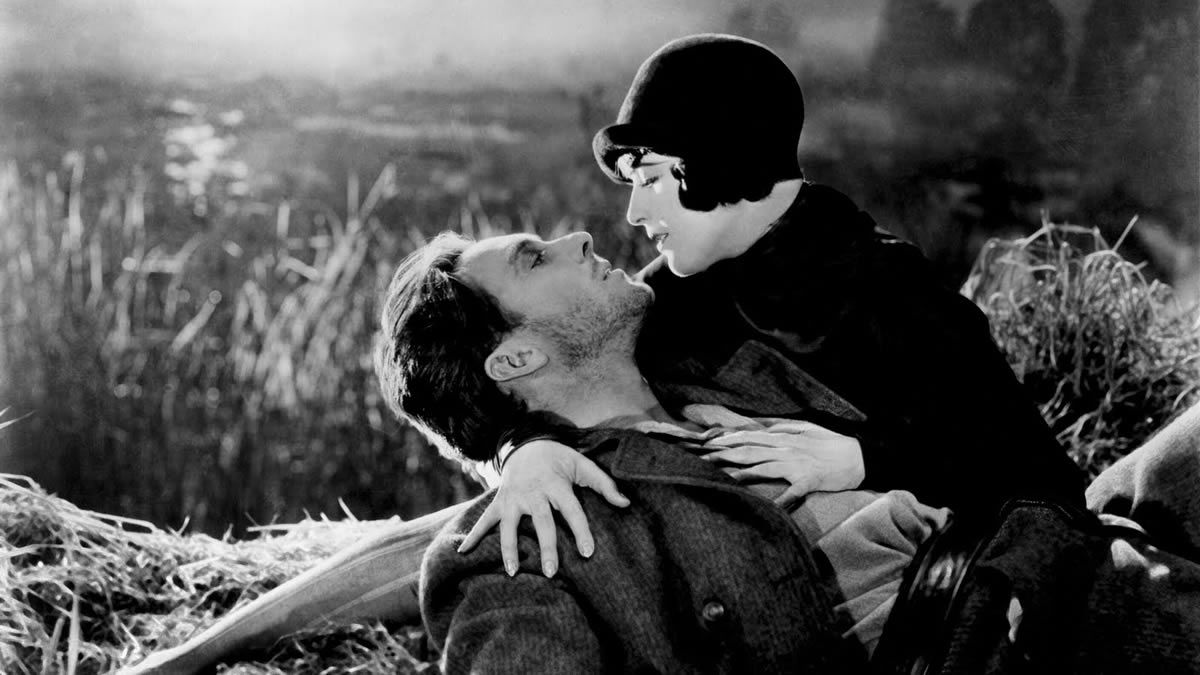
Drama, romance, noir, by Friedrich Wilhelm Murnau, United States, 1927
A big-city woman on vacation (Margaret Livingston) stays in a small lakeside town. After dark she goes to a farm where the man (George O'Brien) and his wife (Janet Gaynor) are looking after their child. She calls to the man from the fence outside. The man is undecided, but finally walks away, leaving his other wife alone. The man and also the woman meet in the moonlight and kiss passionately. She wants him to sell her farm to go with her to the city. When she suggests that he solve her wife problem by drowning her, he attempts to violently strangle her, but then completely changes his attitude towards her. When the man and her wife leave for a boat trip on the lake, he prepares to throw her into the water. But when she begs for her mercy, he realizes he can't do it. The man rows frantically for shore, and when the boat comes ashore, his wife flees in a panic.
Sunrise: A Song of Two Humans, directed by German director FW Murnau in his American film debut is based on Carl Mayer's short story "The Excursion to Tilsit", released in 1917.
Murnau chose to use the new Fox Movietone sound system, making Aurora one of the very first feature films with a synchronized soundtrack and sound effects. Janet Gaynor won the first Academy Award for Best Actress in a Leading Role for her portrayal in the film. The film is now commonly regarded as a masterpiece, among the best films ever made. Many have called it the greatest film of the silent film age. Murnau, master of expressionist cinema, was invited by William Fox to make an expressionist film in Hollywood. The film's language and photography are revolutionary: elegant tracking shots, long sequences of pure action without dialogue in Murnau's signature style. The characters remain nameless, creating the perception of a universal story.
LANGUAGE: English
SUBTITLES: Spanish, French, German, Portuguese
Jeanne Dielman, 23 Quai du Commerce, 1080 Bruxelles (1975)

Chantal Akerman’s magnum opus is a landmark of feminist and structuralist cinema. For over three hours, the film meticulously observes the daily routine of Jeanne Dielman (Delphine Seyrig), a middle-aged widow who performs household chores, cooks for her son, and occasionally receives clients for sex work. The film’s radicalism is formal: Akerman rejects time ellipses, forcing the viewer to confront the real duration of unacknowledged female domestic labor—peeling potatoes, washing up. The stasis and precision transform the mundane into a form of existential confinement. The absolute necessity of her rigid order gradually builds tension until the smallest deviation signals an inevitable psychological break. Akerman politicized the domestic space, making the invisible labor of women the ultimate subject of cinematic drama.
Nashville (1975)

Robert Altman’s expansive, kaleidoscopic ensemble piece deconstructs the American mythology in the year leading up to the nation’s bicentennial. The film interweaves the stories of 24 characters—country music stars, wannabes, and political operatives—culminating in an outdoor rally. The film’s defining technical innovation is its complex, multi-track sound design, achieved by individually miking every actor. This layered soundtrack creates a persistent sonic wall, a “cacophony of democracy,” suggesting that in this modern, fame-obsessed America, everyone is talking, but no one is truly listening. The underlying political campaign of the invisible third-party candidate, Hal Phillip Walker, satirizes the fusion of entertainment and politics, anticipating the empty spectacle of modern celebrity governance.
One Flew Over the Cuckoo’s Nest (1975)

Randle P. McMurphy, a small-time delinquent, feigns insanity to escape prison and is committed to a mental hospital. His rebellious, chaotic, and life-loving spirit immediately clashes with the cold, passive-aggressive, and repressive order imposed by the head nurse, Mildred Ratched. Thus begins a battle of wills for the freedom and souls of the other patients.
This is the definitive drama about the individual versus the system. The psychiatric hospital is not a place of healing, but a metaphor for a society that imposes conformity through control. The film masterfully plays on the thin line between sanity and madness: McMurphy, the “crazy” one, is the only truly sane and vital person; Nurse Ratched, the “authority,” is a monster of control who uses shame as a weapon.
McMurphy reawakens life in the other patients, teaching them to challenge authority and rediscover their own individuality. But the price of their “cure” is his own sacrifice.
The film’s drama is a powerful Christological parable. McMurphy loses his personal battle: after attacking Ratched, he is lobotomized, reduced to a vegetable. But his victory is not his escape; it is his martyrdom. The Chief, the Indian whom McMurphy “awakened,” completes his mission: he smothers McMurphy to free him and then uses the water fountain (which McMurphy couldn’t lift) to smash the window and escape. It is a drama about the transmission of rebellion: a savior who must die so that the free spirit can finally escape.
Taxi Driver (1976)

Travis Bickle is a mentally unstable ex-Marine suffering from chronic insomnia, working as a night-shift taxi driver in a morally decadent New York City. His urban alienation is total; he observes the “scum” of the city from his taxi and keeps a diary of his violent thoughts. His obsession with “cleaning up” the streets leads him first to plan a political assassination, then to a bloody and ambiguous “rescue” of a 12-year-old prostitute, Iris.
This is the cinematic manifesto of urban loneliness. Travis is not just a character; he is a symptom of a sick city and a nation suffering from the trauma of Vietnam. The famous monologue in the mirror (“You talkin’ to me?”) is the desperate cry of a man seeking a connection, an identity, even if it must be forged in violence.
The drama explores the thin line between a disturbed man and an equally disturbed society. The ambiguous ending, in which Travis is celebrated by the media as a hero for his massacre, is the most terrifying and powerful part of the film. Society is so sick that it no longer knows how to distinguish a hero from a sociopath.
Travis is an anti-hero desperately seeking a purpose. The tragedy is that, after trying to connect in “normal” ways (with Betsy) and failing, the only course of action society offers him, and the only skill the army left him with, is violence.
Network (1976)

Sidney Lumet’s operatic satire, scripted by Paddy Chayefsky, is perhaps the most horrifyingly accurate prophecy in cinema history. It details how the fictional Union Broadcasting System (UBS) cynically exploits the breakdown of veteran news anchor Howard Beale (Peter Finch) for profit after he announces his impending on-air suicide. The film anticipated the collapse of ethical journalism, the rise of reality TV, and the commercialization of public rage decades before they materialized. Beale’s iconic on-air rant—”I’m as mad as hell, and I’m not going to take this anymore”—becomes a commodified slogan. Network is a fierce critique of corporate globalism, arguing that the system’s logic (profit metrics) inevitably turns all human emotion, including indignation, into exploitable content.
Days of Heaven (1978)

Terrence Malick’s second feature is an American pastoral set in Texas in 1916, revolving around a tragic love triangle between two working-class lovers, Bill (Richard Gere) and Abby, and a wealthy but sickly farmer (Sam Shepard) they attempt to swindle. The film is celebrated as a pinnacle of visual poetry. Malick and cinematographer Néstor Almendros pioneered the extensive use of natural light, primarily shooting during the “magic hour” (dusk and dawn). This aesthetic choice, which uses the landscape’s indifferent beauty to dwarf the human drama, was a deliberate rejection of artificial Hollywood gloss. The film’s visual transcendence and elliptical narration reduce the human tragedy to a mere detail set against the sublime, timeless backdrop of nature, solidifying Malick’s reputation as a cinematic visionary.
Killer of Sheep (1978)

Charles Burnett’s low-budget, black-and-white masterpiece is a cornerstone of the L.A. Rebellion movement and a prime example of urban neorealism. The film chronicles the day-to-day existence of Stan, a slaughterhouse worker in the Watts neighborhood of Los Angeles, who is struggling with insomnia, existential fatigue, and the sheer impossibility of providing comfort for his family. The film eschews sensationalism and conventional plot, focusing instead on lyrical, quasi-documentary vignettes of working-class life. The brutal images of the slaughterhouse serve as a potent metaphor for the vulnerability and resilience required to survive in a capitalist system that continually consumes its laborers. Killer of Sheep offers a crucial, non-stereotypical counter-narrative to the dominant Blaxploitation cinema of the era.
The Deer Hunter (1978)

Michael Cimino’s epic war drama meticulously examines the devastating psychological and moral impact of the Vietnam War on a trio of working-class steelworkers from a tight-knit Russian-American community in Pennsylvania. The famously protracted opening act, centered on a wedding, is crucial: it establishes the rituals and integrity of the community that the war will violently shatter. The film uses the controversial Russian roulette sequences as a harrowing metaphor for the randomness of death and the psychological trauma inflicted by the conflict. Juxtaposing the silent majesty of the Allegheny mountains with the chaos of Southeast Asia, The Deer Hunter is a powerful, sprawling requiem for lost American innocence, focusing not on the politics of the war but on its devastating, permanent consequences on the soldiers’ minds and bodies.
Apocalypse Now (1979)

In the midst of the Vietnam War, Army intelligence captain Benjamin Willard is assigned a secret and lethal mission: to travel upriver into Cambodia to find and “eliminate with extreme prejudice” Colonel Walter E. Kurtz. Kurtz, once the army’s most brilliant officer, has gone insane, established his own dominion over a local tribe, and is fighting his own war like a god.
Francis Ford Coppola did not direct a war film. He directed a psychological drama about madness, an existential work that uses war as a catalyst to dissolve sanity. Willard’s journey up the river is a descent into the Heart of Darkness. Every encounter, from Kilgore’s Ride of the Valkyries to the delirium of the Do Lung Bridge, is a progressive stage of de-civilization.
The drama culminates in the encounter with Kurtz. Willard, the assassin sent by “civilization,” realizes that Kurtz is not mad in the conventional sense. He has simply “broken the leash” of morality, looked straight into the “horror” of human nature, and embraced it.
The film’s true drama is the psychological fusion between the two. Willard’s mission is not an elimination, but a succession. The film’s circular structure, beginning and ending with “The End” by The Doors, implies that Willard, by killing Kurtz, has inherited his nightmare and his burden. The horror cannot be defeated; it can only be passed on.
80s Drama Movies
Dramatic movies of the 1980s reflect a decade defined by contrast—social unrest, political shifts, and emerging visual styles. From gritty urban realism to intimate stories exposing human vulnerability, the drama genre reached powerful and often iconic expressions.
Raging Bull (1980)

The brutal yet poetic biographical portrait of middleweight boxer Jake LaMotta. The film follows his tumultuous rise to the championship in the 1940s and his ruinous fall. The same self-destructive rage, almost psychotic sexual jealousy, and inability to articulate his feelings that make him unstoppable in the ring, destroy his private life and relationships.
Martin Scorsese doesn’t direct a film about boxing; he directs a film about self-destruction. The drama is corporeal. Robert De Niro’s famous physical transformation, gaining over 60 pounds to play the fat, washed-up LaMotta, is not a Method quirk; it is the film’s text. LaMotta’s body is the stage for his personal tragedy, a piece of meat to be punished.
The ring is not a sport; it is a purgatory. Scorsese, who believed this would be his last film, infuses it with an almost penitential Catholicism. LaMotta, unable to manage his sins outside the ropes, actively seeks punishment in the ring, taking blows that are an expiation.
The use of black and white is not a stylistic choice, but an ethical one. It subtracts the film from the realism of a sports biography and elevates it to an abstract tragedy, a lyrical and extraordinarily violent ballet. The crucial scene in the prison cell, where LaMotta bangs his head against the wall screaming “I’m not an animal,” is the heart of the drama: the desperate, belated assertion of his own humanity by a man who has behaved like a beast his entire life.
The Elephant Man (1980)

Based on the true story of Joseph Merrick, the film follows the life of a severely deformed man in Victorian London, saved from a freak show by Dr. Frederick Treves. Merrick, initially considered intellectually disabled and monstrous, reveals a gentle soul, a refined intelligence, and an artistic sensibility that challenge the prejudices of the aristocratic society that observes him with a mixture of horror and curiosity.
David Lynch, in his first studio film following his experimental debut Eraserhead, makes a radical aesthetic choice by shooting in high-contrast black and white that evokes expressionism and medical photography of the era. He does not merely narrate a biography but utilizes the setting of the Industrial Revolution—with its vapors, obsessive metallic noises, and smoking chimneys—as a visual metaphor for the mechanical brutality that crushes the organic. The film is an inquiry into the dialectic of the gaze: Lynch forces the viewer to confront their own voyeuristic attraction to the “other,” progressively reversing the perspective until we see the world through the single slit of Merrick’s hood.
The work transcends the “monster movie” genre to become a philosophical treatise on human dignity. The famous scene where Merrick, cornered by a mob at Liverpool Street Station, screams “I am not an animal! I am a human being!” is not just a dramatic climax, but an ontological claim that resonates against all forms of dehumanization. Lynch avoids easy sentimentality by maintaining a dreamlike and disturbing atmosphere, suggesting that true monstrosity lies not in physical deformity, but in the clinical coldness of science and the cruelty of social spectacle.
Das Boot (1981)

During World War II, the crew of a German U-Boat faces the grueling boredom of Atlantic patrol and the sudden terror of Allied destroyers. The film minutely describes the claustrophobic life on board, the tensions among the sailors, and the desperate struggle for survival as the Nazi war machine begins to crumble.
Wolfgang Petersen crafts a masterpiece of cinematic engineering that flips the perspective of the traditional war film. Eliminating almost any ideological reference or glorification of Nazism, the director focuses on the phenomenological dimension of submarine warfare. The camera, confined within the vessel’s narrow spaces, moves frantically through corridors filled with valves and pipes, using wide-angle lenses that distort the sailors’ sweaty faces, transmitting a physical sensation of suffocation and pressure to the viewer.
Sound design plays a primary narrative role: absolute silence, broken only by the sinister “ping” of enemy sonar or the creaking of the hull yielding to water pressure, becomes a weapon of unbearable psychological tension. Das Boot is an existentialist work on the futility of war, where there are no heroes, only terrified men trapped in a steel coffin. The tragic and anti-climactic ending denies any possibility of catharsis, leaving only the devastation of a cynical fate that strikes just when salvation seemed achieved.
Fanny and Alexander (1982)

In early 20th-century Sweden, siblings Fanny and Alexander live a happy childhood in the luxurious and theatrical Ekdahl family. After their father’s death, their mother remarries a puritanical and cruel bishop, dragging the children into a world of asceticism and punishment. Alexander must use his imagination and the help of supernatural forces (and a Jewish friend of the family) to escape captivity and regain freedom.
Ingmar Bergman conceived this film as his artistic testament, a flowing and sumptuous work that abandons the anguished minimalism of his chamber dramas to embrace the “joy of storytelling.” The visual dichotomy is stark: the red, gold, and velvet of the Ekdahl house represent theater, art, food, and imperfect but vital love; the gray, white, and bare stone of the Bishop’s house symbolize the death of the soul under the weight of religious dogma. Bergman is unafraid to mix historical realism with magic realism: statues that breathe, ghosts that dialogue with the living, and telepathic powers are treated as natural facts.
The film is an anthem to the resistance of imagination against authoritarianism. Alexander, the director’s alter ego, learns that the artistic lie is the only weapon capable of defeating the oppressive “truth” of power. Despite the apparent happy ending, Bergman inserts dark notes: evil is never completely exorcised but remains lurking (the Bishop’s ghost promising never to leave). It is a celebration of life’s complexity, which welcomes mystery and rejects absolute answers.
The King of Comedy (1982)

Rupert Pupkin is a talentless aspiring comedian obsessed with talk show host Jerry Langford. Convinced he is destined for greatness, Pupkin, with the help of another deranged fan, kidnaps Langford to blackmail the network and secure an opening monologue in prime time. His performance takes place, and the line between celebrity and madness dissolves.
Martin Scorsese directs what is perhaps the most prophetic film of the decade. Abandoning virtuous camera movements, he adopts a flat, almost television-like visual style that traps the viewer in the mediocrity of Pupkin’s worldview. Robert De Niro offers a disturbing performance due to his apparent normality: his Pupkin is not a violent monster, but a banal man, insistent and impervious to rejection, the embodiment of pathological narcissism that claims fame as an inalienable right.
The film anticipates with surgical precision the era of reality shows, influencers, and toxic celebrity culture, where being known is more important than having talent or morality. The ambiguous ending—dream or reality?—in which Pupkin becomes a star thanks to his crime, suggests a devastating social cynicism: the public is ready to forgive and celebrate any atrocity as long as it is packaged as entertainment. “Better to be king for a night than a schmuck for a lifetime” is not just the punchline, but the condemnation of an era.
Once Upon a Time in America (1984)

The epic of David “Noodles” Aaronson and his Jewish friends in New York’s Lower East Side spans forty years of history, from Prohibition to the 1960s. Amidst virile friendships, unforgivable betrayals, brutal violence, and lost loves, an elderly Noodles returns to the places of his youth to unravel the mystery that destroyed his life and understand who manipulated him for decades.
Sergio Leone signs his requiem for cinema and the American myth. The narrative structure is a complex temporal labyrinth, where time does not flow linearly but dilates and contracts following the flow of associative memory (a masterful example is the ringing telephone that unites past and present). The theory that the entire 1968 segment is Noodles’ opium dream in 1933 adds a layer of tragic grandeur: the film becomes the hallucination of a man trying to rewrite his own failure and the betrayal of his friend Max.
Visually, the film is a poem of melancholy. Tonino Delli Colli’s cinematography and Ennio Morricone’s poignant score work in symbiosis to create a sense of irreparable loss. Leone does not judge his gangsters but shows their cruelty and desperate humanity, reflecting on how time erodes everything: ambitions, bonds, and even truth. It is a monumental work on memory as the only possible possession in a life destined to fade.
Paris, Texas (1984)

A man, Travis, reappears in the Texas desert after being missing for four years. He is mute and suffering from amnesia. His brother Walt brings him back to Los Angeles, where Travis is reunited with his seven-year-old son, Hunter. Together, father and son embark on a journey across the American Southwest in search of Jane, Travis’s wife and Hunter’s mother, to try to piece together a shattered family and memory.
Wim Wenders‘ masterpiece is a road movie that transcends the genre to become a poetic meditation on alienation, memory, and the American myth. Its production, a collaboration between Germany and France, gives it a unique external gaze on the landscapes and iconography of the United States. The project’s independence is evident in its slow, contemplative pace and its narrative that prioritizes image and atmosphere over action. Robby Müller’s cinematography transforms the deserts, highways, and neon-lit cities into emotional landscapes, mirrors of Travis’s tormented soul. The film rejects the conventions of family drama. The emotional climax is not a shouted confrontation but a long, heartbreaking confession through the glass of a peep-show booth, a scene of incredible audacity and power. It is a profoundly anti-commercial choice, relying entirely on the strength of the words and the actors’ performances. Paris, Texas is a work that demonstrates how auteur cinema can explore the great themes of identity and belonging with unforgettable grace and lyrical depth.
Stranger Than Paradise (1984)

Willie, an indolent New York hipster, reluctantly hosts his Hungarian cousin Eva. Together with friend Eddie, the three embark on an aimless journey taking them from claustrophobic New York to freezing Cleveland and finally to a desolate Florida. Almost nothing spectacular happens: they eat TV dinners, watch television, lose money at the races, and stare into the void.
Jim Jarmusch defines the aesthetic of modern American independent cinema with this film. Shot in grainy black and white, the film is composed of long fixed sequence shots (“one-shot scenes”) separated by black leader, rejecting conventional shot-reverse-shot editing. This stylistic choice emphasizes stasis, boredom, and the absence of true dramatic progression, creating a hypnotic rhythm based on dead time.
The work is an “anti-road movie.” Jarmusch demystifies the American journey: wherever the protagonists go, the landscape remains identical, anonymous, and devoid of meaning. Whether standing before a frozen lake or on a beach, the characters remain trapped in their alienation. However, the film is pervaded by deadpan humor and a subtle tenderness for these outsiders trying to navigate the absurdity of the everyday without a moral compass or ambitions, offering a disenchanted but strangely poetic vision of America.
Ran (1985)
![Ran (1985) Original Trailer [HD]](https://blog.indiecinema.co/wp-content/plugins/wp-youtube-lyte/lyteCache.php?origThumbUrl=https%3A%2F%2Fi.ytimg.com%2Fvi%2F29ukiH4_GvQ%2F0.jpg)
In feudal Japan, the powerful warlord Hidetora Ichimonji decides to abdicate and divide his kingdom among his three sons. This decision unleashes a devastating fratricidal war, fueled by the father’s vanity and the treachery of the older sons. As the kingdom burns, Hidetora slides into madness, wandering like a ghost among the ruins of his empire, haunted by errors of the past.
Akira Kurosawa adapts Shakespeare’s King Lear, transforming it into a visual fresco of titanic proportions. Color is used in a coded and structural way: each army has a primary color (yellow, red, blue), turning battle scenes into abstract compositions of chromatic violence. Kurosawa takes Shakespearean nihilism to its extreme consequences: if in Shakespeare there is still a glimmer of cosmic order, in Ran (which means “Chaos”) the gods are silent and indifferent spectators (“They have gone to sleep,” says the jester), leaving man alone with his destructive folly.
The scene of the assault on the third castle is one of the absolute zeniths of cinema: Kurosawa completely removes the sounds of battle (screams, swords, hooves), leaving room only for Toru Takemitsu’s solemn and tragic score. This sensory detachment elevates horror to pure lyrical tragedy, forcing the viewer to contemplate war not as action, but as an inevitable aesthetic and moral apocalypse, born of power’s blindness.
Come and See (1985)

In 1943 Belarus, young Flyora finds a rifle and enthusiastically joins the Soviet partisans, dreaming of heroism. What awaits him is an odyssey of unimaginable horrors through burned villages, mass executions, and the systematic brutality of the Nazi Einsatzgruppen. The journey physically and psychologically transforms the boy, who ages prematurely in a matter of days, becoming a hollow shell with a face marked by deep wrinkles.
Elem Klimov creates a war film that transcends realism to touch upon hallucination and horror. The revolutionary use of the Steadicam allows the camera to float around Flyora, gluing itself to his face and forcing the viewer to look straight into the abyss. The sound design is aggressive and subjective: buzzing, whistling, and distortions simulate shell-shock tinnitus, immersing the audience in the protagonist’s sensory disorientation. There is no room for traditional Soviet heroism; there is only the naked exposure of evil.
The final sequence, in which Flyora furiously shoots at a portrait of Hitler while a reverse montage rewinds the dictator’s history until he returns to being a baby in his mother’s arms, poses a devastating moral question. Flyora stops, unable to shoot the child: despite the hell traversed, a fragment of humanity resists, rejecting the logic of preventive genocide. It is a film that one does not watch, but endures, as an act of necessary witnessing.
Blue Velvet (1986)

Young Jeffrey Beaumont, having returned to his quiet hometown to care for his sick father, finds a human ear in a field. His amateur investigation leads him to meet nightclub singer Dorothy Vallens and psychopath Frank Booth, dragging him into a sub-world of sadomasochism, drugs, and sexual violence hidden behind the respectable facade of provincial America.
David Lynch pierces the veil of Reagan’s America with a film that is simultaneously a noir, a mystery, and a psychoanalytic journey. The opening is programmatic: from blue skies and saturated red roses (the colors of illusion), the camera descends into the soil teeming with black insects, revealing the corruption that feeds surface beauty. The character of Frank Booth, played by a terrifying Dennis Hopper, is the embodiment of the unbridled Freudian Id, a dark father figure who inhales mysterious gases and alternates between brutality and infantile regression.
Lynch explores the theme of voyeurism (Jeffrey spying from the closet) as a metaphor for cinema itself: we are all fascinated accomplices in the dark. The use of the song “Blue Velvet” creates a short circuit between nostalgic romanticism and perversion. The final return to order, with the mechanical robin eating the insect, appears deliberately fake and disturbing: lost innocence cannot be recovered, only grotesquely simulated.
Full Metal Jacket (1987)

The film follows a platoon of Marines from brutal training at Parris Island, under the command of Sergeant Hartman, to urban clashes during the Tet Offensive in Vietnam. Private Joker, who wears “Born to Kill” written on his helmet and a peace symbol on his chest, becomes the cynical observer of a process of dehumanization that turns boys into war machines and then throws them into the chaos of a senseless conflict.
Stanley Kubrick adopts a structuralist approach, sharply dividing the film into two acts. The first part is a theorem on the destruction of the individual: the geometry of the barracks, the mechanical repetition of chants, and Hartman’s violent language serve to erase identity. The second part destroys that geometry, immersing the soldiers in an urban, dirty, and confusing war. Kubrick avoids the genre’s typical jungle, reconstructing Vietnam in an abandoned gasworks in London, creating an alienating, industrial, and cold landscape.
The central theme is the “duality of man,” explicitly cited by Joker (a reference to Jung). Kubrick shows how war is not an epic adventure, but a bureaucratic job of death. The final scene, with soldiers marching through burning ruins singing the “Mickey Mouse Club” theme, is one of cinema’s most powerful and sarcastic images: the infantilism of American pop culture fuses with absolute horror, sanctioning man’s definitive regression to a state of collective madness.
Wings of Desire (1987)
![WINGS OF DESIRE (4K RESTORATION) | Official UK trailer [HD] In Cinemas 24 JUNE](https://blog.indiecinema.co/wp-content/plugins/wp-youtube-lyte/lyteCache.php?origThumbUrl=https%3A%2F%2Fi.ytimg.com%2Fvi%2F0iAzYofuItM%2F0.jpg)
Damiel and Cassiel are two angels watching over a Berlin still divided by the Wall. Invisible to humans, they can listen to their most intimate thoughts and offer silent comfort, but they cannot physically interact with the world. Damiel, tired of spiritual eternity and in love with a trapeze artist, decides to renounce his immortality to become human, to experience pain, color, and the finiteness of life.
Wim Wenders creates a visual poem dedicated to the act of “seeing.” Henri Alekan’s cinematography alternates between black and white (angelic vision: objective, omniscient but detached) and color (human vision: subjective, limited but vibrant). The camera performs fluid and impossible movements, passing through walls and buildings, suggesting that only the spiritual gaze can overcome the historical and political divisions tearing the city and Europe apart.
The film is a profound meditation on incarnation. Damiel’s desire to “feel the weight,” to blacken his fingers with ink, to drink hot coffee, represents a radical re-evaluation of earthly existence. In a decade often dominated by materialism and escapism, Wenders reminds us of the sacredness of small daily experiences. The presence of Peter Falk (playing himself and an ex-angel) and the performance by Nick Cave add layers of meta-cinema and pop culture that anchor the metaphysical fable to the concrete reality of 1987.
Do the Right Thing (1989)

On the hottest day of the year in Bedford-Stuyvesant, Brooklyn, racial tensions boil over on a multi-ethnic block. The fragile balance between the African American community, the Italian-American owners of a pizzeria (Sal and his sons), and the local police progressively crumbles, culminating in an act of police brutality and a riot that destroys the establishment.
Spike Lee constructs a modern Greek tragedy respecting the unities of time and place. The key visual element is heat: cinematographer Ernest Dickerson uses a chromatic palette saturated with reds, oranges, and yellows, almost completely avoiding blues and greens, to physically make the viewer “feel” the oppressive heat exacerbating tempers. Canted angles constantly destabilize vision, foreshadowing the breakdown of social order.
The film refuses easy answers. Mookie, the protagonist who works for Sal but throws the trash can that triggers the pizzeria’s destruction, performs an ambiguous gesture: an act of violence or a diversion to save Sal from physical lynching? Closing with opposing quotes from Martin Luther King (on non-violence) and Malcolm X (on violence as self-defense), Lee offers no moral solution but forces the audience to confront the systemic reality of racism and the inevitability of conflict when justice is denied.
Sex, Lies, and Videotape (1989)

The arrival of Graham, a mysterious and introverted old friend, disrupts the life of a dissatisfied bourgeois couple, John and Ann, and her sister, Cynthia. Graham has a particular fetish: being impotent, he finds satisfaction only by videotaping women confessing their sexual secrets. This practice of technological voyeurism acts as a catalyst exposing the hypocrisies and betrayals linking the other characters.
Steven Soderbergh, with this film that won the Palme d’Or at Cannes, marks the official birth of American independent cinema of the 90s. It is a cerebral chamber drama that prophetically anticipates the role of technology in mediating intimacy. The video camera becomes a secular confessional, a paradoxical tool allowing for an emotional truth impossible in direct face-to-face interaction.
Stylistically minimalist, the film relies on extremely tight close-ups scrutinizing the actors’ micro-expressions, creating an erotic tension made of words rather than acts. Soderbergh deconstructs male and female sexuality, showing how desire is inextricably linked to lies and self-narration. Graham, the detached observer, ends up being the only character capable of honesty in a world of constructed social appearances.
Drugstore Cowboy (1989)

Bob Hughes is the superstitious leader of a dysfunctional “family” of drug addicts traveling through the US Pacific Northwest robbing pharmacies to procure drugs. The film follows their criminal routine, the rituals linked to substance use, and the inevitable disintegration of the group in the face of the law and tragedy, up to Bob’s attempt to get clean and return to a “normal” life.
Gus Van Sant radically breaks with the clichés of drug cinema: there is no moral judgment, nor exaggerated melodramatic tragedy. The approach is almost anthropological: drugs are shown as a job, a pragmatic necessity offering temporary relief and creating a community alternative to bourgeois society’s rules. Surreal images (flying cows and houses) visualize the altered state of mind poetically rather than just disturbingly.
A central theme is superstition (the absolute ban on putting hats on the bed), introducing a fatalistic dimension: the characters know they are living on “borrowed” time. The presence of writer William S. Burroughs as an old junkie priest serves as a literary benediction, connecting the film to the Beat counterculture tradition. Van Sant suggests that the choice of addiction is, fundamentally, a rational response to the unbearable banality of daily living.
90s Drama Films
Dramatic films of the 1990s captured a decade of cultural shifts, social tension, and emerging cinematic voices. Blending raw realism, intimate storytelling, and unforgettable characters, the drama genre reached new levels of maturity and innovation.
Schindler’s List (1993)

The true story of Oskar Schindler, a German industrialist and member of the Nazi party, who arrives in Poland during World War II with the intent of getting rich. He exploits Jewish labor for his enamelware factory. Witnessing the growing and inhuman brutality of the Holocaust, particularly during the liquidation of the Kraków ghetto, he undergoes a profound moral transformation. He risks his life and his entire fortune to save over 1,100 Jews from the extermination camps.
Steven Spielberg chooses to tell the drama of the Holocaust not through the eyes of a victim, but through those of a perpetrator who becomes a witness. The film’s drama is the slow, painful awakening of Schindler’s conscience.
The use of black and white is not an aesthetic choice, but an ethical one. It gives the film the weight of a historical document, an act of indelible memory. The famous touch of color—the girl in the red coat—is the moment when History ceases to be an abstraction and becomes an individual, the moment Schindler can no longer look away.
The drama is condensed in the object of the title. The list, from a bureaucratic tool of Nazi dehumanization, becomes its exact opposite in Schindler’s hands: a list of lives, a symbol that “the list is life.” The film is a drama about action. It doesn’t just ask the audience for emotion; it questions their own inaction in the face of injustice. Schindler’s final breakdown—”I could have got more”—is one of the most powerful moments in cinema history, a lament about the moral responsibility that haunts even the hero.
The Shawshank Redemption (1994)

Andy Dufresne (Tim Robbins), a banker wrongfully convicted of two life sentences for the murder of his wife, is incarcerated at Shawshank State Penitentiary. There, he forms a deep friendship with Red (Morgan Freeman), another life-termer who “knows how to get things,” and tries to survive the brutality of prison by holding onto hope. Directed by Frank Darabont.
Drama Movies of the 2000s
Dramatic movies of the 2000s reshaped the cinematic landscape with bold storytelling, raw emotion, and a renewed focus on character-driven narratives. In a decade marked by cultural shifts and evolving filmmaking styles, the drama genre explored identity, trauma, and transformation with unprecedented intensity.
Dogville (2003)

Grace, a woman on the run from gangsters, finds refuge in Dogville, a small, isolated community in the Rocky Mountains. The townspeople, initially wary, agree to hide her in exchange for small jobs. But their apparent benevolence soon turns into exploitation and abuse, pushing Grace into an abyss of humiliation. When the truth about her identity is revealed, her revenge will be terrible and merciless.
Lars von Trier’s work is a radical cinematic experiment and a ruthless parable about human nature, a film that could only be conceived by an independent and provocative mind. Shot entirely on a bare stage, with buildings and streets drawn in chalk on the floor, Dogville adopts a Brechtian aesthetic that distances the viewer from realistic illusion. This stylistic choice is not a whim but a tool to force the audience to focus on the story’s morality. By removing all visual distractions, von Trier lays bare the mechanisms of power, hypocrisy, and cruelty. The film is a fierce critique not only of America but of any community that hides its dark side behind a facade of virtue. Grace’s descent into hell and her subsequent, apocalyptic revenge pose uncomfortable questions about guilt, forgiveness, and justice. It is a difficult film, often accused of cynicism and misogyny, but its strength lies precisely in its ability to disturb and compel moral reflection. It is an extreme example of how auteur cinema can use form to convey a disruptive political and philosophical content.
Me and You and Everyone We Know (2005)
![Me and You and Everyone We Know (2005) ORIGINAL TRAILER [HD 1080p]](https://blog.indiecinema.co/wp-content/plugins/wp-youtube-lyte/lyteCache.php?origThumbUrl=https%3A%2F%2Fi.ytimg.com%2Fvi%2FKlhRAJ6js-s%2F0.jpg)
Christine, an artist and driver for the elderly, falls for Richard, a newly separated shoe salesman and father of two. As Christine tries to connect with him, Richard’s sons explore the world of relationships in their own ways: the youngest, seven, engages in a bizarre online correspondence, while the fourteen-year-old becomes a guinea pig for the neighborhood girls’ romantic rehearsals. Their stories intertwine, exploring loneliness and the search for connection in the digital age.
Miranda July’s debut feature is an independent film in the truest sense of the word: it is the singular and unclassifiable vision of an artist working outside all conventions. Me and You and Everyone We Know defies any easy genre label, mixing comedy, drama, and performance art to create a unique portrait of loneliness and the clumsy search for connection in contemporary Los Angeles. Its independence allows it to explore delicate and often uncomfortable themes, such as childhood sexuality and adult fantasies, with an honesty and extravagance that would be unthinkable in a mainstream context. The film does not judge its characters; it observes them with an almost anthropological curiosity, finding poetry and humor in their quirks and vulnerabilities. The narrative is fragmented, composed of a series of intersecting vignettes that reflect the random and often bizarre nature of human interactions. It is a film that believes in the possibility of magical moments and unexpected connections, even in a fragmented and alienating world. Its aesthetic, which blends the mundane with the surreal, is the result of an artistic vision that is not afraid to be strange, tender, and profoundly human.
Little Miss Sunshine (2006)

The dysfunctional Hoover family embarks on a disastrous journey in a broken-down Volkswagen bus to take their youngest daughter, Olive, to a children’s beauty pageant in California. Along the way, the neuroses and shattered dreams of each family member come to the surface: a father obsessed with success, a son who has taken a vow of silence, a suicidal scholar uncle, a heroin-addicted grandfather, and a mother desperately trying to hold it all together.
Little Miss Sunshine is a perfect example of how independent cinema can take a familiar structure, like the road movie, and infuse it with an originality and emotional honesty that make it unique. Despite its success and cast of well-known names, the film is born from an “indie” spirit, evident in its rejection of sentimentality and its celebration of imperfection. The screenplay, which circulated for years before finding funding, is a scathing critique of America’s victory-obsessed culture, embodied by the father Richard’s nine-step program. In a major studio film, the characters would likely have been softened, made more likable, and their rough edges smoothed over. Here, however, their dysfunctionality is the heart of the story. The production freedom allowed directors Jonathan Dayton and Valerie Faris to maintain the script’s black humor and melancholy, creating a delicate balance between comedy and drama. The film’s climax, Olive’s performance at the beauty pageant, is an act of pure indie rebellion. Instead of a conventional triumph, we witness a clumsy and inappropriate performance that becomes a moment of family catharsis. It is a joyous rejection of society’s suffocating norms and a declaration that true success lies not in winning, but in having the courage to be yourself, together.
There Will Be Blood (2007)

At the turn of the 20th century, Daniel Plainview (Daniel Day-Lewis) is a silver prospector who transforms into a ruthless and misanthropic oil tycoon. His rise to power brings him into conflict with a young evangelical preacher, Eli Sunday (Paul Dano), in an epic battle over money and faith. Directed by Paul Thomas Anderson.
This is a monumental work, an epic drama about the birth of American capitalism, greed, and the corruption of the soul. It is an unmissable film for Anderson’s masterful direction and for the titanic (Oscar-winning) performance by Daniel Day-Lewis, who terrifyingly embodies the darkness of the American dream.
Wendy and Lucy (2008)
Wendy, a young woman with little money, is traveling to Alaska in search of work, accompanied by her only companion, her dog Lucy. When her old car breaks down in a small Oregon town, her already precarious situation plummets. After being arrested for stealing dog food, Wendy discovers that Lucy has disappeared. A desperate and heartbreaking search begins, as her resources and hopes slowly run out.
Kelly Reichardt’s film is a masterpiece of minimalism, a silent and devastating portrait of economic precarity in contemporary America. Its independence is manifested in its rigorous and anti-dramatic approach. Reichardt avoids any form of sentimentality, telling Wendy’s story with an almost documentary-like style. The narrative is sparse, composed of small events that accumulate enormous emotional weight. Michelle Williams’s performance is one of incredible subtlety; her face expresses Wendy’s fear, loneliness, and determination with minimal gestures. The film is a powerful critique of a society that offers no safety net for the most vulnerable. Every obstacle Wendy encounters, from the broken car to the bureaucracy, is a small failure of the system. Wendy and Lucy is a work that demonstrates how independent cinema can tackle major social themes through a small, intimate story, a reminder that the deepest drama is often that which unfolds in silence.
Fish Tank (2009)

Mia, a fifteen-year-old, lives in a council estate in East London. She is an angry, lonely girl in conflict with her mother and younger sister. Her only outlet is hip-hop dance, which she practices in an abandoned apartment. Her monotonous life is disrupted by the arrival of Connor, her mother’s new, charming boyfriend. A dangerous attraction develops between Mia and Connor that will forever change the family’s fragile balance.
Andrea Arnold’s Fish Tank is a stunning example of British social realism, a film that vibrates with a raw energy and an almost documentary-like authenticity. Its independence is palpable in every frame, from the use of a handheld camera that follows the protagonist closely, almost invading her personal space, to the choice of a debut actress, Katie Jarvis, discovered by chance at a train station. These decisions create a total immersion in Mia’s world, a world of concrete, anger, and unexpressed desires. The title itself is a powerful metaphor: Mia is like a fish in a tank, trapped in a limited environment, but full of a life and energy that struggle to emerge. The film does not judge its characters but observes them with a mixture of harshness and tenderness. The relationship between Mia and Connor is treated with a complexity that avoids easy moralizing. It is not just a story of seduction, but a confused tale about the need for a father figure and the inability to handle love when one has never received it. It is a film that demonstrates how independent cinema can give a voice to the voiceless, telling stories from the bottom up with a force and truth that mainstream cinema rarely achieves.
Drama Movies of the 2010s
Dramatic movies of the 2010s redefined how cinema portrays pain, growth, and human ambiguity. In a decade shaped by visionary directors and new narrative sensitivities, the drama genre became more intimate, realistic, and often uncompromising. This list highlights some of the most powerful works of the era—films that stand out for their emotional impact, directorial skill, and ability to linger long after the credits roll.
Melancholia (2011)

The film is divided into two parts, named after the two sister protagonists, Justine and Claire. The first part follows Justine’s disastrous wedding reception, where her profound depression emerges and shatters the celebration. The second part focuses on Claire, who tries to maintain a semblance of normality as a rogue planet named “Melancholia” ominously approaches Earth, threatening an apocalyptic collision. Paradoxically, as the world descends into panic, Justine finds a strange calm in the face of the impending end.
Lars von Trier creates a “beautiful film about the end of the world,” a work that combines breathtaking visual beauty with a visceral depiction of depression. His independence allows him to blend different genres—family drama, disaster film, visual poem—into a unique and unclassifiable work. The prologue, a series of slow-motion tableaus accompanied by Wagner’s music, is a piece of pure auteur cinema that anticipates the end from the very beginning. This narrative choice eliminates the conventional suspense of the disaster film, shifting the focus from “what will happen?” to “how will the characters react?”. Melancholia is one of the most powerful cinematic representations of depression. Justine’s illness is not a simple state of sadness but a lens through which she sees the world with a terrible lucidity. In the face of annihilation, Claire’s social conventions and fears prove useless, while Justine’s melancholy becomes a form of wisdom. It is a film that explores the human psyche in the face of disaster, a visionary work of art that finds a terrible and sublime beauty in the apocalypse.
A Separation (2011)

A middle-class couple from Tehran, Nader and Simin, are in crisis. Simin wants to leave Iran to offer their daughter a better future, but Nader refuses to abandon his father, who has Alzheimer’s. Their separation triggers a chain of events that involves them in a conflict with another, lower-class family. A lie, an accident, and a murder accusation turn a domestic drama into a moral thriller with no way out.
Asghar Farhadi’s masterpiece is a prime example of how a film, produced independently outside the Western system, can achieve universal resonance through the sheer force of its narrative. A Separation uses a family drama as a microcosm to explore the complex fault lines of contemporary Iranian society: class divisions, religious tensions, and the weight of bureaucracy. Its independence is crucial, as it allows Farhadi to offer a critical and nuanced look at his country without falling into didacticism or propaganda. The film’s genius lies in its moral ambiguity. There are no heroes or villains, only ordinary people trapped in difficult circumstances, forced to make impossible decisions. The screenplay, as tense as a thriller’s, builds suspense not through action but through the weight of choices and their consequences. Each character has their reasons, and the film refuses to take a side, leaving the viewer to judge. This psychological complexity and uncompromising realism are the precious fruits of creative freedom, which have allowed A Separation to transcend cultural boundaries and be acclaimed worldwide as a fundamental work of 21st-century cinema.
Amour (2012)

Georges and Anne are a couple in their eighties, former music teachers, whose cultured and serene life is shattered when Anne suffers a stroke that leaves her paralyzed on one side. Georges, faithful to his promise not to let her return to the hospital, dedicates himself completely to her care. As Anne’s health inexorably worsens, their Parisian apartment becomes the stage for a heartbreaking test of love, dignity, and suffering.
Michael Haneke’s film is an uncompromising and profoundly human exploration of old age, illness, and the end of life. Its independence is essential to its rigorous and unsentimental approach. Haneke rejects any kind of melodramatic embellishment, confining almost all the action within the couple’s apartment. This claustrophobic choice transforms the domestic space, once a symbol of love and culture, into a prison and, finally, a tomb. A major studio film would have sought moments of catharsis, nostalgic flashbacks, or a moving soundtrack to alleviate the harshness of the theme. Haneke, instead, relies on long takes, a deafening silence, and the monumental performances of Jean-Louis Trintignant and Emmanuelle Riva. The director’s gaze is almost clinical, but never cruel. It is an act of respect for the reality of suffering, which refuses to look away. Amour is not a film about death, but, as Haneke himself said, about “how to deal with the suffering of a person you love.” It is a work that demands courage from the viewer, a masterpiece of auteur cinema that confronts the most difficult questions of existence with unforgettable lucidity and compassion.
Beasts of the Southern Wild (2012)
Hushpuppy, a six-year-old girl, lives with her sick and hot-tempered father in an isolated community in the Louisiana bayou, called “the Bathtub.” When an epic storm floods their land, and her father’s health worsens, Hushpuppy’s world falls apart. Armed with her childlike optimism and an extraordinary imagination, which conjures prehistoric creatures called Aurochs, the little heroine must learn to survive and find her place in a universe that seems to be falling apart.
Benh Zeitlin’s debut feature is an explosion of magical realism, a visual poem of wild beauty and overwhelming emotional power. Made with a tiny budget and a cast of non-professional actors, the film is the epitome of American independent cinema. Its aesthetic, which blends raw, almost documentary-like photography with fantastical images, creates a unique and unforgettable world. Zeitlin’s creative freedom allows him to tell a survival story through the lyrical and subjective perspective of a child. The “Bathtub” is not just a place of poverty but a proud and resilient community, a symbol of resistance against a world that has forgotten them. The film is a powerful allegory for climate change and the fragility of our ecosystem, but it is also a universal story about loss, courage, and the connection between humans and nature. The performance of the very young Quvenzhané Wallis is a miracle of naturalness and strength. It is a film that demonstrates how independence can give birth to visionary and profoundly original works.
Short Term 12 (2013)

Grace is a young supervisor at a foster care facility for at-risk teenagers. With passion and firmness, she cares for the kids, helping them navigate their traumas. Her dedication, however, hides a painful past that resurfaces with the arrival of Jayden, a new resident with whom Grace develops a deep and conflicted bond. As she tries to save Jayden, Grace is forced to confront her own unhealed wounds.
Short Term 12 is a small miracle of independent cinema, a film that tackles difficult themes like abuse and trauma with disarming sensitivity and honesty. Born as a short film based on director Destin Daniel Cretton’s direct experience, the film maintains an almost documentary-like authenticity, made possible only by a production free from commercial constraints. Its strength lies in its character-focused approach. There is no complex plot or elaborate twists; everything serves the emotional exploration of Grace and the kids she assists. The film masterfully balances moments of humor and lightness with heartbreaking drama, reflecting the resilience and complexity of real life. This tonal management, which seamlessly shifts from laughter to pain, is a testament to the director’s creative freedom. Brie Larson’s performance, which launched her career, is a tour de force of vulnerability and strength. Short Term 12 is a powerful reminder that independent cinema is often where the most necessary and human stories find their voice, proving that kindness and empathy can be the most revolutionary forces.
Ida (2013)

Poland, 1962. Anna, a young novice raised in a convent, is about to take her vows when she discovers she has a living aunt, Wanda, a cynical and disillusioned former communist prosecutor. The meeting reveals Anna’s true identity: her name is Ida, and she is of Jewish origin. Together, the two women embark on a journey to find the truth about their family’s tragic fate during the Nazi occupation, a path that will challenge the certainties of both.
Paweł Pawlikowski’s film is a work of austere beauty and quiet power, a perfect example of how independent cinema can use minimalism to explore enormous themes like identity, faith, and the weight of history. Shot in rigorous black and white and a 4:3 aspect ratio, Ida creates a melancholic and contemplative atmosphere that reflects both the claustrophobic life of the convent and the desolate political climate of post-war Poland. These aesthetic choices, far from any commercial logic, are fundamental to the film’s tone. The narrative proceeds by subtraction, relying more on images and silences than on dialogue. The director’s freedom is manifested in his refusal to explain everything, letting emotions and truths emerge slowly. The contrast between Ida, the innocent and devout, and Wanda, the sinner tormented by the past, is never schematic. Both are complex characters whose certainties are eroded by their journey. The film offers no easy consolations or definitive answers, but concludes with a powerful and ambiguous image: Ida walking, perhaps towards the convent, perhaps towards an uncertain future. It is an ending that encapsulates the strength of auteur cinema: the ability to ask profound questions without the presumption of having all the answers.
Nebraska (2013)

Woody Grant, an elderly and alcoholic man from Montana, is convinced he has won a million dollars in a sweepstakes and is determined to go to Lincoln, Nebraska, to collect his prize. His son David, tired of seeing him try to escape on foot, decides to humor him and accompany him on a long road trip. The journey takes them through Woody’s hometown, where they reunite with greedy relatives and old rivals, forcing David to confront his father’s past and true nature.
Alexander Payne’s film is a melancholic and tender road movie, a bittersweet portrait of provincial America and family ties. Its sensibility is profoundly independent, evident in the radical choice to shoot in black and white. This aesthetic decision is not a whim but a tool to capture the desolation of the Midwest landscapes and to give the story an iconic and timeless quality. The film avoids sentimentality, finding humor and humanity in the most squalid situations and the grumpiest characters. The director’s freedom allows him to maintain a tone that oscillates between comedy and drama, without ever falling into pathos. Bruce Dern’s performance as Woody is extraordinary, a portrait of a stubborn and confused man with a hidden dignity. The journey is not so much for the million dollars but for Woody’s desire to leave something of himself, to have one last chance to be seen as someone who matters. Nebraska is a film that demonstrates how independent cinema can find the epic in the small, telling a story about family, memory, and the search for meaning at the end of life.
Boyhood (2014)

Filmed over twelve years with the same actors, Boyhood follows the life of Mason Evans Jr. from age six to eighteen. The film documents his growth, the moves, the family dynamics with his divorced parents and sister, first loves, disappointments, and the search for his own identity. It is not a tale of extraordinary events, but an intimate and realistic portrait of the ordinary flow of life and the inexorable passage of time.
Richard Linklater’s monumental work is an experiment whose very existence is a manifesto of independent cinema. No Hollywood studio would have ever financed such a risky project, dependent on the long-term dedication of a cast and crew for over a decade. This production independence is not just a technical detail but the film’s beating heart, what allows it to achieve an unprecedented level of authenticity. Boyhood subverts the traditional narrative structure, which selects and dramatizes life’s highlights. Instead, the film embraces the banality of the everyday, finding profound emotional resonance in small moments: a conversation in a car, a family argument, a father’s advice. Its episodic structure, devoid of explicit time markers, forces the viewer to perceive time as we experience it, a continuous flow where change is gradual and often imperceptible. In this, the film is a quiet critique of American masculinity, showing how the father, Mason Sr., matures alongside his children, slowly abandoning a prolonged adolescence. The true epic of Boyhood lies not in a dramatic climax but in the totality of the experience. It is a film about memory, the formation of identity, and the ephemeral nature of existence, using cinema to sculpt time itself. It is a work that could only have been born from the stubborn vision and freedom of an independent director.
The Lobster (2015)

In a dystopian society, single people are arrested and transferred to a hotel where they have 45 days to find a partner. If they fail, they are turned into an animal of their choice. David, a man recently left by his wife, is sent to the hotel and chooses to become a lobster in case of failure. To survive, he tries to form a relationship based on a common characteristic, but soon discovers that even escaping to the forest, among the rebel “Loners,” imposes equally rigid and absurd rules.
Yorgos Lanthimos’s film is a surreal and fierce satire on the social pressures related to relationships and conformity, a work that could only be born in the eccentric and uncompromising universe of independent cinema. Its premise, as bizarre as it is brilliant, is a metaphor for our obsession with coupling and the stigmatization of loneliness. The Greek director’s creative freedom allows him to build a grotesque world, governed by absurd laws and deadpan dialogue, which exposes the artificiality of our social conventions. In a mainstream film, such a premise would likely have been developed as a quirky romantic comedy. Lanthimos, instead, uses it to create an atmosphere of discomfort and alienation, forcing the viewer to reflect on the nature of their own relationships. The film criticizes both the tyranny of the couple (the Hotel) and that of forced individualism (the Loners), suggesting that any rigid system is a prison. The Lobster is an example of how auteur cinema can use the absurd and allegory to formulate a deep and unsettling social critique, leaving the viewer with more questions than answers.
Mustang (2015)

In a remote village in Turkey, five orphaned sisters live with their grandmother and uncle. At the beginning of summer, an innocent game with boys on the beach is interpreted as an act of immodesty, sparking a scandal. Their home progressively turns into a prison: home economics lessons replace school, and arranged marriages are organized. Driven by an irrepressible desire for freedom, the sisters fight against the restrictions imposed by a patriarchal society.
Deniz Gamze Ergüven’s film is a vibrant and rebellious hymn to sisterhood and freedom, a work that combines the lightness of a summer fairy tale with the harshness of a social drama. Its production, supported by European funding, guaranteed it the necessary independence to tackle delicate and controversial themes of contemporary Turkish society. The film has been compared to Sofia Coppola’s The Virgin Suicides, but its tone is less melancholic and more combative. The sisters are not passive victims but forces of nature, full of life, energy, and an irrepressible will to rebel. Ergüven’s direction captures this vitality with luminous photography and a brisk pace. Despite the growing oppression, the film is pervaded by moments of joy and solidarity among the sisters. Mustang is a powerful indictment of a culture that seeks to suppress female freedom, but it is also a celebration of resilience and the strength of the human spirit. It is a film that demonstrates how independent cinema can be a powerful tool for social criticism, without ever renouncing beauty and poetry.
Tangerine (2015)

It’s Christmas Eve in Los Angeles. Sin-Dee Rella, a transgender prostitute just released from prison, discovers that her boyfriend and pimp, Chester, has cheated on her with a cisgender woman. Furious, she embarks on a frantic search through the streets of Hollywood to find them and settle the score, dragging her best friend, Alexandra, along with her. Their odyssey will lead them to cross paths with an Armenian taxi driver and his family, in a crescendo of chaos and drama.
Sean Baker’s film is an explosion of energy and a technical tour de force, a work that has redefined the possibilities of low-budget independent cinema. Shot entirely with three iPhone 5S, Tangerine demonstrates how technological limitation can become an aesthetic strength. The raw quality and mobility of the smartphones give the film an immediacy and urgency that perfectly match its frantic narrative. Its independence is also evident in the choice of cast and story. The film gives a voice to a community, that of transgender sex workers of color, which has been almost completely ignored or stereotyped by mainstream cinema. The performances of Kitana Kiki Rodriguez and Mya Taylor are authentic, funny, and moving. Baker does not treat his protagonists as victims but as complex and resilient heroines. It is a film that mixes comedy, drama, and social realism with a contagious vitality, an example of how independent cinema can be innovative, inclusive, and incredibly entertaining.
Moonlight (2016)

The film chronicles the life of Chiron in three distinct chapters: childhood, adolescence, and adulthood. Growing up in a tough Miami neighborhood, Chiron struggles to find his place in the world, facing emotional and physical abuse while coming to terms with his identity and repressed sexuality. His journey is marked by crucial encounters with figures who shape his destiny, from a drug dealer who acts as a father figure to a childhood friend who represents his first and only intimate connection.
Barry Jenkins’ Moonlight is perhaps the purest and most powerful example of contemporary independent cinema. It perfectly embodies the essence of a personal, niche story—a tale that major studios would have almost certainly avoided for its specificity and quiet intensity. The film rejects conventional narrative to embrace a lyrical, tripartite structure that prioritizes atmosphere and the character’s inner evolution over an event-dense plot. This choice, possible only through production independence, allows the film to fully immerse itself in its protagonist’s psychology, making his pain and hope almost tangible. The film’s aesthetic is a magnificent example of how constraints can generate innovation. The fluid cinematography and unique color palette, which makes “black boys look blue in the moonlight,” is not a mere stylistic flourish but a powerful thematic tool. It transforms the harsh reality of Liberty City into a dreamlike, melancholic landscape, elevating Chiron’s struggle to a universal dimension of vulnerability and identity-seeking. Its historic Oscar win for Best Picture was not just a triumph for a low-budget work but a cultural turning point. It proved that an independent voice, focused on an underrepresented experience, could achieve the industry’s highest recognition, challenging the mainstream canon and, as only great auteur cinema can, shaping public taste and paving the way for new forms of storytelling.
Manchester by the Sea (2016)

Lee Chandler is a solitary and taciturn man working as a handyman in Boston, haunted by a tragic past. When his older brother suddenly dies, he is forced to return to his hometown, Manchester-by-the-Sea, to care for his teenage nephew, Patrick. There, Lee must confront the ghosts of his former life and the community he left behind, while trying to manage a grief that seems impossible to overcome.
Kenneth Lonergan’s masterpiece is a devastating study of grief, a film that could only have been made with the freedom and patience of independent cinema. Unlike mainstream productions, which often treat mourning as an obstacle to be overcome through a cathartic narrative arc, Manchester by the Sea immerses itself in its permanence, in its ability to define and paralyze a life. The film’s structure, which weaves present and past through sudden, fragmented flashbacks, reflects how trauma acts on the mind. They are not mere exposition, but shards of memory that invade Lee’s present, making any form of linear healing impossible. This complex and unconventional narrative choice is the fruit of an auteur’s vision that is not afraid to challenge the viewer. The film is rooted in a raw realism, from the mundane conversations about funeral logistics to the honest and non-judgmental portrayal of a man who “can’t beat it.” Lee Chandler is not a hero seeking redemption; he is a broken man just trying to survive. The project’s independence allowed Lonergan to maintain this uncompromising tone, rejecting a consoling ending in favor of a more complex and painful emotional truth. It is a work that demonstrates how auteur cinema can explore the darkest depths of the human experience with unparalleled grace and honesty.
Paterson (2016)

Paterson is a bus driver in the city of Paterson, New Jersey. His life flows according to a simple and reassuring routine: he wakes up, goes to work, listens to passengers’ conversations, returns home to his loving wife Laura, walks his bulldog Marvin, and stops for a beer at the bar. Secretly, Paterson is also a poet, drawing inspiration from the hidden beauty in the details of his daily life, jotting down his observations in a notebook.
Jim Jarmusch’s film is a poetic meditation on creativity and the beauty of the ordinary, a work that embodies the purest essence of independent cinema. In an era dominated by high-speed narratives and dramatic conflicts, Paterson dares to be a film about quietness, repetition, and contemplation. Its cyclical structure, following a week in the protagonist’s life, deliberately rejects the traditional narrative arc. There are no major events or crises to overcome; the drama is internal, linked to the creative process and the fragile existence of art. This radical choice is possible only thanks to Jarmusch’s independence, as he has always operated on the margins of Hollywood. The film celebrates the idea that art need not be born from great suffering or adventure but can emerge from simple attention to the world around us. Paterson, the man, finds poetry in a box of matches, while Paterson, the city, becomes a silent muse. The destruction of the poetry notebook by the dog Marvin, which in a conventional film would be a disaster, here becomes an opportunity for a new beginning. Paterson is a profoundly optimistic and gentle film, a reminder that creativity is a continuous process of loss and renewal, and that poetry can be found everywhere, if only one takes the time to look.
American Honey (2016)

Star, a teenager from a broken home, leaves everything behind to join a ragtag magazine subscription sales crew traveling across the American Midwest. Thrown into a world of wild parties, petty crime, and young love, Star bonds with Jake, one of the most charismatic sellers, and clashes with the harsh reality of a precarious existence, searching for her place in an America as vast as it is indifferent.
Andrea Arnold’s film is an epic and immersive road movie, a feverish and sensory portrait of a lost youth on the margins of the American dream. Its independence is the key to its radical aesthetic. Shot in an almost square aspect ratio and with a handheld camera that rarely leaves the protagonist, the film creates a totalizing visual and sonic experience. The soundtrack, a mix of trap, hip-hop, and country, is not just a background but the film’s pulsating engine, the expression of the characters’ vitality and energy. Arnold’s freedom allows her to adopt a free and almost documentary-like narrative structure, following the flow of events without a rigid plot. The film is a socio-economic critique of neoliberal America, but it is also a celebration of ephemeral beauty, the connection with nature, and the resilience of youth. It is a work that demonstrates how independent cinema can be both a social analysis and a sensory experience, capturing the contradiction of a country full of promise and desolation.
God’s Own Country (2017)

Johnny Saxby runs his family’s farm in rural Yorkshire, numbing his loneliness and frustration with alcohol and casual sex. His life changes with the arrival of Gheorghe, a Romanian immigrant worker hired for the lambing season. Initially hostile, Johnny gradually develops an intense relationship with Gheorghe, who not only awakens unknown emotions in him but also teaches him to see the beauty and possibility of a future in the land he had always despised.
Francis Lee’s debut feature is a film of rugged beauty and visceral honesty, rooted in the landscape and culture of Yorkshire. Its independence is fundamental to its naturalistic approach. Lee, who grew up in the same region, captures the harshness and sensuality of farm life with an almost tactile authenticity. The film has been compared to Brokeback Mountain, but its sensibility is distinctly British and deeply personal. Unlike a Hollywood drama, communication is sparse, almost monosyllabic. Emotions are not explained but expressed through physical labor, gestures, and glances. The relationship between Johnny and Gheorghe develops organically, born from forced proximity and shared hardship. Lee’s direction is subtle, capable of conveying Johnny’s inner change through the way he interacts with the animals and the land. It is not just a love story, but a tale of rebirth and the possibility of finding hope in the most unexpected places. It is an example of how independent cinema can tell powerful and universal love stories, rooted in a cultural and geographical specificity that makes them unique and unforgettable.
The Florida Project (2017)

Moonee is an exuberant and full-of-life six-year-old who spends her summer getting into trouble with her friends around the “Magic Castle,” a bright purple motel on the outskirts of Disney World. While Moonee lives her adventures with childhood innocence, her young and rebellious mother, Halley, struggles to make ends meet and protect her daughter from an increasingly precarious reality. Watching over them is Bobby, the motel manager, a gruff but protective father figure.
Sean Baker’s film is a work of overwhelming energy and humanity, a vivid and colorful portrait of the poverty hidden in the shadow of the “happiest place on Earth.” Its independence is evident in its immersive style and non-judgmental approach. Shot with hyper-saturated colors that contrast with the grim reality it depicts, the film captures the world entirely from the children’s point of view. For them, the motel is not a place of despair but an infinite playground. This childlike perspective, allowed by Baker’s creative freedom, is what makes the film so powerful and moving. Despite the harshness of the situation, the film is full of joy, humor, and moments of pure beauty. The Florida Project offers no solutions or easy moralisms. It is a slice of life that exposes an uncomfortable social reality without ever losing empathy for its characters. The ending, a desperate and dreamlike escape to the real Magic Kingdom, is a moment of pure cinema, an explosion of fantasy that underscores the tragic reality.
Call Me by Your Name (2017)
Summer 1983, somewhere in northern Italy. Elio, a precocious and sensitive seventeen-year-old Italian-American, spends his vacation at his family’s villa. His summer is upended by the arrival of Oliver, a charming American student who has come to work with Elio’s father, an archaeology professor. A sudden and powerful attraction develops between the two, blossoming into an unforgettable first love, an experience that will profoundly mark Elio’s life.
Luca Guadagnino’s film is a sensual and poignant evocation of first love, a work that captures the laziness and intensity of Italian summers. Produced independently, the film takes the necessary time to let the relationship between Elio and Oliver blossom naturally and credibly. Guadagnino’s direction is lush and immersive, using the light, sounds, and landscapes of the Lombardy countryside to create an almost tactile atmosphere. Unlike many LGBTQ+-themed films, Call Me by Your Name does not focus on conflict or trauma related to homosexuality. The story is set in a cultured and accepting environment, allowing the film to explore the universal nuances of desire, self-discovery, and the pain of loss. The director’s freedom is manifested in his non-voyeuristic and deeply empathetic approach. The film’s emotional climax is not a physical encounter but Elio’s father’s final monologue, a moment of extraordinary wisdom and compassion that elevates the film to a higher level. It is a work that celebrates the beauty and pain of every great love, an instant classic of auteur cinema.
The Rider (2017)

Brady Blackburn, a young cowboy and rising rodeo star, suffers a severe head injury that ends his career. Back home on the Pine Ridge Reservation in South Dakota, Brady faces an uncertain future, unable to do the one thing he feels he knows how to do: ride. As he struggles to find a new identity, he must come to terms with his family, his friends, and the deep bond that connects him to horses.
Chloé Zhao’s film is a work of startling beauty and authenticity, a neo-western that redefines the genre. Its independence is total, manifesting in its almost documentary-like approach and its choice to use non-professional actors playing versions of themselves. The protagonist, Brady Jandreau, is a real cowboy who suffered an injury similar to his character’s. This fusion of fiction and reality gives the film a rare and precious emotional truth. Zhao’s direction is contemplative and lyrical, capturing the majesty of the South Dakota landscapes and the intimacy of the relationship between man and animal. Unlike traditional westerns, The Rider does not focus on action but on the interiority of its protagonist. It is a film about masculinity, identity, and the need to redefine oneself when one’s dream is shattered. The director’s freedom allows her to tell a small, personal story that takes on a universal resonance, an unforgettable portrait of an America rarely seen in cinema.
A Ghost Story (2017)

A musician, C, dies in a car accident. He awakens in the morgue as a ghost, covered in a white sheet with two holes for eyes. Unable to communicate with the living world, he returns to the house he shared with his wife, M, and watches her as she grieves and moves on with her life. Bound to that place, the ghost embarks on a cosmic journey through time, a silent witness to the house’s past, present, and future, haunted by a note his wife left for him.
David Lowery’s film is a poetic and bold meditation on love, loss, and the passage of time, a work that could only have been made with the total freedom of independent cinema. Its premise, which takes the almost comical image of a sheet-ghost and loads it with existential weight, is a successful gamble. Shot in a 4:3 aspect ratio that accentuates the feeling of claustrophobia and entrapment, the film relies on long takes and minimal dialogue. The famous scene where Rooney Mara eats a pie for almost five minutes is an act of cinematic courage, an unfiltered immersion into the pain of grief. The narrative is not linear but moves back and forth in time, exploring themes like memory, attachment to places, and the search for meaning in the face of eternity. A Ghost Story is a film that demonstrates how independence can give birth to profoundly original and philosophical works, capable of transforming a simple ghost story into a cosmic epic on the meaning of life.
Columbus (2017)

Jin, a Korean translator, finds himself stuck in Columbus, Indiana, when his father, a celebrated architect, falls into a coma. There he meets Casey, a young architecture enthusiast who has given up her dreams to care for her mother. As they wait for news from the hospital, the two explore the city, famous for its modernist buildings, and through their conversations about architecture, they begin to confront their feelings, responsibilities, and desires for the future.
Kogonada’s directorial debut is a film of extraordinary beauty and quietness, a work that uses architecture as a metaphor for the emotional structures that govern our lives. Its sensibility is profoundly auteurist, evident in the meticulous and contemplative direction. Each shot is composed with the precision of an architect, transforming the buildings of Columbus into characters that dialogue with the protagonists. A mainstream film would likely have inserted a conventional love story. Kogonada, instead, focuses on a rarer and more intellectual type of connection, a friendship based on a shared passion and mutual understanding. The film takes its time, relying on intelligent dialogue and long silences, allowing the viewer to immerse themselves in the city’s atmosphere and the characters’ state of mind. Columbus is a work that demonstrates how independent cinema can find drama in contemplation and poetry in geometry, an invitation to look at the world around us with new eyes.
Capernaum (2018)

Zain, a boy of about twelve living in the slums of Beirut, decides to sue his parents. His charge? For bringing him into the world. Through a long flashback, the film traces his life of hardship, marked by poverty, neglect, and the need to survive on the streets. After running away from home, Zain finds refuge with Rahil, an undocumented Ethiopian immigrant, and cares for her baby, Yonas, experiencing a brief moment of surrogate family before reality comes knocking again.
Nadine Labaki’s film is a punch to the gut, a work of almost unbearable realism that gives a voice to the invisible children of the world’s peripheries. Its independent nature is evident in its almost documentary-like approach and its choice of non-professional actors, whose real lives intertwine with those of the characters they portray. The protagonist himself, Zain Al Rafeea, was a Syrian refugee living on the streets. This choice gives the film a shocking authenticity, blurring the line between fiction and reality. The production freedom allowed Labaki to immerse herself completely in this world, without filters or sugarcoating. The camera, at a child’s height, forces us to see the world through Zain’s eyes—a chaotic, unjust, and hopeless world. Despite the harshness of its themes, Capernaum is not a nihilistic film. It is an indictment of a society that abandons its children, but it is also a celebration of resilience and human dignity. Zain’s determination, his ability to love and protect Yonas, is a ray of light in a deep darkness. It is a film that demonstrates the power of independent cinema as a tool for social denunciation and profound empathy.
Shoplifters (2018)

In a crowded corner of Tokyo, an extended family lives on the margins of society, surviving on petty scams and shoplifting. Despite their poverty, the bonds that unite them seem strong and affectionate. One night, the “father,” Osamu, finds a little girl abandoned in the cold and decides to take her home. The child is welcomed into the group, but her presence will bring hidden secrets to light and question the true nature of this makeshift family.
Hirokazu Kore-eda’s masterpiece, winner of the Palme d’Or at Cannes, is a delicate and profound exploration of the concept of family. Like much of his work, the film is produced independently, allowing the director to develop his personal vision without compromise. Kore-eda questions the idea that blood ties are the only ones that define a family, suggesting that love, care, and choice can be equally, if not more, solid foundations. The film does not idealize its characters; they are thieves and swindlers, but their actions are dictated by necessity and a deep need for connection. Kore-eda’s direction is subtle and observational, capturing the small moments of intimacy and tenderness that reveal the strength of their bonds. Instead of a shouted drama, Shoplifters is a film of whispers and glances, relying on the viewer’s sensitivity. Its independence allows it to ask complex questions without offering simple answers: What makes a family? Is an imperfect but loving family better than a “normal” but abusive one? It is a work that demonstrates how auteur cinema can tackle major social themes with unparalleled grace and depth.
An Elephant Sitting Still (2018)

In a gray industrial city in northern China, the lives of four people intertwine over a single, desolate day. A teenager who pushed a bully down the stairs, his tormented friend, a girl involved in a relationship with a teacher, and an elderly man kicked out of his son’s house. All are trapped in a hopeless existence, and their only, faint escape is the legend of an elephant in Manzhouli that sits still, indifferent to the world.
The first and only feature by director Hu Bo, who took his own life shortly after completing it, is a monumental and devastating film, a nearly four-hour immersion into a world of existential despair. Its existence is an act of pure artistic independence, a total rejection of any commercial compromise. The duration, the long takes, and the slow, contemplative pace are radical choices that create a totalizing and almost hypnotic cinematic experience. The film is a ruthless portrait of a society where empathy is absent and violence is latent in every interaction. The characters are lost souls, adrift in a desolate urban and moral landscape. The Manzhouli elephant becomes a powerful symbol: a metaphor for resilience, the ability to endure pain, but also an image of apathy and resignation. Despite its gloom, the film is not without a heartbreaking beauty. The cinematography captures the hidden poetry in decay, and the actors’ performances are movingly sensitive. It is a difficult work, requiring patience and dedication, but one that rewards with a powerful and unforgettable worldview, a tragic and magnificent testament to a great talent.
Burning (2018)

Jong-su, a young aspiring writer living off odd jobs, runs into Hae-mi, a former neighbor. They begin a relationship, but she leaves for a trip to Africa and returns with Ben, an enigmatic and wealthy man. Ben reveals a disturbing hobby to Jong-su: burning abandoned greenhouses. When Hae-mi suddenly disappears, Jong-su becomes convinced Ben is involved and begins an obsessive search for the truth, sinking into an abyss of paranoia and suspicion.
Lee Chang-dong’s film is a masterful psychological thriller, a work that burns slowly before exploding into an ambiguous and unsettling finale. Its independence allows it to subvert the genre’s conventions. Instead of relying on plot twists and a fast pace, Burning builds tension through atmosphere, uncertainty, and character psychology. The film is a complex exploration of class rage, jealousy, and the elusive nature of reality. The narrative is filtered entirely through Jong-su’s point of view, an unreliable protagonist whose perception of events may be distorted by his frustration and sense of inferiority towards Ben. This radical subjectivity leaves the viewer in doubt: is Ben really a criminal, or just a projection of Jong-su’s fears? The mystery of the burned greenhouse and Hae-mi’s disappearance is never definitively solved. Lee Chang-dong is not interested in providing answers but in exploring the state of mind of a disillusioned youth, trapped between desire and reality. It is a film that gets under your skin and continues to haunt you long after viewing.
Eighth Grade (2018)

Kayla Day is a thirteen-year-old in her last week of middle school. She struggles with anxiety and desperately seeks social acceptance, but at school, she is voted “most quiet.” To cope with her insecurities, she posts motivational videos on YouTube that no one watches. As she navigates pool parties, crushes, and the omnipresence of social media, Kayla tries to find her voice and connect with her father, who does his best to understand her.
Comedian Bo Burnham’s debut feature is an incredibly honest and empathetic portrait of adolescence in the digital age. Its sensibility is purely independent, evident in its ability to capture the anxiety and awkwardness of that age with almost painful precision. Unlike teen movies produced by major studios, which often rely on clichés and idealized plots, Eighth Grade is rooted in a recognizable reality. The film intelligently explores how social media shapes the identity of young people, showing how the search for online approval can amplify real-world insecurities. Elsie Fisher’s performance is disarmingly natural. Burnham, thanks to his creative freedom, is not afraid to dwell on the most embarrassing and uncomfortable moments, because that is where the truth of his character lies. It is a film that does not judge but understands, and that manages to be both hilarious and heartbreaking. It is a work that demonstrates how independent cinema is the ideal place to tell the stories of the present with authenticity and heart.
Portrait of a Lady on Fire (2019)

Brittany, late 18th century. Marianne, a painter, is hired to create the wedding portrait of Héloïse, a young woman fresh out of a convent and destined for a marriage she does not want. Since Héloïse refuses to pose, Marianne must observe her by day and paint her in secret by night. Between the two women, on an isolated island and in the absence of male gazes, an intense and fleeting love is born, destined to be consumed before Marianne’s departure.
Céline Sciamma’s film is a work of dazzling beauty and intelligence, a manifesto of the “female gaze” and a profound reflection on art, memory, and love. Its independence is crucial to its radical approach to representing female desire. The film is constructed entirely from the perspective of women, almost completely eliminating the male presence and, with it, the objectifying gaze that has dominated the history of cinema and art. The relationship between Marianne and Héloïse is not just a love story but a process of mutual creation. Marianne paints Héloïse, but she is also “painted” by her gaze. Their love is a dialogue between equals, an exploration of subjectivity that opposes the traditional dynamic between artist and muse. Sciamma’s direction is of pictorial precision, with every shot composed like a painting. The film also explores female solidarity, as in the powerful abortion scene, treated with a normality and delicacy free of judgment. Portrait of a Lady on Fire is a work that demonstrates how independent cinema can create new visual and narrative languages to tell stories that have long been silenced.
The Souvenir (2019)

London, 1980s. Julie, a young and shy film student, begins a relationship with Anthony, an older, charismatic, and mysterious man who works at the Foreign Office. As she tries to find her voice as an artist, Julie falls deeply in love with him, ignoring the worrying signs and lies that surround his life. Their intense and tumultuous relationship will lead her to confront the harsh reality of addiction and betrayal, threatening to destroy her dreams.
Joanna Hogg’s film is a semi-autobiographical work of almost painful sincerity and vulnerability, an intimate portrait of an artist’s formation. Its independence is the key to its unconventional approach to memory. The film is not a linear reconstruction of events but a mosaic of fragments, moments, and sensations that reflects how we remember the past. Hogg’s direction is elliptical and measured, often letting scenes unfold in long takes that capture the nuances of interactions. The director’s freedom allows her to avoid the clichés of romantic drama. The relationship between Julie and Anthony is not idealized; it is complex, toxic, and profoundly real. The film does not judge Julie for her naivety but explores with empathy how love can blind and how experience, even the most painful, is fundamental to artistic and personal growth. It is a work that demonstrates how auteur cinema can transform personal memory into a universal experience.
The Farewell (2019)

Billi, a young Chinese-American writer living in New York, discovers that her beloved grandmother, Nai Nai, in China, has only a few weeks to live. The family decides to hide the diagnosis from the matriarch, organizing a fake wedding as a pretext to gather everyone to say goodbye. Torn between the duty to keep the secret and the Western impulse to tell the truth, Billi returns to China and confronts complex family and cultural dynamics.
Based on a “true lie” from director Lulu Wang’s life, The Farewell is a deeply personal film that explores the cultural divide between East and West through the lens of a single family. Its independence is crucial, as it allows Wang to tell a culturally specific story without the need to water it down or over-explain it for a Western audience. The film does not judge either perspective; rather, it explores them with empathy and humor. The family’s decision to hide the truth from Nai Nai, rooted in a collectivist conception of grief, clashes with Billi’s individualism, for whom truth is an inalienable right. This tension is the film’s emotional engine. The Farewell avoids the clichés of family drama, finding humor in the absurdity of the situation and emotion in small gestures. Wang’s direction is measured and attentive, capturing the nuances of family interactions and Billi’s sense of displacement, torn between two worlds. It is a work that demonstrates how independent cinema is the ideal ground for the voices of directors who draw on their own experiences to tell universal stories about family, identity, and the meaning of “home.
Drama Movies of the 2020s
The dawn of the 2020s marked a point of no return for global cinema, a temporal boundary marked not only by the calendar but by a systemic upheaval unprecedented in recent history. The global pandemic, re-emerging geopolitical crises, and the radicalization of economic inequality have acted as catalysts for a new artistic sensibility. Dramatic movies of this decade no longer simply tells stories; it serves as an emotional archive of a humanity in a state of shock, physically and psychologically dislocated.
Another Round (2020)

Four high school teachers, bored and dissatisfied with their lives, decide to test a psychologist’s theory that humans are born with a blood alcohol deficiency. They begin an experiment: to maintain a constant blood alcohol level during the day to rediscover creativity and the joy of living. Initially, the results are surprising and positive, but the experiment soon gets out of hand, leading to consequences as hilarious as they are tragic.
Thomas Vinterberg’s Danish film is a character study that uses a bold premise to explore universal themes like mid-life crisis, masculinity, and the pursuit of happiness. Its independent production is evident in its complex and non-judgmental tonal approach. Instead of offering a simple moral on the dangers of alcohol, the film celebrates life and friendship, while acknowledging the destructive potential of the protagonists’ experiment. A major studio film would likely have veered into farcical comedy or a cautionary drama. Vinterberg, however, maintains a precarious balance, allowing the viewer to empathize with the characters even as their actions become reckless. Mads Mikkelsen’s performance is extraordinary, conveying both the desperation and the newfound euphoria of his character. The ending, with its explosive and cathartic dance, is a moment of pure auteur cinema. It is an ambiguous finale, which can be interpreted as a triumph or a relapse, and which refuses to provide easy answers. This openness to interpretation is a luxury that only independent cinema can afford, an invitation to reflect on the complexity of life rather than receiving a pre-packaged lesson.
Nomadland (2020)

After losing everything in the Great Recession, Fern, a woman in her sixties, decides to abandon her conventional life. She loads her belongings into a van and sets off on a journey through the vast landscape of the American West, joining a community of modern nomads. Living on the margins of society, Fern learns to survive, find seasonal work, and create new bonds, as she searches for a new sense of “home” and belonging.
Chloé Zhao’s Oscar-winning film sits on the border between independent cinema and studio production, being distributed by Searchlight Pictures. However, its spirit is unequivocally “indie.” The almost documentary-like approach, which blends fiction with reality through the use of real nomads playing versions of themselves, gives the film an extraordinary authenticity. The director’s freedom is manifested in her rejection of a traditional narrative structure. Nomadland does not have a clear beginning, middle, and end; it is a cyclical and episodic film that reflects the rhythm of nomadic life, made of departures, encounters, and goodbyes. Zhao’s direction is contemplative, capturing the majestic and melancholic beauty of the American landscapes, which become a character in themselves. The film is an empathetic portrait of an invisible community, a silent critique of an economic system that discards people, but also a celebration of resilience, solidarity, and the freedom to choose an alternative way of life.
The Father (2020)

Florian Zeller performs an operation of radical point-of-view repositioning. The Father is not a film about dementia, but a film that simulates the experience of dementia from the inside. Through disorienting editing and a shifting set design, the viewer is trapped in the cognitive labyrinth of Anthony (Anthony Hopkins). The London apartment, which should be a place of safety and memory, transforms into a hostile and changing space: wall colors shift, furniture disappears or changes arrangement, and the floor plan itself seems to reconfigure.
This diegetic instability serves to make the audience experience the same frustration and paranoia as the protagonist. When Anthony accuses his daughter Anne (Olivia Colman) of theft or plots, the viewer is initially led to believe him, as the filmic reality validates his distorted perception. Only gradually do we understand that the unreliability lies not in others, but in Anthony’s own gaze. The disappearance of the watch, a recurring leitmotif, symbolizes the loss of control over time, which no longer flows linearly but spirals into painful loops. The final scene, where Anthony regresses to an infantile state calling for his mother (“I want my mommy”), represents one of the most harrowing moments in contemporary cinema, marking the total surrender of the Self in the face of biological chaos.
Drive My Car (2021)

Yusuke Kafuku, a stage actor and director, is happily married to his playwright wife. Then she dies, leaving behind a secret. Two years later, Kafuku, still unable to fully cope with the loss of his wife, receives an offer to direct a play at a theater festival in Hiroshima. There he meets Misaki Watari, a taciturn young woman assigned to be his chauffeur.
In Ryusuke Hamaguchi’s masterpiece, the red Saab 900 Turbo is not a simple vehicle, but a true character, a liminal and protected space where grief processing takes place. Kafuku has an almost sacred relationship with his car: it is where he memorizes lines listening to tapes of his late wife. When he is forced to entrust the driving to Misaki, the violation of this private space becomes the catalyst for a shared healing process. The car becomes a moving confessional. The forced intimacy of the cabin, combined with the ritual of the daily journey through Hiroshima’s landscapes, allows Kafuku and Watari to lower their defenses.
The film posits that “of a person, two conflicting things can be true at the same time.” Kafuku must accept that his wife loved him deeply while betraying him, a complexity that only Chekhov’s text (staged within the film) manages to contain. The staging of Uncle Vanya offers a further layer of reading, using a multilingual cast that communicates through emotion rather than a shared language. Sonia’s final line in Uncle Vanya, “We shall rest,” recited in Korean Sign Language, becomes the secular benediction that allows the protagonists to continue living despite the pain, accepting the past without being destroyed by it.
The Banshees of Inisherin (2022)

Martin McDonagh sets the film on a fictional island while the Civil War rages on the mainland in 1923. Although cannons are only heard in the distance, the military conflict finds its perfect miniaturization in the sudden rupture of the friendship between Pádraic (Colin Farrell) and Colm (Brendan Gleeson). Colm’s decision to cut ties not for a wrong suffered, but for a vague intellectual and artistic aspiration (“You’re boring”), triggers a spiral of violence that mirrors the absurdity of fratricidal wars.
At the heart of the conflict is a philosophical clash between two visions of existence. Colm is obsessed with legacy, fearing being forgotten and believing that only art can guarantee immortality. For him, Pádraic’s “niceness” is synonymous with mediocrity. Pádraic, conversely, embodies an ethic of care and simplicity. The film shows how the intellectualization of pain (Colm) and the inability to process rejection (Pádraic) lead both to destruction. Colm’s threat to cut off his fingers every time Pádraic speaks to him is an act of self-harm symbolizing the madness of civil war: damaging oneself (one’s ability to play music/create art) just to hurt the other or maintain a rigid principle.
Tár (2022)
![TÁR - Official Trailer [HD] - In Select Theaters October 7](https://blog.indiecinema.co/wp-content/plugins/wp-youtube-lyte/lyteCache.php?origThumbUrl=https%3A%2F%2Fi.ytimg.com%2Fvi%2FNa6gA1RehsU%2F0.jpg)
With Tár, Todd Field creates one of the most complex portraits of power in the modern era. Cate Blanchett interprets Lydia Tár not simply as a “victim” of cancel culture or a predatory monster, but as both: a musical genius capable of sublime insights and a narcissistic manipulator who abuses her position. The true subject is the corrosive nature of institutional hierarchies. Tár, despite being a woman in a male-dominated field, has internalized patriarchal dynamics of dominance, referring to herself as the “father” of her daughter.
A central theme is the control of time. As a conductor, her job is to “start the clock.” However, the narrative shows the progressive collapse of this control. Field uses elements of the horror genre to represent this disintegration: Tár begins to perceive unexplained sounds—a metronome ticking, distant screams—that act as auditory manifestations of her conscience or growing paranoia. The finale, which sees Tár conducting a video game score for an audience of cosplayers, has been interpreted in opposing ways: as a humiliating contrappasso or as a return to the pure essence of making music, freed from the superstructures of Western elitism.
Past Lives (2023)

Celine Song’s debut introduces the Korean concept of In-Yun (providence or relational destiny) to mainstream Western cinema. Unlike typical Hollywood romances based on conflict and conquest, Past Lives is a film about renunciation and the acceptance of “unlived lives.” The film deconstructs the classic love triangle: Arthur, Nora’s American husband, is not an antagonistic obstacle but a vulnerable partner who recognizes the depth of the bond between his wife and her childhood friend.
The tension is not between two men, but between two versions of Nora: the one who remained in Korea (Na Young) and the one who became an adult in New York. The film suggests that some connections, however deep, are not destined to be consummated in this existence. The final scene, with the long silence while waiting for the Uber, communicates the acceptance that the “what if” is a ghost that must be laid to rest to fully inhabit the present. It validates the complexity of adult love, capable of containing both gratitude for the present and melancholy for the roads not taken.
Killers of the Flower Moon (2023)

Martin Scorsese departs from the “whodunit” structure to focus on the toxic relationship between Ernest Burkhart (Leonardo DiCaprio) and Mollie Kyle (Lily Gladstone). The horror of the film lies in the question: how can Ernest profess love for Mollie while poisoning her daily? This perspective shifts attention from crime solving to the psychology of complicity. Ernest represents the banality of evil that allowed the systematic extermination of Native Americans; racism was not just manifest hatred, but an economic system integrated into daily life where marriage was an investment.
The film offers a powerful auto-critique on representation. The finale, instead of standard title cards, features a 1930s radio drama recreation with Scorsese himself reading Mollie’s obituary, noting “there was no mention of the murders.” This breaking of the fourth wall is an admission of cinema’s limitations in restoring justice or complete historical truth, turning the film into an indictment not only of the killers but of the audience that consumes these tragedies as entertainment.
Anatomy of a Fall (2023)

Justine Triet uses the courtroom drama trope to deconstruct power dynamics within the modern couple. The trial of Sandra (Sandra Hüller) becomes a sociological and moral autopsy of her life. Her bisexuality, professional success, and “coldness” are weaponized by the prosecution as circumstantial evidence of a murderous nature. The film exposes how society struggles to accept a woman who does not conform to traditional roles of victim or devoted mother.
A crucial element is the visual impairment of the son, Daniel. His partial blindness becomes a metaphor for the spectator’s condition: we cannot see the objective truth, we must interpret sounds and partial testimonies. The film refuses to show a revealing flashback of the death, forcing the audience to make a “choice” of faith. As the character Marge suggests, sometimes “when we lack a standard of truth, we must invent one” to move forward. The ending offers legal acquittal but no emotional catharsis, leaving an unsettling sense of the unknowability of those we share our lives with.
A vision curated by a filmmaker, not an algorithm
In this video I explain our vision

