
The Geometry of Absence
You are standing at the gate, and you already know the hug lasted too long. Not because of sentiment — because of arithmetic. Some part of your nervous system has calculated, without your permission, that this particular configuration of bodies in the same room may never happen again. Your mother’s hand on your back is pressing with a force that has nothing to do with affection and everything to do with the physics of objects that know they are about to separate. Then the person walks through, and the glass closes, and you are left with a shape in the air where someone used to be.

What we call family is not a fact. It is a frequency. It is how often two people occupy the same kitchen, breathe the same morning air, notice the same small deteriorations in each other’s faces. The philosopher Maurice Merleau-Ponty, writing in Phenomenology of Perception in 1945, argued that human identity is fundamentally embodied — that we know ourselves and others not through abstraction but through physical co-presence, through the habitual choreography of shared space. By that logic, what emigration removes is not merely proximity. It removes the very medium through which kinship is renewed and maintained. The family does not simply continue at a distance. It begins, quietly and without announcement, to become something else.
Anthropologists have known this for decades without saying it loudly enough to disturb the dominant narrative. David Schneider‘s 1968 work American Kinship: A Cultural Account demonstrated that what Americans experience as “natural” family bonds are in fact cultural constructions — symbolic systems built around shared substances (blood, law) but performed and activated through daily ritual, physical presence, shared meals. Strip the ritual, and the symbol persists for a while on momentum alone, like a gyroscope spinning after the hand that launched it has withdrawn. Strip the ritual long enough, and even the symbol begins to precess, to wobble, to reorient toward whoever is actually in the room.
The data makes this uncomfortable to dismiss. A 2018 study published in the Journal of Marriage and Family found that transnational families — defined as family units split across national borders — show measurable increases in relational ambiguity within three to five years of separation, regardless of communication frequency. Video calls, the technology that was supposed to solve the problem of distance, turned out to introduce a different problem: the hypervisibility of absence. You can see the face, but you cannot smell the illness, cannot register the weight lost, cannot catch the microsecond hesitation before someone says they are fine. Presence is not vision. It is the full sensorium, and the screen delivers perhaps fifteen percent of it.
What makes emigration philosophically distinct from other forms of separation is that it is chosen, directional, and loaded with the grammar of improvement. The person who leaves is almost always leaving toward something — a job, a future, a version of themselves that the origin country could not afford to produce. This teleology of departure makes grief structurally incoherent for everyone involved. The one who leaves cannot mourn openly without betraying the logic of their own decision. The ones who remain cannot express their loss without appearing to condemn a choice they were supposed to celebrate. The result is a family that performs cohesion across a wound that has no socially sanctioned language, because the wound was inflicted by something everyone agreed was necessary.
Necessity has always been the most effective silencer of grief. And silence, sustained long enough between people who once shared a kitchen, does not stay neutral.
Days Blows by in a Moment
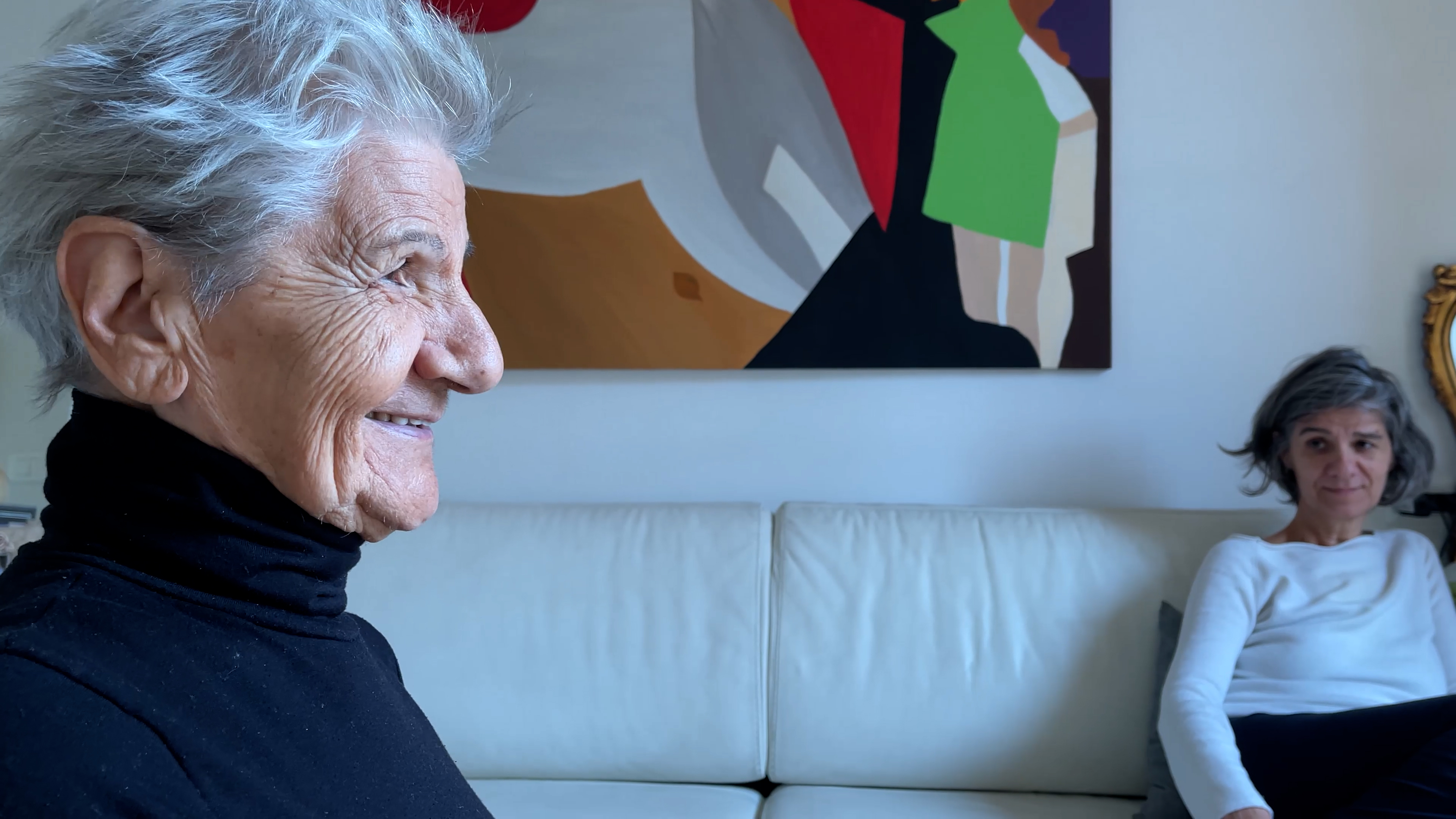
Documentary, by Cristiana Donghi, Italy, 2022.
Ancilla is 86 years old. Two years ago, she moved in with her daughter Emanuela at the pandemic's beginning. Ancilla is slowly losing her memory. He does not remember what she had for lunch, she only remembers events from the past, perhaps only because she has been repeating them for years. Emanuela takes care of her, day after day she wakes her up, prepares her food, washes her, dresses her, and accompanies her a couple of days a week to the hospice and does physiotherapy. This is one of the few contacts with the rest of the world she has left. Ancilla has another child, Mauro, who has been living in London since he left looking for a job. She hasn’t seen him for two years. Daily routines always repeat themselves and change only with the changing seasons. The mother's memories slowly introduce us to Ancilla, her past, the life she lived and that transported her here. Melancholy moments alternate with funny ones and those where patience reaches its limits. Ancilla's sympathy brings a light, fresh breeze into the lives of those around her and allows them to see everything in a way where even the most ominous clouds are blown away momentarily by a breath of wind.
LANGUAGE: Italian
SUBTITLES: English, Spanish, French, German, Portuguese
Migration as Historical Norm, Separation as Modern Wound

You sit in an airport departure lounge somewhere between one life and another, and the grief you feel seems ancient, primordial, as though human beings have always torn themselves from their origins with this particular violence. That feeling is a lie the modern world has sold you so well that you have mistaken it for nature.
Between 1880 and 1924, roughly 25 million people passed through Ellis Island alone, streaming out of Southern and Eastern Europe in numbers that destabilized entire village economies overnight. They left, and they kept moving, and the psychological architecture of their departure was fundamentally different from yours — not because they loved less or hurt less, but because the system of meanings surrounding their movement had not yet hardened into what we now call borders. A Sicilian peasant arriving in New York in 1903 did not carry with him the bureaucratic identity of an Italian citizen defined against an American one. Italy as a unified state had existed for barely four decades. The categories that would later transform movement into exile, departure into rupture, had not yet fully calcified around human bodies.
Benedict Anderson spent much of his career in the 1980s — particularly in Imagined Communities, published in 1983 — arguing that nations are not organic entities but narrative constructions, communities held together not by blood or soil but by synchronized reading, shared print capitalism, a collective act of imagination performed daily across millions of strangers. What Anderson exposed, though rarely articulated in these terms, is that the grief of emigration is inseparable from this imagining. You cannot mourn the loss of something that was never a stable, bounded thing to begin with. The pain you feel leaving a country is partly the pain of a story withdrawing its claim on you, a fiction becoming suddenly visible as fiction at the moment it costs you something real.
The post-World War II period made this machinery brutally explicit. By 1950, the United Nations High Commissioner for Refugees estimated that more than 40 million people in Europe alone had been displaced, stateless, or forcibly relocated in the previous decade. The administrative apparatus that emerged to manage this catastrophe — the 1951 Refugee Convention, the category of the asylum seeker, the legal architecture of protected status — was a humanitarian achievement and simultaneously a technology of sorting. It divided human movement into legitimate and illegitimate trajectories, legible and illegible pain. To qualify for international protection, you had to perform your suffering in the right register, prove persecution against the right categories, belong to the right kind of broken community. Migration had been bureaucratized into a moral examination you could fail.
What this system buried was the longer history in which movement was simply what human populations did — in response to drought, war, economic collapse, curiosity, desire. The Transatlantic slave trade violently forced approximately 12.5 million Africans across oceans between the 16th and 19th centuries, the largest forced migration in recorded history, and it operated precisely by stripping people of every imaginable form of collective belonging. The colonial regimes that followed it then redrew territorial borders across Africa, Asia, and the Americas in ways that severed existing communities and forced new, artificial ones into being. When those colonized populations later moved toward the metropoles that had extracted their labor and resources for generations, they were told they were arriving uninvited, that the borders they crossed were natural, that their grief at being kept out was sentimental and their attachment to their homelands merely ethnic nostalgia.
The wound of family separation in emigration is not timeless. It was manufactured inside a specific political arrangement that convinced you the arrangement itself was geography, was nature, was simply the way the world is shaped.

The Language the Leaving Makes
You packed a single bag and left a grammar behind. Not a language — something deeper than language: the syntax of who gets to be worried about whom, who calls first, who is allowed to be tired, who holds the emotional weight of the room when everyone sits down together. That architecture does not survive a departure intact. It bends, collapses in places, rebuilds itself around the hole you made, and when you return — if you return — the hole has been filled with a version of you that you did not consent to become.
Avtar Brah, writing in her 1996 Cartographies of Diaspora, introduced the concept of diaspora space not as a geographical location but as a lived contradiction — the space where those who left and those who stayed negotiate, without ever fully resolving, what home is allowed to mean. The crucial move in Brah’s thinking is that diaspora space is inhabited simultaneously by the migrant and the non-migrant: the family member who remained in the village is also inside diaspora space, also restructured by the leaving, also conducting their life in relation to an absence that has become a kind of presence. This is the part no one discusses at the airport. The departure reorganizes the emotional grammar of everyone in the building, not only the person walking through the gate.
What happens next, in the months and years that follow, is a quiet mythologization that sociologists have documented but families rarely name. The person who left gets frozen. Letters, phone calls, photographs — these become the only data points available, and data is always curated, always partial. The emigrant edits themselves for the home audience, reporting success more readily than failure because failure carries the unbearable implication that the sacrifice was pointless. The family, receiving only the edited version, constructs a figure: capable, transformed, perhaps slightly foreign, but fundamentally still the same person who left. That figure is loved. It is also fictional.
Stuart Hall, whose work on cultural identity and diaspora through the 1990s remains one of the most precise dissections of this dynamic, argued that identity is never a completed thing — it is always in production, always constituted through representation rather than existing outside it. The family at home is representing the emigrant to themselves, telling a story about who that person is, and that story hardens with repetition. By the time five years have passed, the story is structural. It holds things up. To revise it would require dismantling something load-bearing.
The returnee walks into a room where they are simultaneously over-known and unknown. Their childhood habits are remembered with a fidelity that feels like surveillance. Their new habits — the accent slightly altered, the gestures borrowed from elsewhere, the silences that have changed shape — register as betrayal, or at minimum as evidence of a self that was withheld. Psychoanalytic frameworks describe this as a failure of recognition: the returned migrant presents a self the family cannot metabolize, because the metabolizing would require admitting that five years of phone calls were, at best, a correspondence with a representative, not a person. Pauline Boss, whose concept of ambiguous loss was developed across decades of clinical work beginning in the 1970s, identified exactly this grief — the grief for someone who is physically absent but psychologically present, or physically present but psychologically absent. The emigrant who returns is the second category: there in the room, unreachable in some fundamental register that no one at the table can quite articulate without it sounding like an accusation.
And so the dinner proceeds. Someone mentions a name from the neighborhood. The returnee does not recognize it. The table moves on, gently, the way tables move on from small deaths, and the gap between who left and who returned widens by exactly that much.
Loyalty, Guilt, and the Invisible Debt

You send money every month, sometimes more than you can afford, and you have never once been thanked for it in a way that felt clean. The gratitude arrives wrapped in something else — a silence on the other end of the call, a comment about how long it has been since you visited, a mention of someone else’s child who came back for a funeral and stayed. You registered the texture of that gratitude long before you had words for what it actually was.
Marcel Mauss, writing in 1925 in his Essai sur le don, argued that the gift is never free. Every act of giving in a human community carries within it three obligations: to give, to receive, and to return. What looks like generosity is in fact a circuit of power and obligation, and the person who cannot return the gift is placed in a position of structural inferiority, a kind of social debt that accumulates interest not in money but in identity. Mauss was writing about archaic societies, about the potlatch ceremonies of Pacific Northwest peoples and the kula exchanges of Melanesia, but the mechanism he identified does not respect the boundary between the anthropological past and the kitchen table where your mother sits in the house you grew up in, surrounded by appliances you paid for.
The one who emigrated sends remittances — globally, in 2023, these flows reached over 860 billion dollars according to World Bank estimates, dwarfing foreign aid by a factor of three — but money is only the most visible layer of what gets transferred. What also moves across the border, invisibly and without customs declaration, is a debt structure. The emigrant has escaped something: poverty, stagnation, a future foreclosed before it began. The family that remains has made the escape possible through sacrifice, through the saved coins that funded the first plane ticket, through the years of cooking and raising and waiting. And because that original sacrifice cannot be quantified, it also cannot be repaid. Mauss understood that the most destabilizing gift is the one that cannot be returned with equivalent value — it locks the recipient into a permanent condition of owing.
What makes this particular debt so corrosive is that it operates in both directions simultaneously. The one who stayed also carries a debt they cannot name: the debt of having been left. Resentment, when it has no legitimate object, curdles into a kind of ambient bitterness that attaches itself to small things — the accent that changed, the food preferences that shifted, the foreign partner who doesn’t speak the language properly. Arlie Hochschild, in Strangers in Their Own Land published in 2016, mapped what she called the “deep story” of people who feel that others have cut in line ahead of them, and while her subject was American political grievance, the emotional architecture she described — the sense of sacrifice unacknowledged, of waiting without reward — translates with uncomfortable precision into the psychology of the family member who never left.
The result is a moral economy in permanent deficit, where both parties are creditors and both are debtors, where the accounting never closes because neither side has the language to name what they actually lost. Forgiveness cannot be extended because the original transaction was never formally acknowledged. The emigrant cannot confess that leaving was, in some irreducible part, an abandonment, because to say that word would be to accept a guilt too large to carry alongside a life that has already been built elsewhere. And the one who stayed cannot admit that they resented the leaving, because resentment would betray the love that made the sacrifice feel necessary in the first place. So both sides continue sending what they can — money, phone calls, photographs of grandchildren — into a silence that functions as the only honest register of what neither can say.
What the Distance Actually Measures
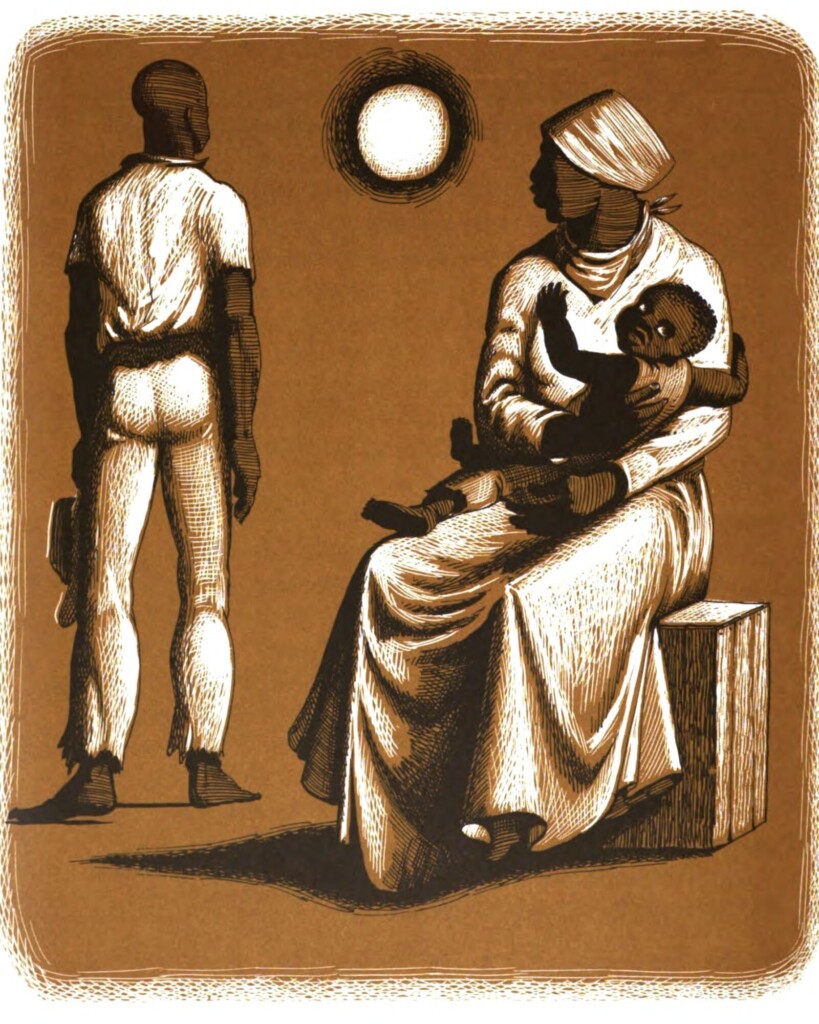
You are sitting across from your mother on a video call, and for the first time in your adult life you can see her face without the ambient noise of shared meals, of proximity, of all the small rituals that made it unnecessary to actually look at her. The pixelated rectangle has stripped away every excuse. What you notice, and cannot un-notice, is that you have nothing to say to each other that does not route itself through memory or obligation.
This is the information that distance actually delivers, and it is rarely what emigrants expect to receive. The working assumption — held by families, by receiving states, by the NGOs that process reunification paperwork — is that geographic separation introduces a wound into something that was previously whole. But the clinical evidence accumulated by family systems theorists since Murray Bowen’s foundational work in the 1970s on differentiation of self suggests something more uncomfortable: that enmeshment and emotional fusion within family units are not forms of closeness but mechanisms of conflict suppression. Proximity does not create intimacy. It creates a shared management of intolerable truths.
The distances opened by emigration do not invent new problems. They withdraw the architecture that made old problems invisible. A son who moved from Bucharest to Berlin in 2004 — one of roughly 3.4 million Romanians who left in the decade following EU accession — does not discover that he and his father are strangers because the kilometers intervened. He discovers it because the kilometers removed every shared task, every habitual silence, every Sunday meal that had been quietly doing the work of substituting for a conversation neither of them knew how to begin. The relationship was always structured around avoidance. The flight was simply the first honest thing that happened to it.
Pauline Boss, the family therapist who developed the concept of ambiguous loss in her 1999 book of the same name, was writing primarily about dementia and disappearance, but the framework lands with surgical precision on the emigrant family: someone is physically absent but psychologically present, or physically present but psychologically gone. What she could not have fully anticipated is the reverse operation that long-distance family life performs — stripping away the psychological fictions that physical co-presence had been generating. The emigrant returns for Christmas and sits inside a house that looks identical to the one they left, and feels, with no melodrama and no warning, that they are visiting the museum of a relationship rather than inhabiting one.
Consider a man in his fifties, newly retired, who has spent twenty years conducting his relationship with his adult children exclusively through monthly transfers, practical logistics, advice dispensed over the phone like prescriptions. His children built their adult lives in another country and another language. When they return, he stands in a kitchen he has kept meticulously clean and realizes that his fluency with them extends exactly to the length of a wire transfer. Everything he recognizes as fatherhood is a transaction that distance has now made legible as such. The grief he feels is real, but it is not the grief of losing them to emigration. It is the grief of seeing, for the first time without obstruction, what he had been doing in the name of love.
Families are not dissolved by separation. They are clarified by it, and clarification is frequently the cruelest form of knowledge available to human beings, because it cannot be undone by returning.
A vision curated by a filmmaker, not an algorithm
In this video I explain our vision
🌍 When Borders Tear Families Apart
Emigration is rarely just a journey across geography — it is a rupture of the deepest human bonds, a forced negotiation between belonging and survival. The pain of family separation echoes through psychology, literature, and culture in ways that reveal the true cost of displacement. These articles explore the emotional, social, and existential dimensions of lives divided by distance and longing.
The Absent Father: Wounds That Remain
The absent father is one of the most recurring wounds in the psychology of emigration, where separation is not chosen but imposed by economic necessity or political upheaval. This article explores how paternal absence — whether physical or emotional — leaves traces that shape identity for generations. Understanding this dynamic is essential to grasping what families truly lose when borders intervene.
GO TO THE SELECTION: The Absent Father: Wounds That Remain
Grief and the Processing of Loss
Grief is not only born from death — it is also the silent companion of those who leave behind a country, a community, or a family they may never fully return to. This article examines how the processing of loss operates psychologically, tracing the emotional stages that migrants and separated families navigate often without support or recognition. The mourning of a homeland and the mourning of a person share a common, devastating grammar.
GO TO THE SELECTION: Grief and the Processing of Loss
The Emotional Legacy of Parents: How the Past Shapes Us
The emotional legacies passed down by parents do not stop at borders — they travel invisibly through letters, silences, and the habits of survival that emigrants transmit to their children. This article investigates how the past of a family shapes the present of its members, even across oceans and generations. In the context of emigration, this inheritance often carries both the trauma of separation and the resilience born of sacrifice.
GO TO THE SELECTION: The Emotional Legacy of Parents: How the Past Shapes Us
Brotherhood and Family Conflicts
Brotherhood and family conflict take on a particular intensity when emigration divides siblings between different countries, cultures, and economic realities. This article explores how family bonds are tested and transformed when proximity disappears and shared history becomes the only remaining common ground. The tension between solidarity and resentment within families separated by migration is a profoundly human story told across every culture.
GO TO THE SELECTION: Brotherhood and Family Conflicts
Discover the Cinema That Tells the Stories the World Forgets
On Indiecinema you will find independent films that dare to tell the human cost of borders, the silence of separated families, and the courage of those who rebuild identity far from home. These are stories that mainstream cinema rarely tells with this depth and honesty. Explore our catalog and let independent cinema open a window onto lives that deserve to be seen.
👉 EXPLORE THE CATALOG: Watch Indie Films in Streaming
A vision curated by a filmmaker, not an algorithm
In this video I explain our vision

