
Cinema has always used music to tell powerful stories. The collective imagination is marked by the great musical biopics, a familiar script: the meteoric rise, the fall into excess, and the final redemption in an iconic performance. These works transform complex artists into icons, cementing their myth.

But the most honest stories, those that pulse with the irregular rhythm of the creative process, are also found elsewhere. There is a cinema that does not seek to sanctify its protagonists, but actively deconstructs the myth, exploring the artist’s identity as a continuous performance.
It uses music as a lens to investigate the human condition: the painful friction between art and commerce, the birth of subcultures from desolate urban landscapes, and the celebration of that “glorious failure” which is often the price of artistic purity. This guide is a path that unites the most famous films with the most visceral independent productions. From documentaries that act as musical archaeology, unearthing forgotten heroes, to fiction films that capture the soul of a scene. Prepare to discover the true notes of cinema, those played far from the spotlight.
Control (2007)

The film traces the final years in the life of Ian Curtis, the enigmatic frontman of Joy Division. The narrative focuses on his youthful marriage to Deborah, his extramarital affair with Belgian journalist Annik Honoré, and his growing struggle with epilepsy and depression as the band heads towards unsettling international fame.
Directed by photographer and director Anton Corbijn, who immortalized Joy Division in some of their most iconic shots, Control is much more than a biopic. It is a funeral elegy in breathtaking black and white, an aesthetic choice that transcends mere stylistic homage to become the very substance of the film. Martin Ruhe‘s cinematography transforms post-industrial Macclesfield into an external projection of Curtis’s inner torment, a landscape of desolation and austere beauty that perfectly mirrors the band’s sound. The film is distinguished by its anti-mythological approach. It refuses to romanticize mental illness or glorify entry into the “27 Club.” Epilepsy is not a source of transcendental genius, but a terrifying and humiliating obstacle. The greatness of Control lies in its focus on the domestic and daily dimension of the drama, on the heaviness of existence rather than the lightness of fame. Sam Riley‘s performance is prodigious: he doesn’t imitate Curtis, he embodies his essence, his awkwardness, his romantic sensitivity, and his all-consuming pain. It is one of the most powerful films about musical creation, showing how suffering can be transmuted into immortal art, but at an unbearable price.
Return to Planet Underground
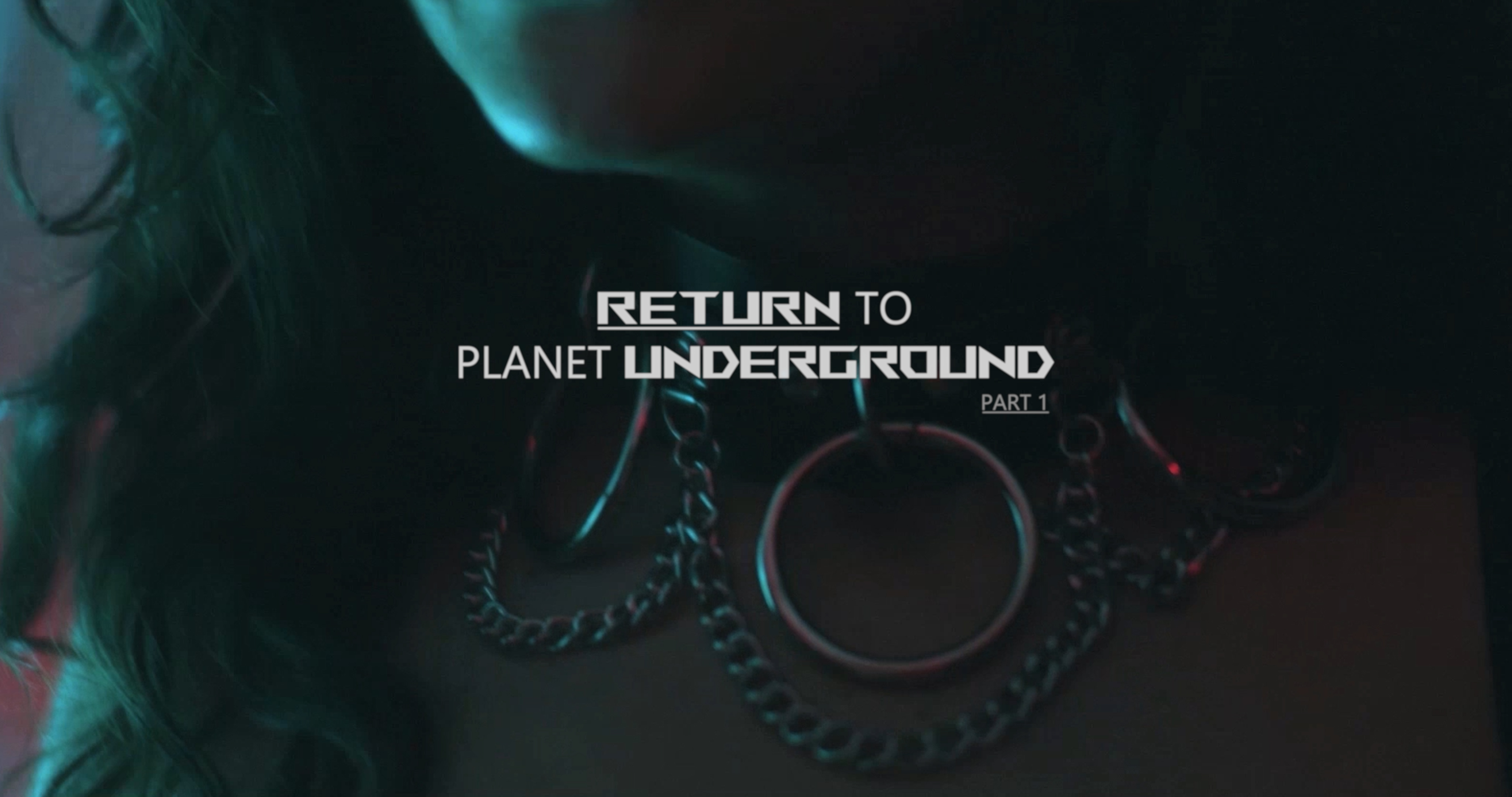
Drama, Thriller, by Gideon Homes, Netherlands, 2025.
A former underground techno DJ working in a large and famous law firm delves into the dark side of society. With one eye on the past and one on the future, he stirs up the ashes of the true underground. The demand of society to function superficially and deliver top performance increasingly clashes with the protagonist's questioning of his own life reality and the values of his past. After being employed for almost six years and being a respected employee, Tyrel falls ill. On top of that, he witnesses a fraud within the company and asks to leave. But the illness creates a complex situation in which his employer starts playing a game of chess with Tyrel.
In "Return To Planet Underground", director Gideon Homes gives the audience a gripping insight into the Dutch underground techno scene, offering a gripping drama set in a dark world, full of intense moments and touching human tragedies. This film is not just a visual feast; it is a gripping exploration that immerses viewers in the lives of its protagonists. Set to a backdrop of thumping techno beats, "Return To Planet Underground" takes audiences on a rollercoaster ride through the highs and lows of human desires, drug-fueled escapades, societal pressures and the pursuit of perfectionism. Drawing inspiration from iconic films such as Trainspotting, Berlin Calling and Human Traffic, Gideon Homes' work stands out for its unique stylistic devices and unconventional storylines. Based on real events and personal experiences, "Return To Planet Underground" faced numerous lawsuits before finally conquering audiences around the world. Prepare yourself for an immersive dive into a world where music, morality and the human spirit collide.
LANGUAGE: English, Dutch
SUBTITLES: Spanish, French, German, Portuguese
Sid & Nancy (1986)

Alex Cox‘s film chronicles the tumultuous and self-destructive love story between Sid Vicious, bassist of the Sex Pistols, and his American groupie, Nancy Spungen. Their relationship, fueled by an insatiable heroin addiction, drags them into a spiral of chaos that culminates in Nancy’s tragic death in room 100 of the Chelsea Hotel in New York.
Sid & Nancy is a punch to the gut, an anti-biopic that refuses to sweeten the filth and desperation of the London punk scene. Alex Cox is not interested in celebrating the Sex Pistols or explaining the cultural phenomenon; his gaze is fixed on the toxic relationship at the center of the storm. Gary Oldman, in one of his earliest and most shocking performances, doesn’t just play the part of Sid: he transforms into him, capturing his childlike naivety, nihilistic anger, and heartbreaking vulnerability. Alongside him, Chloe Webb is an unbearable and moving Nancy, the embodiment of a desperate and destructive need for love. The film is a tragic nightmare, shot with dirty, raw cinematography by Roger Deakins, which immerses the viewer in mud and pain. There is no redemption, only a continuous descent into the abyss. It is a fundamental work because it shows punk not as a political ideology or a fashion, but as a scream of pain from lives on the margins, destined to burn out quickly.

Hedwig and the Angry Inch (2001)

Hedwig Robinson, an “internationally ignored” rock singer, tours the United States with her band, The Angry Inch, playing in cheap seafood restaurants. She follows the tour of her former lover and protégé, Tommy Gnosis, a rock star who stole her songs and her heart. Through a monologue-concert, Hedwig tells her life story: from a boy in East Berlin to a failed sex-change operation that left her with an “angry inch.”
Written, directed, and starring the brilliant John Cameron Mitchell, Hedwig and the Angry Inch is an explosion of glam rock, punk, and Platonic philosophy. It is a musical that demolishes every convention of genre, both cinematic and sexual. The film is a hymn to the fluidity of identity, a moving and irreverent exploration of the search for one’s “other half.” The songs, written by Stephen Trask, are not mere interludes but the narrative and emotional engine of the film, capable of shifting from angry punk anthems to heartbreaking ballads. Hedwig is a tragic and triumphant figure, a creature who does not conform to society’s binary norms and who transforms her pain and mutilation into powerful and liberating art. It is a film about resilience, about the love of music as a tool for self-definition, and about the ability to find wholeness not in another person, but within oneself. A cult movie about underground musicians that has become a manifesto for queer culture and for anyone who feels torn in half.
The Devil and Daniel Johnston (2005)

This documentary tells the life of Daniel Johnston, a cult musician and artist, a manic-depressive genius who recorded hundreds of lo-fi songs on cassette tapes in his parents’ basement. The film traces his rise in the musical underground, his obsessions with an unattainable muse named Laurie, and his continuous and heartbreaking battle with severe mental illness.
The Devil and Daniel Johnston is an intimate and profoundly human portrait that explores the fine line between genius and madness. Director Jeff Feuerzeig constructs the film using Johnston’s enormous personal archive of audio recordings, Super 8 footage, and drawings, creating a visual autobiography that takes us directly inside his tormented mind. The documentary avoids easy sensationalism, showing with honesty and compassion how the same force that fuels Johnston’s extraordinary creativity is also the source of his self-destruction. His music, characterized by a disarming simplicity and brutally sincere lyrics, emerges as a desperate attempt to communicate his pain and his pure, childlike love. It is one of the most touching stories of musicians in independent cinema, a work that forces us to question the nature of art and the price it sometimes demands.
Dig! (2004)

Filmed over seven years, this documentary follows the divergent trajectories of two friendly and rival bands: The Brian Jonestown Massacre, led by the brilliant and self-destructive Anton Newcombe, and The Dandy Warhols, fronted by the more pragmatic Courtney Taylor-Taylor. While The Dandy Warhols sign with a major label and achieve commercial success, the BJM implodes in a chaos of drugs, on-stage fights, and sabotaged opportunities.
Dig! is a Shakespearean parable about the dichotomy between art and commerce, friendship and envy. Ondi Timoner captures with shocking immediacy the chronicle of an announced artistic suicide. Anton Newcombe emerges as a tragic figure, an archetype of pure talent who viscerally rejects any compromise, sabotaging himself and his band in the name of an artistic integrity that borders on madness. The film does not judge but documents the raw reality of the underground music scene, where genius and self-destruction are often two sides of the same coin. The raw, almost home-movie aesthetic helps create a sense of authenticity and urgency, making us feel like direct witnesses to an ongoing disaster. Dig! has become a fundamental text for understanding the dynamics of independent rock, proving how a documentary can not only tell a story but also shape the mythology of its protagonists.
A vision curated by a filmmaker, not an algorithm
In this video I explain our vision
A Band Called Death (2012)

Before the Ramones and the Sex Pistols, in Detroit, three African-American brothers, David, Dannis, and Bobby Hackney, formed a band called Death. They played a furious and fast rock and roll that anticipated punk by several years. Rejected by record labels because of their name, considered “negative,” they recorded a self-produced single in 1976 and then vanished into oblivion, until their records were rediscovered decades later by vinyl collectors.
A Band Called Death is an extraordinary work of musical archaeology, a documentary that rewrites a piece of rock history. It is a moving story of family ties, artistic integrity, and deferred dreams. The film celebrates the prophetic vision of leader and guitarist David Hackney, a man who believed so firmly in his music that he sacrificed the chance of success rather than change the band’s name. His unwavering faith, initially seen as stubbornness, ultimately reveals itself to be a self-fulfilling prophecy. The documentary beautifully weaves together interviews with the surviving brothers, Bobby and Dannis, with original recordings and animations, restoring the power and urgency of their music. It is one of the most beautiful hidden musical-themed gems brought to light by cinema, an uplifting tale of resilience and the belief that true art, sooner or later, will find its audience.
Frank (2014)

Jon, an aspiring musician, joins an eccentric avant-garde pop band, the Soronprfbs, led by the mysterious and enigmatic Frank. Frank’s peculiarity is that he constantly wears a huge fake papier-mâché head, which he never takes off. Retreating to an isolated cabin in Ireland to record an album, Jon clashes with the chaotic and incomprehensible nature of the band’s creative process.
Loosely inspired by the figure of Frank Sidebottom (alter ego of comedian and musician Chris Sievey) and other “outsider” musicians like Daniel Johnston and Captain Beefheart, Frank is a surreal and deeply touching comedy about creativity, mental illness, and the myth of the tormented genius. The film, directed by Lenny Abrahamson, brilliantly satirizes the modern obsession with fame and authenticity. Jon, played by Domhnall Gleeson, represents our “normal” gaze on the incomprehensible world of avant-garde art, trying to tame it and make it “more palatable” for the public. But the heart of the film is Michael Fassbender‘s extraordinary performance, who manages to create a complex, vulnerable, and charismatic character without ever showing his face. Frank is one of the most original films about musical creation, a work that questions what it means to be an artist and whether pain is a necessary prerequisite for great art.
Once (2007)

A Dublin street musician, who repairs vacuum cleaners in his father’s shop by day, meets a young Czech immigrant who sells flowers. She is a pianist, he is a guitarist and songwriter. Over the course of a week, the two discover a deep connection through music, writing and recording songs that speak of their lives and past loves.
Shot on a shoestring budget with an almost documentary-like style, Once is a miracle of simplicity and emotional honesty. Director John Carney captures the magic of a fleeting encounter, a platonic love that blossoms and is consumed entirely in the creative process. Glen Hansard and Markéta Irglová, real-life musicians, bring an authentic chemistry and disarming vulnerability to their roles. The film is not a traditional musical; the songs do not interrupt the narrative, they are the narrative. Each track, from the angry opening street piece to the poignant “Falling Slowly” (an Oscar winner), is a chapter of their story. Once is a film about the intimacy created by making music together, a work that celebrates the small moments of salvation that can change a life, even if only for a week.
I'm Not There (2007)

Instead of a conventional biographical narrative, Todd Haynes‘s film explores the many lives and masks of Bob Dylan through six different actors who embody different aspects of his personality and career. A young poet (Ben Whishaw), a folk prophet (Christian Bale), an outlaw (Richard Gere), and an androgynous rock star on the verge of collapse (Cate Blanchett) are just a few of his facets.
I’m Not There is the quintessence of the anti-biopic, a bold and intellectually stimulating work that rejects the idea that an artist like Dylan can be contained in a single narrative. Haynes does not seek the “real” Dylan but suggests that his identity is a fluid construction, a collage of myths, quotes, and performances. Each segment of the film adopts a different cinematic style, from a Fellini-esque black-and-white documentary to a revisionist western, mirroring the artist’s continuous transformations. Cate Blanchett’s performance as the 1966 Dylan is simply stunning, a physical and spiritual mimesis that transcends gender. This film is one of the most radical reflections in arthouse cinema with a musical theme on identity, fame, and how an artist can become a vessel for the projections and anxieties of an entire generation.
Velvet Goldmine (1998)
![Velvet Goldmine - TRAILER (1998) [HD]](https://blog.indiecinema.co/wp-content/plugins/wp-youtube-lyte/lyteCache.php?origThumbUrl=https%3A%2F%2Fi.ytimg.com%2Fvi%2FKqd8ChJ5xLk%2F0.jpg)
In 1984, a journalist, Arthur Stuart, is assigned to write an article about the disappearance of glam rock star Brian Slade, who was assassinated on stage ten years earlier in an obvious setup. Through a series of flashbacks and interviews with people who knew him, Arthur reconstructs Slade’s rise and fall, his relationship with his wife Mandy, and his intense and destructive relationship with American rocker Curt Wild.
Inspired by the lives and mythologies of David Bowie, Iggy Pop, and Lou Reed, Todd Haynes’s Velvet Goldmine is a dazzling and melancholic celebration of the glam rock era. More than a biopic, it is a sensory immersion into an era of sexual ambiguity, excess, and artistic utopias. The film, structured like a sequined Citizen Kane, explores themes of memory, identity as performance, and the transformative power of music. Haynes uses a lush and fragmented visual language to capture the essence of a movement that was as much an aesthetic revolution as a musical one. The performances by Jonathan Rhys Meyers (Slade/Bowie) and Ewan McGregor (Wild/Iggy) are charged with an electric and dangerous energy. Velvet Goldmine is a fever dream, a work that doesn’t just tell the story of glam but embodies it, with all its ephemeral beauty and its inevitable sadness.
20,000 Days on Earth (2014)

This film documents a fictional day, the 20,000th, in the life of musician, writer, and icon Nick Cave. The day unfolds through a therapy session, a visit to his personal archive, rehearsals with his band The Bad Seeds, and surreal car encounters with figures from his past, such as Kylie Minogue and actor Ray Winstone.
20,000 Days on Earth is a documentary that masterfully plays with the boundaries between reality and fiction, offering a deep and poetic meditation on the creative process and the construction of personal myth. Directors Iain Forsyth and Jane Pollard avoid the traditional music documentary format to create something much more intimate and philosophical. The film does not claim to reveal the “real” Nick Cave but explores how the artist himself shapes his own reality and memory to fuel his art. The conversations, though scripted, reveal profound truths about the nature of performance, loss, and transformation. Visually sumptuous and narratively innovative, this film is a work of art in itself, a fascinating portrait of an artist who constantly lives in a space “where imagination and reality intersect.”
Searching for Sugar Man (2012)
![Searching For Sugar Man -- Official Trailer 2012 -- Regal Movies [HD]](https://blog.indiecinema.co/wp-content/plugins/wp-youtube-lyte/lyteCache.php?origThumbUrl=https%3A%2F%2Fi.ytimg.com%2Fvi%2FbPK4fjE3a_c%2F0.jpg)
In the late 1960s, a mysterious Detroit musician named Rodriguez recorded two albums that, according to producers, would establish him as one of the greatest artists of his generation. Instead, the albums failed, and Rodriguez vanished into obscurity. Unbeknownst to him, a bootleg copy of his music reached South Africa, where it became an anthem of the anti-apartheid struggle and a cultural phenomenon. Decades later, two South African fans decide to uncover the truth about their hero’s death.
Winner of the Academy Award for Best Documentary, Searching for Sugar Man is a story so incredible it seems fictitious. Director Malik Bendjelloul constructs the film like a thriller, a compelling investigation that keeps the viewer on the edge of their seat. It is a celebration of the power of music to cross borders and inspire social change, but it is also a moving reflection on the ephemeral nature of fame and the dignity of a life lived away from the spotlight. Rodriguez’s music, with its poetic and socially conscious lyrics, is the true star of the film. Searching for Sugar Man is one of the most incredible hidden musical-themed gems, an uplifting and almost miraculous tale that shows how a single voice can resonate around the world, even when the artist thinks no one is listening.
24 Hour Party People (2002)

The film tells the story of the Manchester music scene from the late 1970s to the early 1990s, seen through the eyes of journalist and Factory Records founder, Tony Wilson. From the birth of post-punk with Joy Division to the explosion of rave culture with the Happy Mondays and the construction of the legendary Haçienda nightclub, the film is a chaotic and irreverent chronicle of a musical era.
Directed by Michael Winterbottom, 24 Hour Party People is a post-modern work that shatters the conventions of the biopic. The protagonist, a brilliant Steve Coogan as Tony Wilson, constantly breaks the fourth wall, commenting on events, admitting historical inaccuracies, and quoting John Ford‘s maxim: “When the legend becomes fact, print the legend.” The film is a whirlwind of energy, humor, and tragedy, perfectly capturing the anarchic spirit and failed idealism of Factory Records. It’s not just a film about music, but about the geography of authenticity: it shows how the desolation of industrial Manchester generated a unique and unrepeatable sound. A fundamental work that celebrates creative chaos and the importance of believing in the power of art, even at the cost of bankruptcy.
This Is Spinal Tap (1984)

This mockumentary follows the disastrous American tour of the fictional British heavy metal band Spinal Tap, self-proclaimed “one of England’s loudest bands.” Director Marty Di Bergi documents their oversized egos, absurd artistic pretensions, internal squabbles, and an endless series of unfortunate incidents, including drummers dying in bizarre circumstances and monumental stage sets ending up comically small.
Directed by Rob Reiner, This Is Spinal Tap not only invented the mockumentary genre but also created a satire of the rock world so perfect and sharp that many musicians consider it more truthful than any “real” documentary. Every gag, from the amplifier that goes “up to 11” to the miniature Stonehenge monolith, has become iconic, a cutting commentary on the self-indulgence and disconnection from reality typical of many rock stars. But the film’s genius lies in its genuine affection for the characters. David St. Hubbins, Nigel Tufnel, and Derek Smalls are foolish, but their passion for music is undeniable, and their brotherhood, however dysfunctional, is endearing. The film laughs with them as much as at them, creating a work that is both hilarious and strangely touching.
Anvil! The Story of Anvil (2008)

In the 1980s, the Canadian heavy metal band Anvil was on the verge of breaking through, influencing bands like Metallica and Slayer. Thirty years later, founding members, singer Steve “Lips” Kudlow and drummer Robb Reiner, are still working humble jobs but have never stopped dreaming. The documentary follows them as they embark on a disastrous European tour and attempt to record their thirteenth album.
Anvil! The Story of Anvil has been called “the real Spinal Tap.” It is a hilarious, moving, and profoundly human documentary about perseverance, friendship, and the refusal to give up on one’s dreams, even when all seems lost. Director Sacha Gervasi, once a roadie for the band, captures the unwavering passion of Lips and Robb with affection and without condescension. The film is full of moments of unintentional comedy arising from their misadventures, but its heart is the almost brotherly bond between the two protagonists. It is a universal story about the struggle to keep one’s passion alive in the face of life’s adversities. An uplifting tale that celebrates the dignity of “failure” and the victory found in the simple act of never giving up.
Scott Walker: 30 Century Man (2006)

This documentary traces the incredible artistic journey of Scott Walker, from a 1960s pop idol with The Walker Brothers to an enigmatic and uncompromising avant-garde artist. Through rare interviews with Walker himself and testimonies from admirers like David Bowie, Brian Eno, and Jarvis Cocker, the film seeks to shed light on one of the most mysterious and influential figures in modern music.
Scott Walker: 30 Century Man is a fascinating portrait of an artist who deliberately turned his back on fame to pursue an uncompromising artistic vision. Director Stephen Kijak succeeds in the almost impossible task of getting close to a notoriously reclusive figure, offering a precious glimpse into his creative process. The film documents the recording of his 2006 album, The Drift, showing us an artist at work with almost terrifying meticulousness, as when he has a percussionist record the sound of a punch on a piece of pork. The documentary is an essential introduction to a musical catalog as difficult as it is rewarding, and a profound reflection on the courage required to follow one’s own artistic path, wherever it may lead.
Last Days (2005)

Inspired by the last days of Kurt Cobain‘s life, Gus Van Sant‘s film follows a young rock musician named Blake, who wanders like a ghost through a large, dilapidated mansion in the woods. Avoiding friends, managers, and family, Blake roams the house and the surrounding forest, mumbling disconnected phrases and sinking into a catatonic state of isolation and despair.
Last Days is a radical and anti-narrative work, an almost meditative cinematic experience that rejects any psychological explanation or conventional dramatization. Van Sant is not interested in telling Cobain’s story, but in capturing a state of mind: the oppressive weight of fame, the total disconnection from reality, and the inevitable slide towards the end. Michael Pitt gives a hypnotic and almost silent performance, embodying the existential weariness of a trapped icon. Harris Savides‘ cinematography, with its long tracking shots and natural light, creates an ethereal and claustrophobic atmosphere. It is a difficult film that requires patience, but it rewards with a powerful and unforgettable portrait of the loneliness and emptiness that can hide behind success.
Inside Llewyn Davis (2013)

Set in Greenwich Village in 1961, the film follows a week in the life of Llewyn Davis, a talented but unlucky folk singer. Homeless and broke, Llewyn moves from one couch to another, alienating friends and lovers, as he tries to launch his solo career after the suicide of his musical partner. All while reluctantly taking care of an escaped cat.
Directed by the Coen brothers, Inside Llewyn Davis is a melancholic and tragicomic portrait of an artist who seems destined to fail. The film is a bittersweet reflection on the gap between talent and success, and the misfortune of being “the forerunner,” arriving on the scene too early to reap the rewards of the folk revival that would soon explode. Oscar Isaac is extraordinary as Llewyn, a grumpy and self-destructive character whose music, performed live and with heartbreaking soul, reveals a deep vulnerability. The film’s circular structure, which begins and ends in the same alley, suggests an endless cycle of failure, but also a kind of stoic perseverance. It is an impeccable work about the difficulty of being an uncompromising artist in a world that seems to have no place for you.
Buena Vista Social Club (1999)

In 1996, American guitarist Ry Cooder travels to Cuba to reunite a group of legendary Cuban musicians, many of whom had fallen into oblivion after Castro’s revolution. The result is a worldwide successful album and a series of triumphant concerts in Amsterdam and at Carnegie Hall in New York. Director Wim Wenders documents this incredible revival.
Buena Vista Social Club is a joyful and touching documentary that celebrates music as historical memory and a vital force. Wenders captures not only the musical performances but also the personal stories of these elderly musicians, whose passion and talent have remained intact despite decades of obscurity. The film is also a fascinating portrait of Cuba, a country where time seems to have stood still, preserving a musical culture that had disappeared elsewhere. The island’s geographical and political isolation paradoxically becomes the guardian of its authenticity. Ibrahim Ferrer, Compay Segundo, Rubén González, and Omara Portuondo emerge as charismatic and unforgettable characters. The film is a triumph, a work that brought a musical treasure back to light and proved that it’s never too late for a second chance.
Nico, 1988 (2017)

The film focuses on the last two years of the life of Christa Päffgen, aka Nico, the iconic singer of The Velvet Underground and Andy Warhol‘s muse. Far from her Factory days, Nico lives a nomadic life in Europe, battling heroin addiction and trying to rebuild a relationship with her son Ari, while touring with a band of “amateur junkies” to promote her dark and uncompromising solo music.
Directed by Susanna Nicchiarelli, Nico, 1988 is a biographical film about non-famous musicians in the sense that it focuses on the least known and glamorous period of her life. It is a raw and honest portrait of a woman who refuses to be defined by her past as a beauty icon. Trine Dyrholm‘s extraordinary performance captures Nico’s deep voice, caustic humor, and desperate fragility. The film does not judge her but observes her with empathy as she tries to establish herself as an artist in her own right, beyond the imposing shadow of The Velvet Underground. The concert scenes, with Dyrholm singing live, are powerful and immersive, conveying the full force of Nico’s dark and hypnotic music. An intense and moving work about a woman who chose to live and die on her own terms.
Margini (2022)

Grosseto, 2008. Michele, Edoardo, and Iacopo are members of a hardcore punk band. When the opportunity to open for a famous American band in Bologna falls through, they decide to do the unthinkable: organize the concert themselves in their sleepy provincial town. The endeavor will prove to be an obstacle course of municipal bureaucracy, financial problems, and internal band tensions.
Margini is a fresh, funny, and authentic comedy that captures the essence of the “Do It Yourself” punk spirit. Based on the autobiographical experience of director Niccolò Falsetti, the film is a passionate ode to provincial life and the struggle to create something meaningful in a place that seems to offer nothing. It is one of the most successful stories of musicians in Italian independent cinema, a universal tale about what it means to be part of an emerging band. The geography of authenticity is central here: the apathy of Grosseto is not just a backdrop but the catalyst that pushes the protagonists to action. The film is full of energy, with brilliant dialogue and a deep love for the subculture it portrays. A genuine work that speaks to anyone who has ever dreamed big from a small place.
Sound of Metal (2019)

Ruben, a heavy metal drummer, has his life turned upside down when he suddenly starts to lose his hearing. His girlfriend and bandmate, Lou, convinces him to enter an isolated community for the deaf, run by a Vietnam veteran named Joe. There, Ruben must face a future without sound and decide whether to accept his new identity or desperately cling to the world he has lost.
Sound of Metal is a visceral and deeply immersive cinematic experience. Director Darius Marder uses a revolutionary sound design to make us experience hearing loss from Ruben’s perspective, alternating the sound world with a muffled and distorted silence. Riz Ahmed‘s performance is phenomenal, a heartbreaking portrayal of anger, denial, and, finally, a difficult acceptance. The film explores complex themes such as identity, addiction, and the meaning of “home.” It does not treat deafness as a disability to be “cured,” but as a culture and an identity in its own right. It is one of the most powerful films about musical creation, or rather, its loss, an emotional journey that leads us to find beauty and peace not in sound, but in stillness.
Wild Combination: A Portrait of Arthur Russell (2008)

This documentary explores the life and music of Arthur Russell, a visionary and prolific artist whose work spanned different genres, from avant-garde composition to disco, from experimental folk to pop. A musician and cellist from Iowa, Russell became a key figure in the New York underground scene of the ’70s and ’80s, before his premature death from AIDS in 1992.
Wild Combination is a delicate and poetic portrait of an artist whose music, largely ignored during his lifetime, found a vast audience only posthumously. Director Matt Wolf assembles rare archival footage, interviews with collaborators (including Philip Glass) and Russell’s family to create an intimate image of a shy man and a tirelessly innovative musician. The film captures the melancholy and transcendent beauty of his music, which often explored themes of love and loss with a unique sensitivity. It is an essential work for discovering a cult movie about underground musicians that celebrates a singular talent whose influence continues to grow, demonstrating how art can live on long after its creator’s life.
Genghis Blues (1999)

The film follows the journey of Paul Peña, a blind American blues musician, to the remote republic of Tuva in Central Asia. Fascinated by Tuvan throat singing, a vocal technique that allows one to produce multiple notes simultaneously, Peña teaches himself this ancient art form. Invited to compete in the annual throat singing festival, he embarks on an incredible adventure that unites two seemingly distant musical worlds.
Winner of the Audience Award at Sundance, Genghis Blues is a fascinating and moving documentary that celebrates music as a universal language. Paul Peña’s story is extraordinary in itself: a man who, through a shortwave radio, discovers a culture on the other side of the world and embraces it with passion and respect. The film is a joyful exploration of cultural encounter, a bridge between the blues of the Mississippi Delta and the shamanic traditions of the Siberian steppes. It is a tale of friendship, perseverance, and the human capacity to connect through sound. A true hidden musical-themed gem that broadens horizons and warms the heart.
We Don’t Care About Music Anyway… (2009)

This documentary is a deep dive into the experimental and noise music scene of Tokyo. Through portraits of several artists, including Otomo Yoshihide, Sakamoto Hiromichi, and Numb, the film explores a radical sound universe where turntables are destroyed, cellos are played with power tools, and laptops become instruments of sonic chaos.
We Don’t Care About Music Anyway… is a visually and sonically powerful journey into the heart of one of the world’s most extreme alternative music scenes. Directors Cédric Dupire and Gaspard Kuentz do not just document the performances but contextualize the music within the urban landscape of Tokyo, a metropolis of concrete, neon, and constant noise. The film suggests that this music is not just an artistic act but a necessary response, almost a form of exorcism, to the alienation of modern life. It is a challenging but fascinating work that defies our definitions of “music” and offers a glimpse of artists pushing the boundaries of sound to the breaking point.
Instrument (1999)

Made over a period of ten years by director Jem Cohen in close collaboration with the band, Instrument is an unconventional portrait of Fugazi, the legendary post-hardcore band from Washington D.C. The film mixes concert footage, intimate moments in the studio and backstage, interviews, and abstract visual fragments, capturing the band’s “Do It Yourself” ethic and unwavering political integrity.
Instrument is the antithesis of the conventional rock documentary. Just like Fugazi’s music, the film is fragmented, intense, and rejects easy narratives. There is no linear plot, but a collage of moments that, when put together, convey the essence of a band that has always operated outside the mainstream circuits. Cohen captures the visceral power of their live performances, but also their thoughtfulness and humor. The film is a testament to their commitment to keeping ticket and record prices low, and their firm belief that music can be a force for social change. An essential document on one of the most important and principled bands in the history of independent rock.
High Fidelity (2000)

Rob Gordon, the owner of a failing Chicago record store, is dumped by his girlfriend, Laura. To figure out what’s wrong with him, he decides to reconnect with his top five ex-girlfriends, his “top five” breakups. Between compiling endless music charts with his two eccentric employees, Rob embarks on a tragicomic journey into male insecurity and his obsession with pop culture.
Based on the novel by Nick Hornby, High Fidelity is an intelligent and funny romantic comedy that speaks to anyone who has ever used music to make sense of their life. The film, directed by Stephen Frears, perfectly captures the mindset of the music collector, a world of elitism, nostalgia, and an almost pathological love for lists. John Cusack is perfect as Rob, a sympathetically neurotic and self-indulgent protagonist who constantly breaks the fourth wall to share his anxieties. Beyond the gags, the film is a sharp reflection on the difficulty of growing up and moving from criticizing life to actively participating in it. A cult classic with an impeccable soundtrack.
Coffee and Cigarettes (2003)

The film is a collection of eleven black-and-white short films, shot by Jim Jarmusch over nearly twenty years. Each vignette shows two or three characters, often actors and musicians playing fictionalized versions of themselves, sitting at a table drinking coffee, smoking cigarettes, and talking. Memorable encounters include those between Iggy Pop and Tom Waits, and between Wu-Tang Clan members GZA and RZA and actor Bill Murray.
Coffee and Cigarettes is a minimalist and stylistically impeccable work that celebrates the pleasure of small daily rituals and seemingly insignificant conversations. Jarmusch, one of the most important directors in independent cinema, uses this repetitive structure to explore the dynamics of human relationships: misunderstandings, missed connections, moments of embarrassment, and rare sparks of true understanding. The vignette with Iggy Pop and Tom Waits is a small masterpiece of surreal comedy and passive-aggressive tension. Although not a film “about music” in the strict sense, the presence of so many iconic musicians makes it a fascinating document of their public personas, a snapshot of their charisma captured in a moment of pause.
A Mighty Wind (2003)

Upon the death of legendary folk music impresario Irving Steinbloom, his son organizes a memorial concert reuniting three of the most famous folk groups of the 1960s: the serious and intellectual trio The Folksmen, the once-in-love couple Mitch & Mickey, and the hyper-commercial choral group The New Main Street Singers. The fictional documentary follows the preparations for the concert, amidst old grudges and new neuroses.
Directed by Christopher Guest, the master of the mockumentary, A Mighty Wind is an affectionate and hilarious satire of the American folk revival. As in This Is Spinal Tap, the film uses a documentary style to ridicule the pretensions and eccentricities of its characters, but it does so with a tenderness that makes the protagonists irresistible. The musical performances, written by Guest and the cast, are perfect parodies of the genre, but also genuinely beautiful songs. The heart of the film is the story of Mitch (Eugene Levy) and Mickey (Catherine O’Hara), whose reunion on stage is charged with an emotional tension that transcends comedy. A brilliant work that finds humor and humanity in nostalgia.
Shut Up and Play the Hits (2012)

On April 2, 2011, the dance-punk band LCD Soundsystem played its final, monumental concert at Madison Square Garden in New York, before disbanding at the height of its success. This documentary captures the explosive energy of that night and, in parallel, follows the band’s leader, James Murphy, in the 48 hours that follow, as he deals with the consequences of his decision and reflects on the meaning of closing such an important chapter of his life.
Shut Up and Play the Hits is both an exhilarating concert film and an intimate, reflective portrait of an artist grappling with a radical choice. Directors Will Lovelace and Dylan Southern magnificently contrast the collective catharsis of the concert, with thousands of delirious fans, with Murphy’s loneliness and uncertainty the day after. The interview with journalist Chuck Klosterman offers deep insights into the nature of fame, aging in rock and roll, and the fear of becoming a parody of oneself. The film is a bittersweet celebration of a band that defined an era, and an honest meditation on the difficulty of saying goodbye at the right time. An essential document for anyone who loves music and questions their place in the world.
A vision curated by a filmmaker, not an algorithm
In this video I explain our vision

