
Alienation is one of cinema’s great themes. It’s the feeling of being a stranger in one’s own life, a sentiment captured by iconic works that have defined the collective imagination, from the existential angst of Taxi Driver to the critique of consumerism in Fight Club. These films don’t just tell stories; they show us what it feels like to be disconnected.

Cinema, in its most powerful form, uses this feeling as a lens. It is not just the hero’s loneliness. It is the critique of the emptiness of bourgeois life, the suffocating urban decay, bureaucratic absurdity, or the fragmentation of identity in the digital age. Alienation is a sensation, a feeling of being alien to oneself, to others, and to society.
This guide is a journey across the entire spectrum of that feeling. It is a path that unites the great masterpieces we all know with the most radical independent films. These are works that use ambiguity, open endings, and moral complexity to explore the human soul, forcing us to confront the weight of our own estrangement.
Eraserhead (1977)

In a desolate and hellish industrial landscape, the timid Henry Spencer is forced to care for his grotesque, incessantly screaming mutant child after being abandoned by his girlfriend. His reality dissolves into a series of surreal nightmares, blurring the line between his oppressive environment and his internal anxieties.
David Lynch‘s debut feature is a masterpiece in the externalization of psychological horror. The power of Eraserhead lies in its total fusion of environment and psyche; the “dissonant and mechanical” soundscape is not a mere backdrop but the sound of Henry’s mind fracturing under the weight of unwanted fatherhood and industrial suffocation. The high-contrast black-and-white photography creates a “nightmarish, claustrophobic atmosphere” in which Henry is a “small and powerless” figure, alienated from his work, his offspring, and his own sanity.
Don Barry: A Quixotic Exploration

Docufiction, Experimental, by Paul Smart, Mexico, 2026.
Don Barry: A Quixotic Exploration is a debut feature that places the biography of an eighty-year-old experimental filmmaker and artist, Barry Gerson, within the metanarrative of Miguel de Cervantes’ Don Quixote. Don Barry was filmed in the city of Guanajuato during the 51st edition of the Cervantino Festival, as well as during the vibrant Day of the Dead celebrations held in the city’s UNESCO-listed tunnels. The film honors the director’s long friendship with artist Barry Gerson, drawing inspiration from Cervantes’ Don Quixote. Paul Smart’s directorial choices create something new that celebrates life and goes beyond conventional storytelling. A search for magic in our real lives. A moving film about the meaning of life, art, and death. Not to be missed.
Paul Smart is a proud outsider filmmaker with a long history of film screenings. In the 1980s, he emerged in New York’s vibrant youth art scene, working in theater production and later filmmaking, before retreating to rural upstate New York, in the Catskill Mountains, where he made a living writing and screening independent films in old parish halls for rural audiences, many of whom had never seen a film.
LANGUAGE: English
SUBTITLES: Spanish, French, German, Portuguese
Naked (1993)

Johnny, a brilliant but violent and self-loathing drifter, flees Manchester for London after a violent encounter. Over one long, dark night, he unleashes his nihilistic monologues on a series of equally lost and alienated souls, scorching everyone he meets with his intellect and despair.
Mike Leigh‘s film explores the figure of Johnny as an embodiment of intellectual alienation in a decaying, post-Thatcherite London. His alienation is not passive but a weapon. He is disconnected from society, yet his sharp, philosophical tirades demonstrate a deep, albeit painful, engagement with its failings. The film presents a landscape of urban existentialism where every character is an island of despair, and Johnny’s tragedy is that his intelligence only serves to deepen his isolation, making any connection impossible.

Gomorrah (Gomorra) (2008)

The film weaves together five stories set in the suburbs of Naples, all touched by the brutal and pervasive influence of the Camorra. From a young delivery boy initiated into violence to a tailor exploited by the system, each narrative depicts a life defined and deformed by the world of organized crime.
Gomorrah portrays a unique form of alienation in which an entire society is estranged from the rule of law and morality. The Camorra is not an external force but the very fabric of this world, creating a system where human life is commodified and disposed of like the toxic waste one of the characters manages. The film’s de-glamorized, almost anthropological style distances the viewer from the expectations of a typical crime thriller, forcing us to confront a world where systemic corruption has become the terrifying norm, making every character a pawn in a game they cannot escape.
Katabasis

Drama, Mystery, by Samantha Casella, Italy, 2025.
“Katabasis” is a journey into the underworld. Nora experienced that dark realm as a child, when she suffered abuse. This marked her, shaping her into an ambiguous and manipulative woman, dangerous in her inscrutability, constantly seeking disturbing situations to relive the only condition she has profoundly internalized: pain. And the love story between Nora and Aron is tormented, strictly secret. Aron is a young orphan oppressed by the star system which, orchestrated by Jacob, a cynical manager, made him a star and imposes another façade of life on him. In fact, only the people who revolve around the house-prison where the couple lives are aware of Nora's existence. That majestic villa is the stage for secrets, lies, deceit, as well as unsettling episodes, since Nora is able to communicate with the souls from the beyond.
Director Biography – Samantha Casella
Samantha Casella studied various aspects of cinema, including screenwriting, directing, cinematography, and acting, across Turin, Florence, Rome, and Los Angeles. Her directing thesis, the short film "Juliette," won 19 awards, including the "European Massimo Troisi Award." She continued her path directing surreal short films including "Silenzio Interrotto," "Memoria all'Isola dei Morti," and "Agape." In 2019, she directed "I Am Banksy." At the charismatic TCL Chinese Theater in Los Angeles, at the Golden State Film Festival, she won the award for Best International Short Film. In 2020, she directed the short film "A un Dio Sconosciuto." "Santa Guerra" is her feature film debut.
LANGUAGE: Italian
SUBTITLES: English, Spanish, French, German, Portuguese
The American Astronaut (2001)

Interplanetary trader Samuel Curtis travels through a rustic, black-and-white solar system on a mission to bring a fertile male to the all-female planet of Venus. His journey includes bizarre musical numbers, surreal encounters, and the pursuit of his nemesis, a man who wants to kill him for deeply personal reasons.
This film uses surrealism and genre-bending to explore a deeply American sense of masculine alienation. Curtis is the lone pioneer, a “hard-boiled space trader” adrift in a “lonely town” that is the solar system. The black-and-white, “DIY” aesthetic creates a universe that is both absurdly comedic and profoundly melancholic. The alienation here is cosmic and existential, a journey through a bizarre frontier where connection is transactional and survival depends on navigating a universe of nonsensical rules.
Dogtooth (Kynodontas) (2009)

Three adult children live in an isolated compound, completely cut off from the outside world by their authoritarian parents. They are taught a fabricated vocabulary and a distorted view of reality, resulting in a bizarre, hermetically sealed existence that begins to crack when an outsider introduces a foreign element.
Dogtooth is a chilling allegory of ideological control, using the family unit as a microcosm for totalitarian systems. The children’s alienation is absolute; they are estranged not from society, but from reality itself. Language, the tool of connection, becomes their prison. The film’s deadpan, clinical style mirrors the emotional sterility of their world, making their eventual, violent attempts at escape both terrifying and tragically logical. It is a powerful statement on how “the blindfold of socialization” can be used to enforce obedience and create a world of total isolation.
The Ecstasy of Isabel Mann

Horror, thriller, by Jason Figgis, United States, 2016.
Set in Ireland, the film tells the story of Isabel Mann, an introverted and lonely teenager who is drawn into a dark and seductive world of blood, violence, and vampirism. As the story unfolds, Isabel undergoes a disturbing transformation—from a vulnerable young girl to a ruthless creature—guided by a group of vampires who pull her into a spiral of murder and ritual. At the same time, a team of detectives attempts to shed light on a series of brutal killings that seem to be connected. However, their investigation leads them toward a truth far more unsettling than they could have anticipated.
The film stands out for its cold, disturbing atmosphere and a slow, reflective narrative that favors psychological depth over action. Vampirism here is not just a genre element, but takes on a symbolic meaning tied to adolescent alienation, the search for identity, and the longing to belong. *The Ecstasy of Isabel Mann* embraces an auteur style and carries the emotional intensity of Ellen Mullen’s lead performance. It’s a different kind of horror film—intimate and melancholic—capable of blending teenage tragedy with the vampire myth in a modern, introspective way.
LANGUAGE: English
SUBTITLES: Spanish, French, German, Portuguese
A vision curated by a filmmaker, not an algorithm
In this video I explain our vision
Happiness (1998)
![Happiness (1998) OFFICIAL TRAILER [FHD]](https://blog.indiecinema.co/wp-content/plugins/wp-youtube-lyte/lyteCache.php?origThumbUrl=https%3A%2F%2Fi.ytimg.com%2Fvi%2F1eOzYczx-Xk%2F0.jpg)
The film follows the interconnected lives of three sisters and those around them in a sterile New Jersey suburb. Beneath the veneer of bourgeois normalcy, each character struggles with extreme loneliness, sexual perversions, and a desperate, often pathetic, search for connection, culminating in the horrific revelation of a pedophile hiding in plain sight.
Todd Solondz wields a scalpel against the facade of suburban contentment, revealing a world of profound alienation. He argues that the American suburb, with its “fractured families” and lack of true community, is a breeding ground for this kind of desperate isolation. The film’s title is a bitter irony; no one is happy because no one is truly connected. The alienation is so complete that even the most heinous acts are born from a twisted desire for intimacy. It is a deeply unsettling critique of a society that preaches family values while its members suffer in quiet, private desperation.
Gummo (1997)

A nonlinear collage of disturbing and surreal vignettes captures the lives of the residents of Xenia, Ohio, a town devastated by a tornado. The film focuses on its disaffected youth, who pass the time with destructive and bizarre acts, from killing cats to wrestling chairs, painting a portrait of a generation alienated from morality, purpose, and hope.
Gummo presents a vision of alienation born from social collapse and poverty. The characters are not just emotionally disconnected; they are adrift in a world without structure or meaning. Harmony Korine‘s fragmented, “voyeuristic” style refuses to provide a clear narrative or moral judgment, forcing the viewer to confront this “spiritual emptiness” directly. The film has been interpreted as both exploitative “poverty propaganda” and a deeply empathetic portrait of “outcasts… in all their beautiful fragility.” This ambiguity is its strength, showing a youth so alienated that their reality has become a surreal performance of nihilism.
Return to Planet Underground

Drama, Thriller, by Gideon Homes, Netherlands, 2025.
A former underground techno DJ working in a large and famous law firm delves into the dark side of society. With one eye on the past and one on the future, he stirs up the ashes of the true underground. The demand of society to function superficially and deliver top performance increasingly clashes with the protagonist's questioning of his own life reality and the values of his past. After being employed for almost six years and being a respected employee, Tyrel falls ill. On top of that, he witnesses a fraud within the company and asks to leave. But the illness creates a complex situation in which his employer starts playing a game of chess with Tyrel.
In "Return To Planet Underground", director Gideon Homes gives the audience a gripping insight into the Dutch underground techno scene, offering a gripping drama set in a dark world, full of intense moments and touching human tragedies. This film is not just a visual feast; it is a gripping exploration that immerses viewers in the lives of its protagonists. Set to a backdrop of thumping techno beats, "Return To Planet Underground" takes audiences on a rollercoaster ride through the highs and lows of human desires, drug-fueled escapades, societal pressures and the pursuit of perfectionism. Drawing inspiration from iconic films such as Trainspotting, Berlin Calling and Human Traffic, Gideon Homes' work stands out for its unique stylistic devices and unconventional storylines. Based on real events and personal experiences, "Return To Planet Underground" faced numerous lawsuits before finally conquering audiences around the world. Prepare yourself for an immersive dive into a world where music, morality and the human spirit collide.
LANGUAGE: English, Dutch
SUBTITLES: Spanish, French, German, Portuguese
Tarnation (2003)

Using two decades of home video, photos, and answering machine messages, Jonathan Caouette constructs a kaleidoscopic and heartbreaking documentary about his life. It chronicles his traumatic childhood with his mentally ill mother, his coming out, and his struggle with depersonalization disorder, creating a portrait of a family shattered by abuse and psychosis.
Tarnation is the definitive film about alienation from one’s own past and self. The fragmented editing style, a “glitch-filled fever dream,” is a direct cinematic representation of Caouette’s depersonalization disorder and the trauma he endured. It is the story of an alienation from the very concept of a stable family and a coherent identity. By piecing these fragments together, Caouette attempts to reclaim his own narrative, making the film an act of survival and a powerful exploration of how art can be used to bridge the gap between a traumatic past and a bearable present.
Stranger Than Paradise (1984)

Willie, a jaded Hungarian immigrant in New York, receives an unenthusiastic visit from his younger cousin, Eva. Along with his friend Eddie, the trio embarks on a listless road trip to Cleveland and then Florida, finding only boredom and disappointment in a landscape devoid of the American Dream’s promise.
Jim Jarmusch critiques the American Dream by draining it of all color, energy, and purpose. The characters’ alienation is a form of cool, detached resistance to a culture of manufactured excitement. They are “apathetic” and bored because the world sold to them is a lie. The film’s static, fragmented structure, with blackouts between scenes, mirrors their disconnected lives. It is a “neorealist black comedy” that finds profound humor and melancholy in the aimlessness of those who realize they are strangers in a strange and deeply unsatisfying land.
Wendy and Lucy (2008)
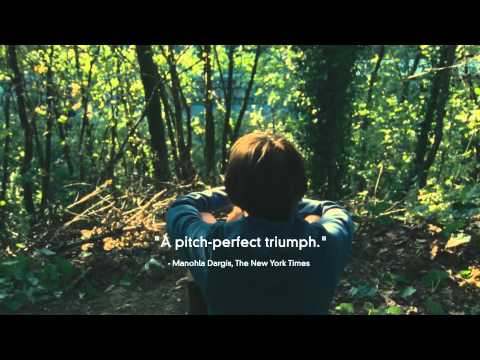
Wendy, a young woman of limited means, is driving to Alaska with her dog, Lucy, in hopes of finding work. When her car breaks down in a small Oregon town and Lucy goes missing, her precarious existence unravels, revealing the razor-thin line between getting by and being utterly destitute.
This is a devastatingly quiet portrait of economic alienation. Kelly Reichardt‘s film shows how social systems are designed to fail those on the margins. Wendy’s situation is a cascade of small misfortunes that become insurmountable without a safety net. Her isolation is amplified by the indifference of a society that views her poverty as a personal failing. The film is a powerful statement on the “inadequacies baked into our country” and the profound loneliness of being invisible in a world that equates value with wealth.
The Lost Poet
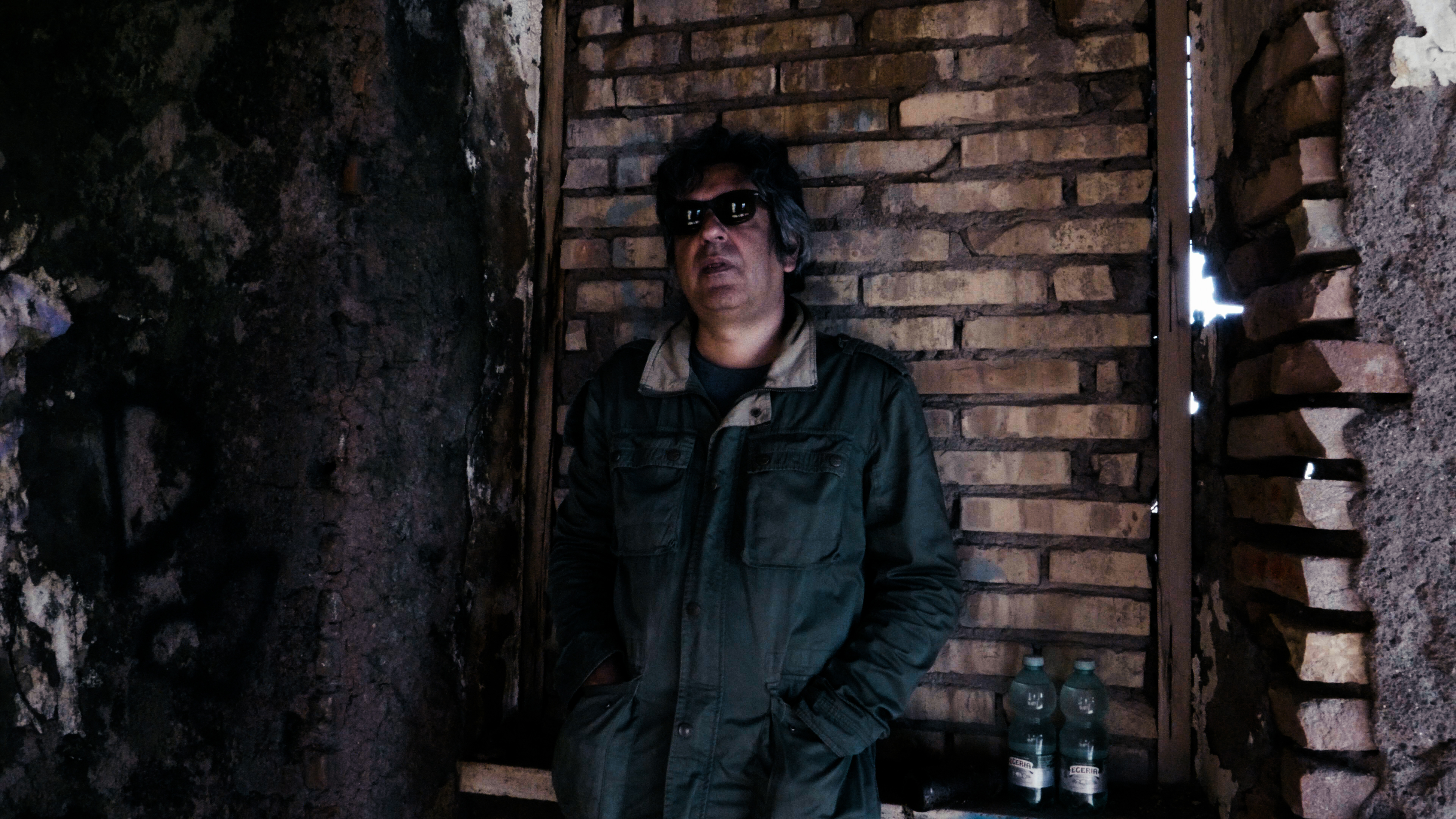
Drama, by Fabio Del Greco, Italy, 2024.
Dante Mezzadri wants to see an old friend, nicknamed the Iguana, whom he has lost sight of for many years, and who has managed to turn their shared youthful passion for poetry into a job, becoming a famous writer and poet. The man escapes from his bourgeois life and his wife to live homeless on the Roman coast, printing and trying to sell his poetry collections. At night he sleeps in a park of old carnival floats, inside a papier-mâché tank, and waits for the opportunity to meet his old friend, who however never shows up for appointments in the places they frequented when they were young, now in ruins. Dante's poetry books do not interest anyone and to support himself he is forced to "change product": he starts selling the infamous "cannibal pill" on behalf of young drug dealers, a new drug that sells like hot cakes and causes sensory and consumerist ecstasy. However, he realizes that this powerful drug is very dangerous for those who take it, he comes into conflict with his ethical conscience and throws all the pills into the sea. However, the dealers want to collect their money.
Shot over a period of 2 years, the film is a reflection on the cultural and artistic rubble of the society in which the protagonist lives, in an increasingly mechanized, consumerist and arid world. Dante Mezzadri is yet another human being who has renounced his inspiration and his creativity, but unlike many he is not willing to give his life to a system that distances him from his true identity. The physical world around him, however, seems constructed in such a way that it seems impossible to escape from this "invisible cage". The enthusiasm of the people he meets is ignited only by sensory gratification, by unreal visions of personal affirmation and success, by "metaverses" that offer an escape into an illusory and destructive reality. The poet's house on the coast, where he met with his friends as a young man, is just a pile of abandoned rubble. What happened to all those who wanted to become poets and ended up becoming something else? Are there internal forces with which that house can be "rebuilt"?
LANGUAGE: Italian
SUBTITLES: English, Spanish, French, German, Portuguese
Fish Tank (2009)

Mia, a volatile and isolated 15-year-old living on an Essex council estate, has her life upended by the arrival of her mother’s charismatic new boyfriend, Connor. He briefly offers her the attention and encouragement she craves, but this glimmer of hope leads to a devastating betrayal that deepens her sense of entrapment.
The film’s title is a powerful metaphor for Mia’s condition: trapped in the “small space” of her environment, a world of “aspirational paralysis.” Her alienation stems from neglect and a lack of opportunity. Connor represents a potential escape, but ultimately only reinforces her powerlessness. Andrea Arnold‘s kinetic, handheld camera imprisons us in Mia’s perspective, making us feel her rage and vulnerability. The film is a raw, empathetic look at how class and environment can circumscribe a young person’s world, making her an exile in her own life.
Lilya 4-ever (2002)

After being abandoned by her mother in an impoverished town in the former Soviet Union, 16-year-old Lilya is forced into prostitution to survive. A charming young man offers her the promise of a better life in Sweden, but this dream turns into a nightmare of sexual slavery, stripping her of the last vestiges of hope and humanity.
This film is a brutal depiction of alienation in its most extreme form: the complete dehumanization of an individual by global, neoliberal forces. Lilya is alienated from her family, her country, her body, and finally, her will to live. Lukas Moodysson contrasts the grim social realism of her plight with fleeting moments of fantasy (imagining herself and her friend as angels), highlighting the unbearable reality she is trying to escape. The film is a powerful protest against a world where the vulnerable are treated as disposable commodities, their suffering invisible to the prosperous societies that exploit them.
The Embalmer (L’imbalsamatore) (2002)

Peppino, a diminutive Neapolitan taxidermist with underworld connections, hires a handsome young man, Valerio, as his apprentice. An intense and ambiguous relationship develops between them, a mix of paternal affection and possessive desire, which is threatened when Valerio falls for a young woman, leading to a tragic conclusion.
Matteo Garrone explores the alienation of those who live on the physical and moral margins of society. Peppino’s work—preserving the dead—is a metaphor for his own stalled emotional state. His fascination with Valerio is a desperate attempt at connection, but it becomes a suffocating cage. The film is a “compelling mixture of unfulfilled dreams, denied love and frustrated desires,” set against the backdrop of Italy’s “modern urban follies.” It is a dark fable about how the marginalized prey on each other, and how the desire for love can become a destructive and alienating force.
The Turin Horse (A torinói ló) (2011)

Over the course of six days, a farmer, his daughter, and their horse live out their stark, repetitive routine as an apocalyptic storm rages outside. Each day, their world shrinks and darkens, the horse refuses to move, the well runs dry, and the flame of their lamp is extinguished, signaling the end of everything.
This is perhaps the most profound cinematic depiction of existential anguish and cosmic alienation ever filmed. Shot in just 30 long, hypnotic black-and-white takes, the film reduces existence to its bare, brutal essentials. The characters’ repetitive actions are a “purposeless struggle for survival” in a world from which God and meaning have completely withdrawn. The film begins with the story of Nietzsche’s breakdown and asks what happened to the horse, suggesting we are witnessing the final death throes of a universe abandoned to entropy.
The Sands

Science fiction, by Noah Paganotto, Argentina, 2022.
In an undetermined location on planet Earth, in an unknown time, Zoilo lives with his family in a wasteland surrounded by ruins. They live uprooted, without mothers, knowing that pregnancy for women is synonymous with death. For them there is only one collective routine; keep the fire alive. Only Zoilo escapes this logic, observing, intrigued, details that others do not see and therefore do not appreciate. Zoilo's personal search for answers will increase the differences with his relatives, increasingly revealing an empty world of interiority.
Avant-garde film that burns slowly in the first part and then reveals in the second the profound conflicts of a family prisoner of archaic beliefs. It is a dystopian and visionary work, with wonderful photography and images of rare power that allow us to grasp the depth of the story and its poetic potential. The faces of the actors, especially the protagonist boy, are perfect. The Sands metaphorically represents the world we live in: an alienated society, where what keeps us alive is demonized and blamed for death. In opposition to the fast pace of the typical mainstream film, The Sands is a meditative journey into the depths of images. The film was shot in natural environments in the city of Necochea, Buenos Aires province, Argentina.
LANGUAGE: Spanish
SUBTITLES: English, Spanish, French, German, Portuguese
Taste of Cherry (Ta’m e Guilass) (1997)

A middle-aged man named Mr. Badii drives through the dusty hills outside Tehran, looking for someone to perform a simple task for a large sum of money: to bury him after he commits suicide. He offers the job to a Kurdish soldier, an Afghan seminarian, and an elderly Turkish taxidermist, each of whom responds differently to his existential plea.
Abbas Kiarostami‘s minimalist masterpiece is a profound meditation on the choice between life and death. Mr. Badii is completely alienated from his own will to live, yet his search forces him into intimate conversations about the very meaning of existence. The car becomes a confessional, a bubble of isolation moving through a vast, indifferent landscape. The film does not judge its protagonist but uses his journey to explore the “complexities of individual autonomy” and the simple, sensory things—like the taste of a cherry—that might tether a person to the world.
Code Unknown (Code inconnu) (2000)

A single thoughtless act on a Paris boulevard—a young man tossing a piece of paper at a beggar—triggers a chain of events connecting a diverse group of characters, including an actress, her war-photographer boyfriend, an undocumented immigrant, and a young man of African descent. The film unfolds in a series of long, single takes, showing fragments of their disconnected lives.
Michael Haneke‘s film is a brilliant and chilling diagnosis of alienation in a globalized, multicultural Europe. The “unknown code” of the title refers to the invisible social, racial, and economic barriers that prevent genuine communication and empathy. Each character is trapped in their own narrative, unable to understand the perspectives of others. The film’s fragmented structure and long takes force the viewer to experience this “miscommunication” and social breakdown, suggesting that modern urban life is a series of missed encounters and failed connections.
Jeanne Dielman, 23, quai du Commerce, 1080 Bruxelles (1975)

Over three days, the film meticulously observes a widowed housewife’s rigid daily routine: she cooks, cleans, cares for her son, and receives male clients for afternoon sex to make ends meet. When a small disruption occurs in her routine, her carefully constructed world begins to violently unravel.
Chantal Akerman uses long, static takes and a focus on domestic ritual to create a powerful portrait of female alienation. The viewer is forced to inhabit Jeanne’s repetitive, oppressive existence, feeling the “quiet anxiety” and “mundane and frustrating reality” of her life. Her routine is a defense mechanism against grief and emptiness, but it is also her prison. The film is a radical statement on the invisible, unpaid labor of women and how the suppression of desire within a patriarchal structure can lead to an explosive break from an alienated existence.
Synecdoche, New York (2008)
![Synecdoche, New York | Original Trailer [HD] | Coolidge Corner Theatre](https://blog.indiecinema.co/wp-content/plugins/wp-youtube-lyte/lyteCache.php?origThumbUrl=https%3A%2F%2Fi.ytimg.com%2Fvi%2Fibs46Kjg5sc%2F0.jpg)
A hypochondriac theater director, Caden Cotard, receives a MacArthur grant and decides to create a work of uncompromising realism. He builds a life-size replica of New York in a warehouse and populates it with actors playing himself and the people in his life. As the years pass, the project spirals out of control, blurring the lines between art and reality, and Caden becomes lost in the labyrinth of his own creation.
This is a film about artistic and solipsistic alienation. Caden’s attempt to perfectly capture reality only serves to distance him further from it. He becomes a spectator to his own life, alienated from genuine emotion by his obsessive need to replicate it. The film is a heartbreaking exploration of the fear of death, the impossibility of true self-knowledge, and the paradox that art, the ultimate tool for connection, can become the ultimate form of isolation. Caden’s failure suggests we live in two worlds: the one we share, and the one in our heads from which we can never fully escape or represent.
Anomalisa (2015)

Michael Stone, a customer service expert, travels to Cincinnati for a conference. He is crushingly lonely, perceiving everyone in the world—including his wife and son—as having the same face and the same monotonous voice. His world is upended when he meets Lisa, a woman with a unique voice and face, an “anomaly” who offers a fleeting chance at connection.
Anomalisa uses stop-motion animation to create a brilliant visual metaphor for depression and solipsistic alienation. Michael’s condition is a “chronic state of self-absorption that disables a person from creating new emotional bonds.” The film explores the desperate human desire for a unique connection in a world that feels monotonous and pre-packaged. The film’s tragedy is that Michael’s self-pity and narcissism make it impossible for him to sustain this connection, revealing that his alienation is not an external condition but an internal one, from which he cannot escape.
Mystery of an Employee

Drama, thriller, by Fabio Del Greco, Italy, 2019.
Someone wants to control the life of the employee Giuseppe Russo: the products he buys, his political and religious faith, his private life, even his dreams. But he will do anything to escape control and find his true self. Giuseppe is a man of around 45, married, with a stable job and a home of his own. His life flows seemingly peacefully when he meets a mysterious tramp who gives him some old VHS video cassettes. Giuseppe begins to see video tapes in which he is filmed in some moments of his life since he was a child, then as a teenager and as a young man. Who shot those videos that he remembers nothing about? Giuseppe has the strange sensation of being constantly observed and begins to investigate what is happening. Through his investigation of him, he begins to rediscover his true identity and become aware of who he truly is.
Employee's Mystery is a film that highlights the danger of social control and shows a society where everyone is constantly monitored and conditioned in their deepest selves. The film is also an analysis of human nature and identity. Fabio Del Greco, who plays Giuseppe, gives an engaging performance. Equally good is Chiara Pavoni, in the role of Giada Rubin and Roberto Pensa in the role of the tramp. Employee's Mystery is a film that addresses important themes in an original way, a psychological thriller that keeps the viewer glued to the screen until the end: a metaphor for contemporary society, in which people are increasingly monitored and conditioned by the media and technologies . It is a courageous and provocative work, which addresses important themes in an original way.
LANGUAGE: Italian
SUBTITLES: English, Spanish, French, German, Portuguese
Computer Chess (2013)

Set in the early 1980s, the film follows a weekend tournament where nerdy computer programmers pit their chess software against each other. Amidst the technical jargon and social awkwardness, the programmers encounter a strange group of swingers sharing their motel, and their logical world begins to glitch and break down in surreal ways.
Andrew Bujalski uses the “mumblecore” aesthetic of awkward dialogue and naturalistic acting to explore the alienation of a specific subculture on the verge of the digital revolution. The programmers are socially inept, more comfortable with code than with people. The film’s deliberately “ugly analog video cinematography” immerses us in their drab, hermetic world. The intrusion of the encounter group and other surreal elements suggests a clash between cold logic and messy humanity, a commentary on the strange and unpredictable future these men are unknowingly building.
Oslo, August 31st (2011)

Anders, a recovering drug addict, gets a 24-hour leave from his rural rehab center for a job interview in Oslo. Over the course of the day and night, he wanders the city, reconnecting with old friends and family, but finds himself unable to bridge the gap between his past self and a potential future, feeling profoundly disconnected from a world that has moved on without him.
This is a profoundly melancholic and moving study of social and personal alienation. Anders is an “outsider on the inside”; he can see the life he is supposed to want, but he feels an insurmountable distance from it. The film beautifully captures the specific pain of returning to a place that is no longer yours. Every interaction is tinged with the ghost of what he has lost, making connection an impossible feat. It is a powerful portrait of how addiction and depression can alienate a person not just from others, but from their own sense of possibility.
The Lobster (2015)

In a dystopian near-future, single people are sent to a hotel where they have 45 days to find a partner. If they fail, they are turned into an animal of their choice and released into the woods. One man’s desperate attempt to find a partner reveals the absurd and brutal logic of this society.
The Lobster is a brilliant satire of the social pressure to couple up. It takes our real-world “relationship stigma” and pushes it to a terrifying, literal extreme, where being single is not just a social failing but a crime against nature. The film explores how this pressure alienates individuals from their true selves, forcing them to feign compatibility and suppress their own desires to conform. The alternative—a dissident group of “Loners” who forbid relationships—is just as tyrannical, suggesting that alienation can stem from any rigid system that denies human complexity.
Buffalo '66 (1998)
![Buffalo '66 (1998) - Theatrical trailer [VHS 720p60]](https://blog.indiecinema.co/wp-content/plugins/wp-youtube-lyte/lyteCache.php?origThumbUrl=https%3A%2F%2Fi.ytimg.com%2Fvi%2FnFrHj0f6ayQ%2F0.jpg)
After five years in prison, the emotionally volatile Billy Brown kidnaps a young tap dancer named Layla and forces her to pose as his wife to impress his neglectful, football-obsessed parents. Over the course of a strange day, a dysfunctional but genuine bond forms between the two lonely outcasts.
This film is a raw analysis of alienation born from childhood trauma. Billy is so profoundly damaged by his “loveless home” that he is alienated from his own emotions, able to express himself only through anger and a clumsy bravado. He craves intimacy but repels it (“Don’t touch me!”), a perfect representation of the traumatized individual’s paradox. The film’s raw, overexposed visual style reflects the cold, unforgiving world of his memory. Layla’s unconditional acceptance offers a way out of his self-imposed prison, suggesting that connection, however strange its origin, is the only antidote to a life of alienation.
Safe (1995)

Carol White, a wealthy and passive suburban housewife in the San Fernando Valley, develops a mysterious illness. She becomes allergic to her modern environment, suffering debilitating reactions to everyday chemicals. Her search for a cure leads her to a New Age desert retreat that promises salvation but may only offer a more insidious form of isolation.
Carol’s illness is a powerful metaphor for a deeper existential malaise. She is alienated from her own body, which has turned against her, and from her sterile, unfulfilling environment. Todd Haynes uses wide, measured shots to emphasize her smallness and isolation within her own home. The film critiques a passive society that cannot name its own sickness, whether it be environmental toxicity or spiritual emptiness. The New Age retreat, rather than a cure, represents a surrender, an alienation from critical thought itself, leaving Carol “safe” but more profoundly alone than ever.
Paris, Texas (1984)

Travis Henderson, a man who has been missing for four years, emerges from the desert, mute and amnesiac. He is reunited with his brother and, eventually, his young son. Together, they embark on a journey to find Travis’s estranged wife, Jane, forcing him to confront the painful memories that led to his family’s dissolution and his own profound self-alienation.
This is a film about being alienated from one’s own memory and identity. The vast, empty landscapes of the American West are a direct reflection of Travis’s inner state: a void he created to escape unbearable pain. The film explores how we construct our identities through stories and memories, and what happens when those foundations crumble. The iconic scene where Travis and Jane speak through a one-way mirror is the ultimate visual metaphor for their alienation: physically close but emotionally separated by a barrier of guilt and regret.
Last Days (2005)

A fictionalized account of the final days of a rock musician named Blake, loosely based on Kurt Cobain. He wanders his dilapidated mansion in a drug-induced haze, mumbling incoherently, avoiding the hangers-on and industry insiders who want something from him, as he drifts inexorably toward his end.
Gus Van Sant‘s film is a haunting portrait of the alienation of fame. Blake is not just isolated; he is a ghost in his own life, completely disconnected from the world that idolizes him. The film’s “slow cinema” approach, with its long, meditative shots and lack of dialogue, immerses the viewer in Blake’s subjective experience, where time and reality are unraveling. It is a film about the “banality and silence amidst the noise,” suggesting that the ultimate alienation is to be surrounded by people yet be completely, existentially, alone.
Ratcatcher (1999)

During a garbage strike in 1970s Glasgow, 12-year-old James lives in a grim tenement, haunted by guilt over the accidental death of a friend. He finds fleeting moments of escape and connection with an eccentric, animal-obsessed boy and a lonely older girl, but remains trapped by his secret and the squalor of his surroundings.
Ratcatcher masterfully captures the alienation of childhood poverty. James is alienated by guilt, which isolates him from his family, and by his environment, a world of “rot and decay” symbolized by the stagnant canal and mountains of trash. Lynne Ramsay contrasts this grim reality with moments of lyrical surrealism (a mouse flying to the moon), representing the inner world of a child’s imagination as a fragile defense against a harsh reality. It is a film about a “marginalised community” and how poverty can steal childhood, leaving a young boy adrift and alone.
A vision curated by a filmmaker, not an algorithm
In this video I explain our vision

