
New Orleans is not a simple setting; it is a state of mind, a living character, a muse steeped in contradictions. Cinema has often used its exotic facade: a riot of jazz, Mardi Gras, and colonial architecture that has created a powerful and world-renowned imaginary.

But the true cinematic soul of the Crescent City is something much deeper and more complex. It is a humid purgatory for lost souls, a natural stage for Southern Gothic, a place where the veil between life and death is as thin as the fog on the bayou. It is a city whose identity resides in dualism: the celebration of life in the face of omnipresent decay, the cultural fusion born from historical trauma, and a spirituality hidden behind hedonism.
This is not a simple list, but a map for navigating the entire cinematic essence of New Orleans. It is a path that unites the most famous films with the most obscure independent productions. From black-and-white film noirs to documentaries pulsing with life, from horrors rooted in local folklore to post-Katrina dramas, here is an unfiltered look at the indomitable soul of America’s most unique city.
Down by Law
![DOWN BY LAW Official Trailer [1986]](https://blog.indiecinema.co/wp-content/plugins/wp-youtube-lyte/lyteCache.php?origThumbUrl=https%3A%2F%2Fi.ytimg.com%2Fvi%2FIeFU1PJ-APQ%2F0.jpg)
Three men randomly end up in the same New Orleans prison cell: an unemployed DJ, a small-time pimp, and an exuberant Italian tourist. The three, initially hostile, plan an unlikely escape that will lead them through the swampy lands of the Louisiana bayou. Their journey will test their precarious alliance, turning a misadventure into a bizarre fable about friendship and fate.
Written and directed by Jim Jarmusch, Down by Law is the quintessence of 1980s American independent cinema, a work that transforms New Orleans into a poetic and timeless limbo. Produced by independent entities like Black Snake, Inc. and Island Pictures, the film division of the Island Records label, the film is the visual equivalent of a Tom Waits song: grainy, melancholic, and pervaded by a sly, dark humor. Jarmusch deliberately discards the conventions of the prison genre; he is not interested in the mechanics of the escape, but in the interaction between his characters, lost souls who find a strange form of communion in misfortune.
Jarmusch’s New Orleans, immortalized by Robby Müller’s black-and-white cinematography, is a landscape of the soul. Müller’s slow tracking shots do not just capture the decaying Creole architecture or the desolation of the swamps, but paint an existential state. The city becomes a place where time has stood still, a perfect stage for these “losers” who, as described by critics of the era, have chosen their own condition. The character of Roberto, played by an irrepressible Roberto Benigni, with his notebook of American slang and his unwavering optimism, serves as a comic and thematic catalyst. His difficulty in communicating highlights the isolation of his cellmates, but his humanity becomes the bridge that unites them, a nod to the cultural and linguistic mix that defines New Orleans itself.
The Fugitive Kind

A mysterious drifter named Val Xavier, with a turbulent past and a snakeskin jacket, arrives in a small, oppressive Louisiana town. He finds work in a general store run by Lady Torrance, a middle-aged woman trapped in a loveless marriage with an elderly, ailing husband. Val’s arrival unleashes repressed passions and latent violence, bringing the community’s dark secrets to the surface.
Based on Tennessee Williams‘ play Orpheus Descending, The Fugitive Kind is a deep and torrid immersion into the heart of the Southern Gothic. Produced independently, thanks in part to Marlon Brando‘s Pennebaker Productions, and directed by the great Sidney Lumet, the film is a white-hot drama about frustrated passions and the brutality of a closed society. Although not explicitly set in New Orleans, its atmosphere captures the essence of rural Louisiana, a world of humid heat, decay, and barely suppressed racial and sexual tensions.
Brando, as Val, is an almost mythological force, a modern Orpheus descending into the hell of the Deep South. His snakeskin jacket is more than just a piece of clothing; it is a symbol of his wild and seductive nature, a disruptive element that threatens to bring down the fragile social order. Lumet transforms the small town’s claustrophobia into an open-air prison, where each character is chained to their past and their frustrations. The film is a masterpiece of atmosphere, a ruthless portrait of a South where desire and death are inextricably linked.

A Love Song for Bobby Long

After her mother’s death, the young and disillusioned Pursy Will returns to her childhood home in New Orleans, only to find it inhabited by two of her late mother’s friends: Bobby Long, an alcoholic former literature professor, and his protégé, Lawson Pines. Forced into cohabitation, the three form a dysfunctional family, as Pursy begins to uncover the buried secrets about her mother’s life and her own identity.
Directed by Shainee Gabel and distributed by the independent house Lionsgate, A Love Song for Bobby Long is a portrait steeped in melancholy and literary romanticism of a bohemian and decadent New Orleans. The film avoids tourist clichés to focus on an atmosphere of “noble rot,” where life is punctuated by alcohol, Carson McCullers quotes, and pain-soaked folk songs. The dilapidated house where the characters live becomes the film’s beating heart, a microcosm that holds memories, regrets, and the possibility of unexpected redemption.
New Orleans is depicted here as a refuge for lost causes, a place where fallen intellectuals and wounded souls can find a kind of community. John Travolta gives one of his most heartfelt performances as Bobby Long, a man whose erudition has been drowned in whiskey but not entirely extinguished. The film beautifully captures the city’s languor, its slow pace, and its ability to lull its inhabitants into a state of poetic inertia. It is a story about the family you choose and the discovery that, sometimes, the deepest roots are found in the most unexpected and ruined places.
Sonny

Sonny, a young man just discharged from the army, returns to his New Orleans home hoping to start a new life. However, he finds himself trapped by his past: his mother, Jewel, is a madam who expects him to resume his old “job” as a gigolo. As he struggles to break free from this sordid world, Sonny falls for Carol, a new prostitute working for his mother, and sees in her a possible way out.
Sonny is unique in the history of New Orleans cinema: it is the only directorial work of actor Nicolas Cage, produced by his own company, Saturn Films. Far from the lights of the French Quarter, the film is a raw and unvarnished exploration of the city’s soft underbelly, a world of prostitution and desperation where family ties are pathologically intertwined with vice. Cage adopts an “actor’s film” style, focusing intensely on the psychology of his characters and their inner turmoil.
James Franco, in the lead role, embodies a vulnerability that seems almost an homage to Cage’s own early roles. His performance is that of a trapped man, not only by circumstances but by a toxic maternal bond that defines his entire existence. New Orleans is not an atmospheric backdrop here, but a tangible and suffocating prison. The film offers no easy redemptions, but an honest and painful portrait of people struggling to find a way out of a seemingly pre-written destiny, in a city that can be both a refuge and a cage.
The Cincinnati Kid

In the Great Depression era, the young and ambitious poker player Eric Stoner, known as “The Cincinnati Kid,” arrives in New Orleans with a single goal: to challenge and defeat Lancey Howard, “The Man,” the undisputed champion of five-card stud. The city becomes the theater for a high-stakes psychological battle, where not just money, but honor and legend are on the line.
Although distributed by MGM, The Cincinnati Kid was born from an independent production involving Filmways and Steve McQueen’s Solar Productions, and its gritty, character-focused spirit sets it apart from typical studio products of the time. Directed by Norman Jewison, the film transforms New Orleans into a smoky, tension-filled arena, a place where ambition and honor clash on the green felt. The city is not just a background, but a cauldron of opportunity and danger.
The film captures a rare authenticity for its era, using local musicians like the Preservation Hall Jazz Band to enrich its soundtrack and atmosphere. The poker game between “The Kid” and “The Man” is much more than a simple card game; it is a generational duel, a struggle for supremacy that takes place in a world where psychological coolness matters more than the cards you hold. New Orleans is the perfect stage for this drama, a city that has always attracted gamblers, dreamers, and men willing to risk everything for a moment of glory.
A vision curated by a filmmaker, not an algorithm
In this video I explain our vision
Easy Rider
![Easy Rider | Original Trailer [HD] | Coolidge Corner Theatre](https://blog.indiecinema.co/wp-content/plugins/wp-youtube-lyte/lyteCache.php?origThumbUrl=https%3A%2F%2Fi.ytimg.com%2Fvi%2FIlfpTppsR0U%2F0.jpg)
Two bikers, Wyatt “Captain America” and Billy, cross the United States on their choppers after a major cocaine deal. Their goal is to reach New Orleans in time for Mardi Gras, the ultimate symbol of freedom and debauchery. Their journey takes them through the conservative and violent heart of the South, an experience that culminates in a disorienting psychedelic trip in a Crescent City cemetery.
Easy Rider is the manifesto of the American counterculture, a seminal road movie independently produced by Peter Fonda‘s Raybert Productions. In this film, New Orleans is not so much a setting as a mythical destination, a utopia of excess and liberation that serves as a vanishing point for the two protagonists. The city represents the promise of a world without rules, the pinnacle of the hippie dream of total abandon.
However, an analysis of the film reveals a darker vision. The journey through rural Louisiana, marked by violence and intolerance, starkly contrasts the brutality of the Deep South with the ideal of freedom that New Orleans represents. The famous LSD trip scene in St. Louis Cemetery No. 1 is the chaotic and fragmented climax of their quest. It is not a celebration of liberation, but a descent into darkness, an experience that foreshadows the tragic end of their journey and suggests that the American dream, even in its countercultural version, is an illusion destined to shatter.
Causeway

Lynsey, a U.S. Army soldier, is forced to return to her New Orleans home after suffering a traumatic brain injury in Afghanistan. As she struggles to readjust to a life she had tried to leave behind, she forms an unlikely friendship with James, a local mechanic who is also dealing with his own deep personal trauma. Together, the two navigate the difficult path of healing.
Produced by A24, the bastion of contemporary independent cinema, Causeway offers a vision of New Orleans that is radically different from what we are used to. Lila Neugebauer‘s film deliberately avoids the clichés of the party city, presenting instead a subdued and introspective portrait of a place of convalescence and silent pain. The languid atmosphere and oppressive summer humidity are not mere details, but become the physical manifestation of Lynsey’s slow and arduous recovery process.
The film uses its setting in a subtle and metaphorical way. The Lake Pontchartrain Causeway itself, the very long bridge that gives the film its title, becomes a powerful symbol of the uncertain and endless journey toward healing. This is a post-traumatic New Orleans, not only for its characters but perhaps for the city itself. It is a work that shows how independent cinema can find new stories to tell in such an iconic place, focusing on the invisible wounds rather than its celebrated exuberance.
Bad Lieutenant: Port of Call New Orleans

In a New Orleans devastated by Hurricane Katrina, police sergeant Terence McDonagh navigates the ruins of the city and his own life. Promoted to lieutenant for an act of heroism during the storm, McDonagh is tormented by chronic back pain, an addiction to painkillers and cocaine, and a professional ethic that is completely adrift. While investigating the massacre of an immigrant family, he sinks deeper and deeper into a vortex of corruption and hallucinations.
Directed by the German master Werner Herzog and financed by a consortium of independent producers, this film is not a remake of Abel Ferrara‘s film of the same name, but a completely autonomous and singular work. Herzog uses the post-Katrina landscape not as a mere backdrop, but as a moral and physical landscape in ruins, a wasteland of lawlessness that perfectly mirrors the inner chaos of its protagonist. Nicolas Cage‘s performance is legendary in its unhingedness, a total immersion into a character who has lost all moral compass.
The film is a hallucinatory fever, a dark dream tinged with absurd humor. New Orleans is unrecognizable, transformed into a theater of the absurd where logic is suspended. The famous scenes where McDonagh sees iguanas on a coffee table are not mere quirks, but the visual manifestation of the shared delirium between the detective and the city itself. Herzog is not interested in a realistic portrayal of the post-hurricane period, but in exploring the human soul under extreme conditions, finding in the post-apocalyptic New Orleans the ideal stage for his worldview.
Trouble the Water

The day before Hurricane Katrina hits, Kimberly Rivers Roberts, an aspiring rapper from the Ninth Ward, buys a video camera. With it, she documents firsthand the arrival of the storm, the breaking of the levees, and the desperate struggle for survival of herself, her husband Scott, and their neighbors, trapped in their homes as the waters rise. The film then follows their harrowing journey as “refugees” in their own country.
Nominated for an Oscar for Best Documentary and independently produced by Tia Lessin and Carl Deal, Trouble the Water is perhaps the most powerful and immediate document of the Katrina tragedy. Its strength lies in its bottom-up perspective, that of those who experienced the abandonment and chaos firsthand. Kimberly’s amateur footage is not just a historical testimony, but an act of citizen journalism that refutes the detached and often misleading narrative of the traditional media of the time.
The film is an indictment of government incompetence and institutional indifference, but it is above all a story of incredible human resilience. Kimberly’s anger and determination find an outlet in her music; her song “Hustle Struggle” becomes an anthem of defiance and hope for a community that is devastated but not defeated. Trouble the Water does not just show the destruction, but gives voice and dignity to those who were made invisible by the catastrophe.
Big Charity

For nearly 300 years, Charity Hospital was a New Orleans institution, the oldest continuously operating hospital in America and a landmark for healthcare for the poor. After Hurricane Katrina, despite being cleaned and declared structurally sound by the military, the hospital was permanently closed, leaving tens of thousands of citizens without access to adequate medical care. This documentary investigates the reasons behind this controversial decision.
Produced, directed, and edited by independent filmmaker Alexander Glustrom, Big Charity is a powerful and meticulous work of investigative journalism. Using previously unseen archival footage and interviews with doctors, nurses, and officials involved, the film dismantles the official version and reveals the political and economic agendas that led to the hospital’s closure. The documentary does not just tell the story of a building, but exposes one of the greatest injustices of the post-Katrina period.
“Big Charity” becomes the symbol of a systemic failure. Its closure was not an inevitable consequence of the storm, but a deliberate choice that had a devastating impact on the most vulnerable population of New Orleans. The film shows how the disaster was exploited as an “opportunity to realize an agenda,” redesigning the city’s healthcare system at the expense of its neediest citizens. It is a heartbreaking reminder of how decisions made in the halls of power can have life-or-death consequences for ordinary people.
The Whole Gritty City

In a New Orleans struggling with one of the highest murder rates in the nation, school marching bands offer a lifeline for many young people. This documentary follows three of these bands and their directors, men who are not just music teachers, but mentors, father figures, and community leaders. As they prepare their students for the Mardi Gras parades, they teach them discipline, teamwork, and, above all, how to survive.
Made by the independent production company Band Room Productions, The Whole Gritty City is a moving and powerful portrait of New Orleans’ cultural resilience in the post-Katrina era. The film goes beyond simple musical celebration to show how the tradition of marching bands has become a vital form of social intervention. For many of these kids, the band is not an extracurricular activity, but a family, a safe haven from the violence of the streets.
The documentary sensitively captures both the moments of musical triumph and the heartbreaking realities of its young protagonists’ daily lives. The band directors emerge as true heroes, men who use music to instill hope, pride, and a sense of belonging. In a city where the future can seem uncertain, the sound of a bass drum and a trumpet becomes a powerful affirmation of life, a rhythm that pushes the community to keep going against all odds.
Blue Bayou

Antonio LeBlanc, a Korean-American adopted as a child, lives a modest but happy life in rural Louisiana with his wife Kathy and stepdaughter Jessie. When an altercation with Jessie’s biological father, a police officer, leads to his arrest, Antonio discovers a bureaucratic loophole in his adoption process that makes him subject to deportation. Faced with the prospect of being torn from his family and sent to a country he doesn’t know, he begins a desperate legal battle.
Written and directed by independent film star Justin Chon, Blue Bayou is a heartbreaking drama that, while not directly related to Katrina, is deeply rooted in the socio-economic realities of contemporary Louisiana. Based on true stories of international adoptees who have faced deportation, the film uses the lush but unforgiving landscape of the bayou as a backdrop for a fierce critique of the flaws in the American immigration system.
Antonio’s struggle for his identity as an American, despite the system considering him a foreigner, resonates with the history of a region that has always hosted diverse cultures, often on the margins of mainstream society. The film’s cinematography captures the melancholic beauty of the Louisiana landscape, a beauty that contrasts with the brutality of Antonio’s situation. It is a powerful tale about the definition of family, belonging, and the meaning of “home” when the country you consider your own threatens to expel you.
Angel Heart

In 1955, Brooklyn private investigator Harry Angel is hired by an enigmatic and wealthy client, Louis Cyphre, to track down a missing singer named Johnny Favorite. The investigation takes Angel from the streets of New York to the humid, sinful heart of New Orleans. Here, every person he questions ends up brutally murdered, and Angel finds himself entangled in a dark world of voodoo rituals, deadly secrets, and a horror that concerns him much more closely than he can imagine.
Directed by Alan Parker and independently financed by Carolco Pictures, Angel Heart is a seminal work of neo-noir that masterfully blends the detective genre with Southern Gothic horror. Although starring major stars, its controversial nature, oppressive atmosphere, and shocking ending place it firmly outside Hollywood conventions. Parker deliberately chose to move much of the story to New Orleans, sensing that the allusions to voodoo and the occult in the original novel would find their natural habitat in the city.
New Orleans is portrayed as an infernal labyrinth, a place of sweat, sin, and black magic. Angel’s investigation is not just the search for a missing man, but a literal descent into his own damned soul. Unlike many films that use voodoo as a mere element of exotic color, Angel Heart treats it as a powerful, primordial, and terrifying force. The city itself becomes a character, a seductive and deadly entity that draws Angel toward his inevitable and terrifying fate.
Eve's Bayou

In the summer of 1962, ten-year-old Eve Batiste lives with her prosperous Creole family in a lush Louisiana locale. Her father is a respected and charming doctor, but his infidelities cast a shadow over the family. After witnessing one of her father’s betrayals, Eve begins to question the adult world, finding comfort and guidance in her aunt Mozelle, a psychic, and discovering that she too possesses the gift of “the sight.
The debut feature from writer-director Kasi Lemmons, Eve’s Bayou is a milestone of American independent cinema and a masterpiece of Southern Gothic. Produced outside the studio system, the film offers a rare and precious look into the life of a bourgeois Black family, a world far from the stereotypes often perpetuated by Hollywood. Lemmons, drawing on elements of her own personal history, creates a universe rich with memory, magic, and family secrets.
The setting in the Louisiana bayou is fundamental. The humid, dense, and mysterious landscape becomes a mirror of the intricate web of emotions and lies that envelops the Batiste family. “The sight,” the psychic gift shared by Eve and her aunt, is represented as a form of female power, a way to perceive the truths that the family’s patriarchal structure tries to hide or deny. With its “emotional photography” and poetic narrative, Eve’s Bayou is a work of art that explores the complexity of childhood memory and the moment when innocence gives way to a painful awareness.
Beasts of the Southern Wild
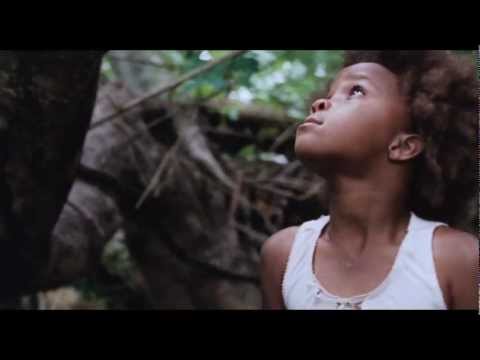
Hushpuppy, a brave six-year-old girl, lives with her ailing father in an isolated and rebellious community in the Louisiana bayou called “the Bathtub.” When a violent storm floods their home and her father falls gravely ill, Hushpuppy’s world begins to crumble. At the same time, from the melting ice caps, prehistoric creatures called aurochs awaken and begin to march toward her.
Born from the independent collective Court 13 and directed by Benh Zeitlin, Beasts of the Southern Wild is an explosion of magical realism, a modern fable about survival and resilience. The internationally acclaimed film uses fantasy to tell a story deeply rooted in contemporary fears: climate change, poverty, and social marginalization. The “Bathtub” is a microcosm of cultural resistance, a community that refuses to be erased by the forces of nature and “civilization.”
The aurochs are a powerful and multifaceted symbol. They represent Hushpuppy’s childhood fears, the natural forces unleashed by a world in ecological crisis, but also a connection to a primordial and wild past. Hushpuppy’s final confrontation with these creatures is not a battle, but an act of recognition and acceptance. The film is a celebration of the human spirit, of the ability to find beauty and strength even in the most desperate circumstances, and a powerful warning about the fragility of our ecosystem.
Southern Comfort

In 1973, a squad of Louisiana National Guard reservists ventures into the bayou swamps for a routine training exercise. After an arrogant gesture toward some local Cajun hunters, the soldiers find themselves hunted in a hostile territory they do not know. With limited ammunition and growing paranoia, what was supposed to be a weekend maneuver turns into a desperate and brutal fight for survival.
Directed by Walter Hill and produced independently, Southern Comfort is a tense and relentless survival thriller, but it is also a powerful allegory for the Vietnam War. The Louisiana bayou becomes an unforgiving foreign jungle, a labyrinth of water and mud where the “invading” soldiers, with their arrogance and ignorance of the local culture, are completely at the mercy of an invisible and territory-savvy enemy.
Hill uses the claustrophobic and disorienting environment of the swamp to create almost unbearable tension. The landscape is not just a backdrop, but the film’s true antagonist. The Cajuns, mostly seen as fleeting shadows, represent a force of nature, defenders of their land against an unjustified intrusion. The film is a ruthless analysis of the predator-prey dynamic and a chilling commentary on how a conflict can arise from a simple cultural misunderstanding and degenerate into primordial violence.
Hatchet

A group of tourists, seeking thrills during Mardi Gras in New Orleans, takes a “haunted” tour in the Louisiana swamps. When their boat sinks, they find themselves stranded in a wild and isolated territory. Soon, they discover that the local legends are all too real: they are being hunted by Victor Crowley, the deformed and vengeful ghost of a man killed years before, who slaughters anyone who dares to enter his swamp.
Written and directed by Adam Green, Hatchet is a love letter to 1980s American slasher cinema, produced with a fiercely independent spirit. Far from glossy remakes and psychological horror, the film is a return to the genre’s origins: explicit gore, black humor, and an iconic, unstoppable monster. Green uses the folklore and atmosphere of the Louisiana bayou to create a new and memorable boogeyman for the 21st century.
What sets Hatchet apart is its joyful celebration of the genre’s excesses. The film is aware of its clichés and plays with them intelligently, but never descends into parody. Its commitment to practical special effects, with an abundance of handcrafted blood and dismemberment, has earned it a cult following among horror fans. Hatchet shows how independent cinema can revitalize a genre by returning to its most visceral and entertaining roots.
Jessabelle

After a tragic car accident leaves her paralyzed and widowed, Jessie is forced to return to her childhood home, an isolated estate in the Louisiana swamps, to be cared for by her father. There, she discovers a mysterious collection of videotapes recorded by her long-dead mother. The tapes, intended for her, reveal a dark secret linked to an entity named Jessabelle and voodoo practices that threaten her life and her sanity.
Produced by Blumhouse, the production company that redefined modern independent horror, and distributed by Lionsgate, Jessabelle is an immersion into Southern Gothic that mixes the classic ghost story with the specific folklore of Louisiana. The film uses the found-videotape device to build a compelling mystery, slowly unveiling a story of past sins, betrayals, and black magic.
The bayou setting is crucial to the film’s atmosphere. The swamp is not just a place of physical isolation, but also a symbolic space where secrets are buried in the mud and restless spirits find no peace. Jessabelle draws on the rich tradition of voodoo not as a simple scary element, but as an integral part of a family tragedy that spans generations. It is an atmospheric horror that shows how the deepest fears are often linked to what we do not know about our own past.
Mona Lisa and the Blood Moon

Mona Lisa, a young woman with mysterious and dangerous telekinetic powers, escapes from a Louisiana mental institution. She finds herself wandering the chaotic and nocturnal streets of New Orleans, a world as strange and unpredictable as she is. She befriends a stripper named Bonnie, who tries to exploit her powers for easy money. Pursued by a determined cop, Mona Lisa must navigate this urban jungle in search of her own freedom.
Directed by the visionary independent filmmaker Ana Lily Amirpour, Mona Lisa and the Blood Moon is a fantasy-thriller fable steeped in the neon lights and grime of the French Quarter. The film transforms New Orleans into a surreal stage, a place where the absurd is the norm and a girl with superpowers can almost go unnoticed. The city’s pulsating energy, its pounding music, and its population of misfits and eccentrics provide the perfect backdrop for this story.
Amirpour creates a kind of punk-rock fairy tale, celebrating the outsider and the marginalized. Mona Lisa is not a conventional superhero, but an anti-hero who uses her powers to survive in a “chaotic society.” The film is an explosion of style, color, and sound, an urban adventure that captures the hedonistic and anarchic essence of New Orleans. It is a work that reimagines the city as a psychedelic playground for those who don’t fit in anywhere else.
Albino Alligator

After a botched robbery, three small-time criminals take refuge in a basement bar in New Orleans, taking the few patrons and staff hostage. As the police surround the building, tension inside the bar mounts, fueled by paranoia, injuries, and the secrets each character is hiding. The situation is further complicated when it is discovered that the police outside may not be there for them.
Albino Alligator marks the directorial debut of actor Kevin Spacey and is a claustrophobic thriller produced under the aegis of Miramax, at the time a beacon of independent cinema. Although the action is almost entirely confined to a single setting, the film is steeped in the noir atmosphere of New Orleans. The bar, named “Dino’s Last Chance,” becomes a microcosm of the city itself: a place of desperation, secrets, and characters on the edge.
The film’s play-like structure allows it to focus on the psychology of the characters and the mounting tension. The title, which refers to an anecdote told in the film about how alligators sacrifice an albino among them to survive, becomes a powerful metaphor. Each character, whether captor or hostage, is forced to make extreme moral choices to save themselves, revealing their true nature in a no-win situation. It is a tense chamber drama that captures the darkest and most desperate essence of the city.
The Call of Cthulhu

A man, examining the papers left by his late grand-uncle, discovers an investigation into a worldwide cult that worships an ancient and malevolent cosmic entity called Cthulhu. His research leads him to uncover tales of madness, disturbing art, and an ill-fated expedition. A crucial part of the investigation concerns the discovery of a sinister cult in the swamps of Louisiana, where unspeakable rites are practiced in honor of the sleeping deity.
Produced by the H.P. Lovecraft Historical Society, this film is a unique and brilliant independent endeavor: an adaptation of Lovecraft’s famous story made in the style of a 1920s silent film. Using a technique they call “Mythoscope,” the filmmakers blend period aesthetics with modern technology to create a work that looks like a lost artifact from another era. This stylistic choice proves perfect for capturing the unspeakable horror and creeping madness of Lovecraft’s prose.
The section set in the Louisiana swamps is fundamental to the film’s atmosphere. The bayou is transformed into a place of primordial and cosmic horror, a gateway to ancient evils that predate humanity itself. Far from any commercial logic, The Call of Cthulhu is a triumph of low-budget creativity and a testament to how independent cinema can tackle narrative challenges considered “impossible,” creating something truly original and faithful to the spirit of its source.
Always for Pleasure

This documentary is a total and joyous immersion into the street traditions of New Orleans. Without narration or formal interviews, the film captures the vibrant energy of jazz funerals, second line parades, St. Patrick’s Day celebrations, and the rituals of the Mardi Gras Indians. It is a tapestry of music, dance, food, and community, with appearances by legends like Professor Longhair and Allen Toussaint.
Always for Pleasure is the work of legendary independent documentarian Les Blank, a filmmaker who dedicated his career to capturing American regional cultures with an immersive and celebratory approach. Produced by his Flower Films, this 1978 film is perhaps the purest cinematic expression of New Orleans’ joie de vivre. Blank does not observe from a distance; his camera is in the middle of the street, participating in the party, capturing the essence of the city from the inside out.
Blank’s style is ethnography with a soul. Rejecting the conventions of the explanatory documentary, he lets the images and sounds speak for themselves. The result is a sensory experience, a portrait that does not explain the culture of New Orleans, but makes the viewer live it. It is an invaluable historical document and a contagious ode to a city that transforms every aspect of life, even death, into an occasion for celebration.
Make It Funky!

This documentary is a complete and in-depth celebration of the musical history of New Orleans and its global influence. Through an epic live performance at the Saenger Theatre, which brings together icons like Allen Toussaint, Irma Thomas, The Neville Brothers, and many others, the film traces the origins of funk, rhythm and blues, and rock and roll, demonstrating how all roads of American music lead, in one way or another, to the Crescent City.
Independently produced by Michael Murphy Productions, Make It Funky! is more than just a concert film. It is a cultural “preservation document,” poignantly released shortly before Hurricane Katrina devastated the city. The film weaves live performances with interviews with artists and producers, and with rare archival footage, creating a rich and informative tapestry. It explains the city’s musical “gumbo,” a unique blend of African, Caribbean, European, and American influences.
To watch Make It Funky! today is to witness a vital testimony of a heritage that was at risk of being wiped out. It is a history lesson told in the universal language of music, a joyful affirmation of the importance of New Orleans as the cradle of modern popular culture. The film captures the essence of what makes the city’s music so irresistible: its rhythm, its soul, and its undeniable ability to make people move.
Bury the Hatchet

This documentary offers an intimate and in-depth look at one of New Orleans’ most fascinating and mysterious traditions: the Mardi Gras Indians. Following three “Big Chiefs” from different tribes over a period of five years, before and after Hurricane Katrina, the film explores the art, philosophy, and struggles of this unique culture. From their violent origins to today’s artistic competition, the film documents their fight for cultural survival.
Directed by independent documentarian Aaron Walker, Bury the Hatchet goes beyond the spectacular surface of the feathered costumes to reveal the heart of a community. The title is emblematic: “burying the hatchet” refers to the tribes’ historical transition from physical violence to a “battle” based on the beauty of their hand-sewn suits. However, the film shows that there are many hatchets to be buried: internal violence, police harassment, gentrification, and the constant threat of their tradition being forgotten.
The documentary is a longitudinal portrait that shows the resilience of this culture in the face of Katrina’s devastation. The Big Chiefs are not just artists, but community leaders, oral historians, and guardians of a tradition rooted in the history of slavery and resistance. Bury the Hatchet is an essential document that preserves and honors one of New Orleans’ most authentic and vibrant cultural expressions.
J’ai Été Au Bal / I Went to the Dance

This documentary is a complete and exuberant journey into the heart of the music of southwestern Louisiana. Co-directed by legendary independent documentarians Les Blank and Chris Strachwitz, the film traces the history of Cajun and Zydeco music, from their origins in rural French-speaking communities to their modern popularity. Through historical performances and interviews with pioneers like Dennis McGee, Clifton Chenier, and Queen Ida, the film tells the story of a people through their music.
J’ai Été Au Bal is a work of passionate and accessible ethnomusicology. Blank and Strachwitz do not just present the songs, but explore the cultural context from which they were born. The film connects the music to the history of the Acadian people, their expulsion from Canada, and their life in Louisiana. It beautifully explains the birth of Zydeco as a fusion of French music and African American blues, a sonic “gumbo” that reflects the cultural complexity of the region.
Like all of Les Blank’s works, the film is a celebration of life. It is filled with scenes of community dances, parties, and moments of pure musical joy. It is an indispensable document that captures the voices and stories of the musicians who created and defined these unique genres. J’ai Été Au Bal is not just a film about music; it is a film about how music can preserve a culture’s identity and tell its story of resilience and creativity.
Buckjumping

Taking the pulse of contemporary New Orleans, this documentary explores the city through its dancers and its diverse dance communities. From traditional second line parades and Mardi Gras Indians, to the energetic bounce music scene, to competitive high school dance troupes, the film shows how dance is a fundamental language for expressing the city’s identity, spirituality, and resilience.
Directed by independent documentarian Lily Keber, Buckjumping can be considered a spiritual successor to Les Blank’s Always for Pleasure. The film shows how street dance traditions have not only survived in the post-Katrina era but have evolved, continuing to be a vital form of community expression. Dance is presented not as mere entertainment, but as an act of “taking over the streets,” a way to commemorate the dead, forge bonds, and achieve a kind of spiritual transcendence.
The film captures the incredible diversity of the city’s dance forms, showing how each community has its own unique style and meaning. Buckjumping is a vibrant and dynamic portrait of a city that never stops moving, a testament to how rhythm and movement are intrinsic to the soul of New Orleans, a way to process pain, celebrate life, and affirm one’s existence.
Mossville: When Great Trees Fall

Mossville, Louisiana, is a community founded by former slaves and free people of color, a safe haven for generations of African American families. Today, that place has almost disappeared, swallowed by an industrial expansion of petrochemical plants that release toxic clouds. This documentary tells the story of Stacey Ryan, the last resident who refuses to abandon his family’s land, fighting a lonely battle against an industrial giant and the cancer that is consuming his body.
Directed by independent documentarian Alexander Glustrom, Mossville: When Great Trees Fall is a heartbreaking and necessary work of social and environmental justice journalism. The film exposes with devastating clarity the concept of “environmental racism,” showing how a historical and culturally significant community has been systematically sacrificed in the name of industrial profit. Stacey Ryan’s fight is not just for his home, but for his heritage, his health, and his very life.
The film is an indictment of a system that allows the destruction of entire communities in exchange for economic benefits for a few. Stacey’s resilience in the face of such an overwhelming force is both heroic and tragic. Mossville is a powerful reminder that the battles for land and the environment are intrinsically linked to the fight for racial justice and the preservation of history.
Schultze Gets the Blues

Schultze, a recently retired German salt miner, leads a monotonous and predictable life in his small village, punctuated by the polka music he plays on his accordion. One night, listening to the radio, he accidentally discovers the Zydeco music of Louisiana. This revelation ignites an unexpected passion in him, leading him on an unlikely pilgrimage to the American Deep South in search of the roots of that vibrant sound.
This charming German comedy-drama, directed by Michael Schorr, is a fish-out-of-water story that finds a deep and humorous connection between two seemingly opposite musical cultures. The film is a perfect example of how an outsider’s gaze can capture the essence of a place with freshness and affection. The film’s quiet, observational style perfectly matches its protagonist’s character and the relaxed pace of life in the bayou.
Schorr’s Louisiana is not a place of dark dramas or tensions, but a welcoming land full of human warmth. Schultze’s journey is a rediscovery of life, an adventure that leads him to find a new family and a spiritual home in the most unexpected place. The film is a celebration of music as a universal language, capable of overcoming geographical and cultural barriers and uniting people in a common celebration of life.
In the Electric Mist

Detective Dave Robicheaux of Iberia Parish investigates the brutal murder of a young woman. The case becomes intertwined with the discovery of a chained body in a swamp, a crime Robicheaux witnessed as a boy decades earlier. As he navigates local corruption and the secrets of the past, he is visited by the ghost of a Confederate general, who offers him cryptic advice.
This French-American co-production, directed by the great French filmmaker Bertrand Tavernier, is an adaptation of a James Lee Burke novel that transcends the crime genre. Tavernier’s European sensibility transforms the story into an atmospheric meditation on the relationship between past and present. There are two versions of the film, a “producer’s cut” for the American market and the director’s preferred cut, which is longer and more reflective, better embodying his vision.
The Louisiana landscape is filmed with a lush, misty beauty, a place where history is not dead but actively haunts the present. The supernatural element, the general’s ghost, is treated with a subtlety that brings it closer to magical realism than horror. Tommy Lee Jones gives a masterful performance as Robicheaux, a man tormented by his past and the violence of the world, but who continues to fight for a form of “common decency.” The film is a literary and philosophical noir, a work that uses mystery to explore the deep wounds of the Southern soul.
Happy Here and Now

Amelia arrives in New Orleans in search of her sister Muriel, who has mysteriously disappeared. Her investigation leads her to discover that Muriel was living a double life, much of which took place online, in a world of chat rooms, webcams, and virtual identities. With the help of an old family friend, Amelia delves into this digital labyrinth, searching for clues to her sister’s disappearance in a world where nothing is as it seems.
Directed by Michael Almereyda, a key author of American independent cinema, and distributed by IFC Films, Happy Here and Now is one of the most unique and prophetic portraits of New Orleans. Made at the dawn of the digital age, the film brilliantly contrasts the ancient and tangible landscape of the city—with its ghosts, masks, and mysteries—with the disembodied and virtual world of the Internet.
Almereyda explores themes such as identity, loneliness, and the nature of reality at a time when digital connections were beginning to replace human ones. New Orleans proves to be the perfect setting for this story: a city already accustomed to coexisting with invisible presences and multiple identities becomes the ideal stage for a tale about people who exist more as data than as flesh-and-blood beings. It is an experimental and reflective film that captured a crucial moment of transition, using America’s most mysterious city to question the future of our existence.
A vision curated by a filmmaker, not an algorithm
In this video I explain our vision

