
The Smell That Isn’t There Anymore
You catch it somewhere between the produce aisle and the exit — a particular combination of damp cardboard and something faintly floral, maybe a cheap fabric softener, and before your rational mind can intercept the signal you are already somewhere else entirely. Not remembering a place. Inside it. The linoleum floor of a house that no longer exists, the specific afternoon light of a year you cannot name, the physical sensation of being a person you stopped being without noticing. It lasts perhaps two seconds. Then the fluorescent lights reassert themselves, the shopping cart is in your hand again, and you are returned to the version of yourself that pays bills and checks its phone. But something has happened that your vocabulary is not quite equipped to describe, because the word “memory” is far too thin for it.

The common understanding of memory treats the past as a kind of warehouse. Events go in, they are stored on shelves, and when triggered they are retrieved and brought briefly into the present before being returned to their place. This is a model borrowed from technology — first from libraries, then from filing systems, then from computers — and it has the reassuring quality of making time feel manageable, sequential, contained. What happened is over there, in that room, behind that door. You can visit when you choose. You do not have to worry about it pressing through the floor while you are trying to buy vegetables.
Henri Bergson spent the better part of a decade dismantling that architecture. Matter and Memory, published in 1896, is among the most counterintuitive philosophical works of the nineteenth century — not because it is obscure, but because it insists on something the reader already knows in their body and has been trained by culture to disbelieve. Bergson’s argument is that the past is not stored anywhere. It is not archived, indexed, or filed. It survives in its entirety, continuously, pressing against the present moment from a dimension that is not spatial but durational. The past, he writes, preserves itself automatically. The difficulty is not how we keep it — the difficulty is how we manage to suppress most of it long enough to function.
This distinction is not semantic. It changes what the self actually is. If the past is fully preserved and continuously present beneath the surface of conscious experience, then the person who surfaced in you for two seconds in that grocery store was not a reconstruction. Was not a simulation. Was not a copy retrieved from storage. It was you, a layer of you that had never actually ended, breaking briefly through the membrane that ordinary perception maintains between what is useful now and everything else that has ever been true. The unsettling quality of involuntary memory — the kind Bergson was thinking through, the kind that arrives without permission — is precisely that it carries no nostalgia. Nostalgia is comfortable. Nostalgia is the past viewed from a safe distance, rendered aesthetic, tinged with a sweetness that confirms the separation between then and now. What happens in those two seconds with the fabric softener is not sweet. It is vertiginous. Because you are not looking at the past. The past is looking out through you.
Neuroscience, which inherited the warehouse model and improved upon it enormously, has in recent decades been producing findings that create friction with its own assumptions. Memory is reconstructive, not reproductive — this much is now established. Elizabeth Loftus demonstrated through decades of experimental work beginning in the 1970s that human memory does not replay events but rebuilds them, partially, using available materials, filling gaps with inference. False memories are not aberrations. They are evidence of how the system normally operates. But reconstruction and preservation are not mutually exclusive, and the existence of unreliable recall does not answer the more fundamental question Bergson was asking — which was never about accuracy, but about ontology. Not whether the past is remembered correctly, but whether it ever truly stops.
Days Blows by in a Moment

Documentary, by Cristiana Donghi, Italy, 2022.
Ancilla is 86 years old. Two years ago, she moved in with her daughter Emanuela at the pandemic's beginning. Ancilla is slowly losing her memory. He does not remember what she had for lunch, she only remembers events from the past, perhaps only because she has been repeating them for years. Emanuela takes care of her, day after day she wakes her up, prepares her food, washes her, dresses her, and accompanies her a couple of days a week to the hospice and does physiotherapy. This is one of the few contacts with the rest of the world she has left. Ancilla has another child, Mauro, who has been living in London since he left looking for a job. She hasn’t seen him for two years. Daily routines always repeat themselves and change only with the changing seasons. The mother's memories slowly introduce us to Ancilla, her past, the life she lived and that transported her here. Melancholy moments alternate with funny ones and those where patience reaches its limits. Ancilla's sympathy brings a light, fresh breeze into the lives of those around her and allows them to see everything in a way where even the most ominous clouds are blown away momentarily by a breath of wind.
LANGUAGE: Italian
SUBTITLES: English, Spanish, French, German, Portuguese
Bergson’s Radical Wager
You are sitting in a waiting room when a name is called — not yours — and for a fraction of a second your body rises anyway, muscles tensing, weight shifting forward, before you catch yourself. Nothing about that reaction was thought. The nervous system had already decided before the mind arrived to correct it. That small, embarrassing lurch is not a malfunction. It is the whole story.
Henri Bergson published Matter and Memory in 1896, and what he was doing with that book was not adding a new theory to an existing shelf of theories. He was dismantling the shelf. The dominant scientific consensus of the late nineteenth century had settled into a comfortable architecture: the brain receives information from the outside world, stores it, retrieves it, and produces from this accumulation something called experience. Memory, on this model, is a kind of physiological filing cabinet. The brain is a recording device, experience is the tape, and the self is whoever presses play. Bergson looked at this model and called it a fantasy — not because it was insufficiently materialist, but because it had misread the evidence entirely, and worse, had mistaken its own metaphor for a fact.
His argument begins not with consciousness but with images. The world, he proposes, is an infinite field of images acting and reacting upon one another according to fixed laws. This is not idealism — the images are real, material, independent of any observer. But among all these images, one is peculiar: the body. The body is the only image that is known from the inside as well as the outside, the only one that can be acted upon by will as well as by external force. This asymmetry is the hinge on which everything turns. Perception, Bergson insists, is not a representation of the world built up inside the skull. It is a selection from the world — a subtraction, not an addition. The nervous system does not generate an internal picture of reality; it carves out from an overwhelming totality only what matters for possible action. What you see is not everything that is there. It is everything that is there which is relevant to what your body might do next.
This is where Bergson’s provocation becomes genuinely radical, and genuinely uncomfortable. If perception is selection rather than representation, then the brain is not producing your experience of the world — it is narrowing it. The brain is a filter, not a factory. Consciousness, on this account, is not generated by neural tissue; it is constrained by it. Damage to the brain does not erase memories the way erasing a hard drive erases data. It disrupts the mechanism by which memories are made available to action. The archive, Bergson argues, persists. What breaks is the instrument of retrieval, not the thing retrieved. He points to the clinical literature on aphasia and apraxia already accumulating in his era — the strange, selective losses of function that follow brain injury — and shows that what gets destroyed in these cases is always the capacity to translate memory into gesture, into motor response, into utility. Pure recollection, he claims, survives the lesion. What dies is the bridge between remembering and doing.
The implication that follows from this is not mystical, even if it sounds that way at first. Bergson is not arguing for a soul hovering above the body. He is arguing that the categories used to map mental life onto physical processes have been borrowed from the wrong domain — from the logic of objects in space, from things that can be stored and retrieved and measured by their location. Time, and everything that lives inside time — memory, consciousness, duration — cannot be mapped that way without falsification. The moment you spatialize time, you kill it. What you have left is a corpse that looks exactly like the real thing and explains almost nothing.

What Neuroscience Missed for a Century
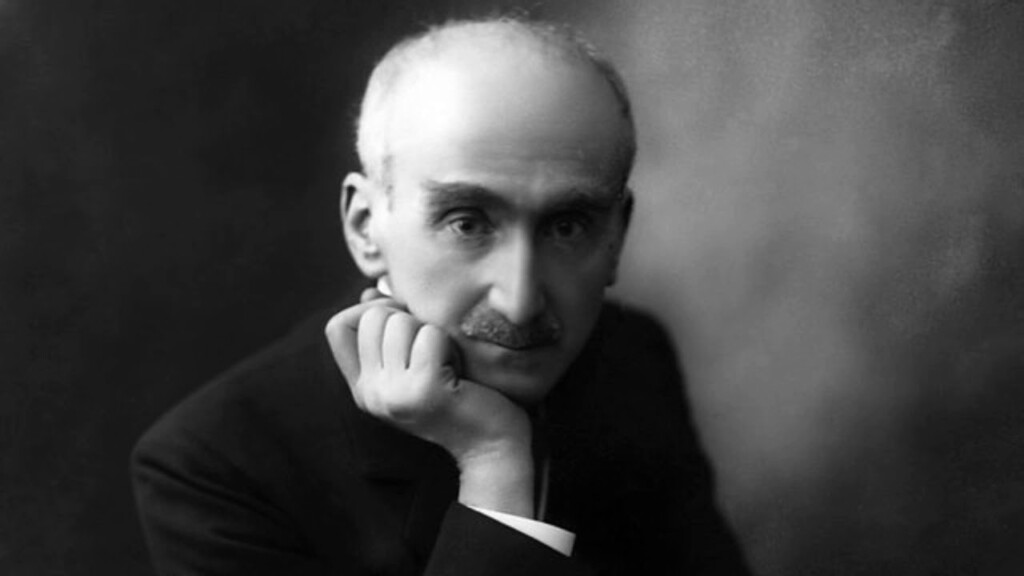
You are sitting in a consultation room in 1953, and the man across from you cannot remember you. Not because he is distracted or grieving or drunk — but because a surgeon removed his hippocampus nine months ago, bilaterally, to stop his seizures, and since that morning he has lived in a perpetual present that never accumulates. His name is Henry Molaison, though for decades science will know him only as H.M., a courtesy anonymity extended to a man whose interiority was effectively donated to neurology without his being able to consent to what that donation meant. Every researcher who enters the room is a stranger. Every room is the first room. The clinical notes describe this as a memory deficit. What they do not describe is what it costs a human being to exist without the thread that connects who you were to what you are doing right now.
The 20th century’s dominant cognitive science was built on a spatial metaphor so total it became invisible. Memory was located. It resided somewhere, in identifiable tissue, which meant that losing tissue was losing memory the way losing a hard drive loses files. Paul Broca in 1861 had pointed to a region of the left frontal lobe and announced that language lived there, in approximately forty-four square centimeters of cortex. Carl Wernicke followed in 1874 with his own coordinate. By mid-century the project had become an architectural one: map the brain, locate the functions, identify the rooms in the house. When Wilder Penfield electrically stimulated the temporal cortex of conscious patients in the 1940s and 50s and they reported vivid memories, it seemed like confirmation — press here, retrieve this, as though the past were a filing cabinet with a power supply.
What this model could not account for was what remained. Molaison could still ride a bicycle. He could learn new motor sequences, improve at mirror-drawing tasks day after day, even as he denied each morning ever having held the pencil. He retained procedural memory while losing episodic memory, and this distinction alone should have detonated the localization model from within — because if memory were simply stored data, you would not expect it to split this cleanly along the axis of the body’s relationship to action. You would not expect the organism to know how without knowing that. The split was not a failure of storage. It was a dissociation between two entirely different relationships to time: the time of habit, which lives in the body’s practiced response, and the time of recollection, which requires the mind to reach backward into duration and pull something forward into the present moment.
Bergson had drawn precisely this distinction in 1896 — fifty-seven years before the surgery that would make H.M. famous — in a text that the neuroscientific mainstream treated as philosophy and therefore as decoration. The error was not innocent. When Oliver Sacks wrote about his patients in the 1980s, his clinical humanity was genuine, but even he operated within a framework that read neurological damage as the loss of a self that had previously been whole and stored. The patient with Korsakov’s syndrome who confabulates wildly — inventing coherent narratives to fill the temporal gaps his brain can no longer bridge — was described as a man constructing a fictional self. But confabulation is not fiction. It is the organism’s refusal to exist without duration, its insistence on threading experience into narrative even when the biological substrate can no longer support the thread. It is what duration does when the machinery breaks: it improvises.
The damage done by reading these cases as hard-drive failures was not merely theoretical. It shaped clinical practice, insurance classifications, legal definitions of competence, and the particular cruelty with which late-stage dementia patients were managed in institutional settings — as though the absence of retrievable episodic content meant the absence of a person who could suffer the conditions of their own present tense.
Mystery of an Employee
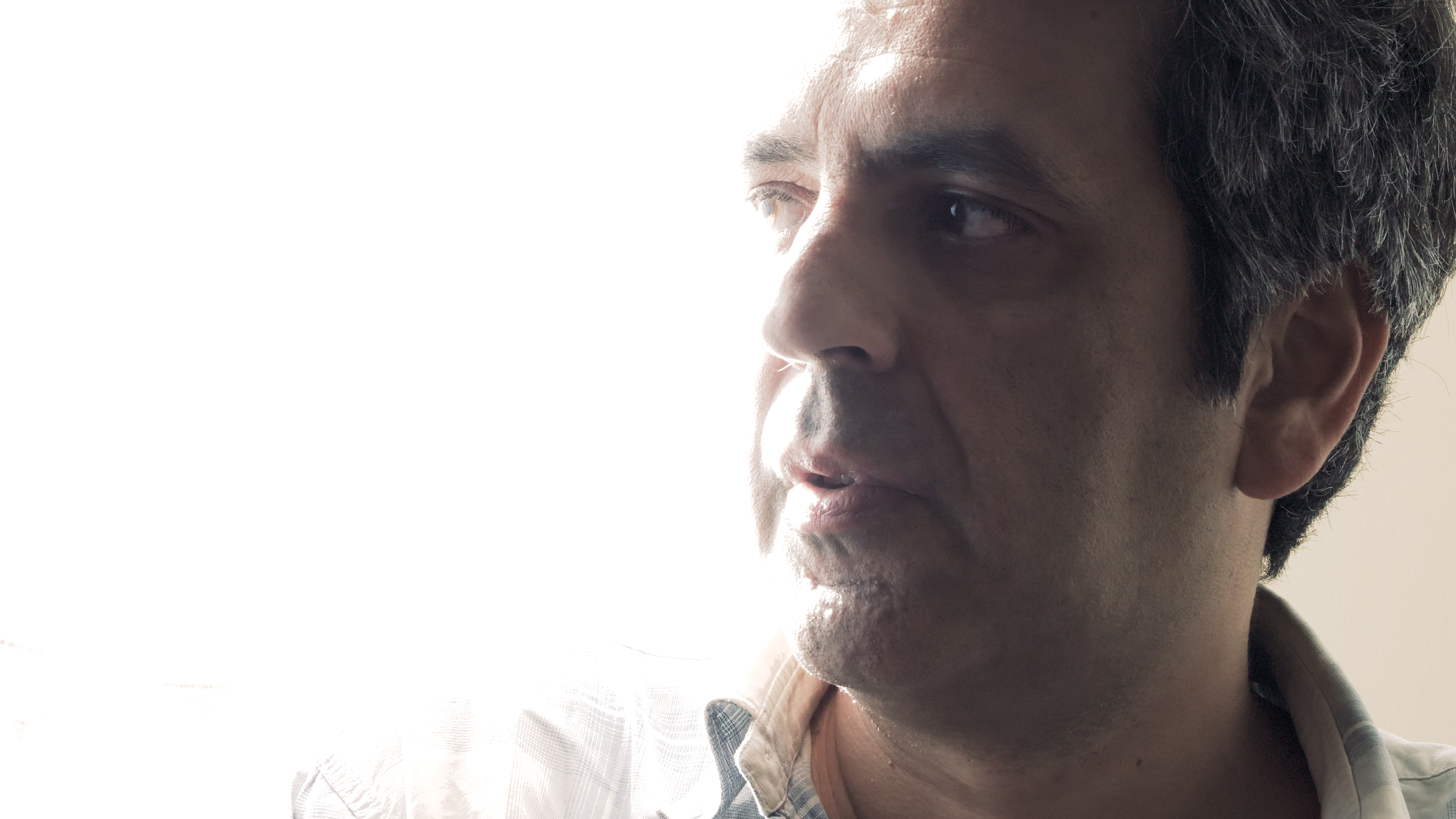
Drama, thriller, by Fabio Del Greco, Italy, 2019.
Someone wants to control the life of the employee Giuseppe Russo: the products he buys, his political and religious faith, his private life, even his dreams. But he will do anything to escape control and find his true self. Giuseppe is a man of around 45, married, with a stable job and a home of his own. His life flows seemingly peacefully when he meets a mysterious tramp who gives him some old VHS video cassettes. Giuseppe begins to see video tapes in which he is filmed in some moments of his life since he was a child, then as a teenager and as a young man. Who shot those videos that he remembers nothing about? Giuseppe has the strange sensation of being constantly observed and begins to investigate what is happening. Through his investigation of him, he begins to rediscover his true identity and become aware of who he truly is.
Employee's Mystery is a film that highlights the danger of social control and shows a society where everyone is constantly monitored and conditioned in their deepest selves. The film is also an analysis of human nature and identity. Fabio Del Greco, who plays Giuseppe, gives an engaging performance. Equally good is Chiara Pavoni, in the role of Giada Rubin and Roberto Pensa in the role of the tramp. Employee's Mystery is a film that addresses important themes in an original way, a psychological thriller that keeps the viewer glued to the screen until the end: a metaphor for contemporary society, in which people are increasingly monitored and conditioned by the media and technologies . It is a courageous and provocative work, which addresses important themes in an original way.
LANGUAGE: Italian
SUBTITLES: English, Spanish, French, German, Portuguese
Duration Against the Clock
You already know what time it is. You glance at a screen, a wrist, a wall, and the number arrives before the question has finished forming. But there is another sense of time — one that collapses an afternoon into what feels like minutes, or stretches a single anxious hour into something resembling a season — and this second time has no face, no hand, no mechanism to consult. It is the time you actually live inside, and it has almost nothing to do with the first.
Henri Bergson named this inner temporality durée — duration — and devoted the opening architecture of Matter and Memory, published in 1896, to establishing that it cannot be reduced to a sequence of measurable moments without destroying what is essential to it. Clock time, for Bergson, performs a spatial operation on something that is fundamentally non-spatial: it lays experience out like points on a line, assigns each moment a coordinate, and in doing so murders the very quality it pretends to capture. Lived time is not a series of nows strung together. It is a continuous qualitative flow in which past and present interpenetrate, where memory is not stored in a drawer but actively constitutes what perception even is. To measure duration is not to understand it. It is to replace it with something else entirely and then forget the substitution occurred.
The substitution was formalized with unusual precision on November 1, 1884, when delegates from twenty-five nations gathered in Washington for the International Meridian Conference and divided the earth into twenty-four standardized zones, each synchronized to Greenwich. Before this moment, cities ran on solar time — local noon when the sun was highest — and the variation between adjacent towns was not an administrative problem but simply a fact of geography. The conference transformed that variation into error. Human beings scattered across continents were now expected to share a single temporal grid, and the body’s relationship to light, hunger, fatigue, and rhythm was quietly reclassified as irrelevant to the question of what time it actually was. A political and economic decision was dressed as a scientific rationalization of nature.
Industrial production had already been demanding this for decades. The factory shift requires bodies to arrive, begin, stop, and leave in coordination with machines that have no inner life and therefore no inner time. E.P. Thompson documented in his 1967 essay “Time, Work-Discipline, and Industrial Capitalism” that pre-industrial labor was task-oriented — you worked until the thing was done, and rest arrived when the work permitted it. The transition to wage labor imposed clock-time onto bodies that had never organized themselves that way, and it required not just compliance but internalization. Foremen were replaced, eventually, by workers who policed themselves, who felt guilty for arriving three minutes late, who woke before the alarm because the alarm had colonized their sleep. The external mechanism became an interior moral structure.
What Bergson understood, and what makes his analysis something more than nostalgia for pastoral irregularity, is that this internalization came at a cognitive cost that most people have never been able to name. When the standardized clock becomes the authoritative account of experience, the felt sense of time — which is not decorative but epistemologically central, the very medium through which memory and perception interact — is demoted to mere subjectivity, a distortion to be corrected rather than a truth to be read. The person who says “that hour felt like nothing” and the person who says “those ten minutes felt like drowning” are both reporting something real about how consciousness was organized in those intervals. To insist that both periods were objectively equal is not a neutral observation. It is a metaphysical commitment that happens to align perfectly with the needs of synchronized production.
And the deepest achievement of this system was not enforcement. It was the moment when the question stopped being asked — when the clock’s account became the only account anyone thought to give.
The Two Memories That Don’t Speak the Same Language
You rehearse the story of what happened to you until it comes out clean. The timeline straightens, the emotions arrive in the right order, the lesson crystallizes at the end. You have told it enough times — to a therapist, to a friend, to yourself at 2am — that the words no longer feel like memory. They feel like knowledge. Something has been learned, integrated, resolved. But this is precisely where Henri Bergson would stop you cold, because what you have just described is not memory at all. It is the body doing what the body does best: converting experience into habit, making the unrepeatable repeatable, transforming the singular wound into a smooth and retrievable script.
Bergson draws a distinction in Matter and Memory, published in 1896, that almost no one who invokes his name actually follows to its full consequence. He separates what he calls habit-memory from pure memory, and the difference is not a matter of degree — it is a difference in kind, in ontological category, in what each type of memory actually is. Habit-memory is the memory of the body. It is what allows you to ride a bicycle without thinking, to recite a poem you learned at twelve, to navigate grief in the socially legible way your culture has trained you to perform. It is acquired through repetition, it exists in the present tense as a disposition, and it is by nature impersonal — it belongs to the organism, not to the person. Pure memory, by contrast, is the image of the past as past. It is not a skill or a schema. It is the specific afternoon, the specific light, the specific quality of a moment that happened once and cannot be rehearsed into existence. It is involuntary by nature. You cannot practice your way into it.
The confusion between these two — and Bergson insists it is a confusion, not a nuance — has consequences that extend far beyond philosophy. Consider what therapeutic culture since the 1980s has built its entire architecture around: narrative coherence. The patient is asked to construct a coherent story of their experience, to locate the origin of the wound, to understand the pattern, to integrate the trauma into a livable identity. The goal is explicitly one of mastery — what Judith Herman described in Trauma and Recovery in 1992 as “integration without distortion.” But integration is habit-memory’s operation. It is the conversion of raw experience into functional repetition. What gets lost in the process is not the pain — the pain often remains — but the pastness of the past, the specific irreducible texture of what occurred before it was turned into a lesson.
Self-help discourse makes this erasure a virtue. The entire language of “processing,” “unpacking,” “working through” belongs to the grammar of habit-memory: the assumption that what happened to you can be rehearsed until it becomes manageable, until the body no longer flinches. But a memory that has been rehearsed into manageability is no longer a memory in Bergson’s sense. It is a conditioned response wearing the costume of reflection. The person who has “done the work” on their childhood often has not encountered their childhood — they have trained themselves to narrate it without trembling.
Modern education operates on the same substitution at a structural level. Students are asked to memorize, to reproduce, to demonstrate retention. The entire apparatus of examinations rewards habit-memory while treating pure memory — the unexpected surge of something genuinely learned, genuinely absorbed, arriving unbidden — as irrelevant to assessment because it cannot be summoned on command. What cannot be scheduled cannot be tested. What cannot be tested is gradually treated as though it does not exist.
The past that pure memory carries is not an archive you can access with the right technique. It is something closer to a pressure that exists in duration itself, waiting not to be recalled but to be encountered — and the encounter, when it comes, does not feel like remembering.
A vision curated by a filmmaker, not an algorithm
In this video I explain our vision
A Man Who Cannot Forget and What That Costs

Picture a man sitting at a kitchen table who cannot finish his coffee because drinking coffee is what his father did, and his father is everywhere in this kitchen, in every object, in the exact angle of morning light that fell the same way thirty years ago when something was said that was never forgiven. He does not choose to remember. The memory arrives complete, with its original temperature, its original weight, its original capacity to wound. He cannot lift the cup without lifting everything that came before it.
This is not nostalgia. Nostalgia is selective, decorative, a kind of pleasant lying. What this man experiences is something closer to what Bergson diagnosed as a pathology of pure duration — a consciousness that has lost its biological governor, its ability to contract time into workable units. In Matter and Memory, published in 1896, Bergson was careful to distinguish between two kinds of memory: habit-memory, which stores the past as compressed motor tendency, as skill and reflex and disposition, and pure recollection, which preserves the past in its original singularity, its unrepeatable texture. The healthy mind moves fluidly between them. The damaged one cannot.
The filtering mechanism Bergson described is not a psychological construct but a physiological one. The brain, in his account, does not store the past — it selects from it. Its function is not conservation but suppression, the active narrowing of what rises into consciousness so that the organism can act rather than contemplate. When that mechanism fails, the past does not simply become more vivid. It becomes structurally indistinguishable from the present. The man at the table is not haunted in the poetic sense. He is temporally disoriented in a clinical one. His nervous system cannot perform the ordinary violence of forgetting that makes forward motion possible.
What makes this philosophically precise rather than merely sad is the relationship Bergson draws between action and compression. To act, the organism must treat the past as a single usable mass, a summarized tendency rather than an archived sequence. A pianist does not consciously access every hour of practice before striking a key. That history is present, but compacted, restructured into automatic capability. The man who remembers everything with perfect fidelity has the inverse problem: the past refuses to be compacted. Every insult arrives at its original voltage. Every tenderness, too, which is its own kind of devastation. He cannot move forward not because the past is gone but because it is too thoroughly present, occupying the same ontological space as the moment he is trying to inhabit.
This was not an abstraction for Bergson’s contemporaries. The neurological and psychiatric literature of the late nineteenth century was filled with cases of what Pierre Janet, his colleague and near-contemporary, described as fixed ideas — traumatic memories that had escaped the normal synthesizing function of consciousness and lodged themselves outside narrative time, perpetually current, perpetually unresolved. Janet’s work, particularly L’Automatisme psychologique from 1889, identified what he called the failure of presentification: the inability to locate the past as past, to assign it the indexical marker of distance that allows it to recede. Bergson gave this clinical observation a metaphysical architecture. The failure was not in the memories themselves but in the body’s inability to do what bodies are designed to do — to kill time, gently and continuously, so that life can proceed.
There is something morally disorienting in recognizing that forgetting is not weakness but function, that the self you can sustain is partly constructed from what you have successfully failed to retain. The man at the table is not more honest about reality than the rest of us. He is simply less protected from it, less equipped to perform the ordinary amnesia that passes, in functional human beings, for the present tense.
Consciousness as Selection, Not Revelation
You are standing in a crowded train station, surrounded by hundreds of bodies moving in every direction, fluorescent light buzzing at a frequency your ears have long since learned to ignore, the smell of burnt coffee and wet coats and something unidentifiable underneath all of it, the temperature differential between the doors and the center of the hall, the precise weight of the bag on your left shoulder, the micro-tension in your jaw you have been carrying since Tuesday. None of this reaches you. You are thinking about what to have for dinner. The brain has already done its work before you arrived at any thought at all — it has filtered, suppressed, discarded, and handed you a manageable sliver of what was actually present in that space. What you experience as your conscious mind is the leftover, not the source.
William James, writing in The Principles of Psychology in 1890, gave this experience its most seductive metaphor: consciousness as a stream, continuous, flowing, never truly interrupted, always moving forward even in moments of apparent stillness. The image was generous. It suggested abundance, movement, a kind of organic coherence to mental life. James meant it as a corrective to the atomism of associationist psychology, which had treated thought as a sequence of discrete beads strung together. The stream was supposed to honor the felt continuity of inner life, the sense that even between one thought and the next there is no genuine gap. But the metaphor flatters us. It implies that what flows through consciousness is, at some level, the whole river.
Bergson inherits the intuition and strips it of its comfort. In Matter and Memory, published in 1896, he does not describe consciousness as a stream — he describes it as a narrowing. Perception is not the mind opening itself to the world; it is the mind closing down on the world until only what is biologically actionable remains. The image he uses is not hydraulic but surgical: the nervous system does not add anything to reality, it subtracts. What you perceive at any given moment is the residue of an enormous act of suppression, the small portion of an overwhelming material flux that your organism has determined it can actually use. Everything else — the full vibratory texture of matter, the density of duration that underlies the apparent solidity of objects — has been edited out before awareness even begins.
This transforms the philosophical stakes entirely. If consciousness is a selection rather than a reception, then what we call waking life is already a form of censorship operating below the threshold of any choice. You did not decide to ignore the fluorescent hum or the micro-tension in your jaw. That decision was made for you, structurally, by the very mechanism that produces the impression of a self attending to the world. The self that feels present and alert is precisely the self that has already been narrowed to fit the demands of survival and action. Presence, in this account, is a kind of productive blindness.
What makes this philosophically vertiginous rather than merely physiologically interesting is the implication for memory. If perception is already a compression, then what gets stored in memory is a compression of a compression — and what gets retrieved is a further selection from that reduced archive, reshaped again by whatever the present moment requires of the past. Henri Bergson‘s distinction between pure memory and image-memory is not a taxonomy of mental faculties; it is a description of how deeply inaccessible most of our own experience is to us at any given moment. The past in its totality survives, he insists — not metaphorically but ontologically — but the living organism is constitutionally oriented away from it, toward action, toward the future, toward use. The richness of what has been lived accumulates in a dimension the brain works actively to suppress, not because it is irrelevant, but because a creature that had full access to its own duration could not function in the urgent shallowness of the present tense.
The Self You Believe In Was Assembled to Function
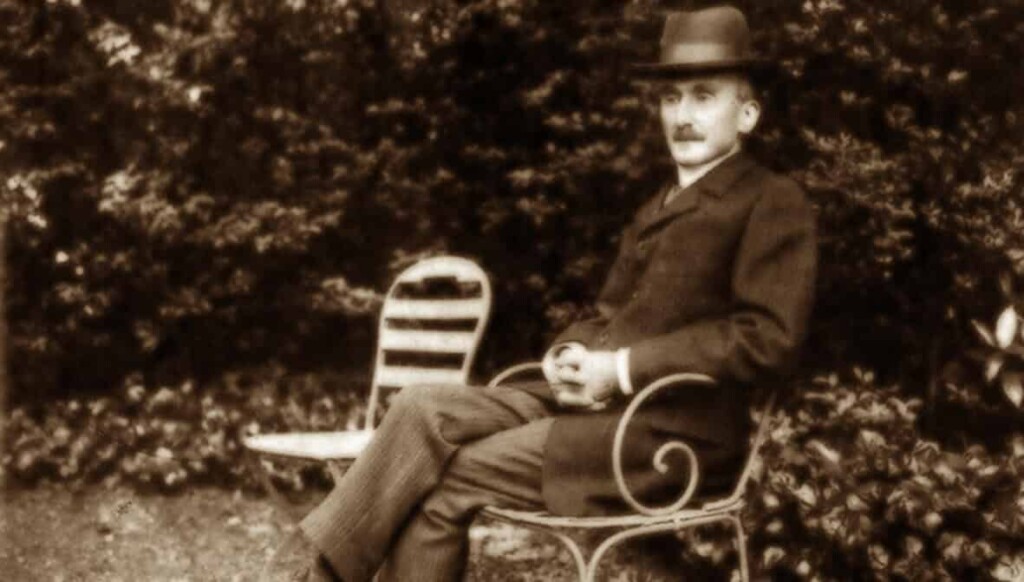
You wake up already knowing who you are. That knowledge arrives before the first conscious thought, before the light hits — a dense, pre-verbal certainty that you are this person, with these debts, these habits, this unfinished sentence left hanging in yesterday’s argument. It does not feel assembled. It feels given, the way gravity feels given, the way your own name feels given. And that sensation of givenness is precisely where the machinery is most invisible.
Habit-memory, unlike the kind that can be dated and recalled, does not present itself as memory at all. It presents itself as character. What has been repeated until it became automatic no longer announces its past — it simply operates, smooth and immediate, like the trained fingers of a pianist who has long since stopped thinking about scales. The philosopher who spends his mornings in rigorous reflection is not using memory to think; he is using a self that memory already built, a concentration of repeated postures, repeated gestures of attention, repeated refusals of distraction, all compressed into the sensation of simply being the kind of man who thinks clearly. The compression is so thorough that it reads as nature.
Descartes sitting alone by his fire, stripping the world down to the irreducible fact of his own thinking, was not discovering the bedrock of the human subject. He was performing a highly trained act and mistaking its fluency for its origin. The cogito is not a foundation — it is an achievement of habituation so complete that it appears foundational. Kant’s transcendental subject, the unified consciousness that brings coherence to experience, is similarly not a given architecture of the mind but the phenomenological residue of a culture that had spent centuries rewarding coherence, penalizing fragmentation, and selecting for the kind of inner organization that could sustain a contract, keep a ledger, and appear in court. The stable self is what survives institutional pressure across generations.
By 1900, Frederick Winslow Taylor was formalizing what industrial capitalism had already intuited: that the human body could be analyzed into discrete, repeatable motions and optimized for output. What Taylor did to the body, the broader social apparatus had long since done to the mind — decomposed it into reliable sequences, reinforced through schooling, through employment, through the entire bureaucratic insistence that you be the same person on Tuesday that you were on Monday. The legal system does not know what to do with discontinuous identity. The credit system cannot price it. The self that presents itself as continuous is not philosophically interesting to these structures; it is operationally necessary.
Henri Bergson published Matter and Memory in 1896 into a world that was already, technically and institutionally, very far along in the process of treating consciousness as a resource to be managed. His argument that the body selects from the totality of the past only what is useful for present action is, read from one angle, a description of how organisms survive. Read from another, it is a precise account of how subjects are manufactured into instruments — how the vast, unruly plenum of lived time gets disciplined into the compact, reliable, deployable thing that signs its name on forms.
The self you believe in is not false. Its habits are real, its continuities are real, its suffering when those continuities are broken is absolutely real. But the coherence it presents — that sense of a unified subject moving purposively through time — is the shape that utility carved into duration, not the shape that duration has on its own. What you call your identity is the past at its most ergonomic: worn smooth by use, trimmed to fit the hours that are asked of you, and so thoroughly habituated to its own edges that it mistakes the fit for a definition of what it has always been.
🌀 Time, Memory, and the Depths of Consciousness
Bergson’s Matter and Memory stands at the crossroads of philosophy, neuroscience, and lived experience, inviting us to rethink how time flows through the body and the mind. The following articles trace the most vital connections between Bergson’s thought and the broader intellectual landscape of memory, consciousness, and the philosophy of duration.
Henri Bergson: Life and Works
Henri Bergson‘s life and philosophical journey are essential context for approaching Matter and Memory with depth. This article explores how Bergson developed his radical critique of scientific materialism and forged a philosophy centered on duration, intuition, and the living experience of time. Understanding the man and his intellectual milieu makes his theory of memory not merely academic, but profoundly existential.
GO TO THE SELECTION: Henri Bergson: Life and Works
William James and Consciousness: The Stream of Thought
William James and Bergson were contemporaries who deeply influenced one another, both insisting that consciousness is not a static container but a living, flowing stream. James’s concept of the stream of thought resonates powerfully with Bergson’s notion of pure memory and the continuity of inner life. Reading them together reveals a transatlantic dialogue at the very origins of modern philosophy of mind.
GO TO THE SELECTION: William James and Consciousness: The Stream of Thought
Paul Ricœur: Life and Philosophy of Memory
Paul Ricœur devoted much of his philosophical career to untangling the complex relationships between time, narrative, and memory — a project that owes a significant debt to Bergson’s foundational insights. This article explores how Ricœur built upon and critically engaged with the Bergsonian legacy to develop his own phenomenology of recollection and identity. Together, Bergson and Ricœur form an indispensable arc for anyone thinking seriously about what it means to remember.
GO TO THE SELECTION: Paul Ricœur: Life and Philosophy of Memory
Stream of Consciousness in Literature and Cinema
The stream of consciousness as a literary and cinematic technique is one of the most direct artistic expressions of Bergsonian philosophy in action. This article traces how writers and filmmakers translated the idea of inner duration — time as subjectively experienced rather than mechanically measured — into form and style. From Virginia Woolf to avant-garde cinema, Bergson’s shadow falls across every attempt to render consciousness on the page or screen.
GO TO THE SELECTION: Stream of Consciousness in Literature and Cinema
Explore the Cinema of Time and Inner Worlds
If Bergson’s meditation on memory and consciousness has stirred something in you, Indiecinema streaming is the place to let that feeling deepen. Our curated catalog of independent and art-house films explores time, perception, and the inner life with the same rigor and poetry that Bergson brought to philosophy. Come discover cinema that thinks — and feels — as deeply as you do.
👉 EXPLORE THE CATALOG: Watch Indie Films in Streaming
A vision curated by a filmmaker, not an algorithm
In this video I explain our vision

