
Comedy is, paradoxically, the most complex and ruthless genre of the seventh art. Much more than drama, it requires perfect timing, surgical writing, and the ability to grasp the contradictions of human nature. Great comic cinema serves not only to escape reality but often to unmask it, using the weapon of irony to reveal truths that would otherwise remain unspeakable.

This guide was created to explore the infinite nuances of humor: from the social satire that made Italian cinema great to the surreal and politically incorrect bite of independent productions, to the elegance of sophisticated comedy. Whether it is liberating laughter or a bitter smile, here you will find the works that have managed to transform entertainment into an art form.
🆕 Best Recent Comedies
A Real Pain (2025)

Two Jewish American cousins, David (Jesse Eisenberg) and Benji (Kieran Culkin), decide to tour Poland to honor their grandmother who survived the Holocaust. David is a neurotic and controlled family man; Benji is a free spirit, charismatic but deeply unstable. What begins as a respectful pilgrimage turns into a clumsy and painfully funny road movie, where historical traumas clash with modern neuroses.
Winner for Best Screenplay at Sundance, this film is the manifesto of modern “Dramedy.” Jesse Eisenberg directs and stars in a work that achieves the miracle of making you laugh in a tragic context (concentration camps) without ever being disrespectful. It is a comedy about grief, family, and how every generation processes loss differently (or not at all).

Nightbitch (2025)

A nameless woman, a former artist and curator, finds herself trapped in domestic routine after the birth of her son, while her husband is always away for work. Exhausted, isolated, and angry, she begins to notice disturbing physical changes: hair growing, teeth sharpening, and an uncontrollable craving for raw meat. Convinced she is turning into a dog, she embraces her new feral nature to rebel against the expectations of the “perfect mother.”
Amy Adams is unleashed in this feminist and surreal horror comedy. Marielle Heller adapts the cult novel creating a biting satire on contemporary motherhood. It is not a classic horror movie, but a grotesque and liberating comedy that screams (and barks) against the loss of identity many women experience. Funny, dirty, and absolutely original.
Anora (2024)

Anora is a young stripper from Brooklyn who thinks she’s living a modern fairy tale when she impulsively marries the spoiled son of a Russian oligarch. The honeymoon ends abruptly when his parents in Russia send their Armenian henchmen to New York to annul the marriage by force. A chaotic and frantic chase ensues across the city, where Anora fights tooth and nail to defend her status as a “wife.”
Winner of the Palme d’Or at Cannes 2024, Sean Baker signs a high-energy screwball comedy that recalls the Safdie brothers’ cinema but with more heart. It is a frenetic, loud, and hilarious film that nevertheless hides a bitter critique of social class and the power of money. You laugh a lot, but you desperately root for the protagonist’s dignity in a world that sees her only as a commodity.
The Holdovers (2023)

Christmas, 1970. At a prestigious New England boarding school, a universally hated ancient history teacher (Paul Giamatti), rigid and pompous, is forced to stay on campus during the break to supervise a handful of students who cannot go home. Among them is Angus, a smart but troubled boy. Together with the school’s head cook, who has just lost her son in Vietnam, the three form an unlikely family of outcasts stranded by snow and loneliness.
Alexander Payne creates an “instant classic” that truly feels shot in the 70s. It is a perfect humanist comedy, balancing cynicism and tenderness without ever falling into cheap sentimentality. Paul Giamatti delivers a monumental performance as the misanthrope learning to connect. It is a warm, funny, and melancholic film, written with a grace that is very rare today.
A vision curated by a filmmaker, not an algorithm
In this video I explain our vision
Hundreds of Beavers (2024)

In this silent, black-and-white film, an apple cider salesman loses everything to beavers and must become the greatest fur trapper in North America to survive the winter and win the local merchant’s daughter. What follows is an epic and progressively more absurd battle against hundreds of beavers (which are blatantly people in cheap mascot suits), involving traps, chases, and video game logic.
This is the true indie cult hit of the year. Made on a non-existent budget, it is a masterpiece of visual creativity blending Looney Tunes aesthetics, Buster Keaton’s physical comedy, and Super Mario logic. It is pure cinema, made only of action and rapid-fire visual gags (over 1500 shots). A hilarious and anarchic experience that looks like nothing else you’ve seen.
Chasing Butterflies
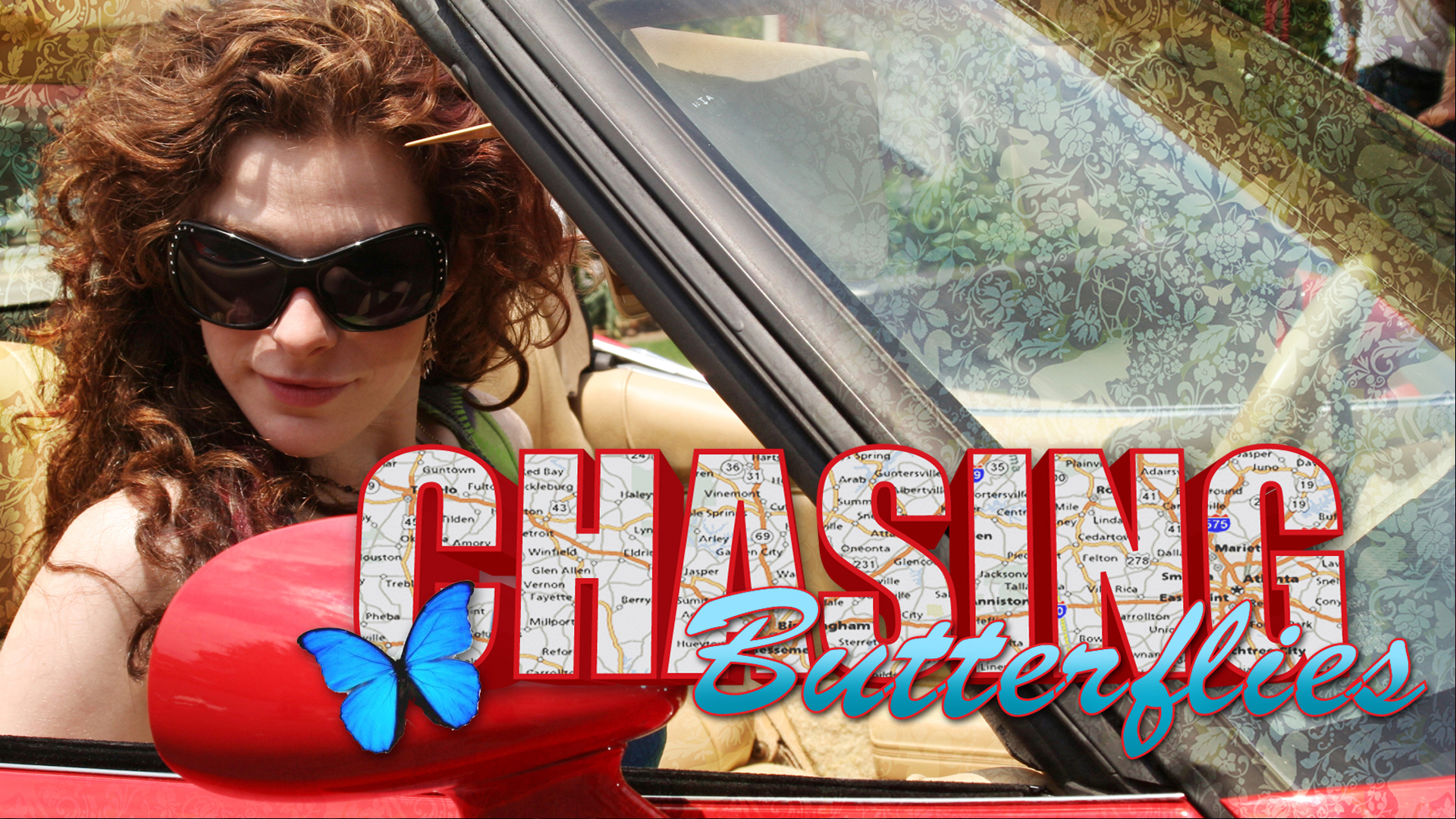
Comedy, romantic, by Rod Bingaman, United States, 2009.
Nina runs away from home hours before her wedding. In order not to postpone her mother's wedding ceremony, she pretends to be Nina and marries her boyfriend. Soon after they begin their search to find Nina and bring her back: Nina's husband is convinced that she no longer loves him. A fifteen-year-old nerdy boy meets Nina on the street and tries to impress her with his father's Corvette that he sneaked away without having her driver's license. Meanwhile, a rebellious young woman and her boyfriend who has escaped from prison meet the boy and steal his Corvette, sowing panic with a series of thefts as they head to Canada, in search of a better life and money to make their living. love dream. Meanwhile, Nina meets on a bus a man on the run from a failed marriage: a famous local radio broadcaster who has been abandoned by his wife. But the bus will be the target of a robbery by the engaged couple "Natural Born Killers".
Chasing the Butterflies is an action-packed romantic comedy populated by characters destined to cross paths. Love gives them energy or scares them, everyone is on the run in search of a better life or because they don't know how to deal with responsibilities. Everyone refuses to be imprisoned in social conventions even when they themselves have sought them, even when the social convention is that of a marriage to a man you still love. An on the road littered with grotesque situations and hilarious dialogues, often in American slang, made independently, with a very interesting cast.
LANGUAGE: English
SUBTITLES: Spanish, French, German, Portuguese
Daaaaaalí! (2023)

A young French journalist desperately tries to interview the famous painter Salvador Dalí for a documentary. However, the artist is so egocentric, capricious, and elusive that the interview is constantly postponed, interrupted, or sabotaged by surreal events. The film enters a dreamlike loop where time and space make no sense, and where Dalí is played by five different actors in the same scene, in a tribute to the madness of genius.
Quentin Dupieux, the king of French absurdism, signs a “non-biography” that is a comic maze. He doesn’t try to explain the artist but to replicate his inner world. It is a short comedy (77 minutes), dense with non-sense gags and visually refined. A smart mockery of personality cults and the pretense of “understanding” art. For those who love the humor of Buñuel or Monty Python.
Indie & Arthouse Comedy
Independent comedy does not have to submit to mass market rules: it is free to be strange, grotesque, subtle. Here you will find original stories, unconventional characters, and humor that stems from the imperfections of real life. It is cinema for those who want to laugh, but also think.
👉 BROWSE THE CATALOG: Stream Indie Comedies Now
Black Comedy & Dark Humor
For those who laugh through gritted teeth. Black Comedy finds humor where it shouldn’t be: in death, tragedy, and taboo. It is a genre that dares to challenge good taste and morality to reveal society’s hypocrisies. Perfect for those with a cynical and sharp sense of humor. 👉 GO TO THE LIST: Black Comedy Movies
Dramedy (Comedy-Drama)
Life is never just black or white. The Dramedy is the perfect meeting point between a smile and a tear. Here characters are real and complex, and comic situations arise from discomfort or melancholy. It is the ideal genre for those who want to feel emotion and reflect, while keeping a light and hopeful tone.
👉 GO TO THE LIST: Comedy-Drama Movies
Festival in Cannes
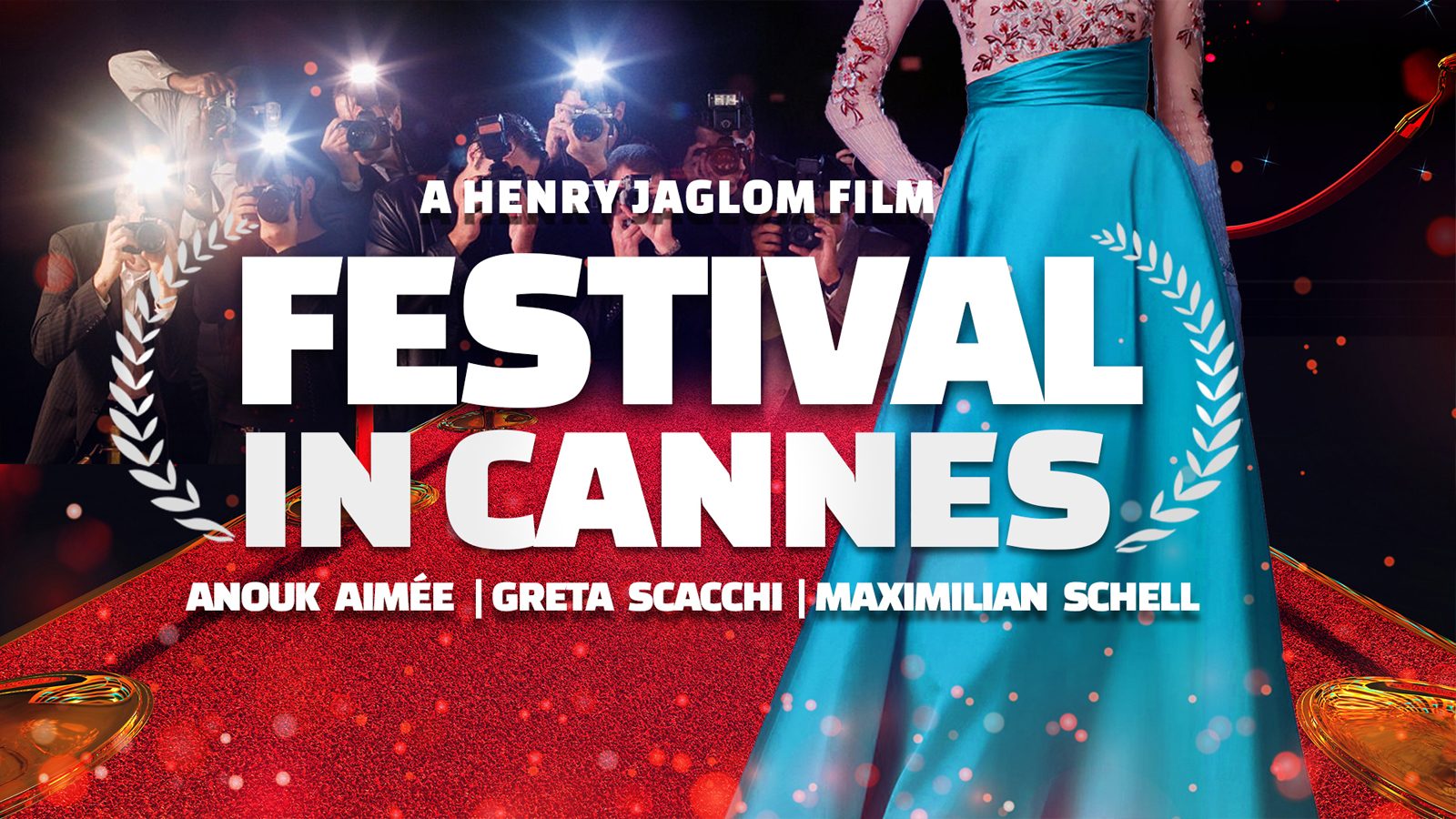
Sentimental comedy, by Henry Jaglom, United States, 2001.
Cannes, 1999. Alice, an actress, wants to direct an independent film, and is looking for financiers. She meets Kaz, a talkative businessman, who promises her $ 3 million if she uses Millie, a French star who has passed her youth and no longer finds interesting roles. Alice tells the story of the film to Millie and the actress falls in love with the project. But Rick, a prominent producer working for a large Hollywood studio, needs Millie for a small part in a film due to shoot in the fall, or else he'll lose her star, Tom Hanks. Is Kaz a real producer or is he a charlatan? Rick is actually not as rich as he used to be and he absolutely has to convince Alice to give up Millie in order to close the big project deal with Tom Hanks. Millie is undecided about what to choose: an indie film she loves but with no big money or a small part in the Hollywood movie that pays very well? Meanwhile, a young actress named Blue becomes the star of the festival and Kaz discovers a new love. The wheel of life, and of show business, turns, between feelings, existential budgets and film business. A film shot with great stylistic freedom, like a documentary, during the 1999 edition of the festival, which focuses on the performances of the actors with a spontaneous and fluid improvisation method, inspired by Cassavetes' cinema. A light and moving sentimental comedy, where the conflicts and frailties of the stars of the show business gradually emerge, bringing the important themes of life to the surface.
Food for thought
Working as a cog in a system or for your own vision? Dependence or independence? Both are not completely real: the reality that happens everywhere, in any industry, in any natural event, is interdependence. We are all absolutely interdependent, not only between men, not only between nations, but between trees and humans, between animals and trees, between birds and sun, between moon and oceans, everything is intertwined with everything else. The humanity of the past did not understand this fundamental law, and it created big problems.
LANGUAGE: English
SUBTITLES: Spanish, French, German, Portuguese
Commedia all’Italiana (The Masters)
It is not just a genre; it is a piece of our country’s history. Between the late 50s and 70s, directors like Monicelli, Risi, and Scola invented a unique way of filmmaking: tackling dramatic themes with humorous tones. You laugh, but the aftertaste is often bitter. It is the cinema of “Monsters,” the fierce satire of the vices and miseries of the average Italian. Essential masterpieces to understand who we are.
👉 GO TO THE LIST: Commedia all’Italiana Masterpieces
Romantic Comedy
Love is funny, especially when things go wrong. Forget cheesy stories: the best Rom-Coms are those that recount the embarrassment, misunderstandings, and madness of falling in love with rhythm and intelligence. For those seeking a happy ending but want to have fun along the way.
👉 GO TO THE LIST: Romantic Comedies
French Comedy
The elegance of the punchline. Whether it’s classic American Screwball Comedy or brilliant French comedy made of fast dialogue and spicy situations, this is cinema for those seeking cerebral, refined, and never vulgar humor. Here you laugh heartily, but with class.
👉 GO TO THE LIST: French Comedies
Action Comedy
When laughter meets explosions. The perfect genre for a night of pure popcorn entertainment. Buddy movies, clumsy cops, and daring chases: here the pace never drops, and adrenaline mixes with physical gags.
👉 GO TO THE LIST: Action Comedy Movies
Hollywood Dreams
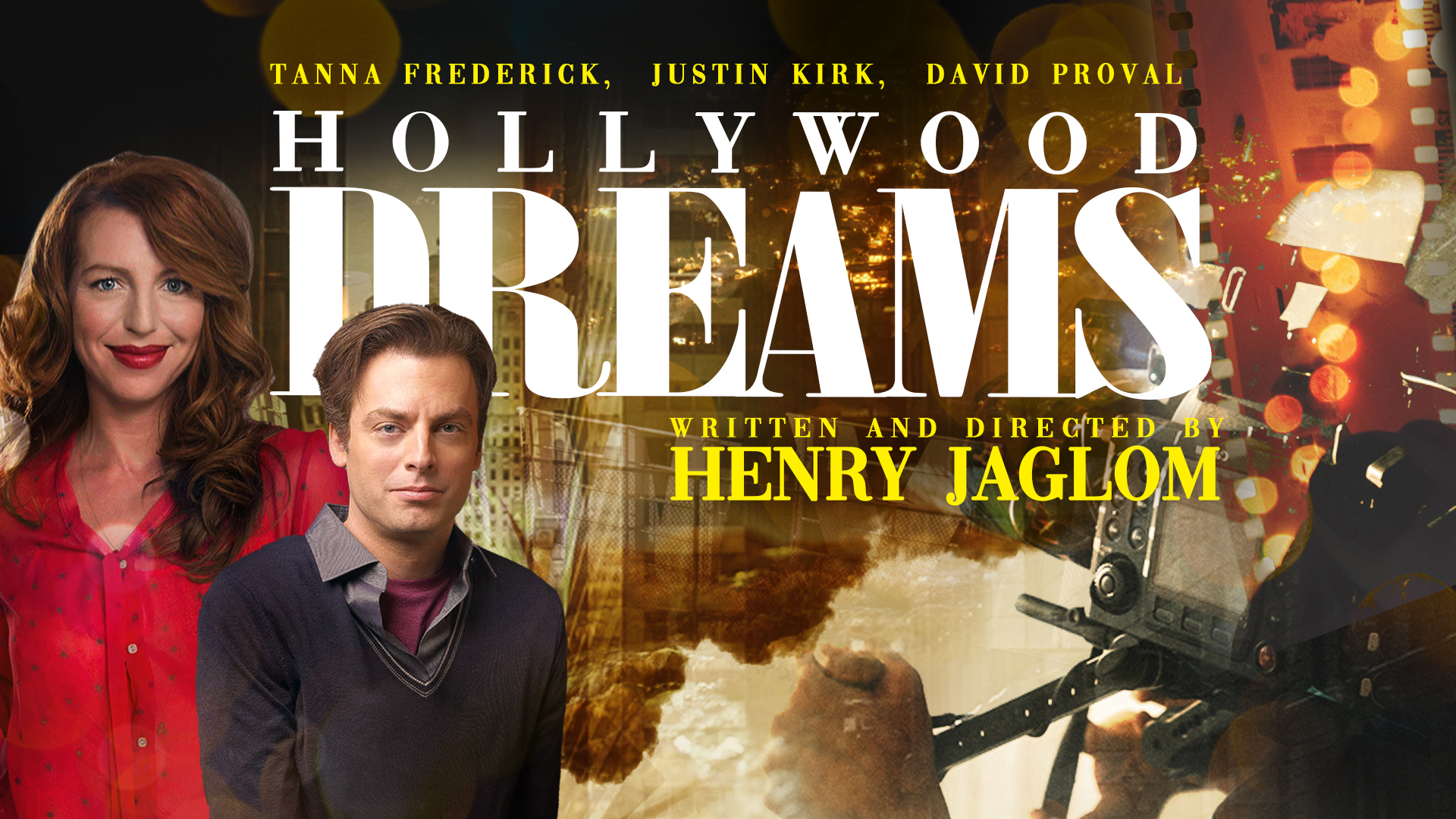
Comedy, drama, by Henry Jaglom, United States, 2007.
Aspiring actress Margie Chizek seeks stardom in Hollywood. She is rejected by the cinema scene, falls in love, discovers the deceptions behind the world of film advertising and understands her identity better than her. Saved from ruin by a kind producer, Margie manages to enter the world of the rich in Hollywood and falls in love with a young actor, who is building her career by pretending to be gay. The couple will face show business and sexual identity manipulation. Hollywood Dreams engages the audience thanks to the extraordinary performance of Tanna Frederick and her character as a tormented and emotionally unstable actress, a surprising and moving performance. The character of a fragile woman, a prisoner of false myths, at times repellent and bizarre. In the hands of the nonconformist independent director Henry Jaglom the charm of the false illusions of success is told in an exemplary and irresistible way.
The history of cinema is full of films about people making films, which can be interpreted as a universal story: everyone strives for success, recognition and fame in a competitive field. Henry Jaglom's Hollywood Dreams is a subversive film, a satire of an industry based on deception. Inspired by the productive freedom and improvisation of the actors of John Cassavetes' independent cinema, more rigorous and exciting than Henry Jaglom's other films, Hollywood Dreams focuses on a smiling actress who suddenly becomes famous. The director, in his fifteenth film, becomes more melancholy, and takes a journey between cinematic memories and gender identity confusion. The style is always the realistic one, almost a documentary, of other Jaglom films. One of the best known American independent directors in a nostalgic mood, reflecting on the negative aspects of fame and success.
LANGUAGE: English
SUBTITLES: Spanish, French, German, Portuguese
Comedies of the 20s and 30s
This is the genesis of modern laughter. In the 1920s, comedy was a universal language written with the body: the visual poetry of Chaplin and the stone-faced daredevilry of Buster Keaton defied physics without uttering a single word. The arrival of sound in the 1930s triggered a revolution, birthing the Screwball Comedy. The battleground shifted from stunts to rapid-fire dialogue and wit. It was an era of anarchy and elegance, where the war between the sexes was fought with words at breakneck speed, setting a standard for rhythm that remains unmatched today.
Madame DuBarry (1919)

Madame DuBarry (released in Germany as Passion) is a 1919 German silent historical drama directed by Ernst Lubitsch. This lavish UFA production, filmed at the vast Babelsberg studios, marked the international breakthrough for both its director and its star, Pola Negri. The film chronicles the rise and fall of Jeanne Vaubernier (Negri), a young and ambitious Parisian milliner. Seeking a better life, Jeanne leaves her young love, Armand de Foix, and becomes the mistress of the corrupt nobleman Jean Du Barry, who uses her to gain favor with King Louis XV (Emil Jannings). Jeanne immediately captivates the king, who brings her to Versailles and makes her his official favorite, Madame Du Barry.
The film contrasts Jeanne’s life of luxury and opulence at the court of Versailles with the growing misery and anger of the French populace, which culminates in the Revolution. Madame DuBarry was an enormous critical and commercial success worldwide, praised for Lubitsch’s innovative direction, his use of camera and editing, and Pola Negri’s charismatic and sensual performance. However, its release also generated significant controversy, especially in post-World War I France, where it was viewed as anti-French propaganda for its depiction of a decadent monarchy and a brutal revolution, coming from a recent enemy nation.
The Gold Rush (1925)

The Tramp (Charlie Chaplin), as a lone gold prospector, travels to Alaska during the legendary gold rush. Isolated in a remote cabin, he must face extreme hunger, a ruthless climate, and an unrequited love for the dance hall girl Georgia. Hunger will lead him to surreal acts, such as eating his own shoe and dreaming of the famous “dance of the rolls.”
The Gold Rush represents the moment Charlie Chaplin perfected his alchemical formula, finding the perfect balance between the purest slapstick comedy and heartbreaking pathos. Ironically inspired by a tragic news story about cannibalism among prospectors, Chaplin transforms the horror of desperation into a sublime and unforgettable farce.
The film contains two of the most iconic sequences in the entire history of cinema. The first, the Thanksgiving dinner, where the Tramp cooks and eats his shoe as if it were a gourmet dish, is the manifesto of his art: the ability to transform absolute misery into a meticulous, almost ritualistic, and profoundly moving visual gag.
The second, the famous “dance of the rolls” that the Tramp performs in a dream to entertain the girl he loves, is pure surreal poetry. Both scenes work because Chaplin never just seeks the easy laugh; he seeks empathy. His Tramp is not a comic automaton like many of his contemporaries; he is a complete human being, with desires, fears, and a desperately romantic heart. It is this humanism that distinguishes him from his great rival, Buster Keaton, and that defines the first, fundamental pillar of film comedy.
The General (1926)

Johnnie Gray (Buster Keaton), a Georgia machinist, has two great loves in his life: his fiancée, Annabelle Lee, and his locomotive, “The General.” When the Civil War breaks out, he is rejected by the Confederate army because he is deemed more useful as an engineer. But when Union spies steal “The General” with Annabelle on board, Johnnie embarks on a solitary and daring chase to recover both.
If Charlie Chaplin was the “poet” of comedy, Buster Keaton was its “architect.” The General is his masterpiece, a feat of comic and narrative engineering that is stunningly modern. Unlike the overt pathos of Chaplin, Keaton, “The Great Stone Face,” never asks for our compassion. His comedy is objective, almost mathematical, based on the surreal interaction between an impassive individual and a chaotic, mechanical universe.
The film is legendary for its “almost perfectly balanced narrative structure.” It is literally a film divided into two mirrored parts: the first half is a chase (Johnnie chasing the stolen train North), the second is the opposite chase (Johnnie fleeing South with the train and the girl, pursued by the Northerners).
The authenticity and scale of the gags are legendary. Keaton used real locomotives and cannons, performing extremely dangerous stunts without body doubles, including the scene where he sits on the coupling rod of the moving engine. The result is a large-scale epic that blends comedy, war film, and adventure. Keaton’s influence is visible in everything from Mad Max: Fury Road to the work of Jackie Chan. With this film, Keaton proved that slapstick could be not only funny, but also epic, breathtaking, and immortal.
Queen Of The Lot
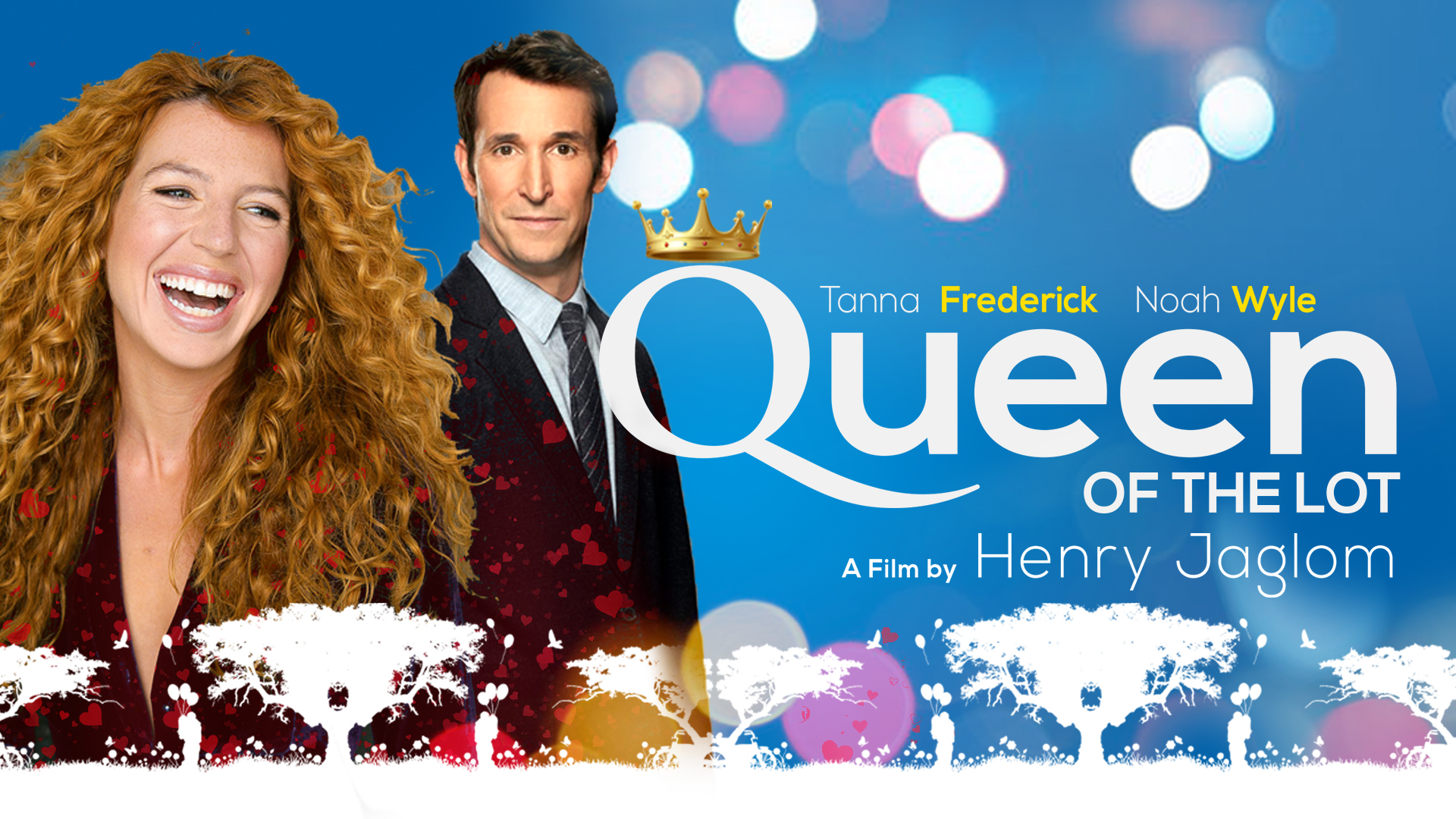
Comedy, drama by Henry Jaglom, United States, 2010.
An electronic ankle bracelet and house arrest aren't enough to stop aspiring actress Maggie Chase (Tanna Frederick) from achieving what she desires: popularity and true love. Maggie is determined to make her way off the action / adventure B-movie list and achieve notable movie fame. With a group of managers wanting to help her make it to the covers of the tabloids, and famed actor Dov Lambert, Maggie's stardom rises. Things get complicated when she on a trip to meet Dov lei's family members Maggie she discovers the world of Hollywood's kings (Kathryn Crosby, Mary Crosby, Peter Bogdanovich, Dennis Christopher and Jack Heller). And that world isn't exactly what she imagined.
In this follow-up to 2006 indie comedy drama 'Hollywood Dreams', enthusiastic and insane actress Margie Chizek (Tanna Frederick) has finally arrived in Hollywood as an actress in a B-movie. Maggie's strategies for greater fame could destroy. his film career when he meets the brother of his beloved Aaron (Noah Wyle), who is the black sheep of the Lambert family of actors, but also seems to be the only one who sees the still unstable Maggie for the person she really is . Writer / director Henry Jaglom has a penchant for developing characters that may not be quite pleasant, but are realistic and show a wide range of feelings. Tanna Frederick plays the role of Maggie with skill and she copes well with susceptibility, charm and addiction as she struggles to find happiness in the fierce world of Hollywood. Jaglom reveals that he has real experience of how the Los Angeles film industry really works and how exactly he takes his toll on the private lives of celebrities. Another of Jaglom's qualities as a screenwriter and director is his ability to get into the drama and love his characters without rhetoric. Queen of the Lot is a fun and intriguing indie film, out of the box. Tanna Frederick once again confirms herself as a passionate, gifted and charming actress.
LANGUAGE: English
SUBTITLES: Spanish, French, German, Portuguese
City Lights (1931)

Charlie Chaplin’s Tramp falls in love with a blind flower girl, who mistakenly believes he is a millionaire. To help her pay the rent and undergo an operation that could restore her sight, the Tramp embarks on a series of adventures, including a fluctuating friendship with a real alcoholic millionaire and a disastrous boxing match. His pure love drives him to sacrifice everything for her.
Including City Lights in this list is a necessity. It is perhaps the ultimate “independent” film: produced, directed, written, scored, and financed by Chaplin himself, at a time when sound cinema had already taken over. His decision to make a silent film in 1931 was an unprecedented act of artistic defiance. The film is a perfect blend of slapstick comedy and heartbreaking pathos. The final scene, in which the girl, no longer blind, recognizes her benefactor, is one of the most powerful and moving moments in cinema history, the ultimate demonstration of how comedy can reach unparalleled heights of emotional depth.
Tokyo Chorus (1931)

Tokyo Chorus (東京の合唱, Tōkyō no kōrasu) is a 1931 Japanese silent film directed by Yasujirō Ozu. Shot in black and white and set in Tokyo during the Great Depression, the film is an influential work of “shomin-geki” (working-class drama) that blends comedy and social drama. The plot follows Shinji Okajima (Tokihiko Okada), an insurance company employee who is fired after protesting the dismissal of an elderly colleague. Left without a job, Shinji struggles to support his family, which includes his wife Sugako (Emiko Yagumo) and their children, son Chounan (Hideo Sugawara) and daughter Miyoko (Hideko Takamine). The family’s economic hardships worsen when their daughter falls ill, forcing them to sell the wife’s kimonos to pay for medical expenses.
Considered one of the most important films of Ozu’s early period, Tokyo Chorus marks a significant transition from his previous slapstick comedies to a deeper, more humanistic analysis of family life and social difficulties. The film is known for its realistic style and minimalist staging, which focuses on evocative details to convey the emotion and resilience of the characters in the face of adversity. With a runtime of approximately 90 minutes and released on August 15, 1931, the film explores enduring themes such as social justice, economic precarity, and the strength of family bonds, showcasing Ozu’s compassion and understanding for people facing life’s challenges.
I Was Born, But… (1932)

I Was Born, But… (original title: 大人の見る絵本 生れてはみたけれど, Otona no miru ehon – Umarete wa mita keredo, 1932) is a Japanese silent film directed by Yasujirō Ozu. Considered one of his early masterpieces, the film is a satirical “shomin-geki” (working-class drama) comedy. The plot centers on young brothers Keiji (Hideo Sugawara) and Ryoichi (Tomio Aoki), who move with their parents to a new Tokyo suburb. The boys try to establish themselves as leaders of the local gang of kids, but their idealized vision of their father (played by Tatsuo Saitō), an office employee, is shattered. While watching home movies, they discover their father acting the fool and humiliating himself to please his wealthy and powerful boss, sparking deep shame in his sons.
The film’s central conflict, in which the father remains alive throughout, concerns disillusionment and the loss of innocence. The boys, shocked by their father’s submissiveness, go on a hunger strike, refusing to accept the complex hierarchies and compromises of the adult world. Ozu explores themes such as social hierarchy, the gap between the world of children and that of adults, and the pressures of “salaryman” life in pre-war Japan with sensitivity and humor. The film is based on an original story by Ozu and was a great critical success in its home country, winning the prestigious Kinema Junpo Award for Best Film.
Duck Soup (1933)

The imaginary state of Freedonia is bankrupt. The wealthy Mrs. Teasdale agrees to finance the country only if the government is entrusted to the incompetent and insolent Rufus T. Firefly (Groucho Marx). Firefly takes over as president and declares war on the neighboring nation of Sylvania over a futile pretext. Meanwhile, spies Chicolini (Chico) and Pinky (Harpo) try to sabotage his plans, leading to total political and military chaos.
While Chaplin feared the arrival of sound, the Marx Brothers wielded it as a weapon of mass destruction. Duck Soup is the purest act of comic terrorism in film history. It is their “liberating scream” against society, a frontal and anarchic assault on logic, social conventions, diplomacy, institutions, and common sense.
The genius of the Marxes lies in their ability to dismantle language. The comedy is not just in the situations, but in the systematic abuse of the word: Groucho’s relentless puns and non-sequiturs, Chico’s literal and absurd malapropisms, and Harpo’s surreal and chaotic muteness, which responds to verbal logic with pure physical action.
Sazen Tange and the Pot Worth a Million Ryo
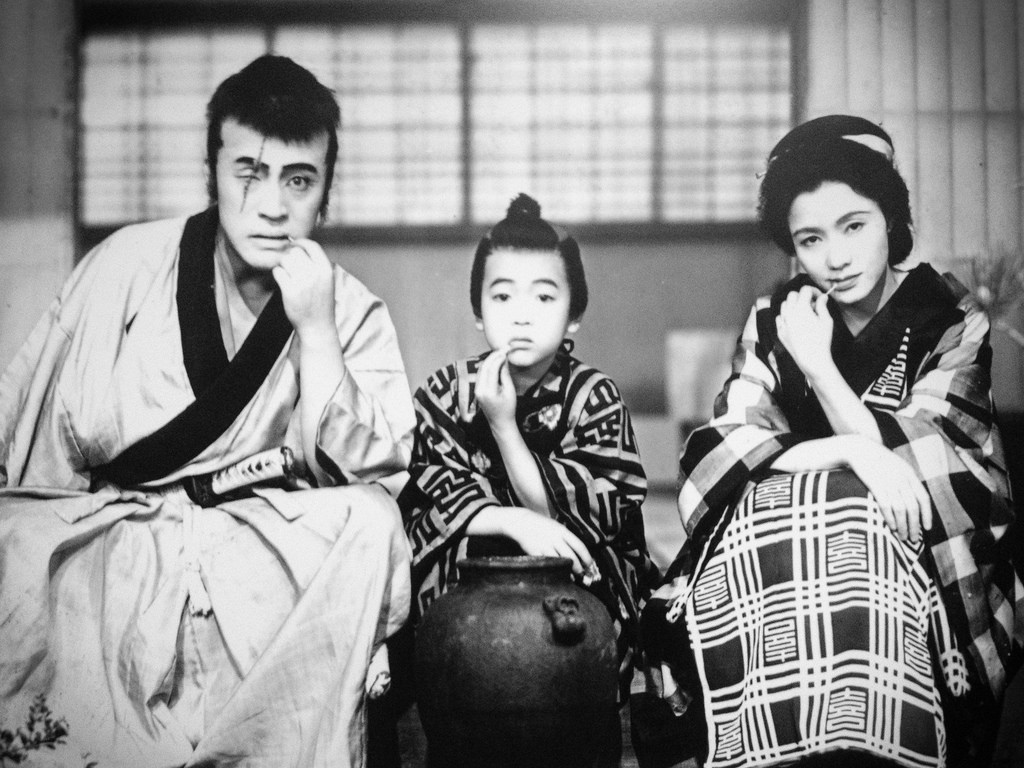
Comedy, drama, historical, by Sadao Yamanaka, Japan, 1935.
A man gives an old cooking pot to his brother, not realizing that there is a treasure map inside. His sister-in-law sells the pot to a junk dealer, who in turn sells it to a boy named Yasu. A colorful cast of characters are looking for this vase, and when the boy runs away after being scolded by Ogino, everyone chases after him.
There are only three surviving works directed in the short but very rich artistic life by Sadao Yamanaka, who died not even thirty years old in Manchuria in 1938. Among these is The Million Ryo Pot, where the young directorial talent confronts an iconic character of the jidaigeki, Tange Sazen, a one-eyed and one-armed swordsman. In taking an apparently canonical story head-on, Yamanaka opts for a completely personal look, both in the use of parody and in the staging in which long shots and the fixed camera reign in spite of the close-ups that usually crowded the films of the saga. Japanese director Akira Kurosawa cited this film as one of his 100 favorite films. Many Japanese critics and directors consider it the best Japanese film of all time.
LANGUAGE: Japanese language
SUBTITLES: English, Spanish, French, German, Portuguese
It Happened One Night (1934)

Spoiled and stubborn heiress Ellie Andrews (Claudette Colbert) flees her authoritarian father’s yacht to reunite with a pilot husband the family disapproves of. On the night bus to New York, she meets Peter Warne (Clark Gable), a cynical, recently fired journalist. He recognizes her and offers a deal: he will help her on her journey in exchange for an exclusive on her runaway story.
It Happened One Night is not just a film; it is a “landmark film,” an event that changed Hollywood history. It was the project that transformed Columbia Pictures from a B-studio into a major player. It was the first film to win the “Big Five” (the five major Oscars: Best Picture, Director, Screenplay, Actor, Actress), a feat that only two other films (and no other comedy) have managed to equal.
Its greatest historical importance, however, is having invented a genre: the screwball comedy. Frank Capra’s film establishes all the tropes of the genre that would dominate the following decade: the “battle of the sexes,” the class conflict between the spoiled heiress and the cynical but principled common man, the fast and witty dialogue, and a chaotic journey that leads the protagonists to fall in love.
Modern Times (1936)

The Tramp (Chaplin) is an alienated worker in a modern factory, so absorbed by the rhythm of the assembly line that he is literally swallowed by the gears. After a nervous breakdown, he is arrested multiple times, often by mistake. He teams up with a young orphan (Paulette Goddard), and together they try to survive in an industrialized and inhumane world, crushed by the Great Depression.
Modern Times is Charlie Chaplin’s farewell to an era and to his iconic character. It is a hybrid film, an act of artistic and political defiance. Made almost a decade after the advent of sound, Chaplin stubbornly refuses to let his Tramp speak, using only music, sound effects, and mechanized voices (like that of the factory boss barking orders from screens). It is a silent film in a sound era, and this choice is not nostalgia: it is the heart of his thesis.
It is not just a satire on industrialization and worker alienation; it is an artist’s protest against the Hollywood “machine” that was standardizing art. Chaplin, who was also inspired by a conversation with Mahatma Gandhi, saw unbridled industrialization as a threat to humanity, and sound dialogue as a threat to the universality of pantomime.
Bringing Up Baby (1938)

Dr. David Huxley (Cary Grant) is a serious, bumbling, bespectacled paleontologist, one step away from completing the skeleton of a brontosaurus and marrying his rigid assistant. His perfectly ordered life is turned upside down by a chance encounter with Susan Vance (Katharine Hepburn), a “ditzy,” overwhelming, and chaotic heiress who drags him into a series of farcical disasters that include a pet leopard named “Baby.
If It Happened One Night invented the screwball comedy, Howard Hawks‘ Bringing Up Baby is its apotheosis and, perhaps, its purest, most perfect, and most insane form. It is considered “the screwiest of the screwball comedies” and a definitive prototype of the genre. While other screwball films maintained a glimmer of narrative logic, Bringing Up Baby throws itself into total chaos, operating at a frantic pace that gives the viewer no respite.
The film is a textbook of all the genre’s conventions, taken to the extreme: farcical situations, lightning-fast dialogue, slapstick, and the classic dynamic of the “madcap woman chasing the man.” Hepburn, labeled “box office poison” at the time, is an unstoppable cyclone of chaotic energy, and Grant is perfect as the rigid man whose masculinity and rationality are systematically dismantled.
Comedies of the 40s
The 1940s are the decade where comedy became a necessity. While the world was torn apart by war, cinema responded not just with escapism, but with the sharp weapon of political and social satire. This is the golden age of “sophisticated comedy,” where masters like Lubitsch and Sturges used irony to dismantle the hypocrisies of power and the bourgeoisie. Here, laughter becomes more mature, blending romance with an intelligent cynicism that reflects the complexity of the times.
Simon of the desert

Comedy, by Luis Bunuel, Mexico, 1963
Simón, a long-bearded holy man, lives on a column in the middle of the desert, almost in total fasting. People worship him as a Messiah. He performs miracles, undergoes temptations from Satan, who torments him under the guise of a handsome woman. A series of grotesque, surreal, magical and picaresque scenes. The best Bunuel in just 45 minutes.
Food for thought
Those who withdraw from the world to find a spiritual life are doomed to failure. Temptations will follow him, the need to relate to others will not abandon him. Only his ego will be satisfied by a false spirituality. True spirituality is found in everyday life, in the society in which we live, in everyday life, among the people we meet every day.
LANGUAGE: Spanish
SUBTITLES: English, French, German, Italian, Portuguese
The Philadelphia Story (1940)

Tracy Lord (Katharine Hepburn), a cold and haughty Philadelphia socialite, is about to celebrate her second marriage to a social climber. Her charming ex-husband, C.K. Dexter Haven (Cary Grant), shows up on the eve of the wedding. With him are two tabloid journalists, the idealist Macaulay “Mike” Connor (James Stewart) and photographer Liz Imbrie, intent on documenting the event.
The Philadelphia Story is the triumph of sophisticated comedy and the perfect example of the “comedy of remarriage” subgenre. If Bringing Up Baby was pure chaos, this film is a work of surgical precision, built on a razor-sharp script and a cast in a state of grace that saved Katharine Hepburn’s career, who had bought the rights to the play herself.
It is less a screwball and more a comedy of manners, where the stakes are Tracy’s emotional transformation. The film is a sharp exploration of high society, love, and, above all, human fallibility. The narrative goal is to bring Tracy down from her pedestal as a “bronze goddess” and “ice queen” to make her a woman capable of forgiveness and of accepting imperfection, both her own and that of others.
Sullivan’s Travels (1941)

John L. Sullivan (Joel McCrea) is a successful director of light, blockbuster comedies. Tired of being considered frivolous, he decides he wants to make an epic, socially conscious work about human suffering, titled “O Brother, Where Art Thou?”. To find inspiration, he disguises himself as a hobo to experience true poverty. Accompanied by a medical staff and an aspiring actress (Veronica Lake), he discovers that reality is much harsher than he imagined.
Preston Sturges was one of the greatest and most influential comedy auteurs of the classic era, and Sullivan’s Travels is his metalinguistic masterpiece. It is a film about film, an essay on the social responsibility of art, and, ultimately, the most powerful and moving defense of the comedy genre ever made.
The film is a bold, hybrid work, mixing Hollywood satire, slapstick, screwball, and harsh social drama. Sturges subverts expectations by taking his protagonist and the audience on a dark journey, all the way to a prison camp, where Sullivan, beaten and without memory, hits rock bottom.
It is here that the film reveals its thesis. Sullivan, along with the other prisoners, watches a screening of a Mickey Mouse cartoon. In that moment, seeing the inmates forget their misery for a moment to laugh in unison, he understands his mistake. He discovers that “what the downtrodden need most is laughter.” Sullivan’s Travels is a “sermon against sermons” that uses drama to arrive at the revolutionary and profoundly humanist conclusion that making people laugh is not a lesser art; it is a moral duty.
Jour de fete (1949)

Jour de fête (The Holiday) is the first feature film directed by and starring Jacques Tati, released in 1949. A masterpiece of visual comedy, the film is set in a quiet French village during its national holiday celebrations. Tati stars as François, the clumsy and easily distracted local postman. The plot kicks off when François, at the fair’s cinema tent, watches a newsreel about the astonishing efficiency of the United States Postal Service. Determined to modernize his delivery method, François attempts to apply these “American-style” techniques to his humble bicycle route, unleashing a series of surreal gags and chaotic disasters that disrupt the village’s routine.
The film is crucial for defining Tati’s style: a comedy almost devoid of dialogue, built on complex choreography, inventive visual gags, and an acute observation of the conflict between tradition and the encroachment of modern technology. Jour de fête has a unique production history: Tati shot it simultaneously in both black and white and on an experimental color system (Thomsoncolor). Because the color technology proved impossible to print correctly in 1949, it was the black-and-white version (with some hand-colored details added in a 1964 re-release) that was distributed. Only in 1995 was it possible to restore the original color negatives, allowing audiences to see the version Tati had initially envisioned.
Late Springs (1949)

Late Spring (original title: 晩春, Banshun), a 1949 film, is one of the most influential masterpieces by Japanese director Yasujirō Ozu. It marks the beginning of his most celebrated collaboration with actress Setsuko Hara and his regular leading man, Chishū Ryū. The plot centers on Noriko (Hara), a 27-year-old woman who lives happily caring for her widowed father, Professor Shukichi (Ryū), and feels no need to marry. Fearing his daughter is sacrificing her youth for him and will become a “spinster,” Shukichi orchestrates a plan with Noriko’s aunt (Haruko Sugimura). They convince the reluctant Noriko that the father intends to remarry, thereby making her feel she is no longer indispensable and pushing her to accept an arranged marriage.
The film explores with profound sensitivity the themes of personal sacrifice, filial duty, the pressures of tradition, and the melancholy, inevitable dissolution of family ties in the face of change. The heartbreaking and poetic ending shows Noriko accepting the marriage, leaving her father alone after he lied for his daughter’s well-being. The work is based on the short story Father and Daughter (Chichi to Musume) by Kazuo Hirotsu. Late Spring triumphed in Japan, winning the prestigious Kinema Junpo and Mainichi Film Contest awards for Best Film.
The Astronot
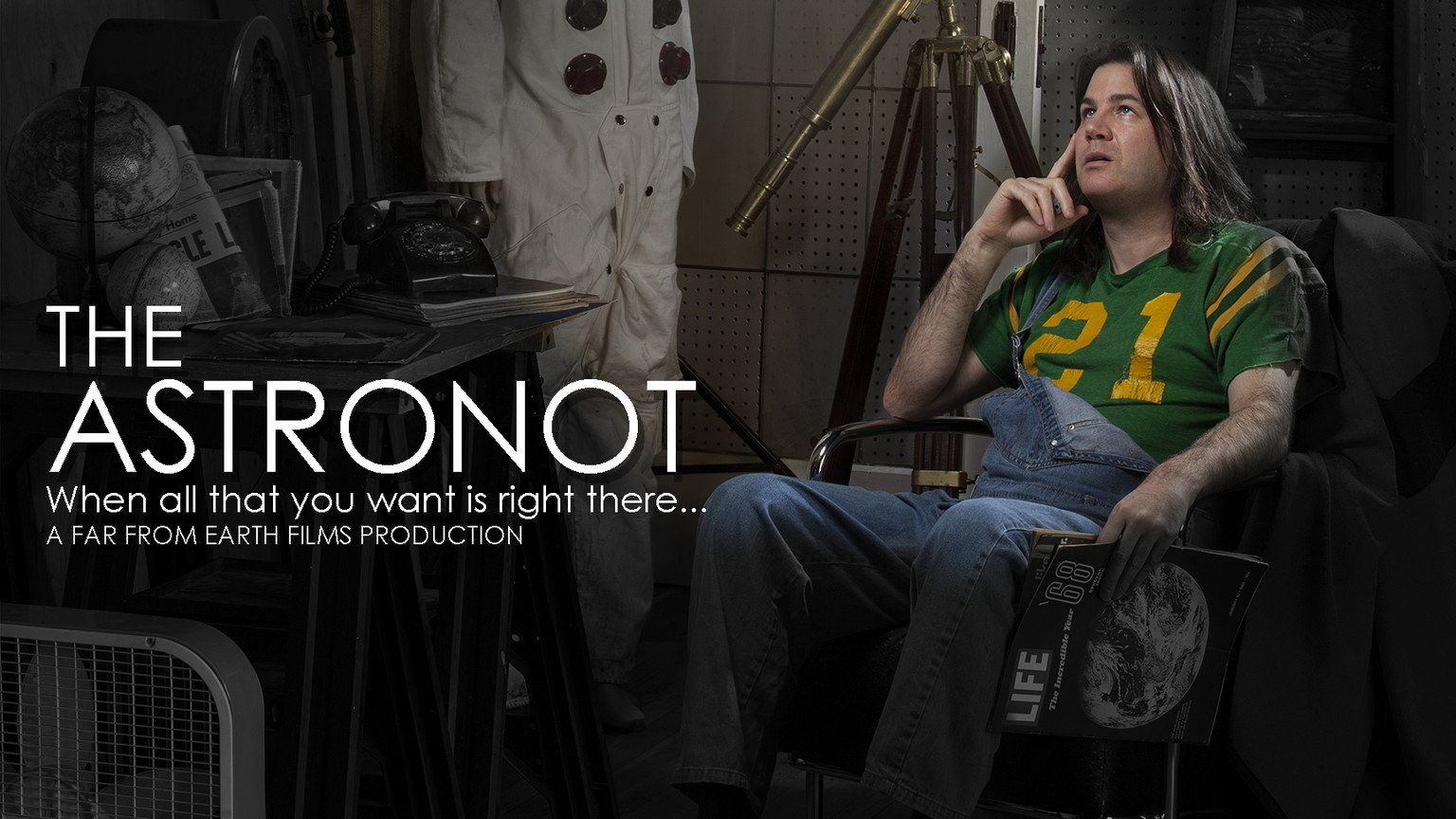
Comedy, drama, by Tim Cash, United States, 2018.
Daniel McKovsky is a lost soul wandering the universe. Alone for 30 years he spends his nights staring at the sky with a brass telescope as his only companion. As she looks up, his mind flashes back to that day when as a boy his father hadn't returned from World War II. Having already lost his mother in childbirth, this second stroke sends Daniel down a dark path of isolation deep in the woods of central Oregon. While staring at the moon in the 1950s and 60s, Daniel dreams of becoming an astronaut. The irony though is that he rarely ventures far from his surroundings. The only spark in his life at that moment is the space race between the United States and the Soviet Union to become the first nation to reach the moon. In 1969, a young postal worker named Sandy walks up his driveway with a package for him. It is the antithesis of Daniel; outgoing and vivacious compared to his quiet and reserved nature.
The Astronot is the singular story of a naive and pure character who in some respects recalls the famous Forrest Gump, but unlike him is destined to always be among the losers. From childhood to adulthood, Daniel never loses his enthusiasm for life, even if he has to be content only with picking up metal objects in a wasteland and lives completely alone after losing both parents. The Astronot is a romantic comedy with a vintage aesthetic, set in a remote rural area in the United States. Despite the funny tone, however, life events have a dramatic impact on Daniel's life, almost like a curse, a continuous betrayal of existence that makes fun of a fragile soul. A funny character who experiences tragic situations and creates a strong empathy with the public.
LANGUAGE: English
SUBTITLES: Spanish, French, German, Portuguese
Comedies of the 50s
The 1950s are the decade of explosive color and apparent optimism. Yet, beneath the glossy Technicolor surface, masters like Billy Wilder began to corrode the American Dream with humor that was bolder, brasher, and more sexually suggestive. While Hollywood created immortal icons like Marilyn Monroe, comedy in Europe took revolutionary paths: Jacques Tati redefined the geometry of the visual gag, and Italy laid the foundations for the social satire that would become legendary.
Mr. Hulot’s Holiday (1953)

Les vacances de Monsieur Hulot (Mr. Hulot’s Holiday) is a 1953 French comedy directed, co-written by, and starring Jacques Tati. The film introduced audiences to Tati’s iconic, pipe-smoking alter ego, Monsieur Hulot. Arriving at a modest seaside resort for his annual vacation, the polite but hopelessly clumsy Hulot attempts to enjoy his time. The film lacks a traditional plot, instead presenting a series of masterful comedic vignettes. Hulot’s well-meaning actions—from playing tennis to trying to dine quietly—inadvertently disrupt the rigid routines and social pretensions of the other middle-class guests, exposing the absurdity of their behavior.
A landmark of visual and sonic comedy, Mr. Hulot’s Holiday solidifies Tati’s place alongside silent masters like Chaplin and Keaton. Tati crafts intricate sight gags that unfold in meticulously composed wide shots. Dialogue is famously minimized, reduced to an unintelligible background murmur, while the soundtrack is built from exaggerated sound effects (like a perpetually squeaking dining room door) that become punchlines in themselves. A gentle, black-and-white satire on the absurdities of modern leisure and conformity, the film—featuring an iconic score by Alain Romans—is celebrated as one of the greatest and most influential comedies ever made.
Equinox Flowers (1958)

Equinox Flower (彼岸花, Higanbana) is a 1958 Japanese drama, notable for being the first feature film directed by Yasujirō Ozu in color. The film, based on a novel by Ton Satomi (not Ozu), stars Shin Saburi as the protagonist Wataru Hirayama, a Tokyo businessman. The plot centers on the generation gap and the conflict between tradition and modernity: Hirayama, who has always supported freedom of choice for his friends’ children, faces a crisis when his own daughter, Setsuko (Ineko Arima), rejects an arranged marriage and announces she wants to marry a man she has chosen herself (Keiji Sada). The cast also includes Kinuyo Tanaka (as the wife) and Setsuko Hara (as a family friend).
The film explores, with Ozu’s usual subtlety, a conservative father’s difficulty in accepting social change and the autonomy of the new generation. The film was not presented in competition or awarded at the Cannes Film Festival, but it remains a pivotal work for its masterful use of color (Agfacolor) and its profound analysis of family relationships in post-war Japan.
Giants and Toys (1958)
![Giants and Toys (1958) Original Trailer [FHD]](https://blog.indiecinema.co/wp-content/plugins/wp-youtube-lyte/lyteCache.php?origThumbUrl=https%3A%2F%2Fi.ytimg.com%2Fvi%2FzV1W3kqdjSg%2F0.jpg)
Giants and Toys (巨人と玩具, Kyojin to gangu) is a brazen and frenetic 1958 Japanese satire directed by Yasuzō Masumura. Based on a novel by Takeshi Kaikō, the film stars Hiroshi Kawaguchi, Hitomi Nozoe, and Yûnosuke Itō. The plot is set in the ruthless world of post-war advertising, where three candy companies (World, Giant, and Apollo) are locked in a fierce and absurd marketing war. The ambitious advertising chief for World Caramel, Goda (Itō), and his young protégé, Nishi (Kawaguchi), discover Kyoko (Nozoe), a working-class girl with crooked teeth, and decide to transform her into the mascot for their new campaign.
Dressed in a space suit and armed with a ray gun, Kyoko is catapulted to mindless “idol” fame, while the competition between the companies takes on near-military tones. Masumura uses this premise to launch a caustic, high-energy attack on nascent mass consumerism, media manipulation, and the dehumanization of Japan’s corporate world. With its bold use of color and widescreen, Giants and Toys is considered a foundational film of the Japanese New Wave, praised for its sharp social critique and cynical humor.
The Kid
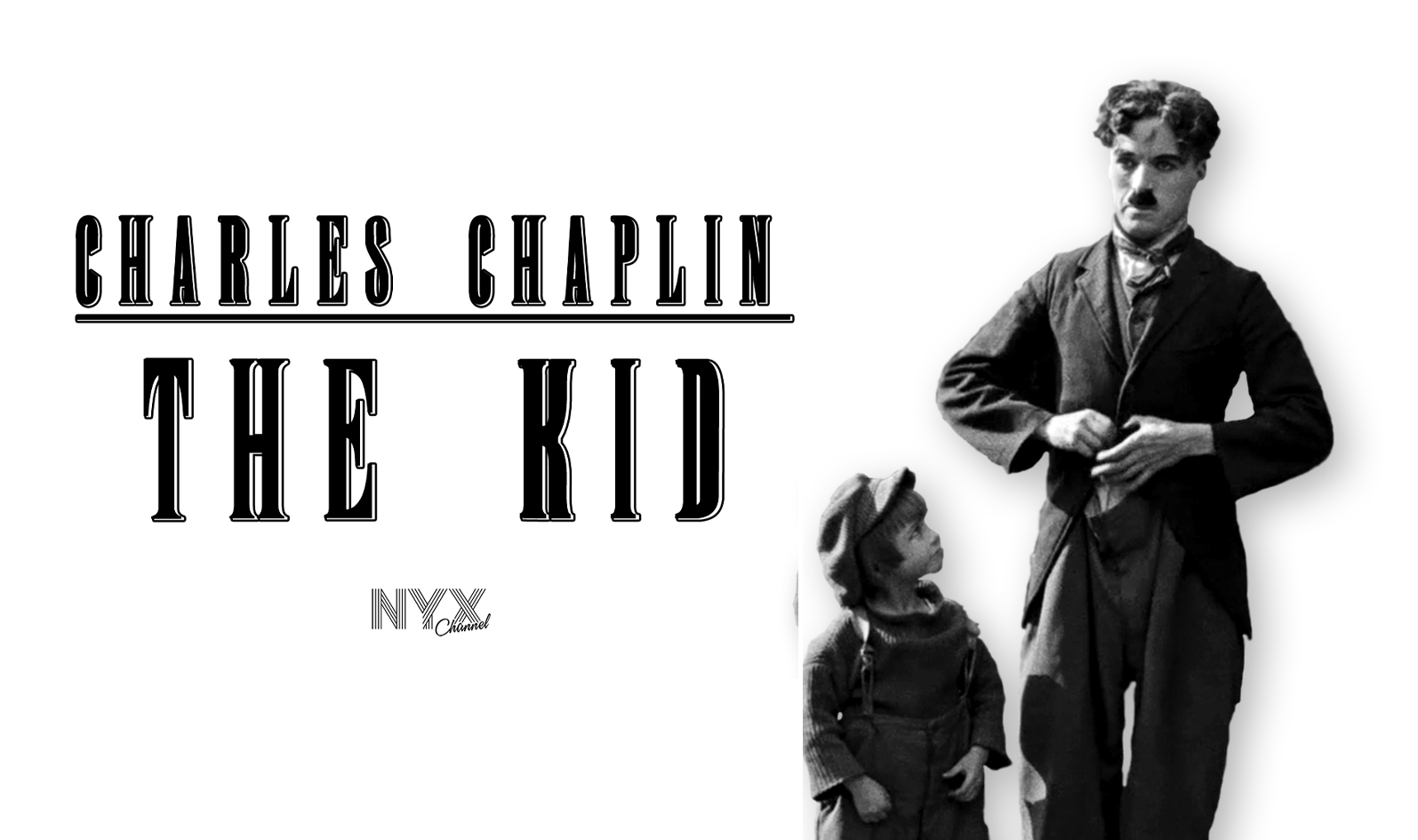
By Charlie Chaplin, Comedy, United States, 1921.
Charlie Chaplin writes, produces independently, directs and interprets his first feature film, a masterpiece in the history of cinema which after a century keeps its charm perfectly intact. A poor woman abandons her son in a luxury car hoping that the wealthy owner will take care of the baby. But it will be the tramp Charlot who will find him. Remastered in high definition.
LANGUAGE: english
SUBTITLES: italian
Big Deal on Madonna Street (1958)

A ragtag group of petty thieves from the Roman suburbs, led by the failed boxer Peppe “er pantera” (Vittorio Gassman), plans a seemingly easy heist: robbing the state-run pawn shop. Aided by a retired thief, Dante (Totò), who explains the “science” of the theft in an unforgettable lesson, the gang of incompetents attempts to carry out a plan that turns into a complete and comical disaster.
Mario Monicelli’s I soliti ignoti (original title) is the seminal work that marks the official birth of the Commedia all’italiana (Comedy, Italian Style). It is a fundamental transitional film that takes the aesthetics and settings of Neorealism (the poor suburbs, misery, the struggle for survival) and reinterprets them through the lens of farce, irony, and bitterness.
The film is an explicit and brilliant parody of French film noir, particularly Rififi, a dark film about a perfect heist. But where noir was fatalistic and tragic, Monicelli finds humanity, absurdity, and failure. The film’s genius lies in its ensemble cast (Gassman, Mastroianni, Totò, Claudia Cardinale) and its ability to make these “little hustlers” “likable.” They are not professional criminals, but poor devils trying the heist to make ends meet.
Some Like It Hot (1959)

Chicago, 1929. Two penniless musicians, saxophonist Joe (Tony Curtis) and bassist Jerry (Jack Lemmon), accidentally witness the St. Valentine’s Day Massacre. To escape the gangsters who want them dead, they disguise themselves as women (Josephine and Daphne) and join an all-female jazz orchestra traveling to Florida. There, they both fall for the singer and ukulele player, Sugar “Kane” (Marilyn Monroe).
Considered by many critics and polls to be the greatest comedy of all time, Billy Wilder’s Some Like It Hot is a perfect comic machine. It is the ideal meeting point between the screwball farce of the 1930s and Wilder’s sophisticated cynicism. It is a masterclass in writing, pacing, and tonal management.
The film tackles incredibly audacious and subversive themes for 1959, bypassing the Hays Code with diabolical mastery. It is a comedy about “cross-dressing” that becomes a “problematization of sexual identity.” Wilder and co-writer I.A.L. Diamond explore gender fluidity, homosexuality (the millionaire Osgood courting Daphne/Jerry), and the performative nature of male and female identity.
Comedies of the 60s
The 1960s mark the end of innocence. It is the decade of cultural revolution, and comedy becomes the mirror of this rupture, transforming into a tool of protest. From Kubrick’s apocalyptic black humor ridiculing the Cold War to the definitive explosion of Commedia all’Italiana dissecting the vices of the economic boom. This is an era of total experimentation, where irony becomes a weapon against authority, and old bourgeois values are demolished one laugh at a time.
Zazie in the Metro (1960)

Zazie in the Metro (Zazie dans le métro) is an anarchic and surreal 1960 comedy directed by Louis Malle. The film is a cinematic adaptation of the novel of the same name by Raymond Queneau. The plot follows Zazie (played by the young Catherine Demongeot), a restless and rebellious ten-year-old girl who arrives in Paris from the provinces to stay with her uncle Gabriel (Philippe Noiret), an eccentric man who works as a female impersonator. Zazie’s greatest desire is to ride the Paris Métro, but her plans are immediately frustrated by a major transport strike.
Forced to explore the city above ground, Zazie, along with her uncle and a cast of bizarre characters, gets involved in a series of chaotic and wild adventures. Shot entirely in Paris, the film is celebrated for its slapstick humor, sharp satire, innovative use of editing, and its vibrant portrayal of the French capital. Zazie in the Metro explores themes of rebellion and the discovery of the city through a child’s eyes. The cast also features appearances by Jean-Pierre Cassel and Jeanne Moreau in cameos.
Zero for Conduct
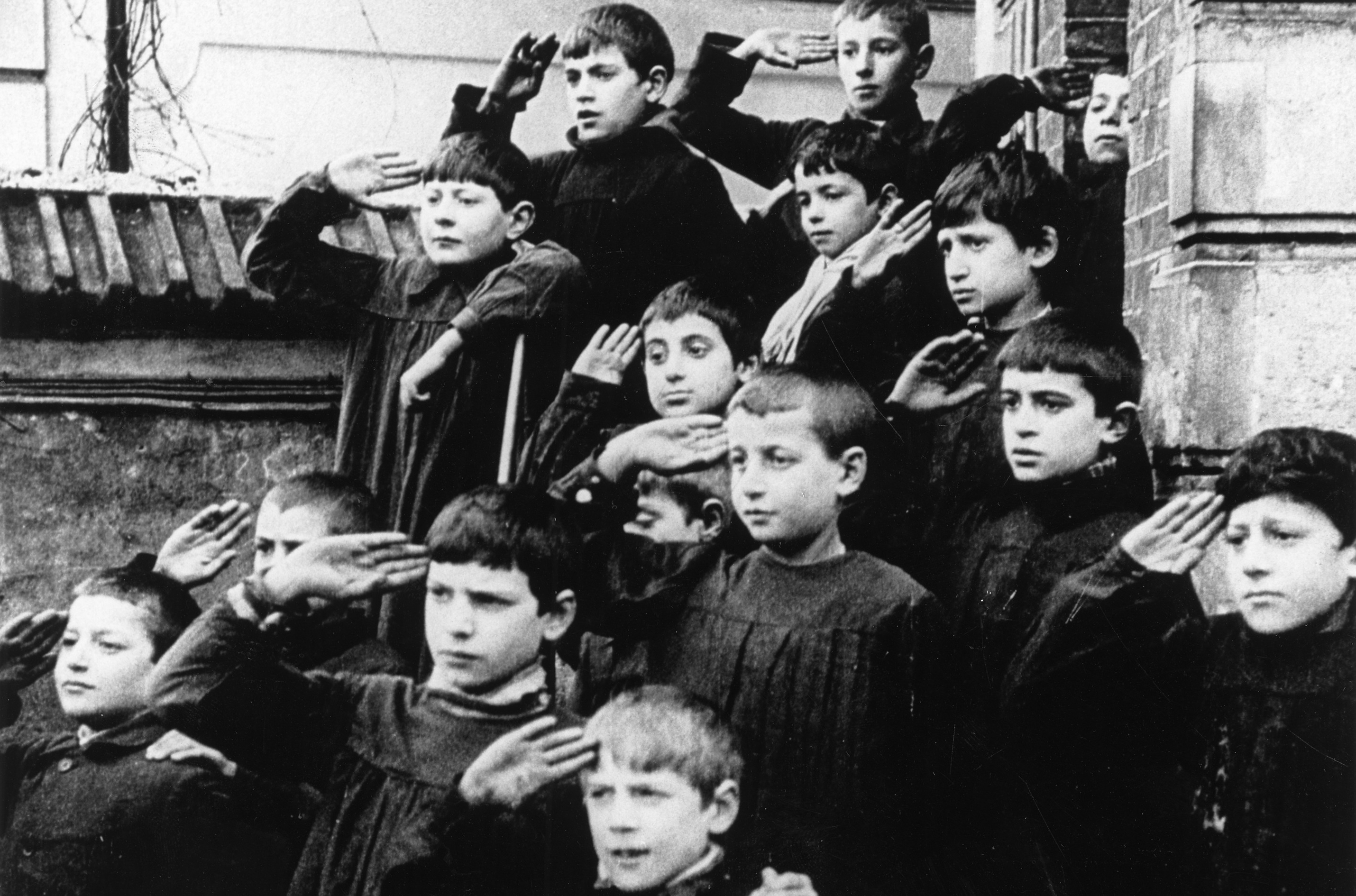
Comedy, by Jean Vigo, France, 1933.
The holidays are over and it's time for the kids to return to the terrible boarding school, run by obtuse and conformist tutors, unable to encourage the growth of any spirit of freedom and creativity. The only thing these austere professors are capable of is assigning a "zero" for conduct. But the boys decide to rebel with the complicity of the new supervisor, Huguet, different from all the others. Thus a real revolution is unleashed. Jean Vigo describes the children's yearning for freedom with audacity and a subversive spirit, with a ruthless critique of the scholastic institution, which closely resembles certain memorable sequences from Fellini's cinema. Perhaps the Italian filmmaker had seen the Vigo film? It seems very, very likely. The film was banned by French censorship and did not have a public screening until 1945.
Food for thought
The conditioning of the family, the school and the mass media are probably the main causes of the existential failure of millions of people. They are unidentified enemies, from which it is difficult to defend oneself, which cause the loss of self-esteem and the creativity necessary to achieve ambitious goals. Social, cultural and religious conditioning are a fundamental theme in the life of every human being, and one of the main topics of the filmographies of masters of cinema such as Fellini, Truffaut, and many others.
LANGUAGE: French
SUBTITLES: English, Spanish, German, Portuguese
Late Autumn (1960)
![Late Autumn (1960) Original Trailer [FHD]](https://blog.indiecinema.co/wp-content/plugins/wp-youtube-lyte/lyteCache.php?origThumbUrl=https%3A%2F%2Fi.ytimg.com%2Fvi%2FDXJr9ndHmXI%2F0.jpg)
Late Autumn (秋日和, Akibiyori) is a 1960 Japanese drama film directed by Yasujirō Ozu. Shot in masterful Agfacolor, the film is based on a novel by Ton Satomi and is often considered a thematic “remake” of Ozu’s own Late Spring. The plot centers on Akiko (played by Setsuko Hara), the widow of a deceased friend, and her daughter Ayako (Yoko Tsukasa). On the anniversary of their friend’s death, three middle-aged men (played by Shin Saburi, Chishu Ryu, and Nobuo Nakamura) decide it is time for Ayako to marry. However, their matchmaking attempts become complicated, partly due to their own unresolved affections for the mother, Akiko.
The film delicately explores themes of marriage, filial duty, and loneliness in post-war Japan. The main conflict arises from misunderstandings: Ayako is happy living with her mother and resists the marriage attempts, fearing her mother will be left alone. To free her daughter and allow her to marry (the man she has chosen, played by Keiji Sada), Akiko pretends to be considering remarriage herself. The ending, typical of Ozu’s poetics, is bittersweet: Ayako marries, leaving Akiko to face her solitude. The film also features Mariko Okada and Miyuki Kuwano.
The Apartment (1960)

C.C. “Bud” Baxter (Jack Lemmon) is a mediocre employee at a large New York insurance company. To advance his career, he lends his apartment to his superiors for their extramarital affairs. The situation gets complicated when he discovers that the girl he is secretly in love with, the elevator operator Fran Kubelik (Shirley MacLaine), is the mistress of his boss, the cynical Mr. Sheldrake.
If Some Like It Hot was the pinnacle of farce, The Apartment is Billy Wilder’s humanist masterpiece and the birth of the modern dramedy. It is a romantic comedy that dares to talk about loneliness, corporate corruption, alienation, and attempted suicide. Wilder uses the structure of comedy to deliver a fierce and bittersweet critique of the inhumanity of the corporate world, where everything, including human beings, is a commodity.
The film was considered “licentious” and controversial upon its release, but today it is celebrated for its profound morality. Bud’s transformation, as he ultimately chooses to become a “human being” rather than an “executive,” is one of the most moving in cinema history.
Dr. Strangelove (1964)
![Dr Strangelove - Official Trailer [1964] HD Remaster](https://blog.indiecinema.co/wp-content/plugins/wp-youtube-lyte/lyteCache.php?origThumbUrl=https%3A%2F%2Fi.ytimg.com%2Fvi%2FIE9CmX15PYA%2F0.jpg)
A paranoid American general, Jack D. Ripper, convinced that the Soviets are contaminating America’s “precious bodily fluids,” orders an unauthorized nuclear attack on the Soviet Union. In the Pentagon’s “War Room,” President Merkin Muffley (Peter Sellers) and his generals, including the hawkish “Buck” Turgidson, desperately try to stop the plane and the inevitable Russian response: the terrifying “Doomsday” Machine.
Stanley Kubrick takes the greatest fear of his generation—nuclear annihilation—and turns it into the blackest, most grotesque, and most terrifying farce ever conceived. Dr. Strangelove or: How I Learned to Stop Worrying and Love the Bomb is the absolute peak of black comedy and political satire. It is a film that dares to laugh at the apocalypse.
Kubrick adopts the horizon of grotesque comedy to highlight the madness of his characters. The Cold War is not depicted as an ideological clash, but as the result of “phallocentric machismo” and bureaucratic ineptitude. The logic of “Mutually Assured Destruction” is taken to its extreme and absurd consequences.
The Producers (1967)

The Producers is a 1967 American satirical comedy film, marking the directorial debut of Mel Brooks. The film stars Zero Mostel, Gene Wilder, Kenneth Mars, and Dick Shawn. The plot follows Max Bialystock (Mostel), a once-famous but now washed-up Broadway producer, and Leo Bloom (Wilder), a timid and neurotic accountant. Bloom casually discovers that a dishonest producer could make more money from a “flop” than a hit by overselling shares in a show destined to fail and keeping the remainder. The two decide to stage the biggest disaster in Broadway history, selecting a musical titled “Springtime for Hitler,” written by a neo-Nazi fanatic (Mars).
Considered a classic of cinematic satire, the film explores themes of greed, corruption, and show business taboos. Its outrageous humor and sharp satire of Nazism and the world of Broadway were groundbreaking for their time. The Producers was a critical success and established Mel Brooks as a comedic auteur. The film won the Academy Award for Best Original Screenplay (Mel Brooks) and received a nomination for Best Supporting Actor (Gene Wilder). It also won the Writers Guild of America Award for Best Written American Comedy.
Playtime (1967)

Monsieur Hulot, Jacques Tati’s iconic character, gets lost in a futuristic and dehumanizing Paris, made of glass skyscrapers, labyrinthine offices, and technological gadgets. His path crosses with a group of American tourists, generating a series of meticulously choreographed visual gags that culminate in the anarchic and liberating chaos of a luxury restaurant on its opening night.
Included in this list as a fundamental influence for independent auteurs like Wes Anderson, Playtime is a revolution in visual comedy. Tati abandons traditional narrative and a single protagonist to create an epic urban symphony. The real protagonist is “Tativille,” the modernist and sterile city that the director had specially built for the film. Humor is not delivered through jokes or a single character, but through a complex choreography of small incidents and misunderstandings that occur simultaneously in the enormous 70mm format. Playtime is a satirical and visionary critique of modern architecture and the alienation it produces, a work that demands an active viewer, ready to get lost in its infinite details.
Take the Money and Run (1969)

It is a 1969 film written, directed and performed by Woody Allen. It is a surreal comedy that follows the life of Virgil Starkwell, a clumsy and bumbling criminal who tries in vain to carry out robberies. The film uses an omniscient narrator to poke fun at Virgil’s life and failures, and is known for its visual humor and experimental narrative. Take the Money and Run” is considered one of Allen’s early blockbuster films and has had a lasting impact on popular culture. The plot follows the life of Virgil Starkwell, played by Woody Allen, from childhood to adulthood, focusing on his criminal career.
Virgil is a clumsy and clumsy petty thief who tries to pull off bank robberies and other places, but always gets caught by the authorities. Despite being a criminal, Virgil is portrayed as a comical and hapless character whose actions always lead to unpredictable and amusing consequences. Throughout the film, the character marries twice, is in and out of prison, and finds himself embroiled in increasingly bizarre situations. The narrative is supported by an omniscient narrator who comments and jokes about Virgil’s life, and the film also has some experimental elements, such as the use of black and white screens to represent the actions of the character.
Comedies of the 70s
This is the decade of absolute freedom and neurotic intellectualism. While Woody Allen transforms psychoanalysis into comic art, redefining the romantic comedy, Monty Python dismantles the very logic of humor with their anarchic surrealism. It is an era with no remaining taboos: Mel Brooks’ irreverent parody and social grotesque become powerful tools to exorcise the anxieties of a society in crisis. The laughter of the 70s is cerebral, unpredictable, and magnificently incorrect.
Le Distrait (1970)

Le Distrait (English: The Distracted One) is a 1970 French comedy marking the directorial debut of comic actor Pierre Richard. The film stars Richard himself, Bernard Blier, Marie-Christine Barrault, and Maria Pacôme. The plot centers on Pierre Malaquet (Richard), a young man who is hopelessly distracted and dreamy. His overbearing mother, Glycia (Pacôme), gets him a job at a large Parisian advertising agency run by Mr. Guiton (Blier). Hired into the creative department, Pierre unleashes chaos with his clumsiness and his surreal, literal-minded advertising ideas (like the famous “Klan” toothpaste campaign), infuriating the executives while charming his colleague Lisa Gastier (Barrault).
Shot in color, the film is a sharp satire of the 1970s advertising world and consumerism. Le Distrait is essential for establishing Pierre Richard’s iconic screen persona: the naive, poetic individual whose distraction acts as an inadvertent critique of the absurdity of modern life. Before becoming an international star paired with Gérard Depardieu, Richard defined his unique humor here, a blend of slapstick and tenderness that cemented the film as a classic of French comedy.
Bananas (1971)

Bananas is a 1971 satirical and surreal comedy film, written, directed by, and starring Woody Allen. The film follows the adventures of Fielding Mellish (Allen), a neurotic and awkward product tester from New York. Infatuated with the political activist Nancy (Louise Lasser), Mellish clumsily tries to impress her. After she breaks up with him for not being enough of a “leader,” he suffers an existential crisis and travels to the fictional Latin American republic of San Marcos. There, through a series of chaotic events, he gets involved in a revolution and, much to his own surprise, finds himself becoming its leader.
The film, one of Allen’s early works, is a sequence of paradoxical gags satirizing international politics, “banana republic” dictatorships, and revolutionary movements. The main plot serves as a pretext for a series of absurd comedic scenes, including a farcical trial where Mellish is accused of treason and a famous “Wide World of Sports”-style broadcast commentating on both the dictator’s assassination and Mellish’s wedding night. The eccentric humor and sharp social critique are characteristic of the more slapstick phase of Allen’s filmography.
Harold and Maude (1971)

Harold and Maude (1971) is an influential American black comedy-drama directed by Hal Ashby, based on a screenplay Colin Higgins wrote as his master’s thesis. The film stars Bud Cort as Harold Chasen, a wealthy young man obsessed with death, who expresses his alienation by staging elaborate fake suicides to shock his indifferent mother (Vivian Pickles) and by attending strangers’ funerals. At one funeral, he meets Maude (Ruth Gordon), an eccentric 79-year-old who celebrates life with anarchic joy. The two form a deep, romantic bond that defies all social conventions.
Although met with a lukewarm box office response upon its release, Harold and Maude—filmed in the San Francisco Bay Area—has since become one of the most celebrated and beloved cult films of all time. Its unique blend of macabre humor, critique of conformity, and celebration of individuality has influenced generations of filmmakers. The performances by Cort and Gordon both earned Golden Globe nominations. The film is inextricably linked to its iconic soundtrack, composed and performed by Cat Stevens, which features signature songs like “If You…”
Blazing Saddles (1974)

To route a new railroad through the town of Rock Ridge, the corrupt attorney Hedley Lamarr decides to empty it. As a final move, he appoints a Black man, Bart (Cleavon Little), as the new sheriff, hoping the citizens’ racism will lead to chaos. Bart, however, turns out to be more clever than expected and, with the help of an alcoholic gunslinger, the “Waco Kid” (Gene Wilder), he organizes the resistance.
Blazing Saddles is parody that becomes social satire. Mel Brooks, one of the masters of American farce, doesn’t just make fun of the stereotypes of the Western genre; he uses them as a Trojan horse to frontally attack the racism, corruption, and hypocrisy of American society.
The film is a bombardment of gags, anachronisms (a Yiddish-speaking Indian, a cameo by Duke Ellington), and nonsense, but beneath the demented surface (like the famous bean scene) lies a sharp critique. Released in 1974, the film pushed the boundaries of what was permissible in a mainstream comedy, using the racial slur so blatantly and repeatedly as to render it absurd and, ultimately, powerless.
Monty Python and the Holy Grail (1975)

King Arthur and his Knights of the Round Table embark on a surreal and shoestring-budget quest for the Holy Grail. Their journey leads them to face absurd obstacles: an invincible black knight who continues to fight even after being dismembered, rude French knights who taunt them, the dreaded Knights who say “Ni!”, a killer rabbit, and a castle full of tempting virgins.
If Mel Brooks’s American comedy focused on parodying genres, the British comedy troupe Monty Python focused on parodying logic. Monty Python and the Holy Grail is the manifesto of their absurdist, anti-narrative, and philosophical humor. It is a deconstruction not only of the Arthurian myth, but of the very concept of an “epic film” and “plot.”
Made on a shoestring budget, the film transforms every production limitation into a brilliant insight. No money for horses? The knights mime riding while servants bang coconuts together. This gag is not just funny; it is a metacinematic statement that exposes the artificiality of the staging.
Annie Hall (1977)

Neurotic New York comedian Alvy Singer (Woody Allen) recounts his failed relationship with the eccentric and charming Annie Hall (Diane Keaton). Analyzing their story, from meeting to falling in love to the painful breakup, Alvy speaks directly to the audience, using non-linear flashbacks, animated sequences, and surreal encounters to explore love, identity, and the irrationality of human relationships.
Annie Hall is the film that changed romantic comedy forever, and one of the rare cases where a pure comedy won the Oscar for Best Picture, beating Star Wars. Woody Allen took a tired and predictable genre and smashed it to pieces, reconstructing it in a way that was fragmented, neurotic, intellectual, and painfully honest.
It is a profoundly metacinematic work. Alvy Singer breaks the fourth wall to complain to the audience, pulls Marshall McLuhan from behind a poster to win an argument in a movie line, and uses subtitles to show the characters’ conflicting thoughts while they talk about something else. Allen isn’t telling a love story; he’s analyzing a love story, and in doing so, he exposes the artificiality of the genre itself.
Casotto (1977)

Casotto (1977) is an acclaimed Italian ensemble comedy directed by Sergio Citti, who co-wrote the screenplay with Vincenzo Cerami. The film is set entirely within a single, large public beach cabin (the “casotto”) on the public beach of Ostia during a chaotic August Sunday. Inside this confined space, the stories of a gallery of characters intertwine, representing a microcosm of 1970s Italy. Among them are Teresina (a very young Jodie Foster), who is pregnant and trying to manage the situation with her boyfriend (Michele Placido), two clandestine lovers (Ugo Tognazzi and Clara Algranti) seeking a moment of intimacy, and a grandfather (Paolo Stoppa) with his granddaughters.
The film, which boasts an all-star cast that also includes Gigi Proietti, Franco Citti, Ninetto Davoli, and a cameo by Catherine Deneuve, is a grotesque satire on Italian morality and the impending sexual revolution. Using the claustrophobic location, Citti and Cerami stage the hypocrisies, desires, and frustrations of society. Casotto is considered a classic of the Commedia all’italiana (Italian-style comedy) genre, praised for its freshness and ability to capture contemporary reality, and it won the prestigious David di Donatello Award for Best Screenplay.
Comedies of the 80s
The 80s are the era of hedonism and the “High Concept.” Comedy ceases to be a minor genre and evolves into a spectacular blockbuster, blending with sci-fi and adventure (think Ghostbusters or Back to the Future). Yet, it is also the decade where John Hughes codified the language of modern adolescence, treating teen angst with unprecedented dignity. This is fast, colorful, and self-referential cinema that shaped the pop imagination of entire generations.
Airplane! (1980)

Former fighter pilot Ted Striker (Robert Hays), traumatized by war and with a “drinking problem,” boards a flight to win back his ex, the stewardess Elaine. When the entire crew and half the passengers fall ill from food poisoning, Ted must overcome his fears and land the plane, guided by a bizarre air traffic controller.
Airplane! is the “definitive manifesto of contemporary cinematic parody.” The ZAZ trio of directors (Zucker, Abrahams, Zucker) does not just parody a genre, like Mel Brooks; they perform a “systematic deconstruction” that changed comedy forever. The film is an almost shot-for-shot parody of a forgotten 1970s disaster movie, and this manic fidelity is the source of its genius.
The ZAZ directors revolutionized comic timing. The film is a “continuous and relentless bombardment” of jokes, with a gags-per-minute rate that gives no respite. The comedy is multi-layered: literal puns (“Surely you can’t be serious!” “I am serious. And don’t call me Shirley.”), slapstick, visual nonsense, and cinephile parodies.
This Is Spinal Tap (1984)

Filmmaker Marty Di Bergi (Rob Reiner) follows the fictional British heavy metal band “Spinal Tap” during their disastrous American tour promoting their new album “Smell the Glove.” Between amplifiers that “go to eleven,” comically small Stonehenge sets, drummers who die in bizarre accidents, and their declining popularity, the band faces an existential crisis.
This Is Spinal Tap didn’t just parody the “rockumentary” genre; it practically invented it. While not the first mockumentary in history, it is the film that “established the template” and language that influenced everything that came after, from The Office to Parks and Recreation and What We Do in the Shadows.
Its genius lies in its authenticity. The film is so accurate in capturing the “musical pretensions,” fragile egos, stupidity, and dysfunctional dynamics of rock bands that many famous musicians, upon seeing it, thought it was a real documentary. The humor is not shouted; it is “overheard,” based on largely improvised dialogue that sounds perfectly true.
Ghostbusters (1984)

Three quirky scientists and parapsychologists, Peter Venkman (Bill Murray), Ray Stantz (Dan Aykroyd), and Egon Spengler (Harold Ramis), are kicked out of the university. They decide to go into business for themselves, opening a “ghost removal” service in New York. When a portal to another dimension opens in a Central Park apartment building, the Ghostbusters become the city’s only, and unlikely, hope.
Ghostbusters is a “miraculous” film, a cultural event that left an indelible mark on pop culture. It is the rare example of a high-concept (comedy + horror + special effects) that works perfectly. The film redefined the summer blockbuster, proving that a comedy could have the same epic scale as an action or science fiction film.
Its success is not only due to the state-of-the-art special effects for the time, but to the incredible chemistry of the cast, hailing from the orbit of Saturday Night Live. The film has an “intelligent” and “adult” humor. The script by Aykroyd and Ramis is filled with pseudo-scientific jargon, but it is Bill Murray’s slacker, cynical, and detached attitude as Peter Venkman that provides the perfect counterpoint to the impending apocalypse.
Stranger Than Paradise (1984)

Willie, an apathetic Hungarian immigrant living in New York, has his routine disrupted by the arrival of his sixteen-year-old cousin, Eva. After a reluctant ten-day cohabitation, Willie and his friend Eddie decide to visit her in Cleveland. Their journey, marked by existential boredom and deadpan humor, eventually leads them to a desolate Florida, redefining the concept of the American “paradise.
Stranger Than Paradise is not just a film; it’s a manifesto. With its minimalist aesthetic, grainy black-and-white, and vignette structure separated by fades to black, Jim Jarmusch laid the groundwork for modern American independent cinema. The film is a radical departure from the high-energy comedies of the ’80s, replacing gags with a “dramatic nonchalance” that captures a deep sense of alienation. The comedy arises from the void, from awkward silences, and the characters’ inability to communicate. Jarmusch transforms the American landscape into a desolate, anonymous space, a non-place where the protagonists wander aimlessly. It is the birth of the “slacker” archetype, the philosophical loafer whose apathy is a form of passive resistance against a meaningless world.
Heathers (1988)

Veronica Sawyer is part of the most popular and feared clique at her high school, dominated by three girls named Heather. Tired of their tyranny, Veronica finds a kindred spirit in the rebellious new student, J.D. Their relationship takes a dark turn when a harmless prank escalates into a murder, disguised as a suicide. Soon, eliminating the most obnoxious classmates becomes a macabre and satirical habit.
If John Hughes’ films were the teenage dream of the ’80s, Heathers was its satirical nightmare. Michael Lehmann’s film, based on Daniel Waters’ vitriolic screenplay, is the quintessential dark comedy, a work that fiercely dismantles the clichés of teen cinema. Its stylized and iconic dialogue (“What’s your damage?”) became a generational lexicon, a verbal weapon against the superficiality and cruelty of high school hierarchies. The film mixes comedy and shocking violence, using black humor to critique social conformity, bullying, and the media’s tendency to sensationalize tragedy. Heathers proved that teen comedy could be intelligent, subversive, and dangerously funny.
She’s Gotta Have It (1986)

She’s Gotta Have It is the 1986 debut feature film written, directed, produced, and edited by Spike Lee. Shot in black and white on a limited budget ($175,000), the film centers on Nola Darling (Tracy Camilla Johns), a young, independent artist in Brooklyn. Nola asserts her sexual freedom and refuses monogamy, juggling three very different lovers: Jamie Overstreet (Tommy Redmond Hicks), the stable and protective partner; Greer Childs (John Canada Terrell), a wealthy and arrogant model; and Mars Blackmon (played by Lee himself), a comedic, immature, sneaker-obsessed “B-Boy.
The film explores themes of female empowerment, sexual politics, and African-American identity with an adventurous visual style and unprecedented frankness. She’s Gotta Have It became a surprise commercial success (grossing over $7 million) and a critical phenomenon. It is considered a landmark work that launched Lee’s career and helped usher in a new era for American independent film and the “New Black Cinema” of the 1980s, thanks to its wise, funny, and still-relevant voice.
Mortacci (1989)

Mortacci is a 1989 grotesque ensemble film directed by Sergio Citti, who co-wrote the screenplay with Vincenzo Cerami. Set almost entirely in the cemetery of a small Italian town, the film chronicles the nightly gatherings of the deceased buried there. Waiting to “pass on” completely, the dead are condemned to remain in limbo as long as the last living person who remembers them is still alive. Their nocturnal gossip and squabbles are interrupted by the arrival of Lucillo (Sergio Rubini), a soldier who has returned from Lebanon after being presumed dead by everyone.
Lucillo’s arrival causes chaos not only among the dead but, more importantly, among the living. His greedy fellow townspeople have built a lucrative business of pilgrimages and souvenirs based on his status as a “fallen hero.” His return threatens their enterprise, leading the community to a drastic solution: forcing Lucillo to die “for real” to preserve the fiction. Through this biting satire, Citti explores themes of memory, social hypocrisy, and exploitation. The film, which also features Franco Citti and Maurizio Mattioli, received two David di Donatello Award nominations: Best Original Screenplay (for Citti and Cerami) and Best Supporting Actor (for Sergio Rubini).
Comedies of the 90s
The 90s are the decade of contamination and independence. While Jim Carrey pushes physical comedy to new extremes of elasticity, indie cinema rewrites the rules with the “slacker movie” (think Kevin Smith or Linklater), celebrating the art of doing nothing through brilliant, surreal dialogue. It is an era of contrasts: the romantic comedy reaches its global commercial peak, yet simultaneously, an “incorrect” and gross-out humor explodes, definitively shattering the barriers of good taste.
Clerks (1994)

Dante Hicks is called in to cover a shift at the convenience store where he works on his day off. His day turns into an odyssey of bizarre customers, philosophical discussions about the Death Star in Star Wars, and relationship crises. Next to him, his friend Randal Graves, a clerk at the adjacent video store, elevates laziness and sarcasm to an art form, making Dante’s day even more chaotic and memorable.
Clerks is the manifesto of 1990s independent cinema, a triumph of the “write what you know” ethic. Shot in black and white in the actual store where he worked, with a shoestring budget financed by credit cards, Kevin Smith’s film is a celebration of pop culture and male friendship. Its raw aesthetic is not just an economic necessity but a statement of intent: the focus is entirely on the dialogue. The conversations between Dante and Randal, dense with movie references, obscenities, and existential reflections, are the true engine of the film. Clerks ennobled the everyday, finding deep and universal humor in the monotony of a dead-end job and proving that a great story doesn’t need big resources, but an authentic voice.
Living in Oblivion (1995)

Independent director Nick Reve is trying to shoot his first film, but everything that can go wrong, does go wrong. From egocentric and insecure actors to an incompetent crew, technical problems, and surreal dreams, the production is a continuous disaster. The film is divided into three parts, each exploring the nightmares and frustrations of low-budget filmmaking, blurring the lines between reality, dream, and fiction.
Living in Oblivion is the ultimate satire on independent cinema, a cult movie beloved by anyone who has ever tried to make a film. Its clever structure, which plays with color and black and white to distinguish different levels of reality, is a meta-cinematic commentary on the creative process. Director Tom DiCillo, drawing on his own experiences, creates a hilarious and deeply cynical portrait of the chaos, egos, and passion that fuel low-budget cinema. It is a bitter and funny tribute to all the dreamers who struggle to turn their vision into reality.
Bottle Rocket (1996)

Fresh out of a voluntary stay in a psychiatric hospital, Anthony is “rescued” by his friend Dignan, a hyperactive dreamer with an absurd 75-year plan to become a successful criminal. Along with their unenthusiastic accomplice Bob, they embark on a series of clumsy heists. Their journey takes them to a remote motel, where love and complications will test their friendship and criminal ambitions.
Bottle Rocket is the blueprint for Wes Anderson’s entire cinematic universe. Although visually less refined than his later works, this debut film already contains all the distinctive elements of his style: eccentric and ambitious protagonists who are hopelessly incompetent, a deadpan and melancholic humor, and a deep exploration of broken friendships and dysfunctional families. Dignan’s “75-year plan” is the emblem of Anderson’s poetics, a meticulous and almost childlike attempt to impose order on a chaotic world. The film establishes Anderson’s thematic interest in characters who create their own “slightly heightened reality,” a world where naivety clashes with harsh reality, generating a bittersweet and unmistakable comedy.
Waiting for Guffman (1996)

In the small town of Blaine, Missouri, a group of eccentric amateur actors prepares to stage a musical celebrating the town’s 150th anniversary. Led by the exuberant director Corky St. Clair, their hopes reach fever pitch when word spreads that a major Broadway critic, Mort Guffman, will be at the premiere. The anticipation for his arrival transforms the modest production into an epic struggle for fame.
With Waiting for Guffman, Christopher Guest elevated the mockumentary to an art form, creating a template he would perfect in the years to come. Based on an almost entirely improvised script, the film is a portrait as hilarious as it is affectionate of small-town dreamers. Guest’s genius lies in his precarious balance between sharp satire and genuine empathy. We laugh at the characters’ quirks, their lack of talent, and their disproportionate ambitions, but we never despise them. The film captures the passion and vulnerability behind every small amateur theater production, showing that the most effective humor comes from the careful and compassionate observation of human weaknesses.
Election (1999)

Jim McAllister, a popular high school teacher, sees his orderly life fall apart because of Tracy Flick, an over-ambitious and unbearable student running for student council president. Determined to stop her rise, McAllister convinces a popular but dim-witted athlete to run against her, triggering a spiral of fraud, betrayal, and chaos that eerily mirrors adult politics.
Election is one of the sharpest and most prescient political satires ever made. Alexander Payne uses a Nebraska high school election as a perfect microcosm to analyze the distortions of American democracy. His mastery lies in the use of multiple, unreliable narrators, which creates an ironic distance between what the characters think of themselves and the petty reality of their actions. The film cynically and intelligently explores themes like unbridled ambition, the resentment of mediocrity towards excellence, and the inherent absurdity of democratic processes. Nearly twenty years ahead of its time, Payne foresaw an era of populism, controversial candidates, and contested election results, making Election a work as funny as it is prophetic.
Rushmore (1998)

Max Fischer is an eccentric and hyperactive fifteen-year-old student at the prestigious Rushmore Academy. He is the king of extracurricular activities but an academic disaster. His life gets complicated when he falls in love with his teacher, Miss Cross, and forms an unlikely friendship with the disillusioned industrialist Herman Blume. Soon, the two friends find themselves rivals in love, leading to a bizarre and melancholic war.
With Rushmore, Wes Anderson fully defines his unmistakable aesthetic. Every element of the film, from the symmetrical composition of the shots to the meticulous production design and curated soundtrack, is a reflection of its protagonist’s obsessive and hyper-organized mind. The aesthetic is not just a style but the very substance of the film, a world built in Max’s image. The film blends a precocious and intellectual humor with a deep melancholy, exploring themes of unrequited love, grief, and the pain of growing up. Heavily influenced by the French New Wave and the cinema of Hal Ashby, Rushmore is a work that solidified Anderson as one of the most original auteurs in contemporary cinema.
The Big Lebowski (1998)

The Big Lebowski is a 1998 black comedy and cult-classic crime film written and directed by Joel and Ethan Coen. The film stars Jeff Bridges as Jeffrey “The Dude” Lebowski, an iconic Los Angeles slacker and avid bowler. His carefree life is disrupted when two thugs break into his apartment, mistaking him for a millionaire namesake, and ruin his rug. In seeking compensation for the rug, The Dude finds himself entangled in an absurd plot involving kidnapping, German nihilists, avant-garde artists, and a ransom demand.
Though met with mixed reviews upon its initial release, the film has become one of the most influential and celebrated cult movies of all time, famous for its surreal dialogue and dreamlike atmosphere. The memorable supporting cast includes John Goodman as the volatile Vietnam veteran Walter Sobchak; Steve Buscemi as the mild-mannered Donny; Julianne Moore as the artist Maude Lebowski (the millionaire’s daughter); and Philip Seymour Hoffman as the assistant Brandt. The soundtrack, supervised by T-Bone Burnett with a score by Carter Burwell, features iconic tracks from Bob Dylan and Creedence Clearwater Revival.
Drunken Master (1994)

Drunken Master II (original title: 醉拳II, Jui kuen II) is a 1994 Hong Kong action-comedy film directed by Lau Kar-leung and Jackie Chan. It serves as a sequel to the 1978 film Drunken Master and stars Chan reprising his role as Chinese folk hero Wong Fei-hung. The cast also features Ti Lung as Fei-hung’s father and a scene-stealing Anita Mui as his stepmother. The film was released in the United States by Miramax in 2000 under the title The Legend of Drunken Master.
The plot follows Wong Fei-hung as he accidentally gets caught up in a smuggling operation, led by a corrupt British consul, that is stealing ancient Chinese artifacts. Despite his father’s strict rules forbidding violence and the use of his “drunken” style, Fei-hung must utilize his incredible skill in Drunken Boxing (Zui Quan) to stop the thieves and protect China’s cultural heritage. Drunken Master II is universally regarded as one of the greatest martial arts films ever made, praised for its breathtaking choreography, humor, and Chan’s astonishing athleticism. Its fight sequences, particularly the lengthy and complex finale, are considered landmarks of the genre. The film won the Hong Kong Film Award for Best Action Choreography.
Kolja (1996)

Kolja (original title: Kolja) is a 1996 Czech drama film directed by Jan Svěrák and written by his father, Zdeněk Svěrák, based on a story by Pavel Taussig. Set in Prague in 1988, during the final months of the communist regime before the Velvet Revolution, the film stars Zdeněk Svěrák as František Louka. Louka is a once-renowned cellist who has fallen out of favor with the authorities and is forced to make a living playing at funerals. A cynical, womanizing, confirmed bachelor, his life is turned upside down when, to pay off debts, he agrees to a sham marriage with a Russian woman.
However, the woman uses the marriage to emigrate to West Germany, unexpectedly abandoning her five-year-old, Russian-speaking son, Kolja (Andrey Khalimon), with Louka in Prague. Louka finds himself forced to care for a child he cannot understand and cannot communicate with, just as the society around them is about to implode. The film movingly explores themes of fatherhood, responsibility, and human connection transcending linguistic and political barriers. Kolja was an international success, winning both the Golden Globe and the Academy Award for Best Foreign Language Film at the 69th Academy Awards (1997).
The Big Lebowski (1998)

Jeffrey “The Dude” Lebowski, a Los Angeles slacker whose only passion is bowling, is mistaken for a millionaire of the same name. After two thugs urinate on his favorite rug, The Dude seeks compensation, getting entangled in a complicated kidnapping, a severed toe, German nihilists, and a whirlwind of surreal events. Along with his friends Walter and Donny, he tries to solve a mystery that becomes increasingly incomprehensible.
Though technically a crime comedy, The Big Lebowski is a profoundly philosophical work about the art of facing a senseless world with Zen-like calm (“The Dude abides”). Its cult movie status comes from infinitely quotable dialogue, eccentric characters, and a labyrinthine plot that, in the style of Raymond Chandler, is deliberately secondary. The Coen brothers’ humor is at its absurdist peak here, finding comedy in macabre and surreal situations. The film is a hilarious meditation on friendship, laziness as a form of resistance, and the search for a little peace in a chaotic universe.
Comedies of the 2000s
The 2000s redefined the boundaries of adult comedy. It is the era of the “Frat Pack” and the Judd Apatow school, blending raunchy improvisation with surprising emotional honesty regarding male relationships (the Bromance). Yet, it is also the golden age of the Indie Comedy: quirky, bittersweet films like Little Miss Sunshine that found humor in family dysfunction and social awkwardness, moving away from packaged gags to seek a more intimate and original kind of laughter.
Best in Show (2000)

A diverse group of dog owners and their prized show dogs head to Philadelphia to compete in the prestigious Mayflower Kennel Club Dog Show. Among them are a neurotic yuppie couple, a fashion-obsessed gay couple, the young trophy wife of an elderly millionaire with her lesbian trainer, and a middle-class couple from Florida. Their lives and eccentricities collide in the competitive world of dog shows.
Christopher Guest perfects the improvised mockumentary formula he introduced with Waiting for Guffman here. The film uses the seemingly harmless world of dog shows as a pretext for a hilarious satire of human behavior. The comedy is entirely driven by the characters and the performances of an extraordinary cast, with Fred Willard standing out as the ignorant and out-of-place television commentator. Best in Show is a masterpiece of observational humor, affectionately mocking the obsessive passions and neuroses of its protagonists.
Day of the Wacko (2002)

Dzień świra (Day of the Wacko) is a 2002 Polish comedy-drama, written and directed by Marek Koterski. The film is a caustic and tragicomic interior monologue following a single day in the life of Adaś Miauczyński (played by Marek Kondrat), a 49-year-old frustrated teacher and intellectual. Adaś is consumed by his obsessions, neuroses, and a profound hatred for the banalities and irritations of everyday life, all of which drive him to constant mental anguish.
Considered a masterpiece of modern Polish cinema and a cult classic, Dzień świra is a biting satire of the Polish intelligentsia and the neuroses of post-communist society. The film is renowned for its unique style: the script is written almost entirely in verse, mimicking the meter of the Polish national epic poem. The work triumphed at the Gdynia Film Festival (Poland’s most important film festival), winning the Golden Lions for Best Film and the award for Best Actor for Marek Kondrat.
God Forbid a Worse Thing Should Happen (2002)

God Forbid a Worse Thing Should Happen (original title: Ne dao Bog većeg zla) is a 2002 Croatian coming-of-age comedy-drama directed by Snježana Tribuson. Based on the director’s own personal experiences, the film is set in the small Croatian town of Ogulin during the late 1960s and early 1970s. The plot follows the upbringing of its young protagonist, Frula (Luka Dragić), a curious and imaginative boy, as he navigates the challenges of school, first love (for a girl named Hana), and the dynamics of his eccentric family, led by his father (Ivo Gregurević) and mother (Mirjana Rogina).
The film is a nostalgic and bittersweet portrayal of the joys and difficulties of childhood and family life during a specific period of social change. Ne dao Bog većeg zla was a major critical and commercial success in Croatia, sweeping the 2002 Pula Film Festival (the country’s premier film awards). It won the prestigious “Big Golden Arena” for Best Film, as well as awards for Best Director (Snježana Tribuson), Best Screenplay (Tribuson), Best Actor (Ivo Gregurević), Best Supporting Actress (Mirjana Rogina), Best Cinematography (Goran Trbuljak), and Best Music (Darko Rundek).
Ghost World (2001)

Enid and Rebecca, two cynical and disillusioned teenage friends, face the summer after graduation with no specific plans other than to mock the stupidity of the world around them. Their friendship is tested when Enid develops an unusual obsession with Seymour, a lonely, middle-aged record collector. While Rebecca tries to adapt to adult life, Enid gets lost in a world of outsiders and misfits.
Ghost World is the perfect cinematic adaptation of a graphic novel’s sensibility. Terry Zwigoff’s direction captures the alienated and sarcastic tone of Daniel Clowes’ comic through a visual style that emphasizes empty and desolate urban landscapes, dominated by anonymous consumerism. The film became a cult classic because it celebrates misfits, finding humor in the deep disconnect between its protagonists and a society that rejects them. It is a bitter and funny portrait of teenage friendship and the difficult transition to adulthood, an ode to those who feel like “ghosts” in their own world.
Le Fabuleux Destin d’Amélie Poulain (Amélie) (2001)

Amélie Poulain is a shy waitress in Montmartre with a vivid imagination. After discovering an old tin box full of childhood memorabilia in her apartment, she decides to dedicate her life to orchestrating small moments of joy for the people around her. As she helps others find happiness, Amélie must find the courage to seek her own, especially when she meets the mysterious photo booth collector, Nino.
Jean-Pierre Jeunet’s film is a modern fairy tale, an explosion of fantasy and optimism. His vision of Paris is hyper-stylized, almost magical, thanks to a saturated color palette (reds, greens, and golds) and a creative use of magical realism. The film’s visual style is not just an embellishment but a direct projection of the protagonist’s inner world. The comedy is delicate and visual, based on elaborate gags and the celebration of small human eccentricities. Amélie is a hymn to kindness, connection, and the ability to find wonder in the everyday, a work that has enchanted audiences worldwide with its irresistible charm.
Lost in Translation (2003)

Bob Harris, a fading movie star, and Charlotte, a young recent graduate, meet in a luxurious Tokyo hotel. Both suffer from insomnia and a deep sense of displacement, both cultural and existential. Amidst the neon lights and chaotic foreignness of the Japanese metropolis, the two form an unexpected bond, a connection made of silences, glances, and late-night conversations that transcends friendship and love.
Sofia Coppola creates a unique, melancholic, and dreamlike atmosphere. Tokyo is not just a backdrop but a character that reflects the loneliness and disorientation of the protagonists. The film’s comedy is subtle, almost whispered, and arises from awkward cross-cultural encounters and Bill Murray’s deadpan performance. More than on laughs, the film focuses on the chemistry between the two leads, on the deep and unspoken understanding that forms between two lost souls. Lost in Translation is a delicate work about the difficulty of communication and the beauty of finding someone who, for a brief moment, perfectly understands how you feel.
Sideways (2004)

Miles, a depressed teacher and failed writer with an obsessive passion for wine, and Jack, a fading soap opera actor and unrepentant womanizer, embark on a week-long trip to California’s wine country to celebrate Jack’s bachelor party. What should be a relaxing journey turns into a chaotic adventure of tastings, romantic escapades, and emotional disasters.
Sideways is the quintessential tragicomedy from Alexander Payne, a director who excels at blending sharp satire, deep humanity, and a palpable melancholy. The film is an unforgettable character study that uses the world of wine as a metaphor for life. Miles’ famous monologue about Pinot Noir, a grape that is “thin-skinned, temperamental,” is a perfect description of himself: fragile, complex, and in need of care. Payne’s genius lies in making us empathize with deeply flawed and often unpleasant characters, finding humor and grace in their weaknesses and failures.
Shaun of the Dead (2004)

Shaun (Simon Pegg) is an unambitious man on the verge of thirty, whose life is split between his slacker best friend Ed (Nick Frost), his girlfriend Liz who is about to leave him, and his favorite pub, the Winchester. His apathetic routine is interrupted by a zombie apocalypse, which Shaun and Ed initially mistake for a normal hangover. He must find a way to save his loved ones and, perhaps, grow up.
Shaun of the Dead is more than just a parody; it is a “Rom-Zom-Com” (Romantic-Zombie-Comedy) and a “cornerstone of 2000s cinema.” It is the film that launched the “Cornetto Trilogy” and established director Edgar Wright as an auteur with a unique and unmistakable visual style.
The film’s secret is that it is not just a comedy; it is “also a great zombie film.” Unlike ZAZ parody, which deconstructs, Wright’s film is an homage that respects the rules of the horror genre and, at the same time, uses them for an intelligent metaphor about the paralysis of modern life. The zombies are just a slightly slower version of the apathetic Londoners Shaun encounters every morning.
In Bruges (2008)

After a hit goes tragically wrong, two hitmen, Ray and Ken, are sent by their boss to Bruges, Belgium, to await instructions. While Ken is fascinated by the medieval beauty of the city, Ray is consumed by guilt and boredom. Their wait turns into an existential exploration among tourists, dwarves, prostitutes, and moral dilemmas, culminating in a violent and inevitable confrontation.
Martin McDonagh delivers a masterpiece of dark comedy that mixes brilliant, profane dialogue with a deep reflection on themes like guilt, purgatory, and redemption. The film’s comedy arises from the contrast between the violence of the plot and the fairy-tale setting of Bruges, which Ray openly despises. McDonagh uses humor as a vehicle to ask complex moral questions: what is the weight of accidentally killing a child? Is there a chance for atonement? In Bruges is a philosophical work disguised as a black comedy, as funny as it is heartbreaking.
Little Miss Sunshine (2006)
![Little Miss Sunshine - Official Trailer [HD]](https://blog.indiecinema.co/wp-content/plugins/wp-youtube-lyte/lyteCache.php?origThumbUrl=https%3A%2F%2Fi.ytimg.com%2Fvi%2FwvwVkllXT80%2F0.jpg)
The Hoover family, a collection of dysfunction and failure, embarks on a cross-country trip in a beat-up Volkswagen van to get little Olive to a children’s beauty pageant. The group includes a failed motivational speaker father, a Proust scholar uncle recovering from a suicide attempt, a heroin-addicted grandfather, a son who has taken a vow of silence, and a mother desperately trying to hold it all together.
Little Miss Sunshine was a watershed film for independent cinema in the 2000s, a Sundance hit that won over audiences worldwide. Its strength lies in its ability to find humor in dark subjects like depression, addiction, and death, without ever losing its profound humanity. Each member of the Hoover family embodies a different form of failure, but their journey forces them to unite. The film’s climax, during Olive’s performance at the beauty pageant, is a triumphant anthem to self-acceptance and the rejection of a victory-obsessed culture, a cathartic and liberating celebration of being “losers.
Me and You and Everyone We Know (2005)

Christine, an artist and driver for the elderly, and Richard, a newly separated shoe salesman, search for connection in a fragmented world. Their lives intertwine with those of Richard’s sons, one of whom is engaged in a bizarre online relationship, and other lonely characters, all desperately seeking a moment of intimacy. The film explores the strange and sometimes unsettling ways people attempt to communicate.
Miranda July’s debut feature is a unique and unclassifiable film that anticipated and influenced the mumblecore movement. Its style is eccentric, almost surreal, and finds humor and pathos in the most awkward and unexpected interactions. July weaves multiple storylines to create a mosaic of modern loneliness, exploring how technology and art can be tools of both connection and alienation. It is a work that “weaves together reality and fantasy,” offering a tender and deeply original look at human vulnerability.
Garden State (2004)

Andrew Largeman, a television actor emotionally numbed by years of antidepressants, returns to his hometown in New Jersey for his mother’s funeral. There, he reconnects with quirky old friends and meets Sam, an eccentric and pathological liar who helps him awaken from his existential torpor. His return home becomes a journey to confront his past and rediscover the ability to feel.
Garden State was the emblematic film of a generation, perfectly capturing a feeling of post-adolescent apathy and disconnection. Written, directed, and starring Zach Braff, the film had a huge cultural impact, especially thanks to its Grammy-winning soundtrack. The album, which introduced bands like The Shins to a wider audience, became an icon of the “indie” taste of the 2000s. The scene where Natalie Portman’s character has Andrew listen to “New Slang,” saying “this song will change your life,” defined the aesthetic and sensibility of an entire era.
Juno (2007)

Juno MacGuff, a witty and sarcastic teenager, discovers she is pregnant after an encounter with her shy friend Paulie Bleeker. After considering abortion, she decides to give the baby up for adoption to a seemingly perfect couple she finds in an ad. As her belly grows, Juno must navigate the complexities of relationships, friendship, and the adult world, all with her unmistakable humor.
Juno was a cultural phenomenon that brought the sensibility of independent cinema to the mainstream, winning an Oscar for Diablo Cody’s screenplay. The film was celebrated (and sometimes criticized) for its hyper-stylized dialogue full of neologisms (“Honest to blog?”), which captured the voice of a generation. Beyond its style, Juno‘s strength lies in its compassionate and non-judgmental approach to teenage pregnancy. It is not a thesis film, but the story of “an emancipated girl who makes a choice,” told with intelligence, warmth, and an originality that left its mark.
Comedies of the 2010s
The 2010s mark a genetic mutation of the genre. While the classic studio romantic comedy begins to fade, powerful and irreverent female voices emerge (in the wake of Bridesmaids), definitively shattering old gender stereotypes. It is the decade where laughter becomes increasingly hybrid and self-aware: from meta-cinema playing with the very rules of storytelling, to the auteur “Sadcom” that uses humor to explore depression and identity in the digital age.
Submarine (2010)

Oliver Tate is a precocious and awkward 15-year-old Welsh boy, determined to achieve two goals: lose his virginity to his pyromaniac classmate, Jordana, and save his parents’ marriage, which he suspects is falling apart due to a new-age guru neighbor. Through his pompous narration and cinematic fantasies, Oliver confronts the turmoil of adolescence.
Richard Ayoade’s directorial debut is a visually inventive and literary work. The film’s style, heavily influenced by the French New Wave and the cinema of Wes Anderson, uses a self-conscious narrative and a curated aesthetic to enter the mind of its protagonist. The comedy arises from the contrast between the grandiose vision Oliver has of himself and the clumsy reality of his actions. Submarine is a witty and melancholic exploration of teenage love, family crises, and the difficulty of finding one’s own voice in a confusing world.
Tiny Furniture (2010)

Aura, a recent film school graduate, returns home to her parents’ loft apartment in Tribeca, feeling completely lost. Without a job, with a failed relationship, and a complicated relationship with her artist mother and teenage sister, Aura navigates post-college apathy through awkward parties, disappointing encounters, and a deep uncertainty about her future.
Tiny Furniture is the film that launched Lena Dunham’s career and defined an entire generation of independent comedies. Shot in Dunham’s real home, with her mother and sister in their respective roles, the film is the epitome of the mumblecore aesthetic: semi-autobiographical, low-budget, and focused on “post-graduate malaise”. The comedy is witty and observational, accurately capturing the anxieties of a generation struggling with privilege, a lack of direction, and “the messiness of growing up. It is an honest and unfiltered portrait of a crucial transitional moment in life.
Chinese Take-Away (2011)

Un cuento chino (released as Chinese Take-Away) is a 2011 Argentine comedy-drama written and directed by Sebastián Borensztein. The film stars Ricardo Darín as Roberto, a grumpy and methodical hardware store owner in Buenos Aires, whose solitary life is marked by small obsessions, such as collecting bizarre news articles about absurd deaths (including one about a cow falling from the sky onto a boat). His rigid routine is shattered when Jun (Ignacio Huang), a young Chinese man who speaks no Spanish, is thrown out of a taxi directly in front of his store.
Moved by a reluctant sense of duty, Roberto takes Jun in, beginning a cohabitation that is as difficult as it is comedic. As Roberto desperately tries to help Jun find his uncle—the young man’s only contact in Buenos Aires—the two men, despite their inability to communicate verbally, begin to form an unlikely bond. The film is a heartwarming and funny story about acceptance, cultural clashes, and the discovery that bizarre events, like a falling cow, can connect people in unexpected ways. Un cuento chino was an international success, winning the Goya Award for Best Spanish Language Foreign Film and the Golden Seashell for Best Film at the San Sebastián International Film Festival.
Wild Tales (2014)

Wild Tales (original title: Relatos salvajes) is a 2014 anthology film, a black comedy, and drama written and directed by Argentine filmmaker Damián Szifrón, and co-produced by brothers Pedro and Agustín Almodóvar. The film is composed of six independent segments linked thematically. Each story explores themes of revenge, repression, and explosive rage, pushing ordinary people to their breaking point and causing them to lose control in extreme situations.
The six segments are: “Pasternak” (a prologue set on an airplane); “Las ratas” (The Rats – a waitress encounters the loan shark who ruined her family); “El más fuerte” (The Strongest – a violent road-rage duel); “Bombita” (Little Bomb – a demolitions expert, played by Ricardo Darín, driven mad by bureaucracy); “La propuesta” (The Proposal – a wealthy family attempts to cover up a fatal hit-and-run); and “Hasta que la muerte nos separe” (Till Death Do Us Part – a wedding reception that descends into chaos when the bride discovers infidelity). The film was a massive critical and commercial success, acclaimed for its sharp script and provocative style, earning a nomination for the Academy Award for Best Foreign Language Film.
The Distinguished Citizen (2016)

The Distinguished Citizen (original title: El ciudadano ilustre) is a 2016 Argentine-Spanish black comedy-drama directed by Gastón Duprat and Mariano Cohn, from a screenplay by Andrés Duprat. The film stars Oscar Martínez as Daniel Mantovani, an Argentine author living in Europe for decades who wins the Nobel Prize in Literature. Weary of official engagements, he surprisingly rejects all invitations except for one from his sleepy hometown of Salas—a town he hasn’t visited in 40 years—to accept a “Distinguished Citizen” award.
What begins as a triumphant homecoming quickly descends into a farcical nightmare. Mantovani, a complex, arrogant, and detached man, clashes with the reality of the town that served as the inspiration for all his novels. Its inhabitants feel both proud of and denigrated by his work. The film is a biting satire on provincialism, the price of fame, and the confrontational relationship between an artist and his homeland. Martínez’s performance was internationally acclaimed, winning him the Volpi Cup for Best Actor at the 2016 Venice Film Festival.
The Meyerowitz Stories (New and Selected) (2017)

Brothers Danny and Matthew Meyerowitz reunite in New York to celebrate the career of their father, Harold, an egocentric and underappreciated sculptor. The two brothers, along with their sister Jean, must come to terms with their complicated relationship with an overbearing father and with their own lives, marked by professional and personal failures. Their family dynamic, made of old grudges and unexpressed affection, explodes in ways both comical and painful.
Noah Baumbach is a master of the family dramedy, and The Meyerowitz Stories is one of his most mature works. The film’s style, with its vignette structure and scenes that abruptly cut off at moments of maximum emotional tension, perfectly mirrors the emotionally stunted nature of the characters. The comedy is neurotic, based on rapid-fire, overlapping dialogue that captures the authentic chaos of family conversations. The film shines for its performances, particularly the surprisingly touching one by Adam Sandler, which demonstrates Baumbach’s ability to find truth and vulnerability even in the most eccentric characters, exploring the universal anxieties related to paternal approval and the sense of artistic failure.
The Lobster (2015)

In a dystopian future, single people are arrested and transferred to a hotel where they have 45 days to find a partner. If they fail, they are turned into an animal of their choice. David, a man recently left by his wife, chooses to become a lobster. Inside the hotel, the rules are strict and the interactions grotesque, pushing David to escape and join a group of rebellious loners in the forest, where, paradoxically, any form of romance is forbidden.
With The Lobster, Yorgos Lanthimos introduced the world to the “Greek Weird Wave,” a surreal and deadpan cinema. The film is an allegorical and ruthless satire of the social pressures that push us to form couples. The comedy, pitch-black and absurd, stems from the deliberately flat and emotionless acting of the characters, who face bizarre and violent situations with an unsettling calm. Lanthimos creates a brilliant allegory about the superficiality of modern relationships, where compatibility is reduced to superficial traits and love is a mandatory performance for survival.
Sorry to Bother You (2018)

Cassius “Cash” Green, a young African-American man struggling financially, finds a job at a call center. His career takes off when an older colleague teaches him to use his “white voice,” a weapon that opens the doors to success and propels him to the company’s top floors. There, he discovers a dystopian and surreal universe of labor exploitation and genetic manipulation, forcing him to choose between wealth and his conscience.
Boots Riley’s directorial debut is a bold and unpredictable work, a wild satire of capitalism, racism, and corporate culture. The film begins as a workplace comedy and then transforms into a sci-fi/horror hybrid. The central concept of the “white voice” is a sharp commentary on code-switching and the need to assimilate to succeed. Riley’s absurd and dark humor is not an end in itself but serves to convey a radical and uncompromising social critique, making Sorry to Bother You one of the most original and politically charged films of recent years.
The Death of Stalin (2017)

Moscow, 1953. When the dictator Joseph Stalin suddenly dies, his closest collaborators and parasites of the Central Committee launch into a frantic and ruthless struggle for power. Amid plots, betrayals, and farcical decisions, characters like Nikita Khrushchev, Lavrentiy Beria, and Georgy Malenkov vie for succession, revealing the absurdity and brutality of the totalitarian regime.
Armando Iannucci, master of political satire with works like The Thick of It and Veep, applies his unmistakable style to the Stalinist Soviet Union. The film’s pitch-black comedy arises from the contrast between the petty bureaucratic squabbles of the protagonists and the terrifying reality of state violence. Iannucci doesn’t joke about totalitarianism but finds “humanity’s sickest, saddest, oldest joke” in the very existence of authoritarianism. The film is a grotesque and intelligent farce that exposes the banality of evil and the incompetence that often hides behind absolute power.
Your Sister’s Sister (2011)

Still mourning the death of his brother, Jack accepts his best friend Iris’s invitation to spend some time alone at her family’s cabin. Upon arrival, he discovers the cabin is already occupied by Hannah, Iris’s sister, who is also seeking peace after the end of a long relationship. A night of tequila and confessions leads to unexpected consequences, further complicated by Iris’s surprise arrival the next morning.
Lynn Shelton, one of the key figures of the mumblecore movement, directs a film that relies almost entirely on the strength of its performances and improvisation. The comedy arises from the simple yet emotionally charged situation and the natural interactions between the three protagonists. The absence of a rigid script allows for the exploration of complex relational dynamics with “genuine warmth”. It is a perfect example of how independent cinema can create a compelling and funny narrative with few elements, focusing on the chemistry of the actors and the truth of their characters.
Frances Ha (2012)

Frances, a 27-year-old dancer in New York, sees her world collapse when her best friend and roommate, Sophie, decides to move out. Suddenly adrift, Frances embarks on a series of impulsive decisions, jumping from one apartment to another, taking an impromptu trip to Paris, and desperately trying to keep her career and identity alive. Her clumsiness and unwavering optimism guide her through the difficulties.
Frances Ha represents the artistic evolution of mumblecore, blending its naturalistic aesthetic with the visual elegance of the French New Wave. The collaboration between director Noah Baumbach and writer-actress Greta Gerwig produces a touching and funny portrait of an uncertain age. Shot in luminous black and white, the film is a character study of a heroine who is “acerbically self-aware yet likeably naive”. It accurately captures the pain of the end of a female friendship and the struggle to find one’s place in the world when you’re no longer young but not yet truly an adult.
Drinking Buddies (2013)

Kate and Luke work together at a craft brewery in Chicago and are best friends. Their relationship is built on jokes, beers, and undeniable chemistry, but both are in relationships with other people. When the two couples spend a weekend together at a lake house, the fine lines between friendship and romantic attraction become even more blurred, forcing everyone to confront their unspoken feelings.
Joe Swanberg, another pillar of mumblecore, directs a film where “not much happens” in terms of plot, but everything happens beneath the surface. The narrative is driven by largely improvised performances and the palpable chemistry between the actors. The film realistically explores the gray areas of modern relationships, where platonic friendship is constantly tested by latent romantic tension. Drinking Buddies is a subtle and bittersweet work that leaves the viewer to ponder the complex and often unresolved nature of desire.
Support the Girls (2018)

Lisa is the manager of Double Whammies, a Hooters-like sports bar. During a particularly chaotic day, she must deal with an attempted robbery, TV cable problems during a major boxing match, and the personal crises of her employees, whom she treats like family. With inexhaustible energy and empathy, Lisa tries to maintain control, optimism, and dignity in a precarious and often demeaning work environment.
Andrew Bujalski, considered the “godfather of mumblecore,” applies his characteristic naturalistic style to a workplace comedy. The film is a compassionate and realistic portrait of female solidarity and the emotional labor behind the service industry. Regina Hall’s central performance is extraordinary, turning empathy into an active and compelling force. Support the Girls finds humor and humanity in the daily routine, celebrating the resilience and sisterhood of women who support each other in a world that too often devalues them.
Safety Not Guaranteed (2012)

Three journalists from a Seattle magazine investigate a bizarre personal ad: a man is looking for a partner to travel through time. The cynical intern Darius goes undercover to gain the trust of the eccentric Kenneth, a paranoid but strangely charming grocery store clerk. As she helps him prepare for his mission, Darius begins to wonder if Kenneth is crazy or telling the truth, and finds herself drawn into an adventure that challenges her beliefs.
Safety Not Guaranteed is a perfect example of a Sundance film that gracefully and originally blends different genres. Its sci-fi premise is not just a gimmick but a powerful metaphor for regret, faith, and the human need for connection. The film uses the idea of time travel to explore the desire to correct past mistakes and to find someone to share the present with. It is an intelligent and touching romantic comedy that prioritizes characters and emotional resonance over the mechanics of science fiction.
What We Do in the Shadows (2014)

A documentary crew follows the daily lives of four vampire roommates in Wellington, New Zealand. Viago, Deacon, Vladislav, and Petyr, of different ages and from different eras, must deal with the problems of modern life: paying rent, sharing chores, trying to get into nightclubs, and, of course, obtaining human blood. Their un-life is further complicated when they turn a hipster into a new vampire.
Taika Waititi and Jemaine Clement reinvent the vampire genre by applying the mockumentary format to horror mythology. The film’s genius lies in juxtaposing the ordinary and the supernatural. The comedy stems from the banal and domestic conflicts of ancient and powerful creatures struggling to adapt to the contemporary world. It is a work that brilliantly demystifies vampire clichés, transforming gothic horror into a hilarious comedy about the difficulty of cohabitation and friendship.
Tangerine (2015)

It’s Christmas Eve in Hollywood, and transgender prostitute Sin-Dee Rella, just out of prison, learns from her best friend Alexandra that her boyfriend and pimp has cheated on her with a cisgender woman. Furious, Sin-Dee embarks on a frantic search through the streets of Los Angeles to find the two and get her revenge, dragging along anyone who crosses her path.
Tangerine is a revolutionary film both technically and thematically. Shot entirely on three iPhone 5s, Sean Baker’s film has a raw and vibrant energy that perfectly captures the frantic pace of its story. This aesthetic choice is not a gimmick but a tool that gives the narrative an almost documentary-like immediacy. Beyond the technical innovation, the film is a powerful and compassionate portrait of a subculture rarely represented in cinema, offering an authentic and unfiltered look at the lives of transgender sex workers. It is an “exuberantly raw” work, funny and at the same time deeply touching.
Sing Street (2016)

In 1980s Dublin, hit by economic recession, young Conor is forced to leave his private school for a tougher public school. To impress the mysterious and charming Raphina, he tells her he’s in a band and asks her to appear in their music video. Now Conor must keep his promise: he forms a band with some schoolmates, renames himself “Cosmo,” and dives into the vibrant musical trends of the era, from Duran Duran to The Cure.
John Carney, director of Once, creates another “happy-sad” and irresistible musical comedy. Sing Street uses music as a vehicle for escaping the harsh reality of an economic crisis and a broken family. The film is an electrifying and optimistic coming-of-age story, with a fantastic soundtrack that serves as the narrative engine. It celebrates the transformative power of creativity, the ability of music to give voice to one’s feelings, build an identity, and, perhaps, win someone’s heart.
The Big Sick (2017)

Kumail, a comedian of Pakistani origin, falls in love with Emily, an American graduate student, after one of his shows. Their relationship is complicated by the pressures of Kumail’s traditionalist family, who expect an arranged marriage for him. When Emily is struck by a mysterious illness and falls into a coma, Kumail finds himself managing the crisis with her parents, whom he has never met, facing a conflict between his heart and his traditions.
Based on the true love story between writer-actor Kumail Nanjiani and his wife Emily V. Gordon, The Big Sick is an autobiographical comedy of rare honesty and depth. The film skillfully navigates between romantic comedy, hospital drama, and cultural clash, finding humor and warmth in an incredibly difficult situation. Its strength lies in the authenticity of its feelings and its ability to tell a deeply personal story that resonates universally, exploring love, family, and the difficulty of defining one’s identity between two cultures.
Lady Bird (2017)

Christine “Lady Bird” McPherson is in her senior year at a Catholic high school in Sacramento, California, a city she despises and dreams of escaping to attend college on the East Coast. Her final year is a whirlwind of firsts: first love, school plays, college applications, and, above all, a turbulent and loving relationship with her mother, a woman as strong and stubborn as she is.
Greta Gerwig’s directorial debut is a masterpiece of the coming-of-age genre, a semi-autobiographical work of extraordinary sensitivity. The film accurately and humorously captures the specifics of growing up in Sacramento in the early 2000s, but its real strength is the nuanced and authentic portrayal of the mother-daughter relationship. Gerwig intelligently and poignantly explores themes of identity, belonging, and the painful but necessary process of separating from one’s family and home. It is a funny, touching, and universally recognizable film.
Eighth Grade (2018)

Kayla Day is facing the last, terrible week of eighth grade. Shy and anxious, she struggles to make friends and be accepted by her peers. To cope with her insecurities, she runs a YouTube channel where she dispenses advice on self-confidence to an almost non-existent audience. As she tries to survive pool parties and unrequited crushes, her only real support is her single father, who desperately tries to connect with her.
Eighth Grade is the definitive coming-of-age story for the social media generation. Written and directed by comedian Bo Burnham, the film offers an incredibly empathetic and authentic portrait of the anxiety that pervades modern adolescence. Elsie Fisher’s performance, who had just finished eighth grade herself, is disarmingly truthful. Burnham masterfully captures how the struggle for identity construction is now performed online, for an anonymous audience, amplifying insecurities and loneliness. It is a painfully funny and deeply moving film.
Booksmart (2019)

On the eve of graduation, two best friends and model students, Amy and Molly, realize they’ve wasted their high school years on books, while their partying classmates still managed to get into great colleges. Determined to make up for lost time, they decide to cram four years of fun into one wild night, embarking on an odyssey of parties, misadventures, and unexpected discoveries.
Olivia Wilde’s directorial debut is a breath of fresh air in the high school comedy genre. Booksmart reinvents the “one crazy night” formula with an intelligent and energetic female perspective. The film is a hilarious and sincere celebration of female friendship and stands out for its modernity, naturally representing the diversity and sexuality of its characters. It is a bold, progressive, and incredibly funny comedy that has set a new standard for the genre.
Comedies of the 2020s
In the 2020s, comedy becomes the mirror of a world in crisis. It is the triumph of Social Satire (in the wake of Parasite and Triangle of Sadness), where humor is used as a scalpel to dissect class inequalities and the paradoxes of capitalism. Yet, it is also the era of fluidity: the boundaries between cinema and streaming blur, allowing more diverse and experimental voices to emerge. The laughter of this decade is often uncomfortable, surreal, and deeply tied to the absurdity of contemporary life.
Kajillionaire (2020)

Old Dolio is part of a family of small-time scammers in Los Angeles. Her parents, Robert and Theresa, have raised her not as a daughter, but as an accomplice in their schemes. Their dysfunctional and affectionless dynamic is disrupted when, during a heist, they involve a stranger, Melanie, who introduces a warmth and normality into Old Dolio’s life that she has never known.
Miranda July returns with her unmistakable blend of eccentric, delicate, and philosophical comedy. The film uses the bizarre family of scammers as a metaphor for a purely transactional, loveless upbringing. The humor is strange and unsettling, typical of July’s style, which maintains a certain emotional distance from the viewer to better explore themes of loneliness and the desperate need for authentic human connection. Kajillionaire is an original and touching work about the possibility of escaping a toxic emotional legacy.
Druk (Another Round) (2020)

Four high school teachers, bored and in the midst of a mid-life crisis, decide to test a theory that humans are born with a blood alcohol deficit. They begin an experiment to maintain a constant blood alcohol level during the day, hoping to rediscover creativity and the joy of living. Initially, the results are surprising, but the experiment soon gets out of hand, leading to consequences as euphoric as they are tragic.
Thomas Vinterberg’s tragicomedy is a complex and touching exploration of masculinity, existential crisis, and the ambivalent relationship with alcohol. The film is both a “celebration of alcohol” and a “nuanced picture” of its destructive power. Vinterberg masterfully balances moments of joyful, almost dance-like liberation with the devastating consequences of addiction. The final scene, with an extraordinary Mads Mikkelsen, is a masterpiece of emotional ambiguity, an explosion of euphoria and despair that leaves the viewer breathless and with many questions.
Red Rocket (2021)

Mikey Saber, a washed-up former porn star, returns with his tail between his legs to his small hometown in Texas, seeking shelter with his ex-wife and mother-in-law. Charismatic, manipulative, and completely unscrupulous, Mikey tries to get back on his feet, but his plans take a dangerous turn when he meets a seventeen-year-old named Strawberry, whom he sees as his ticket back to success.
Red Rocket is a perfect example of Sean Baker’s “cinema of discomfort. It is a dark comedy centered on a protagonist who is almost impossible to love, a magnetic and despicable anti-hero. Baker uses the figure of Mikey to create a provocative and morally complex character study. The humor arises from his scams, his delusions, and his total lack of self-awareness, but it is a bitter laugh, forcing the viewer to confront the darkest and most opportunistic side of the American dream, against the backdrop of Donald Trump’s election.
Licorice Pizza (2021)

In the San Fernando Valley of 1973, fifteen-year-old Gary Valentine, a fast-talking child actor, falls head over heels for Alana Kane, a twenty-five-year-old photographer’s assistant. Despite the age difference, the two embark on a fluctuating friendship and business partnership, navigating oil crises, waterbeds, pinball machines, and surreal encounters with eccentric Hollywood figures of the era, like producer Jon Peters.
With Licorice Pizza, Paul Thomas Anderson returns to the places of his childhood to create a work that is free, nostalgic, and full of life. The film abandons a rigid narrative structure for an episodic and meandering pace, which perfectly captures the chaotic energy and infinite possibilities of adolescence. The comedy stems from the chemistry between the two debutant leads, Alana Haim and Cooper Hoffman, and from the hilarious appearances of actors like Bradley Cooper and Sean Penn. More than by a plot, the film is driven by an atmosphere, a feeling, a total immersion in an era and an age where everything seems possible.
Funny Pages (2022)

Robert, a high schooler and aspiring underground cartoonist, abandons his comfortable suburban life to pursue his artistic dream. He moves into a squalid and overheated basement, finding a reluctant mentor in Wallace, a mentally unstable former comic book artist. His coming-of-age journey is an immersion into a grotesque world, populated by bizarre characters and uncomfortable situations.
Produced by the Safdie brothers, Funny Pages is an “anti-coming-of-age film” that rejects all sentimentality. Its dirty, low-fi aesthetic perfectly mirrors the world of alternative comics it celebrates. The comedy is dark, almost painful, and stems from an “ugly” universe, from claustrophobic spaces, and a constant sense of threat. It is a raw and authentic portrait of a teenager who romanticizes a miserable and subversive lifestyle, a breath of fresh, foul-smelling air in the often-sanitized landscape of coming-of-age stories.
The Book of Solutions (2022)

The Book of Solutions (original title: Le Livre des solutions) is a 2023 French comedy-drama written and directed by Michel Gondry. The semi-autobiographical film stars Pierre Niney, Blanche Gardin, and Françoise Lebrun. The plot centers on Marc (Niney), a talented but deeply neurotic and paranoid director in the midst of a creative crisis. After clashing with his producers, who deem his new film “unfilmable,” Marc “kidnaps” his own project by stealing the hard drives containing the footage.
Marc flees with the material and his devoted editor, Charlotte (Gardin), taking refuge at his Aunt Denise’s (Lebrun) country home in the Cévennes region. Determined to finish the film on his own terms, far from industry pressures, Marc descends into a vortex of creative chaos. His manic energy leads to bizarre ideas and tyrannical work methods as he attempts to solve his problems (and the world’s) by compiling a literal guidebook, “The Book of Solutions.” The film marks Gondry’s return to a more personal style, an affectionate portrait of the fine line between genius and madness in the creative process.
CODA (2021)

Ruby Rossi is the only hearing person in a deaf family. Her life in Gloucester, Massachusetts, is divided between helping the family with their fishing business and her secret passion for singing. When her music teacher encourages her to audition for a prestigious music school, Ruby faces a difficult choice: follow her dreams or stay to help her family, who depend on her as an interpreter.
From Sundance success to winning Best Picture at the Oscars, CODA is a film that combines a classic coming-of-age story with an innovative and authentic portrayal of a deaf family, played by deaf actors. The film is “hilariously funny and emotionally wrenching,” finding humor in the blunt and unfiltered interactions of the Rossi family and deep emotional power in its exploration of communication, duty, and the courage to chase one’s dreams. It is a heartwarming comedy, capable of making you laugh and cry with equal intensity.
Palm Springs (2020)

During a wedding in Palm Springs, the carefree Nyles and the maid of honor Sarah, the bride’s sister, find themselves inexplicably trapped in a time loop, forced to relive the same day over and over. While Nyles has long accepted his fate with nihilism, Sarah is determined to find a way out. Their shared imprisonment leads them to explore the infinite possibilities of a life without consequences, but also to confront their inner demons.
Palm Springs intelligently reinvents the time-loop comedy genre, made famous by Groundhog Day. The script’s novelty lies in placing two characters inside the loop, transforming a solipsistic experience into a couple’s dynamic. This allows the film to explore themes like nihilism, connection, and the fear of intimacy within a sci-fi and romantic framework. Released during the pandemic, the film resonated deeply with the collective feeling of being stuck in an endless routine, offering a fun and surprisingly profound escape.
Theater Camp (2023)

When the founder of AdirondACTS, a perpetually underfunded summer theater camp for kids, falls into a coma, her son Troy, a “business influencer” completely alien to that world, must take over. Along with a group of eccentric and passionate teachers, Troy must save the camp from bankruptcy by staging an original musical about his mother’s life, titled “Joan, Still.
Following in the tradition of Christopher Guest, Theater Camp is an affectionate mockumentary, “made by, for, and about” theater enthusiasts. The humor arises from the almost religious seriousness with which the characters approach the world of amateur theater and their boundless, often exaggerated passion. The film manages to balance the satire of the theater world with a genuine love for its characters and their dedication. It is a funny and touching celebration of the power of community and the art of “putting on a show” against all odds.
The Holdovers (2023)
![THE HOLDOVERS - Official Trailer [HD] - In Select Theaters October 27, Everywhere November 10](https://blog.indiecinema.co/wp-content/plugins/wp-youtube-lyte/lyteCache.php?origThumbUrl=https%3A%2F%2Fi.ytimg.com%2Fvi%2FAhKLpJmHhIg%2F0.jpg)
Paul Hunham, a hated and gruff classics professor at a New England boarding school, is forced to stay at school over the Christmas holidays to supervise students who have nowhere to go. He finds himself stuck with a single student, the brilliant but troubled Angus, and the school’s head cook, Mary, who is grieving the loss of her son in Vietnam. Together, these three unlikely companions form a makeshift family.
The Holdovers marks Alexander Payne’s return to brilliant form, with a dramedy that feels straight out of the 1970s. The film explores the “found family” dynamic that forms between three lonely and wounded people forced to spend the holidays together. The film is “consistently funny,” thanks largely to Paul Giamatti’s masterful performance, but it is also pervaded by a deep melancholy. It is a character-driven story that finds humor, grace, and hope in the lives of three lonely souls who learn to care for one another.
A vision curated by a filmmaker, not an algorithm
In this video I explain our vision

