
The workshop and the trick
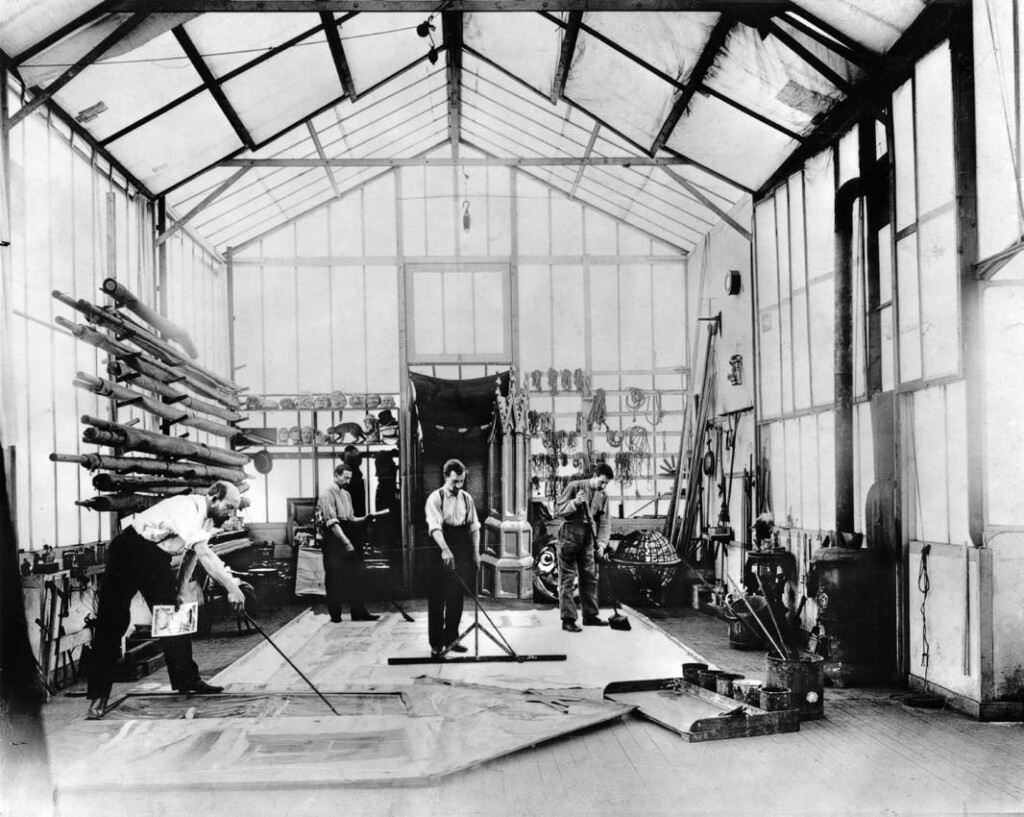
The glass roof of the studio at Montreuil leaks light the color of dishwater on an overcast morning in 1898, and Georges Méliès is standing under it with sawdust on his sleeves, shouting instructions to men who are, at this exact moment, painting a backdrop of hell. Not a metaphorical hell. An actual canvas, twenty meters wide, propped against a wooden frame, depicting flames in distemper and lime, because in twenty minutes a woman is going to be lowered through a trapdoor into it and the light has to be right or the illusion collapses into what it literally is: a woman being lowered through a hole in a floor. He checks his pocket watch. He checks the position of the sun, insofar as the sun can be trusted through glass and Parisian cloud. He has built this building himself, or rather commissioned it to his own specifications after seeing what direct sunlight did to a strip of exposed film the year before, and it stands on his own property, on land he owns outright, a hybrid of greenhouse and theater and machine shop that has no precedent because the thing being manufactured inside it has no precedent either. There is no word yet for what he does. The word cinema is barely a word. The word will come later, imposed by other people, sorted into genres by historians who were not standing in the sawdust.

What matters, physically, in this moment, is the crank. Méliès operates the camera himself, hand on the crank, turning it at a rate he has trained his own arm to hold steady, because unsteady cranking means unsteady exposure means a flicker that will betray the seam of the trick before the audience even understands there was a trick to look for. He is not a director in the sense that word will later acquire, standing back, observing, delegating. He is closer to a foreman on a factory floor who also happens to be the engineer, the architect, and, three afternoons a week, the man who puts on the beard and the robes and plays the sorcerer himself, because he trained as a magician at the Théâtre Robert-Houdin before he ever pointed a lens at anything, and he still thinks with his hands the way a locksmith thinks with his hands. He had bought that very theater in 1888, at the age of twenty-seven, against his father’s wishes—his father ran a profitable shoe and boot manufacturing business in Paris and had assumed his son would inherit ledgers, not illusions—and for a decade before cinema existed as an option, Méliès was already a professional engineer of astonishment, designing automata, trapdoors, mirror cabinets, the entire eighteenth-century apparatus of stage magic inherited from Jean Eugène Robert-Houdin, whose name he kept on the marquee like a patron saint.
So when he encounters the Lumière brothers’ cinematograph at a demonstration in December 1895, in the basement of the Grand Café on the Boulevard des Capucines, he is not seeing a narrative medium. He is seeing new hardware. He offers to buy the machine outright, on the spot, and is refused, because the Lumières regard their invention as a scientific curiosity with no commercial future beyond documentary novelty, a judgment history will treat with some irony. Denied the original, Méliès does what a workshop man does: he sources equivalent parts from an English supplier, has a camera built to his own design, and by 1896 is shooting in his garden in Montreuil with a hand-cranked machine that jams, that he has personally disassembled and reassembled, whose mechanical failures he understands in his fingers before he understands them in his head. It is in the accident of that jamming machine, and not in any literary premeditation, that he discovers his method. The crank sticks. The film stops. A horse-drawn omnibus, in frame when the camera froze, has become a hearse when the crank resumes. He develops the strip and watches a vehicle transform into another vehicle in a single blink, and understands, with the flat astonishment of a man watching his own tool misbehave usefully, that the mechanism itself, not the story, is where the wonder lives.
The accident that became a method
You are standing at the Place de l’Opéra, and the machine in your hands has just betrayed you. It is the autumn of 1896, the crank has stuttered, the film has snagged in the mechanism for a few seconds while an omnibus was rolling past, a woman was crossing, the ordinary traffic of a Parisian afternoon was doing exactly what ordinary traffic does. You free the jam, the crank turns again, and you think nothing of it, because there is nothing yet to think. It is only later, in the dim closeness of the projection room, that the strip of images reveals its wound: the omnibus has become a hearse, the woman has vanished and another has appeared in her place, men have replaced women, the street has quietly rewritten its own population between one frame and the next. Nobody has done this on purpose. The apparatus has simply stopped and started, and reality, which was supposed to be a continuous fact recorded by a continuous machine, has shown itself willing to break.
Méliès could have treated this as a fault to be corrected, a defect belonging strictly to the register of maintenance, oil and gears and the tension of the reel. Every engineer of the period would have advised exactly that. But he was not principally an engineer, he was a magician who had run the Théâtre Robert-Houdin for a decade before he ever touched a camera, and a magician’s entire training consists of noticing the gap between what an audience believes it saw and what actually occurred in front of them. Stage magic since the eighteenth century, since the mechanical automata of Vaucanson and the optical theaters of Robertson’s Fantasmagorie in the 1790s, had always worked by exploiting exactly this gap. Méliès did not discover substitution splicing because he understood cinema better than the Lumière brothers who had invented the apparatus he was using. He discovered it because he had spent years learning to read an audience’s perceptual blind spots, and the jammed camera had simply handed him a new kind of blind spot to work with.
There is a structural pattern here that recurs whenever a rigid system encounters an anomaly it did not anticipate. The system does not usually experience the anomaly as information. It experiences it as noise, as failure, as something to be edited out of the record so that the appearance of continuity can be restored. Historians of technology have a name for the moments when this editing fails to happen, when someone refuses to discard the noise and instead asks what the noise is telling them about the hidden architecture of the system itself. Alexander Fleming did this with a contaminated petri dish in 1928. Percy Spencer did it with a melted chocolate bar near a magnetron in the 1940s. What separates these moments from ordinary carelessness is not the accident, which is common, but the refusal to treat the accident as merely local, merely an error to be swept away before the real work resumes.
What Méliès grasped, sitting in front of that flickering, discontinuous strip of film, is that the camera’s claim to record continuous time was itself a kind of fiction the apparatus told about itself, one that could be broken at will and put back together differently. The splice was not a violation of cinema’s nature. It was a revelation of cinema’s actual nature, which had been mistaken, by everyone including its own inventors, for a transparent window rather than a sequence of discrete decisions about what to keep and what to cut. Once that mistake became visible, it could never again be innocent. Every future claim that a film simply showed what happened would now carry, underneath it, the knowledge that showing is always also a choosing, and that the choosing can be turned toward disappearance, toward metamorphosis, toward a hearse standing exactly where a woman had been walking a moment before.

Theatre's ghost inside the machine
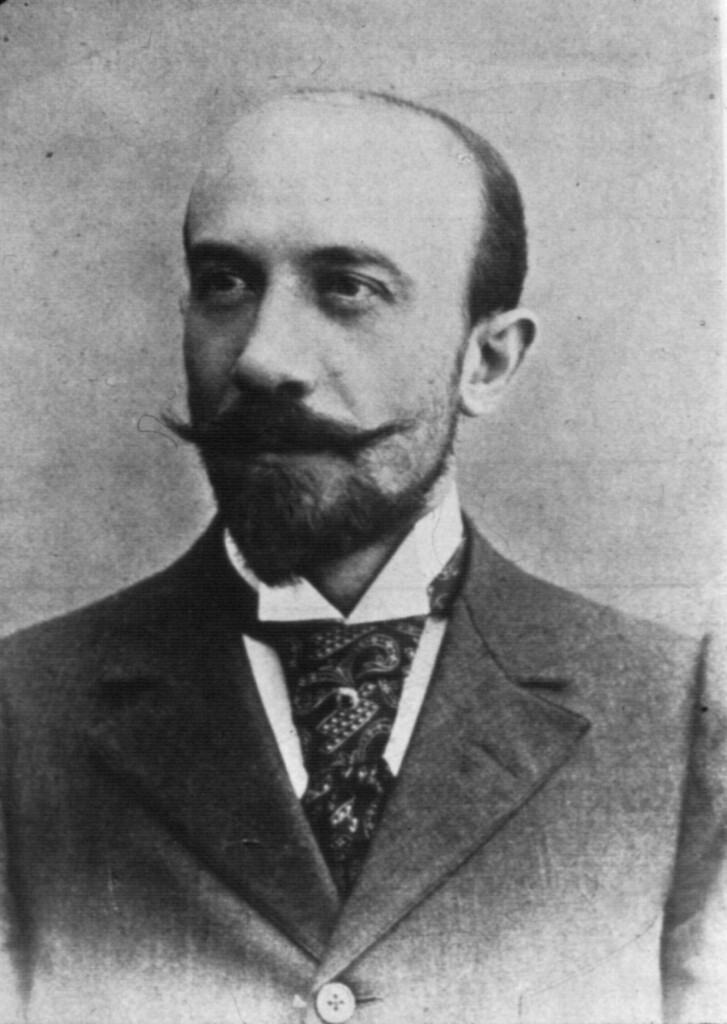
You are standing in a room on the Boulevard des Italiens in the winter of 1888, and a man on stage has just made a woman disappear inside a box that any carpenter could have built, and you know it is a trick, you know your eyes are being managed, and still your chest tightens as if the laws governing solid matter had briefly gone on strike. That man is not yet a filmmaker. He is Georges Méliès, and he has just bought the Théâtre Robert-Houdin from the widow of its founder for ten thousand francs he did not entirely have, inheriting not a piece of real estate but an entire cosmology of deception, mirrors angled at forty-five degrees, trapdoors cut into stages built specifically to hide them, mechanical automata that had already been dazzling Parisians for decades before a single frame of film existed.
The mistake, repeated so often it has calcified into common sense, is to imagine that cinema arrived and invented astonishment, that the Lumière brothers’ train pulling into La Ciotat station in 1895 was the first time an audience felt reality bend. It was not. Wonder had a home before it had a camera, and that home was the theatre of illusion, an entire nineteenth-century industry of professional deceivers, Jean-Eugène Robert-Houdin chief among them, who had spent the 1840s building mechanical orange trees that blossomed on command and suspending his own son in midair through electromagnetic trickery disguised as ether. Méliès did not stumble into special effects. He purchased a functioning wonder-machine, staffed it, learned its levers, and only later pointed a camera at what the levers produced.
This genealogy matters because it undermines the tidy origin story cinema likes to tell about itself, the one where the medium is born pure, a mechanical eye recording the world with documentary innocence, and only afterward corrupted or enriched, depending on your taste, by the impulse toward spectacle. André Bazin, writing in the 1940s and gathered later in What Is Cinema?, argued that photography and film satisfy what he called the mummy complex, an ancient human need to embalm time against its own passing, to preserve the living moment the way Egyptian priests preserved the flesh of the dead. For Bazin the camera’s ontological vocation was fidelity, the automatic, non-human registration of reality that finally freed painting from the burden of resemblance. But Méliès’s career suggests a second, less discussed lineage running parallel to that one, a lineage in which the apparatus is valued not for what it preserves but for what it can be made to falsify, and this falsifying impulse did not spring from the machine itself. It was imported, fully formed, from a stage tradition already a century old.
Consider what actually happened in 1896 when Méliès, filming a Paris street, watched his camera jam, cleared the film, and resumed shooting, only to discover upon projection that a bus had transformed into a hearse and men had become women. The story is usually told as an accident that revealed cinema’s latent magical potential, as though the machine itself had whispered its secret to him. But Méliès did not receive this accident as a stranger would. He received it as a man who had spent eight years engineering vanishings on a proscenium stage, who already possessed the entire conceptual vocabulary needed to recognize the jump cut as a disappearance trick rather than a technical failure. The camera did not teach him substitution. Robert-Houdin’s ghost, still occupying the theatre’s walls, had taught him that decades earlier, using mirrors instead of splices.
What Méliès effectively did, across the roughly five hundred and thirty films he would go on to produce between 1896 and 1913, was translate a body of live performance knowledge into a recorded medium, treating the frame itself as a new kind of trapdoor. The stage magician’s core discipline, misdirection, the management of an audience’s attention so that the mechanism of the trick remains invisible even when it sits in plain sight, became, in his hands, an editorial principle. Every jump cut is a curtain drawn for half a second. Every superimposition is a hidden wire made of light instead of steel.
The myth of the single inventor
You have probably seen the same four seconds of footage a hundred times without knowing it: a rocket embedding itself in the eye of a papier-mâché moon, a gesture so absurd and so tender that it survived compression into GIFs, textbook covers, record sleeves, a whole century of secondhand nostalgia. That image did its job too well. It convinced generations that fantasy in cinema began with one man standing behind one camera in a glass-walled studio in Montreuil, as though wonder required a single point of origin, a solitary genius who looked at a machine built for recording reality and decided, alone, to make it lie.
The truth is less flattering to our need for heroes. By the time Méliès staged his lunar expedition in 1902, at least a dozen other operators across Europe and the United States were already experimenting with substitution splices, double exposures, and stop-motion tricks, often independently and sometimes before him. Segundo de Chomón, working in Barcelona and later for Pathé, produced hand-tinted féeries with special effects so similar to Méliès’ own that historians still argue over who influenced whom. In Britain, Robert W. Paul and George Albert Smith were manipulating film speed and superimposition as early as 1898, and Smith’s ghost effects in Photographing a Ghost predate several of Méliès’ celebrated tricks. Cecil Hepworth published a manual on trick photography in 1897 that circulated among exactly the kind of technically curious showmen who would later be credited, individually, with inventing what was in fact a shared, competitive, cross-Channel vocabulary of illusion.
None of this is a conspiracy of erasure. It is simply how cultural memory metabolizes complexity: it needs a face. The historian of technology Thomas Hughes described large technical systems as evolving through a process he called momentum, in which numerous actors, institutions, and small incremental fixes accumulate until the system seems to move on its own, but our storytelling instincts resist that model. We prefer Alexander Graham Bell to the tangle of telegraph engineers who preceded him, Edison to the Menlo Park staff whose names rarely surface, and Méliès to the loose fraternity of magicians-turned-cameramen who were all pointing their new machines at the same impossible question.
The Lumière brothers make the contrast almost too convenient. Louis and Auguste Lumière premiered their first program at the Salon Indien of the Grand Café in Paris on December 28, 1895, ten films of workers leaving a factory, a train arriving, a baby eating, each under a minute, each a fragment of documented reality projected as if the world itself had been captured whole. Méliès was reportedly in that audience, and the story goes that he immediately offered to buy the patent for their Cinématographe, only to be refused, after which he built his own camera out of spite and necessity and turned toward fabrication instead of documentation. It is a clean origin myth, factory realism versus theatrical fantasy, science versus sorcery, and like most clean myths it flattens what actually happened, because the Lumière catalog itself soon included staged comic scenes, and Méliès’ own early work leaned heavily on the same actuality format he supposedly rejected.
What the myth of the single inventor really protects is a comforting idea about creativity itself, the notion that imagination arrives fully formed in one skull rather than accreting through argument, theft, rivalry, and shared technical constraint. Méliès did not invent the substitution splice; he refined it, marketed it, repeated it until it became legible as a signature. His genius, if the word still means anything after being stretched over so many singular names, was closer to synthesis and persistence than to solitary discovery, and that distinction matters more than it sounds, because it changes what we think we are honoring when we say his name.
A journey that was also an economy
You watch the print today in a restored version, the colors hand-tinted frame by frame by women working in a factory-like room in Montreuil, and you see a fantasy: the rocket in the eye of the moon, the lunar creatures dissolving into puffs of smoke, an old man’s dream of a universe made of paper and wire. What you do not see, because nothing in the frame shows it, is a man in New Jersey named Edison sending an employee into a Paris theater with a hidden camera, or perhaps simply paying for a duplicate print through an intermediary, and shipping that duplicate across the Atlantic to be copied hundreds of times over, sold to exhibitors up and down the American East Coast, and screened in nickelodeons where audiences paid a coin without a single centime of it ever reaching Montreuil.
Georges Méliès had built Le Voyage dans la Lune in 1902 as the most expensive film of his career to that point, something in the range of ten thousand francs, an enormous sum for thirty scenes of painted canvas and trapdoors, financed on the expectation that a film of such spectacle would sell prints internationally at a premium, the way his earlier trick films had. He was not naive about commerce. He was, after all, running a functioning company, Star Film, with a factory, employees, a catalog distributed to exhibitors across Europe and the Americas. The romantic image insists on the solitary dreamer, the man who once ran a magic theater at the Robert-Houdin and simply transposed conjuring into celluloid, but the man who built underwater scenes and rocket ships was also, unavoidably, a small industrialist competing in a market with no enforceable borders.
The theft was not an aberration of the system. It was the system. There existed, in 1902, no international copyright convention that meaningfully protected a French filmmaker’s work once it crossed into American exhibition circuits. The Berne Convention of 1886 covered literary and artistic works among signatory nations, but cinema was too new, too categorically unplaced, to be cleanly absorbed into existing law, and the United States in particular maintained notoriously weak protections for foreign intellectual property throughout this period, a fact American publishers and manufacturers had exploited for decades with pirated editions of Dickens and Dumas long before anyone pirated a frame of film. Méliès was stepping into a marketplace that had already normalized the theft of European creative labor as an acceptable cost of doing business.
What makes the episode more than a footnote is what it reveals about where value actually accumulated in early cinema, which was never simply in the making of the image but in the control of its reproduction and distribution. Méliès understood filmmaking as a continuous act, writer, set designer, actor, director, all folded into one body working inside one converted glass studio at Montreuil, but he never adequately built, or was never able to build, the distribution infrastructure that men like Edison and later the Motion Picture Patents Company trust were assembling in parallel, an infrastructure of patents, exclusive contracts, and litigation designed less to protect artistry than to control the pipeline through which images became money. By 1903, stung, Méliès opened a New York office under his brother Gaston specifically to fight this piracy, registering his own films with the Library of Congress in an attempt to claim American copyright protection retroactively, a defensive maneuver that arrived after the damage was already circulating through hundreds of theaters.
The image of Méliès as pure artist, the man who supposedly cared nothing for money and everything for wonder, is a story that later historians and the surviving family found convenient to tell, particularly once his commercial collapse became total by 1913. But a company that employed dozens of workers, that patented certain devices, that priced its films by the meter and negotiated exclusive territorial sales, was never operating outside economics. It was operating inside an economics that had not yet decided who its rules were meant to protect, and the moon he painted on canvas turned out to orbit an earth of contracts, customs offices, and men in New Jersey who understood, faster than he did, that images without enforceable ownership are simply free.
A vision curated by a filmmaker, not an algorithm
In this video I explain our vision
Bankruptcy as historical erasure

A man stands behind a glass counter at the Montparnasse train station in 1925, selling toys and candy to travelers who have no idea that his hands once built the machinery of dreams for an entire continent. He is polite to customers. He makes exact change. Nobody stops to ask his name, and if they did, the name would mean nothing to them, because the industry he invented had already forgotten him twice over: once in its rush toward feature-length narrative and studio efficiency, and once in the more literal, more brutal sense that the physical proof of his existence had already been rendered into shoe heels.
That second erasure deserves to be said plainly. During the First World War, the French military requisitioned raw materials wherever they could be found, and among the substances prized for industrial use was celluloid, the same nitrate base on which Méliès had printed hundreds of hand-tinted frames of lunar voyages and demonic transformations. His own negatives, stored in his glass-paned studio at Montreuil, were melted down, the silver content stripped for military purposes, the celluloid reprocessed into a heel material for boots. Nearly all of his roughly 520 films were reduced in this way, not out of malice, not even out of a decision, but out of simple indifference to whether they mattered enough to be spared. Fewer than two hundred survive today, most in fragments, some rediscovered decades later in unmarked cans in unlikely countries. The work of the man who built cinema’s first purpose-made studio, who invented the substitution splice and the double exposure as narrative devices rather than accidents, was treated as raw material for footwear.
The bankruptcy itself had preceded this destruction and made it possible. By 1913, Méliès’s Star Film Company was hemorrhaging money against competitors who understood something he refused to accept: that cinema was becoming an industrial product, standardized in length, distributed through contracts rather than personal negotiation, financed by investors rather than built from a single showman’s inheritance. Pathé, who had once distributed Méliès’s films, began instead to control the terms of production itself, and Méliès, who had built his empire on being simultaneously director, producer, set designer, and star, could not translate his workshop model into the scale the market now demanded. He owed money to Pathé itself. In 1923, destitute, he burned a portion of his own negatives in his garden in a fit that mixed despair with something like ritual suicide of the self he had been. The military had not even finished the job before he started it.
There is a pattern here that predates cinema and has outlived it. Societies do not simply forget their innovators; they process them, the way an economy processes raw material, extracting what is useful and discarding the rest once the useful part has been extracted. Joseph Schumpeter would later give this a name, creative destruction, the idea that capitalism necessarily devours its own earlier forms in the name of progress, but Schumpeter wrote as an economist describing a mechanism, not as someone forced to stand behind a toy counter and watch the mechanism grind through his own body. The concept flatters those who benefit from the destruction and abstracts away those who are destroyed. Méliès was not a market inefficiency. He was a man who had personally financed, built, written, directed, and starred in the first true science fiction narrative in cinema history, and the industry he had midwifed had no further use for the midwife.
What makes this particular erasure so instructive is its double structure. First the culture moves on, embarrassed by the primitiveness of what once dazzled it, the way a child is embarrassed by toys it has outgrown. Then, when even the memory becomes inconvenient or simply un-monetizable, the physical evidence itself is repurposed for something with immediate utility, war matériel, shoe leather, anything but the frivolous continuation of someone’s obsolete magic.
Rediscovery and the manufacturing of legacy
In 1929 a journalist tracking down curiosities for a retrospective found him behind the counter of a toy stall in the Montparnasse train station, selling wind-up trinkets to travelers who had no idea that the stooped, courteous man wrapping their purchases had once built an empire of trick photography watched by millions. He had been there for years. The discovery was reported with the breathless tone reserved for archaeological finds, as if a pyramid had been located under a parking lot, and in a sense that is exactly what had happened: an entire civilization of early cinema had been buried under two decades of industrial amnesia, and here was one of its monuments, still breathing, still able to answer questions, still capable of being humiliated by the fact that anyone needed to ask them.
The rehabilitation that followed was swift and, in its own way, merciless. French cinephiles, critics, and the nascent institutions of film culture, particularly around the Cinémathèque française founded by Henri Langlois in 1936, seized on him as a founding father, a myth they needed as much as they needed him personally. A banquet was held in his honor in 1931, the Légion d’honneur was pinned to his chest in 1931 as well, retrospectives screened whatever prints could be located, and he was, for the remaining years of his life, propped up as a living monument to a period that the industry itself had annihilated. He died in 1938, comfortable in his renewed status but permanently altered by what that status implied: recognition had arrived, but it arrived as spectacle, as narrative convenience for people who needed a martyr more than they needed a man.
Walter Benjamin, writing his essay on mechanical reproduction in 1935, just as this rehabilitation was gathering momentum, argued that what gets destroyed in the age of technical reproducibility is the aura, that unrepeatable presence of an original work rooted in a specific time and place. But Benjamin’s framework, built mostly around painting and photography, misses something specific to what happened to this filmmaker: his films had never had a single aura to lose, since they were themselves multiples, reproducible objects from the start, pirated and duplicated and scattered before he could stop it. What was destroyed was not the aura of the work but the standing of the worker, the erasure of a name from an economy that ran entirely on names and credits and studio brands. The rehabilitation didn’t restore an aura either. It manufactured one retroactively, assembling out of fragments and testimony a version of the man that could function as an origin myth for an art form desperate to claim ancestry and legitimacy.
This is the strange mechanics of posthumous or near-posthumous recognition: it rarely restores what was actually lost. The stolen income never returns. The years spent selling toys instead of making films are not refunded. What recognition offers instead is a kind of institutional apology disguised as celebration, a narrative that lets the culture which erased someone feel absolved by later praising them, as though the praise retroactively cancels the neglect rather than simply decorating it. The historian Georges Sadoul, whose research in the 1940s and 1950s did more than anyone to reconstruct a coherent filmography and biography, was performing an act of genuine scholarly recovery, but the appetite that made that scholarship matter to a wider public was an appetite for myth, for a clean story of genius, betrayal, and vindication that could be told at award ceremonies and in textbooks.
The canonization that followed, the placement of a handful of surviving films into the permanent rotation of film schools, the eventual inscription of his work into the register of UNESCO’s Memory of the World in 2015, the retrospectives, the restorations funded by companies that would have had no interest in him during his lifetime, all of it constructs a figure who is more useful dead and legendary than he ever was allowed to be alive and working. The question is not whether he deserved the honors. The question is what the honors are actually for, and who they are actually serving.
What the trick still hides
You are watching a man remove his own head on a small screen, and you know, in the muscle behind your eyes, exactly how it was done, and still something in you refuses the knowledge, leans forward, wants the decapitation to be real for just long enough to feel the jolt. This is not a failure of intelligence. Tom Gunning named this transaction the cinema of attractions, describing early film audiences at the Grand Café in December 1895 not as naive rubes screaming at an oncoming train but as sophisticated urban spectators who came precisely to be exhibited to, who paid for the display of a trick and the pleasure of almost catching it. Méliès understood this before anyone had a vocabulary for it. His camera stopped, an actor stepped out of frame, the film resumed, and the audience received not a lie but an offer, and they took it every time.
What digital spectacle inherited from him is not the technique, long since obsolete, but the shape of the offer itself. A superhero franchise grossing over two billion dollars, a de-aged actor’s face laid over a stunt double’s body, a synthetic voice trained on hours of a dead singer’s recordings so they might perform a song they never sang: all of these are the substitution trick multiplied by render farms instead of a hand-cranked Pathé camera in a glass-walled studio at Montreuil. The mechanism is the same. Absence is filled and presented as presence, and the viewer is invited into a bargain where disbelief is not destroyed but held in suspension, weighed, enjoyed. Christian Metz, writing decades before any of this software existed, argued that cinema’s spectator must disavow what they know in order to feel what the image offers, must say, in effect, I know very well this is not real, but all the same. That formula, borrowed originally from psychoanalysis by way of Octave Mannoni describing fetishistic belief, describes the exact posture of anyone streaming a blockbuster in 2024 as precisely as it described a Parisian in a frock coat watching a woman transform into a puff of smoke in 1899.
The difference, and it is not a small one, is who controls the terms of disclosure. Méliès sold tickets to a spectacle everyone understood as spectacle; the frame around his stage magic, however dazzling, was legible, printed on posters, announced by title cards that promised marvels rather than documents. Contemporary image synthesis frequently withholds the frame. A fabricated video of a politician saying something they never said does not arrive with a placard reading trick film. It arrives indistinguishable, by design, from the newsreel footage Méliès himself once tried to fake and profit from, restaging the Dreyfus affair in 1899 with actors because no camera had been present at the actual trial, and selling the reconstruction as though it carried documentary weight. That episode is usually treated as a curious footnote in his biography, but it is closer to a fault line. He was already testing the difference between a fiction that announces itself and a fiction that borrows the authority of fact, and he chose, at least once, to let the second kind circulate.
So the inheritance is double, and it does not resolve cleanly. One line runs toward the theater, the fairground, the explicit contract of the impossible performed for people who came wanting to be amazed and half-fooled. The other runs toward the courtroom reconstruction dressed as evidence, toward the deepfake, toward every image economy that profits from the audience not knowing where the seam is. Both descend from the same man standing in front of the same stopped camera, and both descend, further back, from the same appetite: the wish to see a face split into three, a woman become a moth, a rocket lodge itself in the eye of the moon, and to feel, for the length of a shot, that the world had briefly agreed to lie to you on your own terms. The question of whether that agreement still holds, whether anyone still gets to choose the terms of the trick they’re inside of, is not one cinema has ever answered, only kept deferring, frame by frame, to whoever holds the camera next.
🎩 Into the Dream Machine of Early Cinema
Before Hollywood, before special effects as we know them, there was Georges Méliès, the illusionist who turned the camera into a wand. These related articles explore the roots and echoes of that founding magic, from the avant-gardes it inspired to the artists who carried its spirit of visual wonder forward.
Experimental cinema: history and avant-gardes
Long before digital effects, cinema’s first rebels were already bending the medium to their imagination, and Méliès stands as the godfather of this experimental impulse. This article traces how avant-garde filmmakers built on his trick photography and theatrical staging to push the boundaries of what film could express, turning technical limitation into pure invention.
GO TO THE SELECTION: Experimental cinema: history and avant-gardes
Maya Deren and the language of dreams
Maya Deren‘s dreamlike, symbol-laden films owe an unspoken debt to Méliès’s pioneering fusion of illusion and narrative. Like the French magician, she understood cinema as a space where the impossible becomes visible, and this piece traces her singular language of dreams back to that same founding wonder.
GO TO THE SELECTION: Maya Deren and the language of dreams
The Avant-Garde Cinema: Movies to Watch
A curated journey through the boldest, most visually daring films in cinema history, this list is the perfect companion to Méliès’s legacy of experimentation. It celebrates the same spirit of formal daring and visual audacity that made ‘A Trip to the Moon’ a revolution in its time.
GO TO THE SELECTION: The Avant-Garde Cinema: Movies to Watch
Light and Shadow in Cinema: From Chiaroscuro to Expressionism
From the earliest trick films to German Expressionism, the manipulation of light and shadow has always been central to cinema’s power to enchant and unsettle. This article traces that evolution, showing how Méliès’s theatrical illusions paved the way for the chiaroscuro techniques that would later define horror and noir aesthetics.
GO TO THE SELECTION: Light and Shadow in Cinema: From Chiaroscuro to Expressionism
🎬 Discover More Cinematic Magic
If Méliès’s playful, boundary-pushing spirit speaks to you, dive deeper into the world of independent and visionary cinema on Indiecinema, where bold storytelling and cinematic wonder continue to thrive beyond the mainstream.
👉 EXPLORE THE CATALOG: Watch Indie Films in Streaming
A vision curated by a filmmaker, not an algorithm
In this video I explain our vision

