
The heist movie is a genre built on a perfect architecture: the plan, the crew, the setback, the getaway. It has created iconic films, from Ocean’s Eleven to Heat, defining an imaginary of glamour, ingenuity, and high tension. These masterpieces established the rules of the game, turning the “score” into a cinematic art form.

But beyond the glitter and the perfect plans, the genre has also been used as a sharp scalpel to cut into the cracks of society and the human soul. In this territory, the act of the “heist” ceases to be a glamorous adventure and becomes an expression of desperation, a social rebellion, or a tragic human farce.
This guide explores the entire spectrum of the genre. It is a path that unites the great Hollywood classics with the rawest and most innovative independent works. From French existential noir to Spanish realism, from British black comedy to the nihilism of the Italian poliziottesco, we will discover how the universal structure of the “score” has been used to tell unique and powerful stories.
This is a guide for those who believe the essence of a heist film lies not just in the perfection of the plan, but in the chaos, humanity, and truth that emerge when that plan, inevitably, falls apart.
The Roots of the Coup: The Masters of French Noir
The modern heist film, with its codes, its rituals and its fatalistic soul, was born in the smoky cafes and rain-soaked streets of post-war Paris.polarFrench cinema transformed the American gangster movie into something colder, more philosophical, and existential. In these works, the heist isn’t a simple criminal act, but a ritual, a demonstration of professionalism and honor in a world devoid of either. The directors of this movement codified the genre’s grammar: the meticulous preparation, the team of specialists, the tense silence, and the inevitability of the fate awaiting the protagonists.
Rififi (1955)

Tony “le Stéphanois,” a seasoned thief recently released from prison, plans one last, daring heist at a prestigious Parisian jewelry store. He assembles a team of specialists for a seemingly perfect plan. After executing the robbery with surgical precision, greed and human frailty creep into the group, triggering a spiral of betrayal and violence that will lead everyone to a tragic end.
Rififi It’s not simply a heist film; it’s the archetype, the sacred text from which almost all modern heist films derive. American director Jules Dassin, exiled in France due to McCarthy’s blacklist, infuses the film with a palpable sense of cynicism and fatalism, transforming a detective novel into a work of pure existentialist cinema. The film is a chilling treatise on professionalism as the only form of morality in a corrupt universe, where the code of honor among thieves is the last bastion against chaos.
Its beating heart is the legendary heist sequence, nearly thirty minutes long and completely devoid of dialogue or music. Dassin forces us into an experience of almost unbearable tension, where every creak of the floorboards and every labored breath become a symphony of suspense. In this sequence, the robbery becomes a deadly ballet, a ritual of precision and skill that elevates crime to an art form. It proves that the real spectacle is not the action, but the procedure, the meticulous execution of a plan that, for a brief moment, imposes perfect order on the disorder of the world.

Bob the Gambler (1956)

Bob, a former gangster and inveterate gambler, lives a routine life in the Parisian neighborhood of Montmartre, respected by everyone, including the police. After a series of unfortunate losses, he decides to return to action for one last, grandiose heist: robbing the Deauville casino. With the meticulousness of a general, he assembles a team and plans every detail, but his own gambling addiction threatens to derail everything.
With Rififi it is a work of cold realism,Bob the Gambleris its romantic and melancholic counterpart. Jean-Pierre Melville, obsessed with American gangster cinema, doesn’t simply imitate it, but distills it into a purely French form, imbued with existential elegance and a profound love for his characters. The film is less interested in the mechanics of the heist than in the soul of its protagonist. Bob is not a ruthless criminal, but an aristocrat of crime, a man governed by a personal code of honor that makes him almost mythological.
Melville’s style is already unmistakable here: trench coats, perpetually lit cigarettes, laconic dialogue, and a nocturnal atmosphere that transforms Paris into a metaphysical stage. The robbery itself becomes almost secondary to the portrait of a man challenging fate. The brilliant and mocking ending subverts the conventions of the genre, suggesting that for a gambler like Bob, true victory lies not in the loot, but in the game itself, in the act of challenging fate with style.
The Red Circle (1970)

An aristocratic thief recently released from prison, a fugitive hunted by the law, and an alcoholic ex-cop meet by chance, united by fate to pull off a perfect robbery at a Parisian jewelry store. While they plan the heist with cold professionalism, a tenacious and relentless commissioner sets out on their trail. Their paths, destined to cross, will inevitably lead them into the “red circle” of violence and death.
The Red Circle represents the pinnacle of Jean-Pierre Melville’s criminal minimalism, a work almost abstract in its stylistic purity. The film is an epic poem about solitude, fate, and professional rigor, where every gesture and silence carries enormous weight. Melville strips the genre of all sentimentality, reducing it to an almost sacred ritual, governed by an unspoken code that unites criminals and cops in a deadly dance. The cold color palette, dominated by grays and blues, creates a desolate and hopeless world.
Drawing inspiration once again fromRififiThe robbery sequence is a masterpiece of pure cinema: twenty-five minutes of absolute silence, the only soundtrack being the clicking of instruments and the sound of bodies moving with pinpoint precision. It’s not just suspense, it’s a meditation on skill as a form of existence. The film embodies Melville’s philosophy that all men, whether on the side of the law or against it, are prisoners of the same fate, trapped in a cycle from which there is no escape.
Band Apart (1964)

Two carefree friends and film buffs, Franz and Arthur, meet the shy Odile, who casually reveals that a large sum of money is hidden in the villa where she lives with her aunt. Inspired by the gangster films they love, the two improvise a plan to steal the money, dragging Odile into their clumsy adventure. Between trips to the Louvre, English lessons, and an iconic dance routine in a café, their criminal game collides with harsh reality.
While Melville was perfecting the heist genre, Jean-Luc Godard enjoyed dismantling it piece by piece. Band apart is the antithesis of precision Rififi the The Red Circle It’s a playful and anarchic deconstruction, in which the protagonists aren’t professional criminals, but dreamers who “play at being gangsters,” imitating the poses and dialogue seen in the movies. The heist itself is almost a pretext, a MacGuffin that allows Godard to explore his favorite themes: love, youth, freedom, and cinema itself.
The film subverts every narrative convention. The plot pauses to make room for poetic digressions and moments of pure cinematic joy, such as the famous “Madison” ball scene or the record-breaking run through the halls of the Louvre. Godard interrupts the flow, addresses the viewer, plays with sound and image, constantly reminding us that we are watching a film. It is a work that celebrates improvisation and spontaneity, transforming a heist story into a melancholic and captivating hymn to the French New Wave and its irrepressible desire to reinvent cinema.
A vision curated by a filmmaker, not an algorithm
In this video I explain our vision
British Irony: Black Comedy and Ruthless Realism
British cinema has always approached the heist genre with a distinctive approach, oscillating between two seemingly irreconcilable extremes. On one side, the sophisticated comedies of Ealing Studios, which use crime as a pretext for a witty satire on class struggle and national eccentricity. On the other, a strand of raw and violent thrillers that paint a merciless picture of the criminal underworld, where honor is an empty word and survival the only code. This duality reflects the tensions of a nation, between the myth of the “little man” challenging the system and the harsh reality of a divided society.
The Lavender Hill Mob (La banda di Lavender Hill) (1951)

Henry Holland is a shy and meticulous bank clerk who has been overseeing gold bullion transfers for twenty years, secretly dreaming of the perfect heist. His opportunity presents itself when he meets Alfred Pendlebury, an artist who produces metal souvenirs, including replicas of the Eiffel Tower. Together, they hatch a brilliant plan: steal the gold, melt it down, and smuggle it into France in the form of harmless tourist souvenirs.
This film is the essence of Ealing comedy, a masterpiece of subtle humor and social satire. The robbery is not an act of violence, but an almost artisanal enterprise, an expression of creativity and rebellion against the monotony of bourgeois life. The film celebrates the ingenuity of the “little man” against the impersonal power of institutions. The comedy arises from the contrast between the audacity of the plan and the utterly inadequate nature of its architects, a group of amateurs who succeed more through luck than skill.
The Lavender Hill Mob It set a standard for heist comedy, proving that suspense can coexist with levity. Its influence is enormous, not only for codifying the clichés of the “British heist,” but for capturing a national attitude: that of facing adversity with a mix of ingenuity, eccentricity, and an unwavering cup of tea. It’s a film that finds gold not in a bank vault, but in the irony of life.
The League of Gentlemen (1960)
![The League of Gentlemen (1960) Original Trailer [FHD]](https://blog.indiecinema.co/wp-content/plugins/wp-youtube-lyte/lyteCache.php?origThumbUrl=https%3A%2F%2Fi.ytimg.com%2Fvi%2Fmxbsuwq66DA%2F0.jpg)
A British Army colonel, forced into early retirement, harbors a deep resentment toward the system that rejected him. Out of revenge, he recruits a team of former officers, all disgraced for various reasons, to carry out a bank robbery with the precision of a military operation. Using their specialized skills, the group plans a daring and complex heist, but their eccentric personalities and old vices threaten to jeopardize the mission.
This film marks a turning point in British heist cinema, serving as a bridge between the suave comedy of Ealing Studios and the more cynical thrillers that would follow. The film uses the structure of the heist to explore the disillusionment of the military in the postwar civilian world. These “gentlemen” are not born criminals, but men trained to serve a country that no longer needs them, and the heist becomes their last, desperate military campaign.
The film’s style is a fascinating blend of suspense and dark humor. The planning of the heist is described with an almost documentary-like rigor, showcasing military tactics and strategies applied to the crime. The interactions between the team members, a collection of eccentric British gentlemen, provide a comical counterpoint to the tension of the mission. It’s a film that wittily examines the concept of “honor” and the rigidity of the British class system.
Lock, Stock and Two Smoking Barrels (Lock & Stock – Pazzi scatenati) (1998)

Four East London friends invest their savings in a rigged poker game and find themselves half a million pounds in debt to a local crime boss. With a week to raise the money, they decide to rob a small-time criminal gang operating in the apartment next door. This decision sets off a chaotic chain reaction involving psychopathic gangsters, marijuana growers, violent loan sharks, and two highly valuable antique rifles.
With his dazzling debut, Guy Ritchie didn’t just direct a film, he set British crime cinema alight.Lock, StockIt’s a postmodern explosion of energy, an adrenaline-fueled cocktail of blistering dialogue, hyperkinetic editing, and a tightly interlocking plot that twists like a snake. The film redefined the gangster movie aesthetic for a new generation, blending the tradition of London crime with the influence of Tarantino and a dash of quintessentially British dark humor.
The heist, or rather, the series of heists and counter-heists, isn’t the film’s focus, but merely the trigger for a domino effect. Ritchie is more interested in observing how even the simplest plans are unraveled by chance, stupidity, and the intervention of increasingly absurd characters. It’s a criminal universe that resembles a farce of misunderstandings more than a noir drama, where the violence is as brutal as it is comical. A seminal work that launched careers and defined an unmistakable style.
Sexy Beast (2000)

Gal Dove, a former safecracker, enjoys a peaceful and golden retirement in his villa on the Spanish coast, basking in the sun and the love of his wife. This idyllic tranquility is shattered by the arrival of Don Logan, his former associate. Logan is no ordinary gangster, but a force of nature, a terrifying sociopath who demands, with unprecedented psychological violence, that Gal return to London for one last, complex bank heist.
Sexy Beast It’s a heist film only on the surface. At its core, it’s a psychological thriller bordering on horror, a work about the impossibility of escaping one’s past. The real heist isn’t the vault robbery, but the one Don Logan perpetrates on Gal’s soul and peace. Oscar-nominated Ben Kingsley‘s performance is one of the most frightening in film history: his Don is a volcano of rage and vulgarity, a monster in human clothing whose mere presence taints the film’s sunny atmosphere.
Director Jonathan Glazer, in his debut feature, employs a surreal, dreamlike visual style that elevates the narrative far beyond the typical British gangster movie. Nightmarish sequences, such as the one with the gunman, transform the Costa del Sol into a mindscape, where the demons of Gal’s past take shape. The London robbery, though tense and beautifully shot, is almost an interlude before the real confrontation, the internal one. A brutal and stylistically bold film that uses the genre to explore the beast lurking beneath the skin of civilization.
The Bank Job (2008)

London, 1971. Terry, a car salesman with a history of petty crime, is approached by an old flame, Martine, with an irresistible proposition: to rob a bank on Baker Street, whose alarm system will be temporarily disabled. Terry assembles a team of less-than-professional thieves and, digging a tunnel, manages to enter the vault. They soon discover that their true objective wasn’t money, but the compromising contents of a safety deposit box that links the underworld, the police, and even a member of the royal family.
Inspired by a true story long shrouded in mystery,The Bank Job is a return to the gritty, dusty realism of 1970s British crime cinema. The film meticulously reconstructs an era of rampant corruption, where the lines between criminals, law enforcement, and political power were dangerously blurred. The heist, though ingenious and suspenseful, serves as a catalyst for uncovering a Pandora’s box of secrets and scandals.
Unlike more stylized heist films, the focus here is on the characters’ vulnerability. Terry’s gang isn’t made up of criminal masterminds, but ordinary men caught in a game much bigger than themselves. The tension stems not only from the risk of capture, but from the knowledge that they’ve become pawns in a game played by unseen powers. It’s a solid and compelling thriller that uses a news event to paint a bitter and disillusioned portrait of an entire nation.
Italian Soul: From Comedy to Poliziottesco
Italian cinema has interpreted the heist genre through the lens of its social and cultural history, producing unique results deeply rooted in the national context. It begins with Italian comedy, which withThe usual suspectsHe created the perfect antithesis of the perfect heist, transforming the desperation of poverty into a hilarious farce. It then moves on to the pop and colorful aesthetics of the ’60s, to finally arrive at the brutal and nihilistic violence of policeman of the 70s, a genre that reflected the tensions and fears of the turbulent “Years of Lead”.
The Usual Suspects (1958)

In Rome, a group of desperate and poorly-off thieves band together to attempt the heist that will set them up for life: robbing a pawnshop. Guided by the instructions of an elderly retired burglar, they devise a “scientific” plan that falls flat on its face. Between misunderstandings, blunders, and a cosmic misfortune, their undertaking turns into a series of comical and pathetic failures.
Mario Monicelli‘s absolute masterpiece and a milestone in the Italian comedy, The usual suspects It’s the greatest anti-heist movie ever made. Born as an explicit parody of the very serious Rififi, the film overturns every single cliché. It replaces the professionalism of French criminals with the chronic ineptitude of its protagonists; the silent tension with the din of memorable dialogue; the perfect heist with the most utter and glorious failure.
The film’s genius lies in its perfect balance between comedy and social realism. The characters of Gassman, Mastroianni, and Totò are unforgettable comic masks, but their hunger and desperation are real, rooted in the poverty-stricken yet hopeful postwar Italy. The robbery is not an act of defiance, but a clumsy and almost childish attempt to escape poverty. The finale, with the gang ending up eating pasta and chickpeas in the wrong kitchen, is one of the most iconic scenes in Italian cinema, a bitter yet tender celebration of defeat.
Seven Golden Men (1965)

From a luxurious hotel suite in Rome, a brilliant and unfazed English professor, Albert, orchestrates one of the most audacious robberies ever conceived. His target: the seven tons of gold stored in the vault of the Bank of Switzerland in Geneva. Using a team of six specialists and exploiting construction work on a new sewer system, the plan involves drilling into the vault floor from below and stealing the gold in plain sight.
In stark contrast to the neorealist poetics of The usual suspects, Seven Golden Men It’s an explosion of pop style, an ode to the technology, elegance, and action typical of the 1960s. Marco Vicario‘s film is a colorful and dynamic caper, closer to the spirit of James Bond than to that of Italian auteur cinema. The heist is a perfect clockwork, a technological ballet of futuristic gadgets, yellow suits, and impeccable planning.
The film stands out for its fast pace and sophisticated irony, embodied by the relationship between the cold Professor (Philippe Leroy) and his beautiful but unfaithful accomplice Giorgia (Rossana Podestà). Their relationship, a constant game of seduction and double-crossing, adds an additional layer of suspense to the plot, demonstrating that even in the most perfect plan, the human variable is always the most dangerous. A cult classic that anticipated the aesthetic of many international productions to come.
Milan caliber 9 (1972)

Ugo Piazza, a small-time criminal, is released from prison after three years. What awaits him isn’t freedom, but his former boss, the Americano, a paranoid and sadistic leader of the Milanese underworld. The Americano is convinced that Ugo stole $300,000 from him before his arrest and wants his money back, at all costs. Thus begins a ruthless manhunt in a gray and violent Milan, where no one is who they seem and trust is an unaffordable luxury.
With Milan caliber 9, Fernando Di Leo signs one of the absolute peaks of thepoliceman, the genre that chronicled the violence and social tensions of Italy during the Years of Lead. This isn’t a film about a robbery, but about its aftermath, a nihilistic and brutal work in which the crime of the past is a shadow devouring the present. The screenplay, inspired by the short stories of Giorgio Scerbanenco, is a clockwork mechanism that builds an unbearable tension.
The film is a merciless portrait of a criminal underworld devoid of honor or redemption, populated by memorable characters like the laconic Ugo Piazza (Gastone Moschin), the neurotic Rocco (Mario Adorf), and the icy Chino (Philippe Leroy). Di Leo’s direction is dry, violent, and incredibly modern, and Osanna’s progressive rock soundtrack, combined with Luis Bacalov‘s music, creates a unique and hallucinatory atmosphere. A masterpiece of Italian noir, raw and uncompromising.
The report card (1980)

Salvatore, an honest Neapolitan truck driver, is forced by a local crime boss to chauffeur him for a series of robberies. When he tries to back out for the sake of his family, the boss has his son, Gennarino, kidnapped to force him to participate in one last big heist. Salvatore begins a desperate two-pronged struggle: surviving the criminal underworld and doing everything he can to save his son.
The report card It is a unique and fascinating example of genre hybridization, a film that blends the violence ofpolicemanwith the melodramatic tradition of the Neapolitan skit Directed by Ninì Grassia and starring Neapolitan song star Mario Trevi, the film is a work deeply rooted in Neapolitan culture, where themes of family, honor, and sacrifice are as central as the shootouts and chases.
The aesthetic is raw, almost documentary-like, and captures the atmosphere of the Neapolitan suburbs of those years. The robbery here is not a lifestyle choice or a daring undertaking, but a constraint, a violation of the family order that triggers a tragic and violent reaction. Mario Trevi’s songs are not a simple interlude, but an integral part of the narrative, expressing the protagonist’s pain and determination. A regional cult that shows a different and surprisingly emotional side of Italian crime cinema.
The American Nightmare: The Heist as an Act of Desperation
In American independent cinema, robbery is rarely a shortcut to luxury. More often, it’s the last stop on a derailed train, a desperate act committed by men and women cornered by life, the system, or their own weaknesses. Far from the glamour of Hollywood, these films explore the dark side of the American Dream, where the heist is not an opportunity, but a consequence. From Kubrick to the Safdie brothers, indie cinema has used the genre to tell stories of failure, alienation, and violence, transforming the bank vault into a symbol of the nation’s broken promises.
The Killing (1956)

Johnny Clay, a seasoned criminal recently released from prison, assembles a motley crew for a seemingly foolproof heist: robbing the track’s ticket booth during a race. The plan is a perfect contraption, with each man tasked with completing a specific task at a precise time. But all it takes is a weak link, a failing marriage, and a woman’s greed, to transform a surgical operation into a bloodbath and a mocking triumph of chaos.
Before revolutionizing science fiction and war cinema, a young Stanley Kubrick created one of the most influential and structurally daring noir films of all time.The KillingIt’s a chilling and pessimistic study of failure, in which the perfection of the plan clashes with the imperfection of human nature. Kubrick’s direction is already that of a master: precise, controlled, almost clinical in describing the mechanics of the heist and the inexorable disintegration of its protagonists.
The film’s true innovation lies in its non-linear narrative. Kubrick fragments the chronology, showing us the same events from different points of view, constructing a temporal puzzle that heightens the suspense and underscores the fatalistic nature of the story. Each piece of the plan fits together perfectly, but fate, in the form of a poodle and a cheap suitcase, has the final, ironic word. A seminal work that has inspired generations of directors, from Melville to Tarantino.
Thief (1981)
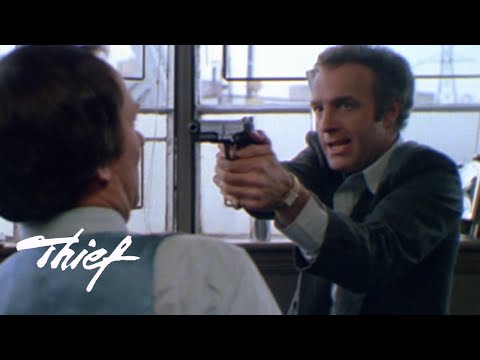
Frank is a professional safecracker, a master of his craft with a strict code and an almost artistic skill. He runs front businesses and dreams of a normal life: a home, a wife, a family. To achieve his goal, he agrees to take on one last, big job for a powerful mafia boss. But he soon discovers that entering the world of organized crime is easy, but exiting is impossible. His quest for independence turns into a brutal fight for survival.
With his feature film debut, Michael Mann redefined neo-noir, creating a work of almost documentary realism and profound existential melancholy.ThiefIt’s an incredibly detailed portrait of the life of a professional criminal. Mann immerses the viewer in the process, demonstrating with almost obsessive precision the tools, techniques, and mindset required to crack a safe. The famous heist sequence is a masterpiece of procedural tension.
But the heart of the film is the character of Frank, played by a magnificent James Caan. He’s a man trapped between the desire for a bourgeois life and the solitary nature of his profession. His tragedy is that of a craftsman trying to apply a personal code to a world that has none. The nighttime photography of Chicago, with its rain-soaked streets and neon lights, and the hypnotic soundtrack by Tangerine Dream, create a unique atmosphere, an urban landscape that is both beautiful and menacing.
House of Games (1987)

Margaret Ford, a successful psychiatrist and bestselling author of a book on compulsion, ventures into the world of cheats and con artists to help her indebted patient. She meets Mike, a charming con artist who introduces her to his world of deception and deception. Drawn by the danger and psychology of the game, Margaret becomes increasingly drawn in, unaware that she herself has become the target of a complex and ruthless game.
Playwright David Mamet’s directorial debut isn’t a traditional heist movie, but a more subtle and intellectual variation: a “con movie.” It’s not money being stolen from a vault, but trust being stolen from someone. The film is a psychological labyrinth, a verbal chess game where every line of dialogue is a move, every sentence conceals a hidden agenda. Mamet applies his unmistakable theatrical style to film: sharp, rhythmic, almost unnatural dialogue that transforms language into a weapon.
The direction is cold, precise, almost clinical, and creates an atmosphere of intellectual rather than physical suspense.House of GamesExplores themes of trust, betrayal, and the nature of truth in a world where nothing is as it seems. It’s a film that dismantles the mechanisms of deception, showing how the greatest scam isn’t the one that empties your wallet, but the one that manipulates your mind and heart. A psychological thriller of rare intelligence and cruelty.
Reservoir Dogs (1992)

After a jewelry store robbery goes disastrously bloody, the surviving criminals find themselves huddled in an abandoned warehouse. With one of their number seriously injured and the police hot on their heels, tensions escalate. Suspicions begin to creep in: the robbery was a trap, and an informant is among them. Loyalties crumble, accusations fly, and the situation spirals into paranoia and violence.
The film that sparked the rise of independent cinema in the 1990s and established Quentin Tarantino as one of the most original voices of his generation.Reservoir DogsIt’s a heist movie that, brilliantly, never shows the robbery. Tarantino subverts the rules of the genre by focusing exclusively on the before and, above all, the aftermath. The warehouse becomes a theatrical stage, a claustrophobic arena where the characters confront each other in a crescendo of lightning-fast dialogue and unbearable tension.
Tarantino’s style is already there: the non-linear narrative that fragments the story, the torrential dialogue peppered with pop culture, the stylized and sudden violence, and a ’70s-inspired soundtrack that serves as an ironic counterpoint to the brutality of the events. More than an action film, it’s a work about loyalty, betrayal, and toxic masculinity, a psychological thriller that demonstrated how, with a shoestring budget and a brilliant idea, an entire genre could be reinvented.
Bottle Rocket (1996)

Dignan, an enthusiastic and hopeless young man, “frees” his friend Anthony from a voluntary psychiatric hospital with a foolproof plan: a 75-year program to become successful criminals. Together with their neighbor Bob, a reluctant chauffeur, they form a ragtag gang. After a tragicomic “test robbery” at Anthony’s parents’ house, the three launch a heist at a bookstore, then flee to a motel where love further complicates their plans.
Wes Anderson‘s debut is one of the sweetest and most melancholic deconstructions of the heist genre. Far from violence and cynicism, Bottle Rocket It’s a bizarre and tender comedy about three friends who play criminals with the seriousness of children putting on a play. The robbery isn’t an act of rebellion, but a desperate attempt to give meaning and structure to their empty lives, a way to create adventure in a world that offers none.
Anderson’s style is already recognizable: the symmetrical composition of the shots, the whimsical dialogue, and the deadpan humor. The film finds its humor in the absolute seriousness with which the characters approach their absurd plans. It’s a film about friendship, broken dreams, and the difficulty of becoming an adult. The clumsy and unsuccessful robbery becomes a metaphor for their inability to adapt to the real world, making Bottle Rocket a one-of-a-kind heist movie, full of heart and lovable incompetence.
Before the Devil Knows You're Dead (2007)

Two brothers find themselves in desperate financial straits. Andy, a real estate executive with a drug habit and a pending fraud investigation, convinces his younger brother Hank, a weak man struggling to pay child support, to participate in a seemingly simple and risk-free plan: to rob their parents’ jewelry store. But when the heist ends in tragedy, the family’s fragile equilibrium is shattered, unleashing an unstoppable and devastating chain of events.
The last, magnificent film by a master like Sidney Lumet is a work of almost unbearable gloom and pessimism. This is not a film about crime, but about the total disintegration of a family, a Greek noir in which the robbery is merely the catalyst that brings to the surface decades of resentment, envy, and secrets. Lumet directs with merciless clarity, dissecting his characters and their motivations without ever judging them, but revealing all their pathetic and tragic humanity.
The non-linear narrative structure, which jumps back and forth in time, showing events from different perspectives, is crucial. It’s not just a stylistic flourish, but a way to trap the viewer in a labyrinth of guilt and consequences, where each new revelation adds another layer of horror to the story. It’s a heist movie stripped of all romance, reduced to its darkest core: an act of selfishness that, like a cancer, devours everything it touches.
Good Time (2017)

After a bank robbery goes wrong, Nick, a young man with intellectual disabilities, is arrested, while his brother Connie manages to escape. Haunted by guilt and determined to get Nick out of prison before something terrible happens to him, Connie embarks on a desperate and chaotic nighttime odyssey through the slums of Queens. In a race against time, he will find himself lying, manipulating, and running, in a vortex of bad decisions that will push him ever deeper into the abyss.
The Safdie brothers create an immersive cinematic experience, an adrenaline-fueled, anxiety-inducing thriller that grabs you by the throat and won’t let go.Good TimeIt’s a total immersion in chaos, a film that pulsates to the frenetic rhythm of its protagonist’s escape. The direction is taut, almost documentary-like, with the camera glued to Robert Pattinson‘s sweaty face, in one of his finest performances. The neon cinematography and the pounding electronic soundtrack by Oneohtrix Point Never contribute to a hallucinatory and oppressive atmosphere.
The film is the perfect depiction of a heist gone wrong and its cascading consequences. Unlike classics of the genre, there’s no planning or professionalism here, just improvisation and desperation. Connie’s every attempt to solve one problem creates a worse one, in a downward spiral that’s as gripping as it is heartbreaking. It’s a powerful, unfiltered portrait of toxic brotherly love and life on the margins, a gut punch that redefines the urban thriller for the 21st century.
American Animals (2018)

Four young Kentucky college students, bored with their ordinary lives and seeking an experience that will give them meaning, decide to commit a daring heist. Their target is their university library’s rare book collection, including a priceless copy of Audubon’s “Birds of America.” Inspired by heist films, they meticulously plan the heist, but their cinematic imagination will brutally collide with the clumsy and terrifying reality of the crime.
American Animals is one of the most original and intelligent heist films of recent years, a hybrid work that blends cinematic fiction with real-life interviews with the story’s real protagonists. Director Bart Layton doesn’t simply recount a heist, but questions the very nature of storytelling and why we’re so fascinated by crime stories. The film explores the fine line between fact and fiction, showing how pop culture and cinema can shape our aspirations and distort our perception of reality.
The film’s structure is ingenious: the robbery scenes, performed by actors, are constantly interrupted and commented on by the real thieves, who often contradict each other, calling into question the objectivity of memory. This creates a disorienting and deeply reflective effect. The robbery, clumsy and full of errors, becomes a powerful critique of the glorification of crime, demonstrating the unbridgeable gap between the elegant fantasy of a heist and the utterly unrestrained, unpredictable, and the unpredictable.Ocean’s Elevenand his squalid, terrifying and traumatic execution.
Voices from the World: Crime as a Universal Language
The structure of the heist film—planning, execution, aftermath—has proven to be an incredibly versatile narrative model, adopted and adapted by filmmakers around the world. Each culture has infused the genre with its own unique characteristics, using crime as a lens to examine local issues, social tensions, and cinematic traditions. This section is a journey through the diverse global interpretations of the heist, demonstrating how a universal idea can give rise to deeply unique stories rooted in their context.
The Three O’Clock Robbery (1962)

Galindo, a humble bank clerk, tired of a life of hard work and meager satisfaction, convinces his colleagues to commit a robbery in their own branch. Inspired by films he’s seen at the cinema, he develops a detailed and seemingly perfect plan. The group of employees, transformed into unlikely criminals, prepares for the heist with a mixture of excitement and terror, but on the day of the robbery, they discover that reality is far more unpredictable than fiction.
This brilliant Spanish comedy is a direct and equally brilliant response toThe usual suspects. Like its Italian predecessor, Robbery at three uses the heist genre to create a sharp and entertaining social satire. The film pokes fun at the obsession with crime films and the desire to escape the monotony of everyday life. The protagonists are not real criminals, but ordinary people who dream of starring in a movie.
The comedy stems from the contrast between the almost military seriousness with which they plan the heist and their complete inadequacy for the world of crime. The film is a loving and ironic portrait of Spain in the early 1960s, a country still under Franco’s dictatorship but beginning to dream of the modernity and prosperity seen in foreign films. The ending, with a delightful twist, reiterates the film’s moral: sometimes, the greatest robbery is the one you don’t commit.
Hurry, Hurry (1981)
![Deprisa, Deprisa (1981) ORIGINAL TRAILER [FHD]](https://blog.indiecinema.co/wp-content/plugins/wp-youtube-lyte/lyteCache.php?origThumbUrl=https%3A%2F%2Fi.ytimg.com%2Fvi%2F9evKFOJW6s4%2F0.jpg)
In the outskirts of Madrid, at the dawn of Spanish democracy, a group of disillusioned young men live day by day, committing car thefts and petty robberies. Pablo, the group’s leader, falls in love with Ángela, a waitress who quickly becomes absorbed into their criminal underworld. Together, the gang ups their game, plotting increasingly audacious heists to finance a life of instant thrills and drugs. But their desperate quest for freedom collides with the violence of the streets and the inevitability of tragedy.
Directed by a master like Carlos Saura, Hurry, hurry It is one of the most representative films of theFive Five, a genre that chronicled juvenile delinquency in post-Franco Spain. Far from romanticizing, the film is a raw, almost documentary-like portrait of a lost generation, raised on the margins of a rapidly changing society. The robbery isn’t a heroic feat, but a symptom of a profound social malaise, the only way to feel alive in a world without a future.
Saura directs with a realistic and non-judgmental style, using non-professional actors from the streets to enhance the authenticity. The film captures the energy and desperation of these young people, their hunger for life and their fascination with self-destruction. The robbery scenes are tense and chaotic, devoid of any spectacularity, and show violence in its banality. A powerful and poignant work, it won the Golden Bear at the Berlin Film Festival.
Nine Queens (2000)

In Buenos Aires on the brink of economic collapse, two con artists meet by chance. Marcos is a cynical and unscrupulous veteran, Juan is a young, idealistic novice. After a small scam, Marcos invites Juan to be his partner for the day. The opportunity of a lifetime presents itself when they stumble upon a colossal deal: selling a set of counterfeit stamps, the “Nine Queens,” to a wealthy collector willing to pay a fortune. Thus begins a day of deception, double-crossing, and dramatic twists.
Nine Queens It’s a masterpiece of screenwriting, a con film so perfectly crafted that the viewer constantly feels one step behind its protagonists. Director Fabián Bielinsky creates a labyrinth of deception where nothing is as it seems and trust is the rarest commodity. The film isn’t a classic heist movie, but a con movie that takes place entirely on the streets, in the cafes, and hotels of a vibrant and corrupt Buenos Aires.
The real heist isn’t what you see, but what lies beneath the surface. The film is a masterful analysis of the psychology of deception, but also a powerful portrait of Argentine society on the eve of the great economic crisis of 2001. The dishonesty of the protagonists reflects that of an entire system teetering on the brink. The ending, with its multiple twists, is not only a narrative virtuosity, but a mocking metaphor for a country where everyone, from the smallest con artist to the biggest banker, is playing a rigged game.
The Robbery of the Century (2020)
Inspired by one of the most famous and creative robberies in Argentine history, the film tells the story of a group of thieves who robbed a Banco Río branch in Acassuso in 2006. Led by a charismatic artist and a professional thief, the gang took 23 people hostage, but used only toy guns. While the police surrounded the building and negotiated with the robbers, they emptied the safe deposit boxes and fled through an underground tunnel, leaving behind a taunting message.
The robbery of the century is a heist movie that manages to be both a gripping thriller and a brilliant comedy. Director Ariel Winograd perfectly captures the almost surreal spirit of the real-life heist, nicknamed “the feel-good heist” for its nonviolent approach and almost artistic ingenuity. The film focuses on the planning and execution of the heist, celebrating the intelligence and creativity of its protagonists, who are portrayed more as con artists than as violent criminals.
The film strikes a perfect balance between tension and humor, supported by magnificent performances from Guillermo Francella and Diego Peretti. It’s a tale that explores the myth of the gentleman thief, the criminal who challenges the system not with brutality, but with cunning. The robbery becomes a performance, a conceptual work of art that exposes the vulnerability of institutions and captures the popular imagination, transforming the thieves into unlikely folk heroes.
The Delinquents (2023)
![The Delinquents (1957) ORIGINAL TRAILER [HD 1080p]](https://blog.indiecinema.co/wp-content/plugins/wp-youtube-lyte/lyteCache.php?origThumbUrl=https%3A%2F%2Fi.ytimg.com%2Fvi%2FsbqfzIyzTV8%2F0.jpg)
Morán, a Buenos Aires bank clerk, tired of his monotonous life, decides to steal an exact sum of money: the equivalent of all the salaries he would earn until retirement. After the theft, he turns himself in, planning to serve three years in prison and then enjoy the loot. He involves a colleague, Román, in his plan, to whom he entrusts the money, promising him a share. While Morán is in prison, Román, burdened by the weight of secrecy and money, begins a journey that will lead him to reconsider his very idea of freedom.
The criminals is a philosophical heist movie, a three-hour opus that uses a robbery as the starting point for an existential meditation on freedom, work, and the meaning of life. Director Rodrigo Moreno deconstructs the genre, moving away from suspense and action to explore the internal consequences of crime. The film is divided into two parts, following the lives of the two protagonists in parallel, slowly transforming from an urban thriller into an almost bucolic and dreamlike tale.
The real theft, the film suggests, is not the theft of money, but of the time that alienating work steals from our lives. Morán’s robbery is a radical act, an attempt to reclaim one’s future. Moreno directs with a contemplative style and subtle humor, creating a unique and unpredictable work that challenges the viewer’s expectations at every turn. It’s a film that asks a fundamental question: what does it mean to be truly free? And the answer, perhaps, has nothing to do with money.
Branded to Kill (1967)

Goro Hanada is the number three hitman in the Japanese underworld, an infallible professional obsessed with the smell of boiled rice. His life, filled with precise assignments and stylized violence, is turned upside down when a butterfly lands on his scope during an execution, causing him to miss his target. This single mistake transforms him from hunter to prey, forcing him into a desperate and surreal escape, hunted by the legendary and mysterious killer “Number One.
Seijun Suzuki, a prolific B-movie director for the Nikkatsu studio, turned budget constraints into an opportunity for unbridled visual experimentation. Branded to Kill It’s his masterpiece, a yakuza movie that demolishes the genre’s conventions to become a pop-art, anarchic, and absurdist work. The plot, already bizarre in itself, is merely a pretext for an explosion of stylistic inventions: skewed shots, choppy editing, surreal sets, and a high-contrast black-and-white aesthetic.
The film is so radical and incomprehensible by the standards of the time that it cost Suzuki his job at Nikkatsu, but it cemented him as a cult icon. Its influence on directors like Quentin Tarantino, Jim Jarmusch, and John Woo is incalculable. It’s not a heist movie in the strictest sense, but its deconstructive approach to the crime genre, its emphasis on style, and its fragmented narrative make it a key work for understanding the evolution of modern action and thriller cinema.
Sonatine (1993)
![Sonatine (1993) ORIGINAL TRAILER [HD 1080p]](https://blog.indiecinema.co/wp-content/plugins/wp-youtube-lyte/lyteCache.php?origThumbUrl=https%3A%2F%2Fi.ytimg.com%2Fvi%2FmFKaftsfDgk%2F0.jpg)
Murakawa, an elderly and weary Tokyo yakuza boss, is sent by his boss to Okinawa to mediate a dispute between allied clans. Suspecting it’s a trap to eliminate him, he reluctantly sets out with his men. Once in Okinawa, the situation quickly descends into an ambush. The survivors take refuge in a beach house, where, awaiting an uncertain fate, they pass the time with childish and violent games, rediscovering a lost innocence before the bloody epilogue.
Takeshi Kitano reinvents the yakuza film, transforming it from a tale of violence and honor into a melancholic, almost philosophical meditation on death. Sonatine It’s a disorienting work, alternating moments of contemplative quiet with bursts of sudden, brutal violence. The robbery and the power dynamics between gangsters are merely the pretext for a film about existential weariness, the boredom of violence, and the desire to escape.
Kitano’s style is unique: long, static shots, minimalist dialogue, and a deadpan, surreal humor. The long interlude on the beach is the heart of the film, a dreamlike pause in which these violent men regress to a childlike state, playing like children before facing death. The blue of the Okinawan sea and sky contrasts with the red of the blood, creating an aesthetic of poignant beauty. It’s a film that strips the crime genre from the inside out, leaving only a profound silence and a sense of inescapable tragedy.
Time to Hunt (2020)

In a dystopian South Korea in the throes of an economic crisis, four young friends, recently released from prison, dream of escaping their hopeless lives and moving to a tropical paradise. To finance their escape, they decide to pull off one last, daring heist: robbing an illegal gambling den. The heist is successful, but they steal something they shouldn’t have, attracting the attention of a ruthless and relentless killer who begins hunting them.
Time to Hunt blends the heist genre with the survival thriller, creating a tense, dark, and adrenaline-fueled film. The first half of the film follows the tropes of a heist, with the planning and execution of the robbery in an oppressive, almost post-apocalyptic atmosphere. But once the crime is committed, the film changes skin and turns into a nightmare. The robbery isn’t the end, but the beginning of a relentless manhunt.
Director Yoon Sung-hyun creates a visually striking world, a ghost town illuminated by neon lights and shrouded in perpetual fog, reflecting the protagonists’ state of mind. The film’s true strength lies in the figure of the killer, an almost supernatural antagonist, a killing machine embodying the inevitability of consequences. The suspense stems not from the risk of being caught by the police, but from the primal fear of being hunted by a relentless predator.
The Hard Word (2002)

Three brothers, skilled but disparate bank robbers, are framed by their own corrupt lawyer. While in prison, the same lawyer offers them an opportunity: to participate in the largest heist in Australian history, the Melbourne Cup betting heist. The brothers accept, but find themselves entangled in a deadly game of betrayal, double-crossing, and violence, complicated by the fact that the gang leader’s wife is having an affair with the lawyer.
The Hard Word is a perfect example of an Australian crime comedy, a film that effortlessly blends dark humor, brutal violence, and eccentric characters. The film has a cynical and irreverent tone, and enjoys playing with the clichés of the heist genre, adding a decidedly Aussie flavor. The dynamic between the three brothers, played by Guy Pearce, Joel Edgerton, and Damien Richardson, is the film’s beating heart, a mix of brotherly affection and explosive rivalry.
The style is raw and realistic, yet full of surreal twists and sharp dialogue. The Melbourne Cup robbery is a tense and bloody sequence, contrasting with the film’s lighter, more comical moments. It’s a work that explores themes of loyalty and betrayal in a criminal underworld where the only rule is to trust no one, not even your lawyer or your wife. A genre gem, intelligent and ruthless.
The Silent Partner (1978)

Miles, a shy and bored bank teller in Toronto, finds a threatening note and realizes his bank is about to be robbed. Instead of alerting the police, he devises a cunning plan: when the robber, a sadistic criminal disguised as Santa Claus, strikes, Miles hands over only a small portion of the money, hiding the rest for himself. The robber, however, sees through the ruse and begins stalking Miles, triggering a deadly and twisted psychological game of cat and mouse.
The Silent Partner is a tense and intelligent Canadian thriller, a hidden gem from the 1970s that deserves to be rediscovered. Written by a future talented director, Curtis Hanson, the film is a masterful psychological duel, bolstered by extraordinary performances from Elliott Gould and Christopher Plummer. Plummer, in particular, is terrifying as the bank robber, a charismatic and ruthless villain who turns Miles’ life into a nightmare.
The film subverts the conventions of the heist genre. The robbery occurs at the beginning and almost secondary; the true crux of the narrative is the battle of wits and nerves that follows. It’s a film that explores the metamorphosis of an ordinary man who, when cornered, discovers a dark, calculating side he never knew he possessed. The suspense comes not from the action, but from the psychological tension, the constant fear, and the awareness that every move could be his last.
The General (1998)

Based on the life of notorious Irish criminal Martin Cahill, the film traces his rise and fall. From humble beginnings in Dublin’s slums, Cahill becomes one of the most daring and charismatic crime bosses, known for his spectacular heists and his brazen defiance of authority. His criminal career brings him into conflict not only with the police, but also with the IRA and loyalist paramilitaries, until his inevitable and violent end.
Directed by John Boorman, who was himself one of Cahill’s victims,The General is a crime biopic of extraordinary power and complexity. Shot in magnificent black and white, giving the story a mythical, almost classic noir quality, the film avoids glorifying its protagonist. Instead, it offers a well-rounded portrait, showcasing both his charisma and intelligence, as well as his brutality and sadistic nature.
Brendan Gleeson‘s performance as Cahill is monumental. His “General” is both a modern-day Robin Hood and a monster, a man who steals from the rich yet doesn’t hesitate to crucify one of his men on a billiard table. Robberies, such as the theft of the Beit Collection paintings, are portrayed as acts of almost artistic defiance against the state. This is a film that explores the nature of crime in the complex political and social context of Ireland during the Troubles.
That Sinking Feeling (1979)

In a dreary, unemployment-ridden Glasgow, a group of bored, hopeless teenagers decide to turn their lives around. Their brilliant idea? Steal a shipment of stainless steel sinks from a warehouse. Their plan, as absurd as it is detailed, involves disguises, tranquilizers, and a bread truck. Against all odds, the venture succeeds, but selling hundreds of sinks proves more complicated than expected.
Bill Forsyth‘s directorial debut is a delightfully bizarre and melancholy comedy, a precursor to the style that would make him famous with films like Gregory’s Girl and Local Hero Made on a shoestring budget and with non-professional actors from the Glasgow Youth Theatre, That Sinking Feeling It’s a heist movie that celebrates absurdity and failure with a tender and surreal humor. The heist is an act of rebellion against boredom, a game of feeling alive in a city that seems to offer nothing.
The film perfectly captures the atmosphere of late 1970s Glasgow, but transfigures it with a poetic and dreamy gaze. The comedy stems from the seriousness with which these kids approach a completely idiotic plan. Forsyth demonstrates a genuine affection for his characters, imaginative losers trying to find a little magic in a bleak world. A small cult classic that is a hymn to creativity and friendship.
Victoria (2015)

Victoria, a Spanish girl living in Berlin, leaves a club and meets a group of four local guys. She starts joking with them and, in a fit of spontaneity, decides to follow them around the city. What seems like a night of adventure and flirtation quickly turns into a nightmare when one of the guys reveals he has a debt to pay off with a criminal, and to do so they must rob a bank. Suddenly, Victoria finds herself their chauffeur.
VictoriaIt’s a technical and narrative tour de force, a unique and immersive cinematic experience. Director Sebastian Schipper shot the entire film, over two hours long, in a single, uninterrupted sequence shot. There are no cuts, no tricks: the viewer experiences the story in real time, following Victoria on a descent into hell with no escape. This radical stylistic choice isn’t simply a display of virtuosity, but serves to create an unprecedented level of tension and immersion.
The film transforms a simple heist story into a heart-pounding urban odyssey. The first half is almost a romantic film, capturing the euphoria of a nighttime encounter, but the atmosphere shifts abruptly, becoming an adrenaline-fueled thriller. Laia Costa‘s performance is extraordinary, and the largely improvised script lends the whole thing a shocking realism. A bold and perfectly accomplished cinematic experiment.
A vision curated by a filmmaker, not an algorithm
In this video I explain our vision

