
The Inherited Silence
You are sitting across from someone you love, and they are asking you something simple. Not a trick question, not a trap — just an honest request to know what is happening inside you. The room is quiet. You can hear the specific quality of that silence, the way it presses against your ears like water pressure at depth. And you have nothing. Not nothing in the sense of emptiness, but nothing in the sense of a wall so old you have forgotten it is a wall, so long mistaken for the architecture of the self that tearing it down feels indistinguishable from self-destruction. You open your mouth and what comes out is fine or I don’t know or a subject change so smooth it surprises even you. The conversation moves on. They let it move on. And somewhere beneath your sternum something calcifies a little more, adding to a deposit that has been forming since before you had language for any of it.

This is not a failure of intelligence or courage in any conventional sense. The men who go silent in these moments are often the same men who can negotiate high-stakes decisions without flinching, who can hold a room through sheer presence, who can endure physical pain with an equanimity that borders on disturbing. The silence is not weakness wearing the mask of strength. It is something far more precise and far more inherited — a behavioral grammar absorbed so early and so completely that it operates beneath the level of choice. By the time a boy is five, research in developmental psychology consistently shows, he has already begun to display measurably lower emotional expressiveness than girls of the same age, not because of neurology but because of response patterns from caregivers who themselves never learned to sit with feeling without immediately redirecting it outward into action or inward into silence.
What gets transmitted across generations is not just behavior but a whole epistemology — a theory of what emotions are for. In households where men have historically been the load-bearing walls of economic survival, emotion was not irrelevant; it was structurally dangerous. A man who wept in nineteenth-century rural America or industrial England was a man distracted from the machinery of provision. The suppression was not cruelty. It was, in its own grim logic, a form of love — a father hardening his son against a world that had no patience for softness, teaching him to convert every feeling into function. Fear becomes vigilance. Grief becomes labor. Love becomes provision. The internal life does not disappear; it is simply translated into a language of action so automatically that the translation itself becomes invisible.
Norbert Elias argued in The Civilizing Process, published in 1939, that the long history of Western modernity is partly the story of emotional interiorization — of feeling being driven progressively inward, away from public expression, into a private self that becomes ever more opaque even to its owner. He was describing a broad cultural movement, but the gendered dimension of this process is striking in retrospect: women were handed a social permission, however constrained and often weaponized, to remain in contact with the interior. Men were handed the exterior as their entire domain. The result, centuries later, is a man sitting in a quiet room who genuinely cannot tell you what he feels — not because he is lying, not because he refuses, but because the interior has been treated for so long as irrelevant territory that its topography has become genuinely unfamiliar, a landscape he has never been taught to read.
The muscle for this kind of speech atrophies in the same way any unused capacity does, invisibly and without drama, until the moment arrives when it is suddenly needed and the absence announces itself with a specific and terrible clarity.
Along For The Ride

Drama, Comedy, by Bryan Simon, USA, 2001.
Two brothers, Terry (Randy Batinkoff) and Vance (Dylan Haggerty), embark on a journey into the desert with the body of their recently deceased father. Their goal is to find a burial site for him, but along the way unresolved family conflicts resurface. Terry, a successful former baseball player, has always exerted a dominant influence on the younger Vance, a humble mailman. Both carry within themselves the burden of a complicated relationship with their father, Jake (J.E. Freeman), a former professional player obsessed with sports. Even after his death, Jake appears to his children in dream sequences, but instead of offering wise advice, he continues to be distant and authoritarian. The journey thus becomes not only a physical but an emotional journey, in which the two brothers confront their mutual grudges and the emotional legacy of their father.
The film, directed by Bryan Simon with a budget of 150,000 dollars, was shot in extreme weather conditions, with a screenplay adapted by Jim Moores from a work by Randall Wheatley. The film also explores the role of sport as a vehicle for communication between father and son. For many men, expressing feelings is difficult, while talking about sport is a natural and shared language. "Along for the Ride" addresses these issues with sensitivity and realism, resulting in a touching work for those who have experienced similar family dynamics. An indie not to be missed for lovers of quality independent cinema.
LANGUAGE: English
SUBTITLES: Spanish, French, German, Portuguese
The Architecture of Stoicism
You are sitting across from someone you love, and they are telling you something that matters, and you feel it — you feel the floor of it, the weight shifting somewhere below your sternum — and then, without deciding to, you go still. Not calm. Still. The way a surface goes still when something has just passed through it and closed back over.
This is not peace. This is architecture. And like all architecture, it had a blueprint.
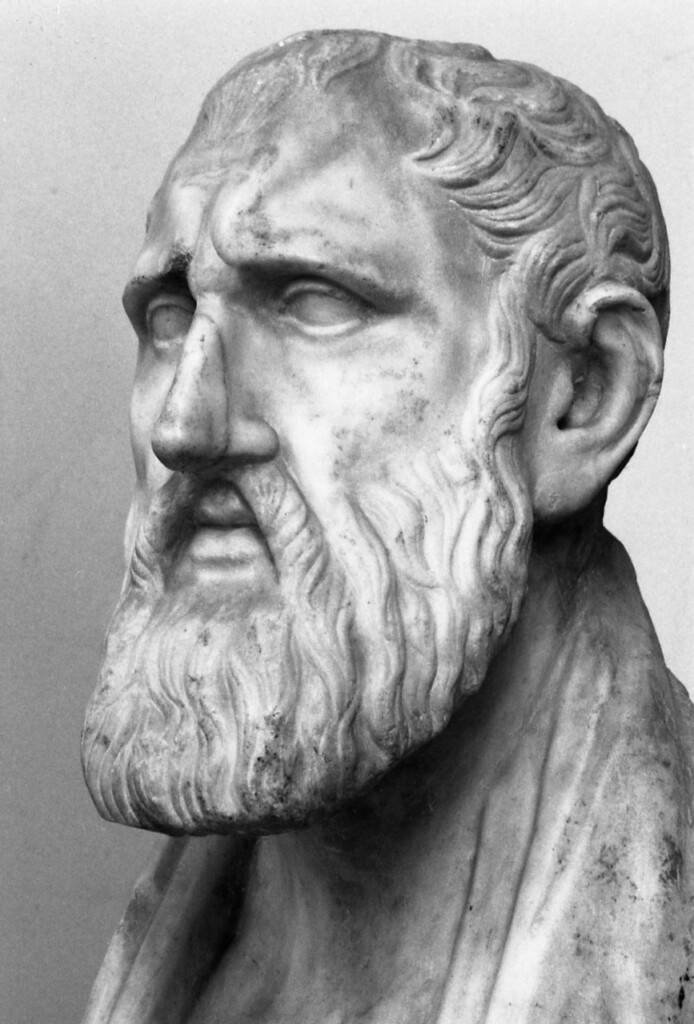
The Stoic philosophers were not building a prison. That distinction matters enormously, because the edifice they constructed has been so thoroughly repurposed that the original design is almost unrecognizable. When Marcus Aurelius wrote in his Meditations — a private document, never intended for publication, recovered only centuries after his death — he was not issuing a cultural mandate. He was recording a daily practice of self-interrogation, a discipline aimed at distinguishing what was genuinely within his control from what was not. The point was interior liberation: to stop being enslaved to the fluctuating judgments of a crowd, to the terror of exile or death, to the need for applause. Emotion was not the enemy. Reactive enslavement to emotion was. There is a difference so precise it could cut glass, and the transmission of Western culture has blurred it almost completely.
Epictetus, writing from an even more radical position — he had been an actual slave, owned by a man who reportedly broke his leg as a demonstration of power — understood this distinction viscerally, not theoretically. In the Enchiridion, he argues that the only true freedom is the freedom of assent: you cannot control what happens to your body, but you can govern what you tell yourself about it. This is not emotional suppression. It is cognitive sovereignty. The Stoic sage was supposed to feel grief and then examine it, feel fear and then interrogate it — not to perform blankness, but to refuse to be dragged unconscious through experience. The original ambition was enormous: to become someone who moves through the world awake.
What happened next is what always happens when philosophical discipline gets absorbed by institutions that need obedient bodies rather than sovereign minds. The Roman military took the outer form of Stoic composure and stripped it of its interior complexity. The British Empire then did something even more thorough — it codified emotional restraint as a class virtue, the visible marker of civilization against barbarity, and embedded it in the boarding school system that produced administrators for colonies across three continents. Boys separated from their mothers at seven or eight, placed in environments of deliberate austerity, were not being trained in Epictetan self-examination. They were being broken into a specific social instrument. The philosopher’s method of sitting with discomfort in order to understand it was replaced by the institutional imperative to show nothing, ever, as proof of fitness to rule.
By the time this architecture crossed into the twentieth century, it had passed through so many hands that almost no one remembered the original structure. The discipline of inner freedom had become the performance of outer blankness, and the performance had become mandatory precisely because it was invisible. A man who betrayed feeling was not merely weak — he was socially illegible, suspected of being unfit for the responsibilities that supposedly required this kind of composure. What Aurelius practiced alone in his tent at the edge of a war he didn’t want was being used, centuries later, to justify why a father couldn’t tell his son he was afraid, why a soldier couldn’t admit he was broken, why the room always went slightly colder when a man’s voice threatened to crack.
The philosophical tradition had been stolen and left to run like a machine with the original operator’s manual burned, producing outputs nobody had ever actually chosen and that almost everyone, in private, found unbearable.

When Feelings Became Weakness
You are sitting across from someone you love, and you have something true to say — not strategic, not performative, just true — and your mouth opens and produces nothing. Not because you lack the words. Because somewhere below language, a circuit breaker trips. What gets spoken instead is a deflection, a joke, a practical observation about something that does not matter. The person across from you waits a moment, then lets it go. You both pretend the silence was ordinary.
This is not a personal failure. It is an inheritance, and it has a history precise enough to date.
Before the factory whistle reorganized human life, the emotional architecture of men in the Western world was considerably more fluid than the mythology we have received. Male friendship in the eighteenth century carried an intimacy that later generations would pathologize: men wrote letters to each other saturated with longing, declared love without irony, wept at partings without shame. The historical record is uncomfortable for those who believe stoicism is natural rather than constructed. Benjamin Rush, the American physician and founding father, described friendship between men in terms indistinguishable from romantic attachment, and no one found this remarkable. The architecture of feeling had not yet been disciplined by the machine.
What disciplined it was the market. Michael Kimmel, in his 2006 study Manhood in America, tracks the pivotal transformation that occurs roughly between 1820 and 1870, as the economic center of gravity shifts from agrarian self-sufficiency to industrial wage labor. A man who had once measured his worth through land, craft, and the tangible output of his own hands suddenly found himself inside a hierarchy he did not own, performing for the judgment of strangers. The word that begins to appear obsessively in the conduct literature of this era is “self-made” — a concept that carries within it a radical anxiety, because anything self-made can be self-unmade. Identity becomes performance, and performance requires an audience that is also a jury.
In this context, emotional expressiveness undergoes a semantic transformation that is not metaphorical but genuinely economic. To show feeling in a marketplace is to reveal instability. The investor who weeps, the foreman who admits doubt, the clerk who hesitates — these men are read as liabilities before they are read as human beings. Kimmel documents how the business press of the mid-nineteenth century explicitly coded emotional control as professional capital and emotional disclosure as a form of credit default. A man who could not master his interiority could not be trusted to master a ledger, a factory floor, a contract. The inner life became a variable that competent men were expected to minimize, the way one minimizes operational risk.
What is structurally violent about this process is the way it erased its own tracks. The suppression of feeling was never announced as suppression. It arrived dressed as virtue — as reliability, as backbone, as the mature acceptance of how the world actually works. Boys were not told that their emotional range was being confiscated. They were told they were becoming men. The language of development absorbed the language of loss, and no one was left to mourn what had been taken because the taking was framed as a gift.
By the time Sigmund Freud was writing in the 1890s about the costs of repression, he was observing a population that had been systematically trained to repress for at least two generations. His patients were not anomalies. They were the successful products of a cultural project that had then nowhere to send its surplus grief. The industrial body produced emotional waste the way factories produced physical waste — abundantly, invisibly, and with no designated place for disposal.
What did not disappear in this compression was desire itself — the desire to be known, to be held in language by someone who will not flinch.
The Body That Cannot Speak
He sits in the waiting room of a cardiologist’s office at fifty-three, having been referred after a routine physical flagged elevated cortisol and a resting heart rate that climbs inexplicably when he is doing nothing at all. He has no language for what the doctor is about to tell him, because the doctor will not say the thing that needs saying. The chart will record hypertension, early arterial stiffness, a body working too hard against no visible threat. What the chart cannot record is thirty years of a jaw held rigid during arguments that were never allowed to become arguments, shoulders that rose into the ears every time a feeling arrived uninvited and were simply kept there, year after year, until the musculature forgot it had ever had another option.
Bessel van der Kolk spent decades mapping this exact territory. In “The Body Keeps the Score,” published in 2014, he documented with clinical precision how trauma — including the low-grade, chronic, socially enforced variety — does not dissolve when it goes unexpressed. It relocates. It moves out of the narrative mind, which has been trained to dismiss it, and settles into tissue, into the autonomic nervous system, into the brainstem’s threat-detection architecture that operates entirely below conscious language. The body, in other words, does not forget what the man has been taught to pretend never happened. It simply stops asking permission and starts speaking in the only dialect left available to it: symptom.
What makes this particularly treacherous is that the suppression is not experienced as suppression. It is experienced as competence. The man in that waiting room has spent decades believing his ability to remain calm under pressure was a form of mastery, possibly his finest quality. He would describe himself as someone who does not overreact, who keeps things in perspective, who does not burden others with his interior weather. He has received consistent social confirmation for this. Promotions. Respect. The particular kind of admiration reserved for men who seem impervious. The pathology and the reward system were identical, running on the same circuitry, indistinguishable from the outside and nearly indistinguishable from the inside.
Peter Levine’s work on somatic experiencing, developed through the 1970s and formalized in “Waking the Tiger” in 1997, introduced a crucial distinction between animals in the wild and humans under stress: non-human animals complete the physiological cycle of threat response through trembling, shaking, full-body discharge. The activation rises, peaks, and releases. Humans, particularly men operating inside strict codes of emotional governance, interrupt this cycle at the peak. They stop the shake. They hold the breath. They perform composure in the precise moment when the nervous system is screaming for completion. Over years, the incomplete cycles accumulate like unpaid debts, and the body begins to collect.
The irony that cuts deepest here is that emotional expression — the thing coded as weakness, as excess, as feminine fragility — is in fact the mechanism of physiological regulation. Crying, for instance, is not a sign that the system has failed. It is the system working. Tears contain measurable concentrations of stress hormones, including adrenocorticotropic hormone and leucine enkephalin. The body is literally exporting what would otherwise remain circulating. Men who are trained from early childhood to suppress visible distress are not building resilience. They are building storage.
The medical literature does not frame it this way, because medicine, too, inherited the cultural assumption that emotional life is separate from physical life, something happening in a parallel and less serious register. But the cardiovascular data does not care about the assumption. Men die of heart disease at significantly higher rates than women across nearly every industrialized nation, a gap that has narrowed only where the emotional labor expected of men has begun, modestly, to shift. The body was always the most honest record.
The Mirror of Other Men
You are in a locker room at seventeen, and someone near you starts talking about how scared he was during a car accident the previous week — how his hands shook afterward, how he sat in his driveway for twenty minutes unable to move. The room does not respond with cruelty exactly. It responds with something worse: a brief, almost imperceptible pause, and then someone else changes the subject entirely, as if the confession had never been spoken. The boy who shared it learns something permanent in that silence. Not that emotions are dangerous. That they are invisible — that the social contract of this room operates on selective blindness, and any man who forces others to see will simply be unseen in return.
Michael Flood, whose research on male homosociality has tracked this dynamic across Australian and North American male peer groups since the early 2000s, identified something that cuts against the most comfortable story we tell about male emotional suppression. We tend to locate the pressure externally — in fathers, in media, in broad cultural messaging — because that keeps the mechanism at a comfortable distance from the men who actually enforce it daily. Flood’s fieldwork, drawn substantially from his studies compiled in works like the International Encyclopedia of Men and Masculinities, demonstrated that the most effective policing of male emotional expression does not come from authority figures or institutions. It comes from peers. From the guy standing next to you. From the group chat. From the friend who goes quiet when you say something real.
This is not incidental. Homosocial structures — social networks organized around same-gender bonding — carry their own internal economy. Within male peer cultures, what gets traded is not intimacy but legibility: you must remain readable as a certain kind of man to maintain your position inside the group. Emotional disclosure destabilizes that legibility, not because it reveals weakness in some abstract moral sense, but because it demands a response from other men who have not been trained to give one. The discomfort a man creates by being honest about fear or grief or longing is a social tax his peers did not agree to pay. Ridicule, when it comes, is often just the fastest way to discharge that debt and restore the equilibrium.
What makes this architecture so durable is that it rarely requires anyone to be consciously cruel. The exclusion is mostly structural, operating through omission rather than aggression. A man who cries at a funeral is not mocked — he is quietly filed under a different category, subtly repositioned within the group’s internal hierarchy, spoken to a little differently afterward. No one announces the reclassification. It simply happens, the way bureaucratic decisions happen: paperwork nobody signed, consequences everybody feels. Erving Goffman wrote in Stigma, published in 1963, about how social identity is managed through the gap between what a person projects and what a group is willing to receive. Male peer culture exploits exactly this gap, creating a system in which men learn to self-censor not out of shame but out of social arithmetic — the calculation that the cost of being received incorrectly is higher than the cost of never being received at all.
The particular cruelty of this system is that it masquerades as friendship. The men enforcing the prohibition are not enemies. They are the people a man would call in a genuine emergency, the ones he has known for fifteen years, the ones he would say, without hesitation, that he loves — using the past tense, using humor, using the specific grammar that male affection requires in order to pass undetected through its own defenses. The closeness is real. The prohibition is also real. They coexist without contradiction because the friendship was built inside the prohibition, not despite it, and dismantling one risks the architecture of the other.
A vision curated by a filmmaker, not an algorithm
In this video I explain our vision
Language Built Without Rooms

You are sitting across from someone you love, and they are asking you what you feel, and you open your mouth and what comes out is “fine” — not because you are lying, not because you are hiding, but because you have reached the actual edge of your available terrain. There is no more land. “Fine” is not a closed door; it is the end of the map.
The psychologist Marc Brackett at Yale’s Center for Emotional Intelligence has spent decades demonstrating that emotional granularity — the precision with which a person can identify and name their own affective states — is not merely a linguistic courtesy but a neurological event. People who can distinguish between feeling humiliated and feeling disappointed, between anxious and overwhelmed, between hollow and grief-stricken, actually process distress differently at the level of the amygdala. The label is not decorative. It is structural. When you name a feeling with accuracy, you modulate its intensity; the nervous system uses the word as a regulatory tool. Men, on average, arrive at adulthood with a substantially impoverished emotional lexicon compared to women — not because the feelings are absent, but because the vocabulary was never handed to them. This is documented not in ideology but in empirical data: studies in affective science consistently show that women use a wider and more precise range of emotion terms, and that this gap appears as early as age four, when parents already speak differently to daughters than to sons about internal states.
Ludwig Wittgenstein wrote in the Tractatus Logico-Philosophicus in 1921 that the limits of one’s language are the limits of one’s world. He was not writing about therapy. He was writing about the hard boundary between what can be thought and what dissolves into silence before thought can complete itself. Applied here, the proposition becomes almost violent in its clarity: if a man has never been given the word for a specific emotional state, that state does not merely go unnamed — it goes unthought. It exists in the body as tension, as appetite, as aggression, as numbness, as a restlessness he cannot trace to its origin. He does not suppress it. He genuinely cannot locate it, because the cognitive map requires language as its coordinate system.
This is why the common instruction to men — just open up, just say what you feel — contains a quiet cruelty. It assumes the infrastructure exists and that only courage is missing. But telling a man to express emotions he has no precise words for is like handing someone a map of a city they have never visited, written in an alphabet they were never taught, and calling their confusion cowardice. The research on alexithymia — the clinical term for difficulty identifying and describing one’s own feelings, derived from the Greek meaning “no words for emotions” — estimates that the condition affects approximately 8 percent of women and 17 percent of men in the general population. That gap is not random. It was built over decades of differential socialization, reinforced in classrooms that rewarded stoicism in boys, in households where fathers communicated through action rather than articulation, in friendships where emotional disclosure was neither modeled nor safe.
Language is learned through exposure and mirroring. Children acquire emotional vocabulary the same way they acquire all vocabulary: by hearing it used around them in context, by having adults name their experiences back to them with accuracy and care. A child who falls and is asked “are you startled, or are you hurt, or are you frightened?” is being given cognitive tools. A child who falls and is told to get up is being given a different lesson — that the interior event did not happen, or does not matter, or at minimum does not require a word. By the time that child becomes a man sitting across from someone who loves him, the absence is so total it does not even feel like absence.
The Roles That Consume the Person
You have rehearsed the role so many times that you no longer remember learning it. The posture, the tone of voice dropped half an octave below its natural register, the carefully maintained stillness of the face when something cuts — these are not choices you make consciously anymore. They happen before consciousness arrives, which is exactly how a successful performance works, and exactly why Erving Goffman’s 1959 analysis in The Presentation of Self in Everyday Life remains so unsettling decades after its publication. Goffman argued that social identity is not expressed but staged — that the self is not a private interior that occasionally appears in public, but a negotiated production assembled for each audience. Most readers absorb this as a sociological curiosity. Fewer follow it to its more disturbing implication: that if the performance runs long enough, the backstage eventually disappears too.
Goffman preserved, at least theoretically, a distinction between front-stage behavior and the private region behind it — the place where the performer drops the mask, relaxes, recovers. But masculine socialization has historically worked to collapse that gap from childhood onward. Boys are not simply taught to perform stoicism in public; they are taught to be suspicious of the backstage itself, to treat their own private emotional states as weaknesses that must be managed rather than inhabited. The rehearsal does not stop when the audience leaves. By adolescence, the performance has internalized its own audience, and the inner critic watching the boy’s face for signs of softness is often more merciless than any external judge could be.
What this produces in adult men is not a suppressed self waiting to be liberated by the right therapist or the right relationship. It produces something more structurally strange: a person who genuinely cannot locate a self beneath the role, because the excavation was never maintained. Psychologist Ronald Levant, who developed the concept of normative male alexithymia in clinical research published across the 1990s, documented this not as emotional repression in the classical sense but as a failure of emotional vocabulary — men who were not hiding feelings but who had never built the internal architecture to identify them in the first place. The distinction matters enormously. Repression assumes there is something underneath. Levant’s data suggested the problem was architectural, not geological.
A man sits across from his wife of seventeen years during the conversation that will end the marriage, and she tells him she has felt alone for a decade. He does not deny it. He does not defend himself. He simply has no coordinates for what she is describing, no internal map that would allow him to confirm or dispute her account of his absence. He was present every evening. He provided. He did not raise his voice. By every metric the role provided him, he performed it correctly. That his wife experienced his performance as a form of abandonment is information that arrives from outside the system he was given to understand himself, and the system has no protocol for processing it.
This is the crisis that breaks the architecture open — not dramatic, not violent, often devastatingly quiet. Sociologist Michael Kimmel, in Manhood in America published in 1996, traced how American masculine identity has been historically defined not from the inside out but from the outside in: through economic productivity, through the gaze of other men, through the performance of self-sufficiency. An identity constructed entirely from external validation has no anchor point when the external structure shifts. Divorce, illness, unemployment, retirement — any rupture in the role’s conditions of performance leaves the performer standing in a room with no script, asking a question he was never given the tools to answer.
The question itself is the emergency. Not the circumstances that produced it, but the sudden requirement to know who is there when the role is removed — and the terrifying discovery that the answer requires a language that was never taught.
The Cost No One Tallies
You are sitting in a waiting room, fluorescent light overhead, a clipboard on your lap asking you to rate your mood on a scale from one to ten, and you realize you have never in your adult life been asked this question by another human being in a non-clinical context. Not by your father. Not by the men you grew up with. Not even by yourself, in private, with any real intention of answering honestly.
The numbers that surround this silence are not metaphorical. In the United States, men die by suicide at a rate nearly four times higher than women, a ratio that has held stubbornly consistent across decades and that the American Foundation for Suicide Prevention documented again in its 2022 data, recording 38,000 male deaths against roughly 10,000 female deaths in a single year. In the United Kingdom, suicide remains the leading cause of death for men under forty-five. These are not anomalies produced by biology or accident. They are the arithmetic of a culture that trained an entire gender to treat distress as a private engineering problem to be solved without outside input, and then registered its surprise when the engineering failed at scale.
The life expectancy gap between men and women in wealthy nations has oscillated between five and seven years across the last century, and while cardiovascular disease and occupational hazard account for part of that distance, researchers studying psychosocial risk factors — among them Ichiro Kawachi, whose work at Harvard on social capital and health outcomes appeared in systematic form in the late 1990s — have identified chronic emotional isolation as an independent predictor of mortality, comparable in effect size to smoking fifteen cigarettes a day. The body registers loneliness as a threat condition. Cortisol floods the system. Inflammation persists. The heart, which sentiment has always claimed as the seat of feeling, turns out to be genuinely, physiologically damaged by the refusal to feel out loud.
Depression in men is chronically underdiagnosed not primarily because men do not experience it but because they present it differently — through irritability, risk-seeking, substance use, overwork — and because the diagnostic frameworks were built around female symptom expression. The World Health Organization has estimated that globally, men with depression are far less likely than women to seek treatment or even recognize their condition as treatable. What gets counted is already a fraction. What remains uncounted is the ordinary man who drinks a little too much every evening not from pleasure but from a need to lower a pressure he has never named, who calls this habit relaxation because the alternative vocabulary was never made available to him.
The harder question is not whether the cost is real. It demonstrably is. The harder question is who benefits from it remaining unpaid. Every institution that relies on male disposability — military structures that have always required men to treat their own deaths as acceptable collateral, labor markets that extracted decades of physical and psychological output before discarding bodies through industrial injury or quiet retirement, domestic arrangements that consumed emotional labor invisibly by assigning it entirely to women — every one of these systems functions more smoothly when the men inside them cannot articulate what is happening to them. Grievance requires language. Refusal requires a self that has been permitted to have preferences. The suppression of emotional vocabulary is not cultural negligence. It is cultural architecture, and it was built with purposes that its beneficiaries have never had much incentive to examine openly.
What is striking, finally, is not that men suffer under these conditions but that the suffering has been so successfully reframed as proof of strength, so that the very men most damaged by the structure have historically been among its most committed defenders, carrying the cost of their own containment as though it were a badge they earned rather than a tax they never agreed to pay.
🔒 The Silence Within: Men, Masks, and Hidden Feelings
Masculinity has long been shaped by unspoken rules that punish vulnerability and reward stoicism. The inability to express emotions is not a natural trait but a cultural construct — one that leaves deep psychological wounds. These articles explore the social, philosophical, and psychological roots of that silence.
Repressed Desire: When Society Stifles Feelings
Repressed desire is never simply a private matter — it is always shaped by the social codes that tell us which feelings are permissible and which must be buried. This article traces how society systematically stifles emotional and erotic life, creating inner fractures that can last a lifetime. The connection to masculine emotional repression is direct and illuminating.
GO TO THE SELECTION: Repressed Desire: When Society Stifles Feelings
The Masks We Wear: Identity and Fiction in Everyday Life
The masks we wear in everyday life are rarely chosen freely — they are imposed by the expectations of gender, class, and culture. This article examines how identity becomes a performance, and how men in particular are conditioned to present a face of control and invulnerability. Behind the mask, the emotional self waits in silence, often unrecognized even by its owner.
GO TO THE SELECTION: The Masks We Wear: Identity and Fiction in Everyday Life
Dissociation in Psychology: When the Mind Divides
Dissociation in psychology describes the splitting of the mind from its own emotional experience — a phenomenon deeply relevant to men who have been taught that feelings are dangerous. This article explores the mechanisms by which the psyche divides itself to survive unbearable pressure. Understanding dissociation is essential to understanding why so many men feel emotionally absent even to themselves.
GO TO THE SELECTION: Dissociation in Psychology: When the Mind Divides
Loneliness in Contemporary Society
Contemporary loneliness is intimately linked to the emotional illiteracy that masculine socialization often produces. This article investigates how millions of people — men above all — live in profound isolation not because they lack relationships, but because they lack the language to inhabit them emotionally. The silence of unexpressed feelings is one of the hidden engines of the loneliness epidemic.
GO TO THE SELECTION: Loneliness in Contemporary Society
Discover Films That Dare to Show Men Feeling
On Indiecinema you will find independent films that confront the emotional interior of masculinity with honesty and depth — stories that break the silence and give shape to the feelings that culture has always asked men to deny. Explore our streaming catalog and let cinema do what society too often cannot.
👉 EXPLORE THE CATALOG: Watch Indie Films in Streaming
A vision curated by a filmmaker, not an algorithm
In this video I explain our vision

