
The Constructivist Moment as Rupture
You are standing in front of a poster and something is wrong with you, though you cannot name it yet. The year is 1921, and you are a factory worker in Moscow, not an art critic, not a theorist, not someone who has ever spent an afternoon thinking about color or geometry. But this thing on the wall — red, black, diagonal, the letters arranged not like writing but like machinery in motion — does something to your nervous system that a religious icon or a Tsarist portrait never did. It does not ask you to kneel. It does not ask you to admire. It asks you to move, or rather, it makes you feel as if you are already moving, as if the ground beneath you has been cut at an angle and the future is arriving from the upper left corner of a page.

This was not accidental. Nothing about Russian Constructivism was accidental, and its practitioners would have found the word “aesthetic” faintly embarrassing, a leftover from a bourgeois vocabulary they considered structurally obsolete. Alexander Rodchenko, who by 1921 had publicly renounced easel painting as a useless aristocratic ritual, was not making a stylistic choice. He was advancing a hypothesis: that the arrangement of visual elements in space could reorganize the way a human being understood their relationship to labor, to collective life, to time itself. The canvas had been a window. He wanted to build the room.
What made the Constructivist wager radical was not its imagery but its theory of causation. The movement inherited from Marxist materialism the conviction that consciousness is not the source of social reality but its product — that what people think and feel and want is shaped by the material conditions in which they live, including the designed objects they encounter, the buildings they inhabit, the typography on the page they read at breakfast. If that was true, then changing form was not decoration. It was intervention. El Lissitzky’s “Beat the Whites with the Red Wedge,” produced in 1919, was not propaganda in the crude sense of a message delivered to a passive recipient. It was an attempt to train perception itself, to make the eye comfortable with geometric aggression, with the dynamic diagonal as a principle of reality rather than a deviation from it.
The philosophical lineage here runs deeper than Soviet ideology. In 1914, Wilhelm Worringer had argued in “Abstraction and Empathy” that geometric abstraction was not a failure of representation but a distinct human impulse — a response to anxiety, to the felt instability of organic life, a desire to find in pure form what the world refuses to provide in experience. The Constructivists read this not as a theory of consolation but as a theory of power. If abstraction was a psychological response to disorder, then a designed environment saturated with controlled geometric form could produce a new psychological baseline — a population whose nervous systems were calibrated for collective rationality rather than individual sentiment.
What is difficult to absorb, a century later, is the seriousness with which this was believed. Varvara Stepanova designed workers’ clothing in 1922 — her prozodezhda, or production clothing — on the explicit premise that garments were not personal expression but functional apparatus, and that wearing them would reshape the body’s relationship to the machine, to the workshop floor, to other bodies performing the same movements. She was not being metaphorical. Neither was Alexander Vesnin when he designed the stage for “The Man Who Was Thursday” in 1923 as a pure structure of scaffolding and platforms, eliminating the painted backdrop entirely on the grounds that theatrical illusion was a form of false consciousness the new worker could not afford.
The question of whether they were right is almost beside the point. The question that still cuts is whether we have ever, since, taken seriously the possibility that they were asking the correct question.
Art as Production, Not Expression
You are handed a brush and told to express yourself, and in that single instruction an entire civilization of assumptions collapses onto your shoulders: that you have an interior worth externalizing, that this interiority is unique and therefore valuable, that the canvas exists to receive the overflow of your private feeling. The Constructivists looked at this instruction and recognized it as a trap dressed in the language of freedom.
In 1921, inside the Institute of Artistic Culture in Moscow — INKhUK, the acronym that would become a kind of guillotine for easel painting — a group of artists held a series of debates that ended with a declaration so violent in its implications that Western art history has spent a century softening its edges. Alexander Rodchenko, Varvara Stepanova, and their colleagues voted, in the most literal procedural sense, to kill painting. Not to reform it, not to push it toward abstraction or social engagement, but to declare it structurally finished, a form that had exhausted its historical legitimacy. The crime painting was convicted of was not aesthetic failure but ideological complicity: it served the bourgeois fantasy of a sovereign self whose inner life deserved to be commemorated on a surface hung in a private room.
What replaced it was not another art form but a different category of human being. Rodchenko began calling himself a constructor rather than an artist, and this was not a branding exercise — it was a philosophical dismantling of the romantic genealogy that ran from the Renaissance genius through to the bohemian avant-garde, all of whom agreed, beneath their apparent disagreements, that the artist was a special kind of person translating a special kind of experience. The constructor owed nothing to experience in that sense. He owed everything to material, to function, to the social conditions of production. Stepanova dissolved herself into textile design, into the functional geometry of workers’ clothing, into the reproducible pattern rather than the singular gesture. The signature, that tiny monument to authorship, became something close to obscene.
This is where the rupture becomes genuinely difficult to absorb, because it is not asking you to appreciate a new style but to abandon the psychological infrastructure that makes style-appreciation feel meaningful. Walter Benjamin would articulate the theoretical architecture of this problem in 1934, in his lecture “The Author as Producer,” delivered to the Institute for the Study of Fascism in Paris, arguing that the question is never what a work says about the world but what position it occupies within the relations of production — whether it reproduces existing structures or transforms them. The Constructivists had already been living this argument in practice for over a decade, producing posters, workers’ clubs, furniture, typography, film titles, and exhibition designs that refused to separate the aesthetic from the functional on the grounds that this separation was itself a political choice benefiting those who could afford to keep art and life in separate rooms.
The violence required to sustain this position is easy to underestimate when it is read retrospectively as aesthetic innovation. To genuinely break with the category of artistic expression in 1921 meant breaking with the only social identity that had given these individuals cultural standing in the first place. Rodchenko was destroying the ladder he had climbed. His series of three monochrome canvases from that year — Pure Red Color, Pure Yellow Color, Pure Blue Color — functions as a kind of formal suicide note for painting, each panel refusing composition, narrative, gesture, and hierarchy, until the object has nowhere left to go but off the wall and into the factory. The trilogy is often reproduced in art history textbooks as a landmark of abstraction, which is precisely the kind of institutional recuperation that renders the original aggression invisible, filing the severed head back onto the body and calling it a portrait.
What no museum label quite manages to say is that the gesture was intended to be unrepeatable, to close a door rather than open a style, and that its absorption into the canon of Western modernism is not a tribute but a refutation.

The Geometry of Ideology
You are standing in front of a poster and something hits you before you can read a single word. The diagonal cuts across the surface like a physical force, tilting the visual field, making your eye move not from left to right the way a sentence would ask it to, but upward, outward, somewhere that does not yet have a name. This is not an accident of composition. It is an argument.
The diagonal was a theological position. In the centuries of European painting that preceded the October Revolution, the horizon line organized everything — the vanishing point, the stable viewer, the world as it appears to a body standing still on solid ground. Perspective was not merely a technique; it was a metaphysics of the individual subject, sovereign, centered, looking out at a world arranged for his contemplation. When Alexander Rodchenko began photographing factory rooftops and staircases from extreme angles in the early 1920s, he was not experimenting with aesthetics. He was destroying the coordinates that made the bourgeois self feel at home in space. The photograph taken from below or above refuses to offer the viewer a stable position from which to possess what they see. You are displaced before you can settle.
El Lissitzky understood that displacement was itself a kind of architecture. His Proun series, begun around 1919 and developed through the early 1920s, are objects that resist the vocabulary available to describe them. He called them interchange stations between painting and architecture, which sounds like a metaphor until you look at one long enough to realize he meant it structurally. A Proun is not a representation of a building, nor is it a purely flat arrangement of geometric forms. It exists in an ambiguous dimensionality, suggesting volume without committing to it, implying rotation without completing it. The viewer’s eye is forced to construct spatial relationships that the image refuses to stabilize. This is precisely the point: the cognitive act of assembling the work into sense is meant to rehearse a new kind of perceptual subjectivity, one that is active, relational, unfinished.
Red and black were not chosen for their revolutionary symbolism after the fact. The two-color constraint was an epistemological economy. Black organizes, structures, arrests. Red agitates, marks priority, commands movement. Together they produce a visual field with internal tension, a surface that cannot be read passively. This is why Lissitzky’s Beat the Whites with the Red Wedge from 1919 operates as a cognitive event rather than an illustration. The red triangle driving into the white circle is not a metaphor you decode; it is a spatial conflict you experience in real time, your perception doing the work of politics before your conscious mind has named what you are seeing.
Sans-serif typography completed the epistemological project by refusing the historical body of the letter. The serif is a vestige of the chisel on stone, a remnant of craft, of individual hand, of time measured in the labor of inscription. Strip it away and the letter becomes pure function, a signal without nostalgia. When Lissitzky and his contemporaries set type in bold geometric sans-serif letterforms, often at angles, often in tension with photographic elements, they were insisting that language itself belonged to the new industrial temporality — not inherited but constructed, not expressive but operative. Herbert Bayer at the Bauhaus would formalize this intuition in 1925 with his Universal typeface, reducing the alphabet to geometric primitives on the argument that a rational society required a rational script, but the Constructivists had already lived the premise before Bayer named it.
What none of this could account for was the body receiving these signals — the worker for whom the poster was made, standing in front of it not in a gallery but on a factory wall, in poor light, after a twelve-hour shift, already exhausted by the very industrial temporality the geometry was celebrating.
Tatlin's Tower and the Architecture of the Impossible
You are standing in front of a scale model made of wood and wire, assembled in Petrograd in 1920, and you feel — before you understand — that this object is not describing a building. It is describing a claim about time itself. Vladimir Tatlin’s Monument to the Third International rises in your imagination as a double helix of iron lattice tilted at the same angle as the Earth’s axis, twenty-four stories taller than the Eiffel Tower, housing three glass volumes that rotate independently: the lowest cube completes one full revolution per year, the middle pyramid one per month, the upper cylinder one per day. It was never built. It could not have been built with the materials and engineering knowledge available in 1919 or 1920. And that impossibility is not the monument’s failure — it is its entire argument.
The philosophical content of Tatlin’s design resides precisely in its refusal to become stone. Every civilization that has tried to materialize its highest aspirations into fixed architecture has discovered the same trap: the monument outlasts the belief, and then the belief serves the monument rather than the monument serving the belief. The cathedrals of medieval Europe were not built to commemorate Christianity but to instantiate it — to make the divine spatially undeniable. Yet by the time Enlightenment skepticism had hollowed out their theological scaffolding, the stone remained, repurposed as tourism, as heritage, as nationalist pride. The container swallowed its content. Tatlin, whether consciously or not, built a machine designed to prevent exactly that annexation by making the structure literally incapable of freezing.
Henri Bergson had published L’Evolution Créatrice in 1907, arguing that Western metaphysics had fundamentally misunderstood reality by treating time as a spatial quantity — as something that could be sliced into discrete moments, measured, and stored. Genuine duration, what Bergson called durée, cannot be arrested without being destroyed. A photograph of a wave is not a wave. A statue of a revolution is not a revolution. Tatlin’s three rotating volumes propose something that no architectural tradition before them had dared: a building whose fundamental identity is constituted by movement, so that stopping it would not preserve it but annihilate it. The structure only exists in its becoming.
This reframes what Soviet utopianism was actually attempting in its most radical moments. The conventional critique of utopian projects accuses them of hubris — of imagining a perfected final state and then forcing reality to conform. But the Monument to the Third International performs the opposite gesture. It does not depict a society that has arrived anywhere. Its three rotating speeds encode incompleteness as a constitutional principle, the way a clock is not a record of a single moment but an acknowledgment that moments never stop. The utopia being proposed here is not a blueprint for tomorrow’s city. It is an argument that tomorrow is structurally unable to be blueprinted.
There is a reason the Soviet authorities never funded its construction. A state consolidating power needs monuments that anchor authority to permanence, that say: this is what we are, and we will not be otherwise. The rotating tower said something the state could not afford to say aloud — that the revolution was a process with no terminal point, that every achieved form was already in the process of being superseded. Leon Trotsky, writing Literature and Revolution in 1923, would come close to articulating the same unsettling idea when he described communist culture not as a culture that had been built but as one that would build itself continuously from conditions that did not yet exist. The model in wood and wire was his argument made architectural.
What the Tower ultimately exposes is the violence concealed inside all finished things — the decision, always political, always power-laden, to declare that a particular moment of becoming has been elevated into the permanent.
The Body Redesigned: Constructivism and Human Engineering
You are already wearing the revolution without knowing it. The cut of your athletic wear, the way your chair positions your spine at a precise angle to a screen, the sequence of micro-movements you perform without thinking when you sit down, stand up, reach for something — none of this emerged from neutral ergonomic research. Some of it traces back, in ways that have been thoroughly obscured, to a decade in Moscow when artists decided the human body was the last unfinished material of the new world.
Varvara Stepanova presented her sports clothing designs in 1923 as functional propositions, not fashion. The garments were engineered around movement rather than silhouette: modular, reversible, stripped of any decoration that did not also serve a mechanical purpose. The seams were structural decisions. The color blocks were not aesthetic choices but visual markers that made the body’s motion legible at a distance, readable like a diagram in action. Stepanova was not dressing bodies; she was redesigning the relationship between a body and its task, eliminating every element of clothing that belonged to the old regime of individual expression, status display, or ornamental femininity. What she was actually doing — and this is where the comfort of retrospective admiration should start to crack — was translating the body into a unit of optimized performance.
Frederick Winslow Taylor had published his Principles of Scientific Management in 1911, and by the early 1920s, Taylorism had crossed ideological borders with suspicious ease. Lenin himself was an enthusiastic advocate. The idea was structurally elegant and morally neutral in the way that only ideas about efficiency can be: study every human movement involved in a task, isolate the wasteful ones, eliminate them, standardize what remains, and you have maximized output. It did not matter whether the system served a factory owner or a workers’ state; the logic was identical because the logic was about the body as mechanism, not about who owned the mechanism’s product. Soviet Taylorism, called NOT — the Scientific Organization of Labor — became state policy, and its influence did not stop at the factory floor.
Vsevolod Meyerhold built an entire performance theory from the same premise. Biomechanics, which he developed through the early 1920s and taught systematically at his theater workshop in Moscow, treated acting as a trainable physical science. The actor’s body was to be conditioned through precise exercises — études with names like “Throwing the Stone” and “The Slap” — so that emotional expression could be produced reliably, on demand, through the correct sequence of physical positions. Meyerhold was explicit: the chaotic interiority of Stanislavski’s method, with its excavation of private memory and psychological truth, was bourgeois inefficiency. The new actor was a skilled laborer whose instrument was his own musculature. The stage became a production floor, and the audience received the product of a body that had been scientifically optimized to generate affect.
The discomfort of this is not merely historical. What Stepanova and Meyerhold were building, in parallel and in genuine conviction, was a system in which liberation from the old social body required submission to a new technical body. The emancipation being offered was real — from corsets, from class performance, from the psychodrama of bourgeois interiority — but it arrived through discipline so total that it restructured the relationship between a person and their own physical existence at the most granular level. The utopian promise and the industrial logic were not in tension with each other; they were the same gesture, aimed at the same target.
What is hardest to sit with is that the bodies in question largely consented, even celebrated. The athletes in Stepanova’s designs, the actors in Meyerhold’s studio — they experienced this as freedom, and perhaps it was, in some precise and partial sense that does not cancel what it also was.
A vision curated by a filmmaker, not an algorithm
In this video I explain our vision
The State as Client and Executioner

You are handed a commission and told it is freedom. The brief arrives from above, the materials are allocated, the wall space is designated, and somewhere in the transaction you mistake the removal of commercial pressure for the removal of pressure itself. This is what happened to an entire generation of Soviet artists who believed that serving the revolution meant they had finally escaped the market, not that they had simply changed masters.
The structural logic was visible early, even if the artists refused to see it. When Alexander Rodchenko designed his celebrated advertisements for Mosselprom and the GUM department store in the mid-1920s — those sharp diagonals, the bold Cyrillic type, Mayakovsky’s slogans barking from the page — he described the work as poetry in the service of the people. What he was actually doing was demonstrating that Constructivist visual grammar could sell cooking oil and rubber galoshes with the same efficiency it could sell revolution. The state noticed. Utility had always been the movement’s declared virtue, and the state understood utility far more literally than any artist intended.
The April 1932 decree, “On the Reconstruction of Literary and Artistic Organizations,” did not arrive like a lightning bolt from a clear sky. It arrived like the logical conclusion of a sentence that had been building for a decade. The decree dissolved every independent artistic group in the Soviet Union — the October group, LEF, the Association of Artists of Revolutionary Russia — and folded all creative workers into a single Union of Soviet Artists. What reads in retrospect as cultural catastrophe presented itself at the time, to many of its targets, as administrative tidying. The mistake was not recognizing that independence, even fractious and underfunded independence, is the only condition under which an aesthetic movement can survive contact with power.
Georg Simmel, writing about the sociology of conflict in 1908, argued that genuine opposition requires a structural outside — a position from which resistance remains conceivable. Once that outside is dissolved, what looks like dialogue between artist and institution becomes something closer to ventriloquism. The Constructivists had voluntarily surrendered their outside the moment they declared the autonomous artwork a bourgeois fetish and pledged themselves entirely to collective social function. By 1932, there was no theoretical ground left from which to object to the state’s redefinition of what “collective social function” meant.
Socialist Realism, formally codified at the First Congress of Soviet Writers in 1934, is usually read as a stylistic imposition — a forced retreat into nineteenth-century academic naturalism. But the style was almost secondary. The primary instrument was the demand for “partiinost,” party-mindedness, which meant that aesthetic judgment was no longer a question of form or even content but of ideological alignment verified by an external authority. El Lissitzky, who had spent the 1920s designing some of the most sophisticated exhibition spaces ever conceived, spent his final years producing photomontage spreads for the propaganda journal USSR in Construction. The images remain visually extraordinary. They are also indistinguishable in function from a ministry bulletin.
What the historical record shows, when you press it, is that the artists most thoroughly destroyed by the Stalinist turn were not those who had maintained some private aesthetic reservation but those who had most completely internalized the movement’s own logic. Varvara Stepanova, who had argued in 1921 that “technology and science” must replace individual artistic temperament, found that the institution which absorbed her work had no particular need for her judgment about which technology or which science. The collective she had theorized turned out to have a face, and a signature, and an address on the Kremlin’s letterhead.
The question this leaves open is not whether artists should engage with power, because disengagement is itself a position that power accommodates without discomfort, but whether any aesthetic movement built on the abolition of individual authorship retains the conceptual tools to recognize when it has become an instrument of the very power it once sought to transform.
Western Absorption and the Neutralization of Radicalism
You are handed a poster from 1924 — diagonal red type, black geometric mass, photomontage fragments colliding at impossible angles — and your first instinct, standing in a design studio in Chicago or London or São Paulo, is to say: this looks contemporary. That instinct is the confession of a theft so complete it no longer feels like theft.
László Moholy-Nagy left the Bauhaus in 1928, fled Nazi Germany in 1937, and arrived in Chicago to found the New Bauhaus — later the Institute of Design — where he spent his final years before dying of leukemia in 1946. His pedagogy, imported wholesale into the American design curriculum, transformed the Soviet avant-garde’s vocabulary of vision — light, space, material tension — into a set of teachable formal exercises. The political substrate was not lost in translation by accident. It was stripped away as the price of admission. American institutional culture could accommodate the geometry but not the class war embedded inside it. What entered the academy was the skeleton; the organs had been left at the border.
The Bauhaus itself had already begun this operation. When Walter Gropius accepted that craft and industry could be reconciled — that good form served the market rather than abolished it — he established a template for how radical aesthetics survive by making themselves useful to power. El Lissitzky’s Proun compositions, originally conceived as transfer stations between painting and architecture, between thought and revolutionary reorganization of space, became, through this passage, exercises in compositional balance. The grid that was supposed to reorganize social life became the grid that organized the printed page for a Midtown Manhattan advertising firm in 1955.
Herbert Bayer, another Bauhaus émigré, went directly to work for the Container Corporation of America in the 1940s, designing institutional communications that carried the visual grammar of the avant-garde into corporate identity. There is something precise and almost surgical about this process: the CCA’s campaigns used avant-garde typography and photomontage to sell the image of a corporation as enlightened, modern, progressive — the same visual language that had been developed to delegitimize exactly that kind of institution. Capital did not defeat Constructivism by suppressing it. It promoted it.
The sociologist Dick Hebdige, writing in Subculture: The Meaning of Style in 1979, described how consumer culture neutralizes opposition by commodifying it — turning the safety pin into a fashion accessory, the protest song into a commercial jingle. This mechanism predates punk by decades. What happened to Constructivist form in Western design culture after the Second World War was the same operation performed at a higher altitude of abstraction. The style arrived without its theory, and theory without style is invisible, so the style without theory became the only thing anyone could see.
By the time Paul Rand was designing the IBM logo in 1956 and the ABC logo in 1962, the diagonal energy, the geometric reduction, the tension between figure and ground — all hallmarks of a visual system developed in Petrograd and Moscow to serve a workers’ state — had become the international visual language of corporate modernity. Rand was a sophisticated thinker who read widely and argued seriously for design as intellectual practice, but what his work demonstrated, whatever his intentions, was that the formal achievements of a revolutionary movement could be fully metabolized into the service of its historical opposite.
This is not irony. Irony implies a gap between appearance and reality that both sides acknowledge. What happened here was more total: the appearance became the only reality available, and the gap closed so completely that pointing to it now requires an act of historical excavation most people find eccentric, even hostile. The forms are everywhere — in tech-company branding, in contemporary street posters, in the typographic conventions of every serious design school on earth — and their origin story has been so thoroughly domesticated that to call them political today sounds like a category error.
Utopia as a Design Problem That Was Never Solved
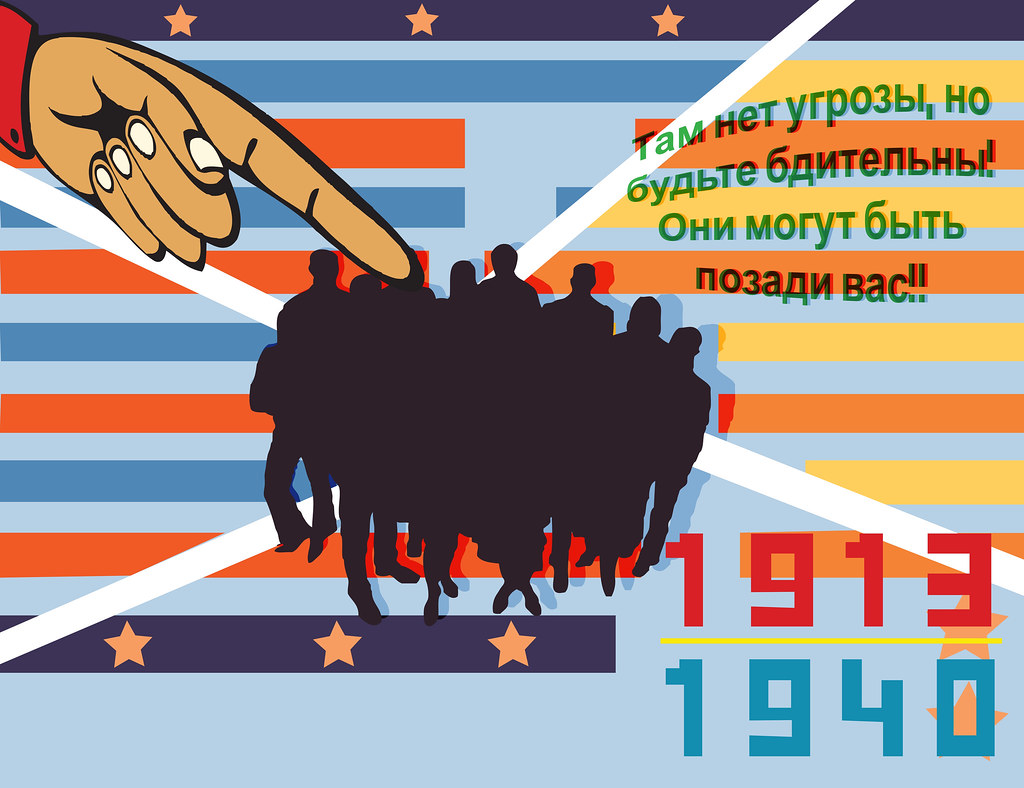
You are handed a blueprint for a city that has never been built, and the strange thing is not the ambition of the drawing but the confidence of the line — the absolute certainty that the angle of a ceiling or the ratio of a window to a wall could reorganize how human beings feel about one another when they wake up in the morning.
That confidence was not naïve in the way we now prefer to remember it. Alexander Bogdanov, writing his Tektology between 1913 and 1922, was not dreaming: he was constructing what he called a universal organizational science, a framework in which every system — biological, social, mechanical, aesthetic — obeyed common structural laws of equilibrium and entropy. For Bogdanov, the designed object was not metaphor. It was intervention at the level of organization itself, which meant that a chair, a poster, a workers’ club interior, a typeface were all sites where the deep grammar of collective life could be rewritten. His ideas influenced the Proletkult movement and circulated among the same Moscow circles where Rodchenko was photographing from diagonal angles and Stepanova was designing textile patterns that refused to let the eye rest in any inherited comfort. The logic was systemic: change the organization of perception, and you change the organization of desire, and desire is where power actually lives.
What no organizational science could model was the speed at which power reassigns the meaning of forms once those forms become legible to it. By 1932, the Soviet state had dissolved the independent artistic organizations, imposed Socialist Realism as doctrine, and transformed the visual vocabulary of Constructivism — its dynamism, its clean geometries, its implied collectivity — into decorative options available for selection or rejection by committee. The forms survived; the organizational intention behind them did not. This is not a story of betrayal from outside. It is something structurally more disturbing: the designed environment did alter social relations, but not in the direction its authors specified. It altered them in the direction that the surrounding power structure needed altered. The form was not neutral, but neither was it sovereign.
Every serious attempt to build utopia through design runs into this asymmetry eventually. The Bauhaus, founded in Weimar in 1919 and closed under Nazi pressure in 1933, produced in fourteen years a body of pedagogy and object-making whose influence on the twentieth century’s material culture is almost impossible to overstate — and yet the political project embedded in that pedagogy was extracted from the objects with remarkable efficiency, leaving behind a set of aesthetic conventions that became the preferred visual language of corporate modernity. The International Style that filled the glass towers of postwar capitalism was built from tools that had been forged, explicitly, to dismantle the conditions that made capitalism possible. Form traveled. Intent did not.
Bogdanov’s Tektology anticipated this problem without solving it. He understood that any organized system tends toward states of lower tension, that equilibrium is not stasis but a dynamic condition that can be disrupted from within or colonized from without. What his framework could not supply was an account of the political will required to maintain the disruptive charge of a designed environment against the constant pressure of institutional normalization. Tektology described how systems organize themselves. It could not describe who gets to decide, at the moment of maximum ambiguity, whether a given organization serves liberation or containment — and that decision is never made in the abstract. It is made in offices, in funding meetings, in the quiet moment when a commissioning body looks at a proposal and decides how much strangeness it can afford to authorize.
The Constructivists believed that making the world legible as a designed thing — showing the joint, exposing the structure, refusing the ornament that conceals the mechanism — was itself a political act that could not be co-opted, because transparency is its own resistance. What the century showed them, and keeps showing us, is that transparency is also a style.
🔴 Art, Revolution, and the Utopian Imagination
Russian Constructivism was not merely an aesthetic movement — it was a radical vision of art as a tool for reshaping society and consciousness. These related articles trace the wider constellation of ideas that gave birth to avant-garde culture, from revolutionary design to the politics of form and utopia.
Experimental cinema: history and avant-gardes
Experimental cinema emerged alongside the great avant-garde movements of the early twentieth century, sharing with Constructivism a refusal of passive spectatorship and a belief in art as a transformative force. Directors like Dziga Vertov pushed the boundaries of montage and visual language in ways that directly echoed the Constructivist program. This article maps the history of a cinema that dared to reinvent itself from the ground up.
GO TO THE SELECTION: Experimental cinema: history and avant-gardes
The Weimar republic: art, culture and decadence
The Weimar Republic was one of the most fertile and tormented cultural laboratories of the modern era, producing art, architecture, and design that stood in constant dialogue with Soviet Constructivism. Its climate of crisis and creative freedom generated expressionism, the Bauhaus, and a generation of artists who believed form could redeem society. Understanding Weimar means understanding the broader European dream — and tragedy — of art as political transformation.
GO TO THE SELECTION: The Weimar republic: art, culture and decadence
Art as a Political and Social Tool
Art as a political and social tool has a long and contested history, but nowhere was this ambition more explicit than in the Constructivist movement, which declared the artist a worker in service of the collective. This article examines how artists across the twentieth century used their practice to challenge power, provoke consciousness, and imagine alternative worlds. It is an essential companion for anyone seeking to understand the ideological stakes of visual culture.
GO TO THE SELECTION: Art as a Political and Social Tool
Fluxus: When Art Becomes Performance and Everyday Life
Fluxus, like Russian Constructivism before it, refused the separation between art and everyday life, insisting that creativity belonged to everyone and that the boundaries of the artwork should dissolve into lived experience. This article traces the history of a movement that turned performance, play, and provocation into a radical aesthetic philosophy. Reading it alongside Constructivism reveals a continuous thread of utopian energy running through the twentieth-century avant-garde.
GO TO THE SELECTION: Fluxus: When Art Becomes Performance and Everyday Life
Discover the Cinema That Dares to Think
If these ideas ignite your curiosity, Indiecinema is the streaming platform where art, history, and independent filmmaking converge. Explore documentaries and films that bring the avant-garde vision to life — only on Indiecinema.
👉 EXPLORE THE CATALOG: Watch Indie Films in Streaming
A vision curated by a filmmaker, not an algorithm
In this video I explain our vision

