
The Morning Ritual and the Lead Within
The toothbrush goes in the mouth at the same angle it did yesterday, and the day before that, and roughly every morning for the past eleven years in this same bathroom with this same water pressure that has never quite been fixed. The face in the mirror is familiar in the way that a word becomes strange when you repeat it too many times — you recognize it, technically, but something in the recognition has gone flat. There is a moment, and most people know this moment even if they have never spoken it aloud, where the eyes looking back from the glass seem to belong to someone who made a series of reasonable decisions that somehow, collectively, added up to a life that feels like a coat sewn for another person’s shoulders.

This is not depression. It is not crisis. It is something quieter and therefore more difficult to address — a low hum of discontinuity between who you are and who you had, once, some dim and unformulated sense, of becoming. The morning light comes through the same window. The coffee maker begins its familiar throat-clearing. And you stand there, toothbrush in hand, carrying something you cannot put down because you have never acknowledged picking it up.
The alchemists called it lead. Not because they were confused about chemistry — the more sophisticated among them were perfectly aware that their laboratories were also theaters of the mind — but because they needed a word for the heaviest substance known to human experience, the thing that does not burn, does not elevate, does not transmute on its own. Carl Jung spent decades excavating the alchemical literature and arrived at a conclusion that remains one of the most unsettling contributions to modern psychology: the alchemists were mapping the interior. In his 1944 work Psychology and Alchemy, he argued that the opus, the great work of transformation, was never primarily about matter. It was about the confrontation with what he called the shadow — the accumulated mass of everything a person has refused to integrate, refused to feel, refused to name. The lead is not a medieval metaphor. It is the sediment.
Consider what that sediment is made of. It is the career chosen because it seemed stable rather than alive. It is the relationship maintained past its honest end because the alternative required a conversation no one knew how to begin. It is the sentence swallowed at the dinner table when you were fourteen, and then again at twenty-six, and then so habitually that the swallowing became a reflex and the reflex became a personality trait that other people describe as your being calm, measured, mature. The alchemists would have recognized this immediately. Lead is dense precisely because it has been compressed. Every unlived choice adds a layer. Every inherited identity — the dutiful child, the responsible adult, the person who does not make things difficult — is another deposit. By the time most people stand in front of that bathroom mirror in their late thirties or forties, they are carrying a geological record of suppressions so thorough and so old that they have forgotten the strata are not bedrock.
The philosopher Gaston Bachelard wrote in The Poetics of Space that the house we inhabit is also the house we are — that our interior spaces mirror our psychic architecture. The bathroom mirror, in this reading, is not decorative. It is diagnostic. What looks back at you at seven in the morning, before the performance of the day has fully assembled itself, is the closest thing to unmediated self-knowledge that ordinary daily life permits. Most people look away quickly. They look at the blemish, the hairline, the shadow under the eyes. Anything specific enough to manage. Because the general view — the whole face, the whole expression, the whole accumulated weight of the person standing there — is the view that asks questions there is not yet, perhaps, a language to answer.
Mystery of an Employee
Drama, thriller, by Fabio Del Greco, Italy, 2019.
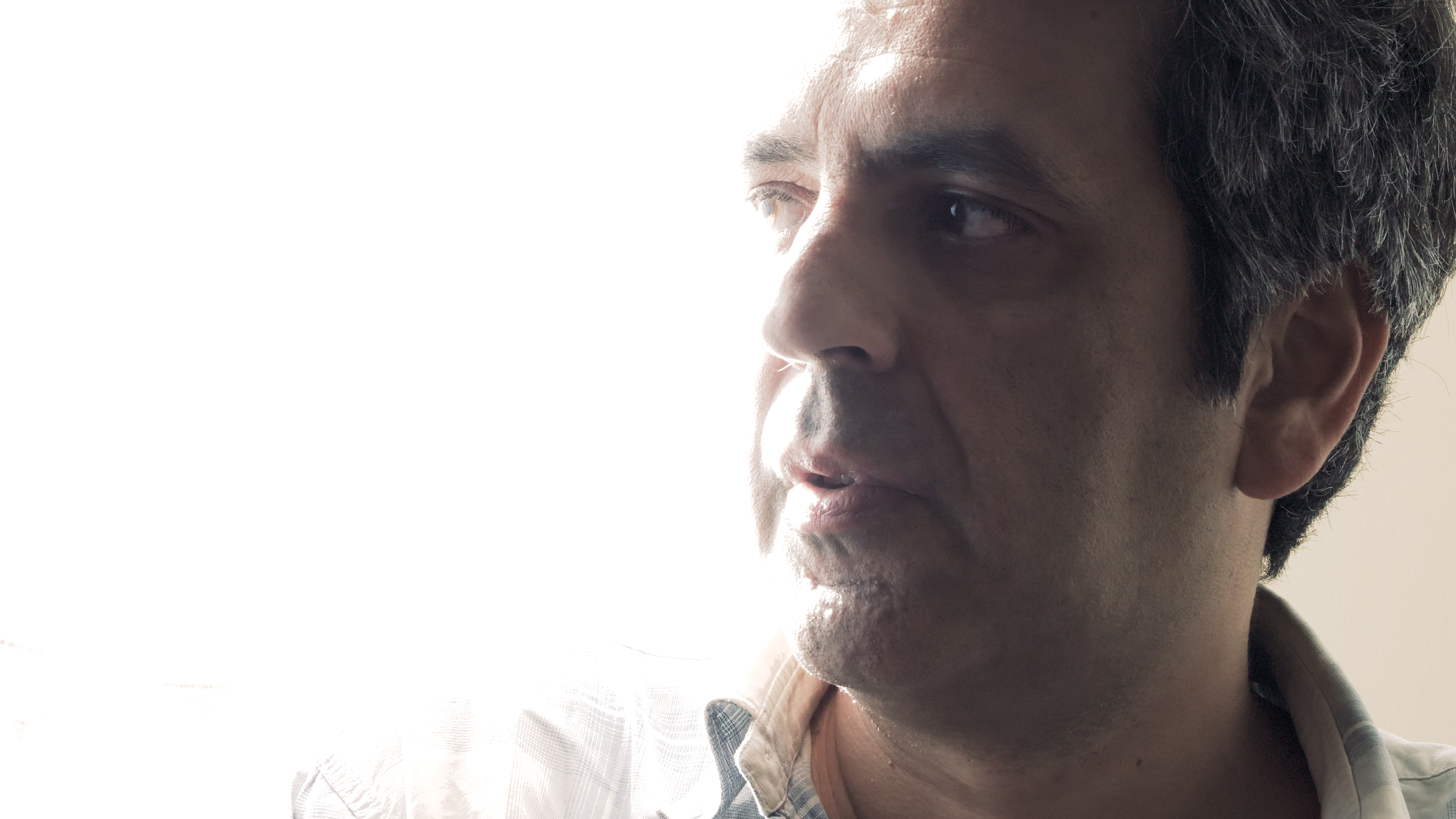
Someone wants to control the life of the employee Giuseppe Russo: the products he buys, his political and religious faith, his private life, even his dreams. But he will do anything to escape control and find his true self. Giuseppe is a man of around 45, married, with a stable job and a home of his own. His life flows seemingly peacefully when he meets a mysterious tramp who gives him some old VHS video cassettes. Giuseppe begins to see video tapes in which he is filmed in some moments of his life since he was a child, then as a teenager and as a young man. Who shot those videos that he remembers nothing about? Giuseppe has the strange sensation of being constantly observed and begins to investigate what is happening. Through his investigation of him, he begins to rediscover his true identity and become aware of who he truly is.
Employee's Mystery is a film that highlights the danger of social control and shows a society where everyone is constantly monitored and conditioned in their deepest selves. The film is also an analysis of human nature and identity. Fabio Del Greco, who plays Giuseppe, gives an engaging performance. Equally good is Chiara Pavoni, in the role of Giada Rubin and Roberto Pensa in the role of the tramp. Employee's Mystery is a film that addresses important themes in an original way, a psychological thriller that keeps the viewer glued to the screen until the end: a metaphor for contemporary society, in which people are increasingly monitored and conditioned by the media and technologies . It is a courageous and provocative work, which addresses important themes in an original way.
LANGUAGE: Italian
SUBTITLES: English, Spanish, French, German, Portuguese
What the Alchemists Were Actually Doing
There is a moment, somewhere in the middle of an ordinary Tuesday, when a person realizes they have been organizing their desk for forty minutes instead of doing the thing the desk is for. The papers are aligned. The pens are sorted by color. The surface is clear. Nothing has been produced. And yet something about the arranging felt absolutely necessary, as though the outer order were a rehearsal for some inner readiness that never quite arrives. Most people notice this, feel a mild shame, and move on. Very few stop to ask what they were actually doing.
Zosimos of Panopolis would have recognized the impulse immediately. Writing in Greek in Egypt around 300 CE, he described visions of a figure being boiled, dismembered, and reconstituted — imagery so viscerally strange that modern readers assume metaphor or madness. But Zosimos was neither a poet nor a lunatic. He was among the most rigorous minds of the Hellenistic world, working at the intersection of Neoplatonic philosophy, Hermetic tradition, and practical laboratory chemistry. When he described the transformation of base matter into noble substance, he was simultaneously describing a process he believed occurred in the material world and one he knew to be occurring within the practitioner. The laboratory and the soul were not two separate theaters. They were the same stage.
This doubled vision passed into the Arabic world through Jabir ibn Hayyan in the eighth century, whose thousands of texts — many genuine, many attributed — established the technical vocabulary that Europe would inherit: alkali, alembic, elixir, the whole lexicon of transformation. Jabir was a scientist in any meaningful sense of the word. He described distillation processes with a precision that modern chemists can replicate. He also insisted that the purification of metals and the purification of the operator were inseparable operations. To dismiss him as someone who failed to discover modern chemistry is like dismissing a cathedral architect for failing to build an airport. The ambition was different. The instrument was different. The result was exactly what was intended.
By the time the tradition reached Paracelsus in sixteenth-century Europe, and then figures like Robert Fludd and Michael Maier, the laboratory had become almost explicitly a projected theater of consciousness. The metals were not merely metals. Saturn was melancholy and lead simultaneously. Mercury was quicksilver and the principle of fluid intelligence. The operations — calcination, dissolution, separation, conjunction, fermentation, distillation, coagulation — mapped onto stages of psychological disintegration and reintegration with a precision that is either remarkable coincidence or proof that the alchemists knew exactly what they were doing and chose the language of matter because the language of mind did not yet exist in the form we now expect.
Carl Jung spent decades with these texts, and what he published in 1944 as Psychology and Alchemy was not, as it is sometimes caricatured, a reduction of alchemy to mere psychology. It was the opposite claim: that the unconscious had been doing its work through the only available symbolic technology, and that the alchemist’s insistence on transformation — real, material, observable transformation — was the most honest possible account of what inner change actually requires. It requires heat. It requires dissolution. It requires the willingness to sit with something that has been broken down before it can be reconstituted. Jung identified the coniunctio, the alchemical marriage of opposites, as the central operation, and located it precisely where the tradition had always placed it: not as an idea to be understood, but as a process to be endured.
The modern dismissal of alchemy as primitive science that simply lacked proper instruments reveals something uncomfortable. It assumes that the goal was always what we would have chosen — control over matter, extraction of value, measurable output. It cannot imagine that someone might have been doing something else entirely, something that our vocabulary of productivity and achievement has made almost unthinkable.

The Calcination of the Self — Burning What You Were Told You Are
There is a particular Tuesday morning that arrives without warning. Not a dramatic one — no single catastrophic event, no thunder announcing itself. Just an ordinary Tuesday when the phone call comes, or the email appears, or the person across the breakfast table says something in a tone they have never used before, and suddenly everything that held the shape of a life — the job title, the relationship, the apartment with the particular light in the afternoon — begins to slide sideways off the table like dishes in a slow earthquake. What follows is not immediately grief. It is something stranger and more disorienting: a silence where a self used to be.
A man empties his office into a cardboard box and carries it to his car in the parking garage and sits there for forty-five minutes without turning the ignition. He is not crying. He is simply unable to locate himself. The coordinates he used to navigate — what he did, who he was to someone, what he owned, what others expected of him at 9 a.m. on a weekday — have vanished, and in their place is something that feels, against all expectation, like open air.
Mircea Eliade, writing in 1956 in The Forge and the Crucible, traced the ancient and persistent connection between fire and transformation across metallurgical traditions, shamanic initiation rites, and alchemical practice. What he found was not metaphor but a recurring structural truth: that fire, in virtually every tradition that has taken transformation seriously, is not punishment but preparation. The ore must be heated beyond endurance before it will yield what it contains. The initiate must pass through symbolic death — dismemberment, burning, dissolution — before they can inhabit a new form of being. The calcination that opens the alchemical sequence is not the destruction of the self. It is the destruction of the accumulated crust, the sedimentary layers of identity deposited over years by expectation, performance, and social necessity.
This is where Erving Goffman becomes painfully useful. In The Presentation of Self in Everyday Life, published in 1959, Goffman argued with surgical precision that what we call the self is largely a performance calibrated for audiences. We manage impressions. We adjust our costumes depending on the stage. We play the professional, the partner, the competent adult, the person who has things reasonably under control. Goffman was not being cynical — he was being accurate. The performance is not dishonesty; it is the primary mechanism by which social life functions. But the consequence, largely unacknowledged, is that the performer eventually loses track of the distinction between role and reality. The mask, worn long enough, stops feeling like a mask.
What calcination does — what that Tuesday morning in the parking garage initiates — is remove the audience. There is no one left to perform for. The role has been taken away not by choice but by circumstance, and what remains in the sudden absence of the performance is something that does not quite have a name yet. It is not the true self in any clean, triumphant sense. It is more like ash: formless, grey, oddly light. Terrifying because it is unrecognizable. Terrifying because there is, beneath the terror, something that might be relief.
A woman who has spent eleven years building a career in a firm that restructures itself overnight finds herself sitting on her kitchen floor at two in the afternoon, still in the clothes she wore to the meeting where they let her go, and she notices something she will not be able to explain clearly for years: that the person who is frightened right now is not the same person who was frightened of disappointing the quarterly review. The fear has changed register entirely. It has become real in a way the other fear never was. And realness, however brutal, is the first honest ground anyone has stood on in a very long time.
Dissolution — The Symbols That Surface When Structure Fails
There is a particular kind of morning that arrives without warning — the kind where you wake and cannot remember, for a moment, who you are supposed to be. The room is the same. The coffee is the same. But something has quietly come loose in the architecture of the self, and the ordinary objects on the shelf seem to stare back with an alien significance, as though they know something you do not.
This is dissolution. Not dramatic collapse, not the cinematic breakdown with its convenient narrative arc, but the slow liquefaction of structure from within — the alchemical nigredo giving way to the albedo, the solid form of the constructed self beginning to weep at its seams.
A man sits in a rented room surrounded by photographs he has pinned to the wall — faces, maps, fragments of text — trying to find a pattern that will hold the falling pieces of his life in place. He cannot sleep. He cannot stop. The images on the wall have begun to feel more real than the people he passes on the street, and he understands, with a clarity that frightens him, that what he is assembling there is not an investigation into the external world but a portrait of his own unraveling interior. The symbols have surfaced because the container broke. And the container, it turns out, was the false self he had been maintaining with tremendous, unacknowledged effort.
James Hillman, writing in Re-Visioning Psychology in 1975, made an argument that cuts against almost everything Western therapeutic culture holds dear: the psyche does not speak in concepts, it speaks in images. It does not present propositions or diagnoses or rational explanations. It presents figures, faces, recurring motifs, obsessive visual returns. When a person begins to see the same image everywhere — a bird, a door, a particular shade of light — they are not experiencing a symptom of disorder. They are being addressed. The psyche is attempting to communicate in its native language, and what looks like psychological disintegration from the outside is, from the inside, a kind of grammar becoming legible for the first time.
The cultural reflex is to treat this as failure. To medicate it, rationalize it, apologize for it, or lock it behind a clinical term. The DSM, published in its first full form in 1952 and now running to its fifth edition, is a document of extraordinary diagnostic precision and, simultaneously, an instrument that has almost no language for the meaningful content of suffering. It can name the shape of the container’s fracture. It cannot read what poured out.
Elsewhere, a woman walks through a house that has been left exactly as it was on the day of a great loss, the clocks stopped, the wedding cake rotting on the table, and everyone around her sees madness. But she is doing something more exact than madness — she is refusing to let time dissolve the image before she has understood it. She is holding the symbol still by force of will, refusing the cultural instruction to move on, to get over, to reintegrate before the message has been received. There is something almost heroic in the refusal, even as it destroys her.
Hillman drew on his own revision of Jung’s concept of the soul to argue that pathologizing is itself a psychological activity — that the movement toward darkness, fragmentation, and symbolic inundation is not a deviation from psychological health but a fundamental expression of psychic depth. The dissolution stage in alchemy was not an error in the process. It was the process. The solid had to become fluid before it could be refined.
What surfaces in that fluid state is not random. It is precisely what the rigid structure was built to contain.
The Hermetic Paradox — Separation Without Isolation
There is a particular moment that arrives, usually unremarketed and uninvited, when a person sits in a room they have chosen to sit in alone and feels, with startling clarity, that the silence is not empty. They are not waiting for anything. They are not recovering from anything. They are simply there, with themselves, and that presence feels neither lonely nor luxurious — it feels necessary, like breathing after having held one’s breath for years without knowing it.
Most people around them will not understand this. They will ask if everything is alright. They will offer company, distraction, plans. The machinery of sociality interprets withdrawal as symptom, as wound, as failure of connection. And so the person who has finally found something real in their own quiet will often learn to perform busyness, to scatter themselves across calendars and obligations, because the alternative — explaining that solitude is not the same as suffering — requires more vocabulary than the culture has been willing to preserve.
Hannah Arendt made the distinction with surgical precision in The Life of the Mind, published in 1978. Loneliness, she argued, is the condition of being abandoned by human company, of feeling exiled from the world. Solitude is something structurally different: it is the condition of being with oneself, of entering what she described as the two-in-one of thought, the internal dialogue that constitutes genuine thinking. The lonely person has nowhere to go. The solitary person has arrived somewhere. These are not degrees of the same experience. They are opposite movements — one a collapse inward from lack, the other an expansion inward by choice.
Alchemical tradition understood this long before psychology found the language. The stage called separatio — separation — was never about withdrawal from life. It was about discernment: the capacity to distinguish what is native to oneself from what has been deposited by others, by circumstance, by the long sediment of compliance. The alchemist does not flee the world. They develop the eyes to see what, in their existing materials, actually belongs to the work and what was only contamination. This is not misanthropy. It is precision.
The Emerald Tablet — the Tabula Smaragdina, attributed in medieval tradition to Hermes Trismegistus and documented in Arabic sources as early as the eighth century — offers what sounds like mysticism but functions as structural claim: as above, so below. The maxim is not poetry. It is a statement about mirroring. What occurs in the interior registers in the exterior. What goes unexamined within will organize the outside world in patterns the person will insist are imposed on them by fate or bad luck or the malice of others. The man who has never separated his own desire from his father’s expectation will keep finding himself in rooms he did not choose, living a life that fits him nowhere, and calling this destiny.
This is the hermetic paradox: the work of separation, which looks from the outside like retreat, is precisely the work that makes genuine contact possible. You cannot meet another person across the distance between you if you do not know where you end. You cannot offer what you have not first differentiated from what you owe. The person who has never practiced solitude does not give themselves in relationship — they leak. They fill the space between themselves and others with need they cannot name, dependency dressed as love, approval-seeking dressed as generosity.
What the culture pathologizes as withdrawal is often the only honest movement available. And what it celebrates as connection is often two forms of unexamined noise finding resonance in each other, mistaking volume for depth, mistaking the familiar ache of recognition for the rarer, harder thing — actually knowing who you are when the room goes quiet and no one is watching to confirm you still exist.
A vision curated by a filmmaker, not an algorithm
In this video I explain our vision
Conjunction — When the Opposites Stop Fighting
There is a moment, sometimes arriving without warning in the middle of an ordinary afternoon, when a person stops fighting themselves. Not because they have won. Not because they have reached some plateau of understanding where the contradictions finally resolved into a clean narrative. But because the exhaustion of resolution itself becomes visible, and something underneath it — older, quieter, more animal — simply refuses to continue the war.
A man stands in his childhood home, now emptied of furniture, sold, and he finds himself neither grieving the loss nor celebrating the freedom he always claimed he wanted. Both are present simultaneously, with equal weight, and for a strange few seconds he does not reach for either one. He holds them both without choosing. And in that suspended moment, he feels more himself than he has in years — not despite the contradiction, but inside it.
This is what the alchemical tradition called the coniunctio oppositorum, and Carl Gustav Jung spent the better part of his later life trying to articulate what that phrase actually means in a human body, in a human life, rather than in the encoded symbolism of medieval manuscripts. In “Mysterium Coniunctionis,” published in 1955 when Jung was nearly eighty, he described the conjunction not as a harmonious blending of opposites but as their simultaneous presence — the masculine and feminine, the light and shadow, the conscious and unconscious — held in creative tension rather than dissolved into comfort. The goal was never synthesis. The goal was the capacity to bear both.
Heraclitus understood this two and a half millennia earlier, in the fragments that survive him like shards of a mirror. The river is the same river precisely because it is never the same water. Opposition is not a problem to be solved; it is the structure through which things remain alive. Fragment 51 insists that the bow and the lyre work only because of the tension in their strings — remove the tension, and you have neither music nor arrow. What looks like conflict from the outside is, from the inside, the condition of function.
Antonio Damasio arrived at something adjacent from an entirely different direction. In “The Feeling of What Happens,” published in 1999, he mapped the neural architecture of selfhood and found something that should have unsettled every philosopher who had staked a claim on rational coherence as the ground of identity. The self, Damasio demonstrated, is not constructed by logic. It is constructed by the felt continuity of emotional states — contradictory, overlapping, never fully resolved — that the body registers before the mind can narrate them. The proto-self, as he called it, exists in the ongoing fluctuation of internal states, not in any stable configuration. We are not coherent beings who occasionally feel contradiction. We are contradictory beings who occasionally feel coherent.
Which means that the man standing in the empty house, holding grief and relief without choosing between them, is not failing to process his experience correctly. He is, for perhaps the first time, processing it honestly. The conjunction is not a spiritual achievement reserved for mystics. It is the default condition of consciousness, briefly visible when the machinery of self-management breaks down.
She remembers a conversation with her mother that lasted four hours, moving through anger and love and recognition and resentment without any of it canceling the rest. Afterward, walking home, she felt neither resolved nor broken. She felt strangely whole — not because the difficulty had been removed, but because she had stopped pretending it needed to be. The two versions of her mother, the one she had needed and the one who had actually existed, occupied the same space without war. And the self that could hold both of them was larger than the self that had spent years trying to choose.
That enlargement is what the tradition was pointing toward. Not the end of tension. The capacity to become the space in which tension lives.
Gold as Metaphor — What Transformation Actually Looks Like in a Body

There is a moment many people recognize but rarely name: you are in the middle of a conversation that would have undone you six months ago — the raised voice, the withdrawal of approval, the accusation landing like a stone — and something in you simply does not collapse the way it used to. Not because you have become harder. Not because you no longer care. The caring is still there, perhaps more acutely than before. But underneath it, something has shifted in the foundation, and you notice it not as a thought but as a physical fact, a changed weight in the chest, a different quality of breath, as though the ground beneath your feet has quietly reconfigured itself while you were occupied elsewhere.
This is what the alchemical gold actually looks like when it arrives in a body. Not radiance. Not certainty. Not the triumphant emergence from the crucible whole and gleaming and resolved. More like a barely perceptible change in the texture of how you inhabit yourself.
The transformation narrative we have inherited — from self-help culture, from spiritual marketing, from the archetypal hero’s journey simplified into a commodity — insists on arrival. There is a before, defined by lack or wounding or confusion, and an after, defined by integration, wholeness, light. The structure demands a destination. But real transformation, the kind that actually happens in a lived body across lived time, refuses this architecture entirely. It does not announce itself. It does not complete itself. It keeps moving, keeps dissolving, keeps demanding that you relinquish the last solid thing you thought you had finally secured.
Rilke knew this. Writing to a young man asking for certainty, for answers, for some method by which the confusion of inner life might be resolved, he offered instead the most uncomfortable possible counsel: to live the questions themselves. Not to solve them, not to convert them into answers, but to inhabit them the way one inhabits a room not yet fully understood. The letters he wrote between 1902 and 1908 were not spiritual comfort. They were a sustained invitation to endure uncertainty without domesticating it, to remain in the unresolved without rushing it toward premature closure. The gold, if we insist on that metaphor, is not what you arrive at. It is the capacity to stay in the fire long enough to stop needing to leave.
But this staying is not a mental achievement. It is somatic before it is conceptual. Maurice Merleau-Ponty, whose work in the mid-twentieth century fundamentally reoriented how philosophy understood the body, insisted that experience is never first processed by the mind and then registered in the flesh. The body perceives before the mind articulates. We know things in our limbs, our gut, the tension held in the jaw, before we have language for what we know. Transformation, then, cannot be a purely cognitive event. If it has not changed how you breathe in the presence of threat, how you hold yourself when the world withdraws its approval, how you sleep, how you eat, how you move through a room — it has not yet become real. It is still idea. The body is the final arbiter of whether anything has actually changed.
This is why people can speak the language of transformation at great length and still be exactly where they began. The discourse has been metabolized; the body has not. And the body, in its patience and its ruthless honesty, will keep presenting the same material — the same contraction, the same old panic rising in the throat — until the transformation stops being a concept carried in the head and becomes instead a different way of weighing one’s own existence from the inside.
A changed relationship to suffering is not the absence of suffering. It is the discovery that suffering no longer requires an immediate exit.
The Symbols That Outlasted the Laboratories
There is a woman in a wellness shop on a quiet Saturday morning, turning a small silver pendant between her fingers. On it, a snake eating its own tail. She has never read a medieval manuscript. She does not know that the image once appeared in a Greek alchemical papyrus from the third century, or that it migrated through Byzantine copying houses, through Arabic translation, through the hands of scholars who believed it encoded the secret of matter’s self-renewal. She knows only that it feels significant, that the woman behind the counter said something about cycles and rebirth, and that at fourteen dollars it seems like a reasonable price for a reminder to keep going.
This is not mockery. The recognition is harder than that.
The ouroboros, the peacock’s tail with its explosion of iridescent colors signaling the cauda pavonis stage of the Great Work, the philosopher’s stone as a metaphor for the self’s capacity to transmute its own base suffering into something luminous — these symbols did not die in the laboratories when the chemists finally separated themselves from the mystics in the seventeenth century. They went elsewhere. They seeped into Romantic poetry, into Keats writing about negative capability, into Blake’s furnaces of Los hammering at the boundaries of perception. They entered the vocabulary of psychoanalysis when Jung spent years cataloguing their appearances in his patients’ dreams, publishing in 1944 his exhaustive Psychologie und Alchemie, arguing that the alchemists had been doing something real all along, just not what they thought — that they had been projecting the unconscious drama of individuation onto matter, mapping an inner geography they lacked the language to describe directly. The prima materia, that chaotic undifferentiated substance from which gold was supposed to emerge, was for Jung simply the self before it understood itself: formless, dark, full of potential that had not yet survived its own dissolution.
That is a destabilizing idea. It means the transformation is never decorative. It means the chaos is not a problem to be solved but the actual substance of the work.
And this is precisely what consumer culture has learned to absorb with extraordinary elegance. Colin Campbell, in his 1987 study The Romantic Ethic and the Spirit of Modern Consumerism, traced how Romanticism’s longing for intense, transformative experience did not resist capitalism — it fueled it. The desire to feel deeply, to be changed, to encounter the sublime, became the engine of a consuming self perpetually seeking novelty as a proxy for genuine alteration. What Campbell identified was not cynical manipulation but something more structurally interesting: a culture that genuinely offers the sensation of transformation as a substitute for transformation itself. The symbol arrives packaged with the feeling it once required years of inner violence to earn.
The ouroboros on the pendant does not ask the woman to dissolve. It asks nothing of her at all. The peacock’s tail appears on meditation app loading screens in gradients of teal and gold, stripped of its original implication — that the explosion of color was not beauty but crisis, the moment before integration when everything the self had suppressed surfaced simultaneously and the alchemist either survived it or did not. The philosopher’s stone becomes a metaphor on self-help covers, promising not the annihilation of the ego but its optimization. The symbol travels. It just leaves its charge behind.
What survives is the shape without the wound. The map without the territory. And yet the symbols persist, reproduced in tattoo parlors and gallery prints and the carefully curated shelves of shops that smell of cedar and bergamot, as if something in the collective imagination still suspects that these images once pointed toward a real and necessary process — as if the woman with the pendant, turning it in the light, is reaching, however briefly and however gently, toward something that once demanded everything from the people who drew it.
🔮 Paths of the Soul: Transformation Through Ancient Wisdom
Spiritual alchemy is not merely a medieval metaphor — it is a living tradition of inner transformation that echoes through mysticism, esoteric philosophy, and sacred symbolism. The articles below trace the invisible threads connecting seekers, teachers, and systems of thought that have mapped the journey from lead to gold within the human soul. Each perspective offers a unique key to understanding the profound mystery of becoming.
Helena Blavatsky and Theosophy: the Woman Who Revolutionized Esoteric Thought
Helena Blavatsky stands as one of the great architects of modern spiritual alchemy, weaving Eastern cosmology, Hermetic tradition, and symbolic mysticism into a single transformative vision. Her Theosophical framework provided a map for the inner journey that resonated deeply with seekers hungry for a synthesis beyond orthodox religion. To study Blavatsky is to encounter the very foundations upon which much of Western esoteric transformation theory was built.
GO TO THE SELECTION: Helena Blavatsky and Theosophy: the Woman Who Revolutionized Esoteric Thought
Neville Goddard: the Mystic Who Turned Imagination into the Law of the Universe
Neville Goddard elevated imagination to a sacred alchemical force, arguing that the transformation of consciousness is the only true transformation that exists. His teachings echo the Hermetic principle that the inner world shapes the outer, making him a natural companion to the study of spiritual alchemy. Through vivid symbolism and radical self-inquiry, Goddard offered a practical path toward the philosopher’s stone hidden within the mind itself.
GO TO THE SELECTION: Neville Goddard: the Mystic Who Turned Imagination into the Law of the Universe
Pyotr Ouspensky: the Mathematician Who Sought the Fourth Dimension of Spirit
Pyotr Ouspensky approached the spiritual dimensions of existence with the precision of a mathematician and the hunger of a mystic, seeking structures of consciousness that transcended ordinary perception. His explorations of higher dimensions and esoteric psychology align powerfully with the alchemical pursuit of hidden orders beneath surface reality. Reading Ouspensky is to enter a labyrinth where geometry and gnosis meet in unexpected and illuminating ways.
GO TO THE SELECTION: Pyotr Ouspensky: the Mathematician Who Sought the Fourth Dimension of Spirit
Universal Consciousness
The concept of Universal Consciousness stands at the very heart of spiritual alchemy, representing the golden end-state toward which all inner transformation aspires. When individual awareness dissolves into the greater whole, the symbolic death and rebirth of the alchemical process find their deepest meaning. Exploring this theme is essential for anyone seeking to understand why so many traditions converge on the dissolution of the separate self as the ultimate spiritual achievement.
GO TO THE SELECTION: Universal Consciousness
Discover the Cinema of Inner Transformation on Indiecinema
If these themes of spiritual alchemy and symbolic transformation have stirred something within you, Indiecinema is the streaming space where cinema becomes a mirror for the soul. Explore a curated world of independent, esoteric, and visionary films that dare to ask the deepest questions about consciousness, meaning, and the mystery of being. Your inner journey continues — frame by frame, on Indiecinema.
👉 EXPLORE THE CATALOG: Watch Indie Films in Streaming
A vision curated by a filmmaker, not an algorithm
In this video I explain our vision

