
The Man Who Refused the World as It Was Given
You know the feeling. You are sitting at a desk that was never quite yours, in a city that chose you more than you chose it, doing work that someone else defined before you arrived. The ceiling above you is not made of plaster or concrete. It is made of assumption — the accumulated weight of what people like you are supposed to do, supposed to want, supposed to become. You look at the walls and recognize, with a clarity that is almost nauseating, that you have been living inside a life that was handed to you already assembled, like furniture from a catalog. The pieces fit. The dimensions are correct. And yet something in you knows, with a certainty that precedes language, that this is not it.

This sensation — half grief, half rebellion — is not modern. It is not the product of burnout culture or algorithmic dissatisfaction. It is as old as the first human being who looked at the horizon and understood that the horizon was not a limit but an instruction.
Neville Lancelot Goddard was born in Barbados in 1905, the fourth of ten children in a prosperous merchant family, and he arrived in New York City in 1922 at the age of seventeen to study theater. He was not fleeing poverty. He was fleeing the gravitational pull of the given, that invisible force which tells you that the world you inherited is the world that exists. New York in 1922 was a city of furious reinvention, jazz bleeding through the walls of apartments where immigrants pressed their ambitions into English sentences they were still learning to trust. Neville fit nowhere obvious. He was a Black man from a British colony with a theatrical ambition in a country that had constructed elaborate architectures of exclusion. And yet the exclusion itself seemed to interest him less than a different question entirely — not how to navigate the world as it was, but whether the world as it was held any ultimate authority at all.
The question sounds mystical. It is, in fact, disturbingly practical.
What Neville would spend the next five decades elaborating — through lectures in Los Angeles, New York, and San Francisco, through books beginning with At Your Command in 1939 and continuing through The Power of Awareness in 1952 and Feeling Is the Secret published in 1944 — was not a system of positive thinking, not an ancestor of the self-help industry’s cheerful imperatives. It was something philosophically older and stranger: the claim that human imagination is not a faculty that represents reality but the very substance from which reality is constructed. That consciousness does not observe the world. Consciousness authors it.
This is the provocation that most people deflect immediately, because to take it seriously even for a moment is to collapse the comfortable distance between what you want and what you believe you deserve. The separation we maintain between the life we imagine and the life we live is not humility. It is, Neville would argue, a form of violence we commit against ourselves daily, rehearsed so thoroughly that it begins to feel like wisdom.
A man sits in a room in the 1940s and tells an audience in Manhattan that they are not victims of circumstance but authors of it, and that the mechanism of authorship is not effort, not strategy, not the grinding accumulation of credentials, but the precise and disciplined act of feeling something as already true. The room is not full of the credulous. The room is full of people who recognize something in this that they cannot quite dispute, because it touches a register of experience that precedes argument.
That recognition is where Neville always began. Not with doctrine. With the unsettling suspicion that you already know this.
The Lost Poet
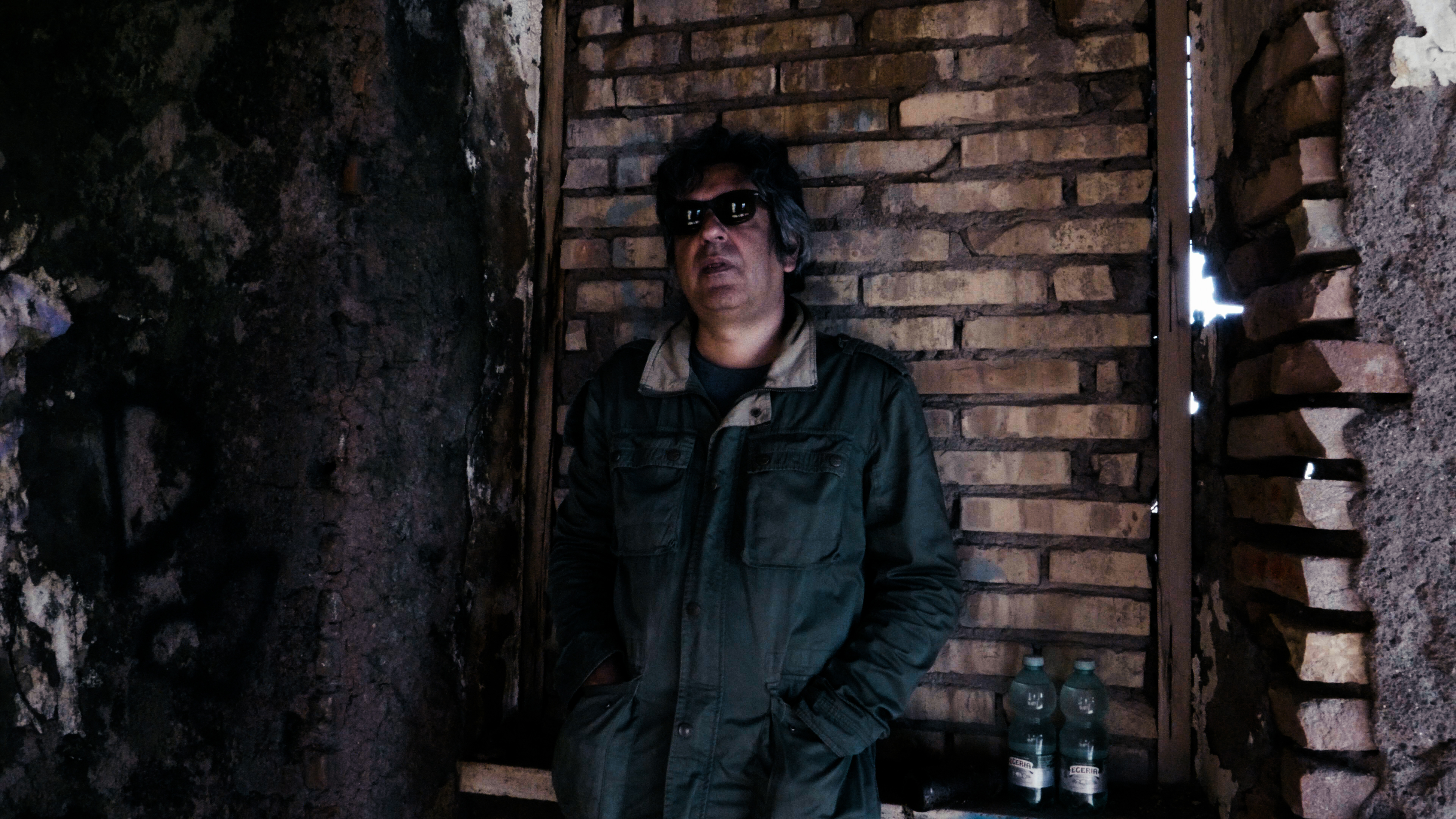
Drama, by Fabio Del Greco, Italy, 2024.
Dante Mezzadri wants to see an old friend, nicknamed the Iguana, whom he has lost sight of for many years, and who has managed to turn their shared youthful passion for poetry into a job, becoming a famous writer and poet. The man escapes from his bourgeois life and his wife to live homeless on the Roman coast, printing and trying to sell his poetry collections. At night he sleeps in a park of old carnival floats, inside a papier-mâché tank, and waits for the opportunity to meet his old friend, who however never shows up for appointments in the places they frequented when they were young, now in ruins. Dante's poetry books do not interest anyone and to support himself he is forced to "change product": he starts selling the infamous "cannibal pill" on behalf of young drug dealers, a new drug that sells like hot cakes and causes sensory and consumerist ecstasy. However, he realizes that this powerful drug is very dangerous for those who take it, he comes into conflict with his ethical conscience and throws all the pills into the sea. However, the dealers want to collect their money.
Shot over a period of 2 years, the film is a reflection on the cultural and artistic rubble of the society in which the protagonist lives, in an increasingly mechanized, consumerist and arid world. Dante Mezzadri is yet another human being who has renounced his inspiration and his creativity, but unlike many he is not willing to give his life to a system that distances him from his true identity. The physical world around him, however, seems constructed in such a way that it seems impossible to escape from this "invisible cage". The enthusiasm of the people he meets is ignited only by sensory gratification, by unreal visions of personal affirmation and success, by "metaverses" that offer an escape into an illusory and destructive reality. The poet's house on the coast, where he met with his friends as a young man, is just a pile of abandoned rubble. What happened to all those who wanted to become poets and ended up becoming something else? Are there internal forces with which that house can be "rebuilt"?
LANGUAGE: Italian
SUBTITLES: English, Spanish, French, German, Portuguese
Barbados, Broadway, and the Annihilation of Circumstance
He is alone in the theatre when it happens — not a revelation, not yet, just the ordinary strangeness of a young man speaking words that belong to someone else in a room that belongs to no one. The seats are empty. His voice carries differently when there is no audience to absorb it, bouncing off velvet and plaster, returning to him slightly altered, as though the room is answering back. He does not know, standing there on that bare stage in lower Manhattan, that he is rehearsing something far larger than any role a director will ever hand him. He thinks he is learning to become an actor. He is actually learning that reality is a performance, and that the performer and the script are the same thing.
Neville Lancelot Goddard was born on February nineteenth, 1905, in St. Michael, Barbados, the ninth of ten children in a family that was prosperous enough to be comfortable and humble enough to be hungry for more. The island was still under British colonial administration, a place where the social architecture of empire made itself felt in the smallest gestures — who stood where, who deferred to whom, which ambitions were considered reasonable and which were considered dangerous. He grew up inside that architecture without yet having the language to question it, which may be precisely why, when he eventually did find the language, he dismantled it so completely.
He arrived in New York in 1922, seventeen years old, carrying the particular confidence of someone who has not yet been told what is impossible. He came to study theatre, and for a decade he worked at it seriously — dancing, performing, moving through the Depression-era margins of the entertainment industry with the disciplined persistence that performers develop when there is no safety net beneath the stage. The 1930s in New York were a specific kind of pressure. By 1933, unemployment had reached nearly twenty-five percent nationally, and the cultural world contracted around its survivors with a desperate, galvanizing energy. Ambition in that context was not a luxury. It was a survival mechanism dressed in nicer clothes.
It was somewhere in this period, the precise year debated but generally placed in the early 1930s, that Goddard encountered the man who would reroute everything. His name was Abdullah, an Ethiopian rabbi — or a figure who presented himself as one — about whom almost nothing verifiable survives except the extraordinary effect he had on the people who found him. Abdullah taught Kabbalah. He taught that Scripture was not history but psychology, that every figure in the Bible was a state of consciousness, that Moses and Abraham and Jacob were not men who had lived but conditions that could be inhabited. The burning bush was not an event that happened once in a desert. It was something that happened every time a human being encountered the unconditioned nature of their own awareness.
This was not a minor theological revision. It was the annihilation of circumstance as a category of meaning. If the stories were internal, then the external world — the empty theatre, the Depression, the colonial island, the nine siblings, the Atlantic crossing, all of it — was not the territory. It was the map that consciousness had drawn of itself and then forgotten was a drawing.
Goddard was twenty-something years old, an actor from Barbados standing in a city that was economically convulsing, being told by a self-described Ethiopian mystic that the entire visible world was the shadow of an invisible assumption. And he believed it. Not because he was naive, but because something in the structure of the argument landed with the specific weight of a thing that has always been true and has simply never been said out loud before. The stage metaphor he had been living inside professionally suddenly collapsed into something far more literal and far more total. The audience was always empty. The actor was always alone. And the lines, it turned out, were not memorized. They were chosen.

The Feeling Is the Secret — and Why That Terrifies Us
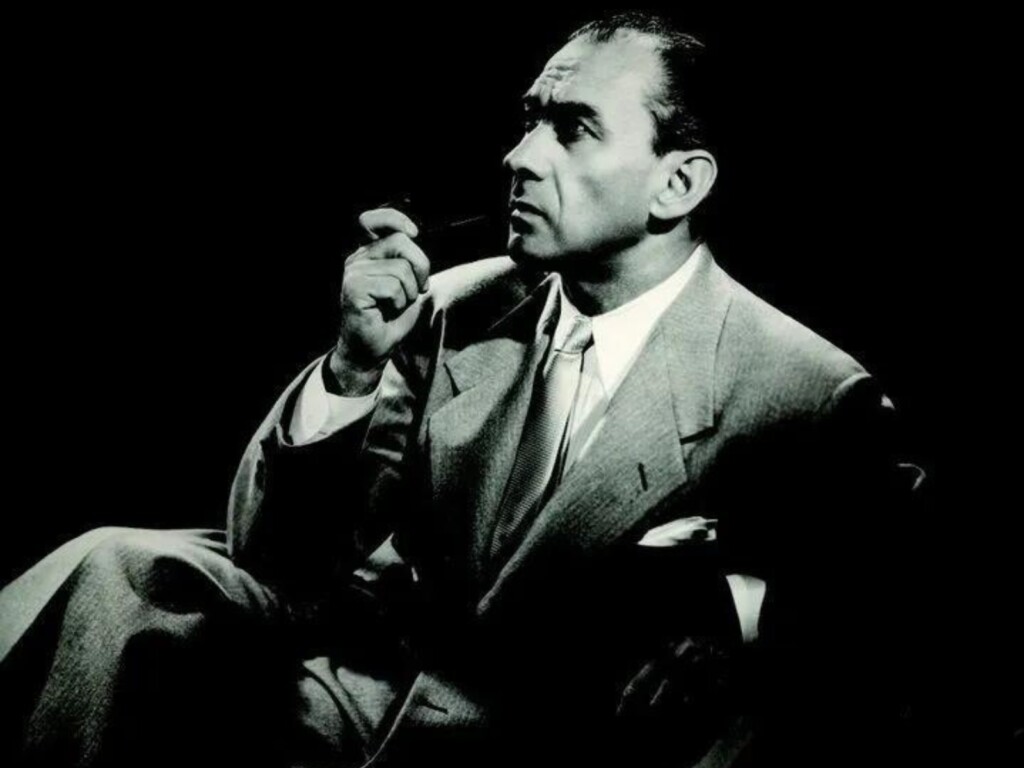
There is a particular hour of the night when the body is horizontal and the mind refuses to follow. You know the hour. Three in the morning, or close enough that the difference doesn’t matter. The room is dark, the house is quiet, and something in you that cannot be satisfied by sleep is running a scene over and over — not a memory, exactly, but something more dangerous than a memory. A version of your life that has not happened yet. You are rehearsing it. You are in it. You feel the specific weight of someone’s hand on your shoulder after the news you’ve been waiting for. You hear the particular timbre of your own voice saying something you have never yet had occasion to say. And for a few seconds, suspended in the darkness, it is more real than the ceiling above you.
Most people, when morning comes, are quietly ashamed of this. They file it under wishful thinking, under the soft embarrassments of 3am, and they get up and re-enter the world of what is demonstrably, measurably, publicly true. Neville Goddard would have said that in doing so, they have just made the single most consequential mistake available to a human being.
In 1944 Goddard published a text so compact it almost disappears in the hand, barely seventy pages, called Feeling Is the Secret. The title sounds like self-help at its most reductive. It is not. The argument he advances there is structural, almost architectural in its precision: the subconscious mind does not respond to desire, to willpower, to repetition of affirmations performed without inner conviction. It responds exclusively to feeling, to the state that the body and the nervous system recognize as real. Consciousness, for Goddard, is not a passive mirror of external conditions. It is the generative medium from which external conditions arise. Impress a feeling upon the subconscious — not a wish, not a hope, but the felt reality of a thing already received — and the subconscious, which he describes as continuous with the world-forming power that most traditions have called God, will reorganize circumstance until the outer matches the inner. The mechanism is not metaphorical. He means it literally and without apology.
The vertigo this produces in anyone who takes it seriously is not accidental. William James, writing fifty-four years earlier in The Principles of Psychology in 1890, had already located something structurally similar in the body’s relationship to emotional truth. James’s argument — radical for its moment, still incompletely absorbed — was that emotion does not precede the bodily state but follows it. We do not tremble because we are afraid; we are afraid because we tremble. The body’s posture, its tension, its breath, its felt orientation toward an imagined situation — these are not expressions of an inner state, they are the inner state. Change the somatic experience and you change the psychological reality. James called his overall approach radical empiricism precisely because he refused to exempt the inner life from the standards of evidence applied to everything else: if feeling was what produced the world a person actually inhabited, then feeling was where the work had to happen.
Goddard read this inheritance and carried it somewhere James himself never went, or never admitted to going. The person lying awake at 3am rehearsing a life that doesn’t exist yet is not, in this framework, indulging a fantasy. They are performing the most precise and demanding act of creation available to them. The difficulty is not technical. The difficulty is that it requires you to feel something as true before any evidence confirms it, which means it requires you to temporarily evacuate the entire structure of social consensus about what counts as reality. And that structure, it turns out, is not just a convenience. It is the architecture of your identity.
Mystery of an Employee

Drama, thriller, by Fabio Del Greco, Italy, 2019.
Someone wants to control the life of the employee Giuseppe Russo: the products he buys, his political and religious faith, his private life, even his dreams. But he will do anything to escape control and find his true self. Giuseppe is a man of around 45, married, with a stable job and a home of his own. His life flows seemingly peacefully when he meets a mysterious tramp who gives him some old VHS video cassettes. Giuseppe begins to see video tapes in which he is filmed in some moments of his life since he was a child, then as a teenager and as a young man. Who shot those videos that he remembers nothing about? Giuseppe has the strange sensation of being constantly observed and begins to investigate what is happening. Through his investigation of him, he begins to rediscover his true identity and become aware of who he truly is.
Employee's Mystery is a film that highlights the danger of social control and shows a society where everyone is constantly monitored and conditioned in their deepest selves. The film is also an analysis of human nature and identity. Fabio Del Greco, who plays Giuseppe, gives an engaging performance. Equally good is Chiara Pavoni, in the role of Giada Rubin and Roberto Pensa in the role of the tramp. Employee's Mystery is a film that addresses important themes in an original way, a psychological thriller that keeps the viewer glued to the screen until the end: a metaphor for contemporary society, in which people are increasingly monitored and conditioned by the media and technologies . It is a courageous and provocative work, which addresses important themes in an original way.
LANGUAGE: Italian
SUBTITLES: English, Spanish, French, German, Portuguese
Scripture as Psychological Drama: The Heresy Nobody Noticed
There is a man standing at a lectern in a half-empty hall somewhere in Los Angeles, 1946, and the people in the folding chairs came because the flyer promised revelation. They expected the familiar grammar of revival — the guilt, the grace, the surrender to something larger. What they are getting instead is stranger and more disturbing than any hellfire they anticipated. The man is telling them that Pharaoh is not a historical ruler entombed in Egyptian sand. Pharaoh is the part of your mind that refuses to let your assumptions change. Egypt is not a place. It is the state of being enslaved to what you currently believe is real. Some of the audience leans forward. Others grip their programs. A woman in the third row has the expression of someone who opened a door expecting a closet and found a corridor that kept going.
Neville Goddard read the Bible the way a psychoanalyst reads a dream — not for its surface narrative but for the autonomous drama playing beneath it. In The Law and the Promise, published in 1961, he laid out his interpretive system with a precision that disguised how radical it truly was. Jacob wrestling with the angel is not a man and a supernatural being locked in combat at a river ford. It is the psyche in conflict with its own resistance to transformation, and the wound in Jacob’s thigh — that permanent limp he carries away from the encounter — is the mark left on a man who has forced himself to change. Israel, the name given after the struggle, does not mean a nation. It means one who has prevailed over his own states of consciousness. Every patriarch, every prophet, every villain in that ancient text is a cartography of interior experience, and the geography of Canaan is the landscape of the mind moving toward its own promised wholeness.
This reading was not simply unorthodox. It was a kind of heresy so complete that it left orthodoxy behind entirely, which is perhaps why it was never prosecuted. You cannot charge someone with heresy for a system the inquisitors cannot recognize as touching their territory. Carl Jung arrived at something adjacent from the clinical direction. In Answer to Job, written in 1952, Jung treated the biblical text not as theology but as psychological document — a record of the human encounter with the unconscious as a force both creative and annihilating. For Jung, Job’s suffering was the drama of a psyche forced to confront the full complexity of its own depths, and God in that text was not a perfected being but an autonomous psychic factor, as ambivalent and as unfinished as the humans who projected him. The psyche, for Jung, generates its own dramas with an author’s indifference to the comfort of the protagonist.
Goddard would have said Jung stopped half a step short. Because if the psyche authors the drama, then the human being who becomes conscious of that authorship has not merely understood something intellectual. He has accepted something unbearable: that he wrote the conditions of his own life, and that he can rewrite them, and that there is no one else to blame and no one else to petition.
There is a particular quality to the moment when someone reads an old text — a letter, a prophecy, a legal document from a century before their birth — and realizes with a slow, cold certainty that it is describing them. Not metaphorically. Literally. The names are different, the geography is different, but the structure of the trap, the exact mechanism of the self-imprisonment, is identical. He sits very still with the pages open. The recognition is not comfortable. It is the opposite of comfortable. It is the feeling of a door closing behind you in a room that has no other exit — and understanding, finally, that you built the room yourself.
The Trap of Outer Evidence: How We Worship What We Fear

There is a man who sits at the same table every morning. Same café, same chair angled slightly toward the window but not quite facing it, same coffee ordered before he even speaks because the barista already knows. He complains about his life with a fluency that can only come from years of practice. He knows every contour of his own suffering the way a tongue knows a cracked tooth. And yet, if you offered him a different table — just that, a different chair, a different angle of light — he would refuse. Not angrily. Quietly. With a kind of dignity that makes the refusal look like preference.
This is not weakness. This is something far more structural, far more invisible, and therefore far more dangerous.
Pierre Bourdieu spent much of his intellectual life trying to name what everyone experiences but almost no one can articulate. In Le Sens pratique, published in 1980, he introduced the concept of habitus — not as habit in the lazy sense of repeated behavior, but as the entire system of durable dispositions through which a person perceives, judges, and acts in the world. The habitus is not chosen. It is deposited. It accumulates through childhood, through class position, through the texture of early environments, until it becomes the body itself. The body learns to sit in certain chairs. To speak with certain hesitations. To want, or rather, to limit its own wanting to what the habitus has already pre-approved as achievable. Bourdieu was ruthlessly clear: the social structure does not merely constrain people from the outside. It colonizes their interiority. It teaches them to desire their own limits.
What this means, in practice, is that the man at the café is not returning to his corner out of laziness or failure of imagination. He is returning because the corner confirms something essential about who he believes himself to be. The discomfort there is known discomfort. Known discomfort carries the strange warmth of identity. Unknown possibility, even joyful possibility, carries the cold threat of dissolution — of becoming someone the nervous system has no template for.
There is a woman who walks through a city every evening by the same route, past the same shuttered shops, through the same underpass with its particular smell of damp and exhaust. She does not take this route because it is the shortest or the safest. She takes it because at some point, years ago, it became hers. The route confirms that she exists in a continuous, coherent self. Deviate from it, and something in the chest tightens. The new street feels almost aggressive in its unfamiliarity.
Neville Goddard would have looked at both of these people and said something almost unbearably direct: you are not trapped by your circumstances. You are trapped by your testimony. Every time you return to the same corner, the same route, the same story told with the same inflection, you are casting a vote for the world that already exists. You are worshipping the outer evidence as though it were God, when in fact it is only the delayed echo of an older prayer — one you no longer remember making.
In Your Faith Is Your Fortune, written in 1941, Goddard states it without softening: the world is yourself pushed out. Not a metaphor. Not a spiritual consolation. A law. The outer landscape is the inner state made visible, and every act of attention paid to the outer landscape as though it were primary, as though it were the cause rather than the effect, is an act of self-confirmation in the wrong direction. You see what you are. And then you call what you see reality, and you build your life around defending that designation.
The trap is not that the corner is painful. The trap is that the pain has become the proof.
A vision curated by a filmmaker, not an algorithm
In this video I explain our vision
Living from the End: The Revision That Changes the Past
There is a woman sitting at the edge of her bed at eleven o’clock at night who is not praying, not journaling, not doing anything that would have a name in a therapist’s office. She is replaying a conversation she had with her father three weeks ago — the one where he said, with that particular exhausted flatness he reserves for her, that she has always made everything harder than it needs to be. She has replayed it perhaps forty times already. But tonight she is not replaying it the same way. Tonight she stops the scene before he speaks, and she lets him say something else. She lets him lean forward. She lets something shift in his face. She stays there, in that imagined version, until she feels something change in her chest — not a metaphor, a literal sensation, a warmth that moves upward from the sternum. She does not forgive him. She does not forget what he said. She rewrites it, and she holds the rewrite until her body believes it.
This is what Neville Goddard called revision, and it is probably the most structurally strange thing he ever proposed. Not strange in the way that levitation is strange, or alchemy, but strange in the way that challenges the architecture of time itself. His argument, stated plainly, was that the past is not fixed. That imagination applied to memory with sufficient emotional intensity can literally alter the causal chain that follows from it, because consciousness does not operate inside time the way a billiard ball operates inside space. The past, for Goddard, was not a record. It was a living structure, continuously reconstructed, and therefore continuously available for revision.
Antonio Damasio, working from an entirely different tradition with entirely different tools, arrived at something that rhymes with this in a way that is difficult to dismiss. In his 1999 work on the neuroscience of consciousness, Damasio argued that the self is not a fixed entity located somewhere in the brain but a narrative construction, assembled moment to moment from what he called somatic markers — bodily states that tag memories and anticipated futures with emotional valence. The self, in Damasio’s framework, is the story the body tells itself about what has happened and what is likely to happen next. It is not stored. It is performed, continuously, from biological materials that are themselves subject to change. The implications of this, taken seriously, are vertiginous. If the self is a narrative and the narrative is held in place by somatic markers, then changing the felt memory — changing what the body registers as having happened — changes the self that is constructed from it.
The woman at the edge of the bed is not in therapy. She is not performing a ritual. She is doing something that has no clean category, because it operates at the exact intersection of neuroscience and metaphysics that neither discipline wants to claim. She is not processing grief or integrating trauma in any language a clinician would recognize. She is restructuring a somatic marker. She is inserting warmth where there was contraction, and she is holding that warmth until the nervous system begins to accept it as prior, as something that came before, as something that shapes what is probable next.
Goddard was insistent that this technique was not consolation. He was almost aggressive about it. You are not imagining a better past to feel better about a bad one. You are imagining a better past because imagination is the substance of reality, not its decoration, and therefore the revised past becomes causally operative in ways that the actual past no longer is. Living from the end, as he called it — inhabiting the feeling of the wish already fulfilled — was not a mental trick. It was a claim about the ontological structure of time.
Why the 20th Century Ignored Him and the 21st Cannot Stop Repeating Him
There is a particular kind of silence that settles over a house after someone has died. You go through the rooms not looking for grief exactly, but for evidence — proof that the person was real, that they occupied space, that their thoughts had weight. The man who climbed into his uncle’s attic in the winter of 2019 was not expecting to find anything that mattered. He found cardboard boxes, dust, the usual archaeology of a life. And then, near the back wall, a crate of old reel-to-reel tapes, unlabeled except for a year scrawled in fading marker. He borrowed a machine from a neighbor, threaded the tape with careful hands, pressed play — and heard a voice so clear, so unhurried, so utterly present that he sat down on the attic floor and did not move for an hour. The voice was not performing. It was not selling anything. It spoke as though it already knew you were there, as though it had been waiting with perfect patience for you to arrive.
That is the texture of encountering Neville Goddard in the twenty-first century. The recordings exist. Hundreds of lectures, captured in the 1950s and 1960s in Los Angeles and New York, distributed now across platforms that would have been incomprehensible to him. He died in 1972 without a Wikipedia entry, without a bestselling book in the conventional sense, without a television appearance or a feature in the mainstream press. He lectured to rooms of a few hundred people at most, published pamphlets and slim volumes through modest channels, and left behind a body of work that the culture chose, with complete consistency, to ignore. And yet here, now, in the first decades of a new millennium, his sentences travel faster than those of almost any philosopher alive.
Walter Benjamin, writing in 1940 in his ninth thesis on the philosophy of history, described an angel blown backward into the future by a storm he called progress. The angel’s face is turned toward the past, watching the wreckage accumulate — catastrophe upon catastrophe, the pile of debris growing toward the sky — while the storm carries him forward against his will. Benjamin was describing history as a force that does not redeem but only accumulates damage. What he could not have anticipated, or perhaps what he precisely anticipated, is that the wreckage sometimes contains voices still speaking. The twentieth century was too busy building its particular pile of ruins — two world wars, the atom bomb, the cold war, the systematic dismantling of the sacred — to stop and listen to a man in a suit in Los Angeles who was quietly insisting that consciousness was the only reality worth taking seriously.
The twenty-first century, by contrast, is a generation raised on neuroscience and left without metaphysics. They know, with remarkable precision, how the brain processes reward and memory and threat. They have read about neuroplasticity and the default mode network and the predictive coding models that suggest the brain is not a passive receiver but an active constructor of experience. They know all of this and they are still, at three in the morning, profoundly lost. The scientific vocabulary describes the mechanism but says nothing about meaning, nothing about agency in the deepest sense, nothing about why imagining something differently might actually matter. Goddard steps into that exact vacancy without apology. He does not contradict the neuroscience. He precedes it, which is something stranger and more unsettling.
His time may have been exactly now because only now is the culture desperate enough — stripped of religious certainty, underwhelmed by therapeutic platitude, half-convinced by science but starving for the sacred — to receive the claim that imagination is not decoration but causation. The attic is full of voices. Most of them are selling comfort. One of them is pressing on something
The Author Who Disappears Into the Story
There is a man standing at a window. It is mid-afternoon, that specific colorless hour when the light neither promises nor withdraws. Below him, a street moves with its ordinary business — a woman adjusting a bag on her shoulder, two men pausing without purpose near a doorway, a taxi slowing for no visible reason. He has been watching for perhaps three minutes. And then something shifts, not in the street but in his perception of it, and what had looked like a scene independent of him begins to look like something else entirely. Like a rehearsal. Like a space that has arranged itself in mild, patient anticipation of a cue he has not yet given.
This is not madness. It is something stranger than madness, which is at least a clean category. What this man is experiencing is the vertigo that opens when you take Goddard’s central premise seriously — not as metaphor, not as motivational grammar, but as a literal description of how reality is structured. The world is in consciousness. Not reflected by it, not influenced by it, not correlated with it. In it. The street below does not exist the way a chair exists when no one sits in it. It exists the way a dream exists: contingent on the dreamer.
Maurice Merleau-Ponty spent the better part of the 1940s trying to describe what happens at the boundary between a body and its world, and what he found there was not a boundary at all. In the Phenomenology of Perception, published in 1945, he argued that the body is not an object that inhabits space the way a stone inhabits a field. The body is the very medium through which space becomes intelligible, through which distance and proximity are constituted as experience rather than mathematical fact. There is no inside and outside in the way we habitually imagine. There is only a folding — the flesh, he would later call it, a term that refuses to resolve into subject or object. The perceiver and the perceived are not two things that meet. They are one tissue that has learned to experience itself as doubled.
Goddard arrived at something structurally identical by a completely different path — through scripture, through Blake, through the disciplined hallucination of prayer. He would not have used Merleau-Ponty’s vocabulary. But both men were circling the same intolerable recognition: that the self is not located in the world. The world is located in the self. And if you accept that — genuinely accept it, not as a philosophy seminar position but as a lived orientation — then accountability becomes something for which ordinary language has no adequate container.
Because what it costs to truly inhabit that premise is not effort. It is not discipline or visualization or the daily maintenance of positive affect. What it costs is the relinquishment of the alibi. The alibi that says: the street is indifferent to me. The alibi that says: circumstances arrived from elsewhere and I am responding to them as best I can. The alibi that has made modern consciousness comfortable precisely because it distributes responsibility so diffusely that no single self ever has to bear the full weight of the world it is living in.
🌌 Where Mind Becomes Reality: Mystics and Visionaries
Neville Goddard taught that imagination is not a tool but the very fabric of existence — and he was not alone in this radical conviction. Across centuries, a lineage of visionary thinkers has mapped the invisible architecture of consciousness, will, and spiritual transformation. These four articles trace the pathways that run closest to Goddard’s own infinite maze.
Aleister Crowley: the Great Beast and the Religion of Will
Like Goddard, Aleister Crowley placed the sovereign will of the individual at the center of all spiritual law, declaring that every act of true will is in harmony with the universe. His system of Thelema mirrors Goddard’s insistence that the inner world commands the outer, though Crowley pursued this truth through ritual and transgression rather than quiet contemplation. Together, their lives form two extreme poles of the same fundamental question: who — or what — is the real creator of your reality?
GO TO THE SELECTION: Aleister Crowley: the Great Beast and the Religion of Will
Pyotr Ouspensky: the Mathematician Who Sought the Fourth Dimension of Spirit
Pyotr Ouspensky spent his life searching for a geometry of consciousness that could explain how human beings remain trapped in mechanical repetition while eternity pulses just beyond their perception. His explorations of the fourth dimension resonate deeply with Goddard’s vision of time as a malleable field shaped by the disciplined imagination. Both men believed that ordinary awareness is a kind of sleep, and that awakening requires a violent reorientation of the inner life.
GO TO THE SELECTION: Pyotr Ouspensky: the Mathematician Who Sought the Fourth Dimension of Spirit
George Gurdjieff: the Master Who Broke His Disciples to Wake Them Up
George Gurdjieff, the enigmatic teacher who shattered his disciples in order to rebuild them, shared with Neville Goddard a conviction that most people live as automatons, dreaming without knowing they dream. Where Goddard offered a gentle key — the awakened imagination — Gurdjieff wielded a hammer, forcing students into states of self-observation so intense they could no longer ignore the gap between their assumed identity and their essential being. Both systems ultimately point toward the same threshold: the moment you realize you are the author of your world.
GO TO THE SELECTION: George Gurdjieff: the Master Who Broke His Disciples to Wake Them Up
Universal Consciousness
The concept of Universal Consciousness forms the philosophical bedrock upon which Neville Goddard’s entire teaching rests — the idea that individual mind and cosmic mind are not separate but identical in essence. Goddard called this infinite presence ‘I AM,’ the one awareness that dreams itself into every form and event. Exploring the broader landscape of universal consciousness opens the reader to the full metaphysical depth behind what Goddard called the law: that consciousness is the only reality.
GO TO THE SELECTION: Universal Consciousness
Discover the Cinema of the Inner Universe on Indiecinema
The questions raised by Neville Goddard — about imagination, reality, and the sovereign power of the inner life — find unexpected and profound echoes in independent cinema. On Indiecinema, you will find films that dare to explore consciousness, mysticism, and the invisible forces that shape human existence, curated for those who seek more than entertainment. Step through the screen and into the maze.
👉 EXPLORE THE CATALOG: Watch Indie Films in Streaming
A vision curated by a filmmaker, not an algorithm
In this video I explain our vision

