
The Kitchen Table and the Alchemist’s Furnace
There is a particular kind of silence that settles over a kitchen when you have cooked for yourself and no one else. The plate is full. The salt shaker sits where it always sits. You reach for it not because the food lacks flavor but because the gesture is familiar, because the hand needs something to do while the mind wanders somewhere it cannot quite name. You shake it once, maybe twice, and watch the white crystals disappear into the surface of things, absorbed, invisible, gone. Then you strike a match to light the candle you placed on the table for reasons you could not honestly explain, and for one half-second before the flame steadies itself, there is that smell — sharp, almost medicinal, faintly volcanic — the smell of sulfur meeting air. You barely register it. It vanishes before you can decide whether it bothered you. The food grows slightly cooler. You eat alone.

What is happening in that moment, chemically speaking, is banal. What is happening in any other sense is considerably more complicated. Salt is preserving nothing in particular. Sulfur is announcing the presence of fire and then retreating. And somewhere between the two, a human being is sitting with questions that have no names yet, tasting something that is not only food.
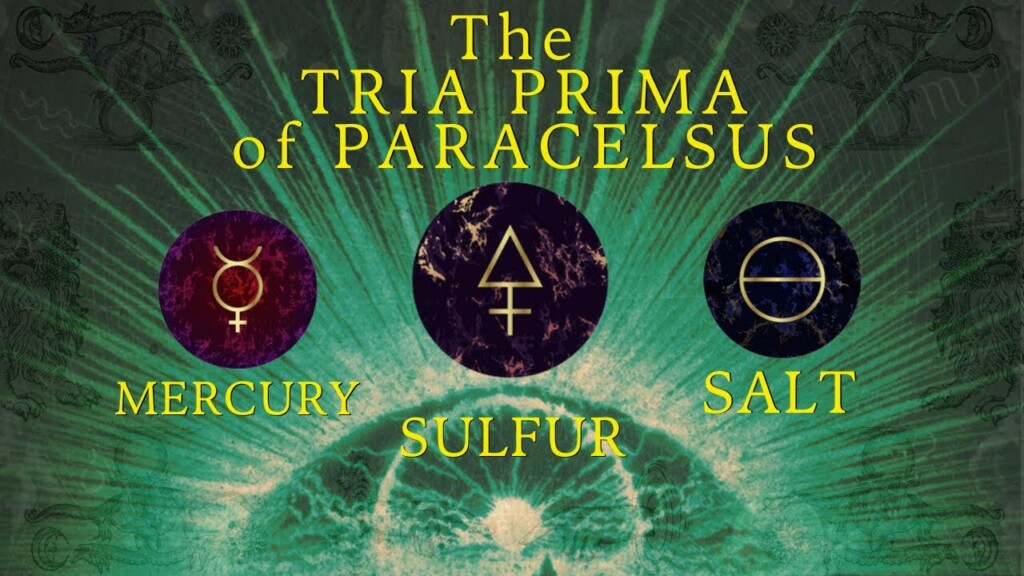
Philippus Aureolus Theophrastus Bombastus von Hohenheim — who called himself Paracelsus because the name was easier to carry into history — was born in 1493 in the Swiss canton of Einsiedeln, and he spent most of his life being expelled from cities where he had made too many enemies among the learned. He was a physician, an alchemist, a theologian of the irregular kind, and a writer whose Latin was often poor and whose German was extraordinary. What he proposed in the early decades of the sixteenth century was not a new recipe for turning lead into gold. It was something stranger and, once understood, far more difficult to dismiss. He called it the tria prima: three principles — Sulfur, Mercury, and Salt — that he positioned as the fundamental architecture of all matter, all process, all transformation in the natural world.
The classical tradition had given Europe four elements: earth, water, air, fire. Aristotle had organized them, the medieval scholastics had systematized them, and they had served as the philosophical furniture of the Western mind for nearly two thousand years. Paracelsus looked at that furniture and, with the particular confidence of someone who had watched too many patients die under treatments derived from ancient authority rather than observation, decided it was insufficient. Not wrong, exactly. Insufficient. The four elements described what things were made of. His three principles described what things did — why they burned, why they dissolved, why they held their shape under pressure and surrendered it under heat.
Sulfur was the principle of combustibility, of soul, of everything in a substance that could be ignited and transformed by fire. Mercury was the principle of volatility, of spirit, of what rises and disperses and carries essence from one state to another. Salt was the principle of fixity, of body, of resistance — the thing that remains when everything else has burned away or evaporated. Together they did not merely describe chemical behavior. They described a cosmology in which matter was never inert, never simply sitting there on a plate in a quiet kitchen, but always in a state of negotiation between dissolution and persistence, between what burns and what endures.
This was not primitive chemistry. To read it as such is to commit the precise error that Paracelsus himself would have recognized and mocked — the error of assuming that the only valid way to understand the world is to strip it of meaning in order to measure it more cleanly.
Sulfur: The Principle That Burns to Become
There is a moment — and everyone who has ever wanted something deeply enough knows it — when the wanting itself becomes irreversible. Not the obtaining. Not the outcome. The wanting. The precise instant when the self that existed before the desire and the self that exists after it are no longer the same person, and there is no negotiable return between them.
Paracelsus called this sulfur. In his Opus Paramirum of 1530, he laid out the tria prima — the three primal principles underlying all matter — and sulfur was the soul of things, the principle of combustibility, the quality that makes a substance capable of catching fire and being transformed by that fire. He was not speaking metaphorically, or at least not only metaphorically. He meant it as a literal property of physical reality, but he also meant it as a description of something he recognized in human experience that no other word had yet managed to contain precisely enough.
A man sits in a room for the third consecutive night, surrounded by notebooks, diagrams spread across every surface, barely eating, barely sleeping, the world outside having become a kind of interference. His wife has stopped asking when he will come to bed. There is something in his eyes that frightens her slightly, not because he seems dangerous but because he seems absent in a way that is total and chosen. He has crossed into something. The work has him now in a way that he might once have thought unhealthy, excessive, obsessive — but those words belong to the person he was before the work opened up and swallowed him entirely. What she sees in his face is sulfur. The self that burns.
Carl Jung, in Psychology and Alchemy published in 1944, returned to this alchemical language not as historical curiosity but as psychological precision. He understood that the alchemists were mapping the interior without knowing they were doing so, projecting onto matter what they observed in the movement of the psyche. Sulfur, for Jung, corresponded to what he identified as the constellation of the ego around an archetype — the moment when an image or a drive becomes so charged with psychic energy that ordinary selfhood cannot contain it without being altered. The person who has truly fallen in love, who has discovered a vocation that feels like fate, who has looked at their own life and found it unbearable — these are all sulfuric events. They are not additions to the self. They are combustions.
A woman watches a film of her younger self — not a literal film, but a memory vivid enough to be one — and she cannot recognize the priorities that seemed so urgent then. The burning happened somewhere in between, and what came out the other side arranged itself differently. She did not decide to change. The sulfur did not ask permission.
This is why the alchemists placed sulfur alongside mercury and salt rather than treating it as merely one property among many. It was the principle of irreversibility. Mercury could flow in any direction. Salt could be dissolved and reconstituted. But sulfur, once ignited, once the combustion had occurred, left an ash that was chemically, structurally, ontologically distinct from what had gone in. The philosopher’s tradition running from Paracelsus through to the Renaissance natural philosophers understood this as a feature of the soul specifically — that the soul was the part of a thing that could be destroyed by what it most needed. Not harmed. Destroyed and reconstituted at a different temperature, into a different arrangement.
The man in the room with the notebooks eventually emerges. But not as himself. As whoever he became inside the burning.

Mercury: The Principle That Refuses to Stay Still
There is a man standing in a doorway. Not entering, not leaving. Someone calls his name from inside the room, and someone else calls it from the street, and he turns his head in neither direction because he has learned, over years, that moving toward either voice means abandoning something he cannot name but cannot afford to lose. He has been in this doorway so long that the wood around him has shaped itself to his presence, a shallow groove worn into the threshold by his weight. He is not paralyzed. He is something more unsettling than paralyzed. He is perfectly, terrifyingly fluent in two languages and belongs to neither one.
Mercury is the alchemical principle that looks like this man. Not fire, not earth. Not the red stone that burns or the white salt that preserves. Mercury is the third thing, the one that moves between, the messenger who translates but never arrives, who carries meaning from one world to another and in the act of carrying becomes itself untranslatable. The Hermetic tradition named this principle after Hermes Trismegistus, the thrice-great, the figure who stood at the threshold between the divine and the human and whose defining attribute was not wisdom or power but motion. He moved. That was his nature and his burden.
Gaston Bachelard, writing in 1938 in The Psychoanalysis of Fire, identified something crucial about substances that transform rather than simply exist. He argued that certain materials in human imagination carry a charge that is not chemical but psychological, that they activate in us a fantasy of mediation, of the moment when one thing becomes another. Mercury, liquid at room temperature, neither fully solid nor fully vapor, neither fixed nor free, was for centuries the substance that embodied this fantasy most completely. It ran through the fingers. It held the shape of a sphere without a mold to contain it. It gathered itself. It scattered.
In the gilding workshops of Renaissance Florence and Rome, craftsmen mixed mercury with gold to create an amalgam that could be painted onto bronze surfaces and then fired in kilns. The heat drove off the mercury as vapor, leaving the gold behind in a perfect, luminous layer. The surfaces that emerged were extraordinary. The statues, the doors, the reliquaries that survive in museums today with their impossible glow, they were made this way. What the historical record also contains, less displayed, are the accounts of the tremors, the loosened teeth, the slow confusion, the deaths that came to the gilders over years of work. Mercury poisoning accumulates. It hides. The craftsmen who produced those beautiful surfaces died by degrees from the very principle they were manipulating, killed by the mediating substance as it passed through them on its way to becoming invisible.
This is not metaphor. It is the literal physics of mediation: the messenger is consumed by the message. The man in the doorway develops a kind of erosion over time. He translates so fluently that both sides assume he is one of them, which means neither side ever sees him whole. He carries meaning across a border that his body constitutes, and the crossing costs something each time, something small and cumulative and unnamed until one day the tremor begins.
Hermes Trismegistus was credited in late antiquity with the Corpus Hermeticum, a body of texts that circulated through the Renaissance after their translation by Marsilio Ficino in 1463, texts that described a universe held together by correspondence, by the idea that everything above has its echo below, that the visible and invisible are in constant conversation. What they did not say clearly, what alchemists had to discover through practice, is that the substance enabling the conversation is itself endangered by it. Mercury keeps nothing for itself. It gives everything to the passage.
Salt: The Principle That Remains
There is a man who returns every year to the same coastal town where nothing particularly good ever happened to him. He cannot explain it. The holidays he spent there were unremarkable, some actively painful, and yet something in the quality of the light off the water, something in the smell of low tide and salt air, pulls him back with a force that feels less like desire and more like gravity. He books the same type of room. He eats at a restaurant he does not especially like. He walks the same path along the breakwater at the same hour. He is not nostalgic, exactly. He is performing a ritual whose meaning he has forgotten, honoring a residue.
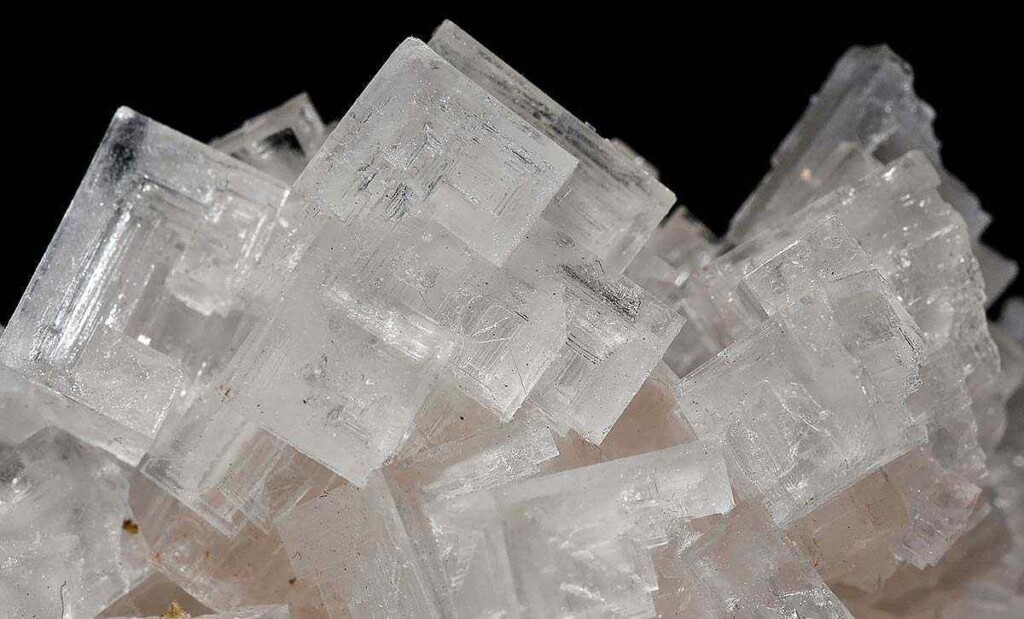
Salt is what remains. In the alchemical triad of sulfur, mercury, and salt, it is the third principle, the one that neither burns nor volatilizes, the one you find at the bottom of the crucible when everything combustible has fled. The alchemists called it the body, not because it was merely physical, but because it was the principle of fixity, of resistance, of that which endures the fire without ceasing to be itself. Paracelsus, who formalized this triadic structure in the early sixteenth century, understood salt not as inertia but as memory made solid. It is the form that transformation leaves behind, the record of everything that has passed through.
The Romans understood something analogous when they paid their soldiers in salt, or at minimum when they allocated funds specifically for its purchase — the salarium, from which the word salary derives, a linguistic fossil that has been carried forward two thousand years without most people noticing. Salt was currency because it was preservation. It held things against time. It kept meat from becoming rot, fish from becoming poison, winter from becoming starvation. To have salt was to have a future, or at least the possibility of one. And when you rubbed it into a wound — a practice that predates recorded medicine and persists in the phrase we still use without thinking — it was not cruelty alone. It was the same logic applied to living tissue: seal it, fix it, prevent the corruption that moves in when the boundary breaks.
Mary Douglas, writing in Purity and Danger in 1966, argued that the substances cultures designate as powerful, as sacred or dangerous, as requiring ritual handling, are almost always substances that trouble the boundary between inside and outside, between self and world. They are the materials that cross thresholds, that refuse to stay on one side of the line. Salt does this perfectly. It enters the wound and becomes indistinguishable from the blood. It enters the food and transforms it without being consumed. It crystallizes from the sea, which is itself a boundary substance, neither land nor sky, and it carries that liminality in its structure — the cube of its crystal, the way it forms in perfect geometric repetition as if insisting on order even as it dissolves at the touch of water.
A woman goes through her mother’s belongings after the funeral and keeps almost nothing, but she keeps the small ceramic dish that sat on the kitchen table for forty years, always filled with salt. She does not use it. She cannot say why she took it. But it sits on her own table now, and sometimes she finds herself looking at it the way you look at something that holds a question you are not ready to ask.
What the body preserves is not the experience itself but its outline, the shape the experience burned into whatever was left when everything volatile had gone. That outline does not explain itself. It simply persists, waiting to be recognized, a residue of something that once moved through you like fire.
The Three Together: What Alchemy Actually Diagnosed
There is a moment, familiar to almost anyone who has sat with a dying parent or a dissolving marriage, when you realize that no amount of information about the situation actually explains what is happening to you. You know the facts. You can recite them. And yet the facts do not touch the thing itself, the sulfurous burning in the chest, the way the body feels suddenly hollow, as if something has been leached out of it that was not flesh and was not thought but was something prior to both.
The alchemists would have recognized this immediately. Not because they were mystics avoiding hard truths, but because their entire diagnostic vocabulary was built around exactly this refusal — the refusal to separate what a thing is made of from what it means to undergo it. Sulfur was not merely a yellow mineral found near volcanic vents. It was the principle of combustibility, yes, but also of passion, of the soul’s capacity to catch fire and be transformed by that fire. Salt was not sodium chloride. It was the residue of experience, the crystallized memory that persists after the burning has passed. Mercury was not a heavy liquid metal. It was the volatile intelligence that moved between the other two, the capacity for relation and communication, the thing in us that cannot be fixed but cannot be absent either.
Mircea Eliade, writing in 1956 in The Forge and the Crucible, argued something that the academic world largely filed away as comparative mythology and forgot. He argued that the alchemical tradition was not a failed precursor to chemistry but a complete symbolic system for understanding transformation — in metals, in the cosmos, and in the human being simultaneously. For Eliade, the tria prima was a grammar of change, a way of asking which part of a thing burns, which part survives the burning, and which part moves between states and cannot be pinned down. The question was never only about lead becoming gold. It was about whether a person could be changed by suffering without being destroyed by it, and if so, what remains.
What the Scientific Revolution of the 17th century accomplished — and it accomplished it with genuine brilliance — was the expulsion of meaning from matter. Robert Boyle‘s Sceptical Chymist of 1661 did not simply correct alchemical errors. It performed a deeper surgery, severing the question of what a substance does from the question of what a substance is for. This was productive beyond measure for physics, for medicine, for engineering. It gave us antibiotics and turbines and the ability to sequence genomes. But it left a particular kind of question homeless, stateless, with no institutional address. The question of what transformation means. The question of what we are when we are in the middle of becoming something else.
A man sits in a small apartment after everything he built has come apart. He is not depressed in any clinical sense. He is not diseased. He is in a state that has no name in the modern diagnostic lexicon, a state the alchemists would have called the nigredo, the blackening, the necessary dissolution that precedes any genuine reconstitution of the self. But because we dismantled the language that held this state and replaced it with nothing equivalent, he sits alone with it, unable to name it, unable to place it in any larger story of what matter does when it is being changed into something it has not yet become.
What we lost when we decided that what things are made of and what they mean to us are two entirely separate questions is not poetry, and it is not superstition. It is the only vocabulary we ever had for living inside a process rather than merely surviving it.
A vision curated by a filmmaker, not an algorithm
In this video I explain our vision
⚗️ The Three Principles and the Alchemical Universe
Sulfur, Salt, and Mercury form the tria prima of Paracelsian alchemy, a triadic vision of matter and spirit that permeates centuries of esoteric thought. To understand these three principles is to open a door into a symbolic world where chemistry, mysticism, and cosmology converge. The articles below trace the deeper currents flowing through alchemical tradition.
Paracelsus: Life and Alchemical Thought
Paracelsus was the pioneering mind who elevated Sulfur, Mercury, and Salt into the foundational triad of alchemical philosophy, replacing the classical four elements with a more dynamic model of transformation. His life and writings reveal a restless visionary who fused medical practice with spiritual insight, demanding that healers understand the invisible principles animating all matter. To study Paracelsus is to encounter the very source from which the Three Principles drew their defining power.
GO TO THE SELECTION: Paracelsus: Life and Alchemical Thought
Magnus Opus: nigredo albedo rubedo
The Magnum Opus — with its stages of nigredo, albedo, and rubedo — maps a transformative journey that mirrors the interplay of the three alchemical principles at every phase of the Work. Sulfur ignites the purifying fire of nigredo, Salt provides the fixed body that endures through albedo, and Mercury carries the volatile spirit into the final rubedo. Understanding this sequence illuminates why the tria prima were never merely chemical concepts but stages of a profound inner alchemy.
GO TO THE SELECTION: Magnus Opus: nigredo albedo rubedo
Spiritual Alchemy: Inner Transformation and Symbolism
Spiritual alchemy recasts the Three Principles as inner forces: Sulfur as the soul’s passionate will, Mercury as the mediating intelligence, and Salt as the crystallized body of experience. This article explores how alchemical symbolism became a complete language for inner transformation, transcending the laboratory to describe the architecture of the human psyche. Those drawn to the deeper meaning of Sulfur and Salt will find here a rich interpretive framework for their symbolic journey.
GO TO THE SELECTION: Spiritual Alchemy: Inner Transformation and Symbolism
Jungian Alchemy: Jung and Alchemical Psychology
Carl Gustav Jung recognized in alchemical symbolism — including the tria prima — a projection of the unconscious psyche’s own structural dynamics onto matter. The three principles map onto Jungian archetypes with striking precision, offering a psychological grammar for understanding how the soul seeks wholeness. This article traces how Jung’s encounter with alchemy transformed modern psychology and gave new life to centuries-old symbolic language.
GO TO THE SELECTION: Jungian Alchemy: Jung and Alchemical Psychology
Discover the Cinema of the Invisible on Indiecinema
If these alchemical depths have stirred something in you, know that Indiecinema streaming is home to a curated universe of independent films that explore transformation, consciousness, and the hidden dimensions of existence. From esoteric documentaries to visionary fiction, our catalog is a labyrinth of meaning waiting to be navigated. Begin your journey at Indiecinema — where every film is a new stage of the Great Work.
👉 EXPLORE THE CATALOG: Watch Indie Films in Streaming
A vision curated by a filmmaker, not an algorithm
In this video I explain our vision

