
The Stage Is Always Burning
You are sitting in the dark watching something happen on a stage, and somewhere around the second act you realize with a jolt of discomfort that you are not watching strangers. The people up there — the jealous husband, the woman who sacrifices everything for a love she knows is destroying her, the servant who sees the truth no one else will name — they are doing something that cannot be explained as performance. They are confessing. Not to each other. To you. The theater has a way of doing this that no other art form quite replicates: it catches you in a room with no exit and holds a mirror so close to your face that you can see the pores. You came to be entertained. You leave knowing something about yourself you would have preferred not to know.

This is not an accident. It was engineered. And no one in the history of Western theater engineered it more ferociously, more prolifically, or with greater conscious understanding of what he was doing than Félix Lope de Vega y Carpio, born in Madrid in 1562, dead there in 1635, and responsible in the intervening seventy-two years for a volume of dramatic work so staggering that it still strains credibility when you encounter the numbers honestly. Estimates vary — Lope himself claimed, with characteristic immodesty, to have written more than fifteen hundred comedias — and modern scholarship has verified or partially verified somewhere between eight hundred and nine hundred surviving plays, with the total original output now generally placed at over eighteen hundred. Cervantes, no friend to Lope personally, nonetheless called him a monster of nature, monstruo de naturaleza, and meant it as precise description rather than insult. Something outside the normal human scale had produced this body of work.
But the scale is the least interesting thing about it. What matters is the intention behind the scale, the understanding Lope brought to the act of writing for the stage that separated him from every court poet and classical imitator of his age. He understood — in a way that the Aristotelian theorists surrounding him did not, in a way that scholars would spend the next four centuries laboriously rediscovering — that theater is not representation. It is not a copy of life placed before an audience for their edification or amusement. It is a space in which a community recognizes itself, sometimes with joy, more often with terror, and through that recognition becomes something it was not before it sat down. The philosopher Hans-Georg Gadamer, writing in Truth and Method in 1960, described the experience of art as a transformation into the true — a moment in which the work does not show us a version of reality but reveals the structure of reality itself. Lope arrived at something close to this understanding not through philosophy but through the simple empirical violence of watching audiences in the corrales de comedias of Madrid respond to what he put before them.
The corrales were not elegant spaces. They were open courtyards between buildings, the audience packed in standing or seated on wooden benches, vendors moving through the crowd selling food and water, women watching from separate upper galleries, the whole enterprise loud and democratic and brutally honest in its feedback. If a play failed, the audience made it known immediately and without mercy. If it succeeded, the success was total and physical, a wave of recognition passing through hundreds of bodies simultaneously. Lope wrote for this. He wrote toward this. He shaped an entire theatrical vocabulary — the three-act structure he codified in his Arte nuevo de hacer comedias en este tiempo of 1609, the mixing of tragic and comic registers, the elevation of popular speech to poetic dignity — not because the theories pleased him but because the corrales demanded it. He was not a man who stood above his audience and instructed them. He was a man who had walked among them long enough to know exactly where they were most vulnerable, and who built every play like a key cut precisely for that lock.
Don Barry: A Quixotic Exploration
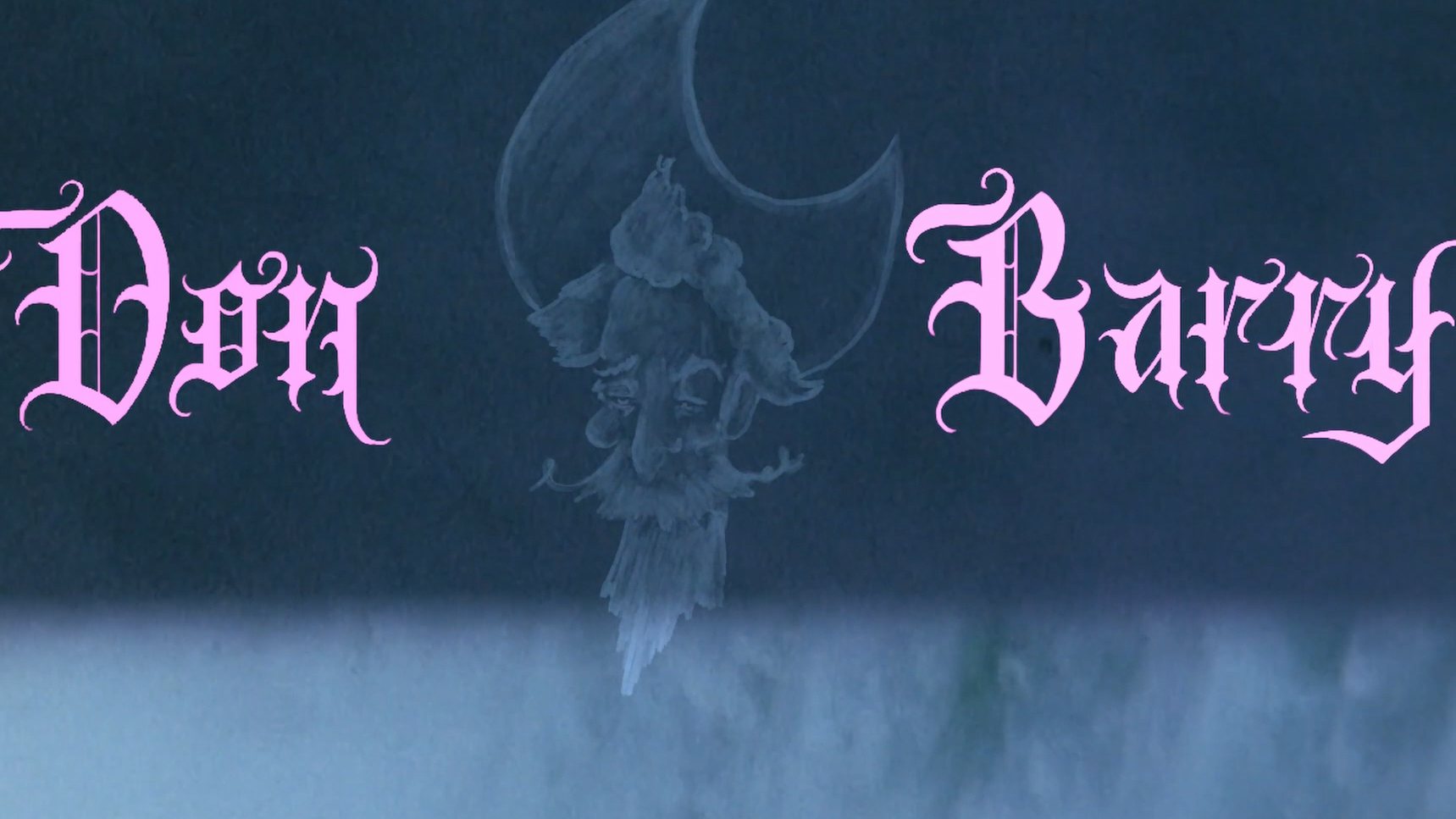
Docufiction, Experimental, by Paul Smart, Mexico, 2026.
Don Barry: A Quixotic Exploration is a debut feature that places the biography of an eighty-year-old experimental filmmaker and artist, Barry Gerson, within the metanarrative of Miguel de Cervantes’ Don Quixote. Don Barry was filmed in the city of Guanajuato during the 51st edition of the Cervantino Festival, as well as during the vibrant Day of the Dead celebrations held in the city’s UNESCO-listed tunnels. The film honors the director’s long friendship with artist Barry Gerson, drawing inspiration from Cervantes’ Don Quixote. Paul Smart’s directorial choices create something new that celebrates life and goes beyond conventional storytelling. A search for magic in our real lives. A moving film about the meaning of life, art, and death. Not to be missed.
Paul Smart is a proud outsider filmmaker with a long history of film screenings. In the 1980s, he emerged in New York’s vibrant youth art scene, working in theater production and later filmmaking, before retreating to rural upstate New York, in the Catskill Mountains, where he made a living writing and screening independent films in old parish halls for rural audiences, many of whom had never seen a film.
LANGUAGE: English
SUBTITLES: Spanish, French, German, Portuguese
Born Into the Noise of Empire
He was born in 1562, in Madrid, in a city that was not yet quite a capital — Philip II would not make it the permanent seat of the court until 1561, and the decision still felt provisional, like a wager not yet won. The streets were full of soldiers passing through, clerks copying dispatches, priests arguing theology in doorways, merchants calculating the weight of silver arriving from the Americas. This was not a backdrop. This was the air Lope de Vega breathed from his first day, and it shaped the velocity of his imagination before he could read a word.
The same year he was born, the Council of Trent closed its final session after eighteen years of theological labor. What it produced was not simply a reformed Church but a grammar of orthodoxy so dense and so total that it reorganized what could be said, sung, painted, staged, and dreamed across the Catholic world for the next three centuries. Lope would spend his entire creative life working inside that grammar — sometimes sincerely, sometimes strategically, often both at once. The idea that genius arrives unannounced, untouched by the pressures of its moment, is a fantasy the Romantics invented and we have never quite abandoned. Lope dismantles it simply by existing.
Pierre Bourdieu, in his analysis of the literary field, argued that artistic production is never innocent of the social conditions that make it possible — that every writer occupies a position within a structured space of forces, competing for forms of capital that are simultaneously economic, symbolic, and institutional. He was writing about nineteenth-century France, but the mechanism he described is older than Molière. Lope understood it without theorizing it. He navigated the world of patronage, aristocratic favor, ecclesiastical approval, and popular appetite not as compromises to his art but as the very terrain on which art becomes possible. His father was an embroiderer from the Canary Islands who had migrated to Castile with nothing but a trade and an ambition. Lope inherited both.
He studied with the Jesuits, briefly attended the University of Alcalá, and then made the choice that would mark him permanently: he enlisted. Not because he had no alternatives, but because the soldier’s life offered something that clerking or scholarship could not — a proximity to violence, to movement, to the raw texture of collective experience. He fought in the Azores campaign in 1583. Then, five years later, he was aboard the ships of the Armada when they sailed north toward England in 1588, carrying with them the full weight of imperial theology and dynastic ambition, and what he brought back from that catastrophe — the storms, the retreating hulls, the count of the dead — was not defeat but material. A writer who has watched an empire’s certainty crack open in Atlantic wind does not need to invent dramatic tension. He has lived inside it.
What Bourdieu’s framework illuminates here is not cynicism but structure. Lope did not manipulate the system from outside it. He was inside it completely, shaped by its pressures from birth, and his extraordinary productivity — over three hundred surviving plays, nearly two thousand sonnets, epic poems, prose romances, a treatise on dramatic art — was not despite those pressures but because of them. The literary field rewarded speed, versatility, and the ability to speak simultaneously to the duke in his box and the laborer standing in the yard below. Lope learned to do all of this before he was thirty. Not because he was exceptional, though he was, but because the moment he was born into demanded exactly that kind of mind, and poverty has a way of accelerating what comfort merely permits.
What the empire made, without meaning to, was the instrument of its own most accurate witness.

The Man Who Could Not Stop Loving
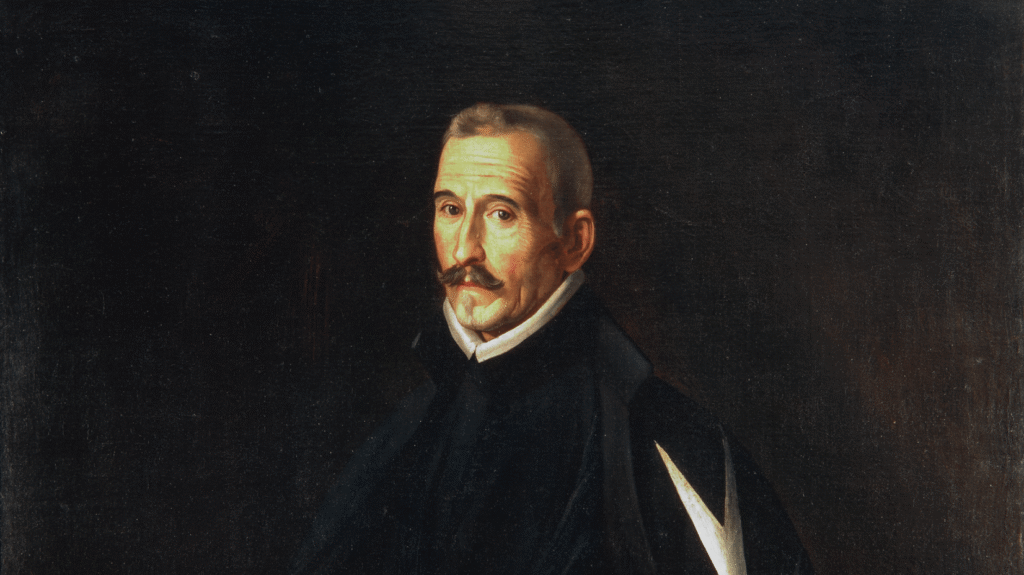
There is a moment — and you know it, even if you have never admitted it — when you are writing to someone who is ruining you, and you know it, and you keep writing. The candle is low. The city is still. Your hand moves across the paper with a steadiness that your life entirely lacks, and the words you are forming are not a cry for help. They are a declaration of allegiance to the very force that is tearing you open.
Lope de Vega wrote approximately three thousand sonnets in his lifetime. Not three hundred. Three thousand. The sheer volume is itself a kind of madness, a biographical fact that tells you more about the man than any critical essay could. And a significant number of those sonnets were addressed to women who did not want him, women who had left him, women whose families had him dragged before the courts, women for whom he burned with a consistency that his faith, his reason, and his repeated public humiliations could not extinguish.
Elena Osorio was the first great catastrophe. She was an actress, married to another man, and Lope loved her with the total, self-annihilating commitment that would define every relationship he ever had. When she left him for a wealthier rival, he responded not with dignity but with vicious satirical verses that circulated through Madrid, lampooning her family in language so cutting that the courts convicted him of libel in 1588. The sentence was eight years of exile from Madrid, two of them from the entire kingdom of Castile. He was twenty-six years old and he had just destroyed his own life for the pleasure of wounding someone he could not stop loving.
Hannah Arendt, in her 1929 doctoral dissertation on Augustine, written when she herself was twenty-three and already entangled in a love that would reshape her entire intellectual existence, argued that love in the Augustinian sense is not an emotion but an ontological event — a dissolution of the boundaries of the self in the direction of something that exceeds it. The lover does not simply want the beloved. The lover is reorganized around the beloved. What was peripheral becomes central. What was central — reputation, safety, coherent selfhood — becomes negotiable.
This is not romance. This is closer to what happens when Lope sails with the Spanish Armada in the very year of his exile, carrying letters to another woman, Isabel de Alderete, whom he had married in secret just weeks before departure, on a fleet that would lose roughly half its ships in the storms off the English coast. He survived. He returned to her. She died two years later. He remarried. His second wife, Juana de Guardo, gave him children and died as well. He had illegitimate children with at least two other women during both marriages. He was, by any conventional measure, a disaster of a human being.
In 1614, at fifty-two, Lope de Vega was ordained as a Catholic priest. The expectation — his own, apparently — was that the collar would close something in him. It did not. Within months he was in love again, this time with Marta de Nevares, a married woman who would become his companion for years, who went blind, then mad, then died in his arms. He wrote poems to her blindness. He wrote poems to her madness. He kept writing.
The scandal-hungry reading of this biography reduces it to weakness, self-indulgence, the inability of a gifted man to govern himself. But that reading mistakes the evidence. What Lope demonstrated, compulsively, across seven decades, is that contradiction is not a failure of character. It is the actual texture of character. He was not incapable of understanding what he was doing. He understood it completely, and he did it anyway, and then he wrote it down, because the writing was the only place where the contradiction did not need to be resolved.
The Comedia and the Architecture of Desire
There is a moment when a man sits in a darkened room watching something he has told himself he should not be watching, and he cannot leave. He leans slightly forward. His face is slack with something that is not quite pleasure and not quite shame. He knows the thing in front of him is beneath him — or he has been told it is — and yet the knowing does nothing. The watching continues. That tension, that particular helplessness of the body against the verdict of the mind, is what Lope de Vega built an entire theatrical architecture around. Not as a symptom to be corrected. As the very material of the stage.
When he published the Arte nuevo de hacer comedias en este tiempo in 1609, Lope did so with a performance of apology so thin it was almost contemptuous. He acknowledged the classical unities of time, place, and action — Aristotle’s inheritance, Horace’s refinement — and then discarded them with the cheerful efficiency of a man throwing away furniture that was never comfortable. The Arte nuevo is often read as a pragmatic document, a craftsman’s manual dressed in theoretical clothes. But it is something more unsettling than that. It is a declaration that desire does not observe formal boundaries, that an audience’s body knows things its education has not permitted it to admit, and that theater built on those classical restrictions was theater built for the dead.
What Lope understood, two and a half centuries before Freud would attempt to systematize it, is that desire has an architecture of its own — porous, digressive, capable of holding comedy and tragedy in the same breath without resolving either. His plays collapse the unities not because he lacked discipline but because the unities falsified emotional experience. A single day cannot contain what grief contains. A single location cannot hold what love displaces. The three-act structure he codified — exposición, nudo, desenlace — moved the way a body moves through wanting: tentative, then entangled, then released into something that is never quite resolution. More than eight hundred of his plays survive, a number so staggering it borders on the biological rather than the artistic, as if the comedias were not composed but generated, growing from some internal necessity in the man that could not be stilled.
Jacques Rancière argues, in his work on what he calls the distribution of the sensible, that politics is first of all a matter of what can be seen, heard, and said — of who is counted as a speaking subject and who is rendered invisible by the aesthetic order of a given time. The stage, in this reading, is never innocent. It decides whose pain is legible as tragedy, whose life is worthy of sustained attention, whose voice is permitted to carry meaning. The classical tradition Lope inherited had already made its decisions on these questions. Kings suffered. Shepherds were comic. The boundaries were not merely aesthetic preferences but acts of social inscription, ways of distributing dignity across bodies and ranks.
Lope redistributed. His peasants bleed with tragic seriousness. His noblewomen argue, deceive, and philosophize. His gracioso — the comic servant, the jester-figure — carries, in the middle of his buffoonery, moments of devastating moral clarity that no aristocrat in the same play is allowed. Fuenteovejuna gives collective heroism to a village, not a king. Peribáñez hands tragic stature to a farmer. These are not gestures of democratic sentiment in any modern sense. They are something more radical: a refusal to let the stage confirm what the social order already believed about who mattered. And the audience — the same audience the purists despised, the crowd in the corrales de comedias, standing in the afternoon sun, vendors moving through them, noise and proximity and sweat — that audience recognized itself on stage, perhaps for the first time, and the recognition was not comfortable. It was the recognition of the man leaning forward in the dark, watching something he was told he should not want, finding that the wanting told him more truth about himself than the prohibition ever had.
Fuenteovejuna and the Lie of Natural Order

There is a moment when an entire room decides, without speaking, to lie. Not out of cowardice but out of something older and more precise than courage — a collective understanding that the truth, in this particular room, belongs to them and not to the man asking for it. The interrogator leans forward. The silence holds. One face looks at another, and what passes between them is not a signal but a recognition: we are the answer, and we are not giving it.
This is what happens in Fuenteovejuna, written somewhere around 1612 to 1614, and it is worth sitting with the full weight of what Lope constructed. The Comendador Fernán Gómez de Guzmán, lord of the village of Fuenteovejuna, has spent years treating the people beneath him as property — their bodies, their daughters, their labor, their dignity available to him by right of rank. When the village kills him, they do it together, men and women and children, in a single act that dissolves individual agency into collective will. And when the royal investigator arrives with his instruments of torture to extract a name, every villager — every one of them, under the rack — gives the same answer: Fuenteovejuna did it. The village. All of us.
James C. Scott, in Domination and the Arts of Resistance published in 1990, introduced the concept of the hidden transcript — the offstage discourse that subordinate groups maintain away from the gaze of power, the real conversation that runs beneath the performance of deference. Every court, every plantation, every feudal estate generates two simultaneous scripts: the public one, in which the dominated confirm the order that dominates them, and the hidden one, in which they name what is actually happening. Scott’s argument is not that rebellion is inevitable but that it is always being rehearsed, quietly, in the spaces power cannot fully occupy. The explosive moment arrives when the hidden transcript erupts into the public sphere, when someone finally says aloud what everyone already knows.
Lope did something more radical than allow that eruption. He gave the hidden transcript a stage, literally, inside the most visible cultural institution of his society, and he dressed it in the language the Crown could recognize as loyal. The play ends with the monarchs Ferdinand and Isabella absorbing the village into royal jurisdiction, which appears to restore order — the feudal aberration corrected, the chain of command repaired. This is what the Spanish Crown saw when it presumably applauded. A morality tale about a bad lord, a lesson in the dangers of noble excess, a vindication of centralized royal authority over the arbitrary cruelties of local power.
What they did not see, or chose not to see, was the machinery underneath. The villagers do not appeal to the king because they trust the system. They appeal to the king because it is the only available move that might let them survive. The solidarity under torture is not a subplot. It is the entire argument. What holds under pressure is not hierarchy, not the natural order the Comendador invoked to justify his violence, but the horizontal bond between people who share a condition. Fuenteovejuna him did it is not a riddle. It is a theory of collective personhood that has no place in the official cosmology of seventeenth-century Castile and every place in the lived experience of anyone who has ever understood that naming one person means sacrificing them to protect a system that will simply produce another Comendador.
The genius of the move is its invisibility to those who hold power. Entertainment has always been the membrane through which dangerous ideas pass undetected, because the powerful tend to believe that what amuses the crowd cannot also be instructing it.
A vision curated by a filmmaker, not an algorithm
In this video I explain our vision
The Sacred and the Profitable
There is a moment — you have lived it, even if you do not call it by its name — when you are kneeling in a place of worship and your mouth is forming the correct words while your mind is constructing, with extraordinary precision, the face of someone you should not be thinking about. The candles are real. The prayer is real. And the desire is real. None of these three things cancels the others. This is not hypocrisy. This is something older and more honest than hypocrisy.
Lope de Vega published his Rimas sacras in 1614, a collection of devotional poetry so piercing in its remorse, so architecturally precise in its contrition, that it was immediately recognized as a masterpiece of Christian lyric. Scholars still read it as evidence of genuine spiritual crisis. What they sometimes fail to note is that it was written during an active affair, that the same hands composing sonnets of penitence to God were writing letters of scorching erotic intensity to the actress Jerónimo de Burgos. The Rimas sacras did not replace the love poetry. They coexisted with it, fed from the same source, breathed the same air.
This is not the dynamic Max Weber described when he mapped the Protestant ethic in 1905. Weber’s thesis, however reductive its later applications became, traced a specific internal architecture: the Calvinist subject disciplines desire, channels it into labor, transforms guilt into productive anxiety. The sacred and the erotic stand in structural opposition. One must be sacrificed for the other to function. The self is organized around this sacrifice, and that organization eventually produces, Weber argued, the spirit of capitalism itself — rational, ascetic, deferred.
Lope is the counter-model. He is baroque Catholicism thinking with its body. In the world he inhabited and the theology that shaped him, guilt was not a mechanism for suppressing desire but for deepening it. Confession does not extinguish the flame — it fans it, because to confess you must first describe, remember, reconstruct. The sacramental system requires you to return to the sin in detail, to hold it up before God with both hands, and this returning is indistinguishable, at the level of sensation, from reliving. A man enters the confessional. He leaves, says his penance. He sins again. The Church understood this. It did not pretend otherwise. The machine was designed for repetition.
The Jerusalén conquistada, published in 1609 and running to twenty-four books of epic verse, was Lope’s attempt to write himself into the tradition of Tasso and Virgil, to crown his career with sacred epic. Critics were not kind — Cervantes saw through the grandiosity — but the ambition itself tells you something. Lope needed the sacred not as an escape from his nature but as its amplification. The larger the theological frame, the more dramatically the human failure registers. Without heaven, there is no fall worth writing about.
His autos sacramentales — the allegorical one-act plays performed during Corpus Christi celebrations — work by the same logic. These are theatrical events staged in public squares, watched by the same crowds who attended his comedies of seduction and mistaken identity the week before. The sacred drama and the erotic comedy share audiences, share actors, share the same afternoon light. The distinction between them was never as clean as the Church’s official language suggested, and Lope, who lived inside both simultaneously, understood this better than any theologian could.
Desire intensified by guilt. Guilt intensified by desire. The sonnet form holding both without resolving either. What Weber saw as a structural failure — the incapacity to truly renounce — Lope experienced as the condition of consciousness itself, the permanent, unresolvable surplus that makes both art and prayer necessary in the first place.
The Monster of Nature and the Industry of Beauty
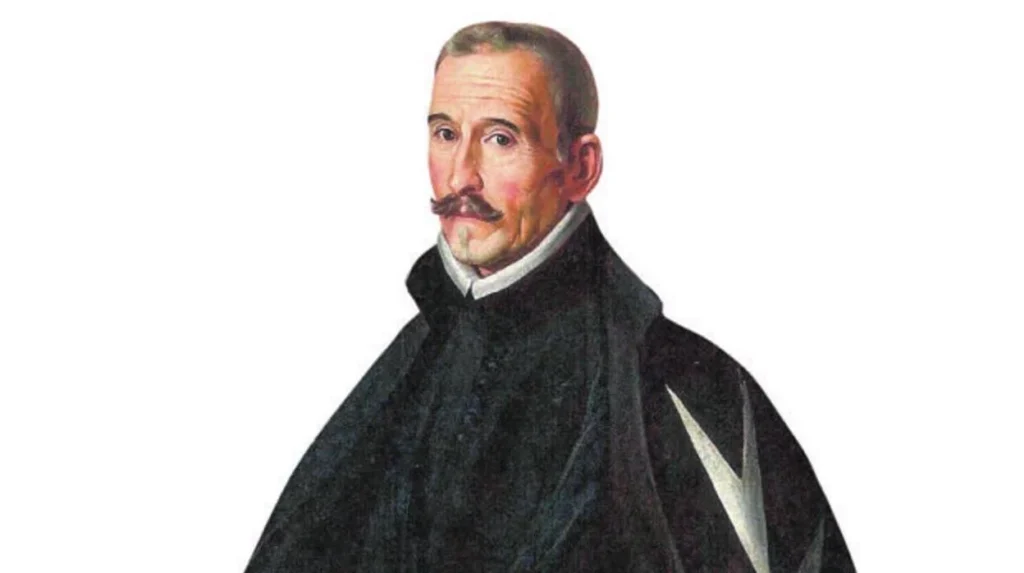
There is a room somewhere that belongs to a man who has not slept properly in forty years. The walls are covered — not decorated, covered — in manuscripts, notes, half-finished pages, letters, drafts of letters, drafts of drafts. He moves through the accumulation the way water moves through rock, not fighting it, simply finding the path of least resistance toward the next thing to be written. He is not overwhelmed. That is the disturbing part. He is entirely at home in the excess, the way a coral reef is at home in its own impossible proliferation.
This is what Cervantes saw, and what unsettled him enough to reach for a phrase that sounds like praise but operates like quarantine. Monstruo de la naturaleza. Monster of nature. Not monster of art, notice — of nature. The distinction is surgical. Art implies craft, discipline, the human will organizing the raw material of experience into something legible. Nature implies force without intention, generation without rest, the biological drive that does not ask permission and does not stop to admire what it has made. To call Lope a monster of nature was to place him outside the category of artist entirely, to suggest that what he did could not be explained by the vocabulary available to ordinary human creation.
And the numbers make the instinct feel correct. Somewhere between 1,800 and 3,000 plays, depending on which accounting you trust, with Lope himself claiming the higher figure in his 1609 Arte nuevo de hacer comedias, a text that has the peculiar quality of a man explaining, with perfect lucidity, something he could not actually have known how to explain. Around 3,000 sonnets. Prose romances, epic poems, a verse novel, theological works, letters in the thousands. He was born in 1562 and died in 1635, which gives him seventy-three years, and if you do the arithmetic on even the conservative estimate of his dramatic output the result is quietly vertiginous: more than one complete play every two weeks for the entirety of his adult working life.
Walter Benjamin, writing in 1935, was interested in what happens to the aura of a work of art when it becomes reproducible, when the singular thing loses its singularity through multiplication. His concern was with the photograph, the film print, the mechanical copy that travels without the original. But Lope presents the problem in exact reverse, and the reverse is somehow stranger. He did not reproduce a single original. He produced originals at the speed of reproduction. He made uniqueness industrial. He turned inspiration into a system, which is not the same as destroying inspiration — it is something more unsettling, because it suggests that inspiration was never the rare, fragile visitation that Romanticism would later require it to be.
The mythology of the artist that we still carry, largely unconsciously, is a Romantic inheritance: the tortured single work, the decade of silence, the masterpiece that justifies the suffering. Keats dying young and perfect. Flaubert spending five years on a single sentence. The aura of the singular genius derives partly from scarcity, from the sense that great art cannot be made quickly without something essential being lost. Lope did not lose it. His best plays — Fuente Ovejuna, El caballero de Olmedo, La dama boba — are not the work of a man cutting corners. They are structurally precise, emotionally dense, linguistically alive in ways that reward the slowest and most attentive reading. He simply produced them the way the heart produces beats: continuously, without making a ritual of each one.
What the label Fénix de los ingenios — Phoenix of wits — was trying to do, underneath its apparent celebration, was restore the mythology his productivity threatened. The phoenix is singular, it burns, it rises once. The phoenix is the opposite of the coral reef. It was the only available image for a man whose work ethic made the sacred theory of inspiration look like an excuse.
What the Stage Knows That the Page Forgets
There is a moment — you have lived it even if you have never named it — when you are watching someone else perform and something in their body says what your body has been holding for years without permission. Not the words. The tilt of a shoulder. The way a breath catches before a line lands. A man watches a woman sing in a half-empty room, her back slightly turned, and he understands something about his own grief that no conversation had ever reached. He does not understand it intellectually. It enters him the way cold water enters a room when a window opens — total, immediate, without negotiation.
This is the knowledge that Lope de Vega was trafficking in. Not the knowledge of the page, which is patient and retrievable and can be set down and returned to. The knowledge of the body in a room full of other bodies, all of them breathing in approximate unison, all of them receiving the same images at the same instant and doing something privately catastrophic with them.
Maurice Merleau-Ponty argued in his Phenomenology of Perception, published in 1945, that the body is not a vehicle for consciousness but its very structure — that we do not think and then feel, but that meaning is always already somatic, always already arrived before the mind has put on its coat and come downstairs. His concept of the “lived body” insists that perception is participation, that to watch is never passive, that when a gesture happens in front of you your own motor system lights up in partial mimicry, your flesh rehearsing what it sees. This is not metaphor. Neuroscientists would spend the second half of the twentieth century building the empirical architecture around what Merleau-Ponty had intuited philosophically — mirror neurons, embodied simulation, the whole apparatus of a science that confirms what theater practitioners knew in their bones across every civilization that ever built a stage.
Lope knew it without the vocabulary. He knew it the way a carpenter knows the grain of wood — not as a proposition but as a pressure in the hands. His verse, with its relentless musicality, its octosyllables that pull the tongue forward like a current, was not written to be read silently in a scholar’s cell. It was written to be spoken by a body that was sweating, to be received by two thousand people standing in an open courtyard in Madrid under a sun that did not care about allegory. The corrales de comedias were not temples of interpretation. They were arenas of sensation. The groundlings pressed against the stage. The smell of food and bodies was part of the work. When Fuente Ovejuna moved toward its collective uprising, the audience did not analyze class consciousness — they felt their own hands tighten.
A woman watches a man recite something on a small stage — a few lines, barely anything — and she begins to cry before she understands why. By the time she has asked herself what is happening, it has already happened. This is the sequence Lope mastered and that literary criticism has never quite forgiven him for, because it escapes analysis the moment you try to fix it. His nearly eighteen hundred plays — the number itself a kind of violence against the idea of the solitary genius laboring toward perfection — were not a body of literature so much as a body of occasions, each one a trap set for the nervous system of whoever walked through the door.
What does it mean, then, that we still stage him? That audiences in the twenty-first century still find themselves undone by rhythms written for a world without electricity, still feel exposed by situations that predate every framework we use to explain ourselves, still walk out of the theater unable to say with any precision what it was that got inside them and rearranged something they had thought was permanent.
🎭 The Golden Age of Spanish Literature and Culture
Lope de Vega did not write in isolation — he was the beating heart of a literary universe populated by extraordinary rivals, traditions, and cultural forces. Exploring the world that shaped him means diving into the richest period of Spanish letters, where drama, prose, and poetry collided with extraordinary creative energy.
Francisco de Quevedo: Life and Works
Francisco de Quevedo was Lope de Vega’s most formidable contemporary, a poet and satirist whose razor-sharp wit defined the Baroque literary sensibility in Spain. Understanding Quevedo’s life and works illuminates the fierce rivalries and creative tensions that animated the Spanish Golden Age literary scene, of which Lope was the undisputed theatrical titan.
GO TO THE SELECTION: Francisco de Quevedo: Life and Works
The Spanish Golden Age: Literature and Culture
The Spanish Golden Age was the vast cultural canvas upon which Lope de Vega painted his hundreds of plays, poems, and prose works. Examining the literary and cultural context of this extraordinary era reveals how political power, religious orthodoxy, and artistic ambition intertwined to produce some of the most enduring works in Western literature.
GO TO THE SELECTION: The Spanish Golden Age: Literature and Culture
Miguel de Cervantes: Life and Works
Miguel de Cervantes and Lope de Vega were contemporaries who moved in the same literary world yet represented strikingly different artistic visions — and a well-documented mutual rivalry. Reading Cervantes alongside Lope allows us to appreciate the full creative spectrum of an age that gave birth both to modern drama and the modern novel.
GO TO THE SELECTION: Miguel de Cervantes: Life and Works
The Spanish Picaresque Novel: History and Meaning
The Spanish picaresque novel emerged from the same social and cultural soil that nourished Lope de Vega’s theatrical universe, reflecting the anxieties and contradictions of a rapidly changing empire. Tracing the history and meaning of this literary genre deepens our understanding of the world Lope depicted on stage, populated by nobles, rogues, and dreamers alike.
GO TO THE SELECTION: The Spanish Picaresque Novel: History and Meaning
Discover the Art of Independent Cinema on Indiecinema
The creative rebellion of Golden Age writers like Lope de Vega finds a powerful echo in the world of independent cinema, where visionary storytellers continue to challenge conventions and reinvent narrative forms. On Indiecinema streaming, you can discover films that carry that same restless spirit — bold, original, and impossible to forget.
👉 EXPLORE THE CATALOG: Watch Indie Films in Streaming
A vision curated by a filmmaker, not an algorithm
In this video I explain our vision

