
The Man Who Insulted a King and Survived (Mostly)
There is a moment most people have experienced at least once — sitting around a table where the wrong person holds the most power, watching someone crack a joke that lands in the silence like a stone dropped into still water. Everyone hears it. Everyone knows exactly what it means. The air changes. The person who spoke it smiles through the sudden weight of what they’ve just done, and the room decides, in the space of two or three heartbeats, whether this will be remembered as brilliance or as something unforgivable. Most people, in that moment, reach instinctively for retreat — a softening clause, a laugh that says I was only joking, a pivot toward safer ground. A very few do not. They hold the smile. They let the stone sink.

Francisco de Quevedo y Villegas was constitutionally incapable of reaching for retreat.
Born in Madrid in 1580, inside the bureaucratic machinery of the Spanish court — his mother was a lady-in-waiting to the queen, his father a court secretary — Quevedo grew up breathing the particular air of proximity to power without ever fully belonging to it. He was near enough to see everything, outsider enough to say it. He studied at Alcalá de Henares, one of the great humanist universities of the age, and what he absorbed there was not merely Latin and theology but something more dangerous: the precise, scalpel-like understanding of how language functions as both weapon and mask. He read the Stoics with the intensity of someone looking for permission to be honest in a world that punished honesty. He found it, or convinced himself he had, and spent the next six decades testing that conviction against reality.
The Spain he inhabited was not an abstraction. It was the Spain of Philip III and then Philip IV, a court bloated with favoritism, paralyzed by the system of privados — royal favorites who wielded real power from behind the throne — and slowly hemorrhaging the imperial confidence that had defined the previous century. Quevedo watched all of this with what can only be described as compulsive clarity. He wrote satirical prose that shredded the pretensions of the nobility with surgical precision. He composed poetry that could move from the most devastating erotic tenderness to ferocious political savagery within the space of a single sonnet. His Sueños, probably written in the first decade of the seventeenth century though not published in authorized form until 1627, imagined the great and powerful of his age descending into hell and finding that their titles meant absolutely nothing in front of whatever final accounting waited for them. It was funny. It was also a kind of structural heresy against the entire social architecture of his world.
The philosopher Baruch Spinoza would later argue, in his Tractatus Theologico-Politicus of 1670, that the attempt to suppress free thought always fails, that language finds its way through every barricade eventually. Quevedo, dying twenty-two years before Spinoza wrote that, would have agreed in principle and disputed it from personal experience. Language finds its way through barricades, yes — but the man who carries it does not always survive the passage intact.
He was exiled. He was imprisoned in the monastery of San Marcos in León for nearly four years, beginning in 1639, under conditions that destroyed his health irreparably. The exact charges were never made fully transparent, as was standard practice in a system where accusation and proof were luxuries extended selectively. He emerged in 1643, broken in body, and died two years later in Villanueva de los Infantes. He was sixty-four years old.
The stone he had dropped into that still water decades earlier had still not stopped rippling. It has not stopped yet.
Don Barry: A Quixotic Exploration
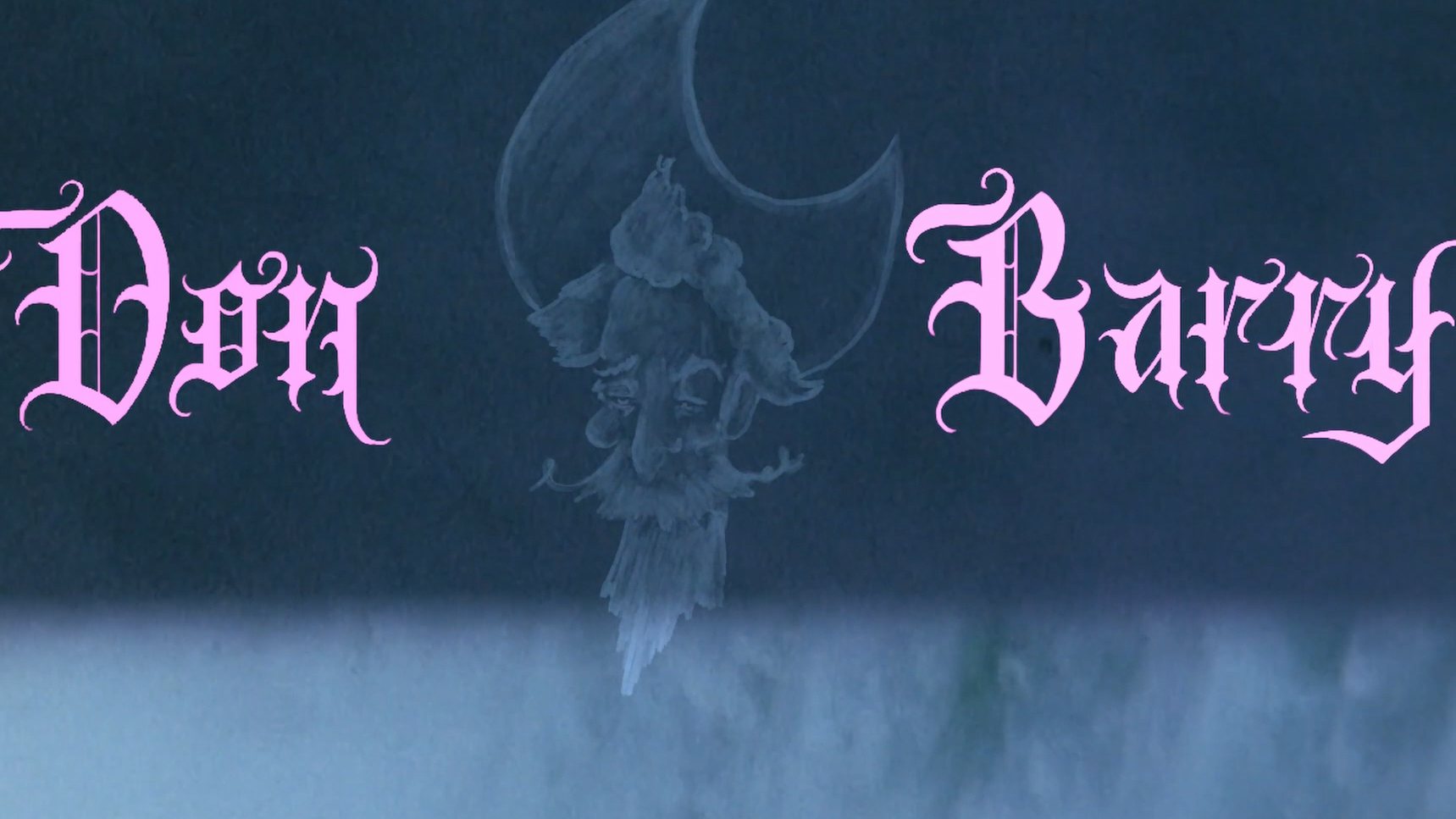
Docufiction, Experimental, by Paul Smart, Mexico, 2026.
Don Barry: A Quixotic Exploration is a debut feature that places the biography of an eighty-year-old experimental filmmaker and artist, Barry Gerson, within the metanarrative of Miguel de Cervantes’ Don Quixote. Don Barry was filmed in the city of Guanajuato during the 51st edition of the Cervantino Festival, as well as during the vibrant Day of the Dead celebrations held in the city’s UNESCO-listed tunnels. The film honors the director’s long friendship with artist Barry Gerson, drawing inspiration from Cervantes’ Don Quixote. Paul Smart’s directorial choices create something new that celebrates life and goes beyond conventional storytelling. A search for magic in our real lives. A moving film about the meaning of life, art, and death. Not to be missed.
Paul Smart is a proud outsider filmmaker with a long history of film screenings. In the 1980s, he emerged in New York’s vibrant youth art scene, working in theater production and later filmmaking, before retreating to rural upstate New York, in the Catskill Mountains, where he made a living writing and screening independent films in old parish halls for rural audiences, many of whom had never seen a film.
LANGUAGE: English
SUBTITLES: Spanish, French, German, Portuguese
Born into the Court, Educated into Contempt
He learned to read faces before he learned to read Latin. This is not a metaphor. There is a child sitting at the edge of a long table in a room where men in dark clothing speak in lowered voices, and the child already knows — without being able to name the knowledge — that the way a man sets down a cup communicates something his words will never say. The child watches. He is always watching. The adults do not notice him noticing, which is itself the first lesson in the curriculum of proximity to power.
Francisco de Quevedo y Villegas was born in Madrid in 1580 into a family that did not hold power but administered it, which is an entirely different and more instructive position. His father served as secretary to the royal household. His mother held a similar post in the service of the queen. They were not nobles but they were inside the palace. They lived in the antechambers of dominance, which means they understood its mechanisms with a precision no hereditary lord could ever develop, because lords inherit the house and never think to examine the foundations. The Quevedos examined everything. It was their professional obligation and, inevitably, their psychological fate.
Pierre Bourdieu spent much of his intellectual life trying to name what happens to people formed inside particular social fields. His concept of habitus, developed across works from the early 1970s through The Logic of Practice in 1980, describes the set of durable dispositions that a social environment inscribes in the body and the mind — the instincts, the reflexes, the felt sense of what is possible and what is not. Crucially, Bourdieu insisted that habitus is not a conscious adoption of rules but something deeper: a structural education absorbed through gesture, rhythm, spatial arrangement, the thousand daily performances that constitute life inside a given world. You do not learn the rules of your social field by reading them. You learn them by breathing them. And if you breathe them long enough and are constitutionally strange enough — sensitive in the particular register that makes suffering informative rather than merely painful — you begin to see them as rules rather than as reality.
This is what the palace antechamber produced in Quevedo. Not conformity. Not rebellion in the naive sense of a man who never understood what he was rejecting. Something more corrosive: mastery. He absorbed the entire grammar of courtly life — its hierarchies, its performances, its coded language of deference and ambition — with the thoroughness of someone who would one day need to dismantle it from within. He knew which smile meant nothing and which meant danger. He knew that the man who spoke most loudly about loyalty was measuring the distance to the nearest exit. He knew because he had watched his parents navigate exactly this terrain, daily, as a condition of survival.
Quevedo lost his father at age six and his mother shortly after. He was raised by the court itself, in some essential sense, educated at the Colegio Imperial in Madrid and later at the University of Alcalá and Valladolid, where he studied theology, classical languages, philosophy. He was a prodigy — not the fraudulent kind that exhausts itself in early performance, but the kind whose intellect accelerates the longer it has to work against resistance. Languages came easily. Ideas came faster. And beneath the scholarly formation, that original education in the reading of rooms continued to compound interest.
What grows in a child who is never quite inside and never quite outside is a particular quality of attention. Not bitterness, not yet. Something colder and more precise: the ability to see the architecture of a situation that everyone else inside it simply inhabits. He would spend his entire life building weapons from that vision.
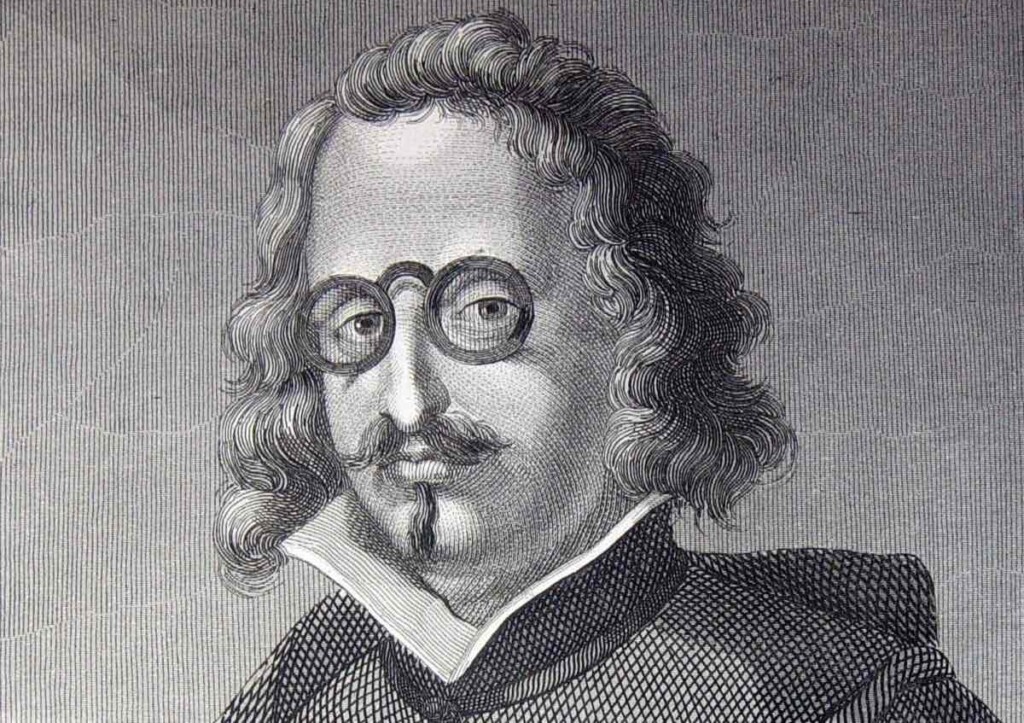

The Picaresque as Philosophical Lens: El Buscón and the Anatomy of Humiliation
There is a moment — anyone who has ever tried to cross a class threshold will recognize it — when you put on the new clothes and stand before the mirror and something in your face betrays you anyway. Not your clothes, not your accent, not the words you have learned to pronounce with their edges sanded down. Something older. Something that lives beneath the skin and surfaces in the eyes precisely when you are trying hardest to suppress it. The hunger for arrival that looks, to anyone watching, exactly like the fear of being sent back.
Pablos, the son of a thief and a suspected witch, knows this moment with a precision that Quevedo renders almost surgical. He changes his collar. He changes his city. He changes the name by which he introduces himself in taverns and in the antechambers of minor nobles. And every time, with a consistency that would be comic if it were not so structurally merciless, something surfaces to pull him back down — not fate, not vice, not the literary hand of a moralizing God, but the mechanism of a society that has already decided what he is before he opens his mouth. The clothes change. The blood, as his tormentors remind him with a cheerful brutality, does not.
Norbert Elias, writing in The Civilizing Process in 1939, argued that shame is not a natural human emotion but a socially engineered one — a device calibrated across centuries to enforce hierarchical boundaries without the need for constant physical coercion. The body learns to police itself. The blush, the averted gaze, the compulsive apology — these are not signs of weakness but of successful social programming. By the early seventeenth century, when Quevedo was composing what would become Historia de la vida del Buscón, the civilizing machinery Elias describes was operating at full force across the Castilian social body, and Quevedo — aristocrat, satirist, man of profound contempt dressed as wit — understood its mechanisms with a cruelty that is almost admiring.
What makes El Buscón something other than a simple picaresque romp, something that unsettles even readers who approach it as entertainment, is that Quevedo never allows Pablos the dignity of genuine rebellion. He is not Lazarillo, surviving through cunning. He is not a figure of subversive energy. He is a laboratory specimen for the demonstration of a thesis: that aspiration in a closed society is not a path upward but a longer route to the same humiliation. The boy who watches his father hang and decides he will become something else is not wrong to want it. He is wrong to believe the structure will permit it.
The scenes of collective punishment at the boarding school — the ritual degradations visited on Pablos not in spite of his ambitions but because of them — carry a sociological precision that reads less like fiction and more like fieldwork. Humiliation here is not incidental. It is pedagogical. It teaches the boy where the walls are by making him run into them at full speed, repeatedly, in front of witnesses. Pierre Bourdieu would have recognized immediately what Quevedo was mapping — the way social capital is withheld not through formal exclusion but through an endless series of small performances of inadequacy that the aspirant is forced to enact before an audience already certain of the verdict.
The man who rehearses dignity in a mirror is not vain. He is desperate. He is attempting to construct, through repetition and performance, something that was supposed to have been given to him at birth and was not. And the tragedy Quevedo excavates — with the cold precision of someone who finds the specimen interesting precisely because he feels no sympathy for it — is that the rehearsal is detectable. That the performance of having always belonged looks different, always, from the fact of it.
Satire as Survival: The Sueños and the Art of Saying Everything by Saying Nothing
There is a particular kind of laughter that happens at funerals. Not the relieved, exhausted laughter that comes after days of grief, but something sharper — the kind that erupts when someone says exactly the wrong thing at exactly the right moment, and everyone in the room convulses while simultaneously looking at the floor, at the ceiling, anywhere but at each other. The laugh that cannot be admitted to. The laugh that everyone denies having laughed. The deceased would have understood, someone mutters later, very quietly, to no one in particular.
This is the precise social mechanism Quevedo discovered and weaponized in the Sueños, the series of dream-visions he began writing around 1605, when he was barely twenty-five years old, and which circulated in manuscript form for years before any printer dared touch them. The dream vision was an ancient form — inherited from Lucian, from Dante, from the medieval tradition of moral allegory — and its antiquity was precisely its utility. By writing within an established tradition, Quevedo purchased a kind of innocence. He was merely continuing what had always been done. The dream framing added another layer: the narrator is asleep, unconscious, technically not responsible for what his unguarded mind produces. The visions arrive unbidden. Who can be held accountable for what they see in sleep?
Mikhail Bakhtin, writing about Rabelais and the culture of carnival in his 1965 study, identified the grotesque body as the site where social hierarchies collapse and reform simultaneously. The carnival space licenses transgression precisely because it is bounded, temporary, official — a permitted explosion of what is normally suppressed. But Bakhtin also understood the ambivalence at the heart of this mechanism: carnival does not simply invert power. It makes power visible by making it ridiculous, and there is no going back from that visibility. The king seen naked in the procession remains, in some corner of every witness’s memory, the naked man. The Sueños operate inside this ambivalence with extraordinary precision. Judges arrive in hell. Physicians arrive in enormous numbers. Poets arrive, and Quevedo is merciless with the bad ones, which is to say almost all of them. Courtiers, hypocrites, corrupt officials, vain noblewomen — they parade through the dream landscapes while demons catalogue their sins with bureaucratic thoroughness, and the comedy is so dense, so layered with puns and classical allusions and street-level vulgarity, that the reader is laughing before they have fully understood at whom.
The deniability was architectural. Consider how the structure worked: the targets are generalized into types, never named. The setting is the afterlife, which removes the satire from any identifiable political present. The frame is literary tradition. The author is technically unconscious. And yet every reader in Madrid in 1605, reading a manuscript copy passed hand to hand with the careful discretion of a dangerous letter, knew exactly who was being described in the procession of corrupt magistrates. The specificity hid inside the generality. Everyone understood; no one could prove understanding.
This is what satire does when it is functioning at its highest technical register: it creates a shared knowledge that cannot be formally acknowledged. The laugh at the funeral. The text that circulates without a named author. The joke that everyone repeats and no one claims to have originated. What Quevedo built in the Sueños was not merely a literary form but a social technology — a way of saying everything by saying nothing directly, of delivering a blade so wrapped in grotesque laughter that the wound is felt before the weapon is seen. The pressure valve and the knife are not two different instruments. They are the same object, held at different angles.
Love, Death, and the Sonnet: When Language Refuses to Let Go

There is a particular kind of torment that has nothing to do with sadness. You know the relationship is finished. You have accepted it intellectually, filed it under the category of things that no longer exist, moved furniture, changed habits, stopped saying a name out loud. And yet the body continues. It reaches for a phone that should not be reached for. It turns in the street toward a silhouette that carries a familiar angle of the shoulder. The mind has concluded, and the flesh has simply refused to receive the verdict.
Quevedo understood this not as weakness but as ontological fact. In what is arguably the most philosophically dense fourteen lines in the Spanish language, he describes veins carrying fire, marrow burning, arteries pulsing, and then insists that these will persist after death — that the ash left behind will still feel, that the dust will still love. The poem was published in 1648, three years after his death, in the posthumous collection El Parnaso Español, assembled by the humanist José Antonio González de Salas and containing the bulk of Quevedo’s lyric production. It appeared in the world without its author, which is almost too neat a coincidence to bear — a declaration of love’s survival beyond the body, arriving precisely when the body that wrote it was already gone.
The easy reading is hyperbole. Renaissance and Baroque poets routinely trafficked in extravagant claims about love’s permanence; it was a convention as established as rhyme. But Quevedo was too philosophically rigorous, too deeply formed by Stoic thought and Senecan materialism, to be trafficking in mere convention. What he is describing is something closer to what Spinoza would articulate decades later as conatus — the irreducible drive of every existing thing to persist in its own being, to continue being what it is against the pressure of everything that would dissolve it. For Spinoza, writing in the Ethics of 1677, this was not a metaphor but a metaphysical principle: existence itself is constituted by resistance to non-existence. Quevedo arrives at something structurally identical through the body of a lover. The ash still loves because the ash is still, in some fundamental sense, the thing that loved.
This is not comfort. Quevedo is not offering consolation to the bereaved or the abandoned. He is making a harder claim — that love is not a feeling layered over existence but a mode of existence itself, and that to have loved truly is to have inscribed something into the fabric of matter that matter cannot simply undo when the occasion for it disappears. The person who cannot stop reaching for a phone they have decided to put down is not being irrational. They are being accurate. The reaching is real. The love encoded in the muscle memory, in the nervous system’s trained responses, in the particular weight that a certain kind of absence has in the chest — these are material facts, not sentimental remnants to be disciplined away.
What makes Quevedo’s sonnet extraordinary is precisely this refusal to aestheticize the experience into something bearable. There is no transcendence on offer, no reunion in a better world, no spiritual elevation that makes the loss meaningful. What persists is the body itself, transformed but continuous — veins that were fire becoming ash that remembers fire. The materialist bleakness of this is almost modern in its insistence. The 1648 publication reached readers still navigating the devastations of the Thirty Years War, a Europe full of people who understood viscerally what it meant for love to outlast its object, for longing to continue past every rational justification for it.
The sonnet does not argue for love’s nobility. It argues for love’s stubbornness, which is a different and more honest thing entirely.
A vision curated by a filmmaker, not an algorithm
In this video I explain our vision
The Prison Years: What Silence Does to a Mind Built for Noise
There is a particular kind of silence that is not the absence of sound but the presence of erasure. A man who has spent his entire life as noise — as argument, as satire, as the sharpest tongue in the room — suddenly finds himself in a cell where the walls are the only audience left. He does not stop thinking. That is the cruelty of it. The mind built for combat keeps generating its ammunition long after the war has been declared over by someone else.
In December of 1639, Quevedo was arrested at the home of the Duke of Medinaceli in Madrid, dragged from sleep or something close to it, and transported under guard to the monastery of San Marcos de León. The charges were never made fully legible. There was talk of a seditious memorial found beneath the king’s napkin at dinner, a poem supposedly advocating against Olivares and his policies. Whether Quevedo wrote it, whether the attribution was fabricated, whether it mattered at all — none of this was resolved with anything approaching juridical clarity. The arrest was not about evidence. It was about the political technology of disappearance.
Michel Foucault, in Discipline and Punish, published in 1975, traced precisely this mechanism: the way confinement operates not merely as punishment for a crime committed but as a pre-emptive silencing, a spatial answer to a vocal problem. The imprisoned body becomes a demonstration directed at those who remain free. You do not need to prove guilt when the act of detention itself becomes the message. Olivares did not need Quevedo to be guilty. He needed Quevedo to be gone.
San Marcos was not a dungeon in the theatrical sense. It was a monastery, which made the cruelty more refined. There were walls, there was cold, there was the particular damp of Castilian winters that works its way into the joints of a man already in his sixties and does not leave. Quevedo had suffered from lameness since childhood, a physical vulnerability he had spent decades compensating for with intellectual ferocity. Now the ferocity had nowhere to discharge. He wrote when he could. He wrote on whatever surfaces held still long enough. The walls, in some sense, were the only things that could not be confiscated, the only surface that belonged to no one, and therefore to him.
What emerged from those years was not silence but a different register of speech. The prose became slower, more interior. The satire did not disappear but it calcified, turned inward, became something closer to meditation than attack. He worked on translations, on theological essays, on reflections about death that no longer felt rhetorical. When you are writing about mortality from inside a cold monastery in your sixties, with your knees failing and your allies scattered, you are not performing stoicism. You are practicing it under conditions that would collapse most performances.
He was released in 1643, when Olivares himself fell from power, a symmetry that contains its own brutal irony. The man who imprisoned him was also finished. But Quevedo emerged not as a man restored. He emerged as a man spent. The body that had absorbed four winters in San Marcos did not recover. He died in September of 1645, in Villanueva de los Infantes, having survived his enemy by just enough time to know that survival was not the same as winning.
What confinement does to a mind built for noise is not destroy it. That would be too clean. It does something more corrosive: it teaches the mind that all its noise was always permitted, and that permission can be revoked by someone with enough power and a sufficiently vague accusation. Quevedo knew this intellectually before 1639. After 1643, he knew it in his bones, which by then had very little warmth left in them.
The Enemies He Made and the Society That Made Them Necessary
There is a particular kind of argument that looks like a literary dispute but is actually a war about who gets to enter a room. Two men are fighting over language, but what they are really fighting over is the door.
Quevedo and Góngora circled each other for decades with a viciousness that had nothing accidental about it. Góngora’s culteranismo — that dense, Latinate, mythologically encrusted style he refined through his Soledades and the Fábula de Polifemo y Galatea — was not merely difficult. It was architected to be difficult. The obscurity was the point. A poem that only the educated could parse was a poem that kept the uneducated out, that made culture a private estate with high walls and a locked gate. Umberto Eco, writing in The Open Work in 1962, drew a distinction that cuts directly to this wound: the closed text is one that dictates its reader, that admits only the initiated, that performs meaning rather than inviting it. The open text proliferates, generates, trusts the encounter. Góngora built cathedrals with no public entrance. Quevedo threw rocks through the windows.
But calling Quevedo’s counter-aesthetic democratic is dangerously flattering, and this is where the argument gets uncomfortable. Clarity can also be a weapon of exclusion. When Quevedo deployed the vernacular, the grotesque, the scatological, the viscerally recognizable, he was not simply opening language to everyone. He was using accessibility as aggression — cutting down pretension with a blade that he alone controlled. His satirical machinery was never neutral. It had targets, and those targets reveal something about what the man actually believed, beneath all the theatrical fury.
The antisemitic verses are real. The misogynist passages are documented and extensive. A man faces his wife across a table and what he sees, in Quevedo’s satirical mirror, is not a person but a category — dangerous, deceitful, devouring. A converso appears in his pages not as a human being navigating the terror of an Inquisition-haunted society but as a punchline, a grotesque, a stain. These are not lapses or moments of careless craft. They are structurally embedded. The same mechanisms of exposure, the same rhetorical precision, the same devastating eye for the body’s betrayal of the soul — all of it turns, in these passages, toward people who were already being crushed by forces far larger than one poet’s pen.
This is what makes Quevedo genuinely difficult to hold. He is not difficult in the way a flawed hero is difficult — the man who does great things despite small sins. He is difficult because his sins and his greatness share the same root. The satirist’s gaze that unmasks aristocratic fraud and courtly corruption is structurally identical to the gaze that reduces a woman to her perceived deceptions or a Jewish converso to his supposed duplicity. The instrument does not change. Only the direction changes. Quevedo aimed his machinery at power when power was his enemy, and aimed it at the vulnerable when the vulnerable were his target, and he brought the same devastating clarity to both.
Michel Foucault observed in Discipline and Punish that the tools of liberation and the tools of domination are often indistinguishable — what matters is whose hand is on them and whose body they press against. Quevedo never questioned whose hand held his. He was a man who saw through almost every mask except the ones he wore himself. The mask of the Old Christian. The mask of the man who belongs. The mask of the satirist as the one who sees truly, whose exposure is always justified, whose cruelty is always in service of something higher.
He dismantled illusions with extraordinary force, and then rebuilt certain illusions with the same materials, the same speed, the same absolute confidence that he was telling the truth.
What Four Centuries of Quoting Him Without Reading Him Has Done to the Truth
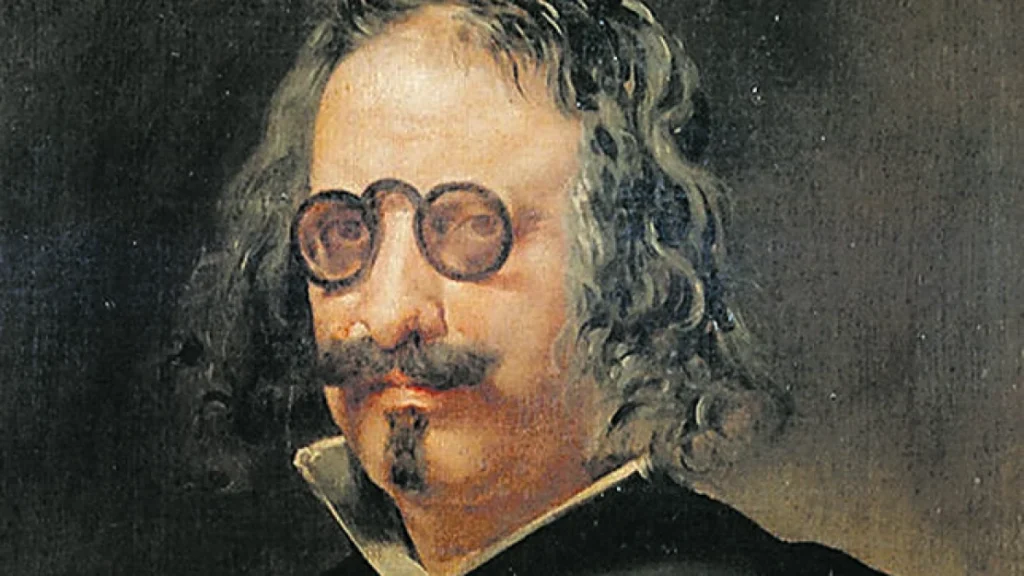
Someone stands at the wedding table, glass raised, and begins to recite. The words come out slightly misaligned — a syllable transposed, a verb tense quietly altered — and nobody notices, because nobody in the room has read the original. They nod anyway. They feel the rightness of it, the weight of old language doing what old language is supposed to do at moments like this: lending gravity to the ephemeral, dressing the present in the borrowed clothes of permanence. The lines are Quevedo’s, approximately. They are about fire that freezes and ice that burns, about a wound that gives life and a death that sustains, and they land in that banquet hall as decoration rather than detonation, which is precisely the opposite of what they were designed to do.
This is what four centuries of quotation without reading has accomplished. Walter Benjamin, writing in the unfinished architectures of his Passagen-Werk, described what he called the dialectical image: the moment when a historical figure or object is seized from the flow of time and frozen into a single, usable meaning, stripped of its contradictions and pressed into the service of the present’s needs. The dialectical image is not a lie exactly. It contains a remnant of truth. But it has been calcified, made static, turned into an emblem when it was once an argument. Quevedo has suffered this fate with a thoroughness that would have impressed even his most dedicated enemies.
He is everywhere in the Spanish-speaking world. He appears on decorative tiles and political podiums, in graduation speeches and revolutionary pamphlets, cited by conservatives who want tradition and by insurgents who want fire, by lovers who want poetry and by demagogues who want rhetoric. The same man. The same lines. Used for opposite purposes by people who have read none of it carefully enough to notice the contradiction. This is not coincidence. It is the specific vulnerability of writers who are too good at compression. When a sentence contains an entire cosmos, people borrow the sentence and discard the cosmos. They extract the ornament and forget the argument that made the ornament necessary.
What gets lost in this process is precisely what made Quevedo dangerous: the discomfort, the oscillation, the refusal to settle. The man who wrote with savage joy about death was also a man genuinely terrified of it. The moralist who condemned corruption had engineered conspiracies from prison. The poet of pure love had written some of the most deliberately obscene literature in the Spanish language. The defender of empire had spent years as its prisoner. These are not inconsistencies to be smoothed over. They are the substance. They are what make reading him feel, even now, like an encounter with someone unfinished, someone still mid-sentence.
Erich Auerbach, in his monumental Mimesis published in 1946, argued that the way a civilization represents reality reveals everything about what it believes and fears. Quevedo’s reality was jagged, stratified, full of bodies and money and the smell of courts and the silence of cells. When we quote him without reading him, we perform our own act of representation: we reveal that we want a past that confirms us, a tradition that is warm and undemanding, ancestors who speak our conclusions back to us rather than ones who would interrogate our premises.
To inherit a voice you have never actually heard is not inheritance. It is ventriloquism of a peculiar kind, where the living speak through the dead and call it reverence. Quevedo, who spent his life puncturing exactly this kind of false dignity, who understood that the most dangerous fictions are the ones everyone agrees to treat as true, might have found in his own posthumous fame the darkest satire of all — a joke so perfectly constructed that even its target cannot stop repeating it.
🌀 Spain, Satire, and the Shadows of the Golden Age
Francisco de Quevedo stands as one of the most dazzling and tortured minds of Spanish literary history, weaving together biting social critique, baroque language, and a dark philosophical wit. To understand his world fully, it helps to explore the currents of thought, literature, and culture that surrounded and shaped him. These articles open the labyrinth wider.
The Spanish Picaresque Novel: History and Meaning
The picaresque novel was the great literary mirror of Quevedo’s Spain, reflecting a society of false honor, hunger, and cunning survival. Quevedo himself contributed to the genre with his masterpiece El Buscón, a savage and darkly comic portrait of a social climber’s impossible dreams. Understanding the picaresque tradition is essential to grasping the bitterness and brilliance at the heart of his prose.
GO TO THE SELECTION: The Spanish Picaresque Novel: History and Meaning
Don Quixote: Meaning and Analysis
Don Quixote and Quevedo’s works share a common Spanish sky, born within years of each other and shaped by the same anxious twilight of empire. Where Cervantes reached for melancholy compassion, Quevedo cut with a sharper, more venomous blade. Reading both in parallel reveals the full emotional and philosophical range of Spain’s Golden Age imagination.
GO TO THE SELECTION: Don Quixote: Meaning and Analysis
Giordano Bruno and the Hermetic Tradition
Giordano Bruno‘s Hermetic tradition circulated through the intellectual underground of Quevedo’s Europe, influencing poets, philosophers, and theologians alike. Quevedo himself was deeply engaged with Neoplatonic and esoteric currents, translating and absorbing stoic and mystical texts with voracious intensity. This article traces the broader current of Renaissance thought in which Quevedo’s more philosophical writings were immersed.
GO TO THE SELECTION: Giordano Bruno and the Hermetic Tradition
Alchemy in Literature: From Dante to Goethe
Alchemy appeared in the literature of Quevedo’s era not merely as science but as metaphor — a language for transformation, corruption, and the deceptive glitter of false gold. Quevedo frequently used alchemical imagery in his satirical works to mock charlatans and courtly pretenders. This survey of alchemy in European literature from Dante to Goethe places Quevedo within a rich tradition of writers who turned the furnace of the alchemist into a symbol of human folly and aspiration.
GO TO THE SELECTION: Alchemy in Literature: From Dante to Goethe
Discover the Cinema That Thinks
If Quevedo’s relentless questioning of power, illusion, and the human condition resonates with you, then independent cinema is your next labyrinth. On Indiecinema you will find films that share that same refusal to flatter, that same hunger for uncomfortable truth. Step inside and let the screen do what great literature always has.
👉 EXPLORE THE CATALOG: Watch Indie Films in Streaming
A vision curated by a filmmaker, not an algorithm
In this video I explain our vision

