
The Boy Who Learned to Lie Before He Learned to Read
There is a moment every child knows, even if they never speak of it afterward. You are sitting at a table where adults are performing something — call it lunch, call it family, call it a gathering of people who have agreed, without ever saying so, to pretend. You watch the faces. You watch the way the smile arrives a half-second after the eyes have already decided something else. You are perhaps seven years old and you do not yet have the vocabulary for hypocrisy, but your body already knows it the way it knows cold water: as something that must be navigated, not named. And in that moment, without any formal instruction, you begin to learn the only lesson that actually matters in a world stratified by power — that survival is a performance, and the gifted survive by performing better than those who wrote the rules.

This is not a metaphor. This is the original condition of the pícaro, the rogue-child at the center of a literary tradition that Spain produced in the sixteenth century and the world has never quite stopped needing. The pícaro does not begin as a rebel or a philosopher. He begins exactly as that child at the table: watchful, hungry, calculating the gap between what people say and what they mean, and learning to insert himself into that gap like a blade into a seam.
The boy in the story — and there is always a boy, always at the bottom, always without a father worth naming — grows up beside a river in Salamanca, handed by his mother to a blind beggar because she cannot afford to keep him. He is perhaps eight or nine. The old man strikes him against a stone bull on a bridge and laughs as the child’s ears ring, and what he says, still laughing, is this: a pícaro must be sharper than the devil himself. The lesson is not cruel by accident. It is the curriculum. From this moment, the boy understands that no one will feed him out of generosity, that every meal is a transaction, and that the only currency available to someone with no blood, no land, and no name is wit performed at speed.
This is Lazarillo de Tormes, published in 1554, author unknown, and the anonymity is not incidental. The book was banned by the Spanish Inquisition in 1559, placed on the Index of Forbidden Books under Philip II, and the reason was not obscenity but something more dangerous: it told the truth about how Spanish society actually functioned from the bottom looking up. The narrator is a bastard child of a convicted thief and a woman who takes up with a Moorish stable hand. His genealogy is a catalogue of social contamination as the period understood it, and this is precisely the point. In the Spain of the mid-sixteenth century, the doctrine of limpieza de sangre — purity of blood — had calcified into an obsessive legal and theological architecture. To hold public office, to enter certain religious orders, to marry into respectable families, a man had to demonstrate that his lineage contained no Jewish, Moorish, or heretical blood going back multiple generations. The conversos, those Jews and Muslims who had converted to Christianity under the pressure of the 1492 expulsions and the long machinery of persecution that preceded them, lived under perpetual scrutiny, perpetual suspicion, perpetual performance of an identity they had been forced to adopt and could never fully inhabit.
What the pícaro inherits from this world is not a philosophy but a condition. The feudal scaffolding that might once have given a poor man some stable rung to stand on had collapsed under the weight of empire, inflation, and a nobility that consumed without producing. Spain in 1554 was simultaneously the most powerful state in the world and a place where a boy beside a river had no future that he did not manufacture with his own hands and his own lying mouth. The pícaro does not choose cunning. Cunning is what remains when everything else has been taken away.
Don Barry: A Quixotic Exploration
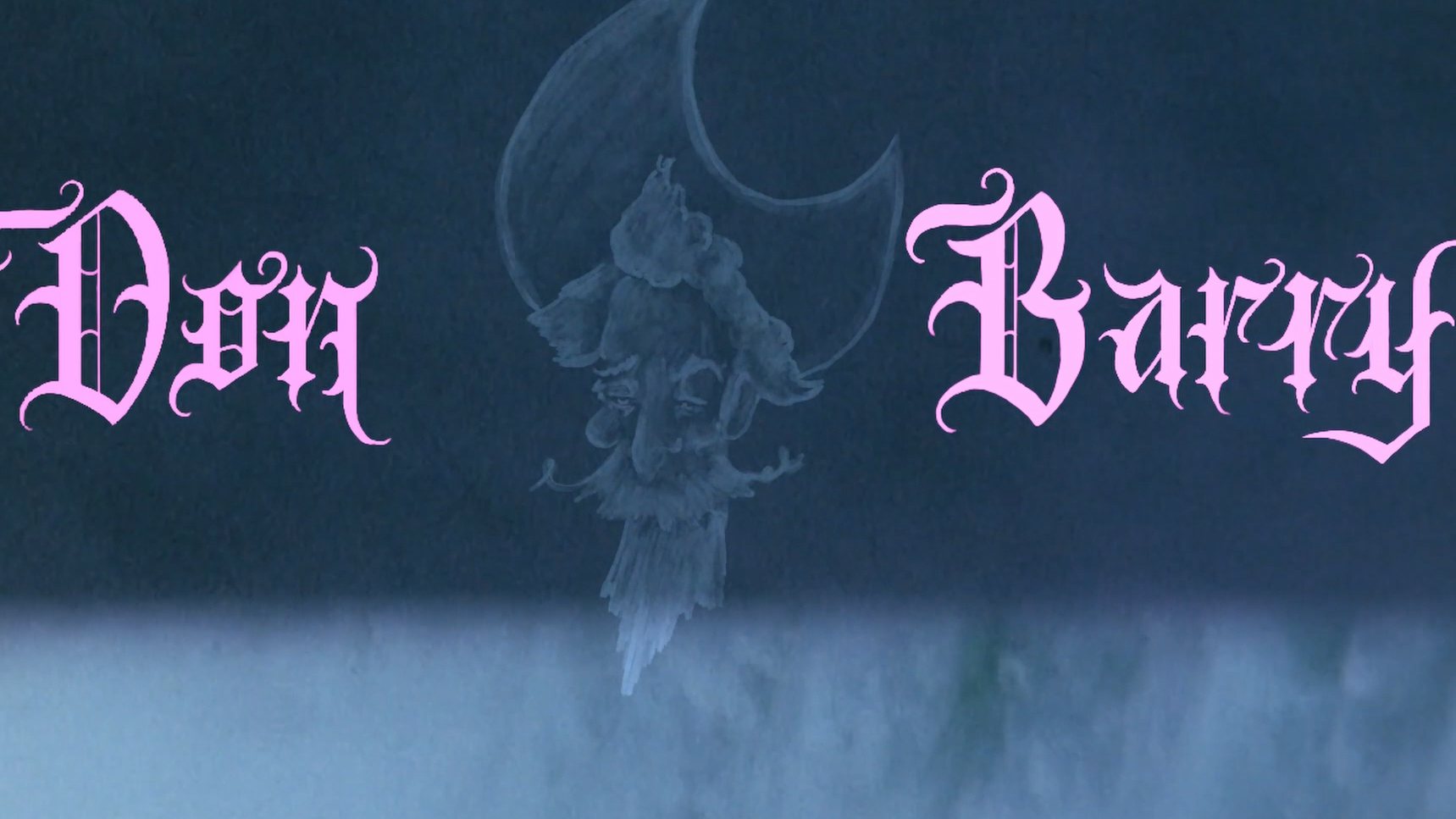
Docufiction, Experimental, by Paul Smart, Mexico, 2026.
Don Barry: A Quixotic Exploration is a debut feature that places the biography of an eighty-year-old experimental filmmaker and artist, Barry Gerson, within the metanarrative of Miguel de Cervantes’ Don Quixote. Don Barry was filmed in the city of Guanajuato during the 51st edition of the Cervantino Festival, as well as during the vibrant Day of the Dead celebrations held in the city’s UNESCO-listed tunnels. The film honors the director’s long friendship with artist Barry Gerson, drawing inspiration from Cervantes’ Don Quixote. Paul Smart’s directorial choices create something new that celebrates life and goes beyond conventional storytelling. A search for magic in our real lives. A moving film about the meaning of life, art, and death. Not to be missed.
Paul Smart is a proud outsider filmmaker with a long history of film screenings. In the 1980s, he emerged in New York’s vibrant youth art scene, working in theater production and later filmmaking, before retreating to rural upstate New York, in the Catskill Mountains, where he made a living writing and screening independent films in old parish halls for rural audiences, many of whom had never seen a film.
LANGUAGE: English
SUBTITLES: Spanish, French, German, Portuguese
Hunger as Epistemology
There is a particular way a hungry man eats when he does not want to be seen eating. He slows himself deliberately, arranges the bread with a kind of theatrical casualness, looks sideways at nothing. The speed of his hunger and the performance of his indifference are in permanent, exhausting conflict. Anyone who has ever been poor in a city full of people who are not poor knows this choreography intimately — the careful calibration of need against visibility, the body’s urgency disciplined by the terror of being read correctly.
This is where the picaresque begins. Not in adventure, not in the road, not in the comic misadventures of a rogue who outwits his betters. It begins in that precise and humiliating mathematics of scarcity, and in the peculiar kind of knowledge that scarcity produces. Hunger is not a condition in these novels — it is a methodology. It teaches the pícaro to read faces, hierarchies, silences, the distance between what a man says at table and what he means, the exact social weight of a locked pantry door. No university in Salamanca or Alcalá offered a curriculum this precise, this unforgiving, this immune to abstraction.
Mikhail Bakhtin, writing about the rogue figure in “Forms of Time and of the Chronotope in the Novel” — a text composed in the 1930s though its full influence would arrive decades later — identified something that literary history had largely avoided saying plainly: the social outsider occupies an epistemological position of radical privilege. Not comfort, not power, not dignity, but knowledge. The servant sees the master’s house from the inside without belonging to it. He moves through rooms that are not his, handles objects whose value he understands precisely because he cannot own them, overhears conversations not meant for ears like his. Bakhtin’s carnivalesque logic extends this further — the figure who stands outside the official order does not merely witness it, he decodes it, because he has no investment in its fictions. His hunger makes him accurate.
Mateo Alemán understood this with the precision of a man writing from inside the condition he described. His Guzmán de Alfarache, published in 1599, was not simply a novel — it was an event. In the six years following its first edition, the book went through more than twenty-six printings across Spain, Italy, and the rest of Europe, making it the first genuine bestseller of the modern era in any meaningful commercial sense of that term. Readers did not merely enjoy it. They recognized it. The book’s protagonist, Guzmán, moves through a world of theological promise and material betrayal — a world that preaches grace and practices exclusion — and what he produces from this friction is not cynicism but something more disturbing: clarity.
The scene that haunts the book is not dramatic. A young man arrives in a city, eats scraps near a doorway, and watches. He watches the way only those with nothing to protect can watch — without the perceptual filters that property and status install in the comfortable. A wealthy man does not truly see a street because he moves through it as owner. The pícaro moves through it as reader. Every gesture, every slight, every transaction tells him something, because he cannot afford to miss what it means.
This is what Alemán’s disillusionment — desengaño, that untranslatable Spanish noun that sits between disillusion and the stripping of illusion — ultimately produces. Not a withdrawal from the world but an almost unbearable attentiveness to it. The pícaro does not retreat into cynicism; he sharpens. The irony that runs through the entire tradition, from Lazarillo through Guzmán, is that the figure society constructs as morally unreliable is the only one telling the truth about how society functions. He lies to survive, yes. But his lies are tactical, visible, admitted. The lies of the institutions around him — the Church, the noble house, the merchant guild — are structural, invisible, and never confessed.
What hunger teaches, finally, is that the world has a hidden text. And only those with nothing left to lose can be bothered to read it.

The Mask That Becomes the Face
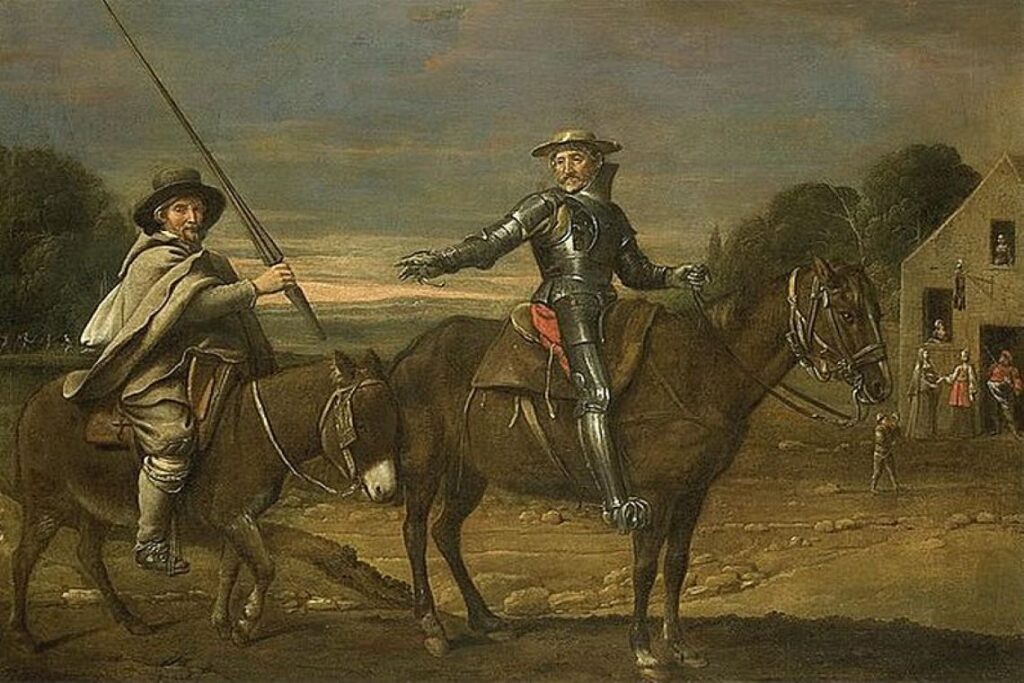
There is a moment most people recognize without being able to name it. A man stands before a bathroom mirror, practicing his smile before a job interview. He tries it once — too wide, too eager. He adjusts. Tries again — more restrained, professional, the right amount of warmth without desperation. He holds it there, studying the face that looks back at him, and for a fraction of a second something strange passes through him: he cannot tell anymore whether this is his smile or the one he has constructed for the occasion. The interval between performance and self has collapsed so completely that the question no longer has a clean answer. He straightens his collar and leaves. The mirror holds nothing.
This is not a pathology. It is the condition Erving Goffman described with surgical precision in 1959, when he published The Presentation of Self in Everyday Life and argued that social identity is not something we possess but something we perform, continuously, before audiences that shift and judge and demand. Goffman borrowed the vocabulary of theater not as metaphor but as mechanism: front stage, back stage, impression management, the costume of role. What he was describing, without naming it, was the structure of picaresque existence — the life organized entirely around the management of appearances before a social order that has no interest in who you actually are.
The pícaro understood this centuries before sociology gave it a name. He understood it not as theory but as survival. To move through a stratified society without the inherited markers of belonging, you perform belonging. You wear the borrowed coat, you adopt the borrowed tone, you rehearse the borrowed smile. The trouble — and this is where Goffman’s framework touches something genuinely dark — is that the performance, sustained long enough, begins to eat the performer. The mask does not stay on the face. It grows into it.
Francisco de Quevedo‘s El Buscón, published in 1626, is the picaresque stripped of every consolation. Don Pablos is the son of a thief and a prostitute who devotes his entire existence to disguising that origin, climbing toward the nobility he despises and desires in equal measure. But Quevedo, unlike Alemán or the anonymous author of Lazarillo, is not interested in social critique with a humanist undertone. He is interested in cruelty. Don Pablos does not fail because the system is unjust. He fails because he is constitutionally incapable of being anything other than an imitation — and Quevedo writes this with a cold, almost sadistic clarity, as though the protagonist’s suffering is the deserved consequence of his presumption. The venom in El Buscón is directed not upward at the aristocracy but downward, at the man who dares to want what he was not born to have.
What makes this psychologically devastating is the loop it creates. Don Pablos does not borrow dignity because he values it intrinsically. He borrows it because the class he imitates has defined it as valuable, and he has so thoroughly internalized their contempt — contempt for people exactly like him — that he cannot stop performing even when the performance destroys him. He has become, in the most literal sense, his own oppressor. The original self, whatever it might have been before the first rehearsal, is no longer recoverable.
Goffman would recognize this immediately. In his framework, the self is always a negotiated product of social interaction — but he also understood that some performances become so total, so unrelenting, that the performer loses access to the backstage entirely. There is no private room left. Every space is a front stage. The smile in the mirror is the only smile there is.
What the picaresque grasped, and what takes a particular kind of honesty to admit, is that this condition is not exceptional. It is not the tragedy of the outsider alone. It is what social climbing costs everyone who attempts it — the gradual, almost imperceptible surrender of the self that was, to the self that is needed.
The Lost Poet
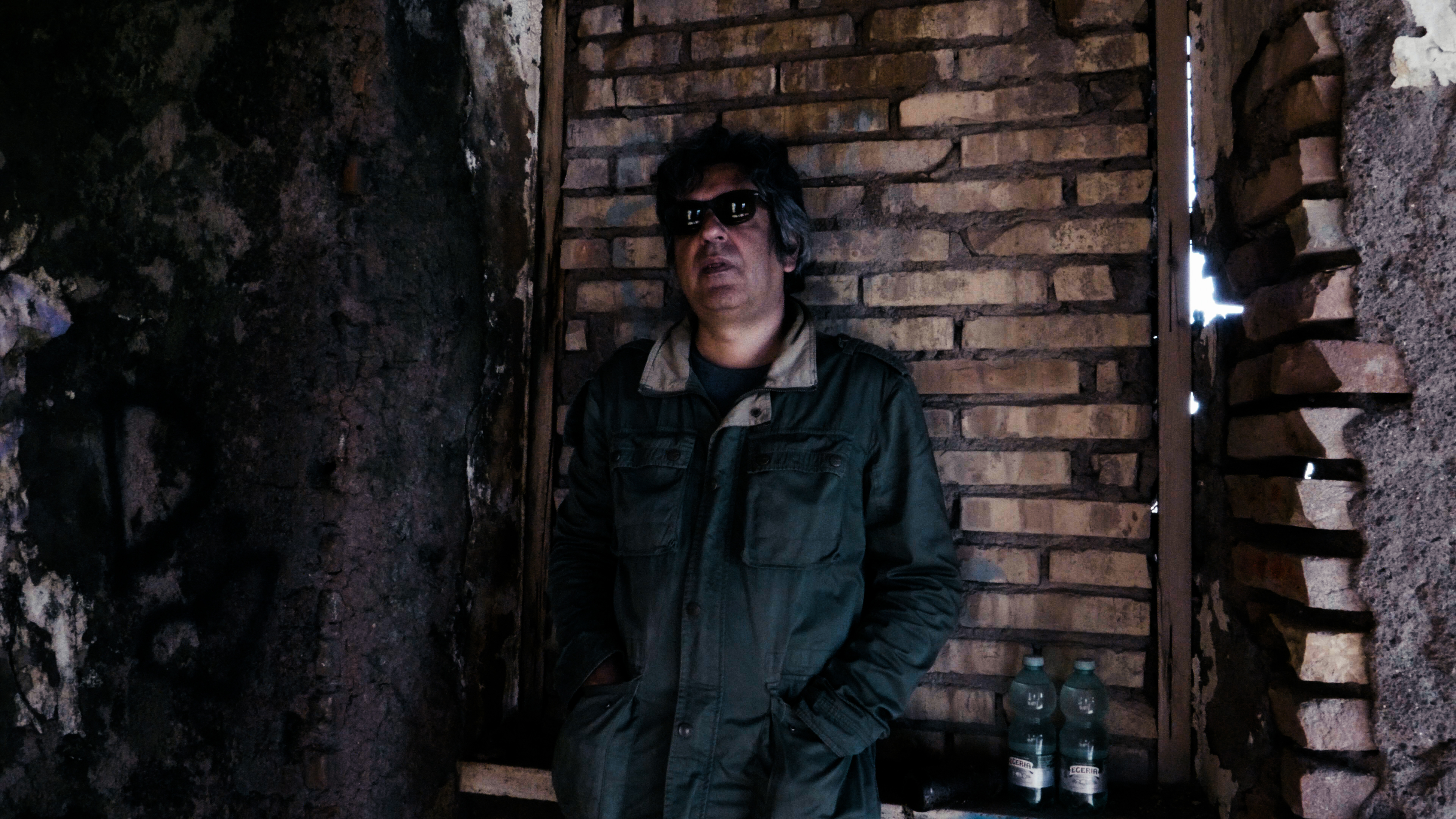
Drama, by Fabio Del Greco, Italy, 2024.
Dante Mezzadri wants to see an old friend, nicknamed the Iguana, whom he has lost sight of for many years, and who has managed to turn their shared youthful passion for poetry into a job, becoming a famous writer and poet. The man escapes from his bourgeois life and his wife to live homeless on the Roman coast, printing and trying to sell his poetry collections. At night he sleeps in a park of old carnival floats, inside a papier-mâché tank, and waits for the opportunity to meet his old friend, who however never shows up for appointments in the places they frequented when they were young, now in ruins. Dante's poetry books do not interest anyone and to support himself he is forced to "change product": he starts selling the infamous "cannibal pill" on behalf of young drug dealers, a new drug that sells like hot cakes and causes sensory and consumerist ecstasy. However, he realizes that this powerful drug is very dangerous for those who take it, he comes into conflict with his ethical conscience and throws all the pills into the sea. However, the dealers want to collect their money.
Shot over a period of 2 years, the film is a reflection on the cultural and artistic rubble of the society in which the protagonist lives, in an increasingly mechanized, consumerist and arid world. Dante Mezzadri is yet another human being who has renounced his inspiration and his creativity, but unlike many he is not willing to give his life to a system that distances him from his true identity. The physical world around him, however, seems constructed in such a way that it seems impossible to escape from this "invisible cage". The enthusiasm of the people he meets is ignited only by sensory gratification, by unreal visions of personal affirmation and success, by "metaverses" that offer an escape into an illusory and destructive reality. The poet's house on the coast, where he met with his friends as a young man, is just a pile of abandoned rubble. What happened to all those who wanted to become poets and ended up becoming something else? Are there internal forces with which that house can be "rebuilt"?
LANGUAGE: Italian
SUBTITLES: English, Spanish, French, German, Portuguese
Women, Silence, and the Picaresque They Were Never Allowed to Write
There is a particular kind of waiting that women learn to perform in rooms designed to exhaust them. She sits across from the clerk who has already decided not to help her, and she smiles in a way that costs her something she cannot name. She nods at the right moments. She does not raise her voice when he tells her the document she brought is the wrong form, the same document she was told to bring last week by someone sitting in that exact chair. She calculates, in real time, exactly how much of herself she can surrender without losing the thing she came here to get. She leaves with half of what she needed and a residue of something she will spend the evening trying to wash off. This is not survival as cunning. This is survival as disappearance.
The picaresque tradition never wrote this woman. It could not, because writing her would have required acknowledging that the social theater it celebrated as masculine wit was, in her case, simply called compliance, and compliance earns no one a novel.
When Francisco López de Úbeda published La Pícara Justina in 1605, one year after Mateo Alemán’s Guzmán de Alfarache had already canonized the male rogue as Spain’s defining literary figure, he did not give women a voice in the genre. He performed a more efficient operation: he put on a woman’s costume and mocked the possibility from inside it. Justina is garrulous, vain, manipulative in the pettiest register, and obsessed with her own appearance to the point of self-parody. She is not a female pícaro. She is a male fantasy of what a female pícaro would inevitably reduce herself to — a cautionary grotesque, a proof that women who attempt the rogue’s freedom only reveal their own absurdity. The book is not an inclusion. It is a containment strategy wearing the shape of one.
What López de Úbeda understood, whether consciously or not, is the mechanism Judith Butler would spend the twentieth century making explicit: that gender is not something one has but something one performs, repeatedly, under social compulsion, with punishment awaiting any deviation from the script. The pícaro’s genius, in texts like Lazarillo de Tormes, was his ability to perform multiple social identities simultaneously — servant, penitent, innocent, schemer — and profit from the gap between performance and reality. But Butler’s insight, developed across Gender Trouble in 1990 and refined throughout her subsequent work, is that this multiplicity was never gender-neutral. The pícaro could play with identity precisely because masculine subjectivity was granted a provisional freedom to fail and reconstitute itself. The female subject had no such latitude. Her performance was not a strategy she deployed; it was a condition she inhabited. Deviation was not clever. It was scandalous, then punishable, then erased.
This is why the structuring absence at the center of Spanish picaresque literature is not poverty. Scholars who read the genre primarily as social critique of Habsburg inequality — and there is genuine substance to that reading — miss the more intimate wound the form is protecting. The pícaro’s journey is a story about masculine shame: about men who have fallen beneath the dignity their culture promised them, men navigating a world that has withdrawn its recognition, men who must trick their way back into standing that was never legitimately theirs. Female characters in these texts exist almost exclusively as mirrors for that shame or exits from it — the virtuous woman who restores honor, the corrupt woman who justifies degradation, the absent mother whose failure explains everything.
What no one asked, for roughly four centuries of Spanish literary scholarship, is what the woman in that bureaucratic office was thinking while she smiled. What calculations she was running. What she planned to do with the half of what she needed that she finally managed to leave with. The picaresque never gave her the pen. And the silence that followed is not a gap in the archive. It is the genre’s real confession.
The Pícaro in the Mirror of Modernity

There is a particular kind of laughter that has no joy in it. You have seen it at the office meeting, at the dinner where someone important has been invited, at the networking event where the wine is cheap and the ambition is not. A man laughs at a joke he does not find funny because the person who told it controls his salary. A woman nods at an opinion she privately considers idiotic because the face across the table belongs to someone who could accelerate her promotion by three years. The laugh lands exactly right. The nod carries precisely the correct weight of considered agreement. Nothing about the performance is accidental, and nothing about it is who they are.
This is not hypocrisy in the moral sense. It is survival in the structural sense. And it was understood with complete clarity by an anonymous Spanish writer in 1554, nearly four centuries before Robert Merton sat down to name it.
Merton’s theory of anomie, developed in his 1938 essay “Social Structure and Anomie” and later expanded in “Social Theory and Social Structure” in 1949, identifies a specific and devastating tension at the heart of modern societies: the gap between the goals a culture prescribes to everyone — success, prosperity, upward movement, the accumulation of dignity through material form — and the legitimate means it actually makes available to reach those goals. The gap is not accidental. It is structural. The culture shouts the destination at maximum volume while quietly closing most of the doors. What follows, Merton argues, is not individual moral failure but a series of rational adaptations to an irrational system. One of those adaptations he calls innovation: accepting the culturally approved goal while abandoning the approved means of reaching it. The con, the scheme, the performance of credentials one does not possess, the careful management of impressions across social surfaces. Merton named this in 1938. The pícaro was already living it in 1554.
What Lazarillo understands — what every pícaro understands in the marrow of the form — is that the promise and the practice of social ascent are structurally irreconcilable. The promise is universal. The practice is rationed. And the only coherent response to that irreconcilability, if you were born without inheritance or name or the right kind of face, is to work the gap. To become fluent in the codes of a world that was not built for you, and to use that fluency as a tool before it uses you as raw material.
Watch someone who has recently arrived at a class above their origin. Not arrived in the permanent sense, but arrived in the daily performed sense: the apartment that is slightly beyond their means, the references to places and tastes that were researched before they were inhabited, the particular way they hold a wine glass that was practiced before it became natural. There is something in their eyes during these performances that is not quite present — a monitoring attention, a faint auditing of every word before release. Guzman de Alfarache knew that look from the inside. He described the exhaustion of it, the way the performance never fully rests, the way the self splits into actor and audience and cannot easily reassemble.
Erving Goffman, writing in “The Presentation of Self in Everyday Life” in 1959, gave this a sociological architecture: front stage, back stage, impression management, the theatrical scaffolding of social life. But Goffman was describing a universal condition. The picaresque understood something more specific and more uncomfortable: that this theatrical scaffolding is not equally exhausting for everyone. For those who were born into the role the culture values, the performance eventually dissolves into naturalness. For those who were not, it never does. The monitoring never stops. The audit never closes.
The pícaro is not a rogue. He is a reader — the most attentive reader in the room, reading the social text that everyone else has the luxury of ignoring because they were written into it from birth. And what he reads, always, is the same sentence: the rules exist to protect what has already been distributed.
Mystery of an Employee

Drama, thriller, by Fabio Del Greco, Italy, 2019.
Someone wants to control the life of the employee Giuseppe Russo: the products he buys, his political and religious faith, his private life, even his dreams. But he will do anything to escape control and find his true self. Giuseppe is a man of around 45, married, with a stable job and a home of his own. His life flows seemingly peacefully when he meets a mysterious tramp who gives him some old VHS video cassettes. Giuseppe begins to see video tapes in which he is filmed in some moments of his life since he was a child, then as a teenager and as a young man. Who shot those videos that he remembers nothing about? Giuseppe has the strange sensation of being constantly observed and begins to investigate what is happening. Through his investigation of him, he begins to rediscover his true identity and become aware of who he truly is.
Employee's Mystery is a film that highlights the danger of social control and shows a society where everyone is constantly monitored and conditioned in their deepest selves. The film is also an analysis of human nature and identity. Fabio Del Greco, who plays Giuseppe, gives an engaging performance. Equally good is Chiara Pavoni, in the role of Giada Rubin and Roberto Pensa in the role of the tramp. Employee's Mystery is a film that addresses important themes in an original way, a psychological thriller that keeps the viewer glued to the screen until the end: a metaphor for contemporary society, in which people are increasingly monitored and conditioned by the media and technologies . It is a courageous and provocative work, which addresses important themes in an original way.
LANGUAGE: Italian
SUBTITLES: English, Spanish, French, German, Portuguese
A vision curated by a filmmaker, not an algorithm
In this video I explain our vision
Disillusionment as the Only Honest Inheritance
He walks out of the building holding a small cardboard box — the universal prop of termination — and stops on the pavement. Not crying. Not visibly angry. Just standing there, looking at the street with an expression that is almost indecent in its clarity, as though the firing has accidentally cured him of something he did not know he was suffering from. The traffic moves. People pass. The city performs its indifference with perfect consistency. And he sees it, perhaps for the first time without the soft filter of his own investment in the story he had been telling himself for years. The box is almost beside the point. What has been lost is not the job but the anesthetic.
This is what desengaño feels like from the inside. The Spanish Baroque named it with unusual precision: not disillusionment in the modern, mournful sense of disappointed expectations, but the literal stripping of illusion, the engaño — the deception, the enchantment — pulled away to reveal the mechanism underneath. José Antonio Maravall, in his 1975 study of Baroque culture, argued that desengaño was not merely a philosophical posture but a deliberate instrument of social management. The ruling structures of seventeenth-century Spain understood, with considerable sophistication, that a population which had been allowed to see through certain illusions — the vanity of wealth, the corruption of the powerful, the randomness of fortune — was a population that might accept its condition with greater docility. You let people see that everything is futile, and they stop fighting for change. Disillusionment, in this reading, is not rebellion. It is sedation with a bitter taste.
Maravall is right, and his analysis lands with uncomfortable force when placed against the picaresque tradition. Lazarillo, Guzmán, Pablos — they all arrive at a version of clarity. They see the machinery. They describe it with an almost clinical precision that feels, at moments, like the most honest writing in the Spanish literary canon. And yet none of them dismantles anything. They survive. They adapt. They keep moving through a world they have understood completely and changed not at all. The novels could be read, as Maravall suggests, as sophisticated demonstrations that seeing through the system is not the same as escaping it — that lucidity, without collective action, is simply a more refined form of captivity.
But Maravall’s blade cuts both ways, and he knew it. Because once a reader genuinely absorbs the mechanism — once the engaño is stripped away — the effect cannot be fully controlled by whoever deployed the stripping. The picaresque novel was never entirely safe. Lazarillo de Tormes was placed on the Index of Forbidden Books in 1559, barely a decade after its anonymous publication, and the full text was suppressed for years. Guzmán de Alfarache generated anxious commentary about the dangers of its honesty. The authorities recognized something the Maravall-as-sedative reading underestimates: that showing people the machinery is a gamble, because some of them will not conclude that resistance is futile. Some of them will simply refuse to pretend anymore.
What the picaresque bequeaths to its readers is not a lesson. It offers no program, no redemption, no ideological consolation. It does not tell you that the world can be fixed or that suffering has meaning or that virtue is eventually rewarded — it has spent four hundred pages demonstrating precisely the opposite. What it offers instead is something more austere and more durable: the sensation, almost physical in its precision, of seeing the world without the anesthetic of belief, and the discovery that this vision does not kill you. The pícaro keeps walking. Not because he has found hope, but because walking is what remains when everything else has been stripped away, and because the stripped world, seen clearly and without mercy, turns out to be the only world there ever was — which means it was always possible to live in it honestly, without the lie, and that the lie was never necessary to begin with.
🗺️ Wanderers, Tricksters & The Search for Meaning
The Spanish picaresque novel did not emerge in a vacuum: its restless, margin-dwelling heroes share a spiritual kinship with broader traditions of transformation, rebellion, and the quest for hidden truth. These articles trace the underground currents that connect literary outcasts to esoteric seekers, social dissenters, and those who have always refused the comfort of easy answers.
Mass Social Homologation Today
The picaresque rogue survives by reading the codes of a society that excludes him, making him an involuntary analyst of mass conformity. This article examines how social homologation operates today, flattening individuality under the pressure of collective norms. The parallel with the pícaro’s cunning resistance to imposed identities is striking and deeply relevant.
GO TO THE SELECTION: Mass Social Homologation Today
Masterpieces of Rebellion and Counterculture Cinema
From Lazarillo de Tormes to the countercultural cinema of the twentieth century, the spirit of rebellion against established order runs like a red thread through Western art. This article surveys the masterpieces of cinema that challenged power, morality, and institutional hypocrisy with the same irreverence the picaresque novel pioneered on the page. It is an essential companion for anyone tracing the long history of the anti-hero.
GO TO THE SELECTION: Masterpieces of Rebellion and Counterculture Cinema
Hannah Arendt: the Philosopher Who Unmasked the Banality of Evil
Hannah Arendt‘s unflinching analysis of how ordinary systems produce extraordinary injustice resonates powerfully with the picaresque world of corrupt masters and powerless servants. Her concept of the banality of evil illuminates the moral landscape that the pícaro navigates with irony and survival instinct rather than heroic virtue. Reading Arendt alongside the Spanish picaresque reveals a shared obsession with complicity, adaptation, and the cost of mere survival.
GO TO THE SELECTION: Hannah Arendt: the Philosopher Who Unmasked the Banality of Evil
Deep Movies that Make You Think
The picaresque novel was among the first literary forms to ask uncomfortable questions about social mobility, identity, and the price of belonging — questions that deep, thought-provoking cinema continues to explore. This curated collection of films pushes viewers into existential territory where easy consolations dissolve, much as the pícaro’s journey strips away illusion after illusion. It is the ideal cinematic extension of a literary tradition built on relentless, unsentimental lucidity.
GO TO THE SELECTION: Deep Movies that Make You Think
Discover the Cinema of Restless Souls on Indiecinema
If the wandering spirit of the pícaro has stirred something in you, Indiecinema is the streaming platform where that restlessness finds its true home. Our catalog gathers independent films that refuse comfortable narratives and dare to look at the world from the margins, with honesty, irony, and depth. Join us and keep exploring the stories that the mainstream leaves untold.
👉 EXPLORE THE CATALOG: Watch Indie Films in Streaming
A vision curated by a filmmaker, not an algorithm
In this video I explain our vision

