
The Street That Smelled of Ink and Decay
Imagine you reach into a cardboard box at a Sunday market, between a cracked ceramic pitcher and a bundle of old postcards rubber-banded together, and your fingers close around the spine of something that feels wrong for its age — too dense, too deliberate in its weight, the leather worn soft as skin at the corners. You open it without thinking and the smell hits you before the words do: that particular mixture of must and something almost sweet, like old wood and dried flowers and the faint ghost of whoever last turned these pages in a room that no longer exists. There is a moment, brief and slightly vertiginous, when you understand that you are holding compressed time. Not a metaphor. An actual compression of one era pressing against yours, asking nothing of you except that you notice.

That sensation — half pleasure, half unease — is perhaps the most honest entry point into what Spain produced between roughly 1492 and the middle of the seventeenth century. Scholars have named it the Siglo de Oro, the Golden Age, and the name has the ring of a trophy awarded posthumously, which is exactly what it is. Because the people living inside that explosion of language, theatre, painting and philosophical fury were not experiencing gold. They were experiencing the specific delirium of a civilization burning very brightly while quietly consuming its own foundations.
The paradox is structural, not accidental. The same year Columbus made landfall in the Caribbean — 1492, that date so worn by repetition it has almost lost its edge — the Spanish crown also completed the Reconquista and expelled somewhere between 100,000 and 200,000 Jews from the peninsula. The Inquisition, reestablished in its more systematic form in 1478, had by then already developed its bureaucracy of fear: the denunciations, the secret accusations, the public spectacle of the auto-da-fé that Giorgio Agamben, writing on states of exception and sovereign power, would have recognized as a machinery for producing legible bodies, bodies that confess, recant, or burn for the instruction of those watching. The empire was simultaneously at its greatest territorial extension and beginning the long, slow hemorrhage that would drain it of silver, men, and credibility across the following century and a half.
And yet. Into this atmosphere of enforced orthodoxy and imperial anxiety walked Cervantes, who had lost the use of his left hand at Lepanto in 1571, been enslaved in Algiers for five years, worked as a tax collector, been excommunicated twice, and spent time in prison — from one of which, legend insists, he began drafting the novel that would eventually become the first recognizable modern novel in the Western tradition. Into this same atmosphere walked Lope de Vega, who wrote somewhere between 1,800 and 3,000 plays depending on which historian you trust, who was exiled from Madrid for libel, who took holy orders without abandoning his serial seductions, who produced work of devastating emotional precision while conducting a life of almost farcical disorder. Into it walked Quevedo, whose savage satirical verse was so dangerous that his manuscripts circulated in hand-copied manuscripts passed between trusted hands like contraband. Into it walked Velázquez, who painted the court of a declining empire with a psychological realism so unsparing it took three centuries for the world to fully absorb what he had seen.
The question that the smell of that old book actually asks, if you stay with it long enough, is not a literary question at all. It is something closer to what the sociologist Randall Collins, in his work on interaction ritual chains and intellectual creativity, called the problem of emotional energy — why certain moments of extreme social pressure produce not silence but speech, not retreat but elaboration, not simplicity but overwhelming, almost violent complexity.
Don Barry: A Quixotic Exploration
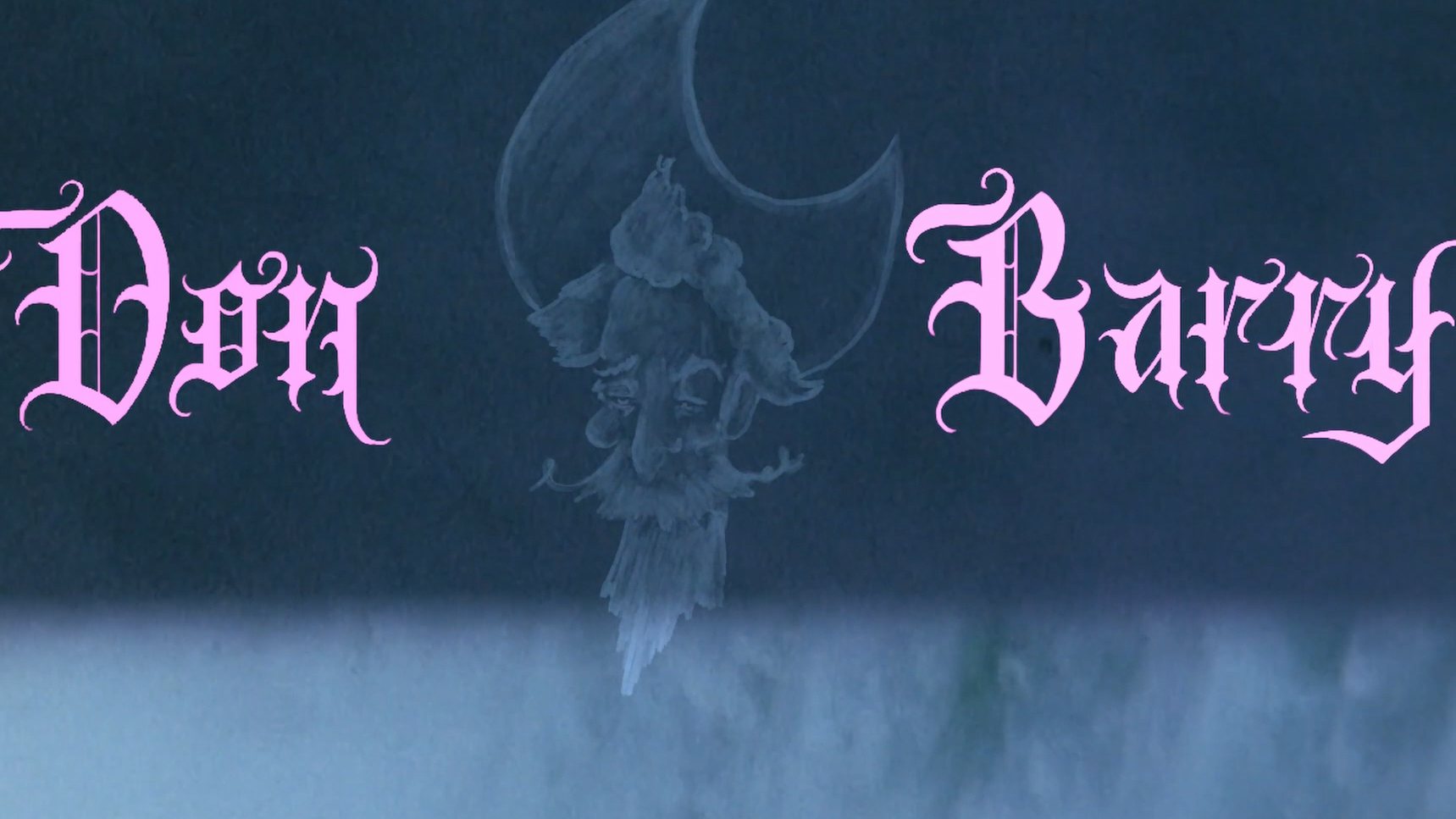
Docufiction, Experimental, by Paul Smart, Mexico, 2026.
Don Barry: A Quixotic Exploration is a debut feature that places the biography of an eighty-year-old experimental filmmaker and artist, Barry Gerson, within the metanarrative of Miguel de Cervantes’ Don Quixote. Don Barry was filmed in the city of Guanajuato during the 51st edition of the Cervantino Festival, as well as during the vibrant Day of the Dead celebrations held in the city’s UNESCO-listed tunnels. The film honors the director’s long friendship with artist Barry Gerson, drawing inspiration from Cervantes’ Don Quixote. Paul Smart’s directorial choices create something new that celebrates life and goes beyond conventional storytelling. A search for magic in our real lives. A moving film about the meaning of life, art, and death. Not to be missed.
Paul Smart is a proud outsider filmmaker with a long history of film screenings. In the 1980s, he emerged in New York’s vibrant youth art scene, working in theater production and later filmmaking, before retreating to rural upstate New York, in the Catskill Mountains, where he made a living writing and screening independent films in old parish halls for rural audiences, many of whom had never seen a film.
LANGUAGE: English
SUBTITLES: Spanish, French, German, Portuguese
Empire as Stage Set
There is a particular kind of wealth that impoverishes everything it touches. The silver that arrived in Seville from the mines of Potosí — one hundred and seventy thousand tons extracted between 1556 and 1783, carried on the backs of conscripted indigenous laborers dying at altitudes that split the lungs — did not build Spain. It passed through Spain the way blood passes through a wound, briefly visible, then gone. By the mid-seventeenth century, the Crown was bankrupt three times over, the wool trade had collapsed, and the population of Castile had contracted by nearly a million souls due to plague, emigration, and the slow attrition of endless war. The empire was the largest the world had ever assembled, and it was eating itself from the inside.
This is the landscape that produced Cervantes, Lope de Vega, Quevedo, Velázquez, Zurbarán — an entire civilization of artistic genius born inside a structure that was simultaneously triumphant and terminal. The contradiction was not incidental. It was the engine.
Walter Benjamin, writing in the 1930s in his unfinished Arcades Project, developed what he called the dialectical image: the idea that history does not reveal itself in moments of stability but in flashes of tension, when two irreconcilable forces press against each other and produce, in that collision, a kind of involuntary illumination. Benjamin was thinking about nineteenth-century Paris, but the logic applies with almost violent precision to Habsburg Spain. The Siglo de Oro was not a golden age because Spain was flourishing. It was golden because Spain was fracturing, and the fracture produced light.
Consider what the social architecture of that world actually demanded of a person. The limpieza de sangre statutes — purity of blood laws that proliferated through Spanish institutions from the mid-fifteenth century onward — required citizens to prove the absence of Jewish or Moorish ancestry before accessing universities, military orders, church offices, and civic positions. The documentation was elaborate, invasive, and frequently forged. An entire bureaucratic industry existed to certify genealogies that were, in many cases, entirely invented. Cervantes himself faced scrutiny. The converso past lurked in the family lines of some of the most celebrated writers of the age, a history that could not be spoken and therefore pressured everything sideways, into allegory, into irony, into the elaborate indirection that characterizes so much of the literature’s greatest work.
Then there were the autos-da-fé, those theatrical spectacles of inquisitorial justice staged in public squares before crowds that numbered in the thousands. A man accused of relapsing into Jewish practice might be paraded through the streets in a sambenito — a painted penitential garment — before a tribunal that combined the authority of the Church with the full coercive power of the state. These were not marginal events. They were civic theatre, carefully choreographed, attended by royalty, painted by artists, written about in the gazettes. The same culture that produced the most psychologically complex literature in the Western tradition also produced this. They are not separate facts.
In 1609, Philip III signed the decree expelling the Moriscos — Spanish Muslims who had converted to Christianity but were deemed unassimilable — and within five years, approximately three hundred thousand people had been forced from their homes, their communities, their language. The agricultural regions of Valencia lost nearly a third of their working population. The economy of entire provinces collapsed. And the writers who witnessed this — who lived inside the apparatus that enacted it, who sometimes endorsed it publicly and subverted it privately — continued producing work of extraordinary moral complexity, as if the pressure of what could not be said directly was finding its way out through every other available channel.
This is what Benjamin meant by illumination at the point of fracture. The image that arrests you is never the image of a settled world.

Cervantes in the Prison Cell
There is a man in a debtor’s prison in Seville, sometime around 1597, and he is writing. Not writing to pass the time, not writing as therapy, not writing because he has nothing better to do. He is writing because the story he is carrying has become heavier than the circumstances that put him there, and the only way to survive the weight is to put it down on paper. The cell is real. The debt is real. The humiliation of a man who fought for his king at Lepanto, who lost the full use of his left hand to a arquebus ball in that battle, who spent five years as a slave in Algiers waiting for a ransom that barely came — all of it is real, and none of it has been rewarded. The Spanish empire has used him and forgotten him, the way empires do, and now he sits in a cell inventing a knight.
What he invents is not a comedy, though the world has spent four centuries laughing at it. Miguel de Cervantes published the first part of Don Quixote in 1605, the second in 1615, and together the two volumes constitute something that only looks like farce from a safe distance. Up close, in the actual texture of the prose, what you find is a man performing dignity in a world that has categorically decided he possesses none. The performance is not delusion. That is the crucial misreading, the one that turns a philosophical wound into a punchline. Don Quixote knows, at some level that the novel never fully excavates, that the windmills are windmills. What he cannot afford is to admit it. Identity, for him, is not a possession but a performance sustained under duress, and the moment he stops performing, he dies — which is precisely what happens at the end of the second volume, when he recovers his sanity and promptly ceases to exist.
Michel Foucault, in Madness and Civilization, published in 1961, argues that the great confinement of the seventeenth century was not merely a practical measure against social disorder but an epistemological act: societies define reason by expelling everything that challenges its boundaries, and what gets expelled is not the irrational but the unbearable. The madman is not someone who thinks poorly. The madman is someone whose way of thinking makes the rest of us uncomfortable about our own. Cervantes understood this from the inside. He had been expelled himself — from the battlefield’s promise of glory, from the empire’s gratitude, from economic dignity — and what he built in response was a character whose madness is simply the refusal to accept the world’s verdict on who he is.
There is a moment in a story that belongs to no single text but feels borrowed from life itself: a man walks into a room full of people who know his circumstances, who know he cannot pay his debts and cannot prove his lineage and cannot claim what he believes himself owed, and he holds his head as though none of this is true. The room does not know whether to laugh or to feel accused. That ambivalence is the entire engine of Cervantes’ novel, and it is why the book invented the modern novel rather than simply belonging to it. The modern novel is precisely the form that holds identity and its performance in simultaneous view, that refuses to decide whether the performance is heroic or pathetic, that insists the question stay open.
Cervantes could only have written this from a cell, from the position of someone who had already lost the argument with reality and was refusing, on principle, to concede.
The Lost Poet
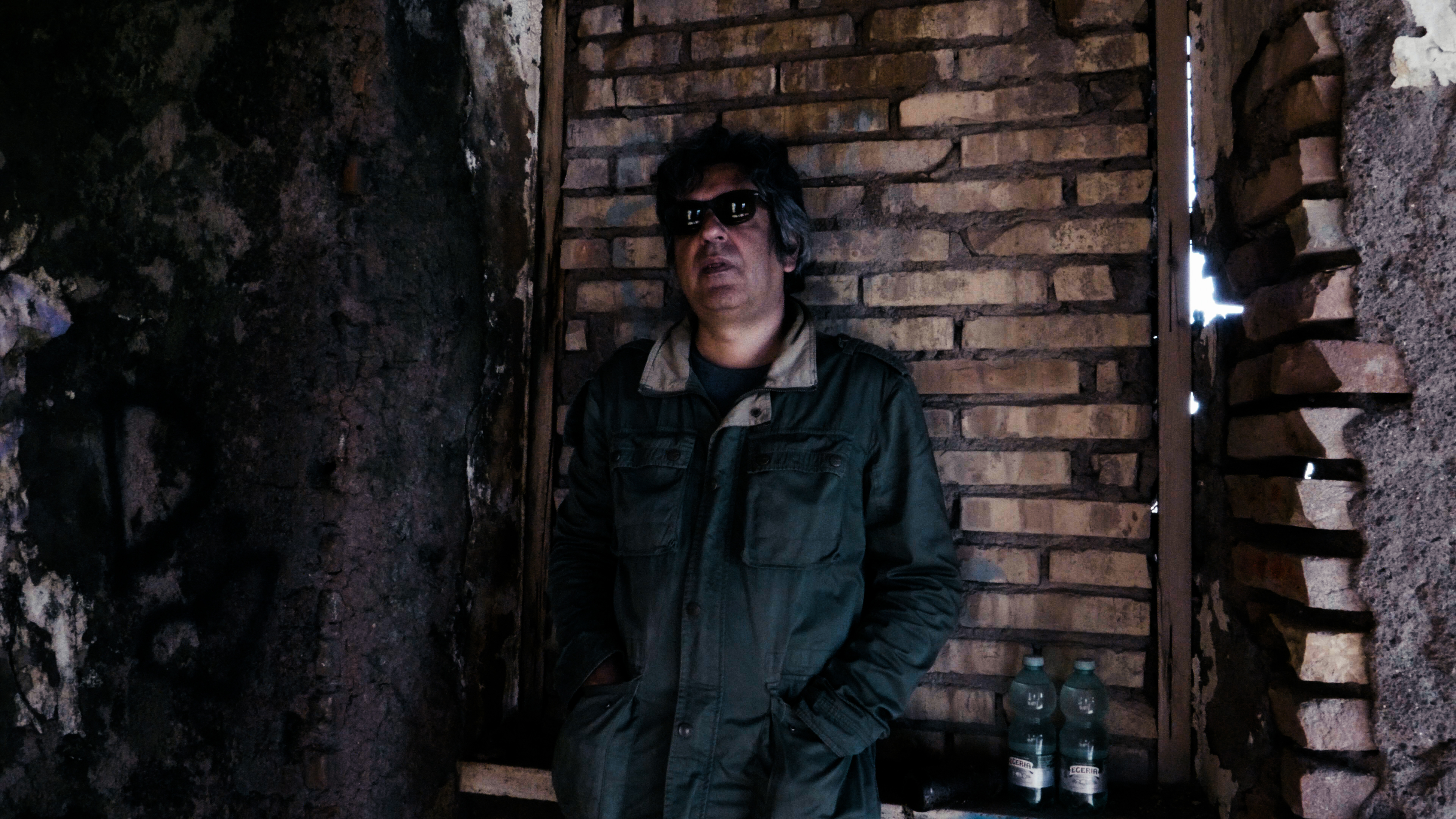
Drama, by Fabio Del Greco, Italy, 2024.
Dante Mezzadri wants to see an old friend, nicknamed the Iguana, whom he has lost sight of for many years, and who has managed to turn their shared youthful passion for poetry into a job, becoming a famous writer and poet. The man escapes from his bourgeois life and his wife to live homeless on the Roman coast, printing and trying to sell his poetry collections. At night he sleeps in a park of old carnival floats, inside a papier-mâché tank, and waits for the opportunity to meet his old friend, who however never shows up for appointments in the places they frequented when they were young, now in ruins. Dante's poetry books do not interest anyone and to support himself he is forced to "change product": he starts selling the infamous "cannibal pill" on behalf of young drug dealers, a new drug that sells like hot cakes and causes sensory and consumerist ecstasy. However, he realizes that this powerful drug is very dangerous for those who take it, he comes into conflict with his ethical conscience and throws all the pills into the sea. However, the dealers want to collect their money.
Shot over a period of 2 years, the film is a reflection on the cultural and artistic rubble of the society in which the protagonist lives, in an increasingly mechanized, consumerist and arid world. Dante Mezzadri is yet another human being who has renounced his inspiration and his creativity, but unlike many he is not willing to give his life to a system that distances him from his true identity. The physical world around him, however, seems constructed in such a way that it seems impossible to escape from this "invisible cage". The enthusiasm of the people he meets is ignited only by sensory gratification, by unreal visions of personal affirmation and success, by "metaverses" that offer an escape into an illusory and destructive reality. The poet's house on the coast, where he met with his friends as a young man, is just a pile of abandoned rubble. What happened to all those who wanted to become poets and ended up becoming something else? Are there internal forces with which that house can be "rebuilt"?
LANGUAGE: Italian
SUBTITLES: English, Spanish, French, German, Portuguese
The Theater as Social Lie Detector
There is a man who wakes up in a palace he does not recognize. He was in chains yesterday, or he thinks he was. He wore rags, he thinks, and spoke to no one, and the stone walls were cold in a way he still feels in his wrists. Now there are servants, there is silk, there is deference offered to him like a plate he was not asked whether he wanted. He does not know if he is the prisoner dreaming of a prince or the prince haunted by a nightmare of chains. He moves through the rooms carefully, touching the furniture as though testing whether it will hold, watching the faces of the people around him for the one expression that will betray the whole construction. No one breaks. The performance is total.
This is not an unusual experience. Most people, at some point in their adult lives, have stood inside a role that felt simultaneously inevitable and fraudulent, have answered to a name, a title, a function, and felt the specific vertigo of not knowing whether they chose this or were deposited here by forces that never asked. Erving Goffman, in The Presentation of Self in Everyday Life published in 1959, described social existence as a series of managed performances, front stages and backstage regions, impression management so constant and so thorough that the performer eventually loses track of the boundary between the role and the self. What Goffman mapped sociologically in mid-twentieth-century America, the comedia nueva had already been staging in the corrales de comedias of Madrid for a hundred years before him.
The corrales were open courtyards, usually flanked by the backs of residential buildings, where seating was arranged by a logic that simultaneously enforced and mocked social hierarchy. Aristocrats in the covered gallery boxes, tradespeople on the benches, servants and laborers standing in the pit they called the mosqueteros, the flies. Everyone watching the same play, breathing the same dust, hearing the same verse. There was something constitutively democratic and constitutively violent about this arrangement, because the theater held up to all of them, simultaneously, the mirror of a society organized by honor, blood, and the catastrophic weight of appearances.
Lope de Vega, who claimed authorship of over eighteen hundred plays and whose actual surviving catalog runs to nearly five hundred, understood that his audience did not come for escape. They came for recognition, which is a different and more dangerous thing. Recognition implies that what is shown already lives inside you, that the stage is not elsewhere but here, in the chest, in the history you carry without having chosen it. His comedia nueva, codified in his 1609 Arte nuevo de hacer comedias, broke from classical unities not out of carelessness but out of an accurate reading of what his audience needed to see: lives interrupted, identities contested, honor as a weapon wielded by those who benefit from the system against those who merely suffer it.
Calderón de la Barca pressed further. His theater is not interested in the question of whether the social performance is fair. It is interested in whether it is real at all. The man waking in the palace is not mad and is not dreaming in any clinical sense. He is simply encountering, more nakedly than most people are permitted to, the condition that underlies all social existence: that the self is not prior to the role but produced by it, that there is no backstage, that what Goffman would later call impression management is not a layer over some authentic interior but the only interior there is. If life is a dream, Calderón is not offering consolation. He is issuing a diagnosis. The palace and the cell are the same room, and the difference between prince and prisoner is a costume change that someone else decided on.
The Mystics and the Body That Knows Too Much

There is a woman sitting alone in a small room, and something is happening to her that she cannot explain and cannot stop. It arrives without warning — a pressure behind the sternum, a warmth that spreads upward through the throat, a sensation that the boundaries of the body are becoming negotiable. She is not ill. She is not dreaming. She is more awake than she has ever been, and that is precisely the terror of it. The people around her — her family, her superiors, the men who have been assigned to evaluate her — look at her and see a problem to be managed. She looks inward and sees something vast.
This is not metaphor. Teresa of Ávila described these states with a precision that reads less like devotional writing and more like phenomenological reporting of the most rigorous kind. Her Interior Castle, completed in 1577, maps the architecture of inner experience with the clinical patience of someone who has traveled those corridors so many times she knows where the walls are damp. John of the Cross, writing in a prison cell in Toledo after being abducted by his own order, produced in The Dark Night of the Soul something that functions as a negative theology of consciousness — a description of what it feels like when everything the self uses to orient itself is stripped away, and what, impossibly, remains.
William James, in The Varieties of Religious Experience published in 1902, identified four marks of the mystical state: ineffability, noetic quality, transiency, and passivity. What strikes him most is that these experiences carry an overwhelming sense of knowledge — not belief, not faith, but knowledge of the most unignorable kind. They arrive in the body before they reach the mind. They insist. Georges Bataille, writing fifty years later, pushed this further when he argued that inner experience is not a retreat from the world but its most extreme intensification — a dissolution of the bounded self that is simultaneously ecstatic and catastrophic, closer to eroticism and death than to the comfortable transcendence religion promises its congregants. Teresa and John, he would have recognized immediately, were not escaping the flesh. They were burning inside it.
This is why the institution that produced them also feared them. Teresa was investigated by the Inquisition. John was imprisoned. Their writing was scrutinized for heresy not because it denied the body but because it claimed the body knew things the hierarchy could not authorize. A woman whose interior life generates its own authority is, by definition, ungovernable. The Church eventually solved this problem with the blunt instrument it always reaches for in the end: canonization. Declare the dangerous person a saint, absorb the disruption into official narrative, and neutralize the living force of the example.
What happened to Teresa’s body after her death in 1582 is one of the more quietly horrifying facts of Spanish cultural history. She was dismembered for relics. Her heart was removed and preserved. Her arm was separated and sent to Lisbon. Various fingers and other fragments were distributed across convents and cathedrals throughout Catholic Europe. The woman who had written with such ferocious intimacy about the experience of having a body — its trembling, its heat, its unasked-for intensities — was literally divided into pieces by the same institution that claimed to honor her. The body that had known too much was made into objects. The subject was converted into inventory.
Contemporary psychology, which speaks of somatic experience and interoception and the wisdom stored in the nervous system, is still assembling the vocabulary that Teresa already had in the sixteenth century. She called it the seventh dwelling place. We call it integration. The words are different. The territory is the same one, still largely unmapped, still slightly dangerous to enter, still most honestly described by someone writing alone in a small room, unable to stop.
A vision curated by a filmmaker, not an algorithm
In this video I explain our vision
Painting the Shadow Beside the Light
There is a moment — you have lived it without knowing its name — when you look at a painting and realize the figures inside it are looking back. Not at something behind you, not at some imaginary point in the distance, but directly at you, with an attention that precedes your arrival, as if they were waiting before you walked into the room. The unease is quick and then suppressed, filed under aesthetic appreciation, but it leaves a residue.
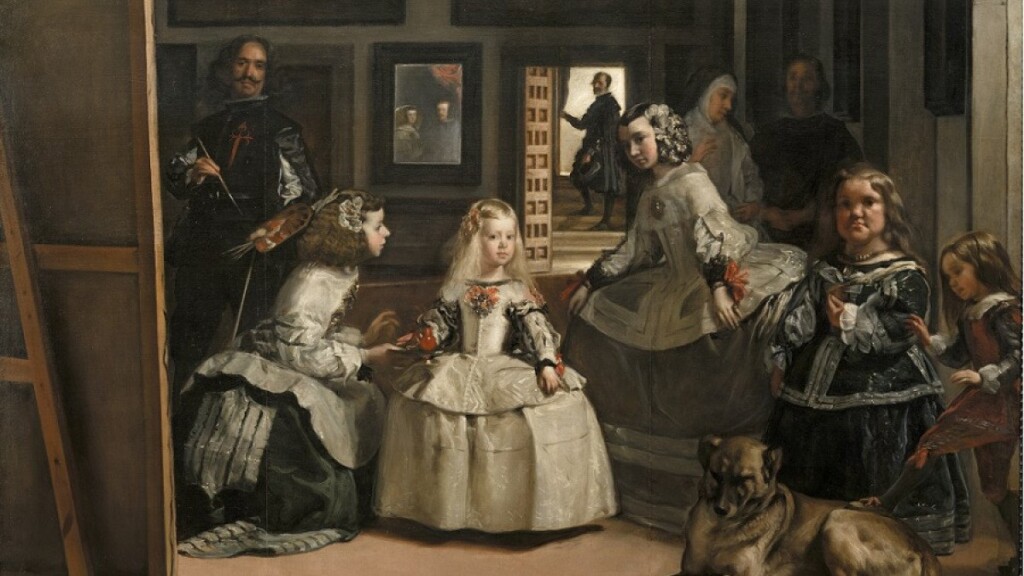
A painter stands in a large room, canvas before him, brush in hand. He is at work on something you cannot see — the surface faces away. Around him, the court assembles in fragments: a young girl at the center, attendants leaning in, a dwarf at the edge, a dog heavy with indifference. In a mirror on the far wall, two small figures shimmer — a man and a woman, royal, reflected from somewhere outside the frame. The painter looks out. At them. At you. The same look, indistinguishable.
This is the structure that Michel Foucault chose to open The Order of Things in 1966, and it was not a casual choice. He called it the representation of Classical representation itself — a painting in which the act of looking is made into the subject, where the sovereign gaze that should anchor meaning has been displaced, made uncertain, folded back into the composition until no single point of origin holds. The king and queen exist only as reflection. The painter, usually invisible, stands at the center. The observer, standing before the canvas, occupies the position that should belong to royalty. Foucault saw in this image the entire epistemological structure of an age beginning to crack — a world where the relationship between representation and the thing represented could no longer be taken as transparent.
John Berger, writing Ways of Seeing in 1972, arrived at similar territory from a different direction. For Berger, the oil painting tradition was always already a technology of possession — it showed the world as something owned, arranged for the gaze of someone with the power to commission the showing. But every act of depicting is also an act of claiming the right to depict. When the painter inserts himself into the scene, when he refuses to disappear behind the image he makes, the contract cracks. The question of who is watching whom becomes not rhetorical but structural.
The elongated bodies El Greco pulled upward — those figures that seem to be leaving the earth against their will, stretched between the devotional and the anatomically impossible — belong to the same instability. They are not distortions in the pejorative sense. They are arguments about where the body exists: in space, or in faith, or in the vision of the painter, which may not be the same space at all. And Zurbarán’s monks, painted around the 1630s, white and volumetric against darkness, carry a stillness so absolute it becomes aggressive. They do not invite contemplation. They impose it. The light that falls on their habits is not warm; it is surgical, cold as interrogation, as if visibility itself were a form of pressure.
What the Golden Age visual culture understood — and this is what makes it modern before modernity has a name for it — is that the image is never innocent of the position from which it is made. The painter who steps into the frame has not broken the convention playfully. He has exposed the convention’s violence: that someone always stands outside the picture deciding what is worth including, whose face is lit, which body is centered, which is cropped to the margin. He has made that power visible by stepping into it, and in doing so, he has made you see that you, too, are standing somewhere, looking from a position that is not neutral, that was never neutral, that carries the full weight of everything that decided you would be the one standing here, looking.
The Picaresque and the Mask You Were Born Wearing
There is a moment most people recognize but rarely name: the first time you understood that telling the truth about yourself was a mistake. Not a moral failing, not a lapse in courage — a structural miscalculation. You came from the wrong house, spoke with the wrong accent, carried the wrong name, and the room you entered had already decided what to do with you before you opened your mouth. So you adjusted. You filed down the edges. You became, very quickly, a more convenient version of yourself. And you told yourself this was pragmatism. What the picaresque novel understood, with a clarity that still burns, is that this was never pragmatism. It was the first lesson in a lifelong education in servitude.
Lazarillo de Tormes, published anonymously in 1554, opens with a child. His father is a convicted thief. His mother, after her husband’s death, takes a Moorish lover because he feeds her children. The boy is handed off to a blind beggar as a guide, as a tool, as something between a servant and a prop. What follows is not a story of innocence corrupted but of intelligence activated by necessity. Lazarillo learns to steal wine through a straw, to crack open a locked chest with a key molded in wax, to read the desires and vanities of every master well enough to exploit them before they can fully exploit him. He is not a rogue. He is a student in the only school available to him.
Pierre Bourdieu, writing in Outline of a Theory of Practice in 1977, described habitus as the set of durable dispositions that a social position inscribes into the body before conscious choice is possible. You do not decide your habitus. It is decided for you by the conditions of your birth, the gestures of your parents, the texture of the walls around you. And then, for the rest of your life, you move through a world organized around a different habitus — one that belongs to those who were born into rooms with higher ceilings — and you are expected to navigate that gap while pretending it does not exist. What Bourdieu called symbolic violence was precisely this: the way social structures impose themselves not through force but through the internalized conviction that the order of things is natural, inevitable, even fair. Lazarillo has no name for this. But he lives it in every chapter.
Quevedo’s Pablos, the protagonist of El Buscón published in 1626, attempts the more dangerous move: not just survival, but ascent. He wants to become a gentleman. He learns the gestures, the language, the posture. He invests everything in the performance. And the novel punishes him for it with a kind of savage comedy that is really horror in disguise, because Quevedo — a man of profound aristocratic contempt — shows the reader that the mask cannot hold. The body betrays itself. The lineage seeps through. A man can change his clothes and his address, but the world around him remembers what he came from and arranges itself accordingly. The self-invention that seemed like freedom is revealed as the most elegant version of the cage.
This is what makes the picaresque not a celebration of cunning but a diagnosis. These novels did not admire their protagonists. They exhibited them — pressed them against the glass of a society that had constructed survival as a moral test while rigging the conditions of that test from the start. The pícaro is not free. He is the proof that freedom, in a world structured by symbolic violence, is available only to those who never needed to perform it. Everyone else is just getting better at the costume.
What the Golden Age Recognizes in Us
There is a particular kind of darkness that is not absence of light but excess of it — the blue glow of a screen in a room where everything else has been switched off, where a person sits not quite watching and not quite thinking, suspended in the interval between the two. The content shifts. An algorithm has decided what comes next. The person did not choose it, exactly, but neither did they resist it, and somewhere in that passive consent an entire architecture of desire is being quietly constructed around them without their knowledge or participation.
This is not a new condition. It has a history, and that history has a name.
The Siglo de Oro was never simply a cultural flourishing. It was a civilization under pressure performing its own magnificence — a Spain that had overextended its imperial body across three continents while its domestic economy hollowed from within, its silver-laden galleons enriching Genoese bankers more than Castilian farmers, its obsession with limpieza de sangre producing a bureaucratic theater of purity that consumed enormous social energy while solving nothing. The spectacle was not decoration. It was the point. Lope de Vega understood this instinctively, which is why he wrote at a pace that staggers calculation — over four hundred surviving plays from a life that was itself theatrical, scandalous, public. The auto sacramental filled public squares not merely to edify but to unify, to make one body from a fractured population through shared emotion and shared image. The corrales de comedias were not entertainment in the modern sense of leisure chosen freely. They were ideology experienced as pleasure, which is the most durable form ideology has ever found.
Michel Foucault, writing about an entirely different century, identified this structure with precision: power that operates through normalization rather than prohibition, that shapes desire before desire can name itself. The Siglo de Oro did not need Foucault to theorize what it was already practicing. When Calderón put Segismundo in a tower and then released him into a world that behaved exactly like his dream, the question being posed was not theatrical but anthropological — how would a person know, having been shaped entirely by circumstances they did not choose, whether their subsequent choices were genuinely their own? Segismundo cannot answer this. Neither, Calderón implies, can anyone else.
Teresa of Ávila’s revolt was internal precisely because no external space remained uncaptured. The mystic tradition she elaborated — the seven mansions of the interior castle, the soul advancing inward toward a center that the world cannot legislate — was not escapism but the only available territory of genuine selfhood. When the public sphere is fully administered, the private turns sacred. This is a structural response, not a personal one, and it recurs wherever the conditions recur: imperial overextension producing economic anxiety, anxiety producing identity obsession, identity obsession producing spectacular performance of belonging, and all of it generating, in those alert enough to feel the pressure, a furious withdrawal into interior life. Cervantes knew this geography perfectly. Don Quixote is not mad because he reads too much. He is mad because he took the stories he was given and tried to live inside them literally, which is only an exaggerated version of what every socialized person does every day.
The person in the blue-lit room is not passive in any simple sense. They are engaged in something — feeling, responding, being moved and amused and occasionally frightened — but the question of whether the life accumulating around them is the one they are constructing or the one being constructed for them remains, as it remained for Segismundo waking in the tower, and for Teresa in her first mansion, and for Quixote on the plain before the windmills, genuinely, structurally, perhaps permanently open.
🏰 The Golden Age and Its Hidden Worlds
The Spanish Golden Age was not only a moment of literary brilliance but a crossroads where philosophy, mysticism, and storytelling intertwined. From Cervantes to the picaresque tradition, this era drew upon deeper currents of esoteric thought and humanist inquiry that shaped European culture for centuries. These related articles invite you to explore the wider intellectual universe surrounding this extraordinary period.
Don Quixote: Meaning and Analysis
Don Quixote stands as one of the most layered and enduring works of world literature, born directly from the creative explosion of the Spanish Golden Age. Cervantes wove themes of illusion, identity, and idealism into a narrative that continues to challenge readers centuries after its first publication. Understanding this novel is essential to grasping the full complexity of Golden Age literary culture.
GO TO THE SELECTION: Don Quixote: Meaning and Analysis
The Spanish Picaresque Novel: History and Meaning
The Spanish picaresque novel emerged as a mirror held up to the social contradictions and moral ambiguities of Golden Age Spain. Works like Lazarillo de Tormes and Guzmán de Alfarache portrayed society from below, through the eyes of cunning and marginalized protagonists navigating a world of hypocrisy and survival. This genre profoundly shaped narrative fiction across Europe and remains a vital chapter in literary history.
GO TO THE SELECTION: The Spanish Picaresque Novel: History and Meaning
Alchemy in Literature: From Dante to Goethe
Alchemy as a literary metaphor permeated Renaissance and early modern writing, and the Spanish Golden Age was no exception to this broader European fascination. From Dante to Goethe, alchemical symbolism enriched poetic and philosophical discourse, offering writers a language for inner transformation and cosmic mystery. Exploring alchemy in literature illuminates hidden dimensions of the texts that defined this extraordinary cultural moment.
GO TO THE SELECTION: Alchemy in Literature: From Dante to Goethe
Giordano Bruno and the Hermetic Tradition
Giordano Bruno was a towering figure of the Renaissance hermetic tradition, whose radical ideas about the infinite cosmos and the unity of all things circulated across the same intellectual networks that nourished Spanish Golden Age thinkers. His synthesis of magic, philosophy, and cosmology represented the daring spirit of an era willing to challenge orthodoxy at every level. Understanding Bruno deepens our appreciation of the esoteric currents flowing beneath the surface of Golden Age culture.
GO TO THE SELECTION: Giordano Bruno and the Hermetic Tradition
Discover Independent Cinema on Indiecinema
If these cultural and intellectual journeys have sparked your curiosity, Indiecinema streaming is the place to continue exploring. Our curated catalog of independent and art-house films brings to life the ideas, histories, and hidden worlds that great literature only begins to map. Join us on Indiecinema and let cinema take you deeper into the stories that matter.
👉 EXPLORE THE CATALOG: Watch Indie Films in Streaming
A vision curated by a filmmaker, not an algorithm
In this video I explain our vision

