
The Man Who Wrote Himself
You are editing a message someone sent three years ago and never delivered. It sits in your drafts folder, unfinished, and you open it by accident. You read two sentences and feel your stomach drop — not because of what you said, but because of what the syntax reveals about who you were, how the grammar of your anxiety arranged itself into clauses, how you hedged in places that now look like cowardice and pushed forward in others that now look like delusion. You are not reading a document. You are reading yourself the way a pathologist reads tissue: with the detached fascination of someone who has caught the specimen unaware.

This is what Michel de Montaigne did, except he did it deliberately, publicly, and for the last twenty years of his life without stopping.
In 1580, a French nobleman and former magistrate from the Périgord region published the first edition of a book he called Essais — a word he coined, or rather repurposed, from the French verb essayer, to try, to test, to attempt. He was forty-seven years old. He had retreated from public life to a tower on his estate, surrounded by beams inscribed with quotations from Lucretius and Sextus Empiricus, and he had written, compulsively and without obvious system, a book about himself. Not a memoir. Not a confession. Not an apology or a spiritual autobiography in the tradition of Augustine’s Confessions, which at least offered the reader the consolation of a destination, a conversion, a soul arriving somewhere. Montaigne’s book arrives nowhere. It simply continues. By the time he died in 1592, the text had expanded across three books, the third added in 1588, and every subsequent edition carried new interpolations, additions in the margins that his editors marked with the letters A, B, and C to distinguish the layers — so that what you read is not a book but a palimpsest, a man revising himself in real time and leaving the revisions visible.
The strangeness of this cannot be overstated, and the danger is that familiarity with the concept of the personal essay — a form so normalized now that it has become the default mode of literary journalism, of therapy culture, of Instagram captions — will cause you to nod and move on before the shock has actually registered. So hold it for a moment. A man in the sixteenth century, at a time when the purpose of writing was understood to be either the glorification of God, the transmission of classical knowledge, or the commemoration of great deeds, decided that the only subject worth sustained philosophical attention was the texture of his own experience. Not his deeds. His digestion. His fear of death. The way cold affects his joints. The fact that he could not ride a horse after a serious accident. The precise character of his friendship with Étienne de La Boétie, who died in 1563 and whose absence haunts the Essays the way a missing tooth haunts the tongue.
The philosopher Sarah Bakewell, whose intellectual biography of Montaigne published in 2010 organized itself around twenty of his questions, noted that he was essentially attempting to answer a single impossible inquiry: how to live. But the more precise formulation might be: he was attempting to catch himself in the act of being human, to pin the specimen while it was still moving. This is why the Essays resist summary. You cannot extract the argument from Montaigne the way you can extract it from Descartes or Kant, because the argument is inseparable from the man making it — from his body, his digestion, his particular mixture of Stoic inheritance and skeptical temperament, his class position as a minor aristocrat navigating the religious wars of sixteenth-century France, his grief.
What you are holding, when you open the Essays, is not a guide to anything. It is a record of a mind watching itself think — and somehow, across four and a half centuries, it keeps catching you watching yourself too.
Don Barry: A Quixotic Exploration
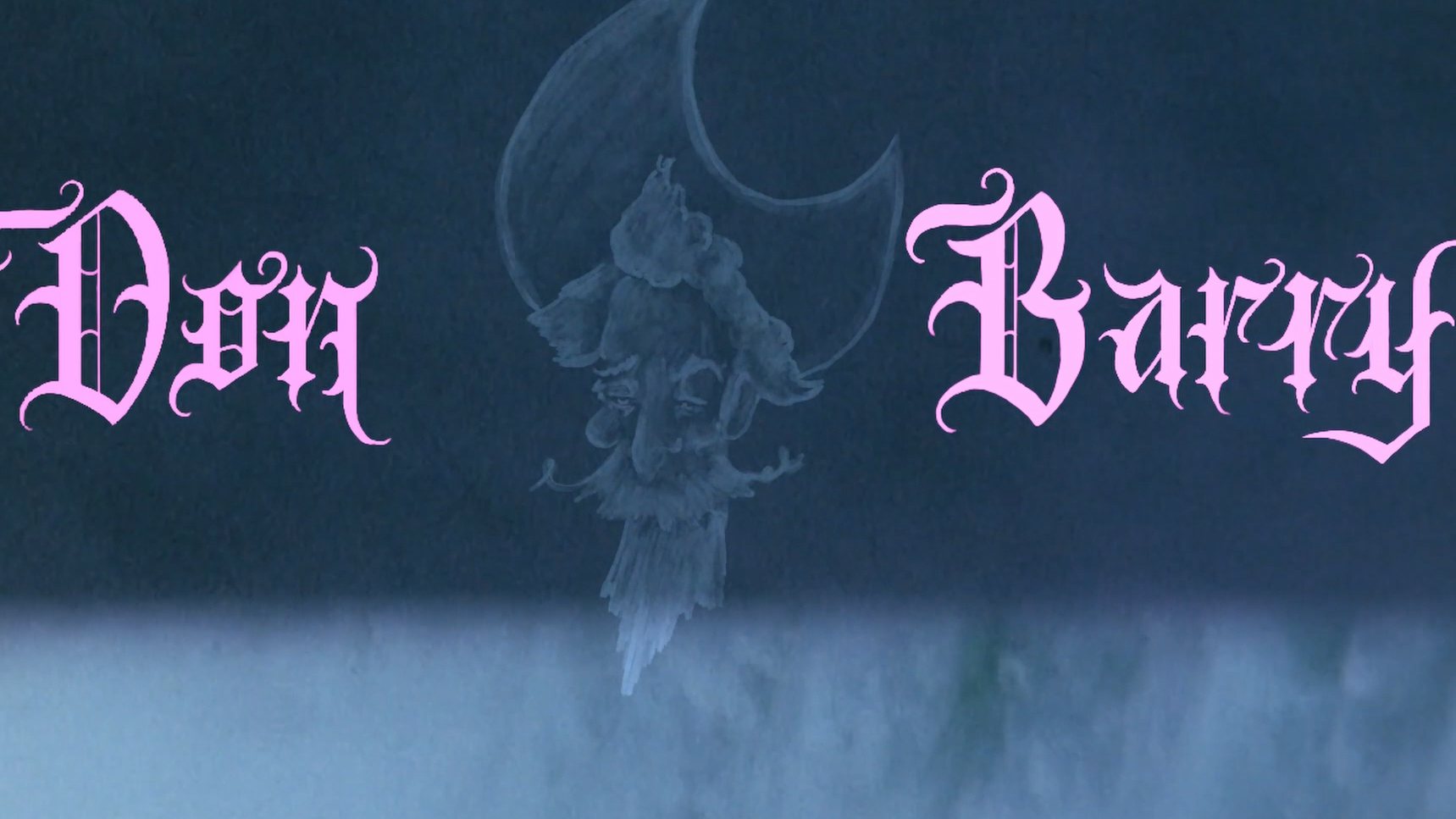
Docufiction, Experimental, by Paul Smart, Mexico, 2026.
Don Barry: A Quixotic Exploration is a debut feature that places the biography of an eighty-year-old experimental filmmaker and artist, Barry Gerson, within the metanarrative of Miguel de Cervantes’ Don Quixote. Don Barry was filmed in the city of Guanajuato during the 51st edition of the Cervantino Festival, as well as during the vibrant Day of the Dead celebrations held in the city’s UNESCO-listed tunnels. The film honors the director’s long friendship with artist Barry Gerson, drawing inspiration from Cervantes’ Don Quixote. Paul Smart’s directorial choices create something new that celebrates life and goes beyond conventional storytelling. A search for magic in our real lives. A moving film about the meaning of life, art, and death. Not to be missed.
Paul Smart is a proud outsider filmmaker with a long history of film screenings. In the 1980s, he emerged in New York’s vibrant youth art scene, working in theater production and later filmmaking, before retreating to rural upstate New York, in the Catskill Mountains, where he made a living writing and screening independent films in old parish halls for rural audiences, many of whom had never seen a film.
LANGUAGE: English
SUBTITLES: Spanish, French, German, Portuguese
How to Enter a Book That Has No Door
You open it somewhere in the middle, because that is how it usually goes with books that intimidate you slightly. Maybe “On Experience,” maybe “On Cannibals,” maybe the short and deceptively approachable “On Idleness.” Within three paragraphs you have already been taken somewhere you did not expect, then abandoned there, then taken somewhere else entirely. Montaigne mentions Seneca, then his own kidney stones, then the habits of ancient Persians, then something his father once did at the table. You look up from the page uncertain whether you have been reading philosophy, memoir, medical complaint, or dinner conversation. The answer, of course, is all of them, which is no answer at all when you are still expecting the text to hand you something extractable, something you can carry away and use.
There is a particular kind of disorientation that belongs to cities rather than books, though Montaigne's Essays produce it faithfully. A man arrives in a foreign capital with a map that was printed a decade ago. The streets exist, mostly. The names have changed, some of them. He turns where the map says to turn and finds himself facing a wall, or a courtyard that opens onto another courtyard with no exit visible, or a boulevard that was supposed to lead north but curves without warning and deposits him back at a square he thought he had already left. The map is not wrong, exactly. The city is not wrong either. The problem is the assumption that the map and the city should correspond, that navigation should be a matter of matching symbols to surfaces. He keeps walking. Something shifts. By the third afternoon he has stopped consulting the map and started consulting the city itself, which turns out to be a different kind of reading, slower and more physical, requiring him to hold contradictions in mind simultaneously rather than resolve them.
This is precisely what Montaigne asks of you, though he never says so directly. When he writes, in the Essays, that he studies himself more than any other subject, and that he has no other aim but to make himself known, he is not offering a confession. He is describing a method. The self he is studying is not a stable object that yields to scrutiny. It is, as he famously insists, always in motion, always becoming, constitutionally resistant to the fixed portrait. “I do not portray being,” he writes, “I portray passing.” To read him looking for conclusions is to watch a river and wonder why the water does not stay still.
Roland Barthes, writing in 1968, described the death of the author as the birth of the reader, but Montaigne had already dramatized something stranger: the birth of the author inside the act of writing, page after page, never completed. The Essays grew across three editions, from 1580 to the posthumous 1588-plus version with marginal additions, accumulating rather than revising, contradicting earlier statements not by correcting them but by simply continuing to think alongside them. There are passages in the final version where Montaigne is in explicit disagreement with himself, and he does not resolve this. He leaves the disagreement sitting in the text like furniture.
What this means practically, when you are holding the book, is that the habit of extraction fails you. The habit that academic reading installs so deeply you no longer notice it — the habit of moving through a text toward its argument, collecting the thesis and its supporting evidence, and then closing the book with something portable — that habit runs directly against the grain of what Montaigne is doing. He is not building toward a conclusion. He is accumulating. The difference is not structural but phenomenological: one is a journey with a destination, the other is the slow filling of a vessel whose shape you only begin to understand after it is already quite full.
So you have to learn to stay in the digression. You have to resist the pull toward resolution, the anxious reader’s instinct to skip ahead looking for the payoff, and simply remain with the texture of the thinking as it moves.

The Self as Moving Target
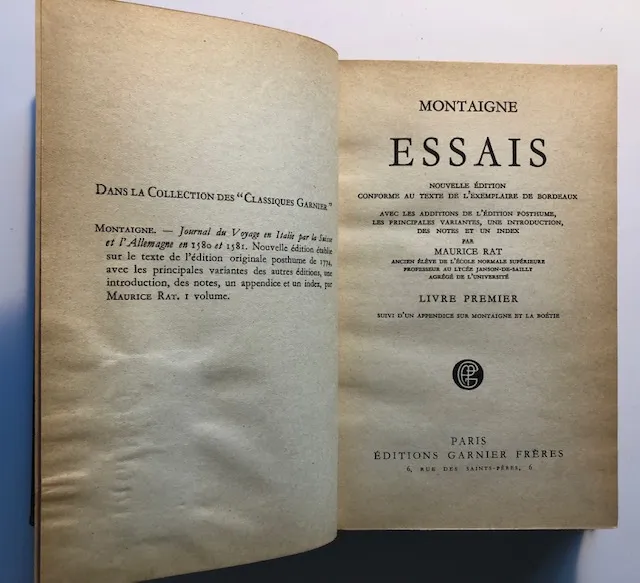
You are talking to someone you have not seen in seven years. The conversation starts well enough — shared memories, the reliable comedy of the past — and then they say something like “you always loved that kind of thing” or “you were never good at being alone,” and you feel it: the small violence of being known incorrectly. Not maliciously, not even inaccurately by the standards of who you were, but wrong in the way that a photograph taken in bad light is wrong — technically faithful and essentially false.
This is the problem Montaigne spent twenty years writing into rather than away from. He did not begin the Essays with a thesis about the self. He began by noticing that every time he tried to pin himself down, the thing moved. He wrote in the essay “On Repentance” that others form man, while he reports on man — and adds, with characteristic sharpness, that his subject is always in motion. He was not offering this as a lament. He was offering it as a method.
Behind this method stands Heraclitus, whom Montaigne knew well enough to quote and well enough to distrust as an abstraction. The pre-Socratic idea that you cannot step into the same river twice was not, for Montaigne, a metaphysical puzzle. It was Tuesday morning. It was the experience of waking up and finding that the conviction that felt absolute yesterday has gone slightly soft at the edges, that the certainty has shifted overnight without any decision being made. Heraclitus was describing rivers and Montaigne understood that he was describing people, which meant he was describing the very instrument being used to describe them. The observer changes as the observation proceeds. There is no fixed point from which to measure.
William James arrived at roughly the same place through different terrain. Writing in 1890 in The Principles of Psychology, he proposed that consciousness is not a thing but a flow — that what we call “the self” is less a substance than a current, never identical from one moment to the next, always carrying sediment from what came before while moving toward something not yet formed. James was trying to correct a tradition that had turned the mind into a kind of furniture showroom, where stable mental objects sat in fixed positions. What he found instead was water. What Montaigne had found, three centuries earlier, was the same thing, expressed not as scientific hypothesis but as lived testimony. This convergence across centuries is not coincidence. It is both of them looking honestly at the same phenomenon.
Antonio Damasio’s work in neuroscience arrived at the question from a clinical direction. In Self Comes to Mind, published in 2010, Damasio distinguishes between the proto-self — the body’s continuous mapping of its own biological states — and the autobiographical self, which is the story the brain constructs to give those states coherence across time. The self, in Damasio’s account, is not stored somewhere waiting to be retrieved. It is rebuilt, moment by moment, from biological signals and narrative memory. Which means the person you explain yourself to has never met the person you are now. They met a previous construction, running on older data, telling a story that has since been revised in ways no one formally announced.
This is what the gap in that seven-year conversation actually is. Not a failure of communication. Not mere change. It is the fundamental condition that Montaigne was describing when he wrote that each man carries within him the whole form of the human condition. He did not mean this as a statement of universality in the comfortable, humanist sense. He meant it precisely — that within any single person, over time, you will find contradiction, reversal, growth that looks like regression, loss that functions as expansion. The whole form. Not a simplified version. Not the edited highlights. The mess, the reversal, the self that cannot be summarized to someone who knew it years ago without doing a kind of violence to what it has become since.
The Essays are that refusal to simplify. Not as a philosophical position. As a daily practice carried out on the page, in real time, without the comfort of a destination.
The Lost Poet
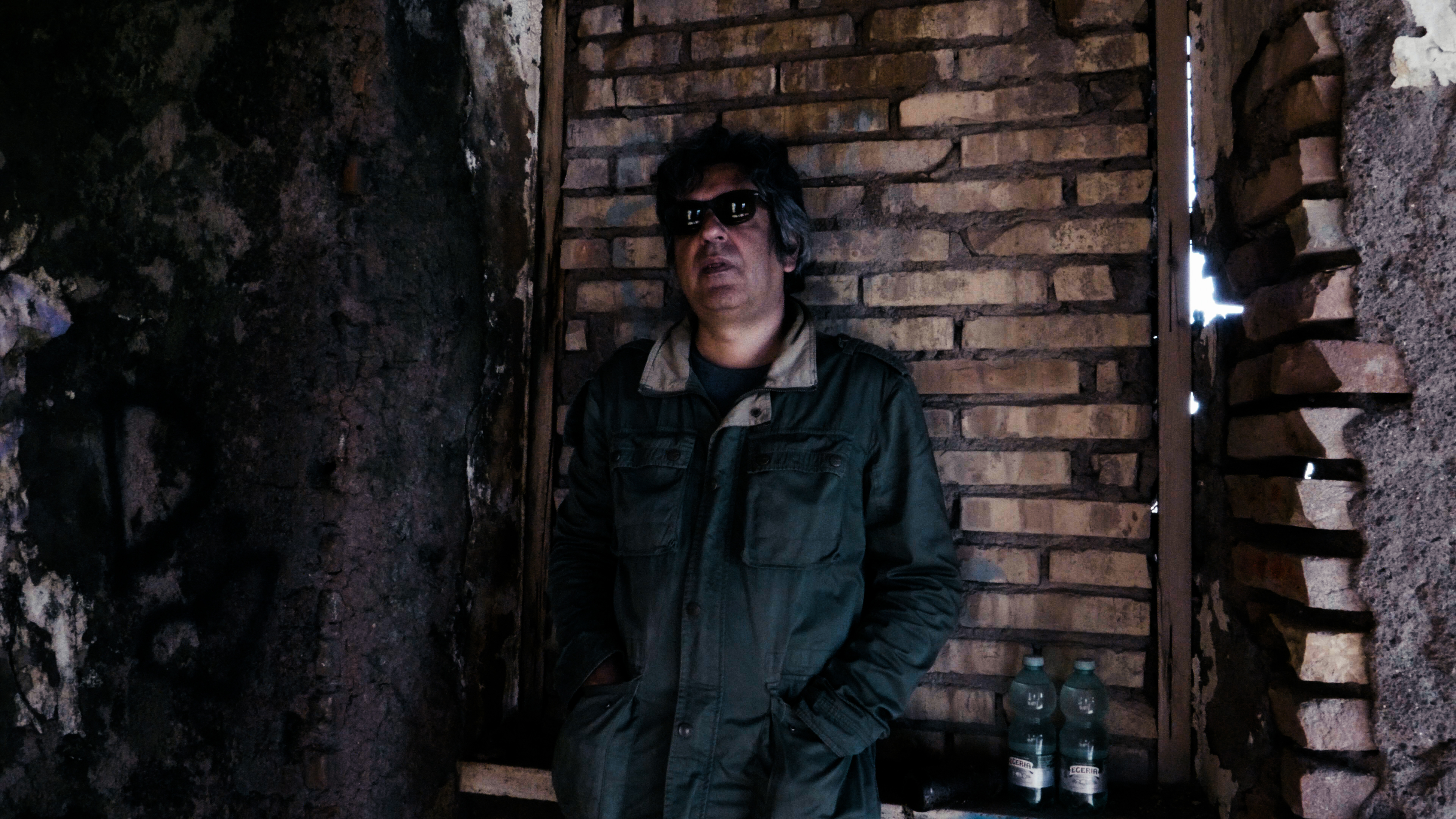
Drama, by Fabio Del Greco, Italy, 2024.
Dante Mezzadri wants to see an old friend, nicknamed the Iguana, whom he has lost sight of for many years, and who has managed to turn their shared youthful passion for poetry into a job, becoming a famous writer and poet. The man escapes from his bourgeois life and his wife to live homeless on the Roman coast, printing and trying to sell his poetry collections. At night he sleeps in a park of old carnival floats, inside a papier-mâché tank, and waits for the opportunity to meet his old friend, who however never shows up for appointments in the places they frequented when they were young, now in ruins. Dante's poetry books do not interest anyone and to support himself he is forced to "change product": he starts selling the infamous "cannibal pill" on behalf of young drug dealers, a new drug that sells like hot cakes and causes sensory and consumerist ecstasy. However, he realizes that this powerful drug is very dangerous for those who take it, he comes into conflict with his ethical conscience and throws all the pills into the sea. However, the dealers want to collect their money.
Shot over a period of 2 years, the film is a reflection on the cultural and artistic rubble of the society in which the protagonist lives, in an increasingly mechanized, consumerist and arid world. Dante Mezzadri is yet another human being who has renounced his inspiration and his creativity, but unlike many he is not willing to give his life to a system that distances him from his true identity. The physical world around him, however, seems constructed in such a way that it seems impossible to escape from this "invisible cage". The enthusiasm of the people he meets is ignited only by sensory gratification, by unreal visions of personal affirmation and success, by "metaverses" that offer an escape into an illusory and destructive reality. The poet's house on the coast, where he met with his friends as a young man, is just a pile of abandoned rubble. What happened to all those who wanted to become poets and ended up becoming something else? Are there internal forces with which that house can be "rebuilt"?
LANGUAGE: Italian
SUBTITLES: English, Spanish, French, German, Portuguese
Against the Tyranny of Consistency
You have told the story of yourself so many times that you no longer know whether you believe it. The version you gave at the job interview, the one you maintain for your parents, the edited transcript you perform at dinner parties where everyone is performing their own edited transcript — at some point these versions stopped being descriptions and became obligations. You are not allowed to contradict yourself. The self must be consistent, legible, stable. Institutions require it. Forms demand it. Other people enforce it with a particular kind of quiet hostility reserved for those who refuse to stay put.
Montaigne refused to stay put on every single page. He wrote in one essay that he feared death with a trembling that embarrassed him, and in another that he had made his peace with it entirely. He celebrated solitude and confessed his dependence on company. He praised a virtue and then admitted he had never managed to practice it. Readers have spent centuries calling this contradiction a flaw, a sign of unfinished thinking, a problem to be resolved by patient scholarship. They are wrong, and Montaigne knew they would be wrong, which is why he said it plainly: I do not portray being, I portray passing.
Roland Barthes, writing in 1973 in The Pleasure of the Text, drew a distinction that illuminates exactly what Montaigne was doing. The readerly text, Barthes argued, is the kind that confirms you, that delivers meaning already digested, that asks nothing more from you than passive consumption. The writerly text destabilizes, makes you a producer rather than a receiver, refuses to close. What Barthes described as a formal property of literature, Montaigne had already built into the architecture of a life. The Essays are writerly not because of a stylistic choice but because of a philosophical one: a stable text would have lied. A text that contradicts itself at least has the honesty of resembling what it documents.
Emerson understood this with a directness that his American readers often find uncomfortable when they trace it back. Self-Reliance, published in 1841, contains the line that has been printed on motivational posters and drained of every drop of its original menace: a foolish consistency is the hobgoblin of little minds. What is rarely noted is that Emerson was not writing a self-help aphorism. He was writing a defense of the same epistemological position Montaigne had occupied two centuries earlier. The consistency demanded of you is not demanded for your benefit. It is demanded so that you can be read, filed, predicted, and managed. The stable self is not a psychological achievement. It is a bureaucratic convenience.
A man sits across a table from someone he has not seen in fifteen years. He has been practicing, without knowing it, the version of himself that explains what happened, that gives the years a shape, that makes the choices look inevitable and the wounds look earned. Somewhere in the conversation he stops mid-sentence. The sentence was going to end with a conclusion he no longer believes. He finishes it anyway, because not finishing it would require him to admit that the whole architecture has shifted, and there is not enough time at this table to rebuild it honestly. So the lie goes out into the room and sits there between them, wearing the costume of a life story.
That is what consistency actually costs. Not coherence. Not integrity. It costs you the permission to have changed, to be mid-thought, to not yet know. Montaigne wrote his essays not despite being a magistrate, a mayor, a man of public function — he wrote them against all of that, against the demand that a man of position maintain a legible face. The book is the place where the face came off.
And the face, once off, turns out to have been the only thing preventing him from thinking.
What Montaigne Actually Says About Death, the Body, and Fear
You are sitting in a waiting room and the fluorescent light above you is doing something slightly wrong, flickering at a frequency just below conscious perception, and your body knows before your mind does that something is about to change. The paper in your hand has numbers on it. You do not yet know what they mean. This is the precise location where Montaigne lived, not metaphorically, but physically, repeatedly, for decades.
He had kidney stones. Not as a philosophical metaphor for suffering, not as a rhetorical device to demonstrate Stoic endurance, but as an actual condition of his flesh, the kind that wakes you at three in the morning with pain that obliterates thought. He wrote about passing stones the way a surgeon writes notes, with clinical precision and a kind of dark curiosity about his own body’s rebellion. The urine, the blood, the specific texture of what emerged. He catalogued it. He was fascinated. This is not the Montaigne of the gentle humanist reputation, the patron saint of tolerance and intellectual curiosity. This is a man who spent significant portions of the 1580s in genuine physical crisis, traveling to spas in Germany and Italy seeking thermal waters that might dissolve what was tearing him apart from the inside, writing all the while.
The France he inhabited was itself a body in crisis. Between 1562 and 1598, eight separate religious wars dismembered the country. The St. Bartholomew’s Day Massacre of 1572 killed somewhere between five thousand and thirty thousand people in a matter of days, depending on the region and the account. Montaigne was thirty-nine. He knew people who died in those streets. Death in his world was not a philosophical problem to be solved at a comfortable distance. It arrived on horseback, or in the night sweats of plague, or in the slow collapse of organs that had simply had enough. When he wrote in the Essays that to philosophize is to learn to die, he was not issuing an invitation to abstract contemplation. He was describing a survival practice.
He began, as educated men of his century did, with the Stoics. Seneca especially. The idea that by meditating on death constantly, by rehearsing it mentally until it lost its terror, one might achieve a kind of freedom. Epictetus. Marcus Aurelius. The architecture of equanimity built on daily confrontation with mortality. For a time this framework held. But something shifted in the later essays, something that has not been sufficiently remarked upon. Montaigne began to distrust the performance of it. He noticed that Stoic courage about death was also, sometimes, a form of vanity, a way of staging oneself for an audience of posterity. He grew suspicious of his own philosophical theatre.
What replaced it was stranger and more honest. An acceptance grounded not in transcendence but in the body’s own ordinary rhythms, in what Michel de Certeau, writing four centuries later in The Practice of Everyday Life, would call the tactics of everyday existence, the small, improvised ways that ordinary people navigate systems and structures that were never designed for them. De Certeau was writing about consumers and urban spaces, but his insight applies here with unusual precision: Montaigne made philosophy domestic. He brought it down from the Stoic mountain and put it in the bedroom, the latrine, the sickbed. He did not transcend the body. He paid attention to it.
There is a scene of a man being carried after a riding accident, thrown from his horse, bleeding, briefly unconscious, coming back to awareness slowly, and what he reports is not terror but a strange gentleness, a loosening. He describes the experience of nearly dying as surprisingly undramatic from the inside, as if the body already knew how to do it and did not need the mind’s permission. He filed this away not as consolation but as data. He was collecting evidence about what it actually feels like, not what philosophy says it should feel like, and the gap between those two things was where he lived.
A vision curated by a filmmaker, not an algorithm
In this video I explain our vision
Reading Montaigne as an Act of Exposure
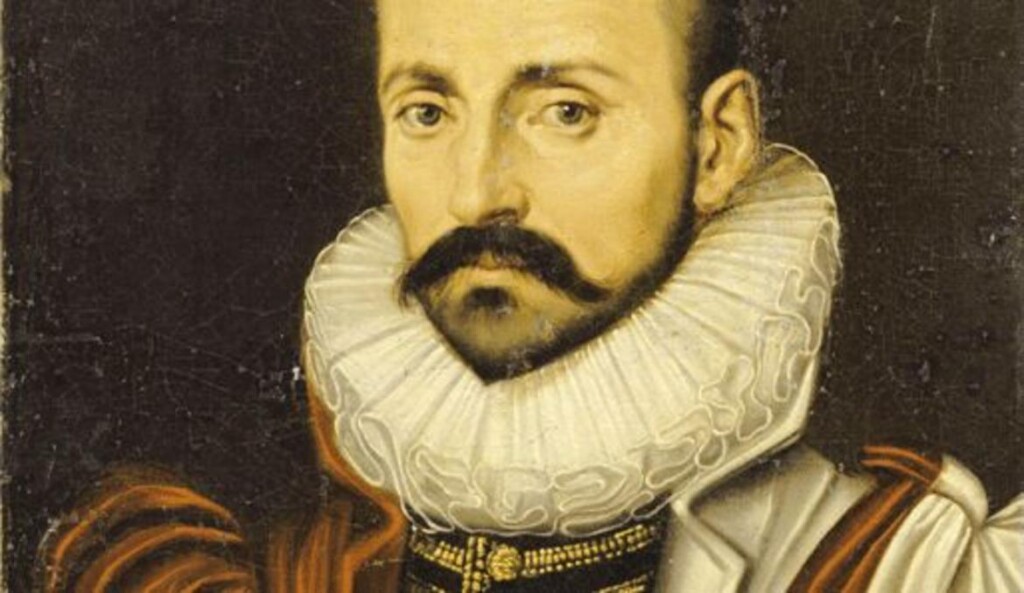
There is a particular kind of discomfort that arrives not when you are attacked but when you are seen. You are reading, unhurried, somewhere quiet, and a sentence reaches off the page and identifies something in you that you had categorized as private, idiosyncratic, too minor to confess. Not a flaw exactly. A convenience. The story you have been telling about your patience, your generosity, your hard-won self-knowledge — and suddenly you recognize it for what it is: a narrative constructed to make the evidence fit the verdict you had already written about yourself. That is not enrichment. That is something closer to being caught.
Montaigne does this without raising his voice. He simply keeps describing himself with a precision so honest that the description slides off him and lands on you. He notes that he finds it easier to correct his opinions when alone than when challenged in company, not because he becomes more rational in solitude but because his vanity has no audience to perform for. He observes that the self who wakes at three in the morning judging his past decisions is not a wiser self but a more frightened one, and that the judgments of fear deserve the same skepticism as the judgments of appetite. He does not say: and you are the same. He does not need to.
Sarah Bakewell, writing about Montaigne in 2010, organized her biography around the questions he posed across the Essays — how to live, how to pay attention, how to be both present and honest — not as a philosophical taxonomy but as evidence of a book that refuses to deliver answers in exchange for your comfort. What she noticed, and documented with the patience of someone who had spent years inside his prose, is that the Essays keep finding readers across centuries not because they console but because they implicate. Every generation arrives thinking it will extract wisdom and leaves having been cross-examined. The book has outlasted dozens of intellectual fashions precisely because it has no interest in confirming anything you already believe.
There is a man who spent years assembling what he believed was a coherent account of his own character — principled, self-aware, fundamentally decent — and then found, reading slowly, that the account was not a portrait but a defense. The coherence had been imposed after the fact, the contradictions filed away, the inconvenient evidence reclassified. What Montaigne had done, across some six hundred pages expanded over roughly twenty years, was refuse exactly that operation. He let the contradictions stand. He revised without erasing, so that earlier versions of himself remained visible beneath the later corrections, like a palimpsest that insists on showing its own revisions. The man who revised an essay years later did not delete what the younger man had thought. He added, disputed, complicated. The self was not a destination he was building toward. It was a process he was documenting in real time, approximately and provisionally, with no promise that the documentation would resolve.
This is what makes the Essays an uncomfortable book rather than a nourishing one. It does not offer the reader a better version of themselves to aspire toward. It offers them a more accurate version of themselves to sit with. The precision is not flattering. The humor is not reassuring. Even the famous toleration — Montaigne’s refusal to condemn, his insistence on suspending judgment, his gentle observation that every man carries within him the whole human condition — functions less as mercy than as removal of your last excuse. If he can look at cruelty, superstition, vanity, contradiction, and say with genuine equanimity that these are simply what human beings are, then your own careful exemptions from the category of the ordinary or the weak begin to look very precisely like what they are.
And so we keep returning, five centuries on, to a man who refused to be finished, who refused to be singular, who refused to perform the coherence that every subsequent age has demanded of its public voices — and perhaps what that return tells us, more honestly than we would like to admit, is something about how rarely we are offered the permission to remain, like him, genuinely and irrevocably incomplete.
🧠 The Essay, the Self, and the Search for Meaning
Montaigne's Essays stand at a crossroads where philosophy meets lived experience, inviting us to examine the self with radical honesty. The works and thinkers gathered here share that same restless impulse: to question, to doubt, and to find meaning in the act of inquiry itself.
Schopenhauer: Life and Philosophical Thought
Schopenhauer’s philosophy, like Montaigne's essays, begins with an unflinching gaze at human nature and its deepest drives. His exploration of will, suffering, and aesthetic contemplation echoes the French essayist’s candid self-examination. Reading Schopenhauer alongside Montaigne reveals how personal observation can open into sweeping metaphysical insight.
GO TO THE SELECTION: Schopenhauer: Life and Philosophical Thought
Viktor Frankl: Life and Logotherapy
Viktor Frankl‘s logotherapy was born from an extreme confrontation with existence, transforming suffering into a path toward meaning. Much like Montaigne, who turned the essay form into a tool of self-discovery, Frankl elevated the individual’s inner life to the center of philosophical inquiry. Together, they remind us that the examined life is not a luxury but a necessity.
GO TO THE SELECTION: Viktor Frankl: Life and Logotherapy
Camus’s The Stranger: Meaning and Analysis
Camus’s The Stranger presents a protagonist who, much like Montaigne’s essayistic ‘I’, refuses to perform emotions he does not feel, insisting on radical authenticity. The novel’s spare prose strips existence down to its irreducible facts, inviting readers to question every inherited value. It is a work that, like the Essays, demands uncomfortable honesty from both character and reader.
GO TO THE SELECTION: Camus’s The Stranger: Meaning and Analysis
Camus’s Myth of Sisyphus: The Absurd Explained
In The Myth of Sisyphus, Camus systematically dismantles the consolations philosophy offers against the absurd, an act of intellectual courage Montaigne would have recognized immediately. The essay form itself, digressive and self-correcting, is a natural home for absurdist thought, never pretending to final answers. Reading Camus through the lens of Montaigne reveals how the act of writing can itself be a form of rebellion against meaninglessness.
GO TO THE SELECTION: Camus’s Myth of Sisyphus: The Absurd Explained
Discover Cinema That Asks the Same Questions
If these thinkers and their restless search for meaning resonate with you, Indiecinema streaming is the place to continue the journey through film. Our curated selection of independent and art-house cinema explores the same existential, philosophical, and deeply human questions that Montaigne first dared to put on the page. Come discover films that think, feel, and doubt alongside you.
👉 EXPLORE THE CATALOG: Watch Indie Films in Streaming
A vision curated by a filmmaker, not an algorithm
In this video I explain our vision

