
The Morning You Refused to Come Down
You know exactly the moment. You are sitting at the table — or standing in the corridor outside the meeting room, or waiting at the threshold of a party you were expected to attend — and something in you goes absolutely still. Not with fear. With a kind of terrible lucidity. Everyone around you is performing the ordinary choreography of the occasion, passing dishes or shuffling papers or exchanging pleasantries, and you can see it all with an almost surgical precision: the performance, the expectation, the invisible contract you were supposed to sign simply by being present. And you did not sign it. You sat there, or you turned around, or you said nothing when you were supposed to speak, and the silence that followed was not empty. It was full of something enormous.

The disapproval came in layers. First the glances — not hostile yet, merely questioning, calibrating. Then the pointed continuation of the ritual without you, which is its own form of censure. Then, eventually, the direct address: what’s wrong with you, why can’t you just, don’t you know how this looks. And what was extraordinary, what you perhaps have never admitted to yourself clearly, is that in that moment you were not confused. You were not rebelling in the adolescent sense, not performing defiance for an audience. You were simply unable to pretend that the thing in front of you was worth participating in. The clarity was almost painful in its completeness.
This is where you have to begin to understand what it means when a twelve-year-old boy, seated at a dining table in the Ligurian hills on a June afternoon in 1767, refuses to eat a plate of snails his sister has prepared. His father orders him to eat. He does not eat. The argument escalates through the mechanical stages that family arguments always follow — the threat, the ultimatum, the appeal to authority, the invocation of family honor. And the boy pushes back his chair, walks out into the garden, climbs the holm oak at the garden’s edge, and does not come down. Not for dinner. Not for the evening. Not for the rest of his life.
What Italo Calvino published in 1957, in the extraordinary sequence of novels he called Our Ancestors, begins with this act. And the temptation — the temptation that every reader, every critic, every teacher yields to almost immediately — is to reach for the metaphor. The tree as freedom. The tree as artistic independence. The tree as Calvino’s own position as a writer navigating Cold War Italy, having left the Communist Party that very same year after the Soviet invasion of Hungary. All of this is true, and all of it can wait. Because before the symbol, there is the body. There is a boy in a tree, and there is a family looking up at him, and there is the specific quality of that confrontation that anyone who has ever refused to perform their assigned role in a family drama recognizes with something close to nausea.
The philosopher Albert Camus, writing about revolt in The Rebel in 1951, identified the foundational moment of human refusal not as ideological declaration but as a physical limit reached. “I will go this far and no further,” is how he described it — not a program, not a philosophy, but a boundary discovered in the body before it is understood by the mind. Cosimo does not climb the tree because he has a theory about individualism or enlightenment or the nature of sovereignty. He climbs because the alternative — sitting back down, picking up his fork, swallowing what has been placed in front of him — has become physically impossible. The impossibility precedes the thought. This is why you recognize it before you can name it.
Eve of the Irises
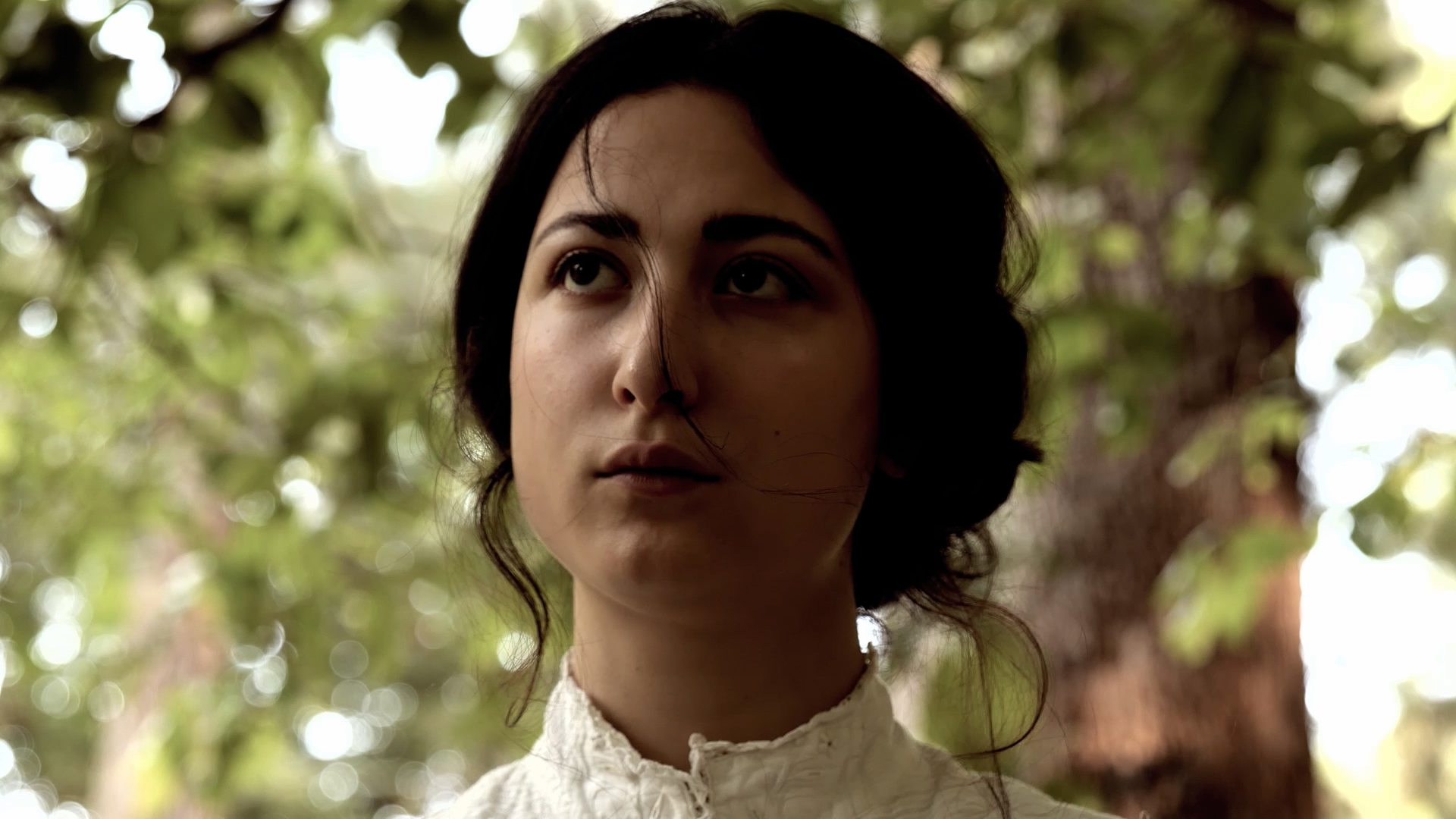
Documentary, by Isabel Russinova, Rodolfo Martinelli Carraresi, Italy, 2026
Eva of the Irises is a historical biographical docu-film about the scientist Eva Mameli Calvino, a botanist and pioneer of environmentalism in Italy, mother of the writer Italo, born in Sassari in 1886. The film, based on a multidisciplinary approach that combines several genres—such as theatre, documentary, cinema, and research—moves between memories, reflections on life, as well as the goals and missions the scholar still wished to achieve.
The multifaceted artistic sensibility of Isabel Russinova is expressed across many fields, from writing to acting, from directing to civic engagement, and finds one of its highest expressions in the docu-film Eva of the Irises, created with Rodolfo Martinelli Carraresi. The film blends scientific rigor and poetic refinement to portray the extraordinary figure of the botanist Eva Mameli Calvino, mother of Italo Calvino but above all an independent protagonist of 20th-century scientific culture. It is told through a combination of archival materials, interviews, and evocative staging capable of elegantly and profoundly conveying her intense human and professional story.
LANGUAGE: Italian
SUBTITLES: English, Spanish, French, Portuguese
What Calvino Actually Wrote, and When
Italo Calvino finished writing The Baron in the Trees in 1957, the same year the Sputnik satellite crossed the sky and the same year a generation of European intellectuals was quietly dismantling the political furniture of their own minds. The novel appeared as the second volume of what Calvino called the Our Ancestors trilogy, sandwiched between The Cloven Viscount and The Non-Existent Knight, three books that together read like a philosophical autopsy of the self — what happens when a person is split in half, when a person disappears entirely, when a person simply refuses to come down.
The timing was not incidental. In 1956, Soviet tanks entered Budapest. The Hungarian Revolution lasted eleven days before being crushed, and those eleven days cracked something open in the European left that has never fully sealed. Calvino had been a member of the Italian Communist Party since 1945, a decade of genuine belief, of political identity woven into the fabric of daily life. After Hungary, he resigned. The letter he sent to the party in 1957 is a document worth reading not because of what it says explicitly but because of what trembles underneath the sentences — the specific exhaustion of a man who has discovered that the ground he built his life on was not ground at all.
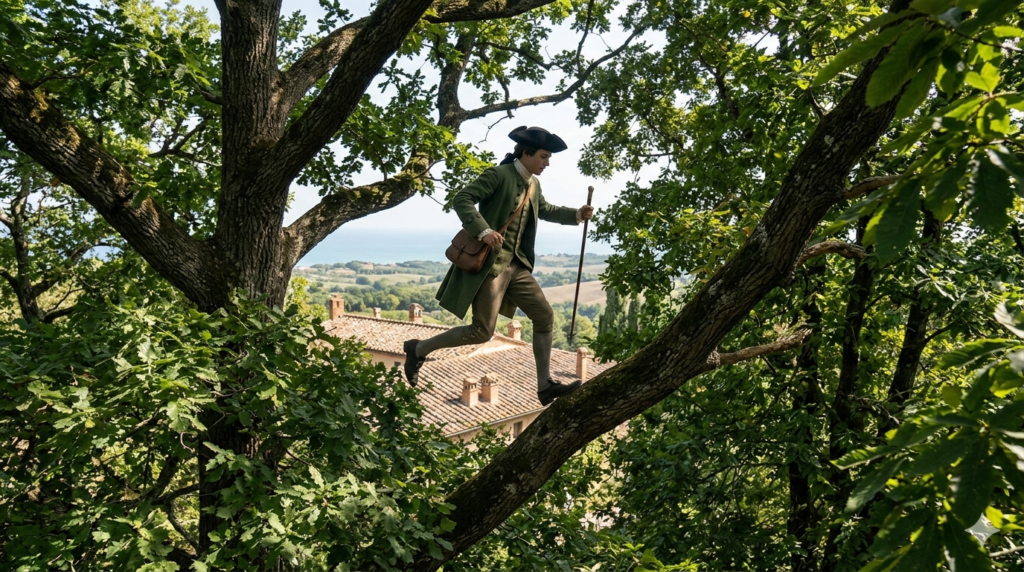
He wrote the novel in that interval, in that particular suspended moment between conviction and its collapse. This is not a detail you can separate from the book without killing it. Cosimo Piovasco di Rondò, a twelve-year-old boy in eighteenth-century Liguria, climbs into an oak tree after a dispute at dinner and refuses to descend for the rest of his life — sixty-five years, through the Enlightenment and the Napoleonic wars and the slow erosion of an aristocratic world, he remains above. He builds a complete existence up there, loves, reads, fights, philosophizes, governs, grows old. The trees hold him. The ground never reclaims him.
What Calvino understood, with the precision that only personal crisis can produce, is that a position sustained without the support of an institution is not stubbornness — it is a different kind of knowledge. Cosimo does not stay in the trees because he is rigid. He stays because at some point the trees become the only honest place from which to see. Antonio Gramsci, writing from a Fascist prison cell in the 1930s, had already diagnosed the condition: the organic intellectual is not the one who preaches from inside the structure but the one who maintains critical distance from it, even at personal cost. Calvino had read Gramsci. He knew exactly what distance cost.
The novel is set in the late eighteenth century, but it is not historical fiction in any comfortable sense. The Enlightenment backdrop is a deliberate provocation. This was the period that promised reason would reorganize human life, that progress was a staircase, that clarity was available to anyone willing to climb toward it. Cosimo lives inside that promise literally, suspended above the earth at the very moment when European civilization was constructing its grandest self-delusions. His vantage point is not ironic. It is structural. He sees differently because he is positioned differently, and positioning, as Pierre Bourdieu would spend his career demonstrating, is never neutral — where you stand determines not just what you see but what you are capable of thinking.
Calvino was thirty-three years old when the book appeared. He had just abandoned the ideological home that had shaped his adult identity. What he wrote instead of a manifesto, instead of a confession, instead of a recantation, was a fable about a man who finds the one position that cannot be argued away from the outside. You cannot pull someone down from a tree with a political resolution. You cannot make the ground look attractive to someone who has learned to read the sky.

The Tree as the Only Honest Position
There is a man who has spent years watching a city from a window. Not hidden, not fleeing — watching. He sees the arguments in the street below, the small betrayals, the daily theatre of people performing their lives for each other. He is present to all of it. He simply refuses to go down. And what strikes you, if you have ever encountered someone like this, is not the coldness of the gesture but its strange integrity. He is not absent. He is the only one who sees clearly, precisely because he will not enter the noise.
Cosimo never descends. Not when the woman he loves stands beneath his tree and calls to him. Not when the revolutions he believed in begin to eat their own. Not when his body fails and the end approaches. This is the detail that most readers either misread as stubbornness or romanticize as poetic resolve, when in fact it is something philosophically precise and almost brutal in its consistency. The refusal is not a posture. It is the position itself.
Albert Camus, writing in 1951 in The Rebel, draws a distinction that most people instinctively understand but rarely articulate: there is a difference between revolt and revolution. Revolution, Camus argues, always ends by installing a new tyranny, because it trades the desire for freedom for the desire for power, for arrival, for the moment of being right. Revolt, by contrast, is permanent. It does not seek to win. It seeks to maintain the refusal — to hold the tension without resolving it. The man who revolts in Camus’s sense is not the one who overthrows the system. He is the one who refuses to pretend the system is acceptable, every single day, without the comfort of believing that tomorrow it will all be different. The absurd, for Camus, is precisely this: the gap between what human beings demand of life — meaning, coherence, justice — and what life actually offers. The honest response is not to close the gap with illusions. It is to live inside it, eyes open.
Cosimo lives inside it. When the Enlightenment enthusiasm around him hardens into ideology, when the revolutionary fervour he once shared begins to demand doctrinal loyalty rather than genuine thought, he watches from above and does not join. This is not cynicism. It is the refusal to be consoled. What the ground offers, again and again, is the comfort of belonging — to a cause, a family, a love, a nation — and belonging always asks the same price: that you stop seeing clearly in order to see together. Cosimo will not pay it.
This is why the most devastating misreading of his choice is the one that calls it escape. Escape implies moving away from something. But Cosimo never moves away from the world. He remains directly above it, in physical contact with its sounds, its seasons, its violence, its grief. He is present to every thing that happens below. What he refuses is not the world but its demand that presence require submission — that to be here, you must accept the terms of here. The trees allow him a form of engagement that the ground forecloses: he can love without possessing, participate without surrendering his position, witness without being absorbed.
There is something in this that Simone Weil, writing in the same decade, called attention in its purest form — the capacity to be fully present to reality without imposing your own needs onto it. Weil believed that most of what passes for engagement is actually a form of consumption, a way of taking the world and making it confirm what you already need it to be. True attention is almost violent in its self-erasure.
Cosimo erases nothing. But he will not be consumed either. He stays in the trees because the trees are the only place from which the world can be seen without being falsified by the need to belong to it.
Participation as the Trap
There is a particular exhaustion that has nothing to do with having worked too hard or slept too little. You know it from the drive home after a dinner party where you said all the right things. You laughed at the right moments. You disagreed just enough to seem like a person with opinions, but never enough to make anyone uncomfortable. You asked questions you did not care about the answers to, and you listened with your face even when your mind had left the room entirely. By the time you close your own front door behind you, something has been spent that cannot be named on any receipt.
Erving Goffman spent years mapping this territory with surgical precision. In 1959 he published what is essentially a cold-eyed autopsy of social life, arguing that every human interaction is a performance governed by implicit scripts, costume choices, and stage management. The self, in Goffman’s framework, is not something you bring to the interaction — it is something you produce inside it, through it, and ultimately for the benefit of an audience that is performing just as furiously back at you. The terrifying implication, which Goffman states without the slightest consolatory gesture, is that there may be no backstage self that survives intact once the curtain has been going up and coming down long enough. The performance does not express the self. The performance gradually becomes it.
Think of the woman at the party — she is wearing something she chose carefully, something that communicates a version of herself she finds tolerable. She is laughing at a story told by a man she privately considers unbearable, and the laugh is not entirely false, which is the most unsettling part. She has refined it over years until it contains just enough genuine amusement to pass as real, because real and performed have been fusing so long she can no longer separate the seam. She circulates. She agrees. She finds in herself, to her own quiet horror, the opinions of people she does not respect. She drives home and sits in the parked car for a moment before going inside, and in that interval between performance and the next performance — the domestic one — there is a brief, vertiginous sense of not knowing what she actually thinks about anything.
This is not a crisis of character. It is the logical outcome of total immersion in the social field. Participation, presence, engagement — these are not neutral acts. They carry a cost that the culture refuses to itemize. We celebrate the person who shows up, who joins, who stays connected, who brings themselves fully to every room they enter. We have built entire therapeutic and self-help industries around the premise that withdrawal is pathology and connection is cure. What goes unexamined is the mechanism by which connection operates: it requires constant calibration, constant monitoring of the other’s reaction, constant micro-adjustments to remain legible and acceptable within the group. Jean-Paul Sartre understood this as the gaze that turns you into an object — but Goffman went further and showed that you collaborate eagerly in this objectification, because the alternative is the social death of being unreadable.
Cosimo up in his trees is not escaping life. He is escaping the performance of life. He watches the village below him, participates in its dramas, loves specific people with specific intensity, forms opinions and argues them fiercely. But he does this from a position that the social machinery cannot fully reach. He cannot be pressed into the party’s rhythm. He cannot be made to laugh at the right moment because someone else needs that laugh. His distance is not indifference — it is the refusal to let the performance replace the person doing the performing. The question Calvino quietly sets before you is whether that replacement has already happened to you, and whether the exhaustion you feel on the drive home is the sound of it completing itself.
The Enlightenment He Watches from Above

The encyclopédistes are meeting in a Paris salon sometime around 1760, debating the nature of progress, the perfectibility of man, the architecture of a rational society. The wine is good. The ideas are better, or so they believe. Diderot is talking. D’Alembert is nodding. Someone is writing everything down because history, they have decided, is something that can be organized, classified, made into volumes. The first volume of the Encyclopédie had appeared in 1751, and by the time the project reached its seventeenth volume of text in 1765, it had become the most ambitious act of collective intellectual confidence the Western world had ever attempted — a civilizational claim that knowledge, systematized, could liberate humanity from superstition, tyranny, and darkness.
And somewhere in the trees of Ombrosa, a boy who has not touched the ground in years is reading all of it.
This is not incidental. Calvino chose the eighteenth century with surgical precision, and the choice is an argument. Cosimo di Rondò is not a medieval hermit retreating from a world he fears. He is a child of the Enlightenment, correspondent with the philosophes, voracious reader of Voltaire and Rousseau, participant in the great intellectual conversation of his age. He shares the period’s hunger for knowledge, its faith in reason, its restless curiosity. What he refuses is something else entirely — something the Enlightenment preferred not to name about itself.
Michel Foucault, in the work he published in 1975, spent four hundred pages demonstrating what the age of reason actually built when it set to building. Not only schools and hospitals and legal codes. Prisons. The Enlightenment, Foucault argued, produced a particular technology of power — disciplinary power — that worked not through brute force but through normalization, examination, surveillance, the arrangement of bodies in space so that they could be observed, categorized, corrected. The rational subject at the center of Enlightenment philosophy was not simply discovered; he was manufactured. The free citizen of the new republic was a product of techniques designed to make him legible, manageable, useful. The ground, you might say, was where this manufacturing happened.
Cosimo refuses the ground. This is not metaphor dressed as plot. It is the literal, physical refusal of the space where disciplinary society performs its most essential operations. The census, the tax roll, the military conscription, the civic register — all of these require a body that can be located, fixed, made to stand still. Cosimo cannot be located in the way the new rational order requires. He participates in the intellectual project of his century without submitting to its institutional forms. He reads the books but declines to become the subject those books were, in part, designed to produce.
Rousseau is the figure who makes this contradiction most visible. The man who wrote about the natural freedom of the individual before society corrupted it also wrote, in The Social Contract of 1762, a theory of civic obligation so total that it proposed the “forcing of men to be free” — coercion in the name of liberation, discipline in the name of nature. Cosimo reads Rousseau with the same appetite he brings to everything, but he does not sign the contract. He lives the contradiction that Rousseau could only theorize around, never through.
What Calvino understands — and what makes the novel something sharper than a fable about individualism — is that the Enlightenment was genuinely double. It was emancipation and administration simultaneously, freedom and its management arriving in the same historical package. The philosophes corresponded with kings while writing about liberty. They systematized knowledge while creating new hierarchies of the knowable. They imagined a society of rational equals and designed the institutions that would sort, rank, and discipline those equals into something more useful.
Cosimo watches all of this from above, writing letters into the conversation, never descending to sign anything.
A vision curated by a filmmaker, not an algorithm
In this video I explain our vision
Love That Cannot Be Held
She comes back. That is the first thing to understand about Viola. She always comes back, and she always leaves again, and neither motion is a betrayal. Cosimo watches her from above — from the oak and the chestnut and the elm — and this is not a metaphor for longing frustrated by distance. It is something stranger and more precise: a love that lives in its own architecture, one that was never designed to collapse into possession.
They have known each other since childhood, which means they have known each other at the level of the body’s first grammar, before anyone learned to say mine. She is brilliant and ungovernable and largely indifferent to the expectations that press on everyone around her. So is he, in his way. But where his refusal of the ground is absolute and systematic, hers is social and nomadic — she disappears into marriages, into journeys, into other lives entirely, and then reappears in the trees of Ombrosa as though no time has passed, as though time itself were something she simply chose not to observe.
There is a sequence that lives in the memory like something experienced rather than witnessed — two people who have loved each other for decades meeting again in a city neither of them fully belongs to, circling a table in a café, speaking carefully about everything except what matters, and yet what matters is completely present in every syllable. They do not touch. The connection between them is most legible, most electrically alive, in the gap that remains between their hands. It is unbearable to watch not because it is sad but because it is so accurate. This is what love looks like when it refuses to consume itself.
Roland Barthes, in A Lover’s Discourse published in 1977, identified with devastating clarity the central fiction of modern love: that its telos is fusion, that to love fully is to dissolve the distance between self and other until the boundary disappears. The lover, in Barthes’s anatomy, is perpetually staging an imaginary merger that the beloved perpetually — and necessarily — escapes. The script demands arrival. The script demands that the circling stop. And what is lost when the circling stops is exactly what made the love feel like love in the first place.
Cosimo never stops circling. He cannot come down to Viola, and she cannot — will not — stay permanently beneath his trees. What this creates is not romantic tragedy in the conventional sense, not two people defeated by circumstance. It is something closer to what Barthes called the amorous subject’s discovery that the other is always, structurally, elsewhere. Viola is not elsewhere because she doesn’t love him. She is elsewhere because she is a complete person, with her own gravity, her own itinerary, her own relationship to freedom that has nothing to do with him. And Cosimo, who has built his entire life on the refusal to be absorbed by any single ground, understands this at a level beneath argument.
The failure narrative would say they could not make it work. The honest reading says they made something else work entirely — a love sustained across decades precisely because neither one colonized the other’s air. When she returns, it is a choice. When she leaves, it is a choice. And choice, real choice, freely made and freely revoked, is the only condition under which love can remain something other than a comfortable captivity dressed in the language of devotion.
Modern culture finds this intolerable. It wants the story to end with someone on the ground, or someone permanently in the trees — wants the gap closed, the terms of existence reconciled. Calvino refuses. He lets them circle. He lets the love remain most itself in the space where it cannot be held, and cannot be lost, because it was never the kind of thing that required a hand closed around it to prove it was real.
The Revolutionary Who Refuses Power
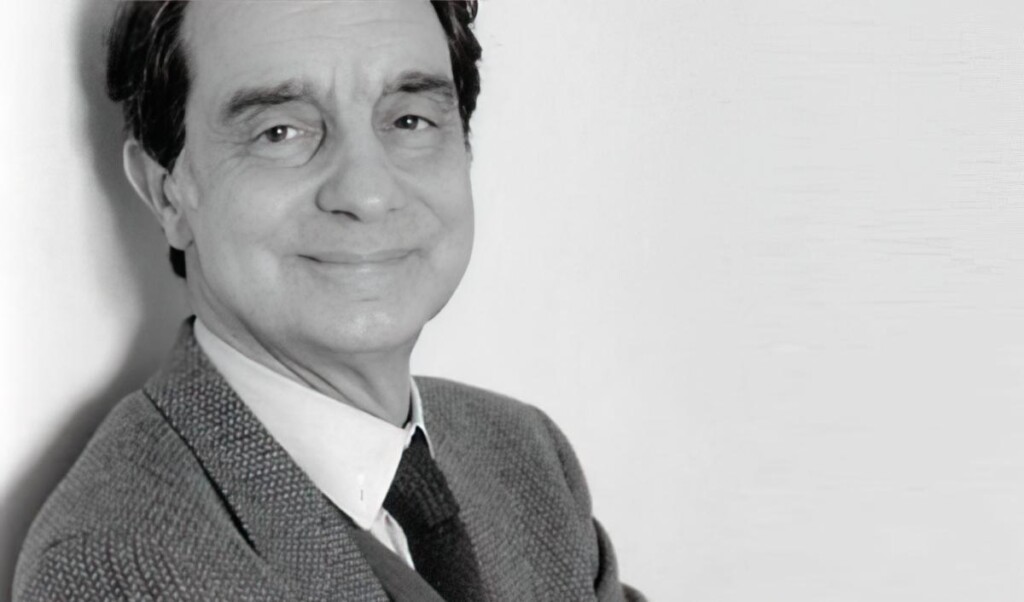
There is a moment when the crowd looks up and sees you, and in that looking, something is taken from you before you have agreed to give it. You become the gesture they needed. You become the proof of something you may not even believe. The face in the window, the figure on the barricade, the man in the trees — suddenly a symbol, suddenly a cause, suddenly a vessel for a collective desire that has nothing to do with what you actually are.
Cosimo feels this. When the reverberations of the French Revolution reach his forest, when the language of liberation and universal brotherhood travels north and finds even the branches he inhabits, there are men below who want him to be their sign. He has lived above the ordinary world for decades by then. He has read Voltaire and Rousseau and Diderot, he has corresponded with the philosophes, he understands the intellectual architecture of what is happening in history. He is, by any reasonable measure, sympathetic. And yet when they ask him to descend — not literally, not only literally — when they ask him to let his life become their argument, he refuses. He does not refuse the ideas. He refuses the instrumentalization of his person.
Calvino was writing this in 1957, which is not an innocent year. The Italian Communist Party, of which he was a member until that same year, was processing the trauma of the Khrushchev report and the Soviet invasion of Hungary. The collective project, the movement that had seemed to so many Italian intellectuals like the only serious moral response to fascism, was revealing its internal logic more clearly than anyone had wanted to see. Calvino resigned. What he had seen was the mechanism that demands you surrender your singularity as the price of membership — the party that says your doubt is a luxury, your hesitation is class betrayal, your refusal to become a symbol is individualism dressed up as principle.
Hannah Arendt, in her 1951 work on the origins of totalitarianism, made a distinction that cuts to the center of what Cosimo enacts. Power, for Arendt, is never the property of an individual — it arises between people when they act together, and it exists only as long as they remain together in action. Violence, by contrast, is instrumental, technical, the substitution of tools for genuine collective presence. What totalitarian movements do, and what revolutionary movements are always tempted to do, is collapse this distinction. They take the living plurality of human action and replace it with a mechanism, a symbol, a body on display that consolidates meaning and demands submission to that meaning. The man in the trees, if he agrees to become the flag, stops being a man and becomes a function.
Cosimo’s refusal is not apathy. It is not the withdrawal of the aesthete who finds politics beneath him. It is something more precise and more costly: the insistence that a political act which dissolves the actor is not liberation but a different kind of captivity. To let the revolution use your body as its emblem is to discover that you have simply traded one form of belonging-by-erasure for another. The family that demanded he sit at table, the social order that demanded he perform his rank — these asked him to disappear into a role. The revolutionary movement asks the same thing with more beautiful language.
There is something Calvino understood that many of his contemporaries could not bring themselves to articulate: that the seduction of the collective project is genuine and serious, that the warmth of being part of something larger than yourself is real, and that this is precisely what makes it dangerous. Not because belonging is wrong, but because the particular form of belonging that requires you to stop being particular is indistinguishable, at its core, from the thing it claims to have overthrown.
The Man Who Never Touches Ground Again
There is a moment, late in Cosimo’s life, when someone watches him move through the canopy and realizes the old man no longer looks upward toward the light or downward toward the earth. He looks only forward, through the branching corridors he has learned the way you learn the layout of a house you have lived in for fifty years — without looking, without thinking, with the whole body as archive. His feet have become something else. Not hooves, not claws, but not the feet of a man who walks on soil either. They have memorized bark, curvature, the particular give of an oak limb under sustained weight. The earth, for him, has become a rumor.
This is not triumph. This is what a sustained choice costs when you actually sustain it.
Maurice Merleau-Ponty, writing in 1945 in the Phenomenology of Perception, argued something that most philosophy had been carefully avoiding for centuries: that the self is not a mind peering out from behind a face, but a body distributed across its contacts with the world. Identity is not a mental position. It is a postural one. You are, in a profound and irreversible sense, what you touch, what weight you agree to bear, what surfaces have shaped the soles of your feet and the palms of your hands. When Merleau-Ponty describes the phantom limb — the amputee who still feels the absent arm, still reaches with it — he is not describing a neurological curiosity. He is describing how deeply the body commits to its own history of contact. We are not in our bodies. We are our bodies, shaped by everything they have pressed against.
Cosimo’s body pressed against trees for sixty years. It forgot everything else. This is not metaphor. The musculature reorganized. The sense of balance recalibrated. The proprioceptive field — that invisible bubble of bodily awareness that tells you where you end and the world begins — shifted entirely upward, into the canopy. His ground was not your ground. His vertical was not your vertical. And here is the thing that Calvino does not allow you to sentimentalize: this adaptation was not freedom from the body. It was a different bodily captivity. Every choice of position is a choice of constraint. You do not escape gravity by climbing. You simply negotiate with it from a different angle.
There is a man in a film who returns to a city he left decades earlier and walks its streets like a tourist in his own past, recognizing nothing with his feet even when his eyes remember everything. The body’s memory is not the mind’s memory. The city did not change enough to explain his estrangement. He changed. His feet forgot the particular weight of those cobblestones because for years they pressed against different surfaces, different textures, different resistances. Contact rewrites you slowly, without announcement, without your consent.
Which brings the question back to you, and it is not a comfortable one. What have your hands touched today? Not metaphorically — literally. What surfaces, what resistances, what weights? What ground are your feet on, and did you choose it deliberately, at some definable moment, or did you simply find yourself standing there one morning, having arrived through a long series of defaults and accommodations so gradual they never asked to be called decisions? Merleau-Ponty’s insight is not consoling: if identity is bodily, if self is made of contact, then the unexamined life is not merely intellectually impoverished — it is physically anonymous. You become the shape of whatever pressed against you longest, whatever you agreed to hold without ever quite agreeing.
Cosimo knew what ground he was on. He chose it at twelve, climbed into an oak tree after a meal of snails he refused to eat, and never descended. The question his life poses is not whether he was right, but whether you have ever, even once, been that deliberately wrong in exactly the right direction.
🌿 Trees, Freedom, and the Labyrinth of Literature
Calvino’s Baron in the Trees invites us into a world where living above the ground becomes a philosophy of freedom, perspective, and storytelling. To fully grasp its depth, it helps to explore the broader literary and intellectual landscapes that shaped Calvino’s imagination and the tradition he belongs to.
Calvino’s Invisible Cities: Meaning and Analysis
Calvino’s Invisible Cities is perhaps his most celebrated work, a dreamlike dialogue between Marco Polo and Kublai Khan in which cities become mirrors of desire, memory, and loss. Like The Baron in the Trees, it transforms a simple premise into an infinite meditation on existence and human longing. Reading it alongside the Baron reveals Calvino’s enduring obsession with perspective, structure, and the poetry hidden within constraint.
GO TO THE SELECTION: Calvino’s Invisible Cities: Meaning and Analysis
Italo Calvino: Life and Works
To understand the world Cosimo climbs into, one must first understand the man who built that world: Italo Calvino, one of the most inventive minds in twentieth-century literature. His life moved between the partisan resistance of wartime Italy and the dazzling intellectual circles of postwar Europe, feeding his fiction with both political urgency and philosophical playfulness. This overview of his life and works is the essential starting point for any reader drawn to The Baron in the Trees.
GO TO THE SELECTION: Italo Calvino: Life and Works
Thoreau’s Walden: Meaning and Analysis
Thoreau’s Walden is one of literature’s most celebrated experiments in deliberate withdrawal from society, a choice that resonates powerfully with Cosimo’s own arboreal exile. Both Thoreau and Calvino’s baron discover that distance from the human world paradoxically deepens their engagement with it. Exploring Walden alongside The Baron in the Trees reveals a shared tradition of solitary philosophers who choose nature as the site of their most radical freedom.
GO TO THE SELECTION: Thoreau’s Walden: Meaning and Analysis
American Transcendentalism: History and Thought
American Transcendentalism, the philosophical movement that gave birth to Thoreau and Emerson, championed the individual’s direct, unmediated relationship with nature as a path to truth and self-realization. Its ideas echo strikingly in Calvino’s portrait of a nobleman who finds his truest self not in society’s halls but among the branches of trees. Understanding this tradition enriches our reading of The Baron in the Trees as part of a wider Western conversation about nature, rebellion, and the examined life.
GO TO THE SELECTION: American Transcendentalism: History and Thought
Discover Free Spirits on Indiecinema
If Cosimo’s life among the trees has stirred your appetite for stories about freedom, solitude, and the courage to see the world differently, Indiecinema is your next destination. On our streaming platform you will find independent films that share that same restless, searching spirit — cinema that refuses to stay on the ground.
👉 EXPLORE THE CATALOG: Watch Indie Films in Streaming
A vision curated by a filmmaker, not an algorithm
In this video I explain our vision

