
The City You Live In Without Seeing It
You take the same route every morning. Left out of the building, past the pharmacy that changed its sign three years ago and you still think of it by the old name, down the long block where the smell shifts from exhaust to bread to exhaust again, and then the underground swallows you whole. You know exactly how many steps to the platform without counting them. You know which car to board so you exit closest to the turnstile. You have optimized yourself into a kind of urban ghost — present, functional, and almost entirely absent.

This is not distraction. This is something more unsettling. The city has become so thoroughly legible to you that you no longer need to read it. And a text you no longer read is not a text at all. It is wallpaper. It is the hum of a refrigerator you stopped hearing seventeen years ago.
There is a man on a train somewhere in the late 1960s, looking out the window at a city he cannot name, watching the pattern of rooftops and water towers and laundry lines repeat with variations he cannot quite pin down. He is not lost. He is doing something more radical than being lost. He is trying to see a city for the first time while already knowing it by heart. He will spend the rest of his life failing at this, productively, beautifully, in ways that changed what literature believed it was allowed to do.
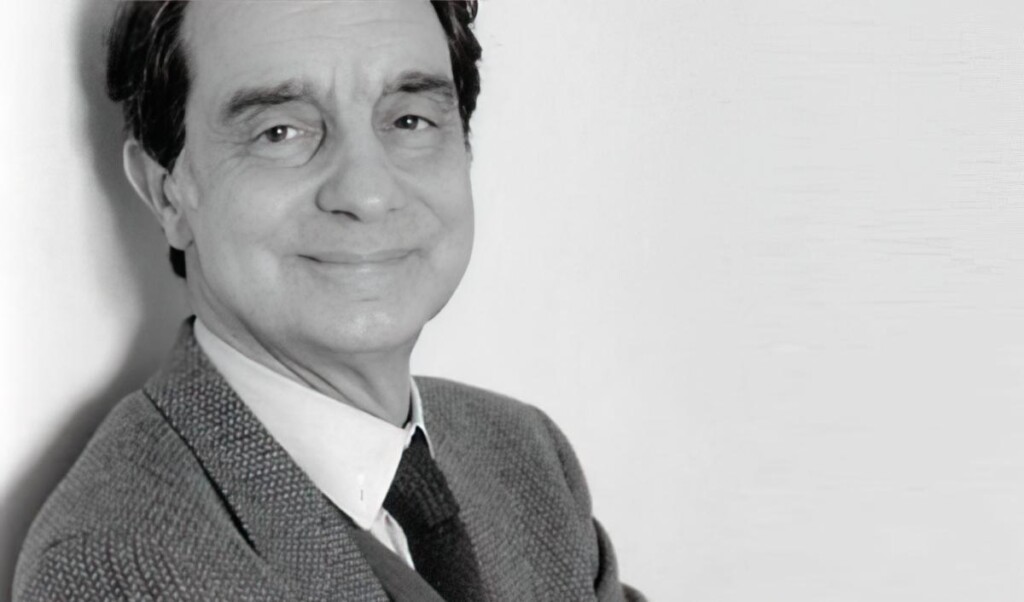
Italo Calvino published Le città invisibili in 1972, a book so structurally strange and philosophically dense that critics spent years arguing about whether it was a novel at all. Fifty-five short prose pieces, organized into nine thematic categories with mathematical symmetry — cities and memory, cities and desire, cities and signs, thin cities, trading cities, hidden cities — arranged in a pattern that mirrors, loosely and provocatively, the structure of a tarot deck. Marco Polo describes imaginary cities to Kublai Khan. Or perhaps he describes the same city over and over. Or perhaps he has only ever described one city, the one he left, Venice, refracted through the prism of everything he cannot say directly.
The book does not begin with a philosophical proposition. It begins with a sensation. And that distinction matters enormously.
What Calvino understood, and what urban theorists have been circling around in their more academic idiom for decades, is that cities are not primarily objects. They are processes. They are ongoing negotiations between stone and desire, between the grid imposed from above and the desire line worn into the grass below. The French sociologist Henri Lefebvre, writing in La Production de l’espace in 1974, just two years after Calvino, argued that space is never simply given. It is produced, reproduced, contested. Every city is simultaneously a physical fact, a set of representations, and a lived experience — and these three registers are almost never in alignment. The map is not the territory, but more importantly, the territory is not the territory either. What you walk through every morning is already an interpretation.
And yet you do not feel this. You feel the press of other bodies, the temperature change at the corner where two streets create wind, the specific exhaustion of Tuesday. You do not feel that you are participating in a centuries-old argument about how human beings translate desire into space and then forget what they wanted.
Cities teach you to stop seeing them. That is part of their function. Legibility is efficiency, and efficiency is survival, and survival requires that you stop asking what the pharmacy used to be called and why it mattered to you that it changed. But something is lost in that transaction. Something that Calvino spent an entire book trying to name, circling it from fifty-five different angles, knowing he would never land directly on it.
Eve of the Irises
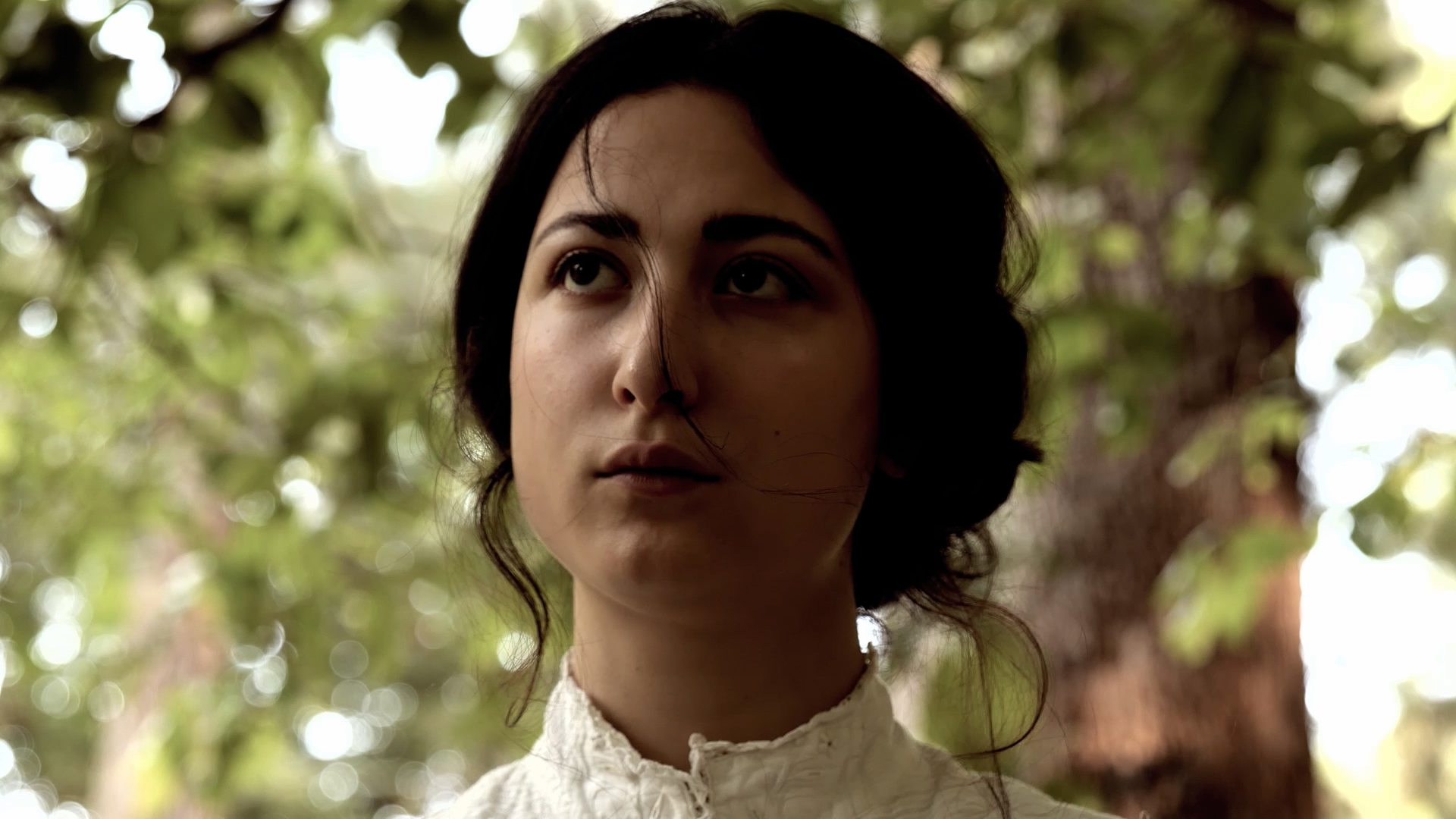
Documentary, by Isabel Russinova, Rodolfo Martinelli Carraresi, Italy, 2026
Eva of the Irises is a historical biographical docu-film about the scientist Eva Mameli Calvino, a botanist and pioneer of environmentalism in Italy, mother of the writer Italo, born in Sassari in 1886. The film, based on a multidisciplinary approach that combines several genres—such as theatre, documentary, cinema, and research—moves between memories, reflections on life, as well as the goals and missions the scholar still wished to achieve.
The multifaceted artistic sensibility of Isabel Russinova is expressed across many fields, from writing to acting, from directing to civic engagement, and finds one of its highest expressions in the docu-film Eva of the Irises, created with Rodolfo Martinelli Carraresi. The film blends scientific rigor and poetic refinement to portray the extraordinary figure of the botanist Eva Mameli Calvino, mother of Italo Calvino but above all an independent protagonist of 20th-century scientific culture. It is told through a combination of archival materials, interviews, and evocative staging capable of elegantly and profoundly conveying her intense human and professional story.
LANGUAGE: Italian
SUBTITLES: English, Spanish, French, Portuguese
Calvino’s Architecture of the Invisible
There is a book that sits on certain shelves for years without being read, picked up and set down, its spine cracked at odd angles from a dozen interrupted attempts. Not because it is difficult in the way that demands patience, but because it refuses the contract most books silently offer: a beginning, a direction, an arrival. You open it expecting a novel and find something else entirely — fifty-five cities arranged into eleven categories with names like Cities and Memory, Cities and Desire, Cities and the Dead, each city a fragment of two to three pages, none of them building toward a climax, none of them resolving into the next. Marco Polo speaks to Kublai Khan. The Khan listens, questions, grows suspicious, grows fascinated. Nothing accumulates in the way narrative is supposed to accumulate. And yet something happens to you while reading it that is difficult to name afterward.
Italo Calvino published Le città invisibili in 1972, at a moment when Italian intellectual culture was saturated with structuralism and semiotics, when Umberto Eco was theorizing the open work and Roland Barthes was burying the author. Calvino absorbed all of it and then did something more interesting than illustrate it: he built a form that embodies its own argument. The fifty-five cities are not stops on a journey. They are not allegories in any simple sense. They are angles of approach to something that cannot be faced directly — the experience of living inside a place that shapes you while you are busy believing you are shaping it.
The frame of Marco Polo reporting to Kublai Khan is not decorative. It is a trap, and Calvino knows it is a trap, and he springs it on you slowly. The Khan is a man who possesses an empire so vast he cannot see it except through language, through reports, through the descriptions of others. He receives the world as text and must govern it as territory. At some point in the book you realize that every city Marco Polo describes might be Venice — might be only Venice, refracted through memory and longing and the impossibility of return. And if every city is Venice, then Venice is every city, and the map and the territory have collapsed into one another in a way that Korzybski warned about in 1931 when he wrote that the map is not the territory, a warning that the twentieth century spent most of its energy ignoring.
Walter Benjamin understood this before Calvino made it visible. The flâneur, for Benjamin, was not merely a leisurely stroller through Parisian arcades. He was a reader — someone who understood that the city inscribes itself on whoever walks through it, that the architecture of a street is also an architecture of consciousness, that to move through urban space is to be read by it as much as to read it. Benjamin’s unfinished Passagenwerk, the Arcades Project, worked by accumulation and fragment precisely because he understood that a city cannot be summarized. It can only be circled. Approached from one side, then another, then abandoned and approached again from a direction you did not plan.
This is what Calvino’s structure enacts. You cannot read Invisible Cities the way you read a conventional novel because cities themselves cannot be experienced that way. The eleven categories — and Calvino arranges them in a precise numerical pattern, each category appearing five times across nine chapters that open and close with the Khan’s garden conversations — are not taxonomies. They are lenses that distort in productive ways, each one revealing a different layer of what a city actually is, which is to say a different layer of what a person actually is when they are standing inside one, believing they are simply on their way somewhere.

Kublai Khan’s Trap and the Illusion of Mastery
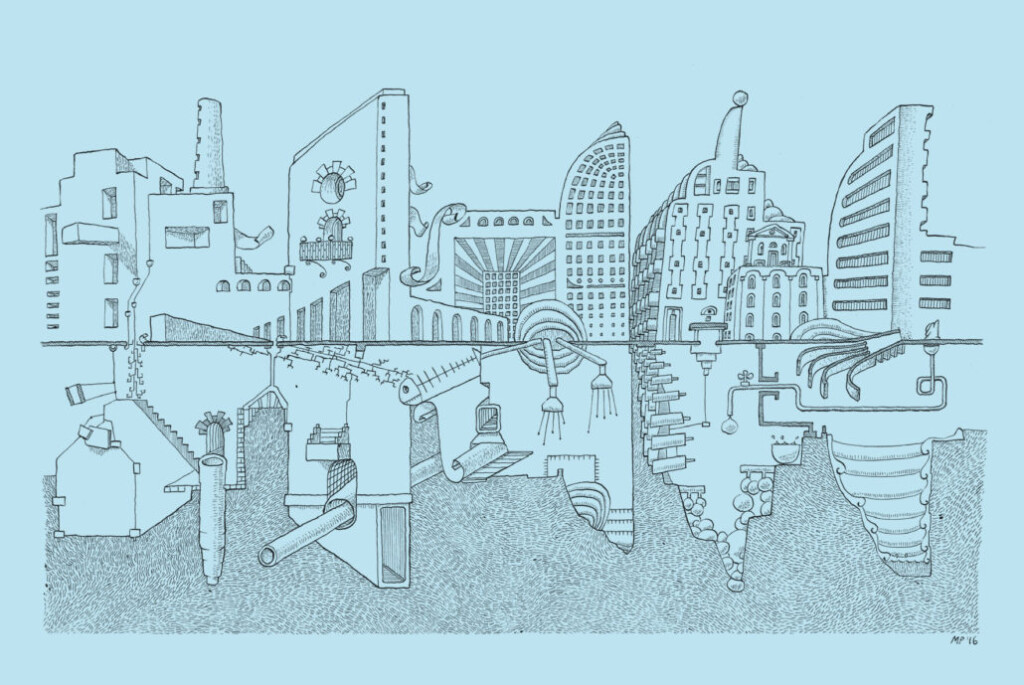
You have been to that city. You stood at the information kiosk near the central station, studied the laminated map with its color-coded lines and numbered districts, traced your finger along the printed street grid until you felt the mild satisfaction of orientation. You knew, at that moment, exactly where you were. Then you walked outside and the city immediately began to contradict you — the alley that was not on the map, the market that had migrated from its designated square, the neighborhood whose name locals pronounced with an entirely different inflection than the one the signage suggested. The map did not lie, exactly. It simply described something that no longer existed, or perhaps had never existed in quite that form. You folded it back into your pocket and kept walking, slightly less certain, the paper rectangle growing warm and useless against your hip.
Kublai Khan lives inside that kiosk permanently. He rules territories so vast that no single human lifetime could traverse them, and so he governs through intermediaries, through reports, through the symbolic shorthand of conquest — names on documents, tribute tallies, administrative categories that flatten a living province into a legible unit. He has never seen most of what he owns, which means he owns, in the deepest sense, an abstraction. His empire is a map of an empire. The cities exist for him as language, as data, as the verbal portraits Marco Polo delivers in the evenings, which is to say they exist for him precisely as they do not exist — rendered, translated, made portable and therefore made false.
Calvino understood this condition not as a historical curiosity about Mongol administration but as a permanent feature of how power organizes itself in relation to reality. Jean Baudrillard, writing in Simulacra and Simulation in 1981, gave this condition its clinical name: the precession of the simulacrum. His argument was not simply that representations distort reality but that at a certain threshold of cultural and technological saturation, the representation precedes and produces the real. The map, to invoke his own central metaphor borrowed from Borges, no longer corresponds to a territory because the territory has been restructured to correspond to the map. You do not govern a city; you govern its administrative model, and the city gradually warps itself around the model’s requirements, or is simply ignored when it refuses to warp. Baudrillard called this the third order of simulacra: signs that bear no relation to any reality whatsoever, that are their own pure simulation. Kublai Khan has reached this order. He does not need to visit his cities because visiting them would only introduce dangerous complexity, the friction of the actual.
There is a man sitting at a desk covered in municipal documents, urban planning reports, satellite photographs organized by district. He has memorized the infrastructure reports. He could tell you the population density per square kilometer of any ward in the city he administers. He moves pieces around a table-sized map of the urban grid with the calm confidence of someone who has mastered a system. Outside his window, the city does exactly what cities do — it breathes and mutates and fills in the cracks of official legibility with something ungovernable and alive, a woman selling things from a cart in a prohibited zone, a new wall painted overnight, a building whose permitted use has been quietly repurposed by everyone who lives near it. He does not go outside much. It would only confuse what he knows.
This is not a failure of intelligence. It is a structural condition of mastery. To rule is to require legibility, and legibility is always a violence done to the particular. Marco Polo’s gift to the Khan — if it is a gift — is the particular delivered as language, which means the particular delivered as something the Khan can hold without being changed by it. Whether that is mercy or its opposite is the question the Khan never quite allows himself to ask.
Memory Is a City That Keeps Rebuilding Itself
You go back. Maybe it takes years, maybe decades, but eventually you return to the place where you were formed — the apartment, the street, the house with the particular smell of dust and cooked food and something ineffable you always called home. And then you stand in the doorway and something collapses quietly inside you, not from sadness exactly, but from the sudden recognition that this place and the place you have been carrying inside yourself are not the same place. The walls are where you left them. The window faces the same courtyard. And yet every room is a silent correction, a calm refutation of the story you have been telling about yourself for thirty years.
Calvino understood this before you could name it. The city of Isadora exists in two forms simultaneously: the city of youth, where a young man chases a girl running through a garden, where everything is desire and velocity and becoming — and the city of old age, where an old man sits on a bench watching young men chase girls through gardens. The city is identical. The man is not. And the gap between those two versions of the same place is not nostalgia, which is merely the pain of distance. It is something more disorienting: the discovery that you never actually lived in the place you remember.
Henri Bergson, in Matter and Memory published in 1896, dismantled the idea that memory is retrieval. Memory, he argued, is not a storage system we consult. It is duration — time folded back on itself, alive, in motion. When you remember, you are not accessing a file. You are constructing an event that never had a fixed form to begin with. The past, for Bergson, is not behind you. It co-exists with the present, pressing against it, bleeding into it, shapeshifting with every new experience you accumulate. The city you return to is filtered through everything that happened after you left it, which means you are never returning to anything. You are arriving somewhere new with old coordinates.
The city of Zaira, in Calvino’s invisible atlas, carries its past not in its streets or its stones but in the relationships between measurements — the height of a cornice and the leap of a squirrel, the depth of a gutter and the solemn step of a cat. Space remembers through proportion, through the geometry of lived experience. What looks like architecture is actually autobiography, encoded in angles and shadows. When the city changes — a new building, a demolished wall — the biography changes with it, silently, without announcement. You don’t notice until you try to remember something and find a gap where the story used to hold.
Then there is Maurilia, perhaps the most quietly brutal of Calvino’s memory-cities. Visitors are invited to compare old postcards of the city with its present form. The postcards are beautiful. The present city is larger, more modern, more prosperous. And yet something aches in the comparison, some subtraction you cannot account for. What you mourn is not the old city itself — it may have been ugly, cramped, difficult. What you mourn is the self who would have lived in it, who you might have been inside those narrower streets. Memory is not loss. Memory is the continuous, involuntary construction of an alternative self.
A man returns to his childhood home after forty years to find it painted differently, furnished differently, inhabited by strangers who look at him with polite incomprehension. He stands at the threshold of what he thought was the most solid fact of his inner life and feels it turn to inference, to hypothesis. The past was never a territory. It was always a city under permanent construction, rebuilt each night while you slept, altered by every conversation, every loss, every version of yourself that displaced the last.
Desire Builds More Cities Than Bricks Ever Did
You arrive somewhere you have spent years constructing in your mind, and the first thing you notice is that the real place and the imagined place occupy the same space without canceling each other out. The streets are exactly as narrow as you pictured them, and completely different. The light falls at an angle you recognize from dreams you cannot precisely remember. You stand at the intersection of two versions of the same city, and neither version yields to the other. This is not disorientation. This is desire meeting its object and discovering that the object was never quite the point.
Calvino understood this with a precision that feels almost clinical beneath its lyrical surface. Anastasia is a city that appears to offer everything — markets of onyx and topaz, food prepared with spices that have no names in your language, pleasures that seem to exhaust the very concept of wanting. And yet to live in Anastasia is to become desire’s instrument rather than its beneficiary. The city does not satisfy you; it makes you useful to itself. Your longing becomes its engine. This is not a fable about hedonism or excess. It is a structural description of how cities actually function, how they metabolize human wanting into the circulation of goods, labor, ambition, and expansion. Every city that has ever presented itself as a destination — as the place where life finally begins — has operated on precisely this mechanism.
Fredric Jameson, writing in 1981 in The Political Unconscious, argued that utopian desire is never merely personal. It is, in his formulation, the place where the political unconscious speaks most loudly, where collective longing for something that cannot yet be named finds its distorted expression in cultural artifacts, in architecture, in the geography of aspiration. The city of desire is not built by individual dreamers. It is built by the accumulated pressure of everything a society cannot say directly about what it wants and what it lacks. Colonial expansion was funded by exactly this: the fantasy of a city somewhere else that would resolve the contradictions accumulating at home. El Dorado, New Jerusalem, the American frontier — these were not geographical errors. They were desire’s infrastructure, projected outward onto territory that then had to be emptied of its existing inhabitants to make room for the projection.
Zobeide is where this becomes undeniable. Men from different nations, who have never met, arrive independently at the same place in the desert because they all dreamed the same woman running through city streets and all woke before catching her. They build a city designed to trap her, full of the specific corners and corridors their dream contained. She never appears. Other women arrive, unwilling, and are made to stay. The city built from desire becomes a mechanism of capture that ensnares everyone except the desire itself, which escapes every time. You read this and you recognize it not as mythology but as the basic grammar of economic migration, of gentrification, of every neighborhood that is remade in the image of someone’s fantasy of what urban life should look like — which invariably means in the image of what that life looked like before the people who needed affordable housing arrived.
Fedora contains glass globes, each holding a miniature version of the city as it was imagined at a different moment of its history — the city of marble that was never built, the city of canals, the city of hanging gardens. Every utopia that Fedora failed to become is preserved there, spherical and inert. Jameson would recognize this immediately: the political unconscious does not discard its failed utopias. It archives them, and that archive exerts continuous pressure on the present, making the actual city feel perpetually insufficient, perpetually in need of the renovation that will finally make it match the dream.
The city of desire is always a city built against loss, which means it is always already mourning something it has not yet lost.
A vision curated by a filmmaker, not an algorithm
In this video I explain our vision
The Dead Cities Inside the Living Ones

You walk down a street you have known your whole life and something is wrong before you can name it. The geometry is correct, the distances between corners are exactly as you remember them, but the surface has changed so completely that your memory floats above it like a transparency with nothing to align to. You stop in front of a glass-fronted fitness studio, clean and bright, and you know with absolute certainty that there was a bar here once, a specific bar, low-lit and smelling of cigarette smoke and spilled beer, and that something happened to you inside it that altered the course of several years. The bar is not gone in the way that things decay and disappear. It has been replaced, which is a different and more violent act. Replacement does not merely remove the past. It asserts that the past was never particularly worth keeping, that the space it occupied was only ever waiting to become something more profitable, more presentable, more aligned with whoever the city has decided to attract next.
Calvino understood this as a structural condition rather than a sentimental loss. His trading cities and thin cities are places where the visible and the invisible coexist under pressure, where what a city shows you and what it conceals from you are not accidental but deliberate. Anastasia seduces its inhabitants so completely that they cannot see the economic machinery humming beneath its beauty. Trading city Euphemia exists as a market where goods are exchanged, but what actually circulates there are memories and desires attached to words spoken in the dark. The city as institution and the city as lived experience are never the same city, and the distance between them is not a failure of urban planning but a feature of how power organizes space.
Mike Davis spent years excavating this gap in the specific case of Los Angeles. In City of Quartz, published in 1990, he demonstrated that Los Angeles did not simply grow and change the way cities naturally do. It systematically demolished evidence of its own contradictions: the labor movements of the 1930s, the Japanese-American neighborhoods erased by internment and never rebuilt, the Black communities displaced by freeways planned with deliberate malice, the public spaces converted into fortified private zones designed to make certain bodies feel unwelcome. This was not forgetting. It was the architectural enforcement of a particular narrative, a city actively curating which of its pasts would be allowed to leave traces.
What Calvino names as the city’s shadow self, Davis names as the city’s political unconscious made concrete in steel and zoning law. The result is the same experience you are having on that corner: the sensation of a ghost that has been not merely unacknowledged but structurally prevented from appearing. Your memory of the bar is not simply nostalgic. It is evidence of something the city has decided to classify as inadmissible.
And here is where the personal and the political become indistinguishable in the body. A man walks through a completely renovated block searching for the physical location where something decisive happened to him, and what he encounters is not emptiness but active denial. The new glass surface does not say this place has changed. It says this place was always like this, has always been oriented toward this kind of customer, this kind of transaction, this aesthetic language. Your experience is not contested. It is simply made structurally invisible, which is more effective than any argument.
Calvino’s cities carry their dead inside them the way bones carry the memory of childhood illness, as a density in the structure that only certain pressures reveal. Every functioning metropolis is also a stratigraphy of abandoned selves, demolished neighborhoods, communities whose names the official maps never learned. The living city walks on top of the dead one and calls the ground solid.
Continuous Cities and the Exhaustion of Everywhere
Somewhere above the clouds, at cruising altitude, a woman looks out the window and realizes she cannot remember which city is below her. Not because she forgot — she checked the boarding pass an hour ago — but because it genuinely does not matter. The airport she left and the airport she is approaching share the same bone structure: the same carpeted corridors stretching toward identical gates, the same franchise coffee smell, the same announcements in a voice calibrated to be heard without being listened to. She is in transit between two versions of the same place, and the place has no name worth keeping.
This is not disorientation. It is something more unsettling — it is recognition. The architecture of transit has finally succeeded at what it was always designed to do: erase the friction of arrival, the texture of somewhere.
Marc Augé, writing in 1992, named this condition with the precision of a diagnostician who has stopped being surprised by symptoms. Non-places, he argued, are spaces of circulation, consumption, and communication — airports, motorways, supermarkets, hotel chains — that are technically inhabited but experientially voided. They are defined not by identity, history, or relation, but by their capacity to process human beings without leaving a mark on them, and without being marked in return. A non-place is a space you pass through as a function, not as a person. The contract you sign — literally, with the loyalty card, the boarding pass, the receipt — is the only relationship on offer.
Calvino had already mapped this territory before Augé named it, through cities that do not sprawl geographically so much as they sprawl ontologically. Leonia reinvents itself each morning by producing and discarding at the same rate, its identity constituted entirely by its waste — the mountain of yesterday’s objects growing higher around the city like a monument to forgetting. The city’s vitality and its emptiness are the same thing. Trude is the city you land in and cannot distinguish from the one you left, because Trude is everywhere, and once you are inside it, you understand that you were already inside it before you arrived, that you have never been anywhere else. Penthesilea is not even a city with a center you can fail to reach — it is the suburban suspicion that the city was never there at all, that what surrounds you is all there is, a sprawl with no origin and no edge.
These are not satirical exaggerations. They are the logical conclusion of what happens when the production of place becomes industrialized. The urban theorist Mike Davis documented in the 1990s how the American edge city replicated itself across geographies with the mechanical consistency of a template — the same interchange, the same retail corridor, the same residential pods — until place became a variable with a fixed value. The homogenization was not accidental. It was the point. Predictability reduces friction for capital, and friction is where local identity used to live.
What Calvino understood, and what the woman at altitude is living, is that this exhaustion of place is also an exhaustion of self. If Augé’s non-place does not allow you to be a person — only a passenger, a consumer, a user — then the accumulation of non-places does not produce travel. It produces a kind of stationary motion, movement without displacement, the sensation of covering distance while remaining absolutely still inside. You arrive having consumed the journey. The city receives you the way the airport received you: processed, labeled, ready for the next leg.
Leonia does not ask you what you want to keep. Trude does not ask you whether you have been here before. Penthesilea does not ask you where its center is, because by the time you think to ask, you are already too far inside to remember what a center felt like.
Marco Polo’s Last Confession and the City That Cannot Be Named
There is a moment when the traveler stops pretending. Not with drama, not with confession staged for an audience, but quietly, the way a man sets down a bag he has carried so long he forgot it was heavy. Marco Polo eventually tells Kublai Khan the truth that was never hidden: every city he has described, every name conjured from memory and desire and the architecture of loss, every market and tower and bridge and garden he narrated across years of audience — all of it was Venice. He had never left. Or rather, he had never arrived anywhere else. He had been circling the same coordinates of longing the entire time, using the entire world as a vocabulary for a single word he could not bring himself to pronounce directly.
This is not a poetic flourish. This is a philosophical detonation with real casualties.
Gaston Bachelard understood something about this that most theorists of space have since talked around without touching. In his Poetics of Space, published in 1958, he argued that inhabited space is never neutral, never simply geometric. The spaces we have truly lived inside — a childhood room, a city that formed our first adult consciousness, a street we walked alone at the precise moment something broke open in us — these spaces do not remain outside. They migrate inward. They become the architecture of thought itself. We do not remember places; we think in them. The house we grew up in, Bachelard writes, is not a container of memories but the very material of memory’s structure, the beams and walls by which recollection holds itself upright. Which means that when you leave a place you have truly inhabited, you do not leave it behind. You carry it forward as the hidden grammar of everything you will ever perceive.
Marco Polo describes hundreds of cities. He describes none of them. He describes the shape of absence left by one city in the consciousness of a man who can only understand what he has lost by projecting it, refracted and disguised, onto everything he encounters. This is not deception. This is the only honest thing he knows how to do. Because you cannot see a place while you are inside it. Understanding requires the distance of departure, and departure always arrives too late, after the understanding would have mattered.
Think of the man who walks through his city for the last time the night before he emigrates, suddenly seeing every corner with a clarity so sharp it is almost hostile. The clarity was always available. The place was always this beautiful, this precise, this particular. But it required the announcement of loss to make it visible. You do not understand where you lived. You understand where you used to live. The present tense is always slightly blurred; the past tense cuts clean.
This is what Calvino’s Marco Polo confession detonates: the possibility that all description is retrospective mourning, that all the cities we name are cities we have already lost, or cities we are in the process of losing, or cities we invented precisely because the real place we needed to speak about was too close, too wound into our own nervous system, to be approached directly. Every map is drawn from exile. Every love letter is written after the door has closed.
And so the question that remains, the one that does not resolve itself simply because the book ends or the reasoning approaches its limits, is whether any city — real in its streets and noise and particular smell of rain on its particular stone, or remembered in the amber light memory always applies, or imagined in the precise detail that only longing can produce — was ever anything other than a story we needed to tell ourselves before we could find the courage to leave, or the words to explain why we never did.
🌀 Cities, Labyrinths, and the Infinite Text
Italo Calvino‘s Invisible Cities is not merely a book about imaginary urban spaces — it is a meditation on language, memory, and the endless architectures of the human mind. Like a labyrinth with no fixed exit, Calvino’s work invites us to wander through ideas that echo across literature, philosophy, and the art of storytelling. The following articles explore themes that resonate deeply with Calvino’s visionary universe.
Don Quixote: Meaning and Analysis
Don Quixote stands as one of the founding labyrinths of Western literature, a text that constantly folds back upon itself in a game of fiction and reality. Much like Calvino’s Marco Polo, Cervantes’ knight inhabits a world constructed entirely from the power of imagination and narrative. Reading Don Quixote alongside Invisible Cities reveals how the greatest literature is always, at its heart, about the act of storytelling itself.
GO TO THE SELECTION: Don Quixote: Meaning and Analysis
Alchemy in Literature: From Dante to Goethe
Alchemy in literature — from Dante to Goethe — explores how writers have used the alchemical quest as a metaphor for transformation and the search for hidden meaning. Calvino himself was deeply interested in structural and symbolic transformations, embedding layered codes within his cities much as alchemists embedded secrets within their texts. This article illuminates the esoteric tradition of writing as a form of transmutation.
GO TO THE SELECTION: Alchemy in Literature: From Dante to Goethe
Montaigne’s Essays: Guide to Reading
Montaigne's Essays represent another form of infinite literary architecture, a work perpetually rewritten and expanded as if the author feared reaching a final destination. Like Calvino’s cities, each essay is a self-contained world that nonetheless speaks to all the others, creating a web of meaning without a single centre. Exploring Montaigne is essential for understanding the literary tradition of the open, wandering text.
GO TO THE SELECTION: Montaigne’s Essays: Guide to Reading
Universal Consciousness
The concept of Universal Consciousness finds a powerful echo in Calvino’s vision of cities as projections of the human mind’s collective desires, fears, and dreams. Each invisible city can be read as a facet of a single, infinite consciousness dreaming itself into countless forms. This article deepens the philosophical dimension of Calvino’s work, connecting it to broader questions about mind, reality, and interconnection.
GO TO THE SELECTION: Universal Consciousness
Discover the Infinite Screen on Indiecinema
If Calvino’s invisible cities have awakened your hunger for visionary storytelling, Indiecinema streaming is your next destination. Explore a curated selection of independent films that share Calvino’s spirit — labyrinthine narratives, poetic imagery, and worlds that defy easy interpretation. Step through the gate and let independent cinema take you somewhere unmapped.
👉 EXPLORE THE CATALOG: Watch Indie Films in Streaming
A vision curated by a filmmaker, not an algorithm
In this video I explain our vision

