
The Library You Were Never Supposed to Enter
You open the book expecting a story. What you get instead is a hand reaching through the page and adjusting something behind your eyes. The first sentence tells you that you are about to begin reading a novel, and for a moment you think this is a charming trick, a wink from an author who likes games. Then you read the second sentence, and the third, and somewhere before the end of the first page you realize that what is being dismantled is not narrative convention but your own habit of being a reader — which is to say, your habit of being a person who believes they are safely on one side of an experience while the experience happens on the other.

This is not a comfortable sensation. It is closer to the feeling of reaching for a glass on a table and finding that the table has been moved three inches to the left. Your hand knows something your mind has not yet processed. Calvino does this to you before you have had time to consent.
He arrives uninvited. This is the first thing to understand about him. You did not go looking for Italo Calvino the way you might seek out a writer whose reputation precedes them like a formal introduction. He tends to show up sideways — on a shelf belonging to someone else, recommended by a person who cannot quite explain why, pressed into your hands by someone who says only that it is strange, that you will either love it or put it down after twenty pages. What that person does not tell you, because they probably do not know how to say it, is that putting it down is itself a form of being changed. The book has already looked at you by then.
There is a specific quality to his prose that resists the usual categories. He is not a surrealist, though reality bends in his sentences. He is not a fabulist in the folk tradition, though impossible things occur without apology. He was born in Santiago de Las Vegas, Cuba, in 1923, to Italian parents who were botanists — a detail that feels almost too precisely symbolic, two people whose vocation was to understand the hidden structures beneath visible growth, raising a child who would spend his life doing the same thing to stories. He grew up in San Remo, on the Italian Riviera, in a household where science and nature were the dominant languages, and he spent the rest of his life translating those languages into something that looked like fiction but functioned like philosophy made physical.
Roland Barthes, writing about the pleasure of the text in 1973, distinguished between the text of comfort and the text of bliss — the one that confirms your expectations, and the one that unsettles the very foundations on which those expectations rest, that produces what he called a crisis in relation with language itself. Calvino is almost exclusively a writer of the second kind, and yet the unsettling never feels aggressive. It feels more like precision. Like someone removing a splinter you did not know you had.
What makes this particularly disorienting is that his difficulty is not the kind that announces itself. He does not write in dense thickets of syntax or demand that you have read seventeen other books before you can enter his. The sentences are clear. The images are vivid. The logic, even when it is the logic of the impossible, is internally consistent. You follow easily, and then you look up and realize you have followed yourself somewhere you did not expect to be, and the path behind you has closed.
This is not a metaphor for reading Calvino. It is a description of what actually happens when you open one of his books and make the mistake, which is also the gift, of taking him at his word.
Eve of the Irises
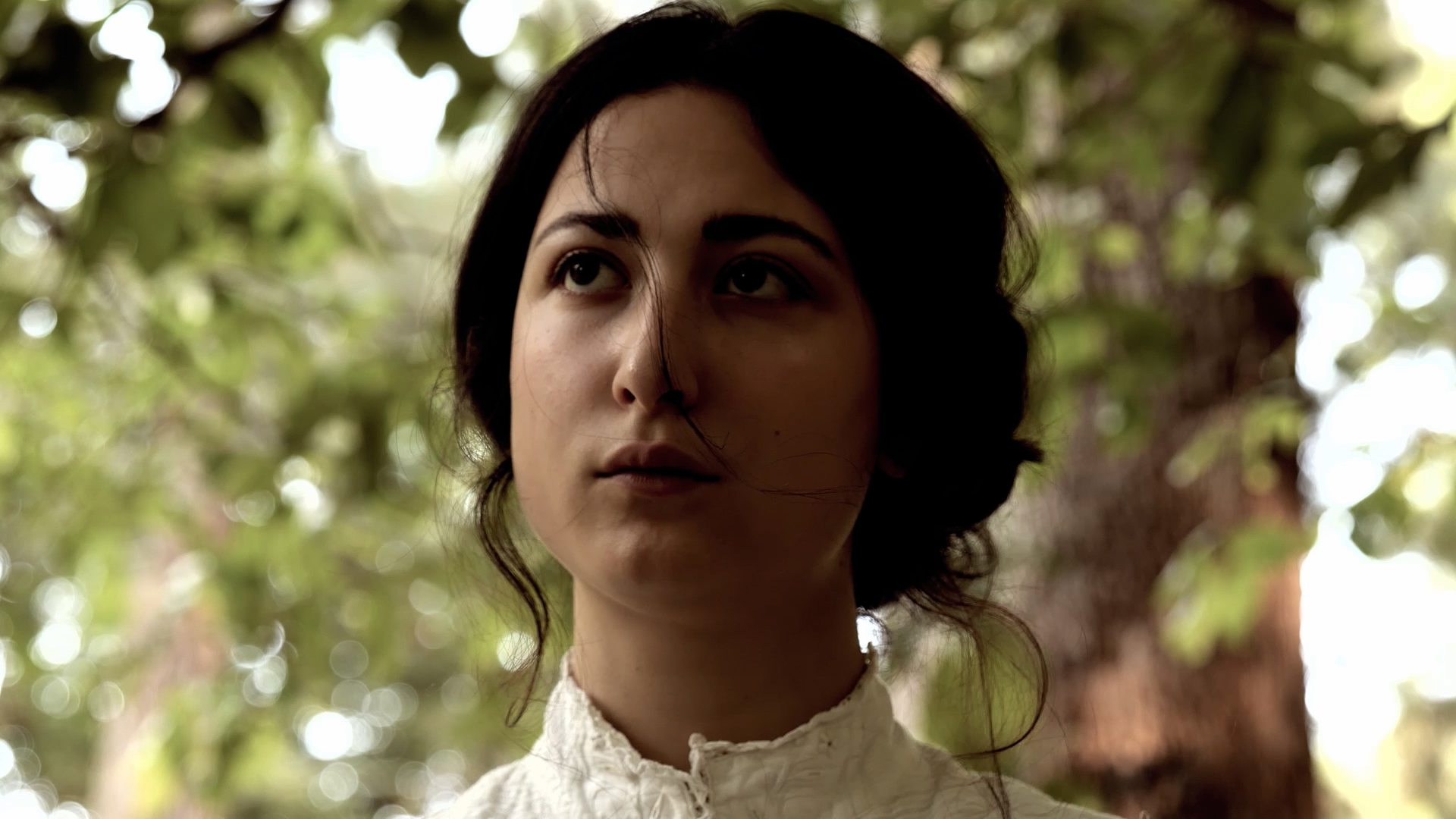
Documentary, by Isabel Russinova, Rodolfo Martinelli Carraresi, Italy, 2026
Eva of the Irises is a historical biographical docu-film about the scientist Eva Mameli Calvino, a botanist and pioneer of environmentalism in Italy, mother of the writer Italo, born in Sassari in 1886. The film, based on a multidisciplinary approach that combines several genres—such as theatre, documentary, cinema, and research—moves between memories, reflections on life, as well as the goals and missions the scholar still wished to achieve.
The multifaceted artistic sensibility of Isabel Russinova is expressed across many fields, from writing to acting, from directing to civic engagement, and finds one of its highest expressions in the docu-film Eva of the Irises, created with Rodolfo Martinelli Carraresi. The film blends scientific rigor and poetic refinement to portray the extraordinary figure of the botanist Eva Mameli Calvino, mother of Italo Calvino but above all an independent protagonist of 20th-century scientific culture. It is told through a combination of archival materials, interviews, and evocative staging capable of elegantly and profoundly conveying her intense human and professional story.
LANGUAGE: Italian
SUBTITLES: English, Spanish, French, Portuguese
A Cuban Childhood and the Weight of Roots
He was born in a place he would never remember, and that unreachable origin would haunt everything he touched. Santiago de Cuba, 1923 — a city of heat and revolution and botanical abundance, a city that existed for Calvino only as a rumor in the blood, a prehistory he carried without being able to name it. His parents brought him back to Italy when he was still an infant, settling on the Ligurian coast near San Remo, and so the Caribbean became a kind of mythological elsewhere, a before-the-world that he could not access through memory but perhaps accessed through something older than memory: the way certain writers seem to have been born already displaced, already tilted slightly away from the ground everyone else stands on.
San Remo was not the glamorous resort town tourists imagined. For the Calvino family it was agricultural terrain, serious and unromantic. His father Mario was a botanist and agronomist of considerable reputation, a man who had spent years in Mexico and Cuba cultivating experimental tropical plants, who brought back to Liguria not just specimens but an entire philosophy of attention — the close, patient, empirical gaze of someone who believes the world reveals itself only to those willing to look without impatience. His mother Eva Mameli was herself a botanist, one of the rare women of her generation to hold a university chair in the sciences, and she brought to the household a quality of intellectual severity that had nothing condescending in it, only the high seriousness of someone who had fought for the right to think rigorously in a world that preferred women decorative. Between these two figures, young Italo grew up in a house where the natural world was not background but subject, where dinner conversation moved between plant genetics and political conscience, where the empirical and the ethical were not separate vocabularies.
What does it do to a child, to grow up surrounded by people who believe that looking carefully at a leaf is a moral act? It installs a particular kind of double vision. The landscape of the Ligurian hills above San Remo — the terraced olive groves, the rocky coastline dropping into cold light, the gardens where his father grew species that had no business surviving that latitude — became for Calvino not simply the scenery of childhood but a psychic architecture. He would spend decades trying to escape it through the imagination, and every attempt to escape would secretly reproduce its structures. The tension in his fiction between the concrete and the impossible, between the precisely observed detail and the suddenly vertiginous framework, has its roots here, in a boyhood spent learning the Latin names of plants while simultaneously sensing that the world refused to stay within any taxonomy.
The philosopher Maurice Merleau-Ponty argued, in his Phenomenology of Perception published in 1945, that perception is never neutral, that the body knows the world before the intellect does, that our earliest encounters with physical space become the hidden grammar of all subsequent thought. The Ligurian coast was Calvino’s hidden grammar. The light there has a particular quality — sharp, Mediterranean, without sentimentality — and it trained his prose toward a similar sharpness, a refusal of atmospheric vagueness, an insistence on seeing things as they actually are before entertaining any speculation about what else they might be.
His parents were also antifascists, quietly but genuinely, at a time when quiet antifascism required a specific kind of daily courage. This too was part of the education: the understanding that the world had a political texture, that to see clearly was already a form of resistance, that scientific rigor and moral clarity were not different disciplines but the same discipline applied in different directions. You do not grow up in that atmosphere and emerge from it neutral. You emerge from it with questions that never fully resolve, carrying a Cuban heat you cannot remember and a Ligurian light you cannot escape.

The Partisan, the Communist, and the Man Who Left the Party
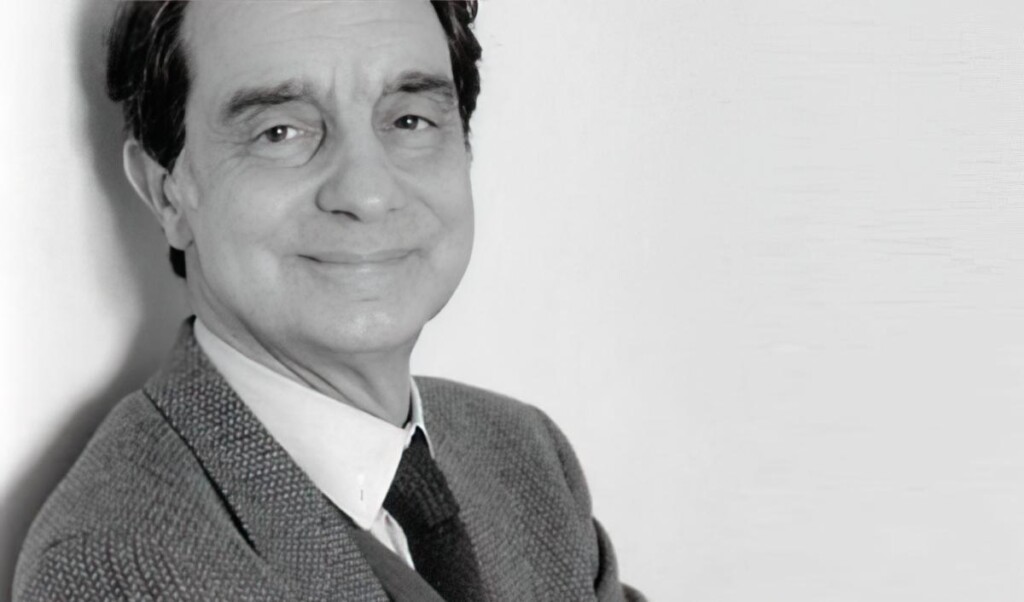
You are nineteen years old and the world has split open. Not metaphorically — literally, geographically, into zones of death and zones of waiting. You join the partisans in the Ligurian hills not because you have read the right books or arrived at the correct political conclusion, but because the alternative is to become complicit in something your body refuses. This is how it begins for most people who later call themselves idealists: not with ideology but with a physical revulsion that precedes language.
Calvino spent 1943 to 1945 in the Resistance, and what that meant in northern Italy was not the clean heroism that postwar memory would manufacture. It meant cold, hunger, the permanent possibility of betrayal, watching men die for causes that could not yet articulate themselves fully. His parents were held hostage by fascist authorities to pressure him into surrendering. He did not surrender. That fact alone tells you something about the moral architecture of the person who would later write with such apparent lightness — the lightness was earned, not inherited, built over a foundation of choices that cost something real.
After the war, he joined the Italian Communist Party, and here the story gets more interesting than hagiography allows. Joining was not naive. It was, in the context of 1945 Italy, a coherent response to what fascism had done and what capitalism seemed prepared to do again. The PCI under Togliatti was the largest communist party in the Western world outside the Soviet Union, and it carried within it the moral credibility of the Resistance. Calvino wrote for L’Unità, the party newspaper. He believed, or worked to believe, which is the more honest formulation for what most politically committed intellectuals actually do.
Then 1956. The Soviet tanks rolling into Budapest in November of that year did not merely crush an uprising — they crushed a particular kind of self-deception that had been carefully maintained across the European left for a decade. Hannah Arendt, writing about the nature of totalitarian systems, had already argued in The Origins of Totalitarianism in 1951 that the most devastating feature of such systems is not their violence but their ability to make intelligent people rationalize that violence as historically necessary. What broke in 1956 was precisely that rationalization. The mechanism stopped working because the image was too clear, the bodies too recent, the betrayal too naked to absorb into a theoretical framework.
Calvino resigned publicly. His letter of resignation, published in the party journal Rinascita, was not a cold administrative document. It was the statement of a man who understood that silence at that moment would be its own moral act — that to remain without speaking was to participate. This is what Arendt meant when she wrote about the courage required to judge: not the courage of the battlefield but the harder courage of naming a wrong committed by those you loved and admired, at the precise moment when naming it costs you a community, an identity, a sense of belonging that had organized your life for years.
What followed in his work was not a retreat from politics into aesthetics. That is the standard misreading. What happened was that the break with the party intensified his inquiry into exactly the questions the party had pretended to answer: how does a person construct meaning under systems that distort reality, how does narrative itself become a political act, how does form encode power. The combinatorial games, the invisible cities, the labyrinths of perception that would define his mature work — these are not escapes from the political. They are the political, refracted through a mind that had learned, at great cost, never to trust any single account of the world again. The man who could no longer believe in the party’s version of history became the writer who would spend the rest of his career interrogating the very possibility of a single, stable version of anything.
The Invisible Cities Are the One City You Already Know
There is a moment you have probably lived without naming it: you arrive in a city you have never visited, walk its streets for the first time, and feel with unsettling certainty that you have been here before. Not in the superficial sense of déjà vu, but something deeper, almost structural — as if this city were built from the same psychic material as every city you have ever loved or escaped. The streets are different, the language on the signs is foreign, and yet the geometry of your longing is identical. You are, without realizing it, inside a book published in 1972.
Italo Calvino constructed Invisible Cities as a series of dialogues between Marco Polo and Kublai Khan, an aging emperor who can no longer travel his vast empire and so receives reports of his cities from a Venetian explorer who, as the book progresses, may never have left Venice at all. This formal premise is not a literary device. It is a philosophical statement about the impossibility of describing any place that is not, at its root, the place you already carry inside you. Each of the fifty-five cities Marco Polo describes — Isidora, Despina, Zobeide, Fedora — is built from a different angle of desire, memory, fear, or loss. They are not fantasies. They are diagrams of interior states rendered in stone and water.
Roland Barthes, writing in The Pleasure of the Text in 1973, argued that a text is not a container of meaning but a system of desires — that reading is always a form of wanting something that the text both promises and withholds. Calvino seems to have understood this before Barthes finished writing it. The cities in the book operate exactly this way: each one offers itself completely, and each one refuses to be possessed. You read about a city built entirely on stilts above a swamp, whose inhabitants have forgotten why they chose not to live on solid ground, and you do not think about urban planning. You think about the decisions in your own life whose original reasons have dissolved, leaving only the habit of consequence.
Georges Perec, whose life’s work was an archaeology of the overlooked, insisted in his 1973 essay Approaches to What? that the truly real is found not in the extraordinary but in the infra-ordinary — the texture of Tuesday afternoon, the specific weight of familiar objects, the city you cross every day without registering. What Calvino does, in a movement that appears opposite to Perec but is secretly parallel, is render the infra-ordinary visible by displacing it into the fantastical. By making cities impossible, he forces you to see the possible ones you have stopped noticing.
A man walks through a city that is not his own. The streets have a different smell, the light falls at an unfamiliar angle, the faces belong to a people with different histories than his. And yet he walks with the particular slowness of someone who is not lost but suspended — as if the foreignness of the place has temporarily lifted the amnesia under which he navigates his home. He stops at an intersection and realizes he does not know whether he is more present here, in this unknown city, or whether this strangeness is simply what his own city always looked like before habit made it invisible. The question does not resolve. He keeps walking.
This is exactly what Calvino’s book produces as an experience, not as a theme. The reader does not learn about cities. The reader undergoes a perceptual shift — a temporary restoration of the gaze that routine has clouded. Kublai Khan, listening to Marco Polo’s reports, understands at some point that all the cities described are the same city, seen from every possible angle of human need. And that city, Calvino tells us almost offhandedly, is Venice. Which is to say: it is wherever you began.
If on a winter’s night a reader is trapped inside a story about traps
You sit down. You open a book. You believe, with the quiet certainty of someone performing a ritual so familiar it has become invisible, that you are the one doing the reading. That the words are arriving into you, passing through your eyes and settling into something you recognize as your own interior. This is perhaps the most comfortable lie literature has ever allowed you to tell yourself.
In 1979, Calvino detonated it.
The second page of If on a Winter's Night a Traveler tells you, in the second person singular, that you have just bought this novel. That you are now making yourself comfortable. That you are positioning yourself to read. And something strange happens in your body before your mind can intervene — you feel caught, not addressed. The “you” on the page is not a metaphor or a stylistic flourish. It is a trap door. You fall through it before you understand what is underneath.
Wolfgang Iser, in The Act of Reading published in 1978, one year before Calvino’s novel appeared, argued that literary texts are fundamentally incomplete objects. They contain what he called “gaps” — structured absences that the reader must fill, positions the text prepares but does not occupy. The implied reader, for Iser, is not a demographic category or an imagined audience. It is a role written into the text itself, a function the actual reader is invited to inhabit. What Calvino understood — and what makes his novel an act of philosophical sabotage rather than postmodern play — is that Iser’s implied reader is never chosen. You do not elect to step into that role. You are already inside it by the time you realize there was a role at all.
Think of that scene where a woman is speaking at a dinner table, animated, holding her own in conversation, laughing at the right moments, and then — without warning, without drama — something shifts. A word someone uses, a particular glance, the specific inflection of a question directed at her, and she understands in a single cold instant that the role she has been performing for the last hour, perhaps the last decade, was not one she invented. Someone wrote it. Someone cast her. The conversation she believed she was having freely was a script, and she had learned her lines so thoroughly that she had confused fluency with authorship. She does not stop speaking. She finishes her sentence. But she is no longer the same person who began it.
This is what Calvino does to you structurally, across nearly three hundred pages. He keeps interrupting the novels you are about to read — ten different openings, ten different worlds, all cut off before resolution — not to frustrate you, though frustration is part of it, but to reveal the machinery of your desire. Each time a story stops, what becomes visible is how urgently you want it to continue, how much of yourself you had already surrendered to a text that gave you nothing yet. The wanting is the proof. You were never the subject of your reading experience. You were its object.
This is not a cynical observation. It is an archaeological one. Calvino is excavating the actual phenomenology of how a reader functions, the way a story operates on a nervous system before consciousness can mediate the transaction. Roland Barthes, in The Pleasure of the Text from 1973, distinguished between plaisir — the comfortable pleasure of confirmed expectations — and jouissance, the disruptive, almost violent pleasure of a text that undoes you. Calvino refuses to let you have the first without confronting you with the second. He makes the interruption itself the content.
The novel never stops reminding you that you are being read by it, processed, anticipated, positioned. And you keep reading anyway. Which is the most honest thing you have ever done inside a story.
A vision curated by a filmmaker, not an algorithm
In this video I explain our vision
The Cosmicomics and the Loneliness of Being the Only One Who Remembers

There is a particular kind of silence that falls over a table when someone very old begins to describe something that happened before anyone else in the room was born. Not the polite silence of listening, but a different one — thicker, faintly embarrassed, edged with the unspoken acknowledgment that there is no way to verify, no way to share, no common ground on which the memory can land. The old man talks and you watch his eyes go somewhere you cannot follow. The words arrive but the experience behind them remains sealed, untranslatable, belonging to a world that has since been demolished without anyone thinking to save the blueprints.
This is the precise emotional register of Cosmicomics, published in 1965, and it is nothing like what the label of science fiction would suggest. The narrator, Qfwfq, is a consciousness so ancient it witnessed the formation of galaxies, the first condensation of matter, the moment when light separated itself from darkness and something in the universe became, for the first time, visible. He speaks of these events the way that old man speaks of his childhood village — with the ache of someone who knows the landscape no longer exists and that the telling itself is a kind of mourning. The cosmic settings are not backdrop. They are the condition of radical solitude: to have been present at something for which no language yet existed, and to be forced now to describe it using a language that came after, a language that already contains the bias of everything that followed.
Merleau-Ponty argued in his Phenomenology of Perception, published in 1945, that consciousness is never a neutral observer arriving at a pre-existing world. It is always already embedded, oriented, shaped by a body that has history before it has thought. Perception is not a recording but a participation — the world and the perceiving subject constitute each other in an act that precedes reflection. What Calvino does with Qfwfq is push this insight to its cosmological extreme. Here is a consciousness that participated in the making of the world itself, and the consequence is not grandeur but grief. To have been there when the first sign was invented, when the first creature felt what would later be called desire — and to now describe it to beings for whom signs and desire are simply furniture, simply given, simply ordinary — is to experience the fundamental untranslatability of lived time.
Qfwfq’s stories are not allegories dressed in astrophysics. They are phenomenological confessions. When he describes marking a sign in space before space had any other signs, and then returning after millions of years to find the sign unrecognizable, buried under the accumulated graffiti of the universe, the loss is not metaphorical. It is the loss of the unrepeatable first time, the moment before categories existed to name it. Calvino understood — with the precision of someone who had read his Galileo and his Leopardi and his Borges — that the deepest human loneliness is not the absence of others but the impossibility of transmission. You can be surrounded by people who love you and still carry something that will die with you because it happened before the shared vocabulary existed to hold it.
The old man at the table keeps talking. His hands move, tracing something in the air above the pasta and the wine glasses. The others nod, but the nods are acts of kindness rather than recognition. He is not explaining an event. He is performing the proof of his own existence against the indifference of a present that has already moved on. Qfwfq does the same thing across billions of years, in a universe that keeps expanding away from every point of origin, every first mark, every initial trembling instant when something felt something for the very first time and had no word for it yet.
Six Memos and the Fear That Literature Will Forget What It Knows
There is something you recognize the moment you hold an unfinished book. Not sadness exactly, but a particular kind of vertigo, the feeling of standing at the edge of a sentence that someone left mid-breath. The five lectures Calvino delivered — or rather, prepared to deliver, since he died in Siena in September 1985 before reaching Harvard — were written as a gift to the next century, not a valediction to the one ending. He called the qualities he wanted to preserve Lightness, Quickness, Exactitude, Visibility, Multiplicity. The sixth lecture, Consistency, exists only as a title, a placeholder, a promise the universe declined to keep.
Which is to say: it exists perfectly.
The argument Calvino was making across those five completed memos was essentially this — that literature remembers things civilization is in the process of forgetting. Not nostalgia, nothing so passive. He was describing an active biological function, the way certain organisms carry genetic information forward through conditions hostile to its survival. In the memo on Lightness, he invokes Perseus holding the severed head of Medusa by looking only at its reflection, never directly. This, he writes, is the only method for approaching what would otherwise turn you to stone — not avoidance but oblique precision, the sword angled just so. When he reaches Quickness, he is already arguing against the compression Paul Virilio would systematize a decade later in his analysis of dromology, the logic of speed as the organizing principle of modern power. Virilio, writing in the mid-1970s and through the 1980s, understood that acceleration does not merely move things faster but makes certain forms of attention structurally impossible. Calvino sensed the same threat from a different angle: quickness in literature is not velocity but economy, the fairy tale that reaches its meaning before the reader has time to construct defenses against it.
Exactitude, the third memo, is perhaps the most quietly ferocious. He is not describing precision in the bureaucratic sense, the checklist, the verified data point. He means the word that fits so perfectly it forecloses all inferior alternatives, the sentence whose architecture bears weight without revealing its own effort. He quotes himself, which is a kind of risk. He returns to images from his own fiction to demonstrate principles that the fiction only half-consciously embodied when first written, which is the honest admission that writers do not always know what they know until the theory arrives to name it.
By the time he reaches Multiplicity, the argument has become explicitly defensive. The novel as a network of connections, as an encyclopedia that refuses closure, as a system that maps its own incompleteness — this is Calvino in 1985 describing not an aesthetic preference but a survival strategy. The world was already doing what the world does to complexity: reducing it. The single narrative, the one identity, the coherent national story. Literature, he is saying, is where multiplicity survives when the surrounding culture has decided coherence is more manageable.
And then nothing. The sixth lecture. Consistency. You can speculate — scholars have, gently, respectfully — about what he might have meant. Coherence across a body of work. The ethical staying power that keeps a writer honest across decades. Something about the relationship between style and character, between how you write and who you are. But the speculation always falls short, and the falling short is the point. The unfinished memo is not a wound in the book. It is the book’s final demonstration. Everything Calvino had argued across five completed lectures — that the most important things approach us sideways, that what cannot be shown directly must be suggested through its absence, that the exact word is sometimes silence — is enacted in the missing sixth.
He built a monument to literary endurance and then, at the last possible moment, showed you what endurance actually costs.
The Real Calvino Is the One You Invent While Reading Him
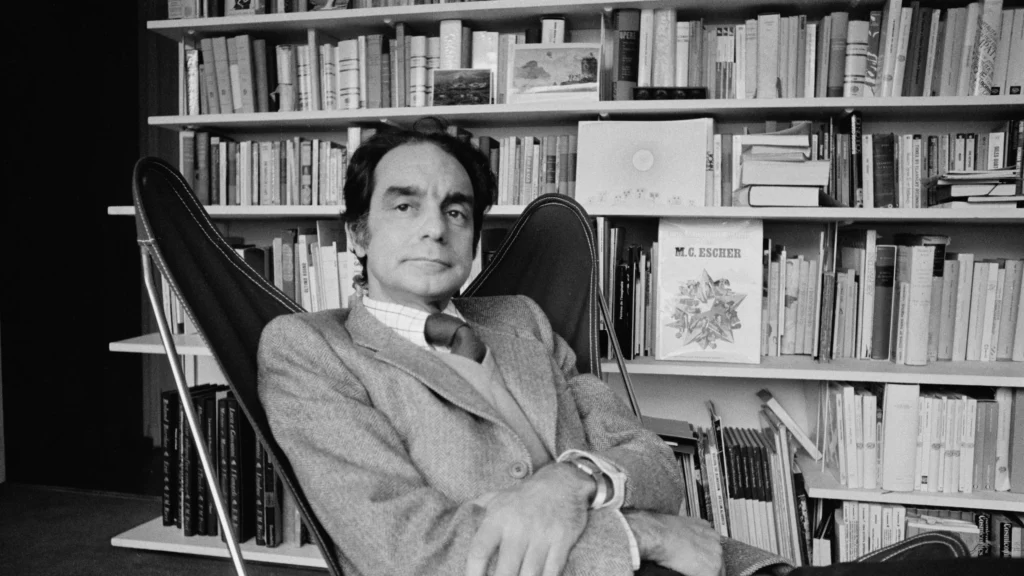
There is a man walking through a city he knows by heart, or believes he does, consulting a map he has carried for years, folded and refolded until the creases have become topographical features in their own right. At some point, perhaps on a Tuesday with no particular weather, he notices that the street he is standing on does not appear anywhere on the paper in his hands. The map is not wrong, exactly. It is accurate — it simply depicts a city that was demolished and rebuilt while he was busy reading it. He refolds the map. He continues walking. Not because he is lost, but because he has understood, in a flash that feels less like revelation than like a cold draft from an open window, that he was never following the city. He was following his idea of it, and the city had been doing something else entirely, indifferent and enormous, all along.
This is the epistemological wound that Calvino inflicted so precisely and so cheerfully that readers have spent decades confusing it for entertainment. Jorge Luis Borges, the Argentinian whom Calvino called the greatest writer of the twentieth century in a 1983 lecture at the New York Public Library, had already mapped the metaphysical coordinates: the library that contains all possible books, the garden of forking paths, the map that grows until it covers the territory it was meant to represent. Borges built labyrinths as thought experiments. Calvino walked into them and started rearranging the furniture. What they shared, beneath the formal elegance and the dazzling intellectual surfaces, was a conviction that the act of reading is not passive reception but violent participation — that you do not enter a text, you collide with it, and both parties are changed by the impact.
Calvino’s deepest provocation, the one that makes certain readers put down his books and stare at the wall for a moment before picking them back up, is not formal at all. It is ontological. He does not offer you a world to inhabit. He offers you the tools to realize you have been constructing worlds all along without anyone’s permission or instruction, assembling them from language and memory and the particular quality of light in rooms where things once happened. The character in If on a winter's night a traveler who is addressed as “you” from the very first sentence is not a literary device. It is an accusation. You were already inside a story before you opened the cover. The story simply had the courtesy to admit it.
Roland Barthes, in his 1968 essay “The Death of the Author,” argued that a text’s meaning is not deposited there by its writer but produced anew by each reader, that the birth of the reader requires the death of the author. Calvino read Barthes. He also, characteristically, used this idea as a narrative engine rather than a theoretical position, building it into the architecture of his books so that you experience the argument in your body before you can articulate it in your mind. This is the specific genius: philosophy as sensation, structure as trap.
And so you arrive, eventually, at the question the map-following man could not answer as he walked through the city that had rearranged itself without consulting him. If the worlds you inhabit are worlds you have constructed, and if the texts you read are texts you are, in some irreducible sense, also writing — then the figure of the author recedes into a kind of necessary absence, the way a room makes sense only after the person who furnished it has left. Calvino published Invisible Cities in 1972, died in 1985, and has been writing new books inside his readers’ minds ever since, which may be the only form of immortality that has never required believing in anything except the next sentence.
🌀 Labyrinths of Literature and Thought
Italo Calvino’s work is a labyrinth of ideas, narrative games, and philosophical wonder — a universe where literature, imagination, and the search for meaning intertwine without end. These related articles explore the thinkers and writers who, like Calvino, made intellectual adventure and the boundaries of human perception their lifelong obsession.
Miguel de Cervantes: Life and Works
Miguel de Cervantes invented a hero lost between fiction and reality, pioneering the meta-narrative games that would later captivate Calvino. Don Quixote’s blurring of imagination and the world prefigures Calvino’s own explorations of storytelling as a hall of mirrors. Both writers transformed literature into a philosophical playground where the reader is never merely a spectator.
GO TO THE SELECTION: Miguel de Cervantes: Life and Works
Don Quixote: Meaning and Analysis
Don Quixote stands as one of the great labyrinths of Western literature, a novel that constantly questions its own existence and the nature of narrative truth. Calvino admired Cervantes’ ability to embed multiple stories within stories, a technique he would push to its extreme in works like ‘If on a winter's night a traveler.’ Analyzing Don Quixote is essential to understanding the tradition of literary self-awareness that Calvino inherited and reinvented.
GO TO THE SELECTION: Don Quixote: Meaning and Analysis
Montaigne’s Essays: Guide to Reading
Montaigne's Essays represent one of the earliest and most radical experiments in subjective, essayistic writing — a form of thinking aloud on the page that deeply resonates with Calvino’s own intellectual spirit. Like Calvino, Montaigne refused fixed systems and instead embraced curiosity, digression, and the pleasure of the unresolved question. Reading the Essays is an exercise in the same lightness and precision that Calvino would later celebrate as literary virtues.
GO TO THE SELECTION: Montaigne’s Essays: Guide to Reading
Albert Camus: Life and Philosophical Thought
Albert Camus, like Calvino, grappled with the absurdity of existence and the human need to construct meaning in a universe that offers none. His philosophical thought — balancing rebellion, creativity, and lucidity — echoes through Calvino’s own restless interrogation of the limits of knowledge and narrative. Together, they represent a mid-twentieth-century European sensibility that refused both despair and easy consolation.
GO TO THE SELECTION: Albert Camus: Life and Philosophical Thought
Discover the Cinema of Ideas on Indiecinema
If Calvino’s infinite narratives and these labyrinthine thinkers have sparked your curiosity, Indiecinema is the streaming platform where literature and film converge. Explore a curated selection of independent and avant-garde cinema that shares the same spirit of intellectual adventure, poetic vision, and boundary-breaking imagination.
👉 EXPLORE THE CATALOG: Watch Indie Films in Streaming
A vision curated by a filmmaker, not an algorithm
In this video I explain our vision

