
The Table You Were Not Invited To
You are sitting at the table. You have been sitting at the table for forty minutes, and in that time your name has been said once — by yourself, introducing yourself — and your idea has been repeated back to you three times by a man with better posture and a louder voice, and each time it has been received as though it arrived brand new, unmothered, sprung fully formed from the air between his sentences. You watch this happen with the particular stillness of someone who has watched it happen before. You do not slam your glass down. You do not say anything. You have learned, through mechanisms so old they feel genetic, that the cost of naming what is happening in the moment it is happening is always higher than the cost of silence, and so you choose the debt that doesn’t show.

This is not a dramatic scene. There is no villain. The men at the table are not cruel — some of them are kind, genuinely kind, the kind of men who would be horrified to hear you describe this moment later, who would say surely not, surely I would have noticed. And that is precisely the architecture of the thing. It is built from the unremarkable. From the way a gaze slides past you to settle on the person beside you. From the half-second delay before your contribution is acknowledged, the pause just long enough to signal that what you’ve said requires an extra beat of processing, as though your voice reaches the room at a slightly different frequency than the others. From the question directed, after your presentation, to a male colleague — what do you think, does she have a point? — as if your point needed ratification from a more credible source before it could be trusted to stand on its own.
Simone de Beauvoir understood that the mechanism is never singular. In The Second Sex, published in 1949, she described how woman is not born into otherness but is continuously made other through the accumulation of small gestures, small permissions withheld, small spaces from which she is gently, reasonably, firmly redirected. The key word is accumulation. Any single instance is deniable. The sum is structural. What you experience at that table is not an event. It is a grammar.
And the room itself is part of it. Not metaphorically — literally. The rooms where ideas are tested and power is rehearsed and reputations are made: the dining halls, the senior common rooms, the editorial offices, the conference tables with the good chairs and the water that someone else refilled. Virginia Woolf understood this in a way that cut straight through the politeness of argument. She understood that exclusion from physical space is not a symbol of intellectual marginalization. It is the mechanism of it. Before you can be talked over, you must first be admitted. And admission has never been a neutral act.
There is a moment — you may have lived something like it — when a woman walks across a lawn she is not supposed to cross, the kind of lawn kept immaculate for the feet of certain people, and a beadle appears from nowhere to redirect her back to the gravel path, apologetic and absolute. The lawn is not the point. The lawn is never the point. The point is the invisible map of permissions, who may move freely through which spaces, whose presence is expected and whose is a kind of low-grade trespass requiring constant management. The point is that she understood, in that moment, what was being protected — and it was not the grass.
You sit at the table. Your water glass is full. Your idea is circling the room wearing someone else’s name. This is where the argument begins.
Eve of the Irises
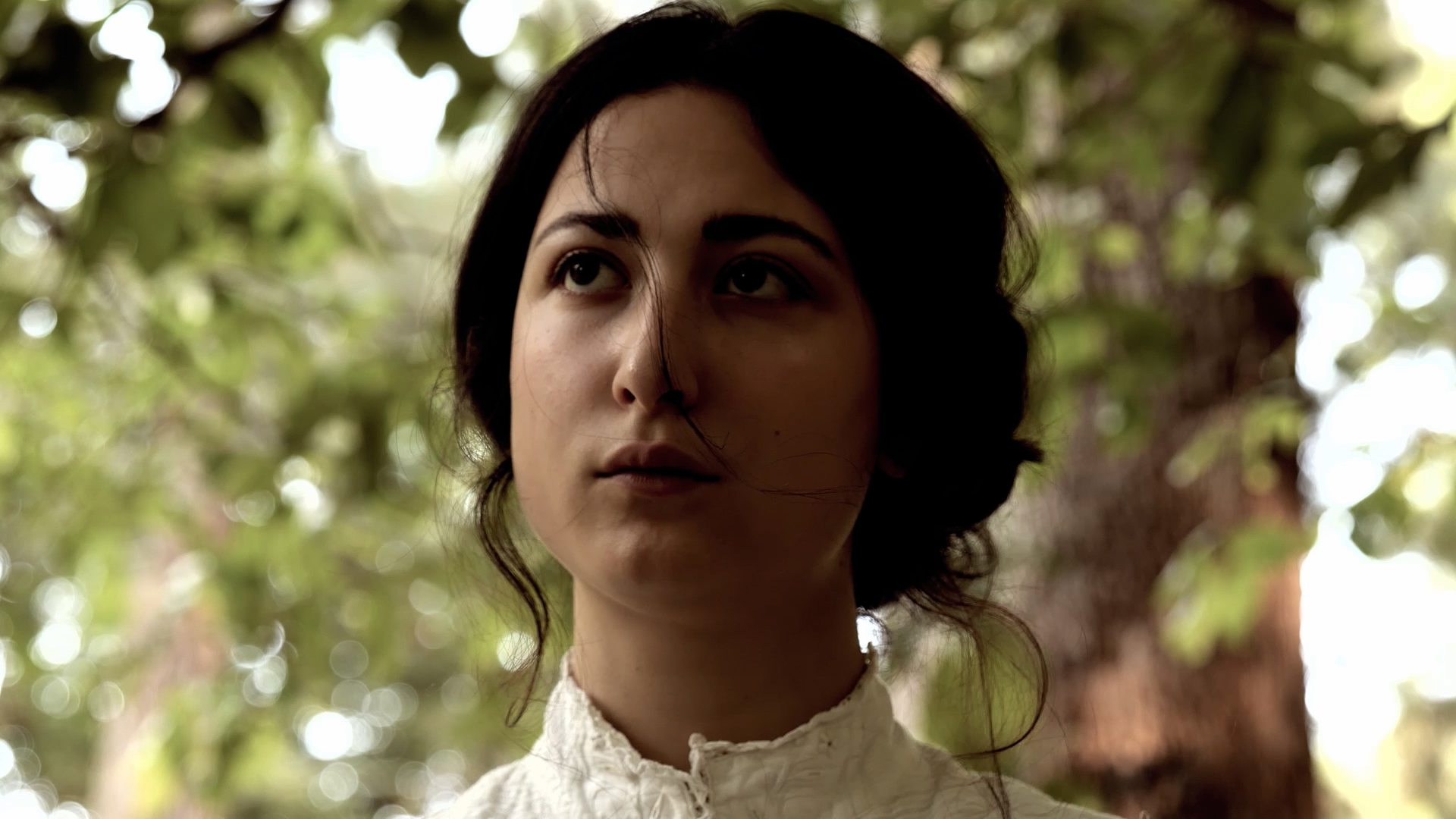
Documentary, by Isabel Russinova, Rodolfo Martinelli Carraresi, Italy, 2026
Eva of the Irises is a historical biographical docu-film about the scientist Eva Mameli Calvino, a botanist and pioneer of environmentalism in Italy, mother of the writer Italo, born in Sassari in 1886. The film, based on a multidisciplinary approach that combines several genres—such as theatre, documentary, cinema, and research—moves between memories, reflections on life, as well as the goals and missions the scholar still wished to achieve.
The multifaceted artistic sensibility of Isabel Russinova is expressed across many fields, from writing to acting, from directing to civic engagement, and finds one of its highest expressions in the docu-film Eva of the Irises, created with Rodolfo Martinelli Carraresi. The film blends scientific rigor and poetic refinement to portray the extraordinary figure of the botanist Eva Mameli Calvino, mother of Italo Calvino but above all an independent protagonist of 20th-century scientific culture. It is told through a combination of archival materials, interviews, and evocative staging capable of elegantly and profoundly conveying her intense human and professional story.
LANGUAGE: Italian
SUBTITLES: English, Spanish, French, Portuguese
Woolf at the Gate
You step onto the grass and someone appears. Not to greet you, not to ask what you need. To redirect you. The gravel path is there, just beside the lawn, and you are expected to understand without explanation that the lawn belongs to a different order of person. The message is architectural before it is verbal. The building itself, the arrangement of the grounds, the locked gate ahead — all of it communicates with a precision that no single person ever has to articulate aloud. The institution speaks. You are simply expected to hear it.
This is what happened to Virginia Woolf in October 1928 when she visited the ancient universities to deliver the lectures that would become A Room of One’s Own, published in 1929. A beadle materialized on the grass at Oxbridge — that composite, deliberately unnamed university — and gestured her back to the path. Later, at the library, the doors were closed to her. Women were not admitted without a letter of introduction from a Fellow, or accompanied by one. Woolf did not dramatize this as outrage. She registered it as information. The architecture told her exactly what she needed to know about who the life of the mind was built for.
The precision of her material analysis is what still cuts. She calculated that a woman needed five hundred pounds a year and a room with a lock on the door in order to write fiction. This was not metaphor. In 1929, the average annual wage for a working woman in England was somewhere between fifty and eighty pounds. The Married Women’s Property Act of 1882 had theoretically granted women the right to own property independently of their husbands, but theoretical rights and economic reality maintained their customary distance from one another. Women had been admitted to lecture at Oxford since 1879 — Woolf’s own Newnham College at Cambridge had opened in 1871 — but Cambridge would not grant women full degrees until 1948. Nineteen forty-eight. When Woolf published her essay, women had been studying at Cambridge for more than fifty years without being permitted to graduate from it.
What she identified was not simply unfairness. She identified a system with internal logic. Exclusion does not need malice to function. It needs repetition, architecture, custom, and the quiet withdrawal of resources. Pierre Bourdieu, writing decades later in The Logic of Practice, would call this “the gentle, invisible form of violence” — the violence that is never recognized as such precisely because it wears the face of the natural order. Woolf intuited this without the sociological vocabulary. She felt it as a woman stepping off a gravel path who could not quite explain, in the moment, why she had obeyed.
The beadle was not cruel. That is the point. He was simply fulfilling a function that the institution required, enforcing a boundary so normalized that he likely never thought of it as enforcement at all. This is how exclusion achieves its most durable form: it recruits ordinary people into ordinary gestures and calls the whole arrangement tradition.
And what was lost in that arrangement was not abstract. Woolf invented Judith Shakespeare — William’s imaginary sister, equally gifted, born into identical circumstances — and traced with quiet devastation what her life would have looked like. Not the room, not the five hundred pounds, not the education, not the capacity to fail privately, which is what all artistic development requires. Judith Shakespeare would have been stopped at every gate. And she would have found, each time, that the person stopping her was not a villain but simply a man doing what the situation called for, redirecting her to the gravel path, back to the natural order of things.
Woolf was writing from inside that architecture. Which is why she knew its every beam.

Five Hundred Pounds and a Lock on the Door
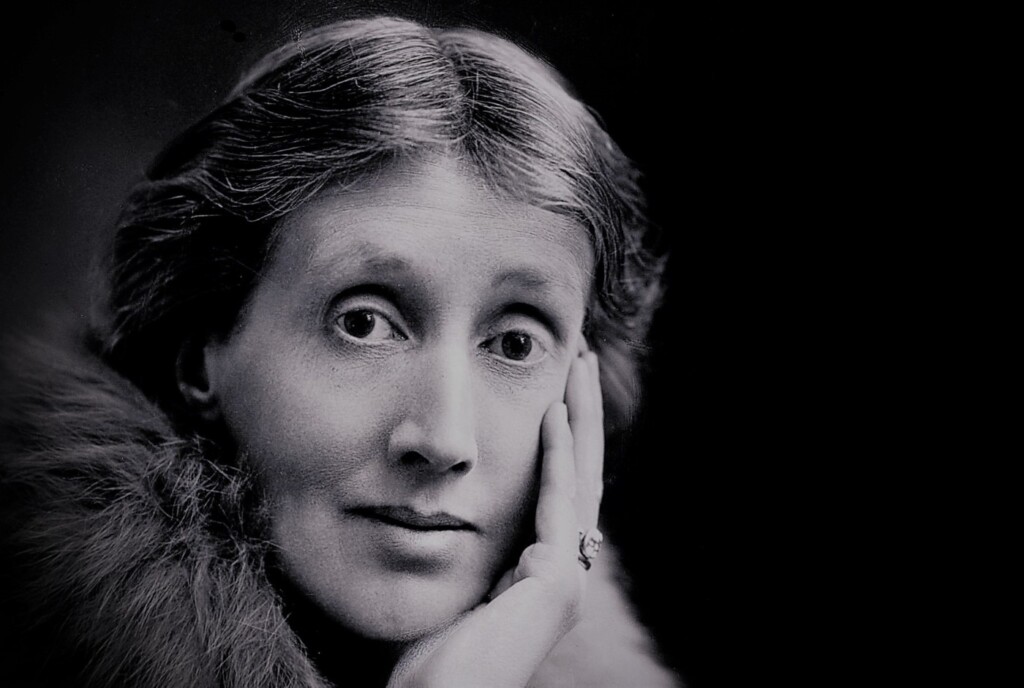
The kitchen table is where she writes. Not because she chose it, but because there is nowhere else. The children are not asleep yet, the dishes are not done, and the sentence she had in her head at three in the afternoon — clear, complete, almost finished — has dissolved somewhere between the school run and the dinner she made and the argument she mediated and the permission slip she signed. She opens a notebook anyway. Someone calls her name from the other room. She closes it.
This is not a metaphor. Woolf was not speaking metaphorically when she said that a woman needs five hundred pounds a year and a room with a lock on the door. She was speaking with the precision of someone who understood that freedom without material grounding is not freedom at all but decoration. The figure she named in 1929 was not symbolic — it was calculated. It represented rough financial independence, the kind that does not require a husband’s permission or a father’s generosity or an employer’s goodwill. It was the difference between writing when the house allows it and writing because you have arranged your life so that writing is structurally possible.
The history of what women were legally permitted to own tells you everything. In England, the Married Women’s Property Act of 1870 was the first legislation to allow a wife to keep her own earnings. Before that, everything she had — wages, inheritance, the money left to her by a dead parent — passed automatically to her husband upon marriage. Not as custom. As law. The 1882 amendment extended this to property owned before marriage, but the principle had already done its damage across centuries: a woman’s economic existence was absorbed into a man’s the moment she signed a marriage register. Woolf was not dramatizing oppression. She was reading the statute books.
Against this backdrop, the woman at the kitchen table is not a symbol of resilience. She is evidence of a system working exactly as designed. Simone de Beauvoir, writing in The Second Sex in 1949, identified the mechanism precisely: the myth of feminine devotion exists not to honor women but to keep them available, their attention perpetually distributed, their interiority perpetually interrupted. The domestic arrangement is not neutral space into which creativity might occasionally intrude. It is a structure that produces interruption as its primary output.
The publishing data from the nineteenth century confirms what the philosophy describes. When women did publish, they frequently did so anonymously or under male pseudonyms — George Eliot, Currer Bell, Acton Bell — not from modesty but from the rational calculation that a woman’s name on a cover would reduce its reception, its reviews, its sales. Mary Ann Evans knew that if she published Middlemarch under her own name in 1871, the critical apparatus would filter it through assumptions about feminine limitation before the first page was turned. The room she lacked was not only physical. It was the room of being taken seriously, of having one’s sentences read as sentences rather than as symptoms of sex.
And yet the physical room remains irreducible. There is a man in a story — a man who has inherited a house, who has a study at the end of a corridor, who closes the door each morning at nine and opens it at one, who has never once been called from his desk to find a permission slip or mediate an argument or answer a question that could not wait. He does not think of this as privilege. He thinks of it as discipline. His four hours of uninterrupted silence feel to him like a personal achievement. They are, in fact, an infrastructural gift that has been invisible to him precisely because it has never been withheld.
She picks up the notebook again. Someone calls her name.
The Androgynous Mind as Escape Hatch or Trap
You have done it, probably without naming it. You are in a room — a seminar, a boardroom, a dinner table where the conversation has turned serious — and you feel yourself performing a kind of subtraction. The anecdote you were about to tell, the one that begins with your mother or your body or the specific texture of a grief you once carried, you set it aside. You reach instead for the abstract register, the measured cadence, the reference that signals you have read the right books and left your particularities at the door. You pass. And passing feels, for a moment, like freedom.
Virginia Woolf called this freedom the androgynous mind. In A Room of One’s Own, she describes it as a state of creative wholeness, a mind that is “resonant and porous,” that does not think in terms of sex, that transmits emotion without obstacle. She draws on Coleridge’s formulation — that a great mind is androgynous — and extends it into a theory of literary liberation: the writer who transcends gender is the writer who transcends limitation. Shakespeare, she suggests, had such a mind. He never asserted himself. He simply wrote.
It sounds like emancipation. It reads, in certain lights, like the most elegant trap ever laid for a woman with a pen.
Elaine Showalter, in A Literature of Their Own published in 1977, was among the first to say so with surgical clarity. Showalter argued that Woolf’s androgyny was not a solution but an evasion, a way of aestheticizing the very suppression it claimed to transcend. The androgynous ideal, she wrote, allowed Woolf to flee from the anger and the embodied specificity that female experience demanded — to escape into a “luminous halo” of pure consciousness precisely when the circumstances of women’s lives required confrontation, not transcendence. For Showalter, the doctrine of impersonality, however beautiful, was a form of self-erasure dressed in philosophical clothing.
Mary Jacobus pushed this further, noting that Woolf’s concept is internally contradictory: you cannot simultaneously celebrate the female literary tradition and then ask women writers to dissolve their gendered selves in the name of artistic purity. The invitation to androgyny, Jacobus observed, consistently originates from a position in which one sex has already colonized the neutral. The unmarked term is always already male. To become androgynous, the woman writer does not split the difference — she concedes the larger half.
Think of the scene where a man sits alone on a train and a thought comes to him, unimpeded, and he simply follows it across the page. No interruption enters the frame of his imagination. He does not wonder whether his subject is too small or too local or too steeped in the wrong kind of feeling. The thought is his and the page receives it. This is what androgyny looks like from the inside when you begin from the position of the unmarked. For the woman who has spent years learning to subtract herself before speaking, androgyny is not a synthesis — it is the name given to the erasure after it has already been completed.
And yet the concept refuses to die cleanly, because it contains something real. There is a mode of attention in writing — call it empathy, call it imaginative porousness — that genuinely exceeds the writer’s own biography. The question is whether that excess can be reached without first performing the disappearance, without first demonstrating that you are not too much a woman to be trusted with ideas. Woolf knew the performance intimately. She lived inside the institution she was also critiquing, and the androgynous mind may be less a theory of freedom than a map of the distance between where she was and where she needed to be in order to be heard at all.
Shakespeare’s Sister and the Women Who Actually Existed
Judith Shakespeare never existed, but she was more real than most history would allow. Woolf invented her in 1929 as a thought experiment that functioned less like fiction and more like a mirror held up to a specific kind of erasure — the kind so complete it barely left a scar. Give Shakespeare a sister, she said. Make her equally gifted, equally hungry. Then watch what the world does with her. The answer was not ambiguous. The world would have crushed her, not through malice necessarily, but through the ordinary pressure of a civilization that had simply never built a door for her to enter.
What Woolf could not have known, or perhaps knew too well to say plainly, was that the thought experiment was not hypothetical at all. The gifted sister existed. She existed dozens of times, across centuries, in forms that Germaine Greer would spend years excavating. When Greer published The Obstacle Race in 1979, she was not writing art history so much as conducting an archaeological dig through deliberate rubble. She documented, systematically and without sentimentality, the mechanisms by which women who painted were absorbed, misattributed, dismissed, or simply forgotten. She found that female artists had not been absent from the record — they had been removed from it. Their names had slipped behind their husbands’, their fathers’, their teachers’. Artemisia Gentileschi survived because her rape trial made her notorious. Most did not have that grotesque luck.
Think of a woman sitting alone at a table late at night, the house finally quiet, her hand moving across paper with the particular urgency of someone who has been waiting all day to do this. She has a manuscript, or something approaching one. Pages that took months, years, a whole private geography of stolen hours. She shows it to the man in her life — husband, father, mentor, editor — and watches his expression move through something she cannot quite name. Not contempt. Something more subtle and more damaging. He reads it, nods slowly, says it has potential, says he can help. And then, gradually, what was hers becomes part of the atmosphere around him. A phrase appears in his published work. A structure she invented shows up in his next chapter. The manuscript itself disappears into a drawer and is never mentioned again. She does not accuse him. She is not entirely sure she has the right to. After all, he did say it had potential.
This is not a scene from anywhere imagined. This is what happened to women whose names we do not know precisely because this happened to them. Greer’s research traced how the workshop system in Renaissance painting made female labor systematically invisible — daughters and wives contributed to works attributed solely to the male master, and the attribution was not accidental but structural. The system was designed to absorb their work without crediting it. What Woolf called the habit of mind, the deep bias that made a woman’s achievement seem categorically less serious, was not just psychological. It was institutional, economic, and reproduced across generations with extraordinary efficiency.
Clara Schumann composed throughout her life and spent the second half of it promoting Robert’s work instead. Fanny Mendelssohn published under Felix’s name, partly by force, partly by a socialization so thorough she had internalized the prohibition. Anna Magdalena Bach copied manuscripts for decades; some musicologists have argued she contributed to compositions credited entirely to Johann Sebastian. These are not marginal cases. They are the center.
Judith Shakespeare, then, was not Woolf’s invention. She was Woolf’s act of naming something that had always been there, visible to anyone willing to look at the archive with clear eyes rather than the comfortable certainty that genius, if real, always finds its way to the surface.
A vision curated by a filmmaker, not an algorithm
In this video I explain our vision
The Sentence That Was Not Built for Her

There is a moment that stays with you long after you have stopped thinking about it consciously. A woman is speaking at a table — not performing, not arguing, simply thinking aloud, the way language does when it is still discovering what it means. A man beside her leans in, not unkindly, and finishes her sentence. The version he offers is cleaner, more direct, stripped of its circling quality. Everyone nods. She nods too, because the meaning is technically preserved, the information has traveled from one side of the table to the other. But something has been destroyed, and no one in the room has the vocabulary to name it, because the vocabulary for naming it was also built by men.
This is the argument Woolf was making in 1929 when she wrote that the sentence, as it existed in English prose, was made by men for men, and that it was an instrument ill-suited to a woman’s use. Not because women lacked intelligence or range, but because the sentence carried within its structure a set of assumptions about how thought moves, what thought is for, and who gets to determine when a thought has arrived at its destination. The declarative sentence, with its subject driving confidently toward its predicate, encodes a particular relationship to certainty. It presupposes that the speaker knows where they are going before they begin. It punishes digression. It treats recursion as failure.
Hélène Cixous, writing in “The Laugh of the Medusa” in 1975, gave this problem a name and a manifesto. She called for an écriture féminine — not a feminine writing defined by biology, but a writing that refuses the economies of the dominant form, that moves by excess rather than efficiency, by breath rather than argument. Julia Kristeva, working from a different angle in “Revolution in Poetic Language” published the same year, theorized the semiotic as the pre-linguistic layer of meaning that official discourse constantly suppresses — the rhythmic, the bodily, the maternal — the very dimension that the well-built English sentence is designed to contain and eventually eliminate. Both thinkers arrived, by separate routes, at what Woolf had felt in her bones half a century earlier: that form is never merely aesthetic. Form is political. Form decides who exists inside the sentence and who is its object.
The women who came before Woolf had found three solutions, none of them clean. Some adopted the male sentence entirely, wore it like a disguise, and published under men’s names — George Eliot, George Sand — because the name itself was a form, and the form had to be masculine before the content would be taken seriously. Others bent the sentence from within, smuggling in subordinate clauses, qualifications, emotional precision that the dominant structure had no room for officially but could not quite expel. And others were simply broken by the encounter — not because they lacked talent, but because the gap between what they needed to say and what the available language permitted them to say was a distance that consumed them before the work was done.
What the man at the table destroyed was not the meaning. He was right that the meaning arrived. What he destroyed was the process of the sentence — that circling, that recursion — which was not decorative but epistemic. The woman was not failing to reach a conclusion. She was refusing the premise that a conclusion was the only thing a sentence was allowed to want. Her syntax was not broken. It was built for a different kind of knowing, one that does not separate the thought from the feeling of thinking it, one that holds uncertainty not as a defect but as the most honest account of what it is to encounter something real.
And when it was taken from her and replaced with something tidier, she nodded, because what else do you do when someone hands you back your own thought wearing a face you no longer recognize?
Anger, the Forbidden Fuel
She stops mid-sentence. You have seen this happen — maybe you have done it yourself — that precise moment when a woman’s voice is rising toward something true and then, almost imperceptibly, she catches it. Swallows it back. Smooths her face into something more acceptable, something softer, and the room breathes again, the shoulders of everyone present drop half an inch, and the conversation resumes as though nothing was almost said. The thing that was almost said hangs in the air for a fraction of a second and then disperses, and no one names it because naming it would require acknowledging that the swallowing happened, that something was deliberately unmade so that others could remain comfortable.
Woolf knew this gesture from the inside. She performed its literary equivalent across hundreds of pages. Her warning in A Room of One’s Own against anger in women’s writing is one of the most quoted and most contested passages in the entire feminist canon: she insists that bitterness, however justified, warps the sentence, pulls it off its axis, makes the woman writer visible as an aggrieved woman rather than invisible as an artist. She cites a fictional predecessor and finds the writing marred by what she calls a “flaw in the centre” — resentment that has leaked into the prose and curdled it. The prescription is control. Composure. The androgynous mind, which Woolf borrows from Coleridge’s 1817 Biographia Literaria, is one that transcends the merely gendered, that holds male and female in creative equilibrium. It is, in other words, a mind that has learned not to flinch.
But look at the sentences themselves. Look at the syntactic coiling, the irony worn so thin you can see the fury beneath it like a body under ice. Woolf’s controlled prose is not the absence of anger. It is anger load-bearing a tremendous aesthetic superstructure, and the strain is audible in every careful clause. What she called distortion was simply anger without the disguise she had chosen. Arlie Hochschild, in The Managed Heart published in 1983, described emotional labor as the work of inducing or suppressing feeling in order to sustain an outward appearance that produces a sense of safety in others. Woolf’s entire aesthetic project, by her own account, required exactly this. The question is whether she recognized it as labor or had so thoroughly internalized the demand that it felt like artistic principle.
Audre Lorde, speaking directly to this inheritance in 1981, refused the premise entirely. Anger, she argued, is loaded with information and energy. It is not the distortion of clear vision but the clarification of it, the thing that sees what politeness has been paid to overlook. Every time a woman translates her fury into something more palatable, Lorde insisted, she is doing unpaid work for the comfort of the people her fury was about. She is, in the gesture of smoothing her expression, subsidizing her own erasure.
And here is where Woolf’s aesthetic restraint becomes genuinely difficult to read. Was the androgynous ideal a form of liberation — the mind large enough to contain its own wounds without being governed by them — or was it one more version of the swallowing, shaped to reach an audience that would have closed the book the moment the gloves came off? Sociological research on what Cecilia Ridgeway termed “status characteristics theory” confirms what any woman in any meeting already knows: displays of anger increase perceived status in men and decrease it in women, a disparity documented consistently from the 1990s through present-day organizational studies. Woolf understood this asymmetry viscerally, decades before it had a sociological name. Her restraint was not naivety. It was calculation. But calculation made under duress is still duress, even when the result is beautiful, even when the controlled sentence sings.
The Room That Still Has a Door
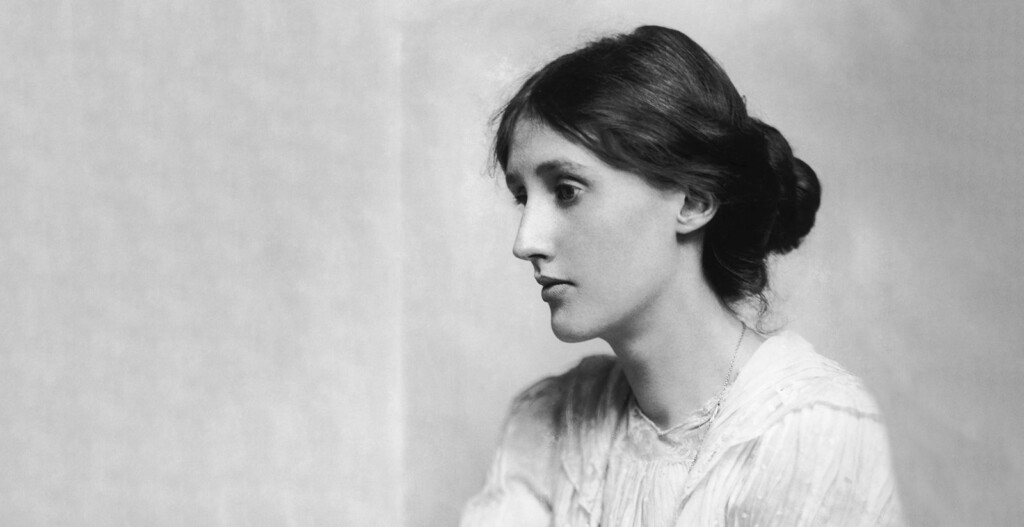
You have the room. This is not a metaphor anymore — it is a fact you can measure in square footage, in the lock on the door, in the fellowship that paid for it, in the MFA program that admitted you at roughly equal rates to your male peers. The door exists. The key is in your hand. And yet something in the quality of the silence inside that room is not quite what was promised.
The numbers are not unkind, exactly. They are simply honest in a way that institutions prefer not to be. Women now constitute the majority of literary fiction readers, the majority of English literature graduates, and a substantial portion of debut novelists receiving contracts from major publishers. And still, as recently as 2023, studies tracking advances paid by the five largest English-language publishing houses showed that books by women received, on average, advances between 25 and 40 percent lower than comparable books by men — comparable in genre, in market, in the author’s prior track record. The VIDA Count, which has monitored gender representation in major literary publications since 2010, documented years of near-total male dominance in review pages before slow, uneven corrections began to appear. The Nobel Prize in Literature was awarded to a woman for only the eighteenth time in its history in 2022. Citation rates in academic humanities, tracked across peer-reviewed journals between 2010 and 2020, show that female scholars are cited less frequently than male scholars even when controlling for publication volume and field seniority.
None of this is a catastrophe. That is precisely the problem. It does not announce itself as a structure. It arrives as atmosphere, as a slightly lowered temperature in certain rooms, as the particular way a panel moderator turns just slightly more toward the men at the table, as the way a woman’s book about domesticity is called “intimate” where a man’s book about domesticity is called “universal.” Erving Goffman, in Frame Analysis from 1974, described how social reality is not simply experienced but organized through interpretive frames so embedded they become invisible — not rules you can name and break, but the grammar inside which every sentence is already formed before you speak it.
There is a scene that stays with you. A woman sits at a desk that is entirely her own, in a house where no one will interrupt her, in a city that has given her every formal permission to think. She stares at the page. And the staring is not writer’s block in the ordinary sense — it is something older, a particular quality of self-surveillance that arrives before the first word, asking whether the thought she is about to have is important enough, whether she has the authority to have it in public, whether the room around her is really hers or only lent. Simone de Beauvoir wrote in The Second Sex in 1949 that women are not born into their condition but constructed into it — and what she meant, among other things, is that the construction does not stop at the threshold of whatever room you have managed to reach. It comes with you. It has better furniture than it used to.
Woolf knew this. She knew the room was necessary and not sufficient, that five hundred pounds a year and a lock on the door would change the material conditions without automatically dissolving the interior architecture those conditions had built over centuries. She wrote in 1929 and she was writing, in part, to a future she could not yet see — to you, sitting in the room you technically have, holding the key that is undeniably yours, feeling the weight of walls that have no name you can yet give them but that do not move when you press your hand against them.
✍️ Voices of Liberation: Women, Thought, and Writing
Virginia Woolf‘s A Room of One’s Own stands at the crossroads of literary essay and feminist manifesto, asking who gets to write, think, and be heard. The articles gathered here trace the intellectual and creative threads that connect Woolf’s vision to broader struggles for autonomy, selfhood, and expression across history and philosophy.
Simone de Beauvoir: Life and Philosophical Thought
Simone de Beauvoir extended Woolf’s intuitions into a full philosophical system, arguing in The Second Sex that woman is not born but made — a construct of patriarchal culture. Her existentialist feminism gave a rigorous theoretical backbone to the questions Woolf raised about the conditions required for women to create freely. Reading Beauvoir alongside Woolf reveals how literary provocation and philosophical argument can illuminate the same fundamental injustice.
GO TO THE SELECTION: Simone de Beauvoir: Life and Philosophical Thought
Hannah Arendt: the Philosopher Who Unmasked the Banality of Evil
Hannah Arendt approached the life of the mind with the same urgency Woolf brought to the life of the woman writer, insisting that thinking is a political and moral act that must never be surrendered to convention. Her analysis of how ordinary structures of power silence independent thought resonates deeply with Woolf’s diagnosis of how society systematically excluded women from the space needed to produce great art. Together, these two thinkers form a powerful map of what it means to claim one’s own intellectual room.
GO TO THE SELECTION: Hannah Arendt: the Philosopher Who Unmasked the Banality of Evil
Annie Besant: From Socialist Activism to Theosophical Leadership
Annie Besant‘s trajectory from radical socialist activist to one of the most influential women in the theosophical movement illustrates how Victorian and Edwardian women carved out spaces of authority in a world that denied them formal power. Her life is a vivid counterpart to Woolf’s historical survey of women who dared to think and speak publicly against enormous social resistance. Besant’s story reminds us that the ‘room of one’s own’ was sometimes built in the most unexpected corners of culture.
GO TO THE SELECTION: Annie Besant: From Socialist Activism to Theosophical Leadership
Montaigne’s Essays: Guide to Reading
Montaigne's Essays represent one of the founding acts of subjective writing in Western literature, an attempt to make the self a legitimate subject of serious inquiry — a gesture Woolf would revisit centuries later from a distinctly feminist angle. Woolf herself was a passionate reader of Montaigne, and her own essayistic voice owes much to his willingness to wander, doubt, and confess on the page. Placing their works in dialogue reveals the long, winding genealogy of the personal essay as a vehicle for intellectual freedom.
GO TO THE SELECTION: Montaigne’s Essays: Guide to Reading
Discover the Cinema That Dares to Ask the Same Questions
If these voices of resistance and creative freedom have stirred something in you, Indiecinema streaming is your next room of your own — a curated space where independent and auteur cinema explores feminism, identity, and the power of self-expression with the same uncompromising honesty. Step inside and let the films speak.
👉 EXPLORE THE CATALOG: Watch Indie Films in Streaming
A vision curated by a filmmaker, not an algorithm
In this video I explain our vision

